Real-life learning

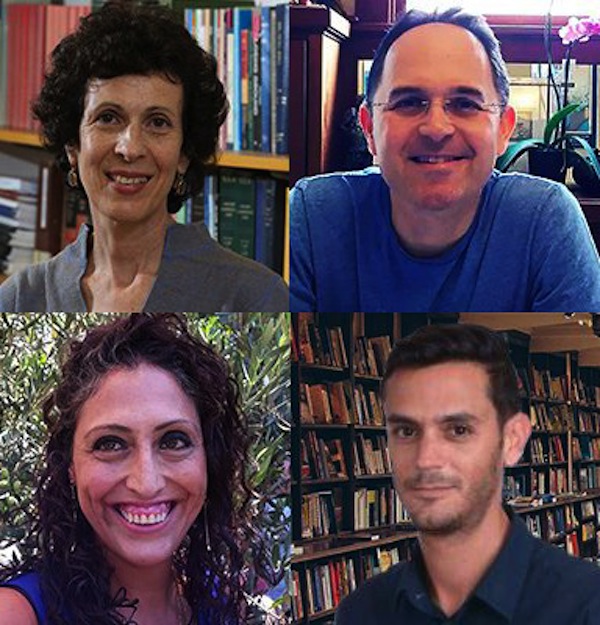
Clockwise from top left: Prof. Daphna Lewinsohn-Zamir, Prof. Guy Davidov, Ohad Amar and Vardit Dameri Madar of Hebrew University’s Clinical Legal Education Centre. (photos from cfhu.org)

Five representatives of Hebrew University’s Clinical Legal Education Centre (CLEC) took part in an online discussion about the legal aid the organization offers to disadvantaged individuals and groups.

“It is one of the jewels in our crown. CLEC has taught our students how social responsibility is an important part of the legal profession,” said Daphna Lewinsohn-Zamir, dean of HU’s faculty of law. “And it continues to do exemplary work during the coronavirus pandemic.”

Besides offering professional legal assistance to underprivileged people in Israel, particularly in the Jerusalem area, the centre provides students with hands-on experience. Each clinic, which is comprised of 16 students and includes six hours of field work each week, is overseen by an attorney and an academic advisor.

“The main goal is to demonstrate to students the difference between law in the books and law in action,” said Prof. Guy Davidov, CLEC’s academic director. “It is essential in showing how the law works in real life. We don’t want to be detached from the community in our ivory towers.”

Another key objective of the centre, Davidov said, is to present the potential (and limitations) of the law as a tool for social change, which also is better understood in practice and engagement.

To illustrate the scope of the centre, Vardit Dameri Madar, CLEC’s executive director, told the assembled Zoom audience the story of Hanna, a 32-year-old mother of six children, including one who has mental challenges. Hanna lives in severe poverty and is divorced after having suffered years of physical and mental abuse. She survives on minimum income benefits.

Just as the coronavirus struck, Hanna had her benefits stopped, said Dameri Madar. In spite of the pandemic forcing people to stay in isolation, the country’s housing department demanded that Hanna come to its offices in person to fill out the necessary documents to receive her benefits.

“Unlike a TV show such as LA Law, problems do not get resolved in the time it takes to watch an episode,” Dameri Madar explained. “In real life, it takes a long time to get a response from the housing department.”

After sending letters to the department and raising the issue in the media of Hanna’s possible eviction, a precarious circumstance shared by thousands of Israelis as the virus started, CLEC was able to make a difference – the housing department relented and allowed people to fill in their applications online.

CLEC handles 600 cases per year. The centre aims to address policy changes that affect broader populations; it initiates 35 to 40 policy change projects a year through tests cases, position papers, shadow reports, draft legislation and alternative models. CLEC also organizes about 90 lectures per year for the general population, as well as for specific groups, such as youth, single mothers and social workers.

This coming year, CLEC will run eight clinics, on the topics of at-risk youth, international human rights, marginalized communities, disability rights, criminal justice, the wrongfully accused, multiculturalism and women’s economic empowerment.

CLEC, too, has formed a Corona Crisis Program that manages existing cases related to poverty with responses in “real time”; provides Social Justice Operations Rooms on Facebook, with legal aid available in Hebrew and Arabic; and promotes policy changes stemming from the Facebook room and clinical activities.

“We decided that Facebook was a good tool to help answer people’s questions at a time when the rules were in flux,” said Ohad Amar, the lecturer at CLEC who started the Facebook groups.

From the Facebook groups, the public has easy access to specialized aid from attorneys, students and volunteers. To date, its 60 volunteers have helped more than 1,500 people.

Ariel Elkayam, a second-year law student, said “this is the best thing that happened to me with my studying here. I am so lucky to get to do this work. With the centre, you do teamwork. It really gives you a sense of belonging.”

Elkayam’s recent work with CLEC has been advocating for at-risk youth who have been fined and arrested for being out on the streets with nowhere to go during the COVID crisis – at a time when Israeli law enforcement has been clamping down on homelessness.

Every year, approximately 140 students are accepted to the CLEC clinics. For more information, visit openscholar.huji.ac.il/clinicallecen/book/clec-experience-assistance-impact-law-students.

Sam Margolis has written for the Globe and Mail, the National Post, UPI and MSNBC.

Inspiring students’ research

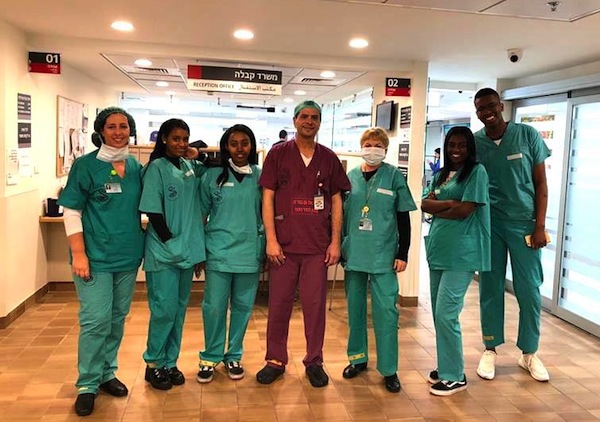
Students and staff of the recent Arrow Project on a tour of Sheba. In the centre is Prof. Eldad Katorza. Student Yair Jalmar is at the far right. (photo from IMP)

Sheba Medical Centre, Israel’s national hospital, enjoys a reputation for medical innovation, but many are unaware that it is also at the forefront of societal integration among various minority groups in Israel. In the past several years, Sheba has integrated hundreds of new Ethiopian olim (immigrants) into the hospital workforce, going as far as providing them with free classes to help them navigate Israeli bureaucracy and improve their language skills.

Recently, Prof. Eldad Katorza, senior physician at Sheba and director of the Arrow Project, decided to give youth from the Ethiopian community a head start by incorporating them into his pilot program.

The Arrow Project (Chetz in Hebrew, the initials of chokrim tze’irim, meaning “young researchers”) is an apprenticeship program for medical students, designed to pave their way into the world of research. Established in 2006, the initiative matches selected students with experienced researchers who serve as their mentors. During once- or twice-weekly meetings, the student-mentor teams work through every stage of medical research, from formulating the initial question, to collecting and analyzing data, to presenting the results at medical conferences.

This year, for the first time, each research duo also included a third tier: high school students from the Ethiopian community.

Katorza believes in the importance of encouraging students to pursue research, noting that, in med school, they do not receive sufficient exposure to research thinking or methodology.

“I believe that research makes a doctor more knowledgeable, more curious, more creative,” he said. “A doctor who engages in research is a much better doctor.”

Employing this premise, Katorza is planning to open several slots for nursing school students in the coming year’s program. “Nursing is also a field that stands to benefit greatly from adding researching to its ranks; it will raise the bar of nursing in Israel,” he said.

In the early stages of planning the pilot program for the Ethiopian high school students, it became evident to Katorza just how crucial, timely – and challenging – his initiative was. “I asked my son, then in 11th grade, to look around his own school in Givatayim for students from the Ethiopian community who might be suitable for the program,” said Katorza. “As it turned out, there wasn’t a single Ethiopian student in his school, nor in any of the good schools in the area.”

The reason can be traced to the socioeconomic realities in Israel today. Ethiopian Israelis have long experienced prejudice and being treated as second-class citizens. By and large, members of the Ethiopian community tend to dwell together in poorer neighbourhoods, where community services, schools included, are more limited. These conditions put Ethiopian teens at a disadvantage from the outset and, due to economic necessity, the youth are pushed to join the workforce at an early age, further perpetuating a cycle of poverty.

“Almost four decades have passed since the first wave of Ethiopian Aliyah,” said Katorza, “yet, judging from their rate of participation in academia, their level of affluence and other markers of social mobility, it appears that the government has failed to take the necessary steps to help them bridge the gaps and facilitate their successful absorption into mainstream Israeli society.”

Anxious to change this negative trend, Katorza decided to include outstanding students from the Ethiopian community in the Arrow Project. However, it wasn’t simple to locate high school students from the Ethiopian sector who met the criteria for participation in the program: high marks in the sciences, high motivation and interest, and living near enough to the Sheba campus to be able to easily attend the weekly meetings. Ultimately, Katorza was aided by an organization called Fidel (“Alphabet” in Amharic), which promotes the education and social integration of Ethiopian-Israeli youth. The Fidel staff welcomed this opportunity to incorporate Ethiopian students in Sheba’s research-mentoring platform, and provided 10 candidates, from which the top five were chosen.

According to Katorza, the pilot program was a resounding success and will be repeated in the coming year. “We found that, once they are freed from the limitations of their environment, the students manifested amazing capabilities,” he said. “We endeavoured to help build their self-confidence, empower them and teach them that they can do anything they put their mind to.”

Throughout the year, in addition to their full participation in research, the Ethiopian high schoolers were also exposed to the clinical activity at the hospital. “At the beginning of the year, the students didn’t have any specific plans for the future,” Katorza said. “Now, they are now seriously considering a medical career.”

One of those is Yair Jalmar, 17, from Beer Yaakov, who participated in a research project with pediatric cardiologist Dr. Shai Tejman. “This project helped me develop my interest in medicine and learn more about the advanced technologies and devices, as well as the various departments in the medical field,” he said.

In the 14 years since the project’s inception, the pool of participants, which in the beginning included only students from Tel Aviv University Sackler School of Medicine, has expanded to foreign exchange students from New York and London, as well as medical students from Ariel University, Bar-Ilan and others. Thus far, former participants in the Arrow Project have gone on to publish their findings in respected medical journals, and several have joined the team at Sheba.

– Courtesy International Marketing and Promotion (IMP)

Showing appreciation

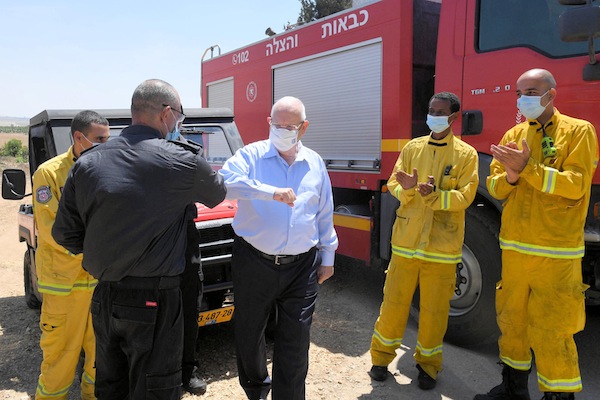
Israeli President Reuven Rivlin with firefighters near the Gaza border earlier this week. (photo from IGPO via Ashernet)

Israeli President Reuven Rivlin visited the Coordination and Liaison Administration (CLA) at the Erez border crossing point and sites where fires have been set in the area by incendiary-laden kites and balloons. The president thanked the firefighters for their determination and dedication.

“You have to deal with threats that deliberately and consistently harm Israeli citizens going about their daily lives,” the president told them. “Terrorism using incendiary devices is terrorism just like any other…. We have nothing against the people living in Gaza. On the contrary, we want them to be able to live in peace and quiet and raise their children. But they are being held hostage by Hamas, which also thinks it has us in its control. Hamas should know that this is not a game. The time will come when they must decide and, if they want war, they will get war.”

Speaking about the damage done by the fires, he said, “There is nothing more painful than seeing this good earth go up in flames. I want to offer my support to the farmers at this difficult and painful time, when they must deal with the threat of fires as well as with the economic crisis from corona. The way the residents, the farmers, the civilian security forces and you, the firefighters, stand firm is an inspiration for us all.”

Ancient artwork found

photo - Uri Berger of the Israel Antiquities Authority, left, and Prof. Gonen Sharon of Tel Hai Academic College inside a dolmen where a wall engraving was unexpectedly discovered
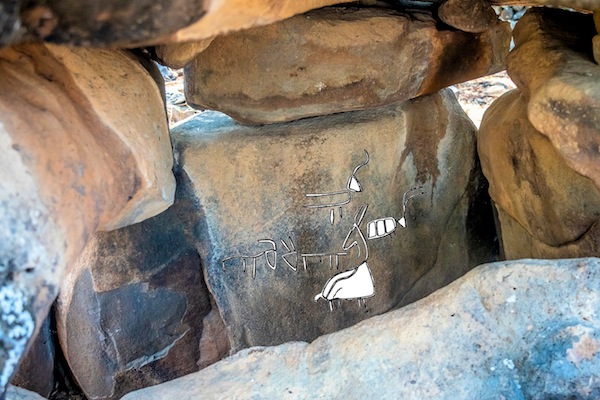
Uri Berger of the Israel Antiquities Authority, left, and Prof. Gonen Sharon of Tel Hai Academic College inside a dolmen where a wall engraving was unexpectedly discovered. (photo by Yaniv Berman/IAA via Ashernet)

The interior of a dolmen (ancient burial chamber built of rocks) with symbols overlaid on the image for clarity. (photo by Yaniv Berman/IAA via Ashernet)

There are many such dolmens in the Galilee and the Golan, all of which date back more than 4,000 years. An inspector of the Israel Nature and Parks Authority has identified engravings of horned animals, leaves, fertilizers and wild cows in one dolmen; a human face in another; and a panel with geometric shapes in yet another.

Successful launch of Ofek 16

(photo from Ashernet)

On July 6, using a Shavit-2 rocket, Israel successfully launched the Ofek 16 reconnaissance satellite into Earth’s orbit. The first Israeli satellite (Ofek 1) was launched in 1988. Investment in this field produces strategic defence systems, but also innovations that assist industries in coping with various technological obstacles. Israel is one of 13 countries in the world with full space capabilities (launching satellites), alongside the United States, Italy, France, Japan, India, the United Kingdom, Ukraine, China, Russia, Iran, North Korea and South Korea.

Women sail to Miriam’s Well

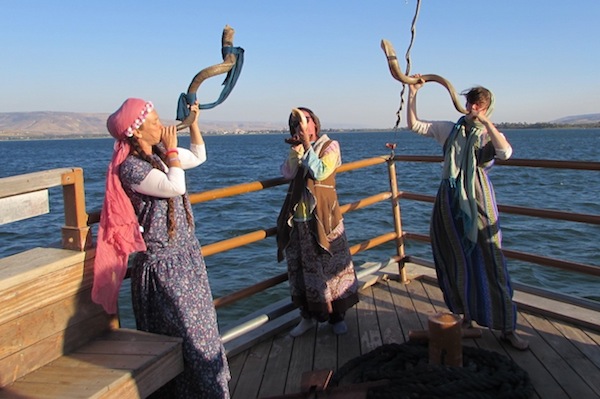
Left to right: Devorah Abramson, Yehudit Dribben and Sheva Chaya blow the shofar at Miriam’s Well on Lake Kinneret. (photo by Aviva Spiegel)

In the annals of the current COVID-19 pandemic, artist Maureen Kushner has a rare happy story – and likely the only one dating back some 3,500 years.

For the last 12 years on the anniversary of the death of Miriam the Prophetess on Nissan 10 in the Hebrew calendar, New York-born Kushner has been chartering a vessel from Tiberias-based Holyland Sailing Ltd. to bring a boat full of women to the spot on Lake Kinneret where, according to Midrash (Bamidbar Rabbah 1:1), the mystical spring known as Miriam’s Well now rests.

Typically, 126 women and children (corresponding to Miriam’s age when she died) equipped with rams horns, violins, harps, drums, flutes, guitars and tambourines have made the maritime pilgrimage. They sail on the Sea of Galilee, also called Lake of Gennesaret, to what Jewish tradition considers the exact spot where the miraculous spring that supplied the Children of Israel with drinking water during their 40 years of wandering in the Sinai Desert ended its own journey.

This year, the yahrzeit (death anniversary) of Miriam fell on Friday, April 3, immediately before Passover. Kushner – who is named in Hebrew after the miracle-working older sister of Moses and Aaron – booked the sailing for Thursday, April 2, in order to allow Sabbath-observant women from Jerusalem and other distant cities to join in the fête. All was set for this year’s celebration when Israel’s Health Ministry locked the country down in an attempt to halt the spread of the coronavirus.

photo - Many passengers short, because of COVID-19 restrictions, 40 women were still able to sail on the King David across the Kinneret to Miriam’s Well
Many passengers short, because of COVID-19 restrictions, 40 women were still able to sail on the King David across the Kinneret to Miriam’s Well. (photo by Aviva Spiegel)

Thanks to those regulations, which at their most severe restricted Israelis to remaining within 100 metres of their home and still prevent almost all non-citizens from landing at Ben-Gurion Airport, the pandemic has somewhat abated. Recently, the Health Ministry began lifting its pandemic regulations.

Without any tourists arriving, the pilgrim boats remained moored in Tiberias and at Kibbutz Ginosar for three months. But, on Wednesday, June 3, the ministry allowed Kushner and her social distancing-reduced group of 40 women and children – each bringing facemasks, water, hats, sunscreen and kosher snacks – to make their 135-minute voyage on the lyre-shaped lake. When the vessel King David raised its anchor, it was Holyland Sailing’s first boat trip since quarantine regulations went into effect.

“What a hallelujah for our beloved Kinneret!” said Kushner, who was the artist-in-residence at the Jewish Community Centre of Greater Vancouver  in 2005. “What a hallelujah in honour of our great, great, great Hakodesh Baruch Hu [the Holy One Blessed Be He], who is filled with goodness and compassion and love and blesses Am Yisrael [the Jewish people] with rain and dew and sustenance and a good life here in Eretz Israel, the good land.”

Kushner was especially excited that this past winter has seen heavy rains that filled Israel’s main freshwater reservoir to the brim, at 209 metres below sea level after five years of drought.

“The Kinneret is full! In great and abundant thanks to Hashem [God] in the zechut [merit] of Miriam Hanivia [Miriam the Prophetess], we celebrated with shofarim, drums, flutes and the harp,” she said.

Miriam the Prophetess today has become a popular figure for many Jewish women.

The Torah relates she was married to Caleb ben Yefunah. Though she died in the wilderness of Zin, her widower miraculously carried the spring named in his wife’s honour across the Jordan River on Nissan 10, the anniversary of her death, explained Kushner.

Miriam’s death is described in Numbers 20:1 and, in the next verse, the Israelites are described as complaining of the lack of water at Kadesh. The text reads, “Miriam died there, and was buried there. And there was no water for the congregation.”

In Jewish texts, this abrupt transition between her death and the lack of water was explained by postulating that a “Well of Miriam” appeared after she died. Further elaboration identified the rock that Moses struck to bring forth water in Exodus 17:5-6 with this well.

So powerful was the tradition of Miriam’s Well in Judaism that, even after the spring disappeared into Lake Kinneret some three-and-a-half millennia ago, it has occasionally miraculously appeared in the Diaspora.

According to Chassidic lore, once, just before Yom Kippur’s Kol Nidre prayer began, Yitzchak Isaac Taub (1751-1821), who was the sage of Nagykálló (Kalov in Yiddish) in eastern Hungary, called on his assistant Rabbi Yaacov Fish to harness his horse and wagon. The two set out to Fish’s fields, where they found a small pool. Immediately, the holy man disrobed and immersed himself, while Fish stood by transfixed. After the Day of Atonement, Fish returned to his fields, but the pond had disappeared. Fish asked his master, “Rabbi, as you know, despite our long friendship, I never mix into your affairs. But I beg you to enlighten me about the pool of water that appeared and disappeared so mysteriously in my fields.”

The holy man, who founded the Kaliver Chassidic dynasty, smiled: “If Rabbi Yaacov had had the sense, he would have dipped himself the same as I did, for, at that moment, Miriam’s Well passed by.”

Gil Zohar is a writer and tour guide in Jerusalem.

(Note: This article has been updated from the print version to note that Maureen Kushner was the artist-in-residence at the Jewish Community Centre of Greater Vancouver  in 2005.)

Archeological find changes perceptions

A human jawbone found in the Misliya Cave on Mount Carmel near Haifa. (photo by Israel Hershkowitz, Tel Aviv University via Ashernet)

A human jawbone and other fossils found in the Misliya Cave on Mount Carmel near Haifa indicate that human migration from Africa occurred during the Ice Age, approximately 200,000 years ago, which is contrary to the popular theory that the freezing conditions and dryness of the Ice Age periods deterred human migration between continents.

These recent findings were published in the Journal of Human Evolution by Dr. Lior Weissbrod of the Israel Antiquities Authority and Prof. Mina Weinstein-Evron of the Zinman Institute of Archeology at the University of Haifa, and they build on work previously published by Weinstein-Evron and Prof. Israel Hershkowitz of Tel Aviv University in Science.

In addition to the jawbone, Weissbrod said, “The fossils now being investigated were identified as belonging to 13 different species of rodents and small insect eaters, some of which now live in high and cold regions, in the Zagros Mountains of northwestern Iran and in the Caucasus Mountains.”

This means that, “in Israel, cold conditions prevailed that allowed such animals to survive. Finding the human jawbone in the same layer where the rodent lived, suggests that these early humans survived under these conditions,” changing existing perceptions on human evolution.

Studying the “love hormone”

Oxytocin, a peptide produced in the brain, may bring hearts together – or it can help induce aggression. (image from Weizmann Institute)

During the pandemic lockdown, as couples have been forced to spend days and weeks in each other’s company, some have found their love renewed while others are on their way to divorce court. Oxytocin, a peptide produced in the brain, is complicated in that way: a neuromodulator, it may bring hearts together or it can help induce aggression. This conclusion arises from research led by Weizmann Institute of Science researchers in which mice living in semi-natural conditions had their oxytocin-producing brain cells manipulated in a precise manner. The findings, which were published in Neuron, could shed new light on efforts to use oxytocin to treat a variety of psychiatric conditions, from social anxiety and autism to schizophrenia.

Much of what we know about the actions of neuromodulators like oxytocin comes from behavioural studies of lab animals in standard lab conditions. These conditions are strictly controlled and artificial, in part so that researchers can limit the number of variables affecting behaviour. But a number of recent studies suggest that the actions of a mouse in a semi-natural environment can teach us much more about natural behaviour, especially when we mean to apply those findings to humans.

Prof. Alon Chen’s lab group in the institute’s neurobiology department have created an experimental setup that enables them to observe mice in something approaching their natural living conditions – an environment enriched with stimuli they can explore – and their activity is monitored day and night with cameras and analyzed computationally. The present study, which has been ongoing for the past eight years, was led by research students Sergey Anpilov and Noa Eren, and staff scientist Dr. Yair Shemesh in Chen’s lab group.

The innovation in this experiment was to incorporate optogenetics – a method that enables researchers to turn specific neurons in the brain on or off using light. To create an optogenetic setup that would enable the team to study mice that were behaving naturally, the group developed a compact, lightweight, wireless device with which the scientists could activate nerve cells by remote control. With the help of optogenetics expert Prof. Ofer Yizhar of the same department, the group introduced a protein previously developed by Yizhar into the oxytocin-producing brain cells in the mice. When light from the wireless device touched those neurons, they became more sensitized to input from the other brain cells in their network.

“Our first goal,” said Anpilov, “was to reach that ‘sweet spot’ of experimental setups in which we track behaviour in a natural environment, without relinquishing the ability to ask pointed scientific questions about brain functions.”

Shemesh added that “the classical experimental setup is not only lacking in stimuli, the measurements tend to span mere minutes, while we had the capacity to track social dynamics in a group over the course of days.”

Delving into the role of oxytocin was sort of a test drive for the experimental system. It had been believed that this hormone mediates pro-social behaviour. But findings have been conflicting, and some have proposed another hypothesis, termed “social salience,” stating that oxytocin might be involved in amplifying the perception of diverse social cues, which could then result in pro-social or antagonistic behaviours, depending on such factors as individual character and the environment.

To test the social salience hypothesis, the team used mice in which they could gently activate the oxytocin-producing cells in the hypothalamus, placing them first in the enriched, semi-natural lab environments. To compare, they repeated the experiment with mice placed in the standard, sterile lab setups.

In the semi-natural environment, the mice at first displayed heightened interest in one another, but this was soon accompanied by a rise in aggressive behaviour. In contrast, increasing oxytocin production in the mice in classical lab conditions resulted in reduced aggression.

“In an all-male, natural social setting, we would expect to see belligerent behaviour as they compete for territory or food,” said Anpilov. “That is, the social conditions are conducive to competition and aggression. In the standard lab setup, a different social situation leads to a different effect for the oxytocin.”

If the “love hormone” is more likely a “social hormone,” what does that mean for its pharmaceutical applications?

“Oxytocin is involved, as previous experiments have shown, in such social behaviours as making eye contact or feelings of closeness,” said Eren, “but our work shows it does not improve sociability across the board. Its effects depend on both context and personality.”

This implies that, if oxytocin is to be used therapeutically, a much more nuanced view is needed in research: “If we want to understand the complexities of behaviour, we need to study behaviour in a complex environment. Only then can we begin to translate our findings to human behaviour,” she said.

Participating in this research were scientists at the Max Planck Institute for Psychiatry in Munich, including research students Asaf Benjamin and Stoyo Karamihalev, staff scientist Dr. Julien Dine and postdoctoral fellow Dr. Oren Forkosh of the Chen lab; Prof. Shlomo Wagner and postdoctoral fellow Dr. Hala Harony-Nicolas of Haifa University; Prof. Inga Neumann and research student Vinicius Oliveira of Regensburg University, Germany; and electrical engineer Avi Dagan.

Reflections of a lone soldier

Joel Chasnoff spoke at a Zoom event presented by Jewish National Fund of Canada on June 1 and he’ll speak at a CHW Montreal Zoom event on June 21. (photo from APB Speakers)

Michael Levin grew up in Philadelphia, joined the Israel Defence Forces as a lone soldier and died in a battle with Hezbollah in southern Lebanon in 2006. At that time, most Israelis weren’t familiar with the concept of a lone soldier – a legal term for a volunteer, usually (but not always) from outside Israel, who enlists to defend the Jewish state.

Levin’s death at 22 came just days after he returned hastily from his leave back home in the United States when he learned of the start of the Second Lebanon War. He flew back to Israel, hitched a ride to his platoon in Lebanon and took up the fight against the Iranian-backed terrorists. He was killed in an intense firefight in the Hezbollah-controlled village of Aita al-Shaab.

His grieving mother, Harriet Levin, was concerned that her son’s funeral would not have a minyan to say Kaddish and so, on arriving in Israel, she asked a few people to come to the military cemetery to ensure a proper Jewish burial. On her way to Mount Herzl, traffic was so congested she feared she would be late for her son’s funeral but, when she did get there, she discovered that the few people she had asked to spread the appeal for a minyan had shared the news widely. Media picked it up and more than 10,000 Israelis showed up to pay their respects.

It was a turning point in the Israeli consciousness, according to Joel Chasnoff.

Chasnoff is a stand-up comedian and writer who shared his own story of leaving his Chicago-area home two decades ago to become a lone soldier. In a Zoom event presented by Jewish National Fund of Canada June 1, Chasnoff, who now lives in Israel, spoke of the changing understanding of lone soldiers – and his reflections on now being the father of soldiers. A decade ago, he chronicled his experiences as an IDF volunteer in the book The 188th Crybaby Brigade: A Skinny Jewish Kid from Chicago Fights Hezbollah.

Today, lone soldiers are a better understood phenomenon in Israel and supports are in place that were not when Chasnoff volunteered in 1997. There is now a network of Lone Soldiers Centres – commonly called Michael Levin Centres – around Israel, to help overseas volunteers adapt and smooth their way to a successful integration, coordinate holiday and Shabbat homestays and deal with the myriad complications that arise for a newcomer to Israel.

image - The 188th Crybaby Brigade book coverChasnoff shared comedic experiences, including the challenge of proving he was indeed a lone soldier without Israeli parents, when government officials insisted that Levin’s father had never left Israel after his first visit in 1976. The stakes were basic – a lone soldier’s salary at the time was $160 a month instead of $80, plus a few privileges. But it required a sheath of documents from the States to prove that his father was indeed an Illinoisan, not an Israeli.

“Never mind that he had raised me in the U.S. and I have a very strong and good relationship with my dad. The Israelis believed that my dad was actually living in Israel the whole time and I was just trying to pretend that I was a lone soldier to get the extra $80 a month,” Chasnoff said.

His decision to join the IDF was sparked by a visit to Israel as a teenager.

“I got off the plane,” he said, “and, you know, you’re 17, your hormones are raging. What’s the first thing you notice being a teenager coming to Israel? How beautiful the Israelis are. The women were all tan and fit, the men were these hunks with muscles and crew cuts. It’s so odd because they have the same roots as we do, right? Except they look like supermodels and we look like Jews. How does that happen? That’s not fair.”

The soldiers he met were just a year older than he was.

“They were 18, and they had machine guns and berets and Ray-Ban sunglasses and forearms like bricks,” said Chasnoff. “And then there was me, slathered in sunscreen, wearing a fanny pack … stuffed with lactose pills.”

One of the eye-opening things Chasnoff discovered about the Israeli army, he said, is how democratic it was.

“I would even say insanely democratic,” he said, noting that soldiers argued about orders and fought with their superiors. “People ask me what’s it like in the Israeli army. I think the best way to describe it is, imagine a bunch of Israelis running an army. That is the Israeli army.”

This is why one of his platoon-mates was a darling among commanders: he didn’t speak Hebrew. The young man was raised in an evangelical Christian home in Oklahoma, but, at a certain age, learned that his mother had converted from Judaism. One thing led to another and he volunteered for the IDF.

“So, they made him a tank gunner,” Chasnoff said, “because, to be a tank gunner, you basically need to know six words – stop, go, left, right, forward, back. Tim was one of the best soldiers in our platoon because he didn’t have the Hebrew to argue back. When the commander would give orders, the guys would argue. Tim, by not having Hebrew, just did what he was told. And was an excellent soldier for that reason and one of our commander’s favourites.”

Unfortunately, a lack of Hebrew can be deadly in moments of military conflict. Chasnoff said some casualties in conflicts in Gaza may have resulted from linguistic challenges and he believes the military is doing a better job ensuring fluency in such situations.

While lone soldiers is a term associated with overseas volunteers, Chasnoff said that about half of the 6,000 lone soldiers are Israelis, mostly Charedim whose volunteer service or other factors estrange them from their families.

While lone soldiers were not so much in the Israeli consciousness a few decades ago, they are now a welcome oddity.

“I think, when you get a lone soldier in your platoon, people are very excited about it,” Chasnoff said. “Everyone wants to bring him or her home to show the family the sort of strange character who came all the way from New York City or Sydney, Australia, or whatever. People are really interested in what motivates them to serve, so they are invited. It’s very, very different than the old days.”

Addressing the broader differences between Israelis and Diaspora Jews, Chasnoff riffed like the comic he is.

“We grow up with this myth that Israelis are, you know, just like us. They are Jews and we are Jews and we’re one big happy family. And then you get to Israel and you realize the Israelis are nothing like the American Jew. They speak their minds. They shout. They argue,” he said. “You’ll never be with an Israeli and wonder to yourself, ‘I wonder what she really thinks about me right now.’ I’m married to an Israeli for 21 years and I can honestly say that once in those 21 years has my Israeli wife apologized to me because, in the Middle East, apologies make you look weak and nobody wants to look weak. We had one huge fight where she actually apologized and it wasn’t even a real apology, it was an Israeli apology: she came up to me a few days later and said, ‘Yoeli, motek, I am sorry you’re such an idiot.’”

He also has plenty of material about growing up Jewish in America.

“My mom was actually one of these Jewish mothers who – let’s be honest – they have a special ability to worry about every situation,” he said. “You give them any scenario, they will figure out the potential thing that could hurt you in that scenario.”

For their annual family visit to Texas to see his paternal grandparents, Chasnoff’s mother would book the family on two separate flights so that, if a plane went down, the entire family wouldn’t be lost.

“That’s a typical Jewish upbringing,” he said.

When his zaidie gave him a jersey with the number of his favourite player and his own name, Joel, on the back, Chasnoff’s mother refused to let him wear it outside the house because a stranger would know his name.

“And, because he knew my name, I would think he knew me, so I would go with him,” he said. “You know why? Because I’m an idiot. That’s why there are no Jewish athletes. Not that we’re bad at sports, our mothers won’t let us wear the jersey.”

Readers will have another chance to hear Chasnoff speak this month. CHW Montreal is hosting a Zoom BBQ with the comedian on Father’s Day, June 21, at noon, Pacific time. Visit facebook.com/chwmontreal and click on Events for details. Funds raised benefit hospital workers at the Shamir Medical Centre and Hadassah Hospital in Israel.

Boy makes historical find

The tablet found by Imri Elya. (photo by IAA via Ashernet)

Imri Elya was on an outing with his parents at Tel Jemmeh archeological site near Kibbutz Re’im when he picked up the square clay object. His parents contacted the Israel Antiquities Authority (IAA) and they handed over the item to the authority’s National Treasures Department.

photo - Imri Elya, 6, from Kibbutz Nirim, near the Gaza Strip, holds his certificate of good citizenship and the tablet he found
Imri Elya, 6, from Kibbutz Nirim, near the Gaza Strip, holds his certificate of good citizenship and the tablet he found. (photo by IAA via Ashernet)

According to archeologists Saar Ganor, Itamar Weissbein and Oren Shmueli of the IAA, the artifact was imprinted in a carved pattern, and the artist’s fingerprints even survived on the back. The tablet depicts the scene of a man leading a captive. According to the researchers, “The artist who created this tablet appeared to have been influenced by similar representations known in Ancient Near East art. The way in which the captive is bound has been seen previously in reliefs and artifacts found in Egypt and northern Sinai.”

They date the artifact to the Late Bronze Age (between the 12th and 15th centuries BCE) and believe that the scene depicted symbolically describes the power struggles between the city of Yurza – with which Tel Jemmeh is identified – and one of the cities close to the Tel, possibly Gaza, Ashkelon or Lachish, or the struggle of a nomadic population residing in the Negev. The researchers believe that the scene is taken from descriptions of victory parades; hence, the tablet should be identified as a story depicting the ruler’s power over his enemies. This opens a visual window to understanding the struggle for dominance in the south of the country during the Canaanite period.