BGU plans new school

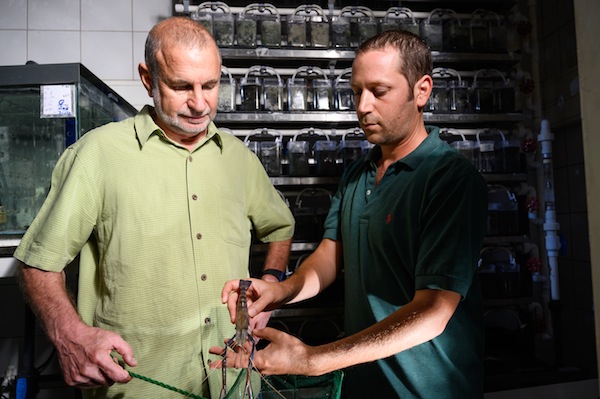
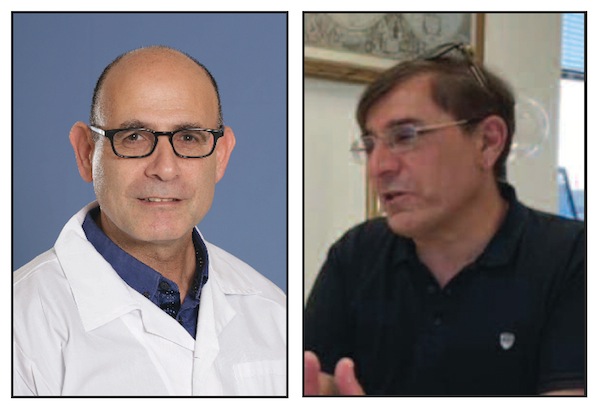
Ben-Gurion University’s Prof. Amir Sagi, left, and Dr. Amit Savaia have found a way to use shrimp to fight a deadly parasitic disease in Nigeria. (photo from BGU)

This year, Ben-Gurion University of the Negev plans to launch a new school that will specialize in climate change research, mitigation and environmental sustainability. It will also offer a graduate program with a cross-section of specialties.

BGU’s three campuses house an enrolment of 20,000 students and a faculty of 4,000. Its areas of expertise range far and wide, and, among other things, the university has become known as a go-to place for figuring out how to address one of the 21st century’s biggest threats: climate change.

For BGU president Daniel Chamovitz, the university’s growing reputation isn’t that much of a surprise. “Because what have we been doing in the last 60 years?” he asked rhetorically. “We have been learning how to survive – not to survive, how to thrive in the desert.”

photo - Prof. Daniel Chamovitz, president of Ben-Gurion University
Prof. Daniel Chamovitz, president of Ben-Gurion University. (photo from BGU)

Chamovitz’s own expertise is in genetics and plant biology. Originally from Aliquippa, Pa., he is most recently known for his studies in plant development and for his book What a Plant Knows: A Field Guide to the Senses, which has been published in 18 languages.

The realization that the university already has a strong foothold in environmental and sustainability research, Chamovitz said, is what led to its new mandate to become the world’s authority on climate change and sustainability.

A long history

For Prime Minister David Ben-Gurion, the Negev was always Israel’s greatest untapped resource. It was the place, he predicted, that the Jewish homeland would sow their greatest accomplishments. A desert that spans more than 60% of the country’s land mass, the Negev would hold the answers to Israel’s most pressing problems of the day: how to grow enough food to feed a nation, generate sufficient energy to power cities and harness enough water to turn brown deserts green.

But building a sustainable nation, he warned, one that could benefit from a desert that receives less than 200 millimetres of rainfall per year wouldn’t be simple. “It is incumbent upon Israel’s scientists to reveal the secrets of nature that are unique to our land,” he said. The Negev, he insisted, was the perfect environment for an institute of study that could solve the world’s most basic – and challenging – problems of existence.

Ben-Gurion’s visionary thinking was the catalyst for many of Israel’s earliest environmental accomplishments, including desalination and energy generation using seawater, steps that would be critical to Israel’s much-needed water technology. Both projects were developed in the 1960s, at a research facility in the town of Be’er Sheva, a Bedouin settlement at the northern tip of the Negev. The institute that gave rise to these early innovations would eventually become BGU.

BGU’s new school

Two years ago, when he was hired as president of BGU, Chamovitz told the Jewish Independent he had conducted a “bottom-up” assessment of all of the departments and their areas of specialization. He wanted to know what their strengths and weaknesses were.

“[We] identified over 150 researchers dealing with various issues of sustainability and climate change,” Chamovitz said. “And, in every discipline. Not only in our institutes of water, energy and desert agriculture – that’s the low-lying fruit – but also in engineering and in civil engineering, where we develop energy-efficient building material and methods.

“It was clear to everyone that the field of sustainability and climate change was what sets Ben-Gurion University apart from every other university in Israel.”

That brand-name recognition helped secure a new partnership with Royal Bank of Canada, which is sponsoring the new school’s first graduate fellowship program. The investment by RBC will fund two fellowship positions for students specializing in climate change or sustainability-related research and, in doing so, help launch the program.

This isn’t the first time that RBC has partnered with the university. In 2018, RBC and BGU entered into a cybersecurity partnership, in which the bank invested $2 million toward research programs in BGU’s department of software and information systems engineering.

In this case, the partnership aligns with RBC’s own long-term sustainability goals and its Tech for Nature program, which it launched in 2019.

photo - Martin Thibodeau serves as the president of Royal Bank of Canada’s British Columbia region
Martin Thibodeau serves as the president of Royal Bank of Canada’s British Columbia region. (photo from Royal Bank of Canada)

“The research being conducted also aligns with RBC’s interests as we recognize that innovative technologies offer immense potential to help solve environmental challenges,” Martin Thibodeau, B.C. regional president, RBC Royal Bank, told the Independent. “The most pressing environmental concerns of our time are negatively impacting the planet at a rate that often outpaces the solutions designed to address them. RBC is leveraging its capabilities in technologies such as artificial intelligence and blockchain, as well as its convening power, to build solutions and the type of multi-partner coalitions needed to address and solve our shared environmental challenges.

“Our commitments align with the United Nations Sustainable Development Goals and, through our partnerships, we aim to develop multi-sector, multi-partner solutions to achieve progress on these challenging issues. We’re both proud and excited to partner with BGU through CABGU to address these important issues,” Thibodeau said.

“We are in awe of the grassroots contributions that RBC makes to our Jewish community and the positive role that RBC plays and has played in strengthening so many local community organizations in British Columbia and across Canada,” said David Berson, executive director of the B.C. & Alberta chapter of the Canadian Associates of Ben-Gurion University, which worked as a liaison with RBC and BGU to secure the partnership.

“[We] are incredibly excited that corporations such as RBC see the importance of partnering with Ben-Gurion University, [and] that their investment [will] pay back to society tenfold,” Chamovitz said. He likened RBC’s partnership to an educator who invests in students’ goals, which, in time, benefit generations to come.

A new learning model

Climate change is a multidisciplinary problem, said Chamovitz, one that takes the expertise of not only hydrologists, biologists and engineers, but geneticists, geologists, legal experts and others. Education, therefore, must be tailored to meet the broad range of knowledge required to understand climate change. That doesn’t mean graduate students won’t specialize in their research and their studies, Chamovitz said, but they will be expected to have a multidisciplinary background that connects with the challenges of creating a sustainable world and addressing climate change.

photo - Microbial eco-genomics deals with the study of relationship between organisms, including microbes and their environment
Microbial eco-genomics deals with the study of relationship between organisms, including microbes and their environment. (photo from BGU)

“The one requirement would be their willingness to work interdisciplinarily and to take courses in other fields. Otherwise, they don’t need the school,” said Chamovitz. “They could just go into the school of engineering [for example] or school of ecology. And, you know, for some people, that’s the better track.”

Chamovitz said it’s companies like RBC that are making this new branch of education possible, adding that the university has seen an increase in inquiries from companies and communities across the world that are attempting to address climate change challenges. Last year, for example, a company located in Chennai, India, reached out to see if BGU could assist in building a local agricultural research institute. Chamovitz said the institute’s future researchers will be trained first at BGU before returning home to Chennai to begin their new jobs. The university has also struck up a three-way partnership with the city of Dubai, in the United Arab Emirates, and Arizona State University, in Tempe, Ariz., to address issues relating to global warming in Dubai.

“We have similar collaborations in western China, which are also in arid places. And we are really excited about developing relationships in Canada,” said Chamovitz, who recently visited Vancouver to meet the presidents of Simon Fraser University and the University of British Columbia, which both offer studies in climate change and sustainability.

The two Israeli RBC fellowship students have already been selected. Shir Eisenstein will be doing a master’s in material engineering, looking for new materials that help harness sustainable, renewable energy. Nadina Levitt, who is also pursuing a master’s, will be enrolled in the department of geography and environmental studies and studying sustainability models for smart cities. Both students demonstrated a key requirement for upper-level studies when it comes to BGU’s approach to this new specialization: innovation.

“One of the problems in higher education is this need for prerequisites,” Chamovitz noted. “What we are looking for is not prerequisites, but ingenuity.”

The university is expected to complete the formalization process and approval for the new school of sustainability and climate change in February and be open for enrolment this October.

For more information about BGU and the programs it offers, visit in.bgu.ac.il/en. For more about CABGU, contact Berson at bguvancouver@bengurion.ca or 604-266-2680, or visit bengurion.ca.

Jan Lee’s articles, op-eds and blog posts have been published in B’nai B’rith Magazine, Voices of Conservative and Masorti Judaism, Times of Israel and Baltimore Jewish Times, as well as a number of business, environmental and travel publications. Her blog can be found at multiculturaljew.polestarpassages.com.

CABGU online series

As the winter blues threaten to sink in, and COVID continues to be a part of life, Canadian Associates of Ben-Gurion University of the Negev (CABGU) has been looking for ways to keep people engaged through a series of virtual events. Each event seeks to offer insights, share research and encourage discussion about varied topics.

For the art lover, A Virtual Art Tour, scheduled for Feb. 7, 8:30 a.m., offers participants a guided stroll through one of the few public art collections in Israel’s Negev Desert. “Ben-Gurion University is home to one of southern Israel’s most dynamic and innovative fine arts collections,” said Maayan Amir, the collection’s curator and senior lecturer in the department of art. “Many of the pieces featured in the collection can be found scattered throughout the Be’er Sheva campus, enlivening the landscape while complementing it as well.”

On the medical front, questions have been raised during the pandemic about ethical decision-making. How do medical personnel make life and death decisions? What type of protocol is followed and how should the vaccine be distributed? Three top doctors from Israel and Canada will participate in a moderated discussion on Feb. 10, 4:30 p.m., sponsored by the Dr. Edward Feldman Memorial Fund. The event is a collaborative initiative between CABGU and the Israel Medical Association. Among the speakers are Dr. Yoram Singer, director of the Negev Home Palliative Care Unit at Ben-Gurion University; Dr. Sandy Buchman, medical director of the Freeman Centre for Advancement of Palliative Care at North York General Hospital; and Dr. Elliott Malamet, lecturer on Jewish ethics and philosophy at Hebrew University.

CABGU also offers monthly lunchtime webinars on STEM-related topics called Webinar Wednesdays. Coming up on Feb. 3, 9 a.m., BGU professor and president Daniel Chamovitz will be joined by Sigal Abramovich from the university’s department of earth and environmental sciences for a discussion about the impact that climate change is having on the environment. Research from BGU that looks at the role cannabis can play in supporting people with autism will be the focal point of a webinar on March 3, 9 a.m.

Register for any of these webinars at bengurion.ca.

Aliyah despite COVID

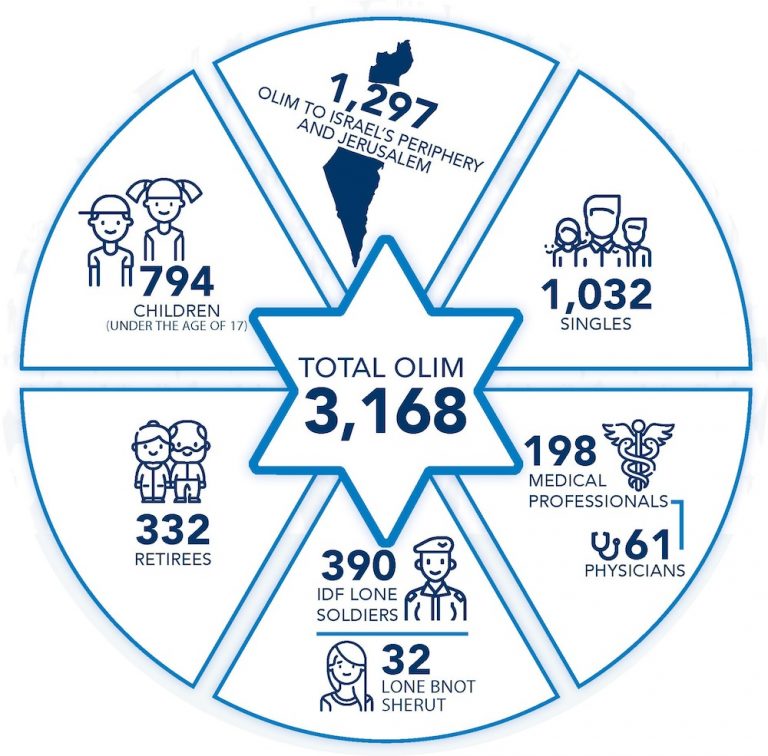
The breakdown of Nefesh B’Nefesh 2020 aliyah. (image from Nefesh B’Nefesh)

Despite a challenging and tumultuous 2020, 291 individuals from Canada decided to make aliyah and move to Israel with Nefesh B’Nefesh (NBN) over the past year. The Canadians were among the 3,168 individuals who moved to Israel from North America in 2020 – 2,625 since the COVID-19 pandemic hit.

Founded in 2002, Nefesh B’Nefesh, in partnership with Israel’s Ministry of Aliyah and Integration, the Jewish Agency for Israel, Keren Kayemeth LeIsrael and Jewish National Fund-USA, has assisted in easing the aliyah process for more than 65,000 olim since its inception. With the help of its partners, NBN assisted nearly 90% of the total number of olim that arrived in 2019.

Since January of 2020, Nefesh B’Nefesh olim have most often hailed from New York, New Jersey, California, Florida, Ontario, Illinois, Massachusetts, Maryland, Pennsylvania and Texas. Altogether in the past year, 811 families chose to move their lives to Israel, along with 1,032 singles and 332 retirees. There were 61 physicians among a total of 198 medical professionals who arrived in Israel in the last year, most of whom joined the frontlines in Israel’s fight against the coronavirus. And 390 young men and women stepped off the plane with the desire to serve Israel as lone soldiers.

In addition to the olim who arrived throughout 2020, Nefesh B’Nefesh received 6,704 aliyah applications, in contrast to 3,035 in 2019 – marking a 126% increase in interest in aliyah.

image - The breakdown of Nefesh B’Nefesh 2020 aliyah
The breakdown of Nefesh B’Nefesh 2020 aliyah. (image from Nefesh B’Nefesh)

“From the earliest days of the Jewish state, no matter how trying or difficult the circumstances, aliyah has always continued in order to preserve what was once a distant dream for our parents and grandparents,” said Rabbi Yehoshua Fass, NBN co-founder and executive director. “As we look back at the challenges everyone faced in 2020, we are extremely proud of what we have accomplished together. We look forward to watching each oleh grow and build their new lives in Israel, and eagerly look ahead to 2021, a year with the potential to exceed all expectations in aliyah.”

“I welcome the dozens of new olim who chose to leave everything, especially during the time of a global epidemic, and fulfil their dreams of building new homes for themselves in Israel,” said Minister of Aliyah and Integration Pnina Tamano-Shata. “Many will surely remember 2020 as a challenging and complex year, but the olim who arrived [recently] from across the U.S. and are part of the last group of olim this year, are enabling it to be shaded in more encouraging and optimistic colours.

“Despite COVID-19, the Jewish nation is thriving and aliyah is continuing,” Tamano-Shata continued. “In the past year, more than 20,000 olim from 80 countries around the world made aliyah.”

“The thousands of new olim from North America and around the world, during a year of a global pandemic, lockdowns and almost complete paralysis of international air travel, emphasizes how much the longing for Zion is deeply ingrained in the hearts of the Jewish people around the world,” said Isaac Herzog, chair of the Jewish Agency.

The top 10 cities in Israel that new olim chose as their homes this year were Jerusalem, Tel Aviv, Beit Shemesh, Ra’anana, Haifa, Herzliya, Netanya, Modiin and Be’er Sheva. The olim most commonly worked as educators, physicians, nurses, social workers and lawyers, as well as in the fields of marketing, sales and business. The average age of an oleh this year is 30, with the oldest being a 97-year-old and the youngest being only 35 days old.

When the pandemic began in earnest in March 2020, Nefesh B’Nefesh adapted its various programming and transitioned into holding virtual meetings, webinars and informational sessions. The online seminars have allowed the organization to reach a much wider audience and have included a wide range of subjects, from choosing communities and special webinars for medical professionals, to how to pack and ship for aliyah.

The ongoing support after aliyah provided by NBN has meant that 90% of its olim have remained in Israel, leading to tens of thousands of new Israelis who go on to make significant contributions to the country.

Israeli ventilation invention

Prof. Ori Efrati, left, and Dr. Michael Cohen. (photos from IMP)

With the arrival of the coronavirus vaccine, there has also been a spike in morbidity, clearly indicating that we’re not out of the woods yet. In fact, hospitals in Israel have warned that they are steadily approaching maximum capacity, as the numbers of severely ill COVID patients breaks all records.

When COVID-19 first erupted in March 2020, health authorities warned that a surfeit in severely ill coronavirus patients would overwhelm the system due, in large part, to a lack of ventilation machines – the standard of care for coronavirus patients whose condition deteriorates to pneumonia. In the ensuing months, Prof. Eyal Leshem, director of the Centre for Travel Medicine and Tropical Diseases at Sheba Medical Centre, explained that, in addition to the shortage of ventilators, one of the most pressing issues is the lack of highly trained intensive-care-unit staff to monitor patients attached to those devices.

An innovation by Yehonatan Medical addresses both of these issues.

Yehonatan Medical, in collaboration with Prof. Ori Efrati, director of the pediatric pulmonary unit at Sheba Medical Centre, devised a first-of-its-kind ventilation system that can treat multiple patients.

“Conventional ventilators, aside from being very costly, are limited in that they can only be used with one patient at a time,” explained Efrati. “Their capacity factor and programming functions were designed for single-patient use, and there is also the danger of cross-contamination.”

The new ventilation system resolves issues that corona ICU wards have been grappling with as the number of severely ill patients rises.

“We were able to use the relatively simple and inexpensive BipaP non-invasive ventilation machine as the basis for the advanced ventilation technology,” said Efrati. “Thanks to the high-power output and built-in disinfecting mechanism, the new system can safely treat three to five patients simultaneously.”

Moreover, a system that can treat multiple patients at one time necessitates fewer ICU-trained staff. Thanks to the remote interface, the medical team can monitor patients from a safe distance.

“This tremendous breakthrough is nothing less than a game-changer when it comes to caring for large numbers of corona patients,” Efrati added.

Dr. Michael Cohen, an engineer and scientist and the founder of Yehonatan Medical, said, “All in all, we’re talking about a system that delivers personalized care in a multi-user format.”

Additional features based on artificial-intelligence technology include the ability to have a hierarchy and classification of alerts; the ability for automatic parameter correction according to set criteria; respiratory rehabilitation for the patient by adjusting to changes in the patient responsiveness; and more. The streamlined, relatively low-cost system can be implemented in makeshift clinical settings, such as field hospitals, as well as in step-down units within the hospital, in the internal and other wards.

Yehonatan Medical is the medical department of Mofet Etzion, a company that for more than two decades has developed various security and military innovations for the Israel Defence Forces and foreign armies. Cohen has developed dozens of life-saving innovations, including in the area of cardiology, in collaboration with cardiologists and cardiothoracic surgeons from Israel, the United States and Canada.

“Some of the insights for the development of this revolutionary ventilation system were provided by cardiologists who helped us to devise the various accoutrements and sensors,” Cohen said, making specific mention of Dr. David Adams, professor and system chair of the cardiovascular surgery department at Mount Sinai Hospital in New York; Dr. David Tirone, chief of cardiac surgery at Toronto General Hospital; and Dr. Gideon Cohen, cardiothoracic surgeon at Sunnybrook Health Sciences Centre in Toronto. The development of the system itself took place in Israel, marking the first time that an invasive ventilation machine has been built in Israel.

The advanced ventilation technology is currently in advanced phase trials at the MSR Medical Simulation Centre at Sheba, where it is being tested on artificial lungs, and is expected to be ready for mass marketing in the coming months.

– Courtesy International Marketing and Promotion (IMP)

Getting rid of landfill garbage

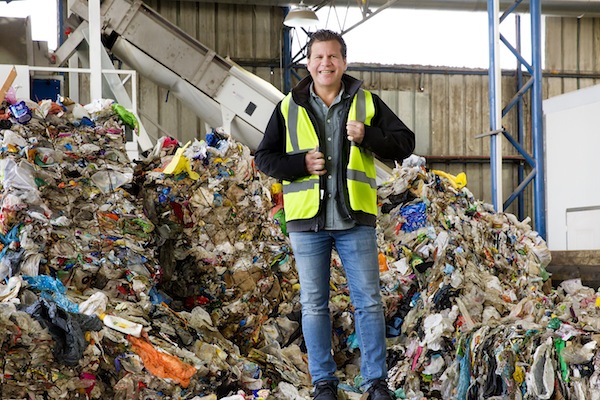
UBQ chief executive officer Tato Bigio in the factory at Kibbutz Tse’elim, in the Negev. (photo from UBQ)

Garbage is piling up everywhere – in landfills and elsewhere on the ground, in oceans and other bodies of water, and even in outer space. And there is growing awareness that our attempts at reducing garbage through recycling has not worked as first imagined – only a small percentage of what we put in our recycling bins ends up being recycled. However, a new Israeli company offers some hope for improvement.

Based in Kibbutz Tse’elim in the Negev, UBQ is producing plastic pellets out of household garbage. The name UBQ is not an acronym, but an abbreviation of the word ubiquitous, conveying that the problem of garbage is everywhere and ever-present. The company launched in 2018, after six years of research. Its chief executive officer, Jack “Tato” Bigio, recently spoke with the Jewish Independent via Zoom from his office in Tel Aviv.

Originally from Peru, Bigio came to Israel in 1984, when he was 18, to attend the Hebrew University of Jerusalem. In the following years, he went from corporation to corporation, developing his business and management skills, until, in 2012, he joined UBQ.

A concept was proposed: to take household waste, such as paper, cardboard, plastics, diapers, food scraps, etc., and turn it into a thermoplastic composite material. This, Bigio explained, “means turning all this waste into a new plastic that can replace conventional plastic materials made out of oil, to make end products.”

Thermoplasticity is a characteristic of a material that is affected by heat – that is liquid when hot and solid when cool, such as sugar or wax.

“UBQ is a plastic that has mechanical properties … very similar to common plastics made out of oil,” said Bigio.

The UBQ process is able to take any garbage stream and, instead of it going to landfill, converting it – upcycling it – into UBQ plastic, regardless of the exact mix of garbage collected.

“The waste balance will be different in different places, depending on the way they handle the source [garbage],” said Bigio. “If the proportions are a little different, the reaction process of UBQ knows how to handle these differences.

“One of the incredible things we’ve developed is kind of a reactor. Once we know what is in the source of our waste, we can manage a process where different percentages are balanced out in the end material.”

While the exact process, which produces no waste itself, remains a protected secret, Bigio said, “There is enough water in the waste, so we don’t need water. And we will convert the waste, 100% of it, into UBQ material. We don’t use any additives or any chemicals, no accelerates or enzymes. It’s just a very incredible system that involves physical and chemical reactions with temperature … sheer forces, conditions like oxygen, certain gases…. It’s a very green and low-temperature conversion, which makes it really hard to believe.”

All of UBQ’s factory and office trash is recycled in the making of the plastic.

The location of the initial UBQ factory was selected for a number of reasons.

“We chose that kibbutz, which is in the south of Israel, because we wanted to develop this amazing technology in a perfect place to be able to enjoy the practices of being revolutionary – not only in the material and science, but also in the engagement of different communities,” said Bigio. “Today, we have Bedouins, Russians and Israelis working together at UBQ.”

UBQ plans to open more plants around the world, beginning in Europe. And, soon, consumers around the world will have more opportunities to choose between products made from conventional plastic and those made from UBQ plastic.

“Waste is an unlimited source of material,” said Bigio. “So, if you buy a product made with UBQ, you will not only be enjoying the product you buy – if it’s a box, or chair, or table – but, by buying it, you will be making good with the environment. You’ll be saving waste, you’ll be saving carbon emissions, and it doesn’t cost a penny more than regular plastics…. We’ve come out with a technology that makes our material competitive to regular plastics.

“One of the reasons for it is that we use waste, and waste is a negative cost – they pay us to take waste. The other benefit of UBQ is that it works in temperatures that are very low compared to regular plastics. We work at 200°C; regular plastic made out of oil is between 800 to 1200°C. Also, we don’t use any water, because there is enough water in the waste.”

Though it might take a few years before Canadians have the option of buying things made with UBQ plastic created from our own garbage, products made out of UBQ plastic produced in the Israeli plant are already finding their way into local stores. UBQ products can be recycled just like other plastics.

UBQ opened a second and much bigger plant in the Netherlands, and the list of countries interested in having plants includes Japan, Australia, Singapore, Thailand, Argentina and Chile.

“It will take some time until we reach all these markets, but we expect to be, in the next 10 years, phenomenally dominating the plastic market,” said Bigio.

Right now, landfill waste is something Bigio said “pollutes oceans, rivers, natural environments, and is killing animal life … at the end of the day, it creates a lot of harm to human beings. If you really care about the future or [coming] generations, you better start working on helping make a difference.”

Bigio encouraged others to think innovatively to find new ways of reusing existing materials. “It’s just a matter of wanting to do it,” he said. “Governments, multinational companies … individuals can choose to do the right thing.”

For more information, visit ubqmaterials.com.

Rebeca Kuropatwa is a Winnipeg freelance writer.

Olive trees have long history

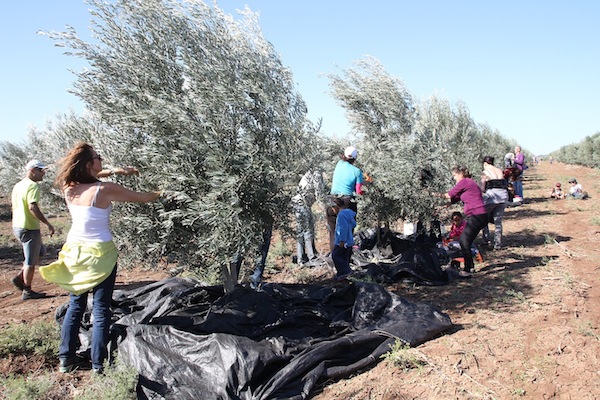
Volunteers help pick olives on a windy day in the fair trade grove of Emek Yizrael. (photo from Yoram Ron)

For thousands of years, olive trees have grown in Israel. Neolithic pottery containing olive pits and remnants of olives have been discovered in Israel’s Mount Carmel region, proving that early people produced olive oil by pulverizing the ripe olives in small pots. Some ancient trees reportedly still exist – in the Palestinian village of al-Walaja, residents claim they have the world’s oldest olive tree, supposedly 5,000 years old. More realistic is Beit Jala’s claim to an 800-year-old olive tree.

Olives for making oil are picked around December or January, so it is probably no coincidence that Chanukah comes so close to the picking season. As you know, Chanukah’s miracle revolves around the story that a very limited amount of olive oil burned in the Temple menorah for eight nights.

While the olive branch is a symbol of peace, the olive harvest in both Israel and the Palestinian territories is a challenging time. For Palestinian olive growers, extremist settlers and Israeli government policy have turned their harvest into an uncomfortable, if not a physically and economically dangerous event. Documented cases show some settlers assaulting Palestinian farmers – threatening them, driving them off their own land, physically attacking them or throwing stones at them. Sometimes, settlers vandalize Palestinian vehicles and damage farming equipment. In other cases, settlers jump-start the harvest, stealing the fruit from hundreds of trees. In the saddest of cases, settlers vandalized hundreds upon hundreds of Palestinian olive trees, in what appears to be a gross violation of Deuteronomy’s 20:19 bal tashchit precept. In this law, we may not uproot or cut down a fruit tree if we do not have an acceptable reason to do so. In the early part of last year’s harvest, the Office for Coordination of Humanitarian Affairs reported that 25 Palestinians were injured, more than 1,000 olive trees were burnt or otherwise damaged and large amounts of produce were stolen.

Since the construction of the separation barrier, some Palestinian olive growers have ended up with their groves located on the other side of the barrier and farmers must obtain special permits and go through special gates to get to their trees. The B’Tselem Organization has documented situations in which Israeli soldiers have blocked the access gates or held farmers up, and there have been reports that soldiers have used anti-riot material on the growers.

In a few cases, the separation between olive groves and homes means that growers have to travel some 25 kilometres round trip. Moreover, the growers are given fixed times to get to their trees and, sometimes, the periods available are not long enough to finish all the picking. Related, Palestinians are sometimes put into a situation in which they have to pick their fruit while the olives are still strongly attached to the branches. Olive picking is largely a manual procedure, so, to dislodge the unripened olives, growers either hit the trees with a rod or shake the trees very hard. This can result in damage to both the trees and the olives.

photo - Two men loading freshly picked olives in the organic grove of the Galilee’s Kfar Deir Hanna, November 2020
Two men loading freshly picked olives in the organic grove of the Galilee’s Kfar Deir Hanna, November 2020. (photo by Itiel Zion)

The current pandemic has caused financial havoc all over the world, including in Israel. This harvest season, Jewish Israeli olive growers have had tons of olives stolen. In the Emek Yizrael area, the Border Police found about 10 tons of olives in a nearby sheep pen. The olives had already been bagged and the gathering containers were standing to the side. The alleged thieves live in Zarzir, a village some 10 kilometres from Nazareth. Shomer Hachadash (the New Guard) tries to prevent these incidents using dogs and heat-sensing drones for nighttime surveillance. Some very bold olive thieves have even been spotted in daylight hours.

Despite this gloomy picture, however, there are promising things happening in Israel’s olive industry. Kfar Kanna’s Sindyanna is an olive oil producer. The Galilee operation is a certified fair trade establishment. In addition, it is a nonprofit organization with strong social and political commitments. Their olive oil bottles proudly say that the oil is produced by Jewish and Arab women in Israel.

Sindyanna aims to improve the working conditions and livelihoods of local Arab women, a clearly marginalized group. For example, Sindyanna provides employment training for Arab women. On the political level, Sindyanna is committed to inter-religious understanding by contracting Muslim, Jewish and Christian women. Moreover, the growers who sell their olives to Sindyanna, like the population of the Galilee itself, are a mix of ethnic groups.

Hadas Lahav, Sindyanna’s chief executive officer, said the company strongly affirms sustainable farming. Over the years, it has built strong connections with local farmers, buying olive oil directly from about 100 individual farmers and large family groups. Some of the farmers are organized into large family companies, like Al-Juzur’s seven families of the Younis clan. In Deir Hanna, the 2,500 organic olive trees belong to the Hussein family. In the Birya Forest, there are 10,000 organic olive trees maintained by Hussein Hib.

In the Jezreel Valley, there is a non-organic grove that belongs to Sindyanna in cooperation with the landowners, the Abu Hatum family from Yafi’a. In Iksal, the non-organic groves belong to the Dawawsha family. In Arabeh, the non-organic olive groves belong to the Khatib family and, at Moshav HaYogev, they belong to the Ashush family.

photo - Close-up of freshly picked olives in Sindyanna’s fair trade grove in Emek Yizrael
Close-up of freshly picked olives in Sindyanna’s fair trade grove in Emek Yizrael. (photo from Yoram Ron)

As Lahav pointed out, with olives, there are good years and less good years. The 2020 harvest was significantly smaller than the 2019 harvest. In a way, it was fortuitous that 2020 produced less fruit, as, with COVID-19, few permits were given to seasonal pickers entering Israel from the West Bank.

The olives picked for Sindyanna’s products are Coratina (this olive tree is highly adaptable and produces abundantly in hot dry climates, including rocky soils), Barnea (this olive was bred in Israel for oil production, but is also used for green or black table olives) and Souri (olives that are native to Israel and have been the major variety cultivated traditionally under rain-fed conditions in northern Israel). On average, in irrigated groves, a tree produces five kilograms of olive oil and, in a non-irrigated grove, a tree produces three kilograms of olive oil. The olive oil is kosher.

Here are some factoids about Sindyanna. Many of us are familiar with Dr. Bronner’s soaps, but did you know that Sindyanna of the Galilee’s organic olive oil is an essential ingredient in Dr. Bronner’s Magic Pure-Castile Soaps? KKL-JNF is also involved with Sindyanna of the Galilee – in KKL-JNF’s Birya Forest, the organic olive grove was once part of the now-defunct Qabba’a village. Not too long ago, another organic grove in Wadi Ara (planted on a former Israeli army firing range) was threatened by the construction of high-tension wires; following the protests of local farmers and the village council, the course of the power line was diverted.

Sindyanna of the Galilee sells its olive oil on Amazon and, this year, it will start selling its olive oil on select Canadian websites and in certain food stores.

Deborah Rubin Fields is an Israel-based features writer. She is also the author of Take a Peek Inside: A Child’s Guide to Radiology Exams, published in English, Hebrew and Arabic.

Little hat store that could

SherlockS has a window display starring a two-foot-high teddy bear dressed like Sherlock Holmes. (photo by Micha Paul)

There is a small, magical hat store right in the heart of Jerusalem, called SherlockS. It’s not hard to find. Just walk along King George Street until you see a two-foot-high teddy bear dressed in a SherlockS deerstalker hat and Inverness cloak, holding a pipe in one hand and a magnifying glass in the other, perched on a table in the display window.

SherlockS is packed with hundreds of hats for both men and women. The store specializes in hard-to-fit heads and carries hats by Stetson, Bailey, Kangol, Christys’ and many other quality hat companies. There are even Borsalinos, the kind the snazzy Italians wear. SherlockS is also the home of handmade hats by local milliners like Danielle Mazin and Justine. And SherlockS makes their own Panama hats, as well.

Owner Yaacov Peterseil decided to create this store after his dermatologist warned him about the damage the sun’s ultraviolet rays were doing to his head. “You must wear a hat outside in summer and winter,” said the doctor.

photo - Yaacov Peterseil is owner of SherlockS
Yaacov Peterseil is owner of SherlockS. (photo by Micha Paul)

“I was just looking for something to do, having left publishing,” Yaacov explained. “Could a hat store afford me the opportunity to help people by keeping the sun’s rays at bay and be financially rewarding, as well? I wondered. I had to try. So, in 2016, I opened SherlockS Hats in my garage. Before long, people came in droves to the store, which was way too small to hold both the hats and the people. So, I moved to Diskin Street, in an underground mall. But, soon, that store was too small, too. Finally, I moved to King George Street, where people could stop by, relax, get a cappuccino and a muffin, and even buy a hat.”

When Yaacov was choosing a name for his business, Sherlock and Sherlock Holmes were already taken. “So, I thought of SherlockS. SherlockS Hats has a nice ring to it. And there’s no need for an apostrophe,” he said.

Peterseil was born in 1946, in Salzburg, Austria, in a displaced persons camp. His family moved to the United States in 1949. Eventually, his father opened a wholesale clothing shop, selling ladies sweaters and T-shirts to all the big chains in New York.

“I worked with my dad for awhile,” said Yaacov. “It was there I developed a love of quality clothing.”

Yaacov believes that his varied business endeavours all led him to SherlockS Hats. He worked as a copywriter for Prentice-Hall, had his own byline in the Nassau Herald, taught journalism at the University of Michigan, was a speech writer for B’nai B’rith, founded Enjoy-A-Book Club, and owned K’tonton Book Store on Long Island. He also found time to get his rabbinic degree, and joined the rabbinate in the United States and in Newfoundland, where he taught Jewish studies at Memorial University.

In 1986, he, his wife Tamar (a family and sex therapist) and their (then) six children made aliyah. Once they settled in, Yaacov kept busy as public relations director for his mentor, Rabbi Shlomo Riskin, and developed Pitspopany Press for Children.

It was while he was busy publishing Jewish children’s books at Pitspopany that Yaacov asked me to review some of their titles. Since then, our paths have crossed a number of times.

“One of my first hat purchases was the deerstalker hat,” said Yaacov. “It was made famous in 1891 when Sidney Paget illustrated one of Conan Doyle’s Sherlock Holmes stories, putting a deerstalker hat on the detective. Today, I sell about 50 deerstalker hats a year in Israel.”

When COVID-19 forced him to keep his shop closed for weeks and months at a time, Yaacov took his store online. He created sherlockshats.com, which features a 3-D tour of his hat-filled store, as well as hundreds of hats from which to choose.

“I write two kinds of blogs for the website,” he said. “One is a story-type blog called The Adventures of the Mad Hatter. The blog tells the story of some of the strange and unusual things that happen in my hat store. The other blog gives a bit more practical information about hats and how to wear them. I’m writing one now on how to fit the hard-to-fit head.”

Next time you get to Israel, you’re invited to visit SherlockS at 31 King George. It’s not as famous as 221b Baker St. yet, but it’s getting there. And, if you want to talk hats with Yaacov, call him at 972-50-361-2342 or message him via the website.

Sybil Kaplan is a journalist, lecturer, book reviewer and food writer in Jerusalem. She created and leads the weekly English-language Shuk Walks in Machane Yehuda, she has compiled and edited nine kosher cookbooks, and is the author of Witness to History: Ten Years as a Woman Journalist in Israel.

Grinding coffee for a century

Izhiman’s – the car is decorated with the company’s logo, based on advertising from that era showing a turban-wearing waiter – à la Cairo’s legendary El Fishawy coffee house in the Khan al-Khalili – serving, of course, coffee. (photo from Izhiman’s)

When the Izhiman family opened its coffee roasting and grinding business in 1921 on Suq Khan a-Zeit (Beit Habad Street), 100 metres inside the Old City’s Damascus Gate, Sir Herbert Samuel had recently arrived as Great Britain’s first high commissioner for Palestine, and Egyptian chanteuse Umm Kulthum was just beginning her illustrious career. Over the last century, the Middle East has changed beyond recognition but Izhiman’s flavourful qahwa – blended from high-quality Arabica beans – has remained a staple for Jerusalem’s coffee aficionados. And, at NIS 48 ($19 Cdn) per kilogram, the cardamom-flavoured finely ground secret mix – which includes Brazilian, Colombian, Guatemalan, Costa Rican and Tanzanian beans – is a bargain.

From that first roaster and grinding shop in the Old City, Izhiman’s has grown to a chain of six stores, with a presence in Jerusalem, Ramallah and Bethlehem. Besides its signature blend of Arab/Turkish coffee, the Izhiman family-operated chain sells tea, nuts, spices, condiments, chocolate and henna from Thailand, Turkey, Egypt and elsewhere. Many of the imports are cheaper than their Israeli counterparts.

“I manage three stores,” said Mazen Izhiman, 63, who started working at the Old City branch in 1976. “My son Mahmoud is the operations manager.”

photo - Mazen Izhiman
Mazen Izhiman (photo from Izhiman’s)

Mazen points to the various historic photos decorating his shop. One shows an antique car bearing Mandate Palestine licence plate 5111. The vehicle is decorated with the company’s logo, based on advertising from that era showing a turban-wearing waiter – à la Cairo’s legendary El Fishawy coffee house in the Khan al-Khalili – serving, of course, coffee.

Interviewed at the company’s office in Atarot Industrial Park, not far from the now-decommissioned Qalandia Airport, Mahmoud (Mamu) Izhiman, 32, explains the roaster was moved there from Abu Dis in 2014 because of transportation problems in reaching the West Bank suburb. Originally, the roaster was located on Suq Khan a-Zeit, across from the shop that his father manages today. A century ago, the beans were ground by hand, he noted. A few grams of coffee wrapped in a cone made from newspaper were sold in single-serving portions.

While the Izhiman family came to Jerusalem from the Hijaz eight centuries ago, during the time of Saladin to fight the Crusaders, the details of the founding of the business have been lost, said Mahmoud, who studied political science at the Hebrew University of Jerusalem before deciding that the coffee business was more satisfying to him than the Israeli-Palestinian quagmire.

Even the given name of the company’s founder a century ago is in dispute, he said. The family business began splitting apart in 1948, when one brother fled to Amman, Jordan, where he opened a coffee roaster of the same name. Another split occurred in 1994, and a further one in 2008, which resulted in a 2014 lawsuit in the Jerusalem District Court for copyright infringement. Notwithstanding the favourable ruling, family members continue to operate unauthorized Izhiman’s branches across the West Bank and Dubai. Indeed, the website izhiman.com is used by the unlicensed stores, said Mahmoud.

photo - Mahmoud (Mamu) Izhiman
Mahmoud (Mamu) Izhiman (photo from Izhiman’s)

Joining the family business, Mahmoud apprenticed at a 2013 course in Izmir, Turkey, offered by the Specialty Coffee Association of America, and then earned a coffee science certificate from Nouva Simonelli in Ancona, Italy.

“I was the first one in the Middle East to study with the SCAA,” he said.

That expertise led him to experiment roasting different blends, seeking a taste that he calls “balanced and aromatic” with “no acidic bitter aftertaste.” The exact blend is “top secret,” he said.

Having relocated the roaster from Abu Dis, Mahmoud bought an $80,000 machine capable of roasting a 120-kilogram batch of coffee beans in 20 minutes. In 2018, he upgraded to a $110,000, fully automated, 240-kilogram-capacity, Turkish-manufactured roaster with a built-in fire extinguisher. To preserve trade secrets, Mahmoud asked me not to take photos of the roasting machine, which he custom designed. The plant also boasts a high-tech, Chinese-made grinding and filling machine that injects nitrogen into each package before it is sealed to prevent oxidation. Mahmoud’s brother, Abdullah, is the production manager at the Atarot facility.

photo - Izhiman’s has grown to a chain of six stores, with a presence in Jerusalem, Ramallah and Bethlehem
Izhiman’s has grown to a chain of six stores, with a presence in Jerusalem, Ramallah and Bethlehem. (photo from Izhiman’s)

How much java does Izhiman’s sell? Mahmoud hesitates before answering: “Enough to call us a major coffee factory. We have a presence in every supermarket and grocery in East Jerusalem.”

But Izhiman’s success isn’t limited to providing a caffeine fix for the Arab half of the city. In December, the company opened its first outlet in Jewish Jerusalem. Mahmoud calls the four-square-metre kiosk at the First Station a “pilot.” It sells “macchiato, lokum [pistachio, hazelnut, rose and pomegranate-flavoured Turkish delight], everything,” he enthused. “If you’re afraid to come to the Old City, I’m coming to you.”

As well, Izhiman’s sister company, Coffee Zone, will soon be launching a line of espresso capsules, he added.

Delicious coffee is one of the flavours of co-existence, Mahmoud believes.

With peace on the horizon, foodies may want to visit the Izhiman’s booth at the Gulfood 2021 expo taking place Feb. 21-25 at the Dubai World Trade Centre. Inshallah.

Gil Zohar is a writer and tour guide in Jerusalem.

Beauty of quilting tradition

One of Shlomit Etzion’s handcrafted quilts. (photo by Nir Falay)

Despite being generally considered the cradle of ancient civilizations and the source of the world’s monotheistic religions, the Middle East region is not known for its quilting. Yet, even in Jerusalem, you will find dedicated quilters.

Quilting is the process of sewing two or more pieces of fabric together to make a thicker padded material. Quilting is done all over the world, from Europe to America, to Southern Asia. While we don’t know its origins, we do know that, for many years, people quilted their clothes. Moreover – despite the Middle East not being recognized for its quilting – the earliest piece of quilted garment comes from the figure of a Pharaoh, dating to around 3400 BC, the period of ancient Egypt’s First Dynasty.

Shlomit Etzion, a Jerusalem resident since birth, said she has always worked with her hands. Her mother encouraged her to do handcrafts and she recalls that she started with embroidery. For a time, Shlomit considered going to a high school where she could pursue that, but decided not to go that route. In the end, she began quilting after she finished her university degree.

What would compel someone to begin quilting? For Shlomit, it was the beauty of traditional quilts. She likes Amish quilts and has even visited Amish quilters. She also likes the quilts of Native Americans. That is not to say, however, that she does art quilt, which employs both modern and traditional quilting techniques to create art objects. An art quilt is an original exploration of a concept or idea rather than the handing down of a pattern. It experiments with textile manipulation, colour, texture and/or a diversity of mixed media. Since this is not the type of work she creates, Shlomit describes herself as a traditionalist who uses traditional patterns as a jumping off point.

(As an aside, there are a number of quilt patterns based on the Hebrew Bible. They include Jacob’s Ladder, the Children of Israel, Joseph’s Coat of Many Colours and the Star of Goshen.)

In the beginning, Shlomit worked using scraps from old clothes and sewing by hand, just as was originally done in the United States. But now she buys her material, because it offers her more choices. She only uses cotton, as she likes the feel of it. When she visits the United States, she always goes to fabric stores to shop for material. However, there are now a few stores in Jerusalem that have a good cloth selection.

Shlomit uses a Bernina quilting machine, but there is a lot of picking of materials, measuring, pinning and cutting to do by hand. To secure her pieced top, the insulating fabric and the backing fabric, she brings her materials to a woman with a long-arm machine. Amazing as this may sound, Shlomit pointed out that nowadays, instead of sewing, some people even glue their pieces together.

photo - A handcrafted quilt by Shlomit Etzion
A handcrafted quilt by Shlomit Etzion. (photo by Nir Falay)

In her work, Shlomit often uses the nine-patch on point (consisting of nine evenly sized blocks stitched together). However, she has also made stunning quilts using the jelly roll pattern – for which the fabric is pre-cut and you can use a simple sewing method to put it together – and the log cabin pattern. In log cabin quilts, there is a repeated single block pattern of light and dark fabric strips that represent the walls of a log cabin; a centre patch, often of red cloth, represents the hearth or fire. Other geometric shapes such as trapezoids or right-angle triangles might appear in her quilts.

Shlomit likes fall colours the best – oranges, tans, brown shades. Because she is a red head, for a period of time she steered away from greens and blues. As a child, she had been pushed to wear those colours.

Life in general inspires her art, and living in Jerusalem plays a role, she said.

She derives tremendous joy from quilting, she added. She can sit for a whole day doing it. She enjoys not just the sewing, but also the technical work. She probably has 50 to 60 completed quilts at home, she said.

In Israel, unfortunately, people are not very interested in paying the price that quilt handwork commands, so her sales have covered the cost of her supplies, but not the hours she has spent making the quilts.

She prefers to work alone, but, when quilting meetings are held in Jerusalem, she joins the group. The Jerusalem quilting group is not formally active, though. Members seem to get together most regularly when they have an exhibit for which to prepare. While some readers may have seen movies or read books – such as Margaret Atwood’s Alias Grace or Whitney Otto’s How to Make an American Quilt – in which people attend quilting bees, working on the same quilt, this does not happen in Jerusalem. Like many groups, the Jerusalem quilters have met less often because of COVID-19 concerns.

Even though they aren’t an active group per se, the Jerusalem quilters have had some lovely exhibits at the International Convention Centre, the Jerusalem Theatre, the YMCA and the Mormon College. (See israelquilt.com/en/quilting-groups for more information.) Shlomit herself has exhibited in the United States and in the United Kingdom.

I suspect this quote about quilts originally targeted the receiver, rather than the giver: “Blankets wrap you in warmth, quilts wrap you in love.” In Shlomit’s case, however, the physical making of the quilt is a form of love.

Deborah Rubin Fields is an Israel-based features writer. She is also the author of Take a Peek Inside: A Child’s Guide to Radiology Exams, published in English, Hebrew and Arabic.

Golden coins found

(photo by Shai Halevi/IAA via Ashernet)

A small pottery jar containing four pure gold coins dating from the Early Islamic period was unearthed during archeological excavations conducted by the Israel Antiquities Authority (IAA), as part of the Jewish Quarter Development Corporation’s plan to build an elevator and make the Western Wall Plaza more accessible. The jar was found by IAA inspector Yevgenia Kapil and, some weeks later, excavation director David Gellman found the coins inside it. “To my great surprise, along with the soil, four shiny gold coins fell into my hand,” said Gellman. “This is the first time in my archeological career that I have discovered gold, and it is tremendously exciting.”

According to IAA coin expert Dr. Robert Kool, “The coins date from a relatively brief period, from the late 940s to the 970s CE. This was a time of radical political change, when control over Eretz Israel passed from the Sunni Abbasid caliphate, whose capital was Baghdad, Iraq, into the hands of its Shiite rivals, the Fatimid dynasty of North Africa, who conquered Egypt, Syria and Eretz Israel in those years.”

According to Kool, “Four dinars was a considerable sum of money for most of the population, who lived under difficult conditions at the time. It was equal to the monthly salary of a minor official, or four months’ salary for a common labourer. Compared with these people, the small handful of wealthy officials and merchants in the city earned huge salaries and amassed vast wealth. A senior treasury official could earn 7,000 gold dinars a month and receive additional incomes from his rural estates amounting to hundreds of thousands of gold dinars a year.”