Skip to content
  • Home
  • Subscribe / donate
  • Events calendar
  • News
    • Local
    • National
    • Israel
    • World
    • עניין בחדשות
      A roundup of news in Canada and further afield, in Hebrew.
  • Opinion
    • From the JI
    • Op-Ed
  • Arts & Culture
    • Performing Arts
    • Music
    • Books
    • Visual Arts
    • TV & Film
  • Life
    • Celebrating the Holidays
    • Travel
    • The Daily Snooze
      Cartoons by Jacob Samuel
    • Mystery Photo
      Help the JI and JMABC fill in the gaps in our archives.
  • Community Links
    • Organizations, Etc.
    • Other News Sources & Blogs
    • Business Directory
  • FAQ
  • JI Chai Celebration
  • JI@88! video

Recent Posts

  • Story of Israel’s north
  • Sheltering in train stations
  • Teach critical thinking
  • Learning to bridge divides
  • Supporting Iranian community
  • Art dismantles systems
  • Beth Tikvah celebrates 50th
  • What is Jewish music?
  • Celebrate joy of music
  • Women share experiences 
  • Raising funds for Survivors
  • Call for digital literacy
  • The hidden hand of hate
  • Tarot as spiritual ritual
  • Students create fancy meal
  • Encouraging young voices
  • Rose’s Angels delivers
  • Living life to its fullest
  • Drawing on his roots
  • Panama City welcoming
  • Pesach cleaning
  • On the wings of griffon vultures
  • Vast recipe & story collection
  • A word, please …
  • מארק קרני לא ממתין לטראמפ
  • On war and antisemitism
  • Jews shine in Canucks colours
  • Moment of opportunity
  • Shooting response
  • BC budget fails seniors
  • Ritual is what makes life holy
  • Dogs help war veterans live again
  • Remain vital and outspoken
  • An urgent play to see
  • Pop-up exhibit popular
  • An invite to join JWest

Archives

Follow @JewishIndie
image - The CJN - Visit Us Banner - 300x600 - 101625

Category: Israel

Shared society in Jerusalem

Shared society in Jerusalem

The Jerusalem Business Development Centre (known in Hebrew by the acronym MATI) makes a direct contribution to shared living, and two leaders of the Israeli organization will visit British Columbia next month. (photo from CFHU Vancouver)

Shared living in Jerusalem takes many forms and, even during periods of unrest and tension, shared living continues for many people in the city. In the public spaces of Jerusalem, you will find Arabs and Jews and many others. They share the same spaces but they rarely have meaningful interactions and they often don’t even share the same language for communication.

The challenge of building bridges, trust and communication between diverse population groups has been one of the mandates of the Jerusalem Foundation since its establishment. For many years, it has created new community centres, cultural venues and parks and schools for all neighbourhoods across the city, working to ensure that equal access to services and leisure could be achieved.

The foundation supports programs for learning Arabic in Jewish schools and Hebrew in Arabic-speaking schools, assisting Jewish and Arab women in creating art together, in increasing their skills and employment opportunities, in finding ways for Jewish and Arab children to learn together, to play together, to understand what they have in common and not what makes them different.

Jerusalem is home to the Hebrew University which, like the city, encompasses students from a mosaic of religions, languages, ethnicities, cultures and socioeconomic backgrounds. The university leadership understands that this rich diversity is a precondition for academic excellence, critical examination, intellectual stimulation and the cultivation of the next generation of Israeli and regional leaders. Over the past decade, Hebrew University has devoted considerable efforts and resources to social and academic inclusion, as well as support of traditionally underrepresented populations.

The Israeli public elementary and high school system is separated for Arab and Jewish youth, as well as for religious and secular Jews and many places of residence are homogenous. Campuses, therefore, have great potential for shaping students’ perceptions and views regarding fairness, diversity and inclusion. Indeed, a positive campus experience will motivate university graduates from all groups in society to work alongside those from other groups in the workforce and to function as agents of change in their communities.

There are many challenges to shared living in Jerusalem, yet both the Jerusalem Foundation and Hebrew University believe that the diversity of Jerusalem is the city’s greatest asset and creates the resilience and strength needed to face all challenges for living together.

The Jerusalem Business Development Centre (known in Hebrew by the acronym MATI), which was founded by the Jerusalem Foundation in 1991 to strengthen and develop small businesses and entrepreneurship in the city, makes a direct contribution to shared living. The centre focuses on the city’s weakest economic populations: new immigrants, the ultra-Orthodox and East Jerusalem residents. Each year, MATI Jerusalem helps thousands of entrepreneurs and business owners create or expand businesses in the city, thus aiding in the creation of thousands of new jobs and advancing the city’s overall economic development.

A joint project of Hebrew U and the Asper Innovation Centre, together with the Jerusalem Foundation and MATI, sponsored microloans for women in East Jerusalem and led to the establishment of a full-time MATI centre in East Jerusalem.

Hebrew U established the Al-Bashair Program for Excellence in East Jerusalem, with the Jerusalem Municipality, as a leadership program for excelling students at the university from East Jerusalem. They attend a two-year program that includes leadership skills, internships, tours and career support. Al-Bashair for High Schools aims to prepare excellent high school students (grades 10-12) for higher education.

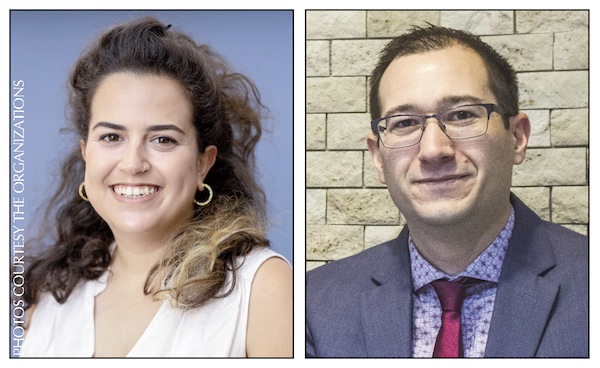
On Oct. 27 and 30, the Jerusalem Foundation of Canada and Canadian Friends of Hebrew University will bring the women leaders from MATI to Victoria then Vancouver, to tell their story and, through them, the story of Jerusalem. Michal Shaul Vulej, deputy chief executive officer, and Reham Abu Snineh, East Jerusalem manager, will speak about their experiences in East and West Jerusalem, and working to help empower and support underserved communities in workforce development and business opportunities. Their visit across Canada is sponsored by the Asper Foundation. In Vancouver, the visit is organized in partnership with the Jerusalem Foundation, CFHU and the Jewish Federation of Greater Vancouver.

For more information on specific events, contact Dina Wachtel, [email protected], or Nomi Yeshua, JFC, [email protected].

Format ImagePosted on September 16, 2022September 14, 2022Author CFHU VancouverCategories Israel, LocalTags Asper Foundation, CFHU, coexistence, Jerusalem Foundation, Jewish Federation, MATI, social justice
Masa Canada visits the coast

Masa Canada visits the coast

Mahla Finkleman, Canadian national manager of partnership and outreach for Masa Israel Journey (standing, fourth from the left), at Kits Beach in July with participants of the Shalom U’Lhitraot event. (photo from Masa Canada)

While the skies were closed for the first waves of the pandemic, with many organizations canceling their Israel trips, Masa Israel Journey saw an increase of almost 40% of North American students and young professionals traveling to Israel to partake in immersive four-to-10-month programs.

Since its establishment in 2004 by the Jewish Agency and the government of Israel, Masa has served more than 180,000 Jewish students and young professionals ages 16 to 35, from more than 60 countries. Offering experiences in gap, academic and career segments, Masa provides an unmediated and challenging journey into Israeli society, culture, politics and history, as well as access for global Jewry to Israeli businesses, social enterprises and academic institutions. Masa strengthens the Jewish leadership pipeline through the Impact and Leadership Centre, based in Jerusalem. When fellows return from Israel, they are ready to engage as active members in their community and many take on leadership roles.

Masa has regained a strong presence in Canada, with a new Canadian national manager of partnership and outreach, Mahla Finkleman, who sits within the Federation of Greater Toronto, and visits communities across the country. Since Finkleman started just over one year ago, Masa has sent more Canadians than ever before to Israel on programs.

This past summer, working from Vancouver, Finkleman partnered with the Community Kollel for a Shabbat dinner for Tu b’Av. Some 60 to 70 young professionals, including many Birthright alumni, gathered to learn about Masa opportunities and ways to get back to Israel for a meaningful experience, living like a local.

Earlier in the summer, in July, the first of three Shalom U’Lhitraot events took place, welcoming back Masa alumni from Israel and sending off others to Tel Aviv University, Masa Israel Teaching Fellows (MITF) and other programs.

A new condensed version of MITF is available now. MITF is an option for 21-to-35-year olds who have a bachelor’s or associate degree and whose mother tongue is English. Applications are due Nov. 1, with three city options to choose from: Rishon LeZion, Bat Yam and Ramle. The program, which costs $720 US, runs in 2023 from Jan. 5 to July 2, and is an exclusive partnership with Israel Experience.

Each city offers its own unique charm. In Bat Yam, you can take surf lessons and deep dive into the Israeli-Russian community. Rishon is Israel’s fourth largest city, with malls, parks, beaches and a zoo. And, in Ramle, an ancient city with mixed cultures and a rich history, the Pool of Arches is a top attraction, as is the Ramle market – additional perks are the spacious homes and a pool pass.

For more information, visit masaisrael.org/canada or the North American site, masaisrael.org. Anyone who has questions can also email Finkleman directly at [email protected].

This Rosh Hashanah, look out for Masa alumni postcards on the seats of your local Vancouver shul.

Format ImagePosted on September 16, 2022September 14, 2022Author Masa CanadaCategories Israel, NationalTags Canada, education, Israel, leadership, Mahla Finkleman, Masa Canada
Some basics of goalball

Some basics of goalball

This past summer, Israel’s male youth goalball team won the European ParaYouth Games. (photo by  Lilach Weiss)

Can you imagine a sporting event in which the audience sits in silence? Well, this is how goalball is played. Why? So that the visually challenged players can hear the bells inside the game ball.

And, speaking of the ball, it differs quite a bit from a soccer ball. In addition to having eight small holes in it – which allow the players to hear the two bells inside of it – the hard rubber ball is approximately 76 centimetres in circumference and weighs 1.25 kilograms. By contrast, a standard soccer ball has a circumference of 68 to 70 centimetres and weighs significantly less, between 400 and 450 grams.

To ensure fair competition, goalball participants must wear opaque eye shades. All international athletes must be legally blind, meaning they have less than 10% vision and are classified as B3 (partial sight), B2 (less sight than B2) or B1 (totally blind).

The goalball court has slightly raised markings so each player knows where their post is and the game is played indoors on a court measuring 18 metres long and nine metres wide, usually with short walls to help keep the ball inside. Again, this is different from soccer, which is played on a field that is 125 metres by 85 metres.

Each game is broken down into two 12-minute sessions with a three-minute break between the first and second halves. There are six players on a goalball team, with just three members playing at any one time.

Each goalball player has a specific job. The centre is the most responsible for defence, as they have the ability to support the left or right wing. The right winger defends the right-hand side of the goal and the left winger the left, but both are also main attacking players. The objective, as with most such games, is to score the most goals.

The team area is the first defence section, which starts from the goal line. In this area, defenders are allowed to block and control the ball to stop it from entering the goal.

The landing area starts at the end of the defence line. In this section, the attacking player can move around to take a shot at the opposing goal. The neutral areas are safe zones that provide space for defending teams to hear the ball coming towards them.

Here is how the game is played in a few situations. When the defending team blocks the ball, thus preventing a goal, the game continues. When the ball is blocked and then crosses the sideline, the play is restarted by the team that blocked the ball. When the ball is thrown over the sideline, the other team restarts the game.

Players protect the goal on their hands and knees. Unlike in soccer, the ball is not kicked, it is thrown from either a standing position underarm, or rolled. To reduce the sound and make it difficult for the opponents, players try to release the ball close to the floor. They can also make the ball quieter by spinning it. The team is given a foul if their player doesn’t throw the ball within 10 seconds of touching it.

Blind soccer, another sport played by visually challenged players, differs from goalball in several ways. For instance, while players in both games wear eye covers, players in blind soccer chase the ball in an upright position. Blind soccer halves are longer, at 20 or 25 minutes, and, in blind soccer, each team has five players on the pitch at any time, four outfield players who are visually impaired and a goalkeeper – who need not be visually challenged.

Israeli goalball coach Raz Shoham said most of the injuries in the game come from over-use of the body and not from being hit by the ball. In Israel, players’ free time is limited by the fact that almost all of them work or study.

photo - Goalball player Lihi Ben David in action at the Toyko Paralympic Games in 2020
Goalball player Lihi Ben David in action at the Toyko Paralympic Games in 2020. (photo by Keren Isaacson)

Before each practice, there is a 40-minute warmup session in which players exercise their torso, hands and legs. Practices are held on Thursdays and Fridays in four locations: Beer Sheva, Jerusalem, Tel Aviv and Afula. Men and boys practise mostly in Afula, while the women practise mostly in Jerusalem. Practice times are a function of when the sports auditorium is available.

Traveling can sometimes be an issue. Shoham explained that a strong player showed up at the team’s summer camp and wanted to continue playing after the summer ended, but there was a problem getting her from her village to practices. On the other hand, sometimes players leave the sport for a stretch of time and then return. Take Orel, who started playing while still in elementary school, left for a few years and now, at the age of 15, is a key player on the male youth team.

According to Shoham, goalball players range in age. At the moment, the oldest person who comes out to play is a 65-year-old grandmother. Currently, on the official playing teams, the oldest player is 35. The official team players get a few thousand shekels for playing, but it is not like regular soccer, in which team members frequently earn high salaries.

Israeli goalball players are expected to attend some 25 practices a month. And there have been good results from the hard work. Just this past summer, Israel’s male youth goalball team – players Asad Mahamid, Doron Hodeda, Shai Avni, Ariel Alfasi and Orel Ybarkan – won the European ParaYouth Games.

Coach Snir Cohen knew before the tournament that he had good players, but said he just didn’t know how good. His goal is developing this youth team into a strong adult team.

Nineteen-year-old player Lihi Ben David, who plays left wing, spoke with the Independent about her recent training experience in Brazil. The cost of the trip was largely covered by the Israel Sports Association for the Disabled (ISAD). The Israeli and Brazilian players conversed in English. She said it was refreshing to learn about a different culture. The hard part for Ben David, who is an observant Jew, was playing during the nine mourning days of the Hebrew month of Av.

Deborah Rubin Fields is an Israel-based features writer. She is also the author of Take a Peek Inside: A Child’s Guide to Radiology Exams, published in English, Hebrew and Arabic.

Format ImagePosted on September 16, 2022September 14, 2022Author Deborah Rubin FieldsCategories IsraelTags goalball, inclusion, Israel, Raz Shoham, sports
Several JNF projects advance

Several JNF projects advance

JNF Pacific region executive director Michael Sachs, left, in a meeting at Aviv House for autistic adults in Israel. (photo from JNF-PR)

Three Israeli projects supported by the Pacific region of the Jewish National Fund of Canada are advancing well, according to Michael Sachs.

Sachs, executive director of JNF Pacific region, visited the initiatives July 7-18. He was joined on the Israel trip by local JNF supporters Lisa and Mike Averbach. The trio surveyed projects in Rishon LeZion, in Jerusalem and at Nir Galim, a moshav near Ashdod.

The project in Rishon LeZion, south of Tel Aviv, is a women’s shelter that has faced challenges in reaching completion. In collaboration with the Israeli group No2Violence, the facility was supported by two Negev dinners in 2016 – one in Vancouver, honouring Shirley Barnett, and one in Winnipeg, honouring Peter Leipsic.

The shelter is envisioned to welcome 10 to 12 families and provide victims of domestic violence with a safe environment where they can access therapy, secure income and new housing.

Emergency shelter for victims of domestic violence is gravely lacking in Israel, where it is estimated that 65% to 70% of women and children escaping domestic abuse cannot access alternative housing due to lack of availability.

“I wanted to go and see with my eyes, with my feet on the ground, how it’s progressing,” said Sachs of the project. “Finally, shovels have started going into the ground and the foundation has been laid. This project, it had been stalled for multiple reasons, COVID included, but I wanted to go and see the progress because we have a commitment that we make to our donors in our community to fulfil the project no matter what.”

photo - Mike Averbach, left, and Michael Sachs at the construction site of the Vancouver/Winnipeg-supported women’s shelter in Israel
Mike Averbach, left, and Michael Sachs at the construction site of the Vancouver/Winnipeg-supported women’s shelter in Israel. (photo from JNF-PR)

One of the things that impressed Sachs most about the shelter is that it is adjacent to a community centre.

“For women and children who are in crisis, the ability to have a community centre, a place to go, a place for their kids to go, is extremely important, on top of just the safe haven,” he said.

Last year’s Negev campaign in the Pacific region raised funds for ALUT, the Israeli Society for Autistic Children, to renovate Aviv House, or Beit Aviv, in Jerusalem. This “home for life” for autistic adults was established in 1992 and is home to about 14 residents who require assistance in aspects of everyday life.

The building, more than 50 years old, was not wheelchair accessible and had infrastructural challenges. “It needed a lot of work,” said Sachs. The project, championed by honorary project co-chairs Penny Sprackman and David Goldman, saw a new roof put on the building, new bathrooms and doorways, among other upgrades.

Autism has co-morbidities and one of the residents at Aviv House has what is described as the most complex case of epilepsy in the state of Israel.

“This individual had not been able to have a real, proper shower until the renovation,” said Sachs. The renovated facility allows an assistant to accompany the resident in the new shower. “That’s just one example of how it made a difference,” he said. “The effect that we are having on the life of these individuals is immense.”

The ALUT project was especially meaningful for Sachs, he said, because it was the first initiative that took place after he became regional executive director, in April 2021. The fact that it also raised autism awareness in Canada was a bonus, he added.

A third project that Sachs and the Averbachs visited was Beit Haedut, the Testimony House Museum, on Moshav Nir Galim. The museum, located in a community founded by survivors of the Holocaust, focuses on the lives survivors made in the state of Israel.

This project is the focus of the current Pacific region Negev campaign and will involve an especially meaningful Vancouver component. In an interactive space, Vancouverite Marie Doduck, a child survivor of the Holocaust, will present virtually to visitors about her life. She will be the only English-language presenter in the virtual space, meaning that every Anglo visitor to the museum will “meet” her and hear her testimony.

Sachs has heard the question before: Why a Holocaust education centre so close to Yad Vashem, the world’s foremost education, commemoration and research centre on the topic?

“My answer is, why not?” he replied. “Why not have more places teaching people about the Holocaust, the tragedy that happened? It’s our responsibility to make sure that more and more of these centres are supported and able to function and teach a population that is starting to forget. It’s not that because you have one, you can’t have the other.”

The quality of the museum is also significant, he said: “It is a Holocaust centre that, in my eyes, punches above its weight class.”

Being close to Ashdod, where many cruise ships arrive, and near the Negev Desert, the location is also easily accessible for visitors.

Sachs hand-delivered Doduck’s recorded testimony to the museum. He credited the Vancouver Holocaust Education Centre for its assistance in making the technically complex project possible.

Returning from his first trip to Israel as JNF Pacific region executive director, Sachs was rejuvenated.

“Most people come back from Israel and they’re drained,” he said. “I came back with a newfound energy because, when you see the fingerprint JNF Canada has on the state of Israel and you see the efforts, the progress, the impact that our local community – our tiny little local community – is having on the ground there and for the people in Israel, it’s awe-inspiring. It really is. You come out of it and you are more energized than ever to continue to make a difference.”

Lance Davis, chief executive officer of JNF Canada, commended the Pacific region in a statement to the Independent.

“On behalf of JNF Canada, I am so proud that we have advanced two key projects for our organization, the Vancouver/Winnipeg women’s shelter and the renovation of the Aviv House supporting autistic individuals,” said Davis. “Thanks to the generosity of donors from the Pacific region, we are able to help build the facilities that will transform the lives of vulnerable Israelis in a profound manner. Our JNF supporters can take great pride in the fact that together we are building the foundation for Israel’s future.”

Due to COVID, JNF has not held a Negev Dinner in Vancouver since 2019, opting instead to run campaigns without the traditional gala event. Sachs hopes 2023 will see a return to normalcy.

“God willing, we’ll all be able to be back together next year for a wonderful and beautiful Negev Dinner with a wonderful honouree,” he said.

Format ImagePosted on September 2, 2022September 1, 2022Author Pat JohnsonCategories Israel, LocalTags autism, domestic violence, Israel, Jewish National Fund Canada, JNF, JNF-PR, Michael Sachs, Mike Averbach

Help teens with their English

Want to make a difference in the lives of Israeli teens? Consider joining Israel Connect, a program where local adult volunteers connect online, one-on-one, via Zoom, with Israeli high school students who want to improve their English conversation and reading skills. The program starts on Oct. 23 and is organized by Chabad Richmond, in partnership with the Israeli Ministry of Education. It entails a small and rewarding commitment of 45 minutes once a week.

There are currently 15 local volunteers participating in the Israel Connect program as tutors/mentors, and Chabad Richmond is looking to increase that number, since the need continues to grow.

“We’re looking for volunteer retirees, seniors or any adults with flexible schedules to join the Israel Connect program. No previous tutoring or teaching experience is necessary and the curriculum is provided for tutors/mentors,” said Shelley Civkin, local program coordinator. “If you’re an adult and a fluent English speaker, you have basic computer skills and you own a computer with a camera, that’s pretty much all you need. Oh, and, of course, a strong desire to help Israeli youth.”

Volunteers do not need to speak Hebrew and can tutor from home. Basic training and technical support are available.

Time preferences of volunteer tutors/mentors will be coordinated beforehand and sessions take place in the morning between 7 and 11 a.m. Vancouver time, any day between Sunday to Thursday. “All Israel Connect asks is a minimum commitment of one school year, in order to ensure consistency for the students,” said Civkin.

“It’s a meaningful and practical way for community members to support Israel and build bridges between diaspora Jews and Israelis,” said Rabbi Yechiel Baitelman of Chabad Richmond. “You’ll be doing a mitzvah, while investing in Israel and its young people. Plus, good English skills will give them an advantage in accessing post-secondary education and getting better jobs. English proficiency is crucial to Israeli students, since it accounts for a third of their entrance exam marks for university.”

“Partnering with the Israeli Ministry of Education, the Israel Connect program targets teens from less advantaged neighbourhoods in Israel. Most volunteers really enjoy helping their Israeli students and develop a lasting bond with them. It often goes beyond simply tutoring the curriculum, and turns into friendship and mentorship,” added Civkin. “Conversations sometimes continue long after the school year is over. This kind of one-on-one tutoring makes a huge difference in their lives, both educationally and personally…. Estimating the impact of this program on Israeli youth is, of course, speculative, but we do know for certain that it helps improve their school grades. It’s incredibly satisfying to know that you’re doing something concrete to help Israeli students better their lives.”

The curriculum consists mainly of a tour of Israel, focusing on the wealth of historically, culturally and biblically significant cities and sites. It’s not uncommon for both the students and the tutors to learn something new about Israel at each lesson.

To volunteer, or for more information, contact Deborah Freedman at Chabad Richmond, 604-277-6427, or email [email protected].

For anyone who can’t participate as a tutor, Chabad Richmond welcomes financial support for the Israel Connect program, which covers overhead costs like technical support, staffing and other administrative costs. To support the program call Chabad Richmond or email [email protected].

– Courtesy Chabad Richmond

Posted on September 2, 2022September 1, 2022Author Chabad RichmondCategories Israel, LocalTags Chabad Richmond, education, Israel Connect, seniors, teens
Help break the cycle

Help break the cycle

Canadian Hadassah-WIZO’s S.O.S. – Starting Over Safely campaign is 27 hours long, beginning at 9 a.m. PT on Aug. 23. (photo by Mickey Noam Alon)

With the COVID-19 government shutdowns and mandatory quarantines, domestic violence has increased significantly across the globe over the past two years. The drastic increase in intimate partner and domestic abuse has been coined the “Shadow Pandemic” by the United Nations.

In Canada, one woman is killed in a violent act every two-and-a-half days. According to the provincial ministry for public safety and Statistics Canada, every year in British Columbia there are more than 60,000 physical or sexual assaults against women – almost all of them committed by men.

In Israel, the situation is just as critical. In the first year of the pandemic, 20,140 domestic violence complaints were lodged with police, an increase of 12% from the previous year. Twelve women were murdered in the first six months of this year.

In accordance with its mission, Canadian Hadassah-WIZO (CHW) is working to empower women by stepping up emergency support and services at this critical time. CHW is launching the second annual S.O.S. – Starting Over Safely summer campaign, with proceeds helping empower victims of domestic violence in Canada and Israel.

One of the most frightening things about domestic abuse is that half of the women murdered by their partners never experienced physical violence before. Domestic violence can happen to anyone, anywhere, anytime. This year, through a new partnership with Michal Sela Forum, CHW is also promoting an awareness campaign to help women understand the warning signs in a relationship.

S.O.S. – Starting Over Safely 2022 has three campaign priorities, including Franny’s Fund in Canada, and WIZO programs and the Michal Sela Forum in Israel. The following campaign goals are intended to empower at-risk women and children to break the cycle of violence in Canada and Israel:

  • Provide help for parents and families in need of an urgent response;
  • Provide access to critical resources such as legal counsel and counseling services;
  • Provide women and their children with the basic essentials to start over safely;
  • Empower women and their children by providing financial help, social and personal support, employment support, and access to a network of other women in similar circumstances;
  • Provide women and their children with specially trained canine protection; and
  • Fund respite summer camp experiences for at-risk youth.

“CHW strongly believes that every human being deserves the right to achieve their full potential, while living in safety and security. You have the power to empower,” said Lisa Colt-Kotler, CHW chief executive officer.

The 2022 fundraising goal is $350,000. All funds donated will be matched three more times by a community of dedicated donors recognized as “Matching Heroes” during the 27-hour campaign, which kicks off at 9 a.m. PT on Tuesday, Aug. 23, 2022. During the crowdfunding period, each gift donated on the website chwsos.ca is quadrupled.

To donate or learn more, visit chwsos.ca.

– Courtesy Canadian Hadassah-WIZO

Format ImagePosted on August 19, 2022August 18, 2022Author Canadian Hadassah-WIZOCategories Israel, NationalTags CHW, domestic violence, fundraising, tikkun olam, women
Israel’s new Ethiopian airlift

Israel’s new Ethiopian airlift

Candance Kwinter, far right, and other members of a foreign delegation to Ethiopia, take in a synagogue service in Gondar. (photo from Candace Kwinter)

The latest airlift from the Horn of Africa is underway – and a Vancouver community leader was on the plane from Addis Ababa recently with 179 Ethiopian Jews making aliyah.

Candace Kwinter flew to Ethiopia at the end of May, where she met up with three other Canadians, a group from North and South America and a team of Israelis. In addition to being chair of the Jewish Federation of Greater Vancouver, Kwinter is on the board of the Jewish Agency for Israel and sits on numerous JAFI committees.

Pnina Tamano-Shata, Israel’s minister of immigrant absorption, who was born in Ethiopia in 1981 and is the first Ethiopian-Israeli cabinet minister, was also on the trip. So was Micah Feldman, author of the book On Wings of Eagles: The Secret Operation of the Ethiopian Exodus, who was able to contextualize what first-timers were witnessing.

A trickle of Jewish refugees has traveled from eastern Africa to Israel (and pre-state Palestine) since the 1930s, at least. From the beginning of the Ethiopian civil war, in 1974, through the catastrophic famine on the Horn of Africa in the early 1980s, rescue missions ramped up. Operation Moses, in 1984/85, brought about 8,000 Ethiopian Jews to Israel, primarily from refugee camps in Sudan. Operation Solomon, in 1991, brought more than 14,000 Ethiopians.

The current airlift, called Operation Tzur Israel (Rock of Israel), is expected to bring more than 2,000 olim over six months. The Ethiopian Airlines flight that Kwinter was on was the first of several. When this mission is complete, there will be an estimated 10,000 Jews left in Ethiopia.

The Jewish identity of the olim is, in some cases, contested. The Ethiopians have included Beta Israel, people who follow Jewish traditions that would be recognizable to most observant Jews worldwide. They also include Falash Mura, members of Beta Israel communities who, since the advent of Christian missionizing in the area, have been converted, sometimes forcibly.

photo - The first plane of Operation Tzur Israel to land in Israel was met with fanfare. It brought 179 Ethiopian Jews to their new home
The first plane of Operation Tzur Israel to land in Israel was met with fanfare. It brought 179 Ethiopian Jews to their new home. (photo from Candace Kwinter)

The current project is entirely based on family reunification. Kwinter noted that, since the airlifts began 40 years ago, Ethiopian Jews have migrated primarily from the more rural Gondar area to cities, mostly the capital Addis Ababa. This migration has several corollaries, said Kwinter. Unlike the first olim of decades ago, these new Israelis are familiar with electricity and plumbing, although they may not have access to them at home. They may also have intermarried. So, while siblings who have been separated for decades are reunited, in some cases the nieces and nephews (and the Ethiopian spouses) may not be halachically Jewish. In these cases, they will undergo conversions.

Kwinter and the other foreign representatives flew to Gondar to see how Jews had lived for centuries and where some still reside.

“We went to an ancient synagogue, then we went to an ancient Jewish cemetery,” she said. “It’s very primitive, it’s nothing like we can imagine. It’s like they’re still living the way people did three, four or five hundred years ago.”

The villages, which have typically 100 or 200 Jews, were always located on rivers or streams, Kwinter said, “because they still believed in the mikvah. Women had menstrual tents, like from ancient days. In their time, they had to be put in their tents and they needed the freshwater to provide for these old rituals.”

The synagogue services were, at once, unlike anything Kwinter had seen before and yet entirely familiar. The dirt-floor synagogue was filled with several hundred men and women, sitting separately, the women all in white shawls, men wearing tallit and many laying tefillin.

Kwinter was saying Kaddish for her mother, who passed away just weeks before the trip, and she had no problem following the service.

Next door, a 10-foot-by-10-foot tin shack made up the Talmud Torah, with an open fire pit that served hundreds of meals to children and pregnant women in the community.

Although the transition facing these migrants will certainly not be easy, the latest newcomers have it smoother than some of the earlier ones, who fled during times of war and famine, many losing family members and being terrorized by thugs while walking across mountains to Sudanese refugee camps.

The delegation also met with Israel’s ambassador to Ethiopia, Aleligne Admasu, who was born in Ethiopia and made aliyah in 1983.

The operation will cost about $10 million US and is funded by Jewish federations and JAFI. Once the olim arrive in Israel, they will receive the services offered to immigrants, including Hebrew-language ulpan. Unlike native-born Israelis, most of whom do their military service before university, Ethiopian-Israelis generally complete their schooling first to ensure language proficiency, Kwinter said.

There were 179 Ethiopians on Kwinter’s flight – one was held back after testing positive for COVID. Few Ethiopians have received the COVID vaccine and most of the olim will receive them on arrival, along with the sort of routine vaccines that Israelis and Canadians receive in childhood.

Time flew on the five-hour flight, Kwinter said.

“We had lots of things for the kids to do, like sticker books, candies and all that kind of thing,” she said. “We got to know them all, even though we didn’t speak the same language.”

Ethiopian-born Jewish Agency officials were on board to translate, if necessary, but it wasn’t necessary, Kwinter said.

“You didn’t need to translate,” she said. “The kids were crawling all over us. It was the best plane ride ever. For five hours, it felt like five minutes. I wouldn’t have wanted to be a flight attendant because I don’t know how they got up and down the aisles because it was chaotic. It wasn’t like a regular plane ride.”

When the plane landed, there was a major ceremony marking the beginning of the new operation, with plenty of media coverage. Then the Ethiopians were transported to another part of the airport, where their family members were waiting to be reunited, some of them having not seen one another in decades.

“The very elderly would kiss the ground,” said Kwinter. “Everybody got an Israeli flag, and there was lots of singing and dancing and music.… It was really quite remarkable.”

While the Ethiopians were on a life-altering journey, Kwinter’s travels were hectic in a different way. She was on a plane every day for seven days and, a couple of days after returning home, she tested positive for COVID, as did many of the Americans.

Reflecting on the experience, Kwinter is filled with gratitude.

“Thank God for Israel that we can do this,” she said. “Thank God for world Jewry. Thank God for federations that collect money, and we can save all these lives. I come from a family of survivors and my husband as well. If we didn’t have Israel, we wouldn’t be able to do this and we’d be living another Holocaust again, I believe, all over the world.”

Format ImagePosted on July 22, 2022July 20, 2022Author Pat JohnsonCategories IsraelTags aliyah, Candace Kwinter, Disapora, Ethiopia, federations, Israel, JAFI, Jewish Agency, olim, Operation Tzur Israel
Living their values daily

Living their values daily

Dror Israel representatives Noam Schlanger and Joanna Zeiger-Guerra visited Seattle, Victoria and Vancouver last month. (photos from Dror Israel)

Last month, two representatives of Dror Israel, Noam Schlanger and Joanna Zeiger-Guerra, paid a visit to the region – Seattle, Victoria and Vancouver.

“We are educators at Dror Israel, a grassroots educational organization which works all through Israel,” Schlanger told the Independent. “Our 16 intentional communities of young, trained educators operate a variety of programs, including a network of innovative schools for at-risk youth and Jewish-Arab encounters, which all aim to bring together Israel’s different populations and create a more just and equal society. Our pedagogy focuses on empowerment and community building.”

Comprised of 1,300 people, Dror Israel works in a multitude of fields in Israel and has an impact on the lives of more than 150,000 people each year.

As for their specific involvement in Dror Israel, Schlanger has led a youth centre in Kafr Manda, an Arab town in Lower Galilee, and now works at the community garden in Acre (in northern Israel). Zeiger-Guerra is an educator who is familiar to many young people in southern British Columbia, having worked at Camp Miriam, the Jewish summer camp on Gabriola Island, for several summers. She is also a Habonim Dror alumna.

“I founded and operate a community garden where I work with mainly elderly Russian speakers, and Joanna mentors a cohort of our young educators taking their first steps in a variety of formal and informal educational settings,” explained Schlanger.

During their local visits, Schlanger and Zeiger-Guerra met with a variety of individuals, groups and communities to inform them of their work, specifically Dror Israel’s coexistence programs and ongoing relief efforts with Ukrainian refugee children. These gatherings included talks at Congregation Emanu-El in Victoria and with the Victoria Multifaith Society.

The pair also met with representatives from the Jewish Federation of Victoria and Vancouver Island and the Jewish Federation of Greater Vancouver. Those encounters involved “thinking about creative opportunities for programming collaboration,” said Schlanger.

For Schlanger, the message Dror brings – an inclusive vision of Zionism that strives to create a place for everyone, and the dream of a just and equal Israel – is a breath of fresh air amid the polarized discourse about the country.

Dror Israel was started in 2006 by graduates of the Israeli youth movement Hanoar Haoved Vehalomed, who served together in the Israel Defence Forces and shared a belief in the founding principles of Zionism. “Through truly innovative education based on dialogue and understanding, we teach leadership and responsibility for self and community. We promote social activism to drive positive change,” the organization states on its website.

Both Schlanger and Zeiger-Guerra live on urban kibbutzim established by Dror, a recent adaptation of the rural kibbutz. Between 30 to 100 young adults, aged 20 to 40, live on each of Dror’s 16 kibbutzim in Israel and work on the organization’s educational, cultural and social projects. With an emphasis on social justice, members of Dror Israel reside in the neighbuorhoods they serve, seeking to bridge gaps and solve local problems.

Throughout the pandemic, Dror Israel has been engaged in opening daycare centres for the children of doctors, nurses and healthcare workers; delivering groceries and medicines to home-bound seniors and those in need; volunteering on farms; and providing online programming for thousands of teens.

“Our message and the story of our work really resonated with everyone we met and sparked a variety of thoughts about future cooperation between Dror Israel and local organizations,” said Schlanger of his time here. “Our hearts were warmed by people’s decision to support our programs. It really attests to the strong, living connection between the Jewish communities here and Israel.”

After more than two years of being unable to visit or host trips to Israel due to COVID, Schlanger said Dror Israel hopes to reinvigorate connections that began many years ago in the region. Aside from delegations of educators to British Columbia, it looks forward to hosting visits in Israel.

“Joanna and Noam were very well-received,” said Sid Tafler, one of organizers of the emissaries’ stay in Victoria. “Many people were inspired by their message of peace and coexistence in Israel, principles they don’t just espouse but practise and live every day.

“We learned about their compassionate and community-building work with youth-at-risk, isolated older people, members of minority communities – including Druze and Arabs – and integrating new olim recently arrived from war-ravaged Ukraine. We have received guests from Dror before and expect we will welcome them again.”

For more information, visit drorisrael.org.

Sam Margolis has written for the Globe and Mail, the National Post, UPI and MSNBC.

Format ImagePosted on July 22, 2022July 20, 2022Author Sam MargolisCategories Israel, LocalTags Dror Israel, education, inclusion, Israel, Sid Tafler, tikkun olam, Victoria, youth, youth-at-risk, Zionism
Fighting racism, terrorism

Fighting racism, terrorism

Tag Meir chair Dr. Gadi Gvaryahu speaks, as moderator Maytal Kowalski and the live and Zoom audience listen. (photo from New Israel Fund of Canada)

Dr. Gadi Gvaryahu, chair of the Israeli anti-racism organization Tag Meir, addressed live and Zoom audiences last month in a talk organized by the New Israel Fund of Canada and hosted by Or Shalom Synagogue.

At the event, titled An Israel at Peace with Itself: Solutions to Racism and Inequality, Gvaryahu described his early efforts in social activism, which began after Yitzhak Rabin was assassinated in 1995. “The fact that a religious person with a kippah on his head decided to get rid of our prime minister was a crucial point for me,” he said.

Gvaryahu established the nonprofit Yod Bet b’Heshvan (12 Heshvan, named for the date of the assassination on the Hebrew calendar) and the Yitzhak Rabin Memorial Synagogue in Rehovot, where he resides.

According to Gvaryahu, the creation of Tag Meir came about in 2009, following an escalation of racist rhetoric and acts on the part of far-right religious groups in Israel. Tag Meir is a play on words in Hebrew related to tag meicher, or “price tag.” Since the early 2010s, a small percentage of extremist settlers has carried out attacks against Arabs, meant to show the Israeli government “the price” of failing to support their cause.

“Tag Meir, on the other hand, means ‘light tag.’ We try to bring light into the world,” Gvaryahu said. “If there is a price tag attack, we want to be with the victims. We don’t distinguish if they are Jewish victims or Muslim victims. It is crucially important to be with them. We tell them they are not alone and support them.”

Gvaryahu gave several examples of Tag Meir’s work. One followed the July 2014 kidnapping and murder of Mohammed Abu Khdeir, a 16-year-old Palestinian. Immediately afterwards, Tag Meir chartered buses from Tel Aviv and Jerusalem to visit those grieving. The large Israeli contingent wished to pay its respects to the Abu Khdeir family, and they were eventually welcomed in the mourners’ tent.

“This family became our friends and every year since then we visit them – usually around Hanukkah. We bring sufganiyot [jelly doughnuts] and they bring oranges from Jericho,” Gvaryahu said, pointing out that this was a good illustration of how, even in the face of terrible tragedy, a victim’s family can be shown how the perpetrators are not representative of a whole people.

Gvaryahu stressed that Tag Meir gives no preferential treatment to Jewish or Muslim victims of terrorism or hate crimes. In instances of Muslim terrorism, Tag Meir delegations, comprised of Jews and Muslims, are also sent out to those grieving.

Tag Meir is a coalition of 48 organizations that works to build tolerance and fight racism in Israel. It is made up of groups from various religious backgrounds – Arab, secular, Reform, Masorti (Conservative), Orthodox – which Gvaryahu views as a key reason for its success. With volunteers located at several places in Israel, Tag Meir is able to dispatch help quickly, supporting victims with emotional, financial and legal assistance.

At its core, Tag Meir sees the battle against racism as a part of a campaign that supports both the democratic and traditional Jewish values of loving one’s neighbours and justice for all. Whatever their politics, the organization argues, the majority of Israelis oppose acts of violence against innocent people who “are being used as pawns in a political fight that has little or nothing to do with them.”

During the violence that erupted in Israel in May 2021, Tag Meir members worked to ease tensions between Jewish and Arab communities. They set up a human chain around the walls of Jerusalem’s Old City, visited areas that had been affected by riots, and handed out flowers in cities with large Arab populations in a gesture of peace.

Each year, Tag Meir orchestrates Flowers for Peace on Jerusalem Day, a time when activists hand out roses to residents of the Old City.

The umbrella group goes beyond responding to Jewish-Muslim attacks. In 2012, following riots against African refugees in South Tel Aviv, the home of some Eritrean refugees in Jerusalem was firebombed. Tag Meir organized a rally in the area and provided the family with material support.

Tag Meir also offers training in Israel, with programs for teachers in the national Orthodox school system and workshops in educational institutions across the country. Among the workshop topics are caring and empathy, open-mindedness and mutual understanding.

Responding to an audience question about the current political situation in Israel, Gvaryahu said, “I have no doubt in my mind that the next coalition will have Arab members and that the party of Mansour Abbas (the United Arab List) will be bigger and stronger,” citing the chance that more Arabs will vote in the next election. “This trend of governments working with Arab parties is good news and hopefully it will continue.”

Gvaryahu’s cross-country speaking tour included stops in Montreal, Ottawa and Toronto. His Vancouver talk on June 20 was moderated by Maytal Kowalski, a local board member of NIF Canada, and opening remarks were given by Ben Murane, executive director of NIFC.

For more information about Tag Meir and the New Israel Fund of Canada, visit tag-meir.org.il/en and nifcan.org.

Sam Margolis has written for the Globe and Mail, the National Post, UPI and MSNBC.

Format ImagePosted on July 22, 2022July 20, 2022Author Sam MargolisCategories Israel, LocalTags coexistence, Gadi Gvaryahu, New Israel Fund, NIF, NIFC, Tag Meir, terrorism, tikkun olam
STEAM-powered schooling

STEAM-powered schooling

ORT delegate Nata Saslofsky with students from the D. Dan and Betty Kahn STEAM Centre at the Rodman Middle School in Kiryat Yam, Israel. (photo from ORT)

As a town with one of the highest percentages of new immigrants in Israel, Kiryat Yam is welcoming many refugees from Ukraine. One of the most important elements of helping these families process their trauma and settle is ensuring that their children’s education resumes.

Kiryat Yam’s low socioeconomic index means that local students face more academic challenges in comparison to their counterparts in the centre of Israel. But it’s here that kindergarten children are being taught how to build and even program simple robots, enabling them to gain rudimentary familiarity with technology in preparation for studying STEAM (science, tech, engineering, art, math) subjects in the future.

“Through our robotics programs in kindergartens, and continuing at the D. Dan and Betty Kahn STEAM Centre at the Rodman Middle School, we provide under-resourced children with an extra boost from the youngest age possible, so that they’ll gain the tools and the confidence to pursue higher education and fulfilling careers,” said Dan Green, chief executive officer of World ORT. Green was speaking on May 16 to World ORT delegates who, for the first time in more than two years, convened in Israel to experience firsthand the extensive work of World ORT and meet students who are directly impacted by it.

During a packed visit to Kiryat Yam, between meetings with the mayor and high-level municipal and educational representatives, delegates got an up-close view of the natural progression of World ORT’s STEAM education in action. After watching 5-year-olds playing with the robots they’d built and programmed, the group met middle-school students at the Kahn STEAM centre’s robotics lab who were delighted to show off the robots they’d built and coded from scratch.

“I was impressed by the Kadima Mada robotics demonstrations in Kiryat Yam,” said Jack Kincler of Montreal, who serves as the ORT Canada co-president. “It teaches kids from a young age about following a thought process, team effort, and step-by-step execution until the final, rewarding result is achieved.”

As an added value to the program, students who have gained a basic level of proficiency are encouraged to mentor their peers, thereby acquiring additional skills that will serve them well.

Nata Saslofsky of Atlanta, Ga., a member of ORT America’s National Leadership CohORT program, said, “Seeing firsthand the passion and excitement of ORT students for the robots they built from ideation to conception was exciting, impressive and heartwarming. It would be an amazing world if all kids had opportunities to pursue their interests by taking courses in STEAM subjects that advanced their skills and knowledge. I believe this will lead to fulfilling careers that bring them self-worth and an opportunity to give back to humanity with greater impact.”

Technion graduate Natalie Korlick, a resident of Kiryat Yam and originally from Russia, is one of the instructors at the STEAM centre. “I remember when an interest in science was considered nerdy. Today it’s become cool. Everyone wants to learn robotics.”

Korlick, who also works as a math and science tutor, said academic gaps are evident in almost all students from all grades. “It’s as if they lost an entire year,” she said, referring to the sporadic, long-distance schooling during COVID. “This year, they have to work extra hard to catch up.”

If that’s true for the students at Rodman, it’s all the more so for the Ukrainian students, who’ve seen their whole world turned upside down, and who must adapt to a new country, language and mentality. Thanks to her knowledge of Russian, Korlick is able to provide an extra level of support for the newly arrived Ukrainian students.

“Helping these kids who have been through so much and who arrived with little more than the clothes on their backs is exactly what we’re about,” said Conrad Giles, who has served as World ORT president for the last six years. “We couldn’t be happier that our programs are being used to help get them on track to a better future.” 

– Courtesy International Marketing and Promotion (IMP)

Format ImagePosted on July 22, 2022July 20, 2022Author Sharon Gelbach IMPCategories IsraelTags education, Israel, Kiryat Yam, ORT Canada, STEAM, World ORT

Posts pagination

Previous page Page 1 … Page 9 Page 10 Page 11 … Page 48 Next page
Proudly powered by WordPress