Zack exhibit celebrates nature

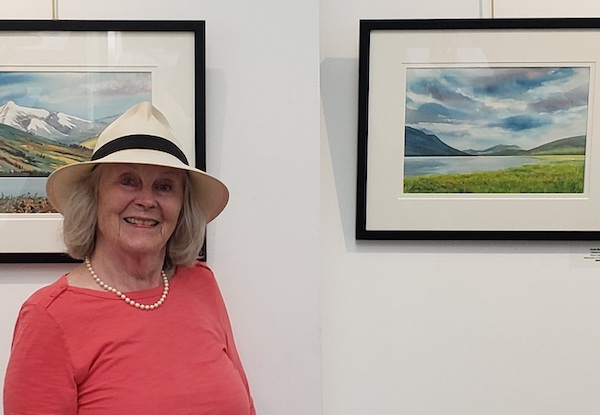
Enda Bardell (photo from Enda Bardell)

Creativity manifests itself in people’s lives in different ways and at different times. For Enda Bardell, various forms of art occupied her for decades, while Mike Cohene discovered woodcarving only a few years ago, on his way to retirement. Their double show, Artistry in Wood and Water, opened at the Zack Gallery on July 26.

Bardell told the Independent that she was born in Estonia. In 1944, when she was a young child, her family fled from Estonia, then occupied by the Nazis, to Sweden. Her mother worked at a paper factory there, and Bardell played with paper dolls she made herself. She also drew all the dolls’ colourful outfits. “I gave the dolls away to other girls, to make friends,” she recalled. “My first attempts at fashion design.”

A few years later, the family was forced to move again. The Russian communist government wanted the return of all the Estonians who had escaped the Nazis during the war, and Sweden was going to comply with that demand. But Bardell’s father didn’t want to live in communist Russia, so they became refugees again, this time ending up in Canada.

“In 1951, we came to Winnipeg,” said Bardell. “I went to school there and I desperately wanted to fit in. To belong. To be Canadian. I participated in many school clubs and activities. Entered an art class, too. My teacher praised me and recommended that I send one of my drawings to an interschool art competition. I did. And I won. I knew then that I was an artist.”

Interested in landscapes and abstracts, Bardell painted a lot as a teenager, but, after her high school graduation, she became deeply involved in fabric art. “I sold my batiks at craft fairs and house parties. People liked them, and someone suggested I should open my own store,” she said. “I did. I designed lots of different textile objects: skirts, pillowcases, aprons, etc. I felt that I needed a business course, in addition to my art education, so I took it. My store was very successful.”

But, as soon as the store achieved that success, running it lost its challenges. “I became bored,” said Bardell. “It was time for a change.”

She sold the store and did many other things in her professional life. “I always want to try something new, something I’ve never tried before. At one time or another, I was a lamp designer. I worked in banking. I was a realtor. I designed costumes for the Vancouver movie industry,” she said.

She also traveled a lot. “I have visited 38 countries. I like adventures, like it when I can’t speak the tongue. Then I have to express myself through body language. I have to be creative,” she said.

Art always shimmered on the periphery of her life, a constant creative supplement to her various commercial careers. First, abstract oils and acrylics, and, later, watercolours. Painting eventually metamorphosed into the focus of her existence. In the past two decades, she has participated in multiple solo and group exhibitions in Canada and abroad. In 2008, she even participated in an art show in her native Estonia, the Estonian Art in Exile exhibition at KUMU, the National Museum of Art in Tallinn. KUMU acquired one of her acrylic abstracts for their permanent collection; another of her paintings is in the Tartu Art Museum in Estonia. Her paintings are represented by many local galleries.

The current exhibition at the Zack is the result of a trip Bardell took to Yukon shortly before the COVID pandemic temporarily closed all travel. “My son lives in Yukon,” she said. At his prompting, she applied and was granted residency for one month at Ted Harrison Cabin in 2018. “We hired an RV and traveled there for two weeks,” she said. “Yukon was amazing: mountains, rivers, lakes. The place resonated with me. I took 1,400 photos during our travels. Based on the selection from those photos, I painted 40 watercolour pieces during my stay at the cabin. It was a privilege to stay in that wonderful place, especially because I had met Ted previously.”

Many of Bardell’s paintings in this series involve rivers and lakes. “I like water,” she said. “I have always lived on the water, except for one year in Winnipeg. I swim year-round here, summer and winter. Sometimes, I have seals swimming with me. It feels magical.”

When she submitted her Yukon series to the Zack Gallery, it was accepted, on the condition that it would be a double show, as gallery exhibitions must have a Jewish connection. Bardell’s Jewish connection became Mike Cohene, a local woodcarver. His colourful carved fish complement perfectly Bardell’s watercolours of Yukon’s rivers and lakes.

Unlike Bardell, Cohene didn’t do anything artistic until 2009. “I had a solid clothing business,” he said. “Awhile back, I started thinking about retiring and selling the business.”
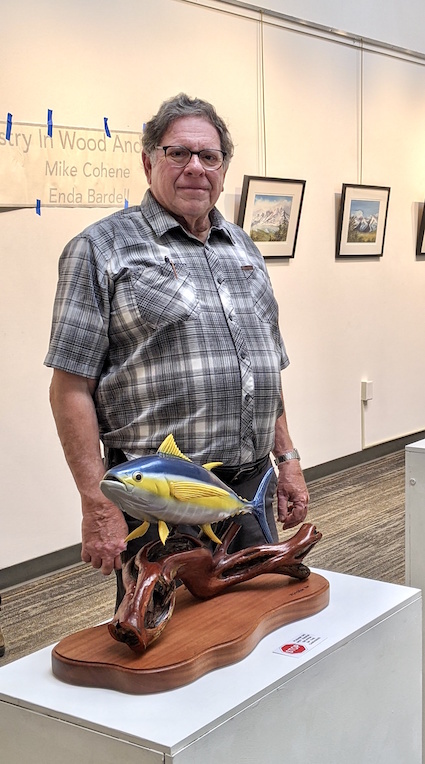
photo - Mike Cohene
Mike Cohene (photo by Linda Babins)

In the summer of 2009, Cohene visited Steveston Farmers Market. “They had a booth of the Richmond Carvers Society – I thought their works were outstanding,” he said. “I always whittled but I never considered myself artistic. I started talking to the man in the booth, expressing my admiration. He said anyone could learn to do it. He invited me to come to the club meeting in September. I went.”

Since that day, he has learned a lot about the artistry and the technique of woodcarving. His journey began with woodcarving classes at the society. Later, he took a course at Emily Carr University of Art + Design and enrolled in carving workshops.

“My first carving was a bear cub,” he said. “Then I made a dolphin. Then I started carving fish and birds…. I’ve always been a fisherman, but I never studied fish anatomy before. I caught a fish and tossed it into a bucket. Now, I catch a fish and study it: the fins, the tail, the scales, how the colours change. I look at fish from a new perspective.”

In 2017, Cohene participated in his first two-artist exhibition at the Zack Gallery, with photographer Joanne Emerman. Since then, his art has become even more refined. “I learned more sophisticated techniques and tools,” he said. “I got several residencies in B.C. and Oregon.” Three years ago, he began teaching woodcarving to other Richmond Carvers Society members.

To create his wooden creatures as life-like as possible, Cohene uses various reference materials. “Mostly I use my own photographs,” he said. “When other people photograph wildlife, they give it their own interpretation, but I want to follow my own vision.”

His statues of fish include rocks and corals, all carefully carved and painted in bright, realistic colours. “Sometimes, one statue takes up to 20 coats of paint – different wood parts absorb paint with different intensity,” he explained.

He also uses tree branches as mounting blocks – they are not carved, just sawed off, polished and lacquered. “I only use dead wood for my statues. I often walk along the beach and pick up interesting pieces of driftwood. I’ve never harmed even one living tree,” he said.

Recently, Cohene has started exploring First Nation carving. The motifs attract him, and he has several pieces on display at the gallery, including two decorative oars.

He also creates Judaica – mezuzot, chanukiyot and dreidels – some of which can be seen at the gallery. Cohene has been to Israel 34 times. “Once, I brought 12 kilograms of olive wood with me from Israel, and I make many of my Judaica pieces from the reclaimed Israeli wood,” he said. “Olive wood has such a beautiful texture. And dreidels are fun to make.”

Whatever he works on, Cohene always gives it his all. “For me,” he said, “woodcarving is a form of self-fulfillment.”

Artistry in Wood and Water runs until Sept. 5. To learn more, visit the artists’ websites: endabardell.com and mikecohene.com.

Olga Livshin is a Vancouver freelance writer. She can be reached at olgagodim@gmail.com.
Educating differently

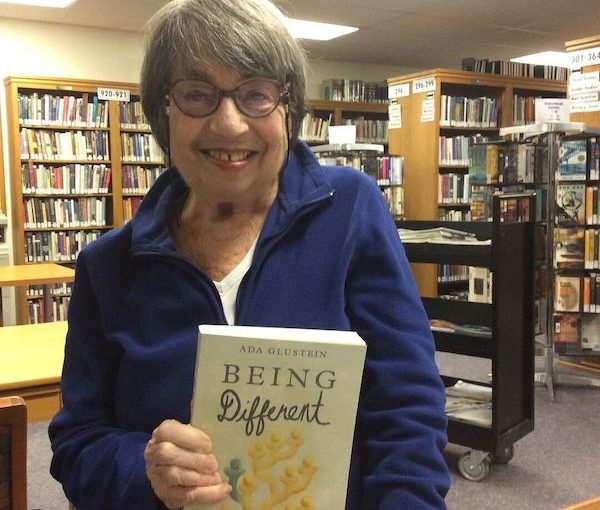
Ada Glustein’s passion for learning and teaching shines through in her self-published memoir Being Different. (photo from Ada Glustein)

Duke’s father would beat him. Tien, a refugee from Cambodia, had witnessed unimaginable violence. Louise was in and out of foster care because her father had drug addictions and her mom was emotionally unstable.

These are just a few of the countless children Ada Glustein encountered in her time as a teacher. Many of her young charges – she taught kindergarten mostly – faced harsh conditions at home and adult-sized problems. She shares her and their experiences with kindness and compassion in her memoir Being Different: From Friday Night Candles to Compassionate Classroom, which she self-published last year. She dedicates the book to her “parents, grandparents and ancestors whose struggles and strengths brought them to Canada, where at last they found their place to call home.” She also writes, “To my children and grandchildren, whose journeys bring the hope for a future of respect, social justice and belonging for all.”

While Glustein was born and raised in Ottawa, her Jewish Orthodox grandparents and parents came from Russia, from an area that became Ukraine. Part 1 of Being Different – Where I Am From: Stories of Home and Community – is about Glustein’s family and her early years. “Though my parents considered themselves to be modern,” she writes, “to me they seemed to live in a world caught between the old and the new.”

From her perspective, her father believed she asked too many questions and her mother fretted too much over her safety. But they came from a different time and place, more traditional and more dangerous. “My family comes from a place where the grass is greener somewhere else. Any place that is not Eastern Europe, not within the Pale of Settlement. Any place to leave behind the pogroms and the poverty, the losses of children who died in childbirth or wasted away from consumption. I do understand the silence,” she writes.

“But I also understand the richness of life’s difficult experiences and their inevitability. To allow those experiences to touch me, even to hurt me, helps me to live a full human life, to live with the reality of how things are.”

Part 1 of Being Different is about Glustein’s efforts to understand her place and who she is within her family. Part 2 – Where Do I Belong? Lessons at School – takes that exploration of identity and differentness into the broader world, where Glustein has to confront Christmas plays, lecherous older men, peer dynamics and a mix of teachers with different approaches, among other life lessons. In Part 3 – Becoming a Teacher: Finding My Way Home – we see how Glustein translates what she has learned into being an educator. And, honestly, if only every teacher could be like Glustein – not because she is perfect, but because she cares, and is continually learning.

Glustein graduated from Ottawa Teachers’ College, completed her bachelor of education at the University of British Columbia and her master of arts at Simon Fraser University. She taught for many years – in Ottawa, Toronto and Vancouver – and also became a faculty associate and sessional instructor at SFU, where she taught teachers. After she retired, she became a member of two writing groups and has had several of her works published. Being Different won a silver medal for Canada-West Region, non-fiction, in this year’s Independent Publisher Book (“IPPY”) Awards, and deservedly so.

Being Different is charming and heartbreakingly honest, written in short, crisp chapters, giving it a sense of immediacy. It is a call for all of us to be more patient with one another, to keep an open mind and to understand the impact our actions have on other people, especially children. In her openness about her own imperfections and missteps, Glustein is also asking us to be kind to ourselves. A more accepting and inclusive world begins with us, after all.

Being Different will be engaging to any reader – it will foster many a childhood memory – but should be a must-read for anyone interested in becoming an educator. It is available on Amazon.

Treatise on war, peace

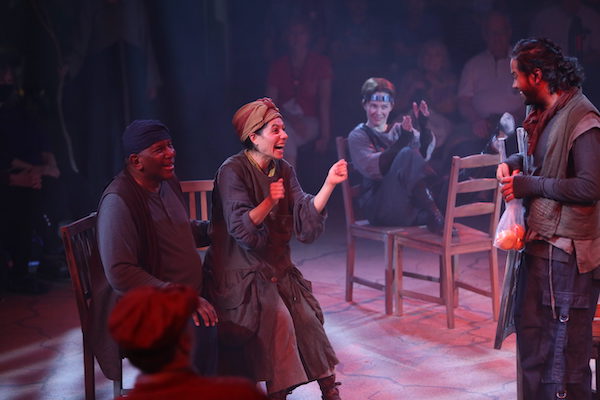
Left to right: Tom Pickett, Advah Soudack, Kate Besworth and Karthik Kadam in Bard on the Beach’s production of Shakespeare’s Henry V, which runs to Aug. 13. (photo by Tim Matheson)

Bard on the Beach rarely presents Shakespeare’s history plays. The last time Vancouver audiences were treated to one of the House of Lancaster trilogies was in 2011. Like Julius Caesar, currently playing on the Mainstage, Henry V is a timely production, based on world events. Unlike Julius Caesar, which is set in modern times, director Lois Anderson has envisioned the setting for Henry V as an indeterminate time in a wartorn future.

In Henry V, there is a device Shakespeare often used – a play within a play. A traveling troupe of nine actors, seeking shelter from a raging storm, suitcases in hand, arrives in an apocalyptic time to present their version of Henry V. Their ultimate message: make love, not war.

When Henry IV died, his 16-year-old son, Prince Hal, ascended to the throne of England. His father had, on his deathbed, made it clear to his son that, to take on the crown responsibilities, he had to give up his profligate lifestyle and his association with the lower-class tavern set, including his mentor Falstaff. Once on the throne, and taking government matters seriously, Henry V is surrounded by ambitious advisors who encourage him to invade France as part of the ongoing Hundred Years War between the two countries. Reluctant at first, the arrival of an emissary at his court with a “gift” of tennis balls (analogous to a slap in the face) from the cocky French Prince, the Dauphin, convinces Henry to go to war.

On the battlefield, Henry comes of age, transitioning from an impressionable youth to a fierce leader of men. Although vastly outnumbered, the English are ultimately successful in the 1415 Battle of Agincourt, spurred on by Henry’s rousing now-iconic call to arms: “We few, we happy few, we band of brothers; for he today that sheds his blood with me shall be my brother.”

As part of the boy-to-man transition, Henry takes a hard line with his tavern pals, who have also joined the fight for king and country – condemning one to death for stealing a loaf of bread and eschewing the pleas for reconciliation from a dying Falstaff.

The audience is guided through the story by a narrator, the Chorus, who welcomes us to “the show” and provides numerous asides that give context and meaning to what is happening on stage, both in the action and in Henry’s mind (manifested by flashbacks to his carefree days of youth).

All the cast, save for the eponymous lead, play multiple roles and Anderson has chosen to always keep the actors on stage. When not involved in a scene, they sit off to the side. Costume changes take place right in front of the audience. The intimate Douglas Campbell Theatre allows for this up-close-and-personal action.

The women in this production are standouts. Jewish community member Advah Soudack not only acts, doing double-duty portraying Mistress Quickly (one of the tavern denizens) and the emissary Mountjoy, but also has a chance to show off her vocal skills with a haunting solo. Newcomer Marlee Griffiths is simply delightful as the French princess Katharine, especially as she practises English with her maid. Emilie Leclerc is both the narrator and French Queen Isabelle, and makes her Bard debut with a strong performance.

Kate Besworth plays Henry V in a gender reversal. Anderson’s vision encompasses the insecurity and angst of a teenager suddenly placed in charge of a country at war, who must make decisions with far-reaching consequences. Yet that same youth can be painfully shy when it comes to wooing, winning and wedding Princess Katherine (a strategic alliance that helps broker peace between the warring nations). Diminutive Besworth ably portrays these two sides of Henry’s character.

Among the male actors, Billy Marchenski is a tough Exeter; Craig Erickson, Henry IV; Tom Pickett, the King of France; and Karthik Kadam, the Dauphin. Munish Sharma gets to play with the role of portly Falstaff.

However, the real stars in this rendering are the designers. Kudos to all of them, starting with Jewish community member Amir Ofek in charge of the set design. In the program notes, he writes, “Director Lois Anderson and myself reimagined this production as an immersive audience experience that starts from the moment you enter the performance space.” He certainly accomplished this goal. When you step through the front tent flap, you are transported into a futuristic sepia-and-earth-tone world, chairs haphazardly stacked, looking like they are about to fall over (a metaphor for the chaos of the world), and an inner tent made of burlap sacks stitched together (scavenged from various local coffee shops), all atop a cracked, parched dirt floor. You really do feel like you are in a tent in the middle of a battlefield. The chairs are used to represent everything from beds to thrones to canons to barricades to weapons.

Mara Gottler’s costumes reflect the “anytime and no time” design mandate she was given and lend themselves to the quick on-stage changes. She wanted to “convey a visual narrative of war and love,” and accomplishes this with different colour palettes for the French and English courts and the tavern gang. Sophie Tang’s lighting, together with Joelysa Pankanea’s musical score, complete the effect. Original songs for the troupe add a novel layer to the production and choreographer/fight director Jonathan Hawley Purvis deserves a mention for the clever battle scenes.

Anderson’s vision is certainly a treatise on the evils – and inevitability – of war, yet still holds out a glimmer of hope for redemption through love.

Henry V runs until Aug. 13. For tickets, visit bardonthebeach.org or call the box office, 604-739-0559.

Tova Kornfeld is a Vancouver freelance writer and lawyer.

The courage to be oneself

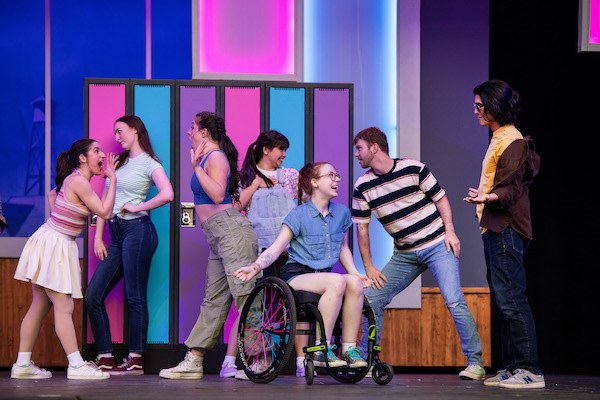
The ensemble of Theatre Under the Stars’ The Prom has energy and talent. Jewish community member Cadence Rush Quibell is third from the right. (Emily Cooper Photography)

This summer, Theatre Under the Stars (TUTS) has brought two stories of individuality and bravery to Stanley Park – The Prom, which opened July 11, and Roald Dahl’s Matilda: The Musical, which opened the following night. Both opening night shows began with a welcome chant from members of the Coast Salish people, who explained the Indigenous history of the park.

At the opening of Matilda, there was hardly an empty seat.

“My mummy says I’m a miracle,” sang the chorus of bright-eyed children as the curtains rose. It is soon revealed that the parents of the show’s heroine – gifted 5-year-old Matilda – do not share this feeling. Matilda’s mother even calls the day of her child’s birth the worst day of her life.

The story follows Matilda’s struggle to embrace her intelligence and natural courage, despite her crude, TV-obsessed parents, who constantly put her down. She begins to find her place at her school, whose motto is “children are maggots,” pushing past the frightening Miss Trunchbull and towards her personal solace of literature and imaginative storytelling.

Matilda seamlessly conveys its titular character’s frustration and joy. Notably, the set consisting of huge books is a clever signal of the constant comfort Matilda finds in books, and how storytelling is what ultimately leads her to a happy ending.

The show’s energetic ensemble executes intricate choreography and vocals with ease. The ensemble is united and contains an array of younger and older performers, which comes in handy to tell the story of “When I Grow Up.”

Siggi Kaldestad brings talent beyond her years to the role of Matilda, providing a solid and confident backbone for the entire production. Kaldestad is a triple threat, and her sweet yet dynamic performance of “Naughty” offers the proof. Paula Higgins, playing the angel-esque teacher, Miss Honey, brought lovely vocals to the character’s journey of self-confidence and connection. Another standout was Jyla Robinson playing Miss Trunchbull – her physical comedy and terrifying demeanour served well in bringing the famously nasty character to life.

While the narrative of Matilda largely centres around its main character, it truly was an ensemble production, where many supporting characters shone. This was also true for TUTS’s production of The Prom.

The Prom opens on the failing careers of four eccentric, selfish Broadway actors – Dee Dee Allen (Caitriona Murphy), Barry Glickman (Greg Armstrong-Morris), Angie Dickinson (Amanda Lourenco) and Trent Oliver (Matthew Valinho). Seeking a cause that will allow them to regain relevance, they choose to help Emma, a lesbian student in Edgewater, Ind., take her girlfriend to prom, despite the parent-teacher association having canceled prom to prevent that from happening. Emma is under scrutiny in her town of apparent homophobes – the worst being the unsuspecting mother of her girlfriend – and the crew of Broadway has-beens is determined to spread tolerance to people they view as closed-minded hicks and come out as heroes. Chaos follows, yet so do lessons of acceptance and generosity.

Murphy and Armstrong-Morris are masterful performers with powerful stage presences who ably transform their characters from self-absorbed and out-of-touch to caring and relatable. Armstrong-Morris’s “Barry is Going to Prom” reveals intriguing dimensions to the well-established spunk of his character, and Murphy’s “It’s Not About Me” is a true showstopper. The power duo is joined by Lourenco’s Angie, who is classy and entertaining to watch, as well as Valinho’s hilarious and cheeky Trent Oliver.

These eccentric personalities are well-balanced by Anna Pontin’s earnest and mature portrayal of Emma. Pontin brings a warm vocal tone and a comfortable stage presence to this emotionally complex role. Emma’s love interest, Alyssa Greene, is brought to life with an equally beautiful voice and authenticity from Brianna Clark. Whether it’s Valihno’s standing back flip in “Love Thy Neighbour,” or Murphy’s soulful belt in “The Lady is Improving,” this cast truly shines.

photo - Anna Pontin, right, plays Emma, and Brianna Clark is Emma’s love interest, Alyssa, in Theatre Under the Stars’ production of The Prom
Anna Pontin, right, plays Emma, and Brianna Clark is Emma’s love interest, Alyssa, in Theatre Under the Stars’ production of The Prom. (Emily Cooper Photography)

The Prom’s ensemble has solid energy and talent, while sometimes wavering in transitions between scenes. It was wonderful to see Jewish community member Cadence Rush Quibell among them (jewishindependent.ca/finding-their-place-in-theatre). The choreography is upbeat and sincere, especially in the show’s finale, “It’s Time to Dance.” The script is hilarious, and its message is uplifting and heartwarming; it is clear that The Prom preaches inclusion for the LGBTQ+ community and beyond, welcoming anyone who seeks the courage to be themselves – similar to the messages of Matilda.

This season of TUTS allows young, local talents to shine, featuring many children and adolescent-age performers between the two productions. They should all be commended for the dedication and professionalism that is often clear in TUTS productions.

Both Matilda and The Prom drive the classic musical theatre message that no one is alone, even when the world appears to have turned its back. While Matilda is ignored by her parents, she connects with Miss Honey; while Emma is shunned by her town and family, she is embraced by the Broadway performers.

Further, both productions inspire embracing individuality in the face of judgment or constraints, whether it be ridiculous parents or the outdated beliefs of an entire community. The message that you can control your own story is entrenched in both productions. When the students revolt against Miss Trunchbull in the glorious “Revolting Children,” it is loud-and-proud self-determination. When Emma stands up for herself, it is a more subdued demonstration, yet no less genuine. Her intimate, acoustic guitar performance of “Unruly Heart” proves equally effective in allowing its heroine to regain control over her narrative.

Don’t miss The Prom and Matilda this summer. Visit tuts.ca for showtimes and tickets.

Alisa Bressler is a fourth-year student at Queen’s University in Kingston, Ont. She is an avid reader and writer, and the online director of the arts and culture publication MUSE Magazine. Bressler is a member of the Vancouver Jewish community, and the inaugural Baila Lazarus Jewish Journalism Intern.

A hippie homesteader in B.C.

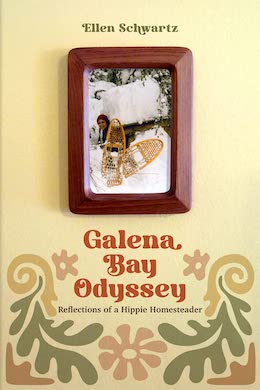
“When I came to Galena Bay, I had been afraid of many things,” writes Ellen Schwartz in Galena Bay Odyssey: Reflections on a Hippie Homesteader (Heritage House Publishing Company, 2023). “Of the physical work I would have to do. Of trying new things I have never done before, like gardening and building and raising animals. Of living in isolation. One by one, I had attempted these things, and I had survived. I had even mastered some of them. Those fears had fallen away.”

This paragraph comes as Schwartz is atop a hill, “too scared to move,” and her skis start sliding. She survives the “ungraceful and disastrous” run, even pushes through a second one. But she can’t keep her vow to never to do that again because, in the 1970s, she lived in such a far-flung place that skiing was a necessary mode of transportation, not just a leisure activity.

It is easy to see why Schwartz chose to write a memoir about this period of her life. Born into a middle-class family – her father an internist-turned-cardiologist, her mother a teacher before becoming a stay-at-home mom to Schwartz, her younger sister and brother – and raised in New Jersey, Schwartz went to university in Chicago. There, she did all you might expect a young person with the new freedom of being on their own to do. And then some, as it was the late 1960s. She writes openly about her experiences with drugs and having sex for the first time: “I figured Ned was The One. I imagined that we’d go through our four years [at school] together and eventually marry.” That didn’t happen. Nor did Schwartz go on to lead the conventional life she imagined for herself at the time.

Instead, she went to join a close friend at a farming commune in Pennsylvania, the members of which ultimately wanted to move to British Columbia. Not intending to stay longer than summer break, Schwartz fell in love with one of the commune’s founders and, well, ended up in British Columbia with Bill, who would become her husband. The group didn’t last long, but the Schwartzes are still together, though no longer in Galena Bay, which is in the West Kootenays. They now live in Burnaby.

The young urban-raised couple faced many challenges homesteading, and Schwartz has many stories of taking on the unknown, whether it be camping along the route across the continent to British Columbia, building their own cabin (including chopping down their own trees), growing their own food, raising a child in a remote area (their second would be born in Vancouver), etc., etc. Not to mention finding work that would sustain them physically (keep them housed, clothed and fed), if not spiritually. She shares the details of her hippie days matter-of-factly, with humour and with the perspective of reflection. For example, after recounting her parents’ muted reaction to her and Bill’s homemade home, she offers potential reasons for their lack of enthusiasm.

image - Galena Bay Odyssey coverSchwartz’s unique history encapsulates the overarching idealism of many in her generation. Her grandparents were “impoverished Jewish immigrants who had fled the hardships and pogroms of Lithuania and Poland” to give their kids a better life in the United States, so their grandchildren also were well set up for material success. The grandchildren – Schwartz and her peers – had an idea but no real understanding of the sacrifices that had been made to achieve the comfortable lifestyle they rejected, because of the racial and social inequality they saw around them, the environmental degradation and the war in Vietnam.

“Bill and I, part of the first wave of baby boomers, were in the privileged position of having enough education, enough wealth and enough leisure to be able to criticize our parents’ lifestyle,” she writes late in the memoir. “We were well-off enough to be able to turn our backs on materialism. We were prosperous enough to indulge in idealism and, idealistically, to define an entire new set of values. (At the time, I didn’t appreciate the irony.)”

But her desire to make the world a better place was – and is – genuine and remains a guiding force. Schwartz, who was a teacher for many years, began her subsequent career writing educational material. We find out in her memoir that the first fiction story she sold was released in 1980. She is now a celebrated children’s author, with almost 20 books to her credit directed towards younger readers, ranging from picture books to novels for teens to a couple of non-fiction publications. She is also a freelance writer and editor.

Galena Bay Odyssey is a wonderful glimpse into an integral part of Schwartz’s life. It also offers insight into North American hippie culture and the strength and ingenuity required to live in an out-of-the-way place like Galena Bay. That the “action” takes place in British Columbia will make the memoir of even more interest to local readers.

Empowered by piano, song

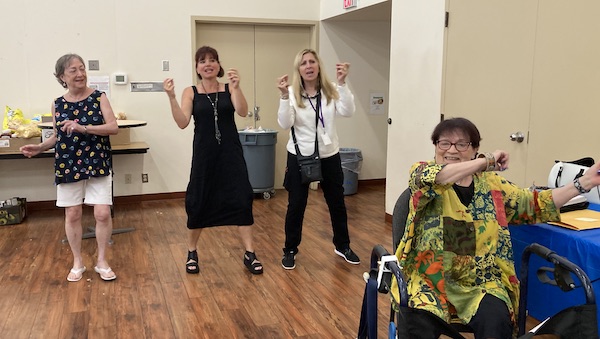
From left to right: Leslie Rosen, Toby Rubin, Tammy Klass and Marilyn Berger dance to the music of singer and pianist Miriam Davidson. (photo from JSA)

The last session of the Jewish Seniors Alliance-Snider Foundation Empowerment 2022-23 season was held on June 26 at Beth Tikvah Synagogue in Richmond. It featured Miriam Davidson playing and singing show tunes, and people joined in and even danced.

The event was co-sponsored by JSA, Kehila Society’s Seniors Program and Beth Tikvah. Attendees were treated to a BBQ lunch of hamburgers, hot dogs and veggie dogs with all the trimmings. More than 60 seniors from around the Lower Mainland attended.

photo - Miriam Davidson
Miriam Davidson (photo from JSA)

The crowd was welcomed by Toby Rubin, the coordinator of the Kehila program. She explained that Lester Soo, the scheduled entertainer, was unable to perform, but that Davidson, a pianist and vocalist, was able to step in.

Davidson began with some songs from The Sound of Music that were very familiar to the audience, and she encouraged everyone to sing along. The program included such tunes as “Ain’t Misbehavin’,” “Fly Me to the Moon” and “Only a Paper Moon.” She played “Memory” from the musical Cats and a request for Abba’s “Dancing Queen” had the audience swaying and waving their arms in time to the music. There was even a bit of dancing.

The concert ended with “Here Comes the Sun” by the Beatles.

The afternoon wrapped up with greetings from Tammi Belfer, president of the JSA, and a thank you to Davidson, who was wonderful.

Shanie Levin is a Jewish Seniors Alliance Life Governor. She is also on the editorial committee of Senior Line magazine.

Love and concern for nature

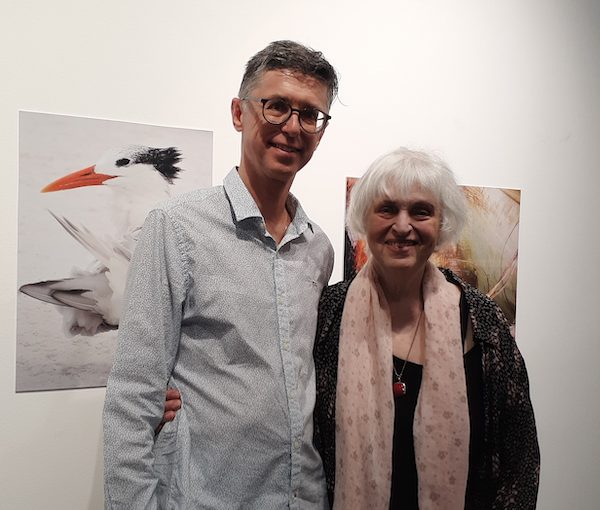
Nathan and Sidi Schaffer at the opening of their photography exhibit at the Zack Gallery June 22. (photo from the artists)

Painter, printmaker and mixed media artist Sidi Schaffer has a new show at the Zack Gallery – a photography exhibit with one of her sons, Nathan Schaffer. Eye Love Nature invites viewers to see the beauty and wonders of the natural world, and for us to recognize the dangers we pose to it.

photo - Embraced and Loved” by Sidi Schaffer
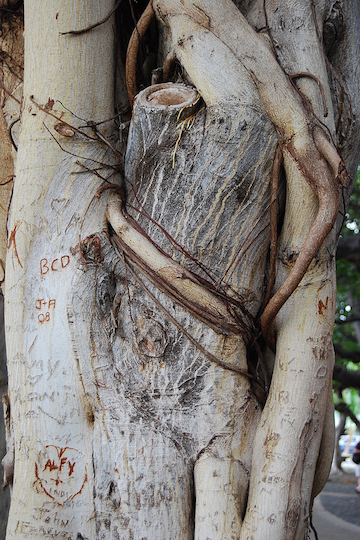
Embraced and Loved” by Sidi Schaffer

Rather than nature as something separate, we see ourselves in the Schaffers’ photos. Sometimes, the animals are doing something that we enjoy doing, like the three whales in Nathan’s “Family Swim,” only their fins visible in the misty ocean. Other times, we can empathize with what a tree has endured, but also our part in hurting it, as in Sidi’s “Embraced and Loved,” which shows a gnarled tree not only tightly wrapped by a vine, but also scarred by the initials, including a pair in a heart, that many people have carved into it.

The titles of some of the photos bring a smile, but also a sense of responsibility. The overall feeling of the exhibit, however, is uplifting, hopeful.

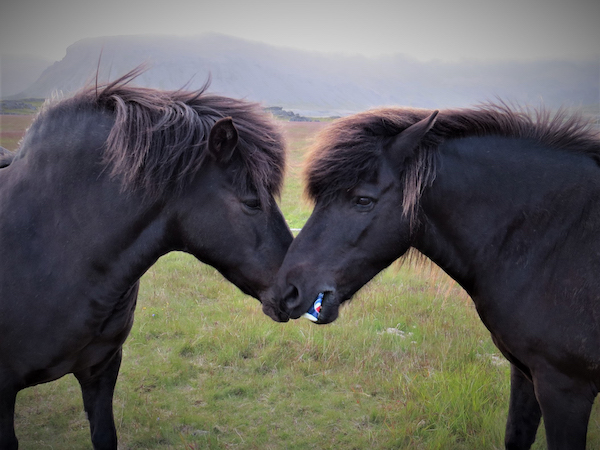
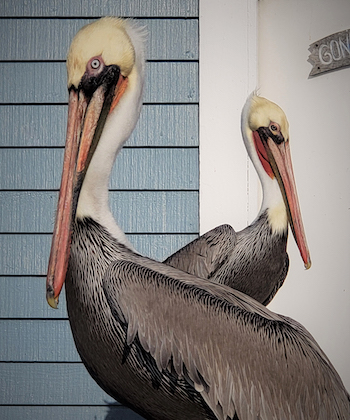
“I have a fondness for word play and puns as a way of expressing humour. I find it helps keep a positive environment when interacting with others and, at times, deal with sensitive issues in a less threatening manner,” Nathan told the Independent. “Artistically, my goal is to engage the audience both visually and with language. ‘The Pepsi Challenge’ [in which two horses tussle over a Pepsi cup] in my mind ‘can’didly raises concerns about human garbage and pollution straight from the ‘horse’s mouth,’ so to speak. In ‘I’m Stumped,’ there is also a bit of fishing line on the stump under the bird’s foot – again a reminder that human pollution is unfortunately prevalent in the lives of wildlife and sometimes it can feel like we are stumped trying to deal with it.”

photo - “The Pepsi Challenge” by Nathan Schaffer
“The Pepsi Challenge” by Nathan Schaffer

Eye Love Nature is the first photography exhibit for both Schaffers. Sidi said, “as I age, I wanted to see my photos on a gallery wall and share our joy creating them with the people in the community.” Nathan writes in his artist’s statement: “I very much hope the viewers enjoy the photos and that positive emotions arise and carry forth.”

Both Schaffers thanked Zack Gallery director Hope Forstenzer and the selection committee, as well as their friends and family, “for providing guidance and supporting this,” said Nathan, who works as a psychiatrist treating adults at a community mental health clinic.

“The resilience of many patients inspires me to search for strength and marvel at beauty in nature,” he said. “I often recommend spending time in nature as a way of reducing distress from inner turmoil, both to patients and family. I also enjoy my photography as a way of expressing latent artistic interests, as I haven’t improved my drawing beyond a rudimentary level. It is a counterweight to the stress associated with my work.”

For Sidi, who is a career artist, the skills involved in painting/printmaking and photography overlap to some extent.

“The combination of a good eye and imagination can help in both forms of art expression,” she said. “[But] the trigger when taking a photo is coming from outside. It is your sudden surprise of what your eye sees in front of you at a certain moment, in a certain light or shadow. It can be a landscape, people or clouds in the sky. It can be a design that the power of nature created on a tree bark, or a gentle breeze moving the petals of a flower. You can be enchanted by a flower’s seeds that hide themselves from the elements.

photo - “Burst of Colour” by Sidi Schaffer
“Burst of Colour” by Sidi Schaffer

“As compared to painting or printmaking, with photography, it’s presented to you, you only have to look and explore,” she said. “When I am in front of a canvas or paper, it’s usually in front of a white surface that waits for my imagination, for my expression of freedom to choose the subject or design that comes from inside me. It takes me even more into my inner self, into a world that brings me satisfaction, reflection and peace. Physically, painting is more challenging; my whole body is involved in the making. I love both mediums and hope to combine them in my mixed media works.”

While Eye Love Nature is Sidi’s first photography exhibit, she has been a photographer since childhood. Sidi was born in Romania – her mother studied photography before the Second World War.

“After the war, coming back home from the camps, my parents opened a photo studio,” said Sidi. “From then on, even as a little girl, I immersed myself in their world. I assisted my father in the dark room; I helped colour the black and white photos with watercolour. I learned from my mom how to touch up the negatives. Today, we would call it Photoshop. In my later years, here in Canada, at the University of Alberta, in addition to painting and printmaking, I also studied photography. I will always be thankful to my parents, who exposed me to the magic of photography.”

It was Sidi who gave Nathan his first camera when he was young. “But the love of nature, the curiosity, his investigative spirit and his good eye, he developed through his life, step by step,” she said. “He was always surrounded by art and love of the natural beauty of our world.”

When asked if he had been lucky enough to meet his grandparents, Nathan said, “Yes, I have vivid childhood memories of helping them develop negatives in a darkroom with a red light and strong vinegar-like smell. I very much enjoyed spending time with them while watching photos gradually appear during this process.”

Of course, photography has changed much since that time.

“Through the years, I’ve worked on film and in dark rooms,” said Sidi. “With the explosive development in photography these days, I switched very happily to the digital camera. This way, I have a more direct and faster approach to picture taking. My aim is to stay true to what I see and not manipulate the image except maybe to crop or lighten/darken if necessary. We are surrounded by enough fake images and news these days. I want to be far from all that. The truth gives us freedom.”

More than 40 photographs comprise Eye Love Nature.

“Some Days I’d Rather Be Fishing” by Nathan Schaffer

“For this show, we picked images where we were primarily appreciative observers rather than creators,” said Nathan. “We only attempted to correct minor blemishes, in keeping with our parenting style,” he said with a smile.

There were many candidates for inclusion in the exhibit. “Like in nature, Darwin’s rule of survival of the fittest was the main guiding force,” said Nathan. “Some couldn’t compete due to technical issues such as file size or being unfocused; others lost out due to not being as captivating. Hope, the JCC gallery director, also helped in selecting the final choices.”

As for the choice of where to direct any profits made from the show, the Schaffers have decided to divide them equally between the Canadian Cancer Society and the Canadian Parks and Wilderness Society.

Both organizations, said Nathan, “do their work in what appears to be very different areas; however, they share an important similarity. Cancer is essentially resident cells going rogue and taking over space and resources from the body, thereby putting it in serious danger. Civilization and humans can have a similar destructive impact on nature and wilderness by urban spread and taking of natural resources without limits. Controlling these rogue processes is needed in order to save and heal patients and nature. These organizations share in a mission of tackling some of the major problems we face.”

Eye Love Nature is at the Zack Gallery until July 24.

Connect with music

The Oot n’ Oots band helps launch Mission Folk Music Festival. (photo from Mission Folk Music Festival)

Family band the Oot n’ Oots helps kick off the Mission Folk Music Festival on July 21, as part of the main-stage lineup that opens the weekend of concerts and workshops. Several other Jewish community members are also participating over the weekend, including Boris Sichon, Jesse Waldman and Abigail Lapell, who helps close out the annual event on the evening of July 23.

The theme of this year’s festival builds on last year’s, said artistic director Michelle Demers Shaevitz, also a member of the Jewish community.

“In 2022,” she said, “I programmed a festival that reflected the experience of homecoming, the coming back together of our community, our festival family. This year, I’m digging into the process and ideas of connection and reconnection, as we move through our experiences beyond that initial homecoming and return to the festival. For me, the idea of reconnection speaks to getting to know who we are as a community post-pandemic and how we have changed/emerged as a result of our experiences.

“I was drawn to our 2023 artists through the ways they express their connection to their homelands, their languages, their heritage and cultures, and musical traditions,” she continued. “It’s how Okan celebrates their roots to their homeland of Cuba and her languages and stories, while Terra Spencer sings of the Maritime landscapes and communities around her.

“It could be reconnecting to language, as Cedric Watson and Jourdan Thibidoux explore their roots in the Creole community based in Louisiana alongside Wesli, who sings in his Haitian Creole of home and in French from his newly adopted community in Quebec.

“It’s the ways that Leonard Sumner and Twin Flames sing their connections to their heritage or how Alysha Brilla presents her identity in her songs.”

And, she said, it’s how the Jewish musicians weave their Jewishness into their stories and songs.

screenshot - Boris Sichon on TikTok, playing an instrument he made himself
Boris Sichon on TikTok, playing an instrument he made himself. (screenshot)

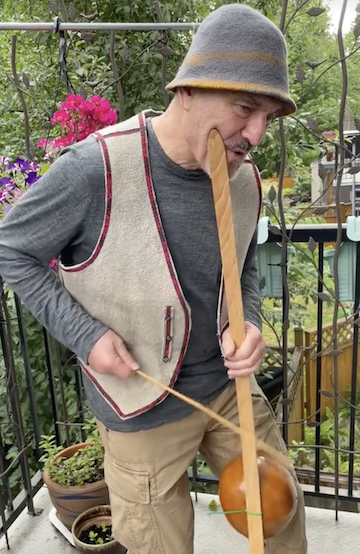
Sichon, a classically trained percussionist, plays more than 400 different instruments from around the world, many of which would send most of us to the internet to find out what they are, such as mayuri, zurna and agogo bells. He can also make music from wrenches, plastic containers, kitchen bowls and even rocks – basically, anything. His TikTok videos are quite entertaining and mind-broadening. It’s easy to see why he is in demand for school and other educational workshops. He told the Independent he is currently “in the process of preparing a new program with an accent on voice and wind instruments.”

“I love to perform for kids,” he said. “It gives them an opportunity to travel around the world with exotic musical instruments.”

In performances, Sichon sings songs about “love, friendship and freedom [in] Ukrainian, Gypsy, Russian and Yiddish.” He also plays klezmer, and has taken part in the International Klezmer Festival in Jerusalem for many years. He has played at and collaborated with the Mission folk fest many times and, at this year’s festival, he takes part in a Sunday afternoon session, called Global Routes, with Dongyang Gozupa and Robin Layne & the Rhythm Makers.

photo - Jesse Waldman
Jesse Waldman (photo from Mission Folk Music Festival)

Earlier that Sunday afternoon, Waldman takes to the stage as well. A blues and folk artist, the Independent spoke with him ahead of his participation in the 2019 festival (jewishindependent.ca/blues-klezmer-at-mission). A couple of years ago, he shared more about himself and the importance of family in a piece for the JI about being inspired by his great-grandmother, Adele Waldman, to reimagine the Yiddish song “Papirosen” (jewishindependent.ca/a-great-grandmothers-song).

Making her debut at the Mission Folk Music Festival is Lapell, with a shared session on Saturday (with Alysha Brilla) and on Sunday (with Terra Spencer), as well as being part of the festival closing concert. She said “there’s so much great music on the lineup – personally, I’m especially excited for the workshop stages, to have a chance to collaborate with and get inspired by artists from across Canada and beyond.”

Based in Toronto, Lapell’s latest album, Stolen Time, which came out last year, earned her a 2023 Canadian Folk Music Award for English songwriter of the year. She was similarly recognized in 2020 for her album Getaway and she received a CFMA for contemporary album of the year in 2017 for Hide Nor Hair.

“I’m always trying to challenge myself as a writer and collaborator,” she said. “I’ve had the chance to work with so many great players and personnel on these albums and I think it’s really helped me grow from one project to the next.”

Lapell has always sung.

“Singing and writing songs is very intuitive to me and definitely a big source of comfort and community,” she said. “Ultimately, I think it’s such a primal thing, singing and sharing music – for me, it’s a way of connecting with myself, with nature and with the world at large.”

photo - Abigail Lapell
Abigail Lapell (photo by Jen Squires)

Her Jewishness finds its way into her work subtly.

“I find my writing is infused with a lot of biblical and natural imagery,” she said. “I’m very drawn to stylized, sometimes repetitive language, whether prayerful or playful or both. I was raised in a religious Jewish family, and I think there’s a reverent spirit to my music – and sometimes a touch of gentle dissonance or wry humour – that reflects some of the Hebrew and Yiddish traditions I grew up with.”

For the Oot n’ Oots – 16-year-old Ruthie Cipes (voice, ukulele) with her dad Ezra (voice, guitar, keys) and uncles Ari (voice, guitar, keys), Gabe (voice, bass) and Matthew (voice, drums) – Judaism and Jewish community are important parts of their lives, but don’t necessarily influence their music.

“We’re grateful for the wisdom of our ancestors and the culture bestowed since Abraham,” wrote Ezra and Ari in an email interview with the Independent. “It’s a great gift that makes our lives rich and meaningful. We’re members of the Okanagan Jewish Community and supporters of Chabad Okanagan.”

The family lives in Kelowna.

“Our parents moved us from Westchester County in New York to Kelowna, B.C., in 1987,” said the brothers. “They wanted to get off the money-go-round and be farmers living in connection with the earth. They ended up founding Summerhill Estate Winery.”

The Oot n’ Oots was formed in 2007, when Ruthie was born, “but it really got going in 2015 once Ruth joined the band. We released our first album in 2016, although it was mostly recorded back in 2007. Then we made two more albums after our elder brother Matthew joined the band on drums.”

The group is currently recording their fourth album. Their third album, Ponderosa Bunchgrass and the Golden Rule, was nominated for a 2023 CFMA for children’s album of the year and it also garnered a 2022 Juno Award nomination – they were named Children’s Artist of the Year at the 2022 Western Canadian Music Awards.

“We write songs to make each other laugh and to inspire each other. That’s what we’ve always done and it’s what we continue to do,” said the brothers. “It’s a practice that’s ongoing. We want it to continue to be meaningful as we all grow.”

While the awards may refer to children’s music, the Oot n’ Oots describe their music as “all generations together music.”

“That’s the sweet spot for us – when it’s toddlers, teenagers, parents and grandparents all on the dancefloor together,” said Ezra and Ari. “We have a couple of other musical projects that we do, but the Oot n’ Oots is our focus because it seems to provide the most tangible value, and it feels really good to bring that energy of joy to the world.”

In addition to the festival opener, the Oot n’ Oots play a few sessions with other musicians over the weekend, which takes place at Fraser River Heritage Park. The festival includes food and artisan market vendors, as well as a licensed bistro, and attendees can choose to camp in the park for an additional fee. For the full lineup and tickets, visit missionfolkmusicfestival.ca.

Finding their place in theatre

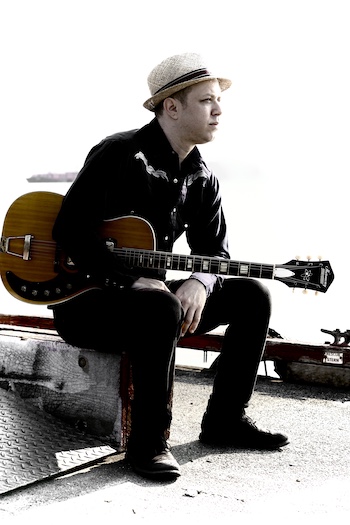
Cadence Rush Quibell has their debut at Theatre Under the Stars this summer. (photo by Veronica Bonderud / The Portrait Sessions)

Cadence Rush Quibell makes their debut with Theatre Under the Stars (TUTS) this summer in The Prom, which alternates with Matilda, until Aug. 26 at the Malkin Bowl in Stanley Park.

Growing up in Port Coquitlam, Rush Quibell was homeschooled from Grade 2 to Grade 10. As a young person, they took up musical theatre, joining a junior, amateur-level production company.

“It was the only thing to do,” they told the Independent. “It was what all the homeschool kids did at the time.”

Musical theatre felt comfortable and aligned with their strong sense of creativity. “It was totally up my alley,” they said, and it was not long until they fell in love with the art form. When they moved to a public school for grades 11 and 12, Rush Quibell upheld this passion, participating in their school’s annual productions.

Rush Quibell stopped performing after they graduated. They would regularly tell their wife Jenn how much they missed theatre but, as a wheelchair user, they felt certain that the world of theatre had no space for them. As a kid, Rush Quibell did not use a wheelchair or identify as a person with disabilities.

In the summer of 2021, Rush Quibell chanced upon a Facebook advertisement for Realwheels Theatre, which, its website explains, “creates and produces performances that deepen understanding of the disability experience. We tell stories in which disability itself is not the focus of conflict, but rather forms the landscape upon which universal issues are debated onstage.”

photo - Cadence Rush Quibell has their debut at Theatre Under the Stars this summer
Cadence Rush Quibell has their debut at Theatre Under the Stars this summer. (photo by Veronica Bonderud / The Portrait Sessions)

Rush Quibell found a call for auditions and “it felt perfect,” they recalled. They remember bursting into tears at the “possibility of theatre being possible for me again.” It was their wife Jenn who encouraged them to audition, despite some of Rush Quibell’s health concerns and the logistical challenge of commuting from their home in Langley to Vancouver, where the program was located. “She was there to remind me of who I am,” they said of Jenn.

Rush Quibell’s experience at Realwheels “opened a lot of doors,” they said, not only reminding them of their love for theatre, but giving industry exposure that would lead to subsequent projects. They said it was great to learn from the Realwheels instructors and to be surrounded by Vancouver’s local theatre community. Such access to advice from seasoned professionals, as well as a close community of fellow actors, was “invaluable,” they said.

This period of self-discovery, as Rush Quibell called it, coincided with an exploration of their religious identity. They were curious about exploring Judaism, despite being raised in a Christian household and distancing themselves from religion during adolescence. Their fascination with Judaism formed through conversations with Jewish friends and from connecting with Jewish people on social media. “I didn’t realize you could convert,” they said. “It was a feeling of, ‘I think I found it,’ and ‘this feels right.’” They said the community at Temple Sholom made them feel welcome and comfortable enough to explore Judaism. Days before our interview, Rush Quibell’s conversion became official.

During their time at Realwheels, Rush Quibell learned about a musical theatre course offered by the Arts Club. Musical Theatre 101, led by Peter Jorgenson, provided an amateur setting that allowed them to gain confidence for professional auditions. With this new foundation, when Rush Quibell came across a Facebook post about TUTS auditions for The Prom, they seized the opportunity. Jorgenson and other Arts Club instructors helped them prepare an audition song and organize sheet music.

After securing a role in the show’s ensemble, Rush Quibell faced the challenge of navigating their wheelchair use. TUTS was very accommodating, they said, renting a lift for them to get on and off stage – which was, admittedly, “a little terrifying” to navigate at first.

TUTS continues to remain dedicated to improving accessibility, said Rush Quibell, noting that they are not the first disabled performer at TUTS, just the first wheelchair user. “It’s difficult being the first at anything, but it is also super-rewarding,” they acknowledged.

“This is a really neat experience,” they said, highlighting the importance of authentic and diverse representation on stage.

Reflecting on their own theatre journey, Rush Quibell shared, “If I went to a show and saw a wheelchair user on stage, perhaps I would have gone into theatre sooner.” They are hopeful that their work on The Prom can set a precedent for future disabled actors who aspire to join TUTS, or the theatre in general. “We’re showing the audience and everyone I’m working with that this is a totally viable and normal thing to do,” they said.

Authenticity and acceptance are core messages of The Prom. The production follows four Broadway stars who travel to small-town Indiana to support a local student, Emma, in challenging the rules and expectations of her community so she can take her girlfriend to the prom. Rush Quibell highlighted that, while the show explicitly addresses LGBTQ+ inclusion, its themes extend to anyone seeking meaningful representation and inclusion. “We are talking about literally everyone, not just gay and straight,” they said.

Participating in TUTS has been a great experience for Rush Quibell, and they were looking forward to opening night when the Independent interviewed them.

The cast has been kind and supportive, frequently sharing information on upcoming theatre projects and auditions, said Rush Quibell, adding that The Prom’s story resonates with many of their castmates.

Rush Quibell’s role in the show’s ensemble has been “a blast” – they get to balance singing, dancing and acting, doing so with energy and enthusiasm. In this show’s ensemble, “you do everything,” they said.

Our interview ended with Rush Quibell saying The Prom promises to be a heartwarming, comedic and vibrant production a story well worth sharing in 2023.

For tickets to the show, and to Matilda, visit tuts.ca.

Alisa Bressler is a fourth-year student at Queen’s University in Kingston, Ont. She is an avid reader and writer, and the online director of the arts and culture publication MUSE Magazine. Bressler is a member of the Vancouver Jewish community, and the inaugural Baila Lazarus Jewish Journalism Intern.

Chance to create

Esther Rausenberg, artistic and executive director of the Eastside Arts Society. (photo by Wendy D)

Eastside Arts Society (EAS) presents the return of its two-day summer art-making event, CREATE! Arts Festival, taking place at Strathcona Park on July 22 and at various Eastside Arts District studios on July 23.

A community initiative designed to welcome guests to explore, learn and create art together with local artists, CREATE! features a variety of accessible visual and performing arts workshops for adults and youth, including watercolour painting, needle felting, indigo dying, pottery, glass fusing, photography, ukulele, Salish singing and storytelling.

“In addition to a variety of art workshops, demonstrations and public participation art installations, we are also incredibly proud to introduce our brand new festival art shop, featuring a curated selection of arts and crafts all handmade by local artists,” said EAS artistic and executive director Esther Rausenberg, who is a member of the Jewish community.

On July 22, there will be a series of outdoor art-making workshops taught by more than 15 artists who live and/or work in the Eastside Arts District, many of whom will be participating in CREATE! Arts Festival for the first time. Adult and youth workshops will be hosted by Taaye Wong, Tanna Po, Suzan Marczak, Nima Nasiri, Naomi Yamamoto, Niki Holmes, Ross den Otter, Daphne Roubini, Russell Wallace, Jewish community member Naomi Steinberg, Nicole Caspillo, Nathaniel Marchand, Eri Ishii and Chantal Cardinal (FELT à la main with LOVE). A children and youth workshop will be hosted by Amberlie Perkin and an all-abilities workshop by Alternative Creations Studio.

Saturday festivities will also include a general admission CREATE! Art Zone. Art demonstrations include painting, pottery and glass beading from Francis Tiffany, Julia Chirka (summer skool) and members of Terminal City Glass Co-op. Public participation art projects include a life-size colouring mural with Serena Chu of Chu Chu, squeegee art with Joanne Probyn, and the building and performing of two giant crow puppets – in honour of EAS’s unofficial mascot – with Jacquie Rolston. Opus Art Supplies will have a hands-on block carving and printing activation: carve and pull a mini-block print, and contribute to a collaborative printmaking collage.

A selection of local handmade artworks and goods, curated by OH Studio Project, will be available at the festival shop. There will be a fully licensed beer garden, serving beer, cider and wine from Strange Fellows Brewing, as well as an assortment of food from a collection of food trucks, including Earnest Ice Cream, Wak Wak Burger, Mahshiko and Camion Café.

On July 22, the 8th Annual Art! Bike! Beer! Crawl Brewery Tour & Fundraiser will, for the first time, end at the festival grounds.

Activities will move indoors on July 23, connecting participants with art production spaces in neighbouring Eastside studios, with additional art workshops hosted by members of the Terminal City Glass Co-op, Richard Tetrault, Sonya Iwasiuk, Grace Lee (eikcam ceramics) and Naomi Yamamoto.

Workshops are $35 (plus GST) for youth/adults, with the exception of Perkin’s workshop for children/youth at $20 (plus GST); children under the age of 12 must be supervised by an adult. The general public can access festival activities at Strathcona Park for a $5 general admission fee (children under age 12 are free). For full festival details and workshop registration, visit createartsfestival.ca.

– Courtesy Eastside Arts Society