Mental health concerns

Smartphones, even if you hug them, won’t hug back. It’s not revelatory, but an effective allegory to understand what’s missing with screen interactions.

Though screens replaced direct, in-person human interactions during the pandemic, by necessity, it only worsened a problem that still exists: the less real the contact, the worse the depression and loneliness.

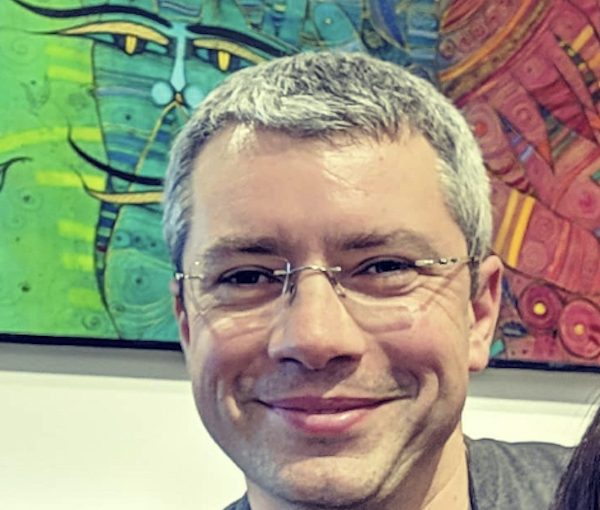
Toronto author Dr. H. David Burstein draws this correlation in his first book, Smart Phones Don’t Give Hugs: A Guide Out of Loneliness (Talk+Tell, 2022). The book takes an in-depth look at loneliness and depression, its modern causes and how it might be alleviated.

“Humans are social creatures who have a need to connect and cooperate with others, with the purpose of being part of something bigger than themselves,” said Burstein. “We want to be needed and to know we are loved.”

image - Smart Phones Don’t Give Hugs book cover

More than two years of gathering socially via a screen have led people to lose the ability to really connect with one another in an organic off-the-web way, he said.

“Maybe we are so enchanted by the social aspect of technology that we have forgotten what it was like to shake hands or bump fists, as opposed to like, comment and subscribe. We have forgotten how to foster lasting human connections,” he said. This, he believes, has contributed to the general worsening of people’s mental health.

A Statistics Canada survey on mental health over the course of the pandemic, which was released in September 2021, found that one in four Canadians reported depression, up over the previous year from one in five. Toronto’s Centre for Addiction and Mental Health (CAMH) showed in surveys last year that loneliness and depression spiked during the pandemic and continue to be a growing problem.

In addition to his own findings, Burstein corrals some of the wisdom available from various Jewish sources, including Dennis Prager, author of The Rational Bible; Rabbi David Wolpe of Temple Sinai in Los Angeles; Abraham Isaac Kook, former chief rabbi of Israel; Rabbi Noah Weinberg, Aish HaTorah founder; and Rabbi Harold Kushner, author of When Bad Things Happen to Good People, who died only recently, on April 27.

One of Burstein’s tips is to pay attention to the signs your body is giving you.

“Just like when we’re thirsty, we drink; when we’re hungry, we eat; our emotions are not to be ignored. If we’re lonely, we need to be with people,” he said.

But an obstacle for many people is understanding that there’s a problem.

“It is difficult for people to admit being lonely because they think it means that they feel like a loser,” he said. “But I have also learned that when we are challenged, there are three ways we can react. One is to confront, second to retreat, third to ignore. My tendency had been to respond instinctively with the last two, but this time I decided to lean into the subject. It is a heavy subject requiring a lot of self-reflection, so I had to pace myself. I wrote the book for my own clarity, and to help others as well.”

Included in those “others” are his three teenage children. He is increasingly worried about their well-being, given the amount of time they spend on screens. Though quick to point out that there are benefits to screen time, moderation is key, said Burstein, and the quality of consumption is important, too.

Through the process of writing, Burstein became more aware of what, in his own life, needed work.

“I take my personal relationships more seriously,” he said. “I still worry about what tech is doing to us.”

Jonathan Wasserlauf is a freelance writer, and a political science major and law student based in Montreal.

Teapacks brings happiness

Israeli music pioneers Teapacks perform at the Queen Elizabeth Theatre May 14 (photo from Teapacks)

“We will bring a lot of Mediterranean happiness, with a lot of Jewish chutzpah,” Israeli singer-songwriter Kobi Oz told the Independent about Teapacks’ upcoming concert here on May 14. The event at Queen Elizabeth Theatre is the culmination of the community’s many Israel @ 75 celebrations.

Teapacks will sing about 30 of their hits, spanning their more than 30 years of composing and performing. Plus, said Oz, there will be many “duets with our fabulous female lead vocalist Shani Yizhari, one Arik Einstein cover, one Moroccan song and our version of Hatikvah.”

Teapacks was established some 35 years ago. Named after the correction fluid Tipp-Ex, Oz has explained the choice to be related to the band’s aim to “erase boundaries between people,” but the English transliteration of the name was changed relatively early on to Teapacks to avoid infringing on the trademark. (The Hebrew remains the same.)

Oz and Gal Peremen (bass) are founding members, and Rami Yosifov (guitar) is basically one, too. The rest of the band is Yizhari (vocals), Motty Joseph (drums), Shahar Yampolsky (accordion and synthesizer) and Adam Mader (violin, mandolin, flute and trumpet).

“We are good friends,” Oz told the Independent. “Playing in a band like ours is like riding a bike – you cannot unlearn it. We are like a mobile circus, very different from each other but something funny and worth dancing is always happening when we start making music together.”

photo - Teapacks members are good friends
Teapacks members are good friends. (photo from Teapacks)

Teapacks is credited by many as having led the way in making Middle Eastern music popular in Israel.

“Teapacks is basically a get-together of three kibbutz members from the northern Negev, with me from Sderot, a small town populated with Israelis who made aliyah from Morocco,” Oz explained. “From the start, we tried to make music that would go with each other’s taste – I brought the rai [Algerian folk] music influence and they came with rock and Israeli folk. Mizrahi Oriental music was ‘underground music’ and wasn’t played on the radio as often as it should be. Teapacks offered a sound that was suited to ’90s playlists, with refreshing ethnic lines and sound – Teapacks opened the door to [Israeli singer] Sarit Hadad with two smash hit duets.”

Oz said the band “started as a funny electronic pop band. With time, we became more acoustic, with social awareness messages, incorporating an elegance – accordions with oud and rock beats.

“We were pioneers in Israeli hip-hop from 1992, but our 1999 Disco Menayak album was filled with sampled tracks from old Israeli vinyl [recordings],” he said. “Our last three albums are all about blending these styles and creating the right balance between electronic and acoustic instruments, hip-hop and Israeli and North African folklore.”

About performing in the Diaspora for Yom Ha’atzmaut, Oz said, “I believe the Jewish people is one big cultural fabric, in Israel and all over the world. We know that music is a great way to celebrate this deep connection. For us, it’s like singing for our families. A lot of politicians are trying to tear us apart, inside and outside Israel. We believe that our music is the right dance floor for a lot of people longing to be together.”

The concert event at the Queen Elizabeth Theatre on May 14 starts at 6:30 p.m. The program will include the national anthems of Canada and Israel and a prayer for Israel by the Jewish day schools (Vancouver Hebrew Academy, Vancouver Talmud Torah and Richmond Jewish Day School). Local Israeli dance groups will perform, there will be a few speeches, a surprise video and Teapacks. The night’s emcees are honorary co-chairs Jonathan and Heather Berkowitz.

For tickets ($18 plus fees; children under 5 are free), go to jewishvancouver.com/israel75.

Immerse yourself in artwork

Art House SF’s Max Khusid is one of several artists who will be at Art Vancouver May 4-7. (photo from Art House SF)

Once again, galleries and artists from across Canada and around the world will come together to exhibit their work at Art Vancouver, which takes place May 4-7 at the Vancouver Convention Centre West. At the annual fair, attendees can join the opening night party, purchase art, listen to various talks, take part in classes, and more.

Among the exhibiting artists are local Jewish community members Lauren Morris, Taisha Teal, Sky Lilah, Talin Wayrynen and Lisa Wolfin, who will also be teaching art classes during the fair. In addition to the stories you can find on jewishindependent.ca about these artists, visit their websites for more information: Morris (lmdesignsstudio.com), Teal (taishateal.com), Lilah (skylilah.com), Wayrynen (imtalin.com) and Wolfin (lisawolfin.com).

Other participating Jewish community members include Max Khusid of San Francisco gallery Art House SF (arthousesf.com) and a couple of the gallery’s artists, Tavalina (Rinat Kishony) and Max Blechman, who, with husband Kazu Umeki, comprises the duo BLECHMEKI (a portmanteau of their last names).

Khusid spent the first 20 years of his professional career in the world of technology, and plans to spend the next 20 years diving into the unknown and immeasurable world of art. He is inspired by the mystic art and adventurous life journey of Russian painter, explorer, archeologist and philosopher Nicholas Roerich (1874-1947).

Tavalina lives in Israel and her work “Jerusalem” was recently featured on the cover of a book by the late Amos Oz. A graduate of the Israel Institute of Technology with a bachelor of architecture, she worked in the field for several years. After a personal crisis in her 30th year, she began to paint, devoting herself to art. At the same time, she embarked on a journey of personal discovery and traveled many places, eventually returning to Israel, where she continues painting and presenting her work, as well as teaching art.

Blechman, originally from New York, lives in San Francisco. He and Umeki use mass-produced American pottery from the 1930s to 1980s to create photo tableaux. At first glance, the individual pieces of pottery appear identical, but closer inspection reveals variations both in form and colour. Indeed, the Japanese concept of wabi-sabi (appreciating beauty that is imperfect, impermanent and incomplete in nature) reverberates throughout their pottery.

For the full list of Art Vancouver artists and classes, as well as tickets for the fair, visit artvancouver.net.

– Courtesy Art Vancouver

Flamenco of contrasts

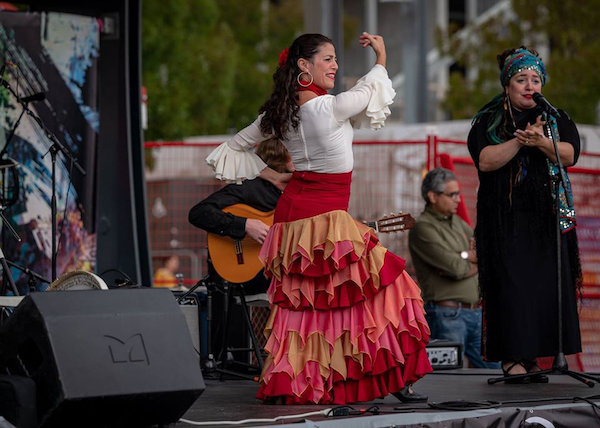
Lili Flamenco / Liat Har Lev performs two solos in the Dance Centre’s Open Stage Edition #3 on May 6, 8 p.m. (photo from Lili Flamenco)

The Scotiabank Dance Centre’s Open Stage Edition #3 on May 6 includes two solos choreographed and performed by Lili Flamenco / Liat Har Lev: We Shall Not Forget, dedicated to the six million Jews killed in the Holocaust, and Lemons, in the flamenco style Alegrias, which means “happiness” in Spanish.

“Although my family was not directly affected by the Holocaust, growing up in a Jewish family I heard and learned about it…. I created this piece with the hope that I and the audience will connect to the experience of the victims and survivors on a deeper level and remember what they endured just because they were Jewish,” Har Lev told the Independent.

In contrast, she said, “Lemons has an uplifting, joyful mood and a vibrant rhythm, harmony and pulse. It has more of a traditional flamenco flavour and will be performed with a guitarist [Peter Mole] and singer [Pat Keith]. It is inspired by my personal artistic journey and celebrates optimism and grit. I chose to perform it in conjunction with We Shall Not Forget because it has a lighter mood … and is completely different stylistically.”

Har Lev performed We Shall Not Forget last year as part of the Dance Centre’s International Dance Day events. (See jewishindependent.ca/a-celebration-of-dance.)

“I started developing We Shall Not Forget in 2020 during the pandemic with the support of the 12 Minutes Max program. I had access to support and feedback from facilitators, I received subsidized studio space at Scotiabank Dance Centre, and had the opportunity to participate in an informal public showing which, unfortunately, had to be featured on Zoom because of the pandemic. I never actually performed We Shall Not Forget to a live audience.”

In addition to Har Lev, Open Stage Edition #3 features dance works by Kiruthika Rathanaswami and Malavika Santhosh (in the classical Indian dance style of bharata natyam), Lili Shilpa Shankar (bharata natyam) and Voirelia Dance Hub (contemporary dance). For tickets, visit thedancecentre.ca.

Har Lev will also be performing at the Festival of Israeli Culture at the Jewish Community Centre of Greater Vancouver on May 14.

Learn klezmer dancing

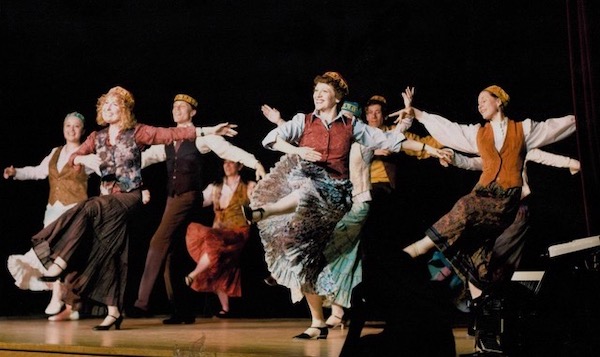
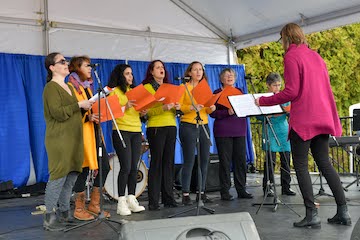
Kol Halev Performance Society in action. (photo from Kol Halev)

On May 7 at White Rock South Surrey Jewish Community Centre, Kol Halev Performance Society is holding a two-hour klezmer dance workshop, which is open to kids 8 and up, adults and seniors. And you don’t have to be Jewish to enjoy klezmer – this workshop is open to all!

In the workshop, participants will learn traditional and contemporary klezmer dances (traditional dances of Jewish celebrations originating in Eastern Europe) and read excerpts from The Kugel Valley Klezmer Band by children’s book author Joan Stuchner, in a joyous celebration of music, dance and storytelling. The instructors are Hadas Klinger (dance) and Tom Kavadias (theatre).

Klinger currently teaches recreational Israeli dance to adults at Richmond’s Congregation Beth Tikvah and at the Louis Brier Home, as well as jazz and Israeli dance instruction and choreography to K-6 kids and preteens. She has led Israeli dance workshops and drama workshops at a variety of youth summer camps, and has performed in Miami representing the Jewish Community Centre of Greater Vancouver as part of Maccabi Artsfest.

Kavadias has been involved in community theatre since 1985 as an actor and director, and he has worked with adults, teens and children. He has acted with Metro Theatre, Stage Eiren, Theatre North Van, and United Players.

There is no charge for the workshop, which takes place from 3 to 5 p.m., but registration is required by emailing info@wrssjcc.org or via wrssjcc.org.

White Rock South Surrey Jewish Community Centre is located at 3033 King George Blvd. For questions about the dance program, call Sue Cohene at 604-889-4337. For other questions, call the WRSSJCC at 604-541-9995.

– Courtesy Kol Halev

Rabbi launches book at BI

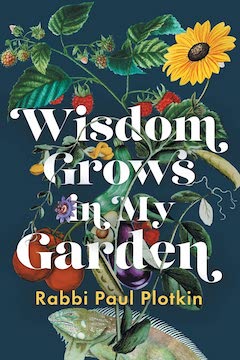
Rabbi Paul Plotkin returns to Congregation Beth Israel for the Canadian launch of his new book, Wisdom Grows in My Garden. (photo from AIA Publishing)

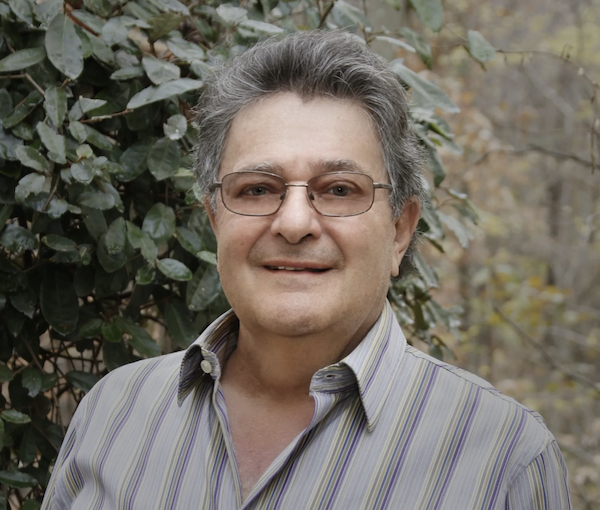
In part to fill his need to nurture – his kids off to college and his congregation less reliant on him – Rabbi Paul Plotkin took up gardening. Not only has he produced some of the most expensive tomatoes, taking into account all the capital that goes into every one that makes it into a salad or sandwich, but he has produced a new book: Wisdom Grows in My Garden (AIA Publishing). And he will launch that book in Canada on May 10, 7:30 p.m., at Beth Israel Synagogue, where he began his rabbinical career.

“I started in the summer of 1976 as Rabbi [Wilfred] Solomon’s first assistant, and he left for Israel after breaking his Yom Kippur fast on the way to the airport, and the 26-year-old ‘kid’ took over. Rabbi [Marvin] Hier was away from the Schara Tzedeck for most of the year preparing to build what was to become the Simon Wiesenthal Centre, so I was thrust into the position of often being the Vancouver non-Reform senior rabbi. It was quite a ride. It was a good thing I didn’t know what I couldn’t do, or I would have been paralyzed with fear. Instead, I jumped in and went to work.”

While BI was his first pulpit, Plotkin said, “I had been a youth director of my home synagogue while in college and in New York while at the seminary. I learned a lot about programming and leadership from those jobs and translated it into heading a synagogue.”

He admitted that the experience “was not without mistakes but what I couldn’t entirely appreciate was the menschlichkeit of my members. They appreciated my enthusiasm, my passion and my sincerity and pardoned most of my excesses and faults. It was a truly Canadian thing. I know now how special it was because my other two congregations in Florida were a lot different. Years later, I would share privately that my ‘worst critics’ in Vancouver treated me better than my good friends in Florida. By being thrown into the fire and succeeding – succeeding was a low bar, if the shul was still standing when Rabbi Solomon returned, I would have been praised – I learned of the potential people had for change, of their desire for knowledge, and that I could actually help transform people into greater commitment to mitzvot and the Jewish people.”

Plotkin was born and raised in Toronto, but has lived in South Florida for more than four decades. He is rabbi emeritus of Temple Beth Am and served on the Rabbinical Assembly’s committee on Jewish law and standards for some 20 years. He is the founding chair of its kashrut subcommittee and also is in charge of kashrut for Ben’s Kosher restaurant chain. He loves food and cooking. And Canada still holds a special place for him – he and his wife own a townhouse in Whistler, “primarily as a new summer cottage for after retirement,” he said. “We will be there for four months this summer.”

An avid writer, publishing articles in various newspapers and magazines, Plotkin has a blog on medium.com. He published a book some 20 years ago – The Lord Is My Shepherd, Why Do I Still Want?: Ancient Wisdom for the Modern Soul (Eakin Press) – but waited until retirement to write his second.

“First, in those days, I had to triage my time and creative mental energy. I also needed more age and seasoning for all of the pieces to melt together. Pirkei Avot teaches us to see wisdom in the elderly. Great red wine isn’t great in its first year. It takes years to develop nuance and subtlety. Creation of the book was no different.”

The idea came to him in a dream, he said.

“Unfortunately, I was still in my active work years, with an 1,100-family congregation. Finding time to breathe was hard, let alone write a book, so I made it a priority in retirement. Over the years after the dream, new ideas would come to me in the garden and I would jot them down and throw them into a file with the dream material.”

image - Wisdom Grows in My Garden book coverIn describing the book, Plotkin said, “Technically, it is a narrative memoir, because it is my story and told entirely from my perspective, but it is not in its heart a memoir. It revolves around the garden, but you won’t improve your tomato growing by reading the book. It is, in essence, a life lesson book (indeed, there are 25 life lessons in the book) that will help guide you to a better life. It is filled with humour and stories, two tools that featured prominently in 40 years of sermons. It will offer the reader some important guides to navigating a better life. I like to tell Jewishly knowledgeable audiences that the garden was my ‘Torah,’ my book is the Midrash.”

Plotkin said “gardening is a wonderful emotional and humbling pastime” and cited a recent article that “extolled its value as an alternative choice for exercising.”

“If you haven’t got time,” he said, “try a few herbs in a pot on the windowsill. If you have a black thumb, grow zucchini. In northern climates, everyone grows so many, they start to call friends they don’t have to offer them some. If you read the book, the irony of this last statement will become clear.”

Of the feedback he has received so far – from readers in his own demographic, as well as that of his mid-40s son, from Jews and non-Jews, from observant people and atheists – Plotkin said, “much to my shock, they all liked it and, yet, like a Rorschach test, they all found messages in my lessons that reflected their needs or interests. There is something in this book for everyone.”

Chapter 1 of Wisdom Grows in My Garden takes place at Beth Israel, said Plotkin. “I hope many readers and especially those who may remember me from their bar/bat mitzvahs and weddings that I officiated at will come out to the evening and say hello,” he said.

Celebration of Israeli culture

Mark your calendars for May 14. The Festival of Israeli Culture, a one-day free series of events at the Jewish Community Centre of Greater Vancouver, is a multicultural celebration of music, dance, art, sports, food and drink.

photo - Kids enjoying last year's Festival of Israeli Culture
Kids enjoying last year’s Festival of Israeli Culture. (photo by Galit Lewinski)

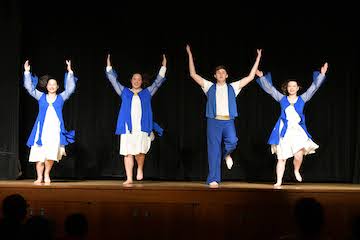
Get ready for community drumming by the Drum Café, Israeli dance, Mediterranean belly dancing, flamenco and the Israeli Choir, followed by a sing-along with well-known Israeli musician Elad Shtamer. And that’s not all! Join Maccabi-Mania with gym-based activities for all ages, the sassy sesame cooking workshop, intuitive painting, and calligraphy workshops.

photo - Dancers at last year's festival
Dancers at last year’s festival. (photo by Galit Lewinski)

For adults, there is a range of 19+ programs, including an Israeli wine tasting and cocktail party to sample some arak-based cocktails (arak is an alcoholic drink made primarily with aniseed and grapes) followed by an exhibition of video art from Bezalel Academy of Art and Design in Israel.

photo - Music is a part of the celebrations
Music is a part of the celebrations. (photo by Galit Lewinski)

In addition to the performances and activities, the festival will have a market featuring a variety of eats from local vendors and food trucks, along with hand-poured candles, jewelry, clothing, arts and crafts, Judaica, and more.

The Festival of Israeli Culture on May 14 runs from 11 a.m. to 5 p.m. at the JCC. While all events are free of charge, food donations to the Jewish Food Bank are encouraged. For more information, visit israelifestival.com.

– Courtesy Jewish Community Centre of Greater Vancouver

Powerfully against othering

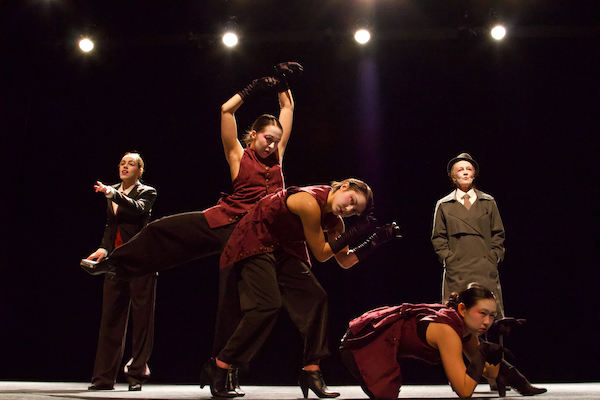
Into the Little Hill runs May 19 and 20 at SFU Goldcorp Centre for the Arts, Fei and Milton Wong Experimental Theatre. (photo by Flick Harrison)

Into the Little Hill is a powerfully emotional opera,” soprano Heather Pawsey told the Independent.

Pawsey is the artistic director of Astrolabe Musik Theatre, which, with Simon Fraser University Woodward’s Cultural Programs, is presenting the opera’s Canadian première May 19-20. A multidisciplinary, modern take on the medieval story of the Pied Piper of Hamelin, Into the Hill features two singers, three dancers and live music. Written by English composer George Benjamin with libretto by Martin Crimp, Jewish community member Idan Cohen of Ne.Sans Opera and Dance is the local production’s director and choreographer.

“From the moment I first heard Into the Little Hill, I knew I had to have dancers in the production,” said Pawsey. “My company, Astrolabe Musik Theatre, has been experimenting with dance and movement in classical music, in varying degrees, for over 10 years now. Dance and movement are such normal, natural, innately human ways of expression, yet we see it so rarely in opera and classical music.”

When she heard Into the Little Hill, she said, “I literally saw the dancers in my mind … and knew that this was the perfect opera to intentionally incorporate them as amplifications of the characters, as commentators on the story, and as true partners with the singers (who are also precisely choreographed).”

After that, she was just “waiting for the perfect person with whom to work.” And she found that person in Cohen – his company, Ne.Sans, exists to reimagine and reconnect opera and dance.

“When Idan and I met in Amsterdam in 2018 on an opera I was singing and he was directing, I knew at the first rehearsal that he was the person I’d been waiting for: someone who knows music, who knows dance, who can work with professional dance artists and with singers who may have little or no dance training, and whose knowledge and experience come together in a profound understanding of the possibilities of singing and dance.”

“We’ve connected on so many levels,” said Cohen of Pawsey, who introduced him to Into the Little Hill. “Since then,” he said, “we’ve enjoyed many long conversations about this wonderful opera that is so close to both our hearts. I am so excited to finally be able to share our version of this brilliant work.”

“As far as I know,” said Pawsey, “l’Opéra de Montréal is the only other company in Canada to have produced one of George Benjamin’s operas (Written on Skin, his second). In 2014, I watched Written on Skin on MediciTV and literally got goosebumps. Singing contemporary music is a huge part of my career, yet I had never heard of this composer nor heard music anything like his: crystalline, precise, profound, spare, yet filled with emotion, colour, shadow, passion and power. I looked him up immediately and discovered that Into the Little Hill was (at that time) the only other opera he’d written…. I knew then that I had to produce (and sing!) it; that it would have dancers; and, voilà! A decade later, here we are. This opera speaks so profoundly against ‘othering.’ I know that people will come away having experienced something powerful, intense and beautiful.”

Pawsey and mezzo-soprano Emma Parkinson sing all six of the opera’s characters.

“One of the things I love the most about Into the Little Hill is its exquisite precision,” said Pawsey. “Vocally, orchestrally, dramatically, dramaturgically there are no extraneous notes, no extraneous words, and the power of this concentration is intensified by having only two singers portray all the roles. We aren’t distracted by multiple singers coming on and off the stage, nor by the differing ranges and timbres of their voices – we have focus.

“We also have gender-neutrality, something that is difficult to achieve in traditional opera, where characters’ genders have historically been determined by voice-type (ie. tenor, soprano, etc.). Having only two singers sing all the roles makes gender, sexual orientation or how one presents to the world irrelevant, and leaves the make-up of the characters to each individual audience member’s imagination. As an artist, it frees me from having to imagine or recreate assumptions about how ‘men’ or ‘women’ move, behave and speak (sing), and allows me to enter fully into what that character is actually expressing. My hope is that this also helps audiences to identify more freely with the characters.”

The opera speaks to Cohen on many levels.

“As a queer artist, a descendant of Holocaust survivors, coming to Canada from Israel/Palestine, I have always valued the importance of raising voices of underserved communities and to acknowledge our troubled past, learn from it, and aspire to do better,” he said. “I chose to leave my country in search of a better future and, as I arrived in Canada in 2017, I was amazed to find how relevant the history of Canada is to my own, from multiple angles, both as the oppressed and the oppressor, often against my will.

“My work is embedded in this life experience and perspective, and I am passionate in telling classical stories through alternative lens,” he continued. “Into the Little Hill is such a powerful opera that speaks of the human condition in a very creative way. There are different ways to speak of the tragic history of Western culture, and one of the reasons I chose to be an artist is because I see the importance of speaking of the violence and hurt, and to fight against discrimination.

“This opera is such a great, complex example of the fact that there is no one source of harm, and not one source of knowledge and perspective,” he said.

Critics have generally lauded Into the Little Hill, though some have expressed concern over the way in which the story is told.

“The narrative style of this opera imposes a certain detachment or distancing,” Pawsey said. “Traditionally, opera is all about emotion – big, huge, dare I say OPERATIC emotion! Here, Martin Crimp’s libretto uses Brechtian techniques (such as the Narrator directly addressing the audience, breaking the fourth wall, etc.) to discourage the audience from becoming too emotionally involved. Brecht used these techniques to encourage a deeper focus on the socially significant aspects of the story. This is particularly relevant in this opera’s tale of ‘who are we labeling as the “rats” in our society, what are we willing to do to get rid of them and what happens when we refuse to “pay the piper,” ie. take responsibility for the consequences of our actions?’

“Detachment, distancing – this is what we, as humans, do when we label, when we ‘other,’ when we divide into ‘us’ and ‘them.’ It’s a part of the de-humanizing process, which allows us to plan or to undertake horrific acts. But this is not to say that audiences will feel emotionless at the end of Into the Little Hill,” she stressed. “Fascinatingly, the muting of emotion evoked for individual characters and their stories makes us feel even more deeply and keenly the emotion of the story overall and how its outcome affects all the characters – and, by extension, us.”

Into the Little Hill takes place at SFU Goldcorp Centre for the Arts, Fei and Milton Wong Experimental Theatre. Conductor Leslie Dala is music director for the production, whose orchestration includes bass flute, basset horns, mandolin and banjo. Lighting design is by Victoria Bell, with costume design by Elena Razlog. The dancers are Juolin Lee, Daria Mikhalyluk and Hana Rutka.

For tickets and more information, visit littlehill.eventbrite.ca.

Designing the 12 tribes

Artist Anna Marszalkowska stands in front of “Levi,” which is part of her Tribes series, which is on exhibit at the Zack Gallery until May 4. (photo from Anna Marszalkowska)

The challenge of visually depicting the tribes of Israel has attracted many famous artists over the centuries. For example, on the 25th anniversary of the state of Israel, Salvador Dali, inspired by descriptions in the Torah, created a series of watercolours, “The Twelve Tribes of Israel.” Before that, in 1962, Marc Chagall made his famous stained-glass windows, “The Twelve Tribes,” for a synagogue in Jerusalem. Anna Marszalkowska, a local Vancouver artist of Polish origins, fits easily into this august company. Her solo show, The Tribes, opened at the Zack Gallery on March 29.

Marszalkowska grew up in Poland, but studied graphic design and worked as a graphic designer in London, England. “Diversity is what made my design path exciting,” she said in an interview with the Independent. “I started my career as a freelance web and graphic designer and then moved to video design and editing, as well as motion graphics and animation.”

Five years ago, she and her husband moved to Canada, but they lived and worked in the eastern part of the country. They relocated to Vancouver two years ago.

“We came here during the pandemic,” she said. “We wanted to try something different. For an outdoor person like myself, this is a great place. The nature is beautiful, and everyone is very friendly.”

She also changed the direction of her professional life. “I work with artists in the movie industry, but not as an artist myself,” she said. “I understand artists because of my past as a graphic designer, but I wanted less time at the computer screen. I wanted to free my creativity for more personal projects, which was hard to do while working as a graphic designer. Then, my creativity was fully engaged in my professional activity, but, on the other hand, I was limited by clients’ requirements. After a full day of work … I was often tired, I wanted to relax. Now, my creativity is freed. I have more time for my artistic experiments. I started abstract painting and I love it. Just me and a painting – it calms me.”

But even while working full time as a graphic designer, she still found energy to search for her individual style and themes. One of them was her Tribes series. “In 2010, I completed a print production course, and this series was the result.”

The series consists of 12 large digital prints, each one corresponding to one of the tribes of Israel. Although Marszalkowska’s version is an entirely modern take, it involves ancient symbolism, which originated in the Hebrew Bible. The artist conducted deep research for this project, and the end results are simultaneously stunningly simple and visually compelling.

“I had a blog before and, when I put the images online, many people expressed their interest. They wanted to buy one or several or all of the images.”

For the artist, this body of work has meaning beyond its commercial success. “It was a personal journey. I was searching for my Jewish ancestry. My grandmother grew up in a town in Poland where most citizens were Jewish before the war. She might have been part Jewish herself, but after the Holocaust, I had no one to ask.”

Instead, she studied the Bible and tried to interpret the narratives within a cultural context. “The symbols of the tribes are by no means fixed,” she explained. “Every artist could have their own interpretation, as the biblical texts describe the sons of Jacob allegorically.”

In her interpretation, the traditional symbols are given a contemporary, stylized appearance. “I explored the relationship between geometric shapes and lines,” she said. “I used repetition and symmetry to keep balance in each individual design and all 12 together.”

She also leaned towards a minimalistic approach, where a symbol of the tribe is centred on a one-colour background, with no other embellishments to attract a viewer’s attention. “In the original design, I had an ornamental frame around each image, but I got rid of them. I think less is more,” she said. “COVID made me realize that my focus should be the meaning, not the decorations.”

“Benjamin” by Anna Marszalkowska.

In most images, the background colour palette reflects that of the tribe, except for Benjamin, the youngest. “His symbol is a wolf,” Marszalkowska said. “He represents all colours of all tribes. To reflect that, I placed a ‘rainbow’ above the wolf. I think it is his spirit or maybe his song, Or his breath. It would depend on your own interpretation.”

In some of the designs, she incorporated photography for texture. “I used Adobe Illustrator to combine my photographs with my digital illustrations,” she said. For Simeon, her symbol is a tower, and she put her photos of bricks to good use in her pictorial tower construction. For Zebulun, whose symbol is a ship, she employed photos of water. “Issachar’s symbol is a donkey with a burden,” she said. “I used my photos of wood for the donkey’s load.”

When different sources offered different visual symbolisms for a tribe, the artist’s scholarly touch led her towards her own esthetic. For example, in the case of Levi, some documents don’t count him as a tribe and don’t offer any symbols for him. Historically, the Tribe of Levi wasn’t given any land, but its men served as religious leaders and teachers. Maszalkowska decided that Levi’s description as God’s Chosen Tribe warranted its own image: a breastplate of a high priest. The breastplate is embedded with 12 gemstones, each inscribed with the name of one of the tribes in Hebrew.

“Overall, the series is an invitation for everyone to embark on their own journey, to reflect on their own purpose and fulfilment,” said Maszalkowska. “Ultimately, I hope that my art will connect with the viewers and inspire them.”

Tribes runs until May 4.

Olga Livshin is a Vancouver freelance writer. She can be reached at olgagodim@gmail.com.

Part of New Wave’s Season 3

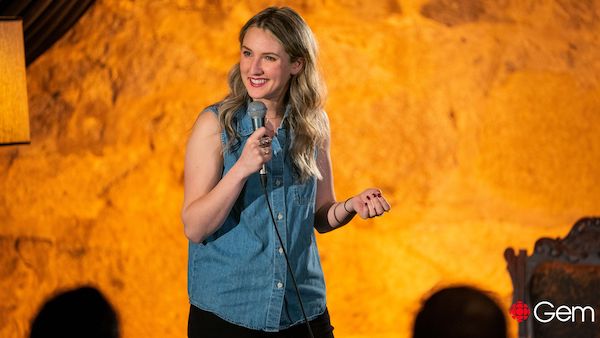
Laura Leibow is one of the 14 comics featured on The New Wave of Standup, now streaming on CBC Gem. (photo by Emily Cooper)

The whole thing was a highlight really! I still kind of had that post-COVID ‘I can’t believe I get to take the stage again’ sense of wonder in me at that time,” comedian Laura Leibow told the Independent. “Combine that with getting to see comics I respect and love do their thing made the whole experience very cool. Plus, I love staying in hotels.”

Leibow was speaking about the taping of the latest season of The New Wave of Standup, a Just For Laughs Vancouver and CBC original series, which is now streaming on CBC Gem. Leibow and fellow Jewish community member Jacob Balshin are two of the 14 comics featured on the show.

“I try really hard to approach taped sets in the same way I’d approach ones that are not being taped because, ultimately, it’s just about that live experience between you and the crowd and, hopefully, the tape will capture that,” said Leibow. “The only major difference is I mind the subject matter I cover a little more when I’m being filmed, so my mommy and daddy don’t get mad at me!”

Balshin went into the New Wave set having worked out more of what he was going to say than he usually does. “I love writing and try and work every day on my comedy. I do not like repeating the same set over and over again though,” he said. “It can make me depressed. Leading into the taping, I only ran the set a few times. I was just getting back into comedy after the last COVID lockdown in Ontario and did not want to take a break from having fun to repeat the same jokes over and over. I try not to overthink things. Comedy is the easy part of my life. The rest is the struggle.

“After I got off stage that night, I went to another show,” he said. “It was next door to where we were shooting and was actually part of a tour I was on…. I was able to make it in time to do my spot. I bombed trying new stuff. No one in the audience knew I had just filmed for TV 20 minutes earlier. Both sets held the same weight to me – I just want to make people laugh, and get better. I do not think any one set matters that much. And, if it does, I will be prepared because I know I have put in the work.”

It took Balshin time to find his comedic voice. “I did not know my own voice when I started comedy, so I would speak like other people who I was a fan of,” he said. “Now, it is not something I think about. Everything I do is naturally me. And that feels like a really good place to be – and something I always wanted. To me, the goal is to be yourself. Anyone can be funny, but only you can be yourself. So, over the years, it has been more about actually living a life and less about what happens on stage.”

While Leibow seems to have experienced a less drastic evolution, she, too, has reached the point where, she said, “I’m far less concerned now with trying to impress certain people than I am with just talking about what I think is funny.”

Leibow said, “My comedic voice is driven largely by my ADHD [attention-deficit / hyperactivity disorder], friendship, laughter, feminism, silliness, clay, and Jews. No, I don’t know if I can really nail down my comedic voice other than saying that it really is largely driven by my scattered brain and throwing spaghetti at the wall. If something really tickles me, and it seems to be making other people laugh, then that’s great!”

Both Leibow and Balshin have topics they won’t cover in their acts.

“I won’t tell a joke that denigrates or harms a marginalized group and I prefer to stay in my lane when it comes to certain issues,” said Leibow. “I’m not going to boldly speak out of turn on a topic about which I’m not well informed. I also try not to violate the privacy of my family members. Unless I think of a good joke that would require me to do so.”

Balshin only writes material that is about him. “I only have my own story to tell,” he said. “I hope my comedy makes you feel good when you watch it. And I always feel bad when someone has a bad night. If any joke I ever tell hurts someone, I am interested to know why and am willing to listen.”

On stage, Balshin interacts with the audience quite a lot.

“It is a part of my comedy that naturally developed from doing comedy in rooms in Toronto, where the audience … [wants] you to feel present and talk to them,” he said. “I struggle with social anxiety off stage and rarely talk to people. It is pretty fun to have a space where that seems to not exist for me at all. And I love when the audience opens up to me. It feels like the reward I get for being so open with them. And to know they trust me sometimes is really special.”

photo - Jacob Balshin
Jacob Balshin (photo by Emily Cooper)

Balshin tours the country regularly. “I’ve performed in places with populations in the hundreds many times in my career. For many, I am the first Jewish person they have ever met,” he said. “From my own experience, I would say there is a big difference between hate and ignorance. I would say the vast majority of what I have encountered firsthand is ignorance. Most people though do not care that I am Jewish. We are all just people.

“I hope to be funny and genuine enough on stage so that anyone who came in with any misconceptions or hate towards Jewish people can recognize someone who has nothing but love to give. Even though we are different, we can all relate to the weird experience that is living.”

In addition to being part of The New Wave of Standup, Balshin’s debut standup comedy special will be airing on his YouTube channel in the next few months. “It’s called 30 and Breathing Funny,” he said. “It was recorded on my 30th birthday and it would mean a lot if you gave it a watch. It better showcases my style of comedy and includes some material about being Jewish that is not in the CBC taping.”

Balshin moved to Vancouver last year, after a breakup. “When I arrived at the airport, friends Bobby Warrener and Malik Ellassal [also on New Wave this season] picked me up and immediately helped the move feel far less lonely. Getting to do my first TV taping with both them a few months later helped relieve me of that same feeling of loneliness,” he said. “And getting to watch them both kill, knowing how hard they both work and how much they deserve it, was definitely a highlight. Go watch their episodes! They are two of the funniest young comics in Canada.”

Rounding out The New Wave of Standup lineup are Brendan D’Souza, Travis Lindsay, Rachel Schaefer, Courtney Gilmour, Charles Haycock, Seán Devlin, Dino Archie, Heidi Brander, Jackie Pirico and Mike Green. To watch, go to gem.cbc.ca/the-new-wave-of-standup.