Kiki more than a muse

History is fickle. Who becomes known as great in their field, whose work is displayed in museums or taught in schoolbooks? When there is a tangible product – a building, a painting, a book, whatever – the chances seem higher that you’ll be remembered. But what if you were mainly a muse to others, what if you could enthrall audiences with your voice but never recorded an album, if you created works of art that people liked and even bought, but you didn’t create in the popular style of the day, or you were a woman in a man’s world?

image - Kiki Man Ray book coverMost readers will not have heard of Kiki de Montparnasse, born Alice Prin in 1901, in Châtillon-sur-Seine, about 240 kilometres southeast of Paris, to an unwed mother who wasn’t much into mothering. But most would likely recognize her – she modeled for many an artist (Alexander Calder, Tsuguharu Foujita, Amedeo Modigliani, to name a few, as well as Maurice Mendjizky, with whom she fell in love for awhile). And, during her seven-year relationship with surrealist photographer Man Ray (who thought himself more of a painter), she posed for him many a time. In 2022, one of Ray’s most famous images of her, called “Le Violon d’Ingres,” sold for $12.4 million, the most expensive photograph ever sold at auction.

Yet, what of her own work, her talents, her accomplishments?

Cultural historian Mark Braude gives Kiki her overdue due with his latest book, Kiki Man Ray: Art, Love and Rivalry in 1920s Paris, which Braude will discuss with University of British Columbia professor emeritus of history Chris Friedrichs at the JCC Jewish Book Festival on Feb. 24, in an event called Art & History: Paris, Jews and Surrealism.

While Kiki wasn’t Jewish, so many of the artists she hung out with were, including, of course, Ray, who was born Emmanuel “Manny” Radnitzky. If she hadn’t lived among the who’s who of Dada and Surrealist art, perhaps she wouldn’t have been overshadowed, mostly forgotten. She was a commanding performer, she sold at least a few dozen paintings, wrote a memoir, appeared in films. By all accounts, a success. But, as “Queen of Montparnasse,” the early-1900s bohemian paradise in Paris, Kiki lived on the more wild side. Addiction would speed along her end – she died in 1953, only 51 years old. Another reason, perhaps, that her legacy was not as lasting.

As much as Braude’s account is about Kiki, it is about the time in which she lived and the people among whom she lived. Because, “as she experienced her era and channeled that experience into her art, Kiki shared drinks and cigarettes and ideas with many of the people who would shape how their century saw and thought and spoke: Modigliani, Stein, Picasso, Barnes, Matisse, Guggenheim, Calder, Duchamp, Breton, Cocteau, Flanner, Hemingway,” writes Braude. “And Man Ray, whose emergence as a modern artist must be understood as intimately linked to her own.”

While Kiki may not have left much physical evidence behind of her influence, it doesn’t mean she wasn’t influential. Living as she did, with whom she did, Braude writes: “Evolving in concert with them, watching them become who they were, challenging them and joking with them, working with them and through them, Kiki, too, played her role in shaping the cultural history of the past hundred years.”

Braude’s book is not only a fascinating read, but a reminder that none of us is insignificant. Even if our names are lost to history, we matter, we impact others and the world around us.

For the full book festival schedule, visit jccgv.com/jewish-book-festival. 

A Dickens of a musical

Anthony Santiago, at front, plays Fagin in Gateway Theatre’s production of Oliver!, which runs until Jan. 4. (photo by David Cooper)

Charles Dickens wrote Oliver Twist in 1837. His eponymous main character, an 11-year-old orphan, has the audacity to ask for more when the workhouse daily gruel is handed out, leading to a series of events that change his life forever. And local audiences will be asking for more, more, more of Gateway Theatre’s offering of Oliver!, the musical “freely adapted” from Dickens’ novel by Lionel Bart, which plays until Jan. 4.

A beloved classic, the 1968 screen adaptation of Oliver! won the Academy Award for best picture of the year. A revival of Bart’s work is currently playing in London’s West End to widespread acclaim. I predict the same for this production. 

The story revolves around Oliver’s journey through the gritty underworld streets of Victorian London, from being an impoverished orphan sold to apprentice a cruel undertaker, to his secondment to a gang of street urchins under the tutelage of Fagin “the Jew” and, finally, a reunion with his well-to-do family. 

Community member Josh Epstein ably directs his 24-person cast, a superb mix of professional and amateur actors (including 11 children), as they enthusiastically sing, dance and cavort their way across Ryan Cormack’s handsome set. 

On the dark side of the original story is Dickens’ portrayal of Fagin as a venal, sinister, petty criminal who runs a den of adolescent thieves, teaching them to pick the pockets of London’s elite. Dickens refers to Fagin as a Jew more than 250 times, mostly in a negative way. He defended his choice by stating that he was just reflecting the reality of the time – that London underworld criminals were almost invariably Jewish. Some say he based the character on Ikey Solomon, a notorious Jewish fence. Over the years, consistently called out by Jewish community members for antisemitism, Dickens eventually apologized and edited out the negative references. Bart, who is Jewish, downplayed any stereotypes of Fagin in his rewrite.

In Gateway’s production, you would not even know that Fagin, played by Anthony Santiago, is Jewish, although, in his one solo, “Reviewing the Situation,” the klezmer-inspired clarinet accompaniment hints at a connection. Even as Fagin salivates over his cache of jewels, overall, he comes across as a lovable rogue, not the sleaze Dickens originally described. On opening night, I asked Epstein about this characterization. “I did not want to make a Jewish caricature of him,” said Epstein. “I wanted the show to be something entertaining and deep without that aspect.”

While this is truly an ensemble production, a number of actors stand out. Many of the veterans take on multiple roles, gliding effortlessly from one to the other.

Miranda MacDougall, who can really belt out a song, does double duty as Nancy, one of Fagin’s accomplices, a kind-hearted strumpet, and Mrs. Sowerberry, the undertaker’s wife. She also carries off a pretty good Cockney accent.

Tanner Zerr plays Nancy’s churlish beau Bill Sykes, whose cruelty leads to murder and his ultimate demise. One wonders what Nancy sees in this violent partner and why she stays with him. The answer comes in her poignant rendition of “As Long As He Needs Me,” which brought tears to my eyes. Zerr also doubles as Mr. Sowerberry in a very funny funeral scene and chorus line dance, including a spry corpse – Kate Malcic.

Santiago is simply fantastic as Fagin. Lucas Gregory as the Artful Dodger, the leader of Fagin’s gang, has a very physical role, as he slides down poles and climbs up and down ladders. I hope he can make it through the three-week run without an injury.

Then, of course, there is Rickie Wang as Oliver. Wang gives a sublime performance and showed his singing talent with “Where is Love?”

More minor characters, Victor Hunter, as Mr. Bumble, the beadle, and Cecilly Day, as Widow Corney, delight in a raunchy two-hander that had the audience in stitches. Daniel Curalli plays Mr. Brownlow, who turns out to be Oliver’s uncle, with the appropriate gravitas, and Suani Rincon does a nice job as Bet, 

Nancy’s friend. All the gang kids, from the tallest to the smallest, are great and perform with gusto. 

A musical of this scope is nothing without the behind-the-scenes work of the creative team. In this production, they really deliver.

Cormack’s industrial two-storey wrought-iron set constantly revolves, morphing from a workhouse to Fagin’s hideout to a posh London salon to London Bridge. Frenetic activity accompanies each revolution with various cast members running to and fro.

Lighting designer Sophie Tang’s rich colours infuse the various sets, providing the mood for each scene.

The costumes of Donnie Tejani authentically reflect the Victorian era – the rustling petticoats of the ladies, the tattered frocks and knickers of the children’s gang, Fagin’s patchwork overcoat, and fancy waistcoats and trousers for the gentlemen. 

Against the backdrop of all of these designs, choreographer Nicol Spinola gets her young charges hoofing away to musical director Sean Bayntun’s impressive six-piece orchestra. With iconic songs like “Food, Glorious Food,” “Consider Yourself One of the Family” and “Oom Pa Pa,” what’s not to like?

My only complaint is that the hidden orchestra often overpowers the actors (although they are all wearing microphones) so that many of the lyrics are lost. Hopefully, over the course of the run, this will be corrected.

In program notes Epstein remarks: “Directing Oliver! has been an incredible opportunity to reimagine a story that has resonated for generations. While it’s a tale of resilience and hope, it also confronts the harsh realities of poverty, abandonment, and the search for belonging. For this production, we’ve worked to see the story through Oliver’s eyes, capturing the vivid and fantastical way children remember moments.

“This isn’t a softened version of Oliver!, it’s raw, unflinching, and a true dark fairy tale. It’s a story about finding light in the darkest places and holding onto hope when it feels out of reach.”

I highly recommend this delightful musical, suitable for ages 10 and up. Tickets can be purchased at boxoffice@gatewaytheatre.com or by calling 604-270-1812. Special performances include VocalEye audio description for guests with visual impairments (Dec. 28) and a relaxed performance (Dec. 21). 

Tova Kornfeld is a Vancouver freelance writer and lawyer.

Writing the human condition

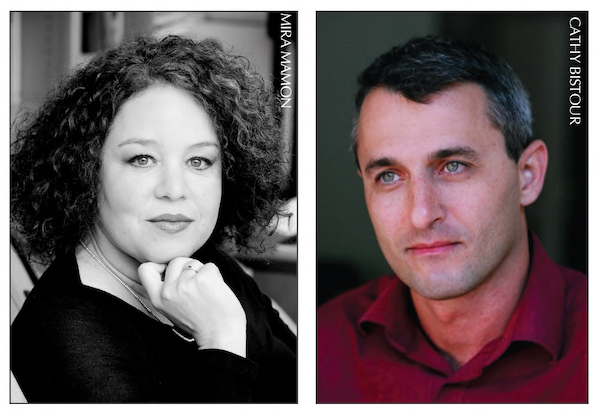
Maya Arad and Eshkol Nevo are featured in the JCC Jewish Book Festival prologue event Jan. 19.

The JCC Jewish Book Festival begins its 40th year with a discussion that’s sure to be as intriguing as it is relevant. The two Israeli writers featured in the festival prologue event Jan. 19 – Maya Arad and Eshkol Nevo – are keen observers and talented communicators, even as their characters are not.

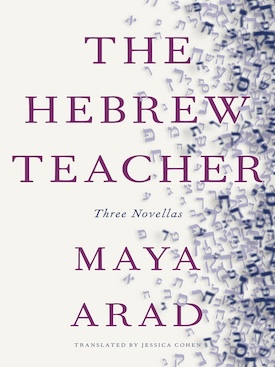
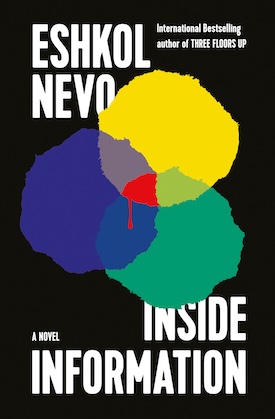
Boundaries, generational differences, family, love, work, politics, social mores, and other themes run through both Arad’s  (New Vessel Press, 2024) and Nevo’s Inside Information (Other Press, 2023). Each book comprises three novellas, though Nevo’s very loosely connects all the narratives, so dubs itself a novel, despite the stories being almost completely unrelated. Melancholic would best describe the mood of both works.

While the English version of Arad’s The Hebrew Teacher was published just this year – translated by Jessica Cohen – the Hebrew version came out in 2018. Its stories retain their immediacy, and readers will be able to relate to some aspect(s) of every one.

image - The Hebrew Teacher book coverThe title story, “The Hebrew Teacher,” is brilliant. When Ilana arrived in the United States from Israel in 1971 and started teaching, her Hebrew classes, both children and adult, at her synagogue and at the university, were packed: “Parents wanted their children to be able to chat in Hebrew, not just recite the prayers…. Everyone wanted to know a little Hebrew before they visited Israel. They wanted to learn the new songs.” Of course, those songs are far from new at this point in Ilana’s career, yet she still holds them and their visions of Israel dear.

But enrolment in the Hebrew-language university courses has been dropping for almost two decades, both because “Israel was a tough sell these days. It wasn’t the fledgling little country of 45 years ago. Nor was Ilana the same beaming young woman who’d arrived, thick copper braid over one shoulder, to regale the riveted students with stories about hiking from the Mediterranean to the Sea of Galilee, working on a kibbutz, and firing an Uzi when she served in the Israel Defence Forces.”

Into Ilana’s tenuous professional world – her husband has just retired from the university and other key allies have moved on – comes a new hire, Yoad Bergman-Harari, who’d been born Yoad Harari but had “added on his father’s original name, Bergman.” When Ilana asks why, he responds, “‘To negate the negation of the diaspora’ … as though it were the most obvious thing in the world.”

The differences in their worldviews – particularly on the Israeli-Palestinian conflict – and approach to collegiality are stark. While Ilana has taught at the university for decades, she holds none of the cards here, as Yoad is the latest newfangled intellectual thing, and a professor, so can pretty much write his own ticket, and does.

In “A Visit (Scenes),” Miriam comes to the States for a three-week visit with her only child, Yoram, his wife Maya and their son Yonatan. Miriam makes the journey because her son rarely returns to Israel and she has yet to meet her grandson in person. In a string of short snippets, mostly from Miriam’s perspective but also from Yoram’s and Maya’s, we are privy to what everyone is feeling – which boils down to a lot of unhappiness. The lack of honest, open communication contributes to the tensions and dissatisfactions, which build as the visit goes on.

The final story, “Make New Friends,” is kind of mystifying at first, as we watch Efrat, an educated, successful woman with a good husband, start to spiral as she tries to protect their unpopular teenaged daughter from being hurt by so-called friends. She gets way too involved, even entering the teen social media universe, and it’s only when Efrat realizes that she herself doesn’t belong to any group or have any real friends that she begins to understand her reactions (and actions) to her daughter’s situation. 

One review of The Hebrew Teacher comments that Arad, in these novellas, “probes the demise of idealism and the generation gap that her heroines must confront.” This is an apt description. And it could be said that Nevo also explores the demise of idealism in Inside Information, which was translated from Hebrew into English by Sondra Silverston.

image - Inside Information book coverThe first two stories of the novel have similar plotlines – men who are led by their sexual desires to act in illegal or inappropriate ways. The main difference between the protagonists is that the “hero” in “Death Road,” Omri, goes mostly willingly towards his potential downfall while Dr. Caro, the main character of “Family History,” tries to convince himself that he did nothing wrong.

In “Death Road,” while on a trip to Bolivia following the recent breakup of his marriage, Omri runs into newlyweds Ronen and Mor. Once back in Israel, he reads in the newspaper about the death of Ronen in a cycling accident in Bolivia. He decides to go to the shiva – as he drives there, his “mind filled with more and more images of Mor’s surprise nocturnal visit to my room two weeks earlier.”

As Omri lays out the story, he proves an unreliable narrator. Nothing ultimately ends up being what it seems at first. More details become known. Questions arise. It’s a thriller of sorts, but one that doesn’t seem all that original or urgent. There are twists but nothing that’ll stop readers in their tracks.

The femme fatale reappears in the next story, “Family History,” this time in the form of a young medical resident who supposedly mistakes the ostensibly paternal gesture of the respected Dr. Caro for sexual harassment and files a complaint that threatens the good doctor’s reputation. Even as Caro tells his story, he’s trying to convince himself as much as us about the purity of his motivations. But he’s a widower who obviously loved his wife, he seems well-liked at work and good at his job. He is a more empathetic character than Omri, and the twist in this story does elicit some surprise, and puts Caro’s actions into an even darker light.

The last part of the novel, “A Man Walks Into An Orchard,” is a direct rift on the talmudic tractate about four Jewish sages who went into pardes, which means both paradise and orchard, and only one came out unharmed. In Nevo’s story, husband and wife Ofer and Chelli go for one of their regular Saturday walks in the orchard. This Saturday, though, Ofer needs to pee, so he gives his phone to Chelli and goes into the trees, while she waits on the road. And waits. He never comes back. He is never found. 

The way in which Chelli and her two children work through their loss is emotionally engaging. She and her son become estranged, while she and her daughter become closer as they search Ofer’s blogs for clues to his potential whereabouts. He had intended to complete 100 stories of 100 words each, and then publish a book. He had posted his 99th story the week before he disappeared.

There is something satisfying in this third tale, though it takes a detour into Chelli’s drug-induced visions to somewhat resolve the mystery of Ofer’s disappearance. It highlights our desire for things to make sense, to know what happened. When that’s impossible, storytelling can fill in the blanks. 

The Maya Arad and Eshkol Nevo event on Jan. 19 takes place at 1 p.m., at the Jewish Community Centre of Greater Vancouver. Olga Campbell gives a talk on her memoir (jewishindependent.ca/a-multidimensional-memoir) and its exhibit on Jan. 23, 7 p.m., at the Zack Gallery. The book festival and the Vancouver Holocaust Education Centre present a talk by Roger Frie on his book Edge of Catastrophe: Erich Fromm, Fascism and the Holocaust on International Holocaust Remembrance Day, Jan. 27, 7 p.m. The festival itself opens Feb. 22 – with Selina Robinson in conversation about her new memoir, Truth Be Told – and runs through Feb. 27. Events will be posted at jccgv.com/jewish-book-festival as they are confirmed.

Revisiting magic in Victoria

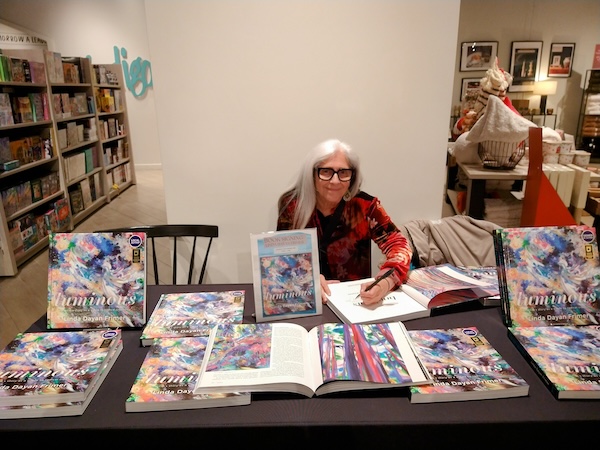
Linda Dayan Frimer signs books at the Indigo in Victoria’s Mayfair Mall. (photo by David J. Litvak)

Victoria has always been a magical place for BC artist and author Linda Dayan Frimer. She has exhibited her art at the Empress Hotel and participated in a concert with the Victoria Symphony Orchestra. It was an agent from Victoria who helped kickstart her career and, more recently, she connected with the Victoria  editor who worked on her latest book, Luminous. On a trip this fall to Victoria to promote that book, Frimer rekindled her special relationship with British Columbia’s capital.

“Victoria is a place of very special memories and wondrous new happenings for me and my art,” said Frimer.

Recalling her early days, she said, “My large watercolour paintings depicting the landscape of British Columbia, placed in the window of Northern Passage Gallery by the owner and my Victoria-based art agent Valerie Pusey, seemed to fly out the door in swift succession.”

Pusey “was astonishing in helping my art champion many causes,” said Frimer. Those causes included Margaret Laurence House for women leaving an abusive partnership, breast cancer research, and arts and science benefits. With Pusey’s help, Frimer was chosen as the first artist to represent the Trans Canada Trail, with her painting “The Golden Journey, 5000 Miles of Freedom.” That long-ago concert with the Victoria symphony was a fundraiser, with Frimer being invited to paint on stage just behind the orchestra.

“Hearing the symphony inside my heart while painting in harmony with them was an exquisite experience,” Frimer shared.

Frimer’s memoir, Luminous: An Artist’s Story as a Guide to Radical Creativity, follows the history of her ancestors from Romania, Lithuania and Russia, as they experienced cultural turmoil and fled to North America, and delves into the stories of renowned artists and the artworks they produced in response to social injustice and war. The book includes exercises designed to help readers connect with these artists, and to inspire readers to get in touch with their own inner artist and the art of their own story. (See jewishindependent.ca/how-to-be-radically-creative.)

photo - A painting by Linda Dayan Frimer from her “Wonder” series, which is in Luminous. At a recent signing, a young girl was entranced by this series and Frimer’s art
A painting by Linda Dayan Frimer from her “Wonder” series, which is in Luminous. At a recent signing, a young girl was entranced by this series and Frimer’s art. (image from Linda Dayan Frimer)

While Frimer has traveled across North America promoting Luminous, this recent trip was her first event in Victoria promoting it. As people passed by the table where Luminous was displayed at Indigo in the Mayfair Mall, they couldn’t help but notice it. One young fan could not take her eyes off it.

“My book was blessed by the appearance of a little 7-year-old girl who appeared at my signing table,” said Frimer. “She began to turn each page of the book intently. After a few minutes, her mother asked her if she would like to go to the toy department. No, she responded, I want to stay right here. She seemed mesmerized by each colour-filled page and, as she pointed out her favourite painting, entitled ‘Wonder,’ I felt a rush of awe. When her mother returned after some time shopping, I gifted the little girl my book and when she received the book, she hugged it tightly. Her mother was in tears and said to us that this was a seminal moment in her daughter’s life that would guide her future.”

Frimer was moved by the encounter.

“This was the best gift my life and art could receive – for I know that each of us is the artist of our own story and, when we are inspired to reach the foundational core of ourselves, we discover true meaning and purpose,” she said. “That afternoon, I realized that, if I had only written my book to bring wonder to this little girl, it had served its purpose.”

In addition to the event at Indigo, Frimer got together with Ellen Godfrey, the editor of Luminous, and Pusey while she was in Victoria.

“I vividly recall my first glimpse of Linda Dayan Frimer’s artwork and my feeling of awe at the interplay of emotion and passion, intelligently expressed through paint on paper,” said Pusey. “That glimpse confirmed all that critics had previously observed: her distinct ability to cultivate colour, light and motion within the watercolour medium. Linda Frimer’s artwork is so fundamentally powerful that it transcends esthetic beauty to express a depth of spiritual awareness and sensitivity. Her message is one of reverence for all of creation.”

During the rest of Frimer’s time in Victoria, seeds were planted for a future event at Congregation Emanu-El and possibly an artist residency at one of the local hotels. For more information about Frimer and her work, visit lindafrimer.ca. 

David J. Litvak is a prairie refugee from the North End of Winnipeg who is a freelance writer, former Voice of Peace and Co-op Radio broadcaster, “accidental publicist,” and “accidental mashgiach” at Louis Brier Home and Hospital. His articles have been published in the Forward, Globe and Mail and Seattle Post-Intelligencer. His website is cascadiapublicity.com.

Touring with Cirque’s ECHO

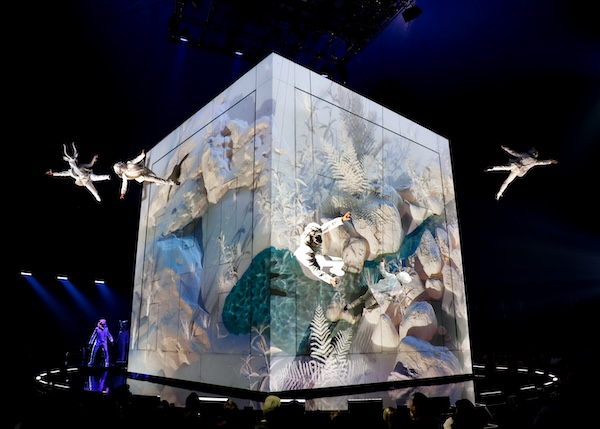
Cirque du Soleil’s ECHO, at Concord Pacific Place until  Jan. 5, is just beautiful. (photo by Jean-François Savaria)

Beautiful. Cirque du Soleil’s ECHO, at Concord Pacific Place until Jan. 5, is just beautiful – the costumes, the movements, the music, the projected images. As with most Cirque productions, there is a minimal storyline. This one follows heroine Future and her dog Ewai as they try to restore balance to the world, between humans, animals and the environment. It is an optimistic, fantastical show, an uplifting break from a reality that sometimes seems hopeless.

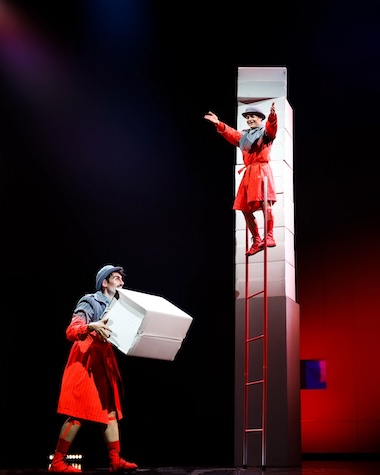
photo - "Double Trouble," Cirque du Soleil's ECHO
“Double Trouble,” Cirque du Soleil’s ECHO. (photo by Jean-François Savaria)

The performance the audience sees under the Big Top is, of course, as much the result of many behind-the-scenes and front-of-house workers as it is the performers’ hours of practise and great skill. Every Cirque show is a highly orchestrated experience, international in scope. According to its website, since Cirque du Soleil’s creation in 1984, “more than 400 million people have been inspired on six continents and 86 countries. The Canadian company now employs more than 4,000 employees, including 1,200 artists from more than 80 different nationalities.”

One of those employees is Jewish community member Sarah Sananes, who was born in Florida but grew up in Montreal. She and her siblings attended Hebrew Foundation School for elementary.

“We learned to read, write and speak Hebrew, attended synagogue every Friday morning at Congregation Beth Tikvah, and learned both French and English at the same time,” Sananes told the Independent. “I was young, but I remember loving everything I did and learned during my time there, especially getting to eat TCBY [kosher yogurt]. 

“To this day, my father still uses the menorah I made, which consists of bolts to hold the Hanukkah candles. We celebrated Shabbat every Friday and attended synagogue for the High Holidays. It truly is a beautiful religion to celebrate. As I grew up, I still celebrate the High Holidays and attend Shabbat dinners whenever I can. I continue to educate myself on my religion even as I get older and don’t always have the chance to celebrate like I used to when we were younger.”

photo - Sarah Sananes is a guest experience supervisor with Cirque du Soleil’s ECHO, which is in Vancouver until Jan. 5
Sarah Sananes is a guest experience supervisor with Cirque du Soleil’s ECHO, which is in Vancouver until Jan. 5. (photo from Cirque du Soleil)

Sananes entered the workforce right out of high school.

“I was always more of an active kid than a quiet one who liked to sit in class. This led me straight into the hospitality industry, where I quickly fell in love with the fast pace,” she said. “I worked hard to climb the ladder into assistant manager roles, which led me to managerial positions. I take great pride in my work ethic and leadership skills, even to this day. This is one of the main things that led me to Cirque, and has kept me here. Whether you are presented with a happy guest or an angry guest, the outcome can always be positive, depending on the way you see and handle the situation. One of my favourite quotes is: ‘We can’t control the winds, but we can adjust the sails.’”

Sananes is now a guest experience supervisor with ECHO.

“I first began my journey with Cirque du Soleil in the summer of 2022. I was hired when I started working as the on-site manager on another show, named KOOZA, with the local staffing agency. Once the summer ended, I returned to my job as an entrepreneur,” said Sananes, who owns an employment agency.

“The following summer, I heard Cirque du Soleil was launching a brand new show and, sure enough, I returned once again to manage the local staff. As the Montreal run neared its end, the guest experience position on ECHO became available and, after my interview, I was asked to join the team!”

Sananes had so loved working on KOOZA that, she said, “When ECHO came out, I knew, if it was anything like KOOZA, I would love what I did, everywhere I did it.”

As to what her job entails, it’s a lot.

“The guest experience team is the team that manages everything that has to do with guests in the front of house. Our team is made up of nine supervisors across six departments, which are box office, concierge, merchandise, food and beverage, VIP, and usher,” she explained. “We also have an inventory supervisor and then myself. Each supervisor manages their respective department every day, whereas my role is more like the chameleon of supervisors. Each day, I morph into a different role. Within my time here, I have learned the ins and outs of every single department, being able to cover or assist any of my co-workers whenever and wherever needed. 

“Another part of my role is being the direct link between our partnerships and our visibility departments at Cirque du Soleil’s international headquarters located in Montreal and the tour,” said Sananes. “I make sure all our signage and branding are properly managed and set up. This includes physical signs and all digital assets. Lastly, due to my previous experience as an on-site manager, now being on the other side, I work closely with the local staffing agency and their on-site team to ensure they are able to deliver what we need to successfully operate our show call operations, day in and day out. Some markets are tougher than others when hiring and managing local staff, but it wouldn’t be fun and rewarding if it was always easy!”

Sananes has worked in many markets since ECHO launched in Montreal in April 2023. She has been with the show since the beginning, traveling with it from Montreal to Washington, DC, Atlanta, Ga., and Miami, Fla., before returning to Canada, with performances in Toronto and in Gatineau, Que., among other places.

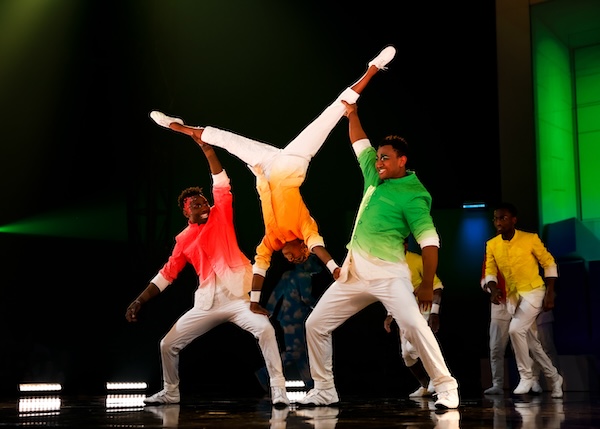
photo - "Human Cradle," Cirque du Soleil's ECHO
“Human Cradle,” Cirque du Soleil’s ECHO. (photo by Jean-François Savaria)

“After five different cities, we landed here in beautiful British Columbia’s Vancouver,” said Sananes. “My plan is to remain on tour and continue to travel with the show for the foreseeable future. I’ve already got my cowboy boots ready for Houston, so I don’t plan to go anywhere just yet! One of the beautiful perks about being on tour is being able to travel to all these places I’ve never been before, some of which I probably wouldn’t have gotten to see at all.”

When asked if there was anything else she’d like to tell JI readers, Sananes expressed gratitude for her parents.

“My father was born in Jerusalem and my mother was born in Canada. They have both taught me very valuable lessons in life, from when I was little until this very day, and, I pray, for all the days to come,” she said. “Because of my mother, I am tough, courageous and kind. Because of my father, I am resilient, fearless and wise. To my mother and my father, thank you for teaching me the importance of being independent, while still being able to spread love to all those around me.”

For tickets to ECHO, visit cirquedusoleil.com. 

PuSh Festival turns 20

Clayton Lee explores his childhood obsession with Jewish professional wrestler Bill Goldberg in his The Goldberg Variations, which is at Waterfront Theatre Jan. 30 (photo by Kenneth Koo)

PuSh International Performing Arts Festival runs Jan. 23-Feb. 9. This year’s run marks the festival’s 20th year.

PuSh 2025 features more than 25 presentations, including 20 original performance-based productions; five animated parties and cabaret-style events; two film events; and two artist residencies, one of which will culminate in an open studio showing by international guest artists. In addition to a strong Canadian presence, with 13 presentations, the PuSh Festival includes works by artists of Belgium, South Korea, Brazil, United Kingdom, Uruguay, France, Denmark, Italy, Taiwan, the United States, Sweden and Democratic Republic of Congo. 

Among the many presentations this year are at least two with a Jewish angle.

On Jan. 30, 9 pm., at Waterfront Theatre, The Goldberg Variations by Clayton Lee (Canada/United Kingdom) will have its Western Canadian premiere, with a talkback following the show.

Through an unapologetic investigation of desire, power dynamics and identity, Lee explores his childhood obsession with Jewish professional wrestler Bill Goldberg and the impact it has had on his sexual and romantic history. The perplexing crossroads between dominance, submission, heartbreak and vulnerability are laid bare in this candid and unconventional performance where fantasies are both indulged and deconstructed.

photo - Rebecca Margolick is part of Dances for a Small Stage, Feb. 4 and 5, which showcases 10 experimental, short dance pieces by femme and non-binary artists from different generations and dance practices
Rebecca Margolick is part of Dances for a Small Stage, Feb. 4 and 5, which showcases 10 experimental, short dance pieces by femme and non-binary artists from different generations and dance practices. (photo from PuSh)

On Feb. 4 and 5, 6:30 p.m., at Please Beverage Co., Jewish community member Rebecca Margolick is part of Dances for a Small Stage. Presented by PuSh Festival and Small Stage, the event showcases 10 experimental, short dance pieces by femme and non-binary artists from different generations and dance practices. The other artists participating are Claudia Moore, Cori Caulfield, Jessica Dawn Keeling, Nasiv Kaur Sall, AJ Simmons, Nicole Rose Bond, Burgundy, Ray Young, Adreane Leclerc and Bettina Szabo. There is a post-show talkback Feb. 5.

Other highlights for the 2025 PuSh include BOGOTÁ (Jan. 31 and Feb. 1) by Montreal’s Andrea Peña & Artists, which constructs a brutalist landscape from choreography inspired by Colombia’s political and spiritual heritage, and Dimanche (Feb. 6-8) by Belgium’s Focus and Chaliwaté companies, which paints a sharp yet tender portrait of humanity caught off guard by devastating natural disasters.

PuSh 2025’s animated parties and cabaret-style events include Van Vogue Jam’s Dune Wars Kiki Ball (Feb. 2), opening and closing parties with surprise performances, and the return of the frank theatre’s QT Cabaret at Club PuSh (Jan. 29).

Rounding out the lineup will be two film events: a free marathon screening featuring Brazilian actress Renata Carvalho, the artist behind PuSh’s Transpofagic Manifesto (Feb. 9), and a Born in Flames (Lizzie Borden) film screening (Feb. 6).

The festival’s Industry Series for arts leaders (producers, presenters, curators, directors, and more) returns for 2025, from Jan. 28 to Feb. 2. PuSh, in partnership with Playwrights Theatre Centre and Festival TransAmériques, will also offer free artistic consultations for local artists with invited national and international dramaturgs. 

Ticket prices for most PuSh shows range from $15 to $39. Visit pushfestival.ca or call the PuSh Festival info line at 604-449-6000. 

– Courtesy PuSh Festival

A multidimensional memoir

With her latest book, Olga Campbell sets out to leave a legacy, one that encompasses the trauma of the past but also the richness of the present and hope for the future.

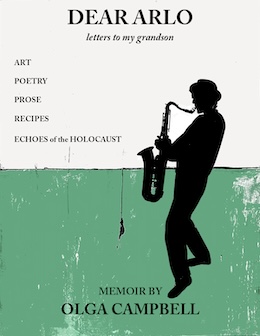
image - Dear Arlo book coverDear Arlo: Letters to My Grandson is Campbell’s third book. Her first, Graffiti Alphabet, comprised photographs of graffiti she found around the Greater Vancouver area. Her second, A Whisper Across Time, was her family’s Holocaust story.

The first essay in Dear Arlo is about Campbell’s parents, Tania and Klimek. They lived in Warsaw. “They were surrounded by family and friends and had much to look forward to,” writes Campbell. “Then, in 1939, everything changed. The Nazis invaded Poland from the west, the Soviets from the east. Life as they had known it stopped.”

Klimek would be arrested by the Soviets first, a pregnant Tania two weeks later. They were sent to different Russian prison camps. They survived, but the baby didn’t, nor did any of Tania’s family, most notably, her twin sister and parents, Campbell’s maternal grandparents. 

“Several months after their release from the prison camps, my parents found themselves in Baghdad, Iraq,” writes Campbell. “By that time, my mother was pregnant with me and could go no further. I was born in Baghdad on February 14, 1943.”

Eventually, after living in both Palestine and the United Kingdom, the family came to Canada. It wasn’t an easy life, learning a new language and new culture, or a long one for Campbell’s mother, who died at 52 of cancer.

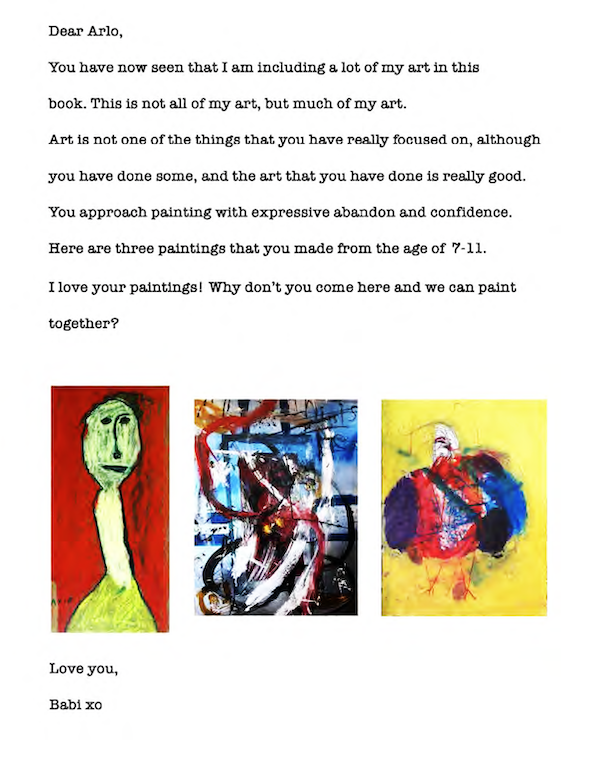
image - A page from Olga Campbell’s memoir Dear Arlo: Letters to My Grandson, which features letters, art, poems, essays and recipes
A page from Olga Campbell’s memoir Dear Arlo: Letters to My Grandson, which features letters, art, poems, essays and recipes.

Campbell shares her stories and wisdom with readers as a grandmother speaking to her only grandson, Arlo, with whom she obviously has a special relationship.

“I am writing this book as a legacy for you,” she writes in the first letter to Arlo. “A multidimensional memoir. A compilation of my writing, my art and a few family recipes. These writings and art are my responses to events in my life. The losses, trauma, grief … and the joy, happiness and love. It’s about the angst and awe of life, which is ever-changing, full of challenges but also magical.”

Brief letters to Arlo are spread throughout the memoir, which is gloriously full of Campbell’s artwork – painting, mixed media, sculpture and more, all of it in colour. A graduate of Emily Carr University of Art + Design, she has had many exhibitions since deciding to become an artist in her 40s, having started her professional life as a social worker. She has participated in the Eastside Culture Crawl since its inception almost 30 years ago, and has been a consistent part of the West of Main Art Walk (Artists in Our Midst) as well.

In addition to the art and letters in Dear Arlo, Campbell includes some of her poetry and essays. She shares how she came to write her second book, her experiences dealing with intergenerational trauma, her path to spirituality, how she found courage, and more.

She writes about losing her husband, in 1994. “Along with him, my plans and dreams for the future also died,” she writes. He died of a stroke at 49 years old – the pair had been together for 32 years, married for 26 of those years.

She shares the story of how she came to have her current dog, Nisha. “I was very sick in September 2019 with what my doctor now believes was COVID, before anyone had heard of COVID,” writes Campbell. Struggling many months with breathing difficulties, she turned, in desperation, to Ganesha, a Hindu god. “My wish to him was to remove all obstacles to my physical, emotional and mental well-being.”

A couple of days later, there came a knock at her door. Two work acquaintances were there, asking if she could adopt a rescue dog. Campbell did, and Nisha “was extremely timid, jumping, trembling and shaking at every sound, every movement. I held her all day every day for the first week to calm her down and get her used to me. She is still a little timid but every day she becomes more brave. She is playful, full of fun and great company,” writes Campbell. “She did remove all obstacles to my physical, emotional and mental health.”

Another uplifting essay is the one on how Campbell has “never come of age.” When she paints and creates with friends, she feels like she is 5 years old, she says. When with her teenage grandson, she also feels like a teen, and sees “the wonder of the world.”

image - A page from Olga Campbell’s memoir Dear Arlo: Letters to My Grandson
A page from Olga Campbell’s memoir Dear Arlo: Letters to My Grandson.

Campbell has role models, older friends and neighbours who still have bucket lists and exercise regimes. Having traveled much herself    Myanmar, Morocco, Vietnam, India, Cambodia, Laos, Turkey and other places – she now wants “to do inward travel. To get to know myself and others around me. To find the mystery inside. To nourish relationships with the people I know and with new people that I meet.” She wants to have different adventures: “Creative adventures, people adventures, spiritual adventures.”

There are more than a dozen recipes in Dear Arlo – from an apple torte that a 5-year-old Arlo bet Campbell she wouldn’t make (which she did but he never ate); to cabbage pie and Russian salad, recalling when Arlo was teaching himself Russian; to broccoli and cheese soup, vegetarian meatloaf and ginger apple tea, in response to Arlo’s request for some recipes.

Campbell is grateful for many things.

“I have had a good marriage and a wonderful family – my lovely daughter, her loving partner and my wonderful grandson Arlo,” she writes.

“I have dealt with losses and tragedies in my life, including the premature death of my husband, but I survived, and now I am happy. Those intense feelings of sadness that I grew up with no longer plague me. I can be triggered, but on the whole, I am fine.”

The memoir ends as it begins, with a letter to Arlo, who, says Campbell, has been “the best grandson I could ever have imagined.”

She writes, “The past provides us with valuable lessons that we can use to inform our present and future. A sense of connection and continuity with the people who came before us. This adds a depth and richness to our lives. I look forward to having many more adventures with you.”

We get to see Arlo grow up, in photos throughout the book. And the photo placed squarely in the centre of this last letter is perfect: Arlo in the driver’s seat of his new red convertible, toque on, giving a thumbs up, smiling, with Campbell beside him, also bundled up for a cold drive, but also with a big smile.

To purchase Dear Arlo or Campbell’s previous books, visit olgacampbell.com. 

Campbell’s artwork is on display at the Zack Gallery Jan. 8-27, with an artist reception Jan. 9, 6-8 p.m. Campbell speaks as part of the JCC Jewish Book Festival on Jan. 23, 7 p.m., in the gallery.

Escape from Soviet Union

A photo of Reuven Rashkovsky from the book An Improbable Life: My Father’s Escape from Soviet Russia, by his daughter, Dr. Karine Rashkovsky. Here, Reuven is pictured with a MIG 19 Soviet fighter plane. At 18, he was drafted into the military, conscripted for three years.

Perusing the pages of the Independent’s predecessor, the Jewish Western Bulletin from the 1960s and ’70s, demonstrates the centrality of the movement for Soviet refuseniks in Jewish life of that time. Jewish communities in North America and elsewhere in the West were deeply devoted to the Jews behind the Iron Curtain who sought to emigrate to Israel and other places of freedom.

That movement, ultimately, was a largely Western phenomenon. In a new book, Vancouver’s Dr. Karine Rashkovsky shares her family’s story. An Improbable Life: My Father’s Escape from Soviet Russia, and others of its still-emerging genre, open the narrative to the stories from the other side of the Iron Curtain, those of the refuseniks who Western activists were trying to free.

The Soviet Union, Rashkovsky writes, was a country based on an ideology intended to eliminate ethnic and religious lines, but which counterintuitively insisted that every citizen’s internal passport indicate their nationality – and for Jews, regardless of their geographic origins, their nationality was “Jewish.” And that “nationality” meant slammed doors in the face of opportunity for those carrying that mark.

image - An Improbable Life book coverThe book is a personal testimony – written by the daughter in the first person from the perspective of her father, Reuven – but it is also part of a larger story of the struggle of refuseniks and the lives they eventually made for themselves. 

After his escape from the Soviet Union, Reuven fought in the Yom Kippur War, attained a PhD in Israel and France, and both he and his wife narrowly avoided being on the hijacked Air France flight that was the centre of the famous raid on Entebbe, Uganda.

In the preface, Reuven calls his life, “a kaleidoscope of hardships and failures.” But there are plenty of successes also.

Reuven’s parents were born in Bessarabia, in what is now Moldova. It was a highly multicultural area and they spoke German, Romanian, Yiddish, Hungarian, Ukrainian and Russian. When the Romanian fascists took over their town, the family fled, but went east to Odesa, rather than to Palestine or America.

When Germany invaded the USSR, Reuven’s father was drafted into the Red Army. His facility with languages put him in the intelligence unit and he assisted in interrogating prisoners of war. He was severely injured during a Luftwaffe bombing raid and, because he was an officer, the family was evacuated to a military hospital in Uzbekistan. There, he learned to walk again and returned to service, participating in the capture of Berlin, in March 1945. Reuven was born in Uzbekistan, in November 1945. 

After the war, the family relocated to Belgorod-Dnestrovsky (now in Ukraine but under shifting sovereignty for centuries and known by at least 13 different names and transliterations over time). His father was a police officer and his mother worked 25 years in a fish cannery, which was relatively good fortune for the family in terms of providing protein, thanks to fish she smuggled out of the factory in her bra.

Eventually, they would be a family of seven, with five surviving children. At age 6, Reuven was responsible for taking care of his younger siblings all day while the parents were at work.

In response to antisemitic bullying, Reuven became a scrapper, taking his malnourished body to the gymnastics coach at school and forcing the coach, through the power of determination, to take on the unpromising-looking young Jew. As his biceps grew, the bullying receded. But the discrimination became more insidious and systemic.

In the home of a more well-off classmate, Reuven discovered books. Together, they devoured foreign works in translation, “free from Communist Party propaganda and boring Soviet patriotism.” This set Reuven on a trajectory of skepticism and dissidence that could have ended badly (and, along the way, did have bad moments – but ultimately resulted in freedom and a very successful life in the West).

Reuven’s teachers ascertained that he wasn’t a fan of the Communist Party and so he did not get a favourable reference for university. After 10th grade, he got a job at a slaughterhouse, then became an apprentice electrician. He began night school, where his facility with numbers shone and where his politics were not known and he might get a recommendation for university.

At 18, he was drafted into the military, conscripted for three years.

Eventually, the American allies of the refuseniks forced the American government to put conditions on the sale of American wheat, upon which the Soviet economy depended. The 1974 Jackson-Vanik Amendment tied trade in this necessary commodity to visas for Soviet Jews. Until then, of the several million Jews in the USSR at the time, just a few hundred had been permitted to leave.

Reuven was part of a group of about 25 Jewish youths who decided to hold a hunger strike to demand emigration. They took a petition to city hall and police soon blocked the exit. They were taken before authorities and subjected to “a long lecture on how inappropriate it was to think about leaving our Soviet paradise for Israel, that aggressor capitalist country, a puppet of America.” 

When an interrogator threatened the group with imprisonment, one of the dissidents explained to the KGB officers why that was not a good idea.

“She calmly explained to him that we’d communicated with Western journalists and passed them our names and plans for the hunger strike. We’d also alerted these journalists to expect a phone call before midnight to tell them what had happened today. If we didn’t call them, they would tell the Western media about us. Katya went on to tell the colonels what would happen if we were arrested: America wouldn’t sign the contract for selling wheat to the Soviet Union, which would harm the whole country. And Moscow would come down hard on Odesa’s KGB for causing such a disaster.”

The next morning, Reuven and his family went to the government offices first thing. The entire family was granted the right to emigrate except for Reuven’s brother Fima, because he was serving in the army. But the authorities finally agreed that everyone would be allowed to emigrate after Fima’s military service. Reuven’s parents refused to abandon their son and decided that Reuven and his sister Hanna should go on ahead to Israel and the rest would follow later, which they eventually did.

Traveling through Moscow, at New Year’s 1971-’72, Reuven was put up at the apartment of a friend’s mother. There, he met Fania, who was visiting from Kyrgyzstan. She didn’t know anything about Israel and it had never crossed her mind to emigrate. A few shots of vodka in, Reuven told her he would be waiting to marry her if she ever decided to come to Israel.

“It was crazy of me to say such words – to offer marriage to the most innocent girl I ever met and one I had only known for hours – on my last evening in the Soviet Union,” he says. “Of course, I was both very stressed and excited that I was leaving the country, and I had been drinking quite a lot of vodka to relax a bit.”

That was the beginning of a happy 50-something-year marriage that continues today.

Freed of the Soviet Union’s antisemitic shackles, Reuven’s career took off. Hebrew University was looking for a Russian-speaking mathematician to teach first-year students, then he developed a curriculum for high schoolers with advanced math skills. An opportunity landed in his lap to teach at an elite Israeli school in Paris. Friends who had migrated to New York extended an invitation, which led to a side journey to Toronto, where Reuven’s career took another turn and the family became Canadian.

While they were living in Paris, Reuven was unable to attend his brother’s wedding in Israel, in June 1976, but Fania went. On his way to the airport to pick her up on her return, Reuven heard that terrorists had hijacked an Air France plane to Uganda. Reuven was beside himself. It turned out, Fania had missed the plane and was rebooked on a later El Al flight – but jammed phone lines prevented her from notifying Reuven for several days.

Jews of a certain age remember the fight for Soviet Jewry. The Rashkovskys’ book, An Improbable Life, is a story of what they were fighting for. 

Rashkovsky is part of the JCC Jewish Book Festival on Feb. 24, 6 p.m., at the Jewish Community Centre of Greater Vancouver, along with Sasha Vasilyuk, author of Your Presence Is Mandatory, a debut novel, based on real events, about a Ukrainian World War II veteran with a secret that could land him in the Gulag, and his family who are forced to live in the shadow of all he has not told them. Visit jccgv.com/jewish-book-festival.

 

Learn ABCs, Hanukkah-style

The Canadian Medical Association would probably not approve, but Rachel Teichman’s D is for Donut is a sweet way to teach kids their ABCs. (Pun intended … groan.)

image - D is for Donut by Rachel Teichman, with photos by Rebecca Wright, book cover

For this hardcover (or ebook), Teichman again pairs up with Rebecca Wright, Teichman composing the rhyming text and Wright taking the colourful large-as-life photographs. D is for Donut (2023) and their previous collaboration, B is for Bagel (2022), are both published by the Collective Book Studio, grouped as the ABCD-Eats series, implying, perhaps, that there are more books on the way.

The Collective Book Studio describes itself as “an independent publisher dedicated to creating high-quality, beautifully crafted books that celebrate diverse voices and empower storytelling.” On their website, under Collections, one can find Jewish Voices, which, in this time of increased antisemitism, is even more nice to see. The ABCD-Eats books are included here, as are two cookbooks that the Independent has reviewed and enjoyed: 52 Shabbats: Friday Night Dinners Inspired by a Global Jewish Kitchen by Faith Kramer, and NOSH: Plant-Forward Recipes Celebrating Modern Jewish Cuisine by Micah Siva. Collective also published Tali and the Toucan, which the JI reviewed (positively!) in its Nov. 29 issue.

D is for Donut is more proof that the Collective Book Studio really does produce beautiful, high-quality books. Whether or not one agrees with teaching kids their letters by also introducing them to the wide variety of sugary toppings that can be put onto fried dough, D is for Donut makes for a fun and eye-popping read. It begins with a brief summary, poetically written, of how donuts are made, from “First, flour, yeast and milk are mixed together and left to rise” through the frying then the frosting and sprinkles. “Did you know donut holes come from where the donut’s shape is cut?” asks Teichman. (I did not.)

image - D is for Donut by Rachel Teichman, with photos by Rebecca Wright, includes the letter S, for sufganiyah
D is for Donut by Rachel Teichman, with photos by Rebecca Wright, includes the letter S, for sufganiyah.

The bulk of the book is the letters, and a global range of donut types. For example, “A is for apple fritter with fruit and cinnamon inside”; “L is for loukoumades dipped in honey and piled high”; “S is for sufganiyah filled with jam when they’re made” (happy Hanukkah!); and “Z is for zeppole, they’re a real work of art!” 

“Donuts are delish, frosted and fried! So tell me … which ones have you tried?” asks Teichman.

D is for Donut includes two recipes: one for Raised Donuts, which takes more time and requires some tools people may not own (to be exact, a two-quart pot, cooking thermometer and heat-resistant slotted spoon), and one for Quick Baked Donuts.