Enthralling must-read

We Are Here! We Are Alive! The Diary of Alfredo Sarano, with historical commentary by Roberto Mazzoli and translated from the Italian by Avigayil Diana Kelman, is a book of double magnitude.

We Are Here! We Are Alive! is a riveting diary, with fiction-like suspense and drama, written in northern Italy during the Second World War under Mussolini’s fascist regime and Nazi German occupation, combined with an outside scholar’s comments, which set the diary into its day-to-day historical events. To make the reading easier, the diary is astutely printed as though typewritten, while the commentary is in regular book font.

image - We Are Here! We Are Alive! book coverOriginally published in 2017 by noted Italian publishing house Edizioni San Paolo, in Milan, We Are Here! We Are Alive! garnered wide praise in Italy’s general press and from the country’s leading officials and public figures.

It must be accented that first-person Holocaust memoirs were usually written after the war, and the memoirist had to choose from past events and sort them out in the calm of peace time. A diary like this, composed in situ, while in hiding, is rather rare – and likely more reliable than one written with the fluidity of memory after events.

“This is the story of how this chapter of the history of Italian Jewry unfolded, which I experienced day by day,” writes Sarano. Kept for more than 70 years in a drawer by his daughters Matilde, Vittoria and Miriam, Sarano’s diary reemerges from the past, adding new, precious pages of history to the record of the genocide of the Jewish people. 

We Are Here! We Are Alive! is the result of Mazzoli’s research, the Italian literary scholar who brought Sarano’s diary to light, placing it in the historical context of the time. The book accents the heroism of Sarano, who portrays himself humbly and with modesty. Yet, he was the farsighted secretary of the Milan Jewish community, the man who saved thousands of lives by hiding from the occupying Germans the lists of community members. The fact that he knew the entire list by heart, names and addresses, bore heavily on Sarano, and he realized he would have to escape detection by the Germans for the safety of the entire community.

The Germans relied thoroughly on these communal lists in various cities for their roundups and deportation of all known Jews to the death camps. 

One tragic incident revolves around the Venice list. When the Germans came, they ordered the president of the Jewish community, Giuseppe Jona, to hand over the list. He quickly found a secure place to hide it and then committed suicide before the Germans could get to him. 

In Sarano’s diary, we also learn about, and take joy with, the Jewish soldiers from the Land of Israel who fought the Germans in Italy during the Second World War as members of the Jewish Brigade, and helped save countless Jewish lives.

In his introduction, Mazzoli describes the fascinating background as to how this remarkable book came to be written. It is the combination of persistence, good luck and serendipity.

Mazzoli had been looking for information about a good-hearted Nazi officer, Erich Eder, who, in 1944, when the German army had already occupied northern Italy, had at great risk disobeyed orders and helped save local refugees, including Jews, from deportation. Mazzoli had read a few details in a memoir written by an Italian friar and wanted to contact Eder, but in vain.

Then, through a series of coincidences, he ran across the three Sarano sisters and learned about their father’s diary. It is here that Mazzoli learned more about the humane German officer, whose family back home in Bavaria had also saved a Jewish woman by hiding her in their house.

When the Sarano sisters became acquainted with Mazzoli, they entrusted him with their father’s precious manuscript with the touching words, “These pages have been waiting for you.” And then Mazzoli spent several years reading and notating the diary.

In We Are Here! We Are Alive!, we learn how ordinary peasants and kindly friars in the small town of Mambroccio and other places were able to thwart the Nazi plan of total annihilation of the Jews by hiding them in remote villages and sustaining them until liberation. There is even a moving description of how the Sarano family, with the help of the villagers, was able to celebrate a seder while in hiding.

Sarano served for decades as the secretary of the Milan Jewish community, until he made aliyah in 1969. That year, some 25 years after the events, in the town of Bnei Brak (near Tel Aviv), a memorable, emotional reunion took place, when Padre Sante Raffaelli, the friar who was instrumental in saving the family, visited the Saranos.

We Are Here! We Are Alive! is a must-read, enthralling book. It is so beautifully translated from the Italian by Kelman that one would think this diary was originally written in English. 

Curt Leviant’s most recent novels are Tinocchia: The Adventures of a Jewish Puppetta and The Woman Who Looked Like Sophia L.

Costumed counting fun

Ten Purim Bears: A Counting Book for Purim introduces kids to Purim, numbers 1-10.

Fans of Once a Bear: A Counting Book by Ron Atlas (words) and Zach Horvath (illustrations) will be happy to find that their bear friends have returned – this time, in Ten Purim Bears: A Counting Book for Purim. Both 24-page board books are published by the Collective Book Studio, which has produced several well-written and -designed books reviewed by the Independent.

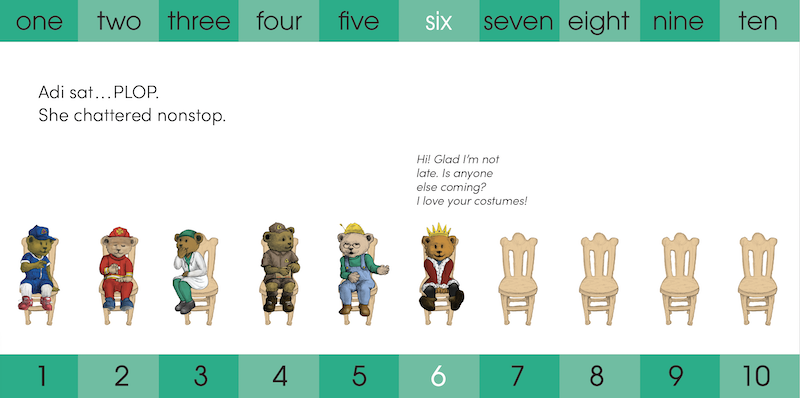
Ten Purim Bears features all the same adorable bear characters as the first book, and follows the same format. Each scene spreads over two pages, with the numbers one through 10 written out on top and appearing numerically on the bottom, as borders. In the middle are 10 chairs, the first scene with mostly empty chairs, except for the one on the far left, where sits a baseball-costumed bear wondering, “Where is everyone?” As we progress through the story, we get more bear bums on seats, each dressed in a different costume. As each new bear enters, the new number of bears is highlighted in white on both the top and bottom borders.

image - Adi, bear #6, takes her seat in Ten Purim Bears: A Counting Book for Purim by Ron Atlas (words) and Zach Horvath (illustrations), published by the Collective Book Studio
Adi, bear #6, takes her seat in Ten Purim Bears: A Counting Book for Purim by Ron Atlas (words) and Zach Horvath (illustrations), published by the Collective Book Studio.

Directed to readers up to 6 years old, their reader-helpers will enjoy a laugh or two, as well. For example, Flor, “who lives next door,” sits down and says, “I’m saving a seat for my friend.” Turning the page, Pete, “from down the street,” has sat next to Flor, saying: “I’m the friend.” I hear him doing it in a deadpan voice and it makes me chuckle every time.

There are two short narratives for each scene – one introducing the next bear and the bears talking among themselves. It’s a nice touch, kind of like having a parent narrator and then the kids’ views on things. As we are told by the narrator that Adi’s sister, Mandy, “brought some sweets – lots and lots of Purim treats,” we see Mandy handing them out: “There’s some for everyone,” she says. “Thank you,” says her sister. The hamantaschen that Amari Bear baked to share with his friends are his favourite, he says, while Adi agrees, “Yum!”

Kids learns not only how to count, but a bit about Purim and its traditions. Sharing, politeness and a sense of community are encouraged. As is a sense of fun, with the various costumes. And the arts! The bears have all gathered to watch a Purim spiel, of course. And we get to see a scene of the play, with quadruple-threat performers – acting, dancing, singing and playing instruments – looking like they are having a good time. The 10-bear audience certainly is.

Ten Purim Bears and Once a Bear can be purchased at thecollectivebook.studio. Check out the publisher’s website further when you’re there, as there will no doubt be another book or two you’ll want to add to your collection. 

Exhibit inspired by roots and wings

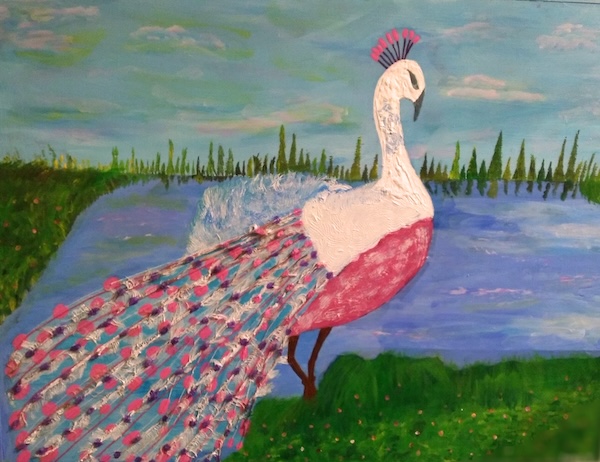
Roots and Wings at Zack Gallery features a wide range of artwork, including the painting “Princess Love” by Grace Tang. (photo by Olga Livshin)

Roots and Wings, the seventh annual exhibition of JCC inclusion services, opened at Zack Gallery on Jan. 30. The show marks February as Jewish Disability Awareness and Inclusion Month. Most participating artists are either members of Art Hive, JCC inclusion services’ art branch, or members of similar programs in other localities. Such programs offer people with developmental disabilities art classes and workshops, and help emerging artists with instructions and materials. 

The show’s theme is Roots and Wings. On the one hand, roots represent a deep connection to our origins: biological, ethnic and geographic. On the other hand, wings denote our striving to fly towards new beginnings and new understandings.

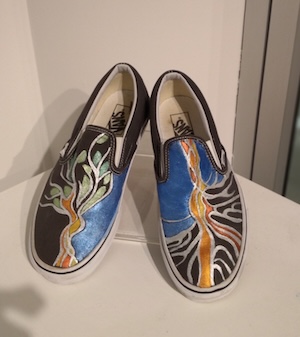
photo - “Shoes” by Jasmine Winkler Stobbe
“Shoes” by Jasmine Winkler Stobbe. (photo by Olga Livshin)

Many artists responded to the challenging theme. The exhibition includes paintings, ceramics and 3D installations. The images vary from detailed beaded jewelry by Mikaela Zitron to the flowery landscape “Walking through the Meadow Land” by Theresa Kinahan. Small raku ceramics of birds and hamsa (hands) by different Art Hive potters stand beside the colourful and whimsical acrylic “Paisley Cat” by Calvin Ho. 

Trees and roots also served as the inspiration for a few pieces. Among them, the most unusual is “Shoes” by Jasmine Winkler Stobbe. Roots painted in a quiet blue palette enhance the standard black fabric shoes’ tops, inviting everybody to try them on. 

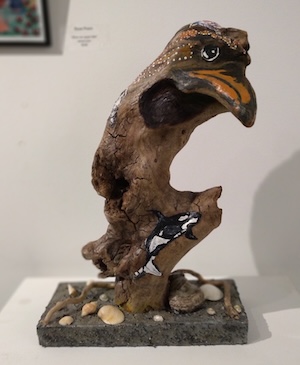
But most artists went with the subject of birds, so fitting to the theme of wings. Small, everyday birds decorate Jerry Zhou’s charming totes. Strange, fantastic birds look haughtily at the viewer from Hadeeb Hamidi’s painting “Mystical Birds.” A regal peacock with its gorgeous tail struts across a simple landscape in Grace Tang’s “Princess Love.” And, while owls in several paintings are instantly recognizable, the driftwood bird sculpture “Fusion of Nature” by Melody Edgars feels like an embodiment of a proud sea bird with a powerful beak and a curious nature. 

photo - “Fusion of Nature” by Melody Lorna Edgars
“Fusion of Nature” by Melody Lorna Edgars. (photo by Olga Livshin)

Many artists depicted chickens: small and large, yellow and multicoloured, familiar and exotic. Matthew Tom-Wing’s humorous “Nobody Here but Chicken” seems to represent this flock of chicken fairly well.

Some artists have participated in these annual shows before. For others, this is their first time at the Zack. One of the newcomers is Shiri Barak Gonen, the new inclusion services coordinator. 

“My career went in a kind of crooked line,” said Gonen in an email interview. “I started working in the Israeli tech industry when I was 23, freshly discharged from military service. I worked with computers in both technical and managerial roles while I completed my bachelor’s degree in psychology, followed by a music therapy program, on evenings and weekends. Afterwards, I worked for a few years as a music therapist with kids of all ages and with a range of challenges. Some years later, I found my way back to the tech industry, until we decided to relocate to Vancouver. We arrived in Canada in 2024.”

Newly hired, Gonen has given lots of thought to her new position. “The inclusion coordinator role is composed of two aspects,” she explained. “First, the managerial tasks such as staff and budget management and strategic planning. The other aspect is the direct and intensive interactions with the inclusion population, which requires sensitivity and a constant awareness of the needs of others. Both aspects are reflected in my personality and in my previous jobs.”

She added: “My current position is very different from my past jobs. In my last role, I was writing software code … and managing teams. Before, when I worked as a music therapist, I had a chance to work with my students and their families, but being a therapist puts you at a different angle than a program instructor. My focus will always be therapeutic, but I find much more pleasure in sharing hot chocolate and a chat with a group rather than analyzing their behaviour as a therapist. The essence of my new job is to establish meaningful relationships and mutual trust. We are building such a connection now.”           

Another newbie at the Zack Gallery is an experienced Vancouver artist – Pierre Leichner. 

“I have always been artistic,” Leichner said in a telephone interview. “Photography, ceramics, other creative outlets. But, when I graduated from high school, my family and I decided that, for better employment opportunities, I should go into science. I didn’t mind. I liked science too.”

He became a psychiatrist and worked in the profession for more than 30 years.  

“In 2002, I decided I couldn’t do it anymore,” he said. “The medical system turned too entrepreneurial, too corporate and dehumanizing.” So, he revisited his first love – art. He enrolled at Emily Carr University of Art + Design and received his bachelor’s in fine arts in 2007. In 2011, he completed his master’s in fine arts at Concordia University in Montreal.              

“Mostly I do visual arts,” he said. “Sculpture, photography, videos and paintings. I also do some performing arts, and I dabble in theatre,” he said. “I have my own YouTube channel, which deals with environmental issues.”    

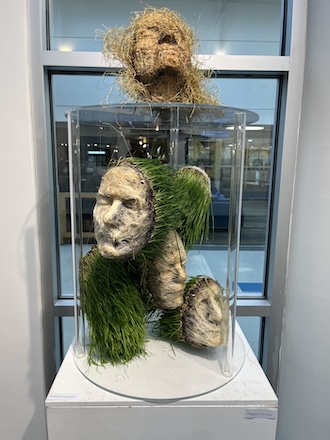
photo - Some of Pierre Leichner’s GrassRoots Project masks
Some of Pierre Leichner’s GrassRoots Project masks. (photo from Pierre Leichner)

A multidisciplinary artist with widespread interests, Leichner considers community involvement of utmost importance. In 2017, he founded the Vancouver Outsider Arts Festival, which provides opportunities to marginalized visual and performing artists. He still serves as its artistic director. He is also a member of the Connection Salon collective and sits on the board of the Community Arts Council of Vancouver.

“I like to explore the possibilities on the cusp of art and science,” he said. “There are similarities between the two, and both examine the foundations of human existence.”

The GrassRoots Project he presented for the current Zack show fuses science and arts and illustrates Leichner’s interdisciplinary approach.

“I saw the call for this show, and it fit my GrassRoots Project perfectly,” he said. “The project started in 2011, when Britannia Community Centre received a grant to celebrate people with the deepest grassroots contributions: teachers, artists, musicians.”

Over the years, Leichner has made about a dozen sculptural masks of those people, plus some of his friends and colleagues, employing a traditional Mediterranean technique. “I use wheatgrass,” he explained. “I make a mold of their face masks and plant wheatgrass within. The roots take the shape of the face, while the grass grows out like hair. It takes about three weeks to grow each portrait. The grass becomes part of the sculpture, the means of my artistic expression.”

Each mask is a symbol, echoing the synergy of humans and nature. “In this way,” the artist said, “nature imitated us in celebrating our community at this time of great ecological concern. We all need roots. We have them within our bodies. We also have them with our family and our community.”

Roots and Wings is on until March 2. 

Olga Livshin is a Vancouver freelance writer. She can be reached at olgagodim@gmail.com.

Jews against Spanish fascism

The new historical novel by Vancouver writer David Spaner, Keefer Street, is as much about the idea of Keefer Street as it about the real East Vancouver avenue. This is appropriate, because the book is a reflection on the Spanish Civil War and its Canadian, especially its Jewish, volunteers. For the dead and the survivors, the war was a living hell. But for the survivors and anyone else with a direct or inherited memory of the 1936-39 conflagration, it is an idea. It has been called the Last Great Cause – and that is the underpinning of Spaner’s story.

Spaner takes part in the Feb. 26 JCC Jewish Book Festival event Jewish Fiction from Western Canada, in which Saskatchewan writer Dave Margoshes (A Simple Carpenter) is also featured. 

image - Keefer Street book coverKeefer Street toggles back and forth between the Spanish Civil War and a 1986 reunion of fighters and hangers-on (with occasional detours to family vignettes in other eras and areas). The storyline follows veterans of the Mackenzie-Papineau Battalion, the ragtag Canadian volunteers who made their way to Spain in direct defiance of their own government, joining American volunteers of the Abraham Lincoln Battalion, as well as French, Poles and others signing on in a pre-Second World War proxy against Hitler and Mussolini and their Spanish incarnation, Francisco Franco.

The narrator, Jake Feldman (later Jack Fields), is a Mac-Pap from the neighbourhood – that is, the Strathcona area of East Vancouver, specifically Keefer Street, where waves of immigrants have planted their first roots in Canada. By the time we join Feldman’s spirited (if predictably stereotypical) Jewish family, Strathcona’s Jews have already begun moving to the Oak Street corridor and its environs, but the Jewish element remains prominent among the multicultural milieu of the area. 

Spaner, who has written extensively about Vancouver’s left-wing (see Solidarity: Canada’s Unknown Revolution of 1983, jewishindependent.ca/history-of-left-coast), list-ticks a raft of momentous and minor Vancouver signposts and events, including Stanley Park’s hollow tree, the Sylvia Hotel’s Jewish roots, the lost, lamented Woodward’s flagship department store, Theatre Under the Stars (still going), Eastside firebrand Rose Barrett and her boy Dave, the Carnegie Library turned Downtown Eastside community centre, and the blacklisted singer Paul Robeson singing at the Peace Arch for binational audiences.

Obscure local trivia is also tucked into the pages. The Industrial Workers of the World got their nickname Wobblies here in Vancouver. David Oppenheimer, Bavarian Jew, became the city’s second mayor and has an eponymous park in the Downtown Eastside where the fictional Feldman family frolics. Local gal Sadya Marcowitz became Mary Livingstone and married Jack Benny, going on to become a major radio star.

More momentous local events are introduced, including the On-to-Ottawa Trek, the 1935 Ballantyne Pier riots and the upheaval around the visit of the Nazi warship Karlsbad earlier that year.

The life of Jake/Jack takes on a bit of a Forrest Gump feel with his uncanny ability to be in the right place at the right time, such as when he just happens to be watching an amateur baseball game in Toronto when Nazis descend in what we know now as the infamous antisemitic (and anti-antisemitic counteroffensive) Christie Pits riots.

Keefer Street is sometimes a didactic (perhaps necessarily, given the times) 101 on antisemitism in Canada, including Toronto’s Swastika Club and Quebec’s philo-fascist Adrien Arcand.

The flashbacks feature the parents’ hardscrabble migrant experience and their engagement in the shmata and fur trades, as well as the moderately idyllic life of Vancouver kids and teens in the 1930s. Apparently before the advent of Netflix, something called “shooting pool” was a popular pastime.

Hindsight allows Jake to reflect on the legal proscriptions against enlisting with a foreign militia, then the social ostracism on their return due to the associations of Spanish partisans with communism, then McCarthyism, then the apathy and ignorance of the Me Generation and its aftermaths, in which successive generations don’t know the role the Spanish Civil War or its belligerents played in 20th-century history.

The 1986 reunion allows for the exploration of the emotions of former fighters, wondering what their impacts were and what their lives have become.

Jews played a major role in the Spanish Civil War, as Keefer Street’s central protagonists demonstrate. This was understandable as a first military salvo against fascism, but Spaner illuminates another massive historical consonance that may be overlooked.

“Along with everything else the Civil War stood for, it meant a Jewish return to Spain after centuries in exile,” says one of the characters at the reunion. “During the Spanish Inquisition of the 15th century, the country’s considerable Jewish population, though it had lived there for eons, was given the choice of conversion or expulsion. Many were expelled. In the 1930s, Jews returned to Spain, volunteering in disproportionately large numbers – over half of the American nurses, for instance, from a country three-point-something percent Jewish. One personal note. In 1937, I crossed the same ocean going to Europe that my parents had fled across, coming from Europe just a generation earlier. My parents fled the barbarism of pogroms, inquisitions. I came back to fight it.”

Says Spaner through his character Jake: “Funny how a short time can define a lifetime. For a lot of the volunteers, the Spanish Civil War years are the big memory but, when you think about it, the war lasted less than three years. I was there about a year-and-a-half and so much of it’s a blur.” 

The JCC Jewish Book Festival runs Feb. 22-27. For tickets and the full schedule, visit jccgv.com/jewish-book-festival.

How Jews are indigenous

Last month, Ben M. Freeman spoke about his latest book, The Jews: An Indigenous People, as part of Kolot Mayim Reform Temple’s 2024/25 speaker series. (PR photo)

Ben M. Freeman, founder of the modern Jewish Pride movement, spoke from his home in London, England, about his work and ideas in a Zoom webinar on Jan. 12. Titled Building Jewish Pride and Recognizing Jewish Indigeneity, the virtual event was hosted by Victoria’s Kolot Mayim Reform Temple.

The author of Jewish Pride: Rebuilding a People and Reclaiming our Story: The Pursuit of Jewish Pride, Freeman’s latest, The Jews: An Indigenous People, will be released this month.  

Freeman began by calling into question the perception that indigeneity implies people who have lived on the land and are primitive or oppressed.

“I have great issue with that because the idea of those things being inherent is to destroy the great diversity of the indigenous experience,” he said.

The United Nations, he explained, set up seven criteria used to determine the indigeneity of a people to a particular land. Freeman, in his writings and talks, argues that Jews are indigenous to the land of Israel even by the UN’s criteria.

“[The UN] also created rights for indigenous people: the ability to have self-determination, the ability to practise your own religion, have your own language, all of these different things. But, again, many of them are still rooted in this idea that indigenous people are inherently oppressed,” he said.

“We’re not here to say that indigenous people have not experienced oppression. That would be ludicrous. Many indigenous groups do experience that, but we can’t necessarily say these things are inherent….”

To view certain groups as only victims, he contended, strips them of agency.  Freeman would define an indigenous people, rather, as a group whose collective identity begins in one specific land, and it is in that land they remain rooted either physically, spiritually or culturally.

“This is their home and is where they originated, developed and continue to be fixed through a connection to the environment and natural resources, living systems, culture and practice as a people, irrespective of their sovereignty in the land,” he said.

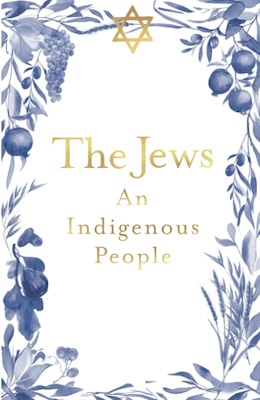
image - The Jews book coverThis definition, Freeman believes, not only applies to Jews in Israel but also refers to the experiences of the Maori in New Zealand and First Nations in Canada, and other peoples in other countries.

From his perspective, Jews were a small group of tribes that developed into a civilization over time. The Torah played a large part as it codified Jewish civilization by taking practices that already existed, reshaped some of them and retold some of the stories, creating a culture that contains religion.

“Almost all the practices were rooted in the land. Pesach was two different festivals: one was a matzah festival and one was a sacrifice festival. Rosh Hashanah, our new year, was the beginning of the agrarian year. Shavuot is an agricultural holiday,” Freeman said. 

“One of the odd experiences of being Jewish is that we exist in this cognitive dissonance almost because we will describe ourselves officially in many ways as a religion, but then we have so much of our practice rooted in land.”

Freeman also put forward that a distinguishing characteristic of Judaism is that, unlike Christianity, it can be a religion but not exclusively a faith or creed.

“Christianity has creed. My partner is a Christian and I sometimes ask him, ‘Could you be a Christian without believing in Jesus?’ And he’s like, ‘no.’ We don’t have that,” said Freeman. “That’s why you can have atheist, secular or agnostic Jews who are part of Am Yisrael. There is nothing we have to believe to be Jews.”

Freeman went on to discuss Jewish pride, which, for him, bears three central tenets. The first is to encourage and empower Jews to reject the shame of antisemitism – to wear one’s Jewishness as a badge of honour.

The second point is to repudiate non-Jewish definitions of Jewish identity.

“I just feel it’s so egregious to me that non-Jews think they have a right to tell us what it means to be Jewish or any aspect of that experience. This is my identity. I will tell you what it means to be a Jew,” he said.

The third tenet is for Jews to go on a journey to explore their identity through a Jewish perspective. “We have to be able to say this is who we are,” he said, “but we have to humbly accept that takes time. We need to be doing real work to investigate our Jewishness and then, most importantly, [do it] through a Jewish lens.”

Freeman is scheduled to travel to Canada in March to discuss The Jews: An Indigenous People, with appearances in Toronto, Windsor and Edmonton. His schedule may include stops in Ottawa and Vancouver, as well.

Next up in the Kolot Mayim 2024/25 lecture series, on March 2, 11 a.m., is Jonathan Bergwerk, author of the Audacious Jewish Lives books, who will speak about Jewish innovators who changed the world. Go to kolotmayimreformtemple.com to register. 

Sam Margolis has written for the Globe and Mail, the National Post, UPI and MSNBC.

Whimsical “wood friends”

“Jug Band” by Anita Colman, whose work is on display at the Cedar Hill Recreation Centre in Victoria through March 3. (photo from Anita Colman)

The distinctive, colourful characters that artist Anita Colman creates out of driftwood and various objects she discovers around Victoria are currently on display in hallway showcases at the Cedar Hill Recreation Centre in Victoria through March 3.

Her “wood friends,” as she dubs them, constitute a wide assortment of critters – from avians to insects, canines to felines. There are birds nested on a woman’s head, a jug band and a dog with a beanie. There is also a unicyclist and a schoolboy riding a pogo stick. 

photo - “Unicyclist and Pogo Stick Boy” by Anita Colman
“Unicyclist and Pogo Stick Boy” by Anita Colman. (photo from Anita Colman)

Colman grew up in Montreal and studied fine arts at Concordia University. After graduation, with what she jokes were “no applicable skills,” she worked building fences, painting houses and selling produce at an outdoor market.

“Then, in 1980, a friend and I went on an epic road trip from Montreal to the San Francisco Bay and I ended up staying,” she told the Independent.

With a penchant for cartooning, Colman, while getting settled in the United States, freelanced for several greeting card companies, including American Greetings, Marcel Schurman Fine Papers, Andrews McMeel and Hallmark Cards, among others.

One day, Hallmark contacted her to say that they wanted her to work in-house at their headquarters in Kansas City.

“As a single parent at the time, a steady income with a health plan was an offer I couldn’t refuse,” she said. “I’ll never forget the day we landed at the Kansas City International Airport in August. As soon as we exited the airport, we were hit with a blast of hot, humid air. It was an inferno. All I could think was, ‘What have I done?’”

At Hallmark, she was part of Shoebox, an alternative humour studio, where she illustrated not only myriad cards but books and calendars, and designed logos and fonts. Her artwork also was applied to stickers, school supplies, mugs, T-shirts, and dog and cat bowls.

The company, Colman recollected, had a farm where artists would go for what she called “creative renewal.” 

“The barn had a fully equipped woodshop and welding area. That’s where I learned woodworking. We built crazy birdhouses and robots that moved and lit up,” she said.

“There was also a small woodshop for artists at headquarters. It was located beside the model shop, where carpenters built displays for shows, etc. I learned a lot from them. Any free time I had was spent in the woodshop.”

photo - Anita Colman’s creations are on display in Victoria
Anita Colman’s creations are on display in Victoria. (photo from Anita Colman)

As a humour artist, Colman said she was continually developing different characters and critters. Now she does the same with wood. 

“The elements of design are the same – line, form, texture, colour. Driftwood already has texture and shape that can look like a nose, ears or tail.”

Accompanying Colman on her hunts for items to turn into art is her rescue dog Bean.

“He’s my sidekick,” she said. “He comes along when I walk the beach looking for good wood or browse ReStore, Value Village and hardware stores with an eye out for objects I can incorporate in my pieces. Bean’s always on the lookout for treats and makes out pretty good.”

The whimsical wooden creations have become an increasingly familiar sight in the capital city. Last fall, they were exhibited at the library in Victoria’s Commonwealth Place. In January, Colman was featured in a CTV News Vancouver Island report by Adam Sawatsky, which showed her, along with Bean, scouring a Victoria beach for things that could be incorporated into her work.

“Some people like shopping for shoes, I like shopping for junk,” she said.

Bean, too, is a recipient of Colman’s artistic flair. In the CTV report, he was seen clad in a denim vest with flames and a dragon embroidered into the back; his hair was molded into a mohawk to make him look “like a tough little dude.”

photo - Anita Colman creates distinctive characters, a wide assortment of “wood friends,” including dogs
Anita Colman creates distinctive characters, a wide assortment of “wood friends,” including dogs. (photo from Anita Colman)

Colman’s display at the recreation centre is part of a Family Arts Exhibition organized by the District of Saanich. One of the images the municipality’s website is using to promote the event is Colman’s woodwork of a cat ballerina. Other artists whose work will be shown are Tanya Bub, Randy Barron and Susan Wright. 

In the midst of the exhibition, the recreation centre will host a Family Arts Festival on Feb. 17 (Family Day) from 11 a.m. to 3 p.m. in what the municipality is billing as “a celebration of imagination, creativity and discovery.” Among the activities will be mini-quilt design, tin foil sculpture and LEGO robotics.

Colman’s finished products are not for sale. They can, however, be viewed on her website: anitacolmanart.weebly.com. 

Sam Margolis has written for the Globe and Mail, the National Post, UPI and MSNBC.

Campbell’s art at Zack

Artist Olga Campbell and her grandson Arlo, for whom Campbell wrote her memoir, Dear Arlo: Letters to My Grandson. (photo from Olga Campbell)

Recently, Olga Campbell published her third book, a memoir, Dear Arlo: Letters to My Grandson. Campbell’s new solo show with the same name opened at the Zack Gallery on Jan. 9. It features a selection of paintings and sculptures from the book, as well as a short film.

“The film starts the exhibition,” Campbell told the Independent. “It contains my photographs of Vancouver and its people. It is called Everybody Has a Story. The show and the book portray one of those stories – my story. But millions of other people have their stories, too, and, in the film, in my photos, I tried to tell some of those stories.”

Campbell said, “The book and the show are my answers to the questions my grandson asks. He is interested in our family’s past. We are very close, he and I. We just went to Nepal together. I thought I would write this book for him, as my legacy.”

The book does not concentrate exclusively on pain and tragedy, on the deaths of her family members in the Holocaust. It also celebrates the power of art and writing as a transformational and healing tool. Besides letters to her grandson, the book includes Campbell’s poetry and art, essays written by the artist, and her family’s traditional recipes. (See jewishindependent.ca/a-multidimensional-memoir.)

The Zack Gallery show is a subset of the book, a selection of paintings and sculptures the memoir highlights. The paintings are mostly collages based on the artist’s photographs. Each photo is Photoshopped into infinity, so none of the faces in the paintings have any resemblance to their origins. Campbell likes to experiment with images, looking at them from different perspectives, applying different approaches. Like her inner child who never grew up, she plays with them, making up different stories for different levels of perception. 

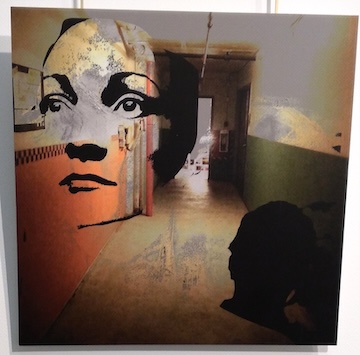
One of the paintings, “Corridor of Memories,” has a couple of faces looking at the viewer with thoughtful, slightly anxious expressions. Behind those faces, a long corridor stretches into an unknown distance. The memories that come from that distance seem diverse and unsettling, a mix of positive and negative, but different for everyone.

image - “Corridor of Memories” by Olga Campbell
“Corridor of Memories” by Olga Campbell. (photo by Olga Livshin)

“There is bad there but there is also some good stuff there,” she said. “I played with the faces in that painting. I thought it would be interesting to make them three-dimensional. That’s how I came up with the sculptures in the show. They are the result of the images unfolding from 2D to 3D.”  

Another painting that underwent a similar metamorphosis is “Shall We Dance? – self meeting Self.” Campbell explained: “I took this image from the confines of a frame and brought it to life by making it three-dimensional. The title, ‘self meeting Self,’ refers to the small self, the individual, the ego, meeting the Universal Self, and the ensuing dance of Self-discovery, joy and wonder of life.”

The 3D dancers – a thickened silhouette of the flat painted image beside it – rotate. They are accompanied by the song “Shall We Dance,” played by a tiny music box, when someone winds it up.   

image - “The Sky is Falling” by Olga Campbell
“The Sky is Falling” by Olga Campbell. (photo by Olga Livshin)

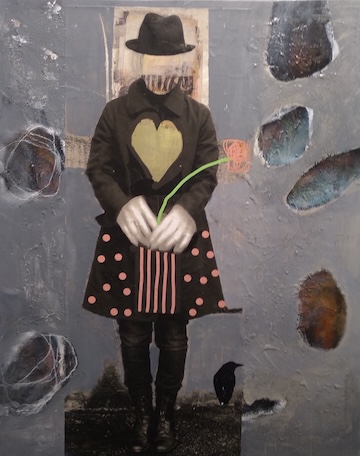
Sometimes Campbell’s reconstruction of images results not in an additional dimension but in a deepening complexity of the original idea. In “The Sky is Falling,” she took a person’s outline from the painting beside it and embellished it with everything that she felt was relevant to our hectic lives. Unlike most of the other paintings in the gallery, there is no face in this one. The grey danger hangs over all of us, regardless of our facial features or skin colour.       

“There are lots of similarities in our world today and the one that preceded WWII,” said Campbell. “That’s why I put a crow in that painting. A crow is a traditional symbol of death, but also of transformation, of change and the future.”

Like the book it is based on, the show is not linear. It reflects the artist’s response to various events in her life, both happy and sad, from her coming of age, to the current war in Ukraine. Both the memoir and the show emphasize Campbell’s personal journey through the beauty and the trauma of life, so inextricably entangled together. 

At the gallery on Jan. 23, 7 p.m., Campbell will discuss her book and her art in an event co-presented by the Zack Gallery and the JCC Jewish Book Festival. Campbell’s exhibit will be on display until Jan. 27. To learn more, check out the artist’s website, olgacampbell.com. 

Olga Livshin is a Vancouver freelance writer. She can be reached at olgagodim@gmail.com.

The complexities of humanity

Mitch and Murray Productions’ presentation of Heroes of the Fourth Turning co-stars, left to right, Jennifer Clement, David Kaye, Elizabeth Barrett, Aaron Craven and Nyiri Karakas. (Shimon Photo)

This is a story about the interesting and intersecting balance of faith, peace, politics, sex, sexuality, deceit, forgiveness and mysticism with the modern world. How do we grapple with the changing self, while clasping hands with those we no longer align with, but feel we must commune?” said Mitch and Murray Productions’ Kate Craven about Will Arbery’s play Heroes of the Fourth Turning, which has its Western Canadian premiere Jan. 31-Feb.9 at Studio 16.

“It’s about letting go of preconceived notions,” she said. “It’s about being wrong, even when convinced otherwise. It’s complex and startling and astonishing and I truly think it is one of the great plays of this generation.”

Heroes of the Fourth Turning has won multiple awards and was a Pulitzer Prize finalist. In it, reads the synopsis, “four young conservatives have gathered to toast the newly inducted president of their tiny Catholic college – one week after the Charlottesville riots in 2017. Their reunion spirals into spiritual chaos and clashing generational politics, becoming less a celebration than a vicious fight to be understood.”

“The play’s title is a take on the book The Fourth Turning by William Strauss and Neil Howe, which hypothesizes the cycles of history and attempts to teach us how to live through these cycles via examples from past generations,” explained Craven, who is the theatre company’s board chair and operations manager. “They base their hypothesis on the past 500 years of American history and uncover what they deem as a distinct pattern: that modern history moves in cycles, each one lasting about the length of a long human life and each composed of four times 20-year eras, aka ‘turnings’ that comprise history’s seasonal rhythm of growth – maturation, entropy and rebirth. Otherwise broken down as the High, a period of confident expansion, followed by the Awakening, a time of spiritual exploration and rebellion. Then, the Unraveling, in which individualism triumphs over crumbling institutions. Finally, the Crisis (the Fourth Turning), when society passes through a great and perilous gate in history, a specific time that requires a generation of heroes to rise up, resolve crisis and reset imbalances created in prior turnings. 

The Fourth Turning was written in 1997, at the tipping point between Gen X and the Millennial generation,” said Craven. “It references the Fourth Turning being in line with the coming of age of Millennials, a generation which three of the play’s characters fit into.”

One of those characters is played by Jewish community member David Kaye.

“I play a Catholic man in his late 20s named Kevin who is currently experiencing tremendous crises of identity and faith while struggling with alcohol abuse,” Kaye told the Independent. “A graduate of the Transfiguration College of Wyoming, Kevin received wilderness training, learned to scale mountains, ride horses, build igloos, memorize poetry and speak conversational Latin. Initially believing that he was being groomed to become ‘a leader of the world,’ Kevin has realized that he was woefully underprepared to actually live in the real world.”

While the character is drunk for most of the show, he is the only one asking questions, said Kaye. “He is often the butt of the joke but, ultimately, I think Kevin is the wise fool. Kevin wants so badly to connect with other people, regardless of their political leanings or religious affiliations. He wants to have hard conversations and expand his mind and is open to new ideas; unfortunately, he is not the greatest conversationalist.”

The role has certainly expanded Kaye’s mind. Having attended Vancouver Talmud Torah and King David High School growing up, the actor said “all of the knowledge of Catholicism I have is from pop culture, so building my character’s world has involved quite a lot of reading in theology and philosophy that I was completely unfamiliar with. As far as being a Jewish actor in the context of this play, I think that Kevin is actually the easiest character for me to identify with because he is constantly questioning things, and that was a core part of my Jewish education and exploration.”

Craven, who is also Jewish, “had the unique experience of growing up in a bi-faith family, one half Jewish, the other Pentecostal Christian.”

“It’s a difficult thing to belong to a family unit which falls on both sides of the faith divide and subsequently (often) political divide,” she said. “Perhaps this prepared me for a play like Heroes of the Fourth Turning. I find myself reaching for empathy for these often confused, sometimes wildly misguided characters and that makes this play very uncomplicated and uniquely human.”

She added that it feels like Arbery, the playwright, “is managing a perilous dance between faith, violence, truth and real-world events as his characters evolve and devolve in front of us. It feels much less about faith, religion and belief than it does about the crisis of being human. That’s relatable no matter who you are or which people you belong to.”

“This show can be viewed through many different lenses and each one will have a different takeaway,” said Kaye. The play will “ruffle some feathers,” he said. “But, if you are open to it, this is a show that will provoke thought, challenge perceptions, and might make you question the world around you.”

For Kaye, that is one of the main things he has learned from the character he is portraying – “that it is OK to question everything you have ever known to be true. It may be ugly and uncomfortable, but challenging your beliefs can lead to more authentic connections and a more fulfilling life.”

Craven said Mitch and Murray Productions’ goal has always been to present “bold, smart pieces that require the audience to be willing participants in the discourse and discussion. Our hope is that our productions showcase what it is to be a complex, imperfect human, as opposed to being a human who fits into a specific political, religious or cultural box, the aftermath of which potentially opens us up to empathy and understanding instead of division and despair.”

Set in rural Wyoming, Heroes of the Fourth Turning references hunting, there is a prop rifle on stage and gunshots are heard throughout the play. Other warnings include the use of coarse language and “heavy political debates which cover a range of difficult topics,” said Craven. “With this in mind,” she encourages people to come to the play with “a spirit of open-mindedness and an attitude of willingness – to see, hear and learn. All of which hearkens back to what I mentioned earlier about the plays Mitch and Murray attempts to produce – stories about a conflicted and imperfect humanity. We may not be able to see ourselves uniquely and specifically reflected in these characters, but there is certainly a reflection of humanity that is profound and deeply moving.”

Stories, she said, have “the capacity, when told well, to move and shape our molecules in a unique way. If we can be even a small part of creating compassionate debate, then we’re doing our job.”

For tickets ($15-$37) to Heroes of the Fourth Turning, visit mitchandmurrayproductions.com. 

An inspiring Shabbat Shira

Cantor Shani Cohen and Wendy Bross Stuart (photo below) team up for another Shabbat Shira concert at Temple Sholom, on Feb. 8. (photo from Temple Sholom)

“I’m looking forward to the Shabbat Shira concert as an opportunity for our community to come together and enjoy some beautiful music as a temporary respite from the challenges of the past two years, within the safety of our own walls,” said Temple Sholom’s Cantor Shani Cohen of her Feb. 8 performance at the synagogue with Wendy Bross Stuart.

“Shabbat Shira is the annual day when we read the Song of the Sea, which is the climax of the Exodus story,” explained Cohen. “To celebrate this Torah reading, there is a tradition of adding some extra musical elements to the weekend. That was the inspiration for the Shabbat Shira concert that Wendy and I are doing. We started this tradition last year, and it was a wonderful evening of music that brought the community together.”

Cohen and Bross Stuart have chosen a range of musical styles for the concert, from musical theatre to jazz to classical art song. 

photo - Wendy Bross Stuart
Wendy Bross Stuart (photo from Temple Sholom)

“One of our focuses in the concert is highlighting Jewish composers,” said Cohen. “In this vein, we will be performing ‘How Much Do I Love You’ by Irving Berlin, ‘Still Hurting’ from Jason Robert Brown’s Last Five Years and ‘Vanilla Ice Cream’ from Jerry Bock’s She Loves Me. There will also be some songs by the very talented Jewish songwriting duo Zina Goldrich and Marcy Heisler, including ‘The Last Song’ and ‘Let Me Grow Old.’

“Finally, I am excited to be sharing a few classical art songs, including some by contemporary American composer Lori Laitman from her song cycle ‘The Mystery,’ and one from Hector Berlioz’s song cycle, ‘Les nuits d’été.’”

Before Cohen went to cantorial school, she studied to be an opera singer. She still feels a strong connection with classical music, she said.

“While I love being a cantor and find the role incredibly fulfilling and meaningful, I realized that I still have a passion for opera,” she said. “Singing opera, for me, is like a workout for my vocal muscles, keeping them in shape and, in turn, helping me sing my cantorial music more confidently. 

“I also think it’s important and healthy to have a work-life balance. For me, that means finding activities outside of synagogue life. Over the past two years, I have found some creative outlets that have allowed me to delve into classical music again in a different way than I do as a cantor. It has been an exciting and fun journey that has challenged me in new ways.”

Cohen’s passion for classical singing led her to Opera Lirica, headed by artistic director Trudy Chalmers, which is dedicated to bringing classical music to the community and providing performance opportunities to local opera singers. Among other things, Cohen was invited to perform as part of their Heritage Salon Series.

“My concert was on Nov. 10, and it was entitled The Sacred Tongue and the Mother Tongue: A Concert of Hebrew and Yiddish Songs. I had a wonderful time preparing for the concert with pianist Roger Parton [Opera Lirica’s music director]. I explored my own Israeli and Ashkenazi family background, and performed both new and familiar Hebrew and Yiddish repertoire…. It was a deeply personal concert, and I was proud to share it with not just the Jewish community, but the wider Vancouver music community. It meant a lot to me that after Oct. 7 and the rise in antisemitism that we have experienced, Trudy and Roger were both so supportive of this project and of me. This is the kind of crucial cross-cultural relationship building that I believe music can help us do.”

In another cross-cultural endeavour, Cohen will join the Jan. 26 performance of Songs of the Wasteland about survivor Renia Perel, which was written by Perel, who died in 2017, and arranged by Larry Nickel. The Vancouver Academy of Music is once again presenting the work, in honour of International Holocaust Remembrance Day (vancouveracademyofmusic.com/events).

For the past two years, Cohen has performed with the Reform Cantors and Cantorial Soloists of Canada (RCCC) organization in Toronto. “This year, we will be hosting the RCCC concert at Temple Sholom in May! More information to come,” she said.

Cohen and Bross Stuart first worked together on the community Yom Hashoah commemoration a few years ago, and in which both have participated multiple times. They also worked together in the Chutzpah! Festival concert debut of the Joan Beckow Project and album release; Bross Stuart and her daughter Jessica Stuart, who is also a musician, are co-directors of the project.

“We each bring a different musical perspective,” said Cohen of working with Bross Stuart. “Wendy has a wealth of knowledge and experience in musical theatre, Yiddish music and jazz, while I have a background in Jewish and classical music. We each learn from the other, and are able to meld our experiences into programs that I believe are intriguing and exciting for our audience.”

When Cohen started working at Temple Sholom back in 2021, she was straight out of cantorial school, and had just moved to Vancouver from New York. Grateful for the opportunities she has had at Temple Sholom, she said, “I am especially thankful to work with the supportive and inspiring clergy team that we have: Rabbi Dan Moskovitz and Rabbi Carey Brown. It was Rabbi Moskovitz’s vision to bring in an ordained cantor to our synagogue for the first time, and both he and Rabbi Brown have been supporting me through every step of my transition into this vibrant community.”

Over the years, Cohen has found ways to bring more of herself into her job: “more of my passions, interests and identity into what I offer.”

“On a basic level,” she said, “my role includes leading prayer services, running our b’nai mitzvah program and officiating lifecycle events like weddings and funerals. Beyond that, I am passionate about growing our musical offerings at Temple Sholom, and I believe in the power of music to help us tap into our spirituality. That’s why I started a small vocal ensemble that sings at our High Holy Day services, as well as a few special Shabbatot throughout the year. I also started a Temple Sholom band, called the Temple Tones, who enrich our Friday night services a few times a year for holidays and Shabbatot.”

Cohen oversees the Sholom Shishim (60-plus) program. 

“My goal with this group is to find new and creative opportunities to engage our seniors,” she said. There have been lunch-and-learns, speakers, concerts and various outings. “We now have on average 70 attendees per month, and our annual Hanukkah party gets up to 100 seniors!” she said.

“I run a monthly Temple Sholom Tea gathering at the Louis Brier for our members who live there, though anyone is welcome to join,” she added. “A few years ago, I began a program I call Teatime with Cantor Cohen, where I meet with small groups of Temple Sholom seniors in local cafés and tea shops, so they can get to know me, each other and, hopefully, create meaningful relationships in their own neighbourhoods.” 

One thing Cohen loves about her cantorial role is that she works with people of all ages, from teaching classes at the shul’s religious school, to various adult offerings. “Recently,” she said, “I began a High School Prayer Leader program to train the next generation of prayer leaders.”

Cohen also started a Queer Torah Study group, which has evolved into Kehilateinu, the Temple Sholom Pride Club.

“When my wife and I moved to Vancouver, we were welcomed into the community with open arms, and I want to ensure that our growing number of queer members feel welcomed at Temple Sholom as well,” she said. “I know that Kehilateinu’s events have been especially meaningful since Oct. 7, when so many queer Jews were rejected by their social circles.”

Tickets for the Shabbat Shira concert are $18 for synagogue members and $36 for non-members. The Feb. 8 event starts at 7 p.m. with a happy hour and the concert is at 7:30 p.m. Register at templesholom.ca.

Robinson kicks off book fest

The JCC Jewish Book Festival opens Feb. 22 with Selina Robinson talking about her memoir, Truth Be Told. (photo from JCC Jewish Book Festival)

This year’s JCC Jewish Book Festival opens Feb. 22 with Selina Robinson talking about her recently published memoir, Truth Be Told.

Most Jewish Independent readers will be familiar with the events that propelled Robinson to write this book. The first chapter, called “Four Fateful Words,” starts at what some people may think is the beginning – when, during a Jan. 30, 2024, webinar, Robinson said the state of Israel was reestablished on a “crappy piece of land.” But she believes she had been targeted for months.

“It was sloppy language, nothing more, but it provided the Gotcha! for anti-Israel extremists to build a case that I was racist, Islamophobic, intolerant and an evil monster that needed to be canceled,” she writes.

“In an ideal world, it would have been the extremists who were dismissed, not me. In an ideal world, we would be blessed with leaders who can differentiate between right and wrong.”

Truth Be Told covers the fallout from her comments. Premier David Eby initially seemed prepared to stand by Robinson, but the political pressure – including from a group of Muslim clergy who threatened the NDP’s access to Muslim voters unless Robinson was dismissed – soon led to him firing her from cabinet, though he never used the word.

“I told the premier that if he wanted my resignation, I would give it to him, but he needed to ask for it,” writes Robinson.

“In the end, he didn’t fire me and I didn’t resign, although the undeniable conclusion of the call was that I was no longer in cabinet.”

After taking some time to absorb the situation, Robinson rallied. 

“As part of my t’shuvah [repentance], the premier asked that I make a series of calls to Muslim community leaders,” she shares. “I began to think: What if I could engage with these groups and bring the Jewish community and the Arab and Muslim communities together in some way? These two heartbroken communities, both fearful for their families overseas and feeling powerless to effect change, could find commonality in that shared experience, at the very least. Action is always an antidote to hopelessness and helplessness. I could do this as part of my role as an MLA and the government could take credit for doing something meaningful that makes a positive difference for both these aching communities. For me, this would be a profound form of redemption, of t’shuvah, and also of tikkun olam [repair of the world].”

But this ray of light was soon extinguished, the idea being deemed “too political.”

“I knew in that moment that this was no longer my place, no longer my government, no longer my political party,” writes Robinson. “A place and a party where I belonged would recognize the opportunity for someone who was seen to have transgressed to do some good. My place, my party, would recognize the value of bringing people together. A place where I belonged would not be afraid to try something unique and potentially powerful.”

Robinson quit the NDP and finished her term as an MLA as an independent. She was going to retire anyway, but this was not how she wanted her political career to end.

And it was quite a career. With a master’s degree in counseling psychology, Robinson spent most of her working life as a family counselor and in senior roles in various social service agencies.

“I never planned to enter politics,” she writes. “The first real engagement I had was speaking to Coquitlam City Council, my hands shaking, in support of an emergency cold weather refuge for homeless people proposed by a church in my neighbourhood.”

image - Truth Be Told book coverOne of the councilors suggested she run for council, and she did. She was elected to Coquitlam City Council in 2008 and reelected in 2011. Truth Be Told gives readers a glimpse of what that experience was like, what Robinson accomplished as a councilor, and more. We find out how and why she made the leap to provincial politics in 2013 – a decision in which the late John Horgan played a pivotal role. The memoir is dedicated to Horgan, for whom Robinson had great respect and a close relationship. As premier, Horgan was the one who appointed Robinson minister of finance after the 2020 election that gave the NDP a majority government. She held that position through COVID, the government managing to file budget surpluses despite the challenges the pandemic brought.

“What saddens me right now is that people are losing faith in government,” writes Robinson. “That is especially distressing because if anything should have renewed people’s faith in government, it was the collective response to the pandemic.”

When Horgan stepped down as premier in 2022 because of the toll his cancer treatments were taking on him, Robinson began to more seriously reflect on her own future. She had been in public service for so long, she wanted to spend more time with her family. In Truth Be Told, we learn more of her own fight against cancer – a fight that started in 2006, a fight she seems to have won, finding out on Oct. 6, 2023, that her cancer had disappeared. The celebration was short-lived. That evening, news started coming in of Hamas’s terror attacks on Israel.

Robinson’s ambivalence about running for reelection was one of the reasons she didn’t pursue the party leadership vacancy Horgan’s departure opened. Other candidates bowed out, and Eby was anointed the new leader of the BC NDP and became premier in November 2022.

Robinson calls herself an “eternal optimist,” and that attitude has served her well. Despite being effectively demoted by Eby after he became premier, Robinson threw herself into the position of post-secondary education and future skills minister. It is interesting to read about some of the issues in that sector, and of the other portfolios Robinson held, as well as get some insider knowledge of how politics works and about the personalities of the people who represent us.

The crux of Truth Be Told is Robinson’s “four fateful words,” the reactions to them, and what was said and done – or, more importantly, what was not said and what was not done. Many of her colleagues were “quiet allies,” not willing to speak out.

“There are lessons from my experience that transcend my personal story,” she writes. “There are lessons for our democracy about the necessity to stand up to coercion from interest groups and harassment from mobs. There are lessons for leaders about how to act (and how not to act) when presented with choices between what is easy but wrong and difficult but right. There are lessons about speaking up rather than remaining silent.”

Truth Be Told is about a person doing what they passionately believe in, a person living their values – some of which were instilled at Camp Miriam, where Robinson was a counselor in her youth – and trying to make what they feel are positive contributions to the world. 

Given what happened to her, Robinson could be forgiven for giving up and going quietly into obscure retirement. But that’s not who she is. She asks Canadians to have the courage to speak up, while recognizing that we should not “kid ourselves that a millennia-old problem will be resolved in a day.” She ends her book with calls to action, suggestions of what we each can do to counter antisemitism, as Jews (for example, don’t hide, “engage respectfully or not at all” and don’t give up) and non-Jews (speak up and engage with Jews, among other things), and as a society (for instance, protect students and nurture real inclusion). She includes some resources for readers wanting to explore various topics more.

In the “Final Reflections” chapter, Robinson writes, “We will never be perfect. The world will never be faultless. But repairing the world must always be our guiding star. Our reach must always exceed our grasp.”

Profits from the sale of Truth Be Told will be donated to the Parents Circle-Families Forum (theparentscircle.org/en) and Upstanders Canada (upstanderscanada.com). 

The JCC Jewish Book Festival runs Feb. 22-27. For the full list of events and participating authors, visit jccgv.com/jewish-book-festival.