Gators, jazz and more

Honey Island Swamp tours take passengers through a landscape untouched by time. (photo from louisiananorthshore.com)

Our Jeep is stationary and I’m marveling at the scenery when I feel someone nuzzling my back very gently. Turning slowly, I find myself eye to eye with an adult zebra whose broad smile displays a set of large, yellow teeth. His message is clear: “Corn, please, ma’am!”

This being the Global Wildlife Centre in Folsom, La., the zebra isn’t overstepping his boundaries in the slightest. He knows only too well that private Jeep tours like ours are well stocked with one of his favorite treats – dried corn. I fill my plastic cup and pour corn directly into his gaping mouth, watching as my new friend guzzles the food in seconds.
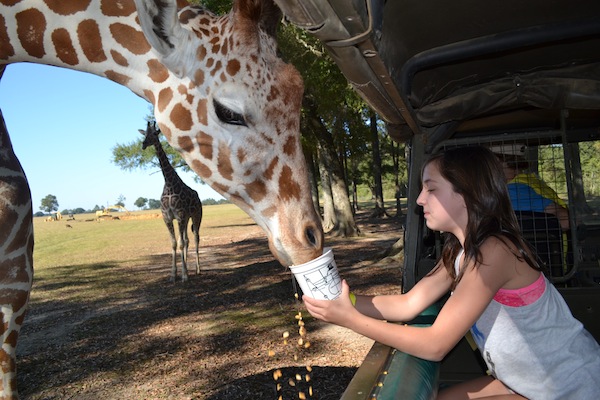
photo - The author’s daughter feeds zebras and a Somali giraffe at the Global Wildlife Centre in Folsom, La.
The author’s daughter feeds zebras and a Somali giraffe at the Global Wildlife Centre in Folsom, La. (photo by Lauren Kramer)

The largest free-roaming wildlife park in the country, the Global Wildlife Centre’s 900 acres are filled with 30 species of very tame herbivores and omnivores from all over the world. There are Somali giraffe, Chinese Father David deer, South American rhea birds, African eland and zebra, Australian kangaroos, Indian black buck and at least 1,000 fallow deer. It’s the latter that all the other animals are eyeing wearily the day of our Jeep tour. “It’s rutting season,” explains our guide, Paul. “This is a time when the fallow deer are mean to each other and to all the other animals, too!”

The animals scamper toward the Jeeps and wagon tours, conditioned to understand that visitor-filled vehicles mean free food handouts. Their proximity allows close encounters, with some animals feeding directly out of our hands and others opening their mouths gratefully as my daughter Sarah and I pour food inside. Trust me, nothing gets a kid off their iPod faster than the extended tongue of an African watusi cow with impressive horns and imploring eyes, or the sweet, kissing sensation of a 16-foot reticulated giraffe willingly scooping food from the palm of your hand. Sarah, 11, turns to me with shining eyes and a huge smile. “This is so cool,” she declares.

We’d crossed the 24-mile causeway from New Orleans to St. Tammany Parish a few days earlier, intent on exploring Louisiana’s North Shore. With Lake Pontchartrain behind us, we quickly learned that the nine communities that comprise the parish offer the warm friendliness of the south coupled with a great selection of outdoor, family friendly attractions – from giraffes to swamp monsters and beady-eyed alligators.
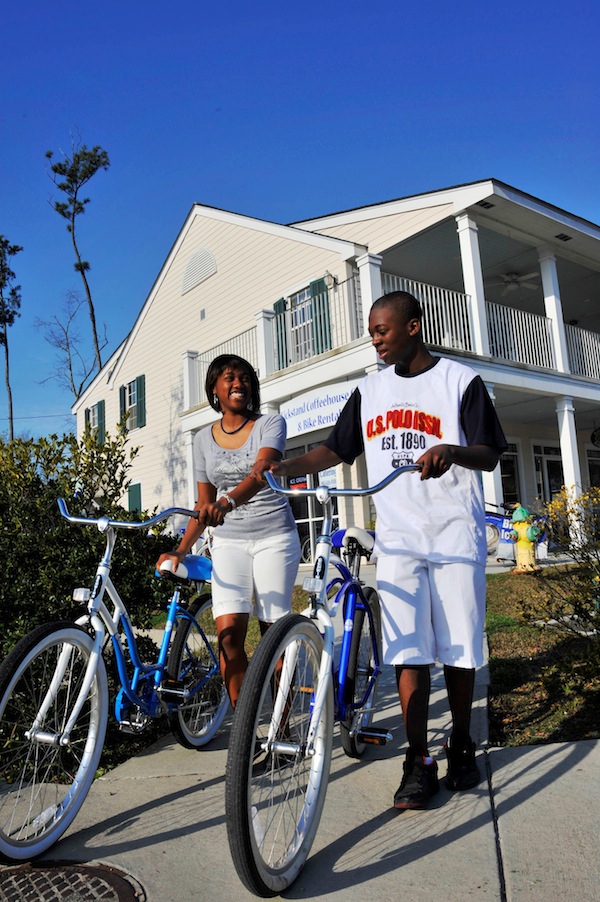
photo - Bike rentals are available at several points along the Tammany Trace hiking and biking trail, which used to be an Illinois Central Railroad corridor
Bike rentals are available at several points along the Tammany Trace hiking and biking trail, which used to be an Illinois Central Railroad corridor. (photo from louisiananorthshore.com)

We started out on the still waters of Cane Bayou in Lacombe, paddling past trees heavy with Spanish moss and turtles sunning lazily on upturned logs. Within minutes, the traffic was far behind us and birdsong filled the air. With Fontainebleu State Park on one side of the bayou and a national wildlife refuge on the other, this is a landscape untouched by time, one as perfect today as it was 150 years ago. I had bare feet drifting overboard the kayak when our guide, Shannon Villemarette, owner of Bayou Adventure, pointed out a statuesque 10-foot alligator a few yards away. “Best to put your feet back in the boat,” she said, reeling in the shrimp bait that was dangling from a fishing line off the end of the kayak. I followed her advice, thinking there seemed little point attracting reptilian attention in a place this remote.

Later that day, though, Captain John was determined to do just that. Our guide on the Honey Island Swamp had attached a white marshmallow to the end of a stick and was dangling it off the end of our boat. Within seconds, we were in the company of an alligator – a small one, but a reptile whose larger relatives surely weren’t far away. “They think these are turtle eggs,” explained the captain of the Pearl River Eco-Tour excursion, who was leading our group of 20. The brochure had tempted us with potential sightings of panther, wild boar, alligators, and perhaps even the elusive swamp monster.

In no time at all, the feral hogs showed up on the embankment, pushing each other out the way to get as close to the boat as they could. It turned out they were avid marshmallow fans, too. “They’re a real problem right now,” says the captain, describing the speed at which the wild pigs reproduce – three times a year from the age of three months.

The two-hour tour takes us deep into the swamp and we putter gently through some of its narrow channels, examining the plant life. Bald cypress trees point their skinny knees out of the water while Spanish moss hangs like thick, ghostly white hair from their branches. The captain pulls closer to the bank to peer at unusually large tracks in the mud. “I have no idea who or what made these prints,” he says, shaking his head. “I’ve also been out here at night and heard sounds I can’t identify. I’m not saying it’s the swamp monster. I’m just saying, I don’t know.”

Lauren Kramer, an award-winning writer and editor, lives in Richmond, B.C. To read her work online, visit laurenkramer.net.

***

If you go:

  • Where to stay: Covington’s new boutique Southern Hotel is an elegant oasis of comfort in a 150-year-old building located in the heart of the city’s historic centre, 1-985-871-5223 or southernhotel.com.
  • Global Wildlife Centre offers wagon tours (kids $11, adults $17) and private Jeep tours at $35 per person, 1-985-796-3535 or globalwildlife.com.
  • Kayak rentals and guided bayou tours are offered at bayouadventure.com in Lacombe, 1-985-882-9208 or bayouadventure.com. For swamp tours, contact Pearl River Eco-tours at 1-985-892-0708 or pearlriverecotours.com.

Calcutta: community, family, history

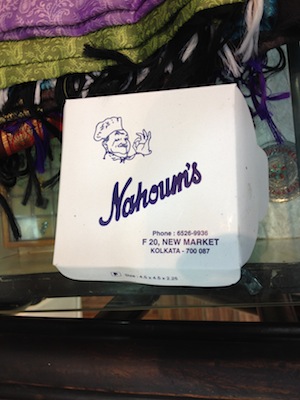
There are a few vestiges that remain of the Jewish community in Calcutta, including the Jewish Girls’ School and Nahoum’s. (photos by David Berson)

dec 12 travel.12.Calcutta IMG_4029It was family history, alongside a taste for discovery, that took local Jewish community member and Or Shalomnik David Berson to Calcutta recently. A major Indian metropolitan centre near Bangladesh, it used to be home to one of India’s largest Jewish communities.

Berson’s mother, Seemah, is originally from Calcutta. Born there in 1931, she has lived in Vancouver since 1954. However, her connections to the city remain vivid. This past summer, the Recalling Jewish Calcutta (jewishcalcutta.in) virtual museum was launched, and it includes several contributions from Seemah.

“The Baghdadi Jewish community came to Calcutta during the British Raj,” explains the site. “When India gained its independence, they were unsure of what their future would be in an Indian India.” Many community members emigrated to other Commonwealth countries through the 1940s and ’50s, leaving “few traces behind.”

Among those traces are three synagogues, two schools, a cemetery and several businesses. “Ezra Mansions and the Ezra Hospital, Nahoum’s Confectionary, and two buildings in the zoo that are owned and endowed by Jews still bear Jewish names. There is the Belilios Street, Ezra Street and Synagogue Street. There are many other mansions, residences and office buildings that still stand but they no longer bear their Jewish names and few know they were once Jewish owned.” The site notes that there are “barely 30 Jews left in the community, most very elderly.”

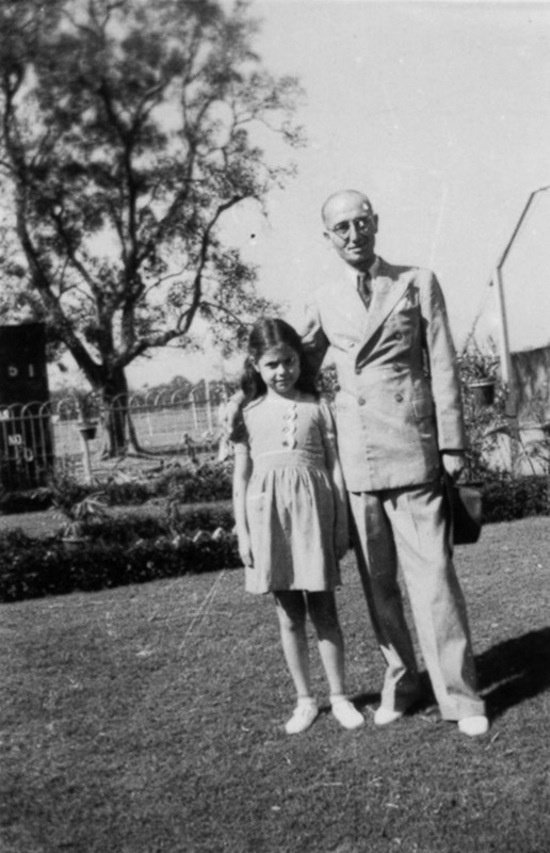
photo - Born in Calcutta, Vancouver Jewish community member Seemah Berson has contributed various items to the Recalling Jewish Calcutta virtual museum, including this photo of her with her father.
Born in Calcutta, Vancouver Jewish community member Seemah Berson has contributed various items to the Recalling Jewish Calcutta virtual museum, including this photo of her with her father.

While Calcutta attracted Berson with its density, architecture and wide Indian roads, the city’s Jewish jewel was the main draw. “It was very moving to see how deep the roots of the Jewish community were and how much of a role they played in Indian life, and I got a much better sense of the joy of life my mother experienced when growing up,” he said.

Nahoum’s bakery, a cultural phenomenon in its own right, combines Jewish and Indian cuisine. “It helped me make a connection with some of the community that lived there and are still in Calcutta,” explained Berson about visiting the bakery, where one can find cheese samosas and a unique type of boureka.

Berson said the food of the Jewish community in general is known for its creativity and its tastefulness. One of the many examples of an Indian dish that was popular in the Jewish community is aloo makala, a potato dish that is slowly cooked in oil. A connection of Berson’s mother, Flower Silliman, a native Calcutta resident, lived abroad for many years – including in Israel, where she established the first Indian restaurant in Jerusalem – before returning to Calcutta.

Central Calcutta and the Park Street-Esplanade region were the main areas where the Jewish community was centred. Built in the mid-19th century, the Great Eastern Hotel was recently renovated. It used to be a gathering spot for the Jewish community – including for Berson’s mother – to sip a beer. The New Market area was where the Judean Club used to meet. The Jewish Girls School today is secular and attended by all non-Jewish students, but one can still see where the mezuzah used to be fitted.

The splendor of the former community really came to life for Berson when he visited the city’s synagogues: Beth El, Magen David and Neveh Shalom, today culturally preserved by members of the city’s Muslim population. The back of Beth El included a mikvah and also a special oven to bake matzah, which had been in use until recently, supervised by the community’s few remaining Jews. Now, the buildings only see tourist groups, with the rare exception, such as last year, when the Israeli ambassador to India brought with him enough Jewish men to form a minyan for Simchat Torah celebrations at Magen David.

At the Jewish cemetery, grand in its magnitude, the high-water level makes traditional burial impossible. Bodies would first be wrapped in a shroud, then put in concrete slabs and entombed, giving the final burial an almost Egyptian feel, according to Berson.

While it would be ideal to visit the remaining Calcutta Jewish community in person, the Jewish Calcutta virtual museum – a project spearheaded by Silliman’s daughter, Jael – offers an important resource to anyone interested. There are several exhibits bringing the community back to life, including through a film gallery and sections on notable members of the community, women pioneers, Jewish businesses and more, at jewishcalcutta.in.

Gil Lavie is a freelance correspondent, with articles published in the Jerusalem Post, Shalom Toronto and Tazpit News Agency. He has a master’s of global affairs from the Munk School of Global Affairs at the University of Toronto.

Angry assassin or hero?

A 17-year-old Jewish refugee in Paris on Nov. 7, 1938, shot Nazi diplomat Ernst vom Rath. The assassination provided Nazi Germany with a golden opportunity. Joseph Goebbels, Hitler’s propaganda minister, portrayed the teenager as an agent of the international Jewish conspiracy trying to provoke a war between France and Germany. Two days later, the Nazis orchestrated a surge of horrific violence against the Jews. More than 200 people died, 1,300 synagogues were destroyed and 7,500 Jewish shops were trashed in a spasm of hatred known as Kristallnacht.

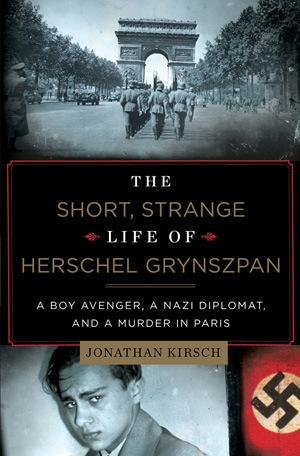
image - book cover - The Short, Strange Life of Herschel Grynszpan

The assassin, Herschel Grynszpan, became a notorious figure at the time, both in Germany and beyond. For anti-German voices, he became a cause célèbre. A top newspaper columnist with the New York Herald Tribune, Dorothy Thompson, stirred up widespread sympathy for Grynszpan, raising funds to hire a celebrated defence attorney for him. Grynszpan became so well known that Leon Trotsky, living in exile in Mexico, declared his “moral solidarity” with the assassin.

But, 20 years later, Grynszpan had become irrelevant to history. Hannah Arendt, in her book on the trial of Adolf Eichmann in 1961, dismissed Grynszpan as a psychopath. She wrote that Grynszpan was probably an agent provocateur used by the Gestapo to provide a pretext to escalate persecution of the Jews and eliminate a diplomat who was not an enthusiastic supporter of the regime. Today, historians show little interest in the assassin, believing, as Arendt did, that the Third Reich was looking for an excuse and the escalation of violence against the Jews would have taken place regardless of what happened in Paris. Yad Vashem does not even mention him in accounts of Jewish resistance to Nazi Germany.

Author Jonathan Kirsch says Grynszpan has been shortchanged. In The Short, Strange Life of Herschel Grynszpan (Liveright Publishing Corporation, 2014), Kirsch sets out to convince the reader that Grynszpan is an unrecognized hero of the Second World War. According to Kirsch, Grynszpan was a courageous Jew who stood up to Nazi power at a time that France and Britain were more interested in appeasing Hitler than confronting him. And, four years later, Kirsch writes, Grynszpan did something even more remarkable. He outsmarted Goebbels, undermining efforts to stage a show trial that Hitler wanted in order to justify the mass murder of the Jewish people.

Kirsch sees Grynszpan as a character in a mystery “deeply layered with conspiracy and intrigue, erotic scandal and rough justice.” As he paints his sympathetic portrayal of Grynszpan with colorful anecdotes and captivating details, he also raises intriguing questions about who can rightfully be considered a hero of the Second World War. The issue is complicated, especially since Grynszpan’s motive for shooting vom Rath has never been clear.

What is indisputable is that Grynszpan, caught in a bureaucratic labyrinth in Paris over his residency permit, with no money and fighting with his family, was becoming increasingly frantic in the days before the incident. His parents had moved to Hanover, Germany, in 1911, fleeing Radomsk, Poland, in an effort to escape a rising tide of antisemitism, but they never received German citizenship, despite living in the country for years. Officially, they were classified as Polish citizens living in exile in Germany.

With the Nazi Party victory at the polls in the 1933 election, the Grynszpan family, similar to many others, started to make plans to leave the country. But they never had enough money to do so. In desperation in 1936, they sent their 15-year-old son out of the country.

Grynszpan, staying with relatives in Paris, followed Hitler’s aggressive campaign against the Jews in the Yiddish papers. The news became increasingly alarming as 1938 unfolded. In March, the Third Reich formally absorbed Austria into Germany and Austrians took to the streets to terrorize the Jews of Vienna and other cities. In July, the international community met in the French resort town of Evian to develop a response to Nazi aggression but no one was willing to confront Nazi Germany or provide sanctuary to Jewish refugees. “Nobody wants them,” was the headline in a Nazi Party newspaper after the Evian conference.

Then, on Aug. 22, 1938, Germany revoked all residency permits issued to foreigners. They could not stay in Germany and Poland refused to repatriate Poles who lived in Germany. The Grynszpan family was in effect rendered stateless.

The Third Reich drew up arrest lists of 50,000 names on Oct. 26, 1938. Grynszpan’s family was on the list. The following day, his parents and two siblings were escorted to the police station. They were transported to the Polish border town of Zbaszyn, where they were trapped in a no-man’s land. Media reports provided detailed accounts of 12,000 Jews, deprived of food and shelter, and unable to enter Poland or return to Germany. The Yiddish newspapers reported the spread of deadly diseases and suicides. Grynszpan received a postcard from Zbaszyn on Nov. 3 from his mother. Four days later, he shot vom Rath.

When he was arrested, he had a postcard in his pocket. “My dear parents,” he wrote, “I couldn’t do otherwise. God must forgive me. My heart bleeds when I think of our tragedy and that of the 12,000 Jews. I have to protest in a way that the whole world hears my protest, and this I intend to do. I beg your forgiveness.”

He derailed the show trial shortly before it was to be held in Germany in 1942 by abandoning the rhetoric of heroism and revenge. Those familiar with history will not be surprised by the twist in events. Grynszpan asserted the shooting was as a result of a tiff between homosexual lovers.

Kirsch says his claim, which has never been backed up with any evidence, was Grynszpan’s greatest act of courage. Grynszpan understood Hitler’s loathing of homosexuality and destroyed the propaganda value of the show trial. The Third Reich did not want anything to do with homosexuality, even though Goebbels and others believed the claim to be a complete fabrication.

Despite their reputation for record keeping, the Nazi authorities did not document what happened next to Grynszpan. He just disappeared. A trial was never held; his place of incarceration was not recorded. His death was not documented, feeding conspiracy theories that he may have survived the war and continued living somewhere in Europe under a pseudonym.

So, where should we place Grynszpan in the pantheon of resisters? Can an act of personal revenge be considered heroism?

Grynszpan is clearly not of the stature of Mordechai Anielewicz, the hero from the Warsaw Ghetto uprising. But is he in the same league as Gavrilo Princip, the Bosnian Serb who assassinated Archduke Franz Ferdinand in 1914, sparking the First World War? Or Yigal Amir, who assassinated Yitzhak Rabin in 1995, derailing Israel-Palestinian peace efforts?

Holocaust historian Michael Marrus has said Grynszpan has his place in the register of futile but symbolic acts of resistance against unspeakable tyranny. Grynszpan was an ordinary youth who was driven to lash out against a ruthless tyranny, Marrus has written, and his story deserves to be better known.

Kirsch regrets that Grynszpan remains without honor, even among the people whose avenger he imagined himself to be. However, this well-written book may change how history regards the angry assassin.

Media consultant Robert Matas, a former Globe and Mail journalist, still reads books. The book reviewed here is available at the Jewish Public Library. To reserve it or any other book, call 604-257-5181 or email library@jccgv.bc.ca. The catalogue is at jccgv.com, click on Isaac Waldman Library.

Arcady survives with soccer

Eugene Yelchin’s illustrations are an integral part of the storytelling in Arcady’s Goal.

What a special tribute to a parent. Eugene Yelchin’s most recent children’s book,

image - Arcady's Goal - book cover

Arcady’s Goal, started with a 1945 photograph of the Red Army Soccer Club. One of fewer than a dozen photos of his family that “survived the turbulent history of the Soviet Union,” it includes the team’s captain, Arcady Yelchin, his father.

Historical fiction aimed at kids age 9 to 12, Arcady’s Goal (Henry Holt Books for Young Readers, 2014) will hold the interest of older readers and elicit much discussion. Set in Soviet Russia during Stalin’s reign of terror, its main character, Arcady, is a feisty, self-confident 12-year-old who has lived in several children’s homes (“home” being euphemistic for camp or prison) since he was 3 years old and his parents were arrested on the charge of “participation in a terrorist organization. Preparing to overthrow Soviet power and the defeat of the USSR in a future war.”

Arcady has survived on his wits, his courage to stand up to those in authority and strength to deal with the consequences, and his incredible skill at soccer. Playing one-on-one soccer with other kids for rations, Arcady initially seems ruthless, but the act of it is revealed when he returns his winnings (“an eighth of bread, our daily ration”) to the boy he beats. And, when a group of inspectors comes to the compound, Arcady makes a deal with the director: Arcady will play whomever the director lines up and, for every win, the director will give him and the loser of the match two bread rations.

During the “games,” one of the inspectors seems especially interested in Arcady. While Arcady didn’t believe the director who, when trying to convince him to play, said there might be a soccer coach among the inspectors scouting for new talent, Arcady nonetheless starts thinking that this man is indeed a coach. When Ivan Ivanych returns to adopt Arcady, the boy thinks it’s because of his soccer talent – and that, if he fails to perform as expected, he’ll find himself back at the children’s home.

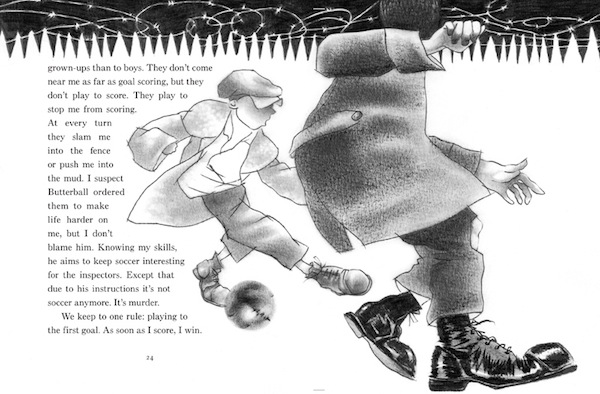
Without revealing what happens, the relationship between Arcady and Ivan is really touching. Reading how it develops, the hurdles they both have to overcome, the trust they both need to gain, the courage they both need to find, is inspiring, especially surrounded as they are by people who would do them ill out of fear or ambition – with two notable exceptions. Arcady’s Goal is a well-told story that respects its readers and doesn’t shy away from difficult material even while delivering a positive, hopeful message. The black and white illustrations by Yelchin communicate an additional depth of feeling and movement, or stillness.

image - The black and white illustrations by Yelchin communicate an additional depth of feeling and movement, or stillness.
The black and white illustrations by Eugene Yelchin communicate an additional depth of feeling and movement, or stillness in Arcady’s Goal.

Yelchin, who was born in Russia, left the former Soviet Union when he was 27. Arcady’s Goal is considered a companion novel to Breaking Stalin’s Nose (Henry Holt Books for Young Readers, 2011). Also written and illustrated by Yelchin, the 2012 Newberry Honor book centres around 10-year-old Sasha Zaichik, who has wanted to be a Young Soviet Pioneer since he was 6 but when the time comes to join, “everything seems to go awry. Perhaps Sasha does not want to be a Young Soviet Pioneer after all. Is it possible that everything he knows about the Soviet government is a lie?”

In the author’s note that follows the story in Arcady’s Goal, Yelchin writes about an experience he had in the summer of 2013 when he was at Oakland University in Michigan to speak to students who were studying Breaking Stalin’s Nose. After his talk, he caught a cab to the airport. The driver had also come from St. Petersburg. When the reason for Yelchin’s trip came up in conversation, the driver fell silent, then revealed that his grandfather had died as a result of being sent to a hard labor camp for 10 years by Stalin. “I caught myself leaning in close to hear Yury,” writes Yelchin. “He was whispering.

“And so it goes. The terror inflicted upon the Russian people by Stalinism did not die with those who experienced it firsthand but continued on from one generation to the next. It is as if anyone born in the Soviet Union continued to suffer from a post-traumatic stress disorder that has never been treated.” The Communist Party, with its preemptive strikes against people who might disagree with them, “ensured that this trauma would live on even after the demise of communism. It did so by shattering families of the enemies of the people. Their family members were denied places to live, work, permits and food rations. Children suffered the most. Infants were separated from their mothers, placed into the security police-run orphanages and often given different surnames.” Yelchin notes that everything was taken away from these children, and that children could receive the death penalty at age 12. For these and other reasons, says Yelchin, even 60 years after Stalin’s death, a cab driver thousands of miles away from Russia whispered “as he shared the fate of his grandfather, an enemy of the people.”

There is a teacher’s guide for Arcady’s Goal that can be downloaded from eugeneyelchinbooks.com/arcadys-goal.php. It is quite intriguing in and of itself, and would be an excellent resource for non-teachers as well.

Writers play with reality

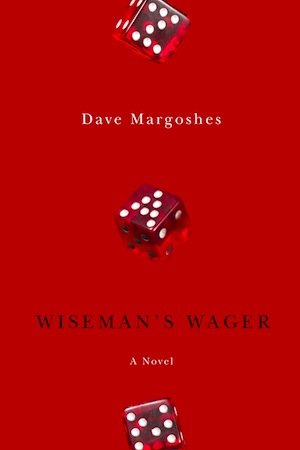
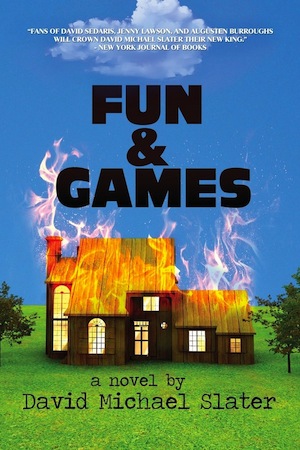
Men’s books. Normally, I don’t classify the novels I read along gender lines, though I have read and reviewed “chick lit.” Both Wiseman’s Wager by Dave Margoshes and Fun & Games by David Michael Slater are far removed from that genre – the sex is less romantic, the language more crude, the energy more confrontational or aggressive. My guess is that the former will appeal most to older male readers, the latter to younger.

Both novels feature main characters with whom readers can sympathize. Despite their faults, they are likable, and they have an energy that drives the narrative, even as it circles, as in Wiseman’s Wager, or spins out of control, as in Fun & Games.

image - Wiseman's Wager book coverIn Wiseman’s Wager, Zan Wiseman, 82, has recently moved to Calgary from Las Vegas. His longtime partner, Myrna, has passed away and his only remaining sibling, Abe, lives in Calgary, where his wife, Dolly, lies in a coma. In the late 1980s, the “A to Z Brothers, together again after all these years.”

Zan grew up with his brothers in Winnipeg, participating in the labor movement through the General Strike in 1919. The family moved to Toronto for a short period after the strike but returned to Winnipeg. Zan himself moved to Toronto soon thereafter and lived there for many years, continuing his union and communist party involvement.

Early into his stay in Calgary, Zan, suffering from severe constipation, lands in hospital, where he makes a joke about killing himself. We mainly learn about his younger days, his one novel – The Wise Men of Chelm, published in 1932 with little fanfare because the publisher goes bankrupt (it was the Depression, after all) and republished some 30 years later to great acclaim – his many wives, his brothers’ escapades (arrest for robbery, going to war, etc.), his relationship with his parents and his feelings about religion, politics and love, through his government-imposed therapy sessions with the “Lady Doctor,” Zelda, on whom he develops a small crush. There are also journal entries, “duets” in which he and Abe exchange brief, rapid-fire repartee, and Abe’s one-sided conversations with Dolly.

Zan is opinionated, sarcastic and difficult at times, but he is also endearing. He has led (perhaps) a fascinating life in an historically fascinating time. The confessional of an elderly man, there is uncertainty as to what did and did not happen, but readers won’t struggle with that aspect. While probably realistic as to how such memories would unfold, the repetition impedes the flow of the story somewhat and, at times, the dialogue crosses into stereotype; two bickering old Jewish men (Zan and Abe) or a crotchety old grump (Zan with Zelda).

The issues raised during the novel, however, are extremely engaging. Zan’s involvement with the Communist Party in Canada; his views on religion, particularly Judaism, of course; the losses we incur as we age; the different paths that members of the same family take; the way in which we fall in and out of love. There is much to recommend this novel, but it just didn’t hold my attention from start to finish. As Zan’s mind wandered, so did mine. A more exacting editor would have helped.

As for Fun & Games, it is much more focused and is also very well written, but it takes many trips to Crazy Town. It is a very stylistic novel that will appeal to many with its dark humor and intelligent take on various aspects of life, but the plot was a little over-the-top unrealistic, though the characters felt real enough.

image - Fun & Games book coverThe expression is, “It’s all fun and games until somebody gets hurt.” And, sometimes tacked on to the end of that is, “Then it’s hilarious.” Well, there is much that is funny in this book but it didn’t reach hilarity for me, despite, not to ruin any surprises, the fact that many, many people get hurt (i.e. die) – I don’t know how high a body count there is for most coming-of-age tales but if there were a list, Fun & Games would be pretty high up on it.

We meet Jon Schwartz, his three main buddies, his parents and two sisters, as well as his grandparents, when he is in Grade 9. It is the late 1980s. Not surprisingly, sex – or, more accurately, curiosity about it – is a prominent part of Jon’s life. He and his friends discuss it a lot, experiment with it a little, and fall victim to Jon’s sisters’ use of it to manipulate them.

Religion and Judaism feature prominently in Fun & Games. Jon’s grandmother is constantly making discomforting “jokes” about Jews, Israelis and the Holocaust – she and her husband are survivors – and his father is an avowed atheist and a respected scholar and author on the topic. One of Jon’s friends covets the rabbi’s daughter, and the rabbi is apparently one of the few people able to argue with his father about religion to any effect.

Jon, who more than one character remarks, “handle[s] everything so well,” handles a lot from Grade 9 to his first semester at university, where Fun & Games leaves us. If you can suspend your disbelief to the full extent, you will enjoy the fast-paced exhilarating ride that is Fun & Games. And it’s not an empty ride. I can still feel the thrill that came for me from the more philosophical parts, the ideas Slater’s presents amid the contrived chaos, and the reflections on family, friendship, loss and life.

Chanukah with Alzheimer’s

(photo from chabad.org)

Bubby’s crispy latkes, Grandpa’s melodious singing and the image of multiple generations gazing at the Chanukah flames – these are among some of our most cherished memories of Chanukah. But what are we to do when someone in our family is suffering from dementia and is no longer able to celebrate the holidays as he or she once did? How can we make sure that Chanukah remains meaningful and enjoyable, as well as safe, for the whole family? In search of answers, two experts in the field of eldercare and dementia offer some advice.

Dr. Allen Power is a geriatrician who is a recognized leader in the field of dementia and other eldercare topics. He has written extensively about dementia care and has been interviewed by major media outlets such as BBC television and the Wall Street Journal.

Dan Fern is the owner of Homewatch CareGivers, a home-care services company in Phoenix. Fern’s mother is an elderly Holocaust survivor who suffers from dementia.

Menachem Posner: As we plan our celebrations with our aging family members in mind, what can we do to make the experience as smooth as possible?

Allen Power: Scheduling is important. Think about what time of day your parent or grandparent feels best, and schedule your celebration for that time. Some people feel better in the morning, and others do better in the evenings, so plan accordingly. Also, bear in mind that they may not be able to handle as long a party as they once did, so plan to have a shorter party, or at least a way for them to leave when you sense that they are beginning to tire.

Also, coach small children in advance. Help them understand the sensitivities involved, and let them know about communication issues or other limitations beforehand so that they can contribute to a positive experience.

Dan Fern: I would add that it may be better to bring the party to them instead of bringing them to the party. That will reduce the level of stimulation and allow them to enjoy the celebration in a safe, familiar environment. Also, designate someone in advance whose job it will be to act as caregiver, making sure that the parent or grandparent can take a rest or go to the bathroom when they need to.

MP: How can we deal with dietary restrictions? What do you suggest for seniors who are no longer able to cook?

AP: I don’t have a lot of concerns about food. In many cases, you can probably work around whatever restrictions there are. Even though there are some caveats, it’s important to involve people with traditions. Flavors and smells can evoke powerful memories, even for people who forget so much, so they are important.

DF: In my work, it is important that our staff help our clients participate to whatever degree possible. We may have women read recipes, stir a pot, cut veggies, or give them other roles they feel connected to. Of course, for men, we also try to help them take on at least part of the role they used to have, making sure they are not left out.

MP: What do you suggest for menorah lighting? What can we do for people who are no longer able to light on their own?

DF: My mom is 91, and she has moderate dementia. We go to her apartment and light the candles, and she loves to watch them and sing the songs. Singing is a big part of the Jewish holidays and a form of reminiscence. It has also been shown to put you in a better mood and brings oxygen to your brain. Stimulation from light, sounds and large crowds of people can be overwhelming for her, so we come to her apartment, and she thoroughly enjoys the experience. We also make sure to take out the menorah a few days in advance and leave it out where she can see it and discuss it. Just seeing the unlit menorah brings her comfort.

AP: Also make sure that you do it in a safe way. If you are afraid the person may knock over the flames, tea lights placed on a tray are a good, safe alternative.

MP: What can be done to ease the discomfort of a Chanukah gift-giver who no longer knows who gets what?

AP: If people are forgetful, never put them on the spot. Coach family members to introduce themselves when they arrive, and to do so often throughout the visit. Set things up so that they cannot make mistakes that will embarrass them. If there is gift giving, keep a written record so that they can refer to a list.

DF: And when they do make a mistake, don’t correct them; just go with it. My mom knows my name but she doesn’t know our relationship. Sometimes she calls me her nephew, and sometimes she calls me a relative. I don’t correct her. If they use the wrong name, just accept it. Of course, you can help things along by reminding your parent or grandparent beforehand what people’s names are and how they are related.

MP: How many nights of Chanukah would you suggest celebrating?

DF: It’s a unique experience every night. Even if you do exactly the same thing every night, people with dementia will not remember and will be happy to do it each time, so see them as much as you can. It’s well documented that, for people with dementia, a good mood lingers even they no longer know what caused them to feel good in the first place. Remember, you have a limited number of days to celebrate with your beloved parent or grandparent, so take advantage of all the time that is available.

AP: That’s right. One of the wonderful things about people with dementia is that they live fully in the present, so make the most of each present moment. If you want to make some visits briefer than others, that’s fine.

MP: What tips can you suggest for taking grandchildren to see grandparents with dementia?

AP: In my writings, I spend a lot of time talking about how we can model though our speech and body language, showing others how to deal with our seniors. Treat their limitations matter-of-factly and normalize them. Tell the kids, “This is Grandma, we love her and it’s OK.” Give the message that they don’t need to be fearful. You can also show respect by asking the senior for an opinion, demonstrating that this person is someone to be looked up to. Cast your parent or grandparent in the role of wise elder. Also, since people with dementia live in the moment, they tend to do well with little kids who also live in the moment.

DF: When asking questions, make sure they can answer them. Say things, like, “We use this candle to light the menorah, right?” or “Remember when we had such a great time last year?” Even if they don’t remember, they are likely to say they do. You can also engage them by using open-ended comments that allow them to respond as they see fit. With a lot of people, showing affection is very appropriate. Sit next to them, hug them, kiss them and hold their hand. Do what you can to make them feel welcomed and part of what is going on around them.

MP: With so many people living far away from parents and grandparents, what can be done to make holidays special from a distance?

AP: It depends on the person. You can always call [or] Skype, even when it’s not Chanukah. For some people, seeing a face and voice may be very reassuring. But be aware that some people may not relate to it, and seeing a loved one on a screen may be unsettling. In those cases, a handwritten letter that someone can read to them may be better.

DF: A major limitation for many older people is hearing impairment, which makes the phone and Skype difficult. Cards, drawings and pictures can often accomplish the same thing, and they can be looked at again and again.

MP: Any more advice?

AP: Most people with dementia are an open book. Look in their eyes and you can see how they are feeling and proceed appropriately.

DF: Constantly monitor the situation. Be aware of the possibility that you may be pushing the limits. They may be tired and ready for a nap. Keep close tabs, and act before things become a problem. It all comes back to the fact that we want them to have a good time, we want to make them feel comfortable and not put them on the spot. If we’re sensitive to their emotions, it can be a great Chanukah celebration. Chanukah is a time when we make and relive great memories.

AP: I hope this will help people not be fearful of bringing Chanukah to a relative with dementia. Isolation can be harmful, so I hope people take the plunge and do it well.

This article is reprinted with permission from chabad.org.

Curl up with books from Waldman Library

There was an old lady who swallowed a dreidel … perhaps it’s fatal! There are many great stories to read to your kids over Chanukah. What a wonderful way to spend time with your family – curling up with a good book or CD. The Isaac Waldman Jewish Public Library has lots of each from which to choose.

Two of the newest books for Chanukah are Honeyky Hanukah by Woody Guthrie and I Know an Old Lady Who Swallowed a Dreidel by Caryn Yacowitz.

Written in rhyme, Honeyky Hanukah lights the way for a night of family, friends, food and fun in a warm and joyful celebration, and it includes a CD performed by the Klezmatics.

I Know an Old Lady is also a rhyming book, written in a cumulative style, and with the help of the artwork, this well-known folk song takes on a new life in this tale about celebrating Chanukah with Bubbe and her family.

Two of the library’s most popular classic storybooks to read aloud are A Hanukkah Treasury by Eric Kimmel and The Stone Lamp by Karen Hesse and Brian Pinkney.

Treasury is a Chanukah compilation filled with history, flavor, legends, contemporary stories, recipes and games, suitable for the entire family. Stone Lamp comprises a series of eight free-verse poems in which the authors capture the resilient spirit of the Jewish people through the imagined voices of eight children at Chanukah.

These are just some of the Chanukah books available at the library. There are also dozens of holiday CDs and the library even has a Chanukah klezmer collection. To peruse the entire catalogue, go to jcclibrary.ca or just come up to the second floor of the Jewish Community Centre of Greater Vancouver, say hi, and browse through the collection in person.

Ten tips for holiday peace of mind

The holiday season is a time many of us look forward to – sometimes with anticipation, sometimes with dread. Peace on earth may seem impossible if you don’t have peace of mind.

The Canadian Mental Health Association (CMHA) suggests that some of the best ways to deal with added stress around the holiday season are common sense strategies. “It’s easy to feel overwhelmed during the holiday season,” said Bev Gutray, chief executive officer of CMHA’s B.C. division. “The key is to keep it simple and remember to make your mental health a priority.”

Ten tips for holiday peace of mind

  1. 1. Plan ahead. If you’re entertaining, use the “keep it simple” strategy. Try menus you can make ahead of time or at least partially prepare and freeze. Decorate, cook, shop or do whatever’s on your list in advance. Then you can really relax and enjoy visiting friends, relatives and co-workers.
  2. 2. As much as possible, organize and delegate. Make a list and check it twice. Rather than one person cooking the whole family meal, invite guests to bring a dish. Kids can help with gift-wrapping, decorating, baking, or addressing or decorating cards.
  3. 3. Beware of overindulgence. Having a few too many glasses of wine can dampen your holiday spirit; alcohol can lift your mood in the short term, but it can then drop your mood lower than before. Also, too many sweets will probably make you feel lethargic, tired and guilty come the next day. Eating well, exercising regularly and getting a good night’s sleep are easy to throw out the window, but attending to these health-promoting strategies can help you to battle stress, the winter blues and even colds!
  4. 4. Stay within budget. Finances are huge source of stress for many of us. Again, eliminate the unnecessary. Set a budget, and stay within it. A call, a visit or a note to tell someone how important they are to you can be as touching as and more meaningful than a gift. You can also enjoy free activities like walking or driving around to look at holiday decorations, going window-shopping without buying, or making your own decorations or presents. Craigslist and swap events are great places to find inexpensive brand-new items, and excellent-condition used items.
  5. 5. Remember what the holiday season is about for you and/or your family. Make that goal your priority. Whether it’s the usual holiday advertising that creates a picture that the holidays are about shiny new toys, always-happy families and gift giving, remember that holidays are really about sharing, loving and time spent with family and loved ones. Develop your own meaningful family traditions that don’t have to cost a lot of money. Also, remember not to take things too seriously. Fun or silly things to do, games or movies that make you laugh, playing with pets, and time alone or with a partner are all good ways to reduce stress. Use this time of year to help regain perspective; watching children can help remind us of the simple things that can bring us joy.
  6. 6. Invite others. If you have few family or friends, reach out to neighbors. Find ways to spend the holidays with other people. If you’re part of a family gathering, invite someone you know is alone to your gathering.
  7. 7. Connect with your community. Attend diverse cultural events with family and friends. Help out at a local food bank or another community organization. Give to a charity that helps those in need, or donate on someone else’s behalf.
  8. 8. Make gift giving easier and less expensive. Try putting family members and partners’ names in a hat and buy one gift for the person you draw; this can help reduce expenses and refocus energies on thoughtfulness, creativity and truly personal gifts. Encourage children to make gifts for friends and relatives so the focus is on giving rather than buying.
  9. 9. Remember the weather doesn’t help. Some people get the winter blahs each year, and a much smaller number (two-three percent) develop seasonal affective disorder (SAD). Paying attention to nutrition, exercise and sleep and being careful with alcohol are also important if you have a history of depression. If your low mood carries on into the new year and starts to affect your daily life, you should see your family doctor. CMHA offers free skills and coaching to help overcome low mood through the Bounce Back program. To learn more, visit bouncebackbc.ca.
  10. 10. Learn stress-busting skills you can use year-round. If the holidays often get you down, you may struggle with stress, low mood and worry at other times of year. CMHA’s Living Life to the Full course can help you develop skills to better manage problems, practise healthy thinking and build confidence. To sign up or gift this fun and helpful course to a friend, visit livinglifetothefull.ca. There are also fun and helpful booklets in the Living Life to the Full store to give your loved ones on – or after – the holidays.

Dealing with grief

The holidays can be especially rough for those of us who have recently lost someone close or who lost someone close at this time of the year. With all the messages of family togetherness and joy, the emptiness left behind when someone passes away is in harsh contrast to what society seems to “expect” us to feel. Below are some tips to help you or someone you know get through a potentially hard time.

  • Talking about the deceased person is OK. Your stress will only increase if the deceased person’s memory is allowed to become a landmine around which everyone tiptoes.
  • Things won’t be the same. It’s normal to feel at odds with yourself and family events when dealing with grief. Do not isolate yourself, but limit involvement when you need to and plan new events.
  • Don’t let other people’s expectations dictate how your holiday will unfold. If you don’t feel like doing something, don’t let others force you. If you do want to attend holiday functions, make sure you know your limits. Leave early, arrive late, drive alone – do whatever you need to do to help yourself.
  • Seek support. Talk to your friends and family about how you feel. The Jewish community offers support groups for people who are grieving. Being around people who know what you’re going through can be very comforting.
  • Plan a special time to celebrate the memories of the person who passed away. Some families develop creative rituals or donate money to a charity. Singing their favorite holiday song, making a favorite recipe, etc. – symbolic gestures like these can help families validate their feelings of sadness and overcome the guilt of enjoying special occasions.
  • Take care of yourself. Stress, depression and bodily neglect are not a great mix at any time of the year.
  • Think about building some new traditions. Remember that it’s OK not to do what you traditionally do. Planning something totally different is not an insult to the memory of a loved one and can be a positive way to ease some of the pressure.

Eight crazy dog nights

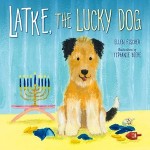
Narrated by the dog himself, Latke, The Lucky Dog by Ellen Fischer (Kar-Ben Publishing, 2014) is a charming book for kids 2-7 years old. In it, Latke the dog tells readers how lucky he is that a family with two children came to a shelter on the first night of Chanukah and took him home, naming him Latke because of his color. However, since poor Latke isn’t used to being with a family, his story is all about his eight nights of misadventures, coupled with his repeated acknowledgement that he is such a lucky dog to have been chosen by this family.

Although the story is very cute, there isn’t much about the family trying to train Latke, so parents could use the book as an opportunity to talk with their kids about what it means to adopt a pet and the responsibilities pet ownership entails. Or, parents could broaden the discussion to what it means to bring someone or something new into your environment – what role you might play, what changes you might need to make in your daily routine.

Fischer has written a number of children’s books and lives in Greensboro, N.C. The lively illustrations in a jagged style by artist Tiphanie Beeke, who lives in the south of France, fit the mood of the book very well.

Sybil Kaplan is a journalist, foreign correspondent, lecturer, food writer and book reviewer who lives in Jerusalem. She also does the restaurant features for janglo.net and leads weekly shuk walks in English in Jerusalem’s Jewish food market.

Holiday family learning

With kids off school and parents home from work, the winter holidays are perfect for creating family time to play and learn together. ABC Life Literacy Canada offers these holiday family literacy tips to warm your heart and feed your mind!

  • Family book snuggle: Gather the family together with a favorite holiday or winter book. Get cozy blankets and comfy chairs, then snuggle in and take turns reading aloud to one another.
  • Make your own cards and gift tags: Even young children can write or draw on a card to send to friends and family or on a gift tag for someone special.
  • Bake-off: Get the whole family involved in baking! Following a recipe is a great way to practise reading and comprehension skills. Measuring ingredients and following baking times are practical (and delicious) applications of math skills.
  • Out and about: Take in a holiday show or visit a museum. Family outings offer fun learning opportunities – and make sure to read the theatre program and the exhibit descriptions together.
  • Make a list: Grocery shopping can be a fun family literacy activity. Your child can write the holiday shopping list, read signs and labels as you make your way through the aisles, and count items as they go into the shopping cart.
  • Give the gift of literacy: Encourage literacy by giving books, games, drawing materials, magazine subscriptions and bookstore gift cards – gifts to enjoy all year long!

When you include fun learning activities in your family’s holiday time, everyone stays sharp and ready for the New Year. Find more family literacy tips and activities at familyliteracyday.ca.