

Consolee Nishimwe, a Rwanda-born author, motivational speaker and survivor of the genocide against the Tutsi, spoke from New York on April 21 to an online audience as part of the In Conversation with a Survivor series hosted by Toronto’s Friends of Simon Wiesenthal Centre.
Every year, between April and July, Rwandan communities around the world commemorate the tragic events of 1994 in a period known as Kwibuka, the Kinyarwanda word for “remember.” April 7 is International Day of Reflection on the 1994 Genocide against the Tutsi in Rwanda, a time set aside to remember the victims, honour the survivors and reflect on the importance of preserving truth and memory.
From April 7 to July 19, 1994, 800,000 Tutsi, moderate Hutu and Twa were murdered by Hutu militias. According to the United Nations, between 250,000 and 500,000 women were raped during this period of extreme violence.
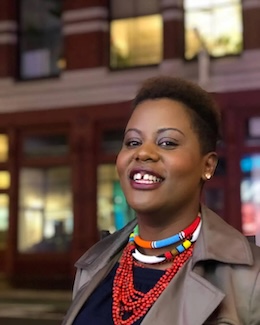
“As a survivor, it’s not very easy to talk about it because what happened to us was painful. It’s not easy for any survivor to share their personal experience of what they have endured,” Nishimwe said.
“Even though it’s been many years, it still lives within us. For me, when I share, I always think about those who are not ready yet to share their testimonies, and I carry them within me.”
The daughter of schoolteachers in the western part of Rwanda, Nishimwe described her childhood as a happy one, with a large coterie of friends and family nearby. Nonetheless, life for the Tutsi was never easy, said Nishimwe, who was 14 years old when the genocide started.
In elementary school, teachers humiliated Tutsi students by having them stand up before the class to identify themselves as Tutsi. Later, the RTLM radio station and Rwandan newspapers would broadcast and publish propaganda aimed at dehumanizing Tutsi.
On April 6, 1994, a missile shot down a plane carrying the presidents of Rwanda and Burundi, both of whom were Hutu. The Tutsi were blamed generally for the assassinations, RTLM radio said all Tutsi must be killed, and widespread violence ensued.
“It was very scary for all of us where we lived in our villages. As Tutsi, we had to run to seek refuge mostly with the Hutu, our neighbours, the people who were around us, the people we grew up with – my parents used to teach some of their children – and the people we went to church with,” Nishimwe said. “You never knew who was going to be kind. You never knew who was going to help because everyone changed, completely changed.”
On the run, with roadblocks all around managed by Hutu with clubs and machetes ready to kill Tutsi, her family – Nishimwe, her parents, three brothers and a sister – like other Tutsi, hid in the bushes and sought refuge in what they hoped would be friendly Hutu homes, not knowing how long they would be able to stay or if their hosts might turn on them. The potential consequences for harbouring Tutsi were severe.
Eventually, Nishimwe’s father thought it best that he separate from the family. Killers would find him on April 15, 1994. Shortly afterwards, her three brothers were also murdered.
Nishimwe, her mother and sister were captured by Hutu. While in captivity, Nishimwe was brutally raped and considers it a “miracle” that she survived.
Nishimwe talks of her mother as a true hero.
“She went back to teach [after the genocide]. She was able to remind my sister and me, and all of us around her, that we should never carry hatred within us, which was not going to be easy because of the pain we carry within ourselves. I’m grateful for her,” Nishimwe said.
“Going back to school, there was a lot of trauma and nightmares. But I had friends who had lost their entire families. I have friends who don’t even have anybody in their family. I’m one of the few survivors, at least, who has a parent.”
After moving to the United States in 2001, Nishimwe went to therapy. With that help, she began writing about her experiences, which, she said, enabled her to find some means of expressing what she had endured.
“It helped me to start journaling every painful experience that I’ve gone through and allowed me also to find words. Because, sometimes, when you have gone through extreme trauma, you don’t even have words to describe the pain you carry within yourself,” she said.
In 2012, Nishimwe published Tested to the Limit: A Genocide Survivor’s Story of Pain, Resilience and Hope, an account of her experiences during the 1994 events and her life afterwards.
Sam Margolis has written for the Globe and Mail, the National Post, UPI and MSNBC.



