Recognition withdrawn

B.C. Premier John Horgan has withdrawn a certificate of recognition sent to a controversial Vancouver imam, following a month-long advocacy campaign by B’nai Brith Canada. In an email sent to B’nai Brith supporters, the premier’s office confirmed it had rescinded the certificate bestowed upon Tarek Ramadan, while adding, “We strongly condemn any racist, antisemitic, homophobic or discriminatory language.” The email further asserted that the premier’s office was unaware of Ramadan’s “concerning statements” before issuing the certificate and reiterated that Ramadan had also “received certificates from previous governments in past years.”

B’nai Brith first publicly called on the premier to rescind the certificate on May 16, noting that Ramadan was exploiting the governmental plaudits to vindicate his chants against “malevolent Jews” and insistence that “all of Palestine should only be in the custody of the Muslims.”

B’nai Brith exposed further antisemitism and homophobia on Ramadan’s part and called on its followers to contact the premier’s office. Ramadan had publicly posted, then later deleted, a video on Facebook that accuses the Jewish Rothschild family of controling the world’s banks and media, while justifying the Holocaust on the basis that “the Jews sold Germany down the river.”

Another post by Ramadan, still visible on Facebook, describes Israeli soldiers as “fags,” a homophobic slur.

“We are relieved that the premier’s office has finally done the right thing,” said Michael Mostyn, chief executive officer of B’nai Brith Canada. “No one who has been exposed as a hatemonger should receive recognition from a high government official in any province.

“We look forward to working with all parties in B.C. and across the country to prevent similar situations from arising in the future.”

The Muslim Association of Canada, which runs the mosque where Ramadan preached, described his conduct as “inappropriate” in a November 2017 statement.

JSA celebrates Serge Haber

On June 10, Jewish Seniors Alliance fêtes one of its founders, Serge Haber, as well as his 90th birthday. (photo from JSA)

One of the community’s most dedicated and inspiring longtime leaders, Serge Haber, will be honoured on June 10, coinciding with a significant occasion in his life, his 90th birthday.

Haber has always cared passionately about community seniors and the Jewish people in general. Their well-being is on his mind constantly and, yes, anytime day or night, he’ll earnestly voice his concerns.

The tribute to this prominent community personality will take place at the Jewish Seniors Alliance (JSA) Chai Tea. The afternoon (2:30-5 p.m.) at the Peretz Centre for Secular Jewish Culture will see the serving of party sandwiches, fruit and dessert, live entertainment by Dave Ivaz Music, caricatures by artist Katie Green, door prizes and more.

Event co-chairs – community leaders Marie Doduck and Helene Rosen – extend “a most sincere and heartfelt welcome to all to attend this special occasion, which will celebrate all of our community’s wonderful seniors, along with the honouring of our dear Serge.”

It is most fitting that this tribute be mounted by JSA, as Haber was at the forefront of its formation and currently serves as its president emeritus. His dedication to the Judaic directive of tikkun olam (repairing the world) has continued in word and action throughout the years, as he has not only initiated JSA and helped the association, but many other Jewish causes, as well.

Current JSA president Ken Levitt stressed that one reason the organization has evolved to offer so many programs and services is because of Haber’s efforts. Among other things, Haber has championed vocally and positively for the quality of life of community seniors.

Haber’s experiences profoundly shaped his character. Born in Romania in 1928 to Leon and Liza Haber, he lived among the horrors of pogroms and the Holocaust, to which he lost family members – and which he barely survived himself, due to fortunate circumstances.

At the end of the Second World War, Haber took two years of university in pharmacy in Bucharest. An extensive “real-life education” followed, when he left Romania in 1947, traveling to and living in Austria, then Italy, France, Cuba, Montreal (in 1950) and Dallas (1967), followed by stays in Toronto, Montreal and, finally – and fortunately for our community – moving to Vancouver in 1978.

Haber attributes the impetus for his extensive community service to his beloved wife Elinor, z’l, who he met and married in 1955 while in Montreal, and to their three children.

“All of my community efforts are due to Elinor’s encouragement and participation – I couldn’t have done it without her,” said Haber. And, as to his children, he emphasized that he wanted to establish a connection to encourage “their recognition of the importance of their being a part of the community, contributing to it … and remaining strongly Jewish.”

Haber’s leadership has seen him serve for decades in key executive positions for a variety of major Jewish organizations, including the United Synagogue of Conservative Judaism (highlighted by a two-year term as vice-president), Congregation Beth Israel (with 18 years of executive, chairmanship and men’s club leadership), Vancouver Holocaust Education Society (passionately urging racial tolerance at its annual symposium and ongoing school programs) and Hillel BC at the University of British Columbia (helping bring about a much-needed new facility). Haber served 19 years on the Louis Brier Home and Hospital board and was a director of the Jewish National Fund for 18 years.

Additionally, deeply religious, Haber started a new Conservative congregation, Shaara Shalom, in Laval, Que., in 1958; continuously helped lead religious services at Vancouver’s Beth Israel; and has taken a key role in daily and Shabbat service leadership at the Louis Brier – for 25 years straight.

In recognition of these accomplishments, Haber has been honoured throughout the years by numerous organizations, including the Louis Brier, as one of its Eight Over 80 recipients; by Beth Israel, with its President’s Award for community involvement; and by Simon Fraser University, which named him Man of the Year, the first Jewish person to be so recognized.

And, he served the community even in his work – owning and operating Kaplan’s Delicatessen for 23 years.

Today, Haber’s children are “always there for him”: Wanda, a social worker, in Toronto; Geoffrey, a Conservative rabbi, in Toronto; and Stephen, in the computer field, in Marysville, Wash. As well, there is his sister, Sidonia, in Tel Aviv, and his dear companion here, Sheila Gordon.

Ever on his mind are seniors and, especially, the Jewish Seniors Alliance.

“I am trying so hard,” he has said, “to do crucial work on behalf of community seniors, whose numbers will double in the next 10 years … and I see JSA becoming the most important Jewish organization in the city because of its training services and resultant volunteers who substantially help community seniors in need.”

Haber has expressed hope that seniors here will soon have their own building, providing a variety of needed services.

“I have an unending love for the Jewish people generally and, in particular, for those in our community,” he emphasized.

Abundant numbers of people throughout the community would affirm that the feeling is mutual.

To celebrate with Haber and wish him mazal tov on his 90th, join the JSA Chai Tea on June 10. Tickets ($36) may be purchased from the JSA office at 604-732-1555 (press 1 for Rita Propp) or at the door.

Bob Markin served on the editorial staff of the Jewish Western Bulletin for 16 years, and has written numerous freelance stories and articles throughout the years. He is a member of the editorial committee of the Jewish Senior Alliance’s Senior Line magazine.


A special anniversary

Children who lost family members fighting for Israel are seen attending a camp at Wizo’s Hadassim Youth Village, which was founded in 1947 to support the influx of refugees fleeing from Europe. (photo from Jewish Museum and Archives of British Columbia, L.10472)

Rabbi Shawn Zell remembers his Grade 10 experience vividly, even though it took place 50 years ago.

Zell, a native of Winnipeg, spent the year in Israel attending a boarding school called the Hadassim Children and Youth Village, along with 18 other Canadian and American young people. It was 1968, one year after Israel’s victory over the combined armies of its Arab neighbours, and the mood in the country was euphoric. There was unbridled optimism in the air, the feeling that anything was possible, Zell recalled.

For Zell and his Canadian contemporaries, it was a time to embrace their Judaism and create greater bonds with the state of Israel, all while getting credits towards their Canadian high school diplomas.

Zell and the others were among the first young Diaspora Jews to spend a year in Israel on a sponsored program – in their case, one organized by Canadian Hadassah-WIZO. Although decades have passed, he still keeps in touch with some of the other participants and, on June 27, most of the group, along with their spouses, children and other family members, will gather in Israel for a 50th reunion.

They will meet at Hadassim, which is located near Netanya, to have dinner, reminisce and see if they can still recognize one another after the passage of so much time.

“I think it’ll be a bunch of alter-kackers looking at each other, saying, ‘I wouldn’t recognize you,’” he said.

photo - Rabbi Shawn Zell
Rabbi Shawn Zell (photo from cjnews.com)

Zell, who serves as the spiritual leader of Tiferet Israel Congregation in Dallas, said his experience in Israel left indelible marks on him. Although he came from a proudly Zionist family, being in the country reinforced those feelings and strengthened his attachment to Judaism.

“I came back with Israel fever,” he said, “more knowledgeable, even more Jewish.”

A few years after his return, he took advantage of an offer to study at a new school for educators in New York and was later ordained as a rabbi. All the while, he has remained in touch with a few of his buddies from the trip. Of the 16 Canadians who were there with him, seven were fellow Winnipeggers, although he did not know any of them before he left. They were joined in Israel by three Americans.

While in Israel, the group was housed in dormitories, with two Canadians and two Israelis per room. It was a great way to meet Israelis and see the country, Zell said, adding that he still keeps in touch with his roommate from Halifax, Lance Webber, and an American, David Klein, among others.

With no parents to monitor them, the boys took advantage of the situation.

“We were doing a lot of horsing around,” Zell recalled, and their schoolwork suffered as a result. But, being on their own in a new country provided plenty of opportunity to develop their independence – they thought nothing of taking a bus into nearby Tel Aviv to wander around. On Shabbat, the Canadian kids organized their own services on campus, without adult supervision.

Zell has lots of memories of that experience, including the time the group was called to attend a Hadassah event that was headlined by former Israeli prime minister David Ben-Gurion. Zell still has the photo, cut out of a magazine he found back in Winnipeg, of he and the others posing with Ben-Gurion.

When Zell got the idea to organize a reunion a year ago, he wasn’t sure how it would turn out. But the response “has been much better than I thought. I didn’t think I’d be successful contacting people after 50 years,” he said.

Zell expects 13 of the original group of 16, along with their family members, to attend the reunion, bringing the total number to more than 30 people.

“We will view Hadassim through mature eyes,” said Zell. “We will see one another, rekindle friendships and share memories. Most of all, we will introspect as we ask ourselves how our year in Hadassim played a role in our lives.”

– For more national Jewish news, visit cjnews.com

Genocide still happening

Polish-Jewish lawyer Raphael Lemkin was the first to use the term “genocide.” (photo by Moidov)

The word “genocide” was conceived by Polish-Jewish lawyer Raphael Lemkin to describe the attempt of the Ottoman Empire to efface Armenians from Turkish society. He articulated the empire’s actions as a specific category of crime – one that could be named, analyzed, resisted and penalized by the global community.

Lemkin was born in 1900 on a small farm near the Polish town of Wolkowysk. As a young man, he heard that as many as 1.2 million Christian Armenians were killed by the Ottoman Empire, the population of which was mainly Muslim. He also knew of the pogroms and violence against his own people, of course, but it was the situation of the Armenians that led him to the idea of a change in international law that could address such violence.

When the German army invaded Poland, Lemkin fled Europe for safety in the United States. He began teaching at Duke University and, in 1942, he joined the war department, where he documented Nazi atrocities. This led to the 1944 book Axis Rule in Occupied Europe: Laws of Occupation, Analysis of Government, Proposals for Redress, wherein Lemkin first introduced the word “genocide.”

“By ‘genocide,’ we mean the destruction of a nation or of an ethnic group,” Lemkin wrote. “Generally speaking, genocide does not necessarily mean the immediate destruction of a nation, except when accomplished by mass killings of all members of a nation. It is intended rather to signify a coordinated plan of different actions aiming at the destruction of essential foundations of the life of national groups, with the aim of annihilating the groups themselves. Genocide is directed against the national group as an entity, and the actions involved are directed against individuals, not in their individual capacity, but as members of the national group.”

Lemkin later worked on the Nuremberg trials, where he succeeded in getting the word genocide included in the indictment. Genocide was not yet a legal term, however, and the verdict at Nuremberg set a precedent only for war crimes. While in Nuremberg, Lemkin learned of the death of his parents, who, along with 49 other family members, were killed by the Nazis.

Lemkin was determined to see genocide added to international law and, after his return to Europe, he began agitating for this at the meetings of the then newly established United Nations. His efforts to enlist the support of national delegations and influential leaders eventually bore fruit. On Dec. 9, 1948, the United Nations approved the Convention on the Prevention and Punishment of the Crime of Genocide. As of December 2017, 149 states, including Canada, had ratified or acceded to the treaty.

Lemkin committed the rest of his life to convincing nations to pass legislation supporting the convention. He died in 1959, “impoverished and exhausted by his efforts,” according to Lemkin House, an American sanctuary for asylum seekers named in his honour.

At the 2005 World Summit, all member states of the United Nations endorsed the Responsibility to Protect (R2P) doctrine, which Canada was instrumental in promoting – on paper, at least, it carries Lemkin’s vision forward.

“The international community,” states the doctrine, “through the United Nations, also has the responsibility to use appropriate diplomatic, humanitarian and other peaceful means … to help protect populations from genocide, war crimes, ethnic cleansing and crimes against humanity … we are prepared to take collective action, in a timely and decisive manner … on a case-by-case basis and in cooperation with relevant regional organizations as appropriate, should peaceful means be inadequate and national authorities manifestly fail to protect their populations from genocide, war crimes, ethnic cleansing and crimes against humanity.”

This article was being written as almost one million Rohingya refugees were preparing to celebrate Ramadan in the camps of Cox’s Bazar, in Bangladesh – 700,000 of them have fled Myanmar since August 2017, running from what several international observers have called genocide. Yet Canada, and many others, including the UN, have shied away from using Lemkin’s term to describe the situation.

Modern Turkey still denies the Armenian genocide that was instrumental in inspiring Lemkin’s efforts. And, although some countries, notably Germany and Rwanda, have made attempts to deal with their past, with the crimes committed by their governments and civilians, the fight to prevent, identify, resist and respond effectively to genocide remains relevant.

Matthew Gindin is a freelance journalist, writer and lecturer. He is Pacific correspondent for the CJN, writes regularly for the Forward, Tricycle and the Wisdom Daily, and has been published in Sojourners, Religion Dispatches and elsewhere. He can be found on Medium and Twitter.

Ancient donkey leads to new discoveries

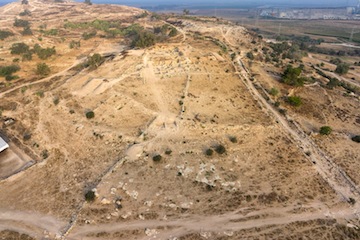
In the ancient city of Gath, now Tell es-Safi, an international team of archeologists has uncovered the earliest example of the use of a bridle bit with an equid in the Near East. (photo from Ashernet)

photo - An aerial view of Tell es-Safi
An aerial view of Tell es-Safi. (photo from Ashernet)

“The use of a bridle bit on a donkey during this period is surprising, since it was commonly assumed that donkeys were controlled with nose rings, as depicted in Mesopotamian art,” said Bar-Ilan University’s Prof. Aren Maeir, who has led the Tell es-Safi/Gath Archeological Project since its inception more than 20 years ago. Evidence of the bit was derived from the skeleton of an ancient donkey dating to the Early Bronze Age III (approximately 2700 BCE). The donkey is one of four that were found buried under neighbourhood houses, indicating the importance of the donkey in this society. Studies of the dental isotopes from this particular donkey (with the bit) demonstrate that it was born and raised in Egypt and brought to the site only in the last few months of its life, before it was sacrificed and buried beneath the floor of the house as it was being rebuilt. The research has been funded by the Canadian Social Science and Humanities Research Council, with additional funds from BIU and the University of Manitoba; the researchers come from BIU, U of M, University of Saskatchewan, Ariel University and Grand Valley State University; their findings were published in the May 16 edition of the journal PLOS ONE.