

For more cartoons, visit thedailysnooze.com.
Month: July 2015

Painter and sculptor David Aronson passes away
“The Golem,” by David Aronson, 1958, encaustic on panel 57” x 64”. (all photos from David Aronson Archive via Braithwaite & Katz Communications)
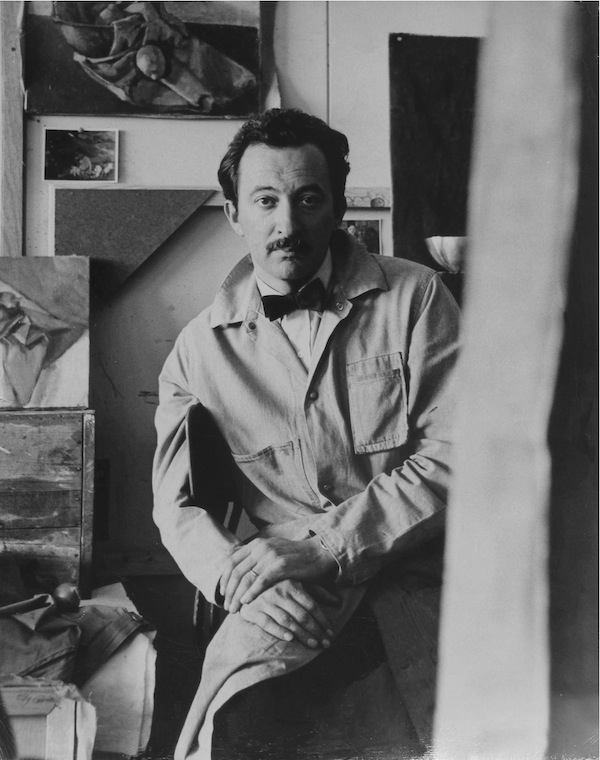
American painter and sculptor David Aronson, 91, of Sudbury, Mass., passed away on July 2, 2015. He was one of the most important representatives of the Boston Expressionist movement of the 1940s, an influential force in the development of the arts in Boston for more than 60 years and professor emeritus at Boston University, where he founded the fine arts department and taught from 1955 until his retirement in 1989.
Born in Shilova, Lithuania, in 1923, Aronson immigrated to the United States at the age of 7 and lived and worked in the Boston area for his entire career. While earning his diploma at the School of the Museum of Fine Arts, Boston, Aronson studied with the innovative German-born artist Karl Zerbe.
Aronson’s reputation was quickly established and his art has been featured in numerous solo exhibitions in Boston, Chicago, Philadelphia, New York, Los Angeles and Tokyo, among others. His work is included in the permanent collections of more than 40 museums worldwide including the Museum of Fine Arts, Boston, the Metropolitan Museum of Art, the Whitney Museum of American Art, MoMA and the Art Institute of Chicago. He received both the Judges Prize and Popular Prize from the Institute of Contemporary Art, Boston in 1944 and was one of the youngest artists included in the “14 Americans” exhibition of 1946 curated by Dorothy Canning Miller of MoMA. In 1979, the Rose Art Museum of Brandeis University, the Jewish Museum and the National Academy of Design in New York all hosted retrospectives of his painting and sculpture. Later in his career, Boston University also hosted a comprehensive retrospective of his work in 2005, and the Danforth Museum featured a solo exhibition of Aronson’s work in 2009.
In addition to his exhibitions, Aronson received numerous awards and honors, including a Guggenheim Fellowship in 1960, election as Academician at the National Academy of Design, New York, Purchase Prize in 1961, 1962 and 1963 from the American Academy of Arts and Letters, New York, and honorary doctorates from both Hebrew College and Boston University.
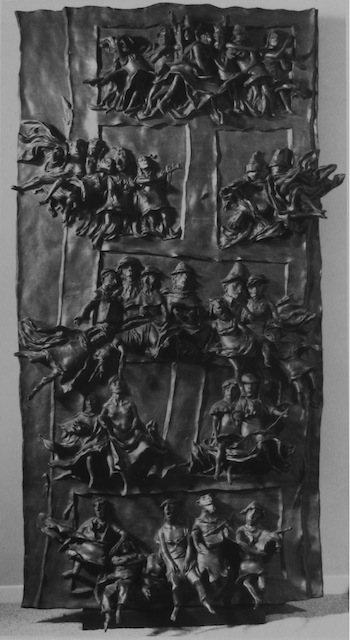
Throughout his career, Aronson continued to experiment with new subjects and materials, frequently choosing dynamic subjects such as musicians, alchemists, magicians and mystics. He also used charcoal and pastel to exploit the power of black and white with the immediacy of drawing to convey profound human emotion in such works as “The Moonworshippers,” 1960, charcoal, 80″ x 84″ (private collection). His explorations in the 1960s also led him into sculpture, first in relief, extruding the forms from the two dimensional surface, and ultimately into major three dimensional works in bronze such as “The Door,” 1963-69, bronze, 94″ x 50″ x 12″ (collection Museum of Fine Arts, Boston).
Aronson leaves his wife of 60 years Georgiana (Nyman) Aronson, daughters Judy Webb and Abigail Zocher and son Ben Aronson, and three grandchildren (Jesse, Alex and Max) and great-granddaughter Isabella.

הנוהגים מחפשים פתרונות יצירתיים
נתיבי רכב מהירים זמניים הותקנו באוטוסטרדת דון ואלי בטורונטו עבור משחקי פאן אמריקה 2015. (צילום: מגנוליה באמצעות ויקיפדיה)
נהגים קריאטיבים: הנוהגים מחפשים פתרונות יצירתיים שיאפשרו להם לנסוע בנתיבים המהירים
עומסי התנועה הכבדים במחוז אונטריו שהוא הגדול ביותר בקנדה הביאו לסלילת נתיבים מהירים באורך של למעלה מ-235 ק”מ, באוטוסטרדות המובילות לדאון טאון טורונטו. המגבלה היחידה אך המשמעותית של השימוש בנתיבים המהירים היא, שבכל רכב פרטי שנוסע בהם, חייבים לשבת לפחות שני נוסעים. בימים אלה בהם מתקיימים משחקי פאן אמריקה שנפתחו בסוף השבוע האחרון בטורונטו ויימשכו עד סוף החודש, עומסי התנועה גדולים עוד הרבה יותר, ניתן להשתמש בנתיבים המהירים בתנאי שבכל רכב ישבו לא פחות משלושה נוסעים.
נהגים רבים מבקשים להשתמש בנתיבים המהירים והאטרקטיביים, אך לא תמיד יש במכוניתם שני נוסעים נוספים. ומתברר שהם מנסים למצוא פתרונות יצירתיים ביותר לפתרון של מחסור בנוסעים. למשל להביא את הילדים מהבית שרק ישבו באוטו וישתקו והכל יהיה בסדר. נהגים אחרים בעיקר אלה שרכבם משמש לנסיעות עבודה מוכנים אפילו לשלם, למי שמוכן להצטרף לריכבם בנסיעה בנתיבים המהירים. הצורך בנוסעים נוספים בנתיבים המהירים הוליד לאחרונה תופעה חדשה של מי שמציעים את עצמם כנוסעים נלווים בנתיבים המהירים. “הנלווים” מפרסמים מודעות באתרי האינטרנט, וכצפוי דורשים תשלום. נהגים קריאטיביים במיוחד מצאו פתרון פשוט, נוח, זול וגם שקט. הם מצרפים לריכבם בובות בדמות אדם, שיושבות קשורות במושבים האחוריים. עם זאת נהגים אלה מסתכנים בקנס גבוה במידה והמשטרה תעצור אותם לבדיקה.
לדברי חוקר באוניברסיטה של טורונטו הפעלת נתיבים מהירים בכבישים עמוסים בערים גדולות בצפון אמריקה בהן למשל סן פרנסיסקו וושינגטון, הביאו את הנהגים לאמץ את המודל של ‘קאר פול’, שהוא שימוש של מספר נוסעים ברכב אחד (בהם כאלה שגם לא מכירים אחד את השני), תוך התחלקות בהוצאות הנסיעה.
באזור טורונטו למשל השימוש ‘בקאר פול’ נפוץ בעיקר במקומות העבודה, כאשר המעסיקים הם אלו שדווקא דוחפים את עובדיהם, לארגן נסיעות ברכב אחד לעבודה ובחזרה. למרות זאת בפועל עדיין רוב מוחלט של העובדים בטורונטו מעדיפים להגיע לעבודה ברכבם לבד. יש לקוות שמגמה זו תשתנה ורבים ילמדו לנסוע ברכב אחד לעבודה ולהשתתף בהוצאות נסיעה.
מכונאים קריאטיבים: חיל הים הקנדי רוכש חלקים לספינותיו הישנות באתר של ‘אי ביי’
חיל הים הקנדי עומד בפני בעייה קשה ביותר: מספר גדל והולך של כלי שייט שבצי מתיישן, והממשלה הפדרלית לא ממהרת לרכוש אוניות מלחמה חדשות, לאור העלויות הגבוהות שכרוכות בכך. באין מענה טכנאים ומכונאים של חיל הים שוקדים על תיקון ושיפוץ האוניות הישנות, שתחזוקתן הופכת להיות מטלה מורכבת ומסובכת מאוד. הדברים הגיעו עד כדי כך שלמספר אוניות לא נמצאו כלל חלקי חילוף במחסני חייל הים. ואנשי התחזוקה נאלצו לחפש מצוא פתרונות קריאטיביים עד כדי כמו חיפוש חלקי חילוף באינטרנט.
לשתי ספינות אספקה ממש “עתיקות” שנבנו לפני למעלה מארבעים וחמש שנים, וחלקים רבים שלהן כבר החלידו, לא נמצאו עוד חלקי חילוף מקוריים שיצורם כבר הופסק מזמן. שתי הספינות היו אמורות לצאת משימוש כבר לפני כשבע שנים, אך הן ממשיכות לשרת את החייל, כאמור בגלל מגבלות תקציביות קשות. כדי למנוע את השבתתן צוות התחזוקה החלו באיתור נואש חלקים חדשים במקומות שונים, ונאלצו אף להרחיב את החיפוש, על-ידי אתר המכירות הפומביות האמריקני ‘אי ביי’.
פרסום הידיעה על מצבן הרעוע של צי ספינות חיל הים מעורר ביקורת קשה מצד שתי מפלגות האופוזיציה, שמחפשות כל העת סיבות לנגוח בממשלה השמרנית בראשות סטיבן הרפר, לקראת הבחירות הכלליות שיערכו בחודש אוקטובר הקרוב.

Alt-neu klezmer sound
Shtreiml and Ismail Fencioglu will play at the Vancouver Folk Music Festival, as well as concerts on Vancouver and Salt Spring islands. (photo from Vancouver Folk Music Festival)
Shtreiml and Ismail Fencioglu will be right at home among the top talent that will gather at the Vancouver Folk Music Festival July 17-19. As did their previous recordings, the group’s fourth CD, Eastern Hora, received critical acclaim – it also resulted in the band’s nomination as group of the year in the 2014 Canadian Folk Music Awards.
Shtreiml is composer, pianist and harmonica player Jason Rosenblatt; trombonist Rachel Lemisch, originally from Philadelphia, who met Rosenblatt at KlezKanada (the couple dated long-distance for a few years, marrying in 2004); drummer Thierry Arsenault; bassist Joel Kerr; and composer, oud player and vocalist Ismail Fencioglu, who harkens from Istanbul.
Rosenblatt met Fencioglu a couple of years after Shtreiml was formed. The two played together at Festival du Monde Arabe in 2004.
The festival’s artistic director, Joseph Nakhlé, is “very forward-thinking, and he wanted the festival to be “more inclusive and, of course, Jewish people have had a presence in the Arab world for thousands of years, so he wanted to have a Jewish group,” Rosenblatt told the Independent in a phone interview from Montreal. While Shtreiml is not a Mizrahi or Sephardi group by any stretch, he said, Nakhlé wanted to add another element of the Middle East, “so he introduced us to Ismail, and we started this collaborative project.
“The first concert, we played all traditional tunes … traditional Jewish or traditional Turkish melodies, and we’ve just been working ever since at creating our own music. He writes music for the group, I write music for the group, and we created this hybrid sound.”
Rosenblatt attributes the success of Shtreimel to several factors. “First of all, I think when we perform live, it’s engaging in the sense that … you have the instrumentation that people don’t see very often … it’s instruments that people aren’t necessarily familiar with … so, to see someone from Turkey playing the oud and also singing in a style (microtonal), getting the notes in between the notes, I think that’s interesting.”
Another factor, and Rosenblatt said he never thought he would describe the band in this way, but “people like to see an Orthodox Jew and a Muslim playing together. He’s a secular Muslim and I don’t make a secret that I’m an Orthodox Jew, I wear kippa on stage, but I think there’s something heartwarming about it.” The two have been friends for a long time now, and they still get along really well, said Rosenblatt.
And, of course, there’s the music. “We try to stay away from cliché compositions … and, if we do play something that’s super-traditional, we try to add our own flavor, our own spin on it.”
Rosenblatt grew up in a musical family.
“Jewish music was always in the house,” he said, “but the main form of music that my parents listened to was folk and blues, early jazz, that type of thing. But we always had klezmer greats, Dave Tarras, Naftule Brandwein, somewhere in the background; Yossele Rosenblatt [no relation] from cantorial music, my grandmother sang Yiddish folk songs. But my main love of music was – I was influenced by my parents to get into – blues and early jazz.”
Rosenblatt’s dad is a doctor but he plays guitar, and he would play for the kids when Rosenblatt was growing up. His mother is a folksinger, Abigail Rosenblatt, with recordings of her own, and she has accompanied Rosenblatt’s bands on various occasions and on recordings. He has four siblings, who all played an instrument when they were growing up, but did not choose music as a profession, or at least not their main profession, as one of his brothers, Eli, who is a lawyer, has made recordings.
Rosenblatt grew up singing in synagogue, leading services; he took piano lessons. He said he picked up his first harmonica when he was 15 years old because his dad had a bunch lying around. He thought that “Oh Susannah” might have been his first tune, then his parents gave him a tape of Sonny Terry and Brownie McGhee, “an African-American duo that were big in the ’30s, and then, with the folk music revival of the 1960s, a bunch of white, Jewish people rediscovered all these amazing African-American musicians, and it kind of brought them out of retirement. While these guys were out of style for the black community, for these young Jewish people that were rediscovering blues-roots music, these guys became stars again.”
Later, when Rosenblatt started getting into the electric harmonica and Chicago blues, his parents gave him other records to inspire him, Paul Butterfield Blues Band, for example.
While he majored in economics, many of his undergraduate credits were in music, he said, and, during his subsequent MBA, he was still playing weddings and other gigs.
He headed to Israel for about five years, in the latter half of the 1990s, to work in software design. It was an educational multimedia firm, he said, “so they had these various videos and diagrams explaining certain things, historical tours, they did different projects. One of them was the genius of Edison, and Leonardo da Vinci, so they explained various inventions and each invention that was being explained was in a video and I was doing the music for those videos, and then, at night I would play [music] in bars.”
In terms of college-level music instruction, Rosenblatt said he had “one year of serious music education,” the rest was on his own and through mentors, such as Howard Levy, a well-known harmonica player.
“I studied European music at the Rimon School of Jazz [and Contemporary Music] in Israel,” he said. “Then, toward my mid 20s, I started getting into Jewish music a little more seriously, the roots of Jewish music, klezmer and cantorial music, through an organization called KlezKanada…. And I really got into listening again to klezmer greats, trying to apply the repertoire, the ornamentation, etc., to the harmonica, and also to the piano.
“Out of that experience of learning these tunes,” he continued, “I needed some sort of outlet and I formed a band called Shtreiml…. I formed it with Josh Dolgin, who’s known as Socalled … and it started off as a young group playing traditional klezmer music with somewhat untraditional instruments because I was playing harmonica, my wife was on trombone, Josh Dolgin was on accordion, and then we had bass and drums. The group kind of morphed, we played traditional repertoire, to a certain degree, until we felt we couldn’t take the repertoire much further. Then, I started writing a bunch of new material, Jewish instrumental music based on traditional modes, using traditional ornamentation and improvisation, and that’s how the band started.”
As to his compositions, Rosenblatt said, “I listen to a lot of music and I come up with ideas. I don’t just compose in the Jewish realm, I also … have a new album coming out of ragtime and jazz, and not just instrumental music but vocal music as well…. Especially with regards to the Jewish material, I saw a need for it because we were researching a lot of old klezmer tunes and we kind of got tired of always having to research and look for something old, why not create something new? We always say that we have great new music that has a reverence for the past.”
Eastern Hora follows Harmonica Galitzianer (2002), Spicy Paprikash (2004) and Fenci’s Blues (2006). Between Eastern Hora and Fenci’s Blues, Rosenblatt was working with a group called D’Harmo, “and I came out with an album with them, I was working quite a bit with them. I was doing another project, called Jump Babylon, which is a Jewish rock project. It’s difficult, we are self-managed, in other words, I manage everything…. So, to try to do projects simultaneously, especially recording projects, it’s difficult, so that’s the reason for that gap in recordings for Shtreiml because I was doing other things in between [including his continuing role as artistic director of the six-year-old annual Montreal Jewish Music Festival, which will take place in August]. But that doesn’t mean that the band was on hiatus. We were still performing and, since the new record came out, I’ve been putting a lot of emphasis on trying to book the group because it’s fun and we get along, it’s fun to tour together. I think also that the playing of the group matured quite a bit between 2006 and 2014, and I think audiences see that the compositions are little more complex and I think our stage presence is better.”
Shtreiml and Fencioglu will be doing four gigs in British Columbia. He and Lemisch are bringing the whole mishpocha with them: four kids, 7, 5, 3 and seven months. “I’m looking forward to coming to Vancouver, it’s our second time. We were there last year for a wedding…. We have what we call functional music and then we have original music, and so we’re excited to be playing our artistic project for what I know is going to be an appreciative audience because whenever we go to folk festivals, it’s always people are there because they want to hear music.”
Shtreiml and Ismail Fencioglu will be at the Vancouver Folk Music Festival July 17-19, Congregation Emanu-El in Victoria July 15, Vancouver Island Musicfest in Comox July 10-12 and Fulford Hall on Salt Spring Island July 9.

Community talent in TUTS
Left to right: Nathan Piasecki (Artful Dodger), E. Marie West (Nancy) and Stephen Aberle (Fagin) in Theatre Under the Stars’ production of Oliver! Aberle also plays Mr. Brownlow. (photo by Tim Matheson)
Actor Steven Aberle describes Theatre Under the Stars as “a thrilling combination of enthusiastic, amazingly talented youth and, as they say, ‘seasoned’ pros.” In this instance, Aberle – who plays both Fagin and Mr. Brownlow in TUTS’s Oliver! – counts among the seasoned pros, while fellow Jewish community member Kathryn Palmer, who plays Strawberry Seller and is in the ensemble, is one of the talented youth, though Aberle and the other seasoned pros also have plenty of that, of course. The Independent caught up with both actors by email earlier this month.
More than just luck
JI: You’re a relative newcomer to the Vancouver stage. Could you share some of your performing background?

Kathryn Palmer: I have always had a deep-seated passion for music and performing. When my home life started getting rocky, my Auntie Kathryn, who was a professional opera singer, seized the opportunity to get me out of the house for a few hours a week and into her studio for voice lessons. I was hooked and completely inspired! It wasn’t long before I was accepted into the voice program at Canterbury Arts High School, taking Royal Conservatory Exams, singing in choirs, competing in music festivals across Canada and performing in as many musicals as I could.
JI: You’re a graduate of the Canadian College of Performing Arts in Victoria. Are you from Victoria? Can you share some of your personal background, including what role, if any, Judaism or Jewish culture or community has played (plays) in your life?
KP: Born and raised in Ottawa, I moved to Victoria to study at the Canadian College of Performing Arts. I was very fortunate to graduate with about two years of paid theatre work … beginner’s luck, I call it.
At school, we were always told to use what makes us different and unique. One of the things my auntie had taught me was all about Jewish folk music. Being able to sing folk songs in Yiddish and Ladino was definitely something that made me unique but also grounded me. Being Jewish doesn’t exclusively impact the work I choose to do but it definitely infuses it. When I’m doing these musicals that are set in the past, I always wonder that would my life be like a young Jewish woman during this time. I also get excited to perform in shows with a more Jewish theme, like Hodel in Fiddler on the Roof at the Gateway Theatre or Louise Philo in Girl Rabbi at Congregation Emanu-El in Victoria.
JI: What are some of your aspirations regarding a career in performance?
KP: I adore theatre. I love musical theatre. I also love working with kids. I want to go back to school within the next few years and do my ECE [early childhood education]. I’m hoping to one day move back to Ottawa and start a theatre school there. Hopefully, I can inspire children the same way my auntie inspired me.
Not just the beard
JI: You seem to have been very busy on stage in the last couple of years. Can you share with readers some of your performance highlights since the JI last spoke with you in December 2013 about Uncle Vanya?
Stephen Aberle: I have been blessed with busy-ness these past several years, yes, kein ayin hara [no evil eye]. I guess I’m at that stage in my career where, if one remains alive, willing and (unfortunate but still true in today’s theatre) male, opportunities arise. Since
Uncle Vanya, I’ve had the good fortune to perform in Snapshots: A Musical Scrapbook, with music by Stephen Schwartz (of Godspell and Wicked fame) at Studio 1398 on Granville Island last fall. That was an opportunity to work on some amazing material with a wonderful company, including director Chris McGregor and Wendy Bross Stuart as music director.
I’ve been fortunate to perform with Wendy many times, including a couple of shows together at TUTS. We’ll be doing Snapshots again this coming fall [late October, early November], at Presentation House in North Vancouver, this time to be directed by Max Reimer.
I got to be part of a workshop of Hamelin: A New Fable by Leslie Mildiner (another member of the Jewish community) for Axis Theatre, although, unfortunately, scheduling didn’t make it possible for me to be in the touring production. And, earlier this year, I was in What You’re Missing, a lovely new play by Vancouver-born playwright Tamara Micner (she’s now based in London), at the Chutzpah! Festival.
JI: What most attracts you to, and repels you about, the character of Fagin? How are you approaching the role?
SA: Well, Fagin is one of the great characters of 19th-century literature – and, in Dickens’ novel at least, one of the great antisemitic caricatures of all time. That kinda sums up both the attraction and the repulsion: the character and his motives and passions are grand, fascinating, delicious for both performers and audiences; he’s also, let’s not mince words, a brutal travesty – again, as Dickens originally conceived and presented him in the novel Oliver Twist.
I want to rise to the level of the challenges the character offers. He’s big, and I need to honor and own that and, at the same time, find the truths in the character and his situation. Lionel Bart, who was Jewish and who created the musical Oliver!, trod a careful line in dealing with Fagin. There are no explicit references in the play to Fagin’s being a Jew, but Bart wove klezmerish themes into a lot of his music. The late great Ron Moody, also Jewish, who originated the role in London and who played it in the movie, followed that line, playing into Jewish nuances in the music and in the character’s accent.
The story of Oliver Twist and of the musical Oliver! deals with some dark themes – themes that are very much still with us, here and now. Grinding poverty rubbing shoulders with enormous wealth and privilege; love, hatred, loyalty and betrayal; violence against women; criminality, justice and injustice; prejudice; legitimacy and illegitimacy and the arbitrariness of those categories. Our director, Shel Piercy, is not shying away from that darkness, and I’m interested in his approach, his color palette. There can be a tendency, sometimes, for musical comedy to be cutesy, all fun and games and sweetness and light; that’s not the intention with this production. So, I’m looking for ways to explore Fagin’s breadth and depth. He’s devious, avaricious, by turns fearful and bold, can be selfish and brutal; he’s also probably the closest thing to a parent most of his gang of little thieves have ever known. He uses them, but he also feeds them and shelters them and plays with them and teaches them the only way he knows how to make a living, which happens to be thieving.
Shel has made some intriguing casting choices. One actor – Damon Calderwood – plays both Mr. Bumble and Bill Sykes, and Shel has me playing both Fagin and Mr. Brownlow, the kind gentleman who strives to rescue Oliver from Fagin’s clutches. I get to play both the wicked and good father (or grandfather) figures, if you like. A practical consequence of that choice is that I spend a lot of time on stage, so one important goal for me as an actor will be to remain upright. It’s going to be a workout.
JI: You were Buffalo Bill in a prior TUTS season. How did you come to start auditioning with TUTS, and have there been other roles? Does performing on an outdoor stage present unique challenges?
SA: I first worked at TUTS (in those days it was called Theatre in the Park, or TITPark) in the mid-’70s as a carpenter and stagehand, and I’ve had the pleasure of performing there each decade since – in Anything Goes in ’87, as Tevye in Fiddler on the Roof in ’97 and as Buffalo Bill in Annie Get Your Gun in 2008.
I started auditioning for TUTS soon after I graduated from Studio 58, and I keep auditioning there when I’m free and I think there might be a role for me. I love it there. The people are great, a thrilling combination of enthusiastic, amazingly talented youth and, as they say, “seasoned” pros. There’s a lot of love around the place. A special smell pervades the atmosphere, although it no longer carries as much of the whiff of pigeon droppings as it had in the old days. I’ve probably been just about everywhere it’s possible for a human being to get to in that building, including all over way up in the gridwork, where I spent a great deal of my time during those summers in the ’70s.
Playing outdoors presents some curious and inspiring challenges, yes indeed. There are obvious ones, like wildlife, for example. You never know when you might be joined on the stage by a raccoon or a squirrel or a crazed moth, and every actor knows that small children and animals – even insects – are far more interesting to watch on stage than we are because they’re unselfconscious and unpredictable.
We’re playing in Vancouver in the summer and the days are long, so the first half or so of the show is hard to light – you can’t use light to draw the audience’s attention very effectively because it’s hard to compete with the sun. Shel pointed this out to us in rehearsal: “Your movement is my spotlight.” We as performers need to provide focus through our actions, positions, motions and stillnesses. We’re also quite far away from the audience, so we have to use our bodies fully. Someone in the 20th or 30th row may barely be able to make out my features, so I need to release my thoughts and emotions into my body: to smile and frown and laugh and wonder, not just from the neck up but with all of me….
JI: If there is anything else you’d like to share with readers, please do.
SA: Well, there is one other thing. It’s interesting to me that, especially in the last few years, so many of the characters I’ve played have been Jewish. Tevye in Fiddler, Jacob in Joseph … plays at the Chutzpah! Festival, now Fagin. I think I get called to audition for most of the film and TV rabbi parts that come into town.
I guess it’s the beard.
Oliver! alternates evenings with Hairspray from July 10-Aug. 22 at Malkin Bowl (tuts.ca).
Hoping to run for NDP
Jewish community member Mira Oreck, director of public engagement for the Broadbent Institute, has announced that she will seek the federal NDP nomination in the riding of Vancouver Granville. She spoke with the Jewish Independent about that decision. For more information, readers can visit miraoreck.ca.
JI: Why have you chosen to seek a nomination for the NDP?

MO: I am seeking the NDP nomination in Vancouver Granville because I believe in Tom Mulcair, his vision for Canada and the impressive group of leaders he has assembled to turn that vision into reality. In particular, I am compelled by his commitment to address climate change, to create affordable and accessible childcare for $15 per day and the solutions he has put forward to address the growing rate of income inequality in Canada.
JI: Why now in your career path are you seeking this nomination?
MO: I spent a number of years living in New York City and watching from afar as the direction of our country began to change. Science and evidence-based policy were being ignored. The judicial system was under attack. The core of our democracy was being challenged. I moved back to Vancouver because I could no longer watch that happen to Canada. I’m seeking the NDP nomination because I believe Canadians are ready for a change, that Mulcair is the leader with the clearest values and most ready to govern, and I want to be part of that change.
JI: Foreign policy, in particular towards Israel, is a main issue for many in the Jewish community. What are your thoughts on the Canada-Israel relationship and how would you want that to change (or not) if you were to become an NDP MP?
MO: I grew up in this riding, in the heart of the Jewish community, and a deep relationship with Israel has always been part of my world. I have visited Israel over a half-dozen times and spent a year living in Jerusalem studying at
Hebrew University. In this sense, I relate to the Jewish community’s concerns, both in terms of domestic policy issues and foreign policy, with respect to Israel in particular.
I am proud to run for a political party that supports the state of Israel and, importantly, is working towards a two-state solution. As Canadians, we were once known for listening and hearing the various sides of a conflict. I know many people on every side of this conflict – and the vast majority, even the most frustrated among them, want trust-building efforts that can lead to solutions for Israelis and Palestinians. I believe we, as Canadians, have a responsibility to be bridge-builders. I trust that the NDP under Tom Mulcair would be just that.
JI: When is the nomination vote taking place; who else is running? What would make you a better candidate for the Jewish community, or in general?
MO: The nomination meeting date has not yet been set but will likely be the final week of July. There is another candidate in the race and the vote will be among current NDP members in Vancouver Granville.
It would be an honor to serve as a member of Parliament for a riding with a large concentration of Jewish community members, many of whom I grew up with. As a former director of Canadian Jewish Congress, Pacific Region, I am acutely aware of the issues facing the community and have a track record of advocating for them. I know that, for many people in the community, issues of affordable child care, investments in public transit, an increase in the minimum wage and addressing climate change are at the core of their beliefs.
I know that members of the community are members of all political parties, and strongly support and encourage political engagement. I have been thrilled by the support I have received from members of the Jewish community who have joined the NDP to support me in this nomination race.
JI: If there is anything else you’d like to add, please do.
MO: The importance of civic and political engagement is a direct result of my family’s work within the Jewish community and my experience in USY and at summer camp. Recently, I have been inspired by a younger generation of leadership in Israel who believe in the political system making change. Watching them seek and hold office and shape their own country has shown me the importance of diving in!
Dire new poll results?
A new report suggests potentially alarming trends in support for Israel among Americans.
Frank Luntz, a Republican consultant produced a poll, sponsored by the Jewish National Fund, of the country’s “opinion elites” – highly educated, very active political operatives – and found sharply divergent views between advocates for each party.
“Israel can no longer claim to have bipartisan support of America,” Luntz asserted.
Among the Democrats Luntz polled, 76% of those responding said that Israel has “too much influence” on U.S. foreign policy. Among Republicans, the number who affirmed that position was 20%.
Asked if Israel is a racist country, 40% of Democrats said it is, while 13% of Republicans agreed.
As to whether Israel wants peace with its neighbors, 88% of Republicans contended that it does, while just 48% of Democrats said so.
Questioned whether they would be more likely to vote for a politician who supports Israel and its right to defend itself, 76% of Republicans said yes, but only 18% of Democrats concurred. Seven percent of Republicans said this would make them less likely to support the candidate, while 32% of Democrats said so.
Asked whether a politician who criticizes Israeli occupation and “mistreatment of Palestinians” would get their vote, 45% of Democrats said yes, while six percent of Republicans agreed.
One-third of Democrats and 22% of Republicans said that they were upset that “Israel gets billions and billions of dollars in funding from the U.S. government that should be going to the American people”
On the choice of whether the United States should support Israel or the Palestinians, 90% of Republicans said Israel and two percent said Palestinians. Among Democrats, 51% said Israel and 18% said Palestinians. Asked to self-identify, 88% of Republicans and 46% of Democrats called themselves “pro-Israeli,” while 27% of Democrats and four percent of Republicans said they were “pro-Palestinian.”
Half of Democrats and 18% of Republicans said that “Jewish people are too hypersensitive and too often labeled legitimate criticisms of Israel as an antisemitic attack.”
The numbers look bad at first glance. But first glance is about all Luntz has given us. As other commentators have noted, the entirety of the poll’s methodology and results have not been made public, and the term “elites” suggests the interviewees may have been more “activist” than the average voters – read: “more liberal” in the case of Dems and “more conservative” in the case of Republicans.
As well, we would like to point out that asking someone if they support Palestinians or Israelis is a “false choice,” almost akin to asking which of their children they support. Such simplistic dichotomies are yet another example of the weakness of polling.
However, regardless of the specifics of the poll and its merits, Luntz had some common sense suggestions about pro-Israel messaging to which Americans, especially Democrats, respond well: messages of encouraging more communication and cooperation, and more diplomacy and discussion, not less, for example. The boycott, divestment and sanction movement, for instance, is opposed to these things and that is an Achilles’ heel for them.
Emphasizing the equality of women and freedom of religion, he found, were effective at increasing sympathy for Israel, while less successful were messages emphasizing the need for Jewish sovereignty after the Holocaust, claims to the Holy Land and depicting Israel as a “startup nation,” said Luntz.
Though the extent of the “crisis” may not be as severe as Luntz implies – Democratic nominee-apparent Hillary Clinton is striking an unambiguously pro-Israel tone in her campaign, for example – no one doubts that there are frictions in the Israel-U.S. relationship that are stronger on the Democratic side.
Certainly the petulant relationship between U.S. President Barack Obama and Israeli Prime Minister Binyamin Netanyahu has not made things better.
There is also the fact of 15 years and counting of concerted anti-Israel mobilization on the left, especially on American university campuses, and in the burgeoning online media world.
Some of the unfriendliness may reflect simple political differences between a Democratic administration in the United States and a Likud government in Israel.
Despite the right-wing government in Israel, though, it remains ideologically consistent for people on the left and centre-left to remain committed to Israel because of its inherent liberal values. That is a message that needs to be more emphatically expressed by Israel activists on this side of the ocean. It won’t solve every problem, but it will be a start.
Canada, in this as in other things, differs. In Canada, the trajectory may well be the opposite, with the federal government’s pro-Israel position dragging the opposition parties and some of the public closer to Israel.
In both Canada and the United States, pro-Israel activists should be careful to tend all sides of our gardens. We need to ensure that people of all political persuasions understand that the existence, security and thriving of Israel is not a partisan matter, but one that, in addition to all the other reasons, makes the world a better place.

Investing in our futures
Left to right are Stephen Gaerber (Jewish Federation of Greater Vancouver board chair), Mayor Ilan Orr of Yesod Hamaaleh, Mayor Rabbi Nissim Malka of Kiryat Shmona, Mayor Giora Saltz of Galil Elyon, Vancouver Deputy Mayor Andrea Reimer, Mayor Binyamin Ben-Muvchar of Mevoot Hahermon and Ezra Shanken (Federation CEO). (photo by Rhonda Dent courtesy of JFGV)
One of the goals of the Jewish Federation of Greater Vancouver is to strengthen the community’s partnership region in Israel, Etzbah HaGalil (the Galilee Panhandle). The efforts of Federation are combined with five other Jewish communities across Canada (Atlantic Canada, Ottawa, Winnipeg, Calgary and Edmonton). Known as the Partnership2Gether (P2G) Coast-to-Coast initiative, this is the framework on which relationships between the people of Etzbah HaGalil and these communities of Canada are built and strengthened. The relationships foster a love of Israel and a long-term commitment to Jewish peoplehood, promoting the growth and health of each community involved.
The P2G Coast-to-Coast’s partnership is governed by a joint steering committee comprised of representatives from five Israeli and six Canadian partner cities, and Federation recently hosted the committee’s biannual meetings from June 15-17. Representatives from the local community included Stephen Gaerber, national chair of the Coast-to-Coast partnership; Karen James, chair of the Israel and overseas committee and P2G; and Pam Wolfman, chair of the local Gesher Chai (Living Bridge) committee. The meetings were an opportunity for representatives from Israel and across Canada to review funded projects together and explore potential investments in Etzbah HaGalil’s ongoing progress in three key areas: youth and education, the Gesher Chai program (which includes people-to-people exchanges between the two countries) and capacity building (social programming and regional development).
Etzbah HaGalil is geographically, economically and politically isolated. Residents often miss out on the social, educational and employment opportunities available to those living in central Israel. Through P2G, Federation strategically invests funds to reverse the north’s overall vulnerability by laying foundations for community resilience, emergency preparedness and economic growth.
One of the many projects in which Federation is investing is a new initiative called Green Farms, which develops and supports organic farming in the region. Through a partnership with the Centre for Sustainable Food Systems at the University of British Columbia Farm, two professors mentor and work closely with Israeli farmers; they have been to Israel and will be going again. During the recent P2G meetings, committee members visited UBC Farm to see their environmentally responsible farming project. Committee members were surprised to discover such a beneficial program in our own backyard. “I was impressed by the extent of the farm, the diversity of plants grown, and how they are mentoring some Israeli farmers,” shared James. The goal of the program is to build a healthier, more sustainable food system in northern Israel. Program like this are a key focus of the partnership and of Federation’s investment.

Showtimers wow audience
JCC Showtime’s cowgirl dance was an audience favorite. (photo by Binny Goldman)
The duet sung by Maurice Moses and Debbie Cossever, “Teach the World to Sing,” set the tone for the entire afternoon performance by JCC Showtime at the last of this year’s JSA Snider Foundation Empowerment Series, which had as its theme, “A Smile on Your Face, a Song in Your Heart.”
Toby Rubin, executive director of Kehila Society of Richmond, welcomed the crowd of 100 who gathered June 29 at Congregation Beth Tikvah for the Jewish Seniors Alliance of Greater Vancouver and Kehila event.
Rabbi Howard Siegel, who led the Hamotzi, joked with those assembled that the reason there was no clock on the wall was because it would not suffice to record the length of his sermon (which he said he was about to deliver), as his would require a calendar.
After the BBQ lunch catered by Stacey Kettleman – and just before a huge cake honoring all the volunteers was served – Rubin called up a number of those volunteers from her various committees and presented them with certificates.
Rubin said that, in the audience, there were people from the Louis Brier Home and Hospital, L’Chaim Adult Day Centre, JSA, Angels There for You, CARP and seniors from Beth Tikvah, as well as people who had heard about the event through publicity.
The program began with “Happy Opening“ and showcased the talents of the JCC Showtime performers, accompanied on piano by Muriel Morris and with Gary Zumar as sound technician.

Each number presented new and charming scenarios, which included quick and clever costume changes. Some crowd favorites were the duets “Together” and “Let’s Call the Whole Thing Off” by Arnold and Nassa Selwyn; the guest appearance of “Dolly,” Marshall Berger dressed as a woman; Cossever belting out “Can’t Get a Man with a Gun”; Moses engaging the crowd with “Beautiful Morning”; and the striking cowgirl dance, as well as “Chattanooga Choo Choo.” Two of the last songs, “Tzena Tzena” and “Hava Nagila,” led by Moses and Arnold Selwyn, took the crowd to Israel as they sang along.
Complex choreography and the blink-of-an-eye costume changes were all conceived and created by the founder of JCC Showtime, Beryl Israel, who immigrated in 2002 from South Africa, where she had been involved with a similar program.

Rounding out the Showtime lineup were Sara Bernstein, Rona Black, Lisa Conn, Andria Engel, Tamar Glaser and Susan Goldstein.
Just as the performers were about to leave the stage, Berger was handed the microphone and asked to sing “Happy Birthday” to his wife, Marilyn Berger, president of JSA, who was celebrating her birthday that afternoon. He was joined by all the performers in the singing of a touching rendition of the song.
Marilyn Berger thanked the performers for a wonderfully joyful afternoon that traveled down memory lane and she also gave a short talk about JSA, highlighting its advocacy and its peer support program. She then handed out gifts for each of the cast, helped by Kenneth Levitt, one of JSA’s vice-presidents.
Stan Shear, with Karon Shear, JSA coordinator, by his side, made a video of the performance, which will be posted at jsalliance.org.
It was an afternoon that definitely put smiles on faces and songs in hearts.
Binny Goldman is a member of the Jewish Seniors Alliance of Greater Vancouver board.
Ben-Gurion the leader
The story is told that the idea of building a modern city in Beersheva came from David Ben-Gurion, Israel’s first prime minister. He appointed a committee of experts to examine the idea. The committee reported back that it could not be done. When Ben-Gurion was asked how he wanted to respond to the report, he replied, “Appoint a new committee.”
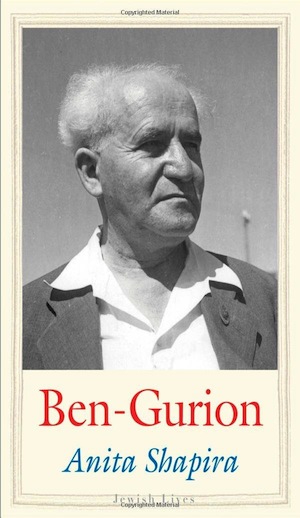 Accomplished Israeli historian Anita Shapira recounts the apocryphal anecdote in David Ben-Gurion, Father of Modern Israel (Yale University Press). Shapira, whose book Israel: A History won the National Jewish Book Award in 2012, presents Ben-Gurion as the person who did more than anyone else to establish the state. He inspired a nation of idealists and wartorn refugees to achieve the impossible. But does your overcrowded bookshelf need another Ben-Gurion biography? I can think of three strong reasons to recommend Shapira’s book.
Although not the definitive biography, Shapira offers a fresh perspective on Ben-Gurion’s life based on newly available files of the Israel Defence Forces and extensive work in the archives at kibbutz Sde Boker, where Ben-Gurion lived. She sets out his considerable accomplishments through colorful anecdotes and well-crafted prose.
As well, despite the passage of years, Ben-Gurion remains a central figure in contemporary debates, a touchstone for politicians from all parties. He is invariably quoted during heated arguments over Israel’s relations with Germany, its borders with its neighbors and its treatment of the Palestinians. He is often cited for his work in forging a partnership with the religious communities in the 1930s. Shapira offers solid scholarship for those who wish to reflect on his work.
And, for those with big ambitions, the new biography offers a vivid portrayal of how he scaled the heights of domestic and international politics. His biography may not be a roadmap to glory but aspiring leaders could pick up a few tips.
Shapira writes in detail about the years after the state was declared in 1948, and especially about Ben-Gurion’s role leading up to the Sinai campaign. However, the most engrossing part of this book is about his unlikely development as a leader. With a knack for telling stories, Shapira effectively tracks how the unexceptional youngster, not particularly well liked by his peers, developed pragmatic organizational skills, sharp elbows and incisive political instincts that propelled him into the forefront of the Zionist movement.
Ben-Gurion, born in 1886, grew up in Plonsk, a backwater shtetl three hours outside of Warsaw. Shapira found nothing in his birthplace, his lineage or his education that hinted at his future role in history. She sees no notable qualities in his personality that foreshadowed his destiny.
His mother died in childbirth when Ben-Gurion was 11. He quit school after his bar mitzvah, although he had a lifelong love of learning.
By 14 years old, he had embraced the Zionism of his father, who had been swept up in Theodor Herzl’s dream of a Jewish homeland in Palestine. However, Ben-Gurion was not in a rush to make aliya. At 18, he moved to Warsaw with the intention of becoming an engineer. The engineering schools rejected his applications.
Here is where destiny steps in. He happened to be in the city at a crucial moment in history. He was swept up in the heady events of the days before the Russian Revolution.
He joined Poalei Zion (Workers of Zion), a party that combined his newfound enthusiasm for Marxist socialism with Zionism.
Although his grasp of Marxism was considered shallow, he rose to a leadership position, recognized as a strong debater and speaker.
He finally immigrated to Palestine in 1906, but his early years in Palestine were not particularly auspicious. He often said one thing and did another.
He firmly believed that Jews would reclaim Palestine only by working the land. He said the land would belong to the Jews only when the majority of its workers and guards were Jewish.
He worked in the fields at Petach Tikva and then in the Galilee but he was frequently sick and, when he was healthy enough to work, he was miserable, Shapira writes. Throughout the following decades, he described himself as an agricultural worker while, in reality, he was doing other work in and outside of Palestine.
He had a strained relationship with his father and, according to Shapira, a distant relationship with his wife, who was the mother of his three children. He was excluded from clandestine groups and collectives in Palestine that were forming in those years.
Also, he misunderstood political realities. He was convinced that the Turks would remain in control of Palestine, never anticipating the British Mandate.
Ben-Gurion’s rise to prominence began slowly after the First World War. He expanded the Histadrut, the national federation of trade unions, into one of the most powerful institutions in the country. Elected leader of the World Zionist Organization and the Jewish Agency in 1935, he became the recognized leader of the Jewish community in Palestine. By the mid-1940s, he was exactly the type of leader that was required for the state of Israel to be born. Shapira shows that, from these ambiguous beginnings, a giant of history was formed.
The book has little to say about the lasting significance of some of his initiatives. She writes about his authorization of the forced expulsion of some Arabs, his reluctance to define Israel’s borders and, despite his secular lifestyle, his partnership with the religious community, but does not mention the social and political tensions arising from these initiatives. Shapira does not hold him accountable for creating conditions that led, although unintentionally, to many of the difficulties now confronting the country.
Regardless, Ben-Gurion’s accomplishments overshadow everything else. He transformed armed militias that were focused on fighting the British into a military force that could stand up to the armies of neighboring Arab countries. He ensured that tanks, artillery and aircraft were available to defend the land and its people. He hammered together a provisional government from the fiercely competing factions among the Jewish people in Palestine.
In sharp contrast to prominent Zionists of his era, Ben-Gurion advocated for a Zionism of practical achievements and put little faith in diplomacy and international proclamations. He demanded that Hebrew names be given to every aspect of government-related activity. He ensured that the religious community became partners in this ambitious nation-building project. He also had a hand in shaping the cultural, religious and intellectual character of the new country right from the start.
Shapira says that Ben-Gurion liked to argue that history was made by the masses, not individuals. She shows that, beyond a doubt, his role was decisive.
Robert Matas, a Vancouver-based writer, is a former journalist with the Globe and Mail. This review was originally published on the Isaac Waldman Jewish Public Library website and is reprinted here with permission. To reserve this book or any other, call 604-257-5181 or email library@jccgv.bc.ca. To view the catalogue, visit jccgv.com and click on Isaac Waldman library.