Skip to content
  • Home
  • Subscribe / donate
  • Events calendar
  • News
    • Local
    • National
    • Israel
    • World
    • עניין בחדשות
      A roundup of news in Canada and further afield, in Hebrew.
  • Opinion
    • From the JI
    • Op-Ed
  • Arts & Culture
    • Performing Arts
    • Music
    • Books
    • Visual Arts
    • TV & Film
  • Life
    • Celebrating the Holidays
    • Travel
    • The Daily Snooze
      Cartoons by Jacob Samuel
    • Mystery Photo
      Help the JI and JMABC fill in the gaps in our archives.
  • Community Links
    • Organizations, Etc.
    • Other News Sources & Blogs
    • Business Directory
  • FAQ
  • JI Chai Celebration
  • JI@88! video

Recent Posts

  • Sharing her testimony
  • Fall fight takes leap forward
  • The balancing of rights
  • Multiple Tony n’ Tina roles
  • Stories of trauma, resilience
  • Celebrate our culture
  • A responsibility to help
  • What wellness means at JCC
  • Together in mourning
  • Downhill after Trump?
  • Birth control even easier now
  • Eco-Sisters mentorship
  • Unexpected discoveries
  • Study’s results hopeful
  • Bad behaviour affects us all
  • Thankful for the police
  • UBC needs a wake-up call
  • Recalling a shining star
  • Sleep well …
  • BGU fosters startup culture
  • Photography and glass
  • Is it the end of an era?
  • Taking life a step at a time
  • Nakba exhibit biased
  • Film festival starts next week
  • Musical with heart and soul
  • Rabbi marks 13 years
  • Keeper of VTT’s history
  • Gala fêtes Infeld’s 20th
  • Building JWest together
  • Challah Mom comes to Vancouver
  • What to do about media bias
  • Education offers hope
  • Remembrance – a moral act
  • What makes us human
  • המלחמות של נתניהו וטראמפ

Archives

Follow @JewishIndie
image - The CJN - Visit Us Banner - 300x600 - 101625

Month: January 2015

OK for Shalom home

OK for Shalom home

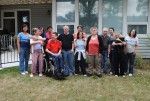
Residents and staff from three of Shalom Residences’ homes in front of the home on Enniskillen Avenue. (photo by Kelsey Halldorson)

A few months ago, Shalom Residences was given the green light from Manitoba Family Services to add a new home in Winnipeg’s South End.

With the vision that people with intellectual disabilities should be full members of the community and that the community is responsible for ensuring that social, residential, religious and cultural opportunities exist to make this possible, a group of parents and other community volunteers founded Shalom Residences as a nonprofit organization in 1978. The first Shalom Residences home opened in 1980.

“Since 1980, Shalom Residences has added five more homes, expanding to provide service to 28 people (22 of whom live in six community residences/group living in single family homes),” said Nancy Hughes, the organization’s executive director since 1991. “These homes have two to five people living together, with staff working in shifts.

“The other six people we serve are in our Supported Independent Living (SIL) program. They each rent their own apartments and have staff support for 10 to 28 hours per week (for budgeting, shopping, meal planning and preparation, housekeeping, etc).”

Currently, all community residences and apartments are located in Winnipeg’s West Kildonan and Garden City areas.

“We’ve always gone about expansion in a careful, gradual way, and future planning includes a home for younger adults in the South End of the city,” said Hughes. “There is a very real need for this within the Jewish and general communities. We’re continuing to lobby our major funder, the [provincial government], to assist us to develop this resource.”

The organization also receives a grant from the Jewish Foundation of Manitoba to hire a part-time Jewish identity coordinator.

Shalom Residences provides Judaic-oriented programs, which includes developing community awareness and increased community acceptance of people with intellectual disabilities as full and equal citizens.

“Although we foster a Jewish milieu, our admission policies are non-sectarian,” noted Hughes. The organization’s ultimate objective is to enable those in its programs to achieve their potential as community members and to become as self-sufficient as possible.

“The people we support have a wide range of abilities and needs, so we offer a higher level of assistance in the community residences and a more independent arrangement in SIL,” said Hughes.

“For the first time, we’re looking in the South End of the city, [and] we have three young people who’ll be funded for this new home,” she said about the residence funding that was recently approved.

The search for a house will take place in River Heights and Crescentwood, and it possibly will include the neighborhoods of Lindenwoods and Charleswood. Once the house is selected, Shalom Residences will buy and renovate it for wheelchair accessibility.

The government will provide ongoing funding for staffing, food and shelter, but Shalom Residences needs to cover the down payment for the house and the initial furnishings. “We could certainly use donations towards some of the costs,” said Hughes.

According to Hughes, this is the first time the government has offered funding for young adults. “We’re very happy to be able to help people leave their family home and start an adult life of their own at a younger age,” she said.

One of the young adults for whom the funding was granted is Micah, one of a pair of twins born with disabilities on the autism spectrum. Micah’s mother, Karla Berbrayer, said, “He has a visual impairment as well as mild cerebral palsy. There is some developmental delay. Although Micah can do his times tables up to the 20 times level, and count to 500 in Hebrew, French and Spanish, he has challenges with daily living skills. My husband and I long ago accepted the fact that Micah cannot be left unattended in the home, and will always require a caregiver.”

The family has been planning for a home for Micah – and has been working with Hughes – for some 10 years, including petitioning the government for the funding, with the stipulation that Micah live in a Jewish setting in the South End with two other individuals close to his age. In their view, Shalom Residences was the only option.

“My husband and I keep a kosher home and observe all the Jewish holidays,” said Berbrayer. “The Jewish religion is a very important aspect of our lives, and we have raised all our children to value their Jewish identity.”

Berbrayer’s husband joined Shalom Residences’ board 20 years ago. He eventually became president and has remained active within the organization.

“We had begun to accept the concept that a new home in the South End for Micah may never happen,” said Berbrayer. “As recently as this fall, I said to my husband, ‘I don’t know that this will ever happen.’”

In November, the couple received the news that the funding for Micah had been approved and that a house would be opened in the South End for him and the two other individuals with whom they asked for him to be housed.

“I burst into tears when the news came,” said Berbrayer. “It was such an unbelievable accomplishment. I felt that I didn’t care how long it would take for the move to transpire, because now I knew that it would happen.”

She expressed gratitude to the government for the decision, and called the new home “a huge step for the organization,” noting that it had been a long time since a new residence had been opened, and that none has been located in the city’s South End.

There is a fundraising dinner for Shalom Residences planned for June. To purchase tickets, for more information or to volunteer, visit shalomresidences.com, email [email protected] or call 1-204-582-7064.


Rebeca Kuropatwa is a freelance writer living in Winnipeg.

Format ImagePosted on January 23, 2015January 21, 2015Author Rebeca KuropatwaCategories NationalTags intellectual disabilities, Karla Berbrayer, Nancy Hughes, Shalom Residences, Supported Independent Living
Barry Sisters recordings now available

Barry Sisters recordings now available

Left to right: Yiddish music icons, Merna and Claire Barry, entertained generations of Jewish Americans with their jazzy versions of Yiddish songs. (photo from rsa.fau.edu)

For more than 40 years, the Bagelman Sisters, later known as the Barry Sisters, were the darlings of Jewish entertainment. Their recordings could be found in almost every Jewish household in the 1950s and ’60s. The younger of the two sisters, Merna, passed away in 1976. The older sister, Claire, died on Nov. 22, 2014, in Hollywood, Fla., at 94.

Who were the Barry Sisters?

On the surface, they were two beautiful girls, dressed in the latest fashion, hair perfectly coiffed, singing with sultry voices that could make your heart leap. But their impact was great.

Born in New York, the two sisters were originally known as the Bagelman Sisters. Many saw them as the Yiddish answer to the popular Andrews Sisters in the 1940s. They combined Jewish folk songs and Yiddish theatre ditties with swing arrangements and perfect harmony. When Clara and Minnie changed their names to Claire and Merna, the Bagelman Sisters became the Barry Sisters. The duo has often been credited with creating Yiddish swing, a music genre that did not exist previously.

The glamorous Barry Sisters were regular guests on Yiddish radio programs like Yiddish Melodies in Swing. They toured with The Ed Sullivan Show to the Soviet Union and performed in Israel in October 1962. The popularity of their catchy and jazzy tunes may have paved the way for the Broadway hit Fiddler on the Roof and the klezmer revival of the late 1970s.

The Judaica Sound Archives at the Recorded Song Archives at Florida Atlantic University has 41 recordings by this dynamic duo of Yiddish music, including: “Abi Gezunt,” “In Meine Oigen Bistie Shain,” “Channah from Havannah,” “Bublitchki,” “Dem Neyem Sher” and many others.

For more Barry Sisters recordings, visit rsa.fau.edu/barry-sisters. Due to copyright concerns, only snippets can be heard on the public website, however, full versions are available to users of the RSA Research Station, rsa.fau.edu.

Niels Falch is a PhD candidate at the University of Groningen in the Netherlands and is currently writing a dissertation on the influence of Jewish music in American popular songs. This article appears courtesy of the Recorded Sound Archives at Florida Atlantic University, rsa.fau.edu.

Format ImagePosted on January 23, 2015January 21, 2015Author Niels FalchCategories MusicTags Bagelman Sisters, Barry Sisters, FAU, Florida Atlantic University, Judaica Sound Archives, Recorded Song Archives, Yiddish radio

Ignorant conspiracies

After the murders in Paris this month, it did not take long for the forces of conspiracy to switch into high gear.

Among those in the anti-Israel movement were people who suggested that the murders had been perpetrated by Israeli agents and that it was a frame up to besmirch Muslims. Greta Berlin, a leader in the Free Gaza movement and one of the most prominent anti-Israel campaigners, posted a statement on her Facebook page shortly after the murders at the French satirical magazine: “Mossad just hit the Paris offices of Charlie Hebdo in a clumsy false flag designed to damage the accord between Palestine and France…. Here’s hoping the French police will be able to tell a well-executed hit by a well-trained Israeli intelligence service and not assume the Muslims would be likely to attack France when France is their friend. Israel did tell France there would be grave consequences if they voted with Palestine. A four-year-old could see who is responsible for this terrible attack.”

Such comments should exclude people like this from legitimate dialogue on the issues, yet the world continues to grant them impunity to spread their theories. And, as perverse and disturbing as the conspiracies from such anti-Israel activists are, there are more absurd and apparently common views expressed on the street in the Paris suburbs where large populations of immigrants from Muslim countries live in economic stagnation. It took an American reporter no time at all to find more fantastical theories; for example, that the attacks were carried out by magical, shape-shifting Jews who morphed themselves into figures resembling Arab terrorists and perpetrated the evil acts.

As extraordinarily outlandish as the latter allegation is, it is no more removed from reality than the former. And both represent a somewhat alarming reality in contemporary discourse. There are conspiracy theories with some traction that say “the Jews” invented ISIS, perpetrated the 9/11 attacks and are in cahoots with the Freemasons to control the media and levers of power. Moowahahaha.

We should be cognizant that these ideas exist and pay attention to the impact they may play in the global dialogue about Israel (and anything else involving Jews). And, we should be vigilant and thankful for the organizations that monitor and condemn these notions. At the same time, we need to maintain perspective. While these ideas may seem widespread, they are generally (though not always) held by the ignorant, the ill-informed and the undereducated. Notably, these ideas seem most prominent in places where democracy has not been permitted to flourish, and autocrats will – and do – exploit these sorts of things for their purposes. Most of the people who carry these poisonous thoughts, however, cannot even exert their influence at the ballot box.

We return to comments by Jonathan Kay when he visited here more than a year ago now. Kay, then the editorial page editor of the National Post and now editor of The Walrus magazine, insisted that these voices have been marginalized. In the halls of power – or even of country clubs and polite society – where antisemitism once held sway – these ideas are dismissed along with the people who espouse them. To subscribe to them is to relegate oneself to the D-list of civil dialogue.

It is important to acknowledge, on the one hand, guttersnipe who purvey ludicrous, hateful ideas and, on the other, the progress that has been made against bigotry among the people who determine policy in our country and among our democratic allies. Outside these circles are all sorts of ideas that are beyond the realm, but in the places where bizarre anti-Jewish conspiracies still hold sway, antisemitism is merely one among a disturbing host of societal ailments.

There is a quote that seems appropriate here, and it is doubly attributed – to the American presidential confidant Bernard Baruch and children’s writer Dr. Seuss. Whichever man originated it, the sentiment applies: “Be who you are and say what you feel, because those who mind don’t matter, and those who matter don’t mind.”

Posted on January 23, 2015January 21, 2015Author The Editorial BoardCategories From the JITags antisemitism, Bernard Baruch, Charlie Hebdo, Dr. Seuss, Greta Berlin, Jonathan Kay, terrorism

Unpacking Lintel’s background

Vancouver’s Pacific Theatre kicked off the new year with Underneath the Lintel, on stage until Jan. 31. Though it seems the well-known Emmy-winning playwright Glen Berger did not intend the bigotry implied by his play, his thematic choices create a serious problem nonetheless. This Lintel comes to Vancouver from Alberta’s Rosebud Theatre. (Spoiler alert: the ending of the play is revealed and discussed below.)

While British, Canadian and American critics have given the play mixed reviews, some have argued that it’s not antisemitic, unlike the story that inspired it. And it’s been a hit with producers, who have given it numerous productions across North America and even a run in London’s West End starring Richard Schiff of West Wing fame.

Berger’s 2001 comedy is a contemporary adaptation of the allegorical medieval Christian myth of the Wandering Jew, a figure that has served for centuries as a symbol of the Jewish people’s rejection of Christianity.

Many readers will be familiar with the story, which tells the tale of a Jewish cobbler in Jerusalem who ignores Jesus’ plea for help on his way to crucifixion. The 13th-century fable tells us that, in response, Jesus cursed the Jew. To paraphrase, Jesus says: “For your failure to demonstrate kindness, you are doomed to wander the earth, without rest, until we meet again.” The cobbler is forced to leave his family and wander the earth, alone and unloved, until the Second Coming. He still wanders today, exhausted (in some versions, wicked) and waiting for Jesus to return.

According to historian Salo Wittmayer Baron, the legend became popular with the audiences for medieval passion plays in which the fable was enacted. “Although, from the outset, everyone realized that [the cobbler] had been a Jerusalemite Jew, he now began to be identified with the unconverted eastern Jew still alive in modern times,” he writes in Social and Religious History of the Jews: Late Middle Ages (vol. 10). The first written record of the fable is from the 13th century; indeed, it becomes the very first mass publication when its German-language version is published in 1602.

Underneath the Lintel follows a Dutch librarian (called Librarian in the program) around the world as he searches for the person who returned a library book that was 113 years overdue. During his international pursuit of the culprit, Librarian tells us, he realizes he may, in fact, be following in the footsteps of the Wandering Jew. He then shares the basics of the medieval fable with the audience (without context or dwelling on the work’s antisemitic history) and reasons that if he has discovered that the Wandering Jew really exists, this also proves that God exists. Librarian is awed and thrilled by that possibility, and the play turns into his search for God. Soon, however, the audience realizes what Librarian does not: he may be the Wandering Jew himself.

The play’s only character is Librarian (a very good Nathan Schmidt). Librarian never judges (a punishing) God’s treatment of the Wandering Jew. In a 2013 essay for American Conservatory Theatre, Berger writes that the Wandering Jew is guilty of a “mistake, a simple mistake.”

This Pacific Theatre production is a very good play, and the story of Librarian is compelling; two features irrelevant to the content of the script. Undoubtedly, the script’s problem is the result of sloppy writing and a somewhat ignorant reading of what the Wandering Jew folktale implies. The playwright seems very naïve.

In a 2013 interview with JWeekly, Berger said, “Up to the 19th century, the Wandering Jew was considered a condemnation of Jews and Judaism, because he wasn’t very nice to Jesus and consequently got punished for it. I think people just know The Wandering Jew as an antisemitic tale in any context.” Including this one? He doesn’t say, but it appears that Berger believes he’s cleansed the fable of its offensiveness. It’s just another cautionary tale now, his script implies, like The Little Mermaid or Pinocchio.

Berger signals a slight shift in the American Conservatory Theatre essay. He writes, “Now, I was quite aware that the myth of The Wandering Jew was originally an antisemitic tale, but the myth had taken on more complex meanings in its 700-odd-year history and I felt, besides, that an artist can always appropriate myths for his own ends.”

This is true. Artists can do whatever they want with whatever they want. What Berger has done here, however, is confirm the conclusion of the original antisemitic folktale. A more “complex meaning” than simple bigotry is tough to imagine.

In this play, the Wandering Jew commits his “crime” while standing “underneath the lintel” of his front door. He watches but ignores the procession of the condemned. When Jesus falls before his door and begs for help, the Jew remains still. In some version of the tale, the Jew strikes Jesus or tells him to hurry. Berger writes in the program’s playwright’s note: “[The Wandering Jew’s] predicament is the predicament of all humanity – he made a mistake, a single mistake ‘underneath the lintel,’ when he put fear and self-interest ahead of compassion. Everyone does this all the time.”

Berger, therefore, reduces the fable to “people make mistakes.” What mistake? Was it a mistake to reject Jesus and Christianity? In whose eyes? Berger allows: “Did the punishment fit the crime? No.” But guilty nonetheless, he implies: there has been a crime. Perhaps Berger thinks the sentence a little long. He never articulates his thoughts on the punishment beyond its failure to fit the transgression.

“I’ve received letters calling Underneath the Lintel antisemitic,” Berger writes. “That said, I’ve also received letters calling the play too ‘pro-Zionist,’ and also ‘anti-Christian,’ for the portrayal of a cruel Christ, I suppose. So go figure.”

In the end, of course, we discover that Librarian might actually be the Wandering Jew and just not know it. On the surface, we learn that the Dutch librarian is also guilty of “a mistake” that has ruined his life. Underneath his own lintel, Librarian rejected the only woman he ever loved. The cost of that mistake is loneliness and an obsessive pursuit of the Wandering Jew that forces him to travel the world. Berger, here, equates Librarian’s mistake with the Jew’s mistake. Librarian rejected a woman; the Jew rejected Jesus. Only one was punished for eternity. Librarian, however, has free will.

It’s difficult to understand why the vast majority of critics do not notice the play’s antisemitism, and why, those who do insist on announcing that it is not antisemitic.

Some audiences will surely argue that the play is not antisemitic but, rather, about antisemitism. Not evident, I believe. Others will compare the retelling of this legend to the problematic Merchant of Venice. But this is a contemporary play, not the revival of a period piece. Some will argue that the play questions God’s fundamental justice: it does not.

Underneath the Lintel was written by an American Jew to entertain and provoke audiences; one might say that The Wandering Jew was written by medieval Christians to entertain and provoke audiences – but, more to the point, to promote hatred and violence. The playwright succeeds in diminishing the true meaning of The Wandering Jew when he equates it, thematically, with a simple story of lost love.

As a final “surprise,” as the play ends, Librarian transforms into a cartoon Jew. He already has a beard and an accent that sounds Yiddish. Now, he dons an old black suit that we’re told is dirty and smelly. The jacket bears the Star of David we’re told Jews were forced to wear in the 15th century. He wears the funnel-shaped cap Jews were forced to wear in the 14th century. He holds a prayer book in one hand and (what appears to be) a candlestick in the other.

Costumed thus, he dances Tevye-style to klezmer music and the play ends. This final image smacks of historic – and overtly – racist portrayals of the Wandering Jew in art. If Berger intended to comment on this image, on this object of scorn, he forgot to do so. The play ends instead with the comic dance of the Jew.

Michael Groberman is a Vancouver freelancer writer.

Posted on January 23, 2015January 21, 2015Author Michael GrobermanCategories Op-EdTags antisemitism, Glen Berger, Salo Wittmayer Baron, The Wandering Jew, Underneath the Lintel1 Comment on Unpacking Lintel’s background

The word “Palestine”

Does Palestine exist? A blogger on the often-provocative website JewsNews doesn’t think so. A package of dates marked “Palestine” must be “magic,” he says, since there’s no such country. And this echoes Moshe Arens’ trotting out of the old canard that Palestine doesn’t exist, but Jordan – the real Palestinian state – already does.

There are at least two issues at stake for Israelis: legitimacy and security. Yet a closer look reveals that neither concern is quite what it seems.

Part of the reason that many Jews have been allergic to the word Palestine is that it has long been used to negate the legitimacy of Israel. In this view, the land between the Mediterranean Sea and the Jordan River (or west of that, to the Green Line, depending on one’s view) is like a blue and white transparent film revealing a red, white and green film, containing a different narrative beneath. Since time is linear and space is finite, there seems to be room for only one people and one narrative on that tiny slice of Middle East territory. One cannot reverse the flow of the sands of time. Israel exists, so Palestine, the logic goes, cannot.

But, surprise! Those who would wish to roll back history and replace Israel with Palestine, as the Palestinian national movement claimed to want to do for decades, have now indicated – at least via their official leaders – that they will be satisfied with a mere 22 percent of the land they originally claimed as theirs. A state of Palestine, in other words, need no longer negate the symbolic right of Israel to exist.

Complicating all of this, though, is the one little word one often hears from Israeli officials, and which every state and all people deserve: security. For example, Bibi Netanyahu, in a video posted Dec. 27 to the Prime Minister of Israel’s Facebook page, contained an address to an enthusiastically nodding U.S. Senator Lindsey Graham.

In the span of a few seconds, Bibi managed to call out Palestinian negotiator Saeb Erekat’s rhetorical hyperbole (Erekat’s comparison of ISIS’s Islamic state desires with Bibi’s Jewish state utterances), while associating the Palestinian negotiator’s “incitement” with the throwing of a firebomb on an Israeli girl in the West Bank. The kicker: the folly of the Palestinians seeking to bring to the United Nations Security Council a proposal – a “diktat” Bibi calls it – containing provisions that “seek to undermine our security.”

The trouble with the security discourse is that, just as stating “there is no Palestine” (or “there is, but it’s in Jordan”), it tends to serve as a rhetorical trump card. We all deserve security but we also know that full and total security is ultimately elusive. Where security threats were traditionally measured solely in terms of territory, now security experts also think in terms of environmental safety, immigration and contagious diseases. There are always new threats on the horizon. All the while, we must recall that conventional security threats never really disappear – for anyone.

On top of all this we must ask whether the little girl who was tragically burned by the act of terrorism in the West Bank was in fact more secure by Israel holding onto that territory and moving its population there. Counterfactual reasoning is never foolproof, but one could certainly make the argument that occupying a hostile population for decades on end is itself a security liability, rather than a security guarantee.

Many have indeed made this argument. More than 100 retired Israeli generals, other high-ranking officers, Mossad officers and police chiefs have even told their prime minister as much, writing a letter last November urging him to “adopt the political-regional approach and begin negotiations with moderate Arab states and with the Palestinians (in the West Bank and in Gaza, too), based on the Saudi-Arab Peace Initiative.”

Obviously Israel wants security. So do the Palestinians. When it comes to the nasty world of international politics, there are no absolute security guarantees – but there are calculable risks. For starters, peace treaties tend to hold better than wishing that an occupied people will sit on their hands for decades. With 59 internal checkpoints in the West Bank, not counting the 40 near the entry to Israel at B’Tselem’s last count, I would even suggest that hoping that your own civilian population can move freely and safely within the occupied territory where an enemy population resides is where the magical thinking really lies.

So, as for that blogger and those dates, I would advise him to take a bite out of the dried fruit. I doubt that those dates are magical, but there is indeed a sweet spot that reveals the best chance for peace between two peoples vying for security and independence. And it doesn’t involve keeping the status quo going, unhappily ever after.

Mira Sucharov is an associate professor of political science at Carleton University. She blogs at Haaretz and the Jewish Daily Forward. A version of this article was originally published on haartez.com.


Posted on January 23, 2015January 21, 2015Author Mira SucharovCategories Op-EdTags Israel, Israeli-Palestinian conflict, JewsNews, Lindsey Graham, Middle East, Moshe Arens, Netanyahu, Palestine, peace, Saeb Erekat, security

Finding beauty on travels

After a three-month travel adventure with the purpose of seeking beauty wherever I went, many thoughts raced through my mind. I had quit my job, gone on the road, run out of money, and had no clue what came next. I couldn’t have predicted that a philosophical discussion on the meaning of life with a perfect stranger would change my life. But it did.

A tall man stood behind me in line at passport control in the Sydney airport. He started to chat with me, wondering where I was going. Grinning, I explained I was returning home after wandering around Australia and New Zealand solo. He was heading to Wales.

Grant was part of an elite Australian special-forces team. Somehow we got into a serious conversation, keeping busy until our flights by walking together around the airport. It was August 2004.

“Everything happens for a reason,” Grant said with confidence.

“How can you be so sure?” I replied.

“I know it. I have seen it every day of my life. It’s just how the world works.”

“Do you really believe that?” I wondered. “How do you know that things happen for a reason? Maybe things happen and we give them reason, and not the other way around.”

I recalled every detail of how I spent Sept. 11, 2001. I was working for CNN as a field producer on Lou Dobb’s show, Moneyline. My job had started a few weeks prior and I was thrilled: the low drama of financial news was perfect for me. I distinctly remember a conversation with my father about this feature of my new job at the end of August 2001.

“I can do this,” I said. “The markets go up and down; there’s no blood and guts in these news stories.”

A short time later, I was a witness to Sept. 11, and I can’t think, let alone write, about it without having tears in my eyes.

In a state of shock, I watched smoke pour out of the enormous gash in one of the World Trade buildings. Soon after, the tower started to collapse as I watched, and my brain screamed, “There are people in that building and you are watching them die and there is nothing you can do!” I have never felt such anguish and helplessness. With these thoughts now racing through my mind as we wandered the airport, I asked Grant, “Where were you on Sept. 11?”

He spoke solemnly, “I’ll never forget Sept 11. My mother died in my arms at the hospital, and then my brother and I heard the news.”

I was surprised. As I was watching my city fall apart, his world was also breaking into pieces thousands of miles away. Soon after that difficult day, Grant was one of the Australian servicemen who went to fight the war in Afghanistan.

I ended up covering terrorism and the Sept. 11 story for two years. It got to me. My usual happy-go-lucky cheerful disposition disappeared. Covering funerals and sad stories daily left a deep imprint on me. I needed a change. I wanted to see the beauty in the world, the happy moments, the positive. I read books by every optimistic self-help guru I could lay my hands on, including books by the Dalai Lama. However, the book that made the most impact on me was an Australia and New Zealand guidebook. So, I put my math skills to good use, reached into my savings account and soon after found myself – and my backpack – at a Victorian-style hostel in Auckland, New Zealand.

Down Under was the perfect place to embrace a new worldview; to fill my head with beautiful images to counter the horrible ones. I hitched rides from perfectly lovely strangers, drank pure water from ancient glaciers that I hiked, and dared myself to do anything and everything interesting, including scaring myself to death skydiving with my new travel friend, Dave Ellis.

I admit, the night before I was scheduled to jump, I tossed and turned, praying for it to rain. I wished I could back out of my commitment without appearing to be terrified. I was afraid of heights and scared out of my mind. But, my sense of adventure got the best of me, as it usually does, and I went ahead with the leap.

Dave and I became the best of friends after jumping out of a perfectly good airplane 12,000 feet above Queenstown, New Zealand. Later in the trip, he invited me to come explore Perth, Australia, after I had toured that country’s east coast. Traveling without a plan but with cash in hand left me open to seeing where the world would take me.

It was a great suggestion. That said, a less-than-desirable five-hour-plus cross-country flight from Brisbane squished in between two larger-than-life rugby pIayers brought me to my destination.

One night while in Perth, I was invited to Dave’s parents’ house for dinner. His British grandmother, Bette Ellis, told me about her life and how she had met her husband in Jerusalem in 1946. Leonard was in the British military. They traveled the world together. She was an adventurous lady filled with energy and, as a youngster, an avid dancer.

Her world was forever changed on Feb. 28, 1967, when she was nearly killed in a terrorist bombing in Aden, Yemen, where she was living at the time. The bomb exploded at a cocktail party she was attending. The two women right next to Bette and with whom she had just been speaking, were killed. She survived but was left a paraplegic, paralyzed from the waist down.

The Ellis family was torn apart. Her youngest son, David, was sent to England to be looked after by Bette’s sister. Her husband Leonard suffered from extreme guilt because he had left Bette at the party as he was called away to work. They eventually divorced, and she became a single parent to three children. Leonard went on to have years of health difficulties and passed away at age 62 from cancer.

In the most unlikely place on the planet I would have imagined, I had come face to face with terrorism again, and the effects it had, even 40 years later, on a family. Once again, my heart was ripped to shreds over how one act, one moment in time, can shatter and splinter a person and a family forever.

The story stuck with me, and I emailed Dave’s father, Alex, to interview him. He wrote, “Thanks for the interest in Mum’s story. Yes, the impacts may go on for years and in many cases are difficult to cope with whereas the public interest tends to be more about the event and the immediate impacts. In many ways, there are almost forgotten victims of such attacks. Mum was a very strong person and led a very active life considering the extent of her injuries. Her story is certainly one of strength and hope but there is no doubt that many other victims have not fared as well.”

He continued, “Coincidentally, Mum passed away, and the date is very easy for us to remember as it was 11 Sept.”

Shocked and teary-eyed, I couldn’t help but wonder about the timing. While more than 13 years have passed since Sept. 11, 2001, for many, it is as if it happened yesterday; for some, the scars of this terrorist act will remain and be felt for generations. Even though Bette had passed away years after the 2001 attacks, this sad date still had resonance, personally, nationally, globally. She was a woman with a staunch will to live, and her family, a role model of love, made the best of a tragic situation.

I don’t know if I believe that things happen for a reason, but I do know that giving them purpose is all most people can accomplish. So, the next time you travel, be open to the world and its wisdom. Even in learning of others’ heartaches and tragedies, there is some hope to be found. On your journeys, if you are truly lucky, you might make lifelong friends like I have in the Ellis family, friends who will restore your vision of the world, and show that good can triumph over evil.

Masada Siegel is an award-winning journalist and photographer. Follow her at @masadasiegel and visit her website, masadasiegel.com.

Posted on January 23, 2015January 21, 2015Author Masada SiegelCategories Op-EdTags 9/11, Australia, New Zealand, terrorism
שמו של רחוב יהדות קנדה שונה לרחוב אריק איינשטיין

שמו של רחוב יהדות קנדה שונה לרחוב אריק איינשטיין

image - interesting in the news 14: Arik Einstein, Boeing 787, diamond mining, talking taxi meters

Format ImagePosted on January 21, 2015January 20, 2015Author Roni RachmaniCategories עניין בחדשותTags accessible taxis, airplanes, Arik Einstein, Boeing, Canadian Jewry Street, David Yosef, diamond mining, Dreamliner, oil prices, Or Yehuda, talking meters, אור יהודה, אריק איינשטיין, בואינג, דוד יוסף, הדרימליינ, לכריית יהלומים, מונים מדברים, מחירי הנפט, מטוס, רחוב יהדות קנדה
More Canadas needed

More Canadas needed

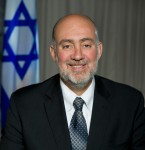
Israeli Ambassador to the United Nations Ron Prosor speaks in Vancouver on Feb. 3 and in Victoria on Feb. 4. (photo from Ron Prosor via Jewish National Fund Vancouver)

Israel’s ambassador to the United Nations says Canada’s foreign policy is at the “heart of the world’s moral compass.”

In an email interview with the Jewish Independent, Ambassador Ron Prosor credited Canada as being a voice of reason and justice.

“Prime Minister [Stephen] Harper and Foreign Minister John Baird have proven time and again to be true friends to Israel,” Prosor said. “They are at the heart of the world’s moral compass.… Canada is standing with Israel as we stand on the frontline in the battle against terror. They are often the first to denounce the anti-Israel bias and stand up as the voice of justice and reason. There are many examples of this bond: Canada was a strong proponent of the effort to make Yom Kippur an official UN holiday; it partnered with us to organize the upcoming special session in the General Assembly on antisemitism; and was one of the few countries to condemn the Syrian delegate … for comparing Israel’s policy to that of the Nazis.”

Prosor spoke to the paper in advance of his visit here in early February, hosted by Jewish National Fund of Canada, British Columbia. He will speak Feb. 3 in Vancouver at Congregation Beth Israel, at 7:30 p.m., and in Victoria the following day, at 7:30 p.m., at Congregation Emanu-El.

Prosor criticized efforts by the Palestinian Authority to gain recognition at the UN and at the International Criminal Court, saying it is an effort to avoid a negotiated resolution to the conflict.

“The Palestinians have found every possible opportunity to avoid direct negotiations with Israel,” he said. “They have engaged in a never-ending string of political games, literally shooting in all directions and missing the real target. The fact of the matter is that their habit of bypassing negotiations by taking unilateral action and blaming everyone but themselves will only move us further from peace. It’s time for the Palestinians to aim higher and find constructive solutions – beginning by engaging in meaningful dialogue.”

The United Nations is the body that, in 1947, passed the Partition Resolution intended to create a Jewish and an Arab state in Palestine. Israel’s critics routinely note that the very agency that is responsible for its existence is repeatedly on record condemning Israeli policies. Prosor responds that the UN is not the same body it was nearly 70 years ago.

“The landscape of the UN has changed dramatically since its founding,” Prosor said. “Today, fewer than half of its member states are democracies. The halls of the UN used to ring with calls for human rights and human dignity; today, they ring with voices demonizing and delegitimizing the Jewish state. This year, the UN passed 20 resolutions condemning Israel. In comparison, the world’s worst human rights abusers – Iran, Syria, and North Korea – each received one condemnation. This anti-Israel bias pervades the UN system.”

Many of the UN’s most vociferous condemnations of Israel emanate from the UN Human Right Council (UNHRC).

“For years, the Human Rights Council has singled out Israel for condemnation,” Prosor said. “I have to note that some of the world’s most repressive regimes, including Saudi Arabia and Cuba, are members of the Human Rights Council.”

Saudi Arabia is currently in the international spotlight for carrying out the first of 20 court-ordered floggings of democracy blogger Raif Badawi. After Friday prayers a week ago, Badawi, who created the blog Free Saudi Liberals, was lashed 50 times over the course of 15 minutes in a public square in front of a mosque in Jeddah. He is scheduled to receive the same punishment for a total of 20 successive Fridays, or 1,000 lashes. This is in addition to his sentence of 10 years in prison.

Despite this immediate example and other atrocities perpetrated by elected members of UNHRC, the body’s attentions are overwhelmingly focused on the Jewish state, Prosor said.

“To date, there have been 22 emergency meetings of the HRC to deal with situations around the world – 33 percent of them dealt with Israel,” Prosor said. “Additionally, Israel is singled out during regular sessions. Article 4 of the Council’s agenda examines the abuses of every single country in the world, except one. Israel – and Israel alone – has its own permanent place on the agenda: Article 7. This isn’t just a double standard, it’s a triple standard. One standard for democracies, one standard for dictators and a whole other impossible standard for Israel.”

“Another example is the UN’s UNISPAL [UN Information System on the Question of Palestine] website,” Prosor said. “It has advertised ‘apartheid tours’ in Israel and promoted a petition calling for the Canadian prime minister to cancel a visit to Israel.

“The UN could be playing a more constructive role by investing less time targeting Israel and more time advancing peace and security, economic growth, women’s rights, minority rights and so on,” he said. “None of this will be possible so long as the institution is held hostage by the world’s most repressive regimes.”

Though he is the lead representative of Israel at an organization that sometimes seems to have condemnation of the Jewish state as its primary mission, Prosor insists he is not intimidated.

“I walk the halls of this organization tall and proud of my extraordinary nation, one of the freest and more democratic countries on earth,” he said. “At the UN, I feel it is important to show the world what Israel is about beyond our conflict. We have so much innovation and ingenuity to share in agriculture, medicine, high-tech, education and more. We are a nation of just eight million that has produced 12 Nobel prizes, that sends satellites into space, puts electric cars on the road and develops the technology to power everything from cellphones to solar panels to medical devices. I feel privileged to represent Israel and the Jewish people.”

Prosor said he is bringing a message to Canada that emphasizes the parallels between the two countries.

“Israel and Canada share the same value system – we believe in democracy, justice, human rights and peace,” he said. “Together, we are standing firm amidst the stormy seas of global diplomacy to make the world a more peaceful place. The UN needs more countries like Canada – countries that are willing to take a stand and defend our common values.”

Pat Johnson is a Vancouver writer and principal in PRsuasiveMedia.com.

Format ImagePosted on January 16, 2015January 16, 2015Author Pat JohnsonCategories LocalTags Israel, Jewish National Fund, JNF, Ron Prosor, UN, United Nations
Brodie lands Beckett role

Brodie lands Beckett role

Leanna Brodie plays spinster Ms. Fitt (and the boy Jerry) in Blackbird Theatre’s Canadian première of Samuel Beckett’s All That Fall,  at the Cultch until Jan. 24. (photo from Leanna Brodie)

She is an actor, playwright, librettist, feminist, social activist – bilingual on top of all that – and just landed a coveted role in Blackbird Theatre’s Canadian première of Nobel laureate Samuel Beckett’s All That Fall, running at the Cultch until Jan. 24. Leanna Brodie is one talented person.

On a rainy Saturday afternoon, she sat down with the JI to talk shop during a rehearsal break.

Born and raised in rural Ontario, Brodie said, “I am a bit of an odd duck as far as Judaism goes, my father was Jewish but my mother was not. She came from rural Ontario. My upbringing was secular but I have a Jewish soul. My family always communicated through jokes, something that I see as being steeped in Jewish culture. I also see curiosity as part of my Jewish heritage, which is a good thing because you understand thought processes better, which I think I bring to my work.”

She went to drama school at the University of Guelph and was able to support herself as an actor in her first years at the job. As she got older, however, there were fewer roles available and she reconsidered her future. She had never before pictured herself as a playwright. “I was chatting with a bunch of girlfriends one day and we were complaining that there were no acting parts for women in their 30s and 40s. So, I thought, I am not going to sit around, wait by the phone until I get called for a part, I am going to write something for women. I finished my first play in five weeks. Since that time, I have written over 50 roles for women.”

Brodie now has three successful plays and one opera to her credit. Her topics are often motivated by contemporary social issues – homophobia, fundamentalism, the environment, to name a few. In The Book of Esther, she explores some of these issues through the eyes of a young country girl coming to the big city. “I think that play was the most autobiographical for me even though there is a little bit of you in everything you write. Here I was coming from rural Ontario to Toronto and I had a phobia of subways.”

She actually took on one of the roles in The Book of Esther. “That was like an out-of-body experience for me. Once you are in a scene, then it is like any other gig and you do your bit and walk on and off, but, when not in a scene, I could not resist the temptation to be in the wings and listen to the audience reaction to my play.”

As an actor, she has appeared across Canada and, in one of her first jobs in Vancouver – a role in Pi Theatre’s Terminus – she was nominated for a Jessie award.

Her writing is done in her down time from being on stage. “Acting is all-consuming, all your antennae are out for anything that will help your performance, any creative juice. During rehearsal, you are entirely focused. You can act in more than one show at a time but you cannot write at the same time.”

Brodie is on a temporary hiatus from writing as she hones her thespian skills with All That Fall, a bucolic play – a perverse combination of comedy and tragedy – that Beckett wrote for radio audiences. He wanted the words to come “out of the dark,” to be an auditory experience, not a visual one. He resisted attempts to have the play transformed into a stage production (even Sir Laurence Olivier and Ingmar Bergman could not get his permission to produce the play on stage). It was only recently that his estate, at the urging of British director Trevor Nunn, allowed a London production, which played to critical acclaim and ultimately crossed the pond to Broadway. Now, Canadian audiences are in for a treat from this Irish wordsmith.

The story is as follows. A 70ish, garrulous, overweight Mrs. Rooney trudges the Irish country roads to meet her blind husband’s train at the station. On the way, she encounters an assortment of quirky characters who are using various modes of transportation – a cart, a bicycle, an automobile – to go about their daily business. Against this backdrop, they pass the time exchanging droll comments that border on the absurd, reflective of Beckett’s existential angst. The train is late. On the walk back home, as the old couple verbally spar, the audience begins to sense that there is a mystery lurking behind the dialogue.

This is the first Beckett work that has a woman as the main character. That, along with the radio format, drew Brodie to the play. “Beckett is on every actor’s bucket list,” she said. “There are so very few opportunities in his repertoire to land a female role.”

Brodie actually plays two characters: a religious spinster, Miss Fitt, and a young boy, Jerry. “This play is fresh and interesting and full of Irish humor. Usually with Beckett you have those unforgettable stark images, like two trashcans or a dead tree. Here, the dynamics are different. There is more lushness than in any [other] Beckett play because of the demands of radio, and there is more of a sense of a real place. You get the impression that Beckett sees the traditional Irish life dying around him and he uses very black humor to protect himself from this perceived dark abyss.”

She added, “Unlike Beckett’s iconic Waiting for Godot, where they say nothing happens twice, in All That Fall, something is always happening and what the person, the protagonist, is waiting for actually appears.”

“Part of the allure of the format is the fact that the audience becomes the collaborator with you and creates the world, it becomes a cooperative venture between the actors and the audience.”

Brodie has the radio bug in her blood. Her father had a morning show called Breakfast with Brodie and was a voice artist. She has worked in radio drama for the CBC. “I was wistful about losing the radio show format in Canada and was atoning for the fact that I feel like I killed radio drama in this country, as one show I worked on, The Seeds of Our Destruction, was the last stand-alone radio show CBC aired. So, I really wanted to do this show to sort of redeem myself. Part of the allure of the format is the fact that the audience becomes the collaborator with you and creates the world, it becomes a cooperative venture between the actors and the audience.”

About why Vancouver audiences should see this play, Brodie said, “Beckett is arguably the greatest writer of the 20th century and this play is done from an aspect never seen or heard before and who knows if we will ever have this chance again. Also, you get to see an extremely talented professional cast [William Samples, Lee Van Paassen, Adam Henderson and Gerard Plunkett], who get it right.”

This writer had the good fortune to sit in on the first read-through of the play. Director Duncan Fraser put the five actors through their paces, scripts in hand at separate microphones on the stage. The actors also are responsible for all of the sound effects, the rattling wind, a bothersome wasp, the opening and closing of doors, the crunching of feet on gravelly roads, the whistle of the train. Just watching the props used to create the noises was an experience. However, the real experience is being immersed in this lost world of radio drama where for 75 uninterrupted minutes you can let your imagination soar.

For tickets, visit thecultch.com or call 604-251-1363.

Tova Kornfeld is a Vancouver freelance writer and lawyer.

Format ImagePosted on January 16, 2015January 14, 2015Author Tova KornfeldCategories Performing ArtsTags All That Fall, Beckett, Blackbird Theatre, Cultch, Leanna Brodie
Interpreting time and place

Interpreting time and place

Derek Gillingham at the opening of New Work from the Road. (photo from Derek Gillingham)

Derek Gillingham’s solo show New Work from the Road at the Zack Gallery looks like a travelogue, where the artist’s moments and memories have been captured by a paint brush. The show consists of his abstract paintings of the last few years. “Abstract painting is much more challenging than figurative,” Gillingham said recently in an interview with the Independent. “Such a painting is its own world. I can’t refer to an object, an image when I paint. But shapes and colors fascinate me.”

He explained that his latest artistic trend emerged with the drawings he made in California a few years ago. “Because of my job for the movie industry, I was constantly on the move, never staying in one place for long. I couldn’t paint as I did before – like landscapes of British Columbia. I couldn’t get familiar with any area. No recognizable landmarks. So I went with what I heard and saw: not objects, but colors and music, the sounds of cars and subway tickets, candy wrappers and moss-covered walls. I’d walk from work along a street and see posters, hear songs teenagers play on their phones.

I’d come home and sketch. I made piles of sketches, just scribbles, swirls and smudges, shapes and colors.”

His California sketches gave birth to paintings that reflected the green and gold and warmth of the Pacific coast. There is always the ocean and profusion of greenery. Colors interact and morph into each other, nurturing the whole. Although there is no sense of location, the artist’s inner meditations manifest through the looking glass of his perception.

When he then moved to London, England, his creative tune changed, echoing his surroundings.

“London was cooler and harder. It’s a very energetic, brash, intense city. California is a much softer place. London is also much more urban. Even music is different.”

His sketches changed, too, and the paintings from London don’t have the flowing quality of his California pictures. No bubbles or waves. The canvases sport sharper angles and longer bands. The shapes are leaner, less lush, and the lines dart across the images at full speed, like the rhythms of hard rock.

“I would pass a restaurant on a street, see its red sign and think: I should remember this color. Then I would come home and slash such a red on the painting. My paintings are not chaos. There is balance and order there.”

One of his London paintings resembles a bunch of seaweed. “We were in a Japanese restaurant,” he recalled. “I looked at seaweed, its vivid color. It was so beautiful. I kept the colors and shapes in my head for this painting.”

Another London painting has an unusual name: “Two Women at the St. Paul Colony.” Gillingham explained its etymology. “We were in London during the Occupy movement. There was a camp of those people beside St. Paul’s Cathedral. One day, my wife went there to take some photos, just as I was finishing this painting. Then I checked the internet and learned that one of our friends, another woman, went there at the same time. The painting is not political, but the title seemed appropriate.”

Gillingham said he doesn’t consider his art to be political. “I don’t want to push any agenda. I have opinions, like everyone else, but I don’t transfer them into my paintings. Art shouldn’t be divisive. When I paint, I don’t set up to make someone believe or tell him what to think. It’s more about esthetics. If a piece of my art is going to hang in someone’s home, it’s going to affect people, and I’d rather it inspired something positive.”

His London period produced several large and beautiful paintings, upbeat and positive; as soon as he moved back to Canada, to Montreal, his art changed again.

“I never look back at a location, never revisit. A new place inspires a new theme, a new atmosphere. It always reflects the place.”

In Montreal, he and his wife lived in a small, furnished apartment, with no extra space and, unlike the London paintings (he had a studio in London), the Montreal series consists of very small multimedia pieces.

“Montreal is frenetic, everything is going on,” he said. “The city really has strong street art. There are posters everywhere, posters on top of posters, going back for years. Sometimes someone would try to remove them, and the slice would be a couple fingers deep, revealing layers of letters and colors and zig-zaggy forms. I fell in love with these accidental images. I wanted to incorporate them into my art. I started cutting off the slabs of posters and painted on top.”

His Montreal collages are angular and aggressive, despite their small size. The colors and shapes vibrate and overlap, fighting with each other for space domination.

Only two paintings of the show belong to Vancouver, but Gillingham has only been back in this city for a few months. A Vancouver series is still in development.

New Work from the Road opened on Jan. 8 and will continue until Feb. 8. To learn more, visit derekgillingham.net.

Olga Livshin is a Vancouver freelance writer. She can be reached at [email protected].

Format ImagePosted on January 16, 2015January 14, 2015Author Olga LivshinCategories Visual ArtsTags Derek Gillingham, Zack Gallery

Posts pagination

Previous page Page 1 Page 2 Page 3 Page 4 … Page 6 Next page
Proudly powered by WordPress