Curl up with books from Waldman Library

There was an old lady who swallowed a dreidel … perhaps it’s fatal! There are many great stories to read to your kids over Chanukah. What a wonderful way to spend time with your family – curling up with a good book or CD. The Isaac Waldman Jewish Public Library has lots of each from which to choose.

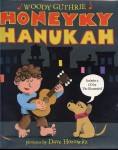
Two of the newest books for Chanukah are Honeyky Hanukah by Woody Guthrie and I Know an Old Lady Who Swallowed a Dreidel by Caryn Yacowitz.

Written in rhyme, Honeyky Hanukah lights the way for a night of family, friends, food and fun in a warm and joyful celebration, and it includes a CD performed by the Klezmatics.

I Know an Old Lady is also a rhyming book, written in a cumulative style, and with the help of the artwork, this well-known folk song takes on a new life in this tale about celebrating Chanukah with Bubbe and her family.

Two of the library’s most popular classic storybooks to read aloud are A Hanukkah Treasury by Eric Kimmel and The Stone Lamp by Karen Hesse and Brian Pinkney.

Treasury is a Chanukah compilation filled with history, flavor, legends, contemporary stories, recipes and games, suitable for the entire family. Stone Lamp comprises a series of eight free-verse poems in which the authors capture the resilient spirit of the Jewish people through the imagined voices of eight children at Chanukah.

These are just some of the Chanukah books available at the library. There are also dozens of holiday CDs and the library even has a Chanukah klezmer collection. To peruse the entire catalogue, go to jcclibrary.ca or just come up to the second floor of the Jewish Community Centre of Greater Vancouver, say hi, and browse through the collection in person.

Ten tips for holiday peace of mind

The holiday season is a time many of us look forward to – sometimes with anticipation, sometimes with dread. Peace on earth may seem impossible if you don’t have peace of mind.

The Canadian Mental Health Association (CMHA) suggests that some of the best ways to deal with added stress around the holiday season are common sense strategies. “It’s easy to feel overwhelmed during the holiday season,” said Bev Gutray, chief executive officer of CMHA’s B.C. division. “The key is to keep it simple and remember to make your mental health a priority.”

Ten tips for holiday peace of mind

  1. 1. Plan ahead. If you’re entertaining, use the “keep it simple” strategy. Try menus you can make ahead of time or at least partially prepare and freeze. Decorate, cook, shop or do whatever’s on your list in advance. Then you can really relax and enjoy visiting friends, relatives and co-workers.
  2. 2. As much as possible, organize and delegate. Make a list and check it twice. Rather than one person cooking the whole family meal, invite guests to bring a dish. Kids can help with gift-wrapping, decorating, baking, or addressing or decorating cards.
  3. 3. Beware of overindulgence. Having a few too many glasses of wine can dampen your holiday spirit; alcohol can lift your mood in the short term, but it can then drop your mood lower than before. Also, too many sweets will probably make you feel lethargic, tired and guilty come the next day. Eating well, exercising regularly and getting a good night’s sleep are easy to throw out the window, but attending to these health-promoting strategies can help you to battle stress, the winter blues and even colds!
  4. 4. Stay within budget. Finances are huge source of stress for many of us. Again, eliminate the unnecessary. Set a budget, and stay within it. A call, a visit or a note to tell someone how important they are to you can be as touching as and more meaningful than a gift. You can also enjoy free activities like walking or driving around to look at holiday decorations, going window-shopping without buying, or making your own decorations or presents. Craigslist and swap events are great places to find inexpensive brand-new items, and excellent-condition used items.
  5. 5. Remember what the holiday season is about for you and/or your family. Make that goal your priority. Whether it’s the usual holiday advertising that creates a picture that the holidays are about shiny new toys, always-happy families and gift giving, remember that holidays are really about sharing, loving and time spent with family and loved ones. Develop your own meaningful family traditions that don’t have to cost a lot of money. Also, remember not to take things too seriously. Fun or silly things to do, games or movies that make you laugh, playing with pets, and time alone or with a partner are all good ways to reduce stress. Use this time of year to help regain perspective; watching children can help remind us of the simple things that can bring us joy.
  6. 6. Invite others. If you have few family or friends, reach out to neighbors. Find ways to spend the holidays with other people. If you’re part of a family gathering, invite someone you know is alone to your gathering.
  7. 7. Connect with your community. Attend diverse cultural events with family and friends. Help out at a local food bank or another community organization. Give to a charity that helps those in need, or donate on someone else’s behalf.
  8. 8. Make gift giving easier and less expensive. Try putting family members and partners’ names in a hat and buy one gift for the person you draw; this can help reduce expenses and refocus energies on thoughtfulness, creativity and truly personal gifts. Encourage children to make gifts for friends and relatives so the focus is on giving rather than buying.
  9. 9. Remember the weather doesn’t help. Some people get the winter blahs each year, and a much smaller number (two-three percent) develop seasonal affective disorder (SAD). Paying attention to nutrition, exercise and sleep and being careful with alcohol are also important if you have a history of depression. If your low mood carries on into the new year and starts to affect your daily life, you should see your family doctor. CMHA offers free skills and coaching to help overcome low mood through the Bounce Back program. To learn more, visit bouncebackbc.ca.
  10. 10. Learn stress-busting skills you can use year-round. If the holidays often get you down, you may struggle with stress, low mood and worry at other times of year. CMHA’s Living Life to the Full course can help you develop skills to better manage problems, practise healthy thinking and build confidence. To sign up or gift this fun and helpful course to a friend, visit livinglifetothefull.ca. There are also fun and helpful booklets in the Living Life to the Full store to give your loved ones on – or after – the holidays.

Dealing with grief

The holidays can be especially rough for those of us who have recently lost someone close or who lost someone close at this time of the year. With all the messages of family togetherness and joy, the emptiness left behind when someone passes away is in harsh contrast to what society seems to “expect” us to feel. Below are some tips to help you or someone you know get through a potentially hard time.

  • Talking about the deceased person is OK. Your stress will only increase if the deceased person’s memory is allowed to become a landmine around which everyone tiptoes.
  • Things won’t be the same. It’s normal to feel at odds with yourself and family events when dealing with grief. Do not isolate yourself, but limit involvement when you need to and plan new events.
  • Don’t let other people’s expectations dictate how your holiday will unfold. If you don’t feel like doing something, don’t let others force you. If you do want to attend holiday functions, make sure you know your limits. Leave early, arrive late, drive alone – do whatever you need to do to help yourself.
  • Seek support. Talk to your friends and family about how you feel. The Jewish community offers support groups for people who are grieving. Being around people who know what you’re going through can be very comforting.
  • Plan a special time to celebrate the memories of the person who passed away. Some families develop creative rituals or donate money to a charity. Singing their favorite holiday song, making a favorite recipe, etc. – symbolic gestures like these can help families validate their feelings of sadness and overcome the guilt of enjoying special occasions.
  • Take care of yourself. Stress, depression and bodily neglect are not a great mix at any time of the year.
  • Think about building some new traditions. Remember that it’s OK not to do what you traditionally do. Planning something totally different is not an insult to the memory of a loved one and can be a positive way to ease some of the pressure.

Eight crazy dog nights

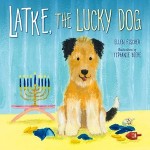
Narrated by the dog himself, Latke, The Lucky Dog by Ellen Fischer (Kar-Ben Publishing, 2014) is a charming book for kids 2-7 years old. In it, Latke the dog tells readers how lucky he is that a family with two children came to a shelter on the first night of Chanukah and took him home, naming him Latke because of his color. However, since poor Latke isn’t used to being with a family, his story is all about his eight nights of misadventures, coupled with his repeated acknowledgement that he is such a lucky dog to have been chosen by this family.

Although the story is very cute, there isn’t much about the family trying to train Latke, so parents could use the book as an opportunity to talk with their kids about what it means to adopt a pet and the responsibilities pet ownership entails. Or, parents could broaden the discussion to what it means to bring someone or something new into your environment – what role you might play, what changes you might need to make in your daily routine.

Fischer has written a number of children’s books and lives in Greensboro, N.C. The lively illustrations in a jagged style by artist Tiphanie Beeke, who lives in the south of France, fit the mood of the book very well.

Sybil Kaplan is a journalist, foreign correspondent, lecturer, food writer and book reviewer who lives in Jerusalem. She also does the restaurant features for janglo.net and leads weekly shuk walks in English in Jerusalem’s Jewish food market.

Holiday family learning

With kids off school and parents home from work, the winter holidays are perfect for creating family time to play and learn together. ABC Life Literacy Canada offers these holiday family literacy tips to warm your heart and feed your mind!

  • Family book snuggle: Gather the family together with a favorite holiday or winter book. Get cozy blankets and comfy chairs, then snuggle in and take turns reading aloud to one another.
  • Make your own cards and gift tags: Even young children can write or draw on a card to send to friends and family or on a gift tag for someone special.
  • Bake-off: Get the whole family involved in baking! Following a recipe is a great way to practise reading and comprehension skills. Measuring ingredients and following baking times are practical (and delicious) applications of math skills.
  • Out and about: Take in a holiday show or visit a museum. Family outings offer fun learning opportunities – and make sure to read the theatre program and the exhibit descriptions together.
  • Make a list: Grocery shopping can be a fun family literacy activity. Your child can write the holiday shopping list, read signs and labels as you make your way through the aisles, and count items as they go into the shopping cart.
  • Give the gift of literacy: Encourage literacy by giving books, games, drawing materials, magazine subscriptions and bookstore gift cards – gifts to enjoy all year long!

When you include fun learning activities in your family’s holiday time, everyone stays sharp and ready for the New Year. Find more family literacy tips and activities at familyliteracyday.ca.

VTT students build interfaith connections

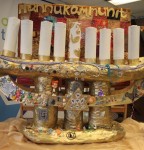
VTT’s HannukkaMunity of LOVE. (photo from Vancouver Talmud Torah)

Vancouver Talmud Torah has two great Chanukah-related initiatives, one for the students to connect with students from other schools and one to bring parents and staff to work together and build the HannukkaMunity of LOVE. For the former, VTT students from grades K-7 have prepared Chanukah gift packages for Muslim, Catholic and First Nations children in British Columbia. Each package includes items related to the holiday with an explanation and a personalized greeting. Grade 7 students are making a video to include to help educate children from other faiths and cultures about Chanukah.

Shoshana Burton, VTT’s interim director of Jewish life and programming, said, “We want to emphasize the value of diversity and a building of a connection that is based on tolerance, curiosity and a pride of who we are by sharing the warmth of Chanukah with our peers. These gifts are just a start! They will be delivered on Dec. 12 to St. Augustine’s Catholic school, the Ismaili Muslim school and to First Nations Namgis T’sasala … on Vancouver Island.”

VTT Grade 7 students will also be exchanging gifts with Grade 7 students in the Ismaili community. “I have met Ismaili leaders who are excited about reciprocating in kind,” said Burton. “It’s an opportunity to teach our students about the upcoming Ismaili holiday,” which marks the birthday of the Aga Khan.

This exchange is the beginning of a partnership that will continue in February and March. In February, VTT students will have a chance to meet their counterparts at the other schools and get to know each other. Also, during spring break, they will be serving food to some residents of the Downtown Eastside.

“We’ll end our collaboration with families from both schools going out into the community for Random Acts of Chesed. We are calling it RAC Race TWOgether!” said Burton.

Holiday treats to be beheld – not eaten!

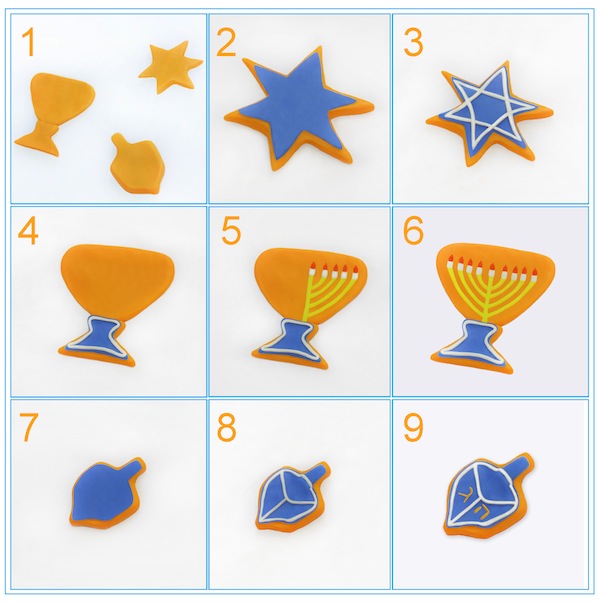
The Holiday of Light, Chanukah is approaching fast. That is why Curly Orli and I are looking to prepare Chanukah cookies with you! However, we will not need eggs, flour or other ingredients for baking – instead, we will make them from Plasticine or Play Doh. Here’s how:

instructions on making Plasticine Chanukah cookies, by Lana Lagoonca1. We start by making three different shapes like in the first picture, using orange Plasticine: a chanukiyah (a candleholder with nine candles), a sevivon (dreidel) and a Star of David, or Magen David.

2. Using the Star of David shape, cover the surface of the cookie with a thin layer of blue Plasticine for icing.

3. Add thin stripes of white Plasticine to the cookie.

4. For the chanukiyah, add blue icing to the base, then add white Plasticine stripes around the shape of the base.

5-6. Using yellow Plasticine, make the chanukiyah’s main stand, then add four curved lines to both sides of the main stand. Make candles from small pieces of white Plasticine and, for the top of the candles, create flames by using red Plasticine.

7-9. In the same manner as with the Magen David and chanukiyah, add blue icing to the top of the sevivon cookie and then white lines. Also, let’s add the letters on the dreidel, a nun, gimmel, hay or shin, for Nes gadol hayah sham, A great miracle happened there.

Make a lot of cookies – but don’t eat them! Curly Orli and I hope that the cookies from this art project will help make your home even more festive.

Happy Chanukah to all the readers of the Jewish Independent!

Lana Lagoonca is a graphic designer, author and illustrator. At curlyorli.com, there are more free lessons, along with information about Curly Orli merchandise.


Latke, latka: ‘cause it’s tradition!

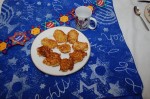
Latkes are a simple yet delicious holiday treat. Try baking instead of frying, or dress them up with dill sauce and fish. (photo by Barry A. Kaplan)

They’re sometimes greasy, sometimes salty and soggy, and they are fried in oil. They’re high in calories, sometimes; high in fat, sometimes; high in cholesterol, sometimes. But they’re oh, so good! What are they? They’re potato pancakes, otherwise known as latkes (or latkas), in what we believe to be Yiddish, or as levivot in Hebrew.

With all the oil used for frying, traditional latkes may be considered an unhealthy food. Yet, each Chanukah, many of us who are staunch-hearted and old-fashioned spend time hand-grating potatoes (nearly always accidentally suffering at least one scraped knuckle). The more modern among us risk producing a sort of liquid mush by using a food processor or blender, a different take on a holiday classic.

Why do we keep making these little pancakes year after year? Why do we eat them for Chanukah in the first place? Tevye might answer, “It’s tradition!” An old folk proverb says, “Chanukah latkes teach us that one cannot live by miracles alone.”

The word latke is not Yiddish as everyone assumes, after all, writes Jewish food writer and cookbook author Joan Nathan. Rather, it comes from the Russian latka, which is a type of pastry, “perhaps from obsolete Russian oladka … flat cake of leavened wheat dough.” This, in turn, probably came from a Middle Greek word eladion, oil cake, she writes, which probably comes from elaion, meaning olive oil.

Potato pancakes do seem to have originated among poor Eastern European Jews, but potatoes did not actually become a staple food for these Jews until the mid-19th century. John Cooper, in Eat and Be Satisfied: A Social History of Jewish Food, writes that Jews from Lithuania ate pancakes made from potato flour for Chanukah and had borrowed the idea from the Ukrainians, who made a potato pancake dish with goose fat called kartoflani platske, which they ate for Christmas. Since Chanukah fell about the same time, and there were plenty of geese to provide goose fat (schmaltz), we could conclude that schmaltz became a substitute for oil, following the holiday tradition. Jews living in the Pale of Settlement in the 17th century probably adapted the recipe for Chanukah as a way to dress basic potatoes differently for the holiday. Cooper adds that many Eastern European Jews ate buckwheat latkes for Chanukah, while Polish Jews made placki, pancakes of potato flour fried in oil.

MY MOM’S CLASSIC LATKES
six servings

6 peeled potatoes
1 medium onion
2 eggs
1 1/2 tsp salt
1/4 tsp pepper
1/2 cup flour
oil

  1. Grate potatoes and onion into a bowl or chop with blender or food processor.
  2. Add eggs, salt, pepper and flour and blend.
  3. Heat oil in a frying pan. Drop batter by tablespoon around pan. Fry until brown on both sides. Drain on paper towels.

(Note: this recipe can also be used to make potato kugel by pouring the batter into a greased casserole dish and baking in a 350°F oven for 45 minutes.)

LOW-FAT LATKES
eight-10 servings

3 lbs coarsely grated potatoes
1 coarsely grated onion
1/3 cup flour
1/2 tsp baking powder
1 cup egg substitute or 2 eggs plus 4 whites
salt and pepper to taste
olive oil spray

  1. Preheat oven to 450 degrees. Place nonstick baking sheets in oven to heat.
  2. Drain off as much liquid as possible from bowl with grated potatoes and onion.
  3. Add flour, baking powder, eggs or egg substitute, salt and pepper and blend.
  4. Spray baking sheet with oil. Spoon small mounds of potato mixture onto baking sheets.

Bake until brown on one side then flip to other side, making sure to place them where there is oil. Transfer to a platter and serve at once.

WOLFGANG PUCK’S POTATO PANCAKES WITH SMOKED SALMON AND DILL SAUCE

1 pound coarsely grated potatoes
1 small coarsely grated onion
1 egg
2 tbsp flour
1/2 tsp baking powder
1 tsp salt
1/4 tsp pepper
oil
1/2 cup sour cream
1 tsp chopped dill
1 tsp lemon juice
salt and pepper to taste
1 tbsp snipped chives
1/2 pound thinly sliced smoked salmon* 

  1. Squeeze dry the potato-onion mixture after grating. Add egg, flour, baking powder, salt and pepper.
  2. Heat oil in a frying pan. Drop tablespoons of the mixture around pan and flatten with the back of a spoon. Fry until golden brown on both sides. Drain on paper towels and continue with remaining batter.
  3. In a bowl, combine sour cream, dill lemon juice, salt and pepper.

Sprinkle with chives. Arrange pancakes on a platter. Serve with dill cream and smoked salmon.

*In place of or in addition to salmon, you can serve with two ounces of caviar.

Sybil Kaplan is a journalist, foreign correspondent, lecturer, food writer and book reviewer who lives in Jerusalem. She also does the restaurant features for janglo.net and leads weekly shuk walks in English in Jerusalem’s Jewish food market.
It’s time to make sufganiyot

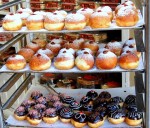
There are so many flavors of sufganiyot to be found in Jerusalem around this time of year. (photo by Barry A. Kaplan)

From Israel have come two popular foods for Chanukah: sufganiyot (doughnuts, often filled with jelly) and ponchikot, which are ball-shaped, resembling a doughnut hole.

Gil Marks, in The World of Jewish Desserts, writes that doughnuts fried in oil, ponchikot, were adopted by Polish Jews for Chanukah. The name is taken from the Polish paczki (pronounced poon-chkey), which led to the nickname ponchiks, the Polish name for jelly doughnuts. Paczki are similar to jelly doughnuts, only larger, more dense and more rich, and are traditionally served on Shrove Tuesday, the day before Ash Wednesday, which marks the beginning of Lent. Paczki were made to quickly use up stores of shortening and eggs, which were prohibited during Lent.

Sufganiyot also have interesting history. Some say sufganiyah, which in Hebrew means sponge-like, is reminiscent of the sweet, spongy cookie popular along the Mediterranean since the time of the Maccabees. Hebrew dictionaries say the word comes from the Greek sufgan, meaning puffed and fried.

In The Jewish Holiday Kitchen, Joan Nathan, an acquaintance of mine from our Jerusalem days and noted cookbook author and maven of American Jewish cooking, said she learned a fanciful fable about the origins of sufganiyot from Dov Noy, an Israeli folklorist. Noy relates a Bukhharan fable in which the first sufganiyah was given to Adam and Eve as compensation for their expulsion from the Garden of Eden. The word sufganiyah, he writes, comes from the word sof meaning end, while gan means garden and Y-ah is G-d. Thus, sufganiyah means the end of G-d’s garden. Noy clarifies that clearly this fable was created at the beginning of the 20th century, since sufganiyah is a spoken Hebrew word coined by pioneers.

CLASSIC SUFGANIYOT
makes 32-36

3 1/2 cups flour
2 eggs
4 3/8 tsp baking powder
3/8 tsp salt
2 cups vanilla yogurt
2 tsp sugar
1/2 tsp vanilla
oil
confectioner’s sugar or cinnamon sugar

  1. Mix flour, eggs, baking powder, salt, yogurt, sugar and vanilla in a mixing bowl until well blended.
  2. Heat oil in a soup pot. Drop tablespoon of batter around the pot, fry until brown on both sides, drain on paper towels.
  3. Roll in cinnamon sugar or confectioner’s sugar.

OVEN-BAKED SUFGANIYOT
makes 24

1 cup skim milk
2 tbsp unsalted butter
1/4 cup sugar
1 tsp salt
1 egg
3 1/2 cups flour
2 tbsp instant yeast

Syrup:
2 cups sugar
3/4 cup water

Sugar coating and filling:
1/4 cup sugar
jam 

  1. Preheat oven to 375°F. Grease mini muffin cups.
  2. Heat milk and butter in a saucepan. Stir in sugar and salt. Let cool.
  3. In one mixing bowl, combine egg and milk mixture. In a second bowl, combine three cups of flour with yeast, then add to egg-milk mixture and beat for two minutes with mixer or hand mixer.
  4. Stir in half-cup flour to make soft batter. Cover and let rise until double in volume.
  5. Turn dough onto a floured work space. Roll dough into a log. Cut off pieces and form into balls. Place each ball in a muffin cup. Cover pans and let rise for 30 minutes.
  6. Place in oven and bake 12-15 minutes until lightly browned.
  7. In the meantime, combine sugar and water in a saucepan. Heat, then boil until thick. Reduce heat and keep warm.
  8. Remove doughnuts to a cooling rack then toss in sugar syrup and remove with a slotted spoon. Roll in sugar. To inject, poke a hole in the side of each doughnut, inject jelly. If not serving immediately, wait to dip in sugar syrup and rolling in sugar.

These can be made three months ahead and frozen after cooled. To use, defrost, cover with foil, reheat in 350°F oven 15 minutes, dip in sugar syrup and either roll in sugar or inject with jelly.

PAREVE CHANUKAH PONCHIKOT
makes 36

2 cups flour
1/4 cup sugar
1 tbsp baking powder
1 tsp salt
1 tsp nutmeg
1/4 cup vegetable oil
3/4 cup non-dairy creamer
1 egg
oil
confectioner’s sugar or cinnamon sugar 

  1. In a mixing bowl, combine flour, sugar, baking powder, salt and nutmeg. Mix.
  2. Add oil, non-dairy creamer and egg and mix.
  3. Heat oil in a soup pot. Drop by teaspoon into oil and fry on all sides until brown. Drain on paper towels.
  4. Roll in confectioner’s sugar or cinnamon sugar.

Sybil Kaplan is a journalist, foreign correspondent, lecturer, food writer and book reviewer who lives in Jerusalem. She also does the restaurant features for janglo.net and leads weekly shuk walks in English in Jerusalem’s Jewish food market.
Latin American treats

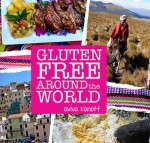
Aviva Kanoff has been described as “the Indiana Jones of cooking,” and the subtitle of her latest book, Gluten Free Around the World (Brio Books, 2014), is “a journey of food, travel and extraordinary adventure.” She is a graduate of the French Culinary Institute and has worked as a chef, painter and photographer. Her previous book, The No-potato Passover, received the Gourmand Award for the best Jewish cuisine in 2012 and was original; so is this book.

Her 104 recipes are divided into breakfast, soups and salads, sides, vegetarian, fish, poultry, meat and desserts. There are recipes from England, Thailand, France, Ireland, Israel, Ecuador, Vietnam, Italy, India, Morocco, Spain, Scotland, Cambodia, Indonesia and Arizona. Ingredients are listed clearly and – my favorite – directions are numbered. Each recipe is accompanied by a mouth-watering color photograph and additional photos from its country of origin, all of which enhance the presentation of the book and make it unique.

Not only is this a great book for anyone who is gluten free; it is good for people who enjoy recipes from different countries that are distinctive and innovative. This would be a great gift for anyone who collects cookbooks or who likes to try imaginative recipes.

Here are a couple of recipes that would work perfectly as Chanukah treats in keeping with the tradition of eating foods made with oil.

CHURROS
Reviewer’s note: Churros are a fried-dough pastry popular in Spain, France, the Philippines, Portugal, Mexico and Latin America. The recipe that follows is from Ecuador.

1/4 cup granulated sugar
3/4 tsp ground cinnamon
1 cup water
1/2 cup unsalted butter
2 tbsp brown sugar
1/2 tsp salt
1 cup gluten-free all-purpose flour
1 large egg
1/4 tsp pure vanilla extract
canola oil for frying
confectioner’s sugar

  1. In a medium bowl, combine granulated sugar and cinnamon. Set aside for topping.
  2. In a medium saucepan, combine water, butter, brown sugar and salt. Bring to a boil over medium heat. Add flour all at once, stirring vigorously with a wooden spoon. Cook and stir until the mixture forms a ball and pulls away from the sides of the pan. Remove from the heat and let cool.
  3. Line a baking sheet with greased parchment paper. After the dough has cooled for 10 minutes, add the egg and vanilla to the saucepan, and beat ingredients with a wooden spoon to blend them completely. Transfer the mixture to a decorating bag fitted with a large star tip. Pipe four-inch lengths onto the prepared baking sheet.
  4. Heat three inches oil in a deep saucepan over medium high heat. Fry a few strips at a time in hot oil (at least 375°F), turning once, until golden brown on all sides, about five minutes. Drain on paper towels. Roll warm churros in the cinnamon-sugar mixture to coat. Serve warm.

BOCADITOS DE PAPA
Ecuadorian potato-cheese fritters

1 lb russet potatoes, peeled and quartered
1 cup shredded pepper jack or cheddar cheese
2 tbsp shredded Parmesan cheese
3 large eggs, lightly beaten
1 tbsp chopped fresh cilantro
1/4 tsp salt
1/4 tsp ground cumin
1/4 tsp cayenne pepper
canola oil
salsa (optional)

  1. In a large saucepan, place potatoes in enough salted water to cover. Bring to a boil then reduce heat. Simmer, covered for 15-20 minutes or until potatoes are tender, then drain.
  2. In a large bowl, mash potatoes with a potato masher until smooth. Fold in cheeses, eggs, cilantro, salt, cumin and cayenne pepper. Shape mixture into 12 three-inch-diametre patties. If desired, covered and chill for up to 24 hours before cooking.
  3. In a large skillet, heat one-inch of oil to 375°F. Add potato patties, three or four at a time and fry about two minutes or until golden brown, turning once halfway through cooking time. Drain on paper towels. Serve hot and top with salsa if desired.

Sybil Kaplan is a journalist, foreign correspondent, lecturer, food writer and book reviewer who lives in Jerusalem. She also does the restaurant features for janglo.net and leads weekly shuk walks in English in Jerusalem’s Jewish food market.

The menorah: shining literal and figurative light

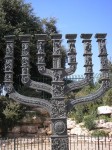
Many scholars believe that the menorah is a stylized version of a tree. The Knesset Menorah, pictured here, was built by Jewish sculptor Benno Elkan, and presented to Israel by the U.K. parliament in 1956. (photo from commons.wikimedia.org)

For the winter festival of Chanukah, we will all light the candles of our chanukiyot. A chanukiyah is a menorah with an additional two candles. The eight candles (not including the shamash), we are told, represent the miracle of Chanukah, in which the oil for the Temple menorah lasted for eight days following the Maccabean victory. But what of the menorah itself? From where does it derive its form, and what does it mean?

Many scholars believe that the menorah was a stylized version of a tree. This should seem quite obvious; it is, after all, a central trunk with branches. Indeed, when first mentioned in the Book of Exodus, it is described as having branches and cups like almonds, and bearing flowers.

Sacred trees play an important role in Jewish mythology, beginning with the Trees of Life and Knowledge in the Garden of Eden. The Tanach refers to trees or wood a total of 535 times, more than any other organism other than humans. Olive trees, for instance, were important not only biblically, but to the economy of ancient Israel. The menorah was lit with olive oil. Jeremiah metaphorically describes Israel itself as an olive tree: “The Lord called thy name, a green olive tree, fair, and of goodly fruit: with the noise of a great tumult He hath kindled fire upon it, and the branches of it are broken.” (Jeremiah 11:36)

Note in the preceding passage reference not only to a branching tree, but one crowned with fire. Taking Jeremiah’s image of the burning olive tree to be a menorah, one can then conclude that the menorah is a symbol of Israel. Not that it should necessarily be considered to specifically represent an olive tree per se. Different scholars have attributed it to various trees, like the almond tree, or tamarisk, or even a special species of sage indigenous to Israel that looks strikingly similar to the menorah, and may have been used as incense by the priests of the Temple.

Many Jewish holidays involve agricultural celebration with an emphasis on arboreal reverence. One such holiday, Tu b’Shevat, also called the New Year of the Trees, takes place in late winter/early spring, around the time of the blossoming of the almond trees. Depictions of menorot found archeologically would often be accompanied by other Jewish religious symbols, such as the etrog, lulav and shofar. Their use in the autumn harvest holiday of Sukkot is described in the Tanach as follows: “And you shall take on the first day the fruit of beautiful trees, branches of palm trees, and boughs of leafy trees and willows of the brook, and you shall rejoice before the Lord your God for seven days.” (Leviticus 23:40)

It should be noted the special religious significance placed upon trees and the number seven, both of which are embodied within the menorah itself. The holidays of Sukkot and Tu b’Shevat both would have once involved pilgrimage to the Temple in Jerusalem, and be celebrated with the lighting of the menorah. These associations clearly indicate that the menorah is not only a ritualistic object, but symbolic of holidays and celebrations, bringing light into people’s lives both literally and figuratively.

The lights of the menorah are thought to have had the power to ignite the soul. Its seven lamps could be representative of the seven days of Creation. When Adam and Eve were banished from the Garden of Eden, God created a magical fire to protect the way to the Tree of Life, which perhaps also has some significance to the symbolism of the fires atop the menorah “tree.” The prophet Zechariah supposedly had a vision in which God had seven eyes that wandered through heaven. Some scholars have speculated that the seven lights in that vision, and the seven lights of the menorah, are in fact symbolic of the seven planets of classical astronomy. Some rabbis believe that the shamash represents the sun, and the first day of Creation. In the story of Genesis, on the first day, God created light. The first verse of Genesis is, in fact, composed of seven words, in Hebrew, which translate as: “In the beginning God created the heaven and the earth.” (Genesis 1:1)

The early analytical psychologist Carl Jung noted that the menorah is a synthesis of the antagonistic symbols of the tree/growth from the earth and fire/the heavens, which combine to symbolize the growth of spiritual enlightenment. Jung hypothesized that the lights of the menorah were symbolic of the illumination of consciousness. The burning bush, the way God chose to reveal himself to Moses, is thus a symbol embodied within the form of the menorah as a symbol of revelation.

Ben Leyland is an Israeli-Canadian writer, and resident of Vancouver. This article is the first of a short series examining the menorah.