Shelter access studied

A study for the Greater Victoria Coalition to End Homelessness led by a Simon Fraser University master’s student has found that a disproportionate number of people chronically staying in Victoria’s emergency shelters are seniors.

Hannah Rabinovitch conducted the longitudinal study on emergency shelter use patterns in Victoria under the MITACS Accelerate Program, in partnership with the Centre for Addictions Research at the University of Victoria. The SFU public policy master’s student examined data collected between April 2010 and May 2014.

The study tracked 4,332 individuals and examined nearly 46,000 shelter records. More than 85 percent of users accessed shelters for short periods, meaning only once or twice – findings that point to the need for affordable housing and preventative measures, according to the study.

Another 13.6 percent accessed the shelters five times over the four years with average stays of 30 days. The remaining 1.5 percent, many of them seniors, had stayed four to five times with average stays of six months.

As a former emergency shelter worker in Victoria, Rabinovitch, now a Vancouver resident, said she finds these results worrisome but not shocking. “I was stunned by the number of seniors with complex physical and mental health problems regularly seeking refuge in emergency shelters. I kept thinking emergency shelters aren’t supposed to become discharge plans for hospitals that aren’t equipped to keep them long term.”

She said the data also indicates that “women and youth are underrepresented in this study,” meaning their numbers don’t reflect the extent to which they are homeless. “For example, it’s widely known in research that homeless women avoid emergency shelters for fear they’re unsafe and that their children will be apprehended, and because they lack women’s beds.”

Rabinovitch conducted the study under the supervision of Bernie Pauly, a scientist at UVic’s Centre for Addictions Research and associate professor in UVic’s School of Nursing, and Doug McArthur, a professor and director of SFU’s public policy program.

Pauly said it’s important to maintain strategies that address the needs of different groups and make efficient use of resources. “Those experiencing temporary homelessness would benefit from rapid re-housing, more emergency cash assistance and rental subsidies to prevent or quickly address homelessness. Those with re-occurring episodes of homelessness would benefit from programs that combine intensive supports with housing.”


Meeting the future together

The turning of the calendar presents opportunities for reflection and gratitude. We at the Jewish Independent are particularly grateful this year for the support we have experienced as a community institution. And that leads us to offer an expression of gratitude to you – our readers, our advertisers, our donors.

This year has seen the JI expand into a more fulsome and engaging online presence, with a fresh website and greater impact on social media. With the paper available in more than 35 locations, our content is reaching a wide audience.

The JI is, ostensibly, a for-profit venture. Realistically, it is a labor of love undertaken by a small group of people led by a sole proprietor. So, it is especially gratifying that the issue that you hold in your hands today – or have before you on your computer – is chockablock with advertisements. These advertisements are the lifeblood of this publication. More than ever before, everything outside of advertising is a zero sum game. Subscription fees cover only mailing costs. Everything else – staff time, writers’ compensation, printing, everything that goes into making a newspaper – is funded almost exclusively by advertising. In the last couple of years, many of you have been generous enough to donate to the paper, and this has helped greatly.

We continue to believe that this newspaper is irreplaceable glue for this community, a mirror and a place for dialogue.

While we need money – we are not going to lie about that – we also need the incredible diversity of talent that defines this community. If you or someone you know could make a contribution of time as a writer, as a filmmaker, a performer, a fundraiser, a social-media maven, or in whatever form suits your talents, you can make an important contribution to the continued success of this 84-year-old community publication.

Do not underestimate the power of your voice. If you saw something insightful in this week’s paper or online, tell your friends. Word-of-mouth may be as valuable as anything else in ensuring that the JI remains vital. Share on Facebook (like us!), Tweet about us (follow us!), pass your hard copy or forward your e-version to friends and family. Visit our website weekly, or even daily. There is always something new to read or watch, and the more activity we can demonstrate, the greater the revenue the site generates, making it possible for us to do more of what we do best.

Consider gift subscriptions for those close to you – or those far away, who would enjoy news from home. When considering birthday, graduation or other gifts, a book or a piece of exercise equipment (the JI understands the mind-body connection, after all), shop for them at Amazon or Astone Fitness via our website, as the paper receives a portion of sales.

If you pick up the paper for free at the Jewish Community Centre or one of our other depots, we value and need your readership, for sure, but please consider a donation. Any contribution is appreciated, and makes more impact than you can imagine.

And, of course, please support our advertisers – and let them know you understand the role they play in strengthening Jewish life in British Columbia by making possible everything we do in these pages and online.

All of these small but vitally important actions can make the difference between whether this 84-year-old community institution survives or whether we follow the fate of many other newspapers in this extremely difficult time for the industry.

We are moving in the right direction. The JI remains a strong example of small media done right (and a wall full of awards attest to the quality of our work). But we can’t do it alone. We need to work together if we – and so many other community organizations and businesses – are going to thrive for another eight decades.

Small sample of VIFF

Nadav Lapid’s The Kindergarten Teacher raises some interesting ideas, but is lacklustre overall. (photo from VIFF) 

The rollercoaster ride of emotions continued this week, as the Jewish Independent reviewed another set of films that will be featured at the Vancouver International Film Festival, which runs Sept. 25-Oct. 10.

Last week, the JI was inspired by the documentary Ilya and Emilia Kabakov: Enter Here (which the paper has sponsored), we enjoyed meeting the plucky street musicians on which Jalanan focused, and we were once again horrified by the banality of evil in learning more about Heinrich Himmler in the ironically-named The Decent One. This week, we went from mild boredom with Nadav Lapid’s The Kindergarten Teacher (Israel/France) to engaged interest with Nancy Kates’ documentary Regarding Susan Sontag (United States) to heart-racing dread with Alexandre Arcady’s 24 Days (France).

The Kindergarten Teacher raises some potentially thought-provoking questions about the origins of creativity, ie. what allows some people to craft magnificent works (in this case, poems) and others to never achieve anything above mediocrity. It does so through the relationship of kindergarten teacher and aspiring poet Nira and one of her students, five-year-old Yoav, who we’re supposed to believe is a poetic genius.

Understanding that this is a work of fiction, the bounds of believability are strained nonetheless on more than one occasion: for example, Yoav’s father fires Yoav’s nanny without pausing upon hearing Nira’s unsubstantiated accusations; and Yoav’s poems, while good for a child are hardly earth-shattering. What’s more frustrating is what passes for internal conflict – Nira staring, staring, staring – or genius at work – Yoav pacing, pacing, pacing. Ultimately, there’s nothing grossly wrong with the storytelling or filmmaking here, the movie just needed a better editing job and more focus. At an hour-and-a-half, The Kindergarten Teacher might have been stimulating; at almost two hours, it’s sleep-inducing.

***

photo - Nancy Kates’ Regarding Susan Sontag is an entertaining personality profile
Nancy Kates’ Regarding Susan Sontag is an entertaining personality profile. (photo from VIFF)

Kates does a far better job at rousing curiosity, raising questions about the nature of art, culture, sexuality, happiness and other such topics. For those who already know a lot about Susan Sontag, Kates’ documentary likely won’t be that illuminating about her as a person or writer/critic/filmmaker, as the biographical and professional moments highlighted seem pretty basic. But, for those who know little of Sontag, this is a great introduction, which captures not only Sontag’s strengths but also her vulnerabilities. For both types of viewers, the excitement of intellectual, philosophical and personal discovery (and re-discovery) that Sontag felt and expressed is catching.

***

photo - A scene from 24 Days: Ilan Halimi’s girlfriend and parents speak with the lead investigator on the case
A scene from 24 Days: Ilan Halimi’s girlfriend and parents speak with the lead investigator on the case. (photo from VIFF)

We know how 24 Days will end. It’s based on the true, tragic, terrifying story of the kidnapping and subsequent murder of Ilan Halimi. Yet, Arcady manages to make us hope – throughout the entire film – that, somehow, Halimi will survive.

Overwhelming at times, between his family’s grief, the police’s desperation and his captors’ anger, 24 Days apparently sticks quite closely to the events as they happened in Paris in early 2006, as recorded by Halimi’s mother, Ruth, in the book 24 jours, la vérité sur la mort d’Ilan Halimi, which she co-wrote with Emilie Frèche.

Targeted for kidnapping because he was Jewish – the logic being all Jews have money and, therefore, could afford to pay a large ransom – Halimi was tortured, starved and, literally, left for dead when the negotiations for the ransom failed. His family was traumatized by ever-changing demands, graphic photos of their beaten son, expletive-filled threatening phone calls (more than 600 in 20 days) and false hope. The police are portrayed as genuinely trying to find and free Halimi, but as sadly ineffective – and completely insensitive to the antisemitic motivations of the criminals.

***

Other films with Jewish content or creative talent include Zero Motivation (Israel), a black comedy by Israeli writer/director Talya Lavie about everyday life for a unit of young, female Israeli soldiers; and Welcome to Me (United States), a “dramedy” directed by Shira Piven, about a lottery winner (played by Kristen Wiig) who has borderline personality disorder and makes some questionable decisions about what to do with her windfall. For the full festival lineup, visit viff.org.


Limmud seeking presenters

Rabbi Carey Brown presents at LimmudVan ’14. (photo from Limmud Vancouver)

The inaugural event of Limmud Vancouver received rave reviews for its diverse and engaging presenters. The second annual festival of culture, creativity and learning promises to be even better.

Would you like to be part of this fascinating, thought-provoking and inspirational event? Organizers are now searching for presenters with ideas for sessions at LimmudVan ’15.

Here is an opportunity to share your knowledge and expertise with eager learners. A teaching certificate is not necessary. Limmud especially values the notion that everyone has something to teach and much to learn from others.

The Limmud weekend will begin with an interactive evening program on Saturday, Jan. 31, at the Jewish Community Centre of Greater Vancouver, followed by a full day of sessions on Sunday, Feb. 1, at Eric Hamber Secondary School.

It is the daylong program for which Limmud is inviting proposals for presentations. Submissions from presenters will be accepted until Oct. 15. The program will be confirmed in November. Tickets for the event will go on sale soon afterwards.

What is your passion? The sessions could be on any topic with a Jewish component. Proposals for sessions for families and children are welcome. How you share your knowledge is up to you – lecture, study group, storytelling, panel discussion, dance or maybe poetry slam.

An important aspect of Limmud is that volunteers run the event. Presenters at the front of the room in one session become participants in other sessions. Everyone pays the registration fee; no one is paid or receives an honorarium for sharing their knowledge at Limmud.

The full array of sessions at LimmudVan ’14 are on the Limmud Vancouver website. New and seasoned presenters are invited to submit proposals to limmudvancouver.ca/present – Share. Learn. Teach.

At foundation of My Rabbi is friendship

After a successful run in Edinburgh, Scotland, the play My Rabbi, from Sum Theatre, has arrived in Victoria. It comes to Vancouver next month.

The playwrights and performers are Kayvon Kelly from Vancouver and Joel Bernbaum from Saskatoon. Their co-creation is billed as a “comedic drama about faith, friendship and fathers” by taking “a look at old world politics through the eyes of two young guys in a pub.”

My Rabbi follows a pair of Canadian best friends that take on divergent spiritual journeys. Arya is a Muslim who searches for cultural identity in the Middle East, while Jacob is a Jew who goes on to become a rabbi.

photo - Kayvon Kelly
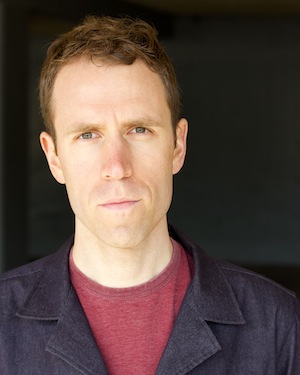
Kayvon Kelly (photo from Sum Theatre)

“The play is about the connection between two boyhood friends but, at its heart, it is about Canadian identity and how that relates to the battle between old world politics and religious boundaries,” Kelly told the Jewish Independent in an email interview.

The friendship between Arya and Jacob is based on that shared by Kelly and Bernbaum.

“We used our friendship as a springboard for the story. The base of the friendship is ours,” Bernbaum explained.

“Our sense of humor with each other is strongly reflected in these characters,” added Kelly.

Kelly said the inspiration for My Rabbi came from his and Bernbaum’s cultural backgrounds – Kelly is half Irish and half Iranian, while Bernbaum is Jewish.

“We have always found these differences vibrant and positive,” said Kelly. “But, we also acknowledged that, for a great deal of the world, these differences cause the greatest conflict. We wanted to explore why it is this way with [so] many,” but not with others.

Both Bernbaum and Kelly have been involved in theatre since a young age, and Kelly explained the origins of their theatre company.

“After we graduated from the [Canadian Centre for Performing Arts],” he said, “we both took advice from our mentor to heart, which was to ‘make your own work.’ Both of us have always wanted to play a role in the shaping of the Canadian theatre community, and establishing our voices from within it. Forming Sum Theatre is one of the ways we have found to do that.”

photo - Joel Bernbaum
Joel Bernbaum (photo from Sum Theatre)

About My Rabbi, Bernbaum said, “Politics, religion and family are all parts of this play, but they are not the focus; they are factors that impact the friendship. We see this play as an opportunity to challenge our audiences to work towards peace and understanding.”

Kelly added, “Whether this platform enables conversation into the Israeli conflict, so much the better, but we are not making any direct political comments with this play. We are only asking questions, and making an attempt to boil the immense and often immeasurable global situation into a conversation between friends.”

Bernbaum said that, after a performance of My Rabbi “at the Edinburgh Fringe, an audience member came up … and told us that the play made him ask more questions, as opposed to giving him answers. This was great to hear.”

He continued, “Art has the ability – and the responsibility – to take people a little further down their path of engaging with the world around them.”

Kelly explained that the play “reflects who we were six years ago, who we are today and what we think we ‘could’ look like in some version of the future.” He and Bernbaum share much of their personal lives in My Rabbi and hope that audiences will be encouraged to do so also. “The live theatre experience creates a community, a group of people who have agreed to gather in one place. They bear witness, and thereby are able to feel involved – and culpable,” said Kelly.

“From pub humor to the spiritual journeys to the guys’ relationships with their fathers, there is something for everyone,” said Bernbaum.

Zach Sagorin is a Vancouver freelance writer.

***

My Rabbi is in Victoria at Belfry Studio A until Sept. 28 (belfry.bc.ca/tickets) and runs in Vancouver at Firehall Arts Centre (604-689-0926 or firehallartscentre.ca) from Oct. 7-18 before heading to Saskatoon. For more information about the play, visit sumtheatre.com.

Vote Cooper for RBC award

Artist Jess Riva Cooper’s work for the Gardiner Museum competition is entitled Viral Series. You can vote for her at gardinermuseum.on.ca. (photo by Sophia Wallace)

Canadian artist Jess Riva Cooper is currently vying for the RBC Emerging Artist People’s Choice Award, taking place at the Gardiner Museum. You can vote online at the Gardiner site until Oct. 12, 2014. The winner, selected by your votes, will receive $10,000.

“It’s an honor to be nominated as one of five Canadian emerging artists, and the only woman, for this award,” Cooper said.

photo - from Gardiner Museum
(photo from Gardiner Museum)

A ceramic artist and educator, Cooper has participated in residencies across Canada and the United States, including a stint as artist in residence at Medalta in Medicine Hat, Alta., and Brandeis University in Massachusetts.

She cites Yiddish folklore among her most meaningful influences, particularly the foundation myths of the golem and dybbuk spirits, which she reinterprets through a female lens. Her artist statement expands on this point: “I see a direct parallel between my interest in insidious plant life and a malevolent dybbuk spirit, which takes over the human body. In both situations, a loss of control is suffered as the parasitic entity subsumes the host.”

Cooper’s work for the Gardiner competition, entitled Viral Series, is a continued exploration into the death and regeneration taking place in deteriorating communities. Places and things, once bustling and animated, have succumbed to nature’s mercy. Without intervention, nature takes over and breathes new life into objects, as it does in her sculptures. The busts, once plain, are hardly recognizable. They become tattooed with nature. Their heads grow leaves instead of hair. The faces scream out in pain – or perhaps pleasure – in the midst of transformation. Often used to represent life, nature instead becomes a parable for an alternative state, one where life and death intersect.

Supported by the RBC Emerging Artists Project, the $10,000 award honors a Canadian artist who has been out of school and practising professionally with clay as part of his/her artistry for seven years or less. A national panel of artists, curators and arts educators nominated the five exceptional artists.


Housing survey needs your views

Are you concerned about the cost of living and the lack of affordable housing in Vancouver? Is it preventing you, or someone you know, from feeling connected to the Jewish community? Tikva Housing Society in collaboration with the Jewish Federation of Greater Vancouver and with the support of the Jewish Community Foundation is conducting a housing needs assessment to understand and address the growing concern about affordable and appropriate housing options for the Greater Vancouver Jewish community.

The Jewish community includes you. Affiliated or not, your thoughts and stories of your experiences are important because they will help determine how we can best support the diverse and widespread Jewish population. Since the late 1870s, our community has settled in Vancouver and moved within the city as new immigration and neighborhoods were established. By the 1960s, the heart of the Jewish community stretched the Oak Street corridor, into Kerrisdale and Marpole. In recent years, families are transferring to more affordable areas, such as Richmond, White Rock, Burnaby, Coquitlam and the Fraser Valley.

The housing climate and overall population growth in Vancouver is impacting every ethnic and cultural community. According to the 2011 Statistics Canada Census, there are 26,245 members of the Jewish community living in Greater Vancouver. Of these, 4,220 Jewish people are living in poverty, including 450 children. For most, housing is often more than 50 percent of a person’s income, leaving little left for food, clothing, transportation and other costs that enable a balanced lifestyle with connections to the Jewish community. People with mental health concerns, disabilities, seniors, single parents and women fleeing abuse are among those struggling most to get by. Also vulnerable are young adults attempting to become independent while still remaining connected to the communities they call home.

Since 1948, Vancouver Jewish community organizations have successfully contributed land, buildings and grants towards affordable housing. Many of these initiatives have been in partnership with government and private partners, resulting in the management of close to 700 affordable housing units. Tikva Housing is very aware of the current issues and is working towards accessing opportunities for safe, affordable housing primarily for working-age, Jewish, low-income adults and families.

Your voice is extremely important for us. We would like every Jewish person in Vancouver and the Lower Mainland to tell us how to address their housing concerns, to enable them to either remain in, or move to, the community that best meets their needs.

Please take five to 10 minutes to complete the confidential questionnaire at surveymonkey.com/s/tikvahousingsurvey.

Tikva Housing will also be holding focus groups throughout the Greater Vancouver area to complement this information. If you need help completing the survey, would like to participate in a focus group or speak with the housing researcher, contact Hazel Orpen at tikvahousingsurvey@gmail.com or call 604-563-3309.


About this year’s Rosh Hashanah cover

This year’s Rosh Hashanah cover featured a photographer by Saanich-based biologist Leah Ramsay (leaningoaks.ca).

Domestic honeybees, like this one, were introduced to the east coast of North America from Europe in 1622. Aided by settlers, it took a couple hundred years before they reached the West Coast. Today, they are found across the continent, with both domestic and feral populations. There are estimates that up to 80 percent of all crops in North America are dependent on bee pollination – both the honey and the apples eaten during Rosh Hashanah are dependent on bees for their production, plus multitudes of other food and forage crops. The other species in the photo is the annual plant, Sea Blush. It is a native wildflower that grows in meadows on the West Coast and produces carpets of pink in the spring. They are often alive with the introduced honeybee and native bumble bees.

Siegel new rabbi at Beth Tikvah

Beth Tikvah Congregation has hired Rabbi Howard Siegel as interim rabbi for the coming year. Siegel is no stranger to the Vancouver and Richmond Jewish community. He served as assistant and associate rabbi of Congregation Beth Israel from 1978-81 and 1986-88. He also served Beth Tikvah as rabbi from 1983-86.

photo - Rabbi Howard Siegel will be with the congregation through June 2015
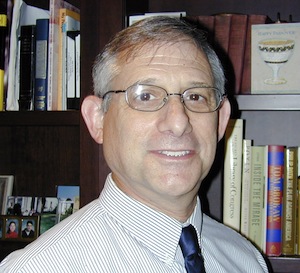
Rabbi Howard Siegel will be with the congregation through June 2015. (photo from Beth Tikvah)

After leaving Vancouver in 1988, Siegel served congregations in Minneapolis and in Houston. In addition to his congregational work, he was the founding director of the Solomon Schechter Day School in St. Louis and the Jewish Information Centre of Texas (an outreach program to unaffiliated Jews in the Houston and Austin communities). In recent years, he has been an interim rabbi in Los Angeles and San Antonio. Siegel and his wife, Dr. Ellen Lefkowitz, currently make their home in Austin.

Beth Tikvah will be looking to Siegel for advice and counsel in revitalizing their religious school, enhancing religious services, and preparing to search for another full-time rabbi.

“My role is to offer Beth Tikvah continuing rabbinical presence while assisting in strengthening their Jewish presence in Richmond and the Lower Mainland,” said Siegel, who is currently officiating at Beth Tikvah and will be with the congregation through June 2015.

Harper nomination criticized

Prime Minister Binyamin Netanyahu at Ben-Gurion Airport with Prime Minister Stephen Harper and wife Laureen. (photo by Ashernet)

A petition calling on the adjudicating committee of the Nobel Peace Prize to reject B’nai Brith Canada outgoing CEO Frank Dimant’s planned nomination of Prime Minister Stephen Harper for the honor says accepting the nomination “would be a disgrace and insult to [the] prestigious award.”

Dimant’s intent to nominate Harper for the 2015 prize – to mark the prime minister’s “moral leadership in the world … especially when it comes to standing up to radical Islamist terrorism” – has garnered considerable backlash, including the online petition, created by Calgary resident Edward Tanas, on the website change.org. As of Sept. 15, the petition had amassed more than 29,500 signatures.

The nomination idea has also drawn criticism from the Vancouver-based Canada Palestine Association (CPA), whose chairperson, Hanna Kawas, was quoted in the Vancouver Observer Sept. 1 as saying “with nominating [Harper], you don’t know whether to laugh or cry … it’s outrageous.”

Charlie Angus, NDP MP for Timmins-James Bay and the official opposition critic for ethics, also spoke out against the nomination, tweeting on Aug. 31, “Nominating Stephen Harper for the Nobel Peace Prize is like nominating [Sun News contributor Ezra] Levant for the Pulitzer Prize. Sorry, Steve, you’re no [Lester] Pearson.”

He later told CJN: “My comment was more sardonic than anything else. I don’t think anyone’s going to pay much more attention to this nomination. The role Canada’s traditionally played internationally is trying to bring parties back to the table, to de-escalate. Mr. Harper hasn’t shown that … we haven’t seen that kind of leadership from this leader.”

Dimant, who, in his capacity as professor of modern Israel studies at Canada Christian College, qualifies as a nominator under Nobel rules, said he viewed the nomination as an opportunity to help restore prestige to an award he believes has been diminished in stature of late.

“When [former Palestinian leader Yasser] Arafat received [the Nobel Peace Prize in 1994], it certainly diminished the very notion of what a peace prize is,” he said. “And when [U.S. President Barack] Obama was given the prize for doing nothing except the anticipation of something, it diminished it. I felt it was time to elevate the prize again to the position it held historically.”

Dimant further praised Harper for “speaking up for the people of Ukraine,” as well as for the prime minister’s vocal condemnations of groups like Hamas, Hezbollah and Islamic State And he gave a nod to Harper’s staunch support of Israel, saying, “Here is a man who truly understands what it means to fight for freedom, national liberation and to understand that people have a right to return to their homeland and live in security and safety.”

This past January, Dimant and a delegation of other Jewish community leaders accompanied Harper on a trip to Israel, at which time Dimant praised Harper’s “unparalleled” support for Israel and his “principled stance on issues of importance to the Jewish community.”

Angus, however, said Harper’s approach isn’t deserving of the Nobel Prize. Issues connected to the Israel-Palestine conflict, he said, “are such emotionally heavy … traumatic issues for people on all sides. We want a prime minister in Canada who says, ‘Let’s find a way to move toward peace and resolution.’” That was the role Pearson, former Canadian prime minister and Nobel winner, played in the Suez Crisis, he continued, when, in 1956, he proposed a United Nations peacekeeping force to help ease the British and French out of Egypt, “and people saw that as a role for Canada to play.”

Neither Tanas nor CPA could be reached for comment, despite multiple attempts to contact them.

The deadline for the 2015 Nobel nominations is next February. According to the Norwegian Nobel Committee website, the 2014 prize has 278 candidates, the highest number on record. The nominees include Pope Francis, Malala Yousafzai, Edward Snowden and Russian President Vladimir Putin. The 2014 winner will be announced in early October.

– For more national Jewish news, visit cjnews.com.