Shabbat Across UBC

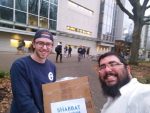
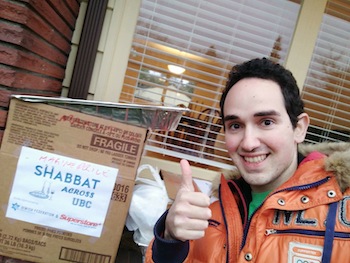
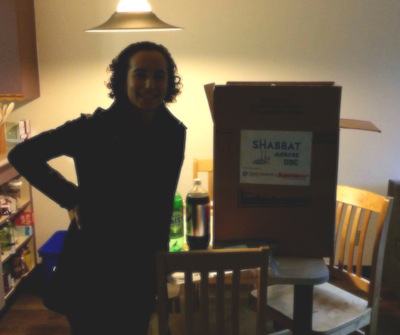
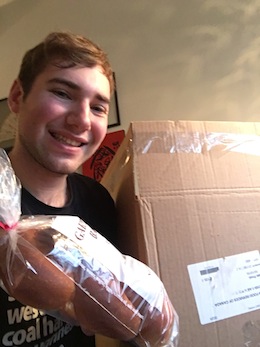
Chabad on Campus, student and other volunteers and Shabbat hosts made Shabbat Across UBC on Nov. 18 possible. (photos from Chabad at UBC)

On Nov. 18, more than 75 students celebrated Shabbat with Chabad on Campus at the University of British Columbia but, this time, they only arrived at Chabad after dinner. Instead of hosting the meal at the Chabad House as usual, there were six different dinners hosted by student volunteers in their residence buildings, after which the students met up at Chabad, where they shared dessert and got a chance to know one another.

photo - Chabad on Campus, student and other volunteers and Shabbat hosts made Shabbat Across UBC on Nov. 18 possibleRabbi Chalom Loeub, who runs Chabad at UBC with his wife Esti, delivered food and supplies, and the hosts invited their friends and neighbors and ran the meal.

Cordelia Sank is a second-year UBC theatre production student, who volunteered to co-host a dinner in the Fairview Residence block. “Getting the chance to bring together all of the other Jewish students in my residence was very special and inspiring for me,” she said, “and I look forward to attending many more of these dinners in the future.”

photo - Chabad on Campus, student and other volunteers and Shabbat hosts made Shabbat Across UBC on Nov. 18 possibleThe event was a big success, drawing in both seasoned Chabad members and new students, some of whom were experiencing Shabbat for the first time. UBC president Santa J. Ono wrote a letter of congratulation, praising the event as a “wonderful initiative … to build community at UBC.”

Hani Gorgy is a third-year exchange student visiting from Israel, who has attended many Shabbat meals, classes and programs at Chabad on Campus. “I’ve always felt that Shabbat dinner is a time of spiritual joy,” she said. “Being invited to Shabbat dinners here in Vancouver made me feel welcomed and safe. Meeting so many Jewish people here helped me feel like I’m part of the community.”

photo - Chabad on Campus, student and other volunteers and Shabbat hosts made Shabbat Across UBC on Nov. 18 possibleWeekly Shabbat dinners are only one of the programs that Chabad at UBC offers, including social programs, Torah classes, kosher meals on campus, support and holiday programming for the Jewish community at UBC and other colleges and universities across Vancouver.

The Shabbat Across UBC event was made possible by the sponsorship of the Jewish Federation of Greater Vancouver and the Marine Drive Superstore. Chef Menajem of Forty-One Catering created an impeccable spread, and the student volunteers and Shabbat hosts made this annual event a reality.

For more information about this or other events, contact the Chabad Jewish Student Centre at 778-712-7703, chabadubc@gmail.com or chabadubc.com.

Sydney Switzer is a fourth-year student at Emily Carr University and president of the Chabad Jewish Student Club.

A first in trans academia

An aerial view of the University of British Columbia campus. (photo by justiceatlast via Wikimedia Commons)

Aaron Devor, a leader in British Columbia’s Jewish community, has been appointed to the world’s first academic chair in transgender studies.

Devor, a professor of sociology who is also the president of the Jewish Federation of Victoria and sits on the board of Hillel BC, assumed his new duties Jan. 1. Devor is also the founder and academic director of the Transgender Archives, which was launched in 2011 and already comprises the world’s largest collections of documents recording transgender activism and research.

Devor defines the term transgender as including a diversity of people.

“Anyone who feels that the gender that was assigned to them on the basis of their genitals is not the correct one, that it’s not the proper fit,” said Devor, who is himself a transgender person. This includes, he said, people who want to present as or become the opposite gender but also many people who reflect “something more creative or original or different, or some combination of what we think of as the two standard genders.”

photo - Aaron Devor
Aaron Devor (photo by Brian Sargent)

Devor has encountered surprise that Victoria, perceived by some as a parochial provincial capital, has become a global centre for transgender research and study. In his experience, he said, Victoria has always been a progressive community and the University of Victoria ranks high among the educational institutions in the world.

That Victoria would become a centre for transgender academia is due in part to Devor’s ongoing involvement in the subject as an academic and as an activist, but also through the support of the university for his endeavors, he said. Individuals who have been collecting relevant materials know Devor and contact him when they want to contribute them to a legitimate archive, and the imprimatur of the University of Victoria adds to their confidence, he said.

“I know the people who have been collecting and I have approached many of them and many of them have approached me after they started to understand what we have here,” he explained. “It’s all donated by people who have been amassing their own collections and want a safe place to put it.”

Popular culture, he said, has helped bring transgender awareness to a tipping point. In 2014, Laverne Cox, a star of the TV program Orange is the New Black, was on the cover of Time magazine. The program Transparent, in which a family addresses the gender transition of the father, began the same year. The openness of Chaz Bono, who North Americans have known since doing walk-ons on the Sonny and Cher Comedy Hour in the 1970s, also helped increase consciousness.

“There are huge limitations, in a way, to communicating effectively through popular culture,” said Devor, but “one of the things that happens through popular culture is people tend to feel like they know the stars, know the personalities that they see on television and in the movies and that they follow on the internet and so on. Even if they’ve never met them, they start to feel like they know them. So, when public figures in popular culture say and do things, it becomes real for a lot of people. One of the things that we know helps to undermine prejudice is when you feel like you know someone of that particular type, whatever that type is that you’ve been prejudiced about.”

Many people still don’t understand it, he added, but are willing to keep an open mind.

“My sense of the public attitude that we’ve reached just very, very recently is that, by and large, the public takes the attitude of, ‘I don’t really get this but I guess it’s OK and I’m willing to go along with it,’” he said. “I haven’t done a survey on this but I’m a keen observer, a well-placed observer … that’s my take on it.

“I think we’ve reached a tipping point in terms of people holding goodwill toward trans people, and I don’t want to overstate that,” he continued. “We’ve just reached a tipping point, but I think in terms of knowing what to do to actualize that goodwill, I think people have very little idea what to do, which is why we need more research and more translation of that research into the real world.”

As the world’s first chair in transgender studies, Devor hopes to be a part of advancing understanding. He hopes that the research being developed will aid in the creation of better laws and policies, while also “changing hearts and minds.”

“There is law and there’s policy and there’s practice,” he said. “Individual members of societies put all of this into practice. You can have good laws on the books but it doesn’t necessarily mean that what’s going to happen in everyday life will very well reflect what those laws are.”

Legally, most provinces have some protections against discrimination on the basis of gender identity and gender expression.

“The province of British Columbia is not one of those, which is surprising,” he said. Some people contend that the word gender in the human rights code is sufficient, but most of the provinces, he said, have enacted legislation that specifies gender identity as a prohibited grounds for discrimination. Still, he prefers the term “gender expression.”

“Discrimination is based on what you look and sound like more often than on how you actually feel about yourself,” he explained. In other words, heterosexual people may experience bullying or violence if they exhibit what are perceived as traits of homosexuals.

In the Jewish realm, Devor said, religious organizations are addressing trans inclusion. Just last November, the Union for Reform Judaism passed a resolution on the rights of transgender and gender non-conforming people. The resolution affirms the Reform movement’s commitment to the full equality, inclusion and acceptance of people of all gender identities and gender expressions.

The Conservative movement has a responsum from 2003, which Devor consulted on, and may address the matter in future.

Shabbat 100 success

Among the many Shabbat 100 volunteers were, from left to right, Ben Felstein (Chabad Jewish Student Club and Israel on Campus), Daniella Malpartida (Jewish Students Association), Anna Kapron-King (Progressive Jewish Alliance), Lior Bar-el (JSA and PJA), Michelle Levit (CJSC), Sydney Switzer (CJSC), Katrin Zavgorodny (CJSC board), Jennifer Brodsky (CJSC) and Becca Recant (Hillel BC). (photo from Chabad at UBC)

More than 140 students, faculty and alumni gathered in University of British Columbia’s newly built AMS Student Nest on Jan. 22 for Shabbat 100, which was organized by Chabad Jewish Student Centre-Vancouver.

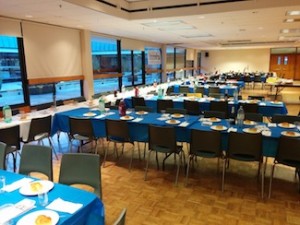
photo - Prepared for the 140 guests to arrive for Shabbat 100
Prepared for the 140 guests to arrive for Shabbat 100. (photo from Chabad at UBC)

The event was co-sponsored by Jewish Federation of Greater Vancouver, Lohn Foundation, Chabad of Richmond and Great Canadian Superstore on Marine Drive, and co-hosted by Chabad Jewish Student Club, Hillel BC, and all of the Jewish clubs at UBC: Jewish Student Association, Progressive Jewish Alliance and Israel on Campus.

Guests enjoyed a three-course Shabbat dinner by Forty One Catering, and the evening included ice-breaker games, Shabbat songs and a presentation from each club.

Chabad hopes this will become an annual gathering. “It was so nice to see so many Jewish students coming together for this event,” said Rabbi Chalom Loeub of Chabad UBC. “We are on a high and look forward to bigger and better next year!”

Kids in the classroom

Maria LeRose, left, speaks with Dr. Kimberly Schonert-Reichl. (photo from Janusz Korczak Association of Canada)

The second lecture of the “How to Love a Child” series, co-sponsored by the Janusz Korczak Association of Canada and the University of British Columbia faculty of education, took place at the Robert H. Lee Alumni Centre on Oct. 29. The topic was Janusz Korczak and the Importance of Listening to Children’s Voices in Education: Theory, Research and Practical Strategies.

Keynote speaker Dr. Kimberly A. Schonert-Reichl spoke at length on being mindful and caring towards children, very much in the spirit of Korczak’s own theories on how to love a child. Her best example was the classroom as the microcosmic world of children, where teachers’ attitudes towards their students play an integral role in their development.

Schonert-Reichl is a professor in the Human Development, Learning and Culture program at UBC and the interim director of the Human Early Learning Partnership. She has authored more than 100 articles and several books, and her focus is on the social and emotional development and the well-being of children and adolescents.

In her address, she talked about her own education and how she was seduced by the idea of giving children a voice in the classroom. So, she engaged them in decorating the classroom according to their own taste, and let them express their ideas. When the students saw that their opinion mattered, they became engaged. Schonert-Reichl realized that she was learning from her students by listening to them, hearing and heeding their voices, and this increased her pleasure in teaching them. She discussed further how teachers need to have compassion for the children and to never shame them.

Following the keynote lecture, moderator Maria LeRose, program consultant for the Dalai Lama Centre for Peace and Education and adjunct professor at UBC in the faculty of medicine, coordinated a panel consisting of Robin Kaebe, Salma Rafi and Alexander Corless, Grade 6 students at Lord Roberts Elementary School, who answered questions from the audience. They spoke of how a teacher’s attitude matters; how children need to be heard and seen. Even a hello in the school corridor gives a child a sense of being and recognition.

One student said that the classroom becomes like a second family and that very important relationships are formed at school. Another appreciated school’s climate of comfort and safety. Another defined a teacher as “somebody who asks us what we want to do.” Also appreciated was the presence of suggestion boxes as a medium through which the children could express their thoughts and feelings.

Both Schonert-Reichel and LeRose addressed the fact that teachers also need care and understanding, as being a teacher is an often-demanding job that can cause burnout.

The panel discussion closed on the importance of parent-teacher communication, as that gives the child more confidence, acknowledgment and feeling of security.

Jerry Nussbaum, the president of the Janusz Korczak Association of Canada, opened the evening with remarks about Korczak and his various activities in the field of children’s rights and welfare, and he quoted Korczak: “Children are people whose souls contain the seeds of all those thoughts and emotions that we possess. As these seeds develop, their growth must be gently directed.”

Nussbaum mentioned the famous Korczak democratic court, held in his orphanage for the children by the children. Nussbaum concluded his address by thanking all the donors, speakers and volunteers.

The next and third lecture of the six-part series takes place in the alumni centre on Nov. 25, with Anne Cools, senator for Toronto Centre-York, and moderator Dr. Edward Kruk, associate professor of social work at UBC. The discussion will focus on current challenges in the implementation of the “best interests of the child” standard in Canadian jurisprudence, social policy and professional practice. To register, visit jklectures.educ.ubc.ca.

Lillian Boraks-Nemetz is a Vancouver-based author and a board member of the Janusz Korczak Association of Canada.

Hang out, learn or engage

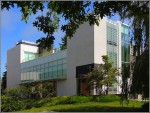
Hillel BC’s home on the University of British Columbia campus, the Diamond Foundation Centre for Jewish Campus Life. (photo by ThosGee via panoramio.com)

It’s been a tumultuous year on the University of British Columbia campus for Hillel BC, one filled with victories, but also with some disappointments. The Jewish Independent interviewed Hillel BC’s executive director, Rabbi Philip Bregman, on the challenges his organization has faced to date and on what is yet to come.

JI: What has the past year been like at Hillel?

PB: We’re seeing a resurgence of antisemitism the likes of which have not been seen for many years, and we’re seeing it right across the board of the 550 Hillels across North America. It has come primarily as a result of the boycott, divestment and sanctions movement against Israel. While incidents in the past would come and go, this one is a much more organized attack against Jews and Israelis on campus. And it’s not about boycotting products. The BDS movement is about three Ds: the demonization of Israel, the delegitimization of Israel, and the double standard that’s used with regard to Israel and the rest of the world. In this regard, the BDS movement has been fairly successful. On campuses in particular it’s created a real angst, a real discomfort for Jews, for Israelis. That’s its purpose.

JI: Can you talk about the recent referendum on campus, wherein the SPHR (Students for Palestinian Human Rights) asked students to vote on whether or not they supported their student union in instituting BDS on campus?

PB: Again, it wasn’t about boycotting products. They didn’t even let the students know what products needed to be boycotted. It was just a blanket statement that was absolutely absurd. When SPHR did mention a couple of products, it became obvious that it was absurd that any of those would go forward. For example, SPHR said they were going to boycott Caterpillar, because its machinery has destroyed Palestinian homes. I pointed out to them that the new Student Union Building at UBC was excavated with Caterpillar machinery. Should that then be boycotted? They didn’t answer. The second product they said they wanted to boycott was Motorola Solutions. I pointed out that this company is responsible for the operating systems of all Androids, and asked, “Are you telling the student body and AMS [Alma Mater Society, the student union] that no one on campus can use anything but iPhones?” The third product was Sabra Hummus. I told them that, in 2000, the Strauss Dipping Co., which owned Sabra Hummus, sold 50% of its shares to Pepsi Cola, and that over 60% of the vending machines in the Student Union Building are Pepsi products. Again, they didn’t answer.

Initially, before it was circulated, we appealed the referendum on the grounds that it was creating toxicity on campus. The AMS ombudsperson agreed with us that it was a terrible resolution, but the AMS board didn’t even comment on her report, which was tremendously disappointing. So, the referendum went out to the student body, and there was a lot of intimidation with regard to signing it. Later, the AMS found a number of signatures on the ballots were illegal….

At the end of the day, the SPHR fell short of the quorum they needed to pass the referendum. They needed 4,100 signatures, which represents eight percent of the eligible voters at UBC. They got about 3,500 votes. However the anti-BDS movement got 2,700 votes, which was more than double the number of votes in the rest of Canada, voting against BDS.

This BDS movement that we’ve had to deal with this past year was all-consuming. I have a magnificent staff and some magnificent student leaders who really were in the trenches day in and day out. I was in constant contact with the UBC administration about this, letting them know that the BDS movement is not an issue of free speech but one of hate speech.

JI: What kind of relationship does Hillel UBC have with Muslims on campus?

PB: When I first introduced myself to the representative from SPHR and suggested we start a dialogue, she told me, “We have a no dialogue policy with you people. If we talk to you, we will be condoning your murderous and genocidal ways.” We have been successful in reaching out to other Muslim groups on campus, however, including the Muslim Students Association and the Pakistani Students Association. We’ve had all sorts of collaborative programs, some light and some heavy. The idea is dialogue, not agreement.

JI: How are Jewish students at UBC responding to the BDS movement?

PB: At Hillels across North America, probably no more than five percent of the Jewish students on any campus really get into this fight. But we have a Jewish student population of about 1,200 and half of those voted against the BDS referendum.

JI: Going forward, who are you most likely to reach out to on campus?

PB: In fighting this resolution, we quickly realized where we should spend our limited time, energy and manpower: with graduate students, science students, law and medicine. Most of the statements in favor of BDS were coming from students in liberal arts backgrounds, and we were not going to win their hearts and minds. We were looking for people who would look at this referendum critically and understand what it was really about – the demonization and elimination of the state of Israel.

In general, the greatest group of students on campuses today tends to be those that are apathetic. I believe in a vote there would absolutely be more people opposed to us than supporting us. But I think that because we were out tabling every day, sharing and distributing information, we got some of those people who thought of voting yes, but voted no. And most of it was respectful dialogue.

JI: What kind of place is Hillel at UBC today?

PB: Hillel is a big tent, a place where individuals come in and just hang out. Some want to learn and engage in other types of conversation, and there’s a vast array of opportunity no matter where you are on the spectrum of Jewish life. It’s also a place of fantastic food, so people come for our Wednesday hot lunches, known to be the best meal on campus. You don’t have to be engaged in any type of politics to be involved at Hillel, although last year that was very much a part of what we were doing. Hillel is also the place of dialogue with other groups, such as the UBC chaplaincy, which holds meetings in our facility every second week for ministers, priests, rabbis, imams and Buddhists. And we encourage other clubs to come and program with us.

JI: What are your fears going into the next academic year?

PB: My fear is that this issue will continue to come back. Birthright is only getting a fraction of the younger Jewish generation in their 20s and 30s to Israel. In various reports that have come out, when they’ve asked Jewish university students if it mattered to them if Israel did not exist, 50% said no, it did not matter. This group is buying into what they see about Israel in the media and what they hear on campuses from fellow students and professors.

So, I wonder, what’s the responsibility we have as parents, teachers, mentors to a younger generation? To allow something like BDS to run its course when you know it’s not in the best interest of student life, because it’s under the rubric of “free speech”? Where is the limit, the line? This is not about trying to shut down criticism of the state of Israel.

Still, I’m hopeful. Our tent at Hillel is big, we have phenomenal student leadership and we’re there to hear all sorts of opinions as long as they don’t endanger individuals on one side, or call for the eradication of the state of Israel. There’s a huge area in between. Our task is to continue to attempt to raise Jewishly proud, courageous, knowledgeable mensches.

Lauren Kramer, an award-winning writer and editor, lives in Richmond, B.C. To read her work online, visit laurenkramer.net.

Nourishing the whole child

Dr. Adele Diamond, left, with Dr. Rania Okby at a Canadian Associates of Ben-Gurion University-hosted event at the University of British Columbia, in which Okby discussed some of the health challenges facing the Bedouin in Israel. (photo by Cynthia Ramsay)

Next week, Adele Diamond, professor of developmental cognitive neuroscience at the University of British Columbia, will be presented with an honorary doctorate from Ben-Gurion University. The professor spoke with the Jewish Independent at her lab on the UBC campus.

Born in New York City, Diamond’s academic career took root at Harvard, where she studied anthropology, sociology and psychology, but was not yet interested in the brain. After she decided to retire her first thesis idea, she was inspired to take a closer look at brain development in babies.

“My first year in graduate school, my advisor [Jerome] Kagan was jumping up and down about all the changes you see in babies’ behavior in the first year of life. No matter where they are in the world, whether they’re in kibbutzim, in nuclear families, they’re in Africa, they’re in Asia, it doesn’t matter. You see the same cognitive changes at basically the same time during the first year. He said, ‘It can’t all be learning and experience, their experiences are too different. There has to be a maturational component [in the brain].’ He was so excited about this, you couldn’t help but be excited,” she said.

Today, Diamond’s lab seeks to understand how children’s minds and brains develop. Specifically, she studies an area called the prefrontal cortex (PFC) and the cognitive abilities that depend on it, known as executive functions (EFs).

In a 2011 paper, Diamond describes the critical role of EFs. “To be successful takes creativity, flexibility, self-control and discipline. Central to all those are executive functions,” including cognitive flexibility (thinking outside the box, perspective taking), working memory (mentally relating different ideas and facts to one another) and inhibitory control. Other EFs that depend on these three building blocks include mental reasoning, creative problem solving, planning and execution.

EFs can be lacking in children who have behavioral, neurological and developmental disorders and are compromised in kids diagnosed with attention deficit disorders and autisms. The PFC is also influenced by environmental factors, compromising EF in kids experiencing poverty and other disadvantages and stressors. Fortunately, there are interventions that have been found to be successful, especially when implemented in early childhood.

“Traditional activities that have been part of all cultures throughout time (e.g., dance, music-making, play and sports) address all these aspects of a person – they challenge our EFs (requiring focus, concentration and working memory), make us happy and proud, provide a sense of belonging and help our bodies develop,” the lab’s website explains. Importantly, Diamond’s lab has “documented marked advances in executive functions due to an early childhood school curriculum (Tools of the Mind) that requires no specialists or expensive equipment, just regular teachers in regular classrooms. The children who spent more time in social pretend play outperformed their peers who received more direct academic instruction.”

She explained in a 2007 paper, “Brain-based doesn’t mean immutable or unchangeable. EFs depend on the brain, yet exercising and challenging EFs improves them, much as physical exercise hones our physical fitness. Yet, transfer is never wide; to get diverse benefits, diverse skills must be directly trained and practised.”

There is a deep connection between mental health and EF and it’s not just depression and anxiety that have a negative impact – sadness and loneliness also correlate with compromised EFs. “Prefrontal cortex and executive functions are kind of the canary in the coal mine. So, if anything isn’t right in your life, it’s going to hit prefrontal executive functions first and most,” she said. “So, if you’re sad, if you’re lonely, if you’re troubled, if you’re not physically fit, if you’re not getting enough sleep, if you don’t feel socially supported, if you feel ostracized, any of those things, it’s going to impair executive functions. A lot of people notice that when they’re feeling stressed or down for whatever reason they can’t think as clearly or exercise as good self-control – and that’s not just your perception, it’s really true … the phenomenological experience is credible.

“There are a lot of technical reasons why that’s true for prefrontal in the neurochemistry. That’s one of the reasons I argue that we have to care about the whole child. We can’t say school is just about the cognitive, because if the child is sad, if the child is stressed, if the child is lonely, the child’s not physically fit, the child isn’t going to be able to do as well academically as the child would otherwise be able to do. The child can’t show the academic potential he actually has.”

“If you step in right away when the kids disagree then they don’t have the chance to work it out among themselves…. I think a lot of kids don’t have that now. Parents are too afraid. There isn’t any place to play and I think those are important learning experiences.”

The trend towards structured play can be problematic for a child’s developing brain. “The helicopter mom, who needs to structure it all for the kids, doesn’t give them any chance to have some autonomy, have some say, use some creativity and work out disagreements,” Diamond said. “If you step in right away when the kids disagree then they don’t have the chance to work it out among themselves…. I think a lot of kids don’t have that now. Parents are too afraid. There isn’t any place to play and I think those are important learning experiences.”

Another useful tool in developing mental discipline can be memorization. In the West, we have largely decided that memorization is not a worthwhile, but there are cultures where rote memorization is still highly valued.

“In East Asia, they have too much extreme of memorization and too little creativity,” Diamond said. “The child’s goal is to learn from the masters, not question them, not try to come up with new things. First, get to know what the sages have to teach us. In some ways, I think the Orthodox Jewish education is like that. Each generation that is further from Mount Sinai knows less, and so we really want to try to absorb all that the older generations have to teach us before we think about surpassing them.

“But I think a mix is the right way…. I used to be on the bandwagon of memorization is just stupid; I hated it when I was in school. You can just look up these things, why do you have to memorize it? Then I was in Dharamsala, I gave a talk to the Dalai Lama, and we were talking afterwards. I asked him, I said, ‘I’ve told you about Tools of the Mind. What is a Buddhist way to train the minds of young children?’ The Dalai Lama said, ‘We don’t try, we wait until they get older.’ But his translator, [Thupten] Jinpa said, ‘We have them memorize. We’ll take something long and each day they have to memorize a little more. It’s a mental discipline that we’re teaching them.’ I think it’s a way of disciplining the mind, training the mind. I think there’s a real place for it, in that case.”

In fact, memorization can afford more cognitive and creative freedom. “What you want to do as you keep getting older is not have to pay attention to the fine details and be able to chunk things, so that you can deal with more and more the bigger picture and relating things,” said Diamond. “The more things are memorized, the more you can chunk it. You don’t have to go through the words of the poem, you just say the name of the poem and now you have all of it. Now you have a lot more information at your disposal to be able to play with and work with….”

Most of all, it’s important to grasp the (misunderstood) role of joy in nurturing developing minds and healthy children, she suggested.

“First, we often think that joy is the opposite of serious. If we’re walking down the school corridor and the kids are having a great time in the classroom, there’s lots of noise, we think they must be on recess, they couldn’t possibly be doing a lesson because there’s too much happy noise coming out of there. That’s, I think, a bad misconception. You can be learning and doing serious stuff and still have a great time. And you don’t have to be miserable to learn important stuff.”

Attachment is another key to healthy development. “I think Jewish families are pretty good about having secure attachment,” she said. “Sometimes they get a little enmeshed later, but I think that Jewish families really let the child know that the child is loved and cared for, they’re there for the child.”

She added, “Of course, a kid who is not securely attached is going to be more fearful, it’s going to be harder for other people to get close to him, for him to get close to other people. A kid who is securely attached thinks the world is a good place, he’s safe, he can trust other people, he can trust the world. There’s a lot more reason to feel relaxed and joyful.”

“The analogy I use is who learns a route better: the driver or the passenger? Everybody knows the driver does and we all know why, because the driver has to use the information and the passenger is just passively sitting there…. If you say, well, why should kids be actively involved in learning as opposed to just be passive recipients, everybody can understand that point and then we get to the more virtuous things.”

An influence in Diamond’s work is Abraham Joshua Heschel’s emphasis on doing. In Judaism, action, not belief, is key. “There are two things. One is, when we’re not talking about virtuous things, we learn better when we’re actively involved. The analogy I use is who learns a route better: the driver or the passenger? Everybody knows the driver does and we all know why, because the driver has to use the information and the passenger is just passively sitting there…. If you say, well, why should kids be actively involved in learning as opposed to just be passive recipients, everybody can understand that point and then we get to the more virtuous things.

“The Dalai Lama has said, if you want others to be happy, practise compassion. If you want to be happy, practise compassion. Now, the first part makes sense to everybody. The second part doesn’t always make sense.” It will never make sense intellectually, she continued, “the only way it makes sense is for you to do something nice for somebody else and see the wonderful smile you get in reaction, and then you understand. Or somebody says how meaningful that was to them or how important it was and then you see what you get back. But there’s no way to understand that without experiencing it.

“So, you tell the cynical kid, ‘I want you to just do it for awhile.’ What Heschel said is that the musician might be playing for the money but if he’s thinking about the money when he’s playing the concert he’s not gonna play a good concert. While he’s doing it, he’s got to be heart and soul in the music. So, if the child wants to see what it’s like to do nice things for people, during those few times when he’s doing nice things, he’s got to be heart and soul, not cynically doing it, but doing it genuinely. I think, in short order, the child can see that he gets something back from it. You don’t have to do it for years and years before you can see the wisdom of what mom and dad wanted. You can see it pretty quickly.”

The upcoming honor from BGU has grown out of a mutual appreciation. “I have lectured at most Israeli universities, but one of my favorites is Ben-Gurion, I think I’ve been there more than others…. I met the president [Rivka Carmi] last time I was there and she wanted me to come back and teach the course again.” They formed a personal relationship, as well, Diamond said, and then, recently, Carmi nominated her for the award.


Basya Laye is the former editor of the Jewish Independent.

 

Campus, church extremism

Last week, students at the University of British Columbia rejected a referendum question that would have urged the student society to boycott Israeli businesses and products.

But the news was by no means all good when the results came in last Friday night. In fact, more students voted yes in support of BDS (boycotts, divestment, sanctions) than voted no. The question was defeated effectively on a technicality, with the number of students voting yes failing to reach quorum. Therefore the question failed.

Students were asked: “Do you support your student union (AMS) in boycotting products and divesting from companies that support Israeli war crimes, illegal occupation and the oppression of Palestinians?” The yes side received 3,493 votes, 2,223 students voted no and 435 registered their abstentions. To pass, the vote required 4,130 yeses, representing eight percent of eligible students.

In this, too, there is good news and bad news. The low turnout indicates that students at the university have better things on their mind than the conflict between Israel and its neighbors. It has become increasingly clear in recent years that the anti-Israel movement on college campuses in North America is comparatively small. Yet the damage this narrow group of extremists can do to the comfort and security of Jewish and Zionist students – and to the broader objective of an inclusive, welcoming environment – has been serious and detrimental.

The BDS movement has had few tangible successes and plenty of failures, if measured by their effectiveness at actually boycotting, divesting from or sanctioning anything. What they have been wildly successful at is spreading messages that single out Israel as the fountainhead of all things evil.

Also mixed news is the fact that, while campaigns like BDS are finding it difficult to rustle up serious numbers of equally agitated fellow travelers, Jewish students, too, are challenged in finding substantial numbers of allies when confronted with a campaign of targeted aggression against the Jewish homeland. There might be only a few thousand out of more than 50,000 students who succumb to anti-Israel messaging, but there are even fewer who observe that messaging and are moved to come to the aid of Israel – and/or Jewish students – when it is attacked in this fashion.

Which raises another issue facing our Vancouver community.

Later this month, Canadian Friends of Sabeel will hold a conference on “overcoming Christian Zionism.” Sabeel describes itself as an “ecumenical Palestinian liberation theology centre” that is “working for justice, peace and reconciliation in Palestine-Israel.” In reality, it is a group that promotes a misrepresentation of events in the Middle East. The conference slated for Vancouver is explicitly aimed at undermining Israel among its North American Christian supporters.

Conservative Christians have been among Israel’s most reliable bloc of friends in troubled times. Like any bedfellows, the Zionist-Christian alliance brings with it complexities. While some Christians use Zionism as a back door to evangelizing or view Christianity as a “successor” religion to Judaism, for example, there are also many in the Christian Zionist movement who respect the integrity of Judaism.

The upcoming conference is co-sponsored by three Christian churches.

The United Church of Canada, for decades but especially in recent years, has adopted a heavily anti-Israel approach to global affairs. Their sponsorship of this event is not surprising. The Presbyterian Church in Canada is also supporting this event, though this, too, is not shocking, given that the American branch of the Presbyterian Church has been beset by anti-Israel agitation and last year voted to divest itself of some Israeli holdings.

What is surprising – and worrisome – is the role of the Anglican Church of Canada as co-sponsor of this conference. Two years ago, the church passed a resolution that made some attempts at balance but was marred by typical anti-Israel boilerplate. With their co-sponsorship of this Sabeel event, the Anglican church has thrown itself unequivocally off the fence.

There are parallels between these two developments – the UBC vote and the involvement of erstwhile moderate Christian groups in a blatantly anti-Israel conference. The fact is, probably most active Anglicans, Presbyterians and United churchgoers have no idea what their national bodies are up to. Of the millions of Canadians represented by these three denominations, the vast majority probably do not have an opinion on – or do not agree with – the approach of this month’s conference. As we saw at UBC, the anti-Israel movement tends to be a small group of zealots who get involved in a legitimate body and turn it into a platform, a rabidly anti-Israel tail wagging an otherwise amicable dog.

Like the impact of anti-Israel extremism on campus, the involvement of mainline Christian groups in this anti-Israel conference shows how a small group of dedicated individuals can create nasty, lasting divisions in a multicultural community.