Lighthouse as beacon

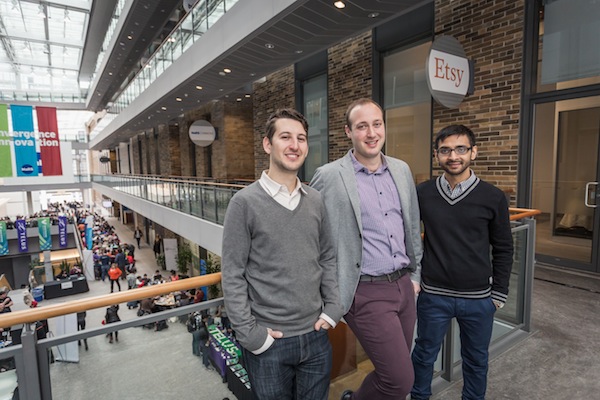
Left to right, Lighthouse Labs’ Jeremy Shaki, Josh Borts and Khurram Virani. (photo from Lighthouse Labs)

The Jewish Independent first heard of Lighthouse Labs in January of this year, when it received a press release about Lighthouse’s second annual HTML500, “where 500 people can learn basic HTML and CSS skills from Canada’s top 50 tech companies for free.” In its first year, the waitlist numbered 1,300. In its second, more than 2,000.

But HTML500 (thehtml500.com) offers merely a peek into what Lighthouse Labs (lighthouselabs.ca) teaches in its eight-week computer coding bootcamp – a bootcamp that this year also became available in Toronto and Calgary. Lighthouse co-founder Jeremy Shaki credited fellow co-founders Josh Borts and Khurram Virani – who are also founders and partners of the Toronto-based development company Functional Imperative – with the concept.

“I wish I could take credit for the idea of Lighthouse Labs, but I can’t,” Vancouver-based Shaki told the Independent. Borts and Virani, the latter of whom now also lives here and is Lighthouse’s head of education, “came up with it as it pertained to their space … and asked me if I wanted to be involved.

“Personally, I have always felt very strongly about learning by doing and that schools should have more tangible outcomes associated with their education. So, to get a chance to put all that into action in an exceptionally exciting space like tech was very lucky. There were definitely other models for this that we looked at, but we developed our own philosophy around outcomes and, specifically, that we felt that everyone graduating should be able to get a job.”

While Lighthouse Labs doesn’t guarantee employment, of course, it boasts a 100% placement rate. As its website explains, “Since some students have other goals, this refers to those students whose goal is to work as a full-time developer as soon as possible upon graduation. To date, 100% of our grads have gotten jobs in that capacity within three months!”

Shaki and Borts have known each other since high school. Both were born and raised in Montreal.

“I was raised ‘Jew-ish,’ as in I was taught the history, had dinners on all the holidays, had Friday night meals with my family and went to synagogue on the important dates,” said Shaki, who attended JPPS-Bialik Jewish school until heading to St. George’s High School, where he met Borts, who attended St. George’s from pre-kindergarten through high school.

Borts described his family as “modern Jewish.”

“While my father was raised Orthodox,” he explained, “by the time I was born, we had migrated down the path to Conservative and mainly practised during the High Holidays, etc., like most of my Jewish friends. When I was planning for my bar mitzvah, I had a good interaction with the rabbi at the Reform synagogue in Montreal, Temple Emanuel, so our family moved there, completing our move to Reform.

“Once I left for university to Waterloo (honors, bachelor of computer engineering), I found myself outside of the Jewish social groups that are ever-present in English Montreal and I was, therefore, forced to create my own traditions. So, while I no longer attend synagogue on every High Holiday (I do when I can make it back to Montreal), I host a break-fast and seder for my friends (both Jews and non-Jews), as well as light the Chanukah candles (because who doesn’t like the dreidel?).”

Shaki stayed in Montreal for university, attending Concordia, where, he said, “I took the extremely practical political science course which led to my career in – marketing.”

Always encouraged to work, Shaki had myriad jobs, “ranging from selling spa packages on the street to hiring staff” – and including a job, at 15, with “the famous Montreal bagel shop St. Viateur Bagels” – “but ended up working for an experiential marketing agency called Sugar Media out of Toronto. I stayed there for seven years, loving every day of it before ultimately beginning to run Lighthouse Labs,” where his title is “chief talking officer.”

photo - HTML500 offers a glimpse into what Lighthouse Labs teaches in its eight-week coding bootcamp
HTML500 offers a glimpse into what Lighthouse Labs teaches in its eight-week coding bootcamp. (photo from Lighthouse Labs)

Borts’ path to Functional Imperative and Lighthouse Labs began in University of Waterloo’s co-op program, from which he obtained a wide range of experience, he said, “from working for a nonprofit in Sub-Saharan Mali … to algorithmic and high-frequency trading. Upon graduation, I took a job with a proprietary trading group in Hong Kong, where I spent three years working on trading strategies.

“When I finally came back to North America,” he said, “I was approached with an opportunity to launch my own technology startup. While not in the finance space, the idea of being an entrepreneur really appealed to me and my risk-taking approach, so I jumped in and moved to Toronto to launch SocialStreet. Unfortunately, my lack of experience showed and it quickly failed. However, I learned a great deal about what it takes to run a successful startup, experience that I now am able to give back to the community in my role at Functional Imperative and Lighthouse Labs.”

Integral to both places is Virani. “While I have a computer engineering background,” explained Borts, “I didn’t have the experience of building scalable software solutions. Khurram, with over 10 years of experience in web development, was the perfect co-founder to be able to execute on our clients’ visions.”

Based in Toronto, Borts’ involvement with Lighthouse Labs includes being its chief financial officer. “In general,” he said, “my ability to speak both business and technology means that I am responsible for bridging the gap between what is best for the business and what can be done. I often am the one pushing for higher margins and faster growth, to the chagrin of Jeremy and Khurram.”

It’s hard to imagine faster growth for Lighthouse Labs, which started in Vancouver in 2013 and now not only is established in two other cities, but has dozens of instructors, mentors (“For every seven students,” says the website, “we have one superhero of a mentor ready to combat the villains of logic errors and low batteries”) and alumni mentors (graduates who help “students figure out careers as developers”).

“The success we had in the early going really helped us prepare for the future from the start,” said Shaki. “We were lucky to have made some fantastic partnerships with many different groups in the tech sector, and those groups helped open up opportunities to bring our business to other Canadian cities faster than we had originally expected.

“As for where we go from here, the main focus is to make sure we are able to deliver the same quality program consistently in the markets we have expanded to. That being said, we have some very ambitious projects that will be coming to fruition soon, but I’ll keep those ones to myself for the moment!”

Earlier this year, Shaki spoke at a conference at Simon Fraser University on a panel dealing with the topic Not Just Our Problem: Motivating People to Care About Women in STEM (science, technology, engineering and math). His comments shed light on another aspect of Lighthouse Labs’ success.

“There is a major movement going on in tech to get more women involved and we are as active as anyone,” he said. “On the panel, I spoke mostly about the language that we use to describe the tech industry in general and how, with some small changes, it makes for a big difference.

“We threw an event called HTML500 last February in four cities across the country and, with those language changes, we were able to attract over 50% female participation in a learn-to-code event. It was about making it open and inclusive instead of trying to depict coding as difficult and niche.

“We also made sure to have a lot of women mentors around, as it provided both the men and women showing up to learn the initial opportunity to learn from and respect a woman developer. I don’t know if you can change all the people who are already in the tech industry, but we definitely feel as though we can affect the people entering it for the first time.”

The language and approach Borts uses at Functional Imperative are also illuminating.

“One of the common misconceptions is that software developers are not creatives,” he said. “I may not be good with a paintbrush but, like other creatives, my team and I are abstract thinkers who thrive on innovation. My job is to harness my team’s insane creativity in a way that still ensures a quality product at the end of the ride. A couple of strategies we use at Functional Imperative include:

“Demo your work early and often. The sooner you can get feedback on your work, the more likely it is to match the project requirements. This is at the core of agile development methodology.

“Have someone else give you feedback on your code. This ‘peer review’ is essential for ensuring code quality.

“Eighty/20 rule: 80% of our projects should use technology my team already knows, while 20% can be riskier, allowing them to push the bounds of their knowledge.

“Tell them what you want, not how to get there.”

And it can only help that both Borts and Shaki love what they’re doing.

“I get to wake up every morning and create new things,” said Borts. “It is the dream of every engineer. This is both at Functional Imperative, where we help shape and deliver on the vision of our clients, and at Lighthouse, where I am helping build a world-class education institute that is at the forefront of changing how education is delivered. Every day brings a new problem to solve.”

As for Shaki, he looks forward to going to work because he has “an amazing team that are all passionate, goofy, hard-working and hilarious.

“I also love it because, when I made the switch from marketing to running a developer bootcamp, I made the conscious decision to do something that made a positive impact. We keep very small classes, so I get to meet all our students and watch as their lives change in the matter of eight weeks. That is extremely fulfilling, and a far cry from hawking other peoples’ products, no matter how much fun event marketing is.

“At this point, I get to have extremely intelligent discussions with intelligent people every day and talk about better ways of improving education. To be doing that as my job makes me happier than anything else I could be doing.”

Expanding the financial field

Michael Susser, left, and Murray Palay of Quadrant Asset Management. (photo from QAM)

The first-ever Quadrant Asset Management Investment Conference was held on Oct. 2 at the University of Manitoba’s James W. Burns Executive Education Centre in downtown Winnipeg. It will be a recurring event, happening at least once every two years, according to Murray Palay of Quadrant Asset Management, which has committed to five conferences in the next 10 years.

Even though the conference was their idea, Palay and business partner Michael Susser were taken aback by how quickly the idea was accepted and how speedily it has taken form – a year ahead of schedule.

Both graduates of the U of M, Palay and Susser wanted to support the Asper School of Business in its desire to hold a conference on behavioral finances.

“We felt it was appropriate to give back, particularly in the area of finance,” said Palay about the decision to support the conference. “But really what we wanted was more academic…. We wanted a program that we could kick-start and that would build over the years.”

Quadrant covers 60% of the cost, with the remaining amount covered by partners in the industry, Tetrem Capital Management and CI Investments. Michael Benarroch, dean of the Asper School, and Dr. Gady Jacoby, the Bryce Douglas Professor in Finance, were involved, and U of M assistant professor of finance Chi Liao organized the conference.

Behavioral economics, or finance, incorporates other factors, such as psychology and emotion, into conventional economic theory – which assumes that people always behave rationally, in a way that maximizes their wealth – in an effort to explain why people often make decisions, or behave in ways, that seem unpredictable or irrational. It does so not just to understand individual behaviors, but their effect on the market at large.

About that general definition, Liao said, “I’m not sure if I agree with the term ‘irrational.’ It may be more measured to say that behavioral finance uses psychology to understand how human behavior influences financial decisions.”

A major question the conference examined is whether or not people make decisions based on emotions as well as financial considerations.

“I had the liberty of choosing the speakers, so I chose people who I thought had very cutting-edge, very talk-able research topics – researchers like Dr. Hersh Shefrin of Santa Clara University, the conference’s keynote speaker,” said Liao. “He was an obvious choice, as he really pioneers the field of behavioral finance.”

Shefrin’s 1999 book Beyond Greed and Fear: Understanding Behavioral Finance and the Psychology of Investing has become a standard text used around the world in behavioral finance courses, as well as being part of the CFA Institute curriculum source material, among others. As it happens, Shefrin is a former Winnipegger and a U of M graduate.

Other conference presenters included Amos Nedler of the University of Western Ontario, who spoke about The Bull of Wall Street: Experimental Analysis of Testosterone and Asset Trading; Rawley Haimer of the Federal Reserve Bank of Cleveland on YOLO: Mortality Beliefs and Household Finance Puzzles; Jawad Addoun of the University of Miami, who discussed Local Bankruptcy and Geographic Contagion in Loan Characteristics; and Vicki Bogan of Cornell University on the Importance of Mental Health and Retirement Savings: Confounding Issues with Compounding Interest. Capping off the conference were speakers Scott Hsu of the University of Arkansas, who spoke about Beauty is Wealth: CEO Appearance and Shareholder Value; and Lisa Kramer of the University of Toronto, who discussed Examining the Effect of Social Distance on Financial Decision Making.

“Martin Wayngarten, who heads our investment management group, could have listened to Dr. Shefrin all day,” said Palay. “His explanation of the behavioral aspects, how sentiment and emotions factor in, and how they correlate or don’t to rational investors, this is all stuff that we live and breathe.

“Being on the front lines, we recognize that behavioral issues, such as sentiment and emotion, are very much a part of what we have to deal with. It’s just not all numbers.”

Palay felt some of the other speakers’ topics were a bit more esoteric, such as those discussing testosterone in traders, but still very interesting.

One major takeaway for Palay from the conference was a newfound understanding of the nature and depth academics go through to prove their theories through clinical studies.

“We would have never really seen this kind of a presentation if not for Jacoby and Liao,” said Palay. “The presentations you would get industry-wide would be a lot more practically oriented and more numbers-oriented.”

In addition to what he learned at the conference, Palay was also glad to have had the opportunity to spend time with his son, who is a student in Liao’s class, as the whole class came to the conference.

“I should mention, by the way, the bias I have in terms of how good Dr. Shefrin was,” said Palay, noting that Shefrin is his wife’s second cousin. Palay learned of this connection shortly before the conference, when sharing some information with his wife, Ivy Kopstein (of Winnipeg’s Jewish Child and Family Service), about the then-upcoming conference and the keynote speaker. Kopstein said Palay must invite Shefrin home over for dinner.

Rebeca Kuropatwa is a Winnipeg freelance writer.

Mulcair talks about choices

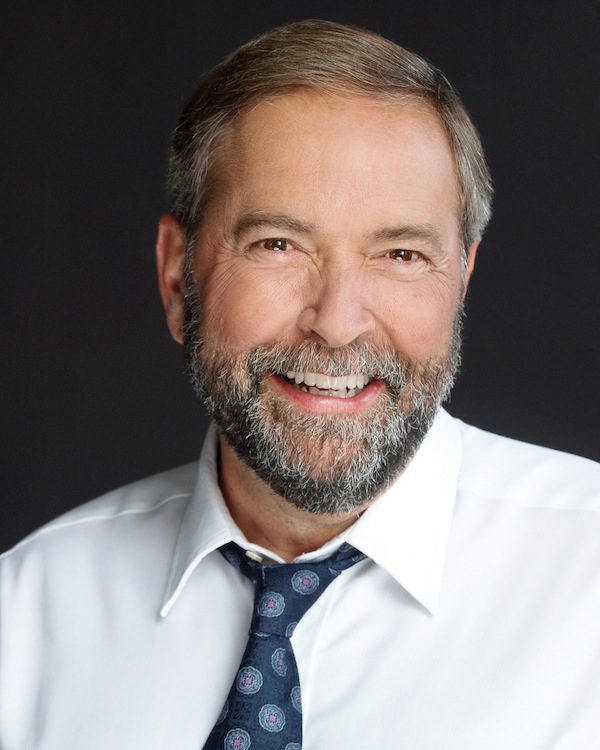
New Democratic Party of Canada leader Tom Mulcair. (photo from Tom Mulcair’s office)

“I think the values of the community that you’re writing for are very similar to the social values of the NDP historically, and I think that’s a strong connection that we have,” New Democratic Party of Canada leader Tom Mulcair told the Independent in a phone interview last week.

He added that his wife Catherine’s “family connection means that I’m the only person in this race who has a deep understanding of the Jewish community and of its history, and I’ll always be a strong stalwart based on that understanding.”

Even before the election campaign started, Mulcair always has been clear in his support for Israel.

“My position is very comfortable within the NDP,” he said, “because the party’s position has, for a long time, been in favor of a two-state solution. Essentially, we believe we have to be working with partners in the Middle East, in particular, in Israel and Palestine, within a framework of respect for UN resolutions and international law, that’s important. And, we always talk about working towards peace in the region, starting from a base where it has to be mutually agreed borders and, frankly, everyone free from attack of any kind: peace and security, in other words, within established and negotiated borders.”

He defended his strict enforcement of this view, which has included the dismissal of candidates who hold alternate opinions.

“I’ve tightened the reins in making sure people respect our position, and I think that that’s the key thing,” said Mulcair, adding that the NDP is “still the only party political party in Ottawa to have ever had a Jewish leader, in David Lewis [federally] and, of course, in Ontario, Stephen, Lewis’ son. And I’ve had a chance to visit Israel a couple of times and look forward to going back. I daresay that I’m the only leader in this campaign … who can count family in Israel, as well.”

“I think that free trade with a democracy is a good thing. We also backed the trade agreement with Jordan because we know that it’s also a very strong voice for stability and peace in a very tough region with a lot of problems.”

With respect to the expansion of the Canada-Israel Free Trade Agreement earlier this year, Mulcair said, “I think that free trade with a democracy is a good thing. We also backed the trade agreement with Jordan because we know that it’s also a very strong voice for stability and peace in a very tough region with a lot of problems.

“As you know, the NDP takes a pretty strong view that free-trade agreements have to represent dealings with countries that have values similar to ours, and that’s why in both cases we had no problem with it.”

The NDP also has no problem with the P5+1 (China, France, Russia, the United Kingdom, the United States and Germany) nuclear deal with Iran.

“I think that the P5+1 deal shows that diplomacy can achieve real results even after decades of hostility,” said Mulcair, who described himself as “very clear-eyed about the Iranians,” noting that the antisemitism there “is at a level rarely seen in the world today.”

He said, “I don’t have any illusions about what I’m dealing with … no Israeli government can ignore the threat of a nuclear Iran…. At the same time … as long as it is enforced rigorously, the deal shows the possibility of making sure that Iran’s nuclear ambitions are hemmed in.”

About security closer to home, and specifically Bill C-51, Mulcair said, “I think that it’s a question of approach and priorities. Don’t forget Mr. [Stephen] Harper’s approach is always about stark, false choices. He would have you believe, for example, that a government has to choose between the economy and the environment. Of course, that’s a false choice; you have to do both. He would have you believe that you either keep your communities safe or you respect your rights or freedoms. Well, the prime minister’s job is to do both: respect Canadians’ rights and freedoms, and keep communities safe. So, C-51 is a breach with that.”

Offering an example from the party’s history in balancing security and freedoms, Mulcair noted, “The NDP, you might recall, is the party that had the courage politically to stand up in 1970 against the imposition of the War Measures Act that put hundreds of Canadians in jail without trial, without accusation, and the NDP had the courage to stand up against that.

“When Mr. Harper came in with Bill C-51, I was told that I was being foolhardy to oppose it, that the vast majority of Canadians were in favor of it. Well, you know what? I don’t take that as the starting point in these issues. I am more than willing to stand up to Stephen Harper when he’s compromising Canadians’ rights and freedoms, and we did that. We did that with an articulate stance that explained to Canadians why it was a mistake, and you know what? At the end of that process, most Canadians agreed with us, so I’m proud of that.

“There are things that can be done here in Canada to help fight some of the situation there,” he said, referring to the conflict in Syria, as well as others in the region. “There are a couple of concrete things that I think Canada can and should be doing.

“First of all, Canada is the only country in NATO not to have signed the Arms Trade Treaty. Well, that’s something that’s easy to fix, and that can help stop the flow of arms to some of those conflicts right now.

“Deradicalization is entirely absent from Bill C-51 and that is, again, a mistake. Most of our partners in the world who are dealing with these issues realize that the flow of foreign fighters into those regions is one of the biggest problems and, instead of coming to grips with that, Mr. Harper completely ignores the problem.”

“There’s also an important element of deradicalization. And, again, Mr. Harper just doesn’t know how to get this right. For example, he doesn’t talk about going into houses of worship, as you hear President [Barack] Obama talk about. What Mr. Harper will talk about, specifically, are mosques. Now, of course, in that case, he’s finger-pointing a single community. That’s a mistake. Deradicalization is entirely absent from Bill C-51 and that is, again, a mistake. Most of our partners in the world who are dealing with these issues realize that the flow of foreign fighters into those regions is one of the biggest problems and, instead of coming to grips with that, Mr. Harper completely ignores the problem.”

Other problems that Harper has ignored, or about which he has been mistaken, according to Mulcair, concern the budget and jobs. The NDP’s approach to these issues, including its focus on the middle-class, has drawn some criticism that the NDP has strayed from its roots – a point with which Mulcair disagrees.

“We’ve been really clear all along, especially under my leadership, that Canada wants a government that knows how to deal with the big issues of the day in the interest of the population,” he said. “When we [the NDP] were in power in Saskatchewan, we ran 17 consecutive balanced budgets because we had taken over a province that was bankrupt after years of Liberal rule…. After those balanced budgets, we were able to bring in free, universal, public medical care – that was an NDP priority.

“This time around, I’m talking about the importance of bringing in quality, affordable, maximum-$15-a-day child care, and we’re going to do that on the basis of a balanced budget. There are some who would say, well, that’s not a very social-democratic thing, but if you look at the history of the NDP, we have a history of being very prudent public administrators. We know that we have that burden on us – that we’re always going to have to be the ones who have to be the most prudent because, if we’re not, people will judge us more harshly than the others.

“Some of the other parties are taking a different approach,” he continued. “Mr. Harper talked a good game but ran up $150 billion in new debt while he was in power. Mr. [Justin] Trudeau is promising to spend at least $10 billion a year more than what he takes in and, in the fourth year, he’s going to start cutting with, quote, everything will be on the table, in terms of cuts – that was the exact quote from Mr. [John] McCallum when he was asked how he was going to be able to cut $6.5 billion in the fourth year of his budget. So, that’s where the Liberals are, that’s where the Conservatives are.”

“Economically, we’re talking about balanced budgets, but we also want to create opportunities for good-paying jobs. There were 400,000 manufacturing jobs lost on Mr. Harper’s watch, and he wants to kill off tens of thousands more with this recent trade deal.”

Mulcair said the NDP are prudent administrators in other areas, as well. “I have a strong personal track record as a former environment minister as a strong enforcer of environmental legislation and I’m strong on principle on those things,” he said. “Economically, we’re talking about balanced budgets, but we also want to create opportunities for good-paying jobs. There were 400,000 manufacturing jobs lost on Mr. Harper’s watch, and he wants to kill off tens of thousands more with this recent trade deal,” meaning the Trans-Pacific Partnership. On Oct. 5, the 12 countries involved, including Canada, reached an agreement, which still has to be ratified by each country’s parliament.

“On the environment, on the economic issues, on social issues, we’re very different from the other two parties who, more often than not, are of one mind,” Mulcair said, giving three examples.

“Mr. Trudeau and Mr. Harper agreed with tens of billions of dollars of tax reductions for Canada’s richest corporations – we disagree, we’re going to start making them pay their fair share.

“We disagree with the Keystone XL Pipeline. We think that you don’t export your natural resources raw. Mr. Harper and Mr. Trudeau are of one mind, they think that it’s a good idea to send 40,000 Canadian jobs to the U.S. – we disagree.

“We’ve had a different approach on C-51. Mr. Trudeau was afraid of Mr. Harper. He said at the University of British Columbia that he was too afraid of Mr. Harper to stand up for what he thought was the right thing to do in that case. Well, I think that that’s sad, and I think that Mr. Trudeau has shown a lack of leadership and, frankly, a lack of experience.”

While the NDP would increase the corporate tax rate, its platform includes “supporting innovation and investment in companies.” When asked if this was not just a different way of subsidizing business, Mulcair responded, “No. For example, the Conservatives have continued to subsidize companies in the oil patch. We will remove subsidies. What we will do is bring back certain innovation tax credits because we know that the manufacturing sector is, and can be, a hub for innovation and technological jobs in the future that will be knowledge-based.

“We’ll also propose a small-business tax cut, so we’ll bring their taxes down from 11[%] to nine, which we think is a smart way of stimulating the creation of jobs by job creators because small- and medium-sized businesses in Canada create more new jobs. We don’t shy away from saying that government can play an active role in creating the conditions for the private sector to create jobs.”

“This is the first time in Canadian history that we actually have a choice. For 148 years, we’ve been told we have no choice but to alternate. When we get tired of the Liberals and the sponsorship scandal, we’re supposed to go back to the Conservatives. We get tired of the Conservatives and the Senate scandal, we’re supposed to go back. This time, the first time, there is a choice.”

Looking ahead to the last days of the campaign, Mulcair said, “This is the first time in Canadian history that we actually have a choice. For 148 years, we’ve been told we have no choice but to alternate.” For example, “When we get tired of the Liberals and the sponsorship scandal, we’re supposed to go back to the Conservatives. We get tired of the Conservatives and the Senate scandal, we’re supposed to go back. This time, the first time, there is a choice.

“For the first time in Canadian history, the NDP is forming the Official Opposition, we’re seen as a government-in-waiting. We’re doing great across the country but we’ve got very strong support in certain regions that are going to allow us to form a government, and we know that.

“B.C. is a good example of a province where we’re doing super well,” he said. “I just had an event there yesterday morning that showed me that the energy and the strength of the team and the campaign that we’re running are resonating … so we’re going keep that going.”

The Independent has interviewed Liberal leader Justin Trudeau (July 31), Minister of National Defence and Minister for Multiculturalism Jason Kenney (Sept. 18) and Green party leader Elizabeth May (Oct. 9). The federal election is on Oct. 19.

Focusing on students

There’s a new Jewish kid on campus – one who is confident about her rights, able to educate others who might try to intimidate and bully her, and willing to express her Judaism proudly, while helping to combat the rising antisemitism and anti-Israelism around her.

photo - Vera Held, president of the Centre for Jewish Culture and Education
Vera Held, president of the Centre for Jewish Culture and Education. (photo from Vera Held)

This kid is no kid though, she’s a new community startup called the Centre for Jewish Culture and Education (CJCE). Founded by president Vera Held and executive director Lisa Cohen, the Toronto-based organization, which has applied for charitable status, is focused on helping Jewish young people become more confident emotionally, intellectually, spiritually and physically, about expressing their Judaism and their human rights in school settings. “With the overt resurgence of worldwide antisemitism, helping youth in this way is a must more than ever,” said Held.

This summer, the Simon Wiesenthal Centre released the report Antisemitism on Campus: A Clear and Present Danger. It explains that Israel is the subject of multi-pronged campaigns of delegitimization on campuses across North America, and that virulent anti-Zionism is often a thinly veiled disguise for virulent antisemitism. Testimonials from students indicate that young people are afraid to express themselves as Jews or to be pro-Israel, for fear of being bullied, threatened or discriminated against – both by their peers and by educators.

photo - Lisa Cohen, CJCE executive director
Lisa Cohen, CJCE executive director. (photo from Lisa Cohen)

In response to these reports, CJCE plans to provide workshops, literature, webinars and other tools to help students challenge antisemitic issues on campus, and to advocate for their rights. According to Cohen, who studied at York University in 2002, “In 13 short years, the tide has totally changed at York. I can’t even process how unwelcoming to Jews it’s become. We are supposed to move forward – it’s 2015. But, on campuses, it seems like we’re moving backwards in terms of antisemitism.”

CJCE is beginning its outreach with speaking engagements to community groups, Jewish societies and schools, and through continuing education at synagogues. “We want to appeal to and engage all generations,” said Held.

Held and Cohen are both full-time working professionals who came together for this cause due to their matched values. They met through the group Canadians for Israel and realized they had complementary skills. Held, with more than 30 years in communications, education and fundraising, and Cohen, with extensive experience on campuses via counseling and psychology, are working with a group of volunteers, mainly parents with high school- and university-aged children. Through information sessions and focus groups with their target audience, they are seeing an incredible amount of ignorance from students about their basic human rights, but they have also learned how frightened kids are and how upsetting their experiences with antisemitism have been.

CJCE’s volunteers each bring a different expertise to the organization, where they are researching university policies on human rights, making connections with professors and developing partnerships with like-minded advocates around the world to assist with communication, education and fundraising.

Held and Cohen are also trying to build alliances with groups across Ontario, and they hope to extend their work across Canada. They are currently in the midst of developing an education protocol and, soon, the curriculum will be available on the CJCE website (cjce.ca).

High school students – including those who feel the animosity and tension all around them – are being trained to be on-site liaisons at 20 Ontario universities. “We are developing professionals for the future,” said Cohen. “At university, you start defining your role as an adult. We want to make sure that Jewish students feel safe to be who they are, and are able to educate others. We want to give them the tools to make the best decisions, whether it’s dealing with the BDS [boycott, divestment and sanctions] movement or with antisemitic professors. If we don’t start with these kids now, they are going to think it’s normal to be afraid of being Jewish and expressing themselves as Jews. We have to work on preventing a time where there are signs reading ‘No Jews allowed.’ The ‘other’ side has resources and people working on making that happen. If we don’t do something now, I predict, in 15 years, we are going to be seeing those signs again. That’s why empowering the next generation is so important. Our work is critical.”

Shayla Gunter-Goldstein is a freelance writer and editor, living in Thornhill, Ont. Her articles have appeared in the Canadian Jewish News, Lilith and Parents Canada. This article originally was published in the CJN.

Commenting with cartoons

Attendees at the opening of the Avrom Yanovsky exhibit in Winnipeg in September. (photo by Stan Carbone)

The Jewish Heritage Centre of Western Canada (JHCWC) and the United Jewish People’s Order (UJPO) are co-hosts of an exhibit in Winnipeg of the political cartoons of Avrom Yanovsky (1911-1979).

photo - Anna Yanovsky, the cartoonist’s widow, speaks at the exhibit opening
Anna Yanovsky, the cartoonist’s widow, speaks at the exhibit opening. (photo by Stan Carbone)

The exhibit opening took place Sept. 17 at the Asper Jewish Community Campus with guest speakers Ester Reiter, associate professor, School of Women’s Studies, York University; and Anna Yanovsky, the artist’s widow. The evening concluded with a performance by the North End Jewish Folk Choir.

With the event, Stan Carbone, director of programs and exhibits at JHCWC, said, “we attempted to provide a composite picture of Avrom Yanovsky placed within an historical and cultural milieu in which his Winnipeg years were critical in shaping and defining his intellectual development and his passion and commitment for social justice.”

According to a 2006 article by David Abramowitz in Outlook Magazine, Yanovsky was born in Ukraine “and came to Canada at the age of 2 with his widowed mother, her parents and his infant brother. They settled in Winnipeg, where Avrom attended the I.L. Peretz Shule. His 1925 graduating class included the late Nechama Gemeril, who later became his wife. The school provided an excellent grounding in the Yiddish classics and revolutionary politics, which stayed with Avrom throughout his life. His mother, a seamstress, and an active Bundist in the Old Country, became a labor Zionist and emigrated to Palestine with Avrom’s brother in 1931.”

Yanovsky was part of a generation of Jews arriving in Canada in the first decades of this century. He was old enough to remember the 1919 Winnipeg General Strike. He lived through and saw the suffering during the Depression, he witnessed the repressive government of the day in Canada, the rise of Hitler and rampant antisemitism.

Reiter said, “Those who knew him commented that had he just a bit of the capitalist in him, his enormous talents would have made him a very rich man … [he was] a rich man, but not in dollars.”

For a time, Yanovsky served as art director for a Yiddish children’s magazine, called Yungvarg (Youngsters), published in New York; for each issue, he did a cartoon story of one of the many Yiddish writers of the late 19th and early 20th centuries. In the late 1930s, Yanovsky began exhibiting with the Canadian Society of Graphic Artists, at the Art Gallery of Toronto, and was president of that organization for a number of years. His editorial cartoons appeared in many English and Yiddish publications, including the Vokhnblat, Canadian Tribune and Outlook.

“One of the cartoons you’ll see is that of the premier of Quebec, [Maurice] Duplessis [1890-1959], with a big padlock representing the padlock law,” said Reiter. “That enabled any person or organization deemed subversive [undefined] to have their house or building padlocked for a year.”

At one point, she said, Yanovsky was hired by a pest-control factory to create a mural. Even this, Yanovsky managed to politicize, using the theme to apply not just to the animal but to the human pests.

“He commented through his art on all aspects of the world, from labor to Canada’s increasing subservience to the United States, the struggle to make ends meet, and the concern for peace and human rights,” said Reiter.

“He targeted not only fat capitalists, but the CIA, the Mounties, antisemites, racists, fascists, fascist sympathizers, and most of Canada’s prime ministers.”

Reiter said, “Avrom was known to be a man of integrity and principle. He lived his politics, sharing his talents for not very much monetary gain. His art was tied to the life and daily experience of working Canadians. He made us laugh in his drawings and in real life.”

The exhibit now on display in Winnipeg was first shown at York University and originally curated by Dr. Anna Hudson of York with the title Free Discussion is the Key to Peace – The Political Cartoons of Avrom Yanovksy. It was remounted at Toronto’s Ashkenaz Festival and then at the Varley Art Gallery in Markham, Ont., together with his mural honoring Dr. Norman Bethune (1890-1939). It was hosted in Vancouver by the local UJPO in 2013.

“The exhibit is of his later cartoons, from 1950 to 1972,” explained Reiter. “And you can see … for him, his art and his politics were really one in the same. He used his art to express his politics. The cartoons that you’ll see, those particular cartoons, don’t give a sense of his profound commitment to Yiddish stuff, which he was profoundly committed to. His stuff was related to labor, to politics, to peace, stuff like that.”

photo - The opening concluded with music from the North End Jewish Folk Choir
The opening concluded with music from the North End Jewish Folk Choir. (photo by Stan Carbone)

Reiter was asked to speak at the event, as she is writing a book on the history of the Jewish left in Canada, which should be out in the spring. She wanted to be involved in the showings of his art because of her interest in history and the left. “He was so famous, certainly among the left,” she said. “People spoke adoringly of his work.”

While Hudson went through some of Yanovsky’s work with Anna Yanovsky for the exhibits, Reiter provided the context.

“The ink drawings on display here, with their collaged and corrected compositions, are just to give an idea of the range of Avrom’s work,” said Reiter. Quoting from Hudson’s notes from a previous exhibit, she pointed out, “You will recognize ‘a cast of easily recognizable characters: the moneybag, the banker, the capitalist and the politician,’ with his sidekick, the police or military. ‘We can laugh at the tragedy of economic inequity because Avrom speaks to us personally to remind us of our humanity, our common ground, and our collective strength.’”

Said Reiter, “He was a communist and he was a Jew with a deep love and respect for Yiddish language and culture.”

Rebeca Kuropatwa is a Winnipeg freelance writer.

May on foreign, domestic issues

Green party leader Elizabeth May. (photo from Elizabeth May’s office)

“Let’s face it, Israel is a miracle in the world – in innovation, and science and technology, solar energy!” Green Party of Canada leader Elizabeth May told the Independent in an interview last week.

While the Green party passed a motion last year against the expansion of settlements in Israel, which they claim are illegal and pose an obstacle to a peace agreement between Israel and the Palestinians, May noted that there is a Green Party of Israel, and shared some of its accomplishments. She said her party supports Israel and the collaboration of Canada with Israel, particularly on science, technology and climate change.

She added, “I think that it really needs to be stressed that world peace depends on Canada playing a role where we command respect from a lot of different communities and support for the state of Israel has never marginalized Canada in the world, never. But, aligning ourselves with only one of the political threads of the Israeli body politic, basically being a pro-Likud country, reduces our influence in the world, for sure. And our influence in the world is needed for many things, including striving for peace in the Middle East – real, durable, sustainable peace, so we don’t have Israeli children or Palestinian children fearing for their lives.

“The Green party has always condemned Hamas, we condemn Hezbollah, we also want the response [to their actions] to be proportional, so it’s a very difficult issue and I don’t think it helps in our democracy when we can’t discuss it. I’ll clearly say that we draw a very strong line [between] any campaigns that criticize Israel, I think that’s legitimate, [and] any campaign that criticizes Israel but has at its base an even hidden agenda of antisemitism. I think we can spot that pretty quickly, and we’ve always condemned those.”

While prime ministers Stephen Harper and Binyamin Netanyahu opposed the Iran nuclear deal, May said, “We think it’s a good thing. We think that you can’t risk having Iran have nuclear weapons. You can’t take a chance on missing the opportunity for diplomacy to give you inspections – they are real. They’re not even going to implement the lifting of sanctions till Iran shows good faith and allows for inspections…. I think it’s important to say trust but verify.

“We also recognize that, if we’re going to solve the crisis in Syria, we have got to start making more alliances in the region and Iran could play a significant role. I think, obviously, that was on [U.S. President] Barack Obama’s mind in pursuing an agreement with Iran … we do not have enough natural enemies of ISIS [the Islamic State of Iraq and Syria] and extremism. Leaving Libya as a failed state was a mistake in the region, so we’re very concerned with the big picture, and maybe you have to take some water in your wine sometimes.”

If there were a Green government, May said she would consider deploying Canada’s military in action on foreign soil with a United Nations sanction, “which makes it legal under international law. We’re global, we have Greens in 80 countries around the world. We believe that you act within international law, with a UN approval. That’s one of the tragedies with the Libyan engagement, of course, was that we used the responsibility to protect with a UN sanction then, midway through, changed the mission to regime change, and we really contaminated the usefulness of responsibility to protect for future missions.

“… I could see Canada participating now in a mission that involved troops on the ground if it was to fortify the border between Syria and Turkey to stop the flow of black marketability. ISIS is funding itself in the millions through black-market operations, both its sale of black-market oil and its sale … of antiquities from the archeological and culturally significant sites they are looting. We should be using all of the tools at our disposal to stem the flow of money to ISIS….”

“But, for instance, I could see Canada participating now in a mission that involved troops on the ground if it was to fortify the border between Syria and Turkey to stop the flow of black marketability. ISIS is funding itself in the millions through black-market operations, both its sale of black-market oil and its sale … of antiquities from the archeological and culturally significant sites they are looting.

“We should be using all of the tools at our disposal to stem the flow of money to ISIS, but the recent figures – I saw today in the press that the number of recruits to ISIS has grown and, I have to say, of course! That’s why they wanted the West to come at them. If the West comes at them, that’s their best recruiting tool…. What they’ve done in terms of recruiting youth through social media tools, what they’ve done through brutal, sadistic and public murders, it’s unprecedented historically. Their brutality is not unprecedented historically but their techniques, like social media, are, so you have to ask yourself, why are they putting beheadings and tortures on YouTube? They want to recruit from the West and they want to excite Western nations to retaliate.

“And,” she added, “I think we have to ask ourselves, what’s Saudi Arabia doing? There’s certainly a lot of concern that Saudi Arabia is actually supporting ISIS. We need to have a significant effort involving all regional governments to end the war in Syria. If we have the focus on ending the war in Syria, shutting down ISIS becomes one of the many objectives.”

On security domestically, including Bill C-51, May said, “I supported that community and Jewish schools and facilities should have additional funding for security and that it should be government funded. C-51 is in another category altogether because C-51 actually makes us less safe against terrorists in every way.”

In 2012, with Bill C-38, she said, “Stephen Harper’s administration eliminated the inspector general for CSIS [Canadian Security Intelligence Service]. In 2015, they bring out C-51, which says CSIS can now – [with] what was in C-44 in December – is CSIS can … operate overseas and domestically, can collect intelligence and can act … [with] access to something that doesn’t exist in any other democracy anywhere around the world, which is access to a private, secret hearing to get a warrant for constitutional breach.”

With C-51, she said, there is no oversight. “It’s not a question of inadequate oversight,” she stressed. “Zero oversight of the RCMP, zero oversight of CSIS, zero oversight of the Canadian Border Services Agency, zero oversight of CSEC [Communications Security Establishment Canada]…. You take this together and – what a former MI-5 agent testifying to the Senate said was that – Canada has created a tragedy waiting to happen. If C-51 had been drafted as the legislative tool to implement the recommendations from the Air India inquiry, it wouldn’t look anything like it now looks. It would be about your intelligence agencies having pinnacle control, somebody know[ing] what everybody else is doing. Israel would never put in place a zoo like this. This is a three-ring circus with no ringmaster, and it’s dangerous.”

“We opened up our doors to ‘boat people’ from Vietnam. You could have made the same case – you could have said, there could be communist sympathizers who are sneaking into Canada. Now, the reality of the situation in Syria is that people are fleeing Syria because you can’t live there. The extent of the violence, there are very few areas of the country that are untouched by it.”

With respect to the refugee crisis, and balancing the acceptance of more immigrants with security, given that these refugees are coming from countries that inculcate antisemitism and anti-West views, May said, “We do apply security screens when people come to Canada. We always have. We opened up our doors to ‘boat people’ from Vietnam. You could have made the same case – you could have said, there could be communist sympathizers who are sneaking into Canada. Now, the reality of the situation in Syria is that people are fleeing Syria because you can’t live there. The extent of the violence, there are very few areas of the country that are untouched by it.

“I’ve helped some Syrian families reunite and I’ve known the extreme fear and terror that young men live under if they do not want to be captured by any one of the rival forces and forced into servitude,” she continued. “The military in Syria – whether it’s Bashar al-Assad’s forces … [or those that] oppose Bashar al-Assad – they’re all looking for people for their army. These young men that are fleeing, these young families that are fleeing, older people, are trying to get away from a war zone, and they are legitimate refugees. That said, we have a security screening process. They get interviewed before they come to Canada. We can create a situation where we know [through] ongoing surveillance and interviews for anyone. And, within the community itself, there’s a strong degree of networking that would not want someone coming here who posed a threat to them. We really can put in place effective security.

“Stephen Harper announced in January that we would accept 10,000 Syrian refugees and, having worked to try to bring refugee families to Canada, I absolutely say this is a system that was designed not to work. On one hand, he promised 10,000 refugees would be able to come to Canada; with the other hand, he made it impossible to accept them, which is devastating and tragic. I understand the fear, I’m not discounting it. I’ve been so impressed with the number of Jewish communities and religious leaders within the Jewish community who’ve called for us to accept more refugees. I think it matters. We call on accepting more but, obviously, not without security checks.”

May and the Green party have had to be innovative to get their ideas across during this campaign. When May was not invited to the Globe and Mail’s leaders debate on Sept. 17, for example, she countered with Twitter. Figures from North Strategic were cited in the media: “May was mentioned in 1,799 tweets in a 24-hour period leading up to the Calgary debate. That was about 300 more than NDP leader Tom Mulcair but fewer than Conservative leader Stephen Harper and Liberal leader Justin Trudeau.” May apparently gained 5,000 Twitter followers after the debate.

“… this may be the least fair election yet because the public expects to see all the leaders in a national televised leadership debate before the election is over, and … we are unlikely to have a single additional English language debate, and none that are broadcast nationally.”

“In terms of the fairness of the elections,” she told the Independent, “this may be the least fair election yet because the public expects to see all the leaders in a national televised leadership debate before the election is over, and it hasn’t been really explained in the media that, as things now stand, we are unlikely to have a single additional English language debate, and none that are broadcast nationally.”

In responding to a question about her party’s approach to the economy, May eschewed labels.

“Our solutions, and our view is, too, that we are not left or right,” she said. “If there’s a solution to a problem that comes from what we might say is a free-market, right-wing toolkit of solutions, like a pricing mechanism, we’ll use that, if it works. But, if you need a regulation, we’ll use regulation.

“So, our fee-and-dividend approach is less free market than Tom Mulcair’s cap-and-trade – he says the market will determine the price for carbon, I heard him say that the other night…. We’re pragmatic more than anything else. But, Greens around the world, where Greens have been in government, the kinds of programs we put in place really work…. We’re the only party left that opposes free-trade deals if they include investor-state agreements.”

As an example, she gave the Green party’s opposition to the Canada-China investment treaty. “It amazes me that it didn’t ever really get understood by the media, we never had a vote in Parliament on it, and we are trapped in the Canada-China investment treaty till the year 2045 without any real discussion of it and what it means to have the People’s Republic of China have the right to sue us for decisions we make they don’t like. I’m hopeful that, after this next election, with a minority Parliament, we can bring forward some legislation to require transparency, so that when China complains, there’s an obligation on governments to make that public, to make it known.”

The Independent has interviewed Liberal leader Justin Trudeau, Minister of National Defence and Minister for Multiculturalism Jason Kenney and has an invitation out to NDP leader Thomas Mulcair. The federal election is on Oct. 19.

Kenney discusses priorities

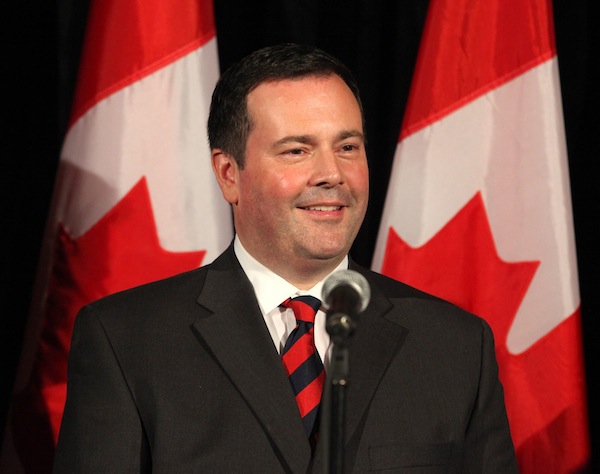
Jason Kenney, Canada’s minister of national defence and minister for multiculturalism. (photo from forces.gc.ca)

Jason Kenney, Canada’s minister of national defence and minister for multiculturalism, says this country should prioritize Christian refugees and other minorities who constitute the most imperiled of the millions fleeing Syria and Iraq.

“Some people are in an understandable wave of emotion … telling me that we should just send C-17 aircraft over there to refugee camps and load them up and bring them to Canada,” Kenney told the Independent. But the refugees and internally displaced persons (IDPs) that Kenney sees as most vulnerable are not even in the United Nations refugee camps, he said.

“I know these issues extremely well and I can tell you that there are certain vulnerable Syrian and Iraqi minorities who cannot and do not even go to the UN camps,” said Kenney. “Why? Because they are the persecuted minorities. Ismaili Muslims, Druze, Chaldeans, Assyrians, Syrians, Armenians – e.g. the Christians – do not go to the refugee camps in Lebanon, Jordan and Turkey because they’re afraid of their minority [status], the implications of that. These are the people who are living in urban slums in Amman, Jordan, in Beirut, Lebanon, and some in Ankara, Turkey, who we have said we will focus our refugee resettlement programs on.”

These minorities are less likely, Kenney said, to harbor individuals who could pose a threat to Canada.

“These are the victims of the doctrine of armed jihad,” he said. “I can tell you that these people, when they come to Canada, they want to keep us safe from what drove them out of their homes. This is why I think we need to be intelligent about refugee resettlement.”

Kenney emphasized that he wishes peace and protection to all of the refugees and IDPs regardless of their faith or political views. But, he added, “I’ve been to the camps, alright? When I go into people’s tents and I see there’s very few young men, I’ve asked in Turkey and Lebanon and in Jordan: where is your father, where is your husband, where’s your son? I see the pictures in the tents.”

The response he has received often, he said, is that the men are off fighting with the al-Nusra Front or other Islamist militias.

“This is a vicious stew of violence and we must ensure that that cult of violence doesn’t inadvertently come to Canada,” said the minister, who is running for reelection in Calgary. “So that’s why we need to be careful and prudent about security screening and, I think, ensure that to the greatest extent possible the refugees who we welcome to Canada are those who are amongst the most vulnerable.… I don’t apologize for saying we should focus on the most vulnerable and on Canada’s security at the same time.”

Kenney, who has been the Conservative government’s point person for ethnic communities, spoke with the paper as the image of Alan Kurdi, the Syrian-Kurdish refugee child whose body washed ashore on the Turkish coast, was animating the world to act on the refugee crisis.

“The image of that boy represents thousands of others who die in human smuggling operations and the tens of thousands who have – excuse me, the hundreds of thousands – who have died in the Syrian civil war and as victims of the so-called Islamic State in Iraq and Syria,” said Kenney. “It galvanizes collective attention on the total humanitarian catastrophe in Iraq and Syria.”

Canada is the largest per capita resettler of refugees worldwide, Kenney said, welcoming one in every 10 resettled refugees in the world. (CBC and Global News have both analyzed this claim and note that it refers to refugees resettled from an asylum country like Lebanon or Jordan to a country that has agreed to take them as refugees. Because most refugees flee to an adjacent country – or, as seen in recent months, trek to European countries – the news outlets assert that Canada is not first, but 41st, in the world. Canada accepts one in 10 resettled refugees, but most refugees remain unsettled, they claim, making Canada’s acceptance rate of total refugees about one percent, not 10%, of the world’s refugees.)

In any event, the enormity of the problem, Kenney said, means “resettlement is not a solution.”

This is where Kenney differentiates the Conservative government’s position from those of the opposition parties. The United Nations High Commissioner for Refugees cites 15 million Iraqi and Syrian refugees and IDPs, he said.

“It’s a cruel myth if we think we can solve a humanitarian crisis with 15 million IDPs and refugees and here’s the key thing – new refugees are being created every single day,” he said. The world needs to address the root cause of the massive refugee problem, he said, which is the genocidal terror of ISIS (also called ISIL or the Islamic State).

“We have a moral obligation to play a role in degrading and ultimately defeating ISIL in its campaign of terror,” he said. “And, we also need to provide humanitarian support to the IDPs and refugees, which we are doing…. We’ve contributed between the two countries over $810 million in emergency humanitarian assistance. We will do more.”

The defence minister took a shot at New Democratic party leader Thomas Mulcair and Liberal leader Justin Trudeau, both of whom oppose Canadian ground troops in the fight against ISIS.

“What we’re doing is important,” Kenney said. “The military contributions that we are making through our airstrikes and the training of the Kurdish Peshmerga in northern Iraq are making a meaningful difference but, in the grand scheme of things, are relatively modest contributions. So, for the Liberals and NDP to suggest that we should completely withdraw even from the air campaign or, in the case of the NDP, from training, is, I think, morally irresponsible and reprehensible. If the world is moved by the images of the Kurdi family on the Turkish beach, we must recall that these were people who fled the violence of ISIL and there will be more Kurdi families unless and until the world stops this genocidal terrorist organization. That’s why we believe there is a moral obligation and a security imperative for us to participate in the international coalition degrading and, hopefully, ultimately defeating ISIL.”

On the issue of domestic security, Kenney also lashed back at critics of Bill C-51.

“If you look at the additional security powers included in Bill C-51, they are modest compared to most of our liberal democratic peer countries,” he said. “Most of the new powers included in Bill C-51 are actually invested in the courts, the judiciary, not in the police or intelligence agencies and certainly not in the hands of politicians. And many of those additional powers themselves are very modest.”

Kenney said RCMP were keeping an eye on Martin Couture-Rouleau, the “lone wolf” terrorist who killed Warrant Officer Patrice Vincent in Quebec last year.

“The RCMP went to the prosecutors and said we want to apply for a preventative detention order or peace bond to restrict this guy’s movements because we think he’s going to do something crazy and violent,” said Kenney. “The prosecutor said, sorry, but we just do not have the legislative, the statutory, tools to do this. We would have to prove to a court that he will commit a terrorist offence and there’s no way to do that.”

Under the new law, said Kenney, police can go to the prosecutor, who in turn can go to the court, and the court determines whether an order for preventive detention can be issued.

“And, by the way, the maximum order for that can be seven days,” he said. “In Britain, it’s 28 days. It’s why I say the powers here are relatively modest.”

Another example of what Bill C-51 does, he said, is to allow the Canadian Security Intelligence Service to interrupt a possible terrorist event.

“What does this mean practically? If CSIS is observing that a 15-year-old kid’s spending hours every day on terrorist websites, instead of just waiting for him to blow up metaphorically, they can go to his parents now and say, ‘Are you aware that your son appears to be in the process of radicalization?’” Kenney said. “Is this a violation of civil liberties? No. As the prime minister says, the most important civil liberty is the right to live safely and securely.”

Kenney described the idea that C-51 could be used to infiltrate or disrupt civil society protests against things such as oil pipelines as “rubbish.”

“I think the criticisms of Bill C-51 have been massively overblown,” he said. “If they advocate going and blowing up pipelines, yes, possibly. But protesting the construction of pipelines? Absolutely rubbish. No police officer would be interested in that, no prosecutor would bring a charge on that, no court would accept it. It is ridiculous.”

The Conservative government has often been alone on the international stage in defending Israel’s right to defend itself, a position that has been criticized on several fronts, including accusations that the Tories have turned Israel into a partisan political issue. The Independent asked if the government’s vocal position is driven by theology, politics or ideology.

“What drives that is principle,” Kenney said. “Israel is not a normal state. Israel is a moral cause. Israel is the refuge of the survivors of the Shoah and, therefore, the world has a moral obligation to ensure the protection of that refuge, that one and only Jewish homeland in the world.”

He dismissed political expediency as a factor, noting that fewer than one percent of Canadians are Jewish – and that not all of them are committed Zionists – and Canada has little of the Christian Zionist movement that exists in the United States.

“So, it’s not political,” he said, adding that it is also not based on “some kooky Christian reconstructionist millennial theology.”

“I have never heard a Conservative political actor in Canada make reference to Christian Zionist theology in articulating our support for Israel,” he said. “That’s a phantom for some paranoid minds on the left. The truth is this … we see Israel as an emblem, a symbol, a surrogate for Western civilization in the Middle East, by which we mean that Israel is predicated on the belief in human dignity, which is manifest in a liberal democratic political system, protection for human rights, religious freedom and pluralism.”

He said Israel’s enemies are motivated by what they view as “an unacceptable presence of those Western civilizational values in the Middle East, but secondly because the enemies of Israel are motivated by a deep and irredeemable antisemitism.”

“Most of Israel’s enemies do not seek a conventional peace – negotiations toward a two-state solution or a conventional political solution to the conflict there. They seek one thing, which is the elimination of the so-called ‘Zionist entity’ and the driving of the Jews into the sea. A second Holocaust.”

In addition to foreign affairs, Kenney said he wanted to remind Jewish Canadians of programs the government has undertaken domestically.

“We’ve taken a zero-tolerance attitude to antisemitism here domestically and that’s not just rhetorical,” he said. “We’ve paid a price for it. I’ve defunded organizations that were receiving grants – perversely – to provide integration services to newcomers, like the Canadian Arab Federation and Palestine House, whose leadership were openly antisemitic. I’ve been sued for it, our government’s been sued for these decisions, but we did the right thing.”

The government, he said, has also funded security infrastructure projects to upgrade security at synagogues, Hebrew schools and Jewish community centres.

On the issue of whether Canada is in a recession, Kenney said there was a sectoral contraction in oil that’s affected Alberta.

“No doubt about it, Alberta is in a recession due to the crash in oil prices,” he said. “But the rest of the country and the other industry sectors are growing. Employment remains strong. This is hardly a recession by any broadly understood definition and, according to the June StatsCan report, we’re back into a growth phase of two percent annualized growth. The dumbest thing we could do would be to act as though there is a serious, deep recession by going out and borrowing tens of billions of dollars as the other parties [would] do, which constitute deferred taxes. We think fiscal discipline, low taxes [and] expanded trade markets continue to be the right recipe for growth.”

The Independent has interviewed Liberal leader Justin Trudeau and has invitations out to NDP leader Thomas Mulcair and Green party leader Elizabeth May. The federal election is on Oct. 19.

Israel and the election

The Conservatives, Liberals and NDP have all expressed strong support for the Jewish state. Is there any difference between them?

Line up the platforms of the three main political parties and, despite the rhetoric, they are all solid allies of Israel.

The federal Conservatives, Liberals and NDP all profess support for Israel’s right to exist, for the nation’s right to defend itself and for a two-state solution. All three leaders have visited Israel, with Prime Minister Stephen Harper being the most recent to visit, in January 2014.

Indeed, Canadian political support for Israel has been consistent since the establishment of the Jewish state in 1948, said McGill sociology professor Morton Weinfeld.

It is rooted in a strong and shared Judeo-Christian tradition but has gotten a boost recently, as Canada and the West confront groups such as the Islamic State and other forms of militant Islam, he said.

The perception, especially among Jewish voters, however, is different.

photo - Stephen Harper
Stephen Harper (photo from sv.wikipedia.org)

“I think the perception is that Stephen Harper and the Conservatives are the most committed to Israel’s security,” Weinfeld said. “They [voters] would probably say the NDP would be less committed to Israel, not because of [NDP leader Thomas] Mulcair, but because of elements in the party. I would think the perception that the Liberals under [leader Justin] Trudeau would be in the middle.”

That perception is based in reality, since the Harper government has made clear and forceful statements about support for Israel, Weinfeld said.

However, Liberal MP and foreign affairs critic Marc Garneau pointed out that it is simply because Harper occupies the highest office in the country that his decisions have greater visibility than statements by other parties.

“There are no differences [between the Conservatives and the Liberals] in terms of a lot of the positions [on Israel], and I try to get the message across. I don’t get to do it in the public way that you do when you’re the prime minister and the government of Canada.”

Meanwhile, in what is shaping up to be a close three-way race, foreign policy, once only of interest to wonks and Ottawa insiders, is coming under closer scrutiny by voters.

The amplified attention being paid to foreign policy is being driven by a more sophisticated and diverse electorate that is more globally connected, said Chad Rogers, a partner in public affairs agency Crestview Strategy.

But it would be wrong to assume that the Tories’ especially vocal support of Israel is a ploy to woo Jewish voters. The electoral math, with Jews concentrated in a handful of ridings, doesn’t add up, said Rogers, who has worked on several Conservative campaigns.

Rather, the Tories’ support is part of a consistent worldview that is reflected in its defence of Ukraine and on issues such as opposing the persecution of gays in Iran or protecting Syrian refugees, he said.

“The mistake is to look at this and say it’s a political issue and it’s about Jews and Israel,” he said. “It’s a worldview that says we will side with democracies over countries that are not democracies.”

While Harper is portrayed as being in lock step with Israeli Prime Minister Binyamin Netanyahu, that’s not accurate, Rogers said. Harper “has been very frank” with the Israeli government on its policy on settlements.

photo - Justin Trudeau
Justin Trudeau (photo from en.wikipedia.org)

For the Liberals, the greatest challenge is a political platform that’s identical to the Tories’ on support for Israel, but is perceived by some voters as weaker.

Trudeau “won’t make the issue of Israel a wedge issue. He believes Canada should support Israel because it is the right thing to do,” said Irwin Cotler, Liberal MP for Mount Royal and a former minister of justice and attorney general, who is not running for reelection.

“I welcome Harper’s support for Israel, but when Harper says if you care about Israel, you must vote Conservative, then he politicizes it,” Cotler said. “When you do that, it undercuts support for Israel.”

In previous elections, brochures were distributed to Jewish voters in his riding and others alleging that Cotler and the Liberals had not been forceful enough in countering antisemitism and terrorism and in supporting Israel. Cotler believes this type of negative campaign cost the Liberals seats in heavily Jewish ridings, partly because the allegations seemed so absurd that the candidates did not mount a strong defence, but he believes it won’t be successful this time around.

In recent weeks, guests invited to a Toronto fundraiser for the Liberals, hosted by pharmaceutical magnate Barry Sherman, received an email from a Jewish Conservative supporter charging that Trudeau was less than the staunch ally of Israel he professes to be.

Sherman countered with another email which, like the original exchange, has been distributed beyond the initial circle of invited guests. Cotler said this is the tack that Liberals need to take.

“What Sherman did was to fight back with the facts and the truth, rather than letting those allegations take hold,” said Cotler.

While elections are usually fought on domestic issues, Cotler believes foreign affairs concerns “have come to the fore” in this election, spurred by the instability in the Middle East.

Many Jews are not single-issue voters, but the threat posed by Iran and the deteriorating situation in Syria “create a heightened concern in general, and among Canadian Jews in particular,” he added.

photo - Thomas Mulcair
Thomas Mulcair (photo by Asclepias via commons.wikimedia.org)

The NDP’s support for Israel puts it at odds with other leftist parties in Europe, which have taken a much harsher tone with Israel, but places it alongside other Canadian political parties, said Judy Wasylycia-Leis, a former NDP MP for Winnipeg North.

“The position is unique in social democratic parties because of Canada’s role as a peacekeeper and mediator generally in the world,” she said.

The NDP, especially under Mulcair, has shown unwavering support for Israel, she said.

Voters got a good look at how Mulcair would handle a crisis in the Middle East during the war in Gaza last summer. The NDP leader acknowledged that Hamas was a terrorist group and that Israel had a right to defend itself, while simultaneously lamenting the deaths of innocent civilians and calling for a ceasefire.

The intensified attention to foreign policy has left the parties competing for the title of who is Israel’s best ally.

While the Conservatives have painted themselves as “a strong friend” of Israel, Wasylycia-Leis disagrees. “I don’t think a good friend of Israel would use this as a wedge issue,” she said. The Tories’ uncritical support for Israel has made it a polarizing issue for Canadians instead. “I think the NDP has been criticized for offering a more nuanced, balanced approach.”

Meanwhile, Mulcair’s pro-Israel direction has also generated tension within the party itself. Last summer, a Montreal-area MP quit the party, citing Mulcair’s policy on Israel. A Nova Scotia NDP candidate for this year’s election resigned recently after making critical comments about Israel, while two other NDP candidates are facing close scrutiny for previous remarks.

As foreign policy concerns play a greater role in the election, the question is to what degree this drives voters. In the Jewish community, it certainly plays a pivotal role for many voters, strategists say.

While “bread-and-butter issues,” – the economy, jobs and health care – have traditionally been the chief concerns for voters, Wasylycia-Leis, who’s been through 14 elections, said foreign affairs have taken on a new significance for Canadians because of the Tories’ handling of such issues as Bill C-51, which addresses terrorism, and domestic controversies, such as the legality of wearing the niqab at citizenship ceremonies. But, for Jewish voters, the issue takes on even greater importance, she said.

“Positioning on the Middle East conflict is very important for Jewish voters. I’m not so sure they appreciate the Conservative approach,” she said. “I think they also understand that approach doesn’t bring help in terms of a long-term solution that everyone wants.”

Weinfeld agrees that Jewish voters tend to show special interest in Israeli affairs, but especially in this election, when the Conservatives have positioned themselves as Israel’s strongest ally.

“The community is probably split at this point,” he said. “Those for whom Israel’s security is the Number 1 concern, and think things like the Iran deal are disastrous, would tend to lean toward Harper.” But “many would think that Harper’s position’s is too one-sided or that there are other domestic issues, which might lead them away from support from Harper.”

– For more national Jews news, visit cjnews.com.

Researcher moves to London

The Canadian government’s policies toward local research and innovation are being streamlined with industry, making it so researchers are no longer free to look outside the box. This is one of the reasons Dr. Robert Brownstone gives for his decision to leave Canada to live in England and teach at the University College of London.

photo - Dr. Robert Brownstone
Dr. Robert Brownstone (photo from Dr. Robert Brownstone)

Brownstone, who was born and raised in Winnipeg, has spent most of his research career in Canada. He is a neurosurgeon who has treated people with movement disorders, pain and epilepsy, and who researches neural circuits that control movement. Prior to recently leaving the country, he was working as a professor of surgery (neurosurgery) and medical neuroscience at Dalhousie University.

“While it could be argued that there have been no cuts to the Canadian Institutes and Health Research (CIHR), funding has been flat (which is in effect a cut) and funding has been directed to specific programs (which is a cut to investigator-driven fundamental research),” said Brownstone in an interview with the Independent.

Minister of State (Science and Technology) spokesperson Scott French challenged this claim, however. “Since being elected in 2006, our government has made record investment in science, technology and innovation to push the frontiers of knowledge, create jobs and improve the quality of life of Canadians – including providing over $1 billion in funding toward neuroscience research alone,” he said.

French added that CIHR directs two-thirds of its funding envelope to basic or discovery science to strengthen Canada’s position as a world leader in health research.

photo - Dr. John Bergeron
Dr. John Bergeron (photo from Dr. John Bergeron)

McGill University’s Dr. John Bergeron – researcher, professor and chair of anatomy and cell biology for 13 years – explained the issue using a hockey analogy. “For whatever reason,” he said, “we decided that talent and accountability to genuine discovery would not be part of our funding mechanism. That decision was made by administrators and, in my mind at least, it’s sort of like saying, ‘We’re going to get the best logos in hockey and that will make us win the championship, the NHL cup, or whatever.’ And saying, ‘We don’t need talent…. We just need to look good on camera.’ Of course, that’s not sensible.”

Bergeron acknowledged that generous sums of public money are targeted for research and development. However, he said that an accountability mechanism should be considered to see if that money is targeting talent that generates genuine discoveries.

“By any deductive measure, Canada is not doing well,” said Bergeron. “The most recent is the latest rankings of research universities (viewable at shanghairanking.com). We’ve had zero Nobel Prizes in medicine since our one and only award in 1923 (for the discovery of insulin). All big pharma pre-clinical research labs have left Canada and we have only one living Lasker Award winner – James Till of Toronto.

“It is the university presidents and heads of our funding agencies who have failed the Canadian taxpayer. It is young, genuine talent that is needed across Canada, and the lack of accountability of our university presidents and heads of funding agencies is what is holding us back.”

Bergeron said we are shooting ourselves in the foot by funding research without having an infrastructure to apply the discoveries and reap the rewards of our efforts. “One of my goals is to try to use the Merck labs, get them going to put together a world-class institute to exploit genuine discoveries that are made here in Canada.”

As an example, Bergeron pointed to the work of McGill University Canadian-Israeli educator Dr. Nahum Sonenberg.

“With Dr. Sonenberg’s basic science discovery, he went from figuring out all of the machinery involved in making proteins to stumbling across the fact that if you target a small molecule with some of the proteins he’s discovered, it improves memory. So, colleagues in the U.S. and Britain teamed up with biotechs and big pharmas and have now used this discovery to develop drugs to treat senility, Alzheimer’s, memory loss.

“This is going to be a market creating hundreds of millions of dollars that we’re not going to exploit [in Canada]…. We don’t have any infrastructure to do this, all because these crazy administrators know nothing about what real discoveries have been historically.”

Bergeron sits on grant panels for the European Commission that provide 10 million euro grants a year, as well as U.S. funding agencies panels that give out more than a million dollars in grants per year.

“When you’re in Canada, the average grant in the last competition for the open operating grant averaged out to about $125,000 a year per investigator,” said Bergeron. “That’s serious taxpayer money, but it’s not competitive with what’s going on in the rest of the world. We’re spending over $30 billion a year in research and development, yet we don’t use peer review. Funding decisions are made by administrators that know nothing about discovery.”

photo - Jim Woodgett
Jim Woodgett (photo from Jim Woodgett)

Jim Woodgett, investigator and director of research of the Lunenfeld-Tanenbaum Research Institute at Toronto’s Mount Sinai Hospital Joseph and Wolf Lebovic Health Complex, also said that funding has been stagnant in recent years and that restructuring at CIHR has resulted in further hoops researchers need to jump through to access funding.

“To access funds here, in Canada, you have to bring to the table equivalent funds from other sources,” said Woodgett. “They can be philanthropic sources, etc. These types of programs, the government has been quite keen on promoting as a means of leveraging additional support. And some types of research just don’t have that kind of accessibility or the researchers don’t have accessibility to those matching funds, so that does become a bit of a limiting problem.”

Woodgett said there needs to be a balance, and better ways to access funding that do not require fundraising. “You need to balance discovery research and applied research, otherwise what happens is you just dry up after awhile,” he said. “All the ideas dry up and there’s nothing then to translate into applied research.

“You can argue you should spend 10 percent of your funds on discovery and 90 percent on applied … and say that the private sector shouldn’t be funding basic science … they should be only funding applied science.”

Internationally, many government-supported research funds go toward the discovery end of the spectrum. Canada needs to do the same if it wants to retain top researchers, said Brownstone.

Acknowledging that he is not a politician nor an economist, he said, “I feel there is intrinsic value in knowledge or a knowledge economy. Good things come from knowledge. Just look at leaders in the field, like Switzerland and Silicon Valley, unlike oil economies, such as Saudi Arabia.”

As far as creating change and reinventing research in Canada, Brownstone said, “Changing culture is hard, but it can be done with leadership. Look at [U.S. President John F.] Kennedy and landing a man on the moon.”

Rebeca Kuropatwa is a Winnipeg freelance writer.

Adler amends bio, posters

The photo tweeted Aug. 16 by Walrus editor Jonathan Kay of Mark Adler’s original campaign office sign. (photo from @jonkay)

Conservative MP Mark Adler has removed a reference in his online biography in which he described himself as the first child of a Holocaust survivor to be elected to Parliament.

The move came after an Aug. 17 Canadian Jewish News story revealed that Raymonde Folco, a Liberal who served as a Montreal-area MP from 1997 to 2011, preceded Adler in that distinction, and that Folco was herself a child survivor of the Holocaust.

The Adler campaign also changed a large building sign outside his campaign office that contained a reference to the candidate being the son of a Holocaust survivor, which was removed and replaced with a message about “keeping our taxes low.”

The York Centre MP found himself at the centre of controversy after Walrus editor Jonathan Kay tweeted a picture Aug. 16 of Adler’s original campaign office sign containing his claim about being the son of a survivor. “And who needs Yad Vashem when Holocaust awareness is now being promoted on partisan Conservative signage?” Kay tweeted with the photo.

Adler’s current online biography continues to describe him as “a child of a Holocaust survivor … [who] has passionately dedicated his time to raise awareness about discrimination and antisemitism throughout the world.”

In a prepared statement, Adler said, “Throughout my life, I have advocated for Holocaust remembrance – so that all Canadians will remember the great evil of the Second World War and never forget. My father came to Canada after surviving the horrors of a Nazi death camp, and chose Canada based on the values that continue to unite us: democracy, freedom, human rights and the rule of law.

“I am proud to serve our country and deliver on the priorities of residents in York Centre – including advocacy for the security of the state of Israel and the promotion of democratic values abroad. I share the concern of many residents who are alarmed by the global campaign to isolate and denounce Israel, and the moral relativism that was embraced by past governments who equivocated on the defence of the Jewish state.”

Adler’s NDP opponent, Hal Berman, a palliative care physician, criticized the MP on his own Twitter feed, saying, “Shame on you using #Holocaust for political gain. #yorkcentre deserves better – I am in this for voters.”

Ironically, Berman is also the child of Holocaust survivors. In his own web bio, the Montreal-born Berman points out his “grandparents and mother arrived to start a new life after the Holocaust.”

Meanwhile, Folco said she found it “disgusting” for Adler “to use the Holocaust in this way, for personal ends.” As an MP, she never publicized her status as a child of Holocaust survivors, while Adler is “profiting” from it.

“Whether he is the first or 15th, I should think it is your record that matters: what you’ve done and what you intend to do for Canadians, when elected,” she told the CJN.

Adler is far from the first politician to draw attention to unique circumstances in their personal background.

In Vancouver, Liberal candidate Harjit Sajjan, who served in the Canadian Armed Forces and received the Order of Military Merit, noted in his web biography that he “is the first Sikh to receive this award and continues to be a role model for youth across the country as he prepares to serve his country in new ways.”

Retired senator Vivienne Poy, a Liberal, is described on the parliamentary website as the “First Canadian of Chinese origin appointed to the Senate.” She notes on her own website that she “was the first Canadian of Asian descent to be appointed to the Senate of Canada.”

High-profile NDP candidate Olivia Chow mentions her unique circumstances in her online biography, as well: “Olivia was born in Hong Kong and moved to Toronto with her parents when she was 13. In 1991, Olivia became the first Asian-born woman elected as a Metro Toronto councilor.”

And, south of the border, Hillary Clinton, the front-running Democratic Party presidential candidate, in a statement designed to appeal to new Americans, said during the campaign that her grandparents had immigrated to the United States. However, that comment was inaccurate. Three of her grandparents were born in the United States and the fourth immigrated to the country as a young child.

– For more national Jewish news, visit cjnews.com.