Everything is political in Israel; there’s no escaping it. Pick a corner, a street sign, a building, there’s potential for argument. So, you can imagine what it’s like to take a tour of an area as contentious as the West Bank, which, thankfully, was quiet with respect to violence when we visited. Not surprisingly, our guide almost took on the role of spokesperson for the Palestinian Authority.
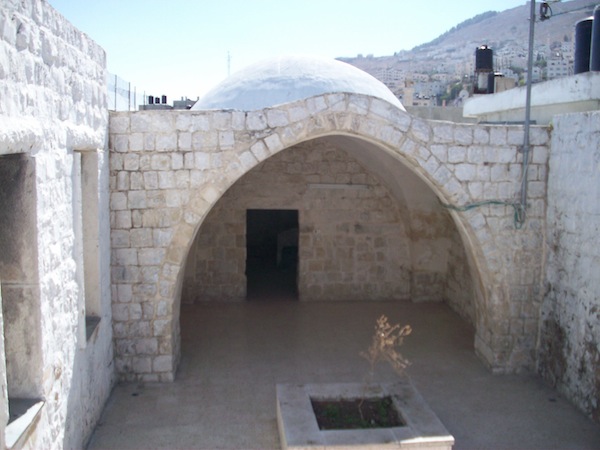
Abraham Hostel, in the heart of Jerusalem, offers a three-day West Bank tour. The tours include Nablus (biblical Schechem), Jenin and the refugee camp that borders it, Jericho, Ramallah and Bethlehem.
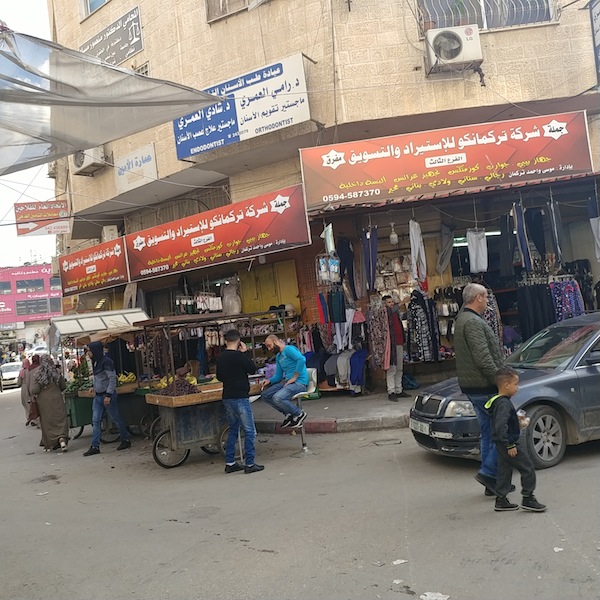
It was eye-opening for me. For one, the media frequently portrays Palestinians in the West Bank as living in squalor, often involved in conflicts with the Israel Defence Forces. We saw bustling markets, shopping centres, corporate plazas, sports cars, and plenty of American restaurant franchises, such as KFC and Pizza Hut.
Our tour guide was a wannabe biblical scholar and archeologist. “Personally,” he told us, “there could never have been a Jewish Temple.” It’s impossible, apparently, to build on top of solid rock, he explained.
He gave a brief history of the term Palestine, correctly stating that Roman invaders, Vespasian and Titus, in the first century, renamed the region from Israel/Judah. But why, particularly, call it Palestine? “Hmm,” he said, taking a moment to think. “Because they liked the name.” Not, as many scholars believe, because the Romans sought to call the area after the Jews’ sworn enemy, Philistines, to rub salt in the wounds.
While at Bethlehem’s Church of the Nativity, our guide gave his take on the Gospels, contending that it wasn’t the case that Jesus’s mother, Mary, couldn’t find a room at an inn – rather, the Jews forbade Mary to have a room because she was ritually unclean after childbirth. And that, he said, was the unwritten explanation of the manger/barn scenario.
He then proffered his views on Jews. “Since anyone can become a Jew,” he said, “they’re not really tied to the land.” Meaning that anyone who has converted, or was born to converts, has no connection to Israel.
And, he added, since the parcel of land called Judah, from which the name “Jew” was derived, was only a fraction of modern Israel, today’s Jews should only have rights to those ancient borders.
Quoting the Torah – “if you bless Israel, you are blessed; if you curse Israel, you will be cursed” (Genesis 12) – our guide insisted that the “Israel” referred to in this verse has never meant “the nation of Israel” (which it does), but only refers to the patriarch Jacob, who was later named Israel. The underlying message was that there was no concern about being cursed if you curse Jews.
For good measure, he asked, pointing toward the refugee camp, “Doesn’t it say ‘love your fellow’ in the Torah? That’s one of the top commandments.”
Almost no tour anywhere is complete without the commercial aspect – wandering through the souvenir shops and markets.
At the ice cream shop, our guide claimed, “Palestinian ice cream is made with real cream, not like the Israeli version!” At the spice store, he spoke about how Israelis use cheap ingredients in their Zaatar, but not Palestinians. And, he said, “Even Israelis agree that Palestinian beer is better than the sewer water in a can they make.”
Yasser Arafat mausoleum in Ramallah. (photo by Dave Gordon)
The hero worship of Yasser Arafat was astounding. Virtually every street corner in Ramallah had a wall-sized poster of him. My trip was in November, so these displays were likely timed for the anniversary of his death. Schoolchildren took a field trip to his tomb in Ramallah for a commemoration and photo opportunities.
Our guide made every effort to politicize the tour, down to the free lunch. He said there wasn’t such thing as “Israeli couscous,” only co-opted “Arab-Palestinian couscous.” Scholars and culinary experts differ, saying that Israeli couscous was created in the 1950s in response to food rationing. Alas, more was still to come from our guide.
While he had our attention, he showed us illustrations of how Palestine in 1947 comprised modern Israel and the West Bank, while today, the Palestinians only have small, scattered autonomous dots in the Palestinian Authority. As for the Palestinian part in this development, he said, “just a couple of bus bombs” derailed the peace process, but only temporarily.
Dave Gordonis a Toronto-based freelance writer whose work has appeared in more than 100 publications around the world.
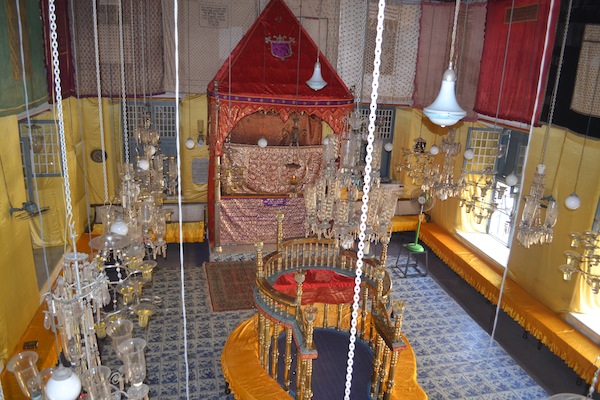
The interior of Paradesi Synagogue in Kochi, India. (photo by Lauren Kramer)
Dec. 6 marked an emotional homecoming for Canadian siblings Linda Hertzman and Kenny Salem. The pair were among some 180 Jews who returned to their birthplace in Kochi, India, to mark the 450th anniversary of the Paradesi Synagogue in the neighbourhood known as Jew Town. Three generations of families gathered from Israel, Australia, Canada and England to celebrate the milestone. They walked the ancient stone pathway of Synagogue Lane, spoke their native tongue of Malayalam and congregated in the synagogue for a festive celebration of the Jewish life that once flourished in this corner of southern India.
The festivities were tinged with sadness, however. For many, it would be their final visit to the beautiful Paradesi Synagogue. The shul is unique for its colourful oil lamps and a Torah scroll decked in a gold crown that was gifted to the community in 1802 by the maharaj of Cochin. (Kochi is the preferred term for the city formerly called Cochin.) The handpainted Chinese tiles on the synagogue floor have long since emptied of worshippers and the Jewish community of Jew Town now numbers just five – the oldest of them age 96. It’s tourists that stand beneath the oil lamps these days, visiting from dawn to dusk to marvel at the ancient Jewish history and try to comprehend its relevance. Opportunities for congregational prayer have been rare since most of the community left for other parts of the world from 1948 onwards.
On the Shabbat following the 450th anniversary, however, tourists were turned away from the Paradesi Synagogue and the sanctuary again echoed with Jewish prayer. The pews were filled with women in colourful dresses, reaching out to touch the ancient Torah scrolls as they were lifted joyfully from the aron hakodesh (holy ark) for morning prayers. Tears streamed down the faces of Jews for whom the synagogue was filled with rich memories. There were children who were seeing their families’ history for the first time and elders who were stepping into the synagogue for the last time. Adults in their 60s recalled their childhood memories of watching their parents pray in the synagogue, of riding their bicycles around the narrow roads of Mattancherry and of the warm, deeply religious and meaningful Jewish life that existed in Jew Town.
Paradesi Synagogue, also known as Mattancherry Synagogue, is the building in the back. (photo by Lauren Kramer)
The vibrant hub of Jewish life in Kochi, Jew Town was home to three synagogues, each serving different segments of the community. The “synagogue in the middle,” with a star of David still etched in its concrete, is now a repurposed building, while the southernmost shul is a ramshackle 900-year-old structure, its rafters occupied by nesting pigeons. Indentations on the side of many of the doors of homes and businesses in Jew Town mark the spot where mezuzot used to announce a Jewish home and the large Jewish cemetery a few minutes’ walk from the shul is unlikely to be filled with many more graves as the years roll by. The Jewish life that flourished here has become a lucrative business for antique dealers and souvenir shops selling scarves and trinkets, retailers loitering outside and using all their powers of persuasion to bring shoppers in.
Hertzman, who lives in Richmond, B.C., and Salem, from Richmond Hill, Ont., were the first guests to check into what was their family home, recently transformed into a boutique hotel called A.B. Salem House. It was named for their late grandfather, Abraham Barak Salem, an attorney known as the “Jewish Gandhi” for his negotiations with Israel that enabled the Jews of Kochi to make aliyah.
Kenny Salem left Kochi at age 25 in 1987 and returns to the city annually to see his childhood friends. “It was good to have everyone back here in Jew Town,” he said. “Friends and family were walking in and out of our house all day long, just like old times, when my mother had her door open to everyone. But the sad part is that, in the aftermath of the celebrations, Jew Town is silent once again.”
There are plans to fill that silence in the near future. David Hallegua, a spokesperson for the Cochin Synagogue Trust, announced plans to build a museum dedicated to the history of the Kochi Jews in the hall above the synagogue.
“It’s a dwindling community,” admitted Salem. “So, when there are no longer any Jews living here, we will hand the management of the synagogue and cemetery over to the Archeological Department of India. We need to tell the story of the Jewish community that once lived here and pass on this message to future generations.”
Lauren Kramer, an award-winning writer and editor, lives in Richmond. To read her work online, visit laurenkramer.net.
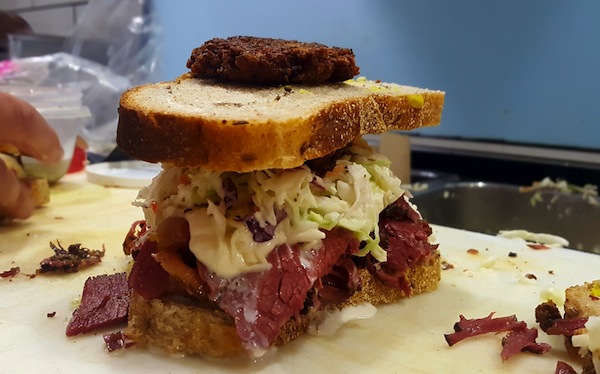
The Hungry Jew, one of the signature sandwiches at Buzzy’s Luncheonette. (photo by Adam Bogoch)
My friend, Adam Bogoch, pitched it as the “Smoked Meat Story.” Soon after that email, he would write his own review, for narcity.com, titled, “This smoked meat sandwich on Salt Spring Island in B.C. will actually change your life.” His friend and colleague, Howard Busgang, had opened a deli on the island, and not only did I need to meet Busgang, but I needed to get on a ferry and taste The Hungry Jew, one of the signature sandwiches at Buzzy’s Luncheonette.
Between the Independent’s annual summer publishing hiatus and the High Holidays, it was November before Adam and I headed to Salt Spring. The travel ran like clockwork and we were pulling up to 122-149 Fulford Ganges Rd. right in time for lunch. We shared a Hungry Jew – a Montreal smoked meat sandwich with homemade horseradish sauce, coleslaw and, I kid you not, two latkes – and the Rabinowitz, Buzzy’s take on a Reuben. They were both incredibly good, and the only reason I’ve waited this long to share the news is because I wanted to wait until better weather, when people would be more likely to take a day or weekend getaway.
Howard Busgang serves customers rugelach on a sunny November afternoon. (photo by Cynthia Ramsay)
Even in winter, Buzzy’s was busy. Having arrived at prime feeding time, it was hard to get Busgang to sit down and, as we talked, he was constantly distracted – in a good way – by customers.
“Tell me, I’ll get you another sandwich before you go,” he said as he finally was able to join me at a table outside for the interview.
Born and raised in Montreal, stand-up comedy took Busgang first to Toronto and then to Los Angeles, where he met his wife, Melanie Weaver, and where he lived for 28 years, before returning to Canada.
“She’s Jewish-adjacent,” joked Busgang. “She was working for a rabbi when I met her.”
The two met on a blind date, he said, brought together by a Jewish comic who knew both of them.
When he started in comedy in the early 1980s, Busgang said, “There were not a lot of comics around. It wasn’t like today where every second person does stand-up, so it wasn’t that OK a profession,” as far as his parents were concerned. “It was kind of an oddity, like maybe he’ll grow out of this kind of thing.”
Busgang attended Jewish high school, then went to McGill University before heading to Toronto.
“You know where I started?” he said. “United Synagogue Youth, USY, that’s where I started. I was emceeing all their events and that led me to go professional.”
He recalled the first time he performed at amateur night in Toronto. “They packed the place with all these people from USY who knew me. It was packed, and it was great.”
Howard Busgang, left, and Adam Bogoch prepare sandwiches. (photo by Cynthia Ramsay)
So great, he said, that he was put into regular comedy shows right away, “which wasn’t so easy, by the way, because it wasn’t my friends anymore in the audience.”
When he was a stand-up comedian, Busgang did a lot of Jewish material. “I was a very Jewish comic,” he said.
In Los Angeles, he moved from stand-up to comedy writing. “I just was a little tired of the road,” he said, and performing caused him some anxiety.
“Listen, I had a respectable career, I did well, but I would constantly punish myself by asking, why am I doing this? But I think I do that with everything. I do that with this place [Buzzy’s], I do that as a writer.”
As Busgang was in the middle of saying he might just be a miserable guy, he was called back into the deli to help make a sandwich.
Weaver took his place. Her recollection was that a woman from the synagogue set up that first date.
“I was the only non-Jew in the whole place,” she said. However, Weaver was raised Jewishly, with her family observing some of the holidays, hosting seders, for example, and she taught at a Jewish camp. Born and raised in New York, she moved to Los Angeles some 30 years ago. She and Busgang have been married for about half that time.
“Howard had this property on Salt Spring our entire marriage,” she said. “And so, our entire marriage, I kept hearing ‘Salt Spring,’ ‘Salt Spring,’ and all I kept seeing was this property tax bill every month. I was, like, how good could it be? Then the elections and everything started to happen in the U.S. and it just got bad. We took a trip up here in September [2016], I fell in love and then we came in July [2017].”
A blended family, the couple has three daughters: Alexandra, 30, in Toronto; Emma, 20, in Seattle; and Hannah, 10, who was dividing her attention between helping in the deli and playing with a local dog while her mother was being interviewed.
Neither Busgang nor Weaver had any restaurant experience before opening Buzzy’s. “It’s funny,” she said. “The night before we were open, we had to learn the cash and I was almost in tears.”
The ignorance was a kind of blessing, she said. “I don’t think we knew what could go wrong, so ignorance was bliss, in this case.”
Their first day, there were lineups out the door.
“We got thrown into it, which was great,” she said. “I think if we had opened in the winter, when it was slow, it would have been a different experience.”
Busgang’s love of cooking seemed to have come out of nowhere, said Weaver. “And then he started to smoke his own meat. So, we had that in our back pocket.”
But the couple still wasn’t planning on opening a restaurant, until the location became available. “It was basherte,” she said.
In addition to Busgang’s meat-smoking skills, Weaver’s desire for a good tuna sandwich was a motivation. “So, again, why not open a deli? Not the brightest of ideas, but it worked out.”
Howard Busgang’s father called him Buzzy, hence the deli’s name. (photo by Cynthia Ramsay)
And it’s hard work. There is only one staff member. Busgang smokes meat “around the clock,” said Weaver. “It’s like having a newborn. It’s a lot of work but the rewards – it’s a community, we’ve become part of a community and it means so much. My daughter gets to work the cash register. It’s crazy. We still can’t believe we have keys to this place.”
She said, “If we did anything right, it’s that we didn’t focus on the tourists, we focused on our people, and so we have a lot of loyalty here. I think people also come here [because] there’s a lot of cursing, a lot of bad behaviour, you can come here and just laugh, and that’s what we want. Come here, have a laugh, I’ll make you eat, you have to finish your plate or you go to your room. That was our business plan – make the community happy, hopefully make a few bucks.”
Since they opened, the menu has seen some additions; in particular, matzah ball soup and tomato soup. “We don’t want to get too big. We just want to stay like someone’s kitchen,” she said.
And the island has been very welcoming. “Someone knew that we want to make our own pickles, so they’re going to grow us cucumbers,” said Weaver as one example. “The love here,” she said, “it’s insane.”
Hannah, who had checked in a couple of times with her mother, joined the interview. In addition to sometimes working the cash, she delivers food to the Saturday market and to the bar a few doors down from the deli.
“That’s another thing,” said Weaver, “it’s a family joint.”
School runs four days a week and, while Hannah enjoys helping out, she was still getting used to living on the island. When she’s not working or at school, she’s probably at soccer or horseback riding; she had just received a paddleboard for her birthday. Though she has a couple of sandwiches named after her, her favourite is the grilled cheese.
“A lot of what we’re doing here has to do with taking the power back in our lives,” said Busgang, when he returned to the table. “It has to do with being in showbiz all those years and feeling like you had no control over anything and feeling like you’re handing over all the power to other people to validate you…. I was tired of it.”
Buzzy’s opened on June 22 last year. “Whereas, in show business, nobody wants to help you, in this business, I have so many people who want to help me.”
One of those people was William Kaminski, owner of Phat Deli in Vancouver, who Busgang described as a mentor.
“We’re not perfect but we’re figuring it out,” said Busgang.
The smoked meat he has got down to a science.
“We’re open till four o’clock and then I have to get my brisket ready for the next day, so I have to bathe the brisket,” he said. “We cure it for eight days – dry cure – and then I have to take the salt out, so we bathe it. I’m bathing a brisket right now and sometimes I sing to it. It’s very sweet. After I bathe it, then I put some rub on it and then I’ll take it home and we’ll smoke it for seven-and-a-half hours. And then it goes in the steamer for two, three hours.”
Finding rye bread was one of the early challenges.
“I knew I was in a special place,” he said, “because people would come by with bread and say, ‘Try this bread.’ They’d constantly come in and say, ‘What are you going to do about the bread?’ It became like a cause célèbre, the bread. It took me three months, and I got someone here on the island to make me an organic rye bread.”
Barb Slater makes the bread; Shigusa Saito, the knishes. Saito is now also “making a dark chocolate babka to die for,” wrote Busgang in a follow-up email. “If you’re not already dead, she’s also making us New York cheesecake, our soon-to-be-famous potato knishes, and rugelach.”
Meanwhile, Busgang – whose credits include having been a head Just for Laughs-gala writer, creating the award-winning sitcom The Tournament and writing for TV series Boy Meets World and Good Advice, among many others – is still writing, still pitching shows. Earlier that afternoon, he was slicing meat while plugged into his phone, listening to a meeting in which a producer was trying to put a deal together.
Weaver popped out to say that Busgang often has to go next door to finish his calls because the meat in the charger of his cellphone prevents his phone from charging. “There’s meat everywhere,” she said.
The November sunset as seen from the ferry, en route home. (photo by Cynthia Ramsay)
A couple of relatively new customers stopped to say hello to Busgang and Weaver. They said they were slowly adding Buzzy’s to their list of usual places to eat.
And, said Busgang and Weaver, local Jews have discovered, by going to Buzzy’s and meeting fellow Jews, that there actually is a Jewish community on the island.
“We’re blessed to have this,” said Busgang.
As he explained the deli’s name – his father called him Buzzy – Hannah returned, offering him a taste of a new salad dressing she had created. “Daddy, just try it.”
“Interesting,” he said, “I like it.”
“It’s gross,” she corrected him.
Three generations seemed present in that moment.
As the interview came to an end, Busgang asked, “Do you want some rugelach? I gotta keep feeding you.”
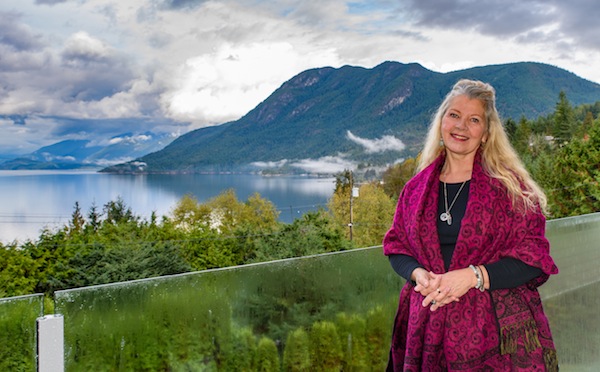
Owner Cynthia Miller in front of Sechelt Inlet at the Pacific Peace Retreat. (photo by Efraim Gavrilovich)
Travel can be one of the most stressful activities there is. The challenges of packing “light” so you don’t have to pay for a carry-on; getting to flights at ridiculously early times of the day; not to mention dealing with foreign currency, travel insurance, airport lineups, lost luggage, strange food and the fear of contracting some exotic illness while away.
When was the last time you took a trip that not only caused minimal anxiety but actually resulted in you coming home more relaxed and truly blissful? And, more than that, with the knowledge of how to maintain that calm once you’re back at home and the stress threatens to build again? Thankfully, we live in an area of the world where such vacations are an easy option within a day’s drive of the Lower Mainland.
Along the Sunshine Coast, less than two hours’ drive from Langdale, is the Pacific Peace Retreat, where owner Cynthia Miller enables visitors to learn how to shift their mindset by being mindful and aware in the moment.
“I help them see the bigger picture instead of focusing on the problem,” she explained. “Too many people talk about the problem without really seeing the deeper aspect of what’s holding them stagnant.”
Miller provides transformation and relaxation through hypnotherapy, reiki, yoga, aromatherapy, creative arts and mindset coaching.
“I believe that we inherently want to move forward and feel a sense of growth,” she said. “And, when you step back and see your life or past from a different viewpoint, you begin to open up to something new, and that’s when growth takes place. Being mindful of the energy you want to put into every situation – that’s what we practise here.”
Miller cautions that mindfulness does take repetition. “As you practise, it becomes automatic,” she said. “I think that’s why people come here.”
At Hollyhock Leadership Learning Centre on Cortes Island, guests can take one of 90 courses offered on everything from discovering your life’s purpose to mindful self-compassion. They range from several days to several weeks.
Hollyhock Garden (photo by Darshan Alexander)
“It’s learning about yourself and how you operate in the world,” said Loretta Laurin, Hollyhock’s communications manager. “We play a part in making the world better through our own development.”
Although many of the courses are geared toward people who are in a leadership or change-maker role, there are also courses that focus on health and wellness, such as cooking courses that help boost the immune system, pilates, qi gong, and self-expression with sound, as well as excursions such as sea-kayaking and nature walks. Everyone is welcome to attend, said Laurin.
Calling itself a “centre for transformative learning,” the Haven on Gabriola Island helps bring balance to people’s lives through coursework, meditation and yoga.
“There’s a real shift in energy level and transformation,” said Jo-Ann Kevala, a Haven faculty member. “People feel more connected to others.”
Even simple activities like walking can be very mindful and meditative and a way to relax into the present, said Kevala.
The Haven offers courses for women or men, couples or singles, those with high stress and those with addictions. Its signature five-day Come Alive program is an “opportunity to revitalize your life, discover and activate your resources and realize your full potential.”
Quantum Leaps Lodge in Golden offers a variety of practices that will get visitors in touch with their calmer selves. (photo from Quantum Leaps)
A little further afield, in Golden, visitors can participate in shamanic drumming, Buddhist philosophies and First Nations activities, such as sweat lodges or vision quests, at Quantum Leaps Retreats.
Owners Brian Olynek and Annette Boelman have accumulated a wide variety of self-discovery practices.
One of the more popular activities is the transformational labyrinth, with several spots to sit and think about specific ideas or create something, according to instructions at each spot. The concepts for the labyrinth are based on those of Buddhist monk and world spiritual leader Thich Nhat Hanh, known for his writings on mindfulness and peace. People are encouraged to walk the labyrinth as often as they want and not worry about time.
While much of the world encourages stress and materialism, at Quantum Leaps, said Olynek, “people step out of fear and stress and tap into their own happiness and joyfulness.”
Baila Lazarusis a Vancouver-based writer and principal media strategist at bailalazarus.com.
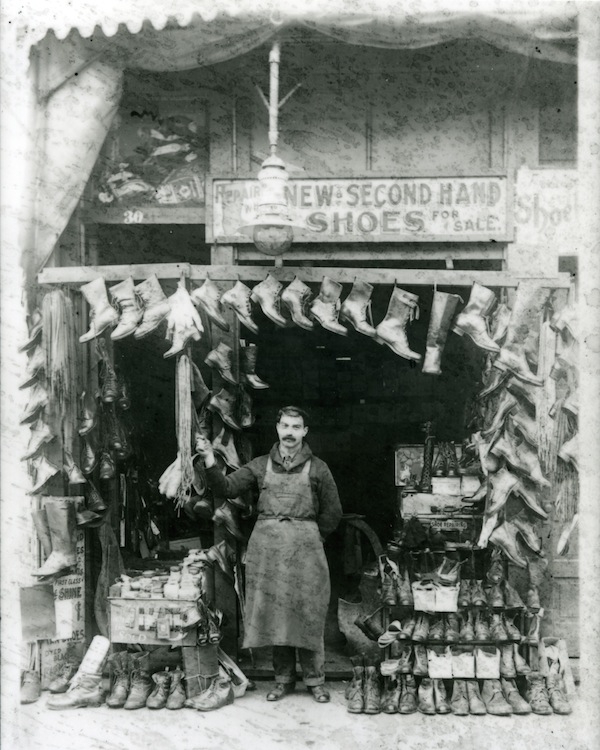
Nessim Menashe, born on the Isle of Rhodes in 1887, came to Portland in 1909. By 1914, he had established a shoe repair shop in northwest Portland, which he operated until 1921. (photo from Oregon Jewish Museum and Centre for Holocaust Education, OJM 03274)
Reading the history of the Oregon Jewish community can feel like reading B.C. Jewish history in a carnival mirror. Everything is familiar but just a little out of place.
Since the sister communities of Vancouver and Portland share both common history and common concerns about the future, there is much we can learn from each other. This is one reason why the Jewish Museum and Archives of British Columbia is excited to be hosting a trip to Portland in late May.
The three-day, two-night trip will take participants to historic sites and Jewish restaurants, and introduce them to engaging locals. Travelers will eat at Aviv, Lefty’s Café, Katchka, and Kenny & Zuke’s Deli. They will visit the Oregon Holocaust Memorial, Oregon Jewish Museum, Powell’s Bookstore, Beth Israel Historic Synagogue, Portland Art Museum, Oregon Historical Society Museum, Portland Rose Garden and Portland’s South End Jewish neighbourhood. They will also enjoy a curator-guided tour of the Oregon Jewish Museum.
As in British Columbia, it was the gold rush that attracted the first Jews to Oregon. German-born Jacob Goldsmith and Lewis May opened a general store in Portland in 1849 and helped found the Masonic Temple the following year. The community’s growth kept pace with the rapidly growing city and, in 1858, the Reform congregation Beth Israel was established. Jews had a disproportionate presence among the merchant class, with one-third of the 146 merchants on record in 1860 being Jewish. They worked in the industries of clothing, tobacco, furniture and wholesale.
Just 328 kilometres north, the Jewish population of Victoria followed a similar trajectory. The earliest arrivals stepped off boats arriving from San Francisco in 1858. They, too, established careers primarily as merchants and, in 1863, opened Congregation Emanu-El, which continues to operate today. In the 1870s, Jewish merchants began placing their bets on the future of a small encampment on the Fraser River, going by the name of Granville. These bets paid off when Granville became Vancouver in 1886, the terminus of the intercontinental railway.
The Jewish populations of Portland and Vancouver have grown dramatically over the decades since, with new arrivals from all corners of the world making their contributions. In both locations, community organizations blossomed early on, providing essential social and cultural services. Today, the Jewish population of Portland, at 50,000, is roughly double that of Metro Vancouver, thanks largely to a wave of young American Jews who were drawn to Portland in the wake of the 2008 market crash.
To learn more about the Oregon Jewish community and to experience it firsthand, join the JMABC-led trip, which departs by chartered bus on Monday, May 27, and returns Wednesday, May 29. For more information and registration, visit jewishmuseum.ca/program/portland-jewish-history-tour. The deadline to register is March 31.
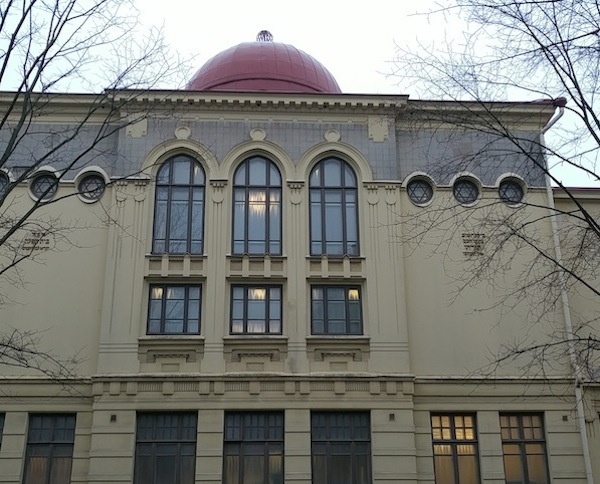
Helsinki Synagogue, in the heart of the city, was built in 1906. (photo by Dave Gordon)
Helsinki’s a city where you can experience high adventure, or simply chill, by taking in the sites on an easygoing walking tour. Elements of bustling metropolis meld with the laxity of a rural town, depending on which turn you take.
Home to some 1,400 Jews of Finland’s approximately 1,800-strong Jewish community, it is not a particularly large city, enabling a tourist to take in much of the core in a very short period of time. And it’s a treat for the eyes – modernity meets medieval, where whole city blocks are infused with colonial Swedish or Russian architecture, rich with history and stunning detail.
Preserves and juices in the market in Helsinki. (photo by Dave Gordon)
So, take it slowly. Walk along Norra Esplanade from the waterfront for a couple of kilometres and enjoy a wide array of boutique shops, dining options, cafés and the general feel of the city.
Stroll along Market Square, next to city hall, to get snapshot of local crafts and fare. It’s brimming with booths and kiosks – merchants peddling their wares. Drink fresh squeezed cloudberry or sea buckthorn juice (high in protein, vitamins C and E, and organic acids). Bring home an array of tchotchkes, like handmade knitted slippers, hats and sweaters. Nosh on reindeer jerky. Check out the bookmarks made with reindeer hide, and keychains made with reindeer antlers.
For investors and business, Helsinki is the latest start-up hub.
The city leapt from 43rd place in 2017 to 28th in 2018 in high-tech start-up successes among European and Scandinavian nations. The mega-conference for tech start-ups, Slush, takes place here, gathering 20,000 people. And, one of Europe’s biggest start-up campuses is about to be built, at 70,000 square metres.
Among the disruptors attracting global attention are Leadfeeder (analytics), ContractZen (one-click-cloud contracts), Smarp (shareable content hub), Utopia Analytics (artificial-intelligence monitoring of online discussion) and Hoxhunt (corporate security).
***
Finland is home to three Jewish institutions. Helsinki Synagogue, in the heart of the city, was built in 1906, and now serves about 1,200 congregants. Turku Synagogue was built in Turku in 1912, and has a few hundred members between the city and its surrounding areas. Both shuls are Ashkenazi Orthodox.
Helsinki Synagogue, with its bronze-coloured Byzantine-style dome, also houses a mikvah, a Talmud Torah and a playground. The congregation uses, not surprisingly, bilingual prayer books, in Hebrew and Finnish.
Meanwhile, Chabad Lubavitch of Finland is building a centre next to the city’s Presidential Palace, where they will offer classes, a daycare, a summer day camp and other services. Kosher meals are available through a handful of stores and organizations. Fazer, a local company that makes chocolate and cheeses, doesn’t have a hechsher (kosher certification), but is accepted by the community’s rabbinical authorities as kosher to consume.
The first Jew to officially plant roots in the country is recorded as Jacob Weikman, in 1782, despite the government ban on Jewish residence at that time. By the 1830s, there were enough Jewish soldiers to fill a makeshift chapel at the military base Suomenlinna Fortress, reports Hadassah magazine.
Many of today’s Finnish Jews are believed to be descendents of Russian infantrymen stationed there about 150 years ago.
During the Second World War, it was a complicated relationship for the Jews, many of whom fought with the Finnish army against the Soviets and, later, against the Nazis.
Finland openly defied the Nazi order to deport its 2,300 Jews, according to Yad Vashem. There was, however, a small exception: officials in 1942 allowed the Nazis to apprehend eight Jewish refugees. In 2000, a stone monument to memorialize the seven who died was erected by the government, at the park on Tähtitorninmäki (Observatory Hill).
But new evidence suggests that at least six soldiers of Finland’s army partook in the Final Solution. In January 2018, it was reported by JTA that an investigation had been launched by the Finnish government after the Finnish Society of Church History apparently found written testimony from one of the soldiers of his complicity. More than a year later, it seems that no results from the probe have been announced.
***
Helsinki’s train station. (photo by Dave Gordon)
More history and culture can be found at the National Museum of Finland. Until Sept. 1, the temporary exhibition Inherit the Dust – Photographs by Nick Brandt is on display, offering an idea of the damage human beings are doing to the environment. Permanent exhibitions at the museum include Prehistory, a multisensory experience that allows visitors to “[t]ouch a genuine reindeer axe, bring a cave painting to life and see a mammoth move. The digital exhibits bring history to the present day.”
The museum of contemporary art, Kiasma, at just 20 years old, has some 8,000 works in its collection, and about 100 are added annually. Here, you can get a great feel for Finnish architecture from the building itself and, with renovations starting this year, the fence blocking off the area under repair has been covered with poster art.
***
There are many other places to visit, of course.
Allas Sea Pool, next to Market Square, is where locals go after work to exercise or relax. The Olympic-size outdoor pool is heated, having a calming effect on the body, while visually, the mist hovers at eye level as it collides with the cool air. Meanwhile, the “sea water pool” – filtered and treated with UV rays – is water straight from the ocean, chilly and punchy. Think of it like the famed “polar dive.”
Want to tap the inner child in you? The grown-up playground (the name of which is too difficult to spell, let alone pronounce) is a “sports acrobatics” centre with trampolines, bouncy airtrack, foam pits, sprung floor and more.
Arkadia International bookshop is a cultural icon in the city, featuring nightly concerts of every kind of music, as well as a venue simply to enjoy a cuppa joe, play a board game or shmooze with friends.
Takeoff Simulation is where you can “fly” a commercial airliner in a flight simulator the size of a real Airbus A320. It includes high-definition visual screens, real sounds and a highly detailed cockpit.
Dave Gordonis a Toronto-based freelance writer whose work has appeared in more than 100 publications around the world.
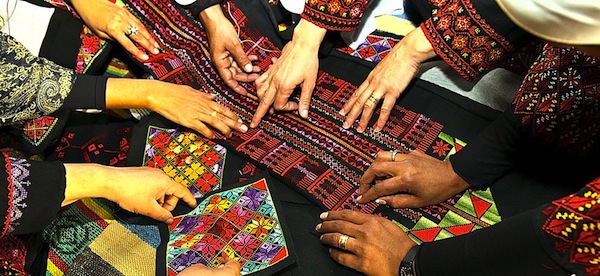
In Lakia, Israel, there are 160 women throughout the village who are responsible for designing and developing embroidery materials. (photo from Michelle Sitbon)
Our trip took us to the southern part of Israel, where we traveled to Beersheva. There is a small sign along the way, that you can miss quite easily, and it says Lakia. Lakia is one of the many Bedouin villages in this part of the country.
The Bedouins are a group of nomadic tribes who have lived in the Negev Desert for hundreds of years. Their heritage can be traced back to the traders along the ancient Spice Route, which happened to cross this region. Most traditional Bedouin hospitality experiences include camel riding, Bedouin food and staying inside a Bedouin tent overnight. However, in the village of Lakia, you are probably not going to find any of those things.
When you stop there, you are in for quite a different and unexpected experience. We arrived in Lakia in the middle of a hot summer day at the end of July and our main goal was to visit the Desert Embroidery. As we drove along the unpaved roads of the village, we quickly realized that Lakia might be small, but the Embroidery was extremely difficult to find. There was no sign telling us which direction to go, even though it is a tourist attraction.
When we finally found our destination, we got out of our vehicle and were warmly welcomed by Naama Al-Sana. She is the Bedouin woman who today runs the Desert Embroidery, and also founded the place together with other women from the community in 1996.
As we entered the visitor centre, we saw a display of beautiful art that was recently made by the local women. These women create the art in their homes in between their chores, and they use the money they earn from it to help support their families.
We were invited to sit inside a beautiful and colourful hand-woven tent, while Al-Sana offered us traditional Bedouin coffee that was scented with local spices. She was excited to hear that we had come all the way from Vancouver, as she has a sister who is currently in Canada, studying at the University of Toronto. Her sister often gives lectures about women in the Bedouin society, as a way to keep the history of this region alive.
The Desert Embroidery doesn’t offer the typical Bedouin tent experience, which includes being served a traditional meal. Instead, you will have the chance to contribute to the empowerment of Bedouin women in your own way. When you participate in one of the workshops or purchase any of their artwork, you will be actively improving the life, health and education of Bedouin women.
The Desert Embroidery was known as the Association for the Improvement of the Status of Women when it first began. The business has grown tremendously over the years and there are now 160 women throughout the village who are responsible for designing and developing embroidery materials. They also provide worker training and product marketing, and there is another group of women who work part-time to provide quality control checks on the products.
The system is very well organized. The women visit the Desert Embroidery twice a week to collect embroidery materials, drop off their finished items, learn about new patterns and designs, and participate in educational workshops and lectures. All of the women are allowed to choose how many hours they work, and they are paid by what they are able to produce within that time. A few of the women have chosen to preserve the traditional jewelry-making that was done by previous generations. They spent time learning how their mothers and grandmothers made jewelry and are now creating their own jewelry to include in the Desert Embroidery collection.
With the help of the Desert Embroidery, Bedouin women in the Negev create the art in their homes, and use the money they earn to support their families. (photo from Michelle Sitbon)
The Desert Embroidery is continuing to achieve its goal of providing employment and income for Bedouin women while empowering them and improving their self-confidence. More than 40 different artistic products can be found on display in the visitor centre, as well as other collaborations that help generate revenues for their work. An example of one of those collaborations is with Kibbutz Gan Masarik, which assists with strengthening the coexistence of Bedouin and Israelis.
The Desert Embroidery is also currently involved in improving the education and health of Bedouin children. And they want to expand to other Bedouin communities within the Negev, so that all Bedouin women can achieve economic independence. There are still so many challenges that women face in Bedouin society and this group is trying to help every woman overcome them.
The main reason I chose to visit Lakia was that I wanted to learn about this destination and the work that the Desert Embroidery is doing. My goal is to share what I have learned and to take other travelers to Lakia, so that they can see it firsthand. Of course, such activities aren’t only being done in the Negev region. In the northern part of the country, in the Galilee region, Israeli and Arab women also create traditional artwork to create a change in the lives of women.
I have made a visit to Lakia part of my itinerary in an upcoming small group tour to Israel, because I believe that travel can support and strengthen local communities. Since I am a travel agent who creates itineraries that are art-oriented, this is a perfect way to show everyone that they can appreciate art while making a difference in both children’s and women’s lives.
In the Mishnah Torah, Rambam organized the different levels of tzedakah, or charity, into a list from the least to the most honourable. Sometimes it is known as the “Ladder of Tzedakah.” The highest form of charity is to help sustain a person before they become impoverished, by offering a substantial gift in a dignified manner, by extending a suitable loan or by helping them find employment or establish themselves in business. These forms of giving allow the individual to not have to rely on others.
Projects such as those led by the Desert Embroidery can be found around the globe in places like Jordan, Mexico and Canada. When we travel, we know the many ways in which we benefit. However, I believe we should also try to find ways to benefit others as we travel, even in small ways. We should become more involved with local communities and support them in respectful ways that will, among other things, help them preserve their tradition and art.
Michelle Sitbon is an art travel adviser who organizes small group tours to Israel among other art-related destinations around world. For more information, visit yourartvoyage.com.
Queen Tamar’s Hall at Uplistsikhe. (photo by Deborah Rubin Fields)
I would venture to say not many people know about the ancient Jewish community of Georgia. Yet, Jews have lived there since at least the fourth century CE and, according to various legends from the Second Temple period, even earlier.
Although scant written information from prior to the end of the 18th century exists, stories have it that Georgian Jews have a long history. According to one oral tradition, the community goes back to the exile of the Ten Tribes by the Assyrians. Others place its origins to the destruction of the First Temple in 586 BCE. And yet others claim that, since there was a large Jewish community in neighbouring Armenia from the first through the fourth centuries CE, it is probable that Jewish traders likewise established themselves in Georgia. These are just some of the theories.
The earliest solid evidence comes from the archeological discovery of a fourth century CE Jewish tombstone. This tombstone was found in Mtskheta, an important early Christian city located on the River Aragvi. The tombstone is dedicated to a Jew named Yosef Chazon and it features an Aramaic inscription engraved in Hebrew letters. Today, it is on display at Tbilisi’s David Baazov Museum of History of the Jews of Georgia and Georgian-Jewish Relations. (An aside: Although the sacred object is nowhere to be seen, the town’s Svetitskhoveli Cathedral claims to have the robe that Jesus wore at the time of his crucifixion. As the story goes, this robe was brought from Jerusalem by two Georgian Jews: Elioz, or Elias, and Longinoz.)
A Torah scroll from the collection of the David Baazov Museum of History of Jews of Georgia in Tbilisi. (photo by Deborah Rubin Fields)
Possibly because they were viewed as unpretentious craftsmen and pedlars, Jews faced relatively little antisemitism. Under the medieval feudal system, they were considered serfs. As serfs, they were never forced to convert, although there seemed to have been some incentive: one document states that Daniel Aranashbili, an apostate serf, received a total tax exemption. (See Gershon Ben-Oren’s essay, “The History of the Jews of Georgia Until the Communist Regime” in The Land of the Golden Fleece: The Jews of Georgia-History and Culture.)
Jumping ahead to the 19th-century rule of the Russian czar, there were a handful of blood libel cases that, while admittedly painful, did not end up in the massacres that occurred in other parts of Europe. Even during the repressive Soviet era, when Jewish institutions were closed, the Tbilisi Jewish community somehow succeeded in having their cemeteries left intact – unlike the local Muslims and Armenians, whose Georgian cemeteries were desecrated.
Internally, the Jewish community had its differences. For instance, at the end of the 19th century, there was significant resistance to Zionism. Rabbi David Baazov – who the czar appointed as the official rabbi of Oni – was one of the community’s first Zionist advocates. He faced such fierce opposition from wealthy community members that he was forced to appeal for funds from early Zionist leader Menachem Ussishkin. Unfortunately, when, in 1917, no financial assistance was offered, Baazov had to close his school. (Today, the Jewish museum in Tbilisi is named after Baazov.)
But here is something amazing about this quiet community. It was “carried away” by the achievements of the Israeli Defence Forces in the Six Day War. In 1969, knowing the risks in “making waves” during Soviet rule (Stalin, for example, who hailed from Georgia, had personally signed the death penalties of 3,600 countrymen), 18 Georgian Jewish families were the first people to publicly petition the United Nations Human Rights Committee with their request to move to Israel.
Most of the 80,000 Georgian Jews (figures from 1970s) made aliyah in two recent waves: in the 1970s and again in the 1990s, when the USSR collapsed. Reportedly, 3,000 to 5,000 still live in the European (because of the Caucasus Mountains, some would say Asian) country of Georgia. Significantly, only recently has Tbilisi become the main centre for the Jewish community. In fact, until the first big aliyah, the Georgian Jewish community lived in several other locations, including Kutaisi, Batumi, Oni, Akhaltsikhe, Akhalkalak, Sarami, Kareli and Gori.
Historically, Georgia’s Mizrahi and Ashkenazi communities have remained separate. In today’s Tbilisi, Shaarei Tefillah Synagogue stands in the Old Town area. This congregation is more than 100 years old. There is also a Chabad synagogue. A kosher restaurant is located near Shaarei Tefillah.
At present, you will hear different opinions about the vitality of the current Jewish community. Some insist that, unlike other former Soviet Union countries, there is vibrant Jewish life in Georgia, with little assimilation. Others contend that, with the dwindling population, life is bleak for some of the older members of the Jewish community and tenuous for the younger generation, who are at risk of losing their Jewish identity.
Georgian Jews have been proud of their heritage. For instance, one wealthy Armenian Jew living in Tbilisi, Ghazar Sarkisian, built his wife a stunning house with stained glass windows displaying the Star of David.
And, speaking of David, everywhere you go in Georgia, you will see paintings and statues of two Georgian leaders who had Old Testament names: King David the Builder (1089-1125) and his great-granddaughter Queen Tamar (1184-1213). These two rulers are recognized for their ability to unify the nation. But, in addition, there are stories that their Bagrationi ancestors descended from the biblical King David. Hence, some believe these rulers had Jewish roots. Whatever their true origin, in today’s Georgia, these names remain popular with the general population.
When in Georgia …
For the adventurous, there is cycling, and mountain and hill climbing. However, travelers should note that, because of severe weather conditions, a number of roads leading to the Caucasus Mountains close for months at a time.
Visit the cave city of Uplistsikhe. Although there is no evidence that she was ever there, you’ll find a large space called Queen Tamar’s Hall. Either way, the caves, which first housed pagan communities, make for an interesting stop.
Even if you don’t drink wine, it is worth going to a traditional winery to see the unique way Georgians have historically made wine.
Besides wine, bread is another big part of Georgian life. Check out a bakery that makes shoti puri, a flatbread resembling a canoe in shape. It is a simple, handmade mixture of flour, water, salt and yeast. The bread is baked in a strange oven called a tone (pronounced “tone-ay”). This oven is a circular, brick-lined oven dug into the floor with a gas or wood fire at the bottom. The bread is placed onto the side of the tone. For the bakers, it is hot and strenuous work, especially when trying to reach the spaces at the bottom of the oven. The bread is ready in a matter of minutes. It is then scrapped off the sides with a paddle.
For those who like to take in the local scene by walking, Tbilisi is the place to be. Walk slowly through the Old Town to see how grand this city once was. From the crumbling carved wooden porches to the faded hand-painted vestibules, you can still feel the city’s architectural beauty. There are a number of rehabilitation projects underway, but much needs to be done.
Another way to see a bit of times past is to go to Tbilisi’s Dry Bridge Market. This flea market specializes in nostalgia, selling silverware, china and glassware. You can get a shaggy shepherd’s hat, accordions, sewing machines, cameras, record albums, hand guns and knives (!) and, of course, Soviet memorabilia. It also has a large section of new, locally made paintings and shawls.
Though the exhibits are not posted in English, the State Museum of Georgian Folk Songs and Instruments has a small, but nice, collection of regional musical instruments (including a shofar). While I was visiting, the curator played a European street organ, an upright organ and operated some of the early musical recording devices.
Deborah Rubin Fields is an Israel-based features writer. She is also the author of Take a Peek Inside: A Child’s Guide to Radiology Exams, published in English, Hebrew and Arabic.
The decision to travel with your family to Israel is a big one. It’s so expensive and the long distance requires going for at least two weeks to make it worthwhile. My husband and I debated for years on the merits of taking our children on such a trip. Finally, our daughter’s bat mitzvah convinced us it was time. At nearly 13, she would get a lot out of it, and our 11-and-a-half-year-old son seemed ready as well. To mitigate jet lag, I traveled a week early with the kids to London, England, where we laid low, staying with friends and taking in a few sights. We then met my husband in Jerusalem.
Michelle Dodek with Max and Naomi. (photo by Daniel Dodek)
The morning after we arrived, we went on a walking tour. Our guide, Dvir, specializes in tours of the Old City, which must be done on foot. Not only did he take us to all of the highlights, find us the best food in the Old City and explain the geopolitics of Jerusalem but, also, he knew where to find all of the clean toilets. And our children surprised us with the knowledge they had gleaned from their years of Jewish education, enriching our experience, as well. That day, we walked more than 13 kilometres, helping us sleep well and rid us of any jet lag that might have been lingering.
The next day, we returned to the Old City to buy special gifts of Judaica, and managed to pick up plenty of beautiful treasures for ourselves. We finally found use for our son’s bargaining skills, which had previously only been used to negotiate things like screen-time and treat consumption.
One of the best decisions we made was to stay in apartments. With two preteens, the need for food sometimes comes fast and furious. Knowing breakfast was in the fridge and we could make nutritious snacks to take along with us every day contributed enormously to the success of our trip. The other element that made it the best vacation we’ve ever had with our children was the planning my husband did, combining some days with a tour guide and other days with age-appropriate activities. Since neither of us is interested in driving in Israel, he also worked our plans around all the different kinds of transit. Our centrally located lodging enabled us to walk many of the places we wanted to go.
Daniel and Max Dodek enjoy the beach. (photo by Daniel Dodek)
We were invited by a friend, who was also visiting Israel with her family, to join their tour one morning of an agriculture reserve called Neot Kedumim. Near Modi’in, the site is of archeological significance and takes visitors back to biblical times through the landscape, agriculture and activities. Our experience included tree-planting, za’atar-grinding, pita-making, cooking and pulling water up from a cistern. My husband’s dream now is to spend his birthday working as a shepherd there. Another morning, with the same friends, was spent in fierce competition at the Tower of David doing something called the Amazing Race. It was good fun and educational, too.
We ventured one windy day to Ein Gedi and did a hike. Luckily, before driving to Masada, we discovered that, when it’s too windy for the cable car to run, Masada is closed. However, the Dead Sea was open for business as usual and, while we took in the experience of the mud and the floating, we also loved the variety of people from around the world visiting the waters.
In Jerusalem, we loved the green spaces like Station One. Formerly a train station and tracks, it is beautifully landscaped and is perfect for cycling, so we rented bikes. The public art in Israel makes the parks and streets even more interesting. Markets are favourites when we travel and Machane Yehuda did not disappoint. We returned there a number of times to buy Israeli essentials like halva, rugelach and dates, as well as more mundane food like fruit, vegetables and bread. The dinner scene is like the best food court in the world.
Max Dodek dressed as Aaron Chelouche, founder of Neve Tzedeck, and Noam Rumsack, the guide. (photo by Daniel Dodek)
We all enjoyed the food in Israel. Gone are the days when every corner had falafel, fly-covered shawarma and pizza with corn and tuna. You can still find those delights in a few places but, these days, no matter what you like to eat, you can find it in Israel (except on Shabbat or holidays in Jerusalem). Keeping kosher for Passover, once the holiday began, was certainly easier than we find it in Vancouver.
Two days before Passover started, we took the bus from Jerusalem to Tel Aviv. Comfortable, cost-effective and an experience in Israeli culture, the bus took only 45 minutes. Our lovely apartment in Tel Aviv was in an area in transition. Just over a block from the beach and a short walk from Shuk HaCarmel (where we went almost daily), the location was excellent. We were able to walk to many places, including Sarona (the market is like an upscale Granville Island), Shenkin (shopping), the Tachana (eclectic Israeli items) and Neve Tzedeck (artists and fancy touristy stores). We ended every day relaxing at the beach on the powdery sand.
The seder was delightful at my cousin’s house in Ramat Hasharon. Seeing my secular Israeli cousins argue over the tunes and forget the words occasionally showed us that they observe Passover similarly to how we celebrate it. The only difference was that they served twice as much food as I do, including seven types of meat. The food was almost as unreal as the traffic jam at 12:30 a.m., as people left their respective seders.
Other excellent parts of our trip included a fun and informative walking tour of Jaffa. Our guide, Noam, dressed in Turkish garb of 1905 – and, for awhile, our son dressed up as well, beard and all. We spent a day in Ramat Aviv, between the Museum of the Diaspora (Beit Hatfutsot) at Tel Aviv University and the Palmach Museum, just down the road. All of us took full advantage of the many types of exercise equipment in the public parks all around Tel Aviv and rode bikes along the Yarkon River, in addition to enjoying the lively promenade (Tayelet) along the ocean. One day, we took a fabulous full-day private tour up north to Akko, Haifa and Caesarea. The guide enabled us to get the most out of the day.
When we saw the family dynamic start to go sideways, we split up. Our ability to keep good snacks handy and to make sure everyone got enough outdoors time each day made everything we were able to see and do a wonderful experience for all of us. I would recommend a trip to Israel to anyone.
Michelle Dodekis a freelance writer living in Vancouver who spent enough time in Israel in her youth to speak sufficient Hebrew to communicate with taxi drivers and vendors in the shuk.
The bimah of Ari Ashkenazi Synagogue in Tzfat (Safed) was part of the Land and the Spirit tour, which is organized by the Rohr Jewish Learning Institute. (photo by Roy Lindman)
My husband and I excitedly counted down the days until the Land and the Spirit Israel experience in March. Having met with Chabad Richmond’s Rabbi Yechiel Baitelman and his wife Chanie, who accompanied our group on this trip, we learned that the touring days would be long, but that the sights we’d see and the people we’d meet would more than offset the intensity factor. The Land and the Spirit tour is organized by the Rohr Jewish Learning Institute, the adult educational arm of Chabad.
The tour took place March 4-13 and drew approximately 800 Jews (and a handful of non-Jews) from across North America. Knowing that we’d hit the ground running, my husband and I decided to arrive in Israel a few days ahead of the tour, to get acclimated. We also spent an additional two weeks after the tour exploring Israel on our own. This was my sixth trip to Israel and my husband Harvey’s third.
The tour was, in some ways, like an Israel 101 course, supplemented by in-person meet-and-greets with high-level people from all walks of life – we had special access to soldiers, politicians, religious leaders and other VIPs. On some levels, it was geared to people who’ve never been to Israel before, and they got an overview of the highlights Israel has to offer. Yet, even for those of us who had been to Israel, it was a chance to discover places we’d never seen.
Participants had the freedom to choose from a variety of “tracks,” including: “In the Footsteps of the Bible,” “Classic,” “Borders and Security,” “Israel Encounters,” “Israel in Depth” and “Food and Wine.” Presumably, participants would get a glimpse of Israel that sparked their desire to return again. The flip side of this is that there was not a lot of in-depth learning, and we didn’t get a chance to spend a great deal of time in any one place. It was primarily surface introductions and more of a visit-the-sights kind of trip, rather than an intense learning experience, like the National Jewish Retreat.
There were way more things to see and do than each of us had time for, hence the need to choose “tracks” each day. Highlights for my husband and me included Caesarea, with its fascinating historical ruins and stunning location, overlooking the Mediterranean. We also found Silicon Wadi fascinating. It’s the area in Israel where scientists, techies and businesspeople work in shared spaces to develop groundbreaking technologies. When we were there, we toured a WeWork site, where young technology whizzes were producing 3D and other objects inspired by their sky’s-the-limit imagination.
Kfar Chabad was another high point of our trip. This Chabad-Lubavitch village is not far from Lod, and has a life-size replica of 770 Eastern Parkway, Chabad’s Brooklyn headquarters. More than 6,000 Chabad live in the village, and the site is home to an etrog orchard. Our tour included a shmurah matzah bakery, where they make Passover matzah by hand.
The highlight by far, though, was the Ohr Simcha Children’s Home, where 300 high-risk boys from troubled environments live with their adoptive Chabad families. Ohr Simcha was established in partnership with the Israeli government, to help some of the most socially challenged children gain a sense of security. Seeing the kind of patient, loving care it takes to sustain these kids, to give them a real home of their own, was inspiring and emotional. True chesed in action.
The ancient mystical city of Tzfat (Safed), “the City of Kabbalah,” with its narrow streets and beautiful tiny synagogues, was magnificent. We went to Ari Sephardic Synagogue, where the famous Jewish mystic Rabbi Yitzchak Luria (known as the Ari) prayed. We also went to the Ari Ashkenazic Synagogue. Guest speakers explained the detailed history and designs of the synagogues. Unfortunately, we didn’t squeeze as much spirituality out of Tzfat as we would have liked, because time was limited. But it left a lasting impression.
It bears mentioning that all the tour guides on our buses were incredibly knowledgeable and made the places we visited come to life.
The Latrun Tank Museum was yet another highlight on the tour. There, we got to meet Israel Defence Forces soldiers and hear firsthand their inspiring personal stories. Live music, dancing and delicious food topped off the evening.
We spent a moving Kabbalat Shabbat at the Kotel (Western Wall). Having never visited the Kotel at night, much less experienced Shabbat at that holy site, we felt like Israel had wrapped its arms around us. Shabbat day was quiet and gave us the opportunity to walk the empty streets of Jerusalem in peace.
The second to last day of the tour was super-charged, and saw us traveling from Jerusalem to Masada, to the Dead Sea, where we schmeared mud on ourselves and bobbed around like human corks in the salt-laden water. After a long day, we showered off the Dead Sea water, got dressed in our finest and went to a gala banquet, where music, speakers and other entertainment were on the menu.
The final day was spectacular. First, we boarded a bulletproof bus that took us to our Matriarch Rachel’s Tomb, in Bethlehem. This was a particularly emotional experience, to see so many people praying so fervently. But it only got better, as we got on the bus and traveled to historic Hebron, where we visited the Cave of the Patriarchs (the Cave of Machpelah), one of the holiest places for the Jewish people. There, all 800 of us walked through Hebron carrying a Torah scroll that had been saved from the Nazis. This was followed by a spectacular light show, fireworks and a lively dinner.
On the whole, the tour was phenomenal, albeit arduous, especially for those of us in our 60s and older. Early morning starts, long stretches on the bus, shlepping and climbing, eating and touring. Repeat. For eight days. Was it worth it? You bet! The entire trip was spiritually nourishing, and fed our desire to start planning when we would next return to our home away from home.
Shelley Civkinis a happily retired librarian and communications officer. For 17 years, she wrote a weekly book review column for the Richmond Review, and currently writes a bi-weekly column about retirement for the Richmond News.