Keep the celebration going: HaTov v’HaMeitiv

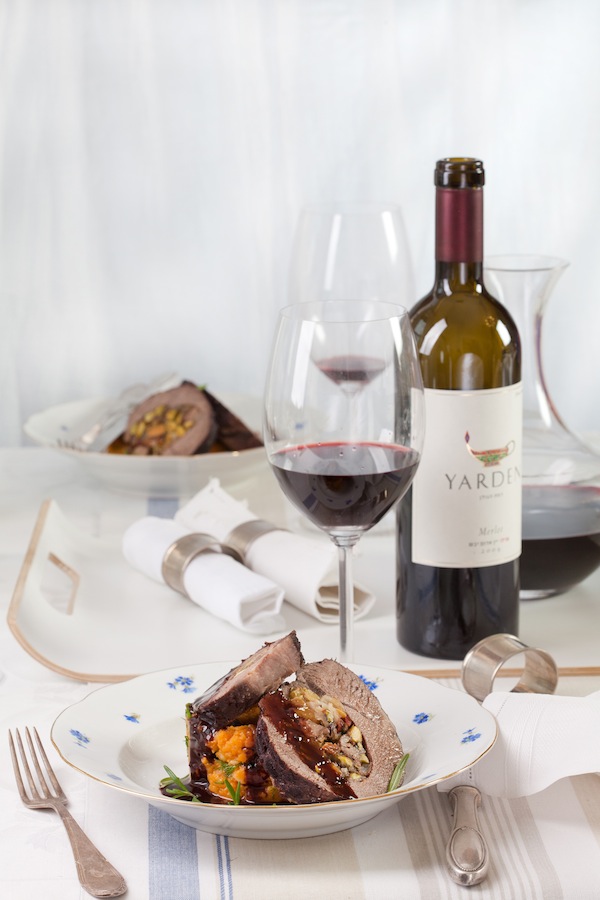
During a festival when people try and increase their “blessings,” adding many different wines provides the opportunity to keep proclaiming HaTov v’HaMeitiv. (photo courtesy of Yarden Inc.) 

The Rosh Hashanah meal is a festive affair. Traditions abound as to how the evening meal can bring good tidings for the year ahead. While some stick to apple and honey for a sweet new year, others recite a full array of blessings over various symbolic foods; from increasing in numbers like the seeds of a pomegranate to hopes of being the head not the tail, akin to the lamb’s or fish head that adorns some tables.

When reflecting on wishes for the upcoming season, one Rosh Hashanah tradition that continues throughout the year is that of the HaTov v’HaMeitiv blessing, recited when switching from one style of wine to another. In addition to its centrality for sacramental purposes, in ancient Israel, wine was cleaner and tastier than drinking water and it continues to be a focal element of Jewish culture. The custom is to celebrate the abundance of this joyful beverage, which symbolizes wealth, happiness and success. Given wine’s special power to “gladden the heart” and the uniqueness of each varietal, the sages instituted the special blessing. As opposed to regular blessings which, once recited, “cover” all similar food types, adding the HaTov v’HaMeitiv blessing maintained an awareness of the risks of mindless intoxication and proclaimed gratitude for the abundance of this most-sought-after beverage.

The sages were very clear that drinking alone could lead to sin or impropriety and that only when one is in the company of others could true joy be experienced, thus the blessing is said when two or more are present.

This blessing praising “He who is good and bestows good” is most commonly recited when switching between a white and a red wine, but it can be said when partaking in a wine of a different varietal, quality or style. It is said only when the second (or third, fourth or fifth) wine is of equal or better quality and when the wine is being drunk in company. The sages were very clear that drinking alone could lead to sin or impropriety and that only when one is in the company of others could true joy be experienced, thus the blessing is said when two or more are present.

Celebrating the good and enjoying superior-quality wines are wonderful ways to enhance the Rosh Hashanah table and raise the spirits of all the celebrants. During a festival, when people try and increase their “blessings,” adding many different wines provides the opportunity to keep proclaiming HaTov v’HaMeitiv. In time for the festive season, there are a number of high-quality Israeli wines that are hitting the shelves, yielding the chance to keep blessing good (and better) offerings.

From white to red

The Galil Viognier is a pleasant change from the more traditional white grape varieties. The Viognier is a challenging wine to perfect, but the Galil Mountain Winery, on the border of northern Israel, produces a flawlessly dry, yet extremely fruity and floral offering. Move from this more unusual white to an ever-loved red, the Gilgal Cabernet Sauvignon. Produced by the Golan Heights Winery, this classic red wine is a treat for any cabernet fan. Full-bodied and with an exquisite finish, the Gilgal Cabernet Sauvignon exhibits blackcurrant and cherry notes rounded out by earthy, spicy and oaky characters. While it is eminently drinkable upon purchase, recently wine experts in Israel have been opening decade-old bottles and have been surprised by its aging potential.

Novel blends, from fruity to complex

The Mount Hermon Indigo, named for its signature indigo color provided by a blend of syrah and cabernet sauvignon grapes, set new standards for affordable kosher wine when it was released last year. Now in its second vintage, it is a medium-bodied, fruity wine combining a deep plum flavor with hints of herb and a subtle smokiness. Move from the Mount Hermon Indigo to the Yarden 2T for a richer and fuller-bodied blended red wine. The Yarden 2T, like the Mount Hermon Indigo, shows off plum and cherry characters but this blend of two Portuguese grapes has been aged for 18 months in French oak barrels. The lengthy aging period enables the wine’s deep flavors to flourish and produces a richer, blackberry flavor coupled with Mediterranean spice and deep chocolate notes. The Yarden 2T stole the show this year at the Citadelles du Vin, France’s biggest wine awards, and raises the bar when looking for wine to top that which has been previously tasted.

Whites, from young to aged

Moving from a fresh wine to a richer and aged wine normally implies moving from a white to a red wine but it is possible to do the switch with two white wines. The Gilgal Riesling resembles the traditional rieslings emanating from Alsace and German regions. The Gilgal Riesling showcases the riesling’s familiar high acidity balanced with tropical and fruity aromas. It is a young and easy to drink wine, which underwent a short, cold fermentation and makes a great accompaniment to the first course of the Rosh Hashanah meal. Move from this easy-to-drink white to a richer, barrel-aged chardonnay such as the Yarden Odem Chardonnay. Produced entirely from grapes grown in the Odem organic vineyard on the slopes of the Golan Heights, this delicious, aged chardonnay combines a melt-in-your-mouth buttery flavor with aromatic pear, quince, apple and tropical notes. The Yarden Odem Chardonnay is aged sur lies for seven months in French oak barrels, giving it a rich and full body and one that will improve for a number of years to come.

When saying HaTov v’HaMeitiv, it is preferable to have the previous wine still open and remaining. This Rosh Hashanah, keep the wine flowing all evening and toast a l’chaim to a “good and better” year ahead.

Anna Harwood is a writer and clinical psychology student at Bar-Ilan University in Israel. She made aliyah from England at the end of 2010 and has been living in Jerusalem ever since.

Bazelet HaGolan – secret is in the basalt

Bazelet HaGolan wine varietals include cabernet sauvignon, merlot and chardonnay. (photo from bazelet-hagolan.com)

The fourth in a series featuring nine Israeli wine producers features Yoav Levy of Bazelet HaGolan Winery. The most recent article – on Domaine du Castel – was published in the Jewish Independent and online July 11.

photo - Bazelet HaGolan Winery is a boutique winery in the Golan Heights
Bazelet HaGolan Winery is a boutique winery in the Golan Heights. (photo from bazelet-hagolan.com)

Yoav Levy: I am the winemaker of Bazelet HaGolan Winery. It’s a boutique winery in the Golan Heights, near the border in the north. We make something like 80,000 bottles per year, mainly cabernet sauvignon, a little merlot and much less chardonnay.

Christopher Barnes: How did you get involved in wine?

YL: It is some kind of accident! We came to the Golan … and we make a lot of barbecue. We asked to have some wine to drink nearby. We have wonderful grapes in our village that we were selling to the Golan Heights Winery. I tried to make some wine [but] it was undrinkable in the beginning! I gave up, and asked the winemaker of the Golan Heights Winery how and what to do. He gave me the ingredients and the instruction.

We started in 1998 as a business. Before, it was … a hobby. So, when it became a business, we decided to call the winery Bazelet HaGolan. Bazelet is basalt. All of the Golan is basalt land, from volcanic activities. We had to go call it HaGolan … the idea was people [might] be confused between us, Bazelet HaGolan, and Golan Heights Winery. It sounds maybe similar and maybe people will buy from us!

Right now, it’s a really amazing business – a winning joy for me. I’m telling you there is a God, because it’s a blessed place for sure. We are selling everything. We are sold out every year and we [are starting] to get medals.

CB: Tell us about the terroir.

[vsw id=”88596867″ source=”vimeo” width=”425″ height=”344″ autoplay=”no”]

YL: The terroir in the Golan Heights is amazing [for] wine; I think one of the best in the world. I will tell you why. All the basalt that we plant our vineyard on, it’s amazing land for the vineyard. The fact that we have a vineyard that belongs to us, we know how to control the quality, we know how to control the pH, the sugar. We’re getting amazing grapes from our vineyard.

We are getting a lot of medals because when the judges are drinking our wine, they don’t know where it’s from, and they get shocked that, at the end of the competition, the Israeli winery gets the highest numbers.

People have to try Israeli wine. It doesn’t matter which one – but I really recommend you to drink my wine, Bazelet HaGolan! You’ll realize that Israeli wine is completely in a different position. We are going higher and higher every day, and we are producing amazing wine – and that’s that.

This article is reprinted courtesy of the Grape Collective, an online publication for all things wine. For more information, visit grapecollective.com.

Divine plan in the works

The key to understanding the confusing global landscape of the 21st century is to recognize that there is nothing normal or logical about it. If you’re confused by current events and concerned with the recent surge of antisemitism and the war with terrorists in Gaza, you may think that you have lost touch with reality – or maybe it’s the rest of the world that’s gone mad. Scanning the news, it sometimes seems as if the world now supports the bad guys over the good. However, if you look closely, you can see the Divine hand at work, the work of Divine providence and intervention. Why would G-d intervene in this way? Would G-d ever cause there to be irrational support for evil in the world?

The answer to this critical question is that the Almighty seeks to maintain a balance of power in the world at all times. It is often difficult to appreciate the significance of events as they unfold. When we look at a majestic tapestry, we can admire the work of the weaver, but we cannot see the back of the tapestry, with all its loose threads and knots, nor can we see the hard work that the weaver put into it or the amount of time it took them to weave such a masterpiece. In this way, the hand of G-d majestically weaves a wondrous and deliberate pattern on the tapestry of Jewish history. In order for humanity to have free choice, however, there must be a balance of good and evil in the world. In fact, in the most mindboggling illogical world events lies the deepest Divine providence and order; the chaos provides the perfect backdrop and balance for free choice and its maximum impact.

G-d’s plan is nothing short of incredible. In recent history, He has returned millions of Jews to their homeland, even though we are surrounded by tens of millions of hostile neighbors. Just this summer, terrorists in Gaza fired about 4,000 missiles at Israel. There were just a few fatalities.

My parents (may they live to 120) who live in Netanya heard a few rockets over the summer, and were so grateful when they found out that those missiles drowned in the Mediterranean Sea in the middle of the night. My sister who lives in Kfar Chabad, 10 kilometres from Ben-Gurion Airport, told me that she woke up one day to find a commercial Swiss Air jet and a huge Air Canada plane rerouted to a field just two kilometres away from her home. The airport had been closed to international flights. Watching with her grandchildren, she described how the aircraft were taking off and landing half a block from her house. My nephew was a tank commander in Gaza and, thank G-d, he came home safely.

photo - Israel support rally at VAG on July 27/14
The afternoon rally at Vancouver Art Gallery felt like a miracle in itself. (photo by Shahar Ben Halevi)

Given everything, it was miraculous that there were few Israeli fatalities. Nonetheless, most of us here in Canada felt helpless. However, Israel saw supporters gather in cities around the world. Here in Vancouver we had two rallies in just one day in late July to show our love for Israel and our gratitude to the soldiers of the IDF. In fact, the afternoon rally at Vancouver Art Gallery felt like a miracle in itself. Seeing my own sons with the Israeli flags draped round them and seeing them singing, dancing and being with community members from the Lower Mainland filled my and my husband’s heart with nachat. Holding up our posters and flags to cars driving by on Georgia, our hearts swelled with joy and pride. The sign I made and carried, the straw hat I wore with an Israeli flag through it, gathering with Jews and non-Jews in support of our homeland, I felt a true sense of unity.

What is our role in G-d’s plan for the world? How can we believe in G-d when there are so many things going on that we abhor? What can we do about it all?

Our role in this world is actually a mission that G-d gave all Jewish people. It is to join together in unity to create a peaceful and harmonious world. Some call this tikkun olam. If we’re worried about what’s happening in Israel, we can review some of the many thousands of miracles that G-d has made for us. In fact, we don’t need to worry, because G-d is in control, as we have seen so many times over these recent months. G-d has given each of us what we need to be able to fulfil our jobs in this world. We are called, “a light among the nations.” This means that we need to try to model ourselves as bright lights. How do we do that?

One way to do this is to teach by example. By making ourselves the best we can be and by helping our friends and families, as well. True, we can only have influence over those close to us, but we can engage them in doing mitzvot, for example, praying to G-d and saying psalms every day, including chapters 20, 130, 142, which are particularly relevant for our soldiers in Israel. Any mitzvah that we can do, big or small, can turn over any difficult times we may have. Doing mitzvot is the way we teach those around us to not feel helpless. On the contrary, we do mitzvot to feel special and important in G-d’s eyes.

Whether it be visiting someone who isn’t well, putting some coins in a tzedakah box, calling someone who may live alone and would appreciate a call, shopping with people who may be new to town and aren’t familiar with our city yet, the list is endless. That way, we are doing something instead of feeling helpless to change the situation. 

Whether it be visiting someone who isn’t well, putting some coins in a tzedakah box, calling someone who may live alone and would appreciate a call, shopping with people who may be new to town and aren’t familiar with our city yet, the list is endless. That way, we are doing something instead of feeling helpless to change the situation. That is how we find our belief in G-d increasing and we can sleep at night knowing that G-d is the one watching over us and His whole universe that He created. Doing mitzvot also guarantees that we will retain our own goodness and not, G-d forbid, fall into wanting to take revenge on Israel’s enemies.

When we celebrate Rosh Hashanah this year, we can also ask G-d to give us the faith that we may feel we have misplaced. It is a wonderful time of year as we go to synagogue to pray to G-d for ourselves, family, community, and to feel connected to G-d who loves us so much, as a parent loves an only child. When we wish each other “Shana tova u’metukah,” we are offering everyone we speak to a wonderful, sweet New Year with all their wishes coming true for them. Our blessings to each other are precious and we get many mitzvot for offering them. Then our faith will shine through us as we make the world a better place. Our hearts will be filled with joy when we hear the 100 blasts of the shofar each day of Rosh Hashanah, as we know we are asking G-d to grant us a year filled with health, happiness and only good for us and all our sisters and brothers around the world. What a wonderful feeling that is.

Shana tova u’metuka, have a wonderful, sweet year beginning with an apple dipped in honey, and then enjoy everything sweet in your life this special year of 5775. Celebrate in your special way with family and friends. May G-d give you the strength you may need this year to accept your gifts from G-d in an open way.

Esther Tauby is a local educator, counselor and writer.

Idaho’s whitewater family adventure

The magic on the journey down the Salmon River comes from exhilarating rapids safe for the whole family and from the experience of being disconnected from “real life” and the electronics that distract us from the here and now. (photo from Lauren Kramer)

There’s nothing quite as thrilling as a whitewater rafting adventure, especially when you can do it with your kids. For safety reasons, most rafting companies restrict the participation of kids 12 and under for anything other than a bland float downstream. With one exception, that is: ROW Adventures’ five-day Family Magic rafting excursion on the lower fork of Idaho’s Salmon River. Here, the rapids are safe enough for a 5-year-old and just sufficiently exciting to get parents’ adrenaline pumping, without ever feeling dangerous. Add a “River Jester” to the mix, a staff member whose job it is to keep kids busy, happy and engaged, and you have the recipe for a perfect family vacation.

 “Now try to imagine 10,500 turkeys moving with each passing second and you get a sense of the strength of the current.”

The city of Lewiston is the point of departure for the trip and a place where five families from Ohio, British Columbia, New York and California make cautious introductions, as their kids, who range in age from 5 through 15, nervously check each other out. We learn that we’ll be rafting up to 16 miles a day, that lifejackets are mandatory and that the river is flowing at 10,500 cubic feet per second. “One cubic foot is about the size of a turkey,” explains our head guide, Mark. “Now try to imagine 10,500 turkeys moving with each passing second and you get a sense of the strength of the current.”

Clambering aboard seven rafts, we let the river carry us through arid gulches and canyons to a beach with silver-streaked, powder-soft sand. By the time we arrive, guides have assembled our tents and appetizers are being prepared in the camp kitchen. Audrey, an undergraduate student spending her summer as the River Jester, quickly gathers the children for games in and around the shallow eddy of our beach, while the adults wade in the cool water and get to know each other over glasses of wine. We’re in a river valley where Idaho’s schist mountains soar to 2,200 feet around us and, but for the sounds of the river, there’s utter peace. Disconnected from our iPhones, iPads, emails and texts, a gradual relaxation begins, one enhanced by nightly campfires and meals that consistently defy our distance from civilization: huckleberry-flavored salmon, prime rib, casseroles and spectacular desserts baked in a Dutch oven. “We bloat ’em, and then we float ’em,” jokes our guide, Jake, a physics PhD student.

The days start early at camp, with breakfast served at 7:30 a.m., but we’re on river time, grateful to watch the sun rise and happy to be packed up and on our boats by 9 a.m. as the mercury hits 90 degrees Fahrenheit. By midday the Salmon River provides an easy respite from the 100-degree heat. In the calm stretches of river, we gladly hop overboard, drifting effortlessly downstream in our lifejackets and clambering back in the boats at the first sign of riffles on the water. My son rides the helm of one boat, his face locked into a smile as the waves lift the boat, tossing it like a leaf in the current. My husband and I take a two-person “ducky,” navigating the thrashing waves with pounding hearts and swimsuits drenched by spray.

The days are bisected by fabulous lunches at remote beaches and stopovers at places of historical interest. At one site, we gaze at pictographs inscribed on the rock walls thousands of years ago by ancestors of the Nez Perce tribe, who once claimed this land as their own. At another, we inspect the ruins of stone houses constructed by Chinese miners in the late 1800s and, at a third, we are awed by the columnar basalt rock formations lined up along the river banks with soldier-like precision. More than half of our guides are teachers and each offers a unique perspective on the environment. Distributing Oreo cookies to the kids, one guide, Matt Phillipy, uses the chocolate layers to explain the movement of tectonic plates, which created the landscape we observe. As he speaks, a hush descends over the children in our group. Utterly absorbed, they are learning, stimulated and engaged. It occurs to us they’ve not used the phrase “I’m bored” even once since entering the river.

With their kids amply entertained, parents form easy friendships over plates of crackers and goat cheese.

An antidote to the amusement park vacation, there’s certainly magic on the Family Magic rafting tour. Without links to the digital world, families can truly play together. Kids of all ages bond over games of soccer and volleyball. Fathers and sons compete for the longest vault into the water on a waterslide created by an upturned boat. With their kids amply entertained, parents form easy friendships over plates of crackers and goat cheese. They talk about their kids, their jobs and their challenges. They play long, contemplative games of Scrabble and cards, share stories and abandon their tents for the beauty of sleeping directly under the starry Idaho skies.

By 10 p.m., everyone at camp is fast asleep, exhausted by the excitement of white water rapids that have challenged our paddling skills, splashed and soaked us, and left us exhilarated and eager to head out the next day. Among us are grandparents in their 70s, kids in kindergarten and everyone in between, united by the serenity and thrill of the Salmon River and its rapids.

On day four, we have hair streaked and matted by sun, sand and water, skin plastered with umpteen layers of sunscreen and body odor; none of it bothers us in the least. Within 24 hours, we will disperse, each family traveling to their respective homes, plugged in, distracted and wired once again. But, in this moment, we’re suspended on a pristine, isolated beach amid Idaho’s majestic canyons, surrounded by rugged mountains that soar into a cloudless sky. Strangers have become friends, once-meek paddlers have surged with confidence and a sense of magic hangs quite tangibly in the air.

Lauren Kramer, an award-winning writer and editor, lives in Richmond, B.C. To read her work online, visit laurenkramer.net.


Florence: flower of Tuscany

The Great Synagogue of Florence, one of the most beautiful in Europe, was built in 1882 in the Moorish style. (photo by Shoshana Reich)

We got to Florence, that inimitable Italian city of art and beauty, in a roundabout way. First, we spent some time in Tel Aviv, at the elegant new boutique hotel, Gilgal, just a few minutes’ walk from the long seaside promenade. With its beautiful rooms, superb roof-terrace outdoor restaurant, with its view of the blue Mediterranean, the Hotel Gilgal was a memorable place to stay.

We had a very early morning flight to Italy, but we were lucky to discover another amazing hotel, sure to delight passengers flying out of Ben-Gurion Airport. Hotel Sadot, in Be’er Yaakov, offers free transport almost around the clock to the airport, and it not only offers a munificent buffet breakfast, but – surprise! – if you arrive in the afternoon, you are invited to an elaborate buffet supper, included with the cost of your stay.

As our plane approached the Florence airport, we had a clear glimpse of the building that dominates the city’s skyline: the Great Synagogue of Florence. The anchor of Jewish life in Florence, the magnificent blue-green-domed grand synagogue on Via Farini is the largest and most impressive synagogue in Italy and one of the most stunning in all of Europe, with a seating capacity of 1,200.

Built in 1882, the synagogue is decorated in the Moorish style. Besides its vast central dome, it has two side towers with smaller domes and wooden furnishings, and boasts Venetian mosaics on the walls that flank the aron kodesh. The other walls of the sanctuary feature arabesques, highlighted with gold and geometric motifs.

In front of the synagogue is a large formal garden and in the synagogue’s courtyard stands a memorial plaque with names of Jewish soldiers who fell fighting for Italy in the First World War. Alongside this plaque stands two memorial tablets with the names of local Jews who during the Second World War were sent to concentration camps and those who were killed in Italy by the Nazis.

During Sabbath services, we witnessed a beautiful bat mitzvah. After the Torah reading, the 12-year-old girl was escorted up the long, carpeted aisle to the bimah by her father and uncle. There, she recited the Shema and gave a short commentary on the Torah portion – a ceremony in a traditional shul that would not likely happen in a North American Orthodox synagogue.

Later, an elaborate kiddush was offered in the garden outside the sanctuary, a delicious meal catered by Ruth’s, the only kosher restaurant in Florence, located next door to the synagogue entrance at Via Farini 2A. On a weekday, we had occasion to dine at Ruth’s, managed by the gregarious Simcha Jellinek. For its variety of tasty dairy dishes and moderate prices, this restaurant is a find in Florence.

Today, the community of 850 Florentine Jews is led by Rabbi Yosef Levi. Services are held every Friday night and Shabbat morning and also on Mondays and Thursdays. The community has a kindergarten, a Talmud Torah school with 45 students, ranging in age from 6-15, a youth organization, a centre for Jewish culture and an old age home.

The Jewish museum, which occupies two upper storeys in the synagogue, displays Jewish artifacts from the 16th-18th centuries and documents the story of Florentine Jews throughout several hundred years, through the Holocaust and the postwar period.

Jews began residing in Florence in the early 1400s. By 1570, they were confined to a ghetto, near today’s main street, Piazza della Repubblica. They were prohibited from joining the guilds and could only deal in textiles and second-hand goods. However, by the mid-18th century, their condition gradually began to improve until 1848, when the ghetto was opened up and Jews could live anywhere.

For our stay in Florence, we chose the elegant riverside Hotel Berchielli (info@berchielli.it), right near the historic centre of town. Its good-humored and helpful personnel, beautiful large rooms, and wide-ranging and delicious buffet breakfast made our visit memorable.

All the city’s famous sites, including the Duomo, the pedestrian streets with their nighttime street performers, the Ponte Vecchio, the high-end shopping area, the Uffizi Gallery and the synagogue, too, are all a short walk from the hotel. Hotel Berchielli is so conveniently located we did not have to take a taxi or any public transportation while in Florence.

Florence is also a good point for other excursions.

A 30-minute uphill bus ride from Florence is the beautiful suburb of Fiesole. Here, you are in a world apart, with grand views of Florence below at every turn. The pastoral Tuscan landscape is especially enjoyable at the welcoming Villa dei Bosconi (villadeibosconi.it), with its lovely lawns and refreshing swimming pool. We spent a relaxing three-day journey here, enjoying the walks to town, the countryside strolls and, of course, the marvelous buffet breakfast on the villa’s outdoor terrace.

Another superb side trip is to the Cinque Terre, a group of five villages, which cling to the craggy mountains that abut the Ligurian Sea. After a scenic two-hour train ride to La Spezia, we arrived at the imaginatively designed and welcoming Eco Albergo delle Spezie on Via Cavallotti. The next morning, after a wonderful breakfast, we walked to the quay and boarded a tour boat that stops at each of the five villages and gives you a glorious view from the sea of these picturesque places. For information, visit cinqueterre-travel.com.

To get the most out of your rail journeys, be sure to buy a Eurail Pass, a money-saving convenience available only while you’re still in the United States or Canada. A pass lets you choose destinations at will or change your itinerary, omitting long waits in line for tickets. For information and special offers, visit raileurope.com or call 1-888-382-7245. For some high-speed trains in Italy, reservations are mandatory.

Curt Leviant’s most recent book is the comic Zix Zexy Ztories. Erika Pfeifer Leviant’s articles on travel and art appear in various publications. Shoshana Reich, photographer, is a student at the Parsons School for Design.

This year marks the seventh

According to Jewish law, every seven years, agricultural fields are to lie fallow during the Shmita, or Sabbatical. (photo from commons.wikimedia.org)

This Rosh Hashanah marks the beginning of the year 5755, a year that has a special significance, as a Shmita, or Sabbatical year, a year of rest for the soil.

Shmita literally means renunciation or release. We renounce the right to work the land, and let it lie fallow in the seventh year. In Leviticus 25:4, it says, “The seventh year shall be a sabbath of solemn rest for the land, a sabbath unto the Lord, thou shalt neither sow thy field, nor prune thy vineyard.” It is also a year in which we renounce our right to collect debts. “At the end of every seven years, thou shalt make a release. And this is the manner of the release: every creditor shall release that which he lent unto his neighbor.” (Deuteronomy 15:1-2)

Although the laws of the sabbatical remittance of debts apply to Jews everywhere, the obligation to let the land lie fallow is limited to the boundaries of Israel, as these laws begin only “… when ye come into the Land which I shall give you.…” (Leviticus 25:2) After wandering the desert for 40 years, Moses gathered the Israelites at the foot of Mt. Sinai, and gave them a detailed law about the soil. As soon as they entered Eretz Israel, they were to become people of the land, with their lives bound up in agriculture.

For centuries, as the Jews in the Diaspora became largely non-agricultural, the law of Shmita became a theoretical problem to be discussed by talmudic scholars. However, with the establishment of the state of Israel, Shmita again became a practical problem for the pioneers and early settlers.

Until the system of crop rotation was devised at the beginning of the 20th century, both Jews and non-Jews saw the logic of letting the land periodically rest. For Jews, these agricultural cycles were detailed in the Torah. For centuries, as the Jews in the Diaspora became largely non-agricultural, the law of Shmita became a theoretical problem to be discussed by talmudic scholars. However, with the establishment of the state of Israel, Shmita again became a practical problem for the pioneers and early settlers.

There are many reasons for the Shmita year. It teaches human beings that the earth does not belong to them, but to G-d. It also teaches people to have confidence in

G-d; even though we are asked to let the land rest, the Lord will invoke a blessing for us. Letting the land lie fallow is useful for another reason, too: every seven years, freed from the preoccupation of working the land, we are freed to study Torah full time.

Apparently, even Julius Caesar exempted the Jews from taxation in the Shmita year, since they did not have any livelihood from their fields. After the Bar Kochba revolt, however, the Jews were again compelled to pay taxes, causing grave hardship, which in turn convinced the rabbis to relax many prohibitions.

During the Second Temple period, the Jews rigidly adhered to Shmita in Eretz Israel. During the Hasmonean War, the fall of Bet Zur was attributed to a famine in the city since it was a Sabbatical year. Apparently, even Julius Caesar exempted the Jews from taxation in the Shmita year, since they did not have any livelihood from their fields. After the Bar Kochba revolt, however, the Jews were again compelled to pay taxes, causing grave hardship, which in turn convinced the rabbis to relax many prohibitions.

In the days of early modem statehood, Shmita was problematic in Israel, when its unbearably heavy economic load became too much for the young state to bear. Learned rabbis, like the late Rabbi Abraham Isaac Kook, agreed to the use of a heter (special dispensation) to sell the land to non-Jews during the Sabbatical year, to permit the land to be worked.

In recent years, there have also been developed other methods of using a heter for Shmita, such as early sowing of vegetables before the New Year (relying on the view of Rabbi Shimon of Sens, for example) and the growing of crops by hydroponics or soil-less systems. The Israeli botanist Meir Schwartz founded the first fully automatic hydroponic farm at the Agudat Israel Kibbutz Chafetz Chaim, but there are now other hydroponic farms at Ein Gedi and Eilat, which use water culture and gravel in agricultural production.

How does the Shmita year affect Orthodox Israeli consumers? Throughout the year, in local newspapers, there are regularly published lists of shops from whom it is permissible to buy fruit and vegetables in the Sabbatical year; there are also chains of shops that market Arab Israeli-farmed or imported produce. Many Orthodox Jews buy their fruit and vegetables in the Arab market in East Jerusalem, for example, or travel to Arab cities to shop.

It is not easy in Israel to observe the Shmita year, however. Although different dispensations have been made in recent years to make it less difficult, they are considered “emergency measures,” as implied by Kook in the introduction to his work on the Shmita, Shabbat Haaretz, in which he wrote: “We today are charged with preserving the memory of the commandment until the time is ripe for it to be carried out with all its minutiae.”

Dvora Waysman is the author of 13 books, which are available through Amazon, or from the author at ways@netvision.net.il. Her website is dvorawaysman.com.

For Jews, sorry is not enough

Christianity and Judaism have many customs and symbolism in common. Naturally, as the aphorism states, the child does not stray far from the mother. We both take vows to repair our character. But, in one area, we grossly diverge: the proclamation of the new year.

photo - It’s OK to lust after your neighbor’s Jennifer Lopez-looking wife – as long as you don’t act on that desire
It’s OK to lust after your neighbor’s Jennifer Lopez-looking wife – as long as you don’t act on that desire. (photo from Stemoc via en.wikipedia.org)

To put it plainly, New Year’s Eve to your Christian friends may be an office party with wine, stolen kisses and shrill music that drowns the clarion call of the shofar. Rosh Hashanah is both private and public sober meditation, as serious as death. You can tell it’s Rosh Hashanah even without a calendar when Jewish faces go serious – when Jewish eyes are not smiling.

In both religions, we reexamine our behavior, note our lapses and vow to improve our moral balance. But, in Judaism, ceremony and symbolism take the throne. The environment is much more regal. After all, we are asking of this shofar-announced first day of the year to come – the king of days, so to speak – mercy and goodness. And, above all, life. May that lump on your leg be benign. May Bennie turn a dark corner and find through honest labor the means to feed his family. We attempt to woo good fortune with a shofar blast, the bugle call of the Jewish warrior. We give tzedakah. We fling away our sins, contemptuous of our selfish errors of the past. This is the first bright, shining day of the year to come. Repent, so that the year to come will reflect the life to come. Sweet as the honey in which we dip our challah.

If we were a bit morally careless during the previous year, we bear down hard on the 10-day interval leading to Yom Kippur. We must be as angelic as a human can be so that we are properly inscribed in the Book of Life – and please, Sir, spell my name right. It’s one “b,” not two.

Forgiveness depends not only on repentance, but also on restitution. If I burned down my neighbor’s house, I must rebuild it. “Sorry” is not enough. I must repay my debts of insult, deceit, thievery and violence. And, to be heretical for a moment (rabbis, read no further) it is vulgar, but not a sin to lust after your neighbor’s wife who looks like Jennifer Lopez. So long as you suppress your evil inclination and take no action on your devilish desire.

Deeds, deeds, Judaism is all about deeds.

Ted Roberts is a freelance writer and humorist living in Huntsville, Ala.

Liqueurs add zest and spice

Sukkah Hill Spirits’ Howard and Marni Witkin. (photo from sukkahhill.com)

There are any number of traditional Jewish holiday foods, but not nearly as many holiday-related beverages. Hands down, wine dominates. But, company has arrived. Two new – and already medal-winning – artisanal liqueurs will be a welcome addition to your table.

Los Angeles-based Sukkah Hill Spirits’ Etrog Liqueur and its Besamim Liqueur both won gold in the 2013 SIP awards: out of some 300 entries, Etrog was deemed the best fruit-based liqueur and Besamim the best herbal/botanical. Both liqueurs are kosher (including for Passover), gluten-free and made with no additives or stabilizers. Not only are they a pleasure to drink, they are aromatic as well – lemon and cloves, respectively. Take a sip of either, and a host of recipe possibilities come to mind.

When the Independent heard about Sukkah Hill liqueurs, the first question was whether we can get it in Canada.

“We will be in stores in Washington, Oregon and the Pacific Northwest in the next few months, and have a list of stores that ship listed on our website,” responded Howard Witkin. “We are adding a number of new online retailers and will update the site as we put it together.”

Witkin’s wife and business partner Marni is the creative force behind these products. He refers to her as the “Taste Mistress” – “No barrel goes to bottling unless she has tasted it and approved it,” he said.

“Marni’s been making liqueur for almost 10 years,” he explained. “She started out making it for our own home, and to share with friends. Soon, she was making dozens of bottles at the request of friends all around the community. When we were approached by a local storeowner who suggested he could sell whatever we could make, we realized that we had a product that people really enjoyed, and which could become a new business.”

The inspiration to use etrogim came from the fate many of the fruit face after Sukkot – the compost.

“Marni wanted to do more with it than allow it languish after the holiday,” said Witkin. So important during the festivities, “it seemed like a waste to let its potential just fade away. So, we started bottling it.

“Besamim is based on a twist of a traditional spice mixture from Havdalah,” he continued. “Besamim at Havdalah gives an extra lift to your soul as Shabbat wanes. We wanted to tie into those wonderful family times and warm moments. Smell has such ties into memories and experiences. I feel the warmth and closeness of Havdalah and Shabbat every time I taste our Besamim liqueur.”

Transforming something done for pleasure into something commercial can sometimes diminish its enjoyment

“Because we make everything by hand, and use the same pure and simple ingredients and processes we started with, it still feels like a fun project,” said Witkin. “Just the barrels are a lot bigger, and there are thousands of bottles to label. We’ve thoroughly enjoyed the creative process of putting together labels and art, and sharing what we are making with so many more people.”

***

Sukkah Hill Spirits’ website offers several drink ideas. In response to a request for food suggestions, Howard Witkin offered the following recipes, noting also that biscotti dipped in a glass of Besamim is delicious, as is either liqueur over ice cream or sorbet.

GRILLED TROUT WITH ETROG

Combine Etrog Liqueur, brown sugar, black pepper and tarragon vinegar. Marinate red trout fillet – skin on – for up to four hours.

Spray/brush the grill with olive oil. Cover the skin side of the fillets with a thick coating of olive oil and lay on the oiled grill. Leave in place until the top of the fish starts to become opaque. Shake a light rub of brown sugar and pepper over the trout, lightly mist with olive oil.

You should now be able to lift the fillet with a spatula from the skin and flip it over back onto the skin, which has remained on the grill. (The skin protects the trout from burning.) Drizzle the remaining marinade over the fish, sprinkle with brown sugar rub. Cook until flaky (a few extra minutes).

Variation: Drizzle soy sauce on the trout as it grills.

BESAMIMYAMS

4 large carrots
3 medium yams
3 tbsp Besamim Liqueur
Cinnamon to taste (3-6 tsp)

Preheat oven to 400°F. Arrange carrots and yams cut to size in a baking pan. Spoon liqueur over the carrots and yams and sprinkle with cinnamon. Bake for 45 minutes or until tender, stirring occasionally.

ETROG HONEY CAKE

Dry ingredients:
3 1/2 cups all-purpose flour
1 cup granulated sugar
1/2 cup brown sugar
2 tsp baking soda
2 tsp baking powder
2 tbsp ground cinnamon

Liquid ingredients:
1 cup clear honey
1 cup vegetable oil
1 cup strongly brewed black tea, cooled to room temp.
3 large eggs
1/3 cup Etrog Liqueur
1 cup plus 2 tbsp applesauce
1 tsp vanilla extract

For finishing:
honey and Etrog Liqueur (approx. 1/2 cup each)

Preheat oven to 350°F. Grease three eight-by-four-inch loaf pans.

Combine dry ingredients in large bowl. In small bowl, combine honey with oil, then add to dry ingredients and whisk in remaining liquid ingredients. Mix thoroughly.

Pour batter into prepared pans and bake for 45-55 minutes until cake springs back when lightly pressed and cake tester tests clean.

Cool the cakes in the pans for 10 minutes, then poke all over with a skewer and very slowly spoon the honey/Etrog Liqueur mix over the cakes, allowing the liquid to thoroughly saturate them. When cool, remove from the pans. Wrapping and storing the cakes for a day improves the flavor.

When ready to serve, top with confectioners’ sugar if desired.

For more about Sukkah Hill Spirits, visit sukkahhill.com.

A Hebrew Birthright

The Israeli-American Council (IAC) has partnered with the Taglit Birthright Israel program to launch a special Hebrew track called IAC Shelanu. The new program offers a 10-day trip to Israel designed specifically for Israeli American young adults, ages 18-26. IAC Shelanu, in partnership with Taglit Birthright Israel and Israel Experience, will be conducted in Hebrew, aiming to engage this group of young leaders and create future Jewish-Israeli community influencers. Registration opens Sept. 9 for the December 2014 program.

According to a recent study commissioned by IAC and conducted by Israeli polling company Midgam, about 17 percent of second-generation Israeli Americans are married to non-Jews and Hebrew fluency drops from 53 percent to 19 percent for those living in the United States more than 10 years.

IAC Shelanu aims to provide an Israel experience that will help these young Israeli Americans and other Hebrew speakers connect on a deeper level with their Jewish-Israeli identity and expand their knowledge of and acquaintance with the state of Israel, its history and culture.

IAC Shelanu provides a unique experience for its participants, including a recruitment process by IAC that focuses on identifying, selecting and encouraging potential leaders. IAC Shelanu will then follow up with participants upon their return to ensure an enduring impact on their lives and further involvement in pro-Israel advocacy. Participants will be encouraged to participate in an IAC Shelanu alumni program, which will develop their connections to one another and to Israel while fortifying them with the network and skills needed to be ambassadors for Israel.

Based in Los Angeles with offices nationwide, IAC serves an estimated 750,000 Israelis in the United States today with a large variety of programs and events for all ages, and supports a wide range of other community nonprofit organizations. For more information about IAC, visit israeliamerican.org. For more information about IAC Shelanu, visit freejourneytoisrael.org/iacbirthrightisrael.

– Courtesy of Israeli-American Council