Skip to content
  • Home
  • Subscribe / donate
  • Events calendar
  • Business Directory
  • FAQ
  • News
    • Local
    • National
    • Israel
    • World
    • עניין בחדשות
      A roundup of news in Canada and further afield, in Hebrew.
  • Opinion
    • From the JI
    • Op-Ed
  • Arts & Culture
    • Performing Arts
    • Music
    • Books
    • Visual Arts
    • TV & Film
  • Life
    • Celebrating the Holidays
    • Travel
    • The Daily Snooze
      Cartoons by Jacob Samuel
    • Mystery Photo
      Help the JI and JMABC fill in the gaps in our archives.
  • Community Links
    • Organizations, Etc.
    • Other News Sources & Blogs
  • JI Chai Celebration
  • JI@88! video

Recent Posts

  • Legal help for students
  • Revisiting myth of Lilith
  • Wrong person rebuked
  • Canada’s mixed messages
  • Questions for museum
  • Symposium on antizionism
  • Making soccer political
  • CJPAC lauds Pulver’s impact
  • City recognizes Vrba’s legacy  
  • Organ donation saves lives
  • Theodore’s March premiere
  • A healing Shabbaton
  • Supplying healthy food
  • A chime of metal tags
  • Yellowknife seder a first
  • Ishai energizes, unifies
  • A Lag b’Omer to remember
  • Expanding the healing
  • Hannah Senesh – a unique hero
  • Community milestones … May 2026
  • Sharing her testimony
  • Fall fight takes leap forward
  • The balancing of rights
  • Multiple Tony n’ Tina roles
  • Stories of trauma, resilience
  • Celebrate our culture
  • A responsibility to help
  • What wellness means at JCC
  • Together in mourning
  • Downhill after Trump?
  • Birth control even easier now
  • Eco-Sisters mentorship
  • Unexpected discoveries
  • Study’s results hopeful
  • Bad behaviour affects us all
  • Thankful for the police

Archives

Follow @JewishIndie
image - The CJN - Visit Us Banner - 300x600 - 101625

Category: Visual Arts

Art as a form of storytelling

Art as a form of storytelling

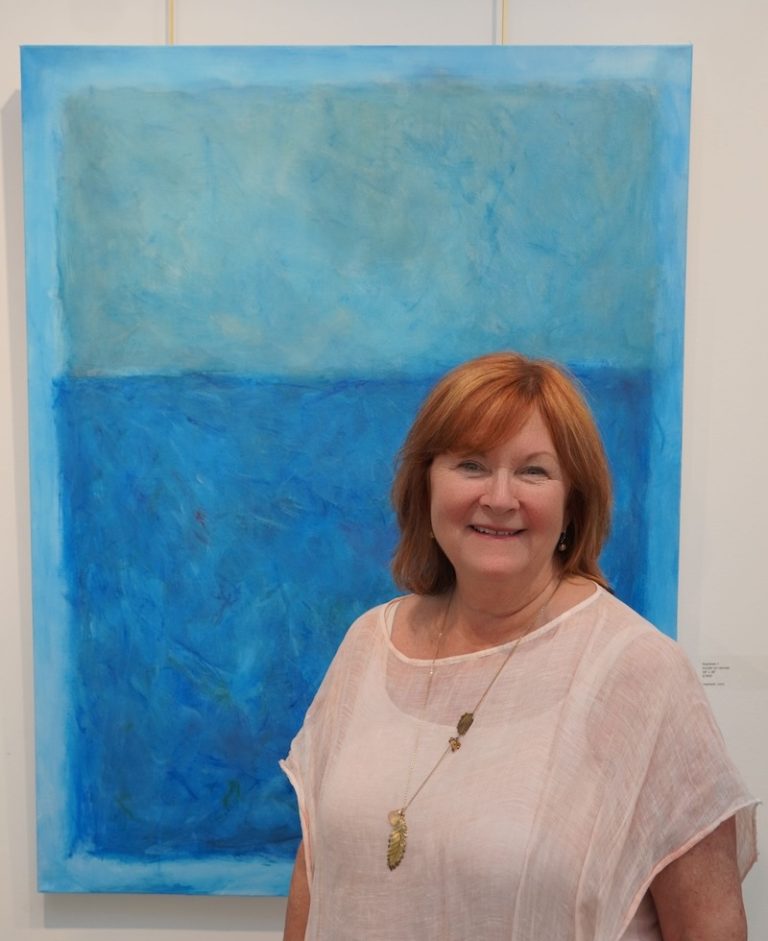
Sarah Dobbs is the new manager of the Sidney and Gertrude Zack Gallery at the Jewish Community Centre of Greater Vancouver. (photo from Zack Gallery)\

The Sidney and Gertrude Zack Gallery has a new manager, Sarah Dobbs, who showed an early affinity for her chosen field.

“My first time as a gallery host happened when I was about 8 years old,” she told the Independent. “My father was a journalist and a travel writer, and we lived in many countries when I was young: Spain, France, Morocco. Everywhere, my parents took me to art galleries, and I loved it.

“In the 1960s, while we were in Mexico, we often went to the local market. My father bought colourful folk sculptures. It was long before they became popular, we started collecting them. After we returned to Toronto, my family decided to have an exhibition of our collection. I was there, too. I enjoyed talking to people who came to see the show. I told them stories about this sculpture and that one. I liked sharing another culture with the people in my city. This entire experience had a huge impact on me. Even though I was young, I realized that art was storytelling. Art reflects our understanding of people and cultures.”

After receiving her degree in art history from the University of British Columbia and a master’s of education from the University of Toronto, Dobbs worked in the art world for more than 30 years.

“I ran commercial galleries and public galleries,” she said. “In the mid-’90s, I opened my own gallery, where I displayed mostly abstract art. I love abstract. Anyone can read their own story in an abstract painting.”

One of Dobbs’s most interesting projects happened when she was the director of the Burnaby Art Gallery.

“Part of my job there was to increase our interactions with the community,” she 

explained. “I started an outreach program for people who would never go to an art gallery on their own, specifically youths right out of jail. They were young. Most of them had yet to graduate from high school. We gave them disposable cameras and suggested they take photos of what was important in their lives (but not drugs). Then they would do collages of their photos and we displayed those collages in local bus shelters. Those collages reflected the teens’ lives, perhaps helped them to come to terms with it. The collages were also an opportunity for all of them to share their lives and their concerns with the wider public. I’m proud to say that all of our participants graduated from high school.” 

Projects like this, integrating art and public awareness, have accompanied Dobbs throughout her career. From 2002 to 2008, she worked in Ireland, at the National Gallery of Ireland and at the Irish Museum of Modern Art.

“We worked with hospital patients, but it wasn’t art therapy,” she said of that experience. “It was just doing art, participating. It reminded sick people of their healthy selves.”

Everywhere she has worked, Dobbs has helped people tell their stories through art, helped them deal with their suffering.

“In 2004, I was invited by a nurses’ charity to go to Sri Lanka for five weeks, to help the tsunami victims,” she recalled. “So many died there, children, old people. So much pain. I tried to do what I could to help, to ease that pain – I brought 98 kilos of art supplies with me.”

Later, in Kenya, she lived in a women’s peace-building village for a time.

“There were women from different tribes there, the tribes that were at war, that committed atrocities towards each other. But those women tried to build peace,” said Dobbs. “We would sit together and share stories. When women from different tribes saw similarities in their stories, felt their stories resonate with everyone, it helped in the peace-building process.”   

Dobbs has curated about 200 art exhibitions. In her opinion, deep knowledge of the art world is only part of being a successful curator.

“Of course, you have to be passionate about art,” she said. “But you also have to be very organized. You need to be patient with the artists – they are very sensitive. Encouraging artists, especially young artists, boosting their confidence is paramount. It helps them tell their stories. And you also need to be aware of who is going to see the art – to keep balance between artistic expression and public understanding. Sometimes, the latter could be a challenge. Another ongoing challenge is convincing people that art has value.”  

Those challenges can be exhausting, and even a successful art curator occasionally needs a break. Dobbs took such a break during the pandemic. The timing made sense, as most public spaces closed in 2020.

“For three years, I ran an integrated clinic, including traditional medicine, a naturopath, a massage therapist, etc. A break is good,” she said, “but I always come back to art. Sharing art with everyone is my joy.”

That’s why when the JCC announced that the Zack Gallery needed a new manager, she applied for the position.

“I have known about the Zack Gallery forever,” Dobbs said. “It is a wonderful place, a blend between a public gallery and a commercial art space. The gallery runs community exhibits. There is a theatre next door, which brings people in before the shows and during the intermissions. Children come in often. That is how art education starts for most of us, when a child wanders into an art gallery.” 

Olga Livshin is a Vancouver freelance writer. She can be reached at [email protected].

Format ImagePosted on July 26, 2024July 25, 2024Author Olga LivshinCategories Visual ArtsTags art, Sarah Dobbs, tikkun olam, Zack Gallery
Photos depict Oct. 7 trauma

Photos depict Oct. 7 trauma

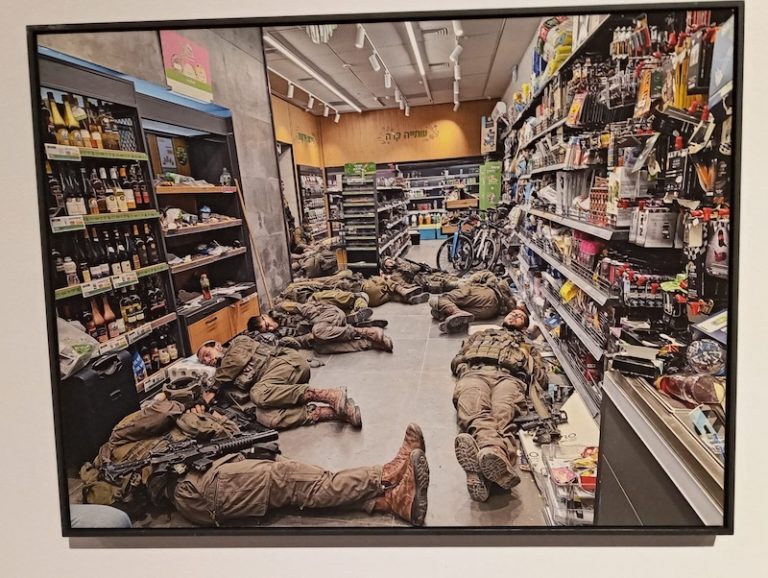
Batia Holini’s photo of Israeli soldiers sleeping on the floor of a grocery store near Kfar Aza on Oct. 8 is one of the works in the exhibit Album Darom. (photo by Gil Zohar)

Album Darom: Israeli Photographers in Tribute to the People of the Western Negev, which opened recently for a six-month temporary installation at the Petach Tikva Museum of Art, is the first group artistic endeavour in Israel to confront the tragedy of Hamas’s Oct. 7, 2023, massacre and the subsequent Gaza War, now in its 10th month. The ambitious tripartite installation Album Darom (Hebrew for Southern Album) incorporates a Facebook diary; a printed book of photographs accompanied by essays (published by Yedioth Ahronoth); and the museum exhibit.

Initiated by Prof. Dana Arieli, dean of the faculty of design at the Holon Institute of Technology, together with chief curator Irena Gordon, the project showcases 150 photographs, art installations and texts documenting the story of the western Negev region before and after Oct. 7. The exhibit includes the perspectives of 107 photographers and artists. Some of the participants in the album are world-renowned, others are amateurs. Lavi Lipshitz, the youngest featured photographer, lost his life fighting in Gaza. His mother penned the text accompanying his images.

The works in the album represent different photographic practices: artistic, personal and some staged, the intense images are upsetting. As well they should be in confronting mass murder.

Before walking around a corner to see Lali Fruhelig’s gruesome 3-D installation suggesting a corpse sprawled on the floor of a living room, a sign cautions: “The exhibition contains some potentially disturbing contents. Viewer discretion is advised.”

Arieli, a history professor and a photographer who explores remembrance culture and cultural manifestations of trauma, began the Album Darom project shortly after the Gaza war broke out.

“When something’s traumatic, you have to work or do something,” she said. 

Shocked by the murder of her friend Gideon Pauker from Kibbutz Nir Oz – who was killed just before his 80th birthday – she posted 100 daily historic and contemporary images of the Western Negev.

Initially, Arieli intended Album Darom to be exhibited at Kibbutz Yad Mordechai Museum just north of the Gaza Strip frontier. After the museum was damaged by rocket fire, this wasn’t feasible. Instead, she selected Petach Tikvah as the venue. She explained that the site – the first Yad Labanim memorial to fallen Israel Defence Forces soldiers from the War of Independence – is meant to be relevant to all Israelis. The museum offers free admission on Saturday, so observant Jews may visit on Shabbat.

Speaking to a group of journalists, Arieli compared Oct. 7 to the Nov. 4, 1995, assassination of then-prime minister Yitzhak Rabin. “Everyone is frozen in their memory of where they were,” she said.

Arieli and Gordon emphasized the intended cathartic nature of the exhibit. The two said the museum is a “safe space” and a “place for healing.” After experiencing the horrors of Oct. 7, Gordon found solace in this project, she added. “This is part of how we are coping with it all,” she said.

Miki Kratsman is one of the photographers whose depiction of his Oct. 7 nightmare is in the exhibit. Terrorists took his aunt Ophelia hostage from her home in Kibbutz Nir Oz. She was later released from Gaza in the November hostage exchange deal. 

Kratsman’s photograph, “In Aunt Ophelia’s Neighbourhood,” captures a modest kibbutz home collapsing as it is immolated in a fireball. 

“These are the kinds of things that need to be in a museum,” Arieli said of the photograph. “You’re looking at the destruction of Nir Oz.”

While vividly showing the devastation of the kibbutz, the burning home photograph is an enigma, and creates dialogue, she added.

But it is the human toll rather than the destroyed real estate that is most painful. Paradoxically, perhaps, Batia Holini’s peaceful photo of exhausted IDF soldiers sleeping on the floor of a grocery store near Kfar Aza on Oct. 8 hints at the savage warfare in which they have been engaged.

photo - “Funeral of Five Members of the Kutz Family who were Murdered in Kfar Aza,” a photo by Avishag Shaar-Yashuv
“Funeral of Five Members of the Kutz Family who were Murdered in Kfar Aza,” a photo by Avishag Shaar-Yashuv. (photo by Gil Zohar)

Avishag Shaar-Yashuv’s photograph, “Funeral of Five Members of the Kutz Family who were Murdered in Kfar Aza,” captures the searing emotion of the funeral of a family annihilated in the Hamas attack.

“I tried to focus and also wipe the tears at the same time,” Shaar-Yashuv said.

For this reviewer, the most symbolic part of the exhibit was a taxidermy display of a doe entitled “Bambi.” The exhibit references Felix Salten’s 1923 novel Bambi: A Life in the Woods and the 1942 animated movie produced by Walt Disney. Metaphorically, the hapless baby deer represents both the Six Million victims of the Holocaust and the 1,200 people murdered on Oct. 7.

Viewing Album Darom, one could conclude that the myth of the state of Israel protecting its citizens has been shattered. Arguably, Israelis today are no more secure than their ancestors were facing the Kishinev Pogrom of 1903, the Hebron Massacre of 1929 or the Farhud in Baghdad in 1941. 

Gil Zohar is a writer and tour guide in Jerusalem.

Format ImagePosted on July 12, 2024July 10, 2024Author Gil ZoharCategories Israel, Visual ArtsTags Album Darom, art, Israel, Oct. 7, photography, sculpture, South Album, trauma
More CREATE! to enjoy

More CREATE! to enjoy

Eastside Arts Society presents CREATE! Eastside Arts Festival July 22-28. (photo by Wendy D)

Eastside Arts Society (EAS) presents the fourth edition of its newly expanded, immersive summer arts event, CREATE! Eastside Arts Festival, at various Eastside Arts District (EAD) venues from July 22-28, in addition to its traditional all-day outdoor festivities at Strathcona Park July 27.

“We are thrilled to see the evolution of the CREATE! Eastside Arts Festival into a true, district-wide event that illuminates all that the EAD has to offer,” said Esther Rausenberg, artistic and executive director of EAS, who is a member of the Jewish community. 

The festival will offer affordable ticketed art workshops and performances at pop-up locations. Community highlights include CREATE! pop-up art workshops at Off the Rail Brewing, Luppolo Brewing and Strange Fellows Brewing from July 22-26 and studio art workshops at 1000 Parker Street Studios, the Mergatroid Building and the Arts Factory on July 28; Canadian musical artist Paul Pigat at the Firehall Arts Centre on July 25; singer-songwriter Art Bergmann at the Rickshaw Theatre on July 26; a roving piano and dance performance from Mascall Dance on July 26; live mural painting by Eastside Culture Crawl co-founder Richard Tetrault at East 4th Avenue and Ontario Street from July 22-26; and more.

On July 27, the festival returns for a full day of festivities at Strathcona Park, with a series of outdoor art-making workshops taught by EAD artists, including weaving, summer florals, introduction to flamenco (all abilities), crochet, charcoal drawing, and a BIPOC expressive art workshop.

For the first time this year, CREATE! will partner with 604 Records and Light Organ Records to present a live music concert stage at Strathcona Park (July 27, 2-6 p.m.), featuring homegrown artists Haleluya Hailu, Fur Trade (Steven Bays and Parker Bosley from Hot Hot Heat) and Sarah Jane Scouten.

A free all-ages CREATE! Festival Concert pass will also include access to the festival’s Art Zone, featuring public art activities, beer garden, food trucks and Art Shop, sponsored by the Strathcona BIA. CREATE! Art Zone public art activities will include zine making; planting flowers and painting your own pot to keep; and cyanotype, a photographic printing process activated by the sun.

A curated selection of local handmade artworks and goods will be available at the Festival Art Shop, and visitors can enjoy a fully licensed beer garden, serving beer, cider and wine from Strange Fellows Brewing, as well as an assortment of food from food trucks including Camion Café, Midnight Joe’s and Varinicey Pakoras.

Also on July 27, participants in Eastside Arts Society’s 9th annual Art! Bike! Beer! Crawl Brewery Tour Fundraiser will end their day of cycling/walking and imbibing at the CREATE! Art Zone. All fundraiser proceeds will benefit the Eastside Arts Society’s yearly activities and community events.

Art workshops are $35 for youth/adults and $20 for flamenco and children’s workshops. Children under the age of 12 must be supervised by an adult. The general public can access festival activities with a free CREATE! Festival Concert pass, sponsored by the Strathcona BIA. For full festival details and ticket info, visit createartsfestival.ca. 

– Courtesy Eastside Arts Society

Format ImagePosted on July 12, 2024July 10, 2024Author Eastside Arts SocietyCategories Music, Visual ArtsTags arts, Downtown Eastside, education, Esther Rausenberg, festivals
Pride in his Jewish identity

Pride in his Jewish identity

Brian Gleckman in front of his work, “The Judgment of Solomon (Psak Din: Judgment).” Psak din is a ruling given by a beit din, a Jewish court. (photo by Olga Livshin)

Brian Gleckman’s first show at the Zack Gallery, Abstracted Identity, opened on June 18. 

The artist has loved art since childhood. “I grew up in Los Angeles,” he said in an interview with the Jewish Independent. “It is a vibrant city for visual arts. There are an endless number of art galleries and museums, and I was always there. And, of course, I always drew and painted.” 

After getting his degree in visual art and history from California State University, Gleckman traveled extensively around Europe, before settling in Vancouver more than 30 years ago. But traveling has remained his passion and, during his travels, he invariably focuses on art and art history, museums and galleries. 

“When I first visited Europe, I fell in love with Rococo and Baroque,” he said. Baroque and Rococo are both highly ornamental styles, which infused the art and architecture of post-Renaissance Europe.

Later, he drifted towards more contemporary styles, both as an art connoisseur and in his own work. “I suppose I can call my art abstract expressionism,” he said.   

“Colour for me is a vehicle that allows me to play with shapes and space,” Gleckman explained. “Spatial relationships and composition of the images are of the utmost importance to me. I’m also concerned with depth and texture. I aim to create visual tension in my paintings. I think art shouldn’t be too easy or too comfortable. I want my viewers to engage, to ask questions. ‘What did he mean by that?’ ‘How does it make me feel?’ My viewers might not arrive at the same inner realization I conceived, but their explorations are more important than my answers. When people interact with my art, they become part of the creation process.” 

With his current show, Gleckman seeks to “portray things that lie beyond the tangible – that is, beyond the figurative, beyond the readily recognized narrative. The paintings in this exhibit are expressions of the inspiration I derive from biblical stories, religious thought, as well as rudimentary ideas within kabbalah. Selected from the portfolios of my professional artwork, these paintings are reflections of how I personalize the intangibles of Judaism.… These paintings are abstractions of my Jewish identity, an identity that is the product not so much of formal religious practice but the summative effect of intellectual and emotional sensibilities of my Jewishness.”

Of course, the Jewish Community Centre of Greater Vancouver, which is home to the Sidney and Gertrude Zack Gallery, felt like the perfect venue for such a show, but there was an additional reason why Gleckman wanted to exhibit at the Zack. 

“After Oct. 7, I wanted to do something that had meaning,” he said. “I wanted to share my pride in my Jewish identity. At the same time, I wanted to be part of the effort to help Israel, to make my own contribution. But I am an artist. I create art. I thought maybe my art could inspire someone to do something for Israel, to help in some way.” 

He approached the gallery with the idea of a show and offered to donate any proceeds from the sales of his paintings.

“I’m going to donate whatever I get to two organizations: ASI-Canada (Association for the Soldiers of Israel), which supports active-duty IDF soldiers, and Magen David Adom, which is Israel’s emergency response service. To promote the sales, I’m also offering 30% discount off my website prices for all my paintings.”    

The exhibit comprises 27 paintings from several of Gleckman’s established series. “For this exhibition, I have included paintings that are accompanied by titles … for fuller comprehension,” he said.

“The titles invite viewers to search for and reflect on the nuances of their own understanding of the selected stories, themes and ideas,” the artist explained. “I’m not trying to dictate my own interpretations to viewers. Instead, with the titles, I try to nudge viewers in the right direction. The titles are sort of guidelines for understanding the images, their conceptual representation.”

image - “Yerushalayim (Jerusalem)” by Brian Gleckman. The Hebrew words in the painting are from Psalm 137: “If I forget you, O Jerusalem, may my right hand forget ...  if I do not bring up Jerusalem at the beginning of my joy.”
“Yerushalayim (Jerusalem)” by Brian Gleckman. The Hebrew words in the painting are from Psalm 137: “If I forget you, O Jerusalem, may my right hand forget …  if I do not bring up Jerusalem at the beginning of my joy.”

Most of the titles are in Hebrew, spelled phonetically in the English alphabet. Some are in English, but they represent Jewish customs and stories. For example, the large painting “Tikkun Olam” is a field of life-affirming blue, while “Shiva” is bleak and dark, a painting of grief and despair, but both will generate different feelings for everyone.

A few other paintings are linked to grief and death, but many sport bright colors, like “Aytz Chaim” – blue and gold and triumphant – which proclaims the artist’s vision of the Tree of Life. The painting, tall and narrow, is framed by golden words. 

Another tall and narrow painting, “Tefillah” (a prayer), contains this one word in Hebrew, as well as 10 bright gold stars dancing on the blue background below, representing a minyan, the quorum of 10 men (in Orthodox Judaism) or people needed for Jewish communal prayers.

Another painting with words and colours woven together is “Yerushalayim.” Its golden-brown palette is reminiscent of the ancient city of Jerusalem, its modernity and its millennia of history, including conflict.   

Then there are calligraphed Hebrew letters, each magnified manifold on its own black and white canvas. “Their shapes are still recognizable,” said Gleckman, “but I wanted to explore the possibilities, the situation where something we know becomes something else, something to investigate and find a new meaning.” Each of these letter-paintings is like a road, curling capriciously according to the letter’s design, leading the viewers towards the unknown. 

Abstracted Identity runs until July 18. To learn more, visit the artist’s website, briangleckman.com.

Olga Livshin is a Vancouver freelance writer. She can be reached at [email protected].

Format ImagePosted on June 28, 2024June 27, 2024Author Olga LivshinCategories Visual ArtsTags Abstracted Identity, ASI-Canada, Brian Gleckman, fundraiser, identity, Israel, Judaism, Magen David Adom, painting, philanthropy, Zack Gallery
Windows into the shul

Windows into the shul

The Beth Israel Mural Project goes beyond the synagogue’s parkade, with a website that features each artwork, as well as information about the holiday depicted, and more. (screenshot)

Windows into the synagogue, windows into Judaism. The Beth Israel Mural Project features 13 works of art, each based on a Jewish holiday. Adorning the shul’s parkade, they welcome visitors.

“During COVID, Sy Brown started the Good Times Club at the BI. The goal was to bring in new programming into the shul for the over-50 crowd,” explained project manager Reisa Schwartzman. “We have had blood drives, book clubs and walking clubs. I came up with the idea to do a mural in the garage.

“At first, the idea was to do one large mural. The challenge was that there are parking signs that could not be removed so it motivated us to think out of the box a bit. The smaller framed murals allowed it to have the effect of being windows into the shul.

photo - Ramona Josephson was the lead artist on one of the two murals portraying Shabbat
Ramona Josephson was the lead artist on one of the two murals portraying Shabbat. (photo from Beth Israel Mural Project)

“The next steps were to call out to the congregation to see who would like to participate. At this time, all meetings were held on Zoom due to COVID. Once the committee had the members, we then went out to the congregation – we wanted the entire membership to feel included, to see what they wanted to see in the garage. The overwhelming feedback was the holidays.”

Volunteers were assigned a holiday and the committee helped with each image. “This is when the real work began,” said Schwartzman. “But, up to this point between COVID and summer holidays, it was two years.

“With Peter Sarganis, an amazing artist himself but also an art teacher, he guided us on the steps required to take our wonderful images through the multiple steps to get each image on the boards. Once the boards were ready to go, we met each Sunday afternoon for painting for several months. There were committed painters who would come in during the week to work as well. This was a labour of love! The energy in the room when we were painting was fabulous. Focused artists and painters working together to bring these works to fruition.”

Sarganis answered the callout to members because, he said, “As an artist, I thought it would be a creative way to combine my love of Judaism, the Beth Israel Synagogue, collaboration and painting.”

Sarganis became the project’s art director and a lead artist and designer of one of the two Shabbat works.

“I love Shabbat. From Friday evening family dinners; to Shabbat morning services; to the candles, wine, challah and artifacts used – I can simply say I love it,” Sarganis said of his choice of holiday to portray. “The Shabbat panel I designed and painted is an abstracted representation of our family’s candle holders, Kiddush cup and challah cover.”

About the project, he said, “We had a wide range of expertise, from those who don’t paint at all to those who paint a lot. The common thread that kept us going and made this a beautiful group to be a part of was everyone’s passion for the project. 

“As a professional artist and someone who has taught at a fine arts school for the past 29 years, it seemed the role of me becoming art director happened organically, it was not something that was there at the start of the project,” he added. “This included helping the designers of the panels with their designs, bringing in tools and equipment to help facilitate the transferring of the designs onto the large panels, advising the groups of painters on the painting process and/or techniques, figuring out (with Reisa) the placement of the panels in the parkade.”

“I really believe that we can beautify the most simple areas to make them more impactful,” said Schwartzman. “Having these windows in the garage makes the experience of going to the BI start right from parking your car. But we didn’t stop there. Krystine McInnes came up with the idea that we should add QR codes to each image so that people could open their phones and learn more about each holiday, the customs and history. We hope we can use these to fight antisemitism as well, or just to help educate. We decided to paint on boards rather than the wall itself so, if needed, we could have them traveling.

“One thing different about our art is that none of the pieces are signed. This was with the commitment that the works were collective, designed and inspired by several artists and painted by the community we built. It is a community effort for our shul.”

While the lead artists aren’t indicated on the murals in the garage, they are credited on the project’s website, bethisraelartproject.com: Beryl Israel (Purim and Tu b’Shevat), Sheila Romalis (Hanukkah), Ramona Josephson (Rosh Hashanah, Sukkot and Shabbat), Debby Koffman (Simchat Torah), Janice Masur (Shavuot), Luca Carati (Yom Hashoah and Yom Yerushalayim), Nassa Selwyn (Pesach and Yom Kippur) and Adele Lewin (Simchat Torah). In addition to the QR code integration, McInnes designed the project website, which features information on the holidays, their history and customs from several sources, including work done by Jean Gerber and Jonathan Berkowitz and a dozen or so websites.

The paint was donated by Benjamin Moore Paint and the boards and framing by Burton Mouldings, said Esther Moses, Beth Israel executive director. Ralph (z’l) and Elaine Schwartzman donated to help make the project possible, she said.

“My parents believe in supporting our community and have always been supporters of several Jewish agencies here and abroad,” explained Schwartzman. “Once they heard about what I wanted to do, my mom called the shul and made a donation to make sure we could complete the project. Supporting the shul, the arts, community and engagement for people are all reasons they stepped forward.”

image - Beryl Israel was the lead artist on the Tu b’Shevat mural
Beryl Israel was the lead artist on the Tu b’Shevat mural. (photo from Beth Israel Mural Project)

“I am so proud of Beth Israel and our members who worked on the murals. They are strikingly beautiful,” said Rabbi Jonathan Infeld, the synagogue’s senior spiritual leader. “They bring light to our congregation and are a great educational tool. They brought people together for an important common cause. The murals are another way that we help bring Jews closer to God, Torah and Israel at Beth Israel.”

While he helped, for example, with the Hebrew on one of the works, Infeld admitted, “I am involved in many different aspects and programs of the synagogue, this is one that I did not play a large role in though. Yes, I helped with some of the Jewish content. But anyone who knows my artistic abilities knows why I left this project to others to accomplish.”

The project – which took a total of three years from conception to installation – “was a great way to add colour to our parkade in a meaningful and Jewish way,” said the rabbi. “The murals are educational and exceptionally beautiful. But, most importantly, they created community amongst people of all ages.”

Overall, it has been a huge success, he said. “People love seeing [the murals] when they enter the parkade. They love looking at them and learning from them. I know that the participants loved making them.”

“This project was really a labour of love by all who participated,” agreed Schwartzman. “Peter was incredibly supportive with his knowledge and guidance. There were so many amazing artists that we all learned from each other, helped each other and celebrated together. We really hope that these images bring the shul much enjoyment and support them in any of their programming when possible.”

“This project took a lot of time and work – and was worth every moment,” said Sarganis. “I met some wonderful people, and got to know people I already knew even better. A beautiful community project.” 

Format ImagePosted on June 14, 2024June 13, 2024Author Cynthia RamsayCategories Visual ArtsTags Beth Israel Mural Project, Jonathan Infeld, Judaism, murals, painting, Peter Sarganis, Reisa Schwartzman
Goldstein removed from exhibit

Goldstein removed from exhibit

Dina Goldstein stands in front of two of the 10 works that comprise her In the Dollhouse series featuring Barbie and Ken. (photo from Dina Goldstein)

Dina Goldstein had her work pulled from a Vancouver exhibition just days before it was set to open – in what she has described as “a blatant act of antisemitism.” But the gallery is claiming its decision to cut the Israeli-Canadian artist from the show was based on financial considerations, despite a recent news report and documentation from Goldstein that suggest there may have been other reasons.

An internationally acclaimed artist, Goldstein was scheduled to have her works shown at the Vancouver Centre of International Contemporary Art (CICA) from May 9 to June 29 as part of a group exhibition titled Toy Story, a look at the world of toys as seen through the eyes of artists from around the world. Goldstein, who received widespread attention for her Fallen Princesses and In the Dollhouse series of tableaux, was listed as recently as late April on the CICA website among the artists whose works would appear in the exhibit.

According to a report on Stir, a Vancouver website covering art news, Goldstein was notified by the gallery’s curator, Viahsta Yuan, on April 30 that her works – three pieces from the 10-image In the Dollhouse series – would not be shown during the exhibition. (Goldstein earlier had arranged for the gallery to pick them up on May 2.)

Regarding her agreement with CICA after a studio visit by the curator on April 26, Goldstein said, two large pieces and two medium pieces were confirmed, available at the studio, framed and ready to be installed.

“One medium piece had to be produced because it is a diptych with a missing partner. This she requested I get going on. The other selections would be printed in small format. I was waiting to hear about the production of the small version. [The curator] wanted to show all 10 images if possible,” Goldstein said.

But then, in Goldstein’s account, which was sent to the CJN, Yuan disclosed to her that the gallery had received an email from a small group of Vancouver artists who wanted her excluded because she supported Israel. The unnamed artists, in Goldstein’s words, felt that she did not deserve to exhibit her work during this time of war. Goldstein was offered an alternate solo exhibition within a year or two, or when the situation in Israel and Gaza might subside.

Yuan had, as Goldstein recalled, agreed that punishing an artist because of their Jewish identity was unjustifiable. Goldstein asked the curator to relay this message to the gallery committee, as well as the importance of standing up to discrimination. When she reached out to Yuan for an update on her meeting with the gallery committee, Goldstein received an email that cited, as she says, “a sudden budgetary issue as the reason for her removal. This explanation contradicted the previous acknowledgment of discrimination, with the decision now framed as a last-minute ‘creative choice.’”

“This experience takes me back to the times we may have had in our youth and being bullied. This is part of what antisemitism feels like,” Goldstein told the CJN, noting that the works in question have nothing to do with Gaza or Israel.

Goldstein, too, recounted that, unlike most people associated with the exhibition, she had been to Gaza and the West Bank while on an assignment in 1999, photographing Palestinians alongside her pictures from Jerusalem and Tel Aviv. She has shared those memories on Instagram in recent months.

In the Dollhouse, which was created by Goldstein in 2012, features a pink, adult-size dollhouse in which Barbie and Ken reside. The series offers satirical situations around the house, sometimes with a risqué approach to social commentary. Notes about the images on Goldstein’s website say that, in them, Barbie represents the notion that beauty is the ultimate trait and is necessary “to attain power and happiness.” Meanwhile, Ken discovers and expresses his true self after four decades of being “trapped in an imposed marriage.”

In the invitation to participate in the exhibition, CICA wrote that Goldstein’s dollhouse series “offers an intricate exploration of identity, conventional values, gender equality and beauty. The inclusion will not only enrich the depth of the exhibition but also provide viewers with a fresh and unique reflection on the toy that has influenced a generation of people.

“We believe that the inclusion of In the Dollhouse will offer a unique perspective and contribute significantly to the exhibition’s dialogue on the transformative power of toys as symbols within our lives.”

In Yuan’s version of events, as reported by Stir, after consultation with others at the gallery, CICA had originally selected five pieces from the series. After visiting Goldstein’s studio, she said only three of the pieces were ready.

Yuan then had another discussion with the gallery committee, and it was decided that CICA did not have the budget for production costs. Further, another artist was showing a piece about a dollhouse, and the gallery believed showing two works in dollhouses would be excessive.

CICA released a statement on May 4 in which it denied its decision to pull Goldstein’s work from the exhibition was based on “religious and cultural affiliation” but rather was related to financial considerations. Works by two other artists, Roby Dwi Antono and Aya Takano, CICA said, were also removed from the lineup. The organization emphasized its desire “to cultivate artistic dialogue and community engagement while emphasizing inclusivity and representation.”

“As a woman and BIPOC-led organization, prioritizing diversity is not just a goal but a guiding principle that informs every aspect of our work,” the statement from CICA read. “Since our inception, we have been dedicated to showcase a pluralistic range of contemporary art and ideas through our multidisciplinary exhibitions and programming.

“We are grateful to have collaborated with a distinguished group of over 35 local and international artists, with more than two-thirds from visible minority backgrounds. These cross-cultural collaborations are a testament to our commitment to platforming diversity while fostering a safe and accessible environment for all.”

CICA stressed that, like many nonprofit arts organizations, it faced budgetary constraints and, with limited resources, it needed to make difficult decisions. As a result, three artists were not shown because of limited finances, a short time frame and “curatorial direction.”

The cultural and religious background of an artist would never warrant exclusion from the gallery, CICA went on to say, and that decisions were made only on artistic merit and how a work would fit into an exhibition.

“Discrimination of any kind has no place within our organization, and we remain steadfast in our commitment to platforming 

diversity and ensuring equitable representation in everything we do. Looking ahead, we will continue to embed the values of equity, inclusion and diversity into every facet of our operations,” CICA said.

Established in 2021, CICA is a nonprofit, multidisciplinary arts organization. According to its website, it provides “a forum for everyone to step into the art and learn while having fun” and aims “to enhance public engagement in the arts and bridge local and international artists for idea exchange, knowledge sharing, and collaboration.” 

Sam Margolis has written for the Globe and Mail, the National Post, UPI and MSNBC. This article was originally published on thecjn.ca.

Format ImagePosted on May 24, 2024May 23, 2024Author Sam MargolisCategories Visual ArtsTags antisemitism, art, Centre of International Contemporary Art, CICA, Dina Goldstein, Fallen Princesses, In the Dollhouse, Viahsta Yuan
Festival unites sparks of light

Festival unites sparks of light

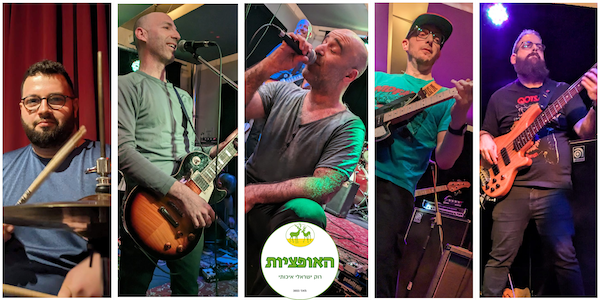
The Options Israeli music cover band closes the Festival of Israeli Culture on May 26. (photo from the JCC)

This year’s Festival of Israeli Culture takes place May 21-26, with the main event at the Jewish Community Centre of Greater Vancouver the afternoon of Lag b’Omer, May 26.

Falling on the 33rd day of the counting of the Omer, between the second night of Passover and Shavuot 49 days later, Lag b’Omer is a celebration amid tragedy. It commemorates the end of a plague that is said to have killed 24,000 of Rabbi Akiva ben Yosef’s students during the Bar Kochba rebellion against the Roman Empire in the second century. Only five students survived, one of whom was Rabbi Shimon bar Yochai, the sage who wrote the Zohar, among other things. Jewish tradition states that, after Rabbi Shimon offered his last kabbalist teaching, he died, on Lag b’Omer, having requested that his death not be mourned. For Rabbi Shimon, death means a soul has taken its place with God.

Among the traditions of Lag b’Omer are bonfires (perhaps in remembrance of fires the Bar Kochba rebels lit to relay messages), weddings, a boy’s first haircut, singing and dancing.

“I felt that it is so sensitive to be celebrating when there is such a complex and sad situation going on in Israel,” Nomi Zysblat, organizer of the annual JCC festival this year, told the Independent. “But, after researching the meaning of Lag b’Omer, I really see it as our community coming together with our individual sparks of light, a way of staying together, of communicating, a collective medura [bonfire or campfire] of strength and warmth.”

This year’s festival will be on the quieter side.

“We thought about this a lot,” said Zysblat. “Is it OK to ‘celebrate’? Is it safe? After many conversations, we decided that we need a gathering, we need to feel safe, we need to remember and we also need to be proud. We aren’t having a huge event, it’s going to be slightly more intimate … more gatherings and community enjoyment rather than huge events, both for the general feeling and also for security reasons. We aren’t flaunting but are also still wanting to enjoy being together.”

On May 21, there will be a dance party, kibbutz-style, at the Anza Club (tickets, $15). The night will be hosted by DJ Guy Hajaj, who will showcase modern and alternative Israeli music.

“He’s had a show for 10 years on Israeli radio and also a popular music blog, among other things,” explained Zysblat. “He DJs at events in Israel throughout the year but has been based in Vancouver for six years.”

photo - On May 23, Moshe Bonen performs a sing-along-style show with festival organizer Nomi Zysblat
On May 23, Moshe Bonen performs a sing-along-style show with festival organizer Nomi Zysblat. (photo from the JCC)

On the afternoon of May 22, the JCC parking lot will become an arts space where kids/teens can participate in a collaborative mural project led by Zohar Hagbi, a local Israeli artist. And, on the evening of May 23, the JCC atrium will come alive with music in a sing-along-style show led by musician and former Israeli radio broadcaster Moshe Bonen with Zysblat (tickets, $10, include a glass of wine).

“I have a music degree from Berklee College of Music in Boston and used to write and perform my own folk/rock music back in the day,” said Zysblat. “But, my favourite thing in the world to do when I was living in New York was to go up to the Bronx to Moshe’s loft and sing while he played his grand piano. He is an amazing player and accompanist.”

Zysblat’s professional background is both in music management and in the food industry. She started her own company 12 years ago – Paletas, which makes and sells natural popsicles. She got the idea while living in New York, discovering the icy Mexican treat at a grocery store. 

“After she brought the idea to the restaurant where she worked as a cook in Brooklyn and created unique desserts for the restaurant’s menu, she realized that it could be a lot of fun to make them in Israel,” it says on the company’s website. “Naomi went on a trip to Mexico to learn from local paleteros, their method and tradition, and get inspiration for special and different flavours, then came back and opened her small business here in Tel Aviv.”

“I was born in Jerusalem to Canadian-born parents – my dad was from Calgary and my mom is from Vancouver,” Zysblat told the Independent. “We grew up visiting our grandparents and aunts and uncles and cousins every summer in Canada so it’s like a second home to me. I even spent a few sabbatical years my parents took here in Vancouver, and attended school here. I knew this was an experience I wanted for my kids as well and, after Oct. 7, realized there’s no better time to come here. My husband Adi always loved BC because he was a mountain biker and beer brewer, so it was a win-win.”

It’s not surprising then that a nature walk is also part of this year’s festival. On the morning of May 25 at Central Park in Burnaby, there will be a walk led by young community madrichim (leaders). The terrain is suitable for all ages and abilities. There will be songs, stories, snacks.

At the festival’s main event at the JCC on May 26, there will be food trucks (Planted and Meet2Eat), a marketplace (jewelry, glass work, flower arrangements, photography, home decor, Israeli popsicles and jachnun, a Yemenite Jewish pastry), DJ’ed Israeli music, Israeli dance shows (troops from across Metro Vancouver, including Or Atid youth dancers), a drum circle, wine-tasting, arts and crafts, a gaga pit, face-painting, and dance, art and hummus workshops. In the Zack Gallery, the Tikun Olam Community Art Installation is already on display. The day closes with a performance by the Options, a group of local Israelis who cover Israeli rock and other songs. 

For more information, visit jccgv.com/ event/festival-of-israeli-culture. 

Format ImagePosted on May 10, 2024May 8, 2024Author Cynthia RamsayCategories Music, Performing Arts, Visual ArtsTags arts, culture, Festival of Israeli Culture, Israel, JCC, Jewish Community Centre of Greater Vancouver, Lag b'Omer, Nomi Zysblat

Cultural constellations

Lindsey Tyne Johnson has a new show at the Zack Gallery: The Irish Mazzaroth & Hebrew Spelled Backwards. It comprises two separate parts.

Hebrew Spelled Backwards debuted at the Kamloops Art Gallery in 2023. It is a series of illustrations in which the artist explores her Jewish heritage.

“When the show finished in Kamloops, the Zack Gallery director contacted me,” Johnson told the Independent. “But the show had only seven pieces, and the Zack Gallery is large. It needed more art.”

At about the same time, Johnson decided to delve deeper into her ethnic roots. “My mother’s family were Irish Jews,” she said. “Not a usual combination. I went to Ireland in February 2024 to find out more.”     

She was fascinated by what she discovered. “Jews appeared in Ireland in the 1500s,” she shared. “Later, antisemitism forced many of them to leave, but they came back again. Then, there was a wave of Jews who came to Ireland and Northern Ireland from Russia in the beginning of the 20th century – they were escaping pogroms. Someone tricked them, sold them tickets to New York, but delivered them to Ireland instead and kicked them off the ship there. Some persisted in traveling to America, but others settled in Ireland. And then, there were the Jewish children escaping the Holocaust in Europe, Ireland took them in.”        

When Johnson visited the Irish Jewish Museum in Dublin, she found a number of her ancestors. “Their names were all written up in the Book of Irish Jewry there,” she explained. “The museum staff asked me if I wanted my name to be added to the new edition of the book. Of course, I said yes.”

The second part of the show, Irish Mazzaroth, started taking shape in her mind while she was in Ireland. The 12 black and white illustrations on the gallery walls reflect Johnson’s take on the zodiac’s traditional imagery. Mazzaroth means constellations in Hebrew.

Both Jewish and Irish lore have a long record of zodiac interpretations, from Greco-Roman mythology to the Zodiac Wheel, the centrepiece of the sixth-century mosaic at Beit Alpha in Israel. 

image - “Virgo” by Lindsey Tyne Johnson, part of Johnson’s solo exhibit at the Zack Gallery until May 9
“Virgo” by Lindsey Tyne Johnson, part of Johnson’s solo exhibit at the Zack Gallery until May 9.

Johnson, a young Canadian artist, has succeeded in meshing seamlessly Celtic symbolism and Jewish mysticism into a series of computer illustrations that are uniquely hers. 

“I started the first one in January. I finished the last one just before the show,” she said. “Each one is a well-known astrological sign, and each involves some aspects of both Jewish and Irish culture.” 

Every illustration is a whimsical little story, a playful tale that connects all earth cultures to one another. The images are clean and austere, uncluttered by unnecessary details. The twin girls in Gemini smile at the viewer. In front of them are Shabbat candles and a challah. Behind them, a leafy tree rises in the Irish countryside. Their quiet joy is unmistakable. 

On the other hand, the lone girl in Scorpio is solemnly considering the riches of ancient books in the famous Old Library in Trinity College in Dublin. She seems breathless with excitement at the abundance of choices in front of her, her braid curling up defiantly like a scorpion’s tail. The Jewish thirst for knowledge is given form in the context of the historical Irish library.

In another famous location in Dublin, the Temple Bar pub, Johnson features, in Virgo, an Irish Jewish woman playing a fiddle, merging lively Jewish klezmer and Celtic tunes.

image - “Leo” by Lindsey Tyne Johnson
“Leo” by Lindsey Tyne Johnson.

In Leo, the backdrop is grimmer. It depicts the Crumlin Road Gaol, hinting at the political strife in Ireland, while the man in front reminds us of the story of Daniel and the lions. “One of my distant relatives worked as a prison guard there,” Johnson said. 

The frames of every illustration are identical: a rounded rectangle of Celtic knots, tied together at the top by a Magen David, which also emphasizes the affinity of two cultures.

The Irish Mazzaroth & Hebrew Spelled Backwards is on display at the Zack Gallery until May 9. To read more about Johnson and Hebrew Spelled Backwards, go to jewishindependent.ca/artfully-exploring-heritage. 

Olga Livshin is a Vancouver freelance writer. She can be reached at [email protected].

Posted on April 12, 2024April 10, 2024Author Olga LivshinCategories Visual ArtsTags culture, Hebrew Spelled Backwards, heritage, Ireland, Irish Mazzaroth, Judaism, Lindsey Tyne Johnson, Zacl Gallery
Immersed in animation

Immersed in animation

Alex Greenberg’s family experience drove his work for the Dallas Holocaust Museum. (photo from Alex Greenberg)

It was a winding road for Alex Greenberg to become head of animation at a leading creative technology firm in Vancouver. 

Born in Moldova, Greenberg and his family made aliyah in 1990, when he was 11 years old. After a “pretty regular childhood” in Israel, high school graduation, military service and a bit of travel around the world, Greenberg settled down to study animation.

“Unfortunately, two months into school, the director of the school took the money and split,” he said. “My luck. All the money was gone, the money I got from my [military] service.”

He started looking for schools in Canada and the United States where he could continue his studies. He discovered the Art Institute of Vancouver and moved here, by himself, in 2003.

Fast-forward … Greenberg is immersed in immersive technology. As head of animation for ngx Interactive, he has his finger in many projects – including one that shares the testimonies of Holocaust survivors and which, of everything he has worked on, is closest to his heart.

Founded more than two decades ago in Vancouver, ngx’s 80 or so employees, according to the company’s website, help clients “reimagine what’s possible in physical and digital spaces.”

“We work with four main sectors,” said Greenberg. 

The museum sector is a big one. The company took part in a major re-envisioning of the National Portrait Gallery in London, UK. It reopened last year featuring 41 multimedia exhibits, including an artificial intelligence-powered portrait experience, an animated projection wall featuring some of the gallery’s most stunning portraits, interactive touch screens, and documentary films produced by ngx.

The medical sector is another area and, if you have ever taken your kids or grandkids to BC Children’s Hospital, you may have seen the interactive aquarium ngx developed for the emergency room so that young patients and their families have something to take their minds off the stressful reasons for their visit.

A third area is themed attractions, which have engaged audiences in such diverse spaces as Vancouver’s Science World, SeaWorld Abu Dhabi, Jurassic World in Beijing and the Canada Pavilion at Expo 2020 in Dubai.

Their corporate and institutional work, another core area for ngx, includes an interpretive exhibition in the pharmaceutical sciences building at the University of British Columbia, where visitors explore the world of health, and a project for Roche Canada, in the Toronto area, where the global pharmaceutical company has an interactive space for employees to engage with the Roche brand story.

Other projects help visitors explore cultural institutions like the Citadel Heritage Centre in Halifax, Indigenous cultural storytelling at Wanuskewin Heritage Park in Saskatoon, and interpretive exhibits about nature at Wind Cave National Park in South Dakota.

Greenberg’s specific role in ngx projects is lighting and look development.

“When you are working on a project, there’s a certain style to it, lighting, a certain mood, something that will convey the story,” he said. “We don’t just create these experiences to make them look cool. There’s a lot of thought that is being put behind them, thinking about the colours and thinking about the movement and [in the case of the BC Children’s Hospital virtual aquarium] how kids are going to interact with it to help them relax.” 

In his seven years with the company, one project stands out among the rest for Greenberg.

Visitors to the Dallas Holocaust Museum, in Texas, enter a room that transforms into a home in eastern Europe at the start of the Holocaust. Survivors share their testimonies as the home becomes no longer a refuge but a backdrop for the projection of scenes of atrocities. Then the screen rises and a holographic version of a survivor engages with the audience.

Hundreds of hours of interviews with survivors using 360-degree cameras allow for the realistic perspective of meeting these individuals in person. The project, called Dimensions in Testimony and developed in partnership with Steven Spielberg’s USC Shoah Foundation, introduces school groups and other museum visitors to a different survivor and their experiences each week of the year.

photo - Visitors to the Dallas Holocaust Museum, in Texas, can interact with holographic versions of survivors
Visitors to the Dallas Holocaust Museum, in Texas, can interact with holographic versions of survivors. (photo from Dallas Holocaust Museum)
photo - Hundreds of hours of interviews with survivors using 360-degree cameras allow for the realistic perspective of meeting these individuals in person
Hundreds of hours of interviews with survivors using 360-degree cameras allow for the realistic perspective of meeting these individuals in person. (photo from Dallas Holocaust Museum)

“This was one of the most impactful projects that I ever worked on,” Greenberg said. “You feel like you’re sitting in their living room. As you hear the story, the room begins to change. Lights going off, you hear marching of the boots outside, the rooms become slowly, almost unnoticeably dilapidated, just to show that the people were driven out of their homes and these homes are left with nothing but memories and a few photographs.

“After that introduction, the screen goes up and there’s a hologram production of that survivor. That’s the technology that the USC [Shoah] Foundation has developed. You can ask a question – for example, ‘What was your favourite sport when you were little?’ – and that would trigger a story where the survivor will be talking about where he used to play soccer with his friends when they were little.”

The project was close to home for Greenberg, whose grandfather lost his entire family in the Shoah.

“There was a big part of me in that experience,” said Greenberg. “I can tell and I can educate other people, people that are coming to this museum and people around the world that still don’t know what the Holocaust is, don’t know what a genocide is. It’s almost like I was telling my story.” 

Format ImagePosted on April 12, 2024April 10, 2024Author Pat JohnsonCategories Visual ArtsTags Alex Greenberg, culture, Dallas Holocaust Museum, Dimensions in Testimony, history, holograms, ngx Interactive, survivors, technology, USC Shoah Foundation

Art beyond the gallery walls

For Dan Russek, art abounds in urban settings, whether it be in the form of manhole covers, bike racks or other items and scenes that city dwellers regularly encounter. Spurred by an early love of photography, he has been surveying cityscapes with an eye for “public art that goes beyond the gallery.” 

photo - University of Victoria professor Dan Russek, author of Exercises in Urban Mysticism: Practical Poetry and other books
University of Victoria professor Dan Russek, author of Exercises in Urban Mysticism: Practical Poetry and other books. (photo from Dan Russek)

A professor in the department of Hispanic and Italian studies at the University of Victoria, Russek is the author of Exercises in Urban Mysticism: Practical Poetry, a 2020 book – written in Spanish, with the title Ejercicios de mística urbana: Poesía práctica, and published in Mexico – that explores the poetry of everyday life.

“One way I look at it is that I take the idea of modern art seriously,” Russek told the Independent. “When you see a painting by Jackson Pollock, you may understand its place in the history of art. But what Pollock is showing is a kind of texture, composition and movement that you can find outside of the gallery walls, appealing to a certain sensibility that takes you beyond the museum.”

Russek was intrigued by the 1996 book Manhole Covers, written by Mimi and Robert Melnick and published by MIT Press. It delved into how an object many consider ordinary can provide a record of the history of a city and, some would argue, be deserving of a spot in contemporary urban culture; in other words, seeing a utilitarian object as an “urban sculpture.”

Russek devoted a lot of space in his illustrated book to manhole covers, bike racks, various geometric structures and a variety of textures. Art, as he views it, extends far beyond the confines of canvas or paper. Indeed, by his admission, one of his favourite spots to be is on construction sites, especially in a place like Mexico City, where there are few restrictions for getting inside. 

“You take something in itself that may not appear to be too interesting, but, when you look at it in a certain way, it becomes interesting. Or, to quote Gustav Flaubert, ‘Anything becomes interesting if you look at it long enough,’” Russek said.

As an example of this, Russek gives the work of American photographer Edward Weston in the 1920s and 1930s. As Russek describes it, in one image, Weston takes a simple green pepper and turns it into something “astounding.” The same can be done for bike racks and many other urban and industrial artifacts, he said.

Russek, who was born in Mexico, remembers being surrounded by relatives who were passionate about photography.

“As a kid, we would make an album while on a vacation. Each trip yielded an album, as did life events, weddings, bar mitzvahs,” he said. “Life was documented. It gave me a model. I began taking pictures in high school, and I realized I was interested in abstraction.”

Over the years, walking through the streets of cities like Chicago, Mexico City and Buenos Aires, Russek has been struck by many aspects of street art, including graffiti, another form of public art that is found beyond the gallery. In fact, some graffiti, he said, is as valuable as the art one finds in a museum.

“I wish I had my camera with me all the time. The reflections of light in the afternoon over the pavement, it’s phenomenal. The light making reflections on the water from a gutter – life is full of these interesting moments. Bringing the camera is a good thing because I don’t have to look for anything, the world sends it to me,” he said. 

Russek completed a PhD in comparative literature at the University of Chicago, specializing in modern and contemporary Latin American literature and visual arts. His fields of research include the links between literature and the visual arts and media, urban studies and esthetics. He has explored the relations between modern technology, culture and literature, and centres on the notion of epiphany and the phenomenon of light. His first book, Textual Exposures: Photography in Twentieth Century Spanish American Narrative Fiction, was published in 2015 by University of Calgary Press. 

Some of Russek’s next plans involve going beyond the printed page. He wants to make videos, as the medium “allows you to do more stuff, with music and the matching of images, that you cannot do in a book.” He also writes poetry (sonnets in particular) because, for one reason, “you can take an object or an emotion and write a poem about it and elevate it to a new level of importance.”

Argentine writer Julio Cortázar is an example Russek cites of an artist reaching beyond the confines of a particular medium, an approach that is multifaceted or experimental. In one work, Último Round (Last Round), Cortázar created an almanac-style book filled with articles, poems, essays and illustrations.

Aside from teaching and writing, Russek is the coordinator of the Latin American and Spanish Film Week, now in its 14th year, held in the fall at UVic’s Cinecenta. He is also the president of the Hispanic Film Society of Victoria. 

Sam Margolis has written for the Globe and Mail, the National Post, UPI and MSNBC.

Posted on April 12, 2024April 10, 2024Author Sam MargolisCategories Visual ArtsTags Dan Russek, urban art, UVic, Victoria

Posts pagination

Previous page Page 1 … Page 3 Page 4 Page 5 … Page 25 Next page
Proudly powered by WordPress