Zack exhibit celebrates nature

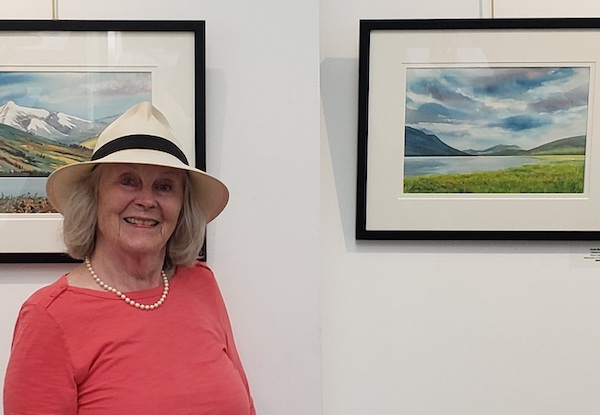
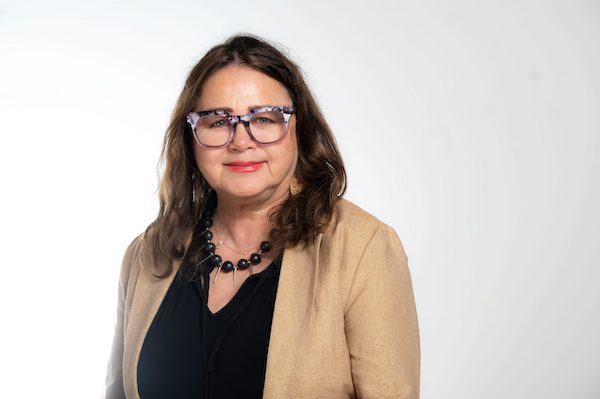
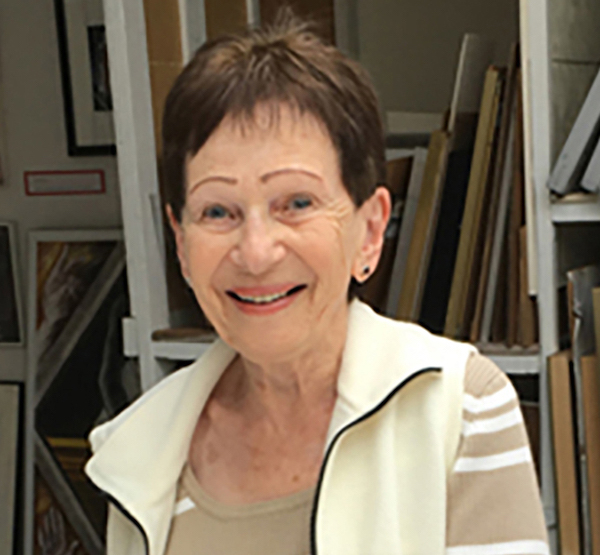
Enda Bardell (photo from Enda Bardell)

Creativity manifests itself in people’s lives in different ways and at different times. For Enda Bardell, various forms of art occupied her for decades, while Mike Cohene discovered woodcarving only a few years ago, on his way to retirement. Their double show, Artistry in Wood and Water, opened at the Zack Gallery on July 26.

Bardell told the Independent that she was born in Estonia. In 1944, when she was a young child, her family fled from Estonia, then occupied by the Nazis, to Sweden. Her mother worked at a paper factory there, and Bardell played with paper dolls she made herself. She also drew all the dolls’ colourful outfits. “I gave the dolls away to other girls, to make friends,” she recalled. “My first attempts at fashion design.”

A few years later, the family was forced to move again. The Russian communist government wanted the return of all the Estonians who had escaped the Nazis during the war, and Sweden was going to comply with that demand. But Bardell’s father didn’t want to live in communist Russia, so they became refugees again, this time ending up in Canada.

“In 1951, we came to Winnipeg,” said Bardell. “I went to school there and I desperately wanted to fit in. To belong. To be Canadian. I participated in many school clubs and activities. Entered an art class, too. My teacher praised me and recommended that I send one of my drawings to an interschool art competition. I did. And I won. I knew then that I was an artist.”

Interested in landscapes and abstracts, Bardell painted a lot as a teenager, but, after her high school graduation, she became deeply involved in fabric art. “I sold my batiks at craft fairs and house parties. People liked them, and someone suggested I should open my own store,” she said. “I did. I designed lots of different textile objects: skirts, pillowcases, aprons, etc. I felt that I needed a business course, in addition to my art education, so I took it. My store was very successful.”

But, as soon as the store achieved that success, running it lost its challenges. “I became bored,” said Bardell. “It was time for a change.”

She sold the store and did many other things in her professional life. “I always want to try something new, something I’ve never tried before. At one time or another, I was a lamp designer. I worked in banking. I was a realtor. I designed costumes for the Vancouver movie industry,” she said.

She also traveled a lot. “I have visited 38 countries. I like adventures, like it when I can’t speak the tongue. Then I have to express myself through body language. I have to be creative,” she said.

Art always shimmered on the periphery of her life, a constant creative supplement to her various commercial careers. First, abstract oils and acrylics, and, later, watercolours. Painting eventually metamorphosed into the focus of her existence. In the past two decades, she has participated in multiple solo and group exhibitions in Canada and abroad. In 2008, she even participated in an art show in her native Estonia, the Estonian Art in Exile exhibition at KUMU, the National Museum of Art in Tallinn. KUMU acquired one of her acrylic abstracts for their permanent collection; another of her paintings is in the Tartu Art Museum in Estonia. Her paintings are represented by many local galleries.

The current exhibition at the Zack is the result of a trip Bardell took to Yukon shortly before the COVID pandemic temporarily closed all travel. “My son lives in Yukon,” she said. At his prompting, she applied and was granted residency for one month at Ted Harrison Cabin in 2018. “We hired an RV and traveled there for two weeks,” she said. “Yukon was amazing: mountains, rivers, lakes. The place resonated with me. I took 1,400 photos during our travels. Based on the selection from those photos, I painted 40 watercolour pieces during my stay at the cabin. It was a privilege to stay in that wonderful place, especially because I had met Ted previously.”

Many of Bardell’s paintings in this series involve rivers and lakes. “I like water,” she said. “I have always lived on the water, except for one year in Winnipeg. I swim year-round here, summer and winter. Sometimes, I have seals swimming with me. It feels magical.”

When she submitted her Yukon series to the Zack Gallery, it was accepted, on the condition that it would be a double show, as gallery exhibitions must have a Jewish connection. Bardell’s Jewish connection became Mike Cohene, a local woodcarver. His colourful carved fish complement perfectly Bardell’s watercolours of Yukon’s rivers and lakes.

Unlike Bardell, Cohene didn’t do anything artistic until 2009. “I had a solid clothing business,” he said. “Awhile back, I started thinking about retiring and selling the business.”

photo - Mike Cohene
Mike Cohene (photo by Linda Babins)

In the summer of 2009, Cohene visited Steveston Farmers Market. “They had a booth of the Richmond Carvers Society – I thought their works were outstanding,” he said. “I always whittled but I never considered myself artistic. I started talking to the man in the booth, expressing my admiration. He said anyone could learn to do it. He invited me to come to the club meeting in September. I went.”

Since that day, he has learned a lot about the artistry and the technique of woodcarving. His journey began with woodcarving classes at the society. Later, he took a course at Emily Carr University of Art + Design and enrolled in carving workshops.

“My first carving was a bear cub,” he said. “Then I made a dolphin. Then I started carving fish and birds…. I’ve always been a fisherman, but I never studied fish anatomy before. I caught a fish and tossed it into a bucket. Now, I catch a fish and study it: the fins, the tail, the scales, how the colours change. I look at fish from a new perspective.”

In 2017, Cohene participated in his first two-artist exhibition at the Zack Gallery, with photographer Joanne Emerman. Since then, his art has become even more refined. “I learned more sophisticated techniques and tools,” he said. “I got several residencies in B.C. and Oregon.” Three years ago, he began teaching woodcarving to other Richmond Carvers Society members.

To create his wooden creatures as life-like as possible, Cohene uses various reference materials. “Mostly I use my own photographs,” he said. “When other people photograph wildlife, they give it their own interpretation, but I want to follow my own vision.”

His statues of fish include rocks and corals, all carefully carved and painted in bright, realistic colours. “Sometimes, one statue takes up to 20 coats of paint – different wood parts absorb paint with different intensity,” he explained.

He also uses tree branches as mounting blocks – they are not carved, just sawed off, polished and lacquered. “I only use dead wood for my statues. I often walk along the beach and pick up interesting pieces of driftwood. I’ve never harmed even one living tree,” he said.

Recently, Cohene has started exploring First Nation carving. The motifs attract him, and he has several pieces on display at the gallery, including two decorative oars.

He also creates Judaica – mezuzot, chanukiyot and dreidels – some of which can be seen at the gallery. Cohene has been to Israel 34 times. “Once, I brought 12 kilograms of olive wood with me from Israel, and I make many of my Judaica pieces from the reclaimed Israeli wood,” he said. “Olive wood has such a beautiful texture. And dreidels are fun to make.”

Whatever he works on, Cohene always gives it his all. “For me,” he said, “woodcarving is a form of self-fulfillment.”

Artistry in Wood and Water runs until Sept. 5. To learn more, visit the artists’ websites: endabardell.com and mikecohene.com.

Olga Livshin is a Vancouver freelance writer. She can be reached at olgagodim@gmail.com.

Love and concern for nature

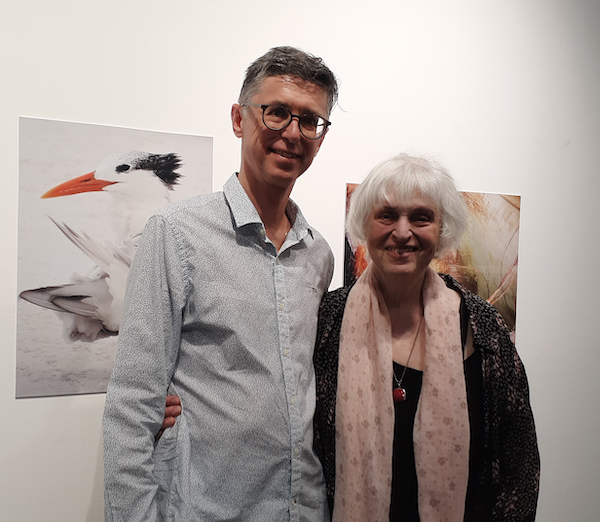
Nathan and Sidi Schaffer at the opening of their photography exhibit at the Zack Gallery June 22. (photo from the artists)

Painter, printmaker and mixed media artist Sidi Schaffer has a new show at the Zack Gallery – a photography exhibit with one of her sons, Nathan Schaffer. Eye Love Nature invites viewers to see the beauty and wonders of the natural world, and for us to recognize the dangers we pose to it.

photo - Embraced and Loved” by Sidi Schaffer
Embraced and Loved” by Sidi Schaffer

Rather than nature as something separate, we see ourselves in the Schaffers’ photos. Sometimes, the animals are doing something that we enjoy doing, like the three whales in Nathan’s “Family Swim,” only their fins visible in the misty ocean. Other times, we can empathize with what a tree has endured, but also our part in hurting it, as in Sidi’s “Embraced and Loved,” which shows a gnarled tree not only tightly wrapped by a vine, but also scarred by the initials, including a pair in a heart, that many people have carved into it.

The titles of some of the photos bring a smile, but also a sense of responsibility. The overall feeling of the exhibit, however, is uplifting, hopeful.

“I have a fondness for word play and puns as a way of expressing humour. I find it helps keep a positive environment when interacting with others and, at times, deal with sensitive issues in a less threatening manner,” Nathan told the Independent. “Artistically, my goal is to engage the audience both visually and with language. ‘The Pepsi Challenge’ [in which two horses tussle over a Pepsi cup] in my mind ‘can’didly raises concerns about human garbage and pollution straight from the ‘horse’s mouth,’ so to speak. In ‘I’m Stumped,’ there is also a bit of fishing line on the stump under the bird’s foot – again a reminder that human pollution is unfortunately prevalent in the lives of wildlife and sometimes it can feel like we are stumped trying to deal with it.”

photo - “The Pepsi Challenge” by Nathan Schaffer
“The Pepsi Challenge” by Nathan Schaffer

Eye Love Nature is the first photography exhibit for both Schaffers. Sidi said, “as I age, I wanted to see my photos on a gallery wall and share our joy creating them with the people in the community.” Nathan writes in his artist’s statement: “I very much hope the viewers enjoy the photos and that positive emotions arise and carry forth.”

Both Schaffers thanked Zack Gallery director Hope Forstenzer and the selection committee, as well as their friends and family, “for providing guidance and supporting this,” said Nathan, who works as a psychiatrist treating adults at a community mental health clinic.

“The resilience of many patients inspires me to search for strength and marvel at beauty in nature,” he said. “I often recommend spending time in nature as a way of reducing distress from inner turmoil, both to patients and family. I also enjoy my photography as a way of expressing latent artistic interests, as I haven’t improved my drawing beyond a rudimentary level. It is a counterweight to the stress associated with my work.”

For Sidi, who is a career artist, the skills involved in painting/printmaking and photography overlap to some extent.

“The combination of a good eye and imagination can help in both forms of art expression,” she said. “[But] the trigger when taking a photo is coming from outside. It is your sudden surprise of what your eye sees in front of you at a certain moment, in a certain light or shadow. It can be a landscape, people or clouds in the sky. It can be a design that the power of nature created on a tree bark, or a gentle breeze moving the petals of a flower. You can be enchanted by a flower’s seeds that hide themselves from the elements.

photo - “Burst of Colour” by Sidi Schaffer
“Burst of Colour” by Sidi Schaffer

“As compared to painting or printmaking, with photography, it’s presented to you, you only have to look and explore,” she said. “When I am in front of a canvas or paper, it’s usually in front of a white surface that waits for my imagination, for my expression of freedom to choose the subject or design that comes from inside me. It takes me even more into my inner self, into a world that brings me satisfaction, reflection and peace. Physically, painting is more challenging; my whole body is involved in the making. I love both mediums and hope to combine them in my mixed media works.”

While Eye Love Nature is Sidi’s first photography exhibit, she has been a photographer since childhood. Sidi was born in Romania – her mother studied photography before the Second World War.

“After the war, coming back home from the camps, my parents opened a photo studio,” said Sidi. “From then on, even as a little girl, I immersed myself in their world. I assisted my father in the dark room; I helped colour the black and white photos with watercolour. I learned from my mom how to touch up the negatives. Today, we would call it Photoshop. In my later years, here in Canada, at the University of Alberta, in addition to painting and printmaking, I also studied photography. I will always be thankful to my parents, who exposed me to the magic of photography.”

It was Sidi who gave Nathan his first camera when he was young. “But the love of nature, the curiosity, his investigative spirit and his good eye, he developed through his life, step by step,” she said. “He was always surrounded by art and love of the natural beauty of our world.”

When asked if he had been lucky enough to meet his grandparents, Nathan said, “Yes, I have vivid childhood memories of helping them develop negatives in a darkroom with a red light and strong vinegar-like smell. I very much enjoyed spending time with them while watching photos gradually appear during this process.”

Of course, photography has changed much since that time.

“Through the years, I’ve worked on film and in dark rooms,” said Sidi. “With the explosive development in photography these days, I switched very happily to the digital camera. This way, I have a more direct and faster approach to picture taking. My aim is to stay true to what I see and not manipulate the image except maybe to crop or lighten/darken if necessary. We are surrounded by enough fake images and news these days. I want to be far from all that. The truth gives us freedom.”

More than 40 photographs comprise Eye Love Nature.

“Some Days I’d Rather Be Fishing” by Nathan Schaffer

“For this show, we picked images where we were primarily appreciative observers rather than creators,” said Nathan. “We only attempted to correct minor blemishes, in keeping with our parenting style,” he said with a smile.

There were many candidates for inclusion in the exhibit. “Like in nature, Darwin’s rule of survival of the fittest was the main guiding force,” said Nathan. “Some couldn’t compete due to technical issues such as file size or being unfocused; others lost out due to not being as captivating. Hope, the JCC gallery director, also helped in selecting the final choices.”

As for the choice of where to direct any profits made from the show, the Schaffers have decided to divide them equally between the Canadian Cancer Society and the Canadian Parks and Wilderness Society.

Both organizations, said Nathan, “do their work in what appears to be very different areas; however, they share an important similarity. Cancer is essentially resident cells going rogue and taking over space and resources from the body, thereby putting it in serious danger. Civilization and humans can have a similar destructive impact on nature and wilderness by urban spread and taking of natural resources without limits. Controlling these rogue processes is needed in order to save and heal patients and nature. These organizations share in a mission of tackling some of the major problems we face.”

Eye Love Nature is at the Zack Gallery until July 24.

Chance to create

Esther Rausenberg, artistic and executive director of the Eastside Arts Society. (photo by Wendy D)

Eastside Arts Society (EAS) presents the return of its two-day summer art-making event, CREATE! Arts Festival, taking place at Strathcona Park on July 22 and at various Eastside Arts District studios on July 23.

A community initiative designed to welcome guests to explore, learn and create art together with local artists, CREATE! features a variety of accessible visual and performing arts workshops for adults and youth, including watercolour painting, needle felting, indigo dying, pottery, glass fusing, photography, ukulele, Salish singing and storytelling.

“In addition to a variety of art workshops, demonstrations and public participation art installations, we are also incredibly proud to introduce our brand new festival art shop, featuring a curated selection of arts and crafts all handmade by local artists,” said EAS artistic and executive director Esther Rausenberg, who is a member of the Jewish community.

On July 22, there will be a series of outdoor art-making workshops taught by more than 15 artists who live and/or work in the Eastside Arts District, many of whom will be participating in CREATE! Arts Festival for the first time. Adult and youth workshops will be hosted by Taaye Wong, Tanna Po, Suzan Marczak, Nima Nasiri, Naomi Yamamoto, Niki Holmes, Ross den Otter, Daphne Roubini, Russell Wallace, Jewish community member Naomi Steinberg, Nicole Caspillo, Nathaniel Marchand, Eri Ishii and Chantal Cardinal (FELT à la main with LOVE). A children and youth workshop will be hosted by Amberlie Perkin and an all-abilities workshop by Alternative Creations Studio.

Saturday festivities will also include a general admission CREATE! Art Zone. Art demonstrations include painting, pottery and glass beading from Francis Tiffany, Julia Chirka (summer skool) and members of Terminal City Glass Co-op. Public participation art projects include a life-size colouring mural with Serena Chu of Chu Chu, squeegee art with Joanne Probyn, and the building and performing of two giant crow puppets – in honour of EAS’s unofficial mascot – with Jacquie Rolston. Opus Art Supplies will have a hands-on block carving and printing activation: carve and pull a mini-block print, and contribute to a collaborative printmaking collage.

A selection of local handmade artworks and goods, curated by OH Studio Project, will be available at the festival shop. There will be a fully licensed beer garden, serving beer, cider and wine from Strange Fellows Brewing, as well as an assortment of food from a collection of food trucks, including Earnest Ice Cream, Wak Wak Burger, Mahshiko and Camion Café.

On July 22, the 8th Annual Art! Bike! Beer! Crawl Brewery Tour & Fundraiser will, for the first time, end at the festival grounds.

Activities will move indoors on July 23, connecting participants with art production spaces in neighbouring Eastside studios, with additional art workshops hosted by members of the Terminal City Glass Co-op, Richard Tetrault, Sonya Iwasiuk, Grace Lee (eikcam ceramics) and Naomi Yamamoto.

Workshops are $35 (plus GST) for youth/adults, with the exception of Perkin’s workshop for children/youth at $20 (plus GST); children under the age of 12 must be supervised by an adult. The general public can access festival activities at Strathcona Park for a $5 general admission fee (children under age 12 are free). For full festival details and workshop registration, visit createartsfestival.ca.

– Courtesy Eastside Arts Society

Art Downtown at Lot 19

Art Downtown festival runs to Sept. 15 in Lot 19 downtown. (photo from Vancouver Visual Art Foundation)

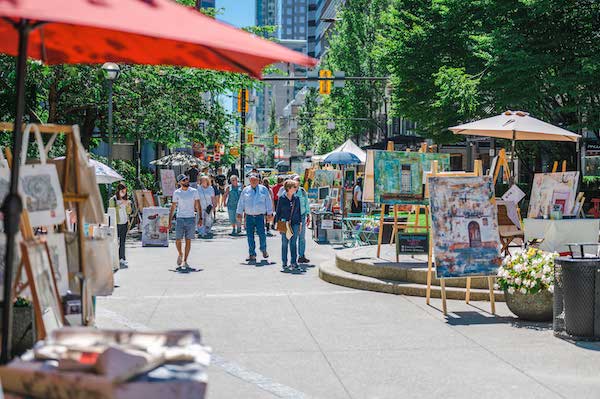
On June 21, Vancouver Visual Art Foundation and Downtown Van (formally, Downtown Vancouver Business Improvement Association) launched the fourth edition of the outdoor summer festival Art Downtown. Every Wednesday and Friday from 11 a.m. to 5 p.m. until Sept. 15, people can drop by Lot 19 to see a diverse array of artwork from both emerging and established artists, while enjoying live music.

“Art Downtown is more than just an exhibition – it’s a catalyst for artistic expression, fostering an environment where artists can thrive and connect with a broader audience,” said executive director Lisa Wolfin, a member of the Jewish community. “We want to inspire the public to appreciate and engage with the power of art.”

To meet the participating artists virtually and for more information, visit vanvaf.com/art-downtown. 


Parker Art Salon on display

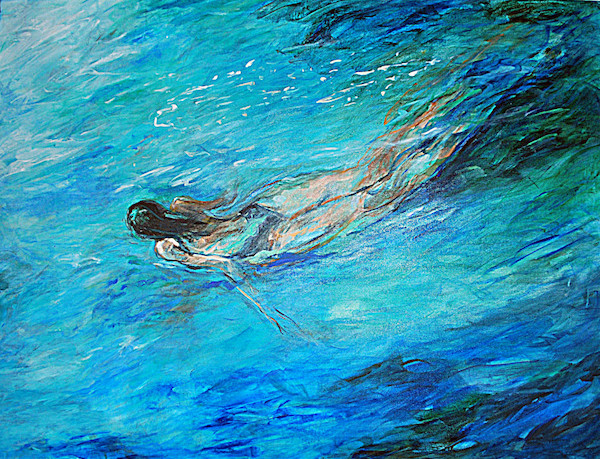
“Aqua,” by Violette Zohar Fiszbaum, who is one of the more than 50 artists participating in the Parker Art Salon exhibit at Pendulum Gallery. (photo from Violette Zohar Fiszbaum)

Pendulum Gallery in downtown Vancouver opened a new show on May 15 – What Moves You – by the Parker Art Salon. More than 50 artists, all having their studios at 1000 Parker St., presented one piece each for their annual exhibition. The art, including paintings, sculpture and photomontage, is inspiring and uplifting, brightening up the space around it.

While the exhibit is already open to visitors, the opening reception, and the launch of an online auction hosted by Waddington’s Auctions, will be held at the gallery on June 8, 6-8 p.m. Fifty percent of the auction proceeds will go to Beedie Luminaries, a scholarship program for students with potential who are facing financial adversity. To further promote the artists, there will be a Parker studios tour on June 10.

The Independent spoke with one of the Jewish artists participating in the show, Violette Zohar Fiszbaum, at Niche Art Gallery on Granville Island. She is one of Niche’s co-founders.

Fiszbaum grew up in Sao Paulo, Brazil. “I studied art as a teenager, but my parents thought you couldn’t make a living at art – they were right, it is tough. They wanted me to be a doctor or a lawyer or an engineer. After I graduated from high school, I studied chemical engineering. I also wanted to study astronomy and quantum physics, but, again, it is not easy to make a living. But it never stopped me. I always did some art and I keep up my interest in quantum physics, too. I read on it even now, when I can’t sleep.”

After she finished university, she went traveling: Europe, Asia, North America. “I studied Tibetan art restoration in Paris and I visited Tibet in the 1990s. Tibetan culture is exotic, yes, but very spiritual. It brought me closer to my Judaism, my spiritual roots. I think all spiritual cultures are connected,” she said.

Fiszbaum studied kabbalah. “I grew up secular,” she said. “My parents survived the Holocaust as children, got married in Israel, and then moved to Brazil. But Judaism came from the inside of me, from my studies and my travels. Zohar is my Hebrew name, and that’s how I sign my paintings.”

She visited Israel many times during her wandering days. One of her travels brought her to Vancouver, and she liked it here so much she decided to stay. “I worked in the movie industry for a time,” she said. “I wanted to act in movies, and I did.”

photo - Violette Zohar Fiszbaum
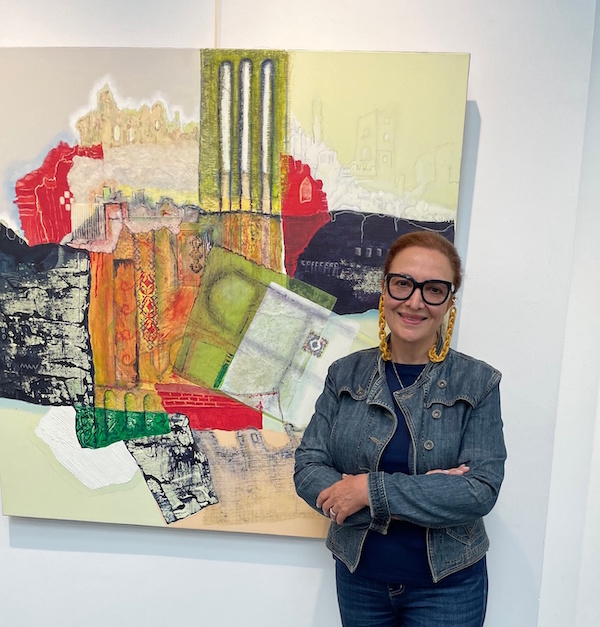
Violette Zohar Fiszbaum (photo from Violette Zohar Fiszbaum)

She also worked a lot at her art, and she continued studying art, as well. “In the last 10 years, I have been teaching art,” she said. “I teach mixed media. In the beginning, I was an assistant at Emily Carr [University of Art + Design]. Lately, I have had my own class at Olympic Village. It is a beautiful room. It faces the water. My students are all adults, and we are having fun together.”

Fiszbaum’s artistic interests are diverse. She plays piano. She dances. She enjoys photography. But, mostly, she paints. “I often paint with some music on. I turn on the music, dance and paint,” she said.

One of her preferred techniques is mixed media. “I like my paintings to have layers, to have a mystery, an intrigue. Using mixed media is like adding an archeological layer to the image, a depth,” she explained. “For example, I saw this old poster in Israel and I incorporated parts of it in one of my abstract paintings.”

Mixed media is also the technique that allows her to be successful at Niche, although commercial art has never been her focus. “I don’t paint just to sell,” she said. “I want to leave something beautiful behind. In the last two years, I sold and donated 100 pieces.”

She sells and markets herself through several venues. “My website, of course, Parker Art Salon, the East Side Culture Crawl – that is huge in Vancouver, the biggest annual art show in town. I use Instagram. Anywhere I go, really. I play tennis and I belong to a tennis club – I sold some of my paintings there. I like swimming, and I sold many of my Swimmers series paintings through my connections with other swimmers. My painting in the Parker Art Salon exhibition is one of my swimmers. I used to be a dancer, and the human body, its movements, always have fascinated me, both in the water and on land.”

But Niche Art Gallery is one of her favourite places. “It started as a pop-up store just before the COVID pandemic,” she explained. “Pop-up is a short-term lease, and it has been popular lately.”

After her pop-up term had expired, she teamed up with a few other artists and opened the gallery. “Many galleries on Granville Island closed during the pandemic, but Niche flourished,” she said.

Besides her paintings, Fiszbaum sells some unusual pieces at Niche, including funky denim caps. Each one is decorated with an assortment of mixed media: snatches of lace, old buttons and zippers, feathers, disassembled toy fragments, even an old phone keyboard. “It is fun to work on them,” she said. “I use only salvaged materials there. Now I want to make denim jackets.”

Fiszbaum likes working on commissions. “I enjoy the challenge,” she said. “I have created paintings to customers’ demands, both in size and in the colour palette. Sometimes, they wanted my paintings to match their couches and curtains; other times, their carpets and pillows; even a vase once. And I did it.”

Among the work for sale at Niche Art Gallery are Fiszbaum’s portraits. She returns to female portraits again and again. “My mother was beautiful, like Cleopatra,” she said. “I keep painting women’s portraits in order to capture her beauty, to share it with everyone.”

The show at Pendulum Gallery runs until June 16. For more information on the artists (who include many Jewish community members) and the auction, and to book your Parker studios tour, visit parkerartsalon.com.

Olga Livshin is a Vancouver freelance writer. She can be reached at olgagodim@gmail.com.

Düsseldorf returns painting

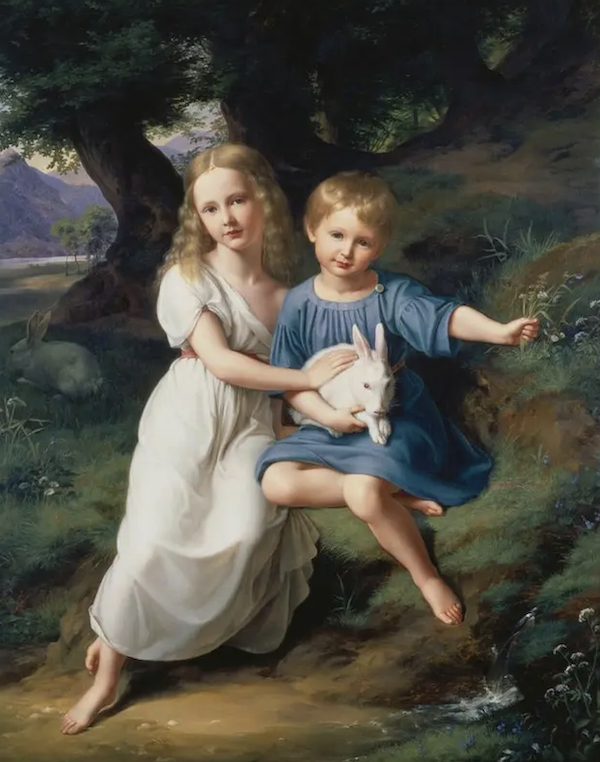
Wilhelm von Schadow’s “The Artist’s Children” (1830).

The German city of Düsseldorf reached an agreement recently with the heirs of Max Stern (1904-1987), a Jewish art dealer forced to flee the city in 1937, ending a long-standing battle over the ownership of a painting, according to The Art Newspaper, which first reported the deal.

The family portrait from 1830, “The Artist’s Children,” by 19th-century Romantic painter Wilhelm von Schadow, has been held by the city since 1959, when it acquired the canvas from a private collector. It was discovered when a researcher from the National Archives in Ottawa found it in a catalogue for a 1967 Düsseldorf Museum Kunstpalast exhibition, which listed the painting’s location as the Stadtmuseum. In recent years, the Max Stern Art Restitution Project, based at Montreal’s Concordia University, and the Dr. Max and Iris Stern Foundation sought to reclaim it, contending that Stern sold the painting under duress.

Founded in 2002, the Stern Project, headed by Dr. Clarence Epstein, is seeking to track down the 220 Old Masters and Northern European artworks that formed Lot 168 in the November 1937 sale at Cologne’s Mathias Lempertz auction house, known as Auktion 392. The paintings constituted the inventory of Düsseldorf’s Galerie Stern that Nazi officials forced him to liquidate at vastly discounted prices. As well as the 1937 auction canvases, the Stern Project is seeking to regain the paintings the art dealer left with Cologne shipping agent Josef Roggendorf, which the Gestapo confiscated in 1938, when Stern was already in Britain.

As part of the agreement, Düsseldorf handed over the portrait on condition that the municipality immediately buys it back. The terms of the settlement, including how much the city paid to re-acquire the artwork, were undisclosed.

In a press release, Düsseldorf mayor Stephan Keller said he was pleased with the “fair and just solution” between the parties and that von Schadow’s artwork “will remain in Düsseldorf.” He added that the painting will go on view at the city’s Museum Kunstpalast starting in August.

Stern took over Galerie Stern on Königsallee, which was founded by his father Julius, in 1934. By order of the Nazi government, the gallery was “aryanized” in 1937. Its inventory was sold at a forced auction for a fraction of its value.

Armed with a single suitcase stuffed with his remaining possessions, Stern fled to London that year. But, in May 1940, when Hitler’s invasion of Britain seemed imminent, Scotland Yard rounded up more than 2,000 German and Austrian citizens, mostly Jews, and incarcerated them as enemy aliens. Stern was sent to an internment camp on the Isle of Man.

Hearing that some detainees were being sent to Canada to free up soldiers guarding British camps, Stern volunteered to join them. In North America, he believed, he would be well-positioned to help his mother and one sister in Britain, as well as his other sister and her family in France. But Canada, where he was greeted by bayonet-wielding soldiers, was even less hospitable than Britain. As Stern recalled years later, “We had to stage a hunger strike to convince the Canadian authorities that we were certainly not Nazis but, on the contrary, anti-Nazi.”

Held in a camp first near Fredericton, N.B., and later in Farnham, Que., he was put to work cutting down trees. Still, he remained optimistic, thankful for the food, shelter, clothing, exercise and 20 cents per day in pay. He also welcomed the opportunity to teach. Twelve years earlier, he had earned a doctorate in art history, which he put to use in classes for his fellow internees.

Stern’s talent and positive outlook caught the attention of William Birks, scion of the Montreal jewelry family, who headed the local branch of the National Committee on Refugees. Birks was openly critical of Canada’s restrictive and antisemitic immigration policy, which he called “narrow, bigoted and very short-sighted.” He believed the government should have sent trade missions to Europe to recruit men like Stern, “not wait for them to seek and beg us.” In 1941, he sponsored Stern’s release and move to Montreal.

Needing a job and hoping to assist in Canada’s war effort, Stern looked for work in an airplane factory. When he was not hired, he turned to the thing he understood best – art. “You’ll starve,” people told him, but he was certain he could be successful as a dealer in Montreal, because he had spotted a void he knew how to fill. Most of the city’s galleries were pushing stuffy 19th-century European genre and landscape paintings. No one was promoting or selling home-grown works because, as he later explained, “Canada didn’t have any confidence in its own artists.”

Stern pitched his vision to Rose Millman, who had just opened a space on rue Sainte-Catherine called the Dominion Gallery of Fine Art. Impressed by his assurance and expertise, she offered him a job for $12.50 a week. Stern said he wanted $17.50 and her promise to make him a full-fledged partner once he built up her business by conquering Canada, as he put it, “by selling Canadian artists.”

Within months, he was mounting exhibitions by contemporary Canadian painters. Over the years, they would include John Lyman, Goodridge Roberts, E. J. Hughes, Stanley Cosgrove, Jean-Paul Riopelle, and others whose names he would play a pivotal role in establishing. Stern secured their loyalty and best work by offering them monthly retainers for an agreed-upon number of works, already an established practice in France, Britain and the United States, but not yet in Canada.

Stern’s first major coup came in 1944, when he visited Emily Carr, then 72, at her home in Victoria. She showed him a room packed with 300 paintings. Struck speechless by her talent, he asked if he could mount an exhibition.

Laughing, she replied, “You will not sell a single painting.” The recipient of critical praise, Carr had yet to enjoy commercial success. “If you let me choose the paintings,” Stern replied, “I think I can make it a perfect success.”

In 1947, Stern and his wife Iris became the sole owners of the gallery.

Following the defeat of Nazi Germany, Stern endeavoured to track down his confiscated paintings. His efforts were largely unsuccessful. He died childless in 1987, and left his estate to Concordia University and McGill University in Montreal, as well as Hebrew University in Jerusalem.

The three schools later founded the Max Stern Art Restitution Project to reclaim the estimated 400 artworks lost during the 1930s. To date, the project has recovered 24 pieces, including paintings by Otto Erdmann, Nicolas Neufchatel and Jan Brueghel the Elder.

The case of von Schadow’s “The Artist’s Children” proved to be particularly complicated due to questions of provenance. When the city of Düsseldorf acquired the portrait in 1959, it was hung in the office of the city’s mayor. Decades later, when the Stern Foundation filed a claim for the artwork, it pointed out that, in 1937, Galerie Stern allowed for the piece to be reproduced in a book about paintings of children. But Düsseldorf city officials pushed back, arguing that the book did not prove the gallery owned the artwork at that point. There was no evidence of the painting being surrendered under Nazi persecution, the city contended.

In 2017, a scheduled exhibition in Düsseldorf about Stern and the Restitution Project was abruptly canceled due to local opposition, leading to intense controversy. The city’s stance apparently softened following the 2020 municipal elections.

“We couldn’t prove that it was not a restitution case, so we, as the city government, recommended to the assembly that it should be restituted,” Miriam Koch, the Düsseldorf city official in charge of culture, told The Art Newspaper. “The big parties in the city council supported restitution.”

According to Lynn H. Nicholas’ 1995 book The Rape of Europa: The Fate of Europe’s Treasures in the Third Reich and the Second World War, more than 140,000 pieces of artwork were looted under the Nazi regime. Most of them remain unclaimed.

Gil Zohar is a writer and tour guide in Jerusalem.

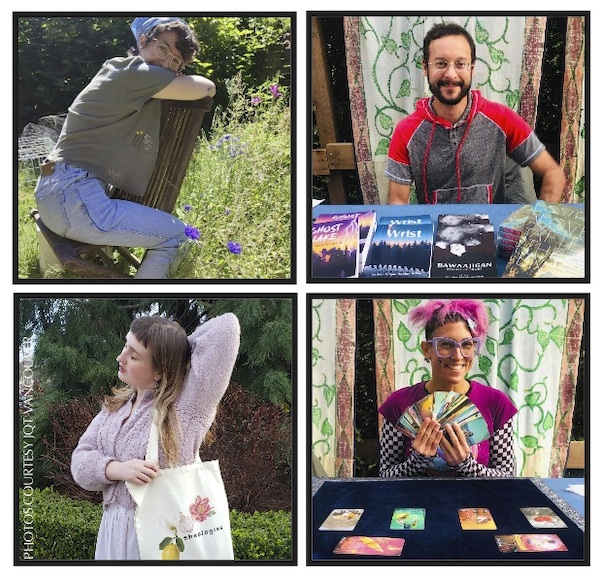
Check out JQT Artisan Market

(photos from JQT Vancouver)

The JQT (Jewish Queer Trans) Artisan Market on May 15, 6-9 p.m., at the Peretz Centre features several local artists, and international performer Stav Meishar presents Oy Slay! at 8 p.m. For more information on the market and other JQT Heritage Month events, including the launch of the B.C. JQT Oral History Project at the Zack Gallery on May 28, visit jqtvancouver.ca.

Celebrating 30th year

This year’s West of Main Art Walk will be event founder Pnina Granirer’s last open studio. (photo from Pnina Granirer)

In European cities such as Paris, art has been blooming for centuries and is an essential component of life and culture. Unfortunately, in the relatively young city of Vancouver, art was barely noticed in the early ’90s.

While living in Paris in 1992, I discovered an amazing number of galleries and museums and spent every free moment gorging myself on a wealth of art. One of the most exciting happenings occurred in the spring, when an unusual event burst onto the city: Le Génie de la Bastille. All around the arrondissement (neighbourhood) of the Bastille, hundreds of artists opened their studios to the public for an entire week. A large exhibition at the City Hall was launched and maps were handed out to the public, showing the location of each studio. Every day, map in hand, I would go up and down the ubiquitous five-floor buildings in the area, soaking in the opportunity of seeing the great variety of works and talking to the artists.

Too soon, I was back in Vancouver, still thinking with much pleasure about that wonderful week in Paris. Getting together with my artist friend, Anne Adams, who passed away in 2007, I described to her the exciting days spent visiting the artists’ studios in the City of Lights, when a sudden thought occurred to me. Anne, I said, what if we tried doing this here? Are any artists living in our neighbourhood, who might be interested?

Anne was as excited at the idea as I was, and we approached the now-defunct local Courier newspaper, which was very supportive and published an article with a call to artists. We did not have to wait long for the telephone to start ringing. To our delight, we discovered a good number of artists living in Point Grey, Kitsilano and Dunbar/Kerrisdale who wanted to participate.

A small group of us got together to plan the event. We needed a venue to have an opening exhibition, followed by a weekend when the artists would open their studios and their homes to the public. This had never been done before in Vancouver!

The West Point Grey Community Centre at Aberthau offered its space and the first exhibition opened in 1993. Word spread like wildfire. We were inundated with calls from artists who wanted to join. This will be too much for one weekend, I thought, let’s keep it small and limit the number of studios to no more than 20, so that everyone’s work could be seen.

I had the idea to hold the Art Walk over three weeks, one week for each neighbourhood. There was a lot of work to do, all of it voluntary. This was a time without the internet, so we used a “telephone tree” and the mail. Anne was an excellent organizer. I was quite idealistic at that time and suggested that we do not ask for any grants or taxpayers’ money, although donations from businesses and private donors were welcome. We would prove that artists had initiative and could do such an event by themselves – and it worked! We proved that artists were capable of contributing and enriching their communities by sharing their art and creativity.

We needed a name that would represent us. After sifting through many names, we decided to call ourselves Artists in our Midst, as we were all artists living in the midst of our community. By two years later, our idea had caught on and spread all over the city and the Lower Mainland, and we are all culturally richer for it.

Over the 30 years since we began, much has changed, including the name, which is now West of Main Art Walk. We are now back to only one weekend, but many new artists have joined us. Everyone is invited to visit us the last weekend in May, enjoy the art and perhaps take some home to live with.

As for myself, all of my works will be offered at 50% discount. And I will repeat last year’s idea of a fundraising sale to benefit Stand Up for Mental Health, founded by my son, David, the recipient of a Governor General Meritorious Service Medal. He teaches stand-up comedy to people with mental illness, as a way of building confidence and fighting public stigma and has been invited to work all across Canada, the United States and Australia.

This will be my last open studio and sale. Hope to see you!

West of Main Art Walk features more than 50 participating artists, including many Jewish community members, who invite visitors to their studios May 27-28, 11 a.m.-5 p.m. For the studio map and more information, visit artistsinourmidst.com.

Immerse yourself in artwork

Art House SF’s Max Khusid is one of several artists who will be at Art Vancouver May 4-7. (photo from Art House SF)

Once again, galleries and artists from across Canada and around the world will come together to exhibit their work at Art Vancouver, which takes place May 4-7 at the Vancouver Convention Centre West. At the annual fair, attendees can join the opening night party, purchase art, listen to various talks, take part in classes, and more.

Among the exhibiting artists are local Jewish community members Lauren Morris, Taisha Teal, Sky Lilah, Talin Wayrynen and Lisa Wolfin, who will also be teaching art classes during the fair. In addition to the stories you can find on jewishindependent.ca about these artists, visit their websites for more information: Morris (lmdesignsstudio.com), Teal (taishateal.com), Lilah (skylilah.com), Wayrynen (imtalin.com) and Wolfin (lisawolfin.com).

Other participating Jewish community members include Max Khusid of San Francisco gallery Art House SF (arthousesf.com) and a couple of the gallery’s artists, Tavalina (Rinat Kishony) and Max Blechman, who, with husband Kazu Umeki, comprises the duo BLECHMEKI (a portmanteau of their last names).

Khusid spent the first 20 years of his professional career in the world of technology, and plans to spend the next 20 years diving into the unknown and immeasurable world of art. He is inspired by the mystic art and adventurous life journey of Russian painter, explorer, archeologist and philosopher Nicholas Roerich (1874-1947).

Tavalina lives in Israel and her work “Jerusalem” was recently featured on the cover of a book by the late Amos Oz. A graduate of the Israel Institute of Technology with a bachelor of architecture, she worked in the field for several years. After a personal crisis in her 30th year, she began to paint, devoting herself to art. At the same time, she embarked on a journey of personal discovery and traveled many places, eventually returning to Israel, where she continues painting and presenting her work, as well as teaching art.

Blechman, originally from New York, lives in San Francisco. He and Umeki use mass-produced American pottery from the 1930s to 1980s to create photo tableaux. At first glance, the individual pieces of pottery appear identical, but closer inspection reveals variations both in form and colour. Indeed, the Japanese concept of wabi-sabi (appreciating beauty that is imperfect, impermanent and incomplete in nature) reverberates throughout their pottery.

For the full list of Art Vancouver artists and classes, as well as tickets for the fair, visit artvancouver.net.

– Courtesy Art Vancouver

Designing the 12 tribes

Artist Anna Marszalkowska stands in front of “Levi,” which is part of her Tribes series, which is on exhibit at the Zack Gallery until May 4. (photo from Anna Marszalkowska)

The challenge of visually depicting the tribes of Israel has attracted many famous artists over the centuries. For example, on the 25th anniversary of the state of Israel, Salvador Dali, inspired by descriptions in the Torah, created a series of watercolours, “The Twelve Tribes of Israel.” Before that, in 1962, Marc Chagall made his famous stained-glass windows, “The Twelve Tribes,” for a synagogue in Jerusalem. Anna Marszalkowska, a local Vancouver artist of Polish origins, fits easily into this august company. Her solo show, The Tribes, opened at the Zack Gallery on March 29.

Marszalkowska grew up in Poland, but studied graphic design and worked as a graphic designer in London, England. “Diversity is what made my design path exciting,” she said in an interview with the Independent. “I started my career as a freelance web and graphic designer and then moved to video design and editing, as well as motion graphics and animation.”

Five years ago, she and her husband moved to Canada, but they lived and worked in the eastern part of the country. They relocated to Vancouver two years ago.

“We came here during the pandemic,” she said. “We wanted to try something different. For an outdoor person like myself, this is a great place. The nature is beautiful, and everyone is very friendly.”

She also changed the direction of her professional life. “I work with artists in the movie industry, but not as an artist myself,” she said. “I understand artists because of my past as a graphic designer, but I wanted less time at the computer screen. I wanted to free my creativity for more personal projects, which was hard to do while working as a graphic designer. Then, my creativity was fully engaged in my professional activity, but, on the other hand, I was limited by clients’ requirements. After a full day of work … I was often tired, I wanted to relax. Now, my creativity is freed. I have more time for my artistic experiments. I started abstract painting and I love it. Just me and a painting – it calms me.”

But even while working full time as a graphic designer, she still found energy to search for her individual style and themes. One of them was her Tribes series. “In 2010, I completed a print production course, and this series was the result.”

The series consists of 12 large digital prints, each one corresponding to one of the tribes of Israel. Although Marszalkowska’s version is an entirely modern take, it involves ancient symbolism, which originated in the Hebrew Bible. The artist conducted deep research for this project, and the end results are simultaneously stunningly simple and visually compelling.

“I had a blog before and, when I put the images online, many people expressed their interest. They wanted to buy one or several or all of the images.”

For the artist, this body of work has meaning beyond its commercial success. “It was a personal journey. I was searching for my Jewish ancestry. My grandmother grew up in a town in Poland where most citizens were Jewish before the war. She might have been part Jewish herself, but after the Holocaust, I had no one to ask.”

Instead, she studied the Bible and tried to interpret the narratives within a cultural context. “The symbols of the tribes are by no means fixed,” she explained. “Every artist could have their own interpretation, as the biblical texts describe the sons of Jacob allegorically.”

In her interpretation, the traditional symbols are given a contemporary, stylized appearance. “I explored the relationship between geometric shapes and lines,” she said. “I used repetition and symmetry to keep balance in each individual design and all 12 together.”

She also leaned towards a minimalistic approach, where a symbol of the tribe is centred on a one-colour background, with no other embellishments to attract a viewer’s attention. “In the original design, I had an ornamental frame around each image, but I got rid of them. I think less is more,” she said. “COVID made me realize that my focus should be the meaning, not the decorations.”

“Benjamin” by Anna Marszalkowska.

In most images, the background colour palette reflects that of the tribe, except for Benjamin, the youngest. “His symbol is a wolf,” Marszalkowska said. “He represents all colours of all tribes. To reflect that, I placed a ‘rainbow’ above the wolf. I think it is his spirit or maybe his song, Or his breath. It would depend on your own interpretation.”

In some of the designs, she incorporated photography for texture. “I used Adobe Illustrator to combine my photographs with my digital illustrations,” she said. For Simeon, her symbol is a tower, and she put her photos of bricks to good use in her pictorial tower construction. For Zebulun, whose symbol is a ship, she employed photos of water. “Issachar’s symbol is a donkey with a burden,” she said. “I used my photos of wood for the donkey’s load.”

When different sources offered different visual symbolisms for a tribe, the artist’s scholarly touch led her towards her own esthetic. For example, in the case of Levi, some documents don’t count him as a tribe and don’t offer any symbols for him. Historically, the Tribe of Levi wasn’t given any land, but its men served as religious leaders and teachers. Maszalkowska decided that Levi’s description as God’s Chosen Tribe warranted its own image: a breastplate of a high priest. The breastplate is embedded with 12 gemstones, each inscribed with the name of one of the tribes in Hebrew.

“Overall, the series is an invitation for everyone to embark on their own journey, to reflect on their own purpose and fulfilment,” said Maszalkowska. “Ultimately, I hope that my art will connect with the viewers and inspire them.”

Tribes runs until May 4.

Olga Livshin is a Vancouver freelance writer. She can be reached at olgagodim@gmail.com.