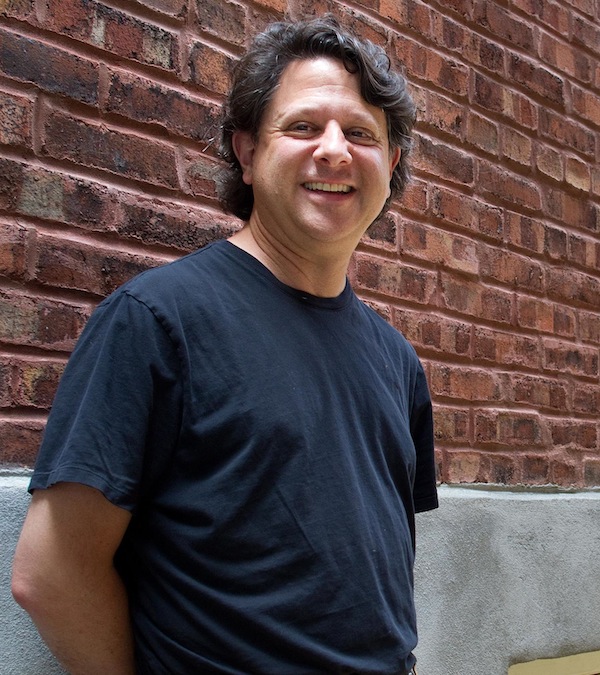
People and places of Cuba

Lorne Greenberg’s solo show, Cuba, comprises photographic compositions, such as this one. (photos by Lorne Greenberg)

The origins of Lorne Greenberg’s solo photography exhibition Cuba can be traced back more than 35 years. “I had my MFA in photography from the University of Arizona in 1983,” he told the Independent. “In 1984, I began photographing Mexican street art.”

At first, he photographed on the American side of the border, but later visited Mexico several times, taking pictures of streets and buildings in many Mexican border towns. “I have an affinity for Latin American art,” he said. “I also read many Latin American writers.”

After a few years, though, Greenberg turned his artistic eye to other interests and new subjects. He only started refocusing on Mexico five years ago.

“In 2014, I began to photograph in Mexico again,” he said. “This time, I was interested in streets, buildings and yards, objects as artifacts of culture. I see it as the archeology of Man, a study of Man in his environment through the observance of objects and artifacts. There is no sky in my Mexican photos, but walls and doors and windows. Colours, shapes and lines, and where things are in relation to each other.”

He wanted to dig deeper in that direction, but, having been in Mexico multiple times, he turned to Cuba. “I had never been to Cuba before. I wanted to see it,” he said. “I heard that [Barack] Obama was going there, and I decided that I’d better go before Americanization.”

In spring 2016, Greenberg flew to Cuba for the first time. “Just me, my camera and my backpack. I came a few days after Obama left. I was there for about 10 days and visited three cities: Havana, Santa Clara and Trinidad.”

He wandered the streets and photographed doors and walls and windows, but with a new mode of expression. “I started seeing people,” he said. “Before, there were hardly any people in my photos. Now, I wanted to photograph them as part of the streetscape.”

He continued his Cuban exploration in 2018, on his second trip to the country. This time, he stayed exclusively in Havana. “When I was there, I ate, slept, photographed and listened to jazz,” he recalled. “It’s a vibrant place, with music a prevalent part of life.”

Again, he roamed the streets, without a plan, photographing houses and people. “Nothing is staged in my photos; nobody posed,” he said. “I just waited until I had a perfect image, and then I took it. I wasn’t trying to make a statement, didn’t have any preconceived idea. I just wanted to find what is there, discover the relationship between people and places, the coherence of individuals and their building backdrops. If some people didn’t want to be photographed, they would say it, and I didn’t take their pictures, but that happened only three times.”

photo - Lorne Greenberg in Italy
Lorne Greenberg in Italy. (photo by Lorne Greenberg)

In selecting the images to include in his solo show, from the hundreds he took in Cuba, he said, “I didn’t want to show just 10 or 15 large pictures. A single large image has a privileged status, and I wanted to create an experience of Cuba, to show people what I saw.”

Therefore, he compiled his photographs into compositions, which made it possible to increase the number of different images on display. Each composition is more than a collection of individual photos – it is a work of art on its own.

“There are 102 different pictures in the show, combined into eight compositions,” Greenberg said. “At first, I considered each composition as a tic-tac-toe grid, but it didn’t work. It was too orderly, too tight, didn’t give the sense of Cuba. Then I thought about the sculptures of Alexander Calder. I changed the layout of my compositions, opened them up, created a flow. They are not individual photographs anymore. They are installations, and they incorporate the gallery space as part of the experience. Each composition has a certain colour scheme, and its lines and shapes create a whole, simultaneously dynamic and static, random and structured.”

The arrangement of the compositions was as creative an endeavour as was taking photographs. “It was fun moving pictures around, seeing different possibilities. I could have done it for much longer, if I didn’t have a deadline for the show,” he joked.

Greenberg’s Cuban compositions reflect the political reality of the country. The lively colours of the buildings preen under the heat and light of the sun, while simultaneously exposing the peeling paint, dirty or moldy walls, and the rusty metal of fences and shutters, which hint at the poverty that exists in the country.

“I see beauty, aesthetics and humanity,” said Greenberg. “Poverty is more in the ethical dimension, and everything for me is in the aesthetic world.”

The show Cuba opened on Oct. 24 at the Zack Gallery and continues until Nov. 24. The opening reception was held on Oct 30. For more information on Greenberg’s work, visit lornegreenbergphotography.ca.

Olga Livshin is a Vancouver freelance writer. She can be reached at olgagodim@gmail.com.

The joy of Israeli dance

Tamar Cohen and her husband, Michael Gal. (photo from Vancouver Israeli Folk Dance Society)

After 43 years of teaching with the Vancouver Israeli Folk Dance Society (VIFS), Tamar Cohen is retiring. One of the early leaders of the VIFS and co-founder, with Rivka Cohen, in 1981, of the Shalom Dancers, an Israeli dance performance group, Tamar Cohen has inspired generations of dancers.

Cohen’s passion for dance began in Israel, in her teens, when she was introduced to Israeli dancing in school, in Kiryat Haim, a suburb of Haifa. At that time, in the late 1940s, in the formative years of the state of Israel, there was an avid interest among the youth in Israeli cultural activities, including folk dance. She joined a performance group in high school and then trained as a teacher, both as a profession and as a dance instructor.

“We did couple and circle dances, no line dancing, and there really weren’t that many dances, not like today,” she explained.

Cohen also trained as a school teacher, and taught Judaic studies for more than 40 years in Israel, the United States and Canada, including at Vancouver Talmud Torah.

It was in 1960 that Cohen brought her dance talents to Canada, teaching and starting a performing dance group in Winnipeg, where she met her husband, Michael Gal. In 1975, moving to Vancouver, she was part of the formation of the Vancouver Israeli Folk Dance Society, where she has taught continuously since 1976.

“In those days, we used records, and then tapes,” she said. “My son would help me shlep all these big cartons with records on Sundays and Wednesdays.” Now, of course, everything is on computers.

Cohen taught at the Jewish Community Centre of Greater Vancouver, the Peretz Centre for Secular Jewish Culture and at Congregation Beth Tikvah. Many dancers who still gather at the JCC on Wednesday and Sunday evenings, including Lorna Donner and Marilyn Weinstein, both on the current VIFS executive, were introduced to Israeli dancing during the nine years Cohen taught at Beth Tikvah.

“In 1992, in the Beth Tikvah social hall, Marilyn and I started dancing by following our teacher, Tamar, around the circle,” said Donner. “Here we are, decades later, still sharing our love and enthusiasm for Israeli dance. Thank you, Tamar!”

Cohen became a VIFS board member when it first became a society, and served as president from 1985 to 1987. She remains on the VIFS executive and is a valued part of its community of dancers – approximately 80 active members – who come from a range of ages and walks of life: teenagers to dancers in their 80s; students, artists and professionals; beginners to those, like Cohen, who have danced all their lives.

“I’ve known and shared the dance floor with Tamar since the early ’80s, when I first began to attend Israeli dance sessions at the JCC,” said Nona Malki, VIFS executive director. “Tamar’s dedication and commitment to the local dance community, to the Israeli dance movement and to the Vancouver Israeli Dance Society, as one of its founders, was both profound and inspirational. Tamar took it upon herself to mentor me and, due to her guidance and encouragement, my passion for Israeli dance was sparked.”

Reflecting on the changes in Israeli folk dance over the years, Cohen said, “To me, folk dancing is for the folks, not for the professional or the advanced. I’m a little bit nostalgic in that regard. The dances used to be much shorter and quite symmetric. It came so naturally. I find that, nowadays, the dances are longer and more complicated. The old dances were easier to remember. I might belong to a different generation,” she said, chuckling.

Speaking about the future of Israeli dancing, Cohen said, “Israeli dancing is very popular.” There are scores of choreographers from Israel and around the world, she said, and countless new and challenging dances.

Certainly, it was the joy of dancing that hooked Cohen decades ago. However, she said, “I also see Israeli dancing as an ambassador for Israel. By presenting the folklore, the culture, the music and songs, it brings people, Jews and non-Jews, closer to Israel. Israeli dancing is beautiful. I think it’s very important that it continues.”

For more information about VIFS, visit vancouverisraelidance.com.

Glenda Leznoff is a member of the Vancouver Israeli Folk Dance Society.

Reimagining Hatikvah

Molly-Ann Leikin (photo from Molly-Ann Leikin)

For most of her five-decade musical career, Molly-Ann Leikin felt something was missing – many English speakers singing Hatikvah had no idea what the Hebrew words coming out of their mouths actually mean. So, she set about creating an English version of the Israeli national anthem.

Her version is not a translation, Leikin stressed in an interview with the Independent, from her home in Santa Barbara, Calif. She contends that no translation could possibly convey the meaning of the original Hebrew. Instead, she wanted an anthem set to the same melody that everyone singing it could enjoy, understand and, as she said, “feel the passion.”

Born in Ottawa, Leikin graduated from the University of Toronto. The author of How to Write a Hit Song and How to be a Hit Songwriter, she has composed themes and songs for more than five dozen television shows and movies, and her work has been performed by a diverse array of entertainers, such as Anne Murray, Tina Turner and Billy Preston. Among many other things, she has done private songwriting coaching in Vancouver since the 1980s.

Early in her career, Leikin said she felt there was no way for a tunesmith to make a living in Canada, so she hopped into her dented red Volkswagen Bug and drove – starting her journey during a severe snowstorm – to Los Angeles. Now, she co-writes and consults with new artists and lyricists, helping them advance their original songs to compete in the marketplace.

Leikin lists 12 of her clients as Grammy winners, another 17 as Grammy nominees. According to the latest count on her website, she has helped 7,518 writers and artists place their work in movies, television shows, on CDs, in video games and commercials, and their tracks can be downloaded from various sources on the internet.

“My motto is, ‘If you’ve got the tracks, I’ve got the contacts,’” she said.

In addition to writing songs, Leikin writes bar/bat mitzvah speeches, toasts, roasts, vows and memorials.

Revisioning Hatikvah

When she was a university student in the late 1960s, Leikin spent a year in Ashkelon and, after attending an ulpan for four months, could understand the lyrics of Hatikvah (The Hope).

In 2014, while in Toronto for the Toronto International Film Festival, she was stung by bees and fell into a coma for two years. By the time she recovered, in 2016, a freak accident on her right foot left her unable to walk for another 18 months. Every doctor she saw in Santa Barbara misdiagnosed her. Devastated and unable to work, she lost her home, her businesses and her savings.

In 2017, an old friend she had not seen in 37 years called from Montreal to wish her happy birthday. The friend arranged for Leikin to be transported from Santa Barbara to Los Angeles’s Cedars-Sinai Medical Center. There, the doctors discovered the problem and a 45-minute operation fixed it.

On the way into surgery, she promised God, if He would heal her, she would use her gifts to create something to benefit the Jewish community throughout the world.

During her three-month recovery, she tuned into a classical station and kept hearing the melody to Hatikvah. The words to what would become her take on the anthem slowly began to form.

A family in Toronto, for whom she had written a eulogy, asked Leikin what her next project would be. She told them about Hatikvah, and they arranged for a grant for her to record it. (That family wishes to be anonymous.)

Hatikvah became Israel’s official anthem in 2004. The melody had been heard throughout Europe and was adapted by Czech composer Bedrich Smetana. The Hebrew lyrics are based on a poem by Naftali Berz Imber, who was from what is now Zolochiv, Ukraine.

A growing number of synagogues in the Los Angeles area and throughout the continent, Leikin said, have been playing her version, the chorus of which is “Feel the hope that’s rising everywhere / Feel our song become an answered prayer / For our sisters and brothers as we stand with all of them / In our homeland Jerusalem.”

The B.C. connection

Leikin maintains strong ties to British Columbia. Early in her songwriting career, she was hired to write “It’s Time to Say I Love You,” the theme song for The Other Side of the Mountain Part 2, filmed at Victoria’s Butchart Gardens.

“I flew up to see what I would be writing about and, in the middle of all that beautiful, I didn’t want to leave,” she said. “Almost every summer since 1977 I’ve been back to Vancouver. I go there to celebrate the High Holidays and Passover. When you guys figure out how to make it rain less, I’m moving into English Bay.”

Leikin’s “Hatikvah” can be heard at youtu.be/XV0cX7jB4Q0.

Sam Margolis has written for the Globe and Mail, the National Post, UPI and MSNBC.

History and future combine

Ilana Zackon and Ariel Martz-Oberlander played current-day partisans in the immersive theatre piece Time Machine. (photo from Radix Theatre)

Two Jewish theatre artist-creators, Ariel Martz-Oberlander and Ilana Zackon, teamed up this summer to create an immersive piece based on the Jewish partisan movement, as part of Radix Theatre’s futuristic play Time Machine, set on a boat, the Pride of Vancouver.

The show took place on the yacht over a five-hour journey up Indian Arm (traditionally known as səl̓ilw̓ət) and featured both local emerging and established artists presenting new work of various genres, such as theatre, spoken word poetry, sound installation and more. The artists were asked to create a piece inspired by what Vancouver will look like in the year 2050. Some darker, others playful, the works were all grounded in a strong sense of the artists’ identities.

Martz-Oberlander and Zackon wanted to bring their ancestral roots into their piece. The pair created an immersive show in which they played two rebels helping smuggle climate refugees to safety. The 10-minute piece, which ran on a loop for an hour-and-a-half of the boat ride, took place in the boat’s basement bathroom, which acted as a safehouse. Five to seven audience members at a time were summoned by Zackon, dressed as a soldier, down into the dimly lit bathroom, where they were greeted by a similarly dressed Martz-Oberlander; “Zog Nit Keynmol” (“The Partisan Song”) played in the background.

The invited audience soon discovers they are now refugees who have just escaped fires in California. The soldiers, members of a new wave of partisans called PAP, explain that the refugees are being brought to another safehouse and prepared to enter the new world. The soldiers explain that their resistance cohort has based their movement on the survival lessons of their ancestors, partisan fighters in the forests of occupied Europe. The audience members are given new names, briefed on the types of skills, such as hunting moose, that they will need to survive in their new lives and, eventually, led into a discussion on identity.

“What’s better: start over or remember where you’re coming from?” Martz-Oberlander’s character asks. The two soldiers bicker over their differing views and invite the audience to contribute. After the group has spoken, the soldiers receive word that it is safe to move the refugees. Before leaving, audience members are given the option of writing down “one thing about their identity they don’t want to lose in the new world” on a sticky note. The notes lined the stairwell and, as the loop continued, more and more words were added, creating a tapestry of human identity. The notes lined the bathroom walls for the remainder of the boat ride, and included such items as “curiosity and kindness,” “time to think,” “my favourite berry picking spot,” “my knowledge of languages” and “the giggles of my daughter,” among many others.

photo - Audience members were given the option of writing down “one thing about their identity they don’t want to lose in the new world” on a sticky note
Audience members were given the option of writing down “one thing about their identity they don’t want to lose in the new world” on a sticky note. (photo by Didier Brûlé-Champagne/DBC Photographie)

A number of the boat passengers who attended the piece were Jewish and shared how they connected with their ancestors through remembering their stories. Many non-Jews had never heard of the partisan movement and the two artists felt the work they did helped educate people on an important part of history.

Zackon and Martz-Oberlander also received, from the Jewish Museum and Archives of British Columbia, transcripts of interviews with Jewish refugees coming to Canada during the 1930s and 1940s. These testimonials were hidden around the safehouse and incorporated into the performance. The two artists hope to receive the opportunity to continue developing and expanding this work and to incorporate more of their own personal family stories about immigration to Canada.

Critical, short look at Nazism

Oxford University Press launched the first of its “Very Short Introductions” in 1995. Since then, the series has reached more than 600 volumes, which have been translated into 45 languages. To write the most recent in this series, Nazi Germany: A Very Short Introduction (2019), OUP made the happy choice of venerated Oxford historian Dr. Jane Caplan.

In what seems like an almost insurmountable challenge, Caplan succeeds in describing the details of the “horrifying” main events of this historical catastrophe, and identifying its main criminals, without simplifying. And she writes with an “edge” that is missing in many history narratives: thus, she speaks of the “insolence” of the Nazis’ manipulation of language into “sickening euphemisms”; of the “fraudulent artifice” of Nazi political and social institutions; and of the “ultimate disgrace” Nazism proved to be, to the Germans and their country.

image - Nazi Germany coverIn describing how ordinary citizens lived through “the horror of Nazism,” Caplan offers many quotations from speeches, newspapers, memoirs, journals and diaries to demonstrate the reich’s totality of control over German culture and communications. This total control led to “a redefinition of automatic habits of thought and behaviour,” from clothes to be worn, to facial expressions to be shown, to the demands for “Hitlerschnitt” (forced sterilization), and even to the details of the “Hitlergrusse” (that is, “Heil Hitler”) and what happened to those who didn’t raise their arms in the prescribed way and time.

More than 20% of this compact volume is given over to details of the Holocaust, which Caplan describes with both insight and anger, although rightly insisting that a study of Nazism must not be “confined” to this “ultimate horror.” For there are other lessons to be learned from Nazi Germany, especially for citizens of the 21st century, with its alarming return to populist beliefs and behaviours. Nazism reminds us, she says, of the dangers of “the exploitation of popular fears and resentments, the retreat of confidence in public institutions, the structural power of economic and political elites, the weaponization of prejudice, and the eternal temptation to turn a blind eye.”

In brief, anyone who likes history served at the traditional historian’s arm’s-length would be well-advised to avoid this caustic, openly judgmental, short, but long-remembered volume.

Graham Forst, PhD, taught literature and philosophy at Capilano University until his retirement and now teaches in the continuing education department at Simon Fraser University. From 1975 to 2010, he co-chaired the symposium committee of the Vancouver Holocaust Education Centre.

A musical tribute to Denburg

Moshe Denburg’s music will be featured in a tribute concert by the Orchid Ensemble on Nov. 10 at the Annex. (photo from Orchid Ensemble)

The Orchid Ensemble is giving composer Moshe Denburg a most appropriate gift for his 70th birthday – a concert.

The Nov. 10 tribute at the Annex will feature Denburg’s music, as well as the world première of a new work inspired by the melody of one of his first recorded songs. Denburg has collaborated with the Orchid Ensemble over the years and has been a driving force in intercultural music in Canada, including being the founder of the Vancouver Inter-Cultural Orchestra, in 2001.

On the Orchid Ensemble’s tribute program are the three pieces Denburg wrote for the group’s Road to Kashgar (2001), which was nominated for a Juno Award; “El Adon” (2009), a four-movement work that will be performed consecutively as a suite for the first time (one movement being a world première); “Petals of the Flame” (2012), which will be performed with flamenco dancer Michelle Harding; and the North American première of “In Midstream” (2010), a solo zheng (Chinese zither) work performed by Dailin Hsieh.

The icing on the cake, so to speak, will be the performance by the ensemble – Lan Tung (erhu/Chinese violin), Hsieh (zheng) and Jonathan Bernard (percussion) – of “And Gather Our Dispersed from the Ends of the Earth,” by Denburg’s nephew, composer Elisha Denburg.

“I haven’t heard it yet, so I can’t say much about it at all!” said the elder Denburg. “As he has said, it is based on a musical melody of mine, which I set to the liturgical text ‘Gather our dispersed from the ends of the earth….’ This song appears on one of my first albums, and was recorded in New York City in the mid-’70s with a certain well-known ensemble there called the Neginah Orchestra. For many years, it received regular airplay on Kol Israel Radio. I am really looking forward to hearing what Elisha did with it. I will plug him here – he is a composer of depth and originality.”

The younger Denburg’s music has been commissioned, performed and recorded across Canada, as well as in the United States. The award-winning composer has collaborated with numerous artists and his music has aired on CBC Radio 2. Essential Opera commissioned him, with librettist Maya Rabinovitch, to create a one-act chamber opera, titled Regina, about the first female rabbi, Regina Jonas, who was ordained in 1935.

About how his uncle’s melody inspired him, Elisha Denburg told the Independent, “It is a song that invokes very specific and special memories for me, singing around the Shabbat table with him and my family when I was young. It also espouses a key Jewish value: the strength of community. This is why I always try to incorporate it into my chanting whenever I help lead Rosh Hashanah services at my synagogue in Toronto (First Narayever Egalitarian Congregation). In composing a new work for intercultural trio, inspired by this melody, I am attempting to give back to him and our community the musical and spiritual gifts I have been so fortunate to receive in my life so far.”

In looking back at his professional life and how his composing has evolved, Moshe Denburg said, “At the beginning, I was mainly a songwriter and melodist, though I did take it seriously and I still consider a good song and a well-formed melody to be a real achievement. However, over the years, I delved much more deeply into the art of composition, and by that I mean writing for larger forces (like orchestras) and utilizing a broader musical language.”

Denburg has been creating music for almost all of his 70 years; his first composition coming before he was 10 years old. “As a child,” he said, “I improvised melodies, even at the age of 4 or 5. I believe it was when I was 8, I improvised a melody to the words of the synagogue prayer ‘Hashiveinu Hashem eilecha …’ (‘God, bring us back to you …’), and it stuck. It was very cantorial, as this, being the son of a rabbi, was my first influence and inspiration – the modes of synagogue prayer.”

The interest in world music came later. “For many of my generation,” said Denburg, “this connection with and attraction to the music of other cultures started in the 1960s, with the Beatles and others, who were incorporating non-Western instruments – tabla and sitar, for example – into their works. It was a great new stream to draw upon, in order to create something new and exciting. I still think of intercultural music-making as having unlimited potential, with a much larger palette of sounds, and a noble endeavour and homage to everyone’s humanity.”

Retirement is not in Denburg’s plans. He said, “There are three prongs to my musical life, which continue unabated:

“1. Tzimmes, my Jewish music ensemble, is back in the studio, working on some tracks both old and new. Some tracks were begun in 2005-06 and have sat on the back burner for many years. Some pieces are newly composed and arranged. I hope to release them, perhaps as an album or perhaps singly online, over the next year or two.

“2. The Vancouver Inter-Cultural Orchestra (VICO) continues to be a going concern and, though I have stepped back from being hands-on in the organization, I am still involved creatively, contributing compositions and participating in a variety of concert and recording projects.

“3. Apart from the VICO, I am still a composer for hire. In fact, Lan Tung, the leader of the Orchid Ensemble and my musical colleague of many years, recently initiated a project that would see me, funding permitting, commissioned to write for another intercultural ensemble of hers, the Sound of Dragon Ensemble.”

In addition, Denburg has at least two “bucket list” items: “Writing a large-scale work of many movements for the full Vancouver Inter-Cultural Orchestra (25-30 players); continuing to record my works, both Jewish and intercultural.”

For tickets to And Gather Our Dispersed from the Ends of the Earth – Moshe Denburg Tribute Concert at the Annex on Nov. 10, at 4 p.m., visit mosheorchid.brownpapertickets.com.

AvevA plays at Chutzpah!

AvevA and her band perform at the Rickshaw Theatre Nov. 14. (photo from Chutzpah!)

“I’m really looking forward to performing for a new audience in Vancouver, and to seeing Vancouver for the first time,” Israeli-Ethiopian singer-songwriter AvevA Dese – who goes by her first name – told the Independent.

The Rehovot-based musician will perform at the Rickshaw Theatre Nov. 14 as part of the Chutzpah! Festival. She will be coming with a band: Noam Israeli (drums), Nadav Peled (guitar) and Itamar Gov-Ari (keyboard). While in North America, the group will also perform in New York and Los Angeles.

Though AvevA has been singing since she can remember, she started songwriting in her teens. Her participation, in 2012, on the Israeli reality TV show The Voice led her to Rimon School of Music, in Ramat Hasharon, a suburb of Tel Aviv. This, in turn, led the musician – who mainly listened to American soul music when she was a kid – to explore her roots. While AvevA was born in Israel, her parents made aliyah in 1984, having escaped civil war and famine in Ethiopia by making the weeks-long journey to a refugee camp in Sudan, from where they were brought to Israel as part of Operation Moses.

“It was a process, trying to get in touch with my roots, my heritage,” she said. “As a child, I wasn’t interested in my heritage because I felt I had to choose either I’m Ethiopian or I’m Israeli. So, I chose Israeli because I wanted to fit in.

“Growing up, I understood that I can be both, but I wasn’t eager to learn and know about my Ethiopian roots – that acutely started through music. When I was at Rimon School of Music, I started singing in an ensemble called Afro-Pop, where the music we played was mostly African music, and I fell in love with it. That same year, I was invited to perform with the Idan Raichel Project, where I performed an Ethiopian song for the first time. I started collaborating with Ethiopian writers, I’ve visited Ethiopia three times in the last four years, and I’m still learning more each day.”

AvevA’s discography includes the EP Who Am I, which was released in November 2016, and the LP In My Thoughts, released in March of this year. “I’m now working on some new songs that I can’t wait to release,” she said. “I hope it will happen in 2020.”

AvevA said she generally begins composing on the guitar. “I’ll start jamming and, when I find something that I like, I just go with it and try to complete that idea into a song.” However, she added, “A song can change a lot in the process of recording and working with a producer. For example, my song ‘Won’t Let You’ wasn’t written before I started working with the producer Isaac DaBom. I had a whole different song that he didn’t think was good enough, so he asked me to rewrite it and that’s how I wrote ‘Won’t Let You.’”

AvevA sings in English and Amharic (the national language of Ethiopia), and some of her songs use Ethiopian scales.

“Ethiopian music is primarily based on a five-tone scale system, known as a pentatonic scale, and the Western scale generally consists of seven notes,” she explained.

AvevA said she feels no pressure to be a “poster girl” for Israel’s openness to diversity. “I don’t feel that pressure,” she stressed. “I share my story and the way that I see things. In Israel, like in any other place, there are beautiful sides and there are ugly sides.”

B.C.-based Leila Neverland, in her trio Mountain Sound, opens for AvevA on Nov. 14, 8 p.m. For tickets to the concert – Rickshaw Theatre is a 19+ venue – and other Chutzpah! shows, visit chutzpahfestival.com.

Finding hope during war

Laura Reynolds and David Volpov in The Wars, which opens Nov. 7. (photo by Javier R. Sotres)

Timothy Findley’s award-winning novel The Wars, adapted by Dennis Garnhum for the stage, comes to University of British Columbia’s Frederic Wood Theatre Nov. 7-23. Directed by Lois Anderson, it will be performed by UBC Theatre and Film’s graduate class of 2020, among whom is Jewish community member David Volpov.

Volpov takes on the leading role of Robert Ross, who is described as “a tender-hearted idealist who shares a strong bond with his wheelchair-bound sister” and “trades his comfortable Canadian life for the harsh world of trench warfare in World War I.”

“What I find challenging about playing Robert is imagining the play as a series of events, with each event slowly transforming him into a new person,” Volpov told the Independent. “At first, he’s a shy city boy who comes from a wealthy family. Over the course of the play, he becomes a confident lieutenant, who’s gained a lot more life experience. It’s not until he escapes his domestic life and goes to war that he truly discovers who he is. He discovers more about his sexuality, his morality around war and his will to live.

“As well as being a war story, the play is also a coming-of-age story. Finding those moments of change has been a rewarding experience because Robert is such a complicated character to crack. Even though he’s so young, he has so much trauma and weight that he carries with him to France. It feels like a big step for Robert every time he grows or learns something, or pushes past his comfort levels.”

Volpov is in his final year of the bachelor of fine arts acting program at UBC. As a writer, his plays include The Minimum-Wage Dame and Ten Years Later. His acting credits include Promethean Theatre Company’s productions of Of Mice and Men and Saint Joan.

“I love working with Promethean because we’re a small group of friends who are passionate about theatre,” he said. “We come together and discuss what stories we want to tell, what stories we think are important to tell. Then we go ahead and tell them. There’s nothing high-brow about it.”

Volpov’s appreciation for storytelling comes in part from his parents.

“My parents were Jewish immigrants from the former Soviet Union – my mom from Latvia and my dad from Belarus. Having grown up persecuted for being Jewish, they found it important to pass on their life stories to me, and that I understood what it meant to be Jewish,” he explained.

Growing up in Richmond as a secular Jew, he said, “It wasn’t until I was a teenager and spent one summer at Camp Tel Yehudah in Upstate New York that I felt connected to my heritage. The camp was oriented on teen leadership, so each camper chose a global issue which they were passionate about, researched it and created an activism action plan.

“The issue I chose to dive into was gun safety,” he said. “My group and I created a policy plan that we got the chance to take to Washington, D.C. We met with senators’ aides and representatives of the NRA [National Rifle Association] and the Brady Campaign. It was very important to be able to speak with people on both sides of the issue and still be able to have a healthy discussion. The experience impacted me a lot because it was the first time that I felt like I had a voice about something I was passionate about, something that felt so personal to me. That’s one thing that really helped in my acting from then on. Before that, I knew how to read and play someone else’s script, but that was when I learned how to make someone else’s text feel like it was my own.”

Considering the text of The Wars, Volpov said that one of the reasons Findley wrote about the First World War “is because that was the war that changed everything. It marked the first use of chemical weapons in war and the first time that the senselessness of war was widely reported. World War I marked a point where the world shifted to a much more cynical outlook, where the chaos of the world was realized.

“Presently,” he said, “we’re living in a similarly cynical time, in a new age of increasing isolationism – of Brexit and [Donald] Trump, and the climate crisis, too. The message that the play applies to the First World War can also apply to today: even when we’ve lowered our faith in our leaders and in humanity, we can always hold onto hope and lean on meaningful connections to others to get by.”

He added that “these connections take precedence over mere survival. The play is so life-affirming because it’s all about finding hope and joy even during the hardest times.”

For tickets to The Wars, call 604-822-2678 or email box.office@ubc.ca.

Presenting our stories

Tamara Micner performs her one-woman play Holocaust Brunch this weekend at Chutzpah! (photo by Sophie le Roux)

“In recent years,” playwright Tamara Micner told the Independent, “I feel there’s been increasing discussion about inherited trauma in indigenous communities and in other minority communities, such as Japanese- and Chinese-Canadian communities. For me, it’s been valuable to remember that, sadly, we as Jews are not alone in inheriting collective trauma. In fact, I also know white, Christian Canadians who have it, too. The tsures we carry is unique in some ways, but we’re definitely in good company.”

Micner, who now lives in London, England, will be returning home to Vancouver for a couple of weeks to perform her new one-woman show, Holocaust Brunch, at the Chutzpah! Festival. It is one of two theatre works that will see their Canadian première at this year’s festival; the other is The Diary of Anne Frank LatinX, directed by Stan Zimmerman, who is based in Los Angeles.

While The Diary of Anne Frank was mounted by Fighting Chance Productions last year (jewishindependent.ca/glimpse-of-life-in-the-annex), Zimmerman’s production features only Latinx actors. This is what makes this version of the play – written by Frances Goodrich and Albert Hackett Based and adapted by Wendy Kesselman – unique.

“I chose to use Latinx actors for the characters in the attic,” Zimmerman told the Independent, “after seeing a CNN report about a Jewish woman in L.A. who arranged to hide a Latina mom and her daughters after her husband was suddenly deported by ICE [U.S. Immigration and Customs Enforcement].

“Contrary to initial media reports – that went worldwide – we are not replacing the Nazis with ICE agents [in the play]. We are performing a word-for-word production of the script that Natalie Portman starred in on Broadway in 1997. I’m not saying the situation is exactly the same as the Second World War, but there are parallels – parallels that we can hopefully learn from. Only then can we live by Elie Wiesel’s famous phrase, ‘Never again.’”

photo - Emiliano Torres and Genesis Ochoa in The Diary of Anne Frank LatinX, which will be at Chutzpah! Nov. 6-9
Emiliano Torres and Genesis Ochoa in The Diary of Anne Frank LatinX, which will be at Chutzpah! Nov. 6-9. (photo by Elvira Barjau)

Some Jewish community members were concerned about Zimmerman’s casting choice.

“Initially,” he said, “I had a few Jewish friends question my decision to cast Latinx actors in the play. For them, it was more about not wanting to tarnish the legacy of Anne Frank. But, when they saw that we were honouring her memory, they understood the power of this production. I took to heart the insightful words of a young Anne Frank from her diary – ‘Our lives are all different, and yet the same.’”

The concept of “different yet the same” is one of the reasons that Micner was interested in telling the stories of Bluma and Isaac Tischler, who have both passed away. Born in Poland, they “met in medical school in Tajikistan during the war, and went on to become renowned Vancouver doctors.”

“I have known the Tischler family since 1987, when their daughter Yael and I did What Do I Do When I’m Two? together at the JCC,” said Micner, referring to a program at the Jewish Community Centre of Greater Vancouver. “Our parents and grandparents have also known each other for many years.”

That said, Micner explored some of her gaps in understanding, through creating Holocaust Brunch.

“Growing up,” she said, “I felt there was a disconnect between ‘the Holocaust story’ I was taught, which focused on Western Europe and camps, and my own family’s story, which was about living in Eastern Europe (Poland) and surviving the war in the Soviet Union. The Tischlers’ story has those parallels as well, and it feels important to me to talk about a kind of Holocaust story that I haven’t seen told in wider culture, and that some non-Jews I know have never even heard.”

Micner is no stranger to writing plays based on people she knows.

“I have created shows in the past that are inspired by my own family,” she said. “Holocaust Brunch is partly about another family’s story, and started with the Tischlers offering me part of their family’s story to tell in a piece of theatre. I take that offer very seriously as an act of trust and a responsibility, as the creator and performer of the piece. We’ve had several conversations along the way about the central questions and themes of the piece as it has taken shape, and they have seen the show as it has evolved.”

One of the central aspects of the work is looking at trauma from a third-generation perspective.

“I am indeed part of the ‘third generation,’ and Holocaust Brunch explores what it’s like living as a descendant of Holocaust survivors, two generations removed from that history and trauma,” said Micner. “It’s certainly based on some of my experiences and, inevitably, incorporates aspects of other people’s experiences based on conversations I’ve been part of, books and articles I’ve read, and so on. There are many of us who are thinking and talking about these issues.”

In contrast, Zimmerman witnessed a lack of discussion and knowledge about the Holocaust and, specifically, The Diary of Anne Frank.

“I was quite shocked,” he said, “when the 15-year-old actor playing Anne told us that she did not know who Anne Frank was before auditioning for our production. As a Jew, I grew mad to learn that Anne’s diary is no longer required reading in the California school system. I decided then that it was vital to get as many student groups as possible to see this play, with this cast.”

And it hasn’t been only the cast and audiences who have learned something from the play.

“Although I was a good student at my temple’s Sunday school,” said Zimmerman, “being involved in this play opened my eyes to so many stories about the Holocaust that I never knew before. These important lessons were gained by visits to several museums and meeting many survivors and hearing their stories firsthand.”

He added, “As many of our survivors pass, it is important for us as artists to find creative ways to keep Anne’s story alive.”

One of the ways in which Micner creatively tells her story is with humour. Describing Holocaust Brunch as a “dark comedy,” Micner explained, “I think there’s a history of Ashkenazi Jews using comedy to look at hard things – the oppression we’ve suffered, displacement, antisemitism, poverty and so on. Holocaust Brunch is certainly engaging with that tradition,” she said. “I think there’s also a history of Ashkenazi humour being self-deprecating – as in, making fun of ourselves – and, one of the things I’ve been interested in, is looking at where that comes from and what it would mean for us not to be the butt of our own jokes. Holocaust Brunch is using comedy to look at communal trauma, and how we might be able to heal from that. The show also uses humour to explore stereotypes and assumptions that some non-Jews have about Jews. I think laughter helps us open up and look at hard places.”

For his part, Zimmerman would like audiences who come to see The Diary of Anne Frank LatinX “to feel like they literally stepped into the shoes of these characters – just like the actors have. Then we can all have this highly emotional and very visceral experience that can only be achieved communally with live theatre.”

Holocaust Brunch runs this weekend in the JCCGV’s Wosk Auditorium, Oct. 27, 1 p.m., and Oct. 28, 7 p.m. The Diary of Anne Frank LatinX, co-presented with Howard Blank of Point Blank Productions, is at the Rothstein Theatre Nov. 6, 8 p.m.; Nov. 7, 8 p.m.; Nov. 8, 1 p.m. and 8 p.m.; and Nov. 9, 2 p.m. For tickets to these and other Chutzpah! shows, visit chutzpahfestival.com.

Vital, relevant culture

Tale of the Eastside Lantern’s Shon Wong and Rosa Cheng. (photo by David Cooper)

Among the many artists participating in this year’s Downtown Eastside Heart of the City Festival is Jewish community member Elliot Polsky. The multi-percussionist joins the Son of James Band in Tale of the Eastside Lantern, a workshop presentation of a new hybrid Chinese rock opera.

From Oct. 30 to Nov. 10, the annual Heart of the City offers 12 days of music, stories, theatre, poetry, cultural celebrations, films, dance, readings, forums, workshops, discussions, gallery exhibits, mixed media, art talks, history talks and history walks. More than 100 events are scheduled to take place at more than 40 locations throughout the Downtown Eastside. This year’s theme – “Holding the Light” – has emerged from the need of Downtown Eastside-involved artists and residents to illuminate the vitality and relevance of the Downtown Eastside community and its diverse traditions, knowledge systems, ancestral languages, cultural roots and stories.

Tale of the Eastside Lantern is one of the top festival picks: “In the streets and shops of Vancouver’s Chinatown, Jimmy wrestles with his personal demons and sets out to solve a mystery that is guarded by Chinese opera spirits of the underworld. Jimmy is led by the sounds of rock music and motivated by the oldest feeling in the world … love.” Written and composed by Shon Wong and directed by Andy Toth, the rock opera is produced by Vancouver Cantonese Opera and Son of James Band in partnership with Vancouver Moving Theatre. Performed in English and Cantonese, the workshop presentation takes place Oct. 31, 8 p.m., at CBC Studio 700. Tickets ($15) are available at the door or in advance from eastsidelantern2.eventbrite.ca.

Another top pick is Sis Ne’ Bi -Yïz: Mother Bear Speaks, written and performed by Taninli Wright (Wet’suwet’en) about her Messenger of Hope Walk – she walked 1,600 kilometres across British Columbia to give voice to First Nations children and other marginalized youth. Developed in collaboration with Laura Barron, Jason Clift, Julie McIsaac and Jessica Schacht, the play is produced by Instruments of Change. There are several performances Oct. 30-Nov. 3 at Firehall Arts Centre. For advance tickets ($20/$15), call 604-689-0926 or visit boxoffice@firehallartscentre.ca.

Written and performed by Yvonne Wallace (Lilwat) and directed by Jefferson Guzman, ūtszan (to make things better) follows the journey of a woman to reclaim her language; in the process, she uncovers indigenous knowledge, humour, strength and resilience. The play has three shows at the Firehall Oct. 31-Nov. 2, with tickets ($20/$15) available at the door and in advance.

Of special interest to the Jewish community, whose oral histories form part of Daphne Marlatt and Carole Itter’s Opening Doors: Vancouver’s East End, is the dramatization of that book, which was first published in 1979. Directed by Donna Spencer and co-produced by the Firehall and Vancouver Moving Theatre, Opening Doors has several performances Nov. 6-9 at the Firehall, with tickets $20/$15.

While there are these and other ticketed shows, most of the festival events are free to attend. For example, on Nov. 2, 11 a.m., at CRAB Park, there is a mini-landing of canoes, featuring a welcome ceremony, after which paddlers and guests journey on land to the Police Museum and the exhibition Healing Waters, an exploration of how communities heal through connecting to cultural practice. This landing, in honour of the inaugural Pulling Together canoe journey in 2001, launches a year of story gathering and history sharing in preparation for the 20th anniversary celebration of the Pulling Together Society at next year’s Heart of the City.

In Speaking in Tongues, guests Woody Morrison, David Ng, Grace Eiko Thomson and Dalannah Gail Bowen discuss mother tongues and how their interactions can give birth to hybrid languages such as Japanese Pidgin, which is unique to the West Coast of Canada. This conversation is part of Homing Pidgin, an interactive installation by Haruko Okano, and takes place on Nov. 2, 1 p.m., at Centre A (205-268 Keefer).

Meanwhile, Irreparable Harm? is by Sinister Sisters Ensemble – activists and theatre folk, young and old, First Nations and settlers, many of whom were arrested in the protests against the twinning of the Trans Mountain Pipeline. It uses videos, transcripts of the court proceedings and statements that were read in the courtroom to shine a light on the justice system. It is at Carnegie Theatre on Nov. 8, 3 p.m.

For full festival details, visit heartofthecityfestival.com.