NFB offers 4,000 titles

The National Film Board of Canada (nfb.ca) offers a selection of some 4,000 short and feature-length films, whether you’re looking for animation, documentary or fiction. Explore the Cartoons for Kids section for the latest releases.

The Jewish Independent has reviewed several NFB films over the years, which have been made by Jewish community members, such as Ryan Sidhoo’s docuseries (now feature film) True North, which looks at the youth basketball scene in Toronto, and David Fine and Alison Snowden’s animated short Animal Therapy, which explores some of the pros and cons of following our natural instincts versus doing what is socially acceptable. There are also films on Jewish people or subjects, such as the documentary Ladies and Gentlemen … Mr. Leonard Cohen and the animated short My Yiddish Papi by Éléonore Goldberg.

Enjoy searching the many choices available from the NFB, Jewish-related or not. Recently added titles include Where the Land Ends, a documentary feature by Loïc Darses, about the places that created Quebec, exploring the historical narrative, as a group of young people who were not old enough to vote in the 1995 referendum express their views; Ice Breakers, a documentary short by Sandi Rankaduwa on the Black athletes who helped pioneer modern hockey, through the story of Josh Crooks, an African-Canadian player; and The Great List of Everything, an animated webseries by comic book artists Cathon and Iris Boudreau, as well as Francis Papillon.

New films are being added to nfb.ca all the time, and they’re always free to view.

Dealing with anxieties

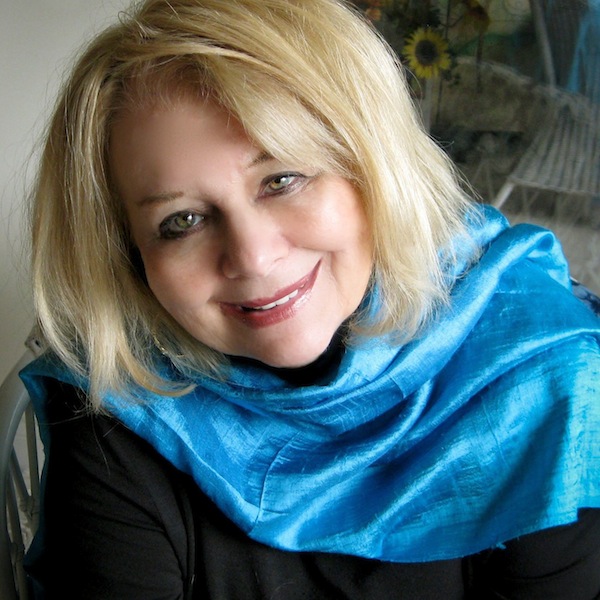
Deborah Grayson Riegel, left, and Sophie Riegel co-wrote the book Overcoming Overthinking. Sophie also authored Don’t Tell Me to Relax! (photo from Riegels)

Many people experience one or more kinds of anxiety disorder, yet fewer than half seek professional help, often because of the perceived stigma of having such a condition, according to Deborah Grayson Riegel and Sophie Riegel.

Both Deborah and her daughter Sophie, 19, have more than one diagnosed anxiety disorder – Deborah has three and Sophie, four. Initially, as Deborah and husband Michael were helping Sophie with her anxiety, they didn’t tell her about Deborah’s. But that silence has ended.

Today, Deborah is a speaker, executive coach, instructor and writer who works part-time in the Jewish community in Manhattan. The bulk of her work is within the corporate community, helping people navigate difficult conversations.

“As Sophie and I were putting our book together, I realized how much of my work is about helping people manage the anxiety associated with getting up and speaking in front of other people, or giving feedback or having hard conversations,” Deborah told the Independent.

Most recently, Deborah was invited to work with Duke Corporate Education, which she was excited about, with Sophie having just started as a freshman at Duke.

“I think Sophie feels really strongly about letting parents know that, if you’re withholding or not exploring medication because of a stigma, because of a fear of dependency, because of anything, you may be costing your kid time,” said Deborah. “Sophie had said in a different interview, where questions came up about what we as parents wish we’d done differently … Sophie’s answer was that she wished we’d explored medication sooner.”

According to Sophie, seeking professional help is important, as the combination of both counseling and medication worked best for both her and her mother, as it does for many others.

image - Don’t Tell Me to Relax! book coverShortly after a traumatic experience at the age of 13, Sophie began working on her first book, Don’t Tell Me to Relax!: One Teen’s Journey to Survive Anxiety and How You Can Too, which she completed in five years. “I started writing it because I was being severely bullied due to some of my obsessive compulsive tendencies,” said Sophie. “I talked to my therapist and we realized the only way to have people stop bullying me was to educate them. So, I ended up giving a 20-minute presentation in seventh grade about my experience living with OCD [obsessive compulsive disorder] and anxiety, and the girls who had bullied me ended up coming up and apologizing to me. I realized that, if I could have that kind of impact in 20 minutes, imagine what kind of impact I could have if I wrote an entire book that I could share with everyone.”

Once Sophie’s book came out, she and her mom decided to co-author one together. Called Overcoming Overthinking: 36 Ways to Tame Anxiety for Work, School and Life, it came out last year.

“When Sophie would be out speaking about the strategies that she uses to navigate anxiety, she heard herself saying, ‘one thing I learned from my mom is … and another thing I learned from my mom is’ … and, I hadn’t realized I was saying or doing these things,” said Deborah. “But Sophie was picking up some strategies I’ve used for myself. So, I said that there are clearly a lot of strategies we’re both using, and maybe we could put them in a book.

“Secondly, I had gotten a call from an organization that had thought that Sophie’s book was something we wrote together. They said, ‘Oh, you wrote this book together … we’d love for you to come and speak.’ And I said, ‘Well, we haven’t written a book together, but we will by October!’ So, we just said, ‘All right, now we’ve told somebody we’re going to write a book … now we have to go write it.’ So, we had a little bit of artificial, external pressure, but it worked well for us.”

In her first book, Sophie shares her journey with anxiety disorder and offers advice to parents, teens and educators; she also debunks anxiety myths and provides a list of resources.

In Overcoming Overthinking the mother-daughter duo offers self-help tips and tools, and focuses on strategies and advice, with about a quarter of the book being from a personal perspective.

One of the stories Sophie shares in the second book is about bribing her therapist to convince her parents that getting a dog would be worthwhile and helpful for her. “We ended up getting a dog, but the interesting part of the story is that my mom is absolutely terrified of dogs … or was … we went from having no dog to having this 80-pound pitbull,” said Sophie.

“And it’s a sign of how much a parent will do to make sure their child is OK … that they will go above and beyond and do anything they need to do. Because, at that point, right before getting a dog and before things started getting a little better for me, my parents thought I’d never be able to graduate high school … that I’d have to be institutionalized, those kinds of things. With this dog, Nash, who’s my best friend, I was able to learn new strategies to handle the anxiety … and learned how much my parents really loved me, and what they were willing to do so I was able to live a healthier lifestyle.”

Both books have been well-received, with parent readers sharing messages such as, “My teen is going through this exact same thing and, because they read your book, they’re starting to know how to talk about it … and I know how to talk to them about it, so you’ve really opened up the lines of communication between us.”

Deborah said, “I got one message from a parent who originally thought their kid was having a heart attack, but then realized from what they had read in Sophie’s book that it was actually a panic attack. It kept them from having to bring him to the ER, because they realized it wasn’t a heart attack. So, they were able to help at home thanks to Sophie’s book.”

Both Deborah and Sophie strongly encourage people to seek professional help when in need. Their book is not a substitute for psychological intervention, they stressed. Deborah added, “We strongly recommend getting that kind of support, whether it’s cognitive behavioural therapy, which has worked for both of us, [or other approaches.]”

image - Overcoming Overthinking book coverOvercoming Overthinking has 36 chapters, which is intentionally double chai (18), symbolizing the saving of the two authors’ lives. The book is divided into three sections.

“The first one is about strategies to change your thinking, to help you change your perspective and mindset, and as a tool for coping with anxiety,” said Deborah. “The second one is about creating new strategies, some concrete things you can do to help you work with anxiety that we think are a little bit out of the box … not what one might call a typical strategy. And the third part is to connect with others about the idea of not isolating yourself and the importance of reaching out, even if that means outing yourself that you’re struggling with something. Most people are uncomfortable being vulnerable. So, we give 12 strategies in that section about how to not do this alone.”

Sophie added, “Also, we go into how it’s good to change your perspective about what connecting with others means. It can mean connecting with a rescue dog, connecting with professionals, connecting with friends and connecting with your parents.”

“I have catastrophic thinking,” said Deborah. “That’s one of the ways my OCD and anxiety show up. Catastrophic thinking has two key elements…. It’s overestimating unlikely probabilities and overestimating devastating consequences. And so, in the morning, we’d put our kids on the school bus and I’d articulate that this is probably the last time we’d ever see them again. Or somebody would get sick and I’d say they’re probably going to die. Or Michael would not answer his phone when I called, and I’d assume he’s dead on the highway. At a certain point, I came to realize that not everybody thinks like this … and that it’s not healthy to think like this … or healthy in a relationship to articulate things that the person cannot help in any way.”

Deborah said she ended up going to speak with a psychologist and getting medication. “That medication has taken my catastrophic thinking from 98% down to two percent,” she said. “Sophie was valedictorian of her class and she got into Duke … her first choice. Sophie is an all-American athlete and has won anti-bullying awards. She has written two books and struggles with four significant anxiety disorders.

“I’m somebody who has a successful career, a healthy marriage and two great children. I travel all over the world for my work. And I struggle with three diagnosed anxiety disorders.

“So, one of the important points is that you can have AD, you can have mental illness, while you can also be happy, healthy and successful. And that feels like a very important message to share,” said Deborah.

For more information about the Riegels’ books, visit donttellmetorelaxbook.com and overcomingoverthinking.com.

Rebeca Kuropatwa is a Winnipeg freelance writer.

Heart-felt and pain-filled memoir

From the page before the opening of Moishe Rozenbaumas’s incisive, heart-felt memoir, we already feel the pain that will inhere in much of his story. Even before we begin reading this autobiography, we see a photocopy of the author’s dedication, handwritten in Yiddish, to the memory of his mother and three brothers, with the dates they were murdered by the Germans’ Lithuanian collaborators in August 1941, in Telz, where Rozenbaumas (1922-2016) was born.

Many people know Telz as the name of the famous yeshivah that was located there, but The Odyssey of an Apple Thief (Syracuse University Press, 2019) by Rozenbaumas – translated from the French by Jonathan Layton and edited by Isabelle Rozenbaumas – takes us into the city, depicting a vibrant Jewish culture, zeroing in on housing, way of life, learning and sports. The title comes from little Moishe’s sneaking into the bishop’s orchard next door and nabbing apples, and the author gives us an historian’s sweep of an area, with a memoirist’s penchant for detail.

For instance, his description of a middle-class household’s Sabbath meal. Although Jews lived “in poverty, hand to mouth,” middle-class Jews had munificent Sabbath meals. Typical to Eastern European towns, the housewife prepared the cholent pot at home, then brought it to the baker, whose oven was heated all Friday night long throughout the Sabbath. Then, around noon on Shabbat, the woman would go and pick up her cholent. Most Jews didn’t have the sort of meals that Rozenbaumas describes, which are at odds with the reigning poverty in Telz.

When the Germans occupy Lithuania, Rosenbaumas accents the avid cooperation between the Lithuanians and the Germans, who murdered 90% of Lithuania’s Jews. He writes that the situation of the Jews in Lithuania was no worse than in other countries; they weren’t loved but they were tolerated. However, in the very next sentence, we read that once, when the president of Lithuania addressed an antisemitic rally, he said that nobody should be stupid enough to slaughter a productive cow while it’s still giving milk.

image - The Odyssey of an Apple Thief book coverRozenbaumas provides what he considers a needed reassessment of the yizkor bikher, the memorial books that survivors of various towns assembled after the Holocaust, which always accented the people’s “piety, purity and morality,” even though there were all kinds of individuals. What is often omitted from these yizkor bikher, Rosenbaumas states, is the miserable poverty of Jews who lived in lightless cellars, had only black bread dipped in powdered sugar for food, froze in winter, and dressed in rags.

During the financial crisis in the late 1920s, his father’s successful fabric shop began slipping. Rather than declaring bankruptcy, the father ran away to Paris, where he had sisters. Despite continuing promises, the father never sent any support to his wife and children, and was unaware of what happened to his family until after the war.

Without a father, the author’s mother and her four boys slowly sank into poverty and hunger. Rozenbaumas becomes an apprentice to a poor tailor with 10 children who live in squalid quarters. Soon, he is the sole breadwinner for his family. But, when the Germans invade, he flees eastward to the Soviet Union, just like his father had fled westward. But the author doesn’t notice the irony of the breadwinner again fleeing alone. True, Rozenbaumas asks his mother to come, but she refuses; he doesn’t ask any of his brothers to join him in his flight.

In the Soviet Union, life wasn’t easy. First, Rozenbaumas served four years on the front, undertaking dangerous reconnaissance missions; he was wounded and decorated several times. He regrets that Jewish former soldiers from other lands never mention the half million Jews who fought with the Red Army, including hundreds of Jewish generals and other high-ranking officers.

When Rozenbaumas’s unit liberates Lithuania, first thing he does is go to his house in Telz, where he finds Lithuanians occupying his now-emptied home. He learns where his family was massacred and longs for revenge, which soon comes. After volunteering as a translator for the Russians, he gets the satisfaction of hunting for the Lithuanian murderers, finding them, watching their trials and immediate executions. He even found the murderer of his youngest brother, Leybe, “who may have been,” Rozenbaumas adds, “his playmate.”

When Rozenbaumas finally decides to leave communist-controlled Lithuania, he describes the nightmare of leaving, taking the great risk of paying an exorbitant fee for forged papers that would guarantee his exit. He makes it, finally, across the border into Poland, with suspense and fright accompanying him like a second skin. It was not until he got to Vienna that he could breathe freely.

One day, Rozenbaumas met a man who knew about his father in Paris and thus was able to find him. But the father-son relationship was uneasy. The father never expressed a word of emotion regarding the murder of his wife and his three sons.

Coincidence also plays another crucial role. Rozenbaumas, by chance, bumps into his old girlfriend, Roza, and later marries her.

Rosenbaumas concludes his touching narrative with the hope that the stories of the European Jewish civilization that was brutally erased from the face of the earth will not be forgotten.

 Curt Leviant’s most recent novel is Katz or Cats; Or, How Jesus Became My Rival in Love.

Shalev’s latest not her best

In an interview with the Jewish Independent in 2014, after her book The Remains of Love came out in English, Israeli writer Zeruya Shalev said that, until that novel, she had been avoiding writing directly about what she called “the Israeli reality.” She said at the time: “And yet, still I am wrestling with the dominance of this reality, and try not to let it take over my books – it’s enough that it controls my life.”

Shalev’s latest novel to be translated into English is all about the Israel reality, but not in the engaging and provocative way that The Remains of Love was (see jewishindependent.ca/zeruya-shalev-opens-jewish-book-fest). Concisely called Pain, Shalev’s story about a Jerusalem woman suffering post-traumatic stress syndrome, which flares up on the 10-year anniversary of when she was seriously injured in a terrorist attack, is anything but concise. Translated ably by Sondra Silverston, the book needed a better editor, as Shalev gets lost in the physical and emotional suffering of her protagonist Iris, who is not portrayed likeably.

image - Pain book coverDespite being the respected principal of a successful school, despite being married to a perhaps dull but well-meaning husband (who could well be distant because of his wife’s indifference to him) and despite raising two competent and kind but vulnerable children, one of whom desperately needs her help, Iris cannot let go of a lost love from her teenage years. When, by chance, at a clinic, she meets Eitan, the man who left her so abruptly so long ago – he is now a doctor who specializes in the treatment of pain – Iris goes headlong into the fantasy of what her life could have been with him, despite all indications that he’s a selfish and emotionally stunted ass. She considers leaving everything tangible and good that she has built for herself for a life that never was.

There are some astute observations in this novel – about trauma and how it affects not only the person injured but those who love them, about the harmful effects of living in the past, about forgiveness, about the fickle nature of life, and more – but it gets lost in Iris’s nearly interminable self-pity and self-delusion. Pain is not Shalev’s best work.

Nature’s riot of colour

“Desert Spring” by Jessica Ruth Freedman.

A harsh critique early in her career didn’t stop Victoria-based Jessica Ruth Freedman from doing what she loves – painting – and becoming a successful artist.

“I was born in Montreal, and then my brother and I were whisked away to Kibbutz Ein Dor in the Galilee,” Freedman told the Independent. “After a few years there, we returned to reside in Calgary. I attended what was then called the Calgary Hebrew School-Talmud Torah. I was filled with the love for Jewish lifecycle events, food, and being part of a community. Apart from a fabulous school experience, one episode of failing an art assignment in kindergarten stands out. We were told to pick a rock and paint it like a ladybug. Creatively, I painted it black on red, rather than red on black, so that the white dots would stand out better. I sadly was singled out as an art failure in front of the whole class!

photo - Jessica Ruth Freedman was to participate next month in the Art Vancouver fair, which has been postponed
Jessica Ruth Freedman was to participate next month in the Art Vancouver fair, which has been postponed. (photo from Jessica Ruth Freedman)

“Fast forward a few years, a career as a contemporary dancer, yoga teacher and accountant, [then] I returned to my love of painting,” said Freedman, who has a bachelor of arts, with a major in dance and a minor in fine arts, from Simon Fraser University. “At this time, I had moved to Victoria to chase the warmer weather and, after a few holidays in nearby Hawaii, I was hooked on representing the juxtaposition of botanicals versus the urban in my artwork.”

Freedman is one of the artists participating in Art Vancouver, which has been postponed from its scheduled dates, April 16-19, because of COVID-19.

“These days, the traditional way of selling art through a gallery is changing,” she said. “Many galleries are shutting their doors due to increasing rents and a growing online marketplace. Art fairs give individual artists an opportunity to connect directly with new collectors. I also love the communal spirit of the artists working and showing together. There is a lot of sharing of process and information that goes on at these types of events. Since I live on the West Coast, Art Vancouver is the best art fair to participate in, and Vancouverites are a knowledgeable art bunch.”

She said she likes to create fresh work for each art fair. “I consider carefully the city, people, environment and sizes of artwork,” she said. “At this Art Vancouver, I will be debuting some non-traditional materials in my paintings, all while keeping the abstract botanical theme. My aim is to always create work that uplifts and inspires, and I attempt to do this through colour, theme and design.”

Freedman works in acrylic, ink and mixed media. She has exhibited internationally and her work is in private and public collections around the world. On her website, she notes, “My journey through life can only be described as an artistic DIY.” She says she “was always the child who wanted to be left alone to explore and discover” and yet that it is her “path in life to share my art to celebrate connection, serenity and humour and to share this journey together.”

“Many artists will agree that one needs to look inward to find the source of creation,” Freedman explained of her need for both solitude and community. “Even realist painters rely on an internal compass based on technique and free expression. As a Jewish person, I honour the spirit of creation within me, and I also pay tribute to the concept of tikkun olam, the repair of the world. I feel fortunate to explore the creative side of myself for a living, but I also feel it’s necessary to do good work in the world. This might mean volunteering for Jewish events, donating my paintings to charity auctions, or just being a positive person with a solution-focused outlook.”

For Jewish community members who come to see her work at Art Vancouver, the dates for which will be released in the near future, Freedman said, “Surprisingly, a fair amount of Hebrew – my first language – appears in my paintings. If readers come visit my booth, I’ll look forward to pointing it out!”

Though she paints the natural world, Freedman noted a certain irony – she is not very good at caring for actual plants. “I am lucky that I can send my husband out to purchase plants – I paint them and he cares for them,” she said. “I am mostly fascinated by the riot of colour, of chaos, that Hashem has let loose in the natural world. The process of growth and decay, while natural, is obviously hard on us humans but is a natural part of life. I am also very interested in urban design that incorporates the natural world in ways that increase sustainability, beauty, communication and wonder.”

For more information on Freedman, visit jessicaruthfreedman.com. For more on Art Vancouver, go to artvancouver.net.

Writing for Israel at UN

Aviva Klompas recently published the book Speaking for Israel: A Speechwriter Battles Anti-Israel Opinions at the United Nations. (photo from Aviva Klompas)

Aviva Klompas came close to writing a declaration of war. In early 2013, after an Israeli post was fired upon by Syria – one of a number of attacks – Klompas was tasked with penning a condemnation that would be submitted to the United Nations.

Still relatively new as director of speechwriting for Israel’s Permanent Mission to the UN in New York City, she recalled the criticism she received: “Be more direct. Be more assertive about things,” she was told. “I thought to myself, ‘channel outrage.’ I tried to do so. I wrote this very stern letter, and I took it to the ambassador to review.”

Klompas, who spoke with the Independent recently, said she then learned the art of diplomacy, and how words might set off an international firestorm.

“To be clear,” Ambassador Ron Prosor, then Israel’s permanent representative to the UN, told her, “you don’t have any authority to declare war.” And it was off to a rewrite.

Thankfully, there weren’t any other close calls, but there are many other fascinating stories – many of which Klompas has brought to light in Speaking for Israel: A Speechwriter Battles Anti-Israel Opinions at the United Nations (Skyhorse, 2019). The book is a candid examination of how the Israeli delegation – and Israel as a whole – is perceived and treated in the international body.

image - Speaking for Israel book coverDuring Klompas’s time at the UN, several major events occurred, including but not limited to the Iran deal, countless anti-Israel resolutions, Palestinians’ bid to join the International Criminal Court, the kidnapping and murder of three Israeli teenagers, and 50 days of war between Israel and Hamas in Gaza. She wrote the book, she said, to show the tireless work of those who advocate for the Jewish state and who rarely get their due.

“It always feels like it is an uphill battle by the nature of the bias at the UN,” she said. “There are people who show up every single day and never say, ‘Why are we doing this? We should leave the UN.’ I’ve never had a single colleague make that suggestion. They came to work and did the job. I think, it’s a little bit my story, but it’s really our story.”

Klompas was director of speechwriting from 2013 to 2015.

“It’s very few people that make the headlines – the ambassador, maybe the deputy ambassador, maybe the foreign minister – but what about everyone else that is doing it day in and day out?” she asked.

About her work, the Toronto native said it advanced Israel’s policies and informed public opinion. Being successful at it, she said, required overcoming some challenges. For one, there was a culture clash.

“Certainly, Israelis are much more direct in their feedback, which is for better or for worse. At first, it is startling, but then you get to understand that it’s not personal,” she said.

Learning how to write in someone else’s voice was difficult, too. Prosor has “a very distinct style,” she said, describing him as “extremely articulate, funny, charming and intelligent. To be able to write for somebody like that takes time.”

In addition, Prosor took a different approach to diplomacy, when “so many speeches can be dry and not entirely lively,” said Klompas. “He’d be all too happy to break out into song in the middle of a speech, whether it be a song about African nations, which got him a standing ovation from some of the African nations in the General Assembly, [or] he would sing John Lennon’s ‘Imagine.’ In a speech about women, he sang Aretha Franklin’s ‘Respect.’”

Klompas gave him the nickname “the Singing Diplomat.”

“Ambassador Prosor felt it was very important to be heard and, to be heard, you have to be different,” she explained. “He knew he had to capture attention to get people to listen.”

In the beginning, she would have to write up to 20 drafts of a speech before she got a sense of the ambassador’s voice and style. Sometimes, there wasn’t much time to tweak.

“It’s pretty stressful,” she said. “You can get a phone call any time of day or night, weekend, and be told the Security Council is convening a special session, come down to the office, we have to get writing. You could have a couple of days’ notice or a couple of hours’ notice. And emergency sessions tend to get a lot of publicity.”

Klompas, who is now associate vice-president of Israel and global Jewish citizenship at Combined Jewish Philanthropies in Boston, said there were poignant takeaways from her job as a speechwriter.

“You can’t be easily deterred by situations that seem unfair or unreasonable. You need a courage of conviction to deflect the constant attacks and brush aside the fact that systems and processes aren’t as simple as one might hope,” she said. “I’d say that my experience gave me a greater sense of what happens behind the scenes in international diplomacy, and the ways in which Israel is working to find equality in the family of nations.”

Dave Gordon is a Toronto-based freelance writer whose work has appeared in more than 100 publications around the world.

Family history informs his art

Much of artist Seth Book’s work has been influenced by his maternal grandfather, who was a Holocaust survivor, including “A Series I Don’t Want to Continue” – “One work to symbolize each character tattooed on his arm, and each million Jewish people that were massacred,” explained Book. (photo from Seth Book)

“My art began as solely for the enjoyment of creating work that was esthetically pleasing, but it has since changed to serve a didactic purpose and to provide awareness to social issues and histories that are important to me and my family,” Seth Book told the Independent. “A significant part of my work is to keep the legacy of my grandfather, survivors, and Jewish history alive.”

Book is a member of the third generation. “My mother’s father was a Holocaust survivor, originally from Romania. He went through a few camps, Auschwitz being one of them. Since seventh grade, I have completed a significant amount of research on his story, directly with him while he was alive, as well as after his passing, and, like many other survivors, he had an unbelievable journey,” explained Book, whose work will be on display at Art Vancouver April 16-19, in the unlikely event that the spread of COVID-19 is under control by then and the fair is allowed to take place.

“His presence in my early life has been extremely impactful on the way I live and see the world,” said Book of his grandfather, “and this is what has influenced my art. I truly believe that, in school, work and life in general, I have gotten my tenacity, conscientiousness and resilience from my zaide. As I learned more about his life and what he fought so hard to build for my family, he became a strong source of motivation and drive to succeed in my life. I still uncover bits and pieces about his life after the Holocaust.”

While his art for the past few years has been primarily concerned with his grandfather, the Holocaust, survivors in general, and present-day antisemitism, Book said the past year has been “transformational.”

“My connection to my grandfather allowed me to begin my work at this starting point relative to my own history,” he said, “but it has since expanded to include broader focuses, such as the current generation living on the legacies of survivors, as well as generational trauma and current events affecting the global Jewish community.”

Book, who works at a branding agency doing graphic design and writing copy for clients, is set to finish his bachelor of fine arts degree at the University of British Columbia. His coursework has allowed him to learn about and use many different mediums, he said, “including drawing, digital media, photography, painting and metalwork.”

Born in Vancouver, Book has lived in the Dunbar area his entire life. He attended Vancouver Talmud Torah from preschool to Grade 7, and then went to St. George’s School for his secondary education. He continued his involvement in the Jewish community via Temple Sholom, he said, “where I participated in the confirmation class in 10th grade and then taught at the Sunday school in 11th and 12th grade. I was also lucky enough to travel to Israel with my family on the Temple Sholom trip after my bar mitzvah.”

He was well-versed in diverse media long before his university years.

“Growing up, I was always interested in creativity: building structures, doing crafts, colouring, and especially playing with LEGO,” he said. “I recall being hilariously picky with colours and colouring inside the lines when drawing with other kids as early as preschool; I always find it funny to this day how much it bothered me as a toddler to see other toddlers using odd colour combinations or messy drawing.

“This interest in art was then supplemented by Colette Leisen’s art class all throughout VTT – it was probably my favourite in elementary school. This carried on into various art classes in high school, including drawing, animation, graphic design, ceramics and painting.”

photo - Seth Book
Seth Book (photo from Seth Book)

Book said it is hard to define his artistic style because he has always been interested in finding new mediums and approaches. But he has less need for such definition since he began university. Since then, he said, “I have been able to let go of that and continue exploring what interests me rather than being labeled as a ‘painter’ or a ‘photographer.’ I always find that different mediums have such an incredibly unique ability to succeed in accomplishing a piece better than others. In other words, certain mediums are more effective than others in conveying certain ideas or concepts for varying projects. That being said, I try to use the best option I can for each work, trying not to limit myself in expertise. I can always try and learn! I did not work with metal until late 2019, and have already created two works using it, and I am very satisfied with how they turned out.”

Book, who has a background in business management in addition to his art training, said he first heard about Art Vancouver through a summer internship program he took part in a couple years ago, and has kept in close contact with the team there since. “I have loved working with the organizers and enjoyed attending the event every year,” he said. “I quite like the efforts they make to advance the art scene in my hometown and can’t wait to be a part of it as an artist this time.”

Hopefully, he will get that chance, but, even if Art Vancouver is canceled or postponed because of COVID-19, Book is an emerging artist whose works will available at other venues at other times.

He was able to tell the Independent about two pieces he was planning on bringing to the art fair. While he had not firmly decided on all the pieces yet, he said, “I selected the works from my portfolio which I have found to be the most striking, the works that I have received most compliments about, as well as the works which I feel represent my wide practice the best when shown together.”

One of those creations is called “A Series I Don’t Want to Continue,” which comprises six digitally rendered vinyl decals adhered to six two-foot-by-three-foot melamine sheets.

“A series opens an idea and simultaneously closes it,” reads the work’s description. “The values in between the first and last work tell a story or convey some sort of meaning through the relationships formed with the works in between.”

It continues, “A series of works in any media all relate to one another through consecutive nature. Labeling a group of entities as part of a series can bind them together, locking them out from further creation or reproduction. This is where the concept of my work integrates itself reflexively within the format of a series work. Through this work, I explore the contained value of past events, and particularly the Holocaust, in relation to my grandfather’s story.

“When he passed away, the evaluation of his extreme tenacity and hard work to establish our family and provide futures for generations to come was recognized more than ever. ‘Never again,’ the words that often cross our mind, could not be stronger upon recounting the horrors he endured. Never again, but also never forget. These events happened. They must be taught and preserved, but they are contained, and must never grow…. One work to symbolize each character tattooed on his arm, and each million Jewish people that were massacred. There will not be a seventh work in this series.”

The other piece that Book wanted to bring for sure to Art Vancouver is called “Untitled Crowd (The Stars, The Blues, The Ashes).” The 22-inch-by-30-inch ink-on-paper work is also related to the Holocaust. The description reads, in part, that the Nazis’ attention to detail was “dual-edged.”

“On one hand,” it notes, “they kept extremely particular and accurate data records of the prisoners murdered. Ironically, on the other hand, the attention to human detail was nonexistent. When Jewish people were funneled through various camps, they were stripped of their belongings and identities. They were nothing but a number.”

In “Untitled Crowd,” Book writes, “I attempt to discuss this specific lack of attention and elimination of one’s person. Each work is a recreation of real people who either survived or perished during the Holocaust. In order to illustrate the lack of respect and attention given to these unfortunately abused people, I spent a specifically short time on depicting them in the piece. Each face was dedicated about six minutes, to correspond with the six million lives lost. The faces are all overlapping with one another to represent not only the crowds of people who were murdered and their brutal living conditions, but also the morphing of individuals into a mess of numbers and bodies rather than human beings.”

The piece’s three parts carry added symbolism. “The first work is done with shades of mustard yellow to signify the yellow stars Jewish people were forced to use as identification, and the shades are more distinct in overlapping to show not all identity had yet been lost,” writes Book. “The second work is completed with shades of blues to represent the blue-striped pyjamas prisoners wore, and the difference in tone decreases to create a more homogenized look as they lost identity. The final work uses the greyscale to convey the ashes of those perished, and the gaining age of survivors around the world.”

For more on Book, visit his website, sethbook.ca. For more on Art Vancouver, see artvancouver.net.

Food as great as views

Courtney Hazlett in Malta, one of the many places she has visited to record her Netflix program Restaurants on the Edge. (photo from marblemedia and OutEast Entertainment)

For producer Courtney Hazlett, traveling around the world for her new Netflix series, Restaurants on the Edge, has been an unforgettable, rewarding experience.

The premise of the show is to take struggling restaurants that have incredible locations with breathtaking views but ordinary or subpar food, and turn them around. A team of experts – chef Dennis Prescott, designer Karin Bohn and restaurateur Nick Liberato – come in and transform the establishments into magical eateries. The show is co-produced by marblemedia and OutEast Entertainment, which is a company run by Hazlett and her husband, Steven Marrs.

“We go around the world with a team of experts and, in a positive way, find restaurants that aren’t living up to the beauty of their location and help change that,” said Hazlett, who is also the show’s creator. “We change the décor, menu and business model. We want to add menu items that speak to that destination.”

Hazlett, who lives in Los Angeles, came up with the idea for the program while eating outdoors at a restaurant in Venice, Calif.

“We often go to places where the better the view, the worse the food,” she told the Independent. “That was the seed. I thought, we can go around the world, find restaurants that aren’t living up to the beauty of their location and help change that. My initial impression was, because of the spectacular view, restaurant owners felt they didn’t have to go all out with the food. But that wasn’t the case. It’s not that they aren’t trying, it’s just that a lot of restaurant owners are in over their head.”

In helping decide what changes needed to be made in each restaurant, Hazlett said they first went to social media to see what people were saying about the establishment. They looked at reviews on Tripadvisor and Yelp and read the comments patrons made.

“What I was most passionate about was the storytelling aspect,” she said. “We went out and met people who lived there. In some ways, the story of community shows up on the plate.”

Since it’s being aired on Netflix, it must be a global show, Hazlett explained. “We had to show as many corners of the earth as we could. It’s a lot of globetrotting.”

In Season One, released on Netflix in Canada last week, on March 14, the team traveled to Malta, Hong Kong, Tobermory (located in Ontario four hours north of Toronto), Costa Rica, Austria and St. Lucia.

Hazlett said Tobermory looked like the Caribbean, with gorgeous blue and green water, underground caves, cliffs and ancient forests. Tobermory is almost completely surrounded by water, with Lake Huron on one side and Georgian Bay on the other. The team chose to make over a seasonal restaurant called Coconut Joe’s.

“The owner was a sweet guy who was struggling with the business,” she said. “He loves to travel and wanted to make a restaurant inspired from his travels. That main inspiration was palm trees, and he wanted to have menu items reflecting any place you would find a palm tree. He had about 30 items on the menu – from Thai to Caribbean food, all over the place. The décor was tiki but not in a good way. The restaurant owner’s busy season is only eight weeks of the year because it’s so far north. Since we filmed the episode in the busy season, he had to shut it down one and a half of those weeks in June.”

The designer’s goal was to transform Coconut Joe’s from tacky tiki to chic tiki. The chef’s goal was to celebrate local food as well. At the end of the restoration, the owner was grateful and thrilled with the results.

Season Two, also released on March 14 in Canada, brought the team to seven more destinations, including wine country in British Columbia’s Okanagan Valley. There, they chose to transform the Outboard Waterfront Pub.

“The owners of the restaurant are such an integral part of the story we tell and, in this case, we were thrilled to include a father-daughter team, Campbell and Anne Stewart,” Hazlett said. “Campbell is hoping to retire sooner rather than later and leave the restaurant in Anne’s hands, and Anne, when we filmed, had an infant. So they’ve got a lot on their plate.”

Hazlett said she has always loved food and cooking. Born and raised in Pittsburgh, she earned a degree from Tulane University and a master’s degree in journalism from Columbia University. She went on to work at People magazine and OK! magazine, then was a correspondent for MSNBC, covering pop culture for MSNBC, as well as Today, Morning Joe and more, before running entertainment teams for NBC News Digital.

“Around 2012, I started producing,” said Hazlett, who moved from New York City to Los Angeles. “Then I started to develop content and, in 2014, created the production company OutEast Entertainment. ABC just ordered a medical drama pilot from us called Triage; it’s directed by Jon Chu, who directed the upcoming film In the Heights.”

Although Hazlett is Jewish and raises her children Jewish, she was born Christian.

“What happened is my mom never knew her father and, later in life, found out he was Jewish, and it unlocked something in me,” she explained. “Growing up, I always gravitated towards Judaism. My husband of eight years [Marrs] was a lapsed Catholic and we both converted. For us, as we started to lean into the Jewish traditions, it became such a centring force for our family. Over time, we started to keep Shabbat and celebrate Jewish holidays. We wanted our kids to grow up Jewish – they go to religious school and we are super-active in our temple. Converting became an easy choice for both of us and it made a lot of sense.”

In keeping with her Jewishness, Hazlett would love to find a location and restaurant in Israel. “Next season, I would love to film in Israel and other Jewish places,” she said.

Hazlett admitted it was a lot to ask an owner to close down his or her restaurant while her crew did renovations, especially if the restaurateur had a cash flow problem. “But, on the flip side, being on Netflix is great advertising for them,” she said, adding that they don’t compensate the restaurants, but they do pay for the cost of the makeovers. “In fact, I received notes from the restaurant in Malta that he has had more than 2,000 people reach out to him because of the show. That’s a lot of new customers!”

Alice Burdick Schweiger is a New York City-based freelance writer who has written for many national magazines, including Good Housekeeping, Family Circle, Woman’s Day and The Grand Magazine. She specializes in writing about Broadway, entertainment, travel and health, and covers Broadway for the Jewish News. She is co-author of the 2004 book Secrets of the Sexually Satisfied Woman, with Jennifer Berman and Laura Berman.

Celebrate spring with music

Wendy Bross Stuart leads singers Lisa Milton, Kat Palmer and David Urist in the JSA program With a Song in My Heart, which takes place March 29 at the Peretz Centre. (photo from Wendy Bross Stuart)

This year’s Jewish Seniors Alliance of Greater Vancouver Spring Forum features a concert with music director and pianist Wendy Bross Stuart and singers Lisa Milton, Kat Palmer and David Urist. The program, called With a Song in My Heart, takes place March 29 at the Peretz Centre for Secular Jewish Culture.

“We are planning a program of Jewish-related songs all pertaining to our love of music,” Bross Stuart told the Independent. “‘With a Song in My Heart’ is a famous song by Rodgers and Hart (Jewish writers) from the 1929 musical Spring is Here. Very true that, by March 29, spring will indeed be here!

“We will include that song in our program as an ensemble piece,” she said. “We will have duets – in Yiddish – ‘Her Nor Du, Sheyn Meydele’ and ‘Vu Ahin Zol Ikh Geyn’; and many solos from Jewish-themed musicals, for example Rags, Milk and Honey, The Rothschilds and a song that was deleted from Fiddler on the Roof!”

Bross Stuart has contributed to more than a dozen seasons of Theatre Under the Stars, as conductor, music director and pianist, and has been music director and pianist for many other theatre companies, including the Arts Club, the Electric Company, Famous Artists, Touchstone Theatre, Presentation House and Snapshots Collective. She has composed numerous choral arrangements and recorded four CDs of Jewish music with soprano Claire Klein Osipov.

Of the ensemble that will join her on March 29, Bross Stuart said, “These three singers are very accomplished. They must have an opportunity to sing what inspires them, but which also fits into the theme of the program.”

She noted that Milton is Klein Osipov’s younger daughter. “She spent many years observing her mother’s performances and rehearsals. She knows all the arrangements I created for Claire – perfectly. When I accompany Lisa, it’s magic,” said Bross Stuart. “I see and hear Claire! What a delight!”

In addition to being an award-winning musician, Bross Stuart is an ethnomusicologist. She has written two books – Gambling Music of the Coast Salish Indians and, with John Enrico, Northern Haida Songs. She and her husband, Ron Stuart, collaborate in the making of documentary films shot in South Africa.

“Ron and I just returned from two-and-a-half months in Cape Town, where we started working on our eighth documentary there,” said Bross Stuart. “This one is called Gugulethu Warriors – Making Things Right! It’s a documentary based on the grassroots efforts of township residents to cope with the social issues of crime, safety, unemployment and community cohesion.”

The Stuarts established Cultural Odyssey Films, notes the website culturalodysseyfilms.com, “to provide a platform for the production and distribution of documentary films about contemporary cultural groups and individuals committed to social change.”

The Stuarts also formed WRS Productions, which has numerous producing credits, including the Vancouver Holocaust Education Centre’s annual community commemoration of Yom Hashoah, Holocaust Remembrance Day. Bross Stuart said that, while preparing for the JSA Spring Forum, she, Milton, Palmer and Urist are also working on the Yom Hashoah commemoration.

“After that,” she said, “I jump into rehearsals for Theatre Under the Stars’ upcoming production of Disney’s Beauty and the Beast and Perry Ehrlich’s Gotta Sing! Gotta Dance! – year 26!

Bross Stuart is a co-founder of the Gotta Sing! Gotta Dance! musical theatre program, which is held at the Jewish Community Centre of Greater Vancouver every summer. The deadline for youth to apply to this year’s sessions is April 1.

Not one to rest on her laurels, Bross Stuart recently adapted an indie pop song. “I just completed a new choral arrangement,” she said. “Of one of my daughter Jessica’s new songs. A first for me!” (The original “Simple Little Song” can be heard at jessicastuartmusic.com.)

As to why she is making the time to perform at the JSA forum, Bross Stuart said, “The JSA is run by a group of very talented, diligent, kind and caring individuals. They provide a wonderful service to the community, where we share with one another. It is my pleasure to contribute to this.”

With a Song in My Heart starts at 2 p.m. on March 29. Refreshments will be served and underground parking is available at the Peretz Centre – cars must enter the alley from 49th Avenue, as 45th is closed to traffic. The nominal cost of the event is $5. For more information and to register, call 604-732-1555 or email office@jsalliance.org.

Gotta Sing! Gotta Dance! deadline April 1

(photo from Gotta Sing! Gotta Dance!)

The deadline to apply for Gotta Sing! Gotta Dance! at the Jewish Community Centre of Greater Vancouver July 7-30 and Aug. 4-27 is April 1. With participants ages 9 to 19 from various parts of Canada and elsewhere in the world, director and creator of the program Perry Ehrlich will be joined this year by faculty including musical directors Wendy Bross Stuart and Diane Speirs; director Chris McGregor; choreographers Jason Franco, Keri Minty and Meghan Anderssen; acting coach Amanda Testini; and Mariana Munoz, set construction and costume co-ordination. The final production of each session will be Wild Wild West Side Story, featuring an original script and a repertoire from Broadway and movie musicals. Also being offered is the finishing school, for serious musical theatre students attending Gotta Sing! Gotta Dance!, and a boot camp dance program. Scholarships are available.