Capturing community spirit

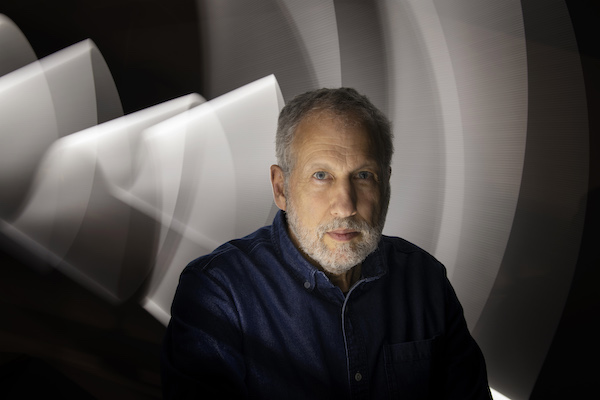
Photograher David Cooper in a self-portrait.

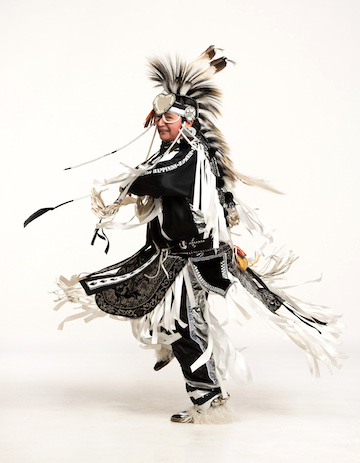
David Cooper is renowned for the skill with which he captures energy and light in photographs and film. But the multiple-award-winning artist was not appointed a Member of the Order of Canada in 2020 only for his “innovative contributions to Canadian performance photography,” but also “for his dedicated mentorship of emerging artists.” One of the many ways in which he has shown that dedication is his support of the Downtown Eastside (DTES) community in which he is based.

Cooper has taken countless photographs for the DTES Heart of the City Festival since the annual festival began 19 years ago, and for Vancouver Moving Theatre – the festival’s main presenter, along with Carnegie Community Centre and the Association of United Ukrainian Canadians – for at least three decades. The festival photo sessions at his studio have been community-building gatherings and the festival provides copies of their photos to the culturally and socially diverse artists who live, perform and create in the neighbourhood. This year’s Heart of the City takes place Oct. 26-Nov. 6, with more than 100 events throughout the DTES and online.

photo - Larissa Healey, from the Heart of the City Festival, in a photo taken by David Cooper
Larissa Healey, from the Heart of the City Festival, in a photo taken by David Cooper.

It was Vancouver Moving Theatre co-founder Terry Hunter who introduced Cooper to the Heart of the City Festival, since it involved artists, writers, singers and storytellers and Cooper’s career has always been in the arts. Though that wasn’t always where his interest lay.

“I started training at U of T [University of Toronto] for architecture,” Cooper told the Independent. “It was a five-year undergraduate program and I came out west after my second year, as a break. I’ve always had a camera but never had formal photography training beyond a summer course at Banff when I was a teenager. Through a friend, I checked out a local theatre company to see if they needed any photos taken. Eventually, I was given a chance to shoot a play at the Vancouver Playhouse Theatre, directed by Christopher Newton. They were really excited about the results from a dress rehearsal and offered me a job. I spent four years there in the publicity department, also creating posters and marketing material.”

Cooper is from Forest Hill in Toronto. He grew up in a conservative Jewish neighbourhood. “I went to Hebrew school but I stopped practising Judaism when I moved out west from my family,” he said. “I still go back for special occasions and joined the JCC here in Vancouver.”

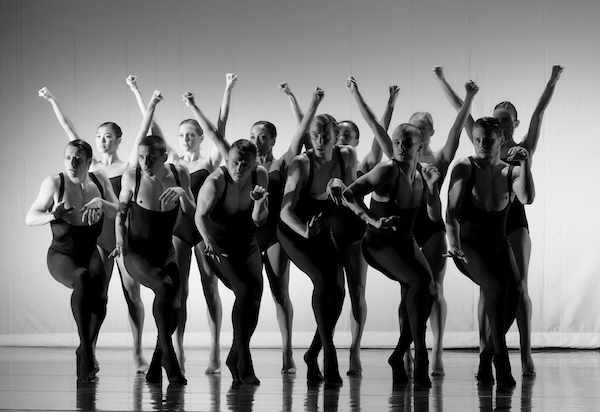
As a theatre, dance and music photographer for more than 40 years, Cooper’s photos and videos have publicized more than 60 companies throughout Canada and the United States. The Shaw Festival, Bard on the Beach, Arts Club Theatre, the Royal Winnipeg Ballet, 605 Collective, Karen Flamenco Company, Vancouver Opera, Vancouver Symphony, Electra Women’s Choir, Chor Leoni Men’s Choir, Spirit of the West and Uzume Taiko Drummers are just a dozen-plus of the groups with which he has worked. He has been a stills photographer for several TV series and his dance videos have been shown internationally. In addition, he teaches and mentors students, holds workshops for both amateur and professional photographers, and photographs for theatre and dance schools.

Among the many recognitions Cooper has garnered, he received a Jessie Richardson Theatre Award in 1995 for his outstanding contribution to the Vancouver arts community and was elected a pioneer member of the B.C. Entertainment Hall of Fame in 2006.

“I’ve mostly been a theatre photographer, shooting live shows,” said Cooper. “I spent 15 years shooting film and transitioned to digital in 2001. It was a Canada Council grant in 1978 that took me to the Royal Winnipeg Ballet to learn more about ballet and I spent two weeks in class and rehearsals documenting the process.”

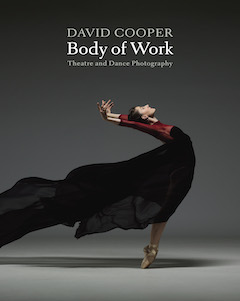
Firefly Books in Ontario recently published the coffee table book David Cooper Body of Work: Theatre and Dance Photography. Each of the 500 copies published includes a limited-edition print signed by Cooper.

photo - Only 500 copies of David Cooper Body of Work have been printed
Only 500 copies of David Cooper Body of Work have been printed.

“I have worked with a great graphic designer and art director, Scott McKowen, for 30 years, photographing marketing materials for the Stratford Festival, the Shaw Festival, Yale Repertory Theatre, Canadian Stage, Theatre Calgary and others together,” said Cooper of how the publication came to be. “He suggested we compile all our work into a book and include my dance work that is separate from the theatre.”

According to Firefly’s website, the book includes essays on Cooper’s theatre photography (by Newton, artistic director emeritus of the Shaw Festival), on his dance images (by Vancouver writer and arts commentator Max Wyman) and on his marketing images (by McKowen). Ballet dancer Evelyn Hart “has contributed an appreciation, and Cooper himself discusses the most intimate relationship between photographer and subject – portraiture.”

When asked what the most gratifying parts of his career are, Cooper told the Independent: “Working with talented performers. Getting to travel all across Canada and the U.S. shooting for different arts organizations.”

For more information on Cooper, visit davidcooperphotography.com. To purchase a copy of David Cooper Body of Work, go to fireflybooksstand.com. And for the lineup of this year’s Heart of the City Festival, check out heartofthecityfestival.com.

Ballet BC set to start season

Artists of Ballet BC in a previous presentation of Bedroom Folk by Sharon Eyal and Gai Behar. (photo by Cindi Wicklund)

Ballet BC will share five new commissions as well as beloved audience favourites in its 2022/23 season. From emerging, locally based voices to renowned choreographers with deep connections to the company, and from intimate creations to large-scale ensemble works, there is much to explore.

The season opens Nov. 3-5 with Overture/s, featuring a world première from Dutch sibling duo Imre and Marne van Opstal, co-produced by Finland’s Tero Saarinen Company, the return of Bedroom Folk from Israeli choreographers Sharon Eyal and Gai Behar, and Silent Tides, a work by Ballet BC artistic director Medhi Walerski.

The season continues with Horizon/s March 16-18. Vancouver-based Shay Kuebler and Czech choreographer Jiří Pokorný will each share a world première, new works exploring dichotomies within the human body and mind. Israel’s Adi Salant – former co-artistic director of the Batsheva Dance Company – will be back to share WHICH/ONE, originally commissioned for Ballet BC in 2019. Salant’s work is anchored by a deep sense of presence, navigating between explosive physicality and delicate scarcity. Set to musical excerpts from A Chorus Line, in addition to an original soundscape, the piece highlights the entire company and explores contrasting themes of human performance and mundanity.

The final program of the season, Wave/s, runs May 11-13. It features two world premières from two of today’s top visionaries in contemporary dance. Tel Aviv-based Roy Assaf shares his debut creation for the Ballet BC stage and Sweden’s Johan Inger returns to share an all-new work following the success of Walking Mad and B.R.I.S.A.

Lastly, Ballet BC welcomes Royal Winnipeg Ballet’s Nutcracker back to the Queen Elizabeth Theatre Dec. 9-11.

For tickets to any of the season’s offerings, visit balletbc.com.

– From balletbc.com

The repackaging of a hero

Anyone who knows more than a little bit about Holocaust hero Rudolf Vrba – a Vancouverite for 31 years – will approach Jonathan Freedland’s The Escape Artist: The Man Who Broke Out of Auschwitz to Warn the World (London, UK: John Murray, 2022) with delight and apprehension.

Will this Guardian journalist and thriller writer take the high road, encouraging everyone to seek out Vrba’s own fascinating, still-in-print memoir? Or will he be more like Elvis swinging his hips, simulating Black-style music, because, hey, most people won’t know the difference?

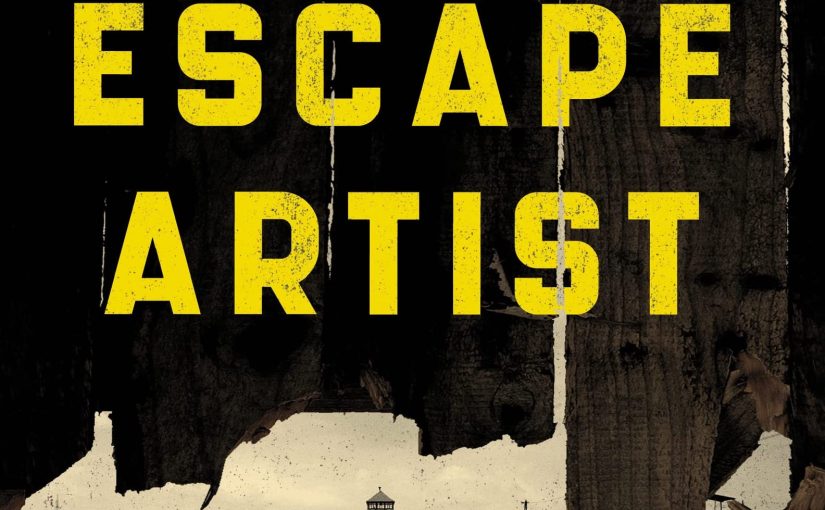
Rudolf Vrba’s name is nowhere to be found on the cover. At the top of the jacket is the subtitle. At the bottom, Freedland’s name. The main title, front and centre, implies 19-year-old Vrba was Houdini-like but, as Freedland well knows, Vrba and his co-escapee Alfred Wetzler took advantage of an escape plan and a hideout conceived and built by others.

The pair’s report on Auschwitz was by far Vrba’s greater achievement – exposing the vast scale of murder at Auschwitz to the world-at-large, convincing everyone who read it. The pair is now credited with saving 200,000 lives.

* * *

As someone who knew Vrba, I am sympathetic to Freedland’s undertaking. How do we get more people, including academics and even Jewish community members, to celebrate one of the greatest heroes of the 20th century?

Thankfully, The Escape Artist is clear and precise storytelling. With access to Vrba’s archival materials in New York’s Franklin Delano Roosevelt Library and input from both of Vrba’s wives, Freedland has also been able to add a good deal of fresh information to the public record.

It will be enlightening for most readers to learn that four other men actually planned and built Vrba’s getaway hideout (where Vrba and his cohort Wetzler hid for three days). This seldom-cited quartet tested it for real, escaping for several days before being caught and tortured, but not killed.

Vrba’s own narrative – first entitled I Cannot Forgive and later changed to I Escaped From Auschwitz – omitted crediting the extreme courage of these men. Without them, Vrba would never have reached Slovakia and co-written the Vrba-Wetzler Report, intended to forewarn 800,000 Jews of Hungary not to get on those trains. From Freedland, not from Vrba, we also learn how one of the tortured members of that quartet was able to assure Vrba that he and his escapees had not divulged their undiscovered hideout in the “Mexico” section of the camp.

“Mexico” was so-named, Freedland tells us, because poor souls marooned in the construction zone with makeshift shelters were not given clothes; consequently, naked prisoners had to drape themselves in blankets and other prisoners at Auschwitz-Birkenau thought they looked like New Mexico Indians.

Vrba did make clear, however, that in order to travel over land through hostile territory for a grueling 14 days, he and Wetzler had followed explicit directives that Vrba had received from a Russian prisoner named Dimitri Volkov. Hence, it was Volkov who was the master of escapology; Vrba was his disciple.
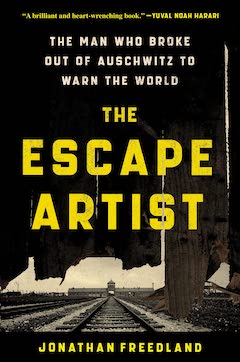
image - The Escape Artist book coverFor virtually all of the people on the planet who have not sought out the two volumes of fascinating, self-published memoirs by Vrba’s first wife, Gerta, The Escape Artist will be welcomed for divulging details of Vrba’s first marriage. Gerta had to take her leave, penniless, with their two daughters, to escape from a philandering and distrustful husband who was clearly still in recovery after almost two years in Auschwitz.

The extent to which both his daughters felt estranged from him is touched upon. We also learn more about his eldest daughter Helena’s apparent suicide in Papua New Guinea in 1982 (an overdose of chloroquine in response to her love affair with a married man who left her) after she had all but severed ties with her father three years earlier.

As well:

  • Freedland notes there is a distinct possibility that Vrba’s father might have died by suicide as a failed businessman (when Vrba was aged 4).
  • Vrba was his mother’s only child (he had two, much older step-brothers and a step-sister from his father’s previous marriage).
  • After his father’s death, Vrba’s mother was a traveling saleswoman for much of his early childhood, absent for much of his formative years.
  • Vrba’s penchant for science might have emerged after all Jewish children were told to return their textbooks, but a friend named Erwin Eisler managed to keep his organic chemistry text by Czech scientist Emil Votocek.

Gerta’s books have already revealed that Vrba, as a youth, emerged as a leader in a self-teaching circle of friends and that, when Gerta was 13, she was enraptured by his precocious intelligence and confidence. Vrba was 15 and sometimes dismissed her as childish.

Gerta Vrbova and Vrba’s second wife, former Vancouver realtor Robin Vrba, were invaluable informants for Freedland but we have no idea who told him what. Their contributions to history are invisiblized, not unlike what could have happened to Vrba and Wetzler, who were advised by Jewish elders in their native Slovakia not to have their names attached to their momentous reportage.

* * *

One error must be cited: on page 8, Freedland states that Vrba and Wetzler were “the first Jews to break out of Auschwitz.” Freedland later devotes three pages to Siegfried Lederer’s marvelous escape on April 5, 1944, when Lederer [tattoo # 170521] outwitted Nazi guards by donning an SS uniform provided by SS officer Viktor Pestek.

Google will tell you that Siegfried Lederer, aka Vítězslav Lederer (March 6, 1904-April 5, 1972), was born to a Jewish family in Písařova Vesce in the Sudetenland. Czech sites convey he was a Resistance fighter who was transported from the Terezín Ghetto to Auschwitz-Birkenau (arrival on Dece. 18, 1943). He was forced to wear both yellow and red triangles, marking him as a Jew and as a political prisoner. After he escaped, he warned Judenrat elders at Theresienstadt about the mass murder of Jews at Auschwitz – but he was both disbelieved and told to remain quiet.

If Freedland has some contradictory information to prove that Lederer is not Jewish, he might well have provided it. Certainly, for marketing purposes, it sounds better to imply Vrba and Wetzler were first. Sure enough, an uncredited review now permanently appears on the Guardian/Observer website and it baldly asserts: it took until 10 April, 1944, but eventually Vrba and fellow prisoner Alfred Wetzler “achieved what no Jew had ever done before: they had broken out of Auschwitz.”

One has to wonder who wrote that uncredited summary. On page 171 of his book, Freedland slyly covers himself by saying, “Fred Wetzler and Walter Rosenberg [Vrba’s birth name] were on their way to becoming ‘the first Jews to engineer their own escape from Auschwitz.’” Trouble is, he has already told us that four prisoners – named Citrinm, Eisenbach, Gotzel and Balaban – ought to be chiefly credited for building (ie. engineering) the hideout, not Vrba and Wetzler.

We like to assume people who write for the Guardian must have higher standards, but, hmm, maybe not. Now people all over the world can watch Freedland’s June 18th promotional video on YouTube in which he self-assuredly states, “I know, since I’ve nailed this down, that only four Jews ever escaped from Auschwitz, and Vrba and Wetzler were the first.” Either this is a lie or research standards at the Guardian have drastically plummeted.

Overall, The Escape Artist is an intelligent, valuable and easy-to-read account by someone who is bright enough to know that a warts-’n’-all portrayal of Vrba’s life is the best possible way to get the world interested.

If Freedland treads lightly when it comes to defending Vrba and foremost Vrba expert Ruth Linn in their battle with Yad Vashem historian Yehuda Bauer, well, perhaps he can be excused for wanting as many readers as possible in Israel. Robert Krell, as the founding force behind the Vancouver Holocaust Education Centre, was interviewed but he appears on only one page. Two other Vancouverites, Dr. Joseph Ragaz and Prof. Chris Friedrichs, were interviewed by Freedland, but their input is not cited except in an acknowledgements section. Linn, an Israeli academic and a part-time Vancouverite, who was for eight years the only scholar that Vrba permitted to interview him, declined to be interviewed. Linn and Freedland both first became aware of Vrba’s existence by watching Claude Lanzmann’s nine-and-a-half-hour documentary Shoah.

* * *

I greatly appreciate the effort it took to fashion a potential bestseller for a new generation that knows increasingly less about the Holocaust. I am certain Vrba’s co-author Alan Bestic, who overcame different obstacles for his time, would likewise approve. Unfortunately, the bibliography omits any mention of Bestic’s co-writing of the memoir I Cannot Forgive and it’s only mentioned once in the text, on page 272. For that matter, Vrba’s own book, with its current title, is cited precisely once in small print within the depths of a seven-page bibliography. (There it is, on page 358, included alongside a scientific paper Vrba published about his research on rat brains.)

London-based Bestic was a fantastic writer. Freedland is a very fine one, too. He can turn a phrase. He can step back and be invisible. He has poise and tact. It is unfortunate, therefore, that Bestic’s essential role as Vrba’s co-writer has been ignored and even somewhat denigrated (“a supremely skilled Fleet Street journalist of the old school”). We don’t learn anything about him. If Freedland has the means to undertake research in New York and Vancouver, why is there no apparent digging to tell us anything about the man who wrote most of the text upon which The Escape Artist itself is necessarily based?

As a writer, Freedland has a very cool, even calculating hand. That’s good for journalism; it might even be good for thriller writing. But the drama of Vrba’s story has been subdued in this modern version. The Escape Artist is nonetheless an essential and welcome work, if it gets the world aware of one of the greatest whistleblowers of the 20th century. Ideally, the book will lead more people to seek out the latest version of Vrba’s own narrative, I Escaped From Auschwitz: The Shocking True Story of the World War II Hero Who Escaped the Nazis and Helped Save Over 200,000 Jews, released in 2020, co-edited by Nikola Zimring and Robin Vrba, minus its original opening chapter.

Alan Twigg’s 20th book is Out of Hiding: Holocaust Literature of British Columbia (Ronsdale Press, 2022). This year, he received an honorary doctorate from Simon Fraser University.

It’s all about love and family

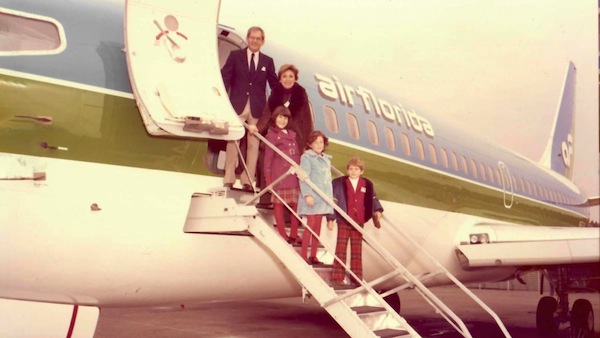
Last Flight Home follows Air Florida founder Eli Timoner’s last weeks of life. (still from film)

The Vancouver International Film Festival opens Sept. 29, and this year’s festival will be impressive, if the releases reviewed by the Independent are any indication.

Last Flight Home, a very personal and moving documentary written and directed by Ondi Timoner, will have viewers in tears. It will also have viewers contemplating mortality, family and what makes life full and worth living.

The film follows the last weeks of Timoner’s father Eli’s life. No stranger to hardship – he had been paralyzed on his left side since a stroke almost 40 years earlier – a bedridden 92-year-old Eli tells his family he wants to die. Immediately. Living in California, he could make that choice, and does make that choice. Once he passes the state assessment, the required 50-day waiting period begins.

During this time, Eli says his goodbyes to his wife, kids, grandkids and other relatives, to friends and to former employees. He offers advice and, with the help of those whose lives have been made better by his existence, he comes to love himself, finally shedding, after decades, the shame he felt at not being what he considered a good provider for his family. Before his stroke, he had been a wealthy businessman – founder and head of Air Florida – but, afterward, he and his wife had to declare bankruptcy and money was tight from then on.

Thankfully, Eli had those 50 days. While it was sad that he didn’t know how successful he really was in life until he chose to die, at least he did die knowing that he had loved and that he was loved.

* * *

photo - In Karaoke, married couple Meir and Tova rediscover their love for each other
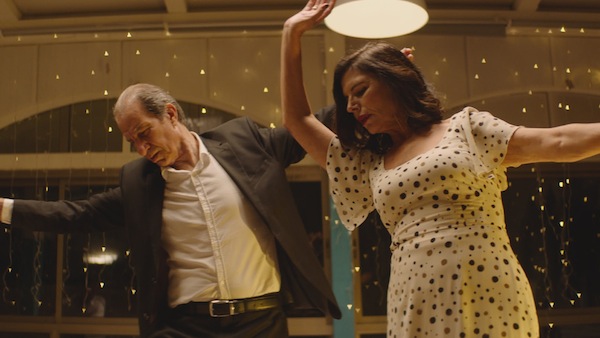
In Karaoke, married couple Meir and Tova rediscover their love for each other. (still from film)

The Israeli film Karaoke, written and directed by Moshe Rosenthal, also deals with mortality and late-in-life realizations. Long-married couple Meir and Tova have long lost their passion for each other and, really, for living. It takes the arrival of a new neighbour, Itsik, to bring out both the best and worst in them and in their relationship.

Itsik is rich and confident, a player in every sense of the word. While his loud karaoke parties annoy most everyone in the building, the residents who gain the privilege of an invitation feel not only special, but a little superior, more worldly, as they open themselves up to the possibilities that Itsik embodies.

Billed as a comedy, Karaoke is more cringey than funny, and the musical score even makes it seem creepy at times, as does the pacing and lighting. That said, the acting is excellent and it does have some funny moments. As well, the messages are refreshing: love can be reignited and you can have adventures at any age.

* * *

photo - To make Killing Ourselves, Maya Yadlin got her parents and sister to come out to the desert to film
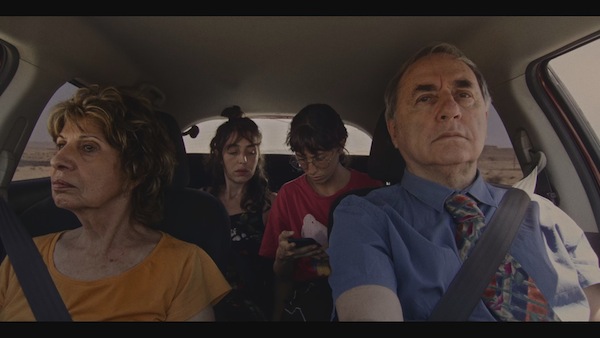
To make Killing Ourselves, Maya Yadlin got her parents and sister to come out to the desert to film. (still from film)

To make the 15-minute short Killing Ourselves, Israeli filmmaker Maya Yadlin took her parents and sister to the desert. According to her bio, this is something Yadlin often does – make movies about and starring her family. The result in this case is a delightful, amusing peek into their relationships. Most viewers will appreciate the interactions, with her parents both begrudgingly and proudly helping “film student” Yadlin with her homework and her sister, an actress, coming along for the ride – and the work.

* * *

VIFF runs until Oct.  9: viff.org.

Photographic chronicle

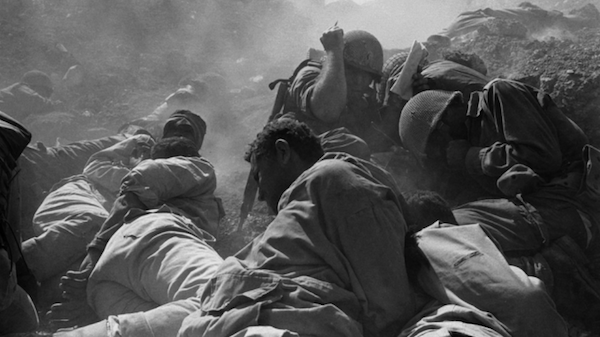
Image from 1341 Frames of Love and War, a photo by Micha Bar-Am.

Photographer Micha Bar-Am, now 92, is considered perhaps the foremost visual chronicler of Israeli history. In 1341 Frames of Love and War, filmmaker Ran Tal creates what amounts to a family reminiscence among Bar-Am, his wife Orna and sons Barak and Nimrod, complete with snippy retorts and full-throated arguments. All of this is set against thousands of Bar-Am’s photos, creating a barrage to the senses of blown-up buses, dancing hippies, funerals and the scope of Israeli life captured in still photos. The family, whose voices make up the narration of the documentary, are seen only in the pictures.

Although Bar-Am was present to immortalize in images the Eichmann trial and the liberation of the Western Wall, his work is mostly of ordinary Israeli people and events, including war, which has been all too “ordinary” for the country and its people. The photos predictably begin in black-and-white – the first colour photo in the film appears during the 1967 war, perhaps not merely a sign of changing technology but also of the before and after times of the occupation.

A photo from the time – an image Bar-Am captured of a soldier praying at the newly liberated Kotel – is a prism through which Micha and Orna chronicle their own changing views of their country. The soldier had fashioned an ammunition belt into a makeshift prayer shawl. Orna explains how they loved the photo at first, apparently as a symbol of resistance and survival. After a few years, they came to detest it as a representation of the connection between religion and power. Now, in their later years, they are agnostic about the thing.

“That’s how it was then,” Orna says. “We don’t have to feel love or hate toward it. That’s how it was.”

Bar-Am acknowledges that he was a shy young man and the camera was an excuse to get closer to things, to understand people better. Through his eyes, and the immortality of his images, Israelis and others can perhaps view themselves and the world around them more closely.

The film is an intimate exploration into the work of a legendary craftsman and, through him, a snapshot into the past.

For the full film festival schedule, visit viff.org.

Chance to win 2 tickets to VIFF’s screening of The Forger

A still from the film The Forger, starring Louis Hofmann.

The 41st Vancouver International Film Festival takes place Sept. 29-Oct. 9, 2022. This year, the Jewish Independent is the media sponsor of The Forger (directed by Maggie Peren, Germany/Luxembourg), so we’re doing a draw for free tickets to one of the screenings!

Email editor@jewishindependent.ca by Sept. 23, 2022, to be entered in a draw for the Thursday, Oct. 6, 1:15 p.m., screening at International Village 9.

Synopsis of the film:
Based on a true story, Cioma Schönhaus, a young Jewish man living in 1942 Berlin, works at a munitions factory until he’s recruited by a former Nazi bureaucrat to forge passports for Jewish people to escape the country. Cioma waltzes through Berlin with reckless abandon, impersonating military personnel even as he risks discovery by the Gestapo. Adapting the story from Schönhaus’s memoir, director Maggie Peren gives her film the same immaculate attention to detail as Cioma does his forgeries, contrasting the dimly lit Berlin of Jewish people struggling with food rations with the decadence of the Nazis. The film balances the playful atmosphere of his ingenuity against the sombre backdrop of Nazi Germany and the looming danger he faces.

https://viff.org/whats-on/the-forger/

Multicultural experience – new music releases offer unique rhythms and stories

Yoni Avi Battat (photo by Richard Ijeh)

On Sept. 2, multi-instrumentalist, singer and composer Yoni Avi Battat released his debut album, Fragments, a collection of original and traditional music surrounding his Iraqi-Jewish identity. With lyrics in Arabic, Hebrew, English and Yiddish, the music uses Arabic modes and rhythms with an ensemble of traditional Arabic instruments to make sense of the artist’s fragmented identity.

“Growing up in an American Jewish community dominated by European culture, I had very little access to the music, language and traditions of my Iraqi-Jewish ancestors,” said Battat. “As an adult, I’ve had to make a concerted effort to learn Arabic music and language in order to represent my Arab-Jewish ancestry as a musician. Studying these musical traditions has connected me deeply with my roots, but there are still so many parts of my family’s experience about which I will never know. I can no longer ask my grandparents about their life in Baghdad or their departure from Iraq. I can’t visit the land where my ancestors lived for thousands of years.”

Battat dove into scholarship of Jewish Arabic poetry, researching translations and tracking down rare editions of Arabic books. In doing so, he was able to source the Arabic texts that helped him begin to answer his questions. By pairing these words with existing and original lyrics in other languages, and setting them to Arabic musical modes, Battat envisioned his own method to make sense of fragmented identity.

“As you experience these original and traditional pieces, I invite you to approach memory in a new way – not through exact facts, dates and photos but through your senses and your imagination,” he said. “Allow these smells, textures, tastes and sounds to transport you to a place and time you have never been. When we cannot access the specific details of our families’ stories, our imagination can still bring us a real and intimate connection with where we come from.”

Battat’s great-uncle, Razi, is his only remaining direct connection to the generation that was born in Iraq. Battat has been lucky to hear him sing at the tiny synagogue in Jerusalem where he’s been praying for decades. On the track “El Eliyahu,” a traditional Iraqi melody, the timbre of Razi’s voice offers a lens into a different time and place.

Another song, “Will Her Love Remember?” brings to life a Hebrew poem from the 10th century, one of the only remaining examples of poetry from this era thought to be written by a woman. The wistful melody and carefully metred lines show us how physical objects can be imbued with memory and allow us to hold our loved ones close, even when they are so far away.

Yet another relatable piece, “What Would You Say?” recounts the artist’s attempts to recreate his grandmother’s cooking and his struggle to get it just right. The chorus comforts any home cook with imagined advice and affirmation from Battat’s grandmother, Violet: “Take it slow. Take it easy. Trust your hands.”

For more on Iand Battat, visit yonibattat.com.

* * *

photo - Tamar Eisenman
Tamar Eisenman (photo from eisenwoman.com)

At the start of this year, Tamar Eisenman released Rain & Dirt, which includes 11 new tracks recorded in New York City, Shanghai and Tel Aviv, bringing together a multicultural musical experience from a guitarist’s perspective. Songs on this album observe the nexus between the life you’ve planned and the life you’re living. The main prism revisits the story and feeling of someone traveling between countries, trying to build a home and start a family.

A trio session with longtime friends, musicians Rea Mochiach and Yonatan Levy, produced an alternative wrap of musical textures, combining blues, rock, jazz and muddy funk. The trio were joined on some tracks by Yoed Nir on cello, pianist Chano Dominguez and saxophonist Amit Friedman.

The musical approach emphasizes the feeling and concept of living in a constant gap between languages, homes and cultures. This led to a real-time recording of events in the studio. Long jams created the rebirth of songs and paved the arrangements, as a reflection to all those plans you made that changed along the way and created new realizations.

“It’s a bit strange releasing an album that was ready and completed almost two years ago,” said Eisenman. “But, we all know what happened in the past two years, that obviously reflected this process. On normal days, I would have used all that ‘quiet time’ and lockdown state of mind to create and record. As New York City was shutting down, by the end of March, I had a baby – my first. I did not expect this would be my maternal experience; I couldn’t imagine this in my wildest dreams.”

For more information, visit the website  eisenwoman.com.

History of “left coast”

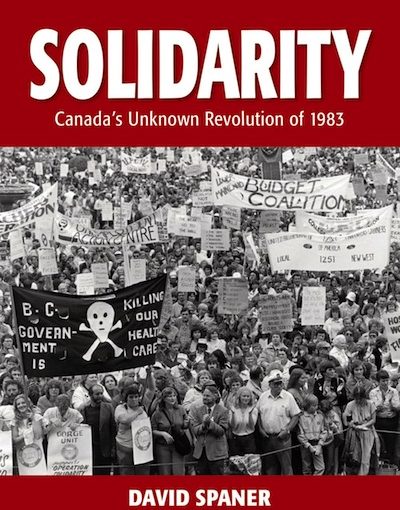
David Spaner’s new book, Solidarity: Canada’s Unknown Revolution of 1983, forms an archival testament of one of this province’s most dramatic epochs.

One of the funny things about watching the 1976 movie All the President’s Men, about how Washington Postreporters Bob Woodward and Carl Bernstein broke Watergate and brought down Richard Nixon, is that, after 138 minutes of sitting on the edge of your seat, you realize that you’ve watched nothing more than two men making phone calls and knocking on doors asking questions. In other words, stuff doesn’t need to blow up in order to make an excellent movie. This thought occurs when reading Vancouver author David Spaner’s new book, Solidarity: Canada’s Unknown Revolution of 1983. On the surface, the book is a litany of bureaucratic meetings and activists’ backstories. Together, they form an archival testament of one of this province’s most dramatic epochs.

Spaner, an activist and journalist who has been immersed in the left-wing ferment for most of his life, chooses a different Hollywood reference. At the end of the book, he alludes to the 1983 film The Big Chill, in which disenchanted middle-agers convene for a friend’s funeral and lament their glory days. For anyone who has been part of British Columbia’s left-wing movements – recently, in 1983, or decades earlier – this book will provide many Big Chill moments. An initial criticism might be the title, which alleges this history is forgotten. Any person who was living in British Columbia in 1983 and even moderately politically aware will not forget that riotous time, though Spaner revives it effectively for new audiences.

Spaner’s thesis is that British Columbia’s well-known legacy of progressive activism that began in the 19th century converged in 1983. All the economic, social, racial, gender and other movements cohered in response to unparalleled government excess – and then refracted again into the myriad organizations and causes that drive B.C. politics today.

The province’s long history of progressive activism weaves its way through the book. More volunteers from Vancouver signed up to fight Franco’s fascists in the Spanish Civil War than from any other North American city save New York, Spaner says. And, in a more trivial note, he claims that the Industrial Workers of the World got their nickname “Wobblies” right here. Greenpeace was founded in Kitsilano in 1971. Movements against the Vietnam War and nuclear warships found fertile ground here. A squatters’ park stopped development at the entrance to Stanley Park. A “smoke-in” in Gastown protested police brutality and called for loosened marijuana laws. The Simon Fraser University Women’s Caucus, formed in 1968, was, according to the book, not only the first such group in Western Canada, but the first in North America. The first rumblings of gay rights activists were heard in these parts around the same time.

With all this as a foundation, the events of 1983 exploded out of the results of the provincial election on May 5. Dave Barrett’s New Democrats, who had governed the province for a short but tumultuous two-and-a-half years beginning in 1972, had been widely anticipated to defeat Bill Bennett’s right-wing Social Credit government. Instead, Bennett pulled out a surprise victory – and then launched a “restraint movement” that was unprecedented in Canada and is often compared with Thatcherism in Britain and Reaganism in the United States. On July 7, Bennett and his cabinet “unleashed a far-right legislative avalanche that tossed asunder virtually every advance achieved by B.C.’s social activists and trade unionists,” Spaner writes. “In an instant, and from every corner of the province, there was a rising of resistance.”

Almost exactly two months after the election, Bennett’s Socreds dropped 27 radical bills, affecting every area of government operations. For starters, 1,400 members of the B.C. Government and Services Employees Union (BCGEU) were summarily fired the day after the bills were tabled. The government eliminated special education programs, reduced student loans, fired family support workers, took away autonomy from local school boards and mandated fewer teachers and larger class sizes. Environmental protections were removed, welfare rates frozen, healthcare facilities closed and programs, including the Human Rights Commission, were cut. Funding for programs in services like the Vancouver Women’s Health Collective were eliminated. They closed the Tranquille mental health facility in Kamloops and fired its 600 employees. Labour relations laws were amended to take away rights such as seniority, working hours and overtime in collective agreements. Tenants could be evicted without cause and the Rentalsman’s office was eliminated, meaning any disputes would have to go to expensive court proceedings. The Agricultural Land Act, intended by the Barrett government to protect farmland, was gutted. User fees for hospital care increased exponentially.

Organized labour mobilized as soon as they could shake off the disbelief about what they were confronted with. They formed Operation Solidarity, an umbrella covering 400,000 unionized workers in the province, under the not-so-gentle guiding hand of the B.C. Federation of Labour. A parallel group, the Solidarity Coalition, was a motley amalgam of community groups and activists, less hierarchical and disciplined than the trade union groups. (The names were lifted from the nascent Polish anti-communist movement emerging at the time, but the ruptures in the B.C. movement make the moniker somewhat ironic.)

The first big rally took place in Victoria’s Memorial Arena, attracting 6,000 protesters. This was where the initial idea of an all-out general strike gained currency – and the seeds of the movement’s destruction were planted. A massive rally followed in front of the old CN station at Thornton Park on Main Street in Vancouver, on July 23. Organizers had hoped for 2,000 attendees but 25,000 showed up.

As is common in activist circles, Jewish individuals played an outsized role. The author, who is Jewish, comes by his credentials naturally – his grand-uncle was a good pal of Dave Barrett’s dad, Sam, in East Vancouver. One of the most visible faces of the movement was Renata Shearer, a Jewish refugee from Nazi Germany who was fired as the province’s human rights commissioner. Feminist and union leader Marion Pollock and Carol Pastinsky, who grew up in a left-wing household that hosted meetings of the United Jewish People’s Order, are featured in the book. And, of course, Barrett, who, despite his recent defeat, led the charge in the legislature against the onslaught, was the province’s first, and so far only, Jewish premier.

Another Jewish person, Stan Persky, launched and edited the movement’s publication, Solidarity Times. The newspaper, funded by organized labour, provides one of many examples in the book about bitter feuds within and between the disparate factions in the Solidarity mishpachah (family). A bunch of young, idealistic journalists who were working under Persky got a taste of censorship that they might have expected in a career with the bourgeois press but perhaps had not anticipated from their comrades in the movement. “Remember who writes your checks,” a union apparatchik warned them after spiking a story that didn’t toe the union line.

One of the most visible schisms in the mass movement occurred at a huge rally where most of the rank-and-file attendees were apparently champing at the bit for a general strike, but the more cautious leader of the movement, Art Kube, instead urged everybody to get a copy of a petition, have their neighbours sign it and send it in to the government in Victoria.

Said one activist reflecting his response that day: “We want militant action. We want to shut down this province. Instead, were being told, ‘Go get a petition signed.’”

But, while Kube was the one who disappointed that day, many in the movement believe it was his illness – a physical or mental breakdown – that led to what many or most view as the ultimate betrayal of the entire project. The BCGEU and the teachers’ union went on strike, shutting down huge swaths of the province. As pressure built, an unexpected – and largely unwanted – resolution was hatched by one segment of the union movement.

Within the Solidarity movement, there were schisms between the far-left and the comparatively more right-leaning unions, between radicals who wanted transformative change and reformers more narrowly opposed to specific legislation. There were, of course, also a lot of very strong personalities, all packed together and stressed by the pressures of the time.

With Kube sidelined by illness, the B.C. Federation of Labour sent Jack Munro, one of British Columbia’s feistiest, foul-mouthed and most divisive union figures, to meet with Premier Bennett at his home in Kelowna. When other partners in the Solidarity movement found out that the meeting was taking place, they knew they were done for.

“Munro and Bennett reached the quick agreement, settling the BCGEU contract but offering little else to most Solidarity members,” writes Spaner. “Then they stepped out on the premier’s patio to announce their Kelowna Accord.”

“We were all in tears,” recalls one activist. “It was a horrible betrayal.”

Once a big swath of the union movement had pocketed what they wanted from the government, the larger movement effectively fizzled out.

“Some longtime union activists simply don’t have a bigger dream, so it was impossible for them to see the Solidarity drama as a failure. To them, it was just another contract negotiation,” Spaner writes.

But while the movement itself may be gone, the legacy lives on, Spaner argues. Those trenches formed a generation of B.C. activists, not least of whom is John Horgan, who was inspired by the lofty outrage of Barrett and marched down the road to join the NDP for the first time.

Spaner is no impartial observer. His stripes are on full display, but he delivers an insider’s view of the times – times that affect us still.

Solving a family cold case

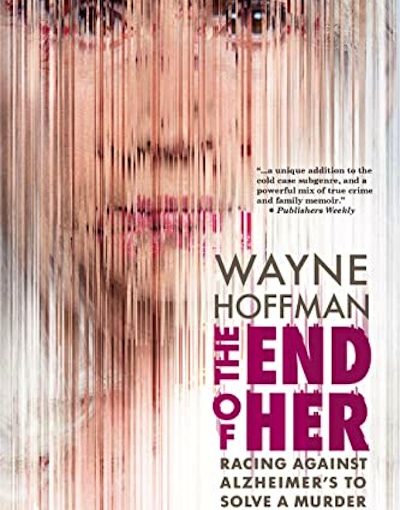
Wayne Hoffman’s latest book is about his efforts to solve the 1913 murder of his great-grandmother before his mother’s dementia takes full hold of her mind.

Well into his book The End of Her: Racing Against Alzheimer’s to Solve a Murder, Wayne Hoffman notes that it wasn’t until his mother was admitted into a nursing home that he began to read books and watch films about the disease, finding comfort in other people’s stories.

Hoffman’s nonfiction account of his mother’s decline – and his search for his maternal great-grandmother’s killer – was released this past February by Heliotrope Books. Perhaps coincidentally, I only cracked its proverbial spine (I have an electronic copy) a couple of weekends ago, the same weekend my father moved into a retirement home.

I was drawn to The End of Her both as the daughter of a parent with dementia and as a former Winnipegger. It was indeed comforting to read about how Hoffman’s family dealt with his mother’s dementia, how her dementia presented itself and how difficult the medical system was to navigate. There were many commonalities with my family’s experience, despite this part of Hoffman’s story taking place in the United States. Originally from Maryland and now living in New York, Hoffman is executive editor of the Jewish online magazine Tablet. He is a journalist, who also has published three novels, which almost guaranteed the The End of Her would be a compelling read.

Admittedly, I did not follow all the connections between Hoffman’s relatives across generations, nor find that part so interesting. But I did understand how Hoffman discovered more family during his research than he knew he had, and that this was a silver lining, though it could never compensate for the lost relationship with his mother.

Hoffman’s mother loved to tell stories and one of the more intriguing ones was of how her maternal grandmother, who had lived in Winnipeg, had been shot by a sniper while sitting on her porch nursing her new baby. Never believing the story, Hoffman kept his thoughts to himself until a video he made at Passover in 2010 revealed that his mother’s memory was failing. He thought about how the Passover story is handed down through generations, and how his family’s stories also become a part of history. He decided to challenge his mother’s – and his aunt’s – narrative about the 1913 murder of their grandmother, Sarah Fainstein. And his mother returned the challenge – asking him to tell her, then, what had happened.

Over the next 10 years or so, Hoffman searched, in fits and starts, for the true story of his great-grandmother’s death, finally finding information when he searches for Feinstein instead of Fainstein. The death certificate notes that it was, indeed, homicide. The amount of information Hoffman is able to piece together from a wide variety of sources, including conflicting newspaper reports and official documents, is impressive. He figures out the mystery to his satisfaction, but its veracity is unlikely to ever be known.

Unfortunately, by the time he reaches his conclusion, his mother’s dementia is to the point where she cannot absorb it. The photos and stories that his mother shared with him throughout his life are now his responsibility. A responsibility he takes seriously.

Recollections of youth – Hatzaad Harishon

Sybil Kaplan, whose food articles often appear in the Jewish Independent, has a broader life experience than those articles would suggest, of course. In a recently self-published memoir, she shares a little of that experience: her time as a youth leader/advisor with the Black youth group Hatzaad Harishon, which translates as First Step.

Hatzaad Harishon: A “First Step” Love Story is as much a labour of love as was author Sybil Kaplan’s time spent in the group, which started in 1965 and ended in 1969. The group itself lasted only from 1964 to 1972.

Hatzaad Harishon is based on notes  and articles Kaplan wrote at the time, newspaper articles from which she cites extensively and other research. Many of the group’s key first members and leaders have passed away, so the contemporary voice of the book is Kaplan, with her perspective on the internal politics and ultimate impact of the group. All the names and the various comings and goings of members will mean little to most readers but it’s good to have them on record.

The publication would be mainly of interest to people who were in or encountered the group in their youth. It also would be valuable for researchers of American Jewish community history. There is published research about the group, but not an abundance of it.

Kaplan became involved in Hatzaad Harishon when she was asked to be a dance leader. The group participated in dance and other cultural events in an effort to increase interaction between white and Black Jews. There were other white Jewish leaders in the organization, including its founding director, Yaakov (or Yaacov) Gladstone, who was a Canadian Hebrew teacher. Internal and external politics contributed to the group’s dissolution, including race issues but also disagreements about how much the youth should be able to direct their own affairs, as opposed to taking direction from the adults involved.

One of the more intriguing – and sobering – aspects of Hatzaad Harishon and the period in history that it covers is how much has changed, and how much has not. Black Jews, and Jews of colour in general, still face discrimination and are still questioned about their Jewishness. New groups have formed in recent years in Canada and, no doubt, elsewhere to try and make the Jewish community more inclusive.

Hatzaad Harishon is available for purchase from Kaplan, at sybilkaplan1938@aol.com.