Art as an anchor amid chaos

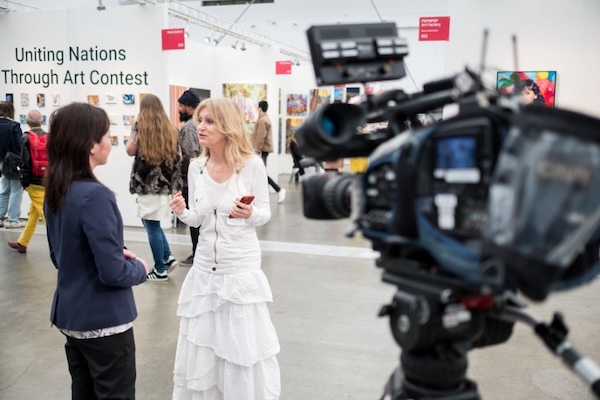
Lisa Wolfin, executive director and founder of Art Vancouver International Art Fair, which is at the Vancouver Convention Centre East April 11-14. (photo from Art Vancouver)

“Art serves as a vital anchor amidst the chaos of the world, both as a creator and a viewer,” said Lisa Wolfin, executive director and founder of Art Vancouver International Art Fair, which returns to the Vancouver Convention Centre East April 11-14.

“As a creator, it offers a therapeutic outlet to process complex emotions, providing a medium through which to express, reflect and make sense of the turbulence surrounding us,” she told the Independent, saying that, no matter the form of artistic expression, she finds solace in the act of creation, in addition to beauty and meaning.

“As a viewer,” she said, “art serves as a sanctuary, offering moments of escape and contemplation. It provides a lens through which to interpret and understand the world, offering insights, perspectives and opportunities for introspection. In both roles, art becomes a source of comfort, inspiration and resilience, offering a sense of connection and grounding amidst the uncertainty of our times.”

Wolfin and her daughters, Taisha Teal and Sky Lilah, who are also part of the Art Vancouver team, are among the Jewish community members participating in the annual art fair that drew more than 11,000 attendees last year. This April’s event is the eighth edition of the exhibit, which includes workshops, live demonstrations, a range of conversations, and is an opportunity for creatives to network and collaborate.

Wolfin is most looking forward to the sense of community and connection that Art Vancouver brings. “I’m eager to be a part of that vibrant atmosphere once again,” she said.

photo - Taisha Teal
Taisha Teal (photo from Art Vancouver)

Teal echoes that sentiment.

“I’m particularly excited about showcasing my art to a diverse audience of art enthusiasts and collectors,” said Teal. “Connecting with fellow artists, sharing insights and drawing inspiration from their work is another aspect I’m looking forward to. This event also provides a unique opportunity to engage with artists and galleries from around the world…. Moreover, I’m eager to receive feedback from attendees and potential buyers, which will contribute to my growth as an artist and refine my artistic practice.”

Lilah is looking forward to two main things: what she will create for the exhibit – “it is always a surprise,” she said – and, she shared, “Additionally, there’s immense enthusiasm surrounding hosting the opening night! Welcoming everyone to Art Vancouver is a true privilege, and having a significant role at the show is an honour.”

Art Vancouver, which was established in 2015, has been held annually, with the exception of the first two years of COVID.

“During the pandemic, I dedicated time to exploring new artistic styles,” said Teal. “Over the past couple of years, I’ve blended several styles together, continually evolving my approach. For instance, my ‘sparkle ladies’ series has undergone transformations with each passing year, featuring diverse female figures and introducing abstract faces. I particularly enjoy experimenting with abstract shapes and colours, and my upcoming collection will focus on incorporating textured elements using molding paste and various tools.”

photo - Sky Lilah
Sky Lilah (photo from Art Vancouver)

Following the pandemic, Lilah curated her inaugural solo art exhibition, unveiling a series of abstracts for the first time. “Instead of merely attempting to depict something, I sought to channel the divine through my creative process, crafting unique works of art that had never been realized before – pieces that were distinctly mine,” she said.

“Over the years, I’ve persisted in exploring abstract styles, seamlessly blending them with my previous series,” she added. “I’m currently amalgamating elements from several series, combining the favourite aspects of each into a cohesive whole. While I continually experiment with new styles, I often layer them upon the foundations of styles with which I am familiar – an ongoing ebb and flow of artistic exploration.”

Wolfin, too, has spent time developing and refining her existing style and techniques, while venturing into different areas. “This has allowed me to push the boundaries of my creativity and explore new avenues of expression,” she said, noting that her work is inspired by many sources, “including nature, emotions, personal experiences.”

“I find inspiration in the beauty of the natural world, the complexities of human emotions and the stories of people and cultures,” said Wolfin. “Each of these influences shapes my creative process and fuels my desire to express myself through art.”

Teal also has a deep love for nature – “Whether it’s the patterns in a leaf, the colours of a sunset or the textures of a rock formation, nature constantly offers fresh ideas and motifs that find their way into my artwork” – and points to multiple sources of creativity.

“Firstly, the diverse cultures, landscapes and experiences I encounter during my travels serve as a constant wellspring of inspiration,” said Teal. “Each new destination offers unique perspectives, colours, textures and stories that influence my artistic vision.

“Secondly, connecting with other artists allows me to exchange ideas, techniques and perspectives, fueling my creativity and pushing me to explore new artistic territories. Collaboration and dialogue with fellow creatives foster a sense of community and shared creativity that invigorates my artistic practice.”
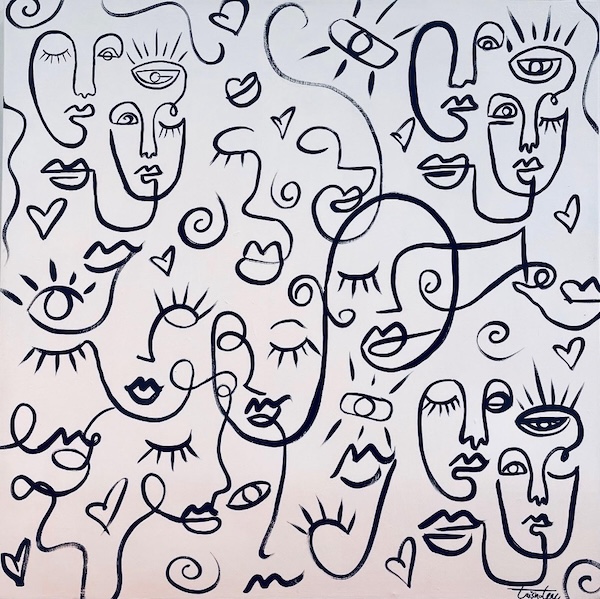
image - “A Thousand Expressions” by Taisha Teal
“A Thousand Expressions” by Taisha Teal.

Teal added that her “passion for experimentation with new materials adds another dimension.”

“Exploring unconventional materials and techniques challenges me to think outside the box and pushes the boundaries of my artistic expression,” she said.

“Art serves as a profound means of expression for me,” said Teal. “As a creator, it allows me to channel my emotions and immerse myself completely in the process. I infuse my art with love and happiness, aiming to evoke those feelings in my viewers. In a world filled with chaos, art becomes my sanctuary, a place where I find solace and peace. My intention as an artist is to spark positive emotions and inspire others with each brushstroke, inviting viewers to explore their own creativity and embrace the beauty within themselves.”

For Lilah, art embodies her very existence. “I’ve never known a life without it,” she said. “It serves as a means of creative expression, a harmonizing force for the diverse aspects of my personality and an invitation to embrace play, structure, freedom, love and acceptance.
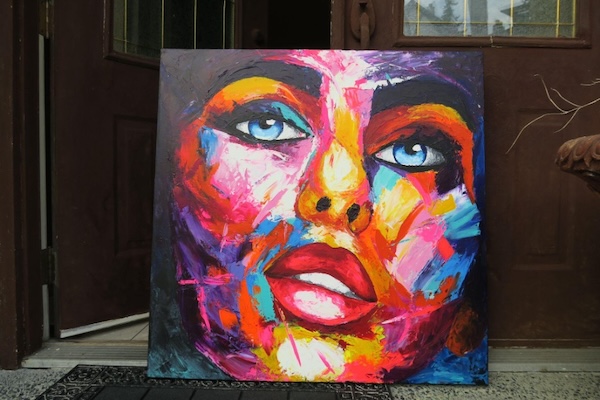
image - a portrait by Sky Lilah
A portrait by Sky Lilah. (photo from Art Vancouver)

“Through art, I learn valuable skills and life lessons, such as time management (as artistic endeavours require dedication), self-love (recognizing that my efforts are ‘good enough’) and the importance of experimentation. It teaches me that we don’t know the result before it happens, and that you have to start in order to get to the end. For my work, I rarely know what I’m going to paint before I start painting, I discover it on the canvas, and that is a life lesson for my role in business as well – when hosting a new event, I won’t have all the answers before. I simply just need to start.”

Transformations in her life and the “opportunity to explore diverse cultures, languages and symbols sparks a fire of creativity,” Lilah said, adding that she tries, in her art, to “communicate a message that embodies inner strength, love, exploration, confidence, authenticity and kindness,” creating works “in an abstract, pop art manner to challenge mainstream thinking.” 

Art Vancouver opens April 11, 7 p.m., and runs April 12, 1-9 p.m.; April 13, noon-9 p.m.; and April 14, 11 a.m.-5 p.m. For tickets and more information, visit artvancouver.net. 
Sasha Velour speaks April 18

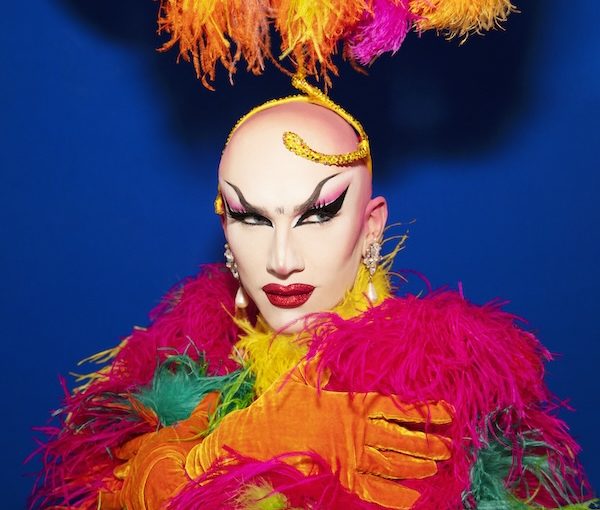
Jewish drag queen, visual artist, speaker, illustrator and author Sasha Velour. (photo from UBC)

The 2024 Phil Lind Initiative speaker series concludes on April 18 with Jewish drag queen, visual artist, speaker, illustrator and author Sasha Velour, winner of the ninth season of RuPaul’s Drag Race and a co-host of the current season of HBO’s We’re Here. Velour will give a talk titled The Big Reveal: Why Drag Matters. Exploring the intersections of pop politics and pop culture, she will delve into the roots of drag, its historical significance in queer culture and its evolution into a politically charged art form. “Drag embodies the queer possibility that exists within each of us, the infinite ways in which gender, good taste and art can be lived,” she said.

The Phil Lind Initiative is hosted by the School of Public Policy and Global Affairs in the faculty of arts at the University of British Columbia. The initiative’s mandate is to invite prominent US scholars, writers and intellectuals to UBC to share ideas on some of the most urgent issues of our time.

Velour’s talk takes place April 18, 6 p.m., at the Chan Centre for the Performing Arts. Tickets are free (maximum two per order), but registration is required. Audience members can attend in person or watch online via livestream. You do not need a ticket but you do need to sign up for the Phil Lind Initiative email list. For full details, go to lindinitiative.ubc.ca.

– Courtesy University of British Columbia

The art of creating ketubot

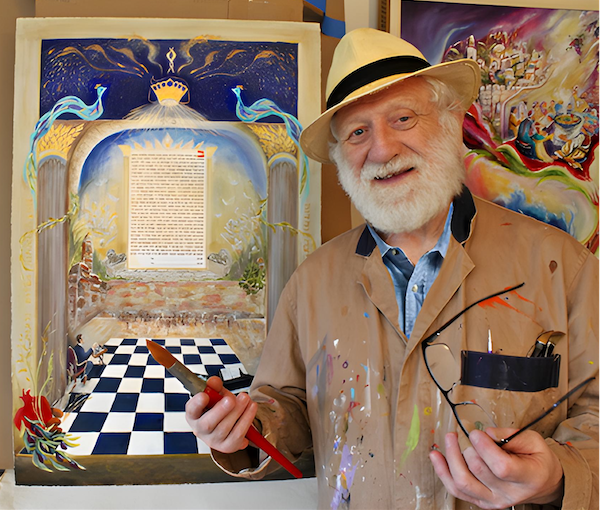
Mordechai Edel beside the personalized ketubah he created for A.J. and Olena Steigman; A.J. is a chess champion and Olena is a classical pianist. (photo from Mordechai Edel)

Vancouver artist Mordechai Edel is one of a handful of people in Canada who make ketubot (singular: ketubah), the standard contract for traditional Jewish marriages, which have been used for millennia.

“I was trained as an impressionist artist, from which I developed the philosophic concept of ‘impression-mystic’ art,” Edel told the Independent. “Hopefully, this contributes in a small way to ‘marrying’ wedding contracts with art and harmonizing the opposites of heaven and earth, chiaroscuro [the use of strong contrasts of dark and light], fire and water.”

While the central theme of a ketubah is constant – an obligation on the part of the groom to provide for his bride – their designs can vary immensely, and each one designed by Edel tells, in its way, a separate story. He has been creating ketubot for 40 years.

“I often incorporate a stylized menorah symbol, which reflects the potential marriage of all humanity uniting together under G-d’s joyous chuppah canopy of shalom [peace and wholeness],” he said.

A kosher ketubah requires precision and documentation, especially regarding Hebrew names, marriage location and dates. Ketubot are usually written in Aramaic, in calligraphic style, and halachic (Jewish legal) requirements allow little room for embellishment. 

“Not much fun there,” said Edel of the creative possibilities. “However, ‘the fun’ may begin with the surrounding artwork. That’s when personal requests start to kick in. I am often requested to incorporate ‘painted stories,’ illustrating romantic memories of how a couple first met.”

In the past several years, Edel has received numerous ketubah requests from local rabbis, including a “standard house model” developed with Rabbi Andrew Rosenblatt of Congregation Schara Tzedeck.

“Occasionally, some people do still enjoy elaborate weddings, which tend to generate requests for more personalized, sometimes eccentric artwork,” said Edel.

Depending on the couple’s budget, the creative detail of a personalized ketubah can vary substantially, from minimal artwork to the most elaborate designs, he said.

Edel can take several weeks to paint a personalized ketubah, although sometimes it can “just click” and he can finish one in two to three weeks. Ideally, couples planning on getting married would contact him as soon as possible, to give him as much time as possible.

Often, he said, the biggest challenge is to receive accurate place, name, date and time information. Sephardi ketubot do not permit any erasures, whereas Ashkenazi halachah (Jewish law) allows changes before the contract is signed and validated by two kosher witnesses, he explained.

Edel shared an experience that happened during a Sephardi wedding in the mid-2000s. He had painted a calla lily ketubah for a couple that had met in Acapulco, replete with a romantic sunset and a ship setting sail for Jerusalem in the background.

“Guess what? The night before the marriage, the rabbi checked the ketubah and there was one letter, ‘vov,’ missing in the Hebrew spelling of Vancouver. I was told it was invalid, it could not be rectified and was void,” Edel recalled. 

The solution, Edel found, was to physically cut out the contract part, leaving the surrounding artwork, forming a window. He then spent the entire night rewriting the document, which he then inserted, forming a two-part ketubah.

“This negative-into-positive transformation has become a trademark blessing that I now incorporate into all commissioned ketubot,” said Edel. “And, in case of a last-minute error or wine spill, all ketubot come with a duplicate backup document.”

Along the way, Edel has received some unique ketubah requests. One couple, who had encountered a skunk on their first date in Stanley Park, asked that the scene be recreated in the marriage contract. 

“I had difficulty finding a stinky model who would sit still,” Edel recalled. “That turned out to be a most scentimental ketubah.”

Another couple commissioned a grandiose, oil-on-canvas ketubah to fit over their fireplace. At the wedding ceremony, the three-foot-by-five-foot ketubah was carried into the sanctuary. The audience stood up and, according to Edel, let out an enormous communal “wow!”

Some of the more exceptional commissions Edel has seen have come from far afield. He recently completed a request that arrived “out of nowhere” from American businessman and professional chess player A.J. Steigman and his bride Olena, a classical pianist. They got married at the Western Wall (Kotel) in Israel and the ketubah features the groom (chatan) playing chess on a Vermeer-style chessboard with the bride (kalla) playing a Shostakovich concerto, all in the foreground of the Kotel.

Edel has also refurbished ketubot. In one instance, he was commissioned by the son-in-law of longstanding Schara Tzedeck members to “enhance” their original 1948 marriage certificate for their 50th anniversary. He created a ketubah “with memories of leaving the shtetl in sepia tones, transported into modern times via heaven’s kohanic [priestly] blessings, and embellished with a gorgeous bouquet of their favourite, fragrant rose flowers.”

One of Edel’s ketubot, “Le Picnique,” began as a painting commissioned by the late Joe and Rosalie Segal to be viewed by residents and staff at the Louis Brier Home and Hospital. “It later developed into a ketubah as a joyous tribute to this wonderful, caring couple,” said Edel.

Edel is grateful for the many blessings he has received in life, and gives special thanks to his wife, Annie, who helps design the ketubot.

“It is humbly interesting to note that the surname Edel means fine and noble, whereas a play on words of Mordechai suggests the French amour de chai or love of life,” Edel said. “It is this joyous love of life partnership that characterizes our ketubot and relationship between G-d, bride and groom and artist.”

For more information about Edel’s art and his ketubot, visit edelartworks.com. 

Sam Margolis has written for the Globe and Mail, the National Post, UPI and MSNBC.

Taking on care homes – Stolen Time screens in March 21

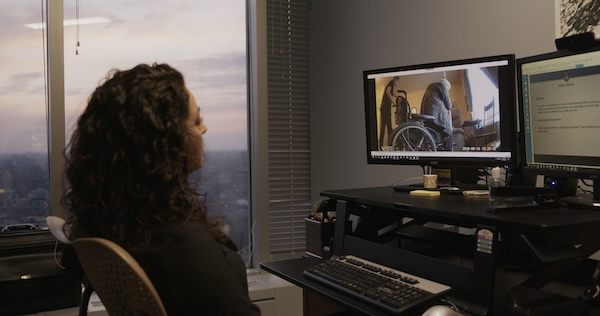
A still from the film Stolen Time: lawyer Melissa Miller reviews footage from a long-term-care room camera. (photo from National Film Board of Canada)

“I’m only at the beginning of this fight,” says lawyer Melissa Miller in the documentary Stolen Time, written and directed by Jewish community member Helene Klodawsky. Miller, of Toronto firm Howie, Sacks & Henry LLP, is lead counsel in mass tort claims against for-profit long-term-care corporations Extendicare, Revera Inc. and Sienna Senior Living.

Stolen Time will screen in Vancouver March 21 at VIFF Centre – Vancity Theatre, as part of a national release that includes Edmonton, Toronto and Montreal. The film is a joint production of Intuitive Pictures Inc. (with Jewish community member Ina Fichman at the helm) and the National Film Board of Canada (Ariel Nasr, producer).

To give readers an idea of what Miller is up against, there is a scene in the film where the private investigator she has hired, Brett Rigby, shares some financial data. According to Rigby’s documents, Extendicare had a revenue of $1.1 billion in 2019, $91 million in earnings and $42 million cash dividends declared – “and they’re locking up incontinence pads,” remarks Miller.

The film notes that “a few hundred family clients have grievances against these companies,” the most common complaints being serious dehydration, malnutrition, injuries and misdiagnoses. The homes apparently meet the requirements for staffing, but at least one person is off at any given time, so they are consistently understaffed. There seems to be no regulatory oversight, while the companies bring in record profits, the film contends.

Miller has been suing for-profit nursing home corporations in Canada and elsewhere for negligence since 2018, both in mass tort (class action) claims and independent cases against various facilities, one of which is featured in the documentary.

Video clips of residents experiencing abuse juxtaposed with family videos of the long-term-care residents when they were healthy allow viewers to see the people more fully and the depth of the injustices more clearly. Miller contends that it isn’t the staff who are to blame, generally, but rather that the staff aren’t given adequate resources by the companies, who could afford to do something but don’t. 

A complicating factor in effecting change is that, for example, Revera is owned by a Canadian Crown corporation, ie. the federal government, notes the film. As COVID ravaged nursing homes in 2020, with thousands of residents dying, “governments across North America pass[ed] legislation to protect them from lawsuits.”

“Today, nursing home chains around the world have become sites for wealth extraction by investors and shareholders,” writes Klodawsky in her director’s statement. “At its core, such financialization of care ties frail elders to overworked, racialized and predominantly female staff. When public pension fund managers, private equity and real estate companies help set the rules, compassion and dignity fall by the wayside. Nonetheless, rapidly expanding populations of the frail elderly, combined with shrinking numbers of family caregivers, ensure a steady stream of residents.”

People interviewed in Stolen Time include Dr. Pat Armstrong, a sociologist and professor at York University; Lisa Alleyne, a personal support worker who has worked in for-profit nursing homes (she is also an artist and her illustrations of what some long-term-home residents face are powerful); Rai Reece, who writes and teaches on anti-Black racism; Jackie Brown, who researches how publicly traded companies make money for investors; Jason Ward, who investigates how public pension funds are invested in for-profit nursing homes globally; Katha Fortier, who has been fighting for the rights of care workers for decades; Ayesha Jabbar, a former social worker who became a union rep; and members of a couple of the families Miller is representing.

Stolen Time is an engaging film that raises a lot of important questions about how nursing homes are run. It is unfortunate that it doesn’t include any interviews or statements from company representatives or government officials.

The post-screening panel discussion in Vancouver will feature Sara Pon, staff lawyer and researcher at Seniors First BC, and co-chair of the BC Adult Abuse and Neglect Prevention Collaborative; Bruce Devereux, a recreation therapist with three-plus decades of experience in the not-for-profit aging care sector; and Julia Henderson, assistant professor in the department of occupational science and occupational therapy at the University of British Columbia, and chair of the North American Network in Aging Studies.

More information about the March 21 event and other screenings of the documentary at VIFF Centre will be posted at viff.org. A ticket link will also be posted at events.nfb.ca/events/vancouver-theatrical-special-panel-on-march-21. 

Art helps bring us together

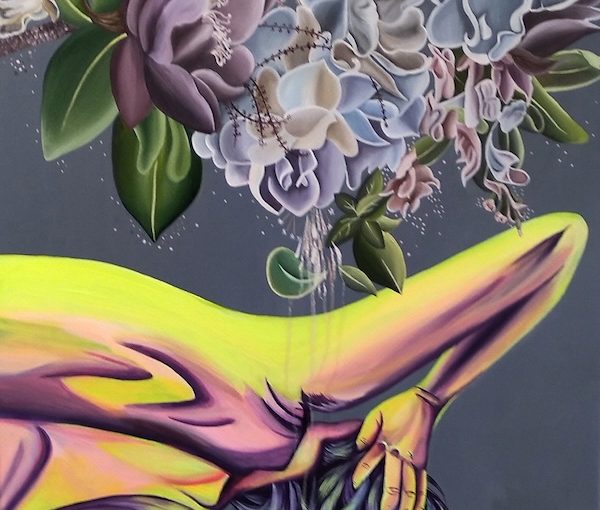
The current show at the Zack Gallery, Community Longing and Belonging, brings together a range of artists and styles. Pictured here is Alejandra Morales’s “A Landscape of Consumable Dreams.” (photo by Olga Livshin)

The current show at the Zack Gallery, Community Longing and Belonging, which opened Feb. 21, is the sixth annual exhibition in celebration of Jewish Disability Awareness and Inclusion Month. 

The exhibit was organized by the Jewish Community Centre of Greater Vancouver’s Inclusion Services and curated by Shelly Bordensky, the program’s coordinator. Most participating artists are either members of the JCC program or similar ones in other localities, like Aspire Richmond. These initiatives support people with developmental disabilities through various creative endeavours. 

The Zack show’s creative displays consist of paintings and pottery. While the size, media, colour palettes and framing of the works are all different, the underlying theme is the same: we all want to belong, we are all together on this planet.

Two paintings reflect that theme not only in their content and method of execution, but in their titles as well: “All Together 1” and “All Together 2.” Both works are cheerful and colourful, rendered with the abandon of the primitivism style. Cats and birds frolic on the canvas without regard for one another or for rules of perspective. Both list the artist as Art Hive, the visual art division of JCC Inclusion Services.

Bordensky told the Independent that both paintings were group pieces, created by several people. “Each artist added an element – a cat or a bird – and our wonderful art instructor, Kim Almond, made sure they all matched in style and colours.”  

According to Almond, 13 artists, all members of Art Hive, participated in each painting.

“Mark Li and Andrew Jackson started off the two collaborative paintings for the group, and it was a great project to work on as a class,” she said. “Colours were a huge part of the process, as the artists were always striving to create that special pop of colour.”

Another example of group art is the pottery creations – playful little animals, solemn hamsas (hands) and juicy pomegranates – crowding several stands around the gallery. 

“These ceramic pieces are all Raku ceramics by the pottery artists who are members of our Art Hive,” said Bordensky. “Together, we can create so much.”

Individual artists’ paintings are also on the theme of community.

Alex Lecce’s untitled piece is a slice of a neighbourhood street with a pie shop. The colours are realistic, and the image captures a quiet, everyday moment. We all go there, the artist seems to say. Those pies make our lives happier and more flavourful. They unite us in our humanity. 

On the other hand, Alejandra Morales’s painting, “A Landscape of Consumable Dreams,” is jarring in both the colour palette and the structure. This painting screams of discord. There are two disparate parts in the image. The top part is a tangled bunch of flowers, all in beautiful, greyish lilac hues, intertwined and elaborate. The bottom part is a vague human figure bowing to the pretty flowers. The colours of the figure are harsh, grating; they don’t fit with the flowers. But the figure obviously wants to fit, just as we all want to fit in with our surroundings. The complexity of the juxtaposition of humans versus nature is unmistakable.

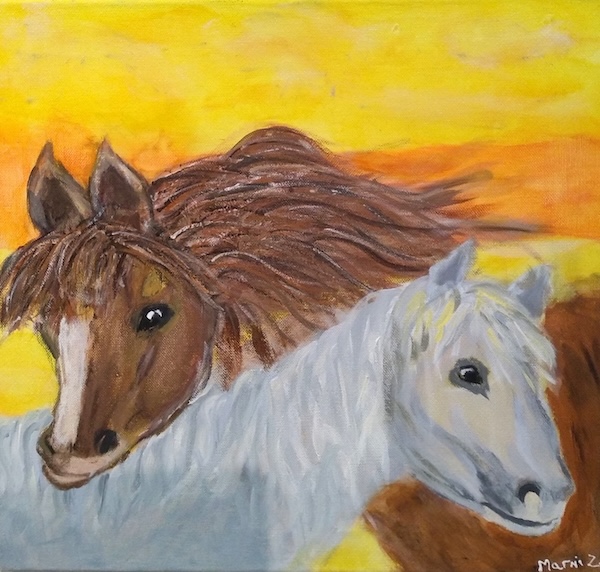
Other paintings are not as complicated. Mami Zimmerman’s “Best Friends” features two ponies. Its simplicity is charming and lovely. We all want such friends. 

image - Mami Zimmerman’s “Best Friends”
Mami Zimmerman’s “Best Friends” (photo by Olga Livshin)

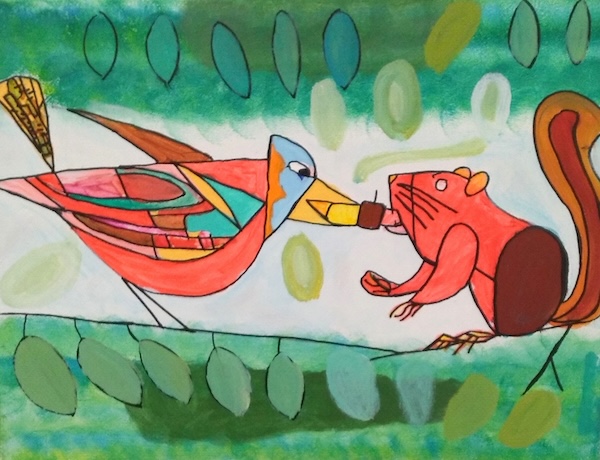
Calvin Ho’s painting “Nuts” is another example of primitivism in the show. The bright depiction of a squirrel and a woodpecker is reminiscent of picture books from our childhood. Bold lines and primary colours underscore that feeling. The two creatures are playing tug with a nut. Or maybe they are sharing it. Or fighting over it. The innocence of the picture invariably induces a smile.

image - Calvin Ho’s “Nuts”
Calvin Ho’s “Nuts” (photo by Olga Livshin)

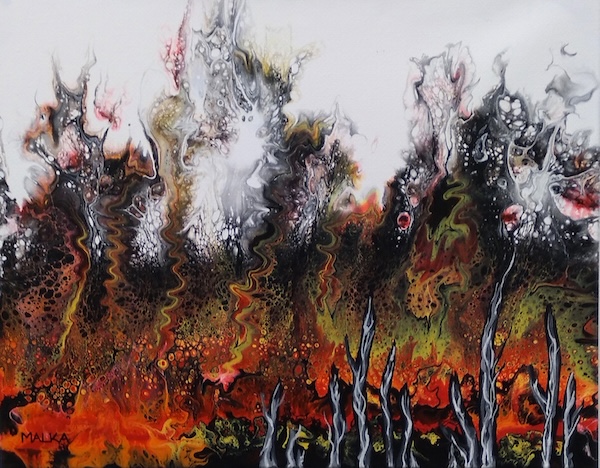
In contrast, Merle Linde’s powerful landscape – “BC Wildfire 2023” – doesn’t invite smiles. The painting, its red and black scheme grim and scary, reminds us of the horror of the wildfires that affect our forests every year. The tragedy implied in the painting unites us, just as the sweeter emotions in other images do. 

In a telephone interview with the Independent, Linde said: “I’ve always enjoyed art, from the day I could hold a pencil. I liked going to art shows, too.” Mostly self-taught as an artist, she said she only started painting seriously after she retired. 

Judaica is one of the directions she explores in her art. To date, the Independent has used two of her paintings for its cover: for the 2023 Passover issue and for the 2022 Rosh Hashanah issue. Occasionally, she teaches classes for seniors in various artistic techniques.

Merle Linde’s “BC Wildfire 2023” (photo by Olga Livshin)

“Acrylic pour is a fascinating technique,” she said. “You pour the paint and let it spread as it will without a brush, and then wait till it dries. That was what I did for the background of the ‘Wildfire’ painting. I made it a few years ago. When I saw the news about the wildfires last summer, I picked up a brush and painted the black burned-out tree skeletons on top. I have two such paintings, but there was only space for one in the Zack show.”  

Most of the paintings in the show express themselves at first view. However, Gail Rudin’s “Out for the Hunt” raises questions. It portrays four seemingly perky owls on a merry, greenish background. One could assume a light-hearted company of friends on an outing, until one notices a line of tiny mice scurrying away in terror in the very bottom of the picture. Suddenly, the entire image changes its meaning, illustrating the unavoidable conflicts within nature, where the hunters and the hunted coexist. Despite the constant danger of the wild, nature somehow always finds its balance. Maybe, as humans, we could take lessons from that.     

Community Longing and Belonging is on display at the Zack Gallery until April 2. 

Olga Livshin is a Vancouver freelance writer. She can be reached at olgagodim@gmail.com.

History, family & love – Vancouver Jewish Film festival starts April 14

 A Radiant Girl (still from film)

As the Vancouver Jewish Film Festival approaches, the Jewish Independent reviews three more of the festival’s offerings: A Radiant Girl, All About the Levkovitches and One More Story.

Linking past to present?

In A Radiant Girl, 19-year-old Irene (Rebecca Marder) is an actress whose incessant theatrics get on her family’s nerves but the enthusiasm for performing that she and her diverse group of drama student friends exhibit provides a convenient distraction to the events going on around her in 1942 Paris.

A succession of Nazi policies add up, one after another, from the “Juive” stamped in red on her identity papers to the expropriation of Jewish people’s bicycles, radios and telephones, but Irene and her friends continue their thespian activities, mostly oblivious to larger events. The viewer, of course, knows that more ominous things await but the ending is both dramatic and subtly understated.

Costuming and hairstyles in the film do not always clearly situate the timeframe of events, especially early on, and a viewer beginning the film without any background might not be certain if it is set in contemporary times or another era. As the movie progresses, automobiles and more clearly discernible 1940s clothing styles make the era more specific. But is the filmmaker sending a message about the timelessness of vigilance against the slow drip of authoritarian actions that can lead to totalitarianism and catastrophe?

Shadow boxing

image - All About the Levkovitches (still from film)
All About the Levkovitches (still from film)

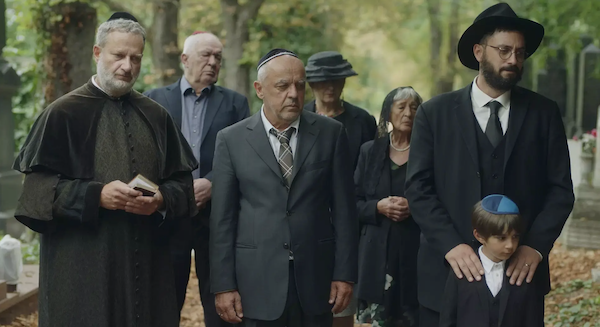
A family drama is at the heart of All About the Levkovitches, in which Tamás, an aging boxing coach in Hungary (Bezerédi Zoltán) is forced to confront his estranged son Iván (Tamás Szabó Kimmel) who, recently religious, returns from Israel for his mother’s shiva, hauling along his young son.

The decidedly unobservant father/widower has no interest in following traditional Jewish mourning rituals. “What’s a minyan?” asks one of his friends as he explains what is happening at home. “A bunch of Jews in my house,” he replies. (“When my mother died, we just drank,” the friend says.) The arrival of the local Jews to pray with the grieving son while the father goes about his business in an undershirt is a priceless vignette of worldviews colliding.

The father, who doesn’t know any Hebrew, and his grandson, who may or may not understand Hungarian, eventually find a common language. So, too, do the estranged father and son, through much fighting, boxing, arguing and wrestling demons. 

The grandfather’s disastrous attempt to assemble a Scandinavian do-it-yourself wall unit as his own ritual tribute to his late wife is a metaphor for his fumbling way of dealing with crisis, a project that is (somewhat predictably) resolved when the handy ba’al teshuvah son finally relents to helping, resolving not just the bookshelf problem but the larger issue of how things fit together.

It is a darkly hilarious and often emotionally moving drama.

Live, laugh, love

image - One More Story (still from film)
One More Story (still from film)

In One More Story, Yarden (played by Dina Sanderson) is a 20-something journalist at Israel’s largest-circulation newspaper and needs an attention-grabbing human interest series. She goes to that old standby, modern dating, and sets up doofus Adam on a series of disastrous dates, aiming for the print media version of the reality TV dating genre.

She recounts the foibles of Adam’s love life – with flashbacks to cringe-inducing interactions between the hapless Adam and a stream of mismatched potential romantic interests – while herself on a first date (with the film’s director Guri Alfi, playing the bad first date foil for Yarden’s storytelling).

The bad dates within a bad date motif provides a canvas for a variety show-style packed script of hilariously calamitous meetups. But Adam goes off script when love at first sight hits him out of the blue – literally – which does not coincide with Yarden’s journalistic requirements.

There is nothing particularly innovative in the romantic comedy department, but the witty writing and vivacious acting, plus a veritable bombardment of sight gags and more subtle facial expressions, make the film a laugh riot and a delight. 

Watch vjff.org for the full lineup and tickets for the Vancouver Jewish Film Festival, which runs April 4-14 in theatre and April 15-19 online.

Drama & more at film fest

Yoav Brill’s documentary Apples and Oranges, about a moment in the history of the kibbutz movement, is mesmerizing. (photo by Avraham Eilat)

The 2024 Vancouver Jewish Film Festival takes place in person April 4-14 and online April 15-19. As usual, a diversity of offerings is included in this year’s festival and the Independent will review several films in this and upcoming issues. The Vancouver Jewish Film Centre also sponsors events throughout the year and some screenings take place before the annual festival begins. Full festival details will be online at vjff.org as April approaches.

Idealism remembered

Amid the euphoric aftermath of the 1967 war and the enduring popularity of the 1958 Leon Uris book Exodus (and its 1960 film incarnation), thousands of Jews and non-Jews descended on Israel to volunteer on kibbutzim.

They came to experience and emulate “the embodiment of man’s highest ideals – the kibbutznik,” as an apparently promotional film clip declares in Yoav Brill’s mesmerizing documentary Apples and Oranges. In just one particular spurt, 7,000 volunteers arrived in Israel en masse from around the world.

Through the recollections of aging Scandinavians, Brits, South Africans and others, and with nostalgia-inducing archival footage, the documentary shines a light on the socialist idealism and hippie adventurism that motivated these people to travel to the farming communities of rural Israel. Many returned, to Sweden, Denmark, wherever, and formed associations to support the kibbutzim and drum up more volunteers. So successful were they that the supply exceeded the demand. One group chartered a jumbo jet to go from Stockholm to Tel Aviv but the Israelis had to admit they had no use for 340 volunteers.

Generally, the spirit of the overseas visitors was welcomed, though the social impacts were not negligible. The temporary nature of their visits was disrupting. A middle-aged man reflects on his perspective as a kid on a kibbutz, welcoming all the strangers who became like big brothers and sisters, only to have his heart broken every time the groups departed from what he calls “the kibbutz fantasy.”

Strangers from another world – blond, exotic, sophisticated and drinking milk with their meals – descended on a cloistered society where all the teens had been together since kindergarten, introducing predictable social and hormonal disruptions. For their parts, many of the volunteers soon discovered they had no aptitude for the tasks to which they were set, although at least one Brit made use of his talents performing Shakespeare for an audience of cattle.

Many of the overseas youngsters were unabashedly out for sex, drugs and rock ’n’ roll. As one woman interviewed in the documentary says, “If there weren’t female volunteers at [Kibbutz] Mishmar HaSharon, many of our boys would still be virgins.”

In one incident that apparently caused national outrage, a group distributed hashish-laden brownies to an entire community, including at least one 8-year-old child, a crime that is not the least bit funny – but, of course, is hilarious when recounted by octogenarians who experienced it. 

With their Cat Stevens and Bob Dylan LPs, the foreigners brought a little bit of Woodstock with them, and took away some Israeli dance routines. But the adventure, as the viewer knows more than do the figures in the old footage, would not end well. Terrorism, including a highly publicized attack in which a volunteer was murdered, would strangle the flow of future volunteers.

The documentary is a masterpiece of the genre, capturing the joy and exuberance of the experience for both Israelis and the visitors, but addressing the serious problems the interactions raised. The clash of cultures introduced existential issues, including around conversion, mixed marriages, secularization and, of course, the collapse of the traditional kibbutz. 

The apples and oranges of the title, we are to understand, are the people who came together on the kibbutzim, as much as the produce they harvested.

Critics of the volunteer phenomenon seem to place some of the blame for the collapse of the kibbutz system on the labour underclass they represented, which undermined the egalitarian foundations of the movement.

The kibbutz network has largely petered out, almost entirely in spirit if not completely in form, and some of the Jews and non-Jews who came during the heyday have remained and integrated to varying degrees in the society that Israel has become. In one instance, an aging, bearded former volunteer actualizes his idealism by leading a ukulele orchestra.

The collapse of the idealistic experiment that the end of the film documents is expected but no less depressing for that. The slice of history and the magnificence of the story, so vividly told in the film, will stay with the viewer.

Transcendence of song

photo - In Less than Kosher, the real star is the voice of Shaina Silver-Baird as Viv, an atheist turned cantor
In Less than Kosher, the real star is the voice of Shaina Silver-Baird as Viv, an atheist turned cantor. (photo from Menemsha Films)

In Less than Kosher, a number of fairly two-dimensional character sketches come together – but with a redeeming twist.

A feature film that began its life as serialized online videos has the feel of excellent amateurism. Wayward Jewish girl meets rabbi’s bad boy son. Overbearing Jewish mother, well-intentioned buffoonish rabbi, go-along-to-get-along intermarried stepdad and hyper-chatty high school friend flesh out the cast.

Sitcom-like circumstances turn the atheist young woman into unlikely cantor. But the outstanding component of the film, the real star, is the voice of Shaina Silver-Baird, the lead actor and co-producer (with Michael Goldlist) of this cute confection.

The unlikely cantor Viv, whose once-promising pop music career is on the skids, has the voice of an angel and the story is less about her family or her romance with the (married) rabbi’s son than about the transcendent power of song. When she opens her lungs, Viv ushers in a changed world – and Silver-Baird’s voice invites the viewer into it. Music video-style segments, which Viv is dismayed to have dubbed “Judeopop,” raise the film to a different level. Liturgical music goes Broadway. Amy Winehouse does “Shalom Aleichem.”

A tiki-themed shiva is truly the icing on the sheet cake. 

Mysterious case

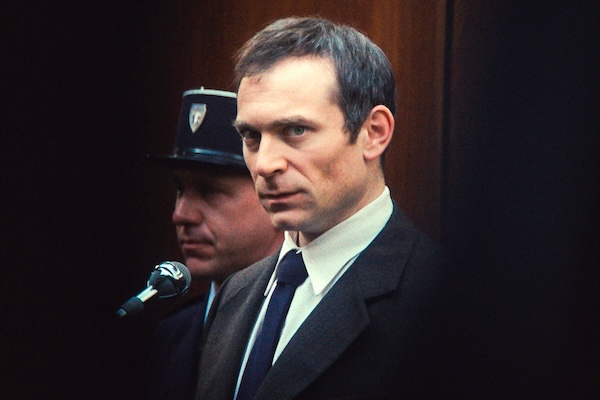
photo - The Goldman Case is a dramatic reenactment of the case of Pierre Goldman
The Goldman Case is a dramatic reenactment of the case of Pierre Goldman. (photo from Menemsha Films)

He was guilty of much, but was he guilty of murder? Pierre Goldman maintained he was innocent of the latter charges and a based-on-a-true-story film explores not only a man’s possible guilt but the intergenerational impacts of Polish-French Jewish life in the mid-20th century and their potential explanations for some unusual behaviours.

The Goldman Case is a dramatic reenactment of a famous (in France, at least) case of the Jewish son of Polish resistance heroes, whose own life was impacted by an apparent need to fill the giant shoes of his parents. The son wanted to be “a Jewish warrior” and so became a communist revolutionary, traveling to Latin America, Prague and elsewhere in search of opportunities for valour. 

Charged with a series of crimes, including the murder during a holdup of two pharmacists, Goldman was convicted in 1974 and sentenced to life imprisonment, though he maintained he was innocent in the two deaths. Following the 1975 publication of his memoirs, the judicial system reconsidered his case and major French voices, including Jean-Paul Sartre, took up his cause. This film is a (massively condensed) court procedural of that retrial.

Goldman’s Jewishness was not on trial but, interestingly, his defence team built their case partly around his family’s experiences.

The case – and the film – end with a new verdict. But the dramatic story would continue. Audiences will no doubt race to Google more about Goldman and his crimes and punishments. Enduring mysteries, though, will make the search necessarily unsatisfying. This cannot be said of the film, though, which is a gripping enactment, enlivened by the extremely animated courtroom drama, which suggests the French judicial system tolerates a great deal more outbursts than we expect in Hollywood depictions of North American judicial proceedings. 

The choice to convert

Adam is one of the potential converts interviewed in the documentary Converts: The Journey of Becoming Jewish, directed by Rebecca Shore and Oren Rosenfeld, which is part of this year’s Vancouver Jewish Film Festival. (photo from convertsmovie.com)

A religion that encourages questions, one in which people can speak directly with God. A religion that’s thousands of years old, which so many have attempted to wipe out, yet still flourishes. A religion that’s intellectual and communal, which involves both the head and the heart.

photo - Dana
Danya (photo from convertsmovie.com)

These are just some of the aspects of Judaism highlighted in Converts: The Journey of Becoming Jewish, directed by Rebecca Shore and Oren Rosenfeld. The 70-minute documentary is part of this year’s Vancouver Jewish Film Festival, which runs April 4-14 in theatres and April 15-19 online.

Converts follows Adam, Danya and Bianka as they go through the conversion process. Each have their own reasons for wanting to become Jewish.

Adam, a student at York University when we meet him, grew up in a violence-filled neighbourhood in Toronto. His father used the family’s savings – that could have gone into moving the family elsewhere – to establish a church, which failed. Adam was attracted to Judaism because, unlike the Christianity he grew up with, Judaism gave him the space to ask questions and to speak with God directly, though giving up belief in Jesus was hard, he admits.

Danya, a businesswoman from Costa Rica, found out in high school that she has Spanish-Portuguese Jewish roots, that her ancestors were forced to convert to Catholicism from Judaism centuries ago. She feels that ancestral pull and uproots her life, traveling to Israel with her daughter in the hope of converting and living there.

photo - Bianka
Bianka (photo from convertsmovie.com)

Bianka, a PhD student in chemistry at the University of Warsaw, lives in Radom, Poland. She immerses herself in a few other religions before finding comfort in what she considers Judaism’s scientific approach, but also in the warmth of the Jewish community, which she discovers by attending synagogue and holiday events.

Well-constructed and well-paced, Converts is a fascinating look at identity, family, community, religion, the search for meaning and the possibilities of change and self-actualization.

For tickets to the film festival, visit vjff.org.

JSA celebrates its 20th

Kyle Berger, left, and David Granirer headline the Jewish Seniors Alliance’s A Night in the Catskills on March 17. (photos from JSA)

The Jewish Seniors Alliance of Greater Vancouver is celebrating its 20th anniversary with an event that’s all about laughter.

A Night in the Catskills: Jewish Humour Then and Now takes place at Congregation Schara Tzedeck March 17, 6 p.m.

“Jewish humour has enabled the Jewish world to gain strength through a history that shows that we should not be in existence today, but here we are bigger, stronger and better than ever!” said Marilyn Berger, a past president of JSA, who will make her debut as a stand-up comedian at the event. “Ask Kyle,” she said, referring to one of her sons. “I have given my family plenty to laugh about.”

It is perhaps not a coincidence then that Kyle Berger preceded his mother on the standup stage, and also produces comedy shows. He and David Granirer, founder of Stand Up for Mental Health, are headliners of the 20th anniversary event, which will include a performance by magician Stephen R. Kaplan, aka the Maestro. The whole megillah will be emceed by JSA board member Michael Geller, whose involvement in JSA was inspired by his late father, Sam Geller.

“He derived a great deal of joy from regularly attending JSA events and this is one of the reasons why the organization is so special to me,” Geller told the Independent.

photo - Michael Geller emcees JSA’s A Night in the Catskills at Schara Tzedeck
Michael Geller emcees JSA’s A Night in the Catskills at Schara Tzedeck. (photo from JSA)

“This comedy night is a follow up to a similar event organized by JSA 13 years ago,” he explained. “It was initiated by a phone call from the late Serge Haber, who called to tell me that the province had just canceled JSA’s gaming grant, but he knew my father would want me to help replace the funds. I asked how much was the grant. He said it was $18,000. I told him that was too much for me, but I had an idea.

“I was a fan of the website Old Jews Telling Jokes. Since JSA served many older Jews, I offered to book a room, buy some deli, and invite 17 of my friends to join me and each put up $1,000 and we would entertain one another with our favourite Jewish jokes.”

Haber – who founded JSA – liked the idea, as did the board, but they also wanted to join, and couldn’t afford to pay $1,000 each. So, the format was changed to one where people would attend and donate what they could, said Geller. Held at Congregation Beth Israel, almost 250 showed up.

“We presented clips from Old Jews Telling Jokes and invited people in the audience to share a joke in return for a donation. Everybody agreed it was a fabulous event,” said Geller. “There was just one small problem. We didn’t raise very much money. 

“So, this year we are charging $118 dollars to attend. Some generous members of the community are coming forward and agreeing to be sponsors. This will allow other seniors in the community who can’t afford $118 to attend. It has also allowed us to hire Tim Bissett, an experienced professional event organizer to assist with the program.”

photo - Stephen R. Kaplan will perform at the 20th anniversary celebration
Stephen R. Kaplan is a special guest performer at the 20th anniversary celebration. (photo from JSA)

Expressing gratitude to the sponsors on behalf of JSA, Geller said, “we are hoping other community members will come forward, especially those who regularly share their favourite Jewish jokes on the golf course. Sponsors will be invited to participate in the program by telling a favourite joke or two, or introducing a favourite comedian or routine.”

For his part, Geller is preparing for his role as emcee by watching vintage and contemporary Jewish comedians and selecting material. “The program will also include some professional comedians who are volunteering their time, and special appearances by local rabbis who have been urged to share stories they would never tell in shul,” he said.

“I am thrilled to be celebrating our 20th anniversary and look forward to going from strength to strength as my own children now, believe it or not, become seniors!” said Berger, who shared her appreciation for the organization that Haber started.

“As I gracefully age,” she said, “I thank Serge for enabling me to spend my golden senior years embraced by the love that Seniors Alliance offers.”

“JSA undertakes many programs that benefit so many Jewish seniors, including the excellent Senior Line magazine,” said Geller. “While we are supported by many community organizations and foundations, we need additional funding. I am, therefore, hoping this evening will help promote the organization’s good work and, this time, actually raise money to allow it to continue.”

For tickets to A Night in the Catskills or to become an event sponsor, visit jsalliance.org or call 604-732-1555. 

Resistance screens here March 3

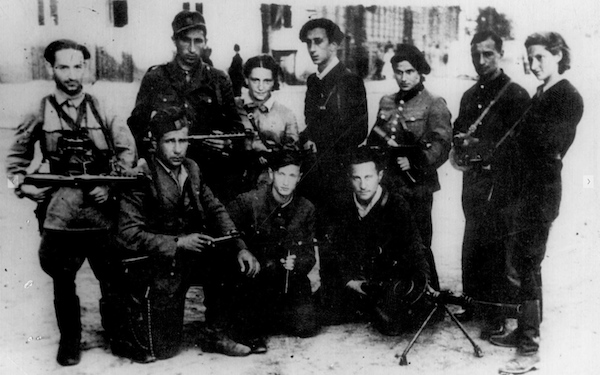
A still from the documentary Resistance: They Fought Back. (theyfoughtback.com)

Resistance: They Fought Back screens March 3, 2pm, at Rothstein Theatre. Presented by the Vancouver Jewish Film Centre, special guest at the screening will be director Paula S. Apsell.

The film’s synopsis reads: “We’ve all heard of the Warsaw Ghetto Uprising, but most people have no idea how widespread and prevalent Jewish resistance to Nazi barbarism was. Instead, it’s widely believed ‘Jews went to their deaths like sheep to the slaughter.’ Filmed in Poland, Lithuania, Latvia, Israel and the U.S., Resistance: They Fought Back provides a much-needed corrective to this myth of Jewish passivity. There were uprisings in ghettos large and small, rebellions in death camps, and thousands of Jews fought Nazis in the forests. Everywhere in Eastern Europe, Jews waged campaigns of nonviolent resistance against the Nazis.”

For tickets ($10) to the screening, visit vjff.org.

– from theyfoughtback.com