Chelsea Hotel is heavenly

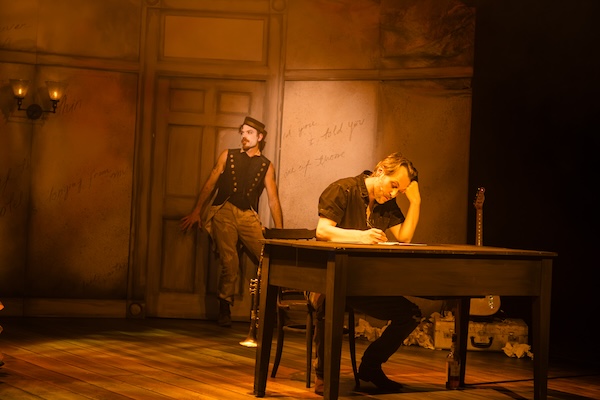
Jack Garton, playing a Jokeresque bellhop, manipulates the memories and thoughts of the Writer, played by Adrian Glynn McMorran. (Sarah Race Photography)

In Paper Thin Hotel, Leonard Cohen writes, “It is written on the walls of this hotel, you go to heaven once you’ve been to hell.” Heaven is where you will be if you catch Steve Charles and Tracey Power’s 2024 iteration of their 2012 hit Chelsea Hotel, playing at the Firehall Arts Centre until March 3.

Chelsea Hotel is a loving tribute to Cohen and his poetry, which transcends time and space while touching on enduring universal topics – passion, loss, sex, religion and politics. Although Cohen has been dead for more than seven years, his music and lyrics live on and perhaps are more relevant than ever given the troubled state of our world. 

I saw the world première of the show back in 2012 (jewishindependent.ca/oldsite/archives/feb12/archives12feb10-02.html) and did not think anything could make it better but, after a cross-country tour and 400 performances, like a fine wine, it has improved with age. Half of the original cast returns to reprise their roles and they, too, have only become better with time. Power does triple duty as she choreographs, acts and directs, while Charles is musical director/arranger and musician/actor.

The sung-through musical revolves around a tortured writer (Adrian Glynn McMorran) shuttered up in a shabby room in New York’s Chelsea Hotel trying to forget his past so that he can be creative again. The show opens with him outstretched on a bed towering with crumpled paper, a metaphor for his cluttered mind. Each time he writes something down and throws it away, we feel his existential angst as he searches for inspiration from his life’s memories. Five actors, playing multiple characters, move in and out of his various visions, reminding him of his past romantic entanglements and indiscretions through songs like “Suzanne,” “Take this Waltz,” “First We Take Manhattan,” “Tower of Song,” “Dance Me to the End of Earth,” “Bird on a Wire” and, of course, “Hallelujah.”

All the scenes play out in the Writer’s mind – illusions in a carnival-like setting guided by a Jokeresque bellhop (a terrific Jack Garton) who pops in and out of the set as he manipulates the Writer’s memories and thoughts.

This truly ensemble production is a fusion of dance, music and theatre, with the multi-talented cast of six all triple threats – each capable of singing, dancing and playing the myriad instruments used in the show, ranging from the traditional – guitar, violin, keyboards and drums – to the more unconventional – banjo, ukulele, accordion and even a kazoo (showcased in the very erotic “I’m Your Man” number).

McMorran is sensational as the Writer. His vocals run the gamut from softly crooned ballads to frenetic rock ’n’ roll numbers. Power, Marlene Ginader and Michelle Bouey play the lovers and the muses, moving through the various vignettes in dreamlike, ethereal fashion. Ginader, in her blue raincoat, is touching in her portrayal of the jilted lover trying to get back into the Writer’s heart. Hovering quietly in the shadowy background, Charles switches effortlessly from instrument to instrument, until he emerges front and centre stage to sing a poignant “Famous Blue Raincoat.”

The staging is sublime. Kudos to set and costume designer Drew Facey for his fragile, paper-like set and simple costumes. John Webber’s mood lighting completes the surreal atmosphere.

As you unwrap the layers of this performance, so ably packaged by this wonderful cast, the pleasure only increases. There is so much to like in this production – don’t miss it.

As a bonus, on Feb. 23, the theatre is holding a special event, Endless Love, toasting the legacy of Cohen, which includes pre- and post-show receptions, cast mingling and, of course, the show. Tickets can be purchased at firehallartscentre.ca or by calling the box office at 604-689-0926. 

Tova Kornfeld is a Vancouver freelance writer and lawyer.

Roots of Arab-Israeli conflict?

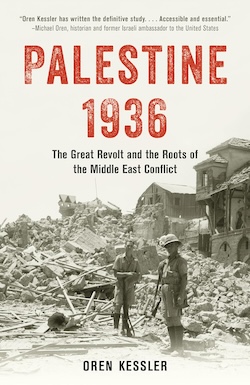
The historic milestones that led to the creation of the state of Israel are well known: Theodor Herzl’s Zionist congresses, the Balfour Declaration, the Partition Resolution, the War of Independence. Oren Kessler – who participates in the Cherie Smith JCC Jewish Book Festival on Feb. 13 – believes that a significant chunk of history has been largely overlooked and he sets out to right that wrong in his new book, Palestine 1936: The Great Revolt and the Roots of the Middle East Conflict. The Arab uprising of 1936 to 1939 in Palestine, he writes, “was the crucible in which Palestinian identity coalesced.” It also set in stone the intransigence toward Jewish self-determination in the region.

image - Palestine 1936 book coverAn Arab reaction to increased Jewish migration to Palestine – presaging both the potential for an eventual Jewish majority in the British-controlled Mandate and an even more alarming political outcome, a Jewish national homeland – inspired three years of Arab terror and British colonial repression, with the Jews inevitably caught between, argues Kessler.

Beginning with a series of strikes and protests in April 1936, the haphazard opposition to British rule and Jewish immigration was soon corralled and led by the notorious Grand Mufti of Jerusalem, Hajj Amin al-Husseini, into a mass movement of terror and anti-colonial (and anti-Jewish) violence.

While the British, on the one hand, hammered the Arab guerrillas – and plenty of civilians – they also rewarded that violence with policies such as those emerging from the 1937 Peel Commission report and the 1939 White Paper, both of which effectively caved to Arab demands by massively reducing Jewish immigration just as the Nazis were closing their fists across Europe. At the same time, the British left the Arabs unsatisfied by throwing tiny offerings to the Jews as a sign of compromise.

So unyielding was the mufti’s opposition to even considering Jewish migration that his Arab Higher Committee boycotted the various commissions’ hearings.

“Amid Hajj Amin’s boycott, no Arabs came forward,” writes Kessler. “Jerusalem Vice Mayor Hassan Sidqi Dajani, the mufti opponent who had once contemplated testifying, was found along the train tracks outside the city with two broken hands and two bullet holes in his forehead.”

In the end, the revolt was a disaster for everyone.

“The great revolt had exacted a withering toll on Palestine,” writes Kessler. “About 500 Jews had been killed and some 1,000 wounded. British troops and police suffered around 250 fatalities in their ranks. But the most onerous price of all was paid by the Arabs themselves: at least 5,000 – perhaps more than 8,000 – were dead, of whom at least 1,500 likely fell at Arab hands. More than 20,000 were seriously wounded.”

The Arab economy in Palestine was ruined, even as the Jewish economy hummed along.

Kessler’s thesis is that the events of 1936-1939 deserve to be recognized more as pivotal to the history of the region as a whole. There are also voluminous parallels and lessons for contemporary times in his review of that era.

The uprising did not, in the end, prevent Jewish national self-determination in Palestine. What it did prevent was a refuge for the Jews of Europe when they needed it most – and, for at least some of the players in this tragic drama, like the Hitler-allied mufti, perhaps that was a reward in itself. 

The Cherie Smith JCC Jewish Book Festival runs Feb. 10-15. For tickets, visit jccgv.com/jewish-book-festival.

True crime wraps up festival

They both made headlines in their day, and then were more or less forgotten. A social climber who ends up convicted of killing his wife in one instance, an inventor-turned-money launderer in the other. Two very different men living in different eras who achieved the wealth and lifestyle they sought, then lost it all in spectacular fashion.

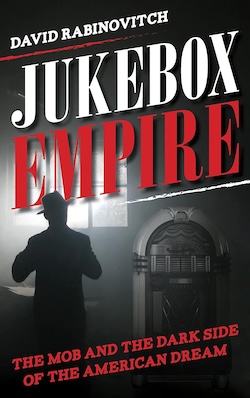
Historian Allan Levine and filmmaker David Rabinovitch close the Cherie Smith JCC Jewish Book Festival on Feb. 15, 8 p.m., at the Jewish Community Centre of Greater Vancouver with the event Jewish True Crime Stories, moderated by SM Freedman, who spent years as a private investigator in Vancouver before becoming a bestselling author of psychological thrillers. Levine will talk about his latest book, Details Are Unprintable: Wayne Lonergan and the Sensational Café Society Murder (2020), and Rabinovitch will talk about : The Mob and the Dark Side of the American Dream (2023), his first book.

Both true crime publications have a similar structure. They both have a cast of characters at the beginning, followed by a prologue or preface, then the narrative proceeds chronologically, beginning with each protagonist’s origin story, and following the circumstances and decisions that led to their headline-grabbing lives. Both books have extensive notes and bibliographies. Levine and Rabinovitch each read more than a thousand pages of court transcripts and related documents, like witness testimonies and letters, as well as newspapers of the day. These types of resources, written as events were unfolding, allow both authors to tell their stories with an immediacy that propels readers along. In both books, it feels as if what we’re right in the midst of what is happening.

image - Details Are Unprintable book coverFor Levine, the idea of exploring Toronto-born opportunist Wayne Lonergan’s conviction for the Oct. 23, 1943, murder of his wife, Patricia Burton Lonergan, the daughter of a wealthy German-Jewish family in New York City, came from reading a 1948 Cosmopolitan article by Raymond Chandler. The renowned detective fiction writer listed Lonergan’s case as #9 in his list of the “10 greatest crimes of the century.” There have been a couple of novels based on the case and, writes Levine, “Over the years, the story of the murder, with the requisite number of theories about Lonergan’s sexual identity, has been told and retold in countless tabloid newspapers and magazines and remains a favourite topic of crime and mystery bloggers.”

Lonergan’s bisexuality plays an important part in the story, including his initial alibi, and Levine adds social context in this and other instances, such as describing the mores of the café society into which Lonergan married. Levine takes the tabloid aspect out of the telling, in that he seems to have harnessed the facts and his conclusion as to Lonergan’s innocence or guilt seems solid.

image - Jukebox Empire book coverRabinovitch’s ability to step back and tell the story of Wolfe Rabin in an apparently unbiased way is even more impressive, given that Rabin is his uncle. Granted, Rabinovitch never met Rabin, but still, family is family. 

“How did my father’s brother, raised in an immigrant Jewish family in a remote Canadian prairie town [Morden, Man.], become a jukebox tycoon, a crony of gangsters and the mastermind behind an audacious and complex international money-laundering scheme?” writes Rabinovitch. “My investigation would reveal his world and a tale of jukeboxes, money laundering and organized crime.”

Rabin was a smart, creative and resourceful person. “He invented the car radio. He was a wartime profiteer. He designed the first jet-age jukebox. He was an international bonds trader,” writes Rabinovitch. “Wolfe and his sexy wife Trudy were a glamorous couple.”

But, early in his career, Rabin makes a deal with the proverbial devil, a mobster, and it’s a deal that makes him rich at first. But a competitor – fellow Manitoban David Rockola – successfully sues for patent infringements in the late 1940s, putting Rabin out of business and in need of money to pay back his criminal investors. It is fascinating to read of the mob connections to the jukebox industry, an industry that pulled in millions a week because, as Rabinovitch writes, “Even at the nadir of the Depression, anyone could afford a nickel for a song.”

And Rabin’s story becomes even more incredible after his jukebox business fails. In pursuit of much-needed cash, he becomes involved with stolen bonds, in what the U.S. Department of Justice called “the largest money-laundering scheme in history.” Eventually, the law does catch up with Rabin and some of his associates. Jail time is served. But Rabin’s biggest secret was only revealed long after his death in 1967, after Rabinovitch completed the draft of this book. It is one of the sadder elements of Rabin’s story. Despite all his achievements, there is much Rabin missed out on in his quest for wealth. 

The Cherie Smith JCC Jewish Book Festival runs Feb. 10-15. For tickets, visit jccgv.com/jewish-book-festival.

“Moses” does standup at JFL

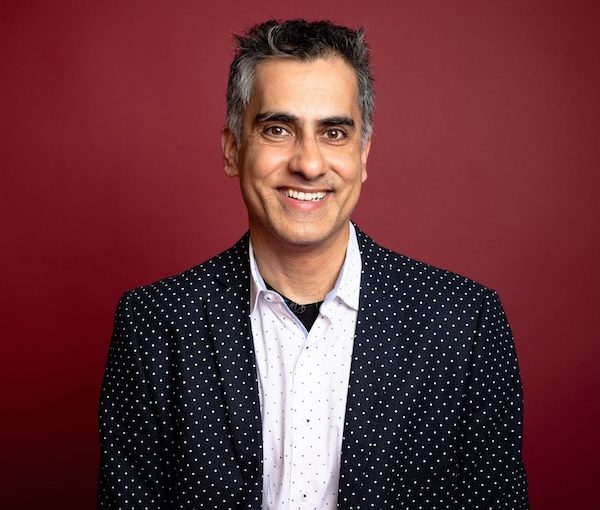
Samson Koletkar, dubbed the “world’s only Indian Jewish standup comedian, performs Feb. 15 as part of Just for Laughs Vancouver. (photo from Just for Laughs Vancouver)

This year’s Just for Laughs Vancouver features several members of the Jewish community, including Samson Koletkar, aka Mahatma Moses. He comes as part of Desi Comedy Fest – On Tour, which takes place at the Biltmore Cabaret Feb. 20, 9 p.m.

Koletkar is a co-founder of the Desi Comedy Fest with fellow San Francisco Bay Area comedian Abhay Nadkarni, who also hails from India. The biggest South Asian comedy festival in the United States, it is described as “celebrat[ing] subcontinental diversity with punchlines that transcend boundaries.”

Desi Comedy Fest isn’t Koletkar’s only entrepreneurial venture. He has a background in technology and also started Comedy Oakland, which “features funny, diverse, industry pros alongside up-and-coming comedians at various venues across Oakland,” according to its website.

Koletkar, who claims to be the “world’s only Indian Jewish standup comedian,” spoke with the Jewish Independent earlier this week.

JI: How does one go from being a techie to a standup comedian? Are there overlaps in skill sets? Do you still work in both areas or are your entrepreneurial endeavours your focus?

SK: I have tried a few things in my life, and standup started the same way. It seemed like a fun thing to do, I gave it a try and, the first time I was on stage, I was hooked. There is definitely an overlap from my tech life into standup – bulletproof logic in my jokes. If I am making a point, and I like to make many, there is no room for bugs, the jokes have to be tested thoroughly and any gaps in logic have to be fixed.

Standup has also helped make my day job easier with the ability to inject humour during tough situations. One of my ex-bosses actually made me realize the value of my standup comedy at work – he used to invite me to the tough customer meetings because invariably I would make the room laugh and the meetings got much easier after that.

JI: What were you like growing up – have you always seen the world with a humourous eye?

SK: I think so. I have always had this urge to crack a joke. There were a lot of inappropriate ones at inappropriate times, but isn’t that how we all learn, by making mistakes? Now, every time I meet parents who think their kids are funny, the one thing I advise them is to accommodate their kids’ misspeaks, and keep that funny bone intact. More often than not, the only mistake we as comedians make is saying out loud what everyone is thinking but politely holding back.

JI: When did you move from Mumbai to the San Francisco Bay Area?

SK: I took the first opportunity I got to move as far away from my parents as I could and, at the age of 24, I moved to the Silicon Valley in October 2000. I felt like the needle that burst the Y2K bubble.

JI: When did you first perform standup?

SK: Late 2005, but then jumped all in in January 2006.

JI: What led you to start Comedy Oakland?

SK: Standup is the one art form you can’t practise in your garage. You need a live audience. After grinding through three years of empty open mics and sub-par independent shows, I decided I could either sit and complain about how poorly some shows were produced, or try to do it myself. That led to Comedy Oakland, in May 2009, starting with one show on Friday nights. My goal was to create a space where comedians needed to only bring good jokes and audience experience was optimized for the art.

Just before the pandemic, I used to run 250+ shows (five shows a week), featuring 400+ comics entertaining 12,000-13,000 [person] audiences every year. In 2024, 15 years running, I am back to five shows a week at three venues in Oakland. These venues are 40 to 90 seaters.

JI: When you envisioned the Desi Comedy Fest, did you think it would become as huge as it is?

SK: I don’t think it is huge enough yet. Yes, the fest has grown from its early days, but we have a long way to go, and partnering with JFL is a big step in that journey. What I knew was that it was going to be fun, and it continues to be one of the most fun shows every year in my calendar.

JI: In what ways have you experienced racism and antisemitism, how do you handle such incidents and how do they impact you?

SK: Those stories are more fun to hear in my standup than they are to read, although they only form a small part of my routine because racism and antisemitism are a small part of my life. The world has a lot more good than bad in it and I don’t let the bad overshadow the good. An optimistic comedian – go figure! But, yes, they do impact me, not only when it happens to me but when I see it happen to others. So, some of my content is driven out of that and I tend to focus on the logical hypocrisy/fallacy of it.

JI: You’ve had much success. What are one or two things that you’d still like to achieve or do professionally?

SK: When my joke offends someone in America, it’s “Go back to where you came from.” When my joke offends someone in India, it’s “Go to Pakistan.” I want to tell an offensive joke in every single country in the world, just to see where they send me next, sort of like The Offensive Joke World Comedy Tour!

JI: If there is anything else you’d like to add, please do.

SK: Come watch a show, nothing gives me more happiness than seeing you laugh!

***

Desi Comedy Fest – On Tour also features Alisha Dillon, Amar Singh and UK Shah. For the full Just for Laughs Vancouver line-up and tickets, visit jflvancouver.com. 

Lanyi’s live Canadian debut

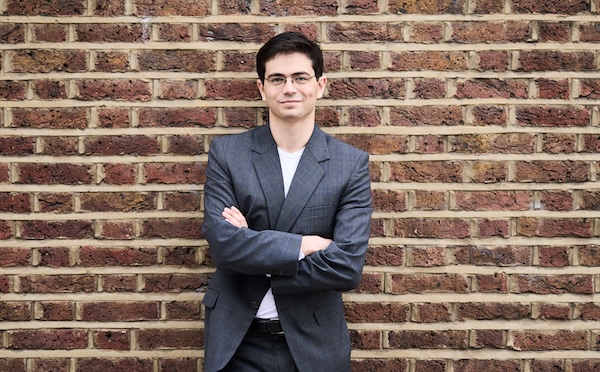
The Vancouver Recital Society hosts London, England-based pianist Ariel Lanyi on March 3. (photo © Kaupo Kikkas)

“Art is there to remind us that there is something bigger and greater than the present moment, something that will remain long after we are gone, which is worthy of our devotion and commitment,” pianist Ariel Lanyi told the Independent in a recent interview. Lanyi will perform an afternoon concert at Vancouver Playhouse March 3.

Hosted by the Vancouver Recital Society, Lanyi will play works by Ludwig van Beethoven (1770-1827), Frédéric Chopin (1810-1849) and Max Reger (1883-1916). In a Facebook post, the London, England-based pianist noted his pleasure at working on Reger’s Variations and Fugue on a Theme by Bach, calling it an “underrated masterpiece of the late-Romantic era” that he couldn’t wait to bring to the stage in 2024.

“Max Reger had a problem: writing fugues was too easy for him. He could jot down fugues with the same ease that Picasso could scribble drawings. Hence, his music sometimes falls into a trap of gratuitous polyphony. However, when he put his heart and soul into a work, as he did with the Bach Variations (which he considered to be his finest work), the result is worthwhile,” Lanyi explained to the Independent. “We hear a multitude of styles in this work – at times, we hear the world of Brahms and his traditional harmonic language; at times, we enter the post-Wagnerian sphere, and we even get a glimpse of more decadent music that was yet to be written. Still, it hangs together organically, and comes to a rousing ending, as all threads convene and the piano truly emulates the sound of the organ. 

“The reason this work is underrated and underplayed is quite obvious,” he added. “People tend to avoid Reger, and it takes a Herculean effort to learn this work. However, I earnestly believe that it is a masterpiece of piano literature.”

Last spring, Lanyi was awarded the Prix Serdang, which is given to young pianists at the beginning of their careers who excel in musicianship and artistic vision. The head of the selection panel, Austrian pianist Rudolf Buchbinder, said of Lanyi: “His playing is precise, nuanced and virtuosic, but he is no superficial virtuoso. What sets him apart is his ability to delve deeply into the music and to establish a connection with it. He doesn’t simply play the notes, he lives the music, seeks to capture its essence, and reflects it with extraordinary intensity, sensibility and expressive maturity.”

If one reads Lanyi’s posts and blogs, one gets a hint of the research that he puts into his performances, which have garnered critical acclaim. In addition to the Prix Serdang, Lanyi won third prize at the 2021 Leeds International Piano Competition. Also in 2021, he was a prize winner in the inaugural Young Classical Artists Trust (London, England) and Concert Artists Guild (New York) International Auditions, as well as being a finalist in the Arthur Rubinstein International Piano Master Competition. Other honours for the 26-year-old pianist include first prize at the 2018 Grand Prix Animato Competition in Paris and first prize in the 2017 Dudley International Piano Competition in the United Kingdom.

Born in Jerusalem, Lanyi studied piano at the Conservatory of the Jerusalem Academy of Music and Dance and moved to London in 2015 to study at the Royal Academy of Music. He remained in the city after graduating in 2021. Last month, he was among those selected by the Royal Academy for a 2023-2024 associate honour, which will be conferred in April: the award recognizes former students who have made “significant contributions to the musical landscape.”

Lanyi has performed around the world, both as a soloist on his own and with orchestras, and as a chamber musician. When he plays concertos or chamber music, he said of his preparation, “I always make sure to study the full score, in order to grasp the music from all points of view, not just through the prism of my individual part. When playing alone, obviously, this doesn’t apply.”

Among the highlights listed on Lanyi’s website for this season is the VRS concert next month. In 2021, during COVID, the recital society shared Lanyi’s Virtually VRS recorded performance on its YouTube channel. The March concert will be his live debut in Canada. In addition to the Reger composition, it will feature Beethhoven’s Sonata No. 30 in E Major, Op. 109; Chopin’s Mazurkas, Op. 59; and Chopin’s Polonaise-Fantaisie in A-flat major, Op. 61.

“Beethoven’s Sonata Op. 109 is a work that has been in my repertoire for quite awhile,” Lanyi told the Independent. “It was the first of the late Beethoven sonatas I worked on as a teenager, so coming back to it now feels enormously gratifying, as my idea of it has evolved in the years since. (It is also, if I remember correctly, the first work for piano to have ever moved me to tears.) The first two movements are concise and contrasting – from the relative serenity of the first movement to the fearful obsessiveness of the second. The third movement begins and ends with a hymn of gratitude and, in between, we are taken on a comprehensive journey through six distinct variations, each inhabiting its own world, deviating from the theme in the most fascinating ways while retaining the same epicentral connection to it.

“The two Chopin works in this program – the Op. 59 Mazurkas and the Polonaise-Fantaisie, Op. 61 – both stem from the composer’s late period, which is characterized by harmonic and structural exploration we seldom find in his earlier works. The mazurkas are elegant and poignant at the same time – in the midst of mellifluous music, Chopin finds ways to express intense distress with bold, dissonant harmonies, often left exposed. The Polonaise-Fantaisie is among his most symphonic works, I find. He never wrote any symphonies and, in my view, some of the late works make up for that by using the piano orchestrally. In the slow middle section of the Polonaise-Fantaisie, we almost hear a foretelling of Bruckner in the long, interwoven lines, which lead to the most unexpected places.”

Lanyi said he doesn’t have any specific formula for choosing performance repertoire.

“Usually, I have an idea of one or two central works I want to include in a program, and look for works which will complement them in a balanced way,” he said. “In the case of this program, the Reger has been on my mind for many years, so I was looking to combine it with works which aren’t as heavy.”

Lanyi’s March 3 performance takes place at 3 p.m. and is followed by a talkback. For tickets, visit vanrecital.com/concert/ariel-lanyi-2. 

Exploring ideas, worlds

“If there is one thing we learn during difficult times, it’s that community plays a crucial role, fostering unity, resilience and offering emotional support,” writes Dana Camil Hewitt, director of the annual Cherie Smith JCC Jewish Book Festival, in her introduction to this year’s event, which will once again bring community members together to share stories and conversations – and in a difficult time.

The festival opens Feb. 10 with playwright, journalist and author Michael Posner in conversation with Alan Twigg, founder and editor for 33 years of BC BookWorld, about Posner’s three-volume biography of musician, composer and poet Leonard Cohen. The opening night includes a live musical performance with Harriet Frost and Martin Gotfrit, which illustrates perfectly how the influence of books extends beyond the printed page.

The world around us and how it shapes who we are, and vice versa, is front and centre in the Feb. 11 festival event Essays as Life Stories, featuring Vancouver’s Yosef Wosk and Hamilton’s Gary Barwin.

Traveling beyond the world

image - Naked in a Pyramid book coverIn his new book, Naked in a Pyramid: Travels & Observations, scholar, rabbi and philanthropist Yosef Wosk brings readers along on his extraordinary journeys throughout the world. But this is no Rick Steves guidebook. There are no hotel recommendations or Top 10 must-see lists. Far from it. Rather than inspiring wanderlust, in fact, some of Wosk’s adventures will make the reader happy to be home in an easy chair experiencing vicariously rather than accompanying him on these not-always-alluring quests. 

Wosk acknowledges that travel for him is not about R&R but always about adventure, challenging himself to discover not only the world but his place in it. Travel, for him, is “more of an intuitive imperative, a pilgrimage to the ends of the earth so that I might know both the planet and myself better.”

To these ends (literally), Wosk has traveled to both the north and the south poles. His reflections on being – within a little more than a year of each other – at the figurative top and bottom of the planet, lead to fascinating metaphysical contemplations. He is also provoked to contest mundane assumptions when he sees, at the South Pole, an upside-down globe. Why, he realizes he has never contemplated, should north be on top?

Wosk does not just see stuff, or even experience it, like an ordinary traveler, but finds himself transported beyond even the remote locales he visits to some supernatural planes. Near the North Pole, for example, he alarms travel-mates by laying down, albeit densely insulated, on the frozen Arctic ground “like some marooned sapien seal.” Becoming one with the planet’s most northerly extremity, he recalls, “I was seized by this unanticipated epiphany of transcendent unity.” 

The intensity with which he lives the places he encounters makes for a fascinating read and those of us who lack his depth of connection with the ethereal may feel pangs of jealousy, if not inferiority, at failing to experience as profoundly.

He visits Venice, the birthplace of Marco Polo – well, one of the reputed birthplaces – and finds resolve from the “Master of Travelers, the one who dared.” But Venice, as magnificent as it is, seems to be among the least remarkable of Wosk’s destinations.

“I have explored caves and caverns in Israel, Thailand and deep within the Rock of Gibraltar where Neanderthals lived for over 100,000 years, and also entered the coastal caves along the cerulean Na Pali coast in Kauai,” he writes. “Gazing into the luminous waters of the Blue Grotto in Capri, one of the most enchanting islands on the planet, one senses its womb of wonders.”

Claustrophobia is a recurring theme (for the reader, if less so the writer), with reminiscences of crawling on his back into a sarcophagus, descending into the bowels of a Soviet-era nuclear-powered Arctic icebreaker, or meditating (naked) in the subterranean hollows of the pyramid that gives the book its title. 

The book is deeply personal, including revealing insights into his deepest thoughts, as well as the sorts of travel nightmares to which anyone can relate, such as being stuck together with a sulky travel companion who he had considered a potential love interest, but who turns out to be the roommate from hell. He seems to recognize that his well-intentioned psychoanalyzing of her behaviour may not have been the remedy he had hoped.

His sense of being an outsider is not merely social but otherworldly.

“I have always felt like a fool, somewhat awkward in an unfamiliar world – as if I have just awakened from a distant dream and been planted, like Adam, in a strange Garden of Gaia. I spent most of my life as an unrepentant pilgrim, exploring often exotic and embarrassing sensations of mind, body and soul.” 

He openly admits that some of these sensations are enhanced by herbal or chemical assistance.

“On a beach off the road from Pafos to Limassol, in southern Cyprus, a friend and I took LSD at the fabled birthplace of Aphrodite,” he writes. “The beach was gravel and the waters rough but as the long, foaming waters born of the massive surf around the Rock reached the shore, one could easily imagine the earth being impregnated by the semen-bubbled surf and picture the goddess of love emerging from the sea.”

The book is about travel, but Wosk also covers voyages more broadly defined, such as the process of moving through life itself, including the reflection that a great rabbi imparted to him.

“One of my teachers, Zalman Schachter-Shalomi, used to tell us that you don’t have to wait until you’re dead to die; that one can be involved in a succession of deaths and rebirths, that there is non-mortal death and resurrection while still alive,” writes Wosk.

In a harrowing experience while illicitly climbing the Egyptian pyramid of the title, he seems to have exactly this sort of non-mortal death, which may well have been entirely mortal had things turned any further awry.

Wosk has rubbed shoulders (or, more accurately, minds) with greats like Buckminster Fuller, Marshall McLuhan and Joseph Campbell. He worked at the right hand of Nobel laureate Elie Wiesel as his teaching assistant and calls the late humanitarian author “one of the most influential mentors in my life.”

If Wosk sometimes seems a figure remote from the ordinary human, he yanks himself back down to earth in numerous segments, such as explaining how he overcame his intimidation at applying for Harvard’s divinity school. He eventually conquers his resistance and completes the graduate school application in the mechanic’s anteroom while his car is being serviced nearby. Even by the standards of a vegetarian, which he is, Wosk’s culinary tastes are decidedly and literally down to earth. (Favourite food? The potato.)

He refers modestly to his extensive philanthropy, which includes the Beit Wosk Community Centre, in Ashkelon, Israel, and the Dena Wosk School of Performing Arts at the Jewish Community Centre of Greater Vancouver (named for his late mother), but elides hundreds of other contributions over the years.

He pays tribute to his late father Morris (“MJ”) and late uncle Ben, who arrived as children in this country. The brothers did odd jobs before starting a business collecting and repairing used pots and pans, which they shined up and sold around town using a horse and buggy. From this, they graduated to a storefront and later a furniture chain. Eventually, the brothers reshaped the city’s skyline with some of Vancouver’s most recognizable high-rise residential towers. To say the family came a long way from rural Ukraine is an understatement. MJ Wosk is estimated to have donated $50 million to a variety of causes.

It is difficult to sum up this book as this or that genre. While one section is an extended poem, much of the rest reads as prose poetry. Moreover, it is travel journal, philosophy treatise, theological tract and memoir of a person who curates and collects not just fascinating objects (which he does) but ideas, experiences and memories. Perhaps the book could be best described as an exhibition, a retrospective of a just a few of the intangible treasures Wosk has amassed in a lifetime that seems more unique than every life, by definition, is.

As fellow thinker John Ralston Saul said of this book, “He brings us a life intensely lived.” To appreciate how intensely, one really needs to immerse oneself in these pages.

 – Pat Johnson

Exploring language’s many facets

Gary Barwin’s Imagining Imagining is reflective, sentimental, intellectual and absurd. His facility with the English language is remarkable and he is more well-read than most of us, but there are various levels of understanding of any text, and everyone will take away something of value from this imaginative and mind-expanding collection of essays.
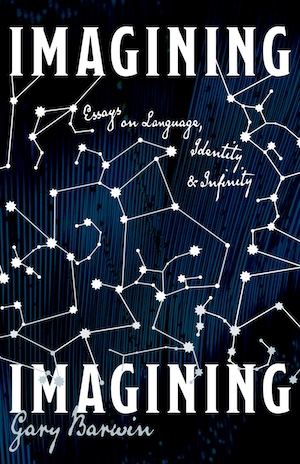
image - Imagining Imagining book coverThe multiple-award-winning author of some 30 books, including the bestselling Yiddish for Pirates, Barwin is also a musician, composer and artist. He draws upon all his varied skills and interests in his imaginings. He begins with reflections on the Hebrew alphabet, where the Book of Genesis says the world began: “the earth was without form and void until God gave shape or reality to it, all with words. With the letters that form the Hebrew alphabet.” He talks of the letters’ sounds and shapes, even illustrates the letter shin with an extra arm on the left that looks like it is topped with a crown, the image of which appears on the tefillin box that Orthodox Jews place on their forehead for morning prayers. According to a kabbalist text, there is a letter missing from the Hebrew alphabet and some think this four-armed shin might be it. “So, the thinking goes, we might already know what it looks like. But we don’t know what new sound it might make, this new sound that might heal the universe.”

While lauding language and its potential as a cause for hope, Barwin warns that language can also lull and trick us. “We must always look very carefully at language. At its beauty, its mystery. Its power to make us think and feel things. Its power to make and remake the world,” he writes.

If it’s not obvious already, Barwin is a big thinker. And he has a big vocabulary. Imagining Imagining might be a book to read as an ebook, for easy access to a dictionary. For the most part, however, his skill as a writer means that we get the gist if not the whole idea, that our curiosity is piqued and we continue to revel in our own thoughts long after we finish reading an essay.

Those who have read Barwin’s novels will know that he has a great sense of humour, and there are many smiling, even laugh-aloud, moments in these essays. One essay is entirely devoted to humour, and it’s fascinating – and funny. In it, he shares his favourite poem, “Modern Poem,” written by Martin Laba: “one, two, / three, four, / five, you idiot.”

“I like it because we can empathize with the feeling of having read something, perhaps a modern poem, something that is so hard to understand, that appears to be saying something willfully inaccessible or that appears so entirely pointless that it seems to be deliberately trying to make you feel like an idiot,” writes Barwin. “I like the poem because of the nice twist, the surprise at the end, the shock of recognition. Oh yes, I know poems like this. And I know that feeling.”

There are many shocks of recognition in Imagining Imagining, as there are shocks of non-recognition. Barwin is a smart, accomplished person and his views on things – from Hebrew letters, to insomnia, to ampersands, to his grandfather’s moustache, and more – will have you thinking about yours in new ways. For example, that chapter on humour stresses the immense value in laughter, not the least of which is that it “gives us an alternative to despair,” it allows us “the ability to frame our experience.”

“Through humour, we are able to stand outside what’s happening and look at it philosophically. Through humour, we find a way to engage, to think about what is happening and still have agency,” writes Barwin.

Engagement, community, the interconnectedness of all things. Barwin challenges readers to think outside the box, to reconsider what is a box, whether a box can ever truly exist. Speaking “mostly but not entirely metaphorically,” Barwin asks about the need for (cell) walls, “don’t things morph into one another, if only eventually? The same is true of concepts and abstractions. One person’s manbun is another’s mantra. Is it true that someone’s pain is my pain and it is only the self and society which create reasons to keep them at a distance? I want my thinking and feeling to reflect the fundamental unipanrhizomatubiquity between/of things.”

After reading Imagining Imagining, you should have a notion of what “unipanrhizomatubiquity” means, even though Prof. Google doesn’t. That feeling of getting it, not getting it, is an unsettling sensation perhaps, but it’s one that propels questions, discovery. That makes what seems impossible potentially possible. That makes reading – and so many other things – exciting and worthwhile.

– Cynthia Ramsay

For the Cherie Smith JCC Jewish Book Festival, guide visit jccgv.com/jewish-book-festival. 

Artist’s threat sees PuSh cave

At the weekly rally Jan. 14, Ezra Shanken, chief executive officer of the Jewish Federation of Greater Vancouver, called on attendees to take action around the latest flashpoint of anti-Israel activism locally.

Earlier in the week, the PuSh International Performing Arts Festival announced they were canceling the scheduled presentation of The Runner, a play by a Canadian playwright Christopher Morris. The move followed an earlier decision to cancel the play at Victoria’s Belfry Theatre after a chaotic public meeting and vandalism of the theatre building. (See jewishindependent.ca/canceled-play-should-not-be-canceled.)

The PuSh decision, according to a Jan. 11 statement, was the result of pressure from another festival artist, Basel Zaraa, who threatened to pull his installation, Dear Laila, rather than have it appear at the same festival as a play that he describes as not depicting the “fundamental context of Israel’s occupation, apartheid and ethnic cleansing of the Palestinian people.”

“As a Festival, we respect Basel’s perspective,” wrote the festival organizers. “We will honour the artist whose work reflects their lived experience and cancel the presentations of The Runner by Canadian playwright Christopher Morris, whose work is rooted in years of research but who has no religious or cultural ties to the region.”

In the same dispatch, Morris released a statement.

While saying, “If removing The Runner is the only way Canadians can hear Basel’s crucial voice, then there is value in stepping aside,” Morris concluded, “It’s unsettling when Canadian theatres cannot be a space for the public to engage in a dynamic exchange of ideas. I believe theatre must be a place where contrasting perspectives are programmed and celebrated. Now more than ever, we need to listen to each other, engage in different viewpoints, and find our shared humanity.”

The Runner is, Shanken said, “an acclaimed play by a non-Jewish playwright, one that actually talks about the challenge of what’s going on on the ground.”

He told attendees at the Sunday rally that the PuSh Festival’s decision is “a new front” in which “they are trying to silence other voices.”

“When you don’t have the facts on your side, you silence the opposition,” said Shanken. “Each one of us should take a moment today when we get home, write an email to the PuSh Festival. Tell them enough is enough. We ask not for the other play to be canceled but just for our own equal billing. We allow for their voices to be heard, all we ask is for peaceful voices of ours to be heard, too. We ask for nothing but equality.”

The PuSh Festival receives funding from the City of Vancouver, the Province of British Columbia and the Canada Council for the Arts, as well as numerous businesses and foundations. Sponsors of the event can be found on the festival’s website – pushfestival.ca – under “Partnerships.”

Just for Laughs coming soon

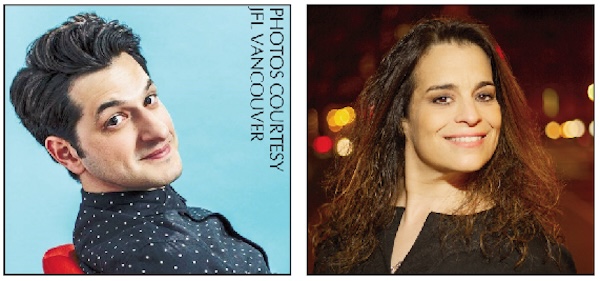
Ben Schwartz and Jessica Kirson are on the lineup of this year’s Just for Laughs Vancouver.

Just for Laughs Vancouver, which runs Feb. 15-24 at various venues in the city, features several members of the Jewish community.

All three of Brett Goldstein’s shows Feb. 16-18 at Queen Elizabeth Theatre have almost sold out. Goldstein was a co-executive producer, co-writer and co-star of Ted Lasso. He is also the creator and executive producer of the comedy Shrinking, alongside Jason Segel and Bill Lawrence, and of Soulmates, with Will Bridges. Goldstein is host of the podcast Films to be Buried With, which finds him in conversation with guests as they discuss the films that have shaped them.

Rafi Bastos performs at the Rio Feb. 17-18. Many of his viral stand-up clips come from nightly performances at the Comedy Cellar. In his home-country of Brazil, he was one of the first comedians to pioneer the art of American-style stand-up comedy. He has starred in movies, had his own talk show, been an infield journalist and hosted reality show Ultimate Beastmaster. He is co-founder and owner of Comedians, the largest comedy club in South America. 

Ben Schwartz and friends take to the Orpheum stage Feb. 18. Schwartz is part of the cast of The After Party, as well as the second season of Space Force. He was in the comedy series House of Lies and Parks and Recreation. As a writer, he has published four books and written television shows and movies for many major studios.

Jessica Kirson is at the Vogue Feb. 18. Her countless comedic character videos have racked up more than 200 million views on social media. She produced the feature-length documentary Hysterical. In addition to her one-hour special, called Talking to Myself, she is a regular on This Week at the Comedy Cellar and has appeared on many other shows.

At the Rio Feb. 23-24 is Catherine Cohen, best known for her comedy special The Twist…? She’s Gorgeous. She can be seen in the feature film At Midnight and in the upcoming series What I Was Doing While You Were Breeding. In 2021, she published her first book, God I Feel Modern Tonight, a collection of comedic poetry.

Comic, podcaster, writer and actress Annie Lederman will be at the Biltmore Feb. 21-22. Lederman is co-host of the podcast Trash Tuesdays. Most recently, she can be seen in the documentary miniseries The Comedy Store, alongside Jay Leno, David Letterman, Joe Rogan, and many other Comedy Store legends. She wrote and starred in Stand Ups, Impractical Jokers and Borat, among other things.

The full JFL lineup and tickets are available at jflvancouver.com. 

– Courtesy Just for Laughs Vancouver

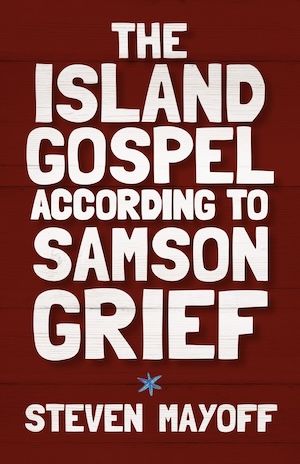
Putting the fun in dystopia – Steven Mayoff’s The Island Gospel According to Samson Grief

For all intents and purposes, it shouldn’t work, but Steven Mayoff’s The Island Gospel According to Samson Grief is a grand work of, let’s say, magical fiction that uses humour in large measure to elicit some very serious thoughts about art, politics, law, love, faith, community and more.

Mayoff takes part in two events during the Cherie Smith JCC Jewish Book Festival: on Feb. 11, he presents at Burquest Jewish Community Association in Coquitlam and, on Feb. 12, he is at the Jewish Community Centre of Greater Vancouver, along with Jeffrey Groberman, author of Globetrotting Strikes Again! Groberman also presents at Har El in West Vancouver on Feb. 11.

image - he Island Gospel According to Samson Grief book coverIt is hard to describe simply the plot of The Island Gospel According to Samson Grief. The title character is a middling artist who, when we meet him, is struggling to finish a painting. Outside his window, he has just seen – after a break of 13 years – three figments of his imagination. The Figs, as he calls them, present themselves in the forms of Judas, Fagin and Shylock, and they have returned with an important mission for Grief.

“The Supreme One,” who the Figs represent, was impressed by Grief’s scandalous, and most famous, painting of Prince Edward Island icon Anne of Green Gables as a Holocaust survivor, which Grief described in an interview as a statement “on the post-911 world we’re living in, where nobody is safe anymore and the primary victim is the delusion of our collective innocence.” Despite that Grief has not had much artistic or other success in the years since that painting – and that he is not actively involved in the island’s Jewish community – the Supreme One wants Grief to build PEI’s first synagogue. Once complete, the province will be consecrated as the new Promised Land, according to the Figs.

Among Grief’s many challenges – once he decides to take on the mission – is that the Supreme One has decreed that the synagogue must be built on a particular plot of land, a once-sacred place that has become a garbage dump and the focus of much political intrigue. It is hard to keep track of all the political manoeuvrings in this novel, but they sadly resonate, with some reality in their self-serving and unscrupulous nature.

It takes Mayoff awhile to set up the many pieces of his narrative puzzle. The characters are numerous, and quirky only begins to describe them. The societal issues that arise as Grief tries to achieve his mission, the role played by the media – both conventional and unconventional – in what ends up happening, the reliability and unreliability of friendship and love … so many factors are up in the air and changing as the story progresses. Somehow Mayoff juggles them all in a way that allows readers to follow along, discovering various elements as Grief does, and losing our naiveté as he does.

The Island Gospel According to Samson Grief is an ambitious novel that delivers beyond its promise. 

For the Cherie Smith JCC Jewish Book Festival guide, visit jccgv.com/jewish-book-festival. 
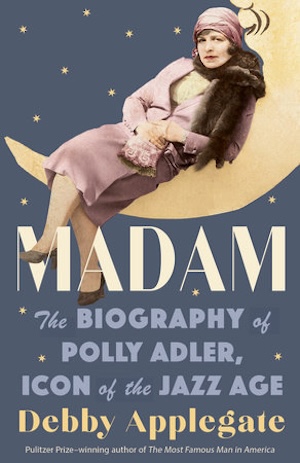
“Best goddam madam” – Madam: The Biography of Polly Adler, Icon of the Jazz Age

The immigrant experience is rarely if ever easy. It is hard to imagine sending a 13-year-old girl from Russia to the United States on her own, but, in 1913, the year that Pearl (“Polly”) Adler came through Ellis Island, “the Hebrew Sheltering and Immigrant Aid Society estimated that 13,588 ‘unaccompanied Jewish girls’ came through the port of New York, out of the 101,330 Jews who immigrated from eastern Europe,” writes Debby Applegate in Madam: The Biography of Polly Adler, Icon of the Jazz Age.

image - Madam book coverThe revelations abound in Madam and most do not centre around statistics, though there are some intriguing ones, like the fact that, in 1925, New York’s White Light District, with Times Square at its core, had “more than 2,500 speakeasies and 200 nightclubs, up from 300 saloons before Prohibition, all vying to offer the youngest girls, bawdiest songs, and hottest dance bands.”

Polly Adler was a major part of this scene, having entered the world of prostitution when she was 17. She had managed to avoid the lechers who recruited girls coming off the boats, and even got a couple years of education living with extended family in Springfield, Mass. But, once the minimum amount of schooling required was reached – a fourth-grade level of English – she had to work. And working in a factory wasn’t a way to get oneself out of poverty. So, with a little help from unscrupulous men, she started on a different career, one that would have her become the most well-known madam in New York, with clients that may even have included President Franklin Delano Roosevelt.

It was a harsh world, though, filled with gangsters, crime, violence, and it wasn’t even that lucrative because of all the payoffs and the immense levels of corruption at every turn: police, lawyers, judges, politicians. But Adler could literally take the punches, and she was “determined to be the best goddam madam in all America.” She achieved her goal and was successful, if measured by fame and money. However, she never achieved the approval and acceptance she sought, having been cared for as a child but never really loved.

Applegate’s biography of Adler is a page-turner, which is an accomplishment given its comprehensiveness and the amount of detail she covers: there are 33 pages of notes and the bibliography runs 13 pages. Readers will really feel as if they’ve met Adler and walked a few feet in her shoes. 

Applegate will talk about Madam in the Cherie Smith JCC Jewish Book Festival event on Feb. 11, which she shares with Roberta Rich, author of The Jazz Club Spy (see jewishindependent.ca/mysteries-to-be-solved).