Name inspires artist’s work

Growing up in Vancouver during the 1960s and ’70s, I was the dancer, my brother was the guitarist and my sister was the writer, soon to blossom into a visual artist as well.

Devorah Stone, my sister, is one of the contributors to this year’s Calling All Artists exhibit, which opens at Victoria’s Congregation Emanu-El on Aug. 26. Since the early 2000s, the mostly annual event has celebrated artists of many kinds – sculpture, ceramics, textile, poetry, mixed media, fabric, music – who offer their interpretation of a rabbinical or biblical text that they’ve studied with the synagogue’s spiritual leader, Rabbi Harry Brechner.
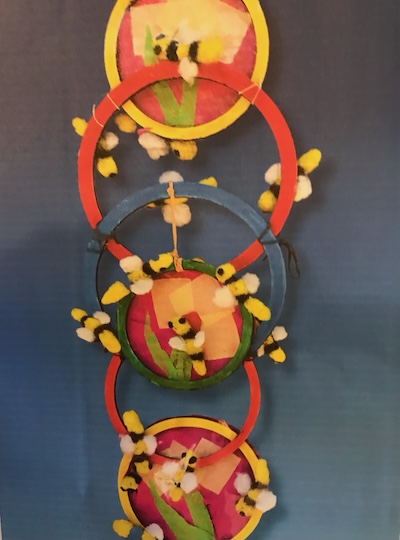
photo - Devorah Stone created a honeybee circle for this year’s Calling All Artists exhibit, which opens at Congregation Emanu-El Aug. 26
Devorah Stone created a honeybee circle for this year’s Calling All Artists exhibit, which opens at Congregation Emanu-El Aug. 26. (photo from Devorah Stone)

“This year’s theme is ‘animals’ and since my name means ‘Honeybee’ in Hebrew, I went with that,” Devorah told me. “The bees in my work are all hand-felted, a technique that involves pocking at wool and shaping the form. I decided to present the bees in circles because they are so crucial to the circle of life.”

The artists’ works are up for six months in the shul’s social hall. Devorah has been involved with the event for the last 10 years. Rabbi Brechner gives a lecture on the theme and how it pertains to Jewish traditions, sacred writings and thought once a month for five months before the celebration. This year, his teaching focused on the significant symbolic and ritual roles animals play in Jewish texts.

“I’ve learnt so much about both art and Judaism attending the rabbi’s lectures,” said Devorah. “Anyone can join … you don’t even need to be Jewish.” 

The Calling All Artists project is run by self-proclaimed “den mother” Barbara Pelman. She said there is a chapbook written every year with an explanation of each artist’s creative process and a copy of that is given out to guests.

“In last year’s Calling All Artists, I did the kohain gadol’s (high priest’s) breastplate with references to all the various colour and gem stones as described in the Torah,” said Devorah. “The only difference was the mannequin I used was a woman’s so I pretended that there might have been female priests at the time of the Temple!

“I’ve also done a collage of a person wearing a tallit and the burning bush, a three-dimensional piece of the Rosh Hashanah dinner, and another collage on a wooden cradle of the story of Abraham and Isaac.” 

Devorah has always been fascinated with art.

“As a child, there was nothing better than a box of crayons and endless paper,” she said. “I drew space ships, planets and alien worlds. I also drew castles and princesses. I loved it. My imagination had no limits.” 

In her 20s, Devorah spent four years at the University of Victoria, earning a bachelor of fine arts. All the while, she felt inspired by Emily Carr and Indigenous art.

“I loved the way Carr personified nature and her magnificent trees,” she shared. “I marveled at the complexities, elegance and craftsmanship of the First Peoples of the land.”

Our parents also brought us up with a strong Jewish identity.
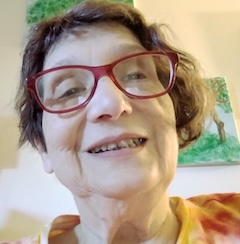
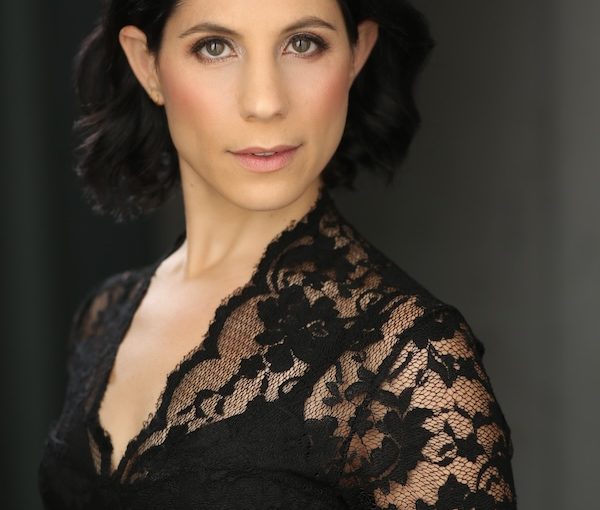
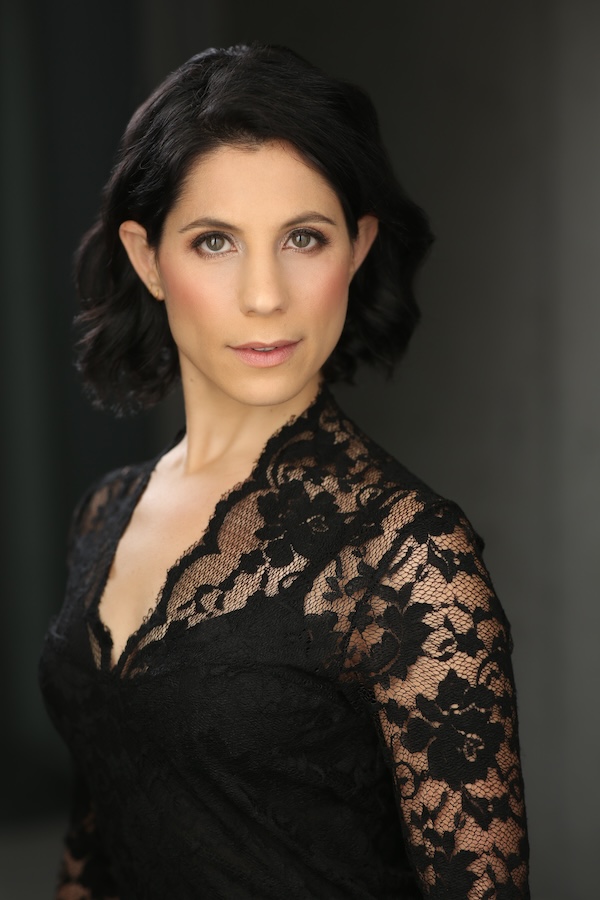
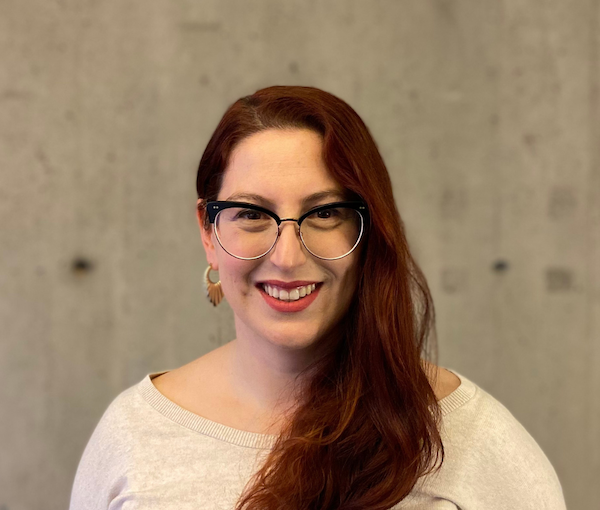
photo - Devorah Stone
Devorah Stone (photo courtesy)

“Being Jewish, I was taken by the imaginative work of Chagall, his goats and houses and how everything seemed to be floating or suspended,” said my sister. “Later on, I began to be influenced by the school of Bauhaus design, especially Kandinsky, his calculated and yet whimsical designs.” 

After Devorah moved to Victoria 20 years ago, she joined the Pandora Arts Collective Society. The group exhibits its works at the Little Fernwood Gallery twice a year and Devorah recently sold a painting there.

The collective is a community of people whose mandate is to facilitate and support mental health through the social and educational benefits of a free and welcoming creative arts space. The studio is open to everyone: professionals, students and beginners. The atmosphere is especially sensitive to people who are using art therapeutically. Devorah is on their board and has planned events for them in the past.

“We inspire and mentor each other,” she said. “I have learnt so much about art from that group. I’ve been introduced to many different kinds of art and artists, as well as being influenced by so many artists in our synagogue. The joke is that you can’t throw a rock without hitting an artist in Victoria!” 

When she was living in and around Vancouver, Devorah brought up three children, two of whom live in the Lower Mainland. She visits all of us frequently and spends a lot of time on the ferry.

“I love doing fast sketches of the scenery as it goes by,” she said. “I also do fast sketches at outdoor concerts and festivals, which Victoria has so many of.” 

Devorah uses pencil crayons, acrylic paint and watercolours, creates collages and sometimes three-dimensional art made out of whatever she can find.  

“I love experimenting and I feel that all my art is influenced by being Jewish,” she said. “It all has a profoundly Jewish way of seeing nature and of being.”

The best way to view Devorah’s art is through Instagram @devlovesart. 

Cassandra Freeman is a journalist and improviser who lives in East Vancouver.
Art as a form of storytelling

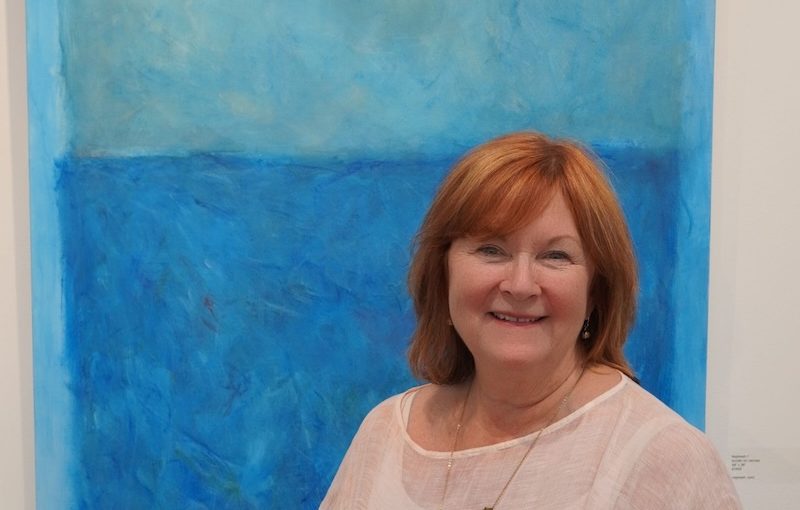
Sarah Dobbs is the new manager of the Sidney and Gertrude Zack Gallery at the Jewish Community Centre of Greater Vancouver. (photo from Zack Gallery)\

The Sidney and Gertrude Zack Gallery has a new manager, Sarah Dobbs, who showed an early affinity for her chosen field.

“My first time as a gallery host happened when I was about 8 years old,” she told the Independent. “My father was a journalist and a travel writer, and we lived in many countries when I was young: Spain, France, Morocco. Everywhere, my parents took me to art galleries, and I loved it.

“In the 1960s, while we were in Mexico, we often went to the local market. My father bought colourful folk sculptures. It was long before they became popular, we started collecting them. After we returned to Toronto, my family decided to have an exhibition of our collection. I was there, too. I enjoyed talking to people who came to see the show. I told them stories about this sculpture and that one. I liked sharing another culture with the people in my city. This entire experience had a huge impact on me. Even though I was young, I realized that art was storytelling. Art reflects our understanding of people and cultures.”

After receiving her degree in art history from the University of British Columbia and a master’s of education from the University of Toronto, Dobbs worked in the art world for more than 30 years.

“I ran commercial galleries and public galleries,” she said. “In the mid-’90s, I opened my own gallery, where I displayed mostly abstract art. I love abstract. Anyone can read their own story in an abstract painting.”

One of Dobbs’s most interesting projects happened when she was the director of the Burnaby Art Gallery.

“Part of my job there was to increase our interactions with the community,” she 

explained. “I started an outreach program for people who would never go to an art gallery on their own, specifically youths right out of jail. They were young. Most of them had yet to graduate from high school. We gave them disposable cameras and suggested they take photos of what was important in their lives (but not drugs). Then they would do collages of their photos and we displayed those collages in local bus shelters. Those collages reflected the teens’ lives, perhaps helped them to come to terms with it. The collages were also an opportunity for all of them to share their lives and their concerns with the wider public. I’m proud to say that all of our participants graduated from high school.” 

Projects like this, integrating art and public awareness, have accompanied Dobbs throughout her career. From 2002 to 2008, she worked in Ireland, at the National Gallery of Ireland and at the Irish Museum of Modern Art.

“We worked with hospital patients, but it wasn’t art therapy,” she said of that experience. “It was just doing art, participating. It reminded sick people of their healthy selves.”

Everywhere she has worked, Dobbs has helped people tell their stories through art, helped them deal with their suffering.

“In 2004, I was invited by a nurses’ charity to go to Sri Lanka for five weeks, to help the tsunami victims,” she recalled. “So many died there, children, old people. So much pain. I tried to do what I could to help, to ease that pain – I brought 98 kilos of art supplies with me.”

Later, in Kenya, she lived in a women’s peace-building village for a time.

“There were women from different tribes there, the tribes that were at war, that committed atrocities towards each other. But those women tried to build peace,” said Dobbs. “We would sit together and share stories. When women from different tribes saw similarities in their stories, felt their stories resonate with everyone, it helped in the peace-building process.”   

Dobbs has curated about 200 art exhibitions. In her opinion, deep knowledge of the art world is only part of being a successful curator.

“Of course, you have to be passionate about art,” she said. “But you also have to be very organized. You need to be patient with the artists – they are very sensitive. Encouraging artists, especially young artists, boosting their confidence is paramount. It helps them tell their stories. And you also need to be aware of who is going to see the art – to keep balance between artistic expression and public understanding. Sometimes, the latter could be a challenge. Another ongoing challenge is convincing people that art has value.”  

Those challenges can be exhausting, and even a successful art curator occasionally needs a break. Dobbs took such a break during the pandemic. The timing made sense, as most public spaces closed in 2020.

“For three years, I ran an integrated clinic, including traditional medicine, a naturopath, a massage therapist, etc. A break is good,” she said, “but I always come back to art. Sharing art with everyone is my joy.”

That’s why when the JCC announced that the Zack Gallery needed a new manager, she applied for the position.

“I have known about the Zack Gallery forever,” Dobbs said. “It is a wonderful place, a blend between a public gallery and a commercial art space. The gallery runs community exhibits. There is a theatre next door, which brings people in before the shows and during the intermissions. Children come in often. That is how art education starts for most of us, when a child wanders into an art gallery.” 

Olga Livshin is a Vancouver freelance writer. She can be reached at olgagodim@gmail.com.

Plays offer understanding, release

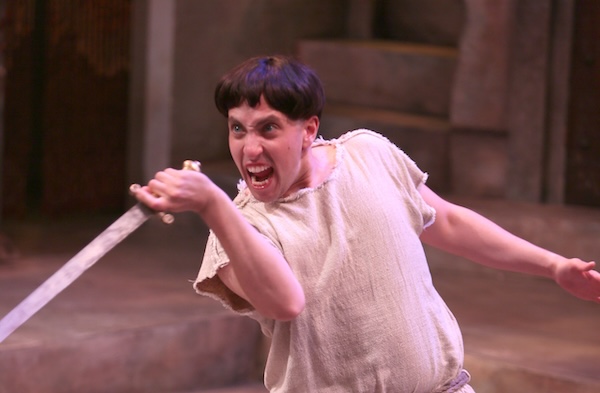
Dromio in The Comedy of Errors. Bard on the Beach runs into September. (photo by Tim Matheson)

Every day, we are bombarded with news about war, hate, crime, inflation, the list goes on. How to make sense of it all? Often, good theatre can provide deeper meaning and understanding of the world, or at least offer us a break from the world. Cue Shakespeare and his 400-year-old lens that is remarkably accurate in contemporary times…. And that takes us to Bard on the Beach.

Last issue, I reviewed Bard’s productions of Twelfth Night and Hamlet (jewishindependent.ca/bard-plays-with-tradition). This issue, I start with Measure for Measure, then move to The Comedy of Errors.

In Shakespeare’s Measure for Measure, the Duke of Vienna has enacted laws outlawing sex between unmarried couples. He then leaves the city in the control of puritanical Angelo and disguises himself as a friar to observe what happens. A young man, Claudio, is prosecuted for the crime of impregnating his girlfriend and is sentenced to death. When the condemned man’s virginal sister, Isabella, a novitiate in a local nunnery, comes to plead for his life, Angelo is smitten. He offers to save Claudio’s life if Isabella will sleep with him. What a great platform to explore the male hierarchy, corruption, sexual predators, coercion and authoritarian control.

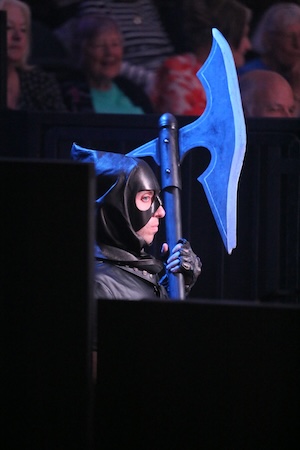
photo - Tal Shulman as Abhorson in Measure for Measure
Tal Shulman as Abhorson in Measure for Measure. (photo by Tim Matheson)

In the Bard production, director Jivesh Parasram has taken the story and, in an absurdist twist, made premarital dancing the offence punishable by death. The setting: the disco-crazed 1970s and ’80s, in the glitzy Club Europa. Act 1 opens with hooded monks frenetically dancing on a neon-lit dance floor replete with a disco ball, presided over by a silver-clad, fox-head-wearing DJ (Jewish community member Tal Shulman, who later does duty as the black-hooded executioner, Abhorson). The Duke (a superb Scott Bellis) rips off his monk robes to reveal a sparkly suit as he dances his way over to Angelo (a staid, suspendered Craig Erickson) and hands him authority over the city. The edict is given – tansen verboten (dancing forbidden) – but that does not stop an erotic pas de deux between Claudio (Jeremy Lewis) and Julietta (Tess Degenstein), leading to Claudio’s arrest and imprisonment.

When Isabella (Meaghan Chenosky) is told of her brother’s fate by Lucio (Karthik Kadam), she rushes to Angelo’s office. At first, she is rebuffed but then Angelo offers her Claudio’s life in return for a dance. She grapples with the request, wanting to save her brother’s life, but refuses, threatening to expose Angelo’s hypocrisy. His response: no one will believe her. Sound familiar? 

To save Claudio’s life and retain Isabella’s chastity, a plan is hatched to switch Mariana (Leslie Dos Remdios), Angelo’s previous lover, to dance with the cad. A huge panda bear head is part of the subterfuge.

Meanwhile, there is a side story of two “dance hall workers,” who are worried about the morality laws and the impact they will have on their “business.” The pair become involved in the plot to free Claudio. For how it all ends, you’ll have to see the play.

Throughout the production, the foxy DJ pops up to play the hit tunes as the cast busts out into various, often raunchy, dance moves. Kadam also plays Master Kevin Bacon and performs some impressive footwork to the theme song from the movie Footloose.

The set is fab (thanks to designer Ryan Cormack), the costumes hip (credit to Alaia Hamer), the dancing energetic (kudos to choreographer Krystal Kiran) and the oldies but goodies nostalgia-inducing. If the opening night audience reaction is any measure of its success, Bard’s take on Shakespeare’s “problem play” is destined to be the hit of the season. It certainly will bring in a younger crowd. 

***

Playing on alternate nights with Measure for Measure (and with the same cast) is Shakespeare’s shortest work, The Comedy of Errors, about two sets of identical twins separated at birth in a shipwreck. Egeon (Bellis), a merchant from Syracuse and father of one of the sets of twins, has been arrested and sentenced to death in Ephesus for breaking a law that prevents people from traveling between the two cities. Seeking leniency, he tells the Duke (Degenstein) why he is there. Many years before, he had a wife and identical twin sons (both named Antipholus), who had identical twin servants (both named Dromio). During the shipwreck, he saved one son and his servant while his wife and the other son and servant were washed away. His Syracusean son, Antipholous, has taken Dromio to look for his lost brother. Now Egeon is looking for both his sons. A 24-hour reprieve is granted. Conveniently and unbeknownst to anyone, both sets of identical twins are in Ephesus. Of course, that sets the scene for confusion, mistaken identities, slapstick humour and hilarious miscues. There even is a goofy exorcism.

Director Rebecca Northan (who helmed last year’s Goblin Macbeth) has set the play in its proper period, ancient Greece. Once in the tent, you feel like you are in an open Mediterranean market with colourfully decked out vendors hawking their wares – silks, carpets, gold – mingling with the audience as they take their seats.

Northan has chosen to have one actor play both twins in a set, which can be confusing and will keep you on your toes. Lanky Antipholus (Lewis) wears a red and blue shoulder sash. When the red side is showing, he is from Syracuse; the blue, Ephesus. Meanwhile, diminutive Dromio (Shulman) also uses red/blue swatches to signal his identity. Shulman is very funny and his talent is evident as he frantically races around the stage, and in and out of the tent. 

The main confusion surrounds the purchase of a gold chain that has yet to be paid for although money has been tendered. Where is the necklace? Who has the money? Who paid for what?

The second area of confusion is the relationship between Ariana (Chenosky), the wife the Ephesian Antipholus and her husband, who likes to “go out with the boys.” When she sends her servant to fetch him home and finds that he does not recognize her (wrong twin) and that he has fallen for her sister, Luciana (Cynthia Yusuf), she explodes. In all of this, Kadam, playing both a coquettish courtesan and an Urdu-speaking merchant, steals the show. I wish he had been on stage more.

As usual in any Bard comedy, all’s well that ends well and all becomes clear. Tying everything together is great behind-the-scenes work: the set (Cormack), costuming (Christine Reimer), sound design (Ben Elliott) and lighting design (Hina Nisihoka). My only complaint is that, as the actors did not have microphones, some of the dialogue is lost. And some of the shtick works and some does not, but it is in the name after all – a comedy of errors. Come early to take advantage of the artisan market set outside the performance venue.

For tickets to any of the four Bard productions, visit bardonthebeach.org or call 604-739-0559. 

Tova Kornfeld is a Vancouver freelance writer and lawyer.

Grateful to do what she loves

Advah Soudack (photo courtesy)

I watched Hallmark’s Love, Lights, Hanukkah! on television but never imagined that I would meet the actress who played Becky Berman, the lead character’s half-sister. But Advah Soudack lives right here in East Vancouver. 

This spring, I organized a series of Playback theatre classes for people with lived experiences of mental health challenges and addictions, which was funded by the Consumer Initiative Fund. Laen Hershler, a member of Vancouver Playback Theatre, recommended Soudack to teach the classes.

Soudack taught with enthusiasm, determination and emotional honesty. She gained the trust of the students quickly and soon they were leaping up on stage to improvise one another’s stories and emotions. 

“I had a wonderful time teaching Playback these past few weeks,” she said. “I was amazed and inspired by the bravery I witnessed in the class. I loved working with a group of artists coming from all walks of life, some with years of theatre and improv experience and others with very little.

“I think the thing I enjoyed most about teaching Playback … with this specific group of individuals, was witnessing a group of people who didn’t know each other at first, come together, play, explore, trust, allow themselves to be vulnerable, share with open hearts, let go and create together as if they had been working as a troupe for a long time.” 

Soudack’s enthusiasm for the theatre began when she was a child.

“I grew up with a lot of music in my home. My dad was very musical and played the piano, and my mom was always singing around the house,” she said.

“In elementary school, I had a music teacher named Donna Piper and she saw my flair for performing and told my parents to take me to audition for The Music Man with a company called Greater Vancouver Opera Society,” she added. “At 8 years old, in leggings my mom had bought me in France, a fitted T-shirt and a funky baseball hat, I sang ‘Wadda Wadda Wadda’ and played the air trumpet. I got the part!” 

photo - Advah Soudack
Advah Soudack (photo courtesy)

Soudack regularly teaches improv to children. For several years, she took her considerable talent to Perry Ehrlich’s Gotta Sing! Gotta Dance! performing arts summer camp at the Jewish Community Centre of Greater Vancouver. There, she taught improv and ensemble-building exercises and assisted director Chris McGregor. She also “created and ran the finishing school program, which taught kids audition skills, from entering the audition room to character creation, and how to prepare monologues and songs.”

Soudack recently completed two seasons at Bard on the Beach with A Midsummer Night’s Dream and Henry V. Other recent theatre credits include Courage Now, The House at Pooh Corner and a touring production of Glory. You may have seen her on television in Blockbuster and/or The Christmas Contest. She is also known for her work as an actor in animated films, including My Little Pony, Polly Pocket, Lego Friends, Beyblade Burst Evolution and Adventures of Ayuma. 

She says that all the roles she has played have been challenging and fulfilling. 

“I feel like I have grown and learned from every role I have played and every theatre project I have been part of,” she said. “I guess one role that sticks out for me is the role of Lucille Frank from Parade, which I portrayed about six years ago with Fighting Chance Productions. This was one of the first roles back from a hiatus I had taken from theatre. I had been forcing myself to audition again, anything that came my way, even if I was scared sh*tless.”

When she got the role, she began a journey into the world of Leo and Lucille Frank. Leo Frank was wrongfully convicted of murdering a young girl in 1913, and was lynched by a mob who broke into the prison when his death sentence was commuted to life imprisonment. Lucille Frank defended her husband through everything, dying in 1957, long before Leo Frank was posthumously pardoned in 1986.

“I was at the downtown library for days and spent many hours reading old, archived newspaper articles about the case, reading books and looking up everything I could find that had information about the young, Jewish couple living in Atlanta, Ga.,” said Soudack, adding that the roles she finds most exciting are the ones based on real people and events. When the research involves history, she is always extra excited.

“I feel very honoured that I have had the opportunities that I have had to work in the arts in Vancouver,” she said. “I feel very grateful to be able to do what I love and what inspires me and makes my heart feel full. It is also a gift to be a vessel for others’ stories and bring them to life for this community.” 

Soudack spent time in Israel about 10 years ago. 

“When Oct. 7 happened, I felt very strongly about going. I am still wanting to go and plan to make a trip in the near future,” she said. “I have so many family members in Israel and it feels like a second home. Whenever I am there I always think, ‘OK, this is home, I feel like I belong here.’ There is something about the energy of the country and the people that makes me feel alive and vibrant.”

Soudack is a proud graduate of the University of Alberta’s bachelor of fine arts’ acting program. In Hebrew, Advah means “little wave” or “crest of the wave.” 

Cassandra Freeman is a journalist and improviser who lives in East Vancouver.
Bard plays with tradition

Nathan Kay as Sir Andrew in Bard on the Beach’s production of Twelfth Night. (photo by Tim Matheson)

Summer is here again and with it comes that perennial favourite, Bard on the Beach. This year, the BMO Main Stage hosts Twelfth Night and Hamlet, well into September.

First up, Twelfth Night, from Shakespeare’s later period, was written to provide light entertainment for the close of the 12 days of Christmas. Director Diana Donnelly’s adaptation for this comedy is to set it in a carnival-like atmosphere in Illyria, to take advantage of the chaotic shenanigans served up in the narrative (including a fight scene using table tennis paddles). As stated in the show notes, “Illyria is peopled with a bizarre mix of characters: a ringmaster, strongman, rocketman, clowns, pirates and several fortune tellers.”

In Twelfth Night, twins Viola (Kate Besworth) and Sebastian (Charlie Gallant) are separated after a shipwreck. Viola washes up on the shores of Illyria into the midst of the circus. Thinking that her brother has perished, she disguises herself as a man (Cesario) to work for magician Count Orsino (Aidan Correia). Meanwhile, the Count is trying to woo circus star Countess Olivia (Olivia Hutt) and sends Cesario out to do the deed. However, Olivia is not interested in the Count, being preoccupied with other tragic events in her life, and falls for the messenger while the messenger falls for the Count, making for an interesting love triangle.

Add to the mix Olivia’s drunk-but-well-meaning uncle Sir Toby Belch (Marcus Youssef) and his foolish sidekick Sir Andrew Aguecheek (Nathan Kay), cunning maid Maria (Evelyn Chew), the Fool (Anton Lipovetsky, doing double duty as musical director) and, in a gender reversal, the Countess’s puritanical, let-there-be-no-fun manager Malvolia (Dawn Petten), who secretly pines for the Countess, and the mayhem takes off. Amid all this, Sebastian reappears on the Illyrian scene, leading to comical mistaken identity scenarios. 

You might as well call this Bard iteration Twelfth Night: The Musical, as cast members often burst into song – terrific original ones by local composer Veda Hille – giving credence to a famous line in the play, “If music be the food of love, play on.” While I found the first act somewhat disjointed and confusing, trying to figure out what was going on when and with whom, the second act saved the day and the enthusiastic cast/music made up for any shortcomings in this adaptation.

To that end, kudos to understudy Besworth, who got the call a day before opening night to step into the shoes of Camille Legg and, without the benefit of rehearsal, gave a sublime performance. Hutt is charming as the Countess, Youssef is as good-humoured as you can get and Gallant does able double duty for the musical bits with guitar and drum work. Bard veteran Andrew Wheeler is the Ringmaster and controls the pace of the circus (when he can). Petten is a standout and takes the concept of emoting to new heights in a sparkly yellow cat suit when she is spun around on the “Wheel of Misfortune,” while being punished by Belch and his cronies for her kill-joy attitude. Very much an ensemble cast, special mention has to be made of the two Jewish community cast members, Kay and Lipovetsky, whose comedic timing and antics will keep you in stitches. 

Costumer Mara Gottler has scored a home run with costumes that can only be described as fabulous – particularly Hutt’s colourful sequined frock and a flowing, white, asymmetrically hemmed wedding dress (I want this dress!) complemented with black suede stiletto boots. All the costumes are suggestive of a carnival and set designer Pam Johnson gives the audience a multi-hued circus with colourful games, ladders, balls and banners. 

Purists may wince at the liberties taken with the original script but this production will be a hit with those in the summer crowd who are looking for a Shakespeare Lite experience.

For something completely different, there’s Hamlet. I loved, loved, loved it! I have seen many productions of Hamlet but this one is by far the one that gave me the most clarity in understanding the story. This is Shakespeare at his finest. 

Stephen Drover, adapter and director, in a brilliant twist of chronology, starts the play off with Hamlet on stage orating the suicide soliloquy (usually in the third act). Right away, we see the angst of the prince as he grapples with life and death (“to be or not to be”). His life is a mess – his uncle Claudius kills his father, the king of Denmark, and takes the throne; his mother, Queen Gertrude, marries Claudius; his best friends from university, uildenstern and Rosencrantz, betray him; and his girlfriend, Ophelia, kills herself. What’s left to live for? It is the dread of what might come after death that “makes cowards of us all” and so Hamlet chooses life on this “mortal coil.”

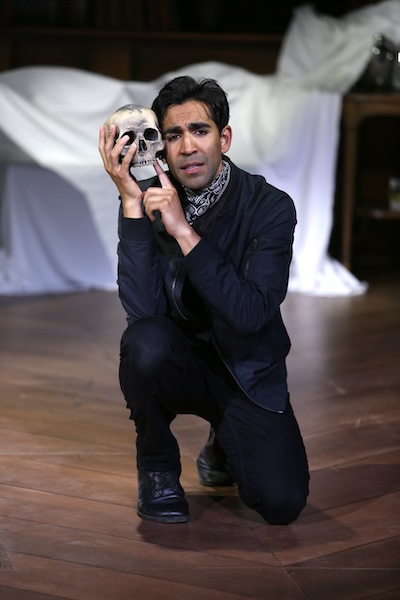
photo - Nadeem Phillip Umar Khitab as the title character in Bard’s Hamlet
Nadeem Phillip Umar Khitab as the title character in Bard’s Hamlet. (photo by Tim Matheson)

Hamlet is set on his fateful path by an eerie visit from the ghost of his father, who describes his murder most foul and importunes his son to avenge his death. Feigning madness, Hamlet sets off to right what is rotten in Denmark amid the wealth and power of the royal court. 

The action includes a foray into a graveyard where actor Lipovetsky injects some moments of lightness into an otherwise dark tale with his comedic take on the gravedigger. We also are privy to the funeral of Ophelia and, in the finale, an epic fencing duel culminates in multiple deaths, including a poignant farewell for Hamlet. Kudos to fight director Jonathan Hawley Purvis for his choreography of this sequence. Choreographer Lisa Goebels also provides some stunning freeze frame dance moments showcasing some fancy footwork by the older royals.

In another interesting staging twist, the original play-within-a-play device, which mimics the king’s death (poison in his ear), becomes a song from traveling performers, played by Christine Quintana and Lipovetsky.

Pam Johnson’s set is a cavernous library with floor-to-ceiling bookshelves and secret doors that allow the actors to enter and exit the stage seamlessly. A huge crown hangs from the ceiling and plays a critical role in the final scene. Being set in the present time allows for contemporary costumes – tattered jeans, T-shirts for the young, fitted dresses and pant suits for Gertrude and double-breasted suits for the older gents, courtesy of costume designer Barbara Clayden. 

While this is Hamlet’s story, it really is only made possible through the teamwork of a very skilled cast. Nadeem Phillip Umar Khitab is the quintessential Hamlet, with his physical presence and determination palpable as he undertakes his filial task of revenge. (Starting Sept. 2, Hamlet will be played by Chirag Naik.) Besworth is an ethereal Ophelia who sees no option but to take her life when both her brother, Laertes (Kay), and her father, Polonius (Wheeler), forbid her to have anything to do with Hamlet. Munish Sharma plays Claudius; Jennifer Clement, Gertrude; Ivy Charles and Aidan Correia, Guildenstern and Rosencrantz; and Youssef, the Ghost.

For tickets to any of the Bard productions, visit bardonthebeach.org or 604-739-0559. Comedy of Errors and Measure for Measure run on the smaller Howard Family Stage. 

Tova Kornfeld is a Vancouver freelance writer and lawyer.

Photos depict Oct. 7 trauma

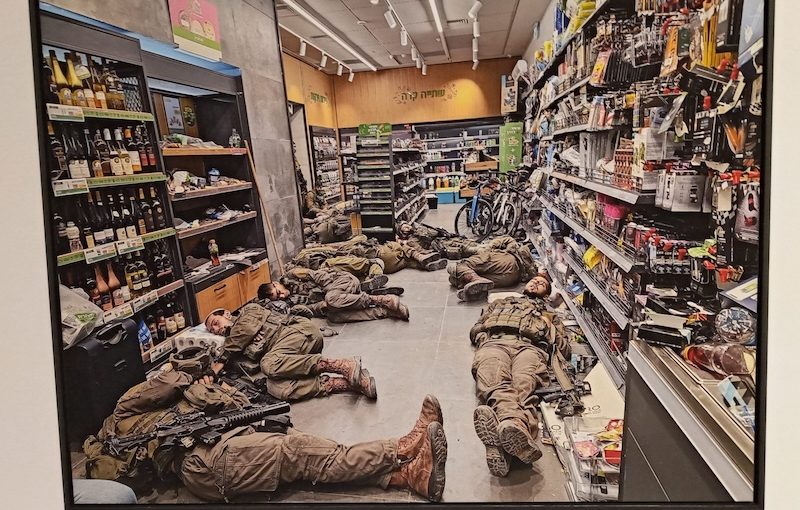
Batia Holini’s photo of Israeli soldiers sleeping on the floor of a grocery store near Kfar Aza on Oct. 8 is one of the works in the exhibit Album Darom. (photo by Gil Zohar)

Album Darom: Israeli Photographers in Tribute to the People of the Western Negev, which opened recently for a six-month temporary installation at the Petach Tikva Museum of Art, is the first group artistic endeavour in Israel to confront the tragedy of Hamas’s Oct. 7, 2023, massacre and the subsequent Gaza War, now in its 10th month. The ambitious tripartite installation Album Darom (Hebrew for Southern Album) incorporates a Facebook diary; a printed book of photographs accompanied by essays (published by Yedioth Ahronoth); and the museum exhibit.

Initiated by Prof. Dana Arieli, dean of the faculty of design at the Holon Institute of Technology, together with chief curator Irena Gordon, the project showcases 150 photographs, art installations and texts documenting the story of the western Negev region before and after Oct. 7. The exhibit includes the perspectives of 107 photographers and artists. Some of the participants in the album are world-renowned, others are amateurs. Lavi Lipshitz, the youngest featured photographer, lost his life fighting in Gaza. His mother penned the text accompanying his images.

The works in the album represent different photographic practices: artistic, personal and some staged, the intense images are upsetting. As well they should be in confronting mass murder.

Before walking around a corner to see Lali Fruhelig’s gruesome 3-D installation suggesting a corpse sprawled on the floor of a living room, a sign cautions: “The exhibition contains some potentially disturbing contents. Viewer discretion is advised.”

Arieli, a history professor and a photographer who explores remembrance culture and cultural manifestations of trauma, began the Album Darom project shortly after the Gaza war broke out.

“When something’s traumatic, you have to work or do something,” she said. 

Shocked by the murder of her friend Gideon Pauker from Kibbutz Nir Oz – who was killed just before his 80th birthday – she posted 100 daily historic and contemporary images of the Western Negev.

Initially, Arieli intended Album Darom to be exhibited at Kibbutz Yad Mordechai Museum just north of the Gaza Strip frontier. After the museum was damaged by rocket fire, this wasn’t feasible. Instead, she selected Petach Tikvah as the venue. She explained that the site – the first Yad Labanim memorial to fallen Israel Defence Forces soldiers from the War of Independence – is meant to be relevant to all Israelis. The museum offers free admission on Saturday, so observant Jews may visit on Shabbat.

Speaking to a group of journalists, Arieli compared Oct. 7 to the Nov. 4, 1995, assassination of then-prime minister Yitzhak Rabin. “Everyone is frozen in their memory of where they were,” she said.

Arieli and Gordon emphasized the intended cathartic nature of the exhibit. The two said the museum is a “safe space” and a “place for healing.” After experiencing the horrors of Oct. 7, Gordon found solace in this project, she added. “This is part of how we are coping with it all,” she said.

Miki Kratsman is one of the photographers whose depiction of his Oct. 7 nightmare is in the exhibit. Terrorists took his aunt Ophelia hostage from her home in Kibbutz Nir Oz. She was later released from Gaza in the November hostage exchange deal. 

Kratsman’s photograph, “In Aunt Ophelia’s Neighbourhood,” captures a modest kibbutz home collapsing as it is immolated in a fireball. 

“These are the kinds of things that need to be in a museum,” Arieli said of the photograph. “You’re looking at the destruction of Nir Oz.”

While vividly showing the devastation of the kibbutz, the burning home photograph is an enigma, and creates dialogue, she added.

But it is the human toll rather than the destroyed real estate that is most painful. Paradoxically, perhaps, Batia Holini’s peaceful photo of exhausted IDF soldiers sleeping on the floor of a grocery store near Kfar Aza on Oct. 8 hints at the savage warfare in which they have been engaged.

photo - “Funeral of Five Members of the Kutz Family who were Murdered in Kfar Aza,” a photo by Avishag Shaar-Yashuv
“Funeral of Five Members of the Kutz Family who were Murdered in Kfar Aza,” a photo by Avishag Shaar-Yashuv. (photo by Gil Zohar)

Avishag Shaar-Yashuv’s photograph, “Funeral of Five Members of the Kutz Family who were Murdered in Kfar Aza,” captures the searing emotion of the funeral of a family annihilated in the Hamas attack.

“I tried to focus and also wipe the tears at the same time,” Shaar-Yashuv said.

For this reviewer, the most symbolic part of the exhibit was a taxidermy display of a doe entitled “Bambi.” The exhibit references Felix Salten’s 1923 novel Bambi: A Life in the Woods and the 1942 animated movie produced by Walt Disney. Metaphorically, the hapless baby deer represents both the Six Million victims of the Holocaust and the 1,200 people murdered on Oct. 7.

Viewing Album Darom, one could conclude that the myth of the state of Israel protecting its citizens has been shattered. Arguably, Israelis today are no more secure than their ancestors were facing the Kishinev Pogrom of 1903, the Hebron Massacre of 1929 or the Farhud in Baghdad in 1941. 

Gil Zohar is a writer and tour guide in Jerusalem.

A love affair that lasts

Sarah Heyman and Jerry Callaghan co-star in Bema Productions’ Same Time, Another Year, which opens July 17 at Congregation Emanu-El’s Black Box Theatre. (photo from Bema Productions)

From July 17 to 28, Bema Productions will be staging Same Time, Another Year, the sequel to Bernard Slade’s Broadway hit Same Time, Next Year, at Congregation Emanu-El’s Black Box Theatre.

The sequel catches up with Doris and George, who, in the first instalment, have carried on a long-standing love affair – meeting each other for a weekend once a year despite being married to others. Same Time, Another Year starts on their 25th anniversary, in 1976, and continues through their subsequent February rendezvous over the next 17 years.

The pair are now in their late sixties, faced with the responsibilities and consequences of life, all the while reexamining love beyond their annual assignation and the romance contained within it. Told in six scenes, and against the backdrop of the late 20th century, their affair and their perspectives on their relationship evolve and change. Along the way, there are illnesses, career successes and setbacks, second marriages, second families, and grandchildren.

“I knew that many of our patrons would remember Same Time, Next Year and, like me, wonder what happened to George and Doris 25 years later. I have had quite a few [people] tell me this since the advertising went out,” said Zelda Dean, founder and managing artistic director of Bema. “Maybe because I am ‘that age,’ the play spoke to me, as it addresses what we all have to face as we age – the fears that everyone has about their health and about losing the ones we love.”

Doris and George form a special bond beyond the bedroom, one with its own sincerity. Further, they provide a kind of gauge for what happens in the other’s life.

Dean told the Independent that what she likes most about the play is the unique relationship that develops over the many years, although the characters only meet once a year. She feels that audiences will enjoy the continuation of their journey.

Dean added that it has been a delight to work with the two leads, Sarah Heyman and Jerry Callaghan, whom she described as two very gifted actors. Both have been in the business for several years and are also close friends, which, Dean explained, made it easier for them to portray the relationship between the couple. 

“A ‘two-hander’ is always a challenge for the actors. Of course, many lines have to be learned and there is never time for a break on stage,” Dean said. “This particular play has six scenes, mostly four years apart. This means the actors have to change their costumes in two minutes or less. Much harder than one would think, especially standing in the wings.”

A Canadian playwright and actor, Slade created two popular television series in the late 1960s and early 1970s, The Flying Nun and The Partridge Family. He also wrote for Bewitched and The Courtship of Eddie’s Father, among others. He began his career as an actor, performing in more than 200 plays on stage, radio and television, in regional theatres around Toronto and on camera for the CBC.  By the mid-1970s, Slade turned his comedic focus to the stage and wrote more than a dozen plays.

One of the most produced and successful two-person plays, Same Time, Next Year opened on Broadway in March 1975, originally starring Ellen Burstyn and Charles Grodin, and ran for more than 1,400 shows during the course of nearly four years. It toured across the United States, played in London and was translated into several languages. It was adapted into a film in 1978 that featured Burstyn and Alan Alda. 

It has been said that Slade’s strength as a writer derives from his ability to fill the characters’ lives with events of great richness and depth, and still maintain the easy lightness so important to a romantic comedy – with strong dialogue and a consistent, realistic and emotional tone. The theme of Same Time, Another Year, as well as the original, is that few (if any) relationships fit into neat boxes, and each has its own rhythm and place in people’s lives.

For more information, showtimes and tickets, visit Bema’s website, bemaproductions.com. 

Sam Margolis has written for the Globe and Mail, the National Post, UPI and MSNBC.

Tempest musical exploration

Shayna Goldberg (photo from Music on Main)

The Tempest Project is a roving musical adventure that will see audiences taken on a journey, both literally and figuratively,” Shayna Goldberg told the Independent.

“Audiences will be led through the entire Vancouver Playhouse by guides, moving between spaces, through the theatre, hallways and stairwells, through the usual lobbies to the very unexpected,” she said. “While The Tempest Project is not a re-telling of the famous work, it is filled with storms and magic and wonder, and we believe it will leave audiences breathless.”

Goldberg is artistic planning and operations manager of Music on Main, which presents The Tempest Project July 17-22 at the Playhouse. She co-leads the production with artistic director David Pay.

“Audiences can expect a unique opportunity to listen together,” said Goldberg. “While traveling through the Playhouse, our hope is that audiences will experience what David Pay says music does best: convey emotions and feelings that cannot easily be put into words.”

On the route through the theatre, there will be live performances, recordings, projections, audio-and-optical illusions, and more. 

Pay began thinking about The Tempest Project in 2017, but development began in 2020, when the pandemic started and in-person gatherings weren’t permitted, said Goldberg. The first production was As dreams are made, “a beautifully intimate experience for one audience member with one musician (very pandemic friendly) and a sensational soundscape with a recording of a speech from Shakespeare’s play,” said Goldberg.

“Following the success of that first experiment into this project, we began working with local artists to explore the themes from The Tempest and how they could fit into a full-scale production,” she explained. “We did a lot of ensemble work with The Tempest Project Company, exploring how their insights, musical backgrounds and lived experiences could all contribute to devising creative ideas. Working with these amazing musicians over the past five years has certainly been a highlight to this entire process.

“As we enter the final phase, we are taking all of the things we learned as a team to create the world première! We knew that we wanted The Tempest Project to be something memorable and I think that, with the expert team we have assembled and by being in the Vancouver Playhouse, we’ll definitely achieve that.”

The musicians are Julia Ulehla, vocals; Paolo Bortolussi, flute; Aram Bajakian, guitar; Saina Khaledi, santour; Dailin Hsieh, zheng; Julia Chien, percussion; Jonathan Lo, cello; and Rachel Kiyo Iwaasa, piano. Dramaturg Melanie Yeats and production manager Alexis Douglas are part of the creative team.

Pieces have been commissioned from Khaledi; musician and storyteller Gabriel Kahane; Nancy Tam, who specializes in sound creations; and Alfredo Santa Ana, whose compositions range from the classical to electronic. There also will be improvised arrangements based on Solange’s “Things I Imagined,” and other works.

“David chose musicians who connect with audiences, have widely different but complementary music-making practices, and who reflect different aspects of the city we live in,” explained Goldberg. “The instrumentation of the ensemble is super varied…. It’s definitely not a typical ensemble! But the friendships and working relationships we’ve all forged as artists was one of the outcomes we were hoping for back in 2020 when we first invited everyone together.”

Goldberg has been working with Music on Main and Pay since 2018, when she joined the organization. 

“I’ve been lucky over the past 10 years to work with multiple companies, including almost five years at Pi Theatre. When I saw the posting for Music on Main, it felt like just the right challenge to me and, fortunately, they thought so, too,” said Goldberg, who has known from a young age that she wanted a career in the arts.

“I’ve always been a bit of a performer, maybe a tad dramatic, and I found that arts management was the right place for me and where I could help bring productions to life!” she said.

“While working with the Classical Theatre Project in Toronto, I felt a need to do more than be a group sales and company manager, and that led me back to school,” she said. “I never imagined that I’d complete an MBA, but the MBA with an arts and media management diploma from the Schulich School of Business was exactly what I was looking for. It provided me with the education to take my career to the next level, and the guts to move out to Vancouver, something I had always wanted to do.”

Since becoming a Vancouverite, Goldberg said she has “invested time in finding a strong and supportive community, and that has been primarily in the Jewish community. Shortly after moving here,” she said, “I was welcomed as a resident into the Moishe House and built some incredibly strong connections and friendships from that time. Also, through work with Na’amat Canada and the Axis Young Professionals program through Jewish Federation, I’ve really found my place here.”

And that includes, of course, her place at Music on Main.

“When I interviewed with David,” shared Goldberg, “I asked him what his next big project was and he said a large musical adventure exploring The Tempest. Now, coming from the theatre world and with a sincere love of Shakespeare, I was immediately excited. It took us awhile, but, when we were finally able to start the process, it was very much a labour of love on both our parts.”

For tickets to The Tempest Project, visit musiconmain.ca. 

Not-so-accessible city

Lenard Stanga as Hugh and Cadence Rush Quibell as Shiloh in Realwheels Theatre’s Disability Tour Bus podcast, which will be released July 17. (photo by Rashi Sethi)

On July 17, Realwheels Theatre releases its new production, Disability Tour Bus, as a radio play podcast available for streaming at realwheels.ca.

Written for podcast platforms by Amy Amantea and Jewish community member Rena Cohen, Disability Tour Bus follows Shiloh, a young wheelchair-user, as they navigate their first day as a guide for Funcouver Bus Tours. Working alongside longtime employee and relentless dad-joker Hugh, Shiloh struggles to stick to the Funcouver script when so much of “Canada’s most wheelchair-accessible city” is still so inaccessible. People and politics collide until a new passenger, Tess, comes aboard and offers common ground. The tour must go on! Because there’s someone special waiting for Tess at the end. At least she hopes there is.

The role of Hugh is played by Lenard Stanga, Jewish community member Cadence Rush Quibell plays Shiloh, and co-writer Amantea is Tess. The cast is rounded out by Mack Gordon, Caitlyn Bairstow, Ian Hanlin and Lauren Jackson playing multiple parts.

“As a wheelchair-user, I’ve heard that whole ‘most accessible city’ line a lot,” said Realwheels co-artistic director Adam Grant Warren. “It’s a big part of the reason I moved to Vancouver from the other side of the country. I’ve been here for 16 years now. After hundreds of busted elevators, torn-up sidewalks and too-full buses, I know Vancouver has a lot of work to do. Access-wise it means well, but it’s a mess sometimes. For me, that’s one of the most interesting tensions in this project: the attempt to create access when no one thought to ask what those of us who are looking for it actually need.” 

– Courtesy Realwheels Theatre

More CREATE! to enjoy

Eastside Arts Society presents CREATE! Eastside Arts Festival July 22-28. (photo by Wendy D)

Eastside Arts Society (EAS) presents the fourth edition of its newly expanded, immersive summer arts event, CREATE! Eastside Arts Festival, at various Eastside Arts District (EAD) venues from July 22-28, in addition to its traditional all-day outdoor festivities at Strathcona Park July 27.

“We are thrilled to see the evolution of the CREATE! Eastside Arts Festival into a true, district-wide event that illuminates all that the EAD has to offer,” said Esther Rausenberg, artistic and executive director of EAS, who is a member of the Jewish community. 

The festival will offer affordable ticketed art workshops and performances at pop-up locations. Community highlights include CREATE! pop-up art workshops at Off the Rail Brewing, Luppolo Brewing and Strange Fellows Brewing from July 22-26 and studio art workshops at 1000 Parker Street Studios, the Mergatroid Building and the Arts Factory on July 28; Canadian musical artist Paul Pigat at the Firehall Arts Centre on July 25; singer-songwriter Art Bergmann at the Rickshaw Theatre on July 26; a roving piano and dance performance from Mascall Dance on July 26; live mural painting by Eastside Culture Crawl co-founder Richard Tetrault at East 4th Avenue and Ontario Street from July 22-26; and more.

On July 27, the festival returns for a full day of festivities at Strathcona Park, with a series of outdoor art-making workshops taught by EAD artists, including weaving, summer florals, introduction to flamenco (all abilities), crochet, charcoal drawing, and a BIPOC expressive art workshop.

For the first time this year, CREATE! will partner with 604 Records and Light Organ Records to present a live music concert stage at Strathcona Park (July 27, 2-6 p.m.), featuring homegrown artists Haleluya Hailu, Fur Trade (Steven Bays and Parker Bosley from Hot Hot Heat) and Sarah Jane Scouten.

A free all-ages CREATE! Festival Concert pass will also include access to the festival’s Art Zone, featuring public art activities, beer garden, food trucks and Art Shop, sponsored by the Strathcona BIA. CREATE! Art Zone public art activities will include zine making; planting flowers and painting your own pot to keep; and cyanotype, a photographic printing process activated by the sun.

A curated selection of local handmade artworks and goods will be available at the Festival Art Shop, and visitors can enjoy a fully licensed beer garden, serving beer, cider and wine from Strange Fellows Brewing, as well as an assortment of food from food trucks including Camion Café, Midnight Joe’s and Varinicey Pakoras.

Also on July 27, participants in Eastside Arts Society’s 9th annual Art! Bike! Beer! Crawl Brewery Tour Fundraiser will end their day of cycling/walking and imbibing at the CREATE! Art Zone. All fundraiser proceeds will benefit the Eastside Arts Society’s yearly activities and community events.

Art workshops are $35 for youth/adults and $20 for flamenco and children’s workshops. Children under the age of 12 must be supervised by an adult. The general public can access festival activities with a free CREATE! Festival Concert pass, sponsored by the Strathcona BIA. For full festival details and ticket info, visit createartsfestival.ca. 

– Courtesy Eastside Arts Society