Emanuel busy making music

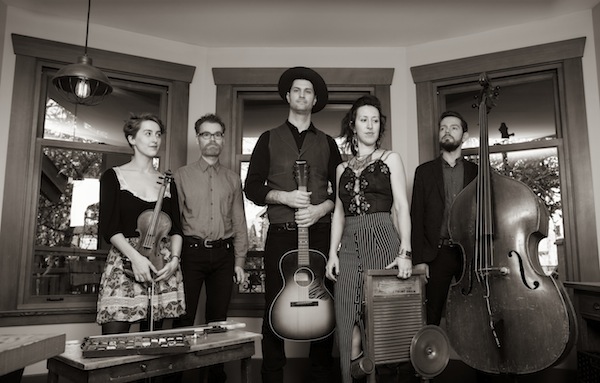
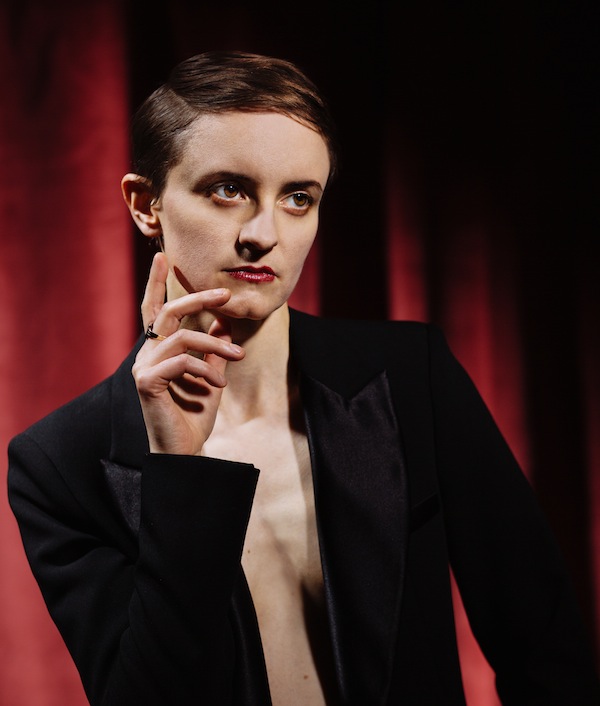
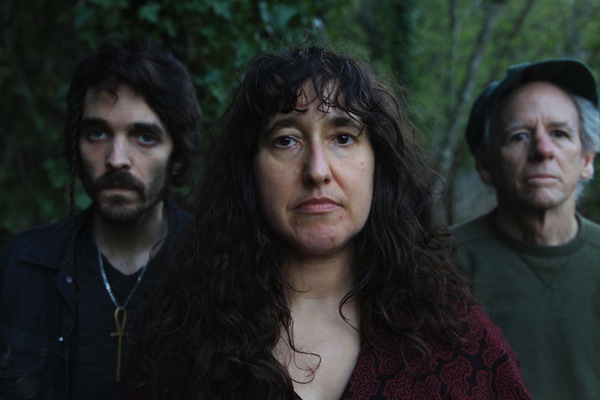
Megan Emanuel of the band Hello Victim. She and bandmates Adam Wilson and Spencer Daley released the single “Out of It Alive” on April 2. (photo from Megan Emanuel)

Megan Emanuel released a new single this month with her band Hello Victim and, last month, she launched a bi-weekly virtual concert series with fellow Jewish Vancouverite Andy Schichter, co-owner of Park Sound Studio.

“The concerts benefit local artists who have lost their income due to COVID-19 gathering restrictions,” Emanuel wrote in an email to the Independent. “Our weekly goal is $1,000 to split amongst the artists … to cover things like groceries and basic bills. Anything over $1,000 is donated to the Greater Vancouver Food Bank.”

The next concert will be live on Instagram (@parksoundbc) on May 2.

“Of course, the money isn’t the only important thing,” Emanuel noted, “and some of our favourite feedback from audience members has been their appreciation of the ability to feel somewhat ‘normal’ for a couple of hours, like there’s still a vibrant arts culture in Vancouver.”

Schichter has co-owned Park Sound Studio in North Vancouver with Emanuel’s fiancé, Dan Ponich, since 2017.

“When the pandemic hit, it was immediately apparent that musicians were going to be hit extremely hard,” Emanuel told the Independent. “Many artists work service industry jobs in order to maintain a lifestyle that allows for gig work and touring, and the rug was just pulled right out from under them and there seemed to be a need for relief. I contacted Andy because he is an organizational phenom and pretty familiar with putting shows together since Park Sound was hosting monthly showcases prior to all of this. We pulled the first virtual concert off days after chatting about it and were able to raise $1,200 overnight. Things have taken off immensely since.”

In addition to helping others, Emanuel is working on her own musical career. Hello Victim – comprised of Emanuel, Adam Wilson and Spencer Daley – released the single “Out of It Alive” on April 2. Produced and mixed by Ben Kaplan of Fader Mountain Sound (Mother Mother, Five Alarm Funk, Ninjaspy), the song is described as “a dramatic anthem for survivors of abuse.”

“We’ve all met the person this song is about,” Emanuel says in the press release, “That person who gives you a creepy ‘something about this is very wrong’ feeling in your gut.”

Ultimately, the song has a positive message. She explains in the release: “For those of us who are unlucky enough to become entangled with these types of people, times can get pretty scary and that toxicity stays with you for some time, even after they’re gone from your life…. This song is kind of like the phoenix’s flight; it’s the catastrophic rebirth from that very dark place when you realize that none of us gets out of this life alive, and the only justice that is in our individual power to serve is choosing to reject toxicity, move on from these people, and stop letting them live rent-free in our heads.”

Emanuel told the Independent that she first met Wilson in February 2018, while on an early-days date with her now-fiancé. As co-owner of Park Sound Studio, Ponich had been hired to handle sound for a music event at Luppolo Brewery, she said. “He texted me at some point during the night because my place was about a 10-minute walk away and, when I got there, I was introduced to a couple of his friends, one of whom was Adam (who he was playing in a band with at the time). Serendipitously, I’d made a Facebook post a matter of days prior along the lines of ‘girl seeks guitar player to write tell-all album with.’ I had just gotten out of a less-than-ideal relationship and I was at this point where I was ready to pull an Adele and sing about it where everyone could hear…. It took about five months for us to start working on music together.”

Emanuel liked the electronic compositions Wilson was creating for his Instagram stories, so she asked him if she could write a vocal melody and some lyrics for his music and, she said, “it took off from there and we went on writing remotely for awhile, sending each other voice notes of ideas over WhatsApp. When we started writing our song ‘Feel Slow,’ which we released back in July of 2019, Adam suggested we talk to his other bandmate Spencer about helping us out with writing a bass line. After working with him on that one tune, it was pretty clear he belonged in the band.”

Soon after the trio had finished a few songs, they were offered a spot at the Railway Club, which they accepted. “That ended up being my first live performance in eight years!” said Emanuel of that early 2018 gig.

“I learned a little while ago that I suffer from severe generalized anxiety disorder, so jumping back into live shows was a massive hurdle I had to figure out how to jump quite quickly,” she said. She attributed some of her ability to overcome that hurdle to Wilson and Daley, who, she said, “are not only incredible musicians, but amazing human beings who consistently make me feel safe and confident on stage.”

Emanuel has been in music since she was a kid, “with piano and voice lessons beginning at around 9. Pat Covernton taught me piano and Wendy Stuart was my voice teacher – both taught me for about 10 years. I also spent many, many summers in Gotta Sing! Gotta Dance! at the JCC and participated in the Jewish Federation’s events for Yom Ha’atzmaut, Yom Hazikaron and Yom Hashoah.

“Since I can remember,” she said, “being a musician is literally the only thing I’ve ever been able to identify as my ‘dream.’… I started writing music when I was 14 and went on to play small venues throughout Vancouver. In my last year of high school, I participated in the JCC’s Battle of the Bands and became the first and only solo, non-rock artist to win first place.

“After high school, I began traveling – first to Israel, then New York, then Melbourne – which meant that I put performing my music on hold, but continued to write in the absence of an audience.”

Emanuel attended both Vancouver Hebrew Academy and King David High School.

“I think my Jewish day school upbringing shaped the questions I’m looking to answer when I write music,” she said. “I wouldn’t say that my music is religious in any sense, but there’s such a distinct method of thinking within the Jewish community that I think is probably the product of generations of Talmud study, and I often find myself hearing it most when I’m writing. What’s the truth? What’s the point? Why are we here? How can I connect?”

For more information on the band and to watch the video for “Out of It Alive,” visit facebook.com/hellovictimofficial. To find out about the next virtual Park Sound Studio concert, visit parksoundstudio.com.


No barriers to music

Victoria composer Ari Kinarthy. (photo from Ari Kinarthy)

Victoria composer Ari Kinarthy has not let spinal muscular atrophy (type 2), a condition that has confined him to a wheelchair since the age of 6, inhibit his ability to create music. In fact, the very movements he makes in the wheelchair go into producing his music.

Using Soundbeam, an interactive hardware and software system that forms sounds from movements, Kinarthy’s music is recorded into multimedia platforms. For example, movements closer to the recording device establish lower notes and movements away spark the higher notes.

“I create all my music entirely with the computer. Sometimes, I will have access to a guitar player or singer but normally the music will be all done by the samples I use. I usually start with just piano and sometimes will write out a score. I think of a melody and/or harmony and continue from there. I love making themes,” Kinarthy, 30, told the Independent.

“I got into music at age 16 with music therapy sessions. I loved creating music. I started with remixing songs and then creating my own from scratch. I wanted to see what I could create and it just continued from there,” he said.

Starting out at the music therapy department at Canuck Place in Vancouver in 2006, he moved to the Victoria Conservatory of Music in 2007, where, over time and under the tutelage of music therapist Allan Slade, Kinarthy became adept at mastering the intricacies of his device.

The Soundbeam device, which looks like a large red microphone, is stationed in Kinarthy’s studio. It transmits ultrasonic sound, i.e., sound that is inaudible to the human ear, which, in turn, intersects with motion. This then transforms the resulting sound into MIDI, a digitized protocol for electronic instruments.

In 2012, Kinarthy released his first album, A Lion’s Journey, a play on his Hebrew name, Ari, which means lion. It featured an eclectic blend of many genres, including jazz and rock, mixed through the assistive technology. Though he is inspired by several music styles, he admits to loving orchestral music, specifically what one hears in Hollywood films, with Hans Zimmer and John Williams among his favourite composers.

When Soundbeam held an international competition to mark the company’s 25th anniversary in 2013, Kinarthy was one of two winners selected by a jury of musical heavyweights, which included Led Zeppelin bassist and keyboardist John Paul Jones, conductor Charles Hazelwood and composer Edward Williams.

“Pain E Motion,” the composition he presented, was lauded by the jury. Of it, Jones said, “A very interesting idea of performing live with a pre-recorded composition. A very good piece of work in its entirety.”

It was at that moment when Kinarthy decided he would devote himself further to studying music. He enrolled in the Berklee College of Music’s online program and received his certification in orchestration and music composition in film and TV in 2017, but not before releasing his follow-up album, A Lion’s Roar, which also delved into his extensive musical interests.

Judaism, too, has an important role in Kinarthy’s creative process, and his faith has been a source of inspiration. “I recently created a piece of music to honour my local temple. Creating music to share with my congregation made me very happy. I would say that Judaism has helped me share beautiful music,” he said.

After the High Holidays last year, Kinarthy wrote a song called “Kolot Mayim,” with lyrics in Hebrew and English, taken from the Book of Psalms.

His physical challenges have not infringed on his ability to perform live, which he has done on several occasions throughout Victoria.

Presently, Kinarthy is looking for people who might need original music for their project, as well as focusing on promotion and small personal pieces for family and friends.

“I don’t know if it will ever be a reality, but composing for visual media would be a dream come true, be it film, TV or even a commercial. Other than that, I just keep composing music and maybe take some more music classes. There’s always more to learn,” Kinarthy said.

“I never thought I would be able to not only create beautiful songs but also perform them live! That’s all thanks to the technology I have in my home studio.”

To learn more about Kinarthy and hear some of his music, visit facebook.com/arikinarthymusic.

Sam Margolis has written for the Globe and Mail, the National Post, UPI and MSNBC.

Honestly Jewish and radical

Listening to Geoff Berner’s Welcome to the Grand Hotel Cosmopolis will break your heart one minute and stir you to historic rage the next. (photo by Mischa Scherrer)

In November 2019, myriad Chutzpah! Festival and Geoff Berner fans (not always the same bedfellows) and I crowded into the WISE Hall in Vancouver to be introduced to Berner’s new album, Welcome to the Grand Hotel Cosmopolis. The hotel is a real place in Augsburg, Germany. The liner notes describe it: “half the space is living quarters for refugees and asylum seekers, and half of it is a beautiful, inexpensive hostel…. It’s a wonderful thing for me, as a Jew, to see this project in Germany, where ordinary Germans are committed to truly welcoming traveling people in trouble, who are seeking help and a new home.”

The title of the first song on the album, “Not the Jew I had in Mind,” comes from a lecture by Thomas King called “You’re Not the Indian I had in Mind.” Berner wrote to King to get permission to use the title, and King responded, “Don’t need my permission…. Nice thing about words (except for the ones the corporations try to corral) is that they’re free…. So go for it … and no need to credit me.… Maybe I’ll run into one of your songs and craft a novel around one of the lines.”

image - Welcome to the Grand Hotel Cosmopolis CD cover

The album catches at being Jewish in ways that are profoundly political and not always specifically Jewish – the song, “Why Don’t We Just Take the Billionaires’ Money Away,” for example. Berner’s lyrics and melodies will break your heart one minute (“What Kind of Bear Am I”) and stir you to historic rage (“Zog Nit Keyn Mol”) the next. When I heard “Would You Hide Me” for the first time at the launch, I burst out laughing. And then looked around warily. I had thought it was only me who wandered around occasionally wondering this.

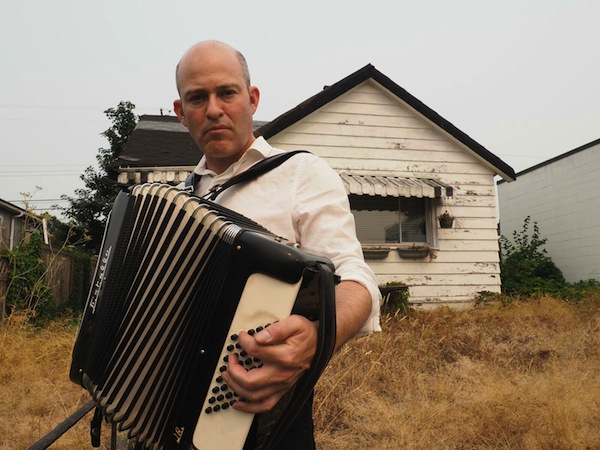
The music is klezmer punk but not always punk. “Vilne,” for example, is a beautiful song about displacement. Berner is dynamite on the accordion and is accompanied by a stellar group of musicians. Dancing is a must: as the lyrics to “The Drummer Requests” say, “Dancing in your chair is part of please continue dancing.” Berner also provides seamless translations for those of us who are sadly not fluent in Yiddish.

I’m sure I’m not the only Jew who takes this album personally – my grandfather was born in Lithuania (“Vilne”) but I’m not alone in that. As I continue to listen to the songs, I am encouraged that I can be part of a movement that is about being both honestly Jewish and radical. The music is a powerful testament to the kind of Judaism that I’m always looking for and often can’t find.

Buy the album – you will be supporting Berner and the other musicians. And read the liner notes while you’re listening to the songs. They are some of the most interesting I’ve ever read.

You can find more information about Welcome to the Grand Hotel Cosmopolis at grandhotel-cosmopolis.org/de and Berner’s website is geoffberner.com.

Penny Goldsmith sings with the Solidarity Notes Labour Choir, the Highs & Lows Mental Health Choir and, occasionally, with the Vancouver Jewish Folk Choir. She is the owner of Lazara Press, a small, independent publishing house in Vancouver.

Musician tries to offer hope

Montreal-based musician Elizabeth Leslie has a new EP out, Brave Animal, which, among other topics, tackles climate change. (photo from Eric Alper PR)

It had always been musician Elizabeth Leslie’s dream to visit Scotland, which her Sephardi ancestors had made their home. For years, she had envisaged hiking the Highlands, reveling in its beauty and experiencing the misty, “dreary” British weather that she had heard so much about.

Learning about the Leslie clan and their lives as Jews intrigued the young Canadian musician, who had been raised in Eastern Canada and is now based in Montreal. But so did the idea of experiencing a truly Scottish spring. So it came as a rude shock, she said, when she finally arrived to the British Isles to be greeted by a drought of parched hillsides and 25˚C weather. Her image of Scotland’s Highlands, she admitted, appeared to be sorely out of date.

“It wasn’t green rolling hills anymore. It was just glaring sun,” said Leslie. “I was peeling off layers and [there was] yellow grass and rampant tourism.”

That experience became a seminal moment for the musician, who attributes the erosion of the Highlands to humanity’s greed and the unrealistic goals of 21st-century capitalism. “Capitalism affects everything,” she told the Independent. “It’s a selfish beast and it’s unsustainable.… Capitalism mixed with climate change and the fact that climate change is a product of capitalism, [makes it] glaringly obvious that we need to completely reimagine the way we live.”

image - Brave Animal EP coverHer recently released EP recording, Brave Animal, speaks to that urgency. Its lead song, “To the Next,” is the summation of what she sees for future generations left to navigate the impacts of a warming planet. Its dark-wave melody is as hypnotic as its lyrics:

“There is only one place left to go / And I’m afraid that it is far / If you listen close / You will soon hear / All their words / Are full of fear.

“Men might be masters of this world / But little girl / We’re going to the next / Men might be fighting against this world / But little girl / We’re fighting for the next.”

According to Leslie, the song was written before Swedish climate change activist Greta Thunberg rose to notoriety. Still, its refrain hits to the heart of a question that is commonly voiced these days.

“When I wrote this song,” Leslie said, “Greta wasn’t around … but [she is] exactly the kind of girl I am speaking to in the song and she is metaphorically what that little girl is.”

Leslie added, “I mean, who is there to comfort Greta Thunberg? Why is there a teenager fighting [against] climate change and why aren’t the older guys in suits doing it with their millions of dollars?”

In Leslie’s eyes, change is motivated by leadership, and she believes there is a dearth of examples for young people to follow these days.

“There’s really no adult role models out there who are really standing up – at least in music,” or none willing to tackle a topic that is already defining a generation’s social and environmental expectations, she said. “I am just trying to give them some glimmer of hope, I guess.”

For this artist, probing difficult questions seems to come naturally, even when the questions are unpopular with those around her. When she learned some years ago that her Scottish ancestors were Jewish, she searched for more information and unearthed stories of the Leslie clan – started by a Jew who had served in a distinguished position for Mary, Queen of Scots, and was a Knights Templar – despite warning from her mother about antisemitism.

Although her mother wasn’t Jewish, she was concerned about her daughter taking on an identity that had been subjected to persecution throughout millennia. The warnings, though, didn’t deter Leslie, who later converted to Judaism.

“My mom had like 10 cups of tea per day and my dad drinks scotch every other night and my uncle plays the bagpipes and all that stuff, so it was a huge surprise in a lot of ways,” said Leslie about discovering her Jewish heritage. “But, for some reason … I always had a feeling about it.”

Although Leslie said her visits to shul are more infrequent these days, she sees a parallel between the values she was raised with and the ethics that Judaism espouses. Fairness and protecting the environment are at the heart of both her identity as a Jew and as a musician, she said. As is social justice. She said she was incensed when she found a book about the Leslie clan and learned that her ancestors were forced to convert to Christianity.

“That connection with the culture and values and also a really deep need to right the wrongs of the past” were key to her decision to convert, she said. “I just found it so unrighteous that my family was forced into this religion [of Christianity]. We already had a religion. I just felt it was so unfair and I wanted to turn back the clock.”

Her identity as a Jew has also been shaped by her relationships. Leslie, who self-describes as a non-binary queer person, was first introduced to Judaism when she dated a woman who had been raised Charedi and maintained a Jewish household. Leslie said the exposure to Jewish traditions was both fascinating and “extremely familiar.”

“I think one thing I love about Judaism is … we have never forgotten who we are,” said Leslie. “And I think that sort of cultural preservation is really important, especially in the face of recent antisemitism, in face of capitalism and climate change and everything, that sort of centreness is a power. And I think it is really important.”

Leslie’s music can be purchased through a number of online venues, including Spotify or by connecting through her Facebook page.

Jan Lee’s articles and blog posts have been published in B’nai B’rith Magazine, Voices of Conservative and Masorti Judaism, Times of Israel, as well as a number of business, environmental and travel publications. Her blog can be found at multiculturaljew.polestarpassages.com.

Celebrate spring with music

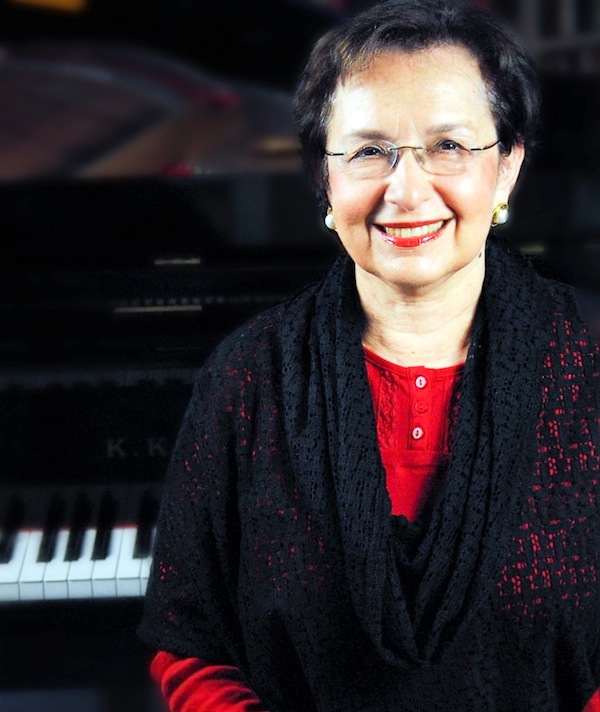
Wendy Bross Stuart leads singers Lisa Milton, Kat Palmer and David Urist in the JSA program With a Song in My Heart, which takes place March 29 at the Peretz Centre. (photo from Wendy Bross Stuart)

This year’s Jewish Seniors Alliance of Greater Vancouver Spring Forum features a concert with music director and pianist Wendy Bross Stuart and singers Lisa Milton, Kat Palmer and David Urist. The program, called With a Song in My Heart, takes place March 29 at the Peretz Centre for Secular Jewish Culture.

“We are planning a program of Jewish-related songs all pertaining to our love of music,” Bross Stuart told the Independent. “‘With a Song in My Heart’ is a famous song by Rodgers and Hart (Jewish writers) from the 1929 musical Spring is Here. Very true that, by March 29, spring will indeed be here!

“We will include that song in our program as an ensemble piece,” she said. “We will have duets – in Yiddish – ‘Her Nor Du, Sheyn Meydele’ and ‘Vu Ahin Zol Ikh Geyn’; and many solos from Jewish-themed musicals, for example Rags, Milk and Honey, The Rothschilds and a song that was deleted from Fiddler on the Roof!”

Bross Stuart has contributed to more than a dozen seasons of Theatre Under the Stars, as conductor, music director and pianist, and has been music director and pianist for many other theatre companies, including the Arts Club, the Electric Company, Famous Artists, Touchstone Theatre, Presentation House and Snapshots Collective. She has composed numerous choral arrangements and recorded four CDs of Jewish music with soprano Claire Klein Osipov.

Of the ensemble that will join her on March 29, Bross Stuart said, “These three singers are very accomplished. They must have an opportunity to sing what inspires them, but which also fits into the theme of the program.”

She noted that Milton is Klein Osipov’s younger daughter. “She spent many years observing her mother’s performances and rehearsals. She knows all the arrangements I created for Claire – perfectly. When I accompany Lisa, it’s magic,” said Bross Stuart. “I see and hear Claire! What a delight!”

In addition to being an award-winning musician, Bross Stuart is an ethnomusicologist. She has written two books – Gambling Music of the Coast Salish Indians and, with John Enrico, Northern Haida Songs. She and her husband, Ron Stuart, collaborate in the making of documentary films shot in South Africa.

“Ron and I just returned from two-and-a-half months in Cape Town, where we started working on our eighth documentary there,” said Bross Stuart. “This one is called Gugulethu Warriors – Making Things Right! It’s a documentary based on the grassroots efforts of township residents to cope with the social issues of crime, safety, unemployment and community cohesion.”

The Stuarts established Cultural Odyssey Films, notes the website culturalodysseyfilms.com, “to provide a platform for the production and distribution of documentary films about contemporary cultural groups and individuals committed to social change.”

The Stuarts also formed WRS Productions, which has numerous producing credits, including the Vancouver Holocaust Education Centre’s annual community commemoration of Yom Hashoah, Holocaust Remembrance Day. Bross Stuart said that, while preparing for the JSA Spring Forum, she, Milton, Palmer and Urist are also working on the Yom Hashoah commemoration.

“After that,” she said, “I jump into rehearsals for Theatre Under the Stars’ upcoming production of Disney’s Beauty and the Beast and Perry Ehrlich’s Gotta Sing! Gotta Dance! – year 26!

Bross Stuart is a co-founder of the Gotta Sing! Gotta Dance! musical theatre program, which is held at the Jewish Community Centre of Greater Vancouver every summer. The deadline for youth to apply to this year’s sessions is April 1.

Not one to rest on her laurels, Bross Stuart recently adapted an indie pop song. “I just completed a new choral arrangement,” she said. “Of one of my daughter Jessica’s new songs. A first for me!” (The original “Simple Little Song” can be heard at jessicastuartmusic.com.)

As to why she is making the time to perform at the JSA forum, Bross Stuart said, “The JSA is run by a group of very talented, diligent, kind and caring individuals. They provide a wonderful service to the community, where we share with one another. It is my pleasure to contribute to this.”

With a Song in My Heart starts at 2 p.m. on March 29. Refreshments will be served and underground parking is available at the Peretz Centre – cars must enter the alley from 49th Avenue, as 45th is closed to traffic. The nominal cost of the event is $5. For more information and to register, call 604-732-1555 or email office@jsalliance.org.

Healing powers of song

Seattle-based Iraqis in Pajamas, left to right: Sean Sebastian, Loolwa Khazzoom and Robbie Morsehead. (photo from Iraqis in Pajamas)

How do you take the wisdom of surviving and turn it into beautiful things?” asked Loolwa Khazzoom, front woman for Seattle-based punk rock group Iraqis in Pajamas, during an interview with the Independent recently.

One cannot easily classify Khazzoom, a cancer survivor, in a succinct journalistic fashion. Aside from being a musician, she is a writer, an activist, a polyglot and a journalist. Raised in California to an American mother and an Iraqi father, she was heavily involved in the Jewish feminist movement of the 1990s and the founder of the Jewish Multicultural Project, which provided resources about diversity to Jewish groups.

As with her stage presence, she transmits a raw, infectious energy in conversation, ever more so as Iraqis in Pajamas started this month by releasing a new single.

“Life brings with it an endless number of challenges. Negative experiences can be turned into art,” Khazzoom reflected.

“I was diagnosed with cancer in 2010,” she said. “I rejected the conventional option of surgery – despite a doctor proclaiming that I would die without it. ‘You can’t think your way out of cancer,’ he said, to which I replied, ‘You don’t know what I can do.’”

After the diagnosis, Khazzoom researched natural approaches to healing, and radically altered her diet – pulling everything out of her cupboards and moving to an all-organic and vegan diet. Through these and subsequent diet and lifestyle changes, she said she was able to stop the growth of the nodules, which remained stable for the next five years. The nodules began shrinking when she returned to music – her lost passion.

Formed in 2015, Iraqis in Pajamas combines ancient Iraqi Jewish prayers with its own original style of punk rock sung in English, Hebrew and Judeo-Arabic. The band’s songs examine a wide number of social issues – domestic violence, racism, mental illness, family caregiving, national exile – and cancer.

The band received a grant to produce the song “Cancer Is My Engine,” which was released March 1. “Cancer Is My Engine” combines an ancient Iraqi Jewish prayer with original punk rock, sung in Hebrew and English – challenging conventional medical approaches to cancer and putting forth the concept of music as medicine.

The song was produced by Bard Rock Studio, an independent Northwest music producer, and funded by the Lloyd Symington Foundation, which supports people living with and healing from cancer.

According to Khazzoom, singing has the ability not only to uplift but to heal. “This shift in consciousness is why, after hearing a particular song, our mood may change abruptly, or we suddenly may feel transported back in time. Singing bypasses our mental process, both awakening and soothing us at the core, without effort. Among other benefits, we are able to access, release and heal from the experience of trauma, without having to recount and risk getting triggered by painful memories,” she said.

Iraqis in Pajamas, which also includes drummer Robbie Morsehead and guitarist Sean Sebastian, got its name from a reputation Iraqi expatriates in the Israeli city of Ramat Gan had for putting on their pajamas when they had arrived home and the work of the day was completed.

The band is currently developing its next project: a debut double album. One CD will be an original a cappella version of 10 Iraqi Jewish prayers, which the band incorporates into its songs, along with a story about each prayer and why they chose it, while the second CD will be the 10 songs with those prayers woven through them. The project is sponsored by Allied Arts Foundation in Seattle and, in February, the band launched a fundraising campaign to develop, produce and promote the album: secure.givelively.org/donate/allied-arts-foundation-seattle/iraqis-in-pajamas.

Khazzoom’s first book, Consequence: Beyond Resisting Rape (2002), is a look at sexual harassment in everyday life. In 2003, she edited The Flying Camel: Essays on Identity by Women of North African and Middle Eastern Jewish Heritage, an anthology of the writings of Mizrahi Jewish women. Her writing has also appeared in the Forward, Tikkun and Lilith, as well as the Jewish Independent and other Jewish publications; she has written several times about Israeli hip-hop for Rolling Stone.

Iraqis in Pajamas hopes to find venues in Vancouver and on Vancouver Island in the coming year. For more information about Khazzoom and the band, and to listen to their music, visit loolwa.com. To purchase their music, go to iraqisinpajamas.bandcamp.com.

Sam Margolis has written for the Globe and Mail, the National Post, UPI and MSNBC.

Eclectic Jewish sounds

Andy Muchin with a record from his collection. (photo from Sounds Jewish)

The American South may not be the first place you would consider tuning the dial for an hour-long radio program that runs the gamut of Jewish music and many other audio facets of Yiddishkeit. That the show is assembled half the year on Vancouver Island might add another element of unexpectedness to the equation.

“I realize it might appear a bit incongruous,” Andrew Muchin told the Independent, from his Victoria home. “But, thanks to the internet age, things like this are no longer that difficult to do.”

Fifty weeks a year, Muchin goes through his collection of more than 1,000 vinyl records, scores of CDs and hour upon hour of digitized music to produce Sounds Jewish, a weekly radio program for Mississippi Public Broadcasting, based in Jackson, Miss. The show is broadcast on Sunday afternoons there and heard anytime online.

Having celebrated its ninth anniversary at the end of last September, Sounds Jewish focuses on a relevant theme, often within the Jewish and secular calendars. Avid listeners soon realize the problem for Muchin is not finding material but sifting through all the material that is out there. It takes several hours to select music for, record and produce each show, and programs often contain a range of offerings, anything from a 1960s comedy routine to Israeli hip-hop.

For American Thanksgiving in late November, Muchin spun a number of discs, including a Ladino number, “These Beautiful Tables” by the Ruth Yaakov Ensemble, and “Tish Niggun” (“Table Melody”) from the band Klezmer Plus! The show then mixed in songs of gratitude, such as a melodic rendition of Psalm 118 with Israeli singer/keyboardist Idan Raichel and Malian singer/guitarist Vieux Farka Touré and a counting of blessings from British singer Daniel Cainer – who opened the 2019 Chutzpah! Festival – in “How We’re Blessed,” from his album Jewish Chronicles.

In October, Muchin prepared a World Series show dedicated to Jews and baseball, and particularly to the home cities of the two teams involved in this year’s Fall Classic, the Houston Astros and the Washington Nationals. This show featured a country version of the prayer Modeh Ani from Houston-born country singer-songwriter Joe Buchanan; a cut from Kramer’s The Greenberg Variations, an instrumental tribute to Detroit slugger Hank Greenberg; and ballpark favourites “Take Me Out to the Ballgame” and “God Bless America” belted out in Yiddish by Mandy Patinkin.

In marking recent holidays and occasions, Muchin has taken his listeners on a musical tour of Jewish labour songs ahead of Labour Day, rhythmically reminded them of many sins to avoid during the month of Elul, leading up to the High Holidays, and melodically explored the ongoing desire for self-improvement ahead of Yom Kippur, the Day of Atonement.

“I try never to be preachy, but I like to inform my listeners of various Jewish or Jewy practices they can incorporate in their lives – or not. Mostly, though, Sounds Jewish presents the diversity of Jewish music across time and space. To my ear, Jewish music is the ultimate world music, since Jews have lived almost everywhere on earth, blending the native music with Jewish themes,” he said.

A native of Manitowoc, Wis., Muchin was raised in a traditional Jewish home, growing up versed in Hebrew and liturgical melodies. He later learned Israeli songs at a Zionist summer camp, but said he didn’t become steeped in Jewish music until long after the klezmer revival of the 1970s.

Muchin has been active in Jewish media and Jewish life since 1986, when he started as an assistant editor for the Jewish Telegraphic Agency. He moved back to his home state to serve as editor for the Wisconsin Jewish Chronicle in Milwaukee and edited and co-published (with Marge Eiseman) Jewish Heartland magazine. He also has written for the Forward, Moment, Jewish Week and numerous other publications.

In 2009, Muchin landed in Jackson, as the cultural program director of the Goldring/Woldenberg Institute of Southern Jewish Life, a nonprofit that provides a variety of educational, cultural and religious services to underserved Jewish communities throughout the South. There, he met the director of Mississippi Public Broadcasting’s radio division, Jason Klein, who also happened to be Jewish, and Sounds Jewish took flight.

In Victoria, Muchin served as director of the 2019 Victoria International Jewish Film Festival and has written and presented two Purim shpiels (plays).

As for the future of Sounds Jewish, Muchin hopes to continue adding to his Jewish music collection – he said he accepts donations of LPs – and to broaden and deepen the content of the show.

“I expect the show to have an increasingly Canadian feel as I learn more about the very creative Canadian Jewish music scene and its history,” he said.

Sounds Jewish can be heard at mpbonline.org/soundsjewish, exchange.prx.org/series/32262-sounds-jewish and radio-j.com.

Sam Margolis has written for the Globe and Mail, the National Post, UPI and MSNBC.

Jazz that’s personal, timely

Andrea Superstein’s next local performance is at Centennial Theatre in North Vancouver on Feb. 5. Her new album is Worlds Apart. (photo from the artist)

For the last year, Andrea Superstein has been touring Canada with her new jazz album, Worlds Apart. Her next local performance will be at Centennial Theatre in North Vancouver on Feb. 5.

“I discovered my voice when I was a kid. My parents enrolled me in a musical theatre program at school and I sang in a choir,” Superstein told the Independent in a recent interview. “But my family were concerned about music as a profession for me. They thought the life of an artist was uncertain, so I went on to train as a teacher. I have been teaching theatre in several Vancouver schools since I moved here from Montreal. I still teach part-time. I taught at King David [High School] for awhile. But I always had music in my life as a hobby.”

At some point, the young teacher decided to explore if music could be more for her than a hobby. In 2009, she attended a weeklong summer swing camp, a jazz camp for adults in Sorrento, B.C. “I loved it,” she said. “It gave me access to the big names on the Vancouver jazz scene. I learned so much. I decided that, for my next birthday, I would get myself a gig. I knew I could do it and I did it.”

That performance was so successful and meant so much to her, she committed to pursuing jazz as a career. She couldn’t live without it anymore.

In 2010, Superstein released her first album, comprised of her arrangements of jazz standards. The same year, her debut performance at the Vancouver International Jazz Festival earned her a nomination for a Galaxie Rising Star award. Now, 10 years later, she is a well-known Vancouver jazz vocalist.

“I still teach theatre, while I’m still a learner in jazz,” she said with a smile. “It is good to have different outlets for my creativity.”

Her latest album, Worlds Apart, is mostly her own compositions, although it includes a few of her interpretations of other songs.

“I love jazz because it is often a reinvention of something old, something known, but the musician makes it her own, as I did with the song ‘My Favourite Things’ from The Sound of Music,” said Superstein by way of example. “I’ve seen the movie many times. I performed in the musical, in the roles of Maria and Reverend Mother.” She created her own arrangement of the song for her album.

“With Worlds Apart, I wanted to deliver something personal by examining the timely issues we all face,” she added. “We simultaneously exist in conflict and in symbiosis, and the contrast fascinates me. It is not only explored in the lyrics but also reflected in the harmonic structure and the songs’ arrangements.”

For her original compositions, Superstein writes both the music and the lyrics. She loves performing, interacting with the audience. “It gives me the biggest joy,” she said.

“I love talking to people between the songs, telling them funny stories about my music and lyrics, offering some extras. I love to hear the audience laugh or applaud. It’s like building a community, creating relationships. Not many jazz performers do that, I think, and it sets me apart. Or maybe it is my theatre background showing…. Usually, my talks are not scripted. There is always an element of impromptu. I try to be open to possibilities.”

Worlds Apart includes songs in three languages: English, French and Hebrew. “I grew up in Montreal, so I’m fluent in both English and French. When we performed this album in Montreal, people loved it when I spoke to them in French,” Superstein said.

She wrote the album’s Hebrew song years ago. “When I was 17, in 1996, I spent six months on an exchange program in Israel, on a kibbutz,” she said. “I was overwhelmed by the different life there, by the people. There were many bus bombings at that time, [Yitzhak] Rabin was recently assassinated, but people didn’t exhibit fear. Just the opposite. Everyone was passionate, on fire for life, and I wrote a song about it.”

When she started working on this latest album, she remembered that song and thought it appropriate for Worlds Apart, so she revised it and recorded it.

“This album is the first I didn’t produce myself,” said Superstein. “It’s good to have someone else to listen, to make suggestions. I invited the Montreal jazz singer Elizabeth Shepherd to be my producer. I also hired a group of Montreal musicians to record the disc. They are wonderful musicians, I enjoyed working with them, and I toured with them for the past year.”

The musicians performed in jazz concert series, in small theatres and bookstores; they also gave some house concerts.

“The life of a musician is a challenging one,” said Superstein, “but I’m fueled by my love for my art.”

For more information and other concert dates, visit andreasuperstein.com.

Olga Livshin is a Vancouver freelance writer. She can be reached at olgagodim@gmail.com.

Artistic responses

Gabriolans held a candlelight vigil after antisemitic graffiti was found at Camp Miriam. An arts festival will take place Feb. 7-9. (photo from You’ve Got a Friend)

Since Camp Miriam on Gabriola Island was defaced with antisemitic graffiti in December, Gabriolans have shown support for the Jewish community, including a candlelight vigil on Jan. 2. Next month, island artists, musicians and writers will gather together to present You’ve Got a Friend: A Festival of Jewish and Gabriolish Art, Words and Music. The Feb. 7-9 festival will feature Jewish-themed visual art, music and writing, all created by residents of Gabriola, among them Juno nominees and literary prizewinners.

“When people heard about the vandalism at Camp Miriam,” said Sima Elizabeth Shefrin, one of the festival’s organizers, “many said, ‘What can I do to help? How can I show my support?’ The festival is a chance to celebrate our friendship and solidarity with each other and to move things on in a positive way. We took the title, You’ve Got a Friend, from Carole King’s old song.”

The festival program includes visual art by Shefrin, Heather Cameron and others at the Gabriola Arts and Heritage Centre. The opening reception will take place Feb. 7, 6-9 p.m., and the gallery will be open Feb. 8, 10 a.m. to 4 p.m., and Feb. 9, 10 a.m. to 1 p.m.

The concert Oy! will feature Bob Bossin, Paul Gellman, Dinah D, the Today Only Klezmer Band and others. It will take place Feb. 8, 7:30 p.m., at the Roxy Lounge and Cultural Club, with tickets available at North Road Sports. Admission is a suggested donation of $15.

Earlier on the Saturday, at 3 p.m., Amy Block will lead a celebration for Tu b’Shevat, the Jewish new year of the trees, at the arts and heritage centre.

Finally, Nu? – poetry and memoir by Janet Vickers, Naomi Wakan, Lisa Webster, Shayna Lindfield, Gloria Levi, Lawrence Feuchtwanger, George Szanto and Bossin – will be held at the arts and heritage centre Feb. 9, 1-3 p.m.

You’ve Got a Friend is supported by Camp Miriam, the Gabriola Arts Council and Anne Landry. For more information, contact Cameron at true_stitches@yahoo.ca.

Classes on being a DJ

Michael Fraser teaches group electronic music and DJ classes at the Jewish Community Centre of Greater Vancouver. (photo from Michael Fraser)

As a violinist, music producer and DJ, Michael Fraser’s musical talents traverse many realms. Yet, despite the proficiency and versatility he has to create his art, Fraser believes that “personal connection to music transcends skill.”

It is that personal musical connection that the 30-year-old, born-and-raised Vancouverite hopes to instil in the next generations – be they performers or devotees – in the group electronic music and DJ classes he is teaching at the Jewish Community Centre of Greater Vancouver through spring 2020.

The early stages of Fraser’s musical trajectory began in grade school as a Suzuki violin player, though numerous other styles – from classical to hip-hop – seeped into his sphere of artistic influences through various musical mentors. Among them was Vancouver-based saxophonist and flautist Tom Keenlyside, who had a tremendous impact and helped Fraser “connect with music in an abstract, rather than a theoretical, way.”

Marrying and starting a family with his partner Camille, though, has brought about a shift in Fraser’s musical focus in recent years. The sense of wonder possessed by children, and the simple way it is often expressed, led him to view things from a different perspective and to feel a sense of responsibility to teach.

Fraser began playing music for his son before his son was even born. When Isaac turned three, Fraser observed him connecting to the process of making music himself.

“After Isaac was born, I started to see that my purpose as a musician is to help young artists develop their innate creativity and coach artists to deeper levels of emotional intelligence,” said Fraser. “When my son asks to hear my music, I want to help him cultivate a relationship to music and life that goes beyond what words can express.”

Fraser’s professional musical career began in 2007, while in his late teens. Since then, he has collaborated with numerous recording artists, including the Ault Sisters, a Toronto-based vocal jazz trio; performed at the Shambhala Music Festival and the Montreal Jazz Festival, among many other venues; and opened for internationally known acts, such as Michael Bublé, Caravan Palace and Arrested Development.

His success as a live performer led him to working with Ben Affleck on the original score for Ben Affleck on the Meaning of Life, an animated short film about the actor and director’s Eastern Congo Initiative, which premièred at the 2012 Toronto International Film Festival. Fraser also appeared as a violin player in a scene of The Revenant, an Academy Award nominee for best picture in 2016 and for which Leonardo DiCaprio won the prize for best actor.

Currently, Fraser is devoting his expertise to artist development (on both the career and creative sides), as well as working with Black Octopus Sound, a company that produces samples and musical production tools.

Fraser said he has always felt “a visceral connection to Jewish music that can only be explained as being deeply embedded in my DNA. It is the main access point for a depth of emotion that can only be expressed through tones and rhythms.”

On Oct. 29, he began facilitating his first DJ course at the JCCGV for youth aged 10-16, showing them the basics of how music is composed electronically, and the ins and outs of being a DJ. This session ran until Dec. 17.

He could feel how the group connected with the music, and foresaw many new up-and-coming DJs in the Vancouver Jewish community.

“When I am in the class with students, we are focused on how the beat feels. Are there styles of music that feel good? Knowing your tastes is going to differentiate yourself from other DJs,” Fraser explained. “I will sit with a class and play various drums and figure out which one speaks to a particular student. Having that distinction brings us closer to the music – which chords carry tension and which carry release in chord progression? What does that connection to music feel like? How is it one can play the same series of notes in different order and have a different outcome feeling?”

His students take what was done in class and make musical experiments when they get home. Fraser finds that, when they open up GarageBand or Caustic, two of the more popular DJing apps, they don’t feel as though they are doing homework.

Often, he noted, students have used DJing apps before. He also pointed out that, unlike kids from earlier times, kids today don’t differentiate between DJs and music creators. Those barriers are completely gone, he said.

The courses – $180 for JCCGV members and $225 for non-members – comprise 10 lessons, run Tuesday evenings and are open to kids 10-16. Students should bring a pen and paper, a mobile device (laptop, tablet, cellphone) and headphones. For more information, visit jccgv.com/performing-arts/school-of-music.

Sam Margolis has written for the Globe and Mail, the National Post, UPI and MSNBC.