
Brier’s 80-year legacy

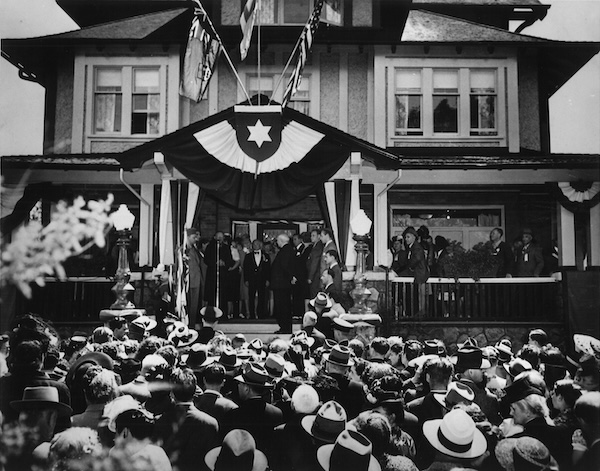
photo - Comedian and humanitarian Eddie Cantor and his wife Ida helped open Vancouver’s Jewish Old Folks Home, as the Louis Brier Home and Hospital was then called, on July 7, 1946. It was located on 13th Avenue
Comedian and humanitarian Eddie Cantor and his wife Ida helped open Vancouver’s Jewish Old Folks Home, as the Louis Brier Home and Hospital was then called, on July 7, 1946. It was located on 13th Avenue. (photo from LBJAF)

“The heart of the mission has remained remarkably consistent for 80 years: caring for Jewish seniors with dignity, compassion and respect, while creating a place where Jewish values, traditions and community are part of everyday life,” Ricki Thal, executive director of the Louis Brier Jewish Aged Foundation, told the Jewish Independent about Louis Brier Home and Hospital.

The home invites everyone to its 80th anniversary celebration on Sept. 2. The event will honour “past board presidents, visionary leaders and members of our community whose dedication helped build and shape Louis Brier,” said Thal. “Together, we will celebrate the legacy of the past, recognize the people who made it possible, and look ahead with excitement to the future of Louis Brier and the generations to come.”

Community members will recognize most, if not all, the names of the people the Brier will be honouring: Arnold Abramson, Victor Elias, Myer A. Goldberg, Brent James, Rose Mikelberg, Ron Rozen, Dina Schweber, Gary Segal and Lee Purkin Simpson, and the late Sam Bass, Lorne Cristall, Jack Diamond, William Gelmon, Florence Goodman, Lenard Hyman, Esmond Lando, Sam Levi, Leon Lotzkar, Mark Nussbaum, Herschel Porte, Bernard Reed, Sam Rubin, Sam Shine and Abrasha Wosk.

Louis Brier Home and Hospital was established in 1946. The foundation came later, in 1978, and it funds programs and services required by the Brier and the Harry & Jeanette Weinberg (of Baltimore) Residence, which opened next door in 2003, offering assisted living and multi-level care units. The two facilities comprise the Dr. Irving & Phyliss Snider Campus for Jewish Seniors. According to its website, the foundation “also raises funds to support research and education in the field of geriatric care.”

“At its core, Louis Brier has always been about caring for people with compassion, dignity and respect. While that commitment has never changed, the way we deliver that care has evolved as our residents’ needs, healthcare and our community have changed,” Thal told the Independent. “Today, we have a much stronger focus on working alongside residents and families, embracing new ideas, learning through research and always looking for ways to do better. Our goal of becoming a centre of excellence reflects our desire to not only provide outstanding care, but to contribute to the future of long-term care.

“We also recognize that creating a truly caring environment means caring for everyone who is part of Louis Brier. That includes building a culture where people feel respected, included and safe, and where the health and well-being of our staff is valued,” she said.

Louis Brier was created by Jewish community members who recognized that Jewish seniors deserved a place where they could age with dignity while remaining connected to their culture, traditions, language and faith.

“The Jewish community has been at the heart of Louis Brier from the very beginning,” said Thal. “It started with 14 community members [the Hebrew Men’s Cultural Club] who had a vision for a home for Jewish seniors and, for 80 years, that support has continued through generous donors, volunteers, families and community organizations. The community has helped provide not only financial support, but also programming, Jewish traditions, advocacy and, most importantly, a sense of belonging. Louis Brier really is a reflection of the community’s commitment to caring for its seniors.”

Thal only recently took the helm of the Louis Brier Jewish Aged Foundation, replacing Ayelet Cohen Weil, who joined Weizmann Canada in April to be its regional director for Western Canada. Thal came to the foundation from the Jewish Federation of Greater Vancouver, where she was associate director of the now-provincial organization’s annual campaign. When asked her hope for the Brier, she said, “I hope Louis Brier continues to be a place where Jewish seniors feel a true sense of home, community and belonging. I want to build on its 80-year legacy while looking ahead, strengthening care, supporting our staff, engaging the next generation and ensuring Louis Brier remains a vibrant and important part of the Jewish community for many years to come and I’m excited to be a part of it.”
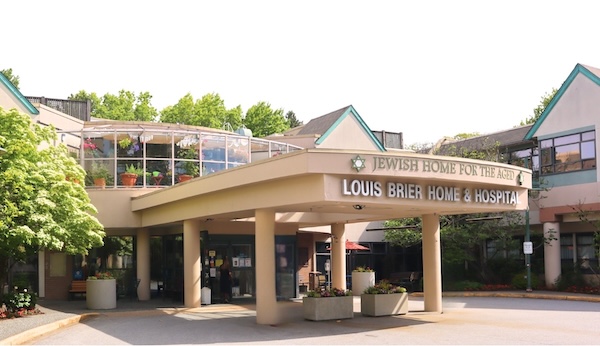
photo - On Sept. 2, the Louis Brier Home and Hospital celebrates 80 years
On Sept. 2, the Louis Brier Home and Hospital celebrates 80 years. (photo from LBJAF)

Some of the challenges the home faces going forward stem from the fact that people are living longer and their care needs are evolving.

“As British Columbia’s population ages, including our Jewish community, the demand for long-term care will continue to grow,” explained Thal. “Residents are entering care later in life with increasingly complex medical, cognitive and social needs. To meet these changing realities, we must continue to strengthen care through innovation and technology, support and invest in our workforce, expand capacity and ensure Jewish seniors have access to care that reflects their culture, traditions and values.

“Ensuring long-term financial sustainability is equally important. Government support remains essential, and the strength of our community continues to play a vital role … our community has consistently stepped up when called upon, demonstrating a deep and enduring commitment to caring for our seniors.

“As we look ahead to the next 80 years,” she said, “our goal is not simply to preserve Louis Brier’s legacy, but to build on it continuing to evolve, innovate and help shape the future of compassionate, culturally meaningful long-term care.”

Thal invites the entire community to join the Sept. 2 celebration, which will take place at Congregation Beth Israel, starting at 6:15 p.m. For tickets, go to louisbrier.com/news/celebrate-louis-brier-80th-with-us

Supporting Jewish education

When the late Leon Glassman and his wife, Rose Marie, established the Leon Glassman Fund for Jewish Continuity through Education with the Jewish Community Foundation of Greater Vancouver a decade ago, the businessman and philanthropist hoped that the Jewish community would both participate in and benefit from fund’s growth.

Glassman started the fund in 2016 with a $1 million gift and soon added another million-dollar contribution. Since his death on Oct. 31, 2017, his 94th birthday, Rose Marie Glassman has continued to donate substantially, as have others. Today, the fund holds more than $6.5 million.

The foundation – now called the Jewish Community Foundation of British Columbia – manages more than 400 funds. The ones that can grant toward education fall into two main types, Inês Cindra, associate director of the foundation, told the Independent. “With Donor Advised Funds, the fundholder recommends which schools, universities or programs receive grants each year. Designated Funds, like the Glassman fund, are set up to support a specific institution or purpose on an ongoing basis, so the recipient and the general use are established from the start.

“Funds differ in size and in whether they support a single institution or education more broadly,” she said.

“Across all of our education-related funds combined, we have distributed approximately $5 million over the past 10 years,” said Cindra. “Last fiscal year, the foundation’s Donor Advised and Designated Funds, including the Glassman fund, distributed $622,315 in educational grants.

“Worth noting in context,” she added. “The Leon Glassman Fund for Jewish Continuity through Education accounts for $2.8 million of that 10-year total. It is our largest education-related fund, and its share of what this community has been able to give to Jewish education is remarkable. One family’s decision has shaped more than half of our education giving over the past decade. That is the difference an endowment of this scale makes, and it speaks to the Glassmans’ vision as much as to their generosity.”

Set up to support tuition assistance at Jewish day schools, Vancouver Talmud Torah, Richmond Jewish Day School and King David High School have all had recipients of the Glassman fund. When they were in operation, Vancouver Hebrew Academy, the Pacific Torah Institute and Shalhevet Girls High School also had recipients.

“The whole idea was, Leon and I felt that any Jewish child was entitled to a Jewish education, regardless of means,” Rose Marie Glassman told the JI. “This is why we set the whole thing up…. Each child should know their heritage and as much about it as they can. It wasn’t a matter of whether you were Orthodox, Reform or anything else, it was just a matter that, whoever you are, you’re entitled to an education.”

“A Jewish education is a birthright, not a privilege,” agreed Emily Greenberg, VTT chief executive officer and head of school. “I have seen firsthand what it means to families when they are welcomed into the fold and witnessed how our school becomes a central source of strength and stability during challenging times. Thanks to the Glassman Fund, Vancouver Talmud Torah has been able to remove financial barriers and build an inclusive, vibrant community and landing pad. By investing in planting deep roots in our children today, we give them a lifelong anchor – nurturing a strong Jewish future for all of us by building resilient Jewish centres here in Vancouver, across Canada and around the globe.”

“To ensure a vibrant Jewish future, we must make Jewish education accessible today,” said Dr. Seth Goldsweig, KDHS head of school. “The tuition assistance provided through the Leon Glassman Fund at the Jewish Community Foundation ensures that cost is never a barrier to a child discovering who they are and where they come from. Here at King David High School, the impact of this generosity is felt directly in our classrooms, where students build the knowledge, resilience and pride needed to thrive as the next generation of Jewish leaders.”

“Cost is one of the greatest barriers standing between a family and a Jewish education,” said Cindra. “Parents who want that education for their children often find it out of reach, and the decision they face is a difficult one. What the Glassman family did was recognize that barrier and set out to remove it, not for one year or one family, but permanently.

“That is what makes their gift so remarkable. Mr. Leon Glassman z”l and Mrs. Rose Marie Glassman understood that a scholarship changes one child’s life, but an endowment changes the lives of children not yet born. Over the past decade alone, their fund has sent $2.8 million to Jewish day schools across Greater Vancouver, and because it is structured to grow, it will keep opening classroom doors long after all of us are gone. Every year, students walk into school because of a decision this family made.”

This impact is illustrated by a comment from a King David parent that Goldsweig shared with the Independent: “As a single mother, the tuition support has been a true blessing. It has given me the ability to provide my children with a strong Jewish education – something that is deeply important to me – without having to choose between their schooling and our other basic needs. This support has not only eased the financial burden, but has also given me the peace of mind that my children are growing up connected to their heritage, values and community.”

Funds can be set up with the Jewish Community Foundation at any time, and the organization works with donors to create multi-generational plans.

“A donor, a family or an organization establishes an endowment fund with an initial gift and a fund agreement that sets out the fund’s type and purpose,” said Cindra of the process. “There is no minimum gift required to open a fund. Funds are structured as Donor Advised, Designated, Organizational, or Unrestricted, and the agreement determines how grants are recommended and where they go.

“Every contribution to a fund receives a charitable tax receipt at the time of the gift, while the grants themselves can flow out later and over many years,” she said. “This gives donors flexibility. They can make a gift in a year when it makes sense for them financially, then take their time deciding how and when it reaches the community.

“The foundation pools and invests the capital, professionally managed by Russell Investments under the oversight of our investment committee. Each year, the foundation distributes a percentage of each fund’s value based on a three-year rolling average … [which] smooths out market fluctuations, so a single difficult year in the markets does not sharply reduce what a school or agency receives. The balance of the return stays invested, which allows the fund to grow and to keep granting in perpetuity.

“Depending on how the fund is set up, other donors can contribute at any time,” said Cindra. “This is common with named funds established in memory of a family member, where friends and relatives add to the fund over the years and the annual distribution grows with it.”

And this is the case with the Glassman fund – anyone can contribute to it.

“We are deeply grateful to the Glassmans, and we consider it a privilege to steward this fund on their family’s behalf,” said Cindra. “It is philanthropic leadership in its truest form, and it reflects the values this community holds dear: that education is sacred, that children are our future, and that what we build should outlast us.

“We hope others will be moved by their example. A gift of any size, structured this way, becomes permanent. That is the invitation the Glassmans have extended to all of us.”

For more information and to donate, visit jewishcommunityfoundation.ca