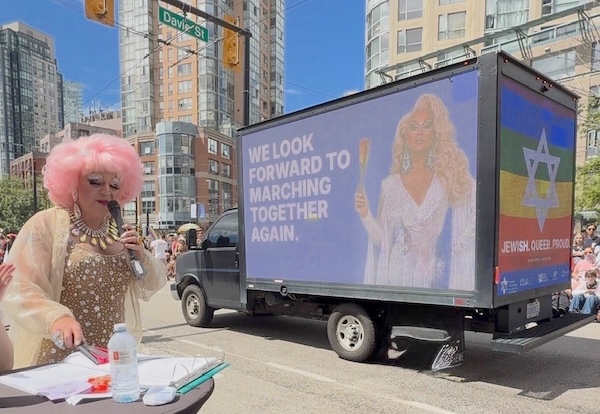
Pride truck travels parade

photo - The Jewish community’s Pride truck displayed rotating digital messages throughout the Aug. 2 parade
The Jewish community’s Pride truck displayed rotating digital messages throughout the Aug. 2 parade. (photo from JFBC)

Jewish Federation of British Columbia (JFBC) and the Centre for Israel and Jewish Affairs (CIJA) brought a truck into the Vancouver Pride Parade on Aug. 2 to amplify the voices of queer Jews who no longer feel safe marching openly as Jews. The truck displayed rotating digital messages including “Jewish. Queer. Proud”; “Diversity Includes Jews”; “Being Jewish at Pride shouldn’t be controversial. But here we are”; and “No one should have to choose between celebrating Pride and feeling safe.”

For many years, queer Jewish organizations and community members participated openly in Pride celebrations across the province. This year, after hearing from community members who no longer felt comfortable marching visibly as Jews, JFBC and CIJA chose a digital billboard to ensure their voices remained part of Pride.

Caryl Dolinko, director of communications and marketing at Federation, who has spent decades involved in the Pride movement and the LGBTQ+ community, said the decision to not march was deeply personal. 

“Our absence from marching is not because we do not believe in Pride. It is because we believe deeply in what Pride was created to represent: the right for every person to show up as their full and authentic self,” she said. “Pride has always represented the belief that people should not have to hide who they are or choose between parts of their identity. Since Oct. 7, many queer Jews have faced a painful reality: some spaces that once felt welcoming no longer feel safe or inclusive.”

“I’ve marched at Pride for years, and this year I didn’t feel safe enough to do it,” said a queer Jewish community member, who asked not to be named out of concern for her safety. “It shouldn’t feel like a risk to be visibly Jewish at an event about acceptance.”
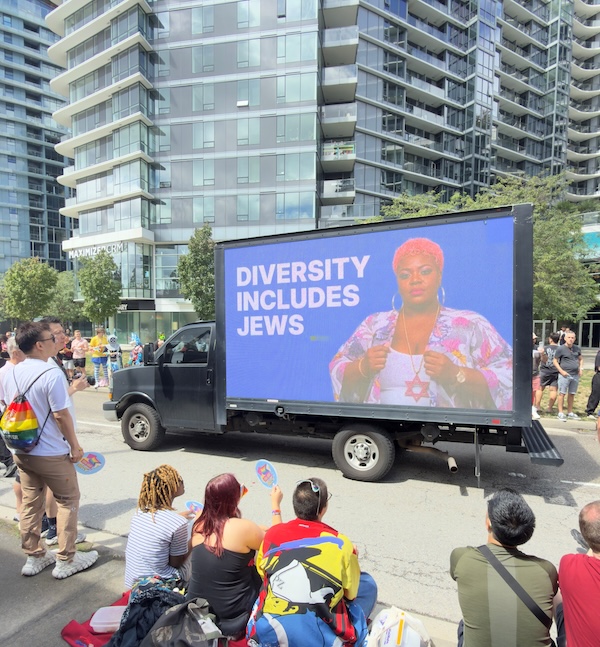
photo - The concerns are not about Pride organizers, but about whether queer Jews and their allies can safely display visible Jewish or Israeli symbols without facing hostility or harassment from individuals along the parade route
The concerns are not about Pride organizers, but about whether queer Jews and their allies can safely display visible Jewish or Israeli symbols without facing hostility or harassment from individuals along the parade route. (photo from JFBC)

“We look forward to the day when queer Jews can march again alongside our friends, allies and community members, celebrating Pride without fear and without having to choose between being Jewish and being queer,” said Ezra Shanken, chief executive officer of Federation.

Vancouver Pride organizers have stated that the Jewish community is welcome to participate in Pride. The concerns are not about Pride organizers, but about whether queer Jews and their allies can safely display visible Jewish or Israeli symbols without facing hostility or harassment from individuals along the parade route. JFBC and CIJA hope the campaign encourages conversations about ensuring Pride remains a place where everyone can participate openly, safely and proudly.

Video footage and more information are available at jewishbc.ca/pride

– Courtesy Jewish Federation of British Columbia
Community milestones … August 2026

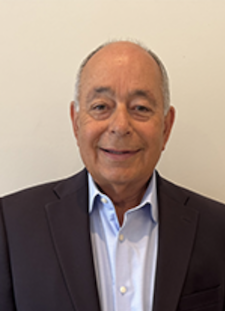
Among the 13 individuals awarded the province’s Medal of Good Citizenship this year is Jewish community member Alan Kwinter

The honour celebrates individuals, groups and organizations whose generosity and selflessness have made lasting contributions to their local communities. An independent selection committee reviews all nominations and recommends recipients for the medal.

Kwinter was recognized for a lifetime commitment to advancing housing, care and opportunities for vulnerable people. He has given more than 50 years of dedicated service and compassion for the most vulnerable populations throughout British Columbia. Drawing on early experiences shaped by his family’s history, he has dedicated his life to strengthening systems of care for homeless youth, isolated seniors, young families in crisis and survivors of historical trauma.

photo - Alan Kwinter
Alan Kwinter (photo courtesy)

Kwinter founded Hollyburn Family Services in 1990 and served as the executive director for 34 years, guiding the organization into a multi-service agency that now operates across the Lower Mainland, Vancouver Island and the Fraser Valley.

In 2004, he established Hollyburn Community Services Society to fill the growing gap in services for youth aging out of care. He volunteered as board chair for 20 years, serving more than 800 individuals annually through programs such as the North Shore Youth Safe House, the Life Success transitional program, Wired 4 Success employment initiative and the Morningstar safe house for at-risk seniors. He and his team partnered with the District of North Vancouver and BC Housing to develop 86 units of affordable rental housing on the Delbrook lands. 

Kwinter has also demonstrated profound personal dedication within the Greater Vancouver Jewish community by promoting the expansion of the Jewish cemetery in West Vancouver, traveling globally to show solidarity and advocate against antisemitism and volunteering as incoming president of Congregation Beth Israel in Vancouver.

* * * 

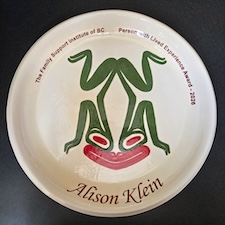
photo - Alison Klein received a 2026 Celebration of Families Award, the commemoration of which was created by Gitx’san artist Ryley Jensen Fisk
Alison Klein received a 2026 Celebration of Families Award, the commemoration of which was created by Gitx’san artist Ryley Jensen Fisk. (photo courtesy)

The Family Support Institute of BC (FSI) announced the recipients of the 2026 Celebration of Families Awards on June 6, 2026, at the University of British Columbia Okanagan campus in Kelowna. The event recognized seven individuals and groups who support families of individuals with disabilities in extraordinary ways. 

Alison Klein, who was nominated for this award by her co-workers at CFRO Co-op Radio, is a disability self-advocate, best known for producing and hosting the accessibility-focused arts and culture show The Self Advocate on Vancouver Co-operative Radio. She was given a hand-painted platter created by Gitx’san artist Ryley Jensen Fisk from PotteryWorks to commemorate the honour.

* * * 

On July 16, Vancouver City Council approved JWest’s rezoning application at a public hearing at City Hall. 

The rezoning approval is the outcome of years of consultation with neighbours and close collaboration with city staff. The approved plan provides more options for JWest, including increasing the potential height of the towers and allowing King David High School the potential to expand. Council’s approval reflects the strength of the plan and the years of work that shaped it. It gives everyone who has invested in this project, financially or personally, clarity on what comes next.

More is to be done in the development and building permit process, but the project remains on track to start construction of the new community centre by the end of this year.

Resources for holidays

JBI Library has expanded its free collection of accessible prayer books, liturgical materials, digital resources and community programming, helping people who are blind, have low vision or have a print disability fully participate in the High Holy Days.

New this year from JBI is a braille edition of Machzor Lev Shalem, the Conservative movement’s High Holy Day prayer book, as well as braille and large-print aliyah (call to the Torah) cards featuring the blessings recited at the bimah before and after Torah readings. 

In addition to physical materials, JBI offers a growing collection of downloadable prayers and liturgical resources that can be accessed through its website, helping patrons prepare for or participate in services wherever they are. JBI recently partnered with Rabbi Lenny Sarko and the Devarim Institute to offer their e-braille edition of Mishkan HaNefesh, the Reform movement’s machzor for Rosh Hashanah and Yom Kippur. Designed specifically for refreshable braille displays, the e-braille edition allows users to quickly search, navigate and jump directly to prayers and readings in either Hebrew or English.  

Other available materials include large-print Orthodox, Conservative and Russian High Holy Day prayer books; Yizkor services and other holiday liturgy in accessible formats; and braille and large-print Jewish reference calendars, as well as a large-print Russian version.

JBI also offers PJ Library’s A Time to Grow: A Family Guide for Starting the Jewish New Year, and other children’s High Holy Day resources.

In addition to its mailed braille, large-print and audio materials, JBI is highlighting its growing collection of free digital downloads, allowing users to instantly access many of the High Holy Days’ most frequently used prayers and texts. Resources include Yizkor, Tashlich, Selichot, Kiddush, Kohelet (Ecclesiastes) and other holiday liturgy, providing flexible options for individuals and congregations alike.

All High Holy Day materials are provided free of charge to eligible patrons who are blind, have low vision, or have a physical or reading disability that makes reading standard print difficult. JBI also provides accessible sacred texts at no cost to synagogues, JCCs, nursing homes and other Jewish organizations, because financial constraints should never prevent individuals or communities from fully participating in Jewish life.

To ensure delivery before Rosh Hashanah, orders should be placed by Aug. 28, for both organizations and individuals. To browse materials, place an order or download prayers, visit jbilibrary.org/our-library/high-holy-day-materials.

Beyond its library services, JBI will also host free virtual programs that invite participants to explore Jewish traditions, literature and culture together throughout the High Holy Day season. This year’s virtual programming includes The Magic of Tashlich (Casting Away) on Sept. 3, 9:30 a.m. – exploring the 600-year-old tradition of Tashlich, in which Jews symbolically cast away the previous year’s mistakes by tossing breadcrumbs into flowing water – and The Art of Ushpizim (Welcoming Holy Guests) on Sept. 24, 9:30 a.m., which explores the mystical tradition of Ushpizim, the symbolic welcoming of honoured spiritual guests into the sukkah. JBI will also host its virtual book club on Oct. 1, at 2 p.m., featuring author Dara Horn’s novel Eternal Life, an exploration of faith, family, mortality and what it means to live a meaningful life. 

Founded in 1931, JBI Library (formerly known as the Jewish Braille Institute and JBI International) is a nonprofit organization serving more than 25 countries. It strives to remove barriers to accessibility and inclusion, so that everyone can read, learn and engage independently and with dignity.

Visit jbilibrary.org for more information. You can also contact JBI’s librarians at library@jbilibrary.org or 212-545-8025. 

– Courtesy JBI Library