Investing in Israel’s people

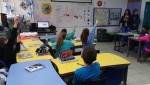
English class at Shaked School in Raanana. The school participates in the Arab Teacher Integration in Jewish Schools program. The teacher’s name is Fatam and she is from the Arab town of Tayibe. (photo from Merchavim)

In a country of eight million, one-fifth of Israel’s population are Arabs. According to research published last year in the Jerusalem Post, 35% of Jewish teenagers have never spoken to an Arab peer and 27% of Arab Israelis reported never having spoken with a Jewish youth.

In a conflict-ridden political climate, there is no shortage of angry rhetoric. Reading this rhetoric, it is tempting to imagine that Israeli society is simply a dysfunctional collection of intergroup battles. Nonetheless, there are organizations that remain focused on Israel’s immense social capital, its long history of social innovation and the initiative and dedication of its educators. Guided by words like tolerance, fairness and mutual understanding, these organizations value diversity rather than emphasize differences, and continue to work to build a more egalitarian society.
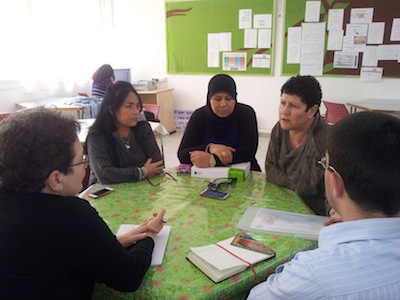
photo - Esti Halperin, Merchavim Institute chief executive officer, is the woman on the right
Esti Halperin, Merchavim Institute chief executive officer, is the woman on the right. (photo from Merchavim)

Merchavim Institute is one such organization. Founded in 1998 and based in Lod, Merchavim promotes shared citizenship in several ways. It places Arab teachers in Jewish schools, to teach spoken Arabic. It offers a wealth of classroom materials to teachers and supports 500 schools and kindergartens in the Jewish-secular, Jewish-religious and Arab-Israeli school streams.

In a separate collaboration with the Ministry of Education, Merchavim also places Arab teachers of English, science and mathematics in Jewish schools. These teachers cover material on Arab culture and society.

Merchavim’s chief operating officer, Roi Maor, explained that “dialogue, shared culture, education and improved communication” are essential if one wants to stem the flood of anger and resentment on both sides. Rather than getting stuck on debates about the country’s flag, for example, he argued, “Israel’s best chance for growth and self-improvement is through programs that focus on enrichment.”

The Arabic Teacher Integration (ATI) program does just that, by giving Arab teachers an opportunity to work in and become part of a Jewish community. But, quite apart from meeting their curricular goals, these teachers – all of whom are women – are excellent role models, said Maor. He described them as resilient and “charismatic, with exceptional leadership skills.”

Nonetheless, he acknowledged, “There is a degree of concern or tension when an Arab teacher enters a Jewish school; half of these teachers wear headscarves. Often, the teacher herself has her own concerns and worries, concerns about how she will be integrated.” Since more than one teacher has been stopped by school security and refused entry, these concerns seem valid.

Fortunately for the teachers, Merchavim’s idealism is tempered with the clear-sighted pragmatism of lived experience. Encounters between Arab teachers and their Jewish students and colleagues follow a framework, leaving little to chance. Maor wants the ATI program to be “the gold standard” and explained how encounters must be continuous. “They have to happen in the context of a larger project and be a powerful, meaningful experience,” he said.

Maor also respects the students’ “legitimate desire to maintain and preserve [their] cultural identity.” He believes that one’s identity is a tool to meet the other, rather than a hindrance or a threat. “It allows you to understand and connect to your own identity better,” he said.

Of course, change does not happen overnight. Tamara Klinger-Levi, Merchavim’s director of resource development, reflected that, even with a wonderful start to the school year, acts of violence create a “public sentiment of hatred or prejudice,” which can be a tremendous setback for Merchavim staff and partners.

Rana Younis has been teaching at Gvanim Junior High School, Kadima-Zoran, for nine years. She related an incident in her school, where she had overheard a student speaking ill of Arabs. There had been a violent incident and emotions were running high. Having turned and seen her, the student apologized instantly. “I am sorry,” he said. “It’s not you.” Younis told him, “I understand, it’s not you and it’s not me, and he hugged me. It was so touching. I tell them: there are bad people and good people in Arab society, just like any society.”

Merchavim staff are well aware of this dynamic and their staff make regular visits to Gvanim. Younis is unequivocal in her praise of the support they offer. “They help me all the time. They are like my family,” she said.

A highlight of the program comes in the form of tours for overseas visitors. This is an example of the kind of “powerful, meaningful experience” described by Maor. “Children don’t have a strongly formulated notion of [Arabs]. All kinds of negative ideas flourish in isolation but [with Merchavim teachers] all that evaporates. They learn to regard each person as an individual. We are building a generation that doesn’t generalize.”

Younis’ observations confirm this. “Reality is not what you read,” she said. “Putting the idea of Arabs and Jews aside, I am just there to teach. I love my work as a teacher. I love my students.”

Younis’ voice conveys energy, dedication and love. She spoke of an upcoming collaboration between Israeli and Arab students, called

Living Together, for which only a limited number of places was available. “When some of the students didn’t get in, they cried, they were so disappointed,” she said.

About what her own family thought of her work, Younis laughed as she related her mother’s frequent questions. “Are you OK, are you happy? I tell her, I am happy! I have no problems.”
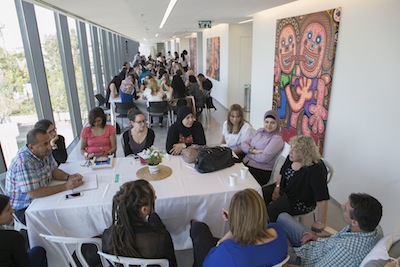
photo - The annual Arabic Teacher Integration conference, held jointly with IDC Herzliya, is when all the players (government officials, school administrators, teachers, researchers, funders et al) meet to discuss issues and learn about new research
The annual Arabic Teacher Integration conference, held jointly with IDC Herzliya, is when all the players (government officials, school administrators, teachers, researchers, funders et al) meet to discuss issues and learn about new research. (photo from Merchavim)

Merchavim’s contribution to Israeli education and society at large have gained recognition at home and abroad. The new language initiative of Israel’s education ministry, led by Naftali Bennett (Jewish Home), dovetails nicely with Merchavim’s vision. In this program, Arab students will learn Hebrew starting in kindergarten and continue right through high school. As Likud MK Oren Hazan said last year (Israel National News), “When the Jewish population understands Arabic the way the Arab public understands Hebrew, we will see better days.”

Thanks to the investments of Merchavim and other organizations, these ways of thinking could become the norm for a whole generation of children. These children will finish school and assume leadership positions in society. When they do, they will have communication skills, as well as the empathy and cultural capital needed to reinvest in a fair future for all Israelis.

Speaking of the wider Arab population, Maor said Merchavim’s program “sends a message to people back in the communities that they can be successful in Jewish society.” And, while Arab women meet the urgent need for more teachers in the Jewish system and find empowerment through work, their presence enriches the entire school site.

The Arab Teacher Integration program enjoys financial support from numerous philanthropic groups in Israel, all of which support civil rights, social justice and democracy in the country. These include the Moriah Fund, the Beracha Foundation and the Jacob and Hilda Blaustein Foundation. Overseas funders include the Jewish Federations of North America and the Hadassah Foundation, which also works in Israel.

Nonetheless, even with this and the Ministry of Education support for Merchavim’s work, funding remains a challenge. Discretionary budgets for enrichment are small and programs like music are typically prioritized above Arabic electives. Maor, who finds it “outrageous” that Arabic is not a mandatory subject in Israeli schools, described this as a “missed opportunity for cross-cultural learning and huge advancement for the cause of shared society in Israel.”

However, Maor is optimistic about the future because “animosity and fear comes from ignorance.” With long-term, committed professional relationships between Arab and Jewish educators, and between Arab teachers and their Jewish students, Israeli society can change. “Citizenship is not just a piece of paper,” said Maor. “It’s about being part of a collective enterprise, in which we share a joint destiny.”

That destiny relies on every individual having the right to prosperity under egalitarian social and economic conditions. Once the majority of Israelis understand this, he said, they will also see that “the success of Israeli Arabs is not a separate phenomenon but a boon to all sectors of the population.”

To learn more about Merchavim, visit machon-merchavim.org.il/?lang=en.

Shula Klinger is an author, illustrator and journalist living in North Vancouver
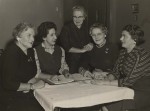
Mystery photo … Feb. 26/16

Pioneer Women meeting, circa 1960. Cissie Eppel is sitting second from left. (photo from JWB fonds, JMABC L.12598)

If you know someone in this photo, please help the JI fill the gaps of its predecessor’s (the Jewish Western Bulletin’s) collection at the Jewish Museum and Archives of B.C. by contacting archives@jewishmuseum.ca or 604-257-5199. To find out who has been identified in the photos, visit jewishmuseum.ca/blog.

Dementia, cinema’s darling

Julianne Moore as Alice in Still Alice. (photo by Jojo Whilden, courtesy of Sony Pictures Classics)

Fifteen years ago, the subject of dementia was the “elephant in the room,” a very large issue that everyone is acutely aware of, but nobody wants to talk about. If you or a member of your family developed symptoms such as forgetfulness or confusion, you kept it quiet as long as you could. The first time your grandfather found himself somewhere and did not know why he was there was but the coup de grâce, the decisive stroke that heralded the end of a lifestyle as he knew it. This was the beginning of a terrifying and tragic journey towards senility and death.

I remember my paternal grandmother; she was a wonderful cook, Polish style. Her husband took care of her until she had to be placed in a seniors residence. The topic of her illness never came up at home. My father visited her every week. My brother and I did not go with him. Then there was the telephone conversation with my aunt: she was surprised to hear that I lived in Vancouver (I had moved here eight years prior). I knew then that she had Alzheimer’s disease. It was a shock.

During the last 10 years, things have changed. Articles about dementia, in terms of statistics, symptoms, prevention strategies, caregivers and residential settings, abound in our newspapers, magazines, on the radio and on the internet. Seminars, forums, courses, self-help and support groups are readily available – and world cinema has made up for lost time. For the last few years, I have been tracking American, Canadian, British, European and Israeli films that feature people who are suffering from some form of dementia, especially Alzheimer’s. These movies show the impact of their condition on caregivers, whether they be spouses, sons, daughters or friends.

photo - Jim Broadbent with Judi Dench in Iris
Jim Broadbent with Judi Dench in Iris. (photo from Everett Collection / Rex Features)

The British film Iris (2001) reveals the true story of the lifelong romance between novelist Iris Murdoch and her husband John Bayley, and her gradual deterioration due to Alzheimer’s disease.

The Canadian movie Away from Her (2006) follows a loving couple; she acknowledges her condition and moves into a seniors residence, and the husband must cope with his wife’s new romantic attachment to a male resident of the facility. Still Mine (2012), also a Canadian movie, is an old-age love story told with minimal sentimentality and spiky integrity. She has Alzheimer’s, he wants to build her a smaller house, with his own hands; complications ensue.

Amour (2012), a French film, gives us an unflinching vision of dementia caused by stroke and the complex relationship between the members of the octogenarian couple. It was widely acclaimed and nominated for several Academy Awards.

The British comedy Quartet (2013) brings together four superb actors in a magnificent seniors residence for musicians. Each member of the ensemble has his or her own impairments and talents. Somehow they cope and produce beautiful music together.

The American movie Still Alice (2014) shocked and educated every viewer who stayed until the end. We watch as early-onset dementia gradually overcomes the heroine’s intelligence and independence. Her strategies and courage educate and enrich our lives as she struggles with her loss of memory and mental abilities. Julianne Moore won an Academy Award for her performance.

In the American documentary Glen Campbell … I’ll be Me (2015), the legendary singer agrees to a final North American tour knowing that he has Alzheimer’s. The family supports, encourages and devises ways in which he can continue to perform despite the debilitating effects of the disease. A superb real-life drama that makes one appreciate how drastically the disease affects everyone close to the struggling singer.

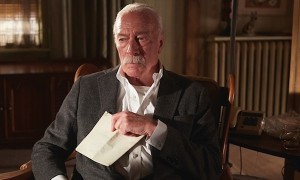
photo - Christopher Plummer in Remember
Christopher Plummer in Remember. (photo from Serendipity Point Films)

In the Canadian movie Remember (2015), two residents of a seniors home seek revenge against the Nazi killer of their families in the Holocaust. With Alzheimer’s robbing him of his capacity to remember, one old man goes forth, with detailed instructions in hand, to find and kill his tormentor. He struggles with his inadequacies and perseveres.

Then there is the Israeli drama The Farewell Party (2015), which deals with the topic of assisted suicide and dementia. Notwithstanding the topic, it is a sweet, funny and sad tale that teaches us compassion and acceptance.

I recommend all of these movies to you, no matter at what stage of life you find yourself. But you might say, why should I watch these movies, why should I care? I am not there yet. It is not my issue, I don’t need to know about all this. It is too depressing. I defy readers to tell me they do not know someone who is suffering or has suffered from dementia. One in nine people over the age of 65 will develop some form of dementia. We must acquire knowledge of the disease, we must become familiar with the signs and symptoms, we must acquaint ourselves with the various paths that dementia takes.

How can we understand, empathize and assist these people, our grandparents, our parents, our friends, in their journey? As ethical human beings, it is our obligation and privilege to make the disease and those who suffer from it an integral part of our society. Watching these movies will provide you with the tools and strategies to be informed, to be helpful and to be accepting of this condition. After all, you or I may receive the diagnosis of dementia tomorrow.

Dolores Luber is a retired psychotherapist and psychology teacher living in Vancouver. She writes regular columns for Senior Line, blogs for Yossilinks and writes movie reviews for Isaac Waldman Jewish Public Library. This article was originally published on yossilinks.com.

From Orumieh to Winnipeg

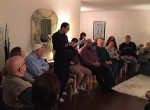
Farhad Sultanpour of the Kurdish Association of Manitoba speaks to members of the Winnipeg Jewish community and others. (photo by Yolanda Papini Pollock)

According to Farhad Sultanpour of the Kurdish Association of Manitoba, Kurds are the largest nation of people without a state. The majority of Kurdish people, he said, live in a strip of land that stretches through Iran, Iraq, Syria and Turkey.

Sultanpour was speaking to a Winnipeg audience about the connections between Kurds and Israel at an event organized by Winnipeg Friends of Israel (WFI).

Sultanpour came from Orumieh, in east Kurdistan, the northwest part of Iran, and was brought up as a Sunni Muslim. He made his way to Canada in the late 1980s.

“In 1979, during my mid-teens, the Islamic Revolution began and the Kurds fought adamantly to protect and liberate their towns and villages against Iran’s leader, Ayatollah Khomeini, who was rising to power,” said Sultanpour.

During this time, Khomeini was stalling in the negotiations with Dr. Abdul Rahman Ghassemlou, the Kurdish leader, regarding the creation of a Kurdish autonomous state. What was actually happening, said Sultanpour, was that “Khomeini was reinforcing his revolutionary army. He led the invasion of the Kurdish territories, while declaring jihad to all Kurds. In 1989, the agents of the Islamic Republic of Iran assassinated Dr. Ghassemlou in Vienna, Austria.”

Sultanpour, who was 19 at the time, needed to make a decision – join Khomeini’s army or join the Kurdish Peshmerga.

“I chose to be a Peshmerga, fighting against Khomeini’s regime,” said Sultanpour. “After a year and a half, I went to the United Nations office in Ankara, Turkey, to apply for refugee status. A year and a half later, I was granted a refugee visa by Canada.”

Integration into Canadian culture was challenging for Sultanpour, mainly due to the language barrier. At the time, he hardly understood or spoke English, and had made the move alone.

Sultanpour has nothing but good things to say about Canada and the second chance at life afforded to him by Canadians. “I painstakingly pursue my English class and university courses for self-improvement,” he said.

He and his wife feel it is time to raise awareness about the plight of the Kurds, especially with the rise of ISIS.

“In the last 10 years, my wife and I have built three public schools, purchased a prefabricated trailer home-style classroom, and built a community centre near the city of Orumieh, in east Kurdistan-Iran,” said Sultanpour. “For the last 20 years, we have been helping, financially, 65 to 100 very poor families in Kurdistan.”

Sultanpour is now working to strengthen the Kurdish-Jewish connection in Winnipeg. He is saddened by the lack of knowledge about the Kurdish situation in the general public, as well as with federal public servants who have not heard about Kurds or Kurdistan.

He referred to an article in the Dec. 29, 2015, issue of Time Magazine: “Alan Kurdi was one of a million. In the summer of 2015, the 3-year-old Syrian boy of Kurdish origins and his family fled the war engulfing their country, hoping to join relatives in the safety of Canada. They were part of a historic flow of refugees from the Middle East to Europe this year, and they followed the dangerous route taken by so many others. In the early hours of Sept. 2, the family crowded onto a small inflatable boat on the beach of Bodrum, Turkey. A few minutes into the journey to Greece, the dinghy capsized. Alan, his older brother, Ghalib, and his mother, Rihanna, all drowned, joining the more than 3,600 other refugees who died in the eastern Mediterranean this year.”

Sultanpour said, “Alan, his brother, Ghalib, and mother, Rihanna, were identified as Syrian when, in fact, they came from Kobane, the Kurdish town invaded by Syria. The tragedy of the death of these three Kurdish people made Alan’s father, Abdullah, prefer to bury his family in Kobane and stay in his beloved motherland, Kurdistan. Up to their dying day, Alan, Ghalib and Rihanna were stripped of their identity and state.

“In the heart of the Kurds, the Kurdi family are Kurds from Kobane, Kurdistan,” he continued. “Alan’s dead body was the only Kurdish child seen by the world, not knowing that there were hundreds of thousands of Kurdish men, women and children who are dead and are dying in Kurdistan – the biggest nation without a state.”

Sultanpour, like many other Kurds, sees Israel and the Jewish people as their only allies in the Middle East. He sees Kurdistan and Israel living in a very hostile region with common enemies, with both nations finding Iran and ISIS as threats to their existence.

With only about 500 members of the Kurdish community in Manitoba, the Kurdish Association of Manitoba is looking to network with the local Jewish community to have a larger impact.

“Both Yolanda Papini Pollock of the WFI and Bernie Bellan of the Jewish Post and News have been instrumental in the speedy interconnection of the Kurds and Jewish people in Manitoba,” said Sultanpour.

The approximately 35 attendees at the event had many questions for Sultanpour about Kurdish-Jewish connections, Kurdish political parties’ relationships with one another, and Palestinian-Kurdish relations.

According to Sultanpour, many in attendance were surprised to know that the present Kurdish capital of Erbil was the capital city of Jewish Kurds from the end of the first century when some Kurds converted freely to Judaism.

“There were numerous questions about political and religious issues regarding the Kurds,” said Sultanpour. “It was very obvious that the attendees were happy to welcome the Kurds and that they could have accepted them earlier had they known about them sooner. But, it’s not too late to develop a much stronger bond with the Jewish people here in Winnipeg and increase the connection globally.”

In related news, another manifestation of Kurdish-Jewish friendship occurred in January, when Israeli Justice Minister Ayelet Shaked called for an independent Kurdistan, saying, “The Kurds are an ancient, democratic, peace-loving people that have never attacked any country. It’s time to help them.”

Rebeca Kuropatwa is a Winnipeg freelance writer.


March of the Living impact

March of the Living International (MOLI) has published a study examining the effects that the program has had on its participants. The educational program takes, on average, 10,000-20,000 students annually to Poland and Israel with the goal of educating and inspiring future generations to learn from the destruction of the European continent during the Second World War. MOLI accepts applicants from all walks of life and religions, hoping to ensure that not only is the Holocaust not forgotten, but also that it is never repeated.

The report studies the impacts that the program has on its Jewish participants, and highlights the educational and religious changes that the program has inspired since its creation in 1988. Of the population surveyed, most initially signed on to the program in order to better understand their Jewish culture. Many of the participants in the study said that the program has directly impacted them, leading many to visit, study in or move to Israel. Fifty percent of the respondents said that the program caused them to consider moving to Israel later in life.

The study was conducted by Prof. William Helmreich of CUNY Graduate Centre and the Colin Powell School at City College, a sociologist and expert on ethnic identity. “What’s most remarkable about the March is how deeply it impacts participants over a period of many years,” he states. “These include life choices like selecting a mate, moving to Israel and career choices. In addition, it greatly impacts not only on Jewish identity but also on compassion toward other people as well.”

Indeed, 54% of respondents said that the March had made them more tolerant towards other groups. And the effect increases over the years, as 66% of those who attended the March 10 years ago, reported it had made them more tolerant.

The study also found that 86% of the participants asserted the importance in their spouse being Jewish, and 91% in raising their children with some sort of Jewish education; 65% felt the importance of raising their children in a Jewish neighborhood.

Of those surveyed, 90% felt the March instilled in them the importance of reacting to confrontations with antisemitism, and 95% stated the March had strengthened their sense of Jewish identity.

“To think that the March is such a successful program in terms of ensuring and enhancing Jewish identity and in making people realize the importance of engaging as a Jew within their communities and caring for those outside of them, truly illustrates the goals that we had when initially forming the first March so many years ago,” said Dr. Shmuel Rosenman, MOLI chair.

March of the Living brings individuals to Poland and Israel to study the history of the Holocaust and to examine the roots of prejudice, intolerance and hate. Since the first March in 1988, more than 220,000 participants from 52 countries have marched down the same three-kilometre path leading from Auschwitz to Birkenau on Yom Hashoah as a silent tribute to all victims of the Holocaust. March of the Living is a partnership between March of the Living International, local MOTL foundations, the Claims Conference, individual donors, private philanthropists and Jewish communities around the world. Visit motl.org.

Aftermath of trauma

Sometimes there are jokes about how we’re all emotionally damaged to some degree. It’s a serious problem for us, because we all lived through wars and terror attacks,” shared Canadian-Israeli Yolanda Papini Pollock of Winnipeg Friends of Israel (WFI) at a lecture co-hosted by WFI on Feb. 9.

The discussion, which focused on the topic The Psychological Impact of War and Terrorism: Coping with and Minimizing Trauma, was held with the local Canadian Associates of Ben-Gurion University of the Negev chapter, the Jewish Post and News and Congregation Temple Shalom, at the synagogue.

photo - Michel Strain
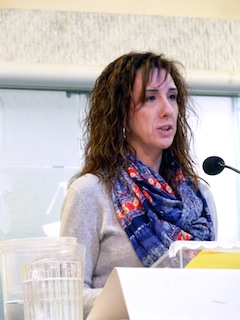
Michel Strain (photo by Rebeca Kuropatwa)

“I’ve worked with refugees for the last decade,” said Michel Strain of the Manitoba Immigrant and Refugee Settlement Sector Association. “All have come from countries affected by war and many have experienced trauma and torture, many living in refugee situations for many years.

“In my role in the employment program I worked in, I was often one of the first people the refugees began to trust. And, during this trusting relationship, I had the privilege of many individuals sharing their stories with me…. Their resiliency was resoundingly evident to me.”

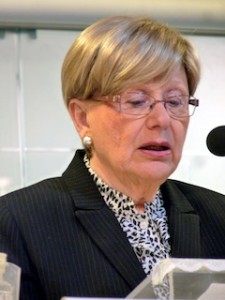
Holocaust survivor Edith Kimelman spoke about dealing with her personal trauma. She was 16 years old when Germany invaded her small community in Poland.

“I stood at a neighbor’s window and watched my father being led away by soldiers, only to find him later in a field – dead and riddled with bullets,” she said. “It was beyond my young comprehension to understand that no one in our non-Jewish community of neighbors would help us bring him home. My childish belief was, once he returns to our house, he would return to life.

photo - Edith Kimelman
Edith Kimelman (photo by Rebeca Kuropatwa)

“To watch from our window, as Jewish neighbors were led behind a stable, shot and quickly buried gives me, to this day, nightmares. To find my mother so severely beaten that it led to her death will haunt me forever. I felt like I was punished, having to remain alive without her.

“When I had my own children, I lived in constant fear that something terrible would happen to them or to my husband, and that I would be unable to help them.”

Kimelman explained how this trauma has affected every aspect of her life, including, of course, her relationships with family and friends. While she fears she will leave her sons with the heavy baggage of her unfortunate experiences, she is confident that her fierce love for life and her survival will carry them through.

The keynote speaker of the event, BGU’s Dr. Solly Dreman, who was born and raised in Winnipeg before moving to Israel 50 years ago, was introduced by Dr. Will Fleisher, a local therapist experienced in working with traumatized youth and adults. Dreman is professor emeritus in BGU’s department of psychology.

Dreman has witnessed the long-lasting effects of terrorism. Decades later, “soldiers are having night terrors, night sweats, family difficulties, are unable to cope.”

He differentiated between war and terrorism, explaining that war is usually preceded by prior events and circumstances, while terrorism occurs suddenly, without warning, causing a different type of trauma. Unlike war, terrorism is not confined to a specific geographic arena or time dimension.

“The threat persists, the fears, uncertainty, the sense of helplessness,” he said. “Such attacks are looming over our heads all the time. You have the unbridled devils lurking in your soul forever. That’s going to serve as the trigger for anxiety, feelings of helplessness and inability to cope.

“People who have lost loved ones may have been witness to the event, and we all know the symptoms of survivor guilt,” he continued. “By escaping unscathed, they experience feelings of guilt that they came out alive. There’s research that shows that people who have been injured in a terrorism event after having lost a family member have less PTSD [post-traumatic stress disorder] than someone who comes out unscathed. Survivor guilt has been a major factor.”

photo - Dr. Solly Dreman
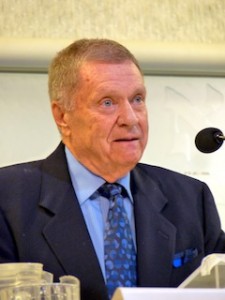
Dr. Solly Dreman (photo by Rebeca Kuropatwa)

Dreman pointed to the media as an aggravator in Israel, saying they continually expose the public to the horrific events, while frequently providing information that is unreliable and unconfirmed. He also said the general public, too, is responsible for watching, reading and listening to these reports more critically.

He spoke about his experiences with two separate terror incidents.

“Our initial therapeutic attempts were designed to deal with interpersonal things, like helping teachers in their contact with the young victim students, helping integrate them into the school system,” said Dreman.

The approach seemed to have worked for the first few years, but when Dreman went back to these families 10 years after the initial contact, he found them struggling with life and their interpersonal relationships.

“It was terrible,” said Dreman. “We failed. By the way, we got published in a very prestigious journal reporting on our failure. The conclusion, for those of you who are dealing with refugees or faced the Holocaust, is that there is a need for interpersonal intervention and getting back to business as usual.”

Dreman suggested that limiting media exposure may be helpful, as the constant repetition of the horror does not allow people to heal. But, on the other hand, he said it is important to not go completely off the grid, as that can cause anxiety to a breaking point that might create more trauma. A balance is needed, he said.

Dreman further advised that it is important to embrace life, that social support is a major factor in healthy adjustment.

“Be up front with your kids, explaining that you will do your best to protect everyone,” he said, “but don’t promise that nothing bad will happen, as that is a promise you may not be able to keep. We should allow kids the opportunity to express their fears, but not to dwell on them, as that will exacerbate the sense of trauma.

“Routine is very important – schoolwork, exercise, empowerment,” he added. “The only way to get that is establishing a routine in the face of incomprehensible uncertainty and trauma. Don’t send the kid to a shrink because, by doing that, you’re telling them you can’t manage things.”

Rebeca Kuropatwa is a Winnipeg freelance writer.

Safety in home births

With only about five percent of Canadians giving birth at home, one might think the practice is dangerous and that is why the number is so low. On the contrary. Studies show that, as long as the mother is at low risk, it is as safe to give birth at home as it is to give birth in a hospital.

Dr. Michael Klein is a family physician, pediatrician, newborn-intensive-care specialist, maternity care researcher and senior scientist emeritus at Vancouver’s Child and Family Research Institute.

“I am a part of a number of ongoing research projects,” said Klein. “We look at old and new technologies and assess them in relation to birth. I’m about normal birth – not complicated birth – keeping birth normal.”

photo - Dr. Michael Klein
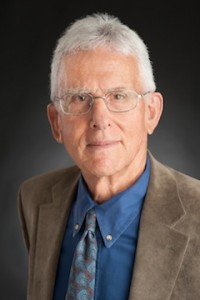
Dr. Michael Klein (photo from Dr. Michael Klein)

In 2009, Klein worked on a study that looked at the safety of home births, evaluating three groups of births: home births by a midwife, hospital births by the same midwives, and a matched sample of physician births. The researchers looked at women who were identical in their risk profile and found that, regarding fetus development and the newborn baby, there was no difference in these three groups.

“Home birth seemed to be as safe as hospital birth, whether by the doctor or by the same midwife,” said Klein. “There are now two other studies from Ontario that show the same thing.

“Home birth is integrated within the health-care system in B.C.,” he continued. “Midwives are supported and part of the system, so when the midwife needs help from a hospital backup system, she gets it.

“Of course, what you also see is dramatically more interventions on the physician-hospital side than at home. And you find, interestingly, that the midwives – the same midwives delivering in hospitals – have results in terms of interventions of various sorts that are closer to the doctor’s side than they are to themselves at home.”

Klein attributes this observation to the influence of the hospital itself, a setting that is anxiety-driven. There may also be differences in the population, with women wanting a midwife in a hospital differently motivated from those wanting a midwife in a home setting.

In terms of the methodology of the study, it was very important that, once a woman was beginning her labor at home, no matter if the birth ended up being in a hospital or not, that she was counted in the home birth column or category.

“Roughly, a third of midwifery births will be home births,” said Klein. “That’s because this is what women are requesting. The model is what is called a ‘woman-centred model.’ If a woman wants a home birth and she meets the criteria in terms of her risk profile, then the midwife is obligated to deliver that service in the way she wants.

“I think there’s no question that we should have more home births. You may be unaware, but the minister of health in B.C. has supported that notion – that home births should be … I wouldn’t say promoted, but certainly made available.

“Women need to know what the options are and they need to know if they need help during labor that they will get it. A home birth, to be safe, needs to be within 30 minutes of an operating room. Contrary to what most people believe, things don’t suddenly go wrong. They evolve.”

Something else that can be a limiting factor in increasing home birth numbers is the lack of midwives across Canada.

“The joke is that you have to register with a midwife before conception,” said Klein.

In British Columbia, the midwifery class recently doubled in size. Why not quadruple the class size to keep up with demand? The simple answer is that the system is not currently able to support that, although it is estimated that a home birth costs the system between a third and half as much as a hospital birth.

“I think it’s too complex,” said Klein. “What we are talking about now is a serious planning exercise. That’s not happening. I think it will take time for the system to collapse a little bit more before it happens.

“The other player in all of this, which we haven’t talked about yet, is the doula. That movement is, of course, gaining more and more popularity. In some settings, it’s been so successful that some hospitals are supporting the doulas’ salaries.”

According to Klein, doulas are successful in lowering the caesarean-section rate and other interventions. “When you lower the c-section rate, it has a big impact on the hospital budget, because a person who has a caesarean stays twice as long in the hospital than one who has a vaginal birth,” he said.

Avoiding a c-section means less likelihood of a uterine scar in subsequent pregnancies. “Once a pregnant woman has a uterine scar, the whole reproductive trajectory is changed,” said Klein. “One is more likely to have a whole series of problems, complicated next pregnancies, placental attachment problems, ectopic pregnancies, stillborn births and infertility. With the c-section rate at four percent in home births and up to 30% in hospital births, that many more women will end up with a uterine scar and be at higher risk of complications.”

photo - Dr. Brian Goldman
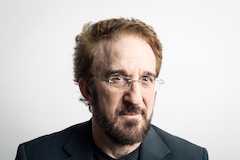
Dr. Brian Goldman (photo from Dr. Brian Goldman)

Dr. Brian Goldman, an emergency physician at Mount Sinai Hospital in Toronto, and the host of White Coat, Black Art on CBC Radio One, has, for years, had an eye on the growing demand among women in Canada for licensed midwives.

“Midwives are experts in low-risk, uncomplicated births, as are family doctors,” said Goldman. “However, even though low-risk birth is a core part of the training of family physicians, very few of them want to attend low-risk births once out in practice.

“In Canada, we have a situation in which the vast majority of births – high-risk and low-risk alike – are attended by obstetricians. These specialists have tremendous knowledge, skill and experience which, in my opinion, is best put to use managing women who are likely to have a complicated pregnancy and birth. We need more professionals like midwives and family doctors to attend low-risk births.

“Most family doctors run busy practices and find it difficult for practice, family and social reasons to devote a significant amount of time to attending women in labor through the night. To me, midwives represent the likeliest prospect for increasing the pool of professionals qualified and interested in attending low-risk births.”

Rebeca Kuropatwa is a Winnipeg freelance writer.

Art therapy kits to families

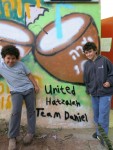
United Hatzalah of Israel and Artists 4 Israel distributed art therapy kits to families in southern Israel and held a program that included visits by graffiti artists who worked with teens to paint neighborhood bomb shelters. (photo from United Hatzalah of Israel)

At the end of last year, 75 families from southern Israel received specialized art therapy kits, thanks to a new project organized by United Hatzalah of Israel’s Team Daniel initiative. In conjunction with Artists 4 Israel, the art therapy kits were distributed Dec. 8-10, along with a program showing parents how to use the kits with their children and visits by graffiti artists who worked with teens to paint neighborhood bomb shelters. Various art therapists also participated in the events.

Last summer, during Operation Protective Edge, a group of Chicagoans was touring the Eshkol region as sirens blared. These community members were so moved by their experience and, after hearing about the death of 4-year-old Daniel Tragerman, decided to raise money to help the region. Some 50 Chicago families established Team Daniel to fund the training, placement and equipment needed for 100 United Hatzalah medics to service southern Israel. The new kits are given directly to the families of these volunteers, who often run out on a moment’s notice to attend to rocket attacks and other local emergencies.

“Because these particular families are committed to saving lives as United Hatzalah medics, it was important to us that we give them a way to cope,” said Brielle Collins, Chicago regional manager for United Hatzalah. “Art is such a powerful tool to give to people who are recovering from war, stress and tragedy.”

The arts kit was developed by experts from Israel and the United States in the mental health field in collaboration with the nonprofit Artists 4 Israel. It is hoped that the “first aid kit for young minds” will combat the effects of trauma and eliminate the chances of PTSD by up to 80% through self-directed, creative play therapies.

United Hatzalah, a community-based emergency medical response organization, has been distributing the kits in a pilot program throughout Israel since July.

Abrahamic faiths’ traditions

A chuppah in Jerusalem. (photo by Nikki Fenton)

Mazal tov. Mabrouk. Congratulations. No matter one’s religion or language, a wedding is generally a joyous occasion.

While there is no apparent consensus, varying reports say that between 60% and 80% of all marriages in the United States are performed in a religious ceremony. Where do the religious wedding traditions come from? What are the similarities and differences between the marriage traditions of the three Abrahamic religions – Judaism, Christianity and Islam?

The most obvious similarity between Jewish, Christian and Islamic marriages is that, in each case, the tradition requires that the union be between a bride and a groom of the same religion. In other words, according to the letter of the religious law, intermarriage is forbidden.

The Torah, New Testament and Quran indulge in many stories designed to warn men against marrying women who worship foreign gods or are nonbelievers.

Deuteronomy 7:3-4 states, “Do not intermarry with them. Do not give your daughters to their sons or take their daughters for your sons, for they will turn your children away from following me to serve other gods, and the Lord’s anger will burn against you and will quickly destroy you.” For Christians, 2 Corinthians 6:14-17 explains that one should not be “yoked together with unbelievers,” and should “touch not the unclean thing” if one wants to be received by the Lord. In Sura 60:10, Muslims learn, “Do not maintain your marriages with unbelieving women.”

In Israel, where couples can wed only through religious ceremonies administered by the Chief Rabbinate, the intermarriage rate is relatively low. The 2015 Israeli Democracy Index survey found more than one-third of both Jewish (36%) and Arab (38.8%) Israelis support organizations that work to prevent Jewish women from marrying Arab men, even if their activities are radical and/or violent.

In the United States, however, intermarriage is almost the norm. The 2013 Pew Research Centre survey of American Jews found an intermarriage rate of 58%, up from 43% in 1990 and 17% in 1970. Among non-Orthodox Jews, the intermarriage rate is 71%.

How do these intermarried couples plan their weddings? Are the traditions similar enough to make it work?

The modern idea of a secular marriage based on love is rooted in Christianity. But, according to Karen Armstrong’s The Gospel According to Woman, the first detailed account of a Christian wedding in the West dates back to the ninth century and was identical to the old nuptial service of ancient Rome. This is likely because, at its core, Christianity looks down upon marriage.

In the New Testament (Matthew 22:23-30), Christians are taught that in heaven there are no marriages. St. Paul describes marriage as a last resort for those who cannot restrain themselves, saying that being chaste is the ideal.

In contrast, there are deep Jewish and Islamic marriage traditions that begin even before engagement. Arranged marriages – or the use of a shadchan (matchmaker), in Jewish terms – is something that’s not only condoned, but encouraged by both faiths.

Rabbi Etan Mintz, leader of B’nai Israel Synagogue in Baltimore, said matchmaking is experiencing a resurgence. There are now any number of religious- and secular-rooted websites helping couples meet and match. Likewise, there’s a growing phenomenon of executive matchmakers.

In the time of the Talmud, Jewish engagement (erusin) looked very different than it does today, Mintz explained, as engagement and marriage nuptials (nissu’in) were different ceremonies that took place about one year apart. When a man wanted to marry a woman, he would ask her father for permission, and documents of commitment would be signed. During that time, the couple was able to plan their lives, but no direct or immodest contact was allowed.

Today, the erusin and the nissu’in ceremonies generally happen at the same time – under the chuppah (wedding canopy). The ceremonies are divided by the reading of the ketubah (marriage contract).

photo - An Islamic bride’s hand is decorated as part of the henna pre-wedding ritual
An Islamic bride’s hand is decorated as part of the henna pre-wedding ritual. (photo by Ibtisam Mahameed)

This is not too different from how Muslim engagement practices look today, in some circles. Ibtisam Mahameed, a Muslim woman from the village of Faradis in Israel, told JNS.org that, in order for a couple in her town to get engaged, the man and his family must meet with the woman’s family.

“The boy has to come and sit in the parents’ house and say he wants to marry the daughter. The parents have to agree. If they don’t agree, the couple cannot be married,” she explained.

If the parents agree, then the village sheikh will come to the house of the woman’s parents and go over Muslim marriage law – what is owed to the bride and groom, the obligations of the man to the woman, and the ramifications of divorce.

“The rights are fully explained before the wedding,” Mahameed said.

Both Muslims and Jews enjoy rich pre-wedding rituals.

The Jewish bedeken (veiling ceremony) is “so powerful,” said Mintz. Often marking the first time a bride and groom are seeing each other after a week of separation before the wedding, the bedeken is wrought with emotion.

While one understanding of the bedeken is that it relates to the fact that the biblical patriarch Jacob was forced to marry Leah instead of Rachel when the brides were switched by their father Laban – and, by extension, today, the groom symbolically makes sure he is marrying the right bride by checking and then veiling her – Mintz said there are other more spiritual interpretations of ritual.

“Rabbi Shlomo Carlebach asks, ‘If the purpose is to make sure she is the right one, why does he veil the bride at the bedeken? Shouldn’t he be taking the veil off?’ Carlebach says the radiance of the bride is so powerful under the chuppah, so beautiful, that the chatan (groom) veils her. That intensity, that beauty, is just for the two of them in their own personal space,” Mintz said.

Mahameed described Islam’s “henna” ceremony as powerful and intimate, too. She said the groom’s best friends and relatives gather in his home to mix and paint the henna dye. Then, they mix more of the dye to deliver to the bride. Carrying a uniquely woven basket with a golden plate of henna, the groom and his mother walk hand-in-hand to make the henna delivery to the bride.

Read more at jns.org.

התפתחות מפתיעה לגבי המופע של אחינועם ניני

אחינועם ניני (צילום: noasmusic.com)

התפתחות מפתיעה לגבי המופע של אחינועם ניני: שגרירות ישראל בקנדה תעניק חסות לאירוע שמעורר הדים

התפתחות מפתיעה לגבי המופע של הזמרת אחינועם ניני ביום העצמאות בוונקובר. נציגיה הרשמיים של מדינת ישראל החליטו להעניק חסות למופע של ניני שמעורר הדים רבים בחדשות בישראל ובקנדה, וויכוחים אין ספור בין תומכים למתנגדים. שגרירות ישראל בקנדה והקונסוליה הישראלית בטורונטו, יעניקו חסות רשמית לאירוע שיתקיים על ידי הפדרציה היהודית של אזור ונקובר, ב-11 במאי במרכז צ’אן בוונקובר. את ישראל תייצג באירוע סגנית הקונסול הכללי, אירית סטופר. כל זאת ימים ספורים לאחר החלטת השלוחה הקנדית של קק”ל שלא להעניק חסות למופע.

הפדרציה ממשיכה בתוכניותיה לקיום המופע של ניני. גם נסיונותיו של סגן שר הביטחון, הרב אלי בן דהן (מסיעת הבית היהודי), להפעיל לחץ על הפדרציה לבטל את המופע של ניני לא צלחו. הפדרציה הודיעה אתמול כי היא מודה לחברי הקהילה שהביעו את עמדתם לגבי האירוע, החיובית או השלילית כאחד. “חברי הקהילה שלנו מחזיקים בדעות מגוונות כלפי ישראל והקהילה שלנו. אנו מברכים את מגוון הדעות, שהיא אחת מנקודות החוזק של הקהילה שלנו. לכל אחד יש את הפרספקטיבה שלו וכולנו מונעים על ידי אהבתנו לישראל”. יו”ר חבר הנאמנים של הפדרציה היהודית, סטיבן גרבר אומר: “התרגשנו שהשגרירות והקונסוליה פנו אלינו עם ההצעות להיות נותני חסות רשמיים של חגיגת יום העצמאות שלנו. כנציגים רשמיים של מדינת ישראל, אנו רואים בתמיכתן של השגרירות והקונסוליה מסר חזק שיש מקום לגיוון, בתוך ישראל ובתוך הקהילה שלנו. אנו שמחים שסגנית הקונסול הכללי, מתכננת שוב לייצג את מדינת ישראל באירוע שלנו”. למעלה מחמישים גופים קהילתיים יהודים בוונקובר מעניקים את תמיכתם למופע של ניני.

כאמור השלוחה הקנדית של קק”ל נכנעה ללחצים של מספר תורמים וישראלים צעקניים שזועמים על עמדותיה הפוליטיות של ניני. יו”ר השלוחה הקנדית, ג’וש קופר, שלא הזכיר את ניני אמר: “לאור העמדות של האמן שיופיע בחגיגות יום העצמאות השנה, אנו לוקחים הפסקה של שנה מלתת חסות לאירוע. הבדרן שנשכר לאירוע אינו משקף ולא מתאים למנדט ולערכים של שלוחת קרן קיימת בקנדה”. בהנהלת קק”ל בישראל לא אהבו את החלטת השלוחה בקנדה. יו”ר קק”ל דני עטר, אמר כי ההחלטה של השלוחה בקנדה התקבלה שלא על דעת הנהלת הארגון בישראל. הנושא יועלה לדיון בפגישה בין שתי ההנהלות שתתקיים בשבוע הבא בירושלים. צויין כי בניגוד שלוחה של קק”ל בקנדה, השלוחה של האוניברסיטה העברית בוונקובר ממשיכה לעמוד מאחורי הפדרציה בתמיכתה באירוע של הזמרת. ניני קיימה הופעה באטלנטה ארה”ב החודש, והסניף המקומי של שלוחת קרן הקיימת לישראל בארה”ב כן נתן חסותו להופעתה.

מנכ”ל הפדרציה, עזרא שנקן, אומר כי הדיווחים שפורסמו בעיתונות הישראלית שהפדרציה כביכול תומכת בחרם על ישראל אינם נכונים ויש לגנות אותם. שנקן: “על דבר אחד הפדרציה היהודית לא מתווכחת וזה על זכותה של ישראל להתקיים. לכן אפשר לדמיין את הדאגה הרבה שלנו כאשר בטעות קישרו אותנו לחרם על ישראל על ידי חברי קהילה מקומיים, שאינם מסכימים עם החלטתנו להביא את ניני לאירוע של יום העצמאות, כיוון שהעמדות הפוליטיות שלה שונות מהעמדות שלהם. אנו ברורים בהתנגדותנו באופן חד-משמעי לחרם על ישראל”.

ניני הודיעה פרשה מאמ”י לאור ההחלטה להעניק לזמר אריאל זילבר פרס מפעל חיים. לדבריה הפרס הוענק למי שתומך בכהנא, בברוך גולדשטיין וביגאל עמיר. לפני שנתיים סירבה ניני לקבל את פרס אקו”ם כיוון שהוא הוענק גם לזילבר.