Choose your next PM

By the time Justin Trudeau emerged from the front door of Rideau Cottage last week to announce his intention to end almost a decade as Canada’s prime minister, any element of surprise had evaporated. His future was sealed – and not by his choice.

As is so typical in our polarized times, Trudeau’s reign has been neither as masterful as his PR flaks suggest nor as disastrous as the monster truck crowds with their “[Expletive] Trudeau” stickers would have us believe. The truth lies somewhere in between. Despite the apocalyptic rhetoric of some opposition figures depicting Canada as a failed state in line with Somalia or Haiti, we remain arguably the most fortunate people on the planet and any commentary to the contrary is either self-serving propaganda or the worst example of First World ingratitude. 

Among those who are glad to see Trudeau go there is a prevailing crankiness that he waited too long. True, abandoning ship days before our greatest trading partner and rather obtrusive (at the best of times) neighbour is set to (re)inaugurate an unpredictable kook as their head of state does raise some concerns. But let’s get some perspective. 

Canadians are sleeping with an elephant, as the current prime minister’s late father, Pierre Trudeau, famously quipped. “No matter how friendly and even-tempered is the beast, if I can call it that, one is affected by every twitch and grunt.” Under the incoming US president, that country seems destined to become twitchier and gruntier.

Trump is proposing an Anschluss in which Canada becomes the 51st state. Why 51st, we have to wonder? Why not the 51st to, at a minimum, the 61st? How do Lilliputian Vermont and Rhode Island and the practically unpeopled Wyoming justify statehood, two senators each and the assorted benefits of statehood but our 3.8 million square miles is mooted to get a single state and a measly two senators? Canada’s 40 million people exceed the combined populations of the 21 smallest US states so excuse us for being a little miffed at the idea that our landmass and people deserve an American presence equivalent to Arkansas or New Mexico. But perhaps we’re getting ahead of negotiations here.

We josh, of course. But this much is deadly serious: were an American president to genuinely promote annexation – either militarily or through the economic bullying Trump suggested last week – Canadians would have little defence but throwing Timbits and snowballs at the invading forces. There is plenty of comedic fodder around this subject but laughing has a tendency to stop abruptly when an underestimated madman gets his hands on the levers of power.

The idea that who occupies 24 Sussex Drive makes a whit of difference in the circumstance is an exercise in national self-delusion. In the event of an American invasion of Canada, Greenland or Panama, who ya gonna call for backup? Perhaps China or Russia might be willing to come to our aid. There’s a cheery idea – although not entirely out of the realm, given evidence that both these countries have already had their fingers in our democratic processes, and geopolitical and economic interests in the Arctic landmass.

The Liberal party is now charged with finding a new leader to pull it back from an apparent electoral abyss. In most instances, we would argue that this is an internal party matter for partisans to decide. The added wrinkle of our constitutional conventions, in which the leader of the party in power effectively automatically becomes PM, adds gravitas to the current situation.

Whether or not one is a Liberal partisan, it may be worth participating in the process. In the last bun toss, in which Trudeau was selected, it was an effective free-for-all in which, without even coughing up a membership fee, anyone was pretty much welcome to cast a vote – sort of like a “no purchase necessary” cereal box contest for a balsa-wood airplane. 

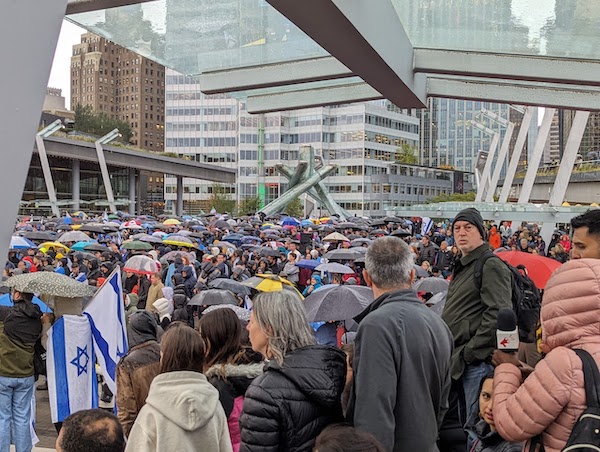
We are in a challenging political environment right now, where single-interest groups are flexing their disruptive muscles – anti-Israel activists, for example, are trying to cancel Christmas, they are disrupting public events, have shut down theatre performances and generally are making their small numbers have outsized impacts. While there is not on the horizon, at this point, a standard-bearer for the hate-Israel demographic, count on the myopic activists to inject this issue into the contest, likely to the detriment of the Jewish community’s safety and interests and, we would argue, to Israelis and Palestinians. 

Those who believe in a multiculturalism where Jews are welcome, a world where both Israelis and Palestinians are safe, and a body politic where dialogue trumps flag-burning should really pay attention to the process the Liberal party is about to adopt to select their next leader – who will be our next prime minister – and ensure that our views and interests are at least as well represented as the regressive mobs, be they on one side or the other of the issues we care most deeply about. 

Small glimmer of hope

The tyrannical regime in Syria has collapsed, and Syrian leader Bashar al-Assad has fled to Russia. We can hope this represents the end of the catastrophic Syrian civil war that has cost perhaps 600,000 lives, maybe more, and displaced half the country’s population.

The only thing that seems certain, however, is that the Assad regime is over. What comes next is largely unknown.

The forces that undid Assad, whose family has ruled the country with an iron fist for five decades, are a mix of ideological and theological entities, including Hayat Tahrir al-Sham, a group that sprang from the Islamic State and has links to al-Qaeda, as well as Western-aligned Kurdish nationalists, deserters from the regime’s military, and forces aligned with a vast array of foreign actors, including Russia, Turkey, Saudi Arabia, the Gulf States and the United States. These are not likely to coalesce into a comfortable new government.

Regardless of what happens next, Israeli and American leaders were happy to take some credit for Assad’s fall.

Binyamin Netanyahu, Israel’s prime minister, said the outcome “is the direct result of our forceful action against Hezbollah and Iran, Assad’s main supporters.”

“For years,” said US President Joe Biden, “the main backers of Assad have been Iran, Hezbollah, and Russia. But, over the last week, their support collapsed – from all three of them – because all three of them are far weaker today than they were when I took office.”

Israel has created a buffer zone in the Golan Heights to protect its territory in the event of continued unrest.

Meanwhile, there were US airstrikes on Sunday against the Islamic State, which operates in parts of Syria, an act intended to hamper that extremist group’s ability to fill the vacuum left by Assad’s toppling. But the United States is now just weeks away from the transition to a new president – a president who was elected partly on the promise to avoid foreign military entanglements.

At the same time, Donald Trump’s approach on issues has tended to be unpredictable. In characteristic all caps, Trump posted about Syria on the weekend, “This is not our fight.” Just days earlier, he promised “all hell to pay” if the Israeli hostages held by Hamas are not released by the time he becomes president. Whether the new Trump regime is isolationist or belligerent may depend on the mood the president wakes up in or what cable news channel he last binged.

One thing that seems certain and hopeful is that the collapse of Assad is part of a broader series of setbacks to the Iranian-based web of international terror. Israel has massively undermined Hezbollah, killing many of its top leaders and destroying much of its capabilities. The war against Hamas in Gaza, protracted, horrific and with no apparent end in sight, is nonetheless on the trajectory it set out on, more than a year ago, to eliminate Hamas as a force.

Assad’s collapse, while leaving a vacuum, is unequivocally the end of something terrible. Whether it is the beginning of something better is a question.

In one of the most encouraging signs, some commentators are suggesting that the multi-front failure despite billions of dollars in Iranian funds funneled to its proxies could even endanger the fundamentalist regime in Iran itself.

This is no time to celebrate. It is always, however, worth seeking out reasons for hope. That is especially true for Jews in the season of Hanukkah.

The collapse of the Syrian regime, the immense weakening of Hezbollah and Hamas and, to some extent Iran, are glimmers of light in a place and time of much darkness. It would be profoundly naïve, however, to assume that what comes next for Syria (and, as a result, for the region) will be either quick or entirely positive.

For the sake of the Syrian people, we hope for something resembling stability, as well as human rights and social and economic reconstruction. For the larger region, we hope for stability and that multi-front conflicts resolve in ways that advance mutual well-being.

For the sake of Israelis, who have known far too much war and violence, and whose borders and neighbourhood have been notoriously dangerous for 76 years, may the latest developments prove, when history is written, a step toward lasting peace. 

Hope for best outcomes

Every election leaves a portion of the electorate thrilled and another group disappointed. The more polarized the electorate, the more intense these emotions. Two elections recently were certainly examples of this – and they were elections that could hardly have been closer.

The British Columbia provincial election returned the New Democrats under Premier David Eby to office – but just barely. A single seat assured a majority government but that is a most precarious victory. Eby will need to be vigilant to ensure not a single member of his caucus steps out of line on a confidence vote or becomes disgruntled enough to bolt the party. This is almost certainly part of the reason Eby gave every member of his caucus a special title (along with added pay for the responsibilities). 

Eby has a reputation for centralizing power in his office – to be fair, almost every leader in our parliamentary system does, but apparently Eby is a master at micromanaging – and this is a double-edged sword. He does not lack the skills to keep potentially wayward sheep in line, but excessive domination tends to incite rebellion. 

Jewish voters especially will be watching a few things. The new mandatory curriculum for Holocaust education is to be rolled out next year. Given behaviours of the BC Teachers Federation and the potential for individual instructors to go rogue, the possibility exists for this curriculum to be weaponized against Jewish people. There are already dispiriting anecdotes about anti-Israel activism among some teachers. The introduction of mandatory Holocaust education could open the door to reactionary activism among those who think the Holocaust should not be privileged over other human catastrophes, as well as conversations that could turn in inappropriate directions because they lack the language or support for context. We hope that the province’s curriculum experts have anticipated this potential and worry that it is a nearly impossible task to monitor. We should be looking for various types of evaluation to guide these educational programs.

The back-from-the-grave BC Conservative Party, now the official opposition, has promised to introduce adoption of the International Holocaust Remembrance Alliance definition of antisemitism among its first acts in the new Legislature. This will put the Jewish community and our issues in the centre of political drama immediately – not a welcome or comfortable situation for our minuscule demographic; the debate is sure to engender opposition and recriminations.

In the broader scope of 2024 history, though, our provincial election will be a footnote next to the election that took place a few days later. The reelection of once and now future US president Donald Trump will almost certainly have exponentially more dramatic effects.

The reelection of Trump turned out to be not as close as every poll suggested, but also not as commanding as some commentators say it was. He won the popular vote this time by about 2.5 million votes, which, in terms of the raw vote margin, is the fifth-lowest since 1960 – but, compared to having lost the popular vote by almost three million votes when first elected in 2016, the 2024 margin points to a swing in the electorate that cannot be ignored.

Trump’s recent election seems to have been met by opponents with a fatalistic sense of déjà vu. His choices of cabinet appointees suggest his second term will be no less a circus than his first and quite possibly more damaging in many ways.

According to exit polls, Jewish voters in the United States supported the Democrat, Vice-President Kamala Harris, over Trump by a margin of almost four-to-one. (Israeli voters, if they could have voted, would have backed Trump by almost mirror-image landslide margins, according to at least one poll, a disparity that deserves discussion some other time.)

Support for Trump’s stated pro-Israel positions is premised on the presumption that what he says is what he will do. This is true for all politicians of course, but it is especially true for an individual as volatile and unpredictable as this one. (Whether his positions are actually good for Israel and Jews is also a topic for further analysis and discussion.)

Whichever parties or candidates we support, all of us should hope for the best outcomes. Much depends on it, if in significantly different magnitudes – the government of BC does not, for example, have nuclear weapons – but polarized partisanship does not serve the majority well. 

As a Jewish prayer for elected officials says, “May they be guided with wisdom and understanding to serve all its inhabitants with justice and compassion. Strengthen their resolve to protect freedom and promote peace, so that harmony and tranquility prevail among all who dwell here.” 

About the 2024 Rosh Hashanah cover

I came across this Rosh Hashanah greeting card in the 2017 Forward article “The Curious History of Rosh Hashanah Cards in Yiddish” by Rami Neudorfer. The image was copyrighted by the Hebrew Publishing Company, New York, 1909, and the high-resolution version we used for the cover comes from the postcard collection of Prof. Shalom Sabar (emeritus) of the Hebrew University of Jerusalem.

image - JI Rosh Hashanah 2024 cover“The card depicts two eagles in the sky: under the Imperial Eagle of the Russian coat of arms, a group of impoverished, traditionally dressed Russian Jews, carrying their meagre belongings, line Europe’s shore, gazing with hope across the ocean,” wrote Neudorfer. “Waiting for them are their Americanized relatives, whose outstretched arms simultaneously beckon and welcome them to their new home. Above them, an American eagle clutches a banner with a line from Psalms: ‘Shelter us in the shadow of Your wings.’”

Not only did Prof. Sabar provide the image for the cover but he offered further explanation of the card’s meaning. The verse quoted is partially based on Psalms 57:2; the fuller quote is taken from Psalms 17:8 – “Hide me in the shadow of Your wings.” In the illustration, the quote is changed to be in the plural: “Hide us in the shadow of Your wings.” And it appears in this form in the Ashkenazi siddur, where it is part of the Hashkivenu prayer, said Sabar. The full text can be found at sefaria.org.il/sheets/29587?lang=bi, where they translate the phrase as “and cradle us in the shadow of your wings.”

The message of a passage to freedom is not only enhanced by the Psalms quote, but also that the birds depicted are eagles, Sabar added. This is a reference to the liberation of the Jews from Egypt, he said, as in Exodus 19:4 – “You have seen what I did to the Egyptians, and [how] I bore you on eagles’ wings, and I brought you to Me.”

המלחמה במזרח התיכון תשפיע לרעה על חיי יהודים וישראלים בכל רחבי העולם

בשלב זה ישראל מקבלת תמיכה ממרבית מדינות המערב. אך יש סיכוי שעם ההתקדמות של מבצע צבאי של צה”ל ברצועת עזה, התמיכה תלך ותרד עם עליית הנפגעים בצד הפלסטיני
(photo by Roni Rachmani)

המלחמה הקשה שמתנהלת בימים אלה בין ישראל לחאמס ויכולה להתפשט לחזיתות נוספות, צפוייה להשפיע לרעה על חיי יהודים וישראלים הגרים בקנדה, ארה”ב, אירופה ומקומות אחרים. הם צפויים לעמוד מול איומים שונים של פלסטינים ותומכיהם שמאשימים את ישראל גם במשבר הנוכחי. תומכי הפלסטינים קוראים להקמת מדינה לפלסטינים מהנהר ועד הים – שפירושה המעשי השמדת מדינת ישראל

העולם המערבי כולל צפון אמריקה מלא כיום מיליוני מוסלמים שהיגרו ממדינות ערב לאורך שנים רבות. חלק לא מבוטל מהם ממשיך לשמור נאמנות למוצאם ודתם בצורה פנאטית ורואה בישראל כמדינת אויב

עוד שגרתי בישראל טענתי שהסכסוך בינה ובין הפלסטינים וחלק ממדינות ערב יסכן גם את חיי היהודים והישראלים הגרים מחוץ למדינה. אמרתי אז שלישראל יש גם את האחריות לשמור על היהודים והישראלים, שבחרו לגור במקומות שונים בעולם ובעיקר במערב. ומוטל על ישראל לשקול בזהירות את צעדיה שכאמור יכולים להשפיע לרעה על היהודים והישראלים שגרים בחוץ לארץ

עובדה היא שאנטשימיות נגד יהודים וישראלים ברחבי העולם הולכת וגדלה, וכבר בסכסוך הקשה הנוכחי, נרשם גידול נוסף בשנה נגדם. וזו רק ההתחלה. אני צופה להרעה משמעותית עד סכנת חיים ליהודים והישראלים בצפון אמריקה, אירופה ומקומות אחרים. כבר עתה ידוע על הפגנות גדולות קשות נגד ישראל ותמיכה בפלסטינים. אלה עלולות להחמיר לעימותים פיזיים קשים עם יהודים וישראלים ואף יותר מכך. משטרות בערים רבות בעולם הדקו את ההגנה על מוסדות יהודים שונים ובהם בתי כנסת. נרשמו כבר לא מעט איומים נגד יהודים, ישראלים ומוסדות שונים בעולם ולכן השמירה מאוד חשובה במיוחד בימים טרופים אלה

בשלב זה ישראל מקבלת תמיכה ממרבית מדינות המערב. אך יש סיכוי שעם ההתקדמות של מבצע צבאי של צה”ל ברצועת עזה, התמיכה תלך ותרד עם עליית הנפגעים בצד הפלסטיני. במקביל צפויים היהודים והישראלים ברחבי העולם לסבול מגידול משמעותי באנטישמיות, התנכלויות, ואף מאיומים פיזיים

חברת אייר קנדה מהירה לפטר טייס מוסלמי שהתבטא נגד ישראל וכתב בחשבון הטוויטר שלו: “היטלר גאה בישראל”. מוסטפא איזו השתתף בהפגנה במונטריאול בעד הפלסטינים נגד ישראל והוא אף הצטלם עם צעיף בצבעי דגל פלסטין. זו לא הפעם הראשונה שאיזו מתבטא נגד ישראל ותומך בפלסטינים אך הפעם מתברר שהוא חצה את הגבול ובאייר קנדה מיהרו לפטרו

ראש ממשלת קנדה, ג’סטין טרודו, גינה את מתקפות הטרור נגד ישראל בהתייחסו להתקפה של חמאס על עשרות ישובי עוטף עזה בה נרצחו למעלה מאלף שלוש מאות ישראלים, נפצעו למעלה מארבעת אלפים ונלקחו בשבי קרוב לוודאי כמאה וחמישים אזרחים, חיילים, ועובדים זרים. בהודעה שפרסם בטוויטר אמר טרודו כי פעולות אלימות אלה בלתי מקובלות באופן מוחלט. אנו עומדים לימין ישראל ותומכים באופן מלא בזכות להגן על עצמה.  מחשבות שלנו תמיד עם כל אדם שנפגע. חייבים להגן על חיי אזרחים, חתם טרודו את הודעתו. מנהיג האופוזיציה והמפלגה הקונסרבטיבית, פייק פוליוויר, גינה באופן חד משמעי את הפלישה של טרוריסטים של חמאס לישראל ואת האלימות האכזרית שהם הפעילו נגד אזרחים חפים מפשע. לדבריו לישראל הזכות להגן על עצמה בפני התקפות אלה ולפעול נגד התוקפים. מנהיג מפלגת השמאל אן.די.פי ג’גמיט סינג כתב בחשבון הטוויטר כי הוא מגנה את ההתקפות הנוראיות שביצע החמאס בישראל. אסור לעולם לפגוע באזרחים וכל החטופים צריכים להיות מחשוררים באופן מיידי. לדברי סינג יש חשש מההתפתחויות עתה. טרור ואלימות לא יפתרו דבר

Going beyond numbers

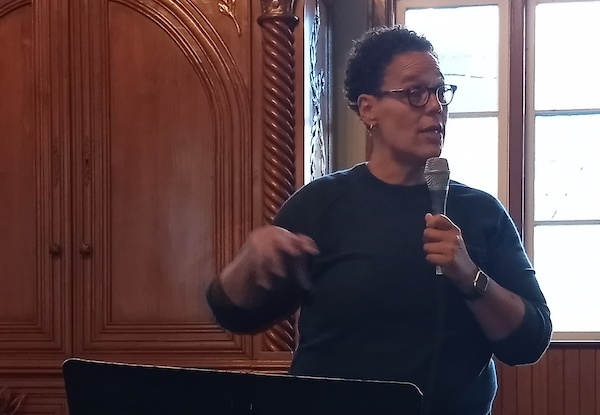
Jews of Colour Initiative chief executive officer Ilana Kaufman speaks at Or Shalom on June 6. (photo by Cynthia Ramsay)

On June 6 at Or Shalom, Jews of Colour Initiative chief executive officer Ilana Kaufman spoke about Beyond the Count: Perspectives and Lived Experiences of Jews of Colour. She said JoCI commissioned the survey to find out how many Jews of Colour there are in the United States, “what are our experiences, what are our perspectives, what are our beliefs, and then, how do you parlay that information into making the Jewish community, quite frankly, less racist, more inclusive.”

Kaufman was in Vancouver from Berkeley, Calif., where she is based, to share the survey results with “congregational rabbis, agency professionals, educators, board members, Jewish Federation staff, community members of colour and allies,” said Shelley Rivkin, vice-president of local and global engagement at the Jewish Federation of Greater Vancouver, which organized and funded the series of meetings. “Jewish Federation had been in conversation with Ilana about the work of the JoCI for over a year,” she said.

Or Shalom’s Rabbi Hannah Dresner introduced Kaufman at the shul talk, and Kaufman dove into the data.

“Depending on the age range you’re thinking about … between eight to 20% of the U.S. Jewish community are community of colour,” with the higher numbers being in the younger age groups, she said. “Every day in the U.S., the number of Jews of Colour is increasing, not decreasing. In terms of the data for multiracial families … 20% of U.S. Jewish families identify as multiracial. You may not see the family members of colour, but we’re there. And, if you’re on the coast, that number goes up to 25%, or one in four families. And that number, of course, is getting bigger every day, too.”

Kaufman is working with colleagues to figure out how many Jews of Colour there will be about 20 years from now. By 2042 or 2043, she said, “depending on immigration patterns, the U.S. will become half People of Colour. The majority of those folks will be multiracial and, in the U.S. Jewish community, we don’t know the date [that will happen], but those patterns map onto the U.S. Jewish community as well.”

While Beyond the Count is not a truly representative survey, as that would have cost about a million dollars, which was beyond JoCI’s capacity, the organization “cast the net as far as we could from the Jews of Colour Initiative perch,” said Kaufman. “We were able to have 1,118 qualified survey respondents in our study. It’s the largest dataset of Jews of Colour in the U.S., maybe anywhere in the world, and it’s not representative at all.” The interviewees over-represented in many areas, such as level of education attained and engagement in Jewish activities.

Regarding the methodology, Kaufman said the survey “is unapologetically framed with Critical Race Theory.”

“From our perspective,” she said, “we can’t do this work without framing it in a context where racism is real, and the effects of racism are real. And it doesn’t implicate white people, it doesn’t marginalize People of Colour, it just reveals the infrastructural truth that allows us then to leverage that truth to make change.”

Feminist pedagogy also informed the work, said Kaufman, and “we used a counter-storytelling approach, which means, instead of white folks saying, People of Colour, tell me your story … we had Jews of Colour, our community, centre the conversation and the work to create shape around that.”

JoCI doesn’t define the term “Jews of Colour,” both because race is a social construct and because identity “has to be owned and carried by the self and so we don’t want to be in the business of telling people how to self-identify,” said Kaufman. The organization uses “Jews of Colour” as an admittedly imperfect conceptual framework, she said, pointing out that, while race may be a fiction, racialization is real, and JoCI operates from that space. For those who self-identify as Jews of Colour, JoCI wants to be a space for resources and support.

Kaufman spoke about “whiteness,” also a social construct. Citing historian Karen Brodkin, Kaufman said the G.I. Bill – which offered home loans, college loans and other benefits to veterans after the Second World War – was one of the moments “when European Jews became white.” Instead of rejecting the benefits until their “black and brown family members in uniform” were offered the same opportunities, “there were moments of passive acceptance of the tools of upward mobility that were offered to Jews of European background that were not offered to People of Colour in the United States at that time,” said Kaufman. “And that’s one of the ways that Jews moved into whiteness, from being a highly ethnicized people in the United States.”

But it is a conditional whiteness, she said, and Jews who had lived with a passive acceptance of privilege had that comfort destroyed in 2016 with Charlottesville, “when white supremacists and neo-Nazis reminded Jews who had enjoyed the benefits of whiteness that they’re not safe…. And, in fact, that white identity is not seen as white in the eyes of white supremacists and neo-Nazis.”

Kaufman said one of the ways we can have a more dynamic and thoughtful conversation is to recognize the extent to which racism harms white people. “Even the concept of whiteness is such a flattened idea of who we’re talking about,” she said. “And so, when you think about Jewish ethnicity and you think just about Jewish European ethnicity, it is vast and it is diverse and, at least in the United States, it’s been boiled down to bagels … this caricature of who the Jewish people are.” When we celebrate diversity and grapple with intercultural dynamics, she said, “white folks have a stake in the conversation that’s not about being the target of opposition, but a collaborative part of the conversation” and, to do that, “we certainly have to recognize the privilege that comes with whiteness or being perceived as white…. When we get past our understanding of privilege, we need to get into who we are as ethnic, racial beings, and everybody has an equal stake in that conversation,” she said.

Almost half of survey respondents (45%) selected two or more racial categories. “And that’s the fastest growing population of People of Colour in the U.S., multiracial people, and that also maps onto the Jewish community,” said Kaufman.

One finding of the survey was that most JoCs feel more comfortable in an environment that’s multiracial. “Jews of Colour feel a tremendous amount of stress when [they’re] the only one in a situation…. We have to help people feel welcome without [them] feeling like we’re singling them out,” she said.

Respondents participated in a wide variety of Jewish activities and organizations, including formal Jewish education, attending synagogue, being part of a Jewish youth group and traveling to Israel: 63% of respondents participated in two or more Jewish activities. Yet most JoCs report having had a range of negative experiences in Jewish communal settings. At the top, 75% of respondents agreed or strongly agreed with the statement, “Others have made assumptions about me based on my skin tone,” and 74% with the statement, “I have felt burdened with explaining myself/my identity.” At the lower end, 60% agreed or strongly agreed that “I have felt tokenized” and 58% that “I have been treated as if I don’t belong.”

“A tip on that,” said Kaufman. “Of course, we want to welcome Jews of Colour into our committees to do things that matter…. If we’re reaching for someone because of what we think they look like, we have to stop ourselves. We just have say, we’d love to have you on our committee, but we want to know what you want to be on our committee for, instead of telling them … what we want them on our committee for.”

As an example, when she was asked to be on board, she made it a condition that she not have to talk about diversity. “And so,” she said, “how do you bring people in for why they want to be there, what they’re good at, how they want to grow? You just ask, how do you want to grow professionally, personally? Maybe I can give you that community opportunity if you join us, which is way better than saying, I don’t know you, I don’t know what you like, but I want you on my committee because of how I think you look.”

Overwhelmingly, survey respondents did not feel that American Jewish leaders are adequately addressing “the specific needs of members/participants who are Jews of Colour,” “the need for greater racial/ethnic diversity in Jewish organizational leadership” or “racism/white supremacy within the American Jewish community.” The numbers improve with regards to how these leaders are addressing “racism/white supremacy outside of the American Jewish community.”

“There’s deep comfort in helping those people outside,” said Kaufman. “What happens when those people are in all of us? And how do we collectively adopt a ‘those people’ identity so that we can actually dissolve this barrier between us and them?”

The study focused on racism, not antisemitism, said Kaufman. “Historically, when the U.S. has talked about antisemitism, they haven’t been including Jews of Colour in that conversation. And so, generally, when you hear about who’s being supported by the organizations fighting antisemitism in the U.S., you never see Jews of Colour included in that conversation.”

JoCI has had to be very careful, she said, so that the survey doesn’t become a tool to fight antisemitism among People of Colour. “The Jewish community and our colleague organizations who deal with antisemitism in the U.S. often use a dynamic of anti-Black racism to create support to fight antisemitism, and this has split People of Colour from Jewish people who [are] white.” She talked about the importance of taking on white supremacy. “Inside of white supremacy is both racism and antisemitism,” she said. “And I think it’s incumbent upon the U.S. Jewish community to look at racism and antisemitism side by side and, in our context, the container that holds that is white supremacy. So, I’m very interested in fighting antisemitism, I’m very interested in fighting racism and, I have to say that, in my family’s life and the lives of a million Jews of Colour in the United States, is for us to talk about white supremacy and to target racism and antisemitism in the same breath, at the same time. Because the piece is, we need to be in a relationship with our Muslim brothers and sisters, our Christian brothers and sisters, our family members all in between, because we’re all under threat from the white supremacists…. I’m very interested in fighting antisemitism but I’m not interested in fighting antisemitism if it only means we’re fighting for white, Jewish people.”

Beyond the Count makes four recommendations: support organizations and initiatives led by and serving Jews of Colour; shift organizational leadership to more accurately reflect the diversity of American Jews; prioritize creating spaces and places for discourse and dialogue with and among Jews of Colour; and promote further research by and about Jews of Colour.

Kaufman “helped us better understand the nuances and diversity of the JoC community and how systems of inequality are perpetuated in our own community,” said Rivkin in an email to the Independent. “The issues identified in Beyond the Count must be taken seriously, we can’t offer token solutions. We have to be intentional and first engage Jews of Colour to find out what they see as the key priorities and what path should be taken going forward.”

To do that, Rivkin said, “A key role of Jewish Federation is to bring stakeholders from across the community together to address critical issues and facilitate discussions…. One of our next steps is to explore the feasibility of conducting either a B.C. or Canada wide survey to gain a better understanding of the local JoC perspective.”

To read the full text of Beyond the Count, visit jewsofcolorinitiative.org.

Gallup poll concerning

A Gallup poll released last week shows that, for the first time, Democratic voters in the United States sympathize more with Palestinians than with Israelis.

Among Democratic voters contacted, 49% sympathize more with the Palestinians and 38% with Israelis. Among Republicans, sympathy for Israel remains overwhelming, at 78%.

The poll should raise concerns – but not only for the most obvious reasons.

Halie Soifer, head of the Jewish Democratic Council of America, hit the nail on the head when she told the Jewish Telegraphic Agency that the question paints a false dichotomy. (First, though, she noted that the Democratic Party’s leadership is overwhelmingly pro-Israel, whether that is reflected across the grassroots or not.)

“Democrats – from President Biden on down – strongly support Israel’s safety and security,” she said. But, crucially, she added: “There is no contradiction between being pro-Israel and supporting Palestinian rights, which is why Democrats continue to support a two-state solution to the Israeli-Palestinian conflict, as well as security assistance for Israel and humanitarian assistance to the Palestinians. The Israeli-Palestinian conflict is not a zero-sum game, and thus polling that presents it as a binary choice is inherently flawed.”

Calling people on the telephone at dinnertime to ask them how to solve an intransigent international conflict is not likely to advance the most constructive ideas for resolution. Simplistic formulations are inevitable, nuance flies out the door. Questions become self-reinforcing, a sort of unintentional “push poll.” (A push poll is an unethical strategy used sometimes in political campaigns intended not to gauge public opinion but to influence it: “If you knew that Candidate A had a history of drowning puppies and pulling wings off flies, would that make you more or less likely to vote for them?”)

This is not to blame Gallup, an established and respected polling firm. Their question unfortunately, reflects a common narrative, an either/or. That, as Soifer said, is a false dichotomy.

To be genuinely pro-Israel demands we be pro-Palestinian because finding a resolution to 75-plus years of conflict requires some sort of resolution to the statelessness of Palestinians. Equally, being pro-Palestinian demands we be pro-Israel, because compromise and coexistence is the only thing that will result in Palestinian self-determination.

Of course, acknowledging this is the easy part. How to behave in “pro-Israel” and “pro-Palestinian” ways is the muddy part. Those who call themselves “pro-Palestinian” often behave in ways that preclude the very thing they claim to advance. By denying Israel’s right to exist, for example, they ensure that compromise is taken off the table and, since that is the route to Palestinian self-determination, they betray the very definition of “pro-Palestinian.”

Those who are “pro-Israel” also need to temper their extremes. It is fair to say that, during the Oslo process, Israelis demonstrated a consensus toward coexistence that has understandably waned since the violence of the Second Intifada. But, for example, the common and senseless mantra we see from some commentators on social media that “there is no such thing as a Palestinian people” is a fruitless – and racist – squabble. Deny their history, reject the legitimacy of their land claims – there are still people there whose present and future demands a serious form of address and dignity.

To be clear: the sometimes-stated idea that the status quo cannot hold is simply not true. It has, by and large, held since 1967 and it could continue for another generation or more unless mutual compromise emerges to change that. The status quo arguably harms Palestinians more than it harms Israelis, which has led to an assumption that Israel must be in favour of the status quo. As a consequence, overseas activists have blamed Israel for the situation on the assumption that, as the perceived powerful party, it is the only one that can break the impasse. This is partly, if not mostly, untrue. Compromise must come from both sides and chants like “From the river to the sea …” and “Intifada! Revolution! There is only one solution!” the latter of which echoes Nazi slogans, will not “free Palestine.” They will, however, influence public opinion.

We should be concerned by the results of the Gallup poll – it indicates that decades of building multilateral support for Israel’s security among Americans (and, by extension almost certainly Canadians and Europeans) is failing. But, we should be concerned for another reason. It reinforces a false belief that we can only call ourselves pro-Israel or pro-Palestinian. Until we can legitimately call ourselves both, none of us deserves to call ourselves “pro-peace.”

Jews in trench coats

Canadians and Americans are similar, but different. To see this obvious statement in practical terms, two books – by two authors who will speak in Vancouver next month – provide an entertaining and educational contrast.

Andrew Kirsch and Douglas London are retired spies. Well, the term “spy” is, they both readily admit, a bit laden for a job that Kirsch characterizes as a lot of “hurry up and wait” and that London describes as “hours and hours of routine, and a few moments of adrenaline.”

Kirsch is a Canadian and author of I Was Never Here: My True Canadian Story of Coffees, Codenames and Covert Operations in the Age of Terrorism. London is American and author of The Recruiter: Spying and the Lost Art of American Intelligence. They will present as part of the Cherie Smith JCC Jewish Book Festival, in an event dubbed “Jews in Trench Coats,” on Feb. 13.

Kirsch, who grew up in Toronto, left a job in the financial sector in London, England, after the 2005 terror attacks in that city and joined the Canadian Security Intelligence Services, CSIS. He describes himself as “part of a post-9/11 wave of civically minded Canadians who had left our day jobs to do our part in the age of terrorism.”

London’s career in the field was longer, symmetrically spanning 17 years on either side of 9/11, which is, obviously, the Western world’s iconic intelligence failure of the current era.

In the United States, the FBI is the domestic security service, much like our RCMP, while the CIA works almost exclusively outside the country. Similarly, in Israel, the Mossad deals with foreign intelligence and covert activities, while Shin Bet manages internal security. “In Canada, we have one organization [CSIS], and it’s responsible for covering the globe while operating largely domestically,” writes Kirsch.

image - I Was Never Here book coverThe lack of awareness around CSIS is one of the reasons Kirsch wrote his book. If the CIA knocks on your door, many people around the world would know to be instantly on alert. If CSIS knocks on a Canadian’s door, Kirsch admits, it usually requires a quick spiel about what CSIS is and what it does. He also wrote the book because, when he and most of the other agents he knows first got interested, there was little to read on the subject of what they might expect.

If most Canadians don’t know what CSIS is, new Canadians can be expected to know even less. The author shares a cute anecdote about how he shorthands his role for Arabic speakers.

“The Arabic term for intelligence service is Mukhābarāt,” he writes. Obviously, somebody from an Arabic speaking country might understandably be anxious when someone knocks on the door and declares themselves representatives of the security service.

“I’d simply say, ‘Canadian Mukhābarāt. Nice Mukhābarāt.’ That might get a laugh and a foot in the door,” he said.

In typical Canadian fashion, Kirsch downplays the drama. He’s no James Bond.

“These aren’t high-stakes negotiations over baccarat and cocktails at a casino. It’s much less glamorous. I was in the coffee and conversations business,” he writes. Nevertheless, he charms with amusing anecdotes, foibles and practical jokes (he and his former colleagues are serious and professional, he insists, but they need to blow off steam). One gets to know the man and the organization.

While Kirsch is modest in speaking of his work and that of CSIS, he makes their significance clear.

“Canada is one of the safest countries in the world. This is not because we don’t face threats, but because we do an admirable job of protecting our citizens against them,” he writes. “That is how law enforcement and intelligence agencies tend to work. If we do our job, you won’t know we were ever needed in the first place.”

One of the most notable incidents in recent history when the work of CSIS did hit the front pages was the foiled Toronto 18 plot in 2006, when a cadre of radicalized Canadians plotted to explode truck bombs in southern Ontario. That was a disaster that didn’t happen because of intelligence, but Kirsch acknowledges tragedies where intelligence failed.

In 2014, for example, Michael Zehaf-Bibeau shot and killed Cpl. Nathan Cirillo, a soldier who was standing guard at the National War Memorial, and then stormed Parliament Hill but was killed before he could reach the heart of our democracy.

And just because Canadians have been blessedly fortunate not to suffer more terrorism doesn’t mean Canadians aren’t involved in some of the horrors we see abroad. A Vancouverite was convicted in absentia for involvement in a suicide bomb attack on Israeli tourists in Burgas, Bulgaria, in 2012. Five Israelis and the bus driver were killed and more than 35 other Israelis injured.

Kirsch admits he was worn down by the bureaucracy of the job, but his decision to leave the agency was based on family obligations, when his wife became pregnant. He clearly holds CSIS and his former colleagues in great esteem.

London’s reflections are not so kind. He calls the CIA in the last couple of decades “a cult of personality.”

“The senior ranks became an ever more homogenous collection cut from the same mold, focused more on ambition than the mission, the organization, or the workforce,” writes London. “While there were thankfully brilliant exceptions, the cadre had drunk their own Kool-Aid as to their own brilliance and worth.”

image - The Recruiter book coverLondon also paints a more dramatic picture than his Canadian counterpart – not surprising, given the lopsided size and prominence of their respective organizations in the world.

There is cajoling involved in recruiting people to the CIA. One of the crucial tasks of a successful operations officer is determining a person’s motivations. To one potential recruit, London said, “It was Allah’s will that we meet … so we can together accomplish something bigger than ourselves.” In this case, it was an appeal to religious and national pride, not material reward. In other cases, material reward was enveloped in a person’s (usually a man’s) sense of providing for family, in which case London would emphasize that the “ability to contribute modestly to your family’s well-being” was something that would be undertaken by a good family man, not a traitor to his country.

London writes about antisemitism he encountered from among colleagues – especially fellow recruits early in his career, many of whom had never met a New Yorker, let alone a Jew. Both authors write of keeping their Jewishness under the radar. Occasionally, a throwaway comment could still stun.

Kirsch was meeting with a Sunni Muslim who was ranting about his hatred of Shia Muslims.

“And he rolled back into his seat and he stroked his big bushy beard and said, ‘You know, Andrew, they are worse than the Jews.’

“I don’t think I’ve ever felt more Jewish than in that moment,” writes London.

In an amusing observation near the end of his book, London claims people in his business are notorious yentas.

“It’s a pity really that confidentiality considerations prevent the creation of a People magazine, Us Weekly or TMZ program for the agency. Perhaps ironic, but the very same people hired to protect our nation’s most guarded national secrets are absolutely the biggest gossips.”

London proves this in a book that is as juicy as CIA censors would allow.

Jews in Trench Coats, featuring London and Kirsch, takes place at 6 p.m., Monday, Feb. 16. Tickets are $18. The JCC Jewish Book Festival runs Feb. 11-16, with free and ticketed events for all ages. Details at jccgv.com/jewish-book-festival.

מקטאר לוונקובר

צלום: Province of British Columbia

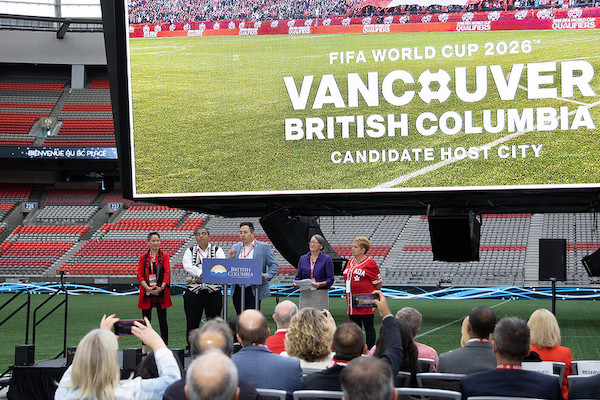
לאחר סיום המונדיאל האחרון בקטאר לפני שבועות מספר, מתחילה ההיערכות למונדיאל הבא – אליפות העולם שתיערך לראשונה בשלוש מדינות בו זמנית: ארצות הברית, מקסיקו וקנדה. זאת בעוד כשלוש וחצי שנים: בחודשים יוני ויולי בשנת אלפיים עשרים ושש

הטורניר בצפון אמריקה יכלול יותר מקומות לאפריקה ומרכז אמריקה, העפלה צפויה של ניו זילנד, שדרוג מזערי לאירופה ורמה נמוכה בשלב הבתים. המארחות ארה”ב, קנדה ומקסיקו כבר מתחילות להיערך לקראת אירוח המונדיאל הראשון שיכלול לא פחות מארבעים ושמונה נבחרות

 אחרי סיום המשחקים בקטאר, בעולם הכדורגל מתחילים להביט קדימה אל עבר טורניר הבא שיתקיים בארצות הברית, קנדה ומקסיקו. כיוון שהטורניר בקטאר התקיים בינואר (לאור החום הכבד בקיץ שם), אוהדי הכדורגל ימתינו רק שלוש שנים וחצי עד המונדיאל הבא ולא ארבע כמו בדרך כלל. כידוע, למרות הביקורות הקשות, המונדיאל הבא יתקיים בפורמט שונה. יותר נבחרות, יותר משחקים ויותר שחקנים. לטענת הרבה מאוד מבקרים, גם צפויה רמה נמוכה מאוד של משחקים בשלב הבתים – לאור העפלה של נבחרות בינוניות ואף פחות מכך. הרחבת המונדיאל של צפון אמריקה תסייע בעיקר לנבחרות מאפריקה, אסיה מרכז וצפון אמריקה, וגם לניו זילנד. מי שייהנו פחות מכך באופן יחסי, הן הנבחרות הטובות יותר השייכות ליבשות של אירופה ודרום אמריקה. שם בית המוקדמות יכלול עשר נבחרות, ועשויות לעלות לשלבים המתקדמים לא פחות משמונה מהן. הסיפור המעניין מגיע הפעם מצפון ומרכז אמריקה. זאת כיוון ששלוש המארחות (ארצות הברית, מקסיקו וקנדה) עולות אוטומטית למונדיאל. ולכן ייפתחו שלושה מקומות נוספים ושתי נבחרות נוספות יגיעו לפלייאוף. בסופו של דבר יכול להיות שיהיו שמונה נציגות משם מצפון ומרכז אמריקה. ניו זילנד, שמאז הצטרפות אוסטרליה למוקדמות באסיה תמיד מסיימת במקום הראשון באוקיאניה, תהיה פייבוריטית ברורה לעלייה אוטומטית. נבחרת איי שלמה במוקדמות 2022 הגיעה לגמר נגד האול וייטס, תעפיל עד לפלייאוף אם שוב תסיים כסגנית

נבחרות כמו ג’מייקה, טרינידד וטובגו ואל סלבדור ייאבקו על חזרה לגביע העולמי ובדרום אמריקה ונצואלה – היחידה שמעולם לא עשתה זאת – יכולה לחלום על הופעת בכורה בזכות העובדה ששבעים אחוזים מהמתחרות בתמונה העלייה. השינוי היחיד שזוכה למשוב חיובי מכל הכיוונים הוא בשיטת הפלייאוף. במונדיאל אלפיים עשרים ושתיים למשל, הגיעו לפלייאוף ניו זילנד, פרו, קוסטה ריקה ואוסטרליה, בהגרלה עיוורת נקבעו שני משחקים שהניבו שתי עולות. בפורמט החדש שלב הפלייאוף יתקיים בשיטת ליגה אינטרקונטיננטלית, שתכלול שש נבחרות מחמש יבשות. הן ישחקו אחת נגד השנייה ושתי הראשונות יעפילו למונדיאל

הטורניר של המונדיאל אלפיים עשרים ושש ייערך בשישה עשר אצטדיונים שונים. אחד עשר בערים האלה בארצות הברית: ניו ג’רזי/ניו יורק, דאלאס, קנזס סיטי, יוסטון, אטלנטה, לוס אנג’לס, פילדלפיה, סיאטל, סן פרנסיסקו, בוסטון ומיאמי. שלושה בערים האלה במקסיקו: מקסיקו סיטי, גוודלחרה ומונטריי. שניים בערים האלה בקנדה: טורונטו וונקובר

למרות שהתאחדות הכדורגל העולמית (פיפ”א) החליטו לפני מספר שנים לשחק בפורמט של שישה עשר בתים, שיכללו שלוש נבחרות כל אחד, ייתכן שהתוכנית לא תצא אל הפועל במונדיאל של ארצות הברית, מקסיקו וקנדה. ויתכן שהמונדיאל הצפון אמריקני יתקיים באותה מתכונת ידועה של ארבע נבחרות בכל בית ובסך הכל מדובר בשנים עשר בתים. זאת מתוך רצון לשמור על תחרותיות עד המחזור האחרון של שלב הבתים. לפי התכנון המקורי הפורמט החדש: שישה עשר בתים כאשר יש שלוש נבחרות בכל אחד מהם (בהן אירופית אחת בכל בית). שתי הראשונות עולות לשלב פלייאוף שכולל שלושים ושניים נבחרות וממנו מעפילות לשמינית הגמר

משחקי גביע העולם הבאים בארצות הברית, מקסיקו וקנדה מבטיחים ככל הנראה רגיעה מסוימת בכל הנוגע לתאונות בנייה. זאת לעומת המחדלים הנוראיים שהתרחשו במונדיאל האחרון שנערך בקטאר. המונדיאל העשרים ושלוש במספר יתקיים בשלוש המדינות של צפון אמריקה (ארצות הברית, מקסיקו וקנדה) מצוידות באצטדיונים שהוקמו זה מכבר, בהבדל מאלה בקטאר. מרבית האיצטדיונים במדינות שיארחו את המונדיאל הבא הוקמו בחלקם במאה הקודמת ואחרים בשנים האחרונות. הידוע מביניהם שהפך

למיתוס הוא אצטדיון האצטקה במקסיקו סיטי, שבו נכבש “שער יד האלוהים” על ידי דייגו מראדונה, בשנת אלף תשע מאות שמונים ושש, במשחק רבע הגמר במונדיאל נגד אנגליה. לקראת המונדיאל הקרוב של ארצות הברית, מקסיקו וקנדה, צפוי שכמה מהאצטדיונים בהם יתקיימו משחקי הכדורגל יעברו שידרוג ושיפוץ ואף מספר המושבים יגדל משמעותית. יש להאמין שהפעם בניגוד למה שקרה בקטאר וללא הצדקה, העבודות השונות לא יביאו למותם של פועלים. אם זאת יש לזכור שבמונדיאל הקרוב של צפון אמריקה יש אלמנט שלילי מאוד משמעותי והוא: המרחקים הארוכים בין אתרי המשחקים של ארצות הברית, מקסיקו וקנדה. אלו יצריכו נסיעות וטיסות של מאות ואלפי קילומטרים. כך שהנוחות לא תהיה במיטבה באליפות העולם בכדורגל הבאה

הנבחרות של ארצות הברית וקנדה שהבטיחו כבר אוטומטית את השתתפותן במונדיאל של צפון אמריקה, מחפשות מסגרת איכותית להתחרות בה, במסגרת ההכנות שלהן לגביע העולם הביתי שלהן. זאת, כיוון שלא ישתתפו במוקמות של הבית הצפון אמריקאי לקראת המונדיאל. על כן שתי הנבחרות המארחות של אליפות העולם בכדורגל הבאה פנו לאחרונה התאחדות הכדורגל של דרום אמריקה, וביקשו להשתתף במשחקי אליפות דרום אמריקה לנבחרות, קופה אמריקה, שיערכו בשנת אלפיים עשרים וארבע. בכירים בהתאחדות הדרום אמריקנית מציינים כי אין להם התנגדות לצרף את ארצות הברית וקנדה למשחקי קופה אמריקה הבאים. לעומתן, נבחרת מקסיקו לא בוחנת לפי שעה להצטרף למשחקי הקופה אמריקה. יצויין כי מקסיקו השתתפה בקופה אמריקה בקביעות עד אלף תשע מאות תשעים ושלוש

אליפות הקופה אמריקה של שנת אלפיים עשרים וארבע, בה תשתתף נבחרת ארגנטינה כאלופה המכהנת החדשה, הייתה אמורה להתקיים באקוודור. זאת בהתאם לסבב הקבוע שנהוג בהתאחדות הדרום אמריקאית. אך אקוודור דחתה את האפשרות לארח את המשחקים ובשלב זה טרם ידוע היכן תיערך האליפות הדרום אמריקנית בכדורגל. יש סיכוי מסויים כי ארצות הברית עשויה לארח את קופה אמריקה, כמובן אם יאושר שהיא תוכל להשתתף באליפות. ארצות הברית אגב שיחקה כבר בקופה אמריקה ארבע פעמים. בשנת אלפיים ושש עשרה היא אף אף אירחה את הטורניר, במהדורה המיוחדת לכבוד מאה שנים שנים למפעל המכובד, שכללה גם שש נבחרות מצפון אמריקה. לעומת זאת קנדה מעולם לא השתתפה בטורניר הדרום אמריקני

נבחרת קנדה בכדורגל ממוקמת כיום במקום החמישים ושלושה בעולם, לפי רשימת הדירוג של פיפ”א. הנבחרת הקנדית הצליחה להעפיל לגביע העולם בכדורגל רק פעמיים: בשנת אלף תשע מאות שמונים ושש ולמונדיאל האחרון שנערך בקטאר. לעומת זאת הנבחרת הצליחה יותר באליפות של צפון ומרכז אמריקה, ואף זכתה בה בשנת אלפיים. ואילו בשנים אלפיים ושתיים ואלפיים ושבע הגיעה קנדה למקום השלישי. באלפיים ואחת הגיע קנדה למקומות שלוש-ארבע. הרכב הנבחרת הקנדית כולל כיום תשעה שחקנים המשתתפים במשחקי הכדורגל של הליגה קנדה. מדובר: בשישה המשחקים בקבוצה של מונטריאול, שניים המשחקים בקבוצה של טורונטו ואחד המשחק בקבוצה של ונקובר ואיטקאפס

Democracy in danger

A pageant of pandemonium consumed the United States House of Representatives last week as it took 15 votes to confirm Kevin McCarthy as speaker. The chaos was caused by a group of far-right congresspeople representing less than five percent of the total House membership. Eventually, McCarthy triumphed – well, squeaked through – by cutting backroom deals that will empower the extremists and weaken the office of the speaker.

Although the holdouts are on the far-right fringes of American society, personality was a major factor in the weeklong deadlock. The opponents have issues with McCarthy as a person and a politician as much as they have with his policies. To succeed, McCarthy had to agree to concessions and cough up inducements that defile the dignity of his office and put the House of Representatives in jeopardy of being hopelessly deadlocked and dysfunctional.

An analogous situation is unfolding in Israel, where Binyamin Netanyahu has returned to the prime ministership. To do so, he had to make some very grubby deals with some very distasteful people.

Here, too, personalities were at play, as much as policies. There is a swath of centre-right politicians who would have joined a coalition that was not headed by Netanyahu. As a result, to regain power, Netanyahu was forced to make deals with far-right figures who should never have been considered for inclusion in a democratic government.

Both of these situations speak to an unfortunate reality of parliamentary democracy. When a bloc fails to attain a comfortable majority, they can find themselves dependent on the support of narrowly focused, ideologically driven extremists that represent very few voters. In many cases, the extremist tail ends up wagging the dog.

This is regrettable and it is sometimes inevitable. Democracy is by no means without its downsides. In fact, Winston Churchill’s aphorism – “Democracy is the worst form of government – except for all the others that have been tried” – resonates here.

The foundational piece of democracy is free elections and the peaceful transition of power, a cornerstone that was attacked on Jan. 6 two years ago at the U.S. Capitol. That cornerstone is now under siege in Brazil, in a striking parallel – as if the supporters of defeated former president Jair Bolsonaro directly stole the playbook of the American Republicans’ “stop the steal” scheme to subvert the 2020 U.S. election.

Violent protesters ransacked Brazilian government buildings this week, stealing weapons and artifacts and vandalizing facilities. Brazil does not have as long a history of democratic infrastructure as Israel or the United States, which could make it more vulnerable to attack. One core difference in the Brazilian case, versus the Israeli or American situation, is that the threats, at this point, are coming from outside the government – the protesters are supporters of a defeated (and possibly self-exiled) former leader. In the United States, the insurgents have an apparent stranglehold on one of the houses of Congress and, in Israel, are fully in charge.

The biggest concern in a democracy comes when the extremist tail that wags the dog not only influences policies but actually begins chipping away at the institutional underpinnings of democracy itself. This is a legitimate concern in Israel, as some partners in the coalition are threatening the judicial system, the functioning of police and the very definition of Israeli citizenship. The vote for U.S. House speaker did not itself represent a threat to democracy, though the final votes poignantly took place on the second anniversary of the insurrection that was the greatest attack on American democracy since the Civil War – a moment from which the country and its democratic foundations still reel. And continued dysfunction in the House portends a difficult road ahead for U.S. democracy as voters tire of do-nothing legislative bodies and what some perceive as broken political systems.

Both Israel and the United States are on unprecedented precipices. (Brazil, ironically, probably less so.) However, in both Israel and the United States, entrenched civil society organizations and strong parliamentary opponents are in place to monitor and bolster the fundamentals of their societies. Those on the (geographical and/or ideological) outside should support in every way we can the movements for democracy, pluralism and tolerance in Israel, the United States and everywhere in the world where these values are threatened, including if we see dangers to them here at home.