Skip to content
  • Home
  • Subscribe / donate
  • Events calendar
  • Business Directory
  • FAQ
  • News
    • Local
    • National
    • Israel
    • World
    • עניין בחדשות
      A roundup of news in Canada and further afield, in Hebrew.
  • Opinion
    • From the JI
    • Op-Ed
  • Arts & Culture
    • Performing Arts
    • Music
    • Books
    • Visual Arts
    • TV & Film
  • Life
    • Celebrating the Holidays
    • Travel
    • The Daily Snooze
      Cartoons by Jacob Samuel
    • Mystery Photo
      Help the JI and JMABC fill in the gaps in our archives.
  • Community Links
    • Organizations, Etc.
    • Other News Sources & Blogs
  • JI Chai Celebration
  • JI@88! video

Recent Posts

  • Or Shalom reopens its doors
  • JFS from past to future
  • Need holistic approach
  • Sharing stories, advice
  • Journalist shares fears
  • Skills to live together
  • Road to independence
  • Cutting grass with scissors
  • Zionism as a solution
  • Deceit, desire & the divine
  • Reclaiming sacredness
  • Creative project ideas
  • Summer squares and cobbler
  • Thou shalt … summer commandments
  • Legal help for students
  • Revisiting myth of Lilith
  • Wrong person rebuked
  • Canada’s mixed messages
  • Questions for museum
  • Symposium on antizionism
  • Making soccer political
  • CJPAC lauds Pulver’s impact
  • City recognizes Vrba’s legacy  
  • Organ donation saves lives
  • Theodore’s March premiere
  • A healing Shabbaton
  • Supplying healthy food
  • A chime of metal tags
  • Yellowknife seder a first
  • Ishai energizes, unifies
  • A Lag b’Omer to remember
  • Expanding the healing
  • Hannah Senesh – a unique hero
  • Community milestones … May 2026
  • Деньги до зарплаты на карту Займ до зп онлайн за 5 минут 2026
  • Микрокредит онлайн в Казахстане Микрозайм в Акшамат

Archives

Follow @JewishIndie
image - The CJN - Visit Us Banner - 300x600 - 101625

Category: National

Isolated, tired, disappointed

Isolated, tired, disappointed

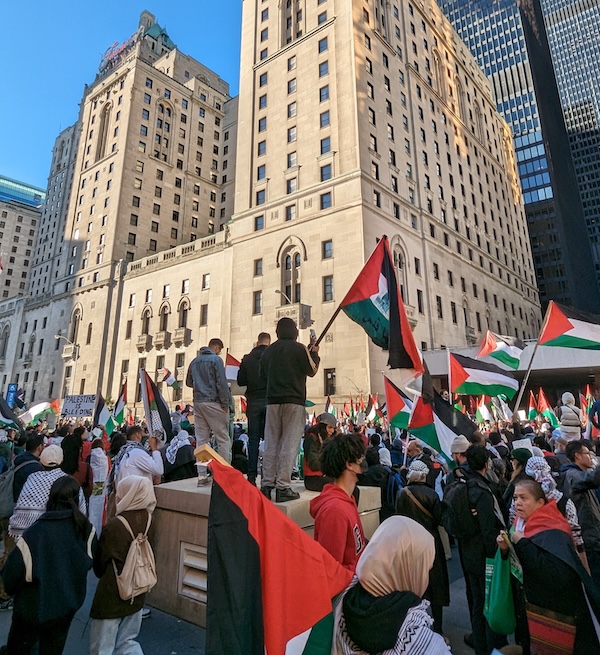
A “Toronto for Palestine” protest Oct. 28, 2023. In the last six months, across Canada, such protests have often featured calls for violence against or the death of Jews. (photo by Sikander Iqbal)

In the past six months, protesters have targeted Jewish community buildings and synagogues in Montreal and the Toronto area. Jewish student group Hillel has also been a prime target for anti-Israel and anti-Jewish sentiment at Canadian universities, including in Vancouver. Similar protests caused the Art Gallery of Ontario to cancel an event with the Canadian and Italian prime ministers over security concerns. A man in Vancouver was charged with hate-related crimes over the defacing of Israeli hostage posters. 

These are just a few examples of organized anti-Israel protests, often with calls for violence against or the death of Jews, on the streets and campuses across the country. Much of this activity is met with silence or borderline anti-Jewish remarks from many elected officials and leaders.

Trans and queer rights are also under attack in Canada with the premier of Alberta’s recent announcement of sweeping new anti-trans policies and Saskatchewan Premier Scott Moe’s use last year of the notwithstanding clause in the Charter to push through a law requiring parental consent for children under 16 who want to change their names or pronouns at school. 

The confluence of these events and the ongoing need to carefully navigate the intersectionality of their identities has left many queer Jews feeling isolated, tired and disappointed.

Queer communities in Canada have long trended toward a pro-Palestinian point of view, often reflected in clashes over whether certain Jewish groups should be allowed to march in pride parades, Aviva Rathbone, board chair of JQT, a Vancouver-based Jewish queer and trans organization, told the Independent.

“Right now, what it means is that many of the Jews in the queer community, especially Israelis, but also Jews who would maybe call themselves Zionists or who feel complex about the situation in Israel and Gaza, are not welcome in queer communities,” she said.

“I did not know there was such thing as an anti-Zionist Jew until I moved to Canada,” said Ari Fremder, a 33-year-old who works in Vancouver’s animation industry. Fremder is originally from Zimbabwe.

As a trans person who is also autistic and introverted, Fremder said, they don’t leave their house very often anymore because of the anti-Jewish protests, posters and stickers – that frequently incite violence against Jews – in their neighbourhood.

They used to go to local queer events but said they don’t feel safe anymore, as many groups are pro-Palestinian and openly state Zionists are not welcome.

“I feel a lot safer being queer in the Jewish community than I feel safe being Jewish in the queer community,” said Jessie, a 21-year-old student and environmental activist in Ontario, who asked not to use their real name.

As one of few Jewish queer people in Halifax, Schuyler H. Smith said they are facing “more hate” than they’ve ever faced in that city.

The 33-year-old diversity consultant agreed that it’s more comfortable to be part of a Jewish than a queer community right now. They will, often with trepidation, reach out privately when they see antisemitic comments and remarks from queer community members, to try to dispel myths about Jews as white colonialists or as non-indigenous to Israel, for example.

Smith hopes one-on-ones can make people think twice before posting negative comments or memes about Jews.

Anti-trans policies in Alberta and Saskatchewan, attacks and protests at drag queen story times and other “parental rights” actions across the country are also taking a toll on members of the LGBTQ2S+ community.

“I’m scared, honestly, for young trans people who need this care and are being interfered with by politicians,” said Cas Allen, a 21-year-old university student in Victoria who says access to hormone blockers changed his life when he was 15.

Ezra, a 39-year-old trans teacher in Calgary, who prefers not to use his real name, said the government is pushing a lot of misinformation, but he’s heartened by the pushback from the queer community.

He’s committed to being a visible queer influence in his school, which has a high number of new Canadian immigrants.

“If there were any queer kids in the class, they could see themselves reflected,” he said, “and [I can give] them a safe adult to confide in [while] they decided who they are.”

Allen, who grew up in a religious Jewish family in Alberta, said since he transitioned, he has “recreated” his queer Jewish identity “from the ground up” but he’s once again finding it “complicated and messy” to reconcile both those parts of himself.

He said he feels isolated and unable to talk about his feelings regarding Israel and his Jewishness to the LGBTQ2S+ people he knows. He said the only person he can really confide in is his twin sister.

Queer spaces on university campuses tend to be very pro-Palestinian and are forcing students to choose between their Jewishness and being queer, said Rabbi Seth Goren, executive director of Jewish student group Hillel Ontario, which has a presence at nine universities in the province.

“I think that’s a choice that queer Jewish students shouldn’t have to make,” he said.

Many Jewish students feel like there is no place where the conflict isn’t swirling around them, added Rabbi Kylynn Cohen of Hillel BC. She said she’s had to help students who, after Oct. 7, couldn’t go to classes because of the anti-Jewish rhetoric, both from student groups and in classrooms.

Cohen said she sees more Jewish students hanging out in the Hillel building on the University of British Columbia campus, seeing it as a safe space. Many queer students have told her they go to straight bars to unwind now rather than congregating in gay spaces.

photo - Vancouver skyline at night
From Vancouver to Halifax, many queer Jews are feeling unsafe and isolated because of the increase in anti-Jewish and anti-trans sentiment since the Oct. 7 Hamas terror attack on Israel and the ensuing Israel-Hamas war. (photo by Maximilian Ruther / Pexels)

Many student-run groups and education-related unions have come out with strong anti-Israel statements. Six Canadian universities are facing class action lawsuits over anti-Jewish hate speech, threats against Jewish students on campus, and the silencing of Jewish voices. 

There are also dozens of reports of Jewish students being shouted at, punched and spat on by anti-Israel protesters at universities across the country. Ontario student Jessie said, even though they’re at a university with a large Jewish population, there is constantly an “uncomfortableness” between their two intersecting identities.

Like many LGBTQ2S+ Jews, their stance on Israel is multi-faceted but they said they’re frustrated and have lost friends in the queer community who aren’t open to the nuances of how different Jewish people are feeling or to seeing the Jewish community as anything other than homogenous “white settler colonialist[s].”

Jessie wears a Star of David necklace but said they now often hide or remove it, including during their local drag king performances at which other performers have made pro-Palestinian tributes. They say they’d be “canceled” if they shared their support for the hostages or Israeli citizens during a show.

“There’s no space even for me to mourn or to acknowledge my feelings and what’s happening,” said Jessie.

There are, however, some Jewish queers for whom the past few months have been a time of solidarity and community building.

Non-binary Toronto artist Sadie Epstein-Fine said they are Jewish but were raised as an anti-Zionist. They’re a member of a group called Jews Say No to Genocide, whose membership is almost all queer Jews. Since Oct. 7, they say they’ve been “entirely surrounded by queer Jews” in a busy, activist environment.

They admit to looking white and acknowledge the privilege that brings, also recognizing that antisemitism is on the rise but saying they’ve been fortunate not to have felt it personally.

“We’re more concerned about Palestinian safety than we are about our safety,” Epstein-Fine said of their group members.

Beyond campuses, the past six months have seen bomb threats and attacks against Jewish schools and businesses, as well antisemitic graffiti and a rising number of other hate crimes aimed at Jews across the country. Police forces in some cities have enlarged their hate crimes units and set up hate-crime reporting centres in Jewish areas.

Darren Sukonick, 53, a Toronto businessman who has been involved with Jewish charities and community groups for decades, said he was surprised and disappointed at how widespread and swift anti-Jewish sentiment was across Canada after Oct. 7. He said he never thought he’d ever experience levels of hate like he’s seeing now.

“It was like being on a hike, turning over a log and seeing all this vermin crawling out from under it. That’s what it felt like,” he said.

On the other hand, Sukonick said many non-Jewish friends have reached out and shown support.

Calgary teacher Ezra said he frequently hears racist and hate speech about Jews, but not aimed at him, from his Grade 7 students. When he hears it, he addresses it with the kids in an effort to get them to see different points of view.

Sometimes, it’s easier to get out of bed and deal with all the negativity being hurled at both the trans and Jewish communities, said Ezra. Other days, he said, it takes a greater toll on his mental health. 

Gail J. Cohen is an award-winning Toronto-based writer, editor and communicator.

Format ImagePosted on April 12, 2024April 10, 2024Author Gail J. CohenCategories NationalTags anti-Israel, anti-trans sentiment, anti-Zionism, antisemitism, LGBTQS2+, queer
Journalists partly to blame

Journalists partly to blame

Journalist Tristin Hopper speaks with an audience member after his talk at Congregation Schara Tzedeck Jan. 14. (photo by Pat Johnson)

Canada has plenty of dark chapters in its history. But, in terms of sheer malice, nothing compares to the celebration of mass murder seen in this country after Oct. 7, according to National Post commentator Tristin Hopper – and he says the media bears part of the blame.

Hopper, who lives in Victoria, spoke at Congregation Schara Tzedeck Jan. 14. He said he massively misjudged Canadian reactions to the violence perpetrated by Hamas and its collaborators, sketching out how he says he thought things would play out.

“I thought there would be ‘Pray with Israel’ placards displayed conspicuously outside mosques and Muslim community centres,” said Hopper. “I thought there would be Israeli flags seamlessly hung next to Ukraine flags in windows of public buildings and public libraries. I thought that Arab and Palestinian Canadians would gather in impromptu ‘Not in our name’ rallies to condemn Hamas. And then, after about a week or two, I thought this whole thing would basically disappear from the headlines.

“You’ll forgive my startling naïveté because obviously very little of that happened and in many cases the exact opposite happened,” said Hopper. “Canada was instead greeted with the largest and most sustained outpouring of hate in our entire history.”

Hopper, who clarified that he was not speaking on behalf of the National Post, said he writes frequently about the darker moments in Canada’s past, such as Japanese-Canadian internment, race-specific land covenants, Indian residential schools and the pro-fascist and antisemitic sentiments that Canada’s longest-serving prime minister William Lyon Mackenzie King shared in his diary.

“In all that, you never once, in all our 160 years, had what we saw in the immediate aftermath of Oct. 7,” he said. “We’ve had KKK rallies, anti-Catholic rallies by the Orange Order, race riots, pro-terror demonstrations by extremist Khalistanis, but not like this. Coordinated rallies in every single time zone, whose sole motivating purpose was to celebrate the deaths of civilians.”

This surprised him, Hopper said, but it did not surprise his Jewish friends.  

“They had been telling it to me for years,” he said. “Did I think that Canada had antisemites? Yes, lots of them. But if you had asked me three months ago, I would have told you that however large a constituency of antisemites, they were Canadians and a Canadian knows that this is a place where primal hatreds are repressed and prejudice is not welcome.”

Hopper chastised the media for failing to dig into the nature of the groups organizing rallies in Canada. 

“You may have heard of these peace rallies that keep blockading roads, desecrating war memorials and [that] intimidated Christmas shoppers [and assumed] they are just concerned citizens who want an end to violence,” he said. Instead, the social media feeds of some of these groups are packed with celebrations of violence, antisemitism and calls for the destruction of Israel.

Among the problems, he contends, is that there are some Palestinian advocacy organizations that exaggerate or lie and media repeat their statements without challenge.

“You refer to terror detainees as political prisoners, you call Israel an apartheid state, you obfuscate or deny every Palestinian terror attack, you circulate faked photos, you launder terrorist propaganda,” he said of some Canadian activists. “You don’t merely misrepresent Israeli actions, you invent Israeli actions that never existed. You use the word ‘genocide’ so often that it’s basically punctuation. Any time someone is killed who had a minor communications role with Hamas, you refer to them as a journalist. This is a level of brazen mendacity that you just do not encounter from any other political movement. You’ll get exaggerations, you’ll get omissions, you’ll get disingenuousness, faulty premises, but you’re probably not going to encounter someone who just lies about everything.”

He is not without sympathy for the journalists.

“How are you going to cover that in a typical 500-word piece of he said/she said news story?” he asked.

He read from one news report: “City Hall today saw 100 people gathered for a ‘stop the genocide’ rally. Demonstrators at a counter-rally said they support Israel.”

“OK, you got both sides there,” he said. “But if you are looking to tell the truth here, you would need an extended essay on how the genocide accusation is utterly unhinged from reality and overlooks how the people who organize this rally handed out candy on Oct. 7.”

There is no context of the larger geopolitical situation or how this particular conflict started, he said.

“You’re not getting into the history of rejected peace offers, why Hamas is subject to repeated blockades, repeated rocket attacks, none of these are in these stories,” Hopper said, adding that voices supporting terrorism are given equal time with voices defending Israel. “The extremist line on this issue is either favoured or at least equated as being morally equivalent to Israel.”

In a country where the vast majority of Jews support Israel, he said, media will enthusiastically give platforms to those who don’t.

Hopper believes that Canadian journalism is experiencing a replica of what he sees as having happened in academia. 

“An activist element took over and are now, in the words of one critic, wearing the institution like a skin suit and demanding respect,” he said.

He was speaking just after the PuSh Festival announced they were canceling The Runner, basically because it featured a Jewish Israeli protagonist. In the arts community, Hopper said, activists with an agenda have infiltrated different organizations and bodies in a way that he compares with interest groups who get themselves elected to school boards because few people pay attention to such things and then parents suddenly discover their children are being taught creationism instead of evolution.

Hopper’s appearance was sponsored by the Centre for Israel and Jewish Affairs and Schara Tzedeck, whose Rabbi Andrew Rosenblatt introduced the program. Shelley Rivkin and Raquel Hirsch had the idea to invite Hopper to speak after being encouraged by his columns in the aftermath of Oct. 7. 

Format ImagePosted on February 9, 2024February 8, 2024Author Pat JohnsonCategories NationalTags antisemitism, Israel-Hamas war, journalism, Oct. 7, Tristan Hopper
A way to support Israel

A way to support Israel

Raquel Benzacar Savatti, chief executive officer of Israel Bonds Canada. (photo from Israel Bonds Canada)

The phones at Israel Bonds Canada have been ringing off the hook since Oct. 7, according to Raquel Benzacar Savatti, chief executive officer of the organization that sells bonds for the Israeli Ministry of Finance in this country.

Canada has always shined in terms of its large base of retail purchasers of Israel Bonds, Savatti told the Independent earlier this month. That base has grown substantially.

“Jews to Israel are like firefighters to a burning building. When that building is on fire, they run towards it. When Israel is in trouble, Jews in the diaspora run towards it,” Savatti said. 

Israel Bonds can be purchased online and Savatti noticed that many new accounts were opened in October.

“The volume was incredible – people I have not heard from in years, people I have never heard from before, young people. We always asked, how are we going to capture the next generation? This was it,” she said. “People understand it’s a very direct way to show their support of Israel.”

Savatti stressed that Israel Bonds is looking to engage as much as it can with the community in Vancouver and beyond. She praised the work of Ross Sadoff, executive director of the organization for British Columbia, noting that a lot of people in the province reinvested after their bonds reached maturity in recent months.

“We have to be together in our support of Israel and for each other. We have to have hope…. Israel has historically proven that after any conflict it has come out stronger and more innovative. I firmly believe we are going to see more of that when this is over,” she said. 

Savatti underscored that the war has caused economic devastation in Israel, yet the country still has to operate and, ultimately, rebuild. The majority of Israel’s budget comes from taxpayers and there are a lot of people not working right now. Concurrently, there are challenges with sustaining the farming sector, the shuttering of businesses, the need to house evacuees and missing tourism dollars as a result of the war.

More than $50 billion has been invested through Israel Bonds by people from all over the world since its inception in 1951, creating a direct connection with Israel for many in the diaspora. In 2023, Israel Bonds had set a global goal of $1.5 billion US – by the end of the year, the amount exceeded $2.7 billion US, the bulk of which arrived after Oct.7. In Canada, more than $130 million US was sold last year and the goal for 2024 is $120 million US, though needs could change.

“I am so proud of us as a country,” Savatti said. “We punch so high above our weight given the size of our Jewish community. Per capita, we do better than any other country.”

The bonds are loans to the state of Israel to be used as it sees fit. When a particular bond – there are several to choose from – reaches maturity, the loan is repaid with interest. In the 73-year history of Israel Bonds, the country has never defaulted on the payment of the principal or interest of its debt.

In February 2021, with Savatti as CEO, Israel Bonds (officially Canada-Israel Securities) became a registered broker-dealer.

“This decision to become regulated came under the behest of the government of Israel,” Savatti said. As such, anyone who sells Israel Bonds must take the Canadian Securities Course, which would allow them to serve in an advisory capacity regarding investments as well.

“Whatever investments are being made by the purchaser, we, as the bonds organization, want to make sure they are suitable,” Savatti said. “We are not advising on a full portfolio, only on how Israel Bonds could work in that portfolio.”

For example, a person can invest in a given Israel Bond as part of a Registered Retirement Savings Plan, a Registered Education Savings Plan, a Tax-Free Savings Account and even a First Home Savings Account, depending on the goals of their portfolio. A person can select a variety of bonds with different dates of maturity.

“They really suit everybody and still make very good bar and bat mitzvah gifts,” Savatti said.

Of the types of bonds on offer, there is, for example, the eMazel Savings Bond, which is only available online; it starts at $36, with a maturity of five years. The Jubilee and Maccabee Bonds last as long as 15 years, with a $25,000 Cdn and $5,000 Cdn minimum, respectively.

Savatti has been connected with Israel Bonds since 2001. Before becoming CEO in 2016, she was the director of women’s and synagogue positions, divisional director, human resources manager, and chief customer officer. She was also the executive director of Ezer Mizion, an Israel health support organization, in Canada for two years.

For more information, visit israelbonds.ca or call 1-866-543-3351. Questions can also be put to Sadoff in the BC office, at 604-266-7210 or [email protected]. 

Sam Margolis has written for the Globe and Mail, the National Post, UPI and MSNBC.

Format ImagePosted on February 9, 2024February 14, 2024Author Sam MargolisCategories NationalTags Diaspora, investing, Israel Bonds, Israel Bonds Canada, Israel-Hamas war, Oct. 7, Raquel Benzacar Savatti

Housing as a human right

A tent city in Vancouver’s Oppenheimer Park, 2019. Canada has some of the lowest stock of social housing – about 3.5% of total housing stock, compared with 16% or 17% in the United Kingdom, and 7.5% across the European Union. (photo by Ted McGrath / flickr.com)

Recent federal legislation promises to revolutionize the way Canada confronts housing and homelessness – but the paper promises depend on tangible actions, according to expert panelists assembled last month at an annual human rights dialogue convened by two leaders in Vancouver’s Jewish community. 

Housing as a Human Right was presented online Nov. 29 by the Simces & Rabkin Family Dialogue for Human Rights, in partnership with the Canadian Museum for Human Rights and Equitas, a centre for human rights education.

Zena Simces and Simon Rabkin, founders of the dialogue, now in its fifth year, set the terms of the discussion by outlining the scope of the problem.

“We established this dialogue to enhance understanding and create an opportunity for conversation on current human rights issues that are impacting us as a community and as a society, with the hope of generating positive actions,” said Simces, who has decades of experience in human rights issues, including as a leader in the now-defunct Canadian Jewish Congress.

A recent poll in Vancouver, Simces noted, indicates that 48% of respondents identify housing as a top priority. 

“We have legislation in Canada, the National Housing Strategy Act, that enshrines housing as a human right,” said Simces. “But what does this actually mean? Why is housing being treated as a commodity and not as a social good and a legal right? What can be done to make a difference?”

Rabkin, a medical doctor who has provided healthcare in underserviced areas in Canada’s north and in Africa, explained the health outcomes of homelessness and inadequate housing.

“There is good evidence that people dealing with inadequate housing confront a wide range of adverse health consequences such as poor mental health, lung disease and various infectious diseases, to name a few,” he said. “As a physician, I see these health consequences, specifically poor cardiometabolic health, including higher prevalence and poor control of conditions such as hypertension, diabetes and heart failure.

“Death rates of the homeless in North America are three to five times greater than in the general population,” he added. “Cardiovascular diseases are a major cause of death in homeless adults between 25 and 64 years of age and are three times more common in the homeless than in an age-matched general population.”

The event was moderated by homelessness and anti-poverty activist Michael Redhead Champagne, a community leader in North Winnipeg, where Simces and Rabkin both grew up.

The National Housing Strategy Act, passed by Parliament in 2019, has the potential to shift housing from a charity model to a justice model approach, according to the event’s panelists. It applies international law to the Canadian context and created a federal housing advocate. 

“It’s led to more data because we have terrible data about housing need and information around unhoused populations,” said panelist Alexandra Flynn, a University of British Columbia law professor and director of the Housing Research Collaborative, which focuses on Canada’s housing crisis. She is a data evangelist who helped create the Housing Assessment Resource Tools project. These federally funded tools allow anyone to enter their municipality and see how much housing is needed, based on available data, she said.

“Having that information is a necessary foundation for the right to housing,” she said. “How can we know what we need to do as a community, as governments, if we don’t know how different people are impacted?”

Some of the foremost work in the field is being done at the municipal level, said Flynn, whose academic work centres on local governance. For example, she said the city of Toronto has forced the three levels of government to the table and, in London, Ont., community activists have forced officials to adopt a “human rights lens” for how people in tent cities are treated.

The 2019 legislation is so revolutionary it led panelist Kaitlin Schwan to leave a job at the United Nations in New York to return to Canada. Schwan is now executive director of the Women’s National Housing & Homelessness Network and a senior researcher at the Canadian Observatory on Homelessness. She teaches social policy at the University of Toronto’s Faculty of Social Work and is a former senior researcher for the United Nations Special Rapporteur for the Right to Adequate Housing.

“It was absolutely historic,” she said of the National Housing Strategy Act. “It creates a new legal path for advancing housing affordability and adequacy in Canada.”

The act sets out guidelines for how government is accountable to rights-holders. 

“It’s based in international human rights law and these laws dare to insist on a society that holds everyone equal in dignity and worth,” said Schwan, whose work emphasizes the impacts of gender on the housing issue.

“We don’t often think of the housing crisis as a gendered crisis, but it really, really is,” she said. “When you look at the research, we know that women and gender-diverse folks, especially racialized folks, indigenous folks, LGBTQ2S folks, are more likely to be in core housing need, live in poor housing, have poor income, struggle with security tenure. There is a huge range of data in this area.”

A group of individuals and agencies has made a human rights claim under the new legislation and the federal housing advocate is undertaking an inquiry. After that report is delivered to Parliament, said Schwan, the federal housing minister will have 120 days to respond.

Schwan criticized existing patterns of presumed solutions which, she said, see a majority of funding going into housing that is not going to meet the needs of those with low, or very low, incomes.

“A majority of where we’re spending federal dollars in terms of the development of housing is in middle class or slightly lower housing development,” she said.

Compared to other developed countries, Schwan said, Canada has some of the lowest stock of social housing – about 3.5% of total housing stock, compared with 16% or 17% in the United Kingdom, and 7.5% across the European Union.

“Do not believe the narrative that this problem is not solvable, that it’s too complex, that we can’t get there,” she said. “It is not true. There are countries, like Finland, like others around the world, who have eradicated homelessness – not through tremendously complex initiatives that we can never understand. There are roadmaps around the world that we can be drawing on as a nation. We have the resources and we have the capacity to build a really dignified world for us to live in.”

The third panelist, Lavern Kelly, runs the Youth Excelling & Attaining Housing (YEAH!) Parenting Program at Watari Counseling and Support Services. She works with youth, especially single women and young mothers, in Vancouver’s Downtown Eastside. As a youth, she was a ward of child services.

Canada’s federal system, she said, allows the three levels of government to point fingers at one another and avoid addressing the problem.

Public opinion is another barrier, she added. Many have the belief that all youth in need have housing and that there are many supports in place to protect them. 

“This is not the case,” said Kelly. “We know housing is difficult for even the average person. Can you imagine how hard it is for youth to find housing, with all the barriers that they face just by being a youth? We need to support our youth by advocating for the right to housing.”

Adequate housing is critical to young people’s success, she said.

“When basic needs are met, one can succeed,” said Kelly. “When a youth is housed, they have a stronger sense of safety and belonging. They can build roots, networks, friends and neighbours.” 

The recorded event can be accessed at the Canadian Museum for Human Rights website or YouTube channel. 

Posted on December 15, 2023December 14, 2023Author Pat JohnsonCategories NationalTags homelessness, housing, legislation, public policy, Simon Rabkin, Zena Simces
United against antisemitism

United against antisemitism

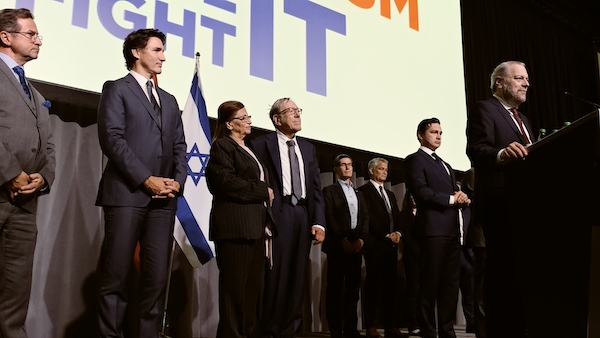
Among those on stage as Irwin Cotler received a lifetime achievement award from the Centre for Israel and Jewish Affairs last month were, left to right, Yves-François Blanchet (Bloc Quebecois leader), Prime Minister Justin Trudeau, Ariela and Irwin Cotler, David Posluns (one of the event co-chairs), Steven Kroft (one of the event co-chairs), Pierre Poilievre (Conservative Party leader) and Shimon Koffler Fogel (head of CIJA). (photo by Dave Gordon)

It was a conference months in the making, but Antisemitism: Face It, Fight It took on heightened poignancy in light of the Oct. 7 Hamas terror attacks on Israel and the subsequent spike in Jew-hatred globally.

Produced by Centre for Israel and Jewish Affairs (CIJA), the conference took place in Ottawa Oct. 16 and 17. Speakers included activists, politicians, experts and analysts on antisemitism. In attendance were 250 student leaders and some 600 others, Jews and non-Jews, according to organizers.

Shimon Koffler Fogel, chief executive officer of CIJA, noted there was an outpouring of support from the major political party leaders, as well as from minority, faith and other groups – “a uniform conclusion about Hamas and their actions, and we should embrace that.”

This message was echoed throughout the two days of the conference.

“It can’t just be Jews who talk about the rise of antisemitism. It can’t just be Muslims that talk about anti-Muslim hate,” said Farah Pandith, senior advisor to the Anti-Defamation League. “It can’t be. Whether we are talking about LGBTQ or issues of heritage or gender, we’ve had to stand up for each other. As a Muslim, it’s what my religion tells me I must do for the other.”

Former premier of Alberta Jason Kenney, who was elected as an MP in 1997, said he became a supporter of the Jewish people after the “unravelling of the Oslo process,” and learning of the antisemitism coming from Palestinian mosques and leaders.

“Do not take for granted the positions being expressed here in Ottawa today,” said Kenney. “You must redouble your efforts intelligently to build coalitions across the pluralism of this country, and to be a voice of clarity and courage with our political leadership.” Citing examples of possible coalitions, he told the JI that “the Jewish community has to continue to reach out to Muslim and other communities, find allies.”

“I know we can best tackle what we are seeing when we work together, when we are not siloed,” said Minister of Justice and Attorney General of Canada Arif Virani, an Ismaili Muslim, in his speech. “Hatred and intolerance against any minority community is a risk to every minority community. That’s why groups promoting equity have to have each other’s backs.”

Emily Schrader, digital strategist and senior correspondent of Ynet News, observed, “We see now that all over the world there are Iranians organizing and participating in rallies to support Israel … despite knowing that the Iranian regime is the biggest supporter of Hamas. The Iranian people have a complete rejection of the regime.”

Canadian human rights advocate Irwin Cotler received a lifetime achievement award from CIJA “in recognition of his enduring commitment to the pursuit of justice” and “the advancement of human rights for the world’s most vulnerable and oppressed.”

In his acceptance speech, Cotler applauded the multi-partisan groups standing up against antisemitism, “who heed this call to action, where we act in concert on behalf of our common humanity.”

Cotler was a parliamentarian from 1999 to 2015 and is a former minister of justice. Over the course of his legal career, he represented clients such as Natan Sharansky and Nelson Mandela. Until recently, he was the government’s special envoy on antisemitism. He said “2023 is not 1943” and “there is a Jewish state as an antidote to Jewish powerlessness.”

“In 1943,” he said, “the Jews could not get a meeting with the president of the United States, and, in 2023, the president has been a leader in calling out this [Hamas’s] moral evil.”

Cotler told the JI that young Jews should bravely step forward to “call out antisemitism when they see it, unmask it, expose it.”

Prime Minister Justin Trudeau called out Hamas as a “terrorist organization that launched an attack of unspeakable brutality” and said “Canada supports Israel’s right to defend itself in accordance with international law.” He said the only thing Hamas stands for is “more suffering for Israeli and Palestinian civilians.”

In addressing “scary rising antisemitism,” Trudeau said “families are worried about what they face if they go to synagogue, and I’m sure you are all seeing hateful rhetoric online.” He ended by saying, in Hebrew, “gam zu l’avor” – “this too shall pass.”

Opposition leader Pierre Poilievre, head of the Conservative Party, vowed that his party would stand with Israel, and acknowledged the fears of many Jewish Canadians. About Oct. 7, he said, “the terrorists that carried out this attack did so as part of a deliberate agenda: to maximize bloodshed not only of the Jewish people, but actually to maximize the bloodshed of Palestinians and Muslims as well. These are the actions of sadistic, criminal terrorists who can only be defeated and not negotiated with.”

Poilievre added that, especially in light of Iran’s fingerprints being on the attacks, governments must “respond with crippling sanctions – the strongest legal action – and by criminalizing the Islamic Revolutionary Guard Corps.”

Jagmeet Singh, leader of the New Democratic Party, said, “These are horrific attacks and we strongly condemn them. There is no place in our world for terrorism. The international community must work together to ensure that there is an end to terrorist organizations like Hamas and Hezbollah.”

Singh acknowledged that Jews in Canada are “deeply afraid” and “worried about their safety.”

“It’s wrong and I’m deeply sorry it’s happening,” he said.

In noting pro-Hamas rallies around the world, Singh said, “We’ve seen horrible celebrations for the attacks on Israelis civilians. This is abhorrent. This is antisemitism. Violence against civilians is never justified.”

He concluded: “I know that not everyone will agree with our position on a ceasefire, but I believe the only way to peace is to talk to each other.”

Historian and author Gil Troy encouraged the audience to not forget the courage of “our citizen’s army, our plainclothes commandos, our kibbutzim Rambos and our army,” who saved innocents from much worse.

“When I heard these stories, I shift[ed] from the victim mentality to the Zionist mentality. The Zionist is one that says ‘yes, we sometimes suffer,’ but we are not passive and we are not victims. The Zionist story says we are not alone. We can’t let them win.”

Calgary-based communications consultant Emile Scheffel, who is not-Jewish, told the JI: “History shows that those who threaten the Jewish people are enemies of freedom and dignity for the rest of us as well. I stand with Israel because the Jewish state embodies the values of freedom, democracy and pluralism that are important to me.”

He added, “the conference was an important call to action for non-Jews to stand with our Jewish friends and neighbours in opposing hatred and discrimination. A united front is essential to making sure that antisemitism doesn’t gain any more ground in Canada, and that Jewish Canadians can live in peace and security.”

Attendee Nika Jabiyeva, member of the Network of Azerbaijani Canadians, said she was proud to “stand against hate, shoulder to shoulder with our friends in the Jewish community and many multifaith allies.”

“Our voices carry more weight when we speak up for one another,” she said, “especially during trying times.”

Dave Gordon is a Toronto-based freelance writer whose work has appeared in more than 100 publications around the world. His website is davegordonwrites.com.

Format ImagePosted on November 10, 2023November 9, 2023Author Dave GordonCategories NationalTags antisemitism, Arif Virani, Centre for Israel and Jewish Affairs, CIJA, Emile Scheffel, Emily Schrader, Farah Pandith, Gil Troy, Hamas, Irwin Cotler, Jagmeet Singh, Jason Kenney, Justin Trudeau, Nika Jabiyeva, Pierre Poilievre, politics, Shimon Koffler Fogel, terrorism
Online dialogue on housing

Online dialogue on housing

Alexandra Flynn, left, and Dr. Kaitlin Schwan join Lavern Kelly at this year’s Simces & Rabkin Family Dialogue. (photos from Canadian Museum for Human Rights)

Housing is recognized as a human right in Canada – so why do 25,000+ people sleep on the street, in encampments or in shelters every night? How can we address issues of discrimination, affordability, inadequate housing, insufficient supply and homelessness? Join a Zoom discussion Nov. 29, at noon, with leaders who are breaking new ground to realize the right to housing across Canada.

Housing is a Human Right: New Actions to Solve Canada’s Ongoing Crisis is the topic of this year’s Annual Simces and Rabkin Family Dialogue on Human Rights, which is offered in partnership with the Canadian Museum for Human Rights and Equitas: International Centre for Human Rights Education. It features three panelists.

Alexandra Flynn is an associate professor at Peter A. Allard School of Law at the University of British Columbia. She is currently leading CMHC- and SSHRC-funded projects focused on Canada’s housing and homelessness crisis, including land-use practices and the financialization of housing. She is also working on projects related to human rights and tent encampments.

Dr. Kaitlin Schwan is executive director of the Women’s National Housing and Homelessness Network and a senior researcher at the Canadian Observatory on Homelessness. Her work focuses on homelessness prevention and human rights, particularly for women and youth. Previously, she was a senior researcher for the UN Special Rapporteur on the Right to Adequate Housing and director of research for the Shift.

Lavern Kelly, who runs the Youth Excelling & Attaining Housing (YEAH!) Parenting Program for Watari Counseling and Support Services, brings lived experience working with young people, especially single women and young mothers, in Vancouver’s East Side to advocate for their right to housing.

The dialogue will be moderated by Michael Redhead Champagne, a community leader from Winnipeg’s North End with family roots in Shamattawa First Nation. An author, on-screen personality and public speaker, Champagne is an activist and advocate working to eliminate poverty, end homelessness and increase supports for children, youth and families in pursuit of a more compassionate world.

Zena Simces and Dr. Simon Rabkin are working to enhance understanding and create ongoing dialogue on human rights issues in the Greater Vancouver community. The Canadian Museum for Human Rights, in Winnipeg, is the first museum in the world solely dedicated to the evolution, celebration and future of human rights. Equitas is an international centre for human rights education.

To register for the Nov. 29 Simces and Rabkin Family Dialogue on Human Rights, go to humanrights.ca/housing-human-right.

– Courtesy Simces & Rabkin Family Dialogue on Human Rights

Format ImagePosted on November 10, 2023November 9, 2023Author Simces & Rabkin Family Dialogue on Human RightsCategories NationalTags affordability, discrimination, homelessness, housing, human rights

Celebrating defiance – Shira Herzog Symposium

The 13th annual Shira Herzog Symposium, hosted by New Israel Fund of Canada, took place on Oct. 15. Originally intended to be a discussion about the challenges facing Israeli democracy, the topic was changed to Celebrating Defiance, in light of the Oct. 7 Hamas attacks on Israel.

NIFC president Linda Hershkovitz said the new focus was an opportunity “to comfort each other, to grieve and to hear how our community in Israel is responding to this moment.”

She said, “Today, we still gather to celebrate defiance – defiance against terror and extremism, against giving up hope, and against allowing violence to drive Jews and Arabs further apart.”

Opening remarks underscored that among the more than 200 hostages taken by Hamas was ivian Silver, a 74-year-old Canadian-Israeli activist for peace and women’s rights, known to many of those in the audience.

The main speakers at the symposium were Orly Erez-Likhovski, director of the Israel Religious Action Centre (IRAC); Eran Nissan, a peace activist and executive director of Mehazkim, a progressive digital group in Israel; and Amal Oraby, a Palestinian lawyer, human rights activist and member of the board of directors of Amnesty International Israel. Journalist Andrew Cohen was the moderator.

“I stand before you with a lot of fear, a fear that our lives will never be the same and a fear for the safety of my family, my friends in Gaza, Tel Aviv and Jerusalem. In Israel, there is no room for voices who seek to see the reality with open eyes and acknowledge the occupation, and to refuse making the same mistake and expecting different results,” said Oraby, who serves as NIF’s Arabic media coordinator and has written extensively for the Israeli media.

Nissan, who was a combat soldier in the special forces canine unit, said every time there is a flare-up of violence, it represents a setback for both Israeli and Palestinian societies which will, in turn, drive more anger, animosity and distrust.

“In the days since Oct. 7, we identified narratives that we needed to push through our social media platforms,” Nissan said when asked what his organization did immediately following the attacks. “We understood that the first days after such an event are a crucial time when the heroes and the villains are being chosen.”

The Israeli government, he said, was framing the narrative as a struggle between Jews and Arabs. His counter-narrative is to highlight stories of shared experiences and heroism, such as Bedouin truck drivers who risked their lives to rescue Jews from the Hamas attacks and paramedics in the Negev fighting to save lives while under fire.

“This not a popular time to talk about a shared society or about empathy,” said Nissan. “Civil society organizations have been under attack. The amount of hatred and incitement we see is horrific. What we are trying to do is boost our capacity to tackle the challenges that we have right now.”

“We are very concerned about the rise in racism and violence,” said Erez-Likhovski, whose organization aims to defend equality, social justice and religious pluralism in Israel and serves as the public advocacy arm of the Reform movement.

“It’s important to talk about the current feeling in Israel,” she added. “People feel they have been abandoned by the government and by the state. The feeling is that the state system is not functioning. It’s a direct result of this government bringing in incompetent people to any post possible. And it’s taken its toll over the past year.”

Since the attacks, IRAC has worked to help the people who were evacuated, assisting with food and clothing, and helping with pastoral care, among other services.

Oraby was not optimistic about the latest change in the Israeli cabinet: bringing in opposition leader Benny Gantz. He views it as a “war government,” not an “emergency government,” and pointed to a strong civil society as the way to deescalate the situation. “Where Israeli and Palestinian leadership have failed, the civil society is succeeding,” he said.

Nissan agreed that the current cabinet is only setting military objectives, adding that it is not considering what will happen following the conflict.

Erez-Likhovski also commented that the new coalition was not presenting any long-term vision of how to solve the conflict.

At the end of the discussion, Nissan acknowledged the gravity of what occurred on Oct. 7 in terms of Israeli history and its effects on the national psyche. His hope, he said, is that a new story for Israel can be written out of the pain, and the crisis the country is confronting.

The event was co-presented with ARZA Canada, Canadian Friends of Peace Now and JSpaceCanada. It was held at the Toronto Reference Library and on Zoom.

Sam Margolis has written for the Globe and Mail, the National Post, UPI and MSNBC.

Posted on October 27, 2023October 26, 2023Author Sam MargolisCategories NationalTags Amal Oraby, Eran Nissan, Gaza, Hamas, Israel, Linda Hershkovitz, New Israel Fund of Canada, Orly Erez-Likhovski, Palestinians, war
Toronto artist reclaims past

Toronto artist reclaims past

Yvonne Singer (photo by Ron Csillag)

As an artist herself, Yvonne Singer can well appreciate the esthetic merits of the open-air monument to Swedish Second World War hero Raoul Wallenberg that was unveiled last June at Churchill Park in Hamilton, Ont., in a ceremony attended by those whose families owed their survival to Wallenberg.

Though she has not personally viewed the installation, called “Be:longings,” Singer spoke admiringly of the 10 bronze-cast suitcases dispersed along a gravel path adjacent to the Hamilton aviary. She knows Simon Frank, one of the project’s three creators, and is aware that suitcases are a potent symbol of the Holocaust.

“I like the fact that the suitcases are scattered,” Singer, a well-established visual artist and teacher in Toronto, said in an interview over lemon tea in her sun-drenched kitchen. “I think the imagery and symbolism are very effective in conveying the idea of displacement and emigration.”

The old-timey valises evoke not just Wallenberg, Singer noted, but all victims and survivors of that terror-stricken era. The outdoor project is also “minimal, which I like. I don’t like public sculptures that scream at you or are clichéd.”

photo - Part of the “Be:longings” monument in Hamilton’s Churchill Park to Second World War hero Raoul Wallenberg
Part of the “Be:longings” monument in Hamilton’s Churchill Park to Second World War hero Raoul Wallenberg. (photo from Hamilton Jewish Federation via Hamilton Jewish News)

Singer connects to the installation on a whole other level. The 78-year-old resident of Toronto’s trendy Cabbagetown neighbourhood is Wallenberg’s goddaughter. She was born on his bed.

It’s a Hollywood-worthy tale that evolved over time, in a series of eye-popping twists, turns and coincidences – all amid Singer’s own personal voyage of self-discovery.

The backstory is its own blockbuster: The non-Jewish scion of a wealthy Swedish industrial and banking family, Wallenberg, then just 32, was recruited by the US War Refugee Board and dispatched to Budapest to assist and rescue as many Jews in the Nazi-occupied Hungarian capital as possible. He arrived in July 1944, just as the Nazis had finished shipping some 440,000 Jews from the countryside to Auschwitz. They and their Hungarian collaborators, the Arrow Cross militia, now set their sights on the Jews of Budapest.

Accorded diplomatic status, Wallenberg famously set off on a frenetic pace. He designed, printed and distributed thousands of the famous “Schutzpass” – an official-looking document that placed the holder under the protection of the neutral Swedish Crown. He also scoured the city for buildings to rent, finding 32, and crammed in as many souls as possible. The “safe houses” flew the yellow-and-blue Swedish flag and were declared protected by diplomatic immunity.

Known for his bluster and bravado (and for bribes using American cash), his greatest coup came when he reportedly persuaded Nazi commanders to call off the liquidation of Budapest’s Jewish ghetto, with its 70,000 inhabitants.

The number of Jews Wallenberg is said to have rescued peaks at 100,000. He is credited with saving more Jewish lives during the war than any single government.

By January 1945, the Red Army was laying siege to Budapest, and Wallenberg was taken into custody on allegations he was a US spy. He promptly vanished into the massive gulag system. A Soviet report in 1956 dryly noted he had died in July 1947 of a heart attack in Moscow’s notorious Lubyanka prison, but supposed eyewitness sightings and stories of contact with him from former inmates continued well into the 1970s.

A nine-year joint Swedish-Russian investigation, ending in 2001, came to opposing conclusions, with Moscow sticking to its story about Wallenberg’s 1947 death, and Stockholm stating that absent any proof, it was impossible to reach a conclusion about his fate.

In 2012, the diaries of a former head of the KGB, discovered stuffed into the walls of his Moscow home, stated there was “no doubt” that Wallenberg was “liquidated” in 1947.

But back to Singer.

On the night of Nov. 3, 1944, a desperate Tibor Vandor, who worked for Wallenberg as a courier and liaison to the underground, needed help for his wife, Agnes. She was in labour and had been turned away from Budapest’s hospitals, which barred Jews. Wallenberg allowed the couple to use his own room, while he slept in the corridor using his coat as covers.

The next morning, he was called in to see a dark-haired newborn girl. Asked by the grateful parents to name her, Wallenberg chose Nina Maria Ava (Nina was his half-sister’s name, Maria his mother’s). The couple changed the first name to Yvonne, and Wallenberg agreed to be the child’s godfather.

Singer knew nothing of this until she was 34 years old.

It was October 1979 when she read an article in the Toronto Star, reprinted from a US newspaper, about Wallenberg’s plight. The story included a reference to Singer’s unusual birth, taken from a Hungarian book on the Swedish hero written after the war. The baby with the Toronto connection, the parents, the godfather, were all there, mentioned by name.

When she read the piece, “I burst out crying,” she told the Star after contacting the paper. Her story spilled forth a week later in a large Saturday article headlined “Swedish hero saved my life: Metro woman.”

Singer is still struck by “the incredible coincidence of it all. Here I am in Toronto in 1979, reading the paper … it boggles the mind. I could have easily gone through life not knowing the story. Suddenly, I had a connection to this man, who sounds like he was fascinating.”

Her parents had not told her the story. And there was another missing piece of the puzzle: their Jewishness.

At war’s end, the Vandors went to Switzerland and Holland before settling in Montreal in 1949, where they shed their Jewish identities, doubtless seeking to blot out the legacy that had caused them so much pain. Tibor Vandor even became an elder in the United Church (Yvonne attended church until she was about 14).

Her parents never revealed being Jews. “I always pressed them for more information, and they always refused,” even following the revelations in the Toronto Star, Singer recalled. “They told me very, very little.” Their silence encompassed “anything to do with the war.”

Singer graduated from McGill University and went on to teach high school English and French. She married her husband, Ron Singer, a theatre director and educator, in 1966 and, because her Jewishness was unknown to her, converted to Judaism.

A few years later, a cousin in England recalled being a flower-girl at Yvonne’s parents’ wedding, which she said took place in a synagogue. The parents denied it, but Yvonne believed it.

Singer’s feelings of alienation as an immigrant child would evaporate on discovering that she had been born Jewish, whether the knowledge came from a cousin or the Toronto Star. “I felt like I’d come home, part of a history that goes back thousands of years. I no longer felt rootless,” she said.

The Singers moved to Toronto in 1971, where Yvonne later began a prolific art career in various media and teaching visual arts at York University. Raising three daughters and a busy life meant there was little time to get involved in the Wallenberg file, though she was pleased when he became Canada’s first Honorary Citizen in 1985 and when Canada Post issued a stamp commemorating Wallenberg a decade ago.

In 1997, even Queen Elizabeth heard Singer’s remarkable story. The artist was among the dignitaries in London when a bronze statue of Wallenberg was unveiled by the Queen. The two were introduced.

“The Queen listened attentively and I was told she was very interested in my story,” Singer said at the time. “It was a highlight of my life.”

It’s no surprise that Singer’s art has explored themes of identity, history and memory. The outsider status she felt in her early life “is what made me think about ways of expressing that, either through language or visual imagery. So, you go to what you know when you’re an artist.”

In 2016, the Swedish government declared Wallenberg officially dead, but, to Singer, that offered no finality. “From what I learned, the Swedish government is not exempt from blame for trying to get Wallenberg out. I cannot reconcile the fact that [Wallenberg’s family] could not exert any kind of leverage over the Russians to find out what happened to him.”

The title of godparent in Judaism is largely honorary, and Singer considers the godfather connection to Wallenberg an honour. “But I’m also very sad that I never met him,” she said. “I think he would have been a fascinating person to talk to. The story is just very, very tragic.”

The grandmother of nine sighed. Over the decades, the story for her was very personal, obviously, “and I was still processing it. Maybe I’m still processing it, for a long, long time.”

A version of this article originally appeared in the Hamilton Jewish News. It is reprinted with the author’s permission.

Format ImagePosted on October 27, 2023October 26, 2023Author Ron CsillagCategories NationalTags history, Holocaust, Raoul Wallenberg

No charges in IDF case

There will be no charges arising from allegations that the Israel Defence Forces (IDF) has been recruiting members illegally in Canada.

The case began in 2020, when several progressive groups and individuals laid a complaint with Justice Minister David Lametti calling for an investigation and possible charges against those who recruit or encourage recruiting for the Israel Defence Forces among non-Israeli citizens in Canada.

Lametti referred the matter to the RCMP, which, on June 8, issued the following statement to the CJN: “A review was conducted. [H]owever, a criminal investigation was not initiated. The file is now concluded and the RCMP has no further comment.”

Israel’s consulate in Toronto was unavailable for comment. The country’s embassy in Ottawa did not respond to a request for comment.

The case began when the Canadian Foreign Policy Institute, Palestinian and Jewish Unity, and Just Peace Advocates presented the complaint to Lametti, alleging that recruiting by the IDF in Canada violated the Foreign Enlistment Act. The act states that any person “who, within Canada, recruits or otherwise induces any person or body of persons to enlist or to accept any commission or engagement in the armed forces of any foreign state or other armed forces operating in that state is guilty of an offence.”

The complaint focused on online ads from Israel’s consulate in Toronto, which said an IDF representative was available for personal appointments for those wishing to join the forces, not just those required to do their compulsory military service.

“Young people who wish to enlist in the IDF or anyone who has not fulfilled their obligations according to the Israeli Defence Service Law are invited to meet with him,” the ad stated, according to the complaint.

The complaint also alleged that the consulate had arranged for Israeli soldiers and veterans to appear in Jewish schools, summer camps and other venues in Canada with the goal of inducing young people to enlist.

The allegations were unfounded, said Israel’s consul-general at the time, Galit Baram.

“Israeli law dictates compulsory military service to Israeli citizens over the age of 18, whether male or female. Consequently, Israeli citizens of drafting age living abroad are required to settle their status with the Israeli authorities, through Israeli consulates around the world,” she said.

Baram called the charges an attempt to “smear” Israel.

At the time, Lametti said diplomats representing Israel in Canada “follow Canadian law.”

Included in the complaint was an open letter signed by U.S. academic Noam Chomsky, musician Roger Waters, author Yann Martel and more than 170 prominent Canadians. It was delivered to Lametti, asking him to probe recruitment for the IDF taking place in Canada.

The complaint noted that there were some 230 Canadians serving in the IDF as of 2017, and that it was “unclear” how many were recruited in ways that violated the law.

After the complaint was laid, Winnipeg human rights lawyer David Matas said Israel’s consulates in Toronto and Montreal practised neither recruitment nor inducement, since Canadian citizens wishing to join the IDF had already made up their minds to do so.

In the latest development, Matas said he believes the RCMP dropped the matter because they did not have evidence to reach a conviction, and that there is “no evidence potentially available through investigation that could change that conclusion.”

Matas’s view is that the case “had no merit at all.”

The matter was further pressed in 2021 when NDP MP Matthew Green sponsored a petition calling on Canada to investigate allegedly illegal recruitment by the IDF in Canada.

In its response the following year, the justice ministry said the responsibility for investigating and prosecuting offences under the Foreign Enlistment Act “rests with independent law enforcement and prosecution services.”

The case is another loss for pro-Palestinian activists. Last December, a criminal charge they initiated against Sar-El Canada, the Canadian arm of an Israel-based organization that provides volunteers for the IDF, was withdrawn because there was no reasonable chance for a conviction. That case alleged that Sar-El Canada also violated the Foreign Enlistment Act by recruiting volunteers for the IDF.

The Foreign Enlistment Act was passed in 1937 to prohibit the recruiting of Canadian volunteers to fight in the Spanish Civil War. Roughly 1,700 Canadians signed up anyway to fight for the anti-Franco Loyalists, the vast majority of whom were recruited by the Communist Party of Canada. They formed the storied Mackenzie-Papineau Battalion (the “MacPaps”).

According to historian and legal scholar Tyler Wentzell, no Canadians have been charged or prosecuted under the act.

– For more national Jewish news, visit cjnews.com

Posted on July 7, 2023July 10, 2023Author Ron Csillag CJNCategories NationalTags David Matas, Foreign Enlistment Act, IDF, Israel Defence Forces, law, RCMP, recruiting
Yukon Jewish history online

Yukon Jewish history online

The rich and rugged history of Jews in the Yukon has found an internet home on the website of the Jewish Cultural Society of Yukon, jcsy.org. The lure of the Klondike Gold Rush and the stories of its enterprising and colourful Jewish personalities, some respectable and others salacious, comprise a large portion of the newly created virtual real estate.

The quest to get to the gold, a journey undertaken by 100,000 prospectors between 1896 to 1899, was treacherous, the site explains. There were several routes, but one of the more popular ones was boarding a ship to Skagway, Alaska, then trekking over the Chilkoot Trail to Yukon. Once there, prospectors and retailers set out along Yukon River for another 550 kilometres to Dawson City – a trip that could take months – traveling during the winter so they would be ready for the summer prospecting season.

Prior to venturing on their northbound journey, however, fortune seekers needed supplies, dubbed a “Yukon Outfit,” the equivalent of one ton of provisions, which were essential to live and work in the north. The website shows photos of people bearing heavy loads headed to Dawson City, climbing ice-carved stairs to get to the Chilkoot Trail.

On the same page, there is a newspaper ad by Cooper & Levy, a Seattle company equipping gold hunters for their excursions. “Are you going to the Alaska gold fields? If so, send for our Supply List for ‘One Man for One Year’…. The list will be sent free of charge to any part of the world,” the ad reads.

“The idea of getting to Dawson City was an unbelievably difficult task. People needed to get there on a raft with all their things. The strength of the people was incredible,” said Rick Karp, president of the Jewish Cultural Society of Yukon (JCSY). “It was not a party. It was unbelievably difficult and many didn’t survive. As well, the First Nations communities suffered life-changing events.”

Albert and Marcus Meyer, whose histories are told on the website, were but two of the many industrious Jews to land in Dawson City. They opened a jewelry business in 1897, were buyers of Indigenous gold and produced Indigenous-style gold jewelry. Expert silversmiths, they also crafted silver trade bracelets with carved Tlingit designs.

Other families with connections to the Klondike would rise to prominence elsewhere, such as the Barrons in Calgary and the Oppenheimers in Vancouver. And there is Sid Grauman, whose father wanted to build a theatre in the north, and who would later establish the famed Grauman’s Chinese Theatre in Los Angeles.

Diamond Tooth Lil, on the other hand, was one of the notorious characters to arrive north of the 60th parallel. Born Honora Ornstein, she started out as a star “entertainer,” popular among spendthrift gold seekers and purportedly owned a luxury home in Skagway that “catered” to wealthy clients.

Another page of the website includes photos and video footage of the discovery, restoration and rededication ceremony of the Jewish cemetery in Dawson City in 1998. Herb Gray, deputy prime minister of Canada at the time, made a speech at the ceremony.

screenshot - The Gold Rush section on the website of the Jewish Cultural Society of YukonThe JCSY has plans to expand the website in the coming months. “We will be keeping the site up to date and will be posting more information and photos,” Karp said.

Originally formed as the Jewish Historical Society of Yukon in 1997 after the discovery of the Jewish cemetery in Dawson City – a century after the Gold Rush – its mandate was to clean, restore and rededicate the cemetery, as well as research those buried there. The identification of those interred inevitably led to questions about the others who participated in the Gold Rush, what they did during their stay, and the impact they had when moving on to other communities or returning to the families they’d left behind in search of fortune.

Upon completion of the cemetery project, the historical society believed its work was complete. However, by 2012, with the growth of the Jewish community in Whitehorse, interest in their work flourished and the JCSY was formed. Its mandate expanded to include forming a community to share Jewish culture, celebrate the High Holidays and Passover together and hold social gatherings.

The stories the society uncovered in its goal to learn more about the Jews of the Gold Rush resulted in the creation of a traveling historical display to share them. The display was exhibited both in Vancouver and on Vancouver Island, last making a stop at the Jewish Community Centre of Victoria in 2020. (See jewishindependent.ca/victoria-hosts-klondike.)

One can become a member of the JCSY through the website. The cost is $25 for a single membership and $40 for a family. Should a person make a donation of any size to the JCSY, they will be sent an email with a link to a new booklet (upon its completion), which outlines many of the notable stories of the Jewish presence in Yukon during and after the Gold Rush.

A section of the booklet’s introduction states, “While the north may not seem like an obvious choice for a nice Jewish boy from Milwaukee, Edmonton, Vancouver or Seattle, when you think about it, it is not such a stretch. Harsh times foster resilience and for every dreamer there is also a pragmatist. With a history of harsh times, Jewish people have been nothing if not resilient.”

Sam Margolis has written for the Globe and Mail, the National Post, UPI and MSNBC.

Format ImagePosted on June 23, 2023June 22, 2023Author Sam MargolisCategories NationalTags Gold Rush, history, JCSY, Jewish Cultural Society of Yukon, Rick Karp, Yukon

Posts pagination

Previous page Page 1 … Page 4 Page 5 Page 6 … Page 34 Next page
Proudly powered by WordPress