Research into access issues at Jewish overnight camps

The field of Jewish camp has become increasingly aware of and responsive to the numbers of children with special needs and physical disabilities in recent years. As a first step towards initiating field-wide changes in this arena, Foundation for Jewish Camp (FJC) is engaged in a research project mapping current, potential and desired services available to children with emotional, intellectual and physical disabilities at nonprofit Jewish overnight camps across North America.

Laszlo Strategies recently delivered the results of the research (conducted in early 2013), the first of its kind in the Jewish community. The survey garnered results from 170 camp staff members (from 124 camps), 262 parents and 141 campers.

FJC is pleased to share that the majority of those involved in camp – including staff, campers and parents – care about this issue and agree that every Jewish child, regardless of a disability or special need, should be able to attend a Jewish camp. Most involved prefer an inclusion model, with clear recognition that not every camp is able to serve every need and that, in some cases, a separate program might be preferable.

While the field is making progress in the types and amounts of services offered, there is still more to be done. Below are the highlights from the survey. The full findings are available at jewishcamp.org/research.

About the campers served

  • The field of Jewish camp is serving 2,340-2,590 children with special needs – more than originally estimated.
  • The majority of the special needs population in Jewish camp have neurological disabilities. Few camps are equipped at this time to properly serve children with more significant/complicated disabilities.
  • 43 percent attend public school, four percent of these children attend Jewish day school, and 24 percent attend a specialty school for children with disabilities. Forty-three percent attend a synagogue-based religious school and 47 percent had attended a Jewish day camp.
  • 93 percent of parents were satisfied/extremely satisfied with their child’s experience at Jewish overnight camp.

About camp staff and programming

  • 36 percent of camps offer special programs for this population.
  • 55 percent of camps have a designated staff member (part-time or full-time) to oversee campers with special needs. This staffer engages with the family during the intake process, selects and trains camp staff, acts as a support during crisis situations, communicates with parents and other outside supports, creates and evaluates individual camper plans.
  • Inclusion camp staffs appear to want the non-inclusion staff and campers to have a better understanding of their population.
  • Parents of special needs campers are extremely satisfied with the way camps are infusing Jewish values/learning for this population of campers.

Barriers and perceptions

  • The biggest barriers to serving more children with specials needs are not attitudes or wheelchair ramps – rather lack of training and knowledge followed by funding.
  • 47 percent of parents report the cost of overnight camp as a barrier.
  • It is not as important as previously thought that siblings attend the same camp. Forty-three percent of parents report, “it would be nice, but it is more important that they go to the camp that best serves their individual needs.”
  • Parents report that the biggest factors in choosing a camp for a child with special needs are that the camp offers good supports and accommodations for children with a disability like my child (43 percent), and it is a Jewish camp, where my child can connect to our heritage and community (34 percent).
  • More camps are serving children with disabilities/special needs than are advertising it to the public through their websites and marketing materials.

Next steps

FJC is currently creating a plan of action to advance the field of Jewish camp in this arena. Sound research and solid data are required in order to make the informed decisions that will move FJC closer to achieving its goal: increasing the number of children attending nonprofit Jewish overnight camp.

FJC commissions its own research, and also draws on the wealth of knowledge that Jewish sociologists and researchers have contributed toward the understanding of camp and its long-term effects. All FJC-commissioned research and a selection of external studies are available for download at FJC’s website.


Precursors to menorah are many

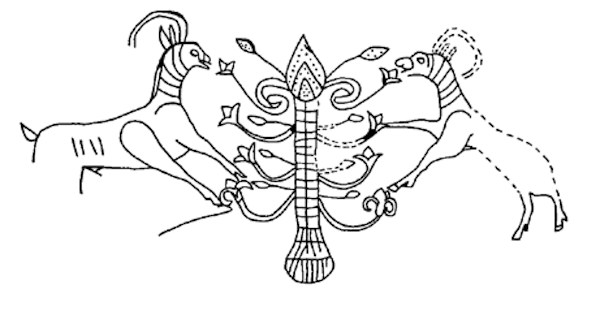
A menorah-like drawing from Kuntillet Ajrud. Source: “The Asherah, the Menorah and the Sacred Tree” by J. E. Taylor, Journal for the Study of the Old Testament (1995).

Though the religious symbolism of the menorah is consistent with Jewish mythology and ideology, the archeological record suggests that the significance of this symbol was influenced by surrounding religions of the region, which would have been preceded the conception of the menorah. For instance, lamps from the Middle Bronze Age composed of a bowl with seven sprouts for wicks on the rim have been found in Israel at Ta’anach and Nahariya. Such findings suggest that the precedent for a seven-branched oil lamp would have existed in the region.

Tree worship is common in religions throughout the world, and may have held particular significance in the Middle East due to their limited distribution. It’s not difficult to imagine, in a region constrained by water resources, the presence of a tree would indicate the presence of water and food, and would thus come to symbolize life. Furthermore, the generation-spanning longevity of trees, and their seasonal “rebirth” would perhaps lead some to associate trees with immortality. In fact, there is evidence to suggest that the Tree of Life, which Jews are familiar with from the story of the Garden of Eden, is based on a Mesopotamian religious myth.

Mesopotamian depictions of the Tree of Life resemble the menorah, leading many scholars to speculate that the design of the menorah was influenced by Mesopotamian iconography. The Mesopotamians believed that the Tree of Life grew on a cosmic mountain; similarly, the branching menorah arises from a clearly defined base. The image of a tree on a mountain is also featured in the Hebrew flood myth (which may borrow heavily from Sumerian mythology), in which Noah’s dove retrieved an olive branch from a tree on a sacred mountain. We grant special significance to the central lamp on the menorah, which we call the shamash. Interestingly, Shamash is also the name of the Mesopotamian sun god. These are more than mere coincidences; these are evidence of cultural influence.

Ancient Semitic peoples, who lived in what is now modern-day Israel, Syria and Iraq, had a pantheon that included a goddess called Asherah, or sometimes called Athirat or Elat. Asherah was a fertility goddess, and believed to be the mother of the gods. Asherah is described in cuneiform documents from the first Babylonian dynasty as the bride of the king of heaven, and a mistress of sexual vigor and rejoicing. An Ugaritic text found at Ras Shamra, Syria, describes Asherah as the bride of El, creator of the world. Asherah was often depicted as a tree, usually with an ibex on either side. For example, a pitcher dated to the 13th century BC found at the archeological site of Tel Lachish in Israel bears a stylized depiction of a tree reminiscent of the menorah, with an inscription dedicated to the goddess Asherah. At an archeological site in the Sinai called Kuntillet Ajrud, a drawing was found of a lion with a menorah-like tree with ibexes on either side of it, bearing the inscription “Yahweh of Samaria and his asherah.”

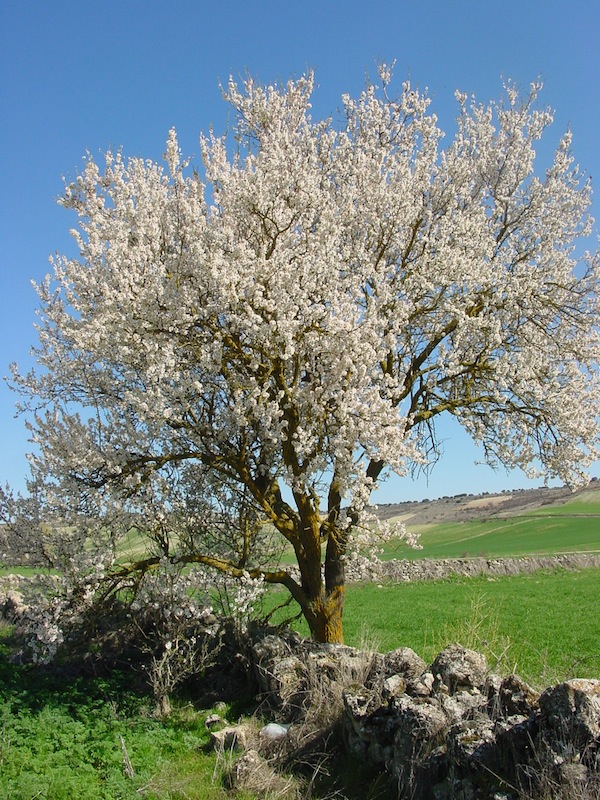
An asherah is something described in both the mishnah and Babylonian Talmud as a sacred tree. Some scholars speculate that an asherah was a living, pruned sacred tree used during Canaanite cultic practices. Recall that the original description of the menorah used the term almond. The biblical name for almond was luz, which is also the name of the site in the Tanach in last week’s parashah, where Jacob had a dream in which a ladder reached toward heaven (like the branches of a tree/menorah), and afterward he erected an altar and renamed the site “the House of God,” Beit El, now thought to be the site Bethel. Archeological excavations at Bethel reveal it was a Canaanite centre for worship of the goddess Asherah. Scholars speculate that there may have been a pruned almond tree used in cultic practices dedicated to the goddess, and the menorah is a symbol of that specific tree. The Latin name for almond trees, Amygdalus, is likely derived from a Semitic root word for “great mother”; Asherah was considered by the Canaanites to be the great mother of the gods. The blooming of almond trees precedes spring, and Asherah was a fertility goddess. Tu b’Shevat, which once involved the lighting of the menorah, celebrates the blooming of the almond trees.

image - A Hathor tree giving food and life to humans
A Hathor tree giving food and life to humans. Source: “The Lachish Ewer and the Asherah” by Ruth Hestrin, Israel Exploration Journal (1987).

Sacred trees are important in Egyptian mythology, too. The Egyptians also believed in a Tree of Life, the acacia tree, which was also associated with the goddess Iusaset, the grandmother of the gods. Iusaset wore a solar disk on her crown, which harkens the shamash as the crown of the menorah. There was also an Egyptian goddess called Hathor, who was often interchangeably represented as a sycamore tree. Hathor was a mother goddess, the “living soul of trees,” and could take the form of a lion. In Egyptian art, the Hathor tree would often be depicted giving life and food to humans. When Egypt occupied Canaan, the cult of Hathor became entrenched in the region, and Hathor began to be correlated with the goddess Asherah. Another name used to describe a Canaanite/Egyptian tree mother goddess was Qetesh. Plaques recovered at archeological sites in Israel and Egypt depict Qetesh with ibexes by her side, above a lion, wearing a Hathor wig. Perhaps it is no coincidence, either, that the Hebrew word for holy is kadosh.

At some point in history, the ancient Jews took the deeply religious symbolism that was already present in the region and amalgamated it into the abstracted form of the menorah. Do these pre-Judaic influences somehow invalidate our culture? To the contrary, the archeological record only confirms that the symbolism and mythology of our culture are truly ancient. More importantly, the ancient Israelites did not live in a vacuum. They lived in a complex and cosmopolitan world, much like today. We were not alone, we coexisted with other diverse peoples and ideologies. And, after Sumer and Babylon fell into ruin, when the Sphinx and Ozymandias lay buried in the sand, and the library of Alexandria burned to the ground, we continued to tell our stories. When we light the candles of our chanukiyot this holiday, we continue a legacy that is thousands of years old. And that is cause to celebrate.

Ben Leyland is an Israeli-Canadian writer, and resident of Vancouver. This article is the second of a short series examining the menorah.

Inclusivity is a priority at Camp Shalom

Working side by side with the inclusion services department at the Jewish Community Centre of Greater Vancouver, the Camp Shalom team is looking at a modified version of its counselor-in-training program, as several of the campers have stated they would be interested in participating. Camp Shalom is determined to keep committed Jewish youth engaged, and help them develop and grow in the community.

Camp Shalom has been providing a unique and memorable experience for all campers that come through its doors, including those campers living with special needs. As Camp Shalom has grown in size over the last few years, so has its inclusion program, now serving approximately 10 families. The Camp Shalom inclusive program integrates campers with special needs into the general camp program alongside other campers each week. This would not be able to happen without the dedication of the staff members.

“I was fortunate enough to work with three girls over the summer. From sharing our stories to sharing laughs, they taught me a lot of things about life. They taught me to be patient and to live my life to the fullest. The bond we created is a bond that can never be broken,” said one staff member after her first summer with Camp Shalom.

Ensuring that all campers get to participate in activities fully and receive a robust camp experience is the goal of the inclusivity program. Before each camp session begins, the camp director team and specific counselors meet with families so that children with special needs have a chance to meet their counselors and familiarize themselves with the JCCGV prior to the first day at camp.

The program has an effect not just on the campers, but the counselors, as well.

“Working with Tal this summer was one of the most rewarding experiences of my life,” said Mischa Smolkin. “His positive energy and joy made every single day at camp special. Tal made a hugely positive impact on my life and has changed my perspective. Overall, working with him so closely created a bond that I have yet to experience in a summer camp setting and will treasure for years to come.”

The Camp Shalom inclusive program is possible thanks to the contributions of the Snider Foundation, Diamond Foundation, Lohn Foundation and Jewish Federation of Greater Vancouver.

Win for inclusion

The Ramah Camping Movement and the Ruderman Family Foundation have announced the winners of TIPTOE (The Inclusion Project: Through Our Eyes), an inclusion-themed video contest for participants from Jewish camps. The goal of TIPTOE is to increase awareness of the inclusion work happening at Jewish camps across North America. The Ruderman Family Foundation has awarded cash prizes to the top three winners and is making donations to the inclusion program at the winners’ camps.

Campers and college-aged staff members who participated in a North American Jewish summer camp program in 2014 submitted videos that showed their view of inclusion of children with disabilities at their Jewish camp. Representatives from the Ruderman Family Foundation and the Foundation for Jewish Camp selected the winners based on three criteria: demonstrating inclusion, creativity and visual appeal.

The top three winners are:

  • First place ($1,000): Simone Rotman, Oakland, Calif. A $1,750 donation is being made to Ramah California.
  • Second place ($500): Jenna Freeman, Los Angeles, Calif. A $1,000 donation is being made to Ramah California.
  • Third place ($250): David Sharif, Los Angeles, Calif. A $500 donation is being made to Camp JRF.

“This contest proves that the people who really get the importance of inclusion are the ones who experience it firsthand,” said Jay Ruderman, president of the Ruderman Family Foundation. “The wonderful videos submitted by Jewish campers across the country show that the inclusion of children with disabilities makes the camping experience a better one for all campers.”

According to Rabbi Mitchell Cohen, national Ramah director, “We received many inspirational and creative videos that clearly demonstrate the importance of inclusion at Jewish camps across North America. As we share these videos with the larger Jewish community, we hope that they will promote further discussion, raise awareness, and encourage all of our camps to become more inclusive.”

The top 10 videos can be viewed on the contest website or by searching social media for #TIPTOE2014.

Ramah is the camping arm of Conservative Judaism. The Ramah Camping Movement is a pioneer in the field of inclusion for Jewish campers with a wide range of disabilities. Tikvah, Breira B’Ramah and Camp Yofi comprise the National Ramah Tikvah Network of programs. For more information, visit campramah.org.

Celebrating the holidays in rural B.C.

Mountain Baby’s Chanukah wares on display. (photo from Judy Banfield)

For most of us, preparing for Chanukah is fairly simple. When it comes to finding candles, dreidels and even menorahs, there is no lack of stores and gift shops in Vancouver and Victoria in which to find that last-minute Chanukah item. Even online ordering seems faster these days, with delivery options that can take as little as a day or two to Canada’s West Coast.

But if you are one of the several hundred Jews who populate British Columbia’s small communities where neither stores nor outpost are likely to carry Chanukah candles let alone a chanukiyah, celebrating the Jewish Festival of Lights means not only a ton of advance planning but might even mean mapping out your prep, just short of a supply reconnaissance.

First, there’s the planning: the long-distance phone calls, the maps and, often, the overnight accommodation arrangements. Then there’s the road trip – sometimes for several days at a time. For those semi-rural residents who have moved from larger Jewish communities, said Kamloops Jewish community (1-250-372-9217 or kamloopsjewishcommunity.wordpress.com) president Heidi Coleman, planning Chanukah in the country can be an experience in itself.

“In Montreal, you didn’t really have to do so much to be Jewish because Montreal had a huge Jewish community,” said Coleman, who moved to Kamloops two years ago from the East Coast. “Here, everyone who is interested is making an effort to maintain their Judaism.”

Since Kamloops is only a four-hour drive from Vancouver (in optimum conditions), community members often travel to “the big city” to pick up their supplies. She acknowledged that, over the years, the community, which includes members in rural areas outside of Kamloops, has developed an “emergency” list of contacts to fit each holiday season, ranging from Jewish Federations of Canada-UIA in Toronto, to the Okanagan Jewish Community Centre in Kelowna. Still, she said, local stores are beginning to realize that they have a Jewish community in their midst.

“Last year, at Target in Kamloops, they had Chanukah decorations,” remarked Coleman, amazed.

Anne Zazuliak, who serves as the office administrator for the Okanagan JCC in Kelowna and runs its small gift shop (1-250-862-2305 or ojcc.ca), said they often receive customers from throughout the Okanagan and beyond. The small shop has filled a vital niche for Okanagan Jews for almost 20 years. Prior to that, said David Spevakow, the organization’s president, the community did as many rural households still do: they poured over catalogues and purchased in bulk through long-distance connections.

The Chabad Okanagan Centre for Jewish Life and Learning (1-250-862-2305) also acts as a conduit for rural Jews. The centre’s co-director, Rabbi Shmuly Hecht, said the centre does “a lot of contact all over the valley,” providing everything from “Chanukah artifacts” to tzedakah boxes and how-to guides for holiday observance. Jewish families will travel from as far as Salmon Arm, 90 kilometres away, to connect with the centre, which, like many Chabad locations, hosts Chanukah celebrations for the outlying communities.

In Nelson, a long day’s drive from Vancouver, the children’s store Mountain Baby (1-250-352-1789 or mountainbaby.com) is often the go-to place for Jewish families tucked throughout B.C.’s rugged eastern mountains. The shop is owned by Judy Banfield, and is a well-known niche for this time of year.

“I only stock Chanukah supplies,” said Banfield. Vital items like candles, dreidels and chanukiyahs can be shipped outside of Nelson and generally take a “couple of days within B.C. and Alberta” or longer for areas out of province, she said.

The Kootenay Jewish Community Association (contact is anathgrebler@gmail.com), also in Nelson, sometimes orders other resources for its members, as well. The organization, which has members scattered throughout the Northwest, helps to connect Jews in areas far away from synagogues.

At the other end of the province, Yvette and David Freeman, who live in Qualicum Beach on Vancouver Island, travel two hours to Victoria to purchase their Jewish holiday supplies. David, who is a lawyer, and his wife Yvette, frequently travel throughout the province, and are acquainted with the challenges being Chanukah-ready in semi-rural areas.

“We always take our own supplies, whether it is kosher food, candles or wine with us. Of course, nearly every B.C. Liquor store carries Manischewitz kosher wine,” said Yvette Freeman.

“In our traveling, we find that there generally seems to be no central buying system.” Often, she said, “we are surprised to find ‘Jewish relevant’ items in some supermarkets.”

Just the same, she observed, there are now options for rural Jews that didn’t exist just a few years ago, thanks to the Internet.

“It all depends on the attitude of the person and the amount of money they are prepared to pay to maintain their level of commitment to Yiddishkeit,” Freeman said.

Jan Lee’s articles have been published in B’nai B’rith Magazine, thedailyrabbi.com and Voices of Conservative and Masorti Judaism. She also writes on sustainable business practices for TriplePundit.com. Her blog can be found at multiculturaljew.polestarpassages.com.

Empathy, failure ‘n’ improv

Ilana Ben-Ari at work, play. (photo by Laynna Meyler)

For her design diploma thesis project, Ilana Ben-Ari created a toy that people with visual impairments could play with their sighted classmates, developing a language around communication and empathy. The formation of her company, 21 Toys, came after what she saw happen with that project.

“The toys really had an incredible way of using play to teach this abstract and difficult skill [empathy],” said Ben-Ari. “I don’t think we emphasize empathy in schools or in education…. We also don’t teach failure, critical thinking or complex problem solving.”

Ben-Ari, a former Winnipegger now living in Toronto, started 21 Toys with the hope of designing a whole fleet of toys honing often-undeveloped skills in both schools and today’s workforce, including creativity and innovation. These skills, Ben-Ari said, “are really hard to understand … to assess, practise or see.”

Ben-Ari created the Empathy Toy in the belief that the attribute of empathy serves as “not only the basis of communication and collaboration, but the backbone of innovation in design, business and other realms. Not only are these skills not being taught when they should be,” she said, “but they [educators] don’t have the right tools to teach them…. This is why a toy – an aid, tool – comes in handy.”

During Operation Protective Edge, a couple of manufacturers from Toronto sent toys, including Ben-Ari’s, to civilians on both sides. “We wanted to send toys to help in the best ways that we could,” said Ben-Ari. “It’s easy to feel helpless watching the conflict from so far away. We saw this as a chance, in some small way, to insert empathy into the heart of the conflict – by using fun and play to create moments of relief.”

Most recently, the toy is being used in a psychological lab established at Bar-Ilan University for kids and adults suffering from trauma.

Ben-Ari described the Empathy Toy as “3-D, abstract, wooden puzzle pieces that are played blindfolded. One player is given a build pattern of abstract wooden puzzle pieces and one or more players is tasked to recreate that same pattern. The challenge is that everybody is blindfolded while playing.

“Today, we need to focus on getting kids to understand what collaboration is, to start being a bit more creative and, in a way, unlearn what schools have reinforced…. When talking about empathy, it’s not just a soft, fuzzy feeling.”

Saint John’s High School in Winnipeg is using the Empathy Toy for its anxiety, language and literacy classes as a foundation of its new leadership program.

“Looking at someone else’s point of view, putting yourself into someone else’s shoes, and being able to work with and understand other people, [their] thinking and perspectives is very much at the heart of what skills you need to develop, to be able to learn,” said Ben-Ari.

“We’ve found that teachers use it for so many applications. What the toy does is let you introduce empathy in this playful way, but then it acts as a mirror to the lesson. It lets teachers be a lot more creative in how they approach their lessons. If we want kids to be innovative thinkers and creative, we can’t teach them that play is a bad thing, that toys, having fun and playing games are things that happen outside of learning.”

photo - The Empathy Toy home version sells for around $100
The Empathy Toy home version sells for around $100. (photo by Robyn Harrison)

There are three versions of the Empathy Toy: a home version (also referred to as the “light version”) that sells for around $100; a school version that sells for $150-$200, with the price per unit going down with the more toys a school buys; and a version designed for organizations that sells for more than $200.

Schools typically ask 21 Toys to come in and do a professional development workshop with their staff. “Our toys are being used by Free the Children for their staff training,” said Ben-Ari. “We’ve done workshops with the Alzheimer’s society and children’s hospitals. There are a lot of opportunities for training for adults as a professional development tool.”

In British Columbia, Ben-Ari is aware of three places, so far, that are using the Empathy Toy – Holly Elementary in Surrey, the Discovery Centre for Entrepreneurship (Canada’s first Entrepreneurial Leadership Academy) and Coquitlam Open Learning. It is also being used at Winnipeg’s Gray Academy of Jewish Education and at Toronto’s Heschel School. The only place that sells the home version of the toy, apart from the 21 Toys website, is the Canadian Museum for Human Rights in Winnipeg.

Next in 21 Toys’ design sights is the Failure Toy, for which the company has nearly finished the prototype. “This toy will look like a cousin to the Empathy Toy,” said Ben-Ari. “It’ll be an abstract puzzle with funny game dynamics.

“The point of that toy will be to say, ‘Look, failure isn’t this fantastic thing, [but] it’s a very important part of the learning process and we shouldn’t give this signal that it’s bad and something to be avoided.’ Because, not only are we [preventing] ourselves from growing and from pushing ourselves and trying, but there’s no way we can be innovative or creative or even collaborate without having a healthy relationship with failure. You need to understand failure and develop it as a skill.”

Ben-Ari said that entrepreneurs need to go through stages to succeed. She referred to empathy as “the research phase, understanding where you are, context, the people you’re designing for and working with. Then comes failure with prototypes. Then comes the third toy in the fleet, which will be about improvisation. This stage is a lot like brainstorming and being able to build on other people’s ideas.”

For more information, visit twentyonetoys.com.

Rebeca Kuropatwa is a Winnipeg freelance writer.

Generosity gene

My wife is a lovely person. She reads every word I write. The last time I wrote a light, humorous commentary describing her few imperfections, she raided our mailbox and mugged the mailman (depriving a magazine of a great story). As I say, she’s almost perfect. But who’s perfect? They say that even Saint Francis of Assisi occasionally had fried pigeon as a lunchtime snack.

My wife’s fault is her generosity, especially at this time of year. We have a huge family: kids, grandkids, even great-grandkids – and the usual battalions of gift-hungry aunts, uncles, nephews, nieces, etc. And none of them entered the world through immaculate conception. In short, they all have birthdays. And graduations. And they celebrate every holiday known to man, including Abraham Lincoln’s cousin’s birthday. Then there’s Lag b’Omer, which only three rabbis in Sefad understand, handsomely celebrated with gifts from my wife.

In my wife’s lovely hazel eyes, if Sammy, the grandchild, gets a B in Sandpile 101 or an A in Arithmetic 101, guess what: Sammy gets a present from his grandparents, who must now dine on peanut butter and orange marmalade sandwiches.

So, now we get to the point. My wife’s constantly giving away the store. Even our Proverbs say that if you’re eating kosher peanut butter sandwiches for lunch, don’t buy your neighbor a rib steak. Or something like that.

Again, back to my wife. She was born without the basic selfishness gene for self-preservation. Worse, my fate is linked to hers. I once did an accounting: 40 gift-potential relatives plus friends, of which she has many due to her give-it-away gene. Now multiply by events – birthdays, anniversaries, holidays, illnesses. (“Uncle Henry has a cold, we’ll buy him a new bathrobe.” Me: “New robe? How ’bout a hanky?”)

I have a few weapons in my arsenal, too. A fleece-lined coat for Joey? It’s on sale, says the wife. Fifty bucks! “Guess what he did the other day,” I tell her. “Oh, I promised not to tell. Oops! Did I give it away? He said, ‘You seem to be putting on weight.’” Due to Joey’s misdemeanor, we compromise on a remote controlled toy car. Cost: $11.95. Joey will never know how close he came to a genuine fleece-lined coat. In like manner, we negotiate the entire list one by one. I’m very creative about the behavior, and sometimes the remarks of the subject.

The wife and I have this small economic disparity to negotiate. I love the clink of a quarter falling into our dresser change drawer; she loves the cha-ching of the cash register. The former, income; the latter, outgoing.

She’s particularly bad with kids’ gifts. I cite experts on adolescent psychology who warn us about the dangers of materialism. How ’bout when he grows up, makes $30,000 a year and because of your annual over-the-top gift giving, wants a $400,000 house – and Fannie May approves the loan, contributing to the U.S. default rate and my taxes?!

I do all I can to moderate her mania. I even lecture the kids on the popularity among their peers of Walmart shirts. And I tell the tale of the loner, the outcast who showed up at school in a pricey JoS. A. Bank shirt resulting in extreme loneliness. Result: “Grandma, would you give me one of those Walmart shirts next year?” A lesson for his adult life. I even quote Dickens, as well as the Bible. Mr. McCawber of David Copperfield – with the wisdom of Frederick Hayek – said, “income, 100 pounds; expenditure, 110 pounds. Result: misery. Income, 100 pounds; expenditure, 90 pounds. Result: joy.”

I’ve worked on this character flaw of hers for years. I guess I’ve been successful. For our 50th wedding anniversary, she gave me a pair of socks. Though I must admit, Jimmy, our first grandchild – upon graduating from high school, a feat shared by several hundred thousand kids – was gifted with a used (just a little) Honda Civic. I’m lucky it wasn’t a Lexus.

Ted Roberts is a freelance writer and humorist living in Huntsville, Ala.

Gators, jazz and more

Honey Island Swamp tours take passengers through a landscape untouched by time. (photo from louisiananorthshore.com)

Our Jeep is stationary and I’m marveling at the scenery when I feel someone nuzzling my back very gently. Turning slowly, I find myself eye to eye with an adult zebra whose broad smile displays a set of large, yellow teeth. His message is clear: “Corn, please, ma’am!”

This being the Global Wildlife Centre in Folsom, La., the zebra isn’t overstepping his boundaries in the slightest. He knows only too well that private Jeep tours like ours are well stocked with one of his favorite treats – dried corn. I fill my plastic cup and pour corn directly into his gaping mouth, watching as my new friend guzzles the food in seconds.

photo - The author’s daughter feeds zebras and a Somali giraffe at the Global Wildlife Centre in Folsom, La.
The author’s daughter feeds zebras and a Somali giraffe at the Global Wildlife Centre in Folsom, La. (photo by Lauren Kramer)

The largest free-roaming wildlife park in the country, the Global Wildlife Centre’s 900 acres are filled with 30 species of very tame herbivores and omnivores from all over the world. There are Somali giraffe, Chinese Father David deer, South American rhea birds, African eland and zebra, Australian kangaroos, Indian black buck and at least 1,000 fallow deer. It’s the latter that all the other animals are eyeing wearily the day of our Jeep tour. “It’s rutting season,” explains our guide, Paul. “This is a time when the fallow deer are mean to each other and to all the other animals, too!”

The animals scamper toward the Jeeps and wagon tours, conditioned to understand that visitor-filled vehicles mean free food handouts. Their proximity allows close encounters, with some animals feeding directly out of our hands and others opening their mouths gratefully as my daughter Sarah and I pour food inside. Trust me, nothing gets a kid off their iPod faster than the extended tongue of an African watusi cow with impressive horns and imploring eyes, or the sweet, kissing sensation of a 16-foot reticulated giraffe willingly scooping food from the palm of your hand. Sarah, 11, turns to me with shining eyes and a huge smile. “This is so cool,” she declares.

We’d crossed the 24-mile causeway from New Orleans to St. Tammany Parish a few days earlier, intent on exploring Louisiana’s North Shore. With Lake Pontchartrain behind us, we quickly learned that the nine communities that comprise the parish offer the warm friendliness of the south coupled with a great selection of outdoor, family friendly attractions – from giraffes to swamp monsters and beady-eyed alligators.

photo - Bike rentals are available at several points along the Tammany Trace hiking and biking trail, which used to be an Illinois Central Railroad corridor
Bike rentals are available at several points along the Tammany Trace hiking and biking trail, which used to be an Illinois Central Railroad corridor. (photo from louisiananorthshore.com)

We started out on the still waters of Cane Bayou in Lacombe, paddling past trees heavy with Spanish moss and turtles sunning lazily on upturned logs. Within minutes, the traffic was far behind us and birdsong filled the air. With Fontainebleu State Park on one side of the bayou and a national wildlife refuge on the other, this is a landscape untouched by time, one as perfect today as it was 150 years ago. I had bare feet drifting overboard the kayak when our guide, Shannon Villemarette, owner of Bayou Adventure, pointed out a statuesque 10-foot alligator a few yards away. “Best to put your feet back in the boat,” she said, reeling in the shrimp bait that was dangling from a fishing line off the end of the kayak. I followed her advice, thinking there seemed little point attracting reptilian attention in a place this remote.

Later that day, though, Captain John was determined to do just that. Our guide on the Honey Island Swamp had attached a white marshmallow to the end of a stick and was dangling it off the end of our boat. Within seconds, we were in the company of an alligator – a small one, but a reptile whose larger relatives surely weren’t far away. “They think these are turtle eggs,” explained the captain of the Pearl River Eco-Tour excursion, who was leading our group of 20. The brochure had tempted us with potential sightings of panther, wild boar, alligators, and perhaps even the elusive swamp monster.

In no time at all, the feral hogs showed up on the embankment, pushing each other out the way to get as close to the boat as they could. It turned out they were avid marshmallow fans, too. “They’re a real problem right now,” says the captain, describing the speed at which the wild pigs reproduce – three times a year from the age of three months.

The two-hour tour takes us deep into the swamp and we putter gently through some of its narrow channels, examining the plant life. Bald cypress trees point their skinny knees out of the water while Spanish moss hangs like thick, ghostly white hair from their branches. The captain pulls closer to the bank to peer at unusually large tracks in the mud. “I have no idea who or what made these prints,” he says, shaking his head. “I’ve also been out here at night and heard sounds I can’t identify. I’m not saying it’s the swamp monster. I’m just saying, I don’t know.”

Lauren Kramer, an award-winning writer and editor, lives in Richmond, B.C. To read her work online, visit laurenkramer.net.

***

If you go:

  • Where to stay: Covington’s new boutique Southern Hotel is an elegant oasis of comfort in a 150-year-old building located in the heart of the city’s historic centre, 1-985-871-5223 or southernhotel.com.
  • Global Wildlife Centre offers wagon tours (kids $11, adults $17) and private Jeep tours at $35 per person, 1-985-796-3535 or globalwildlife.com.
  • Kayak rentals and guided bayou tours are offered at bayouadventure.com in Lacombe, 1-985-882-9208 or bayouadventure.com. For swamp tours, contact Pearl River Eco-tours at 1-985-892-0708 or pearlriverecotours.com.