Category: Life
This week’s cartoon … March 17/17
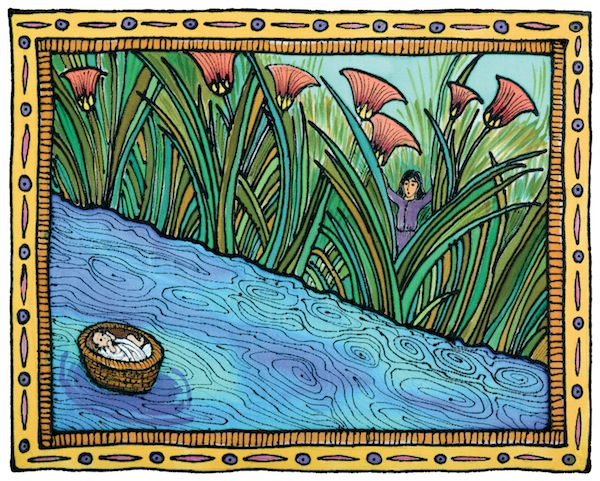
Happy Purim 2017!

Building a dream on Main
Among the offerings at Olive+Wild are mezuzot, textiles and fragrances. (photos from oliveandwild.com)
Judaica. Most of us have some in our homes. A mezuzah, Shabbat candlesticks, a seder plate, a menorah. As much as synagogues are a crucial part of Judaism, the Jewish home is a place to celebrate and perpetuate our traditions and faith.
For many years now, in Metro Vancouver, there has been hardly anywhere to buy Judaica locally. Many people order lovely things online or buy them when traveling, but it has been nearly impossible to buy a beautiful challah or matzah plate in the city – until recently.
In September, Bella Zaidel, a friendly and charming woman, opened Olive+Wild. It was her dream and she told her husband Simon it was now or never, so they did it.
Located between 27th and 28th avenues on Main Street, Olive+Wild is nestled among an increasingly interesting group of shops. At first blush, the store reflects her years of experience in design and décor retail. The displays are natural and artful and feature a carefully chosen, unique collection of home décor; the pottery is eclectic, attractive, and dishwasher and microwave safe; and the furnishings would help update any room. It’s the kind of store I love to wander through when I’m on holiday, to see local artists along with other striking pieces from around the world.
Walking past the stunning candles and the Vancouver Island-made pottery, shoppers find near the back two large display cabinets with collections of sparkling Judaica. One case is full of renowned South African artist Carrol Boyes’ work. A portion of this case is dedicated to decorative objects and the rest features mezuzot, Kiddush cups, candlesticks and challah plates. Most of Boyes’ work has an organic, modern appeal. Made of a combination of pewter, aluminum and stainless steel, these objets d’art don’t tarnish and stay looking silver and shiny.
On the other side of the store stands a cabinet full of Judaica from a variety of artists. Zaidel explained that most of the work comes from American designers like Michael Aram and Mary Jurek. She has one Israeli line and is actively looking to expand the number of Israeli-designed and -made items. She also hopes to increase her selection of matzah and challah covers.
There is an entire shelf with mezuzot, making it possible for most anyone to find their match. They also have many candlesticks and chanukiyot, matzah and challah plates, and decorative dishes for apples and honey. As Pesach approaches, new items like seder plates will be prominently featured in this area of the store.
While Judaica is not Olive+Wild’s core business – they also sell textiles, home décor, fragrances, dishware for entertaining and artisanal foods – both Zaidels have been pleased with the enthusiastic response they have received from customers.
“It’s interesting to see the number of younger people in the neighbourhood who walk in and don’t know there is Judaica in the store and end up buying things for their homes,” said Zaidel. “There are certain things every Jewish person should have and our pieces are heirloom quality, so they will last a lifetime.”
When asked why she decided to carry Judaica, she replied, “Not many places in Vancouver carry it, you had to search high and low. We love the young, modern Judaica and decided to carry it. It’s been very successful.”
Although she assumes most of the people buying ritual Jewish objects are Jewish, she knows some of them are not.
“We had a non-Jewish lady come and buy all of our hand-dipped Israeli Chanukah candles,” she said. “I think she was giving them to her child’s friends at the JCC daycare.”
The packages of Israeli hand-dipped Shabbat candles caught my eye and I couldn’t resist buying them, as they are a perfect hostess gift.
Zaidel wants people to know that there is a place in Vancouver to buy meaningful gifts for weddings and b’nai mitzvahs. Buying online may seem appealing, but seeing an item in person and having excellent service makes a big difference, especially if it’s for an important occasion. In addition, Olive+Wild has a great return policy.
“We will give a full refund with receipt up to two weeks after the purchase,” said Zaidel. “In retail, everyone expects lots of returns after the big number of gifts sold in December. Even though we tell our customers about our return policy, we didn’t get one return in January! We have this policy because we want people to be happy.”
In addition to the Judaica, Olive+Wild carries some Israeli art and jewelry.
“We like to support Israeli artists, as well as local artists,” noted Zaidel. “I tell people we carry eclectic ‘must-haves’ for the home.”
For more information about their collection, visit oliveandwild.com.
Michelle Dodek is a freelance writer living in Vancouver.
Making Israeli cities bloom
Planting trees as a community project in Jerusalem. (photo by Ariella Tzuvical)
Are Israeli city-dwellers still attached to the land? The answer is yes, but the connection to the land plays itself out in a surprising way.
By and large, today’s Israelis are an apartment-bound lot, but many dream of having a house with a garden. Those who are lucky enough to have a small garden – or an apartment with a patio – plant flowers and even grow fruit. Depending on the season, many Israelis grow grapes, oranges, tangerines, pears, grapefruits, lemons, kumquats, olives and pomegranates. Interestingly, some of these items have been grown in Israel since ancient times: “a land of wheat and barley, and grapevines and fig trees and pomegranates; a land of olive trees and honey … you shall eat and be satisfied.” (Deuteronomy 8:7-10)
Community gardening is a budding and not insignificant phenomenon taking root in Israeli cities. In Jerusalem alone, there are 70 community gardens. Municipalities, community centres, local branches of national nature preservation organizations (like Hachevra L’haganat Hateva), pro-environment charitable bodies (like Keren Sheli) and the Ministry of Environmental Protection are teaming up to help urban residents create these gardens. They are assisting interested apartment dwellers by providing seed money, land or know-how to get projects off the ground and onto porches, patios and even rooftops.
Why do urban Israelis grow fruits and vegetables? One young mother from Tel Aviv commented in a Yediot Ahronot article that she wants her children to understand that produce does not come from the supermarket.
Of course, most people want to use their homegrown fruits and vegetables in their regular cooking and preserving. But some grow fruit, such as the pomegranate, for special holiday consumption. For these gardeners, the following Rosh Hashanah blessing takes on added significance: “May the desire of our G-d and the G-d of our Fathers be to increase our merit like the [seeds of the] pomegranate.”
The Jerusalem-based Melamed family says it gardens for exercise, art and culture. They maintain that gardens produce cultured people. Another Jerusalemite looks at her blossoming pear tree and says that keeping a garden enriches a person’s life.
Although Israel, like most other Western countries, has largely switched from being an agrarian society to a technological society, places like the Jerusalem Botanical Gardens believe that gardening has a place. With that in mind, the facility has hired staff to make urban gardening more relevant to those living in Jerusalem.
As well, many Israelis seem to maintain the notion that G-d provides the ingredients for surviving off the land. Thus, when Jews celebrate the rebirth (or reproduction) of the Jewish year, they read: “See, I give you every herb, seed and green thing to you for food.” (Genesis 1:28-30) The annual Torah reading about producing in order to have food has helped fix the idea in the Jewish psyche.
Dr. Rabbi Dalia Marx wrote in A Torah-Prescribed Liturgy: The Declaration of the First Fruits: “The declaration of the first fruits is a bold text.” In Deuteronomy 26, Moses addresses the Israelites on the plains of Moab, “calling upon the Israelites wandering in the wilderness with no permanent ties to the earth to imagine themselves as farmers securely living in their own land. But simultaneously, the text demands of farmers living in their own land that they remember their days as wanderers in the wilderness – and necessarily … ponder the fragility of their own lives.”
When bringing the first fruits of the land to the Temple, the farmer thanks G-d for the bounty in a manner providing for “the entire recapitulation of national history.” In essence, “the farmer teaches himself that the final chapter in the national story is unfolding in real time.”

It should not come as a surprise that Israelis still seriously celebrate the agricultural component of their Jewish pilgrimage holidays. At Sukkot, Israelis everywhere erect sukkot, or booths, just as growers did in their fields thousands of years ago. And, of course, during Sukkot, observant Jews around the world purchase and bless the following combination of plants and fruit: the etrog (citron), lulav (palm), hadas (myrtle) and aravah (willow). These are known as the arbah minim, the four species.
The Passover seder plate contains greens that remind Jews that spring has arrived in Israel, while Shavuot commemorates the harvest that began around Pesach time and ended seven weeks later. For many years, this agricultural holiday had special meaning for those living in Israel, as the early settlers lived off farming. Today, Israel holds a variety of festivals showing off the bikurim, or first produce of the season. These holiday celebrations focus on the production of dairy products and honey.
In early winter, Jews throughout the world celebrate Chanukah by eating foods prepared in oil. Some food researchers maintain this may be related to the fact that Chanukah coincides with the end of the olive harvest. In late winter – except during the Shmitah year, when Jewish law dictates that the land be given a chance to rest – Israeli schoolchildren are out in force planting new trees on Tu b’Shevat, the birthday of the trees, which is increasingly celebrated with a special seder.
Avi Eshkoli, a veteran Jerusalem-area gardener, reported that he had seen more people trying to observe the Shmitah than he had ever witnessed before. He noted that the practice covers the gamut of Israeli religiosity and spirituality.
Part of what continues to tie Israelis to gardening is deeply implanted in Jewish tradition. There is no escaping the fact that Jewish holidays are connected to natural events. Every Jewish holiday begins with a blessing over the wine, the fruit of the vine, and special holiday texts such as Shir HaShirim (the Song of Songs), which is read on Pesach, and Megillat Ruth (the Book of Ruth), which is read on Shavuot, are ripe with references to gardens and fields.
The blessing over the wine is even part of the Jewish wedding ceremony. And, moreover, before the Sabbath eve meal, Jews recite the Kiddush that recalls G-d’s creation. Thus, at least once a week, many Jews are reminded of the process of birth, growth and production in the natural world.
Dr. Rabbi Marx points out that the “new” liturgy for Yom Ha’atzmaut, Israeli Independence Day, incorporates the concept of first fruits, reflecting “that we are home now, but acknowledg[ing] both the process leading to this moment and the fact that the dwelling in the land of Israel is not obvious or guaranteed.”
For Israelis then – and perhaps for many Jews in the Diaspora – urban gardening is not just about growing plants, but about growing spiritually as a people.
Deborah Rubin Fields is an Israel-based features writer. She is also the author of Take a Peek Inside: A Child’s Guide to Radiology Exams, published in English, Hebrew and Arabic.
This week’s cartoon … March 10/17
Celebrity Megillah
Showcased by Kedem Auction House earlier this month, the Megillah from which the above image is taken features politicians and celebrities as the story’s characters. For example, Osama bin Laden is Haman, George W. Bush is King Ahasuerus and Madonna is Queen Esther. The Megillah was commissioned by an anonymous collector, said Israeli designer Itzhak Luvaton, who was asked to create it back in 2007. Luvaton supervised the project and created the master sketch, which was sent to tens of artists and painters. After all the painting was completed, master scribe Avital Goldner wrote the text. The process took about a year.
Time to make hamantashen
When Eastern Europeans immigrated to America, they brought their hamantashen recipes with them. (photo from Infrogmation via Wikimedia Commons)
When it comes to Purim pastries, hamantashen are what most of us think of first. The word is taken from the German mohn, meaning poppy seeds, and taschen, referring to pockets. Some say the pockets refer to Haman, who stuffed his pockets with bribe money.
The original name, mohntaschen, and the tradition of eating them, may date back as far as the 12th century. Israeli historian, caterer and cook Shmil Holland says that, when Jews fled Germany for Eastern Europe in the late Middle Ages, they took the poppy seed pastry with them and added the Yiddish prefix ha, thus making it hamantash.
In the Encyclopedia of Jewish Food, Gil Marks (z”l) writes that Eastern Europeans and their foods came to dominate the Ashkenazi world in the 19th century, and “hamantashen emerged as the quintessential Ashkenazic Purim treat.” The original dough was kuchen, a rich yeast dough, and common fillings include poppy seeds, chocolate, prunes or other fruit fillings. When Eastern Europeans immigrated to America in the late 19th and early 20th centuries, the idea came with them.
(An aside: In 18th-century Bohemia, Jews added a prune filling. The story is that a local merchant was accused of selling poisoned plum jam; when he was cleared of the charges, his family marked the occasion as a holiday, called povidl Purim, or plum jam Purim.)
In addition to the pocket imagery, several other explanations have been suggested for the triangular shape of hamantashen. Some say they represent a triangular-shaped hat worn by Haman, the villain in the Purim story, and that we eat them as a reminder that his cruel plot was foiled. Others say they represent Esther’s strength and the three founders of Judaism: Abraham, Isaac and Jacob, as a midrash says that, while reflecting on his plan to get rid of the Jews, Haman realized the three Patriarchs would intercede.
Yet another explanation lies in the cookies’ name in Israel, oznei Haman, Haman’s ears – perhaps referencing an old custom of cutting off the ears of criminals before they were executed. When the resulting treat became known as Haman’s ears for Purim is unknown, although it is mentioned as early as 1550. However, according to Marks, historical oznei Haman were strips of dough fried in honey or sugar syrup – a 13th-century Andalusian cookbook has a recipe for this “ear” dish and it was adopted by Sephardim.
Whatever their name, the reason behind eating hamantashen remains the same: remembering how close the Jewish people came to tragedy and celebrating the fact that they escaped death.
Here are some recipes from my family for your own celebration of Purim, which starts this year on March 12. My grandmother (z”l) made the most beautiful-looking yeast hamantashen.
GRANDMA’S PRUNE FILLING
1 1/2 cups finely cut prunes
1/4 cup sugar
2 tsp lemon juice
- Place prunes in a saucepan with water to cover. Bring to a boil then reduce heat and simmer until soft.
- Mash prunes, add sugar and lemon juice.
GRANDMA’S POPPY SEED FILLING
1 cup ground poppy seeds
1/4 cup milk or water
2 tbsp butter or margarine
1/2 cup raisins
1/2 cup finely chopped nuts
2 tbsp honey
1 tsp vanilla
- Place poppy seeds, milk or water, butter or margarine, raisins, nuts and honey in a saucepan. Bring to a boil, then reduce heat and simmer until milk or water is absorbed.
- Add vanilla.
GRANDMA’S YEAST HAMANTASHEN
4 tsp dry yeast
1/2 cup lukewarm milk
2 eggs
1/2 cup sugar
1/2 cup butter or margarine
1 tsp salt
1 cup sour cream
4-5 cups flour
vegetable oil
Day before baking:
- Dissolve yeast in a bowl with warm milk. Let stand.
- Beat eggs and sugar in a bowl. Add yeast mixture, butter or margarine, salt and sour cream and blend well.
- Add four cups flour and mix thoroughly. Gradually add the rest of the flour and knead until the dough is smooth and does not stick to your hands.
- Grease a large mixing bowl and add the dough. Turn the dough until it is covered with the oil. Cover with a cloth and refrigerate overnight.
Next day:
- Preheat oven to 350°F. Grease a cookie sheet.
- Roll out dough on a lightly floured board to 1/4-inch thick.
- Cut into 16 squares. Place a spoonful of filling on each. Fold to form triangles. Place on greased cookie sheet. Let rise one hour until double in size.
- Bake for 20 minutes or until brown.
MOM’S COOKIE HAMANTASHEN
2 eggs
1/2 cup sugar
1/2 cup margarine
2 3/4 cups flour
2 tsp baking powder
1/4 tsp salt
1 tsp vanilla
juice of half an orange or 1/2 cup sour cream
- Preheat oven to 350°F. Grease a cookie sheet.
- In a mixing bowl, blend eggs, sugar and margarine.
- Add flour, baking powder and salt and mix well.
- Add vanilla and orange juice or sour cream and blend into a dough. Refrigerate 20 minutes.
- Roll out dough 1/4-inch thick. Cut into three-inch circles. Place one tablespoon of filling in the centre of each and fold to make a triangle. Place on a cookie sheet and bake for 20-30 minutes.
Sybil Kaplan is a journalist, lecturer, book reviewer and food writer in Jerusalem. She created and leads the weekly English-language Shuk Walks in Machaneh Yehudah, she has compiled and edited nine kosher cookbooks, and is the author of Witness to History: Ten Years as a Woman Journalist in Israel.
This week’s cartoon … March 3/17
More than a mere contract
An outer space-themed ketubah designed by thisisnotaketubah.com.
Judging from its ritual text, the ketubah (marriage contract) that is read aloud during a Jewish wedding ceremony isn’t the most exciting, romantic or joyous document. It spells out a husband’s fundamental Jewish legal obligations to his wife – food, clothing, conjugal rights – and guarantees the sum that the husband will pay his wife in the event of a divorce. Yet, increasingly, today’s ketubah designs are anything but dry and transactional. Going beyond placing a plain document in a basic picture frame, or using common designs such as a view of Jerusalem or the kabbalistic Tree of Life, ketubah artists and consumers alike are developing more elaborate and personalized tastes.
Morgan Friedman, chairman and “lead muse” of thisisnotaketubah.com, calls his initiative “the first company to do outlandish ketubot,” starting in 2011. Friedman said he “wanted a ketubah with super-crazy modern art” leading up to his wedding in 2010, but couldn’t find one. He approached his wife-to-be’s friend, Argentine artist Yael Magenheim, and she designed a ketubah to match his wedding, whose theme was the colour orange. Today, Magenheim is the artistic director for thisisnotaketubah.com, which has created 3,000 ketubot to date. Most customers order designs that the website already offers, but Friedman has a separate site, bespokeketubah.com, featuring commissioned artworks.
“My official reaction and what I tell [customers] is, ‘Whatever makes you happy.’ What makes the world a wonderful place is that different people have different preferences,” Buenos Aires-based Friedman told JNS.org, reflecting on some unique ketubot he has designed, such as one commissioned for a dragon-loving couple who are Game of Thrones fans.
Adriana Saipe was also inspired to enter the ketubah art business through the process of designing her own ketubah, in 2013. For customized ketubot – which make up 20% of her business on inkwithintent.com, the rest coming from existing designs – the Vermont-based artist said she often starts “with a place that has significance” for the couple. She asks them questions like where they met, where they’re living and where they’ve traveled together. For instance, one ketubah the artist is currently working on features landscapes from Miami, Pittsburgh and Providence, three cities where the couple has lived.
Saipe also hides “little secrets” in her designs. In a ketubah for a couple that enjoys rowing, she added boathouses along a river amid a nighttime Philadelphia cityscape; the average observer might not notice the small boathouses, but they are there for the couple to appreciate, Saipe explained, describing this design choice as the difference between the “outer layer that’s art on the wall” and the “inner story for the couple.”
Although Friedman cites 2011 as the advent of the “outlandish” ketubah, other artists estimate that elaborate, unique or customized ketubot were popularized at least two decades ago.
“The current trend to have modern art ketubahs began around the end of the 1990s,” said San Antonio-based artist Nishima Kaplan, who runs artketubah.com. “I was one of the first few artists to be involved in this trend, which was customer-driven. In the 1990s, the technology didn’t allow for just-in-time ketubah prints, so people who wanted an artistic piece with a unique text had to commission a handmade piece. I made a lot of these in the early 2000s. Now, there is such a wide selection of artistic designs on the internet that can be ordered with any text, so there is less demand for handmade pieces that are artistic but not personal, the unique designs that reflect a couple’s life continue to be desired.”
Jerusalem-based artist Danny Azoulay took up ketubah design nearly 20 years ago, when Israel’s tourism minister asked him to design award certificates for companies slated to be named as the top 50 businesses for tourism in the Jewish state. At least 10 people who saw examples of the certificates in Azoulay’s store commented that they would make for compelling ketubot, prompting the artist to pursue that niche.
Azoulay, who runs ketubahazoulayart.com, recalled that, when he first began designing ketubot, most Judaica production took place in China and India, where manufacturing costs are lower than they are in Israel. He understood that he couldn’t compete with sellers of standard mass-produced Judaica items, and needed a niche such as the ketubah. Simultaneously, more customers were asking him to produce commissioned ketubot.
Saipe, who has produced about 1,000 ketubot, said that, based on her conversations with consumers of various ages, the trend of elaborate designs began “somewhere between the 1980s and 2000.”
“There’s a really interesting dichotomy among ketubah artists themselves,” she said, noting that, on the one hand, there are “well-established” artists who produce ketubot with a classic old-world feel, and, on the other hand, there has been the emergence during the last five years of “contemporary” artists who employ “modern symbolism and modern times” in their designs.
What’s the reason behind the trend? The artists agree that customized ketubot are simply indicative of the popularity of personalized art in general, in addition to reflecting the personalization of various aspects of weddings.
“Everyone loves personalized art. This is not a new thing,” said Kaplan, who has created more than 3,000 ketubot since 1998. That said, some couples’ desire to alter and personalize the ketubah’s age-old Aramaic ritual text may also play a role in the trend of commissioned designs, she said.
“Once a couple begins thinking about a text they want that is different from the traditional one on their parents’ ketubah, it may be a natural next step to wanting an art ketubah,” said Kaplan.
Read more at jns.org.