Mystery photo … Dec. 23/16

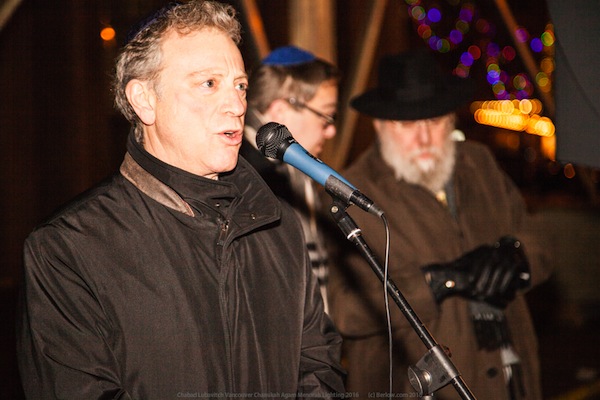
A group of people at Hillel, 1970. Back row, left to right: unidentified, Richard Bass, Rabbi Marvin Hier, Bob Golden, unidentified, unidentified. Front row, left to right: unidentified, unidentified, unidentified, Hildy Groberman. (photo from JWB fonds, JMABC L.11673)

If you know someone in this photo, please help the JI fill the gaps of its predecessor’s (the Jewish Western Bulletin’s) collection at the Jewish Museum and Archives of B.C. by contacting archives@jewishmuseum.ca or 604-257-5199. To find out who has been identified in the photos, visit jewishmuseum.ca/blog.

A celebration needs dessert

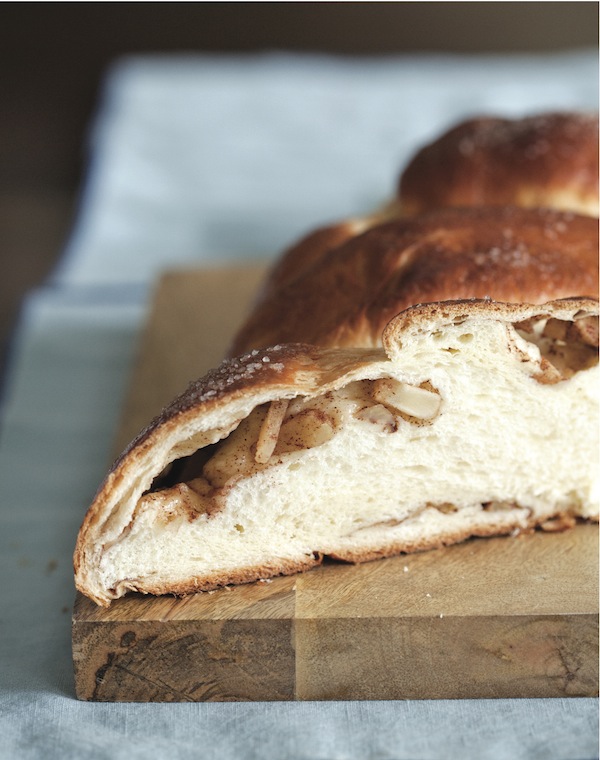
Rosie Daykin’s apple-stuffed challah.

Ten years ago, Rosie Daykin opened Butter Bakery and Café in Vancouver. Five years ago, it moved to its current location on Mackenzie Street and began offering breakfast and lunch, in addition to baked goods. The bakery has grown to have its products distributed and sold in more than 300 grocery stores and high-end retailers, including Whole Foods, Dean and Deluca and Crate and Barrel.

book cover - Butter Celebrates!Daykin published her first cookbook in 2013, Butter Baked Goods: Nostalgic Recipes from a Little Neighborhood Bakery, and her second in 2015, Butter Celebrates! A Year of Sweet Recipes to Share with Family and Friends, both via Appetite by Random House. Just last month, the U.S. edition came out from Knopf, with the subtitle “Delicious Recipes for Special Occasions,” and this reviewer received a copy.

After the essays “Essential Elements and Entertaining,” “Buts and Bobs for Successful Baking” and “Some Gentle Reminders,” the book jumps into the holidays – there are 117 recipes and 185 photographs.

There are recipes for almost every occasion. The book is divided into Valentine’s Day, St. Patrick’s Day, Easter, Mother’s Day, Butter Babies, Welcome Wagon, Butter Creams and Frostings, Summer Celebrations, Zelda’s Birthday Party, Halloween, Thanksgiving, Chanukah, Christmas and Happy New Year. A final essay is on packaging your goodies.

This is not a Jewish cookbook, however, there are new and creative holiday recipes and the offerings for Chanukah are sufganiyot, apple-stuffed challah and chocolate hazelnut rugelach.

As Daykin writes, “What kind of celebration could it be without baked goods?” With that said, here are two of her three Chanukah recipes. If you’re not feeling up to baking, you can always pick up something at the bakery, of course – and they also sell a variety of gift boxes that would bring a smile to many a face. Butter Bakery and Café is located at 4907 Mackenzie St., and is open Monday through Saturday, 8 a.m. to 5:30 p.m., and Sunday, 9 a.m. to 5 p.m.

photo - Rosie Daykin’s chocolate hazelnut rugelach
Rosie Daykin’s chocolate hazelnut rugelach.

CHOCOLATE HAZELNUT RUGELACH

“Traditional rugelach is filled with jam, fruit and nuts, but chocolate and hazelnut seemed just a smidge more celebratory to me,” writes Daykin. “It also provided me with another excuse to spread Nutella on something. These little crescent-shaped cookies fall under the more-ish category of baking. You eat one and you have to have more.”

1 1/2 cups pastry flour
1⁄2 tsp baking soda
1⁄2 tsp salt
1⁄2 cup cream cheese, full fat
1⁄2 cup butter, room temperature
1⁄2 cup granulated sugar
1 cup Nutella
1⁄2 cup hazelnuts

Finishing touches:
1 large egg
1 tbsp water
Course sanding sugar

Makes: two dozen cookies.

You will need: two (11-by-17-inch) rimmed cookie sheets lined with parchment paper.

Storage: these cookies will keep in an airtight container for up to one week or in the freezer for up to three months.

  1. On a large piece of parchment paper, sift the flour, baking soda and salt. Set aside.
  2. In a stand mixer fitted with a paddle attachment, cream the cream cheese and butter on high speed until well blended. Scrape down the sides of the bowl. Add the sugar and continue to beat until light and fluffy. Scrape down the sides of the bowl.
  3. Turn the mixer speed to low and slowly add the dry ingredients. Continue to beat until well combined.
  4. Divide the dough in two. Wrap each piece in plastic wrap and chill in the refrigerator for at least two hours.
  5. Preheat the oven to 350°F.
  6. Place the Nutella in a small bowl and use a spoon to give it a good stir to help loosen it up. This will make it easier to spread across the tender dough.
  7. Use a large chef’s knife to chop the hazelnuts. Set aside.
  8. Place a chilled piece of dough on a lightly floured work surface and use a rolling pin to roll it into a circle about nine inches in diameter.
  9. Use a small offset spatula to carefully spread the Nutella across the dough. The dough is very tender, so work carefully to avoid it tearing it. If it does tear, not to worry, just press it back together.
  10. Sprinkle half of the chopped hazelnuts over the top of the Nutella.
  11. Use the large chef’s knife to cut the dough into quarters and then each quarter into thirds, just like if you were cutting a pie.
  12. Start at the wide end of a piece of dough and roll it toward the point. Bend the two ends in slightly to create a crescent shape and then place it on a prepared tray.
  13. Repeat with the balance of the dough.
  14. Combine the egg and water in a small bowl and whisk them together. Use your pastry brush to lightly coat the top and sides of each cookie. Sprinkle generously with the sanding sugar.
  15. Bake for approximately 15 minutes, or until the cookies have puffed up and are a lovely golden brown. Remove the cookies from the oven and transfer them to wire racks to cool.

APPLE-STUFFED CHALLAH

“I wondered what would happen if I melded the idea of a butter cinnamon bun and challah loaf. Oh, believe me, people … good things happened. This bread is wonderful warm from the oven or lightly toasted with butter, but in French toast it has found its true calling. So, you might want to say ‘hola’ to this challah all the time.”

1 package instant yeast
1⁄4 cup warm water
4 cups all-purpose flour
1⁄4 cup granulated sugar
2 tbsp butter
1 tsp salt
2 tbsp liquid honey
2 large eggs
2 egg yolks
2 tbsp vegetable oil
3⁄4 cup water

Apple stuffing:
2 apples, peeled, cored and cut into 1⁄2-inch cubes (something tart, like a Granny Smith, works well)
2 tbsp dark brown sugar
1 tbsp liquid honey
1 tsp ground cinnamon

Finishing touches:
1 large egg
2 tbsp water
Coarse sanding sugar

Makes: one loaf, eight to 10 slices.

You will need: one (11-by-17-inch) rimmed cookie sheet lined with parchment paper.

Storage: this challah can be kept well wrapped or in an airtight container for several days, especially because you can toast it.

  1. For the challah, in a small bowl, sprinkle the yeast into the warm water. Set aside to bloom.
  2. In a stand mixer fitted with a paddle attachment, combine the flour, sugar, butter and salt on medium speed. Continue to beat until the butter has been distributed throughout the flour.
  3. In a liquid measuring cup, whisk together the honey, eggs, egg yolks, oil and water. Turn the mixer speed to low and add the liquid ingredients to the dry ingredients. Add the yeast with its water and continue beating until well combined.
  4. Stop the mixer and change the paddle attachment to a dough hook.
  5. Turn the mixer speed to high and let the dough hook knead the dough for at least five minutes, until it is shiny, smooth and elastic.
  6. Place the dough in a lightly oiled bowl and cover loosely with plastic wrap. Place the bowl in a warm, draft-free spot and allow the dough to rise until it has doubled in size, about 90 minutes.
  7. Meanwhile, prepare the apple stuffing. In a medium bowl, combine the chopped apple, brown sugar, honey and cinnamon. Use a wooden spoon to stir and coat all the apples. Set aside.
  8. Once the dough has fully risen, remove the plastic wrap and punch down the dough to release the air produced by the yeast. Turn the dough out onto a lightly floured work surface and allow it to rest for about 10 minutes.
  9. Use a knife to divide the dough into three equal pieces. Use your rolling pin to roll each piece into a rectangle approximately 14 inches long and six inches wide. Place one-third of the apple filling down the centre of a piece of dough. Pull one side of the dough over the filling and pinch to seal it closed on the other side and at the top and bottom. This will create a filled log of dough. Repeat with the other two pieces of dough.
  10. Lay one of the logs vertically along the centre of the prepared cookie sheet. Lay a second log across the middle of it, with the ends of the log pointing at 10 o’clock and four o’clock. Then lay the third log across the middle on top, with the ends pointing at two o’clock and eight o’clock. Braid one side of the loaf from the middle down and then tuck the ends under. Turn the cookie sheet and repeat with the other side.
  11. In a small bowl, combine the egg and water and use your pastry brush to generously coat the top and sides of the loaf with the egg wash. Sprinkle with the sanding sugar.
  12. Cover the loaf loosely with a sheet of plastic wrap and set in a warm, draft-free place to rise again until it has nearly doubled in size, about 90 minutes.
  13. Preheat the oven to 350°F.
  14. Bake the loaf for 30 to 40 minutes, or until it is a lovely golden brown and a wooden skewer inserted in the centre comes out clean.
  15. Remove from the oven and allow the loaf to cool for at least 20 minutes on the cookie sheet before transferring to a cutting board and slicing.

Sybil Kaplan is a journalist, foreign correspondent, lecturer, food writer and book reviewer who lives in Jerusalem. She also does the restaurant features for janglo.net and leads walks in English in Jerusalem’s market.

Focusing on the miracle of the oil

For us to become a glowing menorah, casting light in and around us, and lighting up the world, we must be oil-like. (photo from Cinco Resources, Inc.)

The story of Chanukah takes us back to the year 164 BCE, two centuries before the destruction of the Second Holy Temple in Jerusalem by the Romans. Then, Israel was under the rule of the empire of Alexander the Great.

The Greeks, in the year 200 BCE, had a great impact on the civilization of the whole world and the Jewish people. Although the Jewish people were very strong spiritually, they were very weak politically and militarily. The spiritual strength was attributed to the men of the Great Assembly; great sages and their successors, the Tannaim (codifiers of the Mishnah). When Alexander the Great of Macedonia conquered the civilized world, he brought the Greek culture, language, thoughts, beliefs, philosophy, customs and modernization to the masses and these beliefs rapidly spread.

When Alexander conquered Palestine, he gave complete freedom of religion to the Jews. He abolished taxes on the Sabbatical year, when the Jews didn’t work the land. As well, he freed Jewish soldiers from duty on the holy Sabbath. Alexander the Great died at the young age of 33. After his death, Jewish nobility and upper classes began taking on Greek ideas and customs. Would you even guess that the words synagogue and sanhedrin (supreme Jewish court) are Greek words?

Greek culture, aka Hellenism, began to make a serious impact on Jewish life in the Holy Land. The great rabbis of the generation saw the dangers of the Hellenists, threatening the traditions and faith of the Jewish people and the Torah. Hellenists were springing up everywhere.

Eventually, King Antiochus Epiphanes set out to destroy the last remnants of the Jewish people. He decreed the death penalty for any Jew found abiding by the laws of Torah, for observing the Sabbath and holy days, for the reading and teaching of Torah or gathering in houses of prayer. The building of the Beit HaMikdash, the Jewish Holy Temple in Jerusalem, was changed officially into a temple for the highest Greek god, Zeus, and an idol was set up before the holy altar. Altars were also erected for the Olympian gods, and there were heathen altars. The king’s soldiers forced Jews to bring offerings to these idols and bow down to them in the cities.

The study of Torah was not only forbidden, but the Torah scrolls were destroyed and their owners burned at the stake. Parents who circumcised their children were killed and teachers of Torah were tortured for trying to perpetuate the forbidden Jewish religion.

King Antiochus had no idea that his attempt to eradicate the Jewish religion would have just the opposite result. Many Jews became strengthened in their faith. When they came to the city of Modiin, Mattityahu, the father of the Maccabees – named for the verse in Exodus (15:11), “Who is like you of the lords of Israel” – came out and killed a traitor who was offering sacrifices to a Greek god.

His experience inspired many miraculous victories, including the large military victory over the Greeks in the year 3622 (139 BCE). Thereafter, the enemy was cleared out of the land, and Jerusalem and the Holy Temple were liberated. The victorious Jews set out to destroy the idols and altars in the Holy Temple and the golden menorah was replaced with an iron-wrought one. This took place on the 25th of the month of Kislev and the rededication of the Holy Temple lasted for eight days, until more oil could be made and brought to Jerusalem.

One small bottle of olive oil with the high priest’s kosher stamp on it was found, which was just enough to last for one day and yet, miraculously, it lasted for eight days and the entire dedication ceremony, being used to light the menorah again in the Holy Temple daily. The prayer “Al HaNissim” – about the miracles – is recited in the Grace After Meals and also the Amidah prayer during Chanukah and recalls the many miracles that took place.

Judaism and Jewry were undoubtedly saved from one of the greatest dangers that ever threatened the existence of our people. It was a struggle not only of the few over the many, but of the holy versus the unholy and of Judaism and Torah over Hellenism. The forces of the Torah prevailed.

Why do we celebrate so much about the oil? The miracle of the oil would seem of minor significance relative to the military victory of the Jews. Had the Jews been defeated by the Greeks, there would be no Jews today, G-d forbid. If the oil wouldn’t have burned for eight days, the menorah wouldn’t have been kindled. Why then, is the main focus of Chanukah on the oil?

Many insights have been offered. A symbolic explanation follows that shows how oil has the same characteristics as a person. This is based on a letter written by the Lubavitcher Rebbe, of blessed memory, before Chanukah 1947.

In writings of Jewish mysticism, all physical properties of an object are seen as continuations of their metaphysical properties. Every object originates in the realm of the spirit, embodied by a particular sublime energy. The energy evolves to assume a physical reincarnation, giving rise to particular physical characteristics that mirror their spiritual source. This is how a person ought to behave in their life. This, parenthetically, constitutes an extremely rich component of Judaism.

From the vantage point of Torah, the truths of science, physics, chemistry, biology, etc., and the truths of philosophy, spirituality and psychology, are merged together in a perfect mosaic, since all that is physical has a realm in the spiritual.

Olive oil contains four interesting qualities:

1. It is produced by crushing and beating ripe olives. The olive must be severely “humbled” and pressed to emit its oil.

2. Olive oil penetrates solid substances deeply – as do many other oils extracted from minerals, plants and animals. We know how difficult it can be to remove oily grease from our fingers and clothes. Oils have been used throughout history as remedies for bodily wounds, since oil penetrates the body far beyond its external tissue.

3. Oil does not mix with other liquids. When you try to mix oil with water, the oil remains distinct and will not dissolve in or combine with the water.

4. Not only will oil not dissolve in water, it rises and floats on top of other liquids. On a symbolic level, this appears paradoxical. Is oil humble or arrogant? It gets beaten badly, yet rises to the top.

These four qualities displayed by oil are essentially a physical manifestation of four spiritual and psychological attributes from where oil originates.

In our lives, we may attempt to become “oil-like.” How? By learning how to cultivate the four properties that characterize oil.

1. The crushing and pressing of the olives into oil represents the notion of humility. Seeing ourselves for who we really are, being open to discovering our biases, blind spots and errors, allows us to genuinely grow.

2. The direct result of this “pressing” is our ability to become oil-like, and affect others deeply. We can share ourselves with others and be in a real relationship. It takes courage to show up in the world with the “real you” and to then connect with other hearts profoundly.

3. Humility and genuine relationships must never allow one to be pulled down completely and dragged down emotionally. One must not forfeit their individual identity. The beauty of a relationship is the fact that two distinct individuals choose to share themselves with each other. Just like oil, you know how to feel and experience another human being meaningfully, while not becoming consumed by the other’s identity.

4. This threefold process of crushing yourself, bonding with others and at the same time retaining your distinctiveness, should ultimately cause you to rise, just like oil, to the top, and “float” above all that is around you. Realizing that you are a “piece of the Divine” (Tanya, Chapter 2) and that every moment you are a representative of G-d to our world, allows a person to experience themselves as indestructible, and wholesome. This comes not from arrogance, but from realizing that one’s soul is part of the infinite.

This is the deeper mystical significance of the miracle that caused the oil to last beyond its one day. It is also why we celebrate with a focus on oil, as this story captures the rhythm of our lives. For us to become a glowing menorah, casting light in and around us, and lighting up the world, we must be oil-like.

First, we must discover the art of humility and integrity; second, we must allow ourselves to show up genuinely in our relationships; third, we must retain our distinctiveness and individuality; and fourth, we must always recognize that part in us which is always “on the top.”

Judaism, particularly its festival of Chanukah, comes to teach ordinary human beings how to become oil-like. If we wish to ignite a heavenly radiance in our lives, we ought to take a good and deep look at the olive oil in our menorahs.

In that sense, oil embodies the essence of Chanukah, the Festival of Lights. Indeed, in many a Jewish household, the Chanukah lamps consist of wicks dipped in olive oil, replicating the Temple menorah lamps. Throughout the holiday, to commemorate the miracle of the oil, we eat various foods cooked in oil, including such delicacies as latkes and sufganiyot.

The following is a story I read recently.

In Brooklyn, N.Y., there was a Jew named Yankel, who owned a bakery. He told the story of how he survived the Holocaust. He said, “You know why it is that I’m alive today? I was just a teenager at the time. We were on a train, in a cattle car, being taken to Auschwitz. Night came and it was freezing, so deathly cold in that cattle car. The Germans would leave the cars on the side of the tracks overnight, sometimes for days on end without any food, and, of course, no blankets to keep us warm.”

Yankel continued, “Sitting next to me was an older Jew – this beloved elderly Jew – from my hometown. I recognized him but had never seen him like this. He was shivering from head to toe and looked terrible. I wrapped my arms around him and began rubbing him to warm him up. I rubbed his arms, legs, face and neck. I begged him to hang on. All night long, I kept the man warm this way. I was tired, freezing cold, my fingers were numb, but I didn’t stop rubbing the heat onto this man’s body. Hours and hours passed this way. Finally, night passed, morning came and the sun began to shine. There was some warmth in the cabin, and then I looked around the car to see some of the other Jews in the car. To my horror, all I could see were frozen bodies, all I could hear was deathly silence.

“Nobody else in the cabin made it through the night – everyone had died from the frost. Only two people survived: the old man and me. The old man survived because somebody kept him warm; I survived because I was warming somebody else.”

Yankel’s life was saved by and for assisting another human being.

When you warm other people’s hearts, you automatically warm yourself. Humans need each other and get elevated by helping and supporting others. When you seek to support, motivate, encourage and inspire others, then you discover support, encouragement and inspiration in your own life as well.

This is the lesson of the olive oil: to penetrate and make a difference in humanity and, in turn, this will empower us to do more, like the light of Chanukah, which increases every night of the festival. Beginning with one candle with its small flicker and increasing every night by adding one more candle, until the menorah shines its eight lights in total splendor and beauty.

May G-d help us celebrate this Chanukah with real peace in Israel and around the globe, and bring us the ultimate refinement of the world with the imminent coming of Mashiach. Then, we will all merit to light our Chanukah lights in the third Holy Temple in Jerusalem, the most beautiful and everlasting one.

Wishing everyone a joyous festival of Chanukah and a fabulous time with family and friends eating delicious latkes and doughnuts, playing dreidel and singing Chanukah songs. Chag sameach!

Esther Tauby is a local educator, writer and counselor. She offers many thanks to her husband, Rabbi Avraham Tauby, for his help with research for this article.

Going with the flow in Petra

An ancient water reservoir at Petra. (photo by Orli Fields)

Desert living is tough. The toughest part of it is having water fit for consumption. Nobody knew this better than the Nabatean people. The desert was their home.

Some 2,600 years ago, the Nabateans daringly accepted the challenge of finding and supplying water to their people. They did this by building desert towns with life-sustaining water systems.

Archeologists and hydrologists have studied the waterworks at the Nabatean town of Petra. They report that Petra stood in a huge desert canyon, in what is today the country of Jordan. This area receives little rain. Petra gets only about six inches of rain a year. Temperatures go from a low of 34°F to a high of 94°F (1.1°C-34.4°C). For about half the year, the daytime temperatures are quite high. Yet 30,000 people once lived in Petra.

Petra is far from any ocean, sea, river or lake, but the Nabateans did not lack for water. Three things made this possible: the Nabateans had very smart water engineers, they had skilled builders and they had talented water managers.

photo - Petra’s water engineers had to consider the ups and downs of yearly rainfall, the ups and downs of temperature, and the ups and downs of Petra’s mountainous surroundings
Petra’s water engineers had to consider the ups and downs of yearly rainfall, the ups and downs of temperature, and the ups and downs of Petra’s mountainous surroundings. (photos by Deborah Rubin Fields)

The engineers’ biggest worry was getting Petra to save as much water as possible. So, first, they designed a water system covering the whole city. The system collected a maximum amount of water from two sources: from rain and from local springs.

The engineers had several considerations. For instance, they had to worry about the ups and downs of yearly rainfall. They had to take into account the ups and downs of temperature. And they had to overcome the ups and downs of Petra’s mountainous surroundings.

photo - closeup of mountain pipelineThe engineers also had to lower the risk of the system getting blocked. They realized that water pipes that ran along the side of a mountain would be hard to clean. Thus, they designed special water filters. These filters made it easy to trap and remove rocks or silt. If there were particles, they would settle in the reservoirs, not in the pipes. The engineers’ design was practical. It functioned throughout the year and, importantly, provided for a lot of water storage. It included crisscrossing water pipelines, channels, dams, tunnels, reservoirs and cisterns (totaling some 200 surface and underground units).

When looking at Petra’s water system, it is important to note how it was built. There were no motorized digging machines or hauling trucks, of course. All work was done by hand. The chisel was probably the most commonly used tool and, with this simple tool, builders carved an amazing water system.

Water managers had to maintain good water pressure and water flow. Too much pressure, for example, would cause a pipe to break, and that would result in wasted water. The managers’ goal was to maximize flow while minimizing leakage. They did this in part by operating a partial flow of water.

Also to reduce water leakage, the water managers used a particular kind of pipe. This pipe was often made from clay baked at high temperatures; it was short, with thin walls. Even with this innovation, Petra’s mountains and its irregular rainfall and temperatures must have meant that water managers were always on the alert.

And, sometimes, they were really “put to the test” – for example, when a large camel caravan entered Petra. When a large group of dusty and thirsty traders and animals arrived, it meant one thing: a sudden increase in the demand for water. Water would be needed for drinking and bathing. For such situations, water managers needed to ensure that back-up water sources were working.

In times of real emergency, the Nabateans had numerous storage centres. Scientists figure that some sites held three weeks’ emergency supply while other sites held several months’ supply. Thus, inhabitants had some insurance against a siege or drought.

Scientists have estimated that about 12 million gallons (or more than 45 million litres) of fresh spring water ran through Petra’s water channels daily. Water was relatively plentiful and also accessible – residents could easily reach the water that ran into nearby fountains.

The Nabateans also traveled through present-day Israel. Along what is today recognized as the UNESCO World Heritage Incense Route, the Nabateans established forts and settlements. In agricultural communities such as Shivta, they “captured” rainwater to grow grapes for wine production.

Both in travel and at home, the Nabateans’ water systems were as complex as they were practical. Even in ancient times, they overcame the harshness of desert living. They harnessed its unpredictability and thrived.

Deborah Rubin Fields is an Israel-based features writer. She is also the author of Take a Peek Inside: A Child’s Guide to Radiology Exams, published in English, Hebrew and Arabic.

Navigating Northern Ireland

The HMS Caroline, a First World War light cruiser, is worth visiting. (photo by Deborah Rubin Fields)

Identified for so long – from the late 1960s to the late 1990s – by “the Troubles,” peace appears to be bringing both social and political stability to Northern Ireland. This, in turn, has led to an economic upswing.

Greater Belfast, and some of the other coastal towns, such as Derry, once had successful shipbuilding and textile industries. At the height of Belfast’s shipbuilding, for instance, Harland and Wolff, the biggest company, employed 35,000 workers. Edward James Harland and Gustav Wilheim Wolff, who came from a German-Jewish family, started this company in 1861. They designed and built the White Line ships, the most famous of which was the doomed Titantic.

Heavy industries suffered during the Depression and were later largely knocked out of the game by the terrible decline during the Troubles – the 30-year conflict between the unionist and mostly Protestant majority, who wanted to remain part of the United Kingdom, and the nationalist/republican and mainly Catholic minority, who wanted an independent Northern Ireland – by Chinese industry and/or both. Today, Belfast’s scaled-down dock industry focuses on ship repair and iron works.

Over the past 10 years or so, Northern Ireland has moved creatively to remember its more glorious industrial past. It maintains the history of shipbuilding in two ways: by awarding historic preservation distinction to two large, biblically named shipyard cranes, the Samson and the Goliath, and by recently expanding the whole area, which is referred to as the Queen’s Island, to encompass the Titanic Quarter. If visiting, worth seeing are the HMS Caroline, a First World War light battle cruiser, local businesses (studios, etc.), educational facilities and apartment buildings, and worth doing are such leisure activities as boating and cycling.

Northern Ireland’s maritime culture dates back hundreds of years. Paralleling the region’s general history, Northern Ireland’s naval life features a lot of rough water. Some locals might tell you it was the fairies, banshees and vampires that caused nautical disasters, but non-believers will tell you human error or unpredictable stormy weather caused numerous shipwrecks.

Thus, for example, while the Spanish had the money and manpower to fight the British fleet in the late 16th century, the rough coast of Northern Ireland, on-board disease and a scarcity of supplies wiped out a not-insignificant part of the Spanish Armada, mockingly referred to by non-Spaniards as the “Invincible Armada.”

Since the late 1960s, Northern Ireland divers and archeologists have sought to locate some of the many ships that foundered along their coast. Fascinatingly, underwater discoveries are now exhibited in Derry’s Tower Museum and at Belfast’s Ulster Museum. Shipwreck sites are likewise marked along the stunning Giant’s Causeway cliff path.

While on the subject of walks, Northern Ireland offers a lot of unspoiled, green countryside. If you’re outfitted correctly, hiking is a great way to see this stunning part of the world.

Northern Ireland’s extended social, religious, political and economic battles ended in 1998. Probably nothing currently recalls the Troubles more than the murals painted in Belfast and Derry. What visitors might not realize is that a significant number of the murals are actually part of the high walls separating the unionist (largely Protestant) neighborhoods from the nationalists (mostly Catholic) neighborhoods. Since the peace agreements, the barbed wire at the top of the walls has been removed, and the gates that nightly lock the sectarian neighborhoods are bolted by a private security firm rather than by British military or police.

The murals cover a wide range of topics. Understandably, some of these locally painted murals focus on remembering the significant events of the Troubles, such as the civil rights marches and Bloody Sunday. Some of the art portrays political allegiance; some pays tribute to dead paramilitary fighters; and some are memorials to murdered children.

photo - Bangor Bank, adorned above its doorway with three Red Hands of Ulster
Bangor Bank, adorned above its doorway with three Red Hands of Ulster. (photo by Deborah Rubin Fields)

Today, however, the murals have expanded their scope to include conflicts from around the globe, such as the Israeli-Palestinian conflict. The pro-Israeli mural on Northumberland Street is dedicated to Lt.-Col. John Henry Patterson, a Christian Zionist who commanded the Jewish Legion in the First World War. The pro-Israel mural seems to receive less respect than the Palestinian and, this past summer, it was vandalized in a reported hate crime. Similarly, two years ago, an Ulster History Circle plaque erected at Israeli President Chaim Herzog’s Belfast birthplace was removed following defacement and building vandalism.

While on the subject of symbols of Northern Ireland, you may notice an open hand, often painted red, over building lintels. While it is hard to pinpoint the exact origin of what is known as the Red Hand of Ulster, it bears a similarity to Judaism’s “hand of God.” In Judaism, the “hand of God” has been a fairly common symbol, generally referring to God’s stepping into human affairs, but can be a subject in and of itself. Moreover, in both Judaism and Islam, the five-fingered hamsa is used as an amulet against the evil eye.

Belfast has a small assortment of sites with a link to Judaism, its texts or symbols. For example, in front of Customs House, there is a large stone water trough dedicated to Francis Calder, who founded the SPCA in Belfast. The trough contains a quote from Proverbs 12:10: “A righteous man regarded the life of his beast.” Close by is Albert Memorial Clock, dedicated to Queen Victoria’s husband. Undoubtedly better known for the way the tower leans, due to a sandy base, it has six-pointed stars carved into the stone.

photo - Jaffe Fountain in Belfast
Jaffe Fountain in Belfast. (photo by Deborah Rubin Fields)

Not far from downtown’s Victoria Square shopping mall, there is a striking yellow fountain donated by Daniel Joseph Jaffe (1809–1871), the founder of the Jewish community. Jaffe’s son, Sir Otto, was the mayor of Belfast twice (1899 and 1904). Sadly, his German birth led to his leaving Northern Ireland. During the First World War, when the Germans torpedoed the Lusitania near Cork in May 1915, anti-German sentiment rose to the point where, even as a leading industrialist, philanthropist and naturalized U.K. citizen, Jaffe was accused of being a German spy. He left Northern Ireland in 1916 for London, England.

The most known Jewish and Canadian connection to Northern Ireland is a tragic one. On April 2, 1912, the Titanic left its Belfast shipyard. At its Southampton launching, it carried an unidentified number of Jewish passengers, some wealthy, established Jews, but many poor Jews seeking a better life in the United States. When the Titanic sank around Newfoundland on April 15, 1912, a small number of unidentified Jewish deceased were buried at Baron de Hirsch Cemetery in Halifax, N.S.

If you plan to travel to Northern Ireland, read This Man’s Wee Boy: A Childhood Memoir of Peace and Trouble in Derry by Tony Doherty and Reading in the Dark: A Novel by Seamus Deane, and listen to Tommy Sands’ “There Were Roses.” Seek in-person and/or virtual assistance from the attentive staff at Discover Northern Ireland, Northern Ireland’s tourist facilities (discovernorthernireland.com) and visit the small Belfast Jewish community’s website (belfastjewishcommunity.org.uk) and its lively Facebook page. While you’re in the country, you can attend Shabbat morning study sessions and services.

Deborah Rubin Fields is an Israel-based features writer. She is also the author of Take a Peek Inside: A Child’s Guide to Radiology Exams, published in English, Hebrew and Arabic.

Bevis Marks 315 years later

The interior of Bevis Marks Synagogue looking towards the ark and with the bima in the left foreground. The ark is made of oak, but painted to look like Italian marble, as are the supports to the ladies gallery. (photo by Edgar Asher)

Britain’s oldest synagogue, Bevis Marks, was built in 1701. Now situated in the heart of London’s Square Mile business district, the synagogue has been in continuous use since its foundation.

In 1655, Rabbi Menasseh ben Israel arrived in London from Holland with a petition to Oliver Cromwell asking that Jews be allowed to once again to settle and live in England and begin to trade – they had been banned from the country some 366 years earlier. In 1656, Cromwell agreed, despite opposition from London merchants.

Jews had been living in England since Roman and Anglo-Saxon times. In 1066, William the Conqueror encouraged Jewish craftsmen and merchants to move to England from northern France. However, in 1290, Jews were banished altogether from England.

Bevis Marks Synagogue was, from its very beginning, an Orthodox congregation set up to serve the Sephardi Jews in the area. The need to build the synagogue came about because of the increase in the Jewish population of the neighborhood and the lack of other synagogues in the area.

photo - The central candelabrum, one of seven that hang in Bevis Marks, was a gift from the community of Amsterdam at the time of its original construction
The central candelabrum, one of seven that hang in Bevis Marks, was a gift from the community of Amsterdam at the time of its original construction. (photo by Edgar Asher)

In early 1698, a committee was set up, consisting of the leading Sephardi leaders in the neighborhood to look into the possibility of building a new synagogue to cope with the influx of Jews moving into this part of London. In February 1699, a contract was signed for the building of a new, larger synagogue and, in September 1701, Bevis Marks Synagogue was dedicated. The interior décor, layout and furnishing were based on the design of the main Sephardi synagogue in Amsterdam, which had been completed in 1675. The central candelabrum, one of seven that hang in Bevis Marks, was a gift from the community of Amsterdam at the time of its original construction.

The prominent Renaissance-style ark was painted to look as though it is made of colored Italian marble; in fact, it is surprisingly made entirely of oak. The 12 pillars, representing the 12 tribes of Israel, which support the ladies gallery, are also made of oak and painted to look like Italian marble.

Bevis Marks became the centre of the English Spanish and Portuguese Jewish community and was also the home of the community’s chief rabbis.

Bevis Marks has always been intimately associated with London, so much so that on the eight occasions when a Jewish lord mayor has been elected, Bevis Marks has been the destination of the new lord mayor’s first official duty. It has made no difference if the mayor followed the Sephardi or Ashkenazi rite. Many notable Jews have had association with Bevis Marks, including Moses Montefiore, who was also a big benefactor of the synagogue; prime minister Benjamin Disraeli’s father Isaac; and Daniel Mendoza, who was an English boxing champion in the late 18th century.

Several seats in the synagogue, even today, are roped off with a red cord to be reserved for notable people who have been associated with Bevis Marks. One seat in particular was the reserved seat of Montefiore. Now, this seat is a seat of honor reserved for a distinguished visitor, such as a Jewish lord mayor. In 2001, Prince Charles occupied the seat during the synagogue’s 300th-year commemoration ceremony. In 2006, prime minister Tony Blair was guest of honor at the synagogue during the ceremony marking the 350th anniversary of the resettlement of Jews in England.

London, from a Jewish standpoint, has undergone many changes. Over the years, Bevis Marks, apart from being the flagship synagogue of the Sephardi community in Britain, has had a large catchment area around London’s Square Mile. Two things happened to affect the attendance at the synagogue, however. First, many Jews who had become more affluent moved to other parts of London and, second, the city itself and its financial district were redeveloped from being primarily residential to large office blocks.

Nonetheless, Bevis Marks still managed to hold regular but less well-attended services. At one point, the once proud centre of the Spanish and Portuguese Jews looked like it might become an historic landmark, rather than remain a vital house of prayer. After all, the community itself designated Lauderdale Road Synagogue in northwest London as the community’s administrative headquarters. In addition, the number of British Jews claiming affiliation with any Jewish community organizations fell precipitously over a span of 50 years. Many British synagogues were on the verge of closing down or amalgamating with other synagogues in the same district.

In 1955, there were an estimated 410,000 Jews in the United Kingdom; by the time of the national census in 2001, this figure was down to only 270,000. The question on the census form asked, What denomination do you consider yourself to belong to?

Bevis Marks still attracts many visitors from all over the world, both Jewish and non-Jewish. With a few exceptions, its interior is exactly how it looked some 315 years ago. When all is said and done, the building remains a place to offer up prayer, despite some trouble, in recent times, to gather a minyan of 10 men to hold a prayer service. However, the rebuilding of London’s Square Mile and its surrounding neighborhood has brought new blood to Bevis Marks, as the developments have included up-market expensive homes, particularly in the nearby dockland areas. Young Jewish businesspeople are once again making use of the synagogue and Bevis Marks is secure in its future both as a unique architectural building and an active synagogue.

Chanukiyah’s evolution

When the Second Temple was destroyed, its menorah was said to have been taken to Rome. This is depicted, with the menorah being carried by Jewish slaves, in a carving on the inside of the Arch of Titus. (photo by Steerpike via Wikimedia Commons)

In the Temple of Jerusalem stood a seven-branched candelabrum or menorah, which was lit each day by the high priest. There were also other candelabra for ornamental purposes. When Antiochus removed the Temple menorah, Judah Maccabee had a duplicate built – called a candlestick with lamps upon it, in one Apocrypha translation – and he lit it, although there is no mention of oil to light it.

When the Second Temple was destroyed, its menorah was said to have been taken to Rome. This is depicted, with the menorah being carried by Jewish slaves, in a carving on the inside of the Arch of Titus.

Lighting a chanukiyah, or eight-branched candelabrum with one to serve as the shamash (one who lights the others), is a popular Chanukah custom. Originally, eight individual ceramic or stone lamps with wicks were lit with olive oil. Jews from Yemen and Morocco also used rough stone lamps with scooped-out places for the wicks and the higher one for the shamash.

At some point, people began the custom of hanging their lamps on the left side of the door, opposite the mezuzah, because Jews were commanded to affirm the miracle in public. When it became dangerous to display the chanukiyah out of doors, people began lighting them inside the house, frequently placing them by a window.

A wide variety of those chanukiyot, in diverse decorative styles and materials, have been preserved throughout the years.

As early as the 12th century, replicas of the Chanukah menorah, with the two additional branches, were found in synagogues, so that poor people and strangers could still benefit from lighting. Eventually, this design was used for home chanukiyot, but some people criticized the custom of lighting in the home. As well, discussions ensued about on which wall to place the synagogue chanukiyah – by the 16th century, lighting the candelabra in the synagogue became established as an addition to lighting one at home.

According to Michael Kaniel in A Guide to Jewish Art, in Morocco in the 11th century, the chanukiyah was the most widely used ritual object. They were made with a wide variety of materials: gold, silver, brass, bronze, iron, lead, glass, wood, glazed ceramics, terra cotta, bone, pomegranate shells, walnut shells and bark. Then, the brass style became popular, with North African Arab designs of flowers, foliage, fruits and animals. Those from Iraq often used the hamsa, the open hand symbol against the evil eye.

Chanukiyot dating back to 13th-century Spain and southern France display a straight row of holders with a back plate. One can also find chanukiyot made of bronze from the time of the Renaissance (14th century), depicting Judith with the head of Holofernes, who she killed, thereby saving her people, but that’s a story for another time.

European chanukiyot, mostly after the 17th century, were made in brass with animals symbolic of Jewish folk art. Later on, they appear in silver and were commissioned from silversmiths; European artisans often created chanukiyot from silver, using plant designs.

An 18th-century lamp from Germany depicts the prayers for lighting the candles. A 19th-century lamp, either from Libya or Morocco, is made of ceramics. Twentieth-century designs in Morocco were of silver and used animals and plants in the design.

Originally, wicks and oil were used, but, in the 18th and 19th centuries, many people replaced these with candles. Traditional Jews, particularly in Jerusalem, still use wicks and oil and hang the chanukiyah outside the house in a glass-enclosed container.

Electric chanukiyot atop public buildings are also customary in Israel as are home-style chanukiyot of all varieties, displayed in stores, offices and public places.

The primary rule for a “kosher” chanukiyah is that all eight holders should be at the same level, with the shamash placed higher than the others.

Sybil Kaplan is a journalist, foreign correspondent, lecturer, food writer and book reviewer who lives in Jerusalem. She also does the restaurant features for janglo.net and leads walks in English in Jerusalem’s market.

Dreidel’s lasting popularity

Dreidels from the author’s dreidel collection. Clockwise from the top left: a hand-painted dreidel with an open top; a hand-painted dreidel on a base; a felt dreidel; a hand-painted dreidel; and, in the centre, a tiny hand-painted glass dreidel. (photo by Barry Kaplan)

Dreidel is the most popular game for Chanukah. In Hanukkah: Eight Nights, Eight Lights, Malka Drucker writes that it evolved 2,000 years ago when the Chanukah story took place, at a time when Antiochus ruled over Judea in ancient Israel. “Groups of boys who had memorized the entire Torah would secretly study together until they heard the footsteps of the Syrian soldiers. Then they would quickly pull out spinning tops … and pretend to be playing games,” she writes.

Whether this is true or not, we do know that, by the Middle Ages, the game became more complicated, as rules were borrowed from a German gambling game. According to Encyclopedia Judaica, during the long nights of Chanukah, while the lights were burning, it became customary to pass the time by spinning tops and playing the ancient “put and take” game. This was in fulfilment of the commandment that the Chanukah lights should not be used for any utilitarian purpose – “they are only to be seen.”

While playing cards and other games has been prohibited by the rabbis over the years, as the games were considered frivolous because they took away from Torah study, the custom continued.

In medieval Germany, dice were used for the game, and they were inscribed with N, G, H and S. N stood for nichts, nothing; G stood for ganz, all; H was for halb, half; and S meant stell ein, put in. All players would hold an equal number of nuts, raisins or coins. Each player would put one in the middle, and the first player would spin the dice. Each letter stood for a move in the game – putting in or taking out nuts, raisins or coins, according to where the dice landed.

Later, boys carved tops or dreidels out of wood or poured hot lead into a form to make a spinning top. The letters were then changed to Hebrew and said to stand for the Hebrew letters nun, gimmel, hey and shin. The rabbis were less reluctant for boys to play with these tops because the letters were interpreted to stand for the phrase, “Nes gadol hayah sham,” “A great miracle happened there.”

photo - An assortment of plastic dreidels. The two larger tops have removable lids
An assortment of plastic dreidels. The two larger tops have removable lids. (photo by Barry Kaplan)

In modern Israel, the Hebrew letter shin is replaced by a peh, standing for poh, meaning here – “A great miracle happened here.”

The rabbis felt even more comfortable about the game when it was also realized that, when the Hebrew letters, which have numerical value, are added together, they total 358, the same number of letters as the word for Messiah. (Nun is 50, gimmel is three, hey is five and shin is 300.) The letters of the word Messiah or Mashiach in Hebrew are mem, which is 40, shin which is 300, yud which is 10 and chet which is eight. Since the Jews are still waiting for the Messiah, this would show the way for a miracle.

Another mystical interpretation of the Hebrew letters is described by Philip Goodman in The Hanukkah Anthology. He writes that nun stood for nefesh (Hebrew for soul); gimmel stood for guf (body); shin stood for sechal (mind); and hey stood for hakol (all), implying all the characteristics of humankind.

Among the most-sung Chanukah songs are those about the spinning top – dreidel, in Yiddish, and s’vivon, in Hebrew.

The origin of the song “I Have a Little Dreidel” – “I have a little dreidel, I made it out of clay, and when it’s dry and ready, then dreidel I shall play!” – was the subject of an interesting article by Melanie Mitzman a few years ago in Hadassah Magazine. She wrote that Joshua Jacobson, a professor of music and Jewish studies at Northeastern University, explained that the song was originally in Yiddish and the opening line was “I made it out of lead.”

Samuel Goldfarb is said to have penned the English lyrics, and Goldfarb, a Jewish liturgical composer employed by the Bureau of Jewish Education of New York between 1925 and 1929, wrote the melody for the English version. Goldfarb’s granddaughter, Susan Wolfe, recalls telling her public school class that her grandfather had written “The Dreidel Song,” but they did not believe her.

The popular Hebrew song for this game is “S’vivon”: “S’vivon, sov, sov, sov. Chanukah hu chag tov,” “Spinning top, turn, turn, turn. Chanukah is a good holiday.”

As for dreidel games, here are the rules for three.

Put and take

On the sides of the dreidel are the four letters described above. To play the game, each player puts in one or more nuts or coins as agreed. A player spins the dreidel. If it falls on N, the player does nothing. If it falls on G, the player gets all. If it falls on H, the player takes half. If it falls on S, the player takes the whole pot. The next player takes their turn after each player once again contributes to the pot.

Endurance

All players spin the dreidel at a given signal. The player whose dreidel spins the longest is the winner.

Play for score or time

This game uses the fact that each Hebrew letter of the dreidel has a numerical value: N = 50, G = 3, H = 5 and S = 300. Players agree on a specific score to reach or time in which to play. Each player spins the dreidel. The scorekeeper credits each player with the numerical value of the letter on which his or her dreidel falls. The game continues until a player reaches the agreed-upon score or until the allotted time has passed, in which case the player with the most points wins.

Sybil Kaplan is a journalist, foreign correspondent, lecturer, food writer and book reviewer who lives in Jerusalem. She also does the restaurant features for janglo.net and leads walks in English in Jerusalem’s market.

The genie in the chanukiyah

Alan Dean was the world’s largest manufacturer and distributor of Chanukah menorahs.

“You what!” Zoe’s father was yelling at her. Again. “You traded my lamp?”

Nothing Zoe did seemed good enough for Dad. Her room was too messy. Her grades weren’t high enough. Her clothes were too expensive, too ratty or too “inappropriate.” He was always screaming at her.

“I didn’t mean …” Zoe began. She gazed into the first light burning on the new chanukiyah and tried to hold back the tears.

Ever since her mother had died, Zoe had tried to take good care of her father. Only 12 and a half, she wasn’t a good cook. She didn’t like cleaning the toilets. But all she wanted was to help.

Her dad’s office was a mess. The whole house was a mess. Alan Dean was the world’s largest manufacturer and distributor of Chanukah menorahs. There were candelabras all over the place. They were in the bedrooms, the kitchen, dining room, living room, even in the bathrooms. Every single morning, there was shouting about something that had gone missing: a wallet, keys, a cellphone, a cleaning bill, a shoe.…

That morning, Zoe had taken a black plastic garbage bag into the office to clean out some clutter. Which was when she got a weird text on her phone.

“@Jenny.Hunter New Lamps for Old. Want to trade?”

Zoe happened to be staring at this old, dusty and tarnished chanukiyah on her father’s bookshelf. It was squat and primitive. Her father hadn’t touched it in years.

Before she could think too much, she replied and, a moment later, there was a knock at the door.

“I was in the neighborhood,” Jenny said, smiling into the video intercom. She was a well-dressed woman, a little old, and her teeth could use braces. “Do you have a lamp to trade?”

Zoe was careful. “Let me see yours.”

The woman opened an aluminum suitcase from which she pulled a beautiful stainless steel Chanukah menorah. It was very sharp and very shiny.

Zoe nodded and opened the door a crack. “Why would you trade that for an old lamp?”

The woman smiled again. “Call it a present. Or an almost free sample, with the hope that your father will buy more.”

Now Zoe smiled. Dad always liked a bargain. She nodded, took the steel menorah and gave the woman the old brass one.

“Finally it is mine!” the woman said with something that sounded like a cackle.

Before Zoe could change her mind, the woman was gone. It was as if she had vanished.

That evening, her father was distracted. He didn’t even notice the new chanukiyah until after they’d said the blessings and Zoe lit the candles.

Then he saw it. “Where did that come from?”

“I traded it for your old lamp,” Zoe answered, happily.

Her father rushed into the office. When he came back, he began yelling.

“You went into my private space and…. Don’t you start,” Dad shouted. “Don’t you start quivering that lower lip. Don’t you start tearing up.…”

Which was when Zoe lost it.

Alan Dean stared as his beautiful daughter cried.

He didn’t know what to do. He never knew what to do.

For seven generations, the Dean family had produced boys, and the story had been passed from father to son at the bar mitzvah. The lamp was found in a cave. A genie inside gave each owner three dangerous wishes – guard the magic lamp and use it well.

When his daughter was born, Alan was surprised, even upset.

His wife forbade him from calling her Aileen.

“It has to stop sometime,” Shana had said. “A new girl, a new beginning.”

And she was right. Al’s life, which was always about business, had broadened into a wonderful family, until Shana had passed.

Alan hadn’t told his daughter that their fortune was based on a magical lamp. Zoe wasn’t 13 yet, and he didn’t want her to laugh, but mostly because Shana had been the last one to touch it.

“Make enough so we are happy,” Shana had said as she rubbed the chanukiyah. “And not a single one more.”

The genie, which was now barely a flicker said, “Your wish is my command.”

Instantly, the entire factory was automated, with only enough jobs to keep all the existing employees busy, while increasing production tenfold. The whole system was computerized and efficient. Orders came in, and candlesticks went out. No one worked too hard. The bank accounts swelled. It was every businessman’s dream!

Then Shana had gotten sick and, in one day, she died.

Alan’s world collapsed. After a week of shiva, when he’d finally wandered into his office, he saw the lamp on the shelf and his heart broke.

Could a wish have saved her? In the mournful chaos, he had completely forgotten the power of the lamp. He couldn’t bear to touch it, and it had gathered dust on the shelf. His wife was gone, but he still had his work. He had thrown himself back into it, and barely had any time for his daughter.

Now the lamp that had sustained his family for centuries was gone, too, and he knew that the factory would soon go silent.

Zoe stood in front of him, tears running down her face.

How could he do this to her? Yes, he was unhappy, but his daughter didn’t have to be.

Shana had known. “Make enough so we are happy,” she had wished. “And not a single one more.”

Alan thought for a moment. His mind tallied the amounts in the bank, the value of the factory and the land. The good will of the Alan Dean brand name. He would sell it all. It would be enough.

Alan wrapped his arms around Zoe’s shoulders and pulled her close. He hadn’t done that in years.

“It’s OK,” he said. “Let me tell you the story of that lamp. It has always been a story of magic and wealth, greed and fear, but now I think for us there will be a happy ending.”

Zoe felt warm and safe in her father’s arms.

The lights from the Chanukah candles flickered.

The End.

Mark Binder is a Jewish author and storyteller who tours the world sharing stories for all ages. His life in Chelm stories and his latest collection, Transmit Joy! an audio storybook, are available on audio download and CD.

Decembers of my childhood


This story comes from the book Life Doesn’t Get Any Better Than This: The Holiness of Little Daily Dramas (Read the Spirit, 2015).

***

My father used to take showers with the lady next door.

It was all pretty kosher. We rented half of a “duplex” house at 89 University Avenue in Providence, and the Winn family occupied the other half. “Duplex” means different things in various places; in Providence, a “duplex” was a house with two separate entrances and two mirror-image units. Ours had three floors and a basement suitable for Cub Scout den meetings.

book cover - Life Doesn’t Get Any Better Than ThisThe way the house was designed, the bathrooms on the second floor shared a common wall, tub alongside tub and toilets back to back. The insulation was fairly thick, but subdued sounds could get through, and soon after the Winn family moved into 91 University Avenue, my father and Ruth Winn discovered that they observed similar morning shower routines. The muffled knocking back and forth on the tiles at 7:15 a.m., then a cute neighborhood joke, is now a piece of family folklore.

My mother and Ruth became friends immediately; 40 years later and 400 miles apart, they still dearly love each another. Laughter is what started it all off, but it was a hurricane called Carol that really brought us all together.

For eight days, Providence was without electricity, and neighbors drew closer to one another. Cold food went into the Keoughs’ old gas refrigerator at 85 University Avenue, while our battery-operated radio was the source for news and entertainment. The Winns’ vast quantities of sporting equipment helped everyone pass the time until that late afternoon when we were sitting on our porches and my mother suddenly yelled, “The lights are on!” Everyone rushed inside.

The bonding held.

The Winns’ oldest son Cooper David Winn IV and I were classmates, though never best friends. Still, we spent lots of time together, as neighboring kids do, and some of the most memorable moments occurred around the December holidays. Chanukah at my house. Christmas at his house.

Mutual envy.

For me, Chanukah generally meant one gift from my parents per night, but factoring in additions from grandparents, other relatives and friends, I averaged 16 to 20 each season. Not bad. I would even feel a bit on the smug side as I walked to school in the morning reporting to Cooper on the prior night’s take.

That is, I felt smug until early Christmas morning, when I would race over to the Winns’ side of the house to inspect the mountains of presents, the massive quantities strewn about the living room, such a volume of stuff that even the recognition in later years that the haul included a suspiciously large amount of underwear and socks could not make me rationalize away my jealousy.

The feeling of Chanukah has remained with me: our old tin menorah and the look, the smell, the soft, smooth texture of its candles, sometimes dripping their orange wax across my fingers. There were the traditional songs, the latkes and applesauce, and our one decoration, “Happy Chanukah,” printed on colorful paper dreidels and placed across the dining room entryway. The sign was worn, faded, but it was our tradition, and for eight days it transformed the room into a chamber of happy expectation.

Most of my presents were modest. I loved to make Revell models of antique cars, and so something like a Stanley Steamer one night might be followed by a Stutz Bearcat the next. Another year it was accessories for my small American Flyer train set: one night it might be a new caboose, and another night a little building to place near the tracks. I remember categories of gifts, but the particulars have long faded.

Except for two presents that I’ve never forgotten.

The first was a 26-inch English bicycle. It arrived on the year when I went for the gold in the “eight small presents or one big present” option game. Friday was the designated night and, as soon as the candles were lighted and the songs sung, I dutifully complied with the “Close your eyes tight” directive. The waiting seemed to go on forever as I listened to my father’s grunts and a bumping noise coming up the cellar steps. When he approached the dining room, I heard the rhythmic, metallic sound of a spinning tire, and knew that my yearlong series of unsubtle hints had been acknowledged.

Later we went to synagogue and, before the service began, I stood in the foyer for what seemed like hours, watching as every person entered, brushing the snow off their coats and stomping their boots. I scanned the arrivals, looking for Joey or Sammy or Ricky or anyone else I knew. “Guess what! I got an English bike!”

Other Chanukahs, though, were not as festive. My parents constantly struggled financially, one of the consequences of my father’s checkered career and made worse, later, by the albatross of medical bills from my sister’s long illness.

My father was always involved in the paper business. During the eight years when we lived on University Avenue, he worked for at least six different companies in waste paper, paper chemicals and wholesale tissue. Each position would begin with optimism and end with him returning home one night carrying his electric typewriter.

He always bounced back, always landed another job somewhere, somehow. Yet the process was draining, and the weeks or months between paychecks grim. One of those dark periods coincided with Chanukah.

I knew things were tough that season. We didn’t starve, but everything had to be cut back as we tried to make do on the salary my mother earned fitting women into corsets at the Peerless Department Store. “I know it’s hard,” she would say, “but some day our ship will come in.” I believed her. Sometimes I could even visualize “our ship,” a small speck on the horizon slowly, surely heading right for us.

“Our ship,” burdened with riches, was still far out to sea when Chanukah began. This year, I knew, would not be like other years. The grandparents and a few of my parents’ friends came through, but, my parents explained, I would need to understand that they just couldn’t afford presents this time. Just this year. Next year will be better.

Chanukah overlapped Christmas, fortuitously. The Winns were busy with their preparations, so I didn’t see much of Cooper. I was glad school was already on vacation; there was no need to report to friends on my Jewish version of an empty stocking.

That Christmas morning I didn’t rush next door.

On the final night of Chanukah, my parents surprised me with a gift. It was a small one, they warned. Nothing very special. But I’d been so understanding of what was happening that they wanted me to have it. I felt a slight twinge of guilt over their sacrifice as I accepted the little package.

Inside the box was a plastic model for my collection, a replica of a Chris Craft cabin cruiser. Probably cost about $2.95. I glued it together the next day and, for years, until I went off to college, the little boat sat on a shelf in my bedroom. It was far from being my fanciest model. Long discarded, the thought of it means more to me now than it ever did back then.

When I look back on all those Decembers of my childhood, those often wonderful days of mystery, anticipation, celebration, I know for a fact that I received many dozens of presents over the course of the years. They form an indistinct blur. After all, a long time has passed.

In truth, of all those gifts, I can actually remember only two. Only two. One was 26-inch English bicycle. Shiny black, three-speed, with a headlight powered by a generator that spun alongside the tire and its own silver air pump latched to the frame.

The other was a plastic model boat.

Rabbi Bob Alper (bobalper.com) is a full-time stand-up comic, performing internationally.