Summer vacation … safely

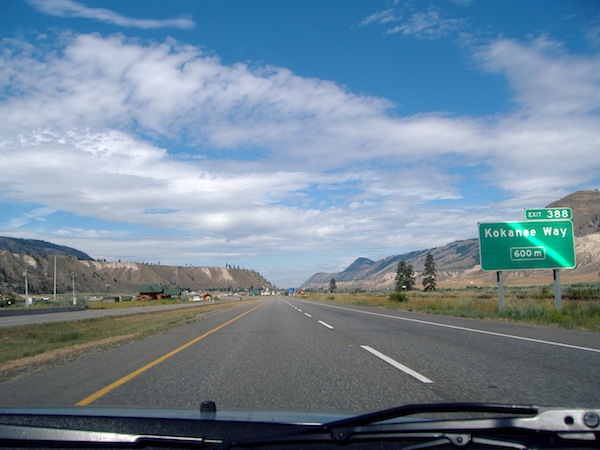
While B.C. residents have been given the go-ahead for local travel, there are still safety restrictions in place, so plan accordingly. (photo by Colin Keigher/en.wikipedia)

What a year so far. For many of us, a driving tour of the Fraser Valley or a trip to a Gulf Island would seem exotic compared to the last months of confinement at home. Which is good, because, while many restrictions are still in place to limit the spread of coronavirus, or COVID-19, provincial parks are now open for day and overnight use and residents have been given the go-ahead for local travel. The B.C. government is expected to further expand travel options this month, when it launches Phase 3 of its province-wide Restart Plan.

For now, health experts are urging the public to pick vacation destinations that are close to home. There are limitations to cross-border travel, including to Alberta, and travelers might need to self-isolate for 14 days upon returning to the province. As well, people are strongly urged at this time not to travel outside of the country, even if it is a day trip to the United States.

When planning your vacation, be aware that some of the businesses that closed when the economic shutdown was announced may not reopen this summer. Also, B.C. destinations outside of Metro Vancouver won’t have kosher restaurants nearby, so those who rely on kosher restaurants when traveling will want to factor that into their planning. Many travelers who keep kosher get around this problem by stocking ahead and preparing meals in the hotel room, campsite or RV.

Travel restrictions may be easing, but social distancing – staying at least two metres or 6.5 feet apart from others – is still in force and probably will remain a standard for the rest of the summer. A limit of 50 people per gathering is required and travelers are being encouraged to continue to “stay within their bubble” of close family or friends at this time.

Automobile and RV travel provide the greatest opportunities for maintaining a social distance. Air and rail travel have additional restrictions attached – passengers not only are expected to maintain the appropriate distance, but to carry a mask for each person on board, and you may be expected to wear it for the duration of the trip.

Cruise ships are not expected to be back in service until Oct. 31, but B.C. Ferries are running limited sailings and at 50% capacity, so book ahead when possible and arrive early.

Air travel in particular comes with an added risk of exposure, since airplanes aren’t generally designed to accommodate social distancing. However, all public carriers have implemented additional cleaning procedures to reduce the risk of passengers’ exposure to the virus.

There are a number of steps that travelers can take to reduce their risks of getting COVID-19 and to make this year’s vacation all the more comfortable.

  • Determine your risk before you go. Seniors and individuals with underlying health issues have a higher risk of complications if exposed to COVID-19. If you, your traveling companions or the people you regularly live with would be considered high risk, consult your doctor first, or consider staying home this summer.
  • Don’t leave home without reservations in place. Pre-plan your trip and find out ahead of time what destinations are open and which aren’t.s
  • If you plan to stay in a hotel or motel, pick accommodations that can allow for proper social distancing. Popular destinations and attractions that are known to be crowded or sold out during the summer months may be a better choice for next year.
  • If you’re camping or staying in an RV, choose parks that have the spacing to allow for social distancing. Don’t be afraid to call the park and ask about its amenities, including the distance between campsites. Some parks are already staggering their reservations to allow for more spacing. B.C. Parks, which began opening its campgrounds last week, announced that it will open campsites with social distancing in mind. That means, as well, that reservations are highly recommended.
  • Plan your meals and stock up. This will reduce your dependence on stores and restaurants, which may be crowded this summer, especially in smaller towns or at roadside stops.
  • Bring cleaning supplies. We’ve spent months sanitizing and polishing our own counter tops to stay COVID-19-free. Don’t forget to carry on the practice while you are traveling.
  • Carry a generous amount of patience with you. It’s been a tough spring for everyone and summer is finally upon us. Be kind and enjoy your trip!

Jan Lee’s articles and blog posts have been published in B’nai B’rith Magazine, Voices of Conservative and Masorti Judaism, Times of Israel, as well as a number of business, environmental and travel publications. Her blog can be found at multiculturaljew.polestarpassages.com.


For more information

  • Destination B.C.: destinationbc.ca
  • B.C. Ferries: bcferries.com/about/projects/covid-19.html
  • Inland ferries: gov.bc.ca/gov/content/transportation/passenger-travel/water-travel/inland-ferries
  • Travel advisories: travel.gc.ca/travelling/advisories
  • B.C. Parks: bcparks.ca and bcparks.ca/covid-19/parks-affected

Feeding the body and mind

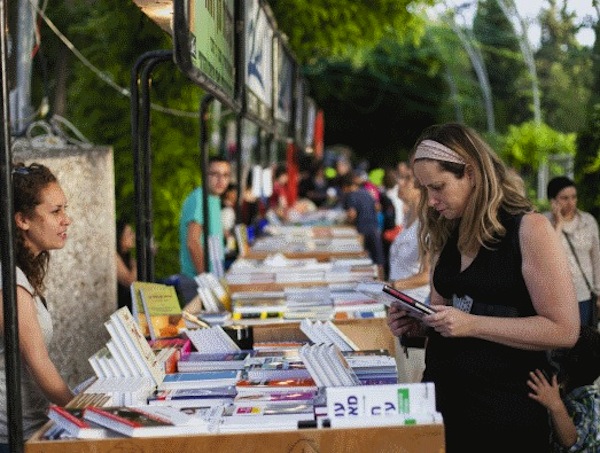
National Hebrew Book Week has taken place every year in June. Its fate for this year, in light of the COVID-19 pandemic, is unclear. (photo from gojerusalem.com)

In Israel, you know Shavuot is approaching when you see the grocery stores setting up displays of pasta and spaghetti sauce. The pandemic shouldn’t change that.

Israelis are obsessed with the thought of eating non-meat meals on Shavuot. I suspect that at the heart of this obsession is the feeling that, even today, many people still consider eating a non-meat meal equivalent to eating less than a full meal. Hence, the worry that there really will be a satisfying meal to appropriately celebrate the holiday.

While there are many lovely explanations about why we eat dairy on Shavuot, they seem to be secondary to some practical considerations. As Rabbi Prof. David Golinkin points out, in the late spring, young calves, lambs and kids are weaned. Thus, historically at this time in Europe, there was an abundance of milk. Bear in mind that refrigeration is a fairly new process and that, prior to refrigeration, farmers needed to move fast with perishable milk. They made cheese and butter, which, likewise, needed to be consumed relatively fast. This dairy excess may have motivated some Jews to eat dairy on Shavuot. (See the article “Why do Jews Eat Milk and Dairy Products on Shavuot?” on the Schechter Institutes’ website, schechter.edu.)

But, eating a non-meat meal on Shavuot is not restricted to the customs of European Jewry. As Jewish food expert Claudia Roden notes in The Book of Jewish Food: An Odyssey from Samarkand to New York, Sephardi Jews in Syria made cheese pies called sambousak bi jibn, Tunisian Jews had a special dairy couscous recipe and, in places like Turkey and the Balkans, Jews prepared a milk pudding called sutlage for Shavuot. (If you don’t want to eat animal-based foods, you don’t need to feel left out. The United Kingdom’s Jewish Vegetarian Society helps you enjoy a variety of traditional, but vegan, cheesecake recipes.)

So from where did all this dairy focus originate? One appealing explanation reminds us of what was supposed to have happened on Shavuot, namely that the Jewish people received the Torah. In Gematria, the Hebrew word for milk (chalav) adds up to 40, the number of days on which Moses stayed on Mount Sinai in order to receive the Torah.

Significantly, studying the Torah and other Jewish texts on Shavuot eve has become a major trend in Israel, as well as in the Diaspora. The big Israeli cities offer any number of options for participating in a tikkun leil Shavuot. These free learning sessions welcome the participation of all of Israeli society, from the religious to the secular, and everyone in between. Those living in smaller towns and on kibbutzim and moshavim likewise hold study sessions on the night of the holiday.

The idea of all-night studying originates with the kabbalists. The earliest members of this group apparently studied with Rabbi Shimon bar Yochai, the author of the Zohar, who lived in the second-century CE. It was this scholar (also known by his initials, as Rashbi) who stated: “G-d forbid that the Torah shall ever be forgotten!” (See the Babylonian Talmud Tractate Shabbat 138b.) By the Middle Ages, the kabbalistic all-night Shavuot study had really picked up steam in places such as Safed.

photo - Studying the Torah and other Jewish texts on Shavuot eve has become a major trend in Israel, as well as in the Diaspora
Studying the Torah and other Jewish texts on Shavuot eve has become a major trend in Israel, as well as in the Diaspora. (photo from pexels.com)

Some claim the reason for studying during the night is found in the midrash stating that it was a way to correct for the Children of Israel’s mistake of oversleeping on the morning they were meant to receive the Torah. Others claim, however, that the Hebrew word tikkun should not be translated as correction, but rather as adorning or decorating the bride. The bride in this instance is the people of Israel and the groom is either G-d and/or the Torah.

According to a late 17th-century Libyan tradition, Shavuot symbolizes the wedding day between the people of Israel and the Torah. According to this tradition, the Torah is the bride, which explains the title of the Libyan Shavuot text entitled Tikkun Kallah. Accordingly, those who read this tikkun are likened to bridal attendants.

The importance of studying on Shavuot is bolstered by the fact that Israel’s Hebrew Book Week (or, in some places, Book Month) begins right after Shavuot. I do not believe this occurrence is coincidental, but rather links us to the idea that we are still the People of the Book and a people of books.

The Israeli book fair has been running for many years. This year, 2020, would mark the 59th annual celebration of Hebrew Book Week and the fair’s age is all the more impressive when you recall how shaky was the Israeli state’s start as an independent entity. Recent years’ events have included Israeli authors appearing in coffee houses, story hours and plays for children, guided walks in Israel’s National Library, the more traditional book signings and, of course, the possibility of thumbing through thousands of Hebrew books.

In brief, our spring holiday offers opportunities for both spiritual and physical nourishment.

Deborah Rubin Fields is an Israel-based features writer. She is also the author of Take a Peek Inside: A Child’s Guide to Radiology Exams, published in English, Hebrew and Arabic.

Jewish papercutting art

The paper cut “Jerusalem Mizrah” by Yehudit Shadur (1928-2011). (photo from shadurarts.com)

Papercuts are created by taking a folded sheet of paper and drawing a design on one side. The folded sheet is then fastened to a wooden board and the design is cut out with a sharp knife. When the paper is unfolded, a symmetrical work of art appears.

Papercutting dates back to the fourth-century CE in China. It appeared in Western Asia by about the eighth century; in Europe by the 13th century and in Turkey, Switzerland and Germany by the 16th century. Papercutting has been a common Jewish folk art since the Middle Ages and, by the 17th century, it was popular for Shavuot.

Shevuoslekh (little Shavuots) and roysele (rosettes or flowers) were used to decorate windows on Shavuot. They were made of white paper, usually, and frequently displayed the phrase, “Chag haShavuot hazeh” – “this holiday of Shavuot.”

According to an article by Sara Horowitz in the recently defunct Canadian Jewish News a couple of years ago, “for Ashkenazi Jews, there was a particular link between papercutting and Shavuot, which stems from an old practice of decorating homes and synagogues with flowers, branches, boughs and trees. In shtetl culture, cut flowers were a luxury – pricey and perishable. And Jewish culture was deeply literate, so paper, especially used paper – was always around and available for artistic repurposing. Some sources cite the objection of 18th-scholar Vilna Gaon to the Shavuot greening as another reason for the development of a Shavuot papercutting tradition. Because church décor involved cut flowers and pagan practices involved trees, the Vilna Gaon viewed such customs as inherently non-Jewish.”

An acquaintance of mine from many years ago, Yehudit Shadur (1928-2011), and her husband, Joseph, wrote a history of the last three centuries of Jewish papercutting, called Traditional Jewish Papercuts: An Inner World of Art and Symbol. The book won a 1994 National Jewish Book Council Award.

Yehudit Shadur was considered to be the one who pioneered the contemporary revival of the Jewish papercutting tradition. Her works are represented in major museum collections. She also had museum exhibits in Israel, England and the United States.

Shadur’s website offers many quotes from the artist, including one from a 1996 exhibit catalogue, in which she states, “What at first seemed a simple craft proved to be an artistic medium of endless possibilities and variations – not only in the arrangement of time-honoured Jewish symbols imbued with deep and often complex significance, but also in the challenges of colour, composition and texture. Eventually, the subject matter of my papercuts went beyond traditional forms and content to express my personal vision as a contemporary artist….”

Some typical symbols in Shadur’s Jewish papercuts – and in those of others – are menorot, crowns (keter Torah, the crown of Torah), columns representing the Temple in Jerusalem, plants or trees (the Tree of Life, the Torah), and grapevines, lions and gazelles (all representing the people of Israel).

For an in-depth article on the history of Jewish papercutting, visit myjewishlearning.com/article/jewish-papercutting.

If you’re looking for an activity to do with your children, PJ Library (pjlibrary.org) offers the book The Art Lesson: A Shavuot Story written by Allison and Wayne Marks and illustrated by Annie Wilkinson, in which “Grandma Jacobs teaches Shoshana how to make traditional papercuts,” and readers also learn to make a papercut. For anyone interested, there are various websites that have papercutting tutorials for kids and adults alike.

Chag sameach!

Sybil Kaplan is a journalist, lecturer, book reviewer and food writer in Jerusalem. She created and leads the weekly English-language Shuk Walks in Machane Yehuda, she has compiled and edited nine kosher cookbooks, and is the author of Witness to History: Ten Years as a Woman Journalist in Israel.

Sidewalk Seder

(photo by Avi Dolgin)

Families on 23rd Avenue in Vancouver found an innovative way to celebrate Passover. Each family brought their own meal and, while there was no sharing of dishes, everyone participated in reciting the blessings, reading from the Haggadah and singing together. The gathering was organized by Talia and Josh Bender, top left with their children, and Elana and Brian Jacobson, top right with their children.


Israel’s soldiers not forgotten

The grave of an unknown soldier on Mt. Herzl in Jerusalem. (photo by Deborah Rubin Fields)

As of Israel Independence Day last year, 23,741 Israeli soldiers had died during their service. The country has come to memorialize its fallen soldiers in one of three ways: 1) most commonly, it provides a grave and a headstone in a military cemetery, with information provided on the soldier, 2) when there is no official grave (that is, when no one really knows where the body of the deceased is), it inscribes the name either on a memorial wall or marker, and 3) it furnishes a grave and a headstone, but little or no information about the deceased is engraved on the stone.

Today, when a soldier dies, the following identification is to be established: the name of the soldier, their army identification number, national civilian identification number, army rank and army unit, as well as their job in the army. When they are buried, the headstone notes the full name of the deceased, their parents’ first names, country of birth (if outside of Israel), date of birth (according to both the Hebrew and Gregorian calendars), aliyah date, date and place of death and age at the time of death. The stone also contains the emblem of the Israel Defence Forces. In a military cemetery, the tombstone’s content reflects a high degree of uniformity. One monument pretty much contains the same details as the next one.

In pre-state Israel and in the War of Independence in 1948, these practices were not yet in place. Young men and women – many of whom had just survived the Holocaust – fought to establish the state. They (and all other soldiers) had little military training. They might not have known Hebrew very well. Not uncommonly, they were the only survivor of their families.

Times were tense, at times verging on the chaotic. The fighting left limited time for socializing, for establishing relationships. So, if a soldier died, it was not surprising to have known them only by their first name. Under the circumstances, most fellow fighters would not have been acquainted with the soldier’s parents, would not have even known their names.

At the end of the War of Independence, about 1,000 of the 4,500 fallen were considered missing. It was the chief rabbi of the IDF, Rabbi Shlomo Goren, who initiated an intensive project of identifying the dead. The establishment of military cemeteries helped the identification process move forward, but, even after that, there remained anonymous soldiers, and headstones with missing information.

Recognizing this situation, Dorit Perry and Uri Sagi started Giving a Face to the Fallen. The organization has been in existence fewer than 10 years. Its team of some 52 volunteer investigators and activists comes from a variety of backgrounds. It includes bereaved family members, friends of fallen soldiers, judges, former career army officers and others. As the organization’s website states, all volunteers believe there is “a duty to remember and, in so doing, to … repay the debt we owe to those who gave their lives for the establishment of the state of Israel.”

All of the volunteers are in a race against time, trying to piece together information on 500 soldiers who fell fighting either in pre-state Israel or in the War of Independence. They ask the following questions: Did you (or maybe your grandfather or an older neighbour) know the fighter we are researching? Maybe you fought with such person either before the creation of the state or in the War of Independence? Maybe you still have pictures of your fighting unit?

The volunteers also try to fill in blanks by asking to see old photos of youth movement activities, aliyah preparation groups (aliyah registration cards have provided investigators with correct birth dates and with the names of relatives, see blog.nli.org.il/en/baumgarten) and family albums. Some soldiers do not even have a photo on file.

Besides trying to find people still alive who were acquainted with these fallen soldiers, volunteers search archives. It is real detective work. When successful, there is the rededication of a tombstone with the added information. To date, out of the more than 800 “untraceable” soldiers, they have pieced together the missing information for 120 of them.

The stories of the fallen soldiers of this period are poignant. Take the example of Tobias Marmolstein, who came from Bitshekov, Czechoslovakia. His father had died in Tobias’s arms at Mauthausen concentration camp. Twenty-year-old Tobias was killed as his Haganah unit fought to open the road to Jerusalem. He had been in Israel for just nine days. He is buried on Mt. Herzl.

Each life story has its twists and turns. For instance, over two decades passed before Shaul Yekutiel Urbach came to be buried in Israel. He arrived in Palestine in 1939 to visit Tel Aviv relatives. When the Second World War broke out, he was unable to return to his large family in Kielce, Poland, so he volunteered to fight for the British. The British sent him to fight in Greece. There, the Germans took him prisoner. The Nazis sent him to do hard labour in Schlesien, Germany. In a revolt against a Nazi camp officer, Shaul was wounded, and he died in a German hospital. After the war, his only surviving brother, Raphael Fishel – the rest of the family had been murdered at Treblinka – tried to have Shaul’s remains brought to Israel. For 22 years, the British stalled in releasing his body from their military cemetery. Finally, in 1967, Shaul was reinterred, on Mt. Herzl.

Uri Sagi has maintained that a blank headstone or one that is missing information makes the soldier invisible. A fallen soldier, Sagi said, should not be invisible.

As time passes, it becomes harder and harder to find acquaintances and family who can fill in the blanks with firsthand testimony. For more information on Giving a Face to the Fallen, visit latetpanim.org.il.

Deborah Rubin Fields is an Israel-based features writer. She is also the author of Take a Peek Inside: A Child’s Guide to Radiology Exams, published in English, Hebrew and Arabic.

About the Passover cover art

As I always do in anticipation of needing an image for the Jewish Independent’s Passover issue, I started with an internet search. This Passover, I was led to creativejewishmom.com, which features creative projects parents can do with their kids. The Crossing the Red Sea Kid’s Craft captured my imagination. Not one to let the lack of children in my immediate vicinity stop me, I collected the materials necessary and learned to use a glue gun. Through the generosity of a few friends, I didn’t have to buy anything to make the diorama on this issue’s cover.

To capture the notion that, in every generation, we are to regard ourselves as if we personally left Egypt, I created a variety of Israelites, from Moses, Miriam and Aaron leading the group, to a Middle Eastern family from an indeterminate era to a 1920s dandy, a Mary Poppins-inspired woman in a fancy black hat and a Chassid. A teen wears headphones, a toddler wears a mouse-ear raincoat and a girl in a wheelchair negotiates the streambed with the help of a Beatnik.


The project took hours. The logistics of taking a photo that would fit within the parameters of the newspaper’s cover took almost as long to figure out as did the creation of the 29 Israelites, two load-carrying camels, two carts full of supplies, six waves and one streambed “staircase.” The wooden donkey near the back of the image is the only figure I did not make – JI production manager Josie Tonio McCarthy donated it to the effort; she bought the carving on a trip to Israel and we both thought it was appropriate to include, as the travelers’ destination is, of course, the Promised Land.

Wishes for a healthy and meaningful Passover, and a chag sameach.

Just a reminder: The Jewish Independent is now on a publishing hiatus. Our next issue will be April 24 or May 1, depending on the COVID-19 situation. Email editor@jewishindependent.ca with story ideas and sales@jewishindependent.ca for ad bookings.

Why not take olive me?

Tori Avey’s Mediterranean Olive Chicken is one of those guest-worthy dishes – impressive, yet easy to prepare and sure to please. (photo by Shelley Civkin)

It’s Thursday afternoon and I’m wondering what the maid is going to make for dinner. Or how I’m going to spend that $70 million Lotto Max I just won. Or when I’ll fly to Mars. See my quandary? I guess you could say I’m in a rut: fish, chicken, steak. Not being a big pasta fan, I seem to fall back on my old regulars every week. If I let him, my husband Harvey would eat pizza and pasta every night.

I remember the ’60s, when my mom had an unwritten weekly dinner schedule. Sundays were prime rib roast with Yorkshire pudding, roast potatoes and salad. The salad was only ever iceberg lettuce (hadn’t farmers discovered romaine, butter lettuce or kale yet??), mixed with cucumbers, tomatoes and green onions. Bottled dressing. The rest of the week’s dinners consisted of chicken livers with onions, salmon, meatloaf or hamburgers, or chicken. Each main was accompanied by the same weekly side dishes. And I mean the same. There was little, if any, variation from week to week. There’s something to say for consistency. With the exception of salad, every other vegetable mom served was frozen and came pre-chopped in a plastic bag. It was the ’60s after all. Occasionally, we’d go to the White Spot on Granville and 67th for a treat, and eat in the car, with the long tray spread across the front seat, attached to the window edges. Exciting times!

It’s funny that the ’60s and ’70s were a time of instant everything – Carnation Instant Breakfast, Pop-Tarts, Shake ’n Bake, Swanson TV Dinners, Nestle’s instant chocolate milk. Even though lots of women were stay-at-home moms and had time on their hands. Not to diminish the hard work they did raising their kids and keeping the house spotless. But let’s face it, lots of women today work outside the home and still do the majority of the childrearing and house chores. There were those privileged few who also had live-in housekeepers (yes, my family was one of them), and still my mother used lots of instant, pre-made foods. She was a good cook, for sure, but had to have a recipe in front of her. I’m like her in that regard. But I digress.

When we got married 10-and-a-half years ago, Harvey and I used to eat out at restaurants three to four times a week. So cooking was easy. Now, not so much. Sure, retirement provides me with more time to explore recipes. But my heart’s just not in it. Actually, that’s not true. I’m usually so busy volunteering that I simply don’t have the time (or inclination) to sit in front of a computer looking for culinary inspiration. Harvey thinks of cooking like a chemistry experiment, so he enjoys it. But as we get older (and sleep way less), we’ve kind of lost the fire in our bellies for cooking.

My father, alav hashalom, used to describe me as a human garbage disposal, because I would pretty much eat anything. He used to say that I’d “eat out of a puddle.” I was the “Give-it-to-Mikey-he’ll-eat-it” daughter. Admittedly, as long as someone else cooks it, I’ll eat it. That was then.

I am still a very easy-to-please eater – as long as the food isn’t too spicy, doesn’t contain too much roughage and doesn’t have nuts, corn, celery or raw vegetables in it. Well-seasoned food is nice, but, at heart, I’m a purist. With a bad gut. Bland food doesn’t bother me; in fact, I’ve been known to enjoy hospital food. After my recent three-month stomach illness, during which I ate only bland food, and very little, I’ve been a bit apprehensive about trying anything different. But, lately, as I’ve been feeling better, I figure it’s time to branch out. Caution to the wind!

As I strolled the culinary landscape that is the internet, I came across a particular chicken recipe by Tori Avey, whose recipes I’ve enjoyed before. Best thing about this recipe is that it’s easy. And, turns out, it’s stunningly delicious. Feast your taste buds. Find it online at toriavey.com/toris-kitchen/mediterranean-olive-chicken.

TORI AVEY’S MEDITERRANEAN OLIVE CHICKEN
(tweaked by me slightly)

3/4 cup chopped green olives (I used queen Manzanilla)
1/3 cup extra virgin olive oil
2 tbsp fresh lime juice
1 tbsp crushed garlic
2 tsp honey
1/2 tsp lime zest
salt and pepper
4-5 lbs chicken pieces, bone in, skin on (I use 6 chicken thighs, as we’re dark meat fans, but white meat would be fine, too)

The recipe also called for red pepper flakes and dried oregano, which I omitted, plus wine to make a sauce afterwards, which I also omitted.

  1. In a mixing bowl, whisk together the chopped olives, olive oil, lime juice, garlic, honey and lime zest. Season the marinade with salt and pepper to taste.
  2. Sprinkle the chicken pieces lightly with salt and pepper. Place chicken pieces in a nine-by-13-inch baking dish. Brush the pieces evenly with olive marinade, using all of the marinade to coat.
  3. Cover the baking dish with plastic wrap and place in the refrigerator for at least two hours (or up to overnight).
  4. Preheat oven to 375˚F. Remove the plastic wrap and cover the baking dish with foil. Pierce a few vents with a sharp knife around the outer edges.
  5. Place the covered dish in the oven. Let the chicken bake for 60 minutes, then remove the foil and bake for an additional 15 to 30 minutes, basting periodically, until well cooked and tender. At the end of cooking, you can broil it for a minute or two to brown the skin (I didn’t bother with this step).

After two bites, my husband pronounced this the best chicken I had ever made. Bar none. And we eat a lot of chicken. Since I usually bake chicken uncovered and it turns out dry, this was a surprising treat – extremely moist, über-flavourful and just as yummy the next day. I’ll probably double the recipe next time around, since it’s worth having enough left for a second dinner. This is one of those guest-worthy dishes – impressive, yet easy to prepare and sure to please. And it makes a nice Shabbat meal, too. I also realized the versatility of the marinade when I tried it on pasta. I’d place bets that it goes well with steak, too. One marinade, three uses. Now that’s a masterful marinade!

You’re welcome. Beteavon!

Shelley Civkin aka the Accidental Balabusta, is a happily retired librarian and communications officer. For 17 years, she wrote a weekly book review column for the Richmond Review. She’s currently a freelance writer and volunteer.

Post-seder meat dishes

After eating all our wonderful family tradition seder dishes, I find it fun to try out meals that I haven’t before and that are not from my cultural background. Here are some you might want to try.

MATZAH MEAT PIE

(Egyptian-born Claudia Roden is the master of Middle Eastern food and author of 20 cookbooks. Now 84 years old, she lives in London. I met her in the 1970s, when she came to Israel and we had a wonderful visit. This is her recipe from the New York Times Passover Cookbook, adapted from The Book of Jewish Foods, which she wrote. It makes four to six servings.)

1 large chopped onion
3 tbsp vegetable oil
1 1/2 pounds ground lamb or beef
salt and pepper to taste
1 tsp cinnamon
1/2 tsp allspice
2 tbsp raisins
2 tbsp pine nuts or walnuts
1 cup warm beef stock
5-6 matzot
1 small egg, beaten

  1. Preheat oven to 375˚F. Spray a pie plate with vegetable spray.
  2. Heat two tablespoons oil in a frying pan and fry onion over medium heat for 10 minutes, until golden. Add ground meat, salt, pepper, cinnamon and allspice. Cook, stirring until meat has browned but is still moist, about 10 minutes. Add raisins.
  3. In another pan, fry the nuts in one tablespoon oil for one minute, stirring until nuts are lightly coloured. Add to meat mixture and stir.
  4. Place beef stock in a large, shallow rectangular pan. Soak matzot one at a time, pressing them gently to absorb the liquid.
  5. Press two or three softened matzot into a pie plate. Place meat mixture on top of matzot. Cover pie with remaining matzot. Brush top with beaten egg. Bake for 30 minutes or until top is golden.

KABSAH
(This recipe comes from It Tastes Too Good to be Kosher by Peter A. Weissenstein and is a Lebanese dish, good for using up leftover lamb or chicken.)

1 pound ground lamb
1 pound ground chicken
4 minced garlic cloves
salt to taste
2 medium, diced onions
1 finely diced large tomato
2 tsp cumin
4 tbsp minced parsley
oil

  1. In a bowl, combine lamb, chicken, garlic, salt, onions, tomato, cumin and parsley and blend.
  2. Heat oil in a frying pan. Spoon mixture into frying pan and fry until well heated. Serve with Israeli salad.

BRISKET MEATBALLS IN TOMATO PASSATA
(Passata is Italian for “go through,” i.e. the cooked tomato puree goes through a special machine. This Italian-influenced dish was created by Hillary Sterling for Vic’s, her New York City restaurant. It makes four servings.)

Meatballs:
1 1/2 cups crumbled, unsalted matzah
2 1/2 tbsp water
1 1/4 pounds ground brisket
1 large egg
1 tbsp olive oil
salt to taste
1 1/2 tsp ground fennel seeds (optional)
1/2 tsp crushed red pepper
pepper to taste

Passata:
1/4 cup sliced garlic
1 1/2 tbsp olive oil
1 28-ounce can crushed, drained plum tomatoes
1/8 cup fresh marjoram leaves
2 1/2 four-by-one-inch orange peel strips
salt and pepper to taste

  1. Preheat oven to 425˚F. Set a wire rack inside a large baking sheet and spray with vegetable oil.
  2. Combine crumbled matzah and water in a bowl. Add brisket, egg, oil, salt, fennel (if using), red pepper and black pepper. Mix with hands until combined. Shape into eight meatballs. Arrange meatballs on sprayed wire rack. Bake until browned, about 22 minutes.
  3. Meanwhile, in a frying pan, cook garlic and oil for passata, stirring often, a minute and a half. Add crushed tomatoes, marjoram leaves, orange peel strips, salt and red pepper. Bring to a boil then remove from heat.
  4. Transfer meatballs to tomato passata in frying pan. Garnish with crumbled matzot, fresh marjoram leaves and chile oil. Serve warm.

Sybil Kaplan is a journalist, lecturer, book reviewer and food writer in Jerusalem. She created and leads the weekly English-language Shuk Walks in Machane Yehuda, she has compiled and edited nine kosher cookbooks, and is the author of Witness to History: Ten Years as a Woman Journalist in Israel.

Holiday candy, cookies

Susie Fishbein’s Butterscotch Matzah Crunch Bars. (photo from kosher.com)

While it is no problem to find candy and cookies that are kosher for Passover, it is also easy to make them yourself. In addition to whatever you may buy at the store, here are some recipes for homemade treats that I enjoy.

MARILYN’S COCONUT MATZAH BALLS
(Marilyn, a former college teacher, now in her 90s, and I were neighbours 40 years ago and are still talk-on-the-phone-daily friends. She came to Israel from Boston in 1949. This recipe makes 20 large balls.)

1/3 cup vegetable oil
1 egg
1/4 cup water or coffee or orange juice
1/2 cup sugar
1/2 cup matzah meal
1/4 cup ground nuts (of your choice)
1/4 cup cocoa
2 tbsp cognac, wine or cherry brandy
1 tbsp coconut

  1. Mix oil, egg, water, coffee or orange juice, sugar, matzah meal, nuts, cocoa and liquor in a bowl. Add more matzah meal if needed to make the dough stick together.
  2. Shape into balls. Place coconut in a bowl and roll each ball in coconut. Refrigerate.

MY FAVOURITE FABULOUS FAUX TOFFEE
(makes three to four dozen two-inch pieces)

6-inch square matzot (enough to cover an 11-by-17-inch cookie sheet)
1 cup butter (I use unsalted pareve margarine)
1 cup brown sugar (I use 2/3 diabetic sugar and 1/3 cup regular)
12 ounces chocolate chips
1 cup chopped nuts

  1. Preheat oven to 350˚F. Generously grease the cookie sheet.
  2. Arrange matzot to cover entire surface.
  3. In a saucepan, combine butter or margarine and brown sugar. Bring to a boil, reduce heat and simmer, stirring continually, for three minutes. Pour over matzot and bake for five minutes.
  4. Remove from oven and cover with chocolate chips, swirling until melted and evenly spread. Sprinkle with nuts. Cool and refrigerate.
  5. Break into pieces when completely cool.

BUTTERSCOTCH CRUNCH BARS
(This is my adaptation from Passover by Design by Susie Fishbein, kosher.com.)

12 tbsp butter or unsalted pareve margarine
1/2 cup brown sugar
4 pieces matzot
1 cup chopped nuts
1 cup shredded coconut
1/2 cup chocolate chips

  1. Preheat oven to 350˚F. Cover a cookie sheet with foil.
  2. Line cookie sheet with matzot, breaking as necessary to fit.
  3. In a saucepan, melt butter or margarine and brown sugar, whisking until the mixture is melted and smooth.
  4. Pour brown sugar mixture over matzot, making sure every surface is covered. Bake for 10 minutes.
  5. In a bowl, toss nuts, coconut and chocolate chips. When matzot are baked enough, remove pan from oven and sprinkle an even layer of coconut mixture on top. Cut into bars while warm.

LIL’S PASSOVER APRICOT SQUARES
(Lil was a friend from our Overland Park, Kan., synagogue. This recipe makes two dozen.)

1 2/3 cups matzah cake meal
1/3 cup sugar
1/3 cup finely ground toasted almonds
1/3 cup oil
2 tbsp lemon juice
1 tbsp grated lemon zest
1 tsp vanilla
2 1/2 to 3 cups apricot preserves

  1. Preheat oven to 350˚F. Grease a rectangular glass baking pan with vegetable cooking spray.
  2. In a mixing bowl, combine matzah cake meal, sugar and almonds and blend.
  3. In another bowl, mix oil, lemon juice, lemon zest and vanilla. Add to dry ingredients and stir with a fork.
  4. Press 2/3 of the mixture on the bottom of the baking pan. Bake for 25 minutes. Remove from oven and cool slightly.
  5. Spread apricot preserves on crust. Sprinkle remaining half of cake meal mixture on top. Return to oven and bake 25 minutes. Cool then cut into squares.

Sybil Kaplan is a journalist, lecturer, book reviewer and food writer in Jerusalem. She created and leads the weekly English-language Shuk Walks in Machane Yehuda, she has compiled and edited nine kosher cookbooks, and is the author of Witness to History: Ten Years as a Woman Journalist in Israel.

Importance of this tradition thing

Passover traditions like the seder connect family and friends, and remind us who we are. (photo from flickr.com)

“I know I read an article somewhere that the greatest number of suicides happen on holidays,” Naomi said to her mother.

Rebecca ignored her. “Just keep lining the shelves.”

“But it makes sense, truly it does. Why are we taking this perfectly clean kitchen apart and practically rebuilding it? Does it say anywhere in the Bible that you go straight to hell if you don’t drop with exhaustion the week before Pesach?”

“This is the way my mother did it, and her mother did it, and one day you’ll do it for your kids, too.”

“You’re kidding yourself. If you think I’d ever inflict all this work on my daughter, you’re crazy. And why doesn’t Joe have to help?”

“He will. He’ll kosher the stove and the sinks.”

“And that’s another thing. Two minutes with a blowtorch and then he’ll pour a kettle of water. Big deal. And Dad doesn’t even do that.”

“He conducts the seder.”

“Another big deal. We take the place apart, vacuum chairs and wash curtains and change over dishes, not to mention 40 kilos of kneidl and all that stuff that gives you indigestion. What am I saying, indigestion? All those eggs – you’re probably giving us a gift of coronary heart disease. Jesus!”

“Naomi, stop it.”

“I’m sick of it. I want to escape like Faye.”

Rebecca’s lips tightened. “Fagie’s coming to the seder, too.”

But Naomi was not to be sidetracked. “Fagie, what a name! No wonder she rebelled. Naomi and Joseph, they’re bad enough. But Fagie, what were you thinking of?”

“It’s a good Jewish name. I was thinking of my grandmother. If you and your sister could have known her, you’d understand. The least I could do was keep her name alive.”

The spotless refrigerator was being polished within an inch of its life. Naomi sat down and watched her mother.

“I thought Passover celebrated freedom from slavery. But every year, you become a slave and you make me one, too. If you think you’re giving me wonderful memories, forget it. As soon as I can leave home, I will. Faye told me the best thing about marriage was being able to run her house like the 20th century. Now we’re in the 21st, for chrissake.”

“I hate it when you talk like that.”

“Like what?”

“So tough. All those profanities. What happened to femininity?” she asked her daughter sadly.

“Feminism came along, only you’ve never heard of it. Dad and Joe get out of everything ’cos they’re men. You’re the biggest chauvinist ever, because you not only condone this status quo, you actually perpetuate it.”

Rebecca sighed. “You don’t understand. Neither does Fagie.”

“You bet we don’t. Here, I’ve lined the last bloody shelf. I’m going out.”

“Where?”

“Out, as in O-U-T.”

“When will you be back?”

“If I had my way, it’d be around May or June – after Pesach.” She slammed the door. Rebecca heard the car start up. Her eyes filled with tears. She was exhausted. “This is gratitude,” she thought bitterly. “Here’s Naomi, barely 18, with her own car. We were married six years before we had one.”

Fagie started her marriage with all the things that she and Sam still don’t have after 27 years. And look how she is bringing up Brendan. Brendan! What sort of name is that? No wonder Fagie and Joel hadn’t wanted to give him a brit. If she and Sam hadn’t insisted, their grandson wouldn’t even have had that. They’d treated his Hebrew name, Baruch, as some sort of joke. Well, maybe in their circles it sounded strange. But at least among the family…. Everything with Fagie was a war. If she bought the child a kippah, Fagie would get upset. If she wouldn’t eat in her daughter’s treif house, it meant another argument. What did you have children for?

She heard loud music from upstairs. The Grateful Dead. No wonder they were grateful – they can’t hear the cacophony, she surmised.

When the key turned in the lock, she didn’t have the strength even to go and say hello to Sam. He wandered into the kitchen. “It looks beautiful,” he said, patting her shoulder and taking in the sparkling clean room.

“To us, maybe.”

“What’s wrong? Fagie been getting to you?”

“Not just her. Naomi’s just as bad now.”

Sam sat down heavily. “I don’t understand it. We sent them to day school – forked out in a year more than our education cost in a lifetime. And what do they give back? Where’s Joe?”

“Can’t you hear? He’s studying. That’s his usual accompaniment.”

“Even so, he’s a good student. He’ll make us proud one day. He’s talking about medicine or law, maybe architecture….”

“We’re kidding ourselves, Sam. Even if we’re proud of him, he’ll be ashamed of us.”

“No, not Joe. Why do you say that?”

“Because we’re fighting a losing battle. The things that are important to us are hateful to them.”

Sam’s shoulders sagged. “Joe’s turning his back on our traditions, too?”

“Not yet. He’s only 14. But he will – give him a few years.”

Wearily, Rebecca made dinner. The three of them ate in near silence. Joe had a book next to his plate and didn’t seem to notice. He had already left for school next morning when Rebecca, Sam and Naomi sat down for breakfast. Naomi avoided her mother’s eyes. “I’m sorry about yesterday.”

“No, you’re not,” Rebecca answered, “you meant it.”

“I just wanted you to understand….”

“Oh, I understand. Your father and I made a decision last night. You tell her Sam.”

He cleared his throat. “Naomi, since Pesach is so distasteful to you, you can go and stay with your sister. Your mother and I are taking Joe and going away for the week. That kosher guest house in the mountains –”

“You mean no seder?”

“What for? For Fagie’s family, who barely tolerate it. For you, who finds it such a chore? You know what it says in the Zohar? It says a little hurt from kin is worse than a big hurt from a stranger. Who needs it?” He pushed his chair back abruptly and, a minute later, they heard the front door close.

Naomi pushed the food around on her plate. “I think you’re overreacting. We always have a seder.”

“We always used to have a seder. We’re not going to do it any more. I didn’t care about the work, the exhaustion, because I thought it meant something. If it doesn’t, there’s no point.”

“It meant something to you and Dad.”

“So, we’ll sit at someone else’s seder. Naomi, go to university. You’ll be late for class.”

An hour later, the telephone rang. “Mum, it’s Fagie.”

“Oh, it’s Fagie today. What happened to Faye?”

“Don’t be sarcastic Mum – it doesn’t suit you. Listen, are you home? Can I come round?”

“What for?”

“I need to talk to you.”

“I’m not babysitting if that’s what you want.”

“Brendan’s at play group. I just want to talk to you.”

“I don’t think there’s anything to talk about. But come if you want.”

Thirty minutes later, Fagie’s car drew up. Rebecca poured her a coffee and pushed it towards her.

“So?”

“It’s about the seder.”

“Naomi didn’t waste much time. What’s wrong? You don’t want your sister’s company for a week?”

“Please listen. It’s not right what you’re doing.”

“Not right? For whom?”

“For anyone. Dad will hate not conducting the seder.”

“He’ll survive.”

Fagie’s voice trembled. “Maybe we won’t.”

“What does that mean?”

“I don’t know how to say this. It’s just….”

Rebecca remained silent, not attempting to help.

“It did mean something to us – me and Naomi – even Joel.”

“What did it mean?”

“It meant we were a family. It kind of bound us together. We need it. Brendan needs it. That once a year at least – to remind us who we are.”

“Who are you exactly? You can go and celebrate Easter. It’s all the same to you.”

Fagie’s voice trembled. “You’re making it hard for me. Mum, it’s true we don’t keep all the things you and Dad do. Most people don’t anymore.”

“And that makes it right?”

“Yes – no – I don’t know. It’s hard for us, to be different from our friends. But we need something. We need to know it’s there for us.”

“Not good enough. What happens when we go?”

“Maybe we’ll take it on then. When there’s no one else.”

“Why would you want to do that, if it’s not meaningful now?”

“For our children. I can’t explain. We can only give up these – traditions – because we know you still keep them. That they’re there for us to come back to. Sure, we ridicule them, but it’s like a family. We insult one another all the time because it’s easier than saying, ‘I love you and I need you.’ Do you understand me?”

Fagie was crying openly now. Rebecca didn’t trust herself to speak.

Three nights later, the candles were lit in the candelabra in Rebecca’s dining room, the flames casting shadows on the snowy white tablecloth. Sam sat at the head of the table and inspected the seder plate with its three matzot, the parsley, saltwater, horseradish, charoset, shank bone and roasted egg. He planned where to hide the afikoman, so that it would not be too hard for Brendan to find. Joe was filling the wine glasses, with the extra big one for the prophet Elijah, while Naomi handed out Haggadot. His grandson sat between Fagie and Joel, his face flushed with excitement. Sam’s eyes met his wife’s, which were moist with unshed tears, as were his.

“Baruch atah,” he began. “Blessed art Thou, O Lord our God, King of the Universe, who created the fruit of the vine.”

Dvora Waysman is a Jerusalem-based author. She has written 14 books, including The Pomegranate Pendant, which was made into a movie, and her latest novella, Searching for Sarah. She can be contacted at dwaysman@gmail.com or through her blog dvorawaysman.com.