Iconic musical at Studio 58

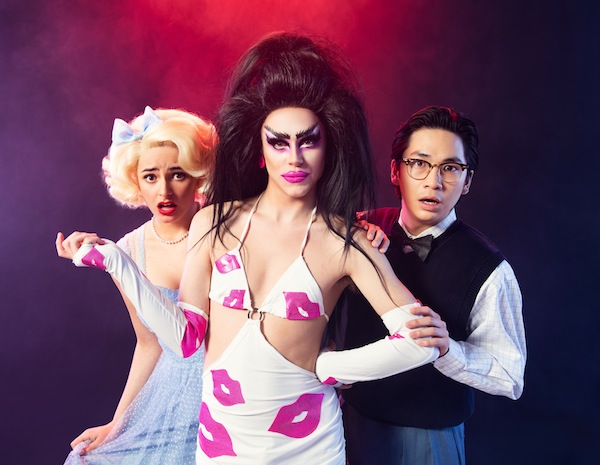
Left to right: Sofie Kane, Zachary Bellward and Angus Yam in Studio 58’s The Rocky Horror Show, with costume design by Donnie Tejani and makeup by Weebee Drippin. (photo by Emily Cooper)

“It’s the fun and freaky escape we’ve all been craving!” announces the press release for Studio 58 at Langara College’s The Rocky Horror Show. And it’s a statement that’s proven true, with an almost sold-out run as the JI went to press this week.

At least two Jewish community members are involved in the production, which takes place live in the theatre Feb. 3-20. Josh Epstein directs and Itai Erdal created the lighting design.

Amid the happy news regarding ticket sales, COVID continues to cause challenges. “We have multiple Plan Bs and we update them often,” Epstein told the Independent. “Enough of the show has been learned that I know, wherever we end up, this incredible group of performers can entertain.”

While Epstein has done other creative works over the past two years, and so has experience dealing with all the pandemic regulations, this show has been “way harder,” he said.

“I was involved in Craigslist Cantata, which was a filmed production; and a workshop of a new musical at Studio 58 I co-wrote, it was basically an outdoor concert. With Rocky Horror, the cast is large, the lighting, sets and costumes are all world-class. We are being extremely careful to follow all regulations, Studio 58 guidelines and avoid infection. We took a week on Zoom when needed and made other adjustments as needed. I also have two kids under 2 – that’s really the harder part!”

Erdal also has been busier than many in the performing arts sector, but he, too, is finding the situation difficult.

“I have been luckier than most designers I suppose, but still, the last couple of years have been a real struggle, both financially and mentally,” said Erdal. “Just last week, I had to postpone my one-man show How to Disappear Completely, which was scheduled to run at Presentation House in North Van – one of the toughest decisions I had to make.

“Making a living as a theatre artist is tough in the best of times,” he added. “Right now, it’s damn near impossible. It’s been tough mentally too – I basically sat at home for a year between November 2020 and 2021. Fortunately, I’ve been writing a play about my military service [in Israel], so that kept me busy and sane for that year.”

That Erdal is also a writer, producer, performer and artistic director (of the Elbow Theatre) must help in his design of lighting for a production, which begins with his reading of the play in question, “taking notes of things like locations, time of day, mood, atmosphere, effects (lighting, gun shots, smoke, haze, etc.).”

He then meets with the director to “hear their vision of the piece and if they have any specific ideas about lighting. Ideally, this is before the set is designed so I have some input into the set design – Is it an abstract set or a naturalistic one? If the set has walls on the sides, then I can’t use side lighting; if it’s staged in the round, it will obviously change my design.”

He takes more notes while watching rehearsals and, for a musical, like Rocky Horror, he needs to know exactly where the performers are for every song.

“Then I will go home and draw the lighting plot – this show has about 150 lights and the crew needs to know where every light is hung, which way it’s facing and what colour or pattern it takes. Then we hang all the lights, circuit them and patch them to the lighting board.

“After the hang is finished,” he said, “we focus all the lights and then we record the cues. A musical will typically have anywhere between 200 and 300 lighting cues, so that will take awhile to record, at least 12 hours. I use light walkers and ask them to stand where the performers will be standing and we record all the cues and put them all in the prompt script so the stage manager can call the show.”

The performers are then shown their every cue, being told “where to stand, making sure the director likes how it looks and the stage manager knows exactly when the cue is called. In a musical like Rocky Horror,” said Erdal, “the vast majority of the cues will be called with the music, so I would give the stage manager a detailed cue list that includes bar numbers so the show can be called musically. After practising all that for a few days, we add the costumes and all other design elements and do a tech dress and then a dress rehearsal. After that, the audience comes in for previews and we do a few last tweaks before we open the show.”

Collaboration is crucial and it’s one of Epstein’s favourite parts of directing this show – working with the students and the creative team. “After a few years away from this process,” he said, “there is nothing that gets me jazzed more than bouncing artistic ideas off each other and then guiding them to life.”

Given the popularity and longevity of The Rocky Horror Show – first staged in 1973 and then made iconic by the 1975 film adaptation – one might be intimidated when faced with staging it, but not Epstein.

“I love and trust my artistic team and give them a lot of ownership over where we’re headed. If we each dream big and make it happen, it will be unlike any other production – and I think we’ve done that,” said the director.

“Usually,” he added, “I avoid any other productions or history of a show but Rocky Horror has had such a unique life. I researched its beginnings, looked for lyric changes, did consultations with different communities, made conscious decisions about context and intention. I really took to heart ‘Don’t dream it, be it’ and have made that a touchstone of our show – that you can be whoever you want to be and, more importantly, be fabulous.

“One thing that’s going to happen,” Epstein concluded, “is we’re going to honour the audience that this show created, in a big way.”

For showtimes and tickets, visit studio58.ca.

Comedy and mental health

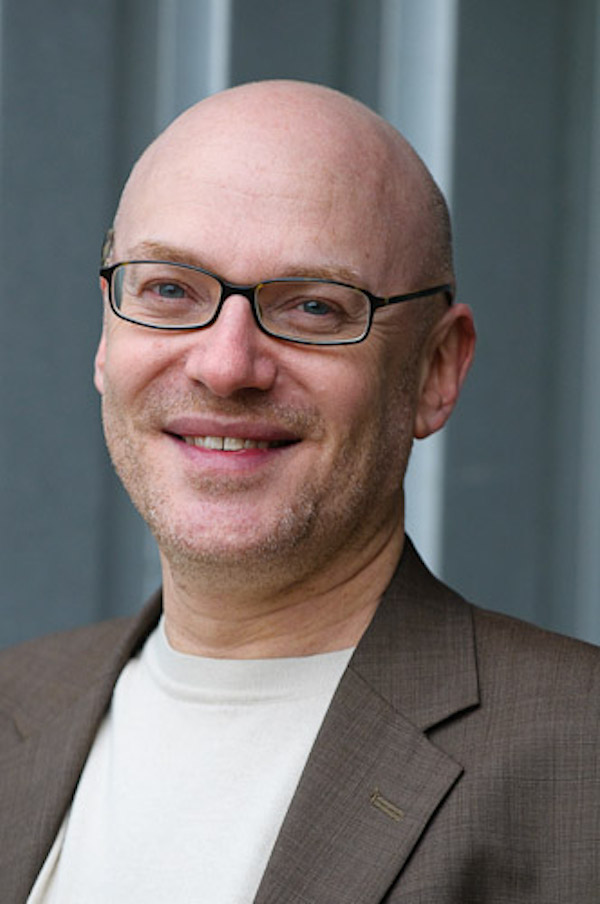
David Granirer (photo from David Granirer)

Vancouver counselor and comic David Granirer has been standing up for mental health, literally, for nearly two decades. His brainchild, Stand Up for Mental Health, is a program that has helped hundreds of people on the road towards addressing and recovering from all sorts of psychological disorders by taking to the stage and performing comedy before live audiences.

The concept came to Granirer after observing his students during a stand-up comedy clinic he taught at Langara College in the early 2000s. While the course had nothing to do with mental health, Granirer noticed that some students experienced psychological benefits by the end of the semester.

“So, in 2004, I thought, why not put this in a package for people who wanted to do comedy but also wanted that life-changing experience? And, since I work in mental health and have a mental illness, this was the natural place to start,” said Granirer, who, in addition to advocating for destigmatizing mental illness, speaks openly about his own experience with depression.

“I’ve had students overcome long-standing depressions and phobias, not to mention increasing their confidence and self-esteem. There’s something incredibly empowering about telling a roomful of people exactly who you are and having them laugh and cheer,” he added.

The idea, which was seeded in Vancouver’s Oakridge neighbourhood, has blossomed to a program that Granirer has run in 50 cities throughout Canada, the United States and Australia – in partnership with mental health organizations in each area.

Granirer has trained nearly 700 comics since Stand Up for Mental Health’s inception. In that time, there have been more than 500 shows for a range of audiences, including mental health organizations, government departments, corporations, universities, correctional facilities and the military. He even created a show for the United States Secret Service in Washington, D.C., in May 2021.

In Vancouver, the Stand Up for Mental Health course is six months long. Classes start by teaching participants how to write stand-up routines; then they spend the next part of the classes working on their acts. Each week, participants write some jokes and bring them in to try in front of the class. Most of the acts are about their mental health experiences.

Classmates do a lot brainstorming together to hone the routines. At the halfway point, each student does a five-minute set. Afterwards, the prospective comics develop a completely new set for their graduation show at the end of the program.

In terms of therapeutic benefits, Granirer said doing comedy builds a comic’s confidence and self-esteem, enabling many to tackle other challenges in their lives successfully. It also helps get rid of the shame many feel about having a mental illness.

“People transform their past trauma into great comedy material,” he said. “In therapy we call that a cognitive shift. All the bad things they’ve been through now make a great act. Instead of feeling ashamed, they now feel proud of what they’ve been able to survive.”

Granirer emphasized that, while much can be explored in the process, the humour has to be clean, and there are taboo elements, such as homophobia, racism and antisemitism, which are off limits.

When the pandemic started last year, Granirer shifted to online classes and shows on Zoom. In 2021, Stand Up for Mental Health has done about 25 virtual shows for organizations across North America. Recently, live classes have resumed.

“The pandemic has also got in the way of my traveling to other cities where I’ve trained groups,” Granirer said. “I just finished training a group in Culpeper, Va., and had to emcee the show virtually instead of in person.”

Granirer has been the recipient of numerous accolades over the years. Among the honours decorating his mantel are an Award of Excellence from the National Council for Behavioural Health, a Life Unlimited Award presented by the Depression Bipolar Support Alliance, a Rotary Shine On Award in Australia for special achievement in mental health, and a Meritorious Service Medal from the Governor General of Canada.

His work for Stand Up for Mental Health has been featured in media throughout the world, including, of course, the Jewish Independent, and also in The Passionate Eye documentary Cracking Up. Granirer is the author of the book The Happy Neurotic: How Fear and Angst Can Lead to Happiness and Success.

The new year promises a busy start for Stand Up for Mental Health. On Jan. 12, Granirer and his team of comics are organizing “an evening of stigma busting comedy” called Speaking of Normal. The Zoom event will be hosted by TSN personality Michael Landsberg. To attend, visit wellnessinstitute.org/speakingofnormal.

The next Stand Up for Mental Health Vancouver class starts on Jan. 25 and is currently recruiting students. Classes are Tuesdays from 10:45 a.m. to 1:45 p.m. More information can be found at standupformentalhealth.com or by emailing Granirer at david@smhcomedysociety.org.

As far as being able to participate, Granirer stressed, “there are no prerequisites, no auditions, and no one needs to have any comedy experience. All they need is a desire to do stand-up comedy.”

He strongly encouraged his fellow Jewish community members to take part.

Sam Margolis has written for the Globe and Mail, the National Post, UPI and MSNBC.

Inspiring songs and stories

Inspired by Story and Song – this was the topic of the JSA Snider Foundation Virtual Empowerment Series session held on Dec. 2, in partnership with the Louis Brier Home and Hospital.

Jewish Seniors Alliance co-president Gyda Chud welcomed the 45 Zoom participants, as well as the 35 Louis Brier residents, who joined to hear Shanie Levin’s stories and Myrna Rabinowitz’s singing.

Rabinowitz opened with a Chanukah song in Yiddish, “Drei Zich Dreidele” (“Spin Yourself Dreidel”), which was followed by Levin reading Sholem Aleichem’s Hanukkah Gelt (Hanukkah Money). In this story, Motl and his brother take part in the beloved customs of a favourite holiday: the lighting of the chanukiyah, eating potato latkes, playing dreidel, and the gift of gelt.

In the course of the program, Rabinowitz sang songs in Hebrew, Yiddish and Judeo-Spanish. She sang “Oh Hanukkah,” a song in Judeo-Spanish about the holiday’s eight candles, as well as more personal songs, including one she wrote on the occasion of her grandson’s birth and one she wrote for her father. She offered the audience a treat by singing the classic and sentimental Yiddish song by the Barry sisters from the 1950s, “Wie Nemt Men a Bissele Mazel?” (“Where Can You Get a Little Luck?”).

Levin chose the story by Abraham Karpinowitz titled Jewish Money, from the book Vilna My Vilna, which is a volume of his work that was translated into English by local storyteller Helen Mintz. Karpinowitz was known for his detailed and vivid descriptions of the city of Vilna and the odd characters who lived there.

The Spice Box is an anthology of Canadian Jewish writers and Levin read an illuminating story written in 1968 by Larry Zolf, who was a CBC personality and writer for the program This Hour Has Seven Days. The story, Boil Me No Melting Pot, Dream Me No Dreams, deals with the difference between the American and Canadian immigrant experiences.

Preposterous Papa, the final story read by Levin, was an excerpt from a book by Lewis Meyer. Meyer’s father grew up in a small town in Oklahoma, which had very few Jewish families. Unable to commute to the synagogue in the larger city, his father bought a house and converted it into a chapel, offering a place for the few Jewish families in nearby towns to socialize and pray on High Holidays.

Rabinowitz ended the program with an upbeat song in Yiddish, the title of which translates as “We Are All Brothers and Sisters.”

Nathalie Jacobs of the Louis Brier thanked the performers and expressed her wish to partner again with JSA in the future.

Tamara Frankel is a member of the board of Jewish Seniors Alliance and of the editorial committee of Senior Line magazine. She is also a board member of the Jewish Community Centre of Greater Vancouver.

Four solos and a duet

Livona Ellis, left, and Rebecca Margolick, right, perform together Dec. 17 and 18 at Scotiabank Dance Centre. (photo by Faviola Perez)

Next weekend, choreographers and dancers Livona Ellis and Rebecca Margolick will première their first collaboration, a duet called Fortress. The Dec. 17 and 18 performances at the Scotiabank Dance Centre also feature four solo works.

Ellis performs Unmoved, “a response to the idea of overcoming the limitations we place on ourselves,” and Margolick’s solo Bunker draws “on themes of memory and the shared history of previous generations of women.” The other two solo pieces were revived last season specifically for them: Peter Bingham’s Woman Walking (away) (1997), danced by Ellis, and Allen Kaeja’s Trace Elements (2000), performed by Margolick. (See jewishindependent.ca/albert-solos-reimagined.)

Both dancers have had the chance to perform for live audiences recently and both have been touring – New York-based Margolick internationally with her own work and locally based Ellis with Ballet BC, for audiences in Ottawa and Montreal.

“From these past two years of experiencing how quickly it can be taken away and experiencing how deeply I miss it when it’s gone, performing has a renewed sense of urgency and importance for me,” Margolick told the Independent. “I’m so excited to perform for a live audience here in Vancouver, especially because last year, when we were about to do this show for a live audience, on the day of the show, we had to switch to livestream only. A lot of energy has been built in this show over the past three years, and I’m looking forward to being able to share it live.”

While Margolick and Ellis have known each other for a long time, Fortress is their first duet together.

“Livona has always been one of the best dancers and performers I know. We trained at Arts Umbrella together all through high school, but, since then, we hadn’t danced together, until now. So much of collaboration happens outside of the studio and so, in a way, I feel like through our friendship and conversations over the past number of years, the work and ideas were already starting to form and it felt natural to transition to a studio together.

“At the time we decided to work together, I had been creating a solo titled Harbour, which was about my grandmother and my relationship to her both in life and death. One day, Livona and I had a conversation about it and she began talking about her grandmother. I was moved by this, and this conversation naturally spiraled into how we’ve started to see our mothers and grandmothers differently; how we see their influence on us; our desires to become mothers one day, being in our 30s now; how dance has changed for us, etc. The conversation was vibrant and honest and there’s a lot of history and love between us and I just asked if she wanted to create together, and she said yes.”

Ellis added, “One of the silver linings about the pandemic is that we both found ourselves in Vancouver at the same time…. I have always admired Rebecca’s work from afar but we’ve never been in the same place long enough to even begin to think about a collaboration. She was working on Harbour and we started speaking about our family and our grandmothers. This sparked the inspiration for Fortress. We were both doing a lot of reflecting during our various lockdowns and quarantines and found we were thinking a lot about who we are as artists and as women. How does our matriarchal lineage affect who we are today?

“We both feel like we are in a moment of change or transformation,” Ellis continued. “We can feel our experience settling in and grounding us in a way that allows us to move forward into the next chapter of our careers. This felt like the perfect jumping off point to create a duet.”

The pair started creating that work this past August 2021, with a residency hosted by the B.C. Movement Arts Society, rehearsing at the Athletic Hall in Sointula. “We are now working with composer Ivan Shopov from Bulgaria to develop the music, and Mimi Abrahams to develop the lighting,” said Margolick.

For Margolick, while both Bunker and Trace Elements haven’t seen any changes choreographically, “as time goes on, and as I evolve, they naturally do as well.”

“Especially for Trace Elements,” she explained, “it’s been a journey since I began working on it with Allen Kaeja. I started to learn more about Jewish history and specifically Jewish leftist and Jewish resistance history, both in the U.S. and Europe. Specifically, in Trace Elements, there is a spirit of resistance and remembrance in the work, countering the text we hear out loud, text of German propaganda and generational indifference to the history of the Holocaust. In that, I think about resistance fighters, countering the narrative that Jews went quietly towards death – they didn’t. That is a history we’re not often told of, and it’s been a part of my Jewish education to learn that history. The work is really spiritual for me and every time I perform it, I feel the spirit of those who fought and those who keep fighting and inspire me to as well.

“More recently,” she said, “I’ve been learning about Jewish women activists and fighters, especially women like Hannah Senesh, Faye Schulman, Bella Abzug, Emma Goldman, Anna Sokolow and others. I can’t really explain into words how this knowledge affects my performance, but I feel it, and it gives me a sense of grounding and inspiration.”

Margolick highlighted the Jewish Women’s Archive and Judy Batalion’s book The Light of Days: The Untold Story of Women Resistance Fighters in Hitler’s Ghettos as resources.

Bunker is also steeped in research. While she premièred the full-length version of the piece (titled Bunker + Vault, which runs 35 minutes) a few weeks ago in San José, Costa Rica, the December performances will include only the first 10 minutes of the work.

“A part of my research for this piece included looking through the archives of the Clara de Hirsch Home for Working Girls at the 92nd Street Y from the late-1800s to mid-1900s,” said Margolick. “The Clara de Hirsch Home was a place where young, poor, mostly Jewish immigrant women were housed and supported with educational resources as they found jobs and worked towards being able to support themselves. These archives were records kept by the staff, with observations and notes about the women who resided there. These observations gave me a window into the lives of the women who lived there, ranging from extreme hardship, repression, mental health issues, Jewish culture, camaraderie, acts of extreme kindness and on and on. Some of these women informed the movements, and spirit of resilience and care in the work.”

Fortress + Four Solos is presented by the Dance Centre and B.C. Movement Arts Dec. 17, 8 p.m., and Dec. 18, 1 p.m. and 8 p.m. For tickets, visit thedancecentre.ca.

Vitaly Beckman at the Anvil

Vitaly Beckman will bring some of his best illusions yet to his Dec. 22 performance. (photo from eveningofwonders.com)

“I have been working very hard on some new illusions that I consider to be some of my best work yet,” Vitaly Beckman told the Independent. “I created a lot of my illusions during

no-show periods, a few of which I plan to include in the upcoming show.”

Vitaly: An Evening of Wonders returns to the stage on Dec. 22 at the Anvil Centre in New Westminster. While it is Beckman’s first live in-person performance in Canada since the pandemic started, he already has performed in theatres in the United States.

“It is certainly exciting to start doing live shows again – both performers and audiences could feel the void of live theatre during the past two years,” he said. “Life is really not the same without theatre.”

But there have been some benefits from the enforced hiatus.

“It is really helpful for the creative process to be able to focus on just one goal, and not be distracted by anything else for a period of time,” acknowledged Beckman. “So the lockdowns were helpful in that regard, as I managed to finish some really great illusions – one involves a sculpted bust, another involves an oil painting that comes to life and another, a matchbox. The latter I created while visiting my family in Israel. Actually, I’ve created a lot of my illusions in the past while vacationing there – it seems that the sunny place boosts my creativity.”

In addition to creating new material, Beckman has been busy in other ways, as well.

“It was certainly a long period to go without doing a single live show,” he said, “but I did a lot of magic for virtual performances and recorded an illusion for Penn & Teller’s Fool Us show, with a second appearance there.” (In that appearance, Beckman once again managed to fool the master illusionists.)

About returning to the stage, he said, “I was wondering if I would be ‘out of shape’ when performing again, however, from recent shows in the U.S., it was like riding a bike. I really enjoyed going back on stage and especially seeing how the audience left the theatre feeling uplifted and full of joy.”

For tickets to see Beckman on Dec. 22, at 7:30 p.m., click here.

Head to Metro for Panto

Lucas Gregory, left, and Daniel Cardoso, in Metro Theatre’s Snow White: The Panto, which runs until Jan. 3. (photo by Nicol Spinola)

“A lot of musical theatre is inherently silly and fun but it still doesn’t reach the level of a holiday panto,” said Daniel Cardoso, who plays the Prince in Metro Theatre’s Snow White: The Panto. An annual treat for more than 35 years, this year’s panto, which runs until Jan. 3, has added significance.

“The past year and a bit has been challenging, not only for the arts community, but for everyone,” said Cardoso. “I got to go to an opening night of a show last week and part of me had forgotten the energy of getting to be in an audience and the joy that it brings to people to get to go to live theatre. I hope that we can do something similar with the panto and that we can act as another step in a return to normalcy.”

“I love being back with the theatre community after so much time away,” said fellow Jewish community member Kat Palmer, who is stage manager of the production. “I think most of the team feels this way. So often actors would be finished working their scenes but would choose to stay a little longer to watch and support their fellow cast members rehearse. There is this sense of returning to what was and that’s been quite moving.”

Things aren’t completely back to normal, of course, as COVID is still is concern.

Metro Theatre requires proof of vaccination, said Palmer. “Usually, pantos have lots of kids and an ensemble – our show has a much smaller cast with no children,” she said. “Everyone – cast, crew and staff – is fully vaccinated. We have taken our inspiration from film sets and have rapid COVID tests on hand. Usually, kids in the audience get to come up on stage – we can’t do that this year. Luckily, there are still lots of opportunities to participate by booing and cheering our demon and good fairy.”

For Palmer, Snow White was “always a favourite growing up – I think mostly because she had black hair like me. But the traditional story is a little dated. Erik Gow, our writer, has done a great job breathing new life into this script. In our version, Snow White is spunky, independent and doesn’t need a prince. She takes charge of her own destiny.”

That said, the prince is still an important part of the story, and it was Palmer who suggested Cardoso try out for the role.

“I’ve known about the Metro Theatre since I was in university and have often gone to see shows there, but the panto this year is the first time I’ve gotten to work there,” he said. “I came to Snow White when Kat Palmer … reached out and asked me to audition for it. I hadn’t initially planned on it but it was an opportunity to work with Chris and Kat and Suzanne again, so I’m glad I did.”

Chris Adams is the director of the production, while Suzanne Ouellette is the choreographer.

Cardoso is a graduate of the musical theatre program at Capilano University and has been working in theatre around Vancouver since 2011. “I was also lucky enough to work on Disney Cruise Line for a few years,” he said. “In 2016, I went back to school to become a registered massage therapist and have been doing that in addition to theatre since 2018.”

While not raised attending shul, Cardoso said his mother and her family are Jewish, “so it is definitely a part of me that I am proud of and something that I think I will always want to learn more about and explore. I know it sounds cliché, especially for a theatre performer, but getting to do a production of Fiddler on the Roof (Gateway, 2012) was a special experience for me in that I got to play in that story and feel like I belonged there instead of just pretending like it.”

For tickets to see Cardoso as the Prince that Snow White (played by Scotia Browner) may or may not need to help her, visit metrotheatre.com. The panto promises to be a “zany and uproariously funny family pantomime,” but that’s not the only reason to check it out.

“The theatre community is hurting right now. We are trying to stay afloat,” said Palmer. “After almost two years of silence, we need your laughter – we need your applause. Please come out and support local theatre.”

Walking through our history

Left to right: Drew Carnwath, Measha Brueggergosman and Sam Rosenthal are the main creatives behind the podcast The Christie Pits Riot. (photo by John Ebata)

On Aug. 16, 1933, Toronto experienced what is viewed as one of the worst race riots in Canadian history. Earlier this fall, the Hogtown Collective, an immersive theatre company, released a four-part podcast that recreates the events of that summer evening 88 years ago.

The eponymously named podcast, The Christie Pits Riot, is seen through the eyes of its 12-year-old protagonist, Joey Rosenbaum. Created by Sam Rosenthal and Drew Cranwath of Hogtown Collective and set amid the circumstances of the Great Depression, Hitler’s rise to power in Germany and escalating ethnic unrest within Toronto, the series also contains an interactive walking tour through the neighbourhood where the riot took place.

The centre of the conflict is a baseball diamond in Christie Pits Park. Tensions began festering during a playoff between two local teams, the Harbord Playground, consisting mostly of Jewish and Italian players, and St. Peter’s, a club sponsored by a local church. Fights erupted and a full-on riot ensued. There were many injuries, but no fatalities.

The mass brawl, which lasted six hours, started after the final out of the second game of a quarterfinal pitting Harbord against St. Peter’s. Two nights earlier, at the first game, a swastika had been displayed by some fans. In the weeks before these games, troubles in Toronto had been brewing more broadly between some Jewish residents and antisemitic groups, primarily those calling themselves the Swastika Club.

A number of Jewish boys and young men who had heard about the swastika incident at the first game rushed to destroy the swastika unfurled at the end of the second. Supporters of both sides, including the Italians, who supported the Jews, joined in the melee.

In the podcast, narrated by Rosenthal, the listener gets a snapshot of life in the city at the time and follows Joey through his day – running errands for his father’s drugstore – along Bloor Street, near the ballpark.

“We wanted the audience to be able to access this story through an emotional, not just historical, perspective,” Rosenthal told the Independent. “Making our hero a young boy allowed us to show the world from his perspective.

“Exploring the deeper issue of systemic racism and antisemitic behaviour can be challenging,” he added. “Our young hero doesn’t understand hatred the way an adult might, so his character provides a means of asking questions about antisemitic racism. We also wanted a way to keep things rooted in the present simultaneously, so as to be able to draw clear parallels to the same problems and issues” that still exist.

The first three instalments take the audience through Depression-era Toronto, with the final episode coming to a head at the fateful game. When the riot breaks out in the story, we find Joey trying to get his friend Rachel home. They are helped along the way by Nala – voiced by Juno Award-winning soprano Measha Brueggergosman – who encourages Joey to stand up for what he believes.

In addition to providing her vocal talent, Brueggergosman was the podcast’s musical supervisor.

In releasing a theatrical production during the pandemic, the creators spotted a chance to provide audiences with a safe and tangible way to experience where the riot happened via the walking tour.

“To look out at Christie Pits Park and imagine what it would be like being in the middle of 1,000-plus people fighting is a terrifying thought, and so it makes the story land in a more visceral way if one can actually be there while listening in,” Rosenthal said. “Since my grandfather owned a store at the corner of Bloor and Manning, the walking tour is a perfect addition to share some of my family history within the broader scope of this chapter from Toronto’s history.”

Several scenes in the story are situated in the drugstore operated by Rosenthal’s grandfather from the early 1920s until the late 1950s.  Rosenthal’s father, Joseph, grew up in the neighbourhood and worked there. Joseph was born after the riot, and knew about it from his own father.

“My dad shared many stories of being a young boy in a deeply divided antisemitic Toronto,” said Rosenthal. “When he told me there were once signs posted at the Balmy Beach Club that said, ‘No Jews or Dogs,’ and that there were Swastika Clubs in the 1930s, I felt compelled to tell this story. My father and his friends were often brutalized or threatened whilst walking home from school. I wonder how many Toronto residents know this about our city’s past, and why it seems still entrenched in our present.”

Rosenthal’s hope for the production is that younger listeners not only learn that the riot was a dark chapter in Canadian history, but see it as a way to honour previous generations who paved the way for the diverse culture that Toronto is celebrated for today.

The Christie Pits Riot is available online from multiple providers. The Anchor app can be used by anyone interested in taking the guided walking tour through the Toronto neighbourhood where the riot transpired – the app can be found at hogtownexperience.com.

Sam Margolis has written for the Globe and Mail, the National Post, UPI and MSNBC.

The quirky stories of Israel

The images posted at facebook.com/sipurisraeli highlight the diverse stories and people covered on the Israel Story podcast, which is in its sixth season.

The podcast Israel Story started its sixth season in September. The show, which offers a long-form journalism approach to quirky stories of the people and events in Israel that do not often appear in the headlines, has been called the Israeli version of This American Life by none other than Ira Glass, the host of the National Public Radio hit.

Started in 2011 and originally intended for family and friends, Israel Story has grown to attract thousands of listeners. It is one of the most popular Jewish podcasts in the world.

The Independent recently caught up with Zev Levi, managing producer of the podcast, for some behind-the-scenes insight on the behind-the-scenes show about Israel – and to ask him what’s in store for upcoming episodes.

“The rest of this season is packed with moving stories about identity, healing, looking back, and looking forward. We’ll hear about the everyday lives changed forever by a national tragedy, the space project that lifted hopes around the world, an unlikely pro sports team, a soldier’s unexpected journey to tabletop gaming, and an internet scam that made people’s blood boil,” Levi revealed.

Already featured in episodes this season have been the story of a day in which all nine of the show’s producers spent from early morning to evening interviewing various and sundry characters at the historic Jerusalem International YMCA; an effort to save a 2,000-year-old mikvah; and a look at the life of Bung-Ja Ziporah Kim Rothkopf, the woman who opened the Seoul House restaurant in Jerusalem and started KOKO, a Korean kosher food brand.

image - from facebook.com/sipurisraeliEver since its beginning, the show has covered the stories of a wide range of groups living in Israel: Jews, Muslims and Christians; Israelis and Palestinians; Ashkenazim and Sephardim; Russians, Bedouin and Ethiopians; Filipino foreign workers and Eritrean refugees; Orthodox and secular; political hawks and doves.

And, not surprisingly, according to Levi, there is an endless source of material for future shows based on Israel, a land of storytellers. Levi said that ideas for topics are supplied by listeners and others, who send in potential stories. The team of producers is also encouraged to chase narratives they think should be told. He said the team prides itself on investing the time and energy to “find the perfect stories that shine a spotlight on what it’s like to be here. We look for the everyday lives that bring listeners to Israeli streets and fill their lungs with Israeli air.”

He added, “We see our show as a platform to display the complexities and depth of living in this amazing part of the world. And there are always unique subcultures and norms and clashes to explore. We live in an area where there are so many different ways to define yourself – religion, culture, politics, race, language – and there are endless permutations of the intersections and clashes between them. The story of how people make themselves is something anyone around the world can relate to and connect with.”

image - from facebook.com/sipurisraeliLevi elaborated on the process the team undertakes to determine what stories will be aired. Most episodes run roughly an hour or more with some bonus segments added.

“To paraphrase [Albert] Einstein, a story should be told as succinctly as possible, but no more succinctly than that,” said Levi. “While pitching a story, we generally have an idea of how long it will take to tell it, but, during the production process, there are countless examples of a story being way more complex than first thought, and needing more time. And countless examples of a story being much more simple, and being trimmed down, or even killed completely.”

The team would prefer to curate several stories that speak to different angles of a single theme, or to restrict themselves to three 20-minute stories in each episode, said Levi. However, they feel such an approach would not do justice to the stories themselves.

“When it comes to holding interest, our first defence is our own team,” he said. “We each dedicate time to analyzing when a story loses its engagement, and what we (as listeners) would need to avoid that. Several producers will often weigh in on drafts to make sure the best, most-engaging version of a story is what makes it to listeners. But all our stories are about people. People struggling to be authentic. People struggling to heal. People struggling to achieve. And we can all relate to that.”

Israel Story was founded by Dr. Mishy Harman, who serves as the podcast’s host and chief executive officer. The show can be heard on Apple Podcasts, Spotify and Stitcher, among other streaming services.

Sam Margolis has written for the Globe and Mail, the National Post, UPI and MSNBC.

Odd Couple now on

Left to right: Rob Stover, Kimball Finigan, Adam Abrams, Michael S. Weir and Adrian Maxwell in Metro Theatre Vancouver’s The Odd Couple. (photo by Tracy-Lynn Chernaske)

Neil Simon’s famous comedy The Odd Couple opened Oct. 30 on the Metro Theatre Vancouver stage. It runs until Nov. 14.

We meet divorced sportswriter Oscar Madison (played by Rob Stover) as his buddies arrive for their weekly poker game. One of the friends welcomed into Oscar’s messy abode is news writer Felix Unger (played by Adrian Maxwell), who is also divorced, but exists on the opposite end of the neat-and-tidy spectrum. The fact that the men are opposites in so many ways does not prevent Oscar from inviting Felix – who is so depressed it worries Oscar – to move in. Of course, they drive each other nuts.

Jewish community member Adam Abrams plays Roy, a regular at Oscar’s Friday night poker games, in the Metro Theatre production, which is directed by Catherine Morrison.

Abrams has been a part of the local theatre scene for more than 20 years, including many musical theatre productions. “I also played Richard in North Van Community Players’ The Trouble With Richard,” he told the Independent. “A personal favourite was portraying Abraham Goldstein, builder of the Sylvia Hotel, in Kol Halev Performance Society’s Two Views from the Sylvia, back in 2017. That was my last time on the stage, and it’s so great to be back, as part of the return of live theatre, after such a long and trying time for all of us.”

He said that, in real life, he is more like Felix than Oscar.

“My wife Christine will vouch for that – and would readily admit to being much more of an Oscar!” said Abrams. “When Felix is fussing over his London broil dinner or imploring Oscar’s guests to use a coaster, I very much see myself, the chef of the family and the one who is always keeping things tidy. After years of sharing a home, Christine and I have negotiated a much more successful arrangement than anything seen in the play. But our relative household peace has depended on us both accepting each other’s style to some degree.”

As for the character he plays in the show, Abrams said, “I like Roy, though he is somewhat crankier and more blunt than I’d be. He’s a voice of reason for Oscar, imploring him to do what’s right – stop gambling, and pay his debts. No surprise, as he’s Oscar’s accountant!

“My favourite scene in the show is the date with the Pigeon sisters, Oscar’s upstairs neighbours,” added Abrams. “The conflicting attitudes to divorce – a mere inconvenience to the sisters, pure heartache to Felix – and how he both derails Oscar’s hopes for the evening and endears himself to the sisters, is a delight. And, while it’s hilarious, there’s an undercurrent of true emotion that I find touching even as I’m laughing, which I do every time I see it!”

For tickets to the live theatre production of The Odd Couple, visit metrotheatre.com/the-odd-couple, email tickets@metrotheatre.com or call the box office at 604-266-7191.

Reviving history in theatre, song

Surplus Production Unit’s Briony Merritt. (photo by Alex McLean)

No matter how well we document history, it matters little unless people are aware of it. Two very different productions at this year’s Chutzpah! Festival, which began this week, were born of personal discoveries of documents from the past – in one case, a trial transcript; in the other, Yiddish compositions. The artists’ unique interpretations help ensure that important aspects of our culture are not forgotten.

Halifax-based Surplus Production Unit, under the direction of Alex McLean, performs A Timed Speed-Read of the Triangle Shirtwaist Factory Fire Trial Transcript on Nov. 21 and 22 at the Jewish Community Centre of Greater Vancouver, in the Wosk Auditorium. Montreal’s Josh “Socalled” Dolgin performs music from his album Di Frosh with a local quartet at the JCC’s Rothstein Theatre Nov. 19 in a concert that will also be livestreamed.

“I had never heard of the Triangle Shirtwaist fire until 2010, when I was doing research for an MA in Toronto,” McLean told the Independent. “I was totally fascinated by the case and got especially swept up in the extensive trial transcript.”

Triangle Shirtwaist Company owners Max Blanck and Isaac Harris were put on trial for manslaughter after a fire at their factory on March 25, 1911, killed 146 people – mostly women and girls – in part because one of the exit doors was locked.

“I think the gender politics were what initially stood out to me – it was an all-male jury, the case hinged on the discrediting of female witnesses, and it was all taking place at a time when women weren’t able to vote in either Canada or the United States. I also knew that this was a time when the labour movement was massive globally and that the Ladies Garment Workers Union had waged its major strike just a couple years earlier. The way that this all reads as subtext in the trial transcript was fascinating to me. I knew that I wanted to work with the material somehow, but wasn’t sure how.”

In 2011, during the 100th anniversary year of the fire, McLean saw an interview with Charles Kernaghan, director of the Institute for Global Labour and Human Rights, who mentioned the Hameen factory fire in Dhaka, Bangladesh. “And then there was the Tazreen factory fire in 2012 and then the collapse of the Rana Plaza building in Dhaka in 2013,” said McLean. “It all made the record of what happened in New York in 1911 hauntingly relevant.

“Somewhere around this time,” he said, “I got a small grant to create a verbatim script from the transcript. I started work on it but it felt lifeless, like a bad ‘historical drama.’ So, I gathered a few actors who I knew and trusted and who were interested in the material. We started playing around with ways to approach the material that felt honest and the current production grew from there.”

McLean believes “it is endlessly worthwhile to think about the hidden costs in our global economy and the conditions under which so many of the products we consume are created.” At the same time, he added, “I was very aware that my life – like those of my colleagues – was radically different from the lives of the people in the trial transcript. None of us are immigrants, none of us are Jewish or Italian (as were almost all of the Triangle victims). As middle-class Canadians in the 21st century, I felt that we had to acknowledge the gulf between us and those New York factory workers in 1911. We had to build this distance into the structure of the show, and so this idea emerged that we would actually sit the trial transcript on the stage and the performance would be a group of people engaging with this historical record, rather than trying to represent it realistically. This felt like the only way we could approach the material respectfully.”

photo - Briony Merritt, left, Kathryn McCormack and Richie Wilcox bring A Timed Speed-Read of the Triangle Shirtwaist Factory Fire Trial Transcript to the Chutzpah! Festival Nov. 21-22
Briony Merritt, left, Kathryn McCormack and Richie Wilcox bring A Timed Speed-Read of the Triangle Shirtwaist Factory Fire Trial Transcript to the Chutzpah! Festival Nov. 21-22. (photo by Alex McLean)

Throughout the trial, said McLean, “witnesses, especially women, were treated with palpable disrespect. Max Steuer, the lawyer defending the factory owners, repeatedly tried to cast suspicion on witness testimony. This came to a head in his cross-examination of Kate Alterman, the ‘star witness’ for the prosecution. Knowing that Alterman’s English wasn’t great, Steuer had her repeat her testimony multiple times to make it appear rehearsed. This ultimately worked for him.

“There’s also a fascinating class dynamic at play: Steuer and his clients, Isaac Harris and Max Blanck, were themselves Jewish immigrants who had worked their way up in New York’s garment district. While at times they appear callous towards the victims and survivors, there is also this sense that they come from the same place. The prosecutor, on the other hand, comes across as much more of a patrician and, at times, this results in condescension. To him, the victims are helpless little girls, while the defence tries to portray them as streetwise conspirators plotting their revenge. Their actual messy humanity gets lost in the crossfire.”

Justice was not served by the trial, nor other legal measures, but there were positive changes that resulted from the tragedy.

“Part of what the case revealed was that workplace safety regulations at the time had no teeth, so the silver lining was that a host of new laws were introduced,” explained McLean. “Frances Perkins, the first woman to serve in a U.S. cabinet, actually witnessed the Triangle Shirtwaist fire and described it as a pivotal moment in her life. She became secretary of labour under FDR [Franklin D. Roosevelt] and was a major player in ushering in the New Deal.”

In terms of lessons learned, however, “we seem doomed to continually forget the inequality that animates our world,” he said. “Going to work under dangerous conditions seems like a reasonable choice to many people in impoverished conditions. As long as those conditions exist, workplace tragedies are likely to occur.”

He added, “There’s a fascinating historian of the Triangle Shirtwaist fire, Michael Hirsch, who argues that it’s a mistake focusing anger and blame on the factory owners. He uncovered the names of several bodies that were unidentified in 1911, and he makes a yearly pilgrimage to the victims’ graves…. To me, Harris and Blanck do appear negligent, but acknowledging systemic imbalances is also important. Economic inequality has proven a difficult problem to solve, but that doesn’t give us the right to forget about it. My sense is that we need a new New Deal today.”

A love of Yiddish music

Josh Dolgin has many artistic interests and musical styles – from composing to photography to puppeteering, from hip-hop to musicals to Yiddish music. As different as they may be, Dolgin said, “all the passions stem from an attraction to ‘realness,’ to things that just deeply move me, spark inspiration, speak to my soul.”

For him, the 2018 album Di Frosh “was a kind of return to a pure, more ‘traditional’ Yiddish music, even though it’s a project of ‘new’ music. I had experimented with using Jewish music sounds in contemporary ways,” he explained, “sampling, mixing, collaborating and fusing to create hip-hop, rap and funky pop music. In so doing, I became rather immersed in the form – in klezmer, in Yiddish folk, art, theatre music, cantorial sounds from the synagogue and Chassidic music – by collecting old records looking for sources. Listening to all that music, I eventually fell in love with the source material … I wanted to play and sing it! I eventually started learning the songs as a pianist, as an accordionist and singer. I wanted to just perform that music, without mixing it, without adding beats, just to play and sing it as is.

photo - Josh “Socalled” Dolgin performs Yiddish music from his album Di Frosh with a local quartet Nov. 19 in a concert that will also be livestreamed
Josh “Socalled” Dolgin performs Yiddish music from his album Di Frosh with a local quartet Nov. 19 in a concert that will also be livestreamed. (photo from Chutzpah! Festival)

“In the meantime, I started getting into four-part harmony singing and collecting choral arrangements, then directing choirs at synagogues and music camps. That love of harmony mixed with my love of singing Yiddish songs and I thought, hmm, it would be cool to present this repertoire in an almost classic style, maintaining all that beautiful real harmony from arrangements from the ‘time.’ Some friends and I created new arrangements based on old sources – all the arrangements are ‘new,’ this repertoire for string quartet never existed before, so it’s ‘new’ music, but it’s more traditional than my fusion/pop experiments.”

Dolgin went to Hebrew school and was raised Jewishly. But, while he “adored” the “holidays and rituals and foods and songs,” he said, “I never was very inspired by the religious aspect of my cultural history, or the establishment ritual practice. When I started to find old records of Yiddish music looking for samples to make hip-hop music, I had stumbled on a part of my cultural identity that I could take pride in, that spoke to me, something I had never been exposed to with the more ‘mainstream,’ ‘modern,’ ‘reform’ version of Judaism I had experienced as a child.”

Musically, he started piano lessons at a young age and “was bribed and forced to keep at it, until I finally was allowed to study ‘jazz,’ i.e., not classical music. Then I got into the ‘rap music’ of my peers, and wanted to participate in that, to make a current music from today. I started looking into studio production techniques, sampling, using drum machines and computers to sequence and combine sounds and compose. Finding the Yiddish sounds and repertoire gave me a voice in hip-hop culture.”

Dolgin has always been one to seek out things that were “off the beaten path” and “a bit more hidden.”

“That led me as a teenager, in the days before the internet, to develop a real love of Brazilian music and funk, by digging and exploring,” he said. “The digging required to find sounds to sample in hip-hop led me unearth … a whole universe of Yiddish music and culture. I never heard Yiddish growing up! I had no idea! It was so fun to discover these treasures of my own cultural history, these sounds, modes, rhythms, poems and songs that were developed by my Eastern European ancestors. I dug around and really got into trying to find as much as I could, and that was more fun for me than having a whole repertoire handed to me on a silver platter.”

Dolgin chose his favourite songs for Di Frosh, ones “that weren’t the same top five Yiddish ‘chestnuts’ that everyone has already sung. Even though it’s not at all a well-known repertoire, there are a few songs that keep coming up, and they’ve been sung and presented enough, thank you very much. I wanted cool, rare repertoire. These could be things I heard from old records, or things I found as piano and choral arrangements on paper that could be brought to life in new arrangements.

“I thought it would be nice to have a range of repertoire from the various sub-genres of Yiddish music, from theatre music, from folk song, from Chassidic song, from postwar things, Holocaust songs, and even some ‘originals’ from contemporary Yiddish writers. Those ‘high concept’ factors were at the back of my mind when putting the program together, but it was mostly just a very subjective process of picking my favourite songs, the songs that blow my mind lyrically, harmonically or melodically.”

He went through another selection process when he was asked by a bass player from Vienna to do some Yiddish songs with a big band. Dolgin said he picked “out a whole new repertoire of more Yiddish songs I was interested in presenting, sent charts and recordings to them and they created arrangements for an actual 19-piece big band! I showed up in Salzburg and, after one rehearsal, performed with them to a sold-out jazz festival audience – it was magical! We have since done the show several times, including this summer with the Toronto Jazz Orchestra for the Ashkenaz Festival.”

They were about to travel with the show in Germany and Austria when COVID struck; the plan is now for a spring tour. During the lockdowns, said Dolgin, “I did manage to write quite a few more arrangements of Yiddish songs for string quartet, so hopefully a Frosh 2 is possible.”

The best part of this project, he said, has been “meeting new string quartets around the world and bringing this new repertoire to them, and then bringing the music to new audiences who may not be too familiar with these songs, with these sounds.

“After recording the music to make the Di Frosh record, with the amazing Kaiser Quartett based in Hamburg,” said Dolgin, “I’ve since presented this music all around the world with ‘local’ quartets: in Vienna, in London, in Venice, New York, Toronto, Montreal, Boston, Paris…. I’m very excited to be in Vancouver and meet Elyse Jacobson and the musicians she will put together for this program.


The Chutzpah! Festival opened Nov. 4 and runs until Nov. 24. For tickets and the full lineup, visit chutzpahfestival.com or call 604-257-5145.