Skip to content
  • Home
  • Subscribe / donate
  • Events calendar
  • Business Directory
  • FAQ
  • News
    • Local
    • National
    • Israel
    • World
    • עניין בחדשות
      A roundup of news in Canada and further afield, in Hebrew.
  • Opinion
    • From the JI
    • Op-Ed
  • Arts & Culture
    • Performing Arts
    • Music
    • Books
    • Visual Arts
    • TV & Film
  • Life
    • Celebrating the Holidays
    • Travel
    • The Daily Snooze
      Cartoons by Jacob Samuel
    • Mystery Photo
      Help the JI and JMABC fill in the gaps in our archives.
  • Community Links
    • Organizations, Etc.
    • Other News Sources & Blogs
  • JI Chai Celebration
  • JI@88! video

Recent Posts

  • JSA leads BC-wide campaign
  • Hamas a “net disaster”
  • Does Bill C-9 matter?
  • What belonging means
  • Make time to congratulate
  • Connecting with nature
  • Mikvah at Chabad now open
  • Whistler welcomes Chabad
  • Companionship is vital
  • Preserving our stories
  • Bard’s varied play mix
  • Sokoloff releases new album
  • Defying expectations
  • Group buying platform wins
  • Community milestones … July 2026
  • The first Jew buried in BC
  • SFU honours Gloria Gutman
  • Lifting people’s spirits
  • Wedding a ray of light
  • Indigeneity and Zionism
  • Rule of law broken: councilor
  • Football and its roles
  • The burden of defence
  • Fish Café returns after fire
  • All right in what goes wrong
  • Nuns & mermaids at TUTS
  • Camp offers holiday retreat
  • Students and mentors inspire
  • Once-in-a-lifetime trip
  • 100 dancers, one heart
  • Money for the sciences
  • What “Jewish food” means
  • Have a cookie, schnitzel too
  • Federation now across BC
  • Israel fighting for its existence
  • Deal strengthens Iran

Archives

Follow @JewishIndie
image - CJN box ad Rockowers 2026

Category: Arts & Culture

Memorial reflects loss, hope

Memorial reflects loss, hope

On Jan. 26, Robyn Driedger-Klassen (soprano), Joseph Elworthy (cello), Mark Ferris (violin), François Houle (clarinet) and Mark Fenster (baritone) will be joined by Lani Krantz (harp) and Kozue Matsumoto (koto) in a performance of Renia Perel’s Songs of the Wasteland. (photo by Lindsay Elliott)

On the eve of International Holocaust Remembrance Day, Jan. 26, Renia Perel’s Songs of the Wasteland will be presented by the Vancouver Academy of Music (VAM).

The musical memoir is written for two singers and an instrumental ensemble. The first part, “From Tragedy to Triumph,” features songs of remembrance, including to the children who died in the ghettos and to Perel’s family who were killed – she and her sister Henia were the only ones who escaped. The second half, “Survival,” begins with a song Perel dedicates to her husband, Morris, who passed away in 1999, and concludes with “Jerusalem,” Perel’s hope that, one day, there will be no more war.

“I regard Songs of the Wasteland as an epochal work of art that hopefully will in future be as commonly heard during times of Holocaust remembrance as say Britten’s War Requiem during Nov. 11 observances,” Joseph Elworthy, executive director of VAM, told the Independent. “This was one of our far-reaching goals when I first discussed with Renia about mounting the production on Jan. 26, the eve of the UN International Holocaust Remembrance Day.”

Perel approached Elworthy in December 2014 about collaborating with VAM, he said, “as she held a long-standing respect and admiration for the quality of music education we deliver. Songs of the Wasteland was the perfect instrument to realize this desire.”

And Perel’s work connects to VAM’s vision and purpose.

“VAM believes in the transformative power of music to influence our personal development and daily existence,” he explained. “Music has the power to express the inexpressible while allowing room for the listener to formulate their own inner narrative. It is not surprising that Renia turned to music to express her sense of loss and remembrance for the victims of the Holocaust.”

Elworthy also noted, “It is important to point out that VAM is first and foremost an educational institution and not a concert-presenting organization. This allows us more liberty to choose repertoire and projects that will bring educational value for our 1,400-plus students, as well as the community of music appreciators throughout Greater Vancouver.”

This will only be the second public presentation of the work. Elworthy – who, in addition to being executive director of VAM, serves as the head of the academy’s cello department – will take on the cello part.

“The cello so closely resembles the timbres of the human voice, therefore making it a perfect instrument to capture the beautiful nuances of the Jewish liturgical tradition, which are so rooted in song,” he said. “The cello writing for Songs of the Wasteland is exquisite and greatly reminds me of established cello masterpieces such as Max Bruch’s Kol Nidrei and Ernest Bloch’s Schelomo.”

Elworthy will be joined by VAM faculty members Mark Ferris (violin) and Robyn Driedger-Klassen (soprano), as well as Mark Fenster (baritone), François Houle (clarinet), Lani Krantz (harp) and Kozue Matsumoto (koto).

“We are fortunate to have Mark Ferris (VAM violin faculty and concertmaster of the Vancouver Opera Orchestra) as the music director of this production,” said Elworthy. “Mark was part of the original cast and has great insight to the totality of this composition.”

Also part of the original performance was Fenster, the eldest child of Holocaust survivors.

“When Mark Ferris called me and described the piece, I was immediately interested, mainly because of my own family heritage and musical connection with Yiddish and cantorial singing,” said Fenster about why he chose to participate in the 2010 presentation. “Then, later, when I met with Renia and discovered that she and my father lived quite close to one another in prewar Poland, this was an even stronger reason – I could, with my small part, possibly help these two souls, and the many others this piece would surely touch, find some peaceful healing through the expressions in this powerful piece.”

While the music and message of the work remain the same, Fenster said, it somehow “feels more intense this time. I cannot say why. Perhaps because there seems to be more publicity, more media coverage, more interest in the story behind the music, the composer’s journey and her wishes, or because there seems to be intolerance and hatred quite present in the news today. Also, since it is being performed at the VAM this time rather than the Telus Theatre in the Chan Centre, I also feel this may offer a more intimate performance experience for the audience.”

Fenster said that, in performing the work again, his “feelings around the healing and peace-wishing elements of the piece have grown stronger, more profound. Otherwise, I still feel very much as I did in 2010. I still see my mom and dad, their (our) families, and all they went through. And I also see and feel the hurt so many still carry, the ripples from these times and how they have projected into our beings, no matter which faith or personal connection. We’re all affected.”

What also hasn’t changed for Fenster since 2010 are the emotions that Songs of the Wasteland invoke.

“The most difficult work for me in singing this piece is being able to share this art with an honest, open heart, but without it drawing me to tears,” he said. “It took me several weeks of practise in 2010 to get past the tears, and it hasn’t become any easier this time…. I hope we all realize that it doesn’t matter which flag is flying or being torn down, the result is always the same – deep experiences of loss, pain, for us all, from generation to generation. I hope this heartful piece penetrates our fears and leads us to the light that guides us to see love in everyone. That is what I believe is offered in all the scriptures in every tongue.”

One of Fenster’s personal and professional goals is to help people feel peace, believe in themselves and find their own unique joy. In that context, he said, “I wish my own parents could be here to see, hear and feel this piece and all that the composer, arranger, musicians and technicians are sharing. I know they would cry, and smile, and inside they would feel a sense of completeness, a sense that what they went through is understood, compassionately accepted, and that it has led to some wonderful miracles, like their own gratitude, liberation, joy and family.”

For more on Renia Perel’s life and musical work, see “Renia Perel is a ‘survivor who is blessed.” For tickets to Vancouver Academy of Music’s Jan. 26, 7:30 p.m., performance of Songs of the Wasteland, visit vam.eventbrite.ca.

Format ImagePosted on January 22, 2016January 21, 2016Author Cynthia RamsayCategories MusicTags Holocaust, Joseph Elworthy, Mark Fenster, Renia Perel, VAM, Vancouver Academy of Music, Wasteland
Each creation unique

Each creation unique

The faces that Larry Cohen creates communicate a range of emotions. (photo by Olga Livshin)

Larry Cohen has been working with pottery, on and off, for about 30 years. “A long time ago, I tried to make money from it, but not anymore,” he told the Independent. “Now, I just make things I want to make, things I love.”

Touch and Fire, Cohen’s solo show at the Zack Gallery, highlights the things he likes: elegant but aloof vases, functional bowls made with salted fire, and expressive faces cut into clay – manifestations of the artist’s pains, hopes and desires. “Clay registers every touch,” he said, “expressing the character of a particular place, time, person or purpose.”

With a few touches of his fingers, a few slashes of a knife across a thin clay slab, Cohen manages to convey a multitude of emotions. Every face he has made is unique but, together, they represent the artist’s inner core.

“Sometimes, you have dreams,” Cohen said about his faces. “Good or bad, with faces you recognize or you don’t. Dreams are part of us, part of the human psyche. My faces are mysteries; they’re my imagination. I started making them in 2015 and I call them ‘manifestations.’”

Every other piece on display in the gallery – vases, teakettles and bowls – the artist calls “pots.” Some of these he creates on his pottery wheel, while others he builds from the slabs of clay like sculptural ceramics.

“When I start working with a piece, I know approximately what I want to make, but there are so many different steps along the way,” he explained. “I have to pay attention to what is already done during each step as much as to what I wanted in the beginning. Every step holds a surprise, although some surprises are better than others. Sometimes, things fail technically – like crack in the kiln – and you can only cry. It’s humbling, when the technical stuff affects the end result as much as your skill or your vision. The more I work with clay, the more I realize that there is still so much I don’t know.”

He is learning new things with every pot he makes and, in three decades of working with clay, he has learned quite a lot, but the unknown always beckons.

“I don’t like doing the same things, like factory production. The machines can repeat the same patterns and colors endlessly and sell them in department stores. The pottery coming from machines is perfect and the same. I’m not interested in doing that. I want to experiment; I try something different all the time. My every pot is unique.”

His craving for the new and surprising has guided him as much in his professional life as it has done in his art. In his life, he has been a criminal lawyer and a University of British Columbia law instructor, he did a stint as a commercial fisherman, worked as a building contractor and managed a Japanese restaurant. “Life is interesting when you try different things,” he said. “I’ve been lucky to be able to do what I wanted.”

Whatever he was doing to earn his living, art always occupied a part of his soul. He has never stopped creating in a variety of forms, from simple teacups to complex sculptures, and clay has been his passion for years.

“It’s nice to work with clay,” he said. “It’s meditative and it engages me completely. It’s good for your health but it’s hard physical work. First, you have to prepare clay, to ‘wedge’ it, like kneading dough. Then you make a pot, but afterwards it has to dry completely before you fire it the first time. Only after that, when it cools, you can apply glaze and fire the second time.”

Cohen has two kilns in his studio on Cortes Island. In one, he fires with salt to create texture on his pottery; the other is for smooth surfaces. “In the summer, I spend months on Cortes Island, working in my studio every day. In other seasons, I do it occasionally, too, every few weeks. When I’m there, I work in the studio, but I’m not as young as I was before. It’s getting harder to work long days.”

His artistic creations run from utilitarian to high art. “A difference between art and craft is hard to pinpoint,” he said. “It’s a continuum. On one end is pure craft, the functionality. A teapot has to hold water to make tea. On the other end is pure art, like my faces. They don’t have to do anything. But, mostly, you’re in the middle. Every pot – a vase, a bowl – has to be both functional and esthetic. Pottery at its best is both useful and beautiful, and skills are necessary to achieve both goals. Most of the time, it’s a mixture. I’m as much an artist as a craftsman.”

Unfortunately, he admits, he is not much of a salesperson. “I don’t sell as much as I wish. I want to sell more to have room for new things,” he said with a smile.

Touch and Fire opened on Jan. 14 and will continue at the Zack until Feb. 7.

Olga Livshin is a Vancouver freelance writer. She can be reached at [email protected].

Format ImagePosted on January 22, 2016February 24, 2016Author Olga LivshinCategories Visual ArtsTags clay, pottery, Zack Gallery
Conflict, romance on stage

Conflict, romance on stage

In a Blue Moon tours the Lower Mainland, and beyond. (photo by Barbara Zimonick)

From the première of Strange Bedfellows on Broadway in 1948 to today’s Skylight, audiences have enjoyed the plots of mismatched individuals thrown together who somehow weave a life for themselves.

Similarly, In a Blue Moon, the latest work of playwright Lucia Frangione and dramaturg Rachel Ditor, brings together the unlikely duo of Ava, a widow, and Will, the brother of Ava’s late husband, Peter. The play takes place in British Columbia, where Ava and 6-year-old daughter Frankie move to a cottage near Kamloops that Ava inherited. On arrival, they find Will living there between jaunts around the world to practise his photography.

Though Frankie takes a shine to her uncle, Ava’s and Will’s differences keep the two adults apart. Will is the charming, adventurous, carefree spirit enjoying life’s carnal pleasures, while Ava is a yoga-practising vegetarian with a “tsk-tsk” attitude, whose goal is to live healthily and set up an Ayurveda clinic. Her move to Kamloops is based loosely on the life of Frangione’s own uncle, who was a farmer who decided to become a massage therapist late in life.

Life in the rural cottage focuses on discussions between Ava and Will – their different views of life, their memories of Ava’s husband – and the presence of Frankie, whose emotions alternate between happy-go-lucky precociousness, enjoying time with her uncle, and confused anger around the death of her father.

Over time, the three become close, like their own small family, and it seems that Ava and Will might have a future together, but when Will’s former girlfriend enters the picture, that future looks like it will change irreversibly.

This play delves into some interesting dynamics between the lead characters, who seem to have an unbridgeable gulf between them, made worse by the different ways in which they reacted to the death of Peter, who had suffered from diabetes. Will didn’t know the extent to which Peter had ignored doctors’ warnings, even going so far as to stop taking medications and drinking and eating what he wasn’t supposed to. Ava admits she had lost respect for her husband because he had given up on staying healthy. As the severity of the disease worsened, Ava had to watch painfully as her husband slipped away.

Despite the gravity of the subject matter, there are many light-hearted moments in the writing, such as when Frangione pokes fun at some stereotypical holistic healing references (Ava tells her daughter that she has “undigested emotion”) or when Will tries a few yoga poses – and fails miserably.

Unfortunately, what could have been a solid, thought-provoking play is weakened by some less-than-stellar directing. Will delivers a performance of gruff indifference, where practically every line sounds like it should be punctuated with a grunt. Even when he’s reflecting on an old rolling pin that he’s kept over the years, his voice is more angry than nostalgic and he almost barks how the red handles please his sense of esthetic.

Ava’s delivery is quite flat, as well, with practically no raw emotion showing up until the second act, when her jealousy of Will’s ex causes her to drown her sorrows in alcohol.

The biggest redeeming aspect of the play is the set design, in which photographs are projected on a large circular backdrop that starts as a giant moon, but later looks like a massive window overlooking the cottage surroundings. Images of the actors enjoying the countryside together are also projected on this backdrop in short sequential bursts, making it seem as though these actors are real people outside of the play. It’s quite a unique and clever way to add another dimension to the activities on stage and was enjoyable to watch throughout the performance.

In a Blue Moon is an Arts Club on-tour show. It runs at Surrey Arts Centre until Jan. 23 (604-501-5566), Clarke Theatre in Mission Jan. 25 (1-877-299-1644) and at Evergreen Cultural Centre in Coquitlam Jan. 26-30 (604-927-6555). Contact artsclub.com or 604-687-5315 for more information.

Baila Lazarus is a freelance writer and media trainer in Vancouver. Her consulting work can be seen at phase2coaching.com.

Format ImagePosted on January 15, 2016January 15, 2016Author Baila LazarusCategories Performing ArtsTags Arts Club, Lucia Frangione, Rachel Ditor
Jews lit up 2015 silver screen

Jews lit up 2015 silver screen

Helen Mirren at the Moët British Independent Film Awards in December 2014. Mirren starred in two 2015 films with Jewish characters or themes. (photo by See Li via commons.wikimedia.org)

Jewish characters and themes popped up everywhere in movies in 2015, from high-profile Hollywood ensemble pieces to overlooked indies to popular documentaries. If this comes as news, you have a lot of catch-up viewing in store.

Just among recent releases, Trumbo exposed the persecution of Jews and the antisemitism of Hedda Hopper (played by Helen Mirren) in its depiction of the Hollywood blacklist, while Spotlight portrayed Boston Globe editor Marty Baron (Liev Schreiber) as a pivotal, principled figure in exposing the Catholic Church’s cover-up of sexually abusive priests. The Big Short painted Jewish fund manager Mark Baum (Steve Carell) as an obnoxious enemy of injustice who is conflicted about making out like a bandit in the 2008 economic crash.

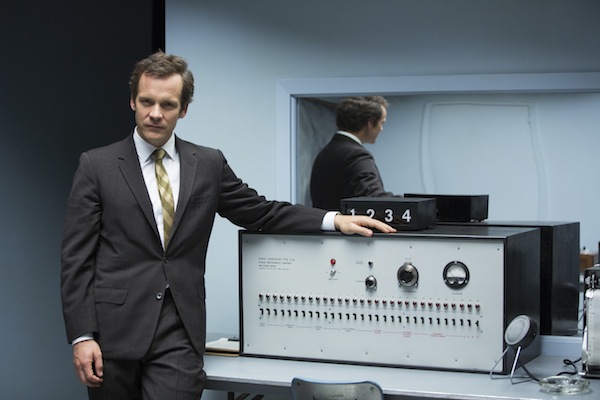
That entertaining trio of movies is primed for Oscar gold, but two fall films with stubbornly brilliant Jewish protagonists were essentially ignored. Veteran director Ed Zwick (Defiance) and Tobey Maguire recreated chess maestro Bobby Fischer’s 1972 peak and valley in Pawn Sacrifice (jewishindependent.ca/chess-masters-decline), while indie filmmaker Michael Almereyda and Peter Sarsgaard revisited Dr. Stanley Milgram’s still-resonant 1961 obedience study and its fraught aftermath in Experimenter.

Yet another movie based on real events, Woman in Gold, traced the efforts of elderly Maria Altmann (Mirren, again) to recover the Klimt painting stolen from her family by the Nazis. The unusual Brian Wilson biopic, Love & Mercy, included a villainous portrayal of the Beach Boy’s controlling therapist, Dr. Eugene Landy (Paul Giamatti).

This is the perfect place to segue to documentaries, but first let’s acknowledge Son of Saul, which opens at Fifth Avenue Cinemas today (Jan. 15). The breathless concentration camp drama from Hungary is a lock to be nominated in the foreign language film category and is the favorite to win the Academy Award. (Another Eastern European film, Ida, the stark Polish saga of a young nun who discovers she’s Jewish, received the Oscar last year.)

The same prediction applies in the documentary feature category to Amy, Asif Kapadia’s dispiriting doc about singer Amy Winehouse’s messy life (jewishindependent.ca/amy-doc-a-dismal-portrayal). In the documentary short category, Claude Lanzmann: Spectres of the Shoah made the shortlist (jewishindependent.ca/filmmaker-as-subject).

As usual, a slew of docs with a Jewish hero or heroine received theatrical releases in 2015. Above and Beyond, about the Jewish airmen who defended the new Jewish state in 1948 (jewishindependent.ca/spielberg-opens-film-festival); Deli Man, about the past, present and future of Jewish delis; Seymour: An Introduction, about New York classical pianist-turned-teacher Seymour Bernstein (jewishindependent.ca/ hard-earned-wisdom); Iris, about N.Y. fashion icon Iris Apfel; The Outrageous Sophie Tucker (jewishindependent.ca/enjoy-an-afternoon-movie-with-jsa-vjfc); Rosenwald, about Sears chief executive officer and philanthropist Julius Rosenwald; and Peggy Guggenheim: Art Addict are all worth seeking out on Netflix or DVD.

I note in passing that Michael Moore invoked the Holocaust during a Berlin stopover in Where to Invade Next, while a Jewish grandmother popped up briefly in Laurie Anderson’s Heart of a Dog.

In the world of fiction, Sarah Silverman won kudos for her dramatic performance as an addicted (non-Jewish) suburban housewife in I Smile Back, but Jonah Hill (as reporter Michael Finkel) and James Franco earned brickbats for True Story. Seth Rogen did his part to set Jewish-Christian relations back a century with a ludicrously unfunny scene in a church in The Night Before. (Presuming anyone in his stoned audience remembers.)

The titular female protagonist in the indie dramedy Me and Earl and the Dying Girl is identified as Jewish by her name (Rachel Kushner) and a menorah on the living room table – and that’s all.

Gett: The Trial of Viviane Amsalem (jewishindependent.ca/the-three-trials-of-gett), Ronit and Shlomi Elkabetz’s blistering courtroom finale to their trilogy about a frustrated Sephardi wife and her family, was the most successful Israeli release of the year in the United States. Eran Riklis’ warm and witty A Borrowed Identity, adapted from Sayed Kashua’s memoir and now on Netflix, deserved a wider audience (jewishindependent.ca/dancing-arabs-screens), as did Nadav Lapid’s austere and unsettling The Kindergarten Teacher (jewishindependent.ca/small-sample-of-viff).

Arthouse movie-goers turned out for Christian Petzold’s restrained German thriller Phoenix, starring Nina Hoss as a survivor looking for her husband in postwar Berlin. Another German film, Labyrinth of Lies, inspired by the prosecutors who pierced the late-1950s veneer of secrecy, ignorance and denial and revealed the truth about Nazi war crimes, didn’t sell many tickets but did make the Oscar shortlist for foreign language film.

We lost several giants in 2015, notably the gifted performers and tireless social activists Theodore Bikel and Leonard Nimoy. Documentary master Albert Maysles (Grey Gardens, Iris) was 88 and Oscar-winning cinematographer Haskell Wexler (Who’s Afraid of Virginia Woolf, Bound for Glory) was 94.

Lia Van Leer, a Romanian émigré who founded the Jerusalem Cinémathèque (including the Israel Film Archive) and the Jerusalem Film Festival, and was so instrumental in the development and quality of the country’s movie output that she was dubbed the queen of Israeli cinema, was 90.

Pioneering Belgian filmmaker Chantal Akerman (Jeanne Dielman) left us, along with indie filmmaker Richard Glatzer (Still Alice) and documentary maker Bruce Sinofsky (Brother’s Keeper). Gene Saks, who directed many of the hit plays and movies penned by Neil Simon, was 93.

The marvelous actors Ron Moody (The Twelve Chairs) and Anne Meara (who converted to Judaism before she married Jerry Stiller in 1954) also passed away in 2015. So did Omar Sharif, the Egyptian leading man who was vilified at home for playing Jewish gambler Nicky Arnstein opposite Barbra Streisand in Funny Girl. In his memory, and as an antidote to the ongoing political discord, seek out a copy of Monsieur Ibrahim (2003), the poignant story of the friendship between a Jewish teenager and a Muslim shop owner (Sharif) in late-1950s Paris.

Michael Fox is a writer and film critic living in San Francisco.

Format ImagePosted on January 15, 2016January 21, 2016Author Michael FoxCategories TV & Film
Glass exhibit at Zack Gallery

Glass exhibit at Zack Gallery

From left to right are artists Larissa Blokhuis, Kirsten Rankel, Maria Keating, Sonya Labrie, Joanne Andrighetti, Hope Forstenzer, Mona Ungar and Scott McDougall. (photo by Denise Relke)

From antiquity, glass has been used for utilitarian and ornamental purposes. The current group show at Zack Gallery, Works in Glass from Terminal City Glass Co-op, demonstrates both functions in the elegant and colorful creations of co-op members. Vases and funky animal sculptures, jewelry and abstract decorative pieces transform the gallery into a celebration of light and flowing forms.

Holly Mira Cruise, one of the co-op founders and its current executive director, told the Independent a little about the group’s history.

“Terminal City Glass Co-op is the first and only nonprofit, cooperative glass arts facility in Canada. It was founded in February of 2012 by Morley Faber, Joanne Andrighetti, Jeff Holmwood and myself. We came together around a mutual desire to see the glass community in Vancouver grow…. We have worked together since then. We started with 30 members, and we now have over 150. It’s a constantly changing community, and we see new members come in every month, and others move on to other opportunities.”

Many co-op members exhibit their glass art often, attracting interest from both customers and professionals. That’s how Linda Lando, director of the Zack, discovered them.

“Linda reached out to me earlier this year,” said Hope Forstenzer, one of the show participants and a member of the local Jewish community. “She had seen some of our co-op’s pieces during Culture Crawl, liked them, and wanted to talk about a show at the Zack.”

Forstenzer herself is in love with glass. “Glass is an amazing medium. It’s elemental,” she said. “There is nothing like it in the whole world. At different stages, it could be liquid and malleable or hard and bullet resistant. It reflects light and allows colors to play inside. It’s created with fire.”

A professional artist, Forstenzer didn’t start her artistic life with glass. “I worked in ceramics and, at one point, I designed several pieces as a combination of glass and ceramics. I couldn’t find the glass I wanted so I started taking classes to make my own glass. I loved it so much, I stopped doing ceramics and concentrated on glass.”

She even moved from New York to Seattle because of her fascination. “Many of the best glass artists in the world live and work in Seattle, and I studied with some of them. There are two glass centres in the world. Venice is one. Seattle is another.”

When her partner took a job in Vancouver a few years ago, Forstenzer moved here. She has been teaching glass-making for about 10 years now. She teaches a class at the co-op, and she also teaches graphic design at Emily Carr University of Art + Design.

Like Forstenzer, Cruise is also passionate about glass. “I tried almost every medium before glass. I painted and drew, I tried clay and metals, I made jewelry. I was an art school dropout. A friend who had been blowing glass since he was a kid told me, ‘Try glass, you’ll like it!’ He was right. I liked it and I never looked back. I became really attracted to the material, to the way it moves and feels and, of course, all the amazing colors. Glass is enthralling in a way that no other material has been for me. I think a lot of people find it has addictive qualities. There have been times over the past 20 years when I have taken a break from glass, but I always seem to go back. It calls me.”

To answer that call, she not only works as a glass artist but also manages the co-op, organizing all its programs and classes, and bringing in visiting instructors from all over the world. “TCGC offers classes in glassblowing, beadmaking, flameworking and sandblasting,” she said. “We make it easy for people to take the first steps. We also offer advanced learning opportunities for people who have practised for awhile. There is no post-secondary glass program in Vancouver, but there is one at Alberta College of Art and Design and at Sheridan College in Ontario. Hopefully, we will catch up with other provinces soon.”

Widely available education in glass-making is a relatively new development for such an ancient craft. Before the 20th century, glass was mostly worked at factories, and each one guarded its secrets.

“In the 1960s, the Studio Glass Movement started,” Cruise explained. “Glass-making moved from factories to independent artist studios. It became a lot easier for people to approach glass and learn it…. Today, there are books on how to set up your own studio and build your own equipment. People are 3-D printing with glass. This year, Emily Carr ran its first class in 3-D Design with Glass through our studio. It was a great success, and seeing the potential of glass as a material to be enhanced and developed with technology was thrilling.”

According to both Cruise and Forstenzer, the students taking classes at the co-op come in all ages and artistic levels.

“Our students are pretty diverse,” said Cruise. “We get all ages, from 17 to 75. Sometimes, it’s retired people who want to pick up a hobby, or younger people who want to become glass artists, or couples looking for something fun to do. We have something for everyone to try here.”

Works in Glass runs until Jan. 10. For more information about the co-op, visit terminalcityglass.com.

Olga Livshin is a Vancouver freelance writer. She can be reached at [email protected].

Format ImagePosted on December 18, 2015December 16, 2015Author Olga LivshinCategories Visual ArtsTags glass-making, Holly Mira Cruise, Hope Forstenzer, Terminal City, Zack Gallery

Join in Shabbat of Song

photo - Rabbi Ilan Acoca of Congregation Beth Hamidrash
Rabbi Ilan Acoca of Congregation Beth Hamidrash (photo from Beth Hamidrash)

One of the ways to thank God for blessings, says Rabbi Ilan Acoca, is through singing. Shabbat Shira, which takes place Jan. 23, tells of the Israelites breaking into song as a way to thank God for the parting of the sea during the Exodus.

“Traditionally, it’s a special Shabbat,” said Acoca, spiritual leader of Beth Hamidrash, Vancouver’s only Sephardi congregation. “Obviously, there’s a lot of liturgy in our

Judaism, depending on the background that we have, there’s a lot of music. On this particular Shabbat, there is even more music and more liturgy and, therefore, it makes a special Shabbat.”

To mark the occasion, Beth Hamidrash is organizing Shabbaton Shabbat Shira: East Meets West, which will celebrate the different musical approaches among Sephardi and Ashkenazi Jews. Cantor Yaacov Orzech of Schara Tzedeck Synagogue will bring the Ashkenazi flavor. The West Coast Andalusian Ensemble, an ad hoc group of Vancouver and Los Angeles musicians coming together for the first but maybe not the last time, will celebrate the Sephardi traditions.

photo - Cantor Yaacov Orzech of Schara Tzedeck Synagogue
Cantor Yaacov Orzech of Schara Tzedeck Synagogue (photo from Beth Hamidrash)

“The idea is that often we look at our differences as Jews and our backgrounds,” Acoca said. “Music brings people together, so the idea behind it is definitely to bring the beauty of both Ashkenazi and Sephardi music, but it’s more than that. We unite the community and show them that, yes, we may have our differences in background and our philosophy and so on and so forth, but we are one people. Therefore, we thought that the best way of doing it, rather than to give speeches about unity, which rabbis often do, we thought the best way was to put speeches aside and concentrate on the music.”

Acoca credits Orzech for coming up with the idea, but it is something that used to happen among congregations in Montreal, where Acoca grew up.

***

Shabbaton Shabbat Shira: East Meets West takes place Jan. 22, 4:35 p.m., services followed by Kabbalat Shabbat then dinner, 6 p.m., and a lecture by Rabbi Acoca on Discovering the Richness of Sephardi Liturgy ($18; $10 for kids 6-12, free for 5 and under): reserve by Jan. 20. Jan. 23, 9 a.m., services with Kol Simcha Singers and sermon on The Power of a Song, musaf led by Cantor Orzech, lunch with Sephardi and Ashkenazi delicacies. Jan. 23, 8 p.m., music celebration with Acoca, Orzech and West Coast Andalusian Ensemble, with Sephardi refreshments – suggested donation $10.

Posted on December 18, 2015December 16, 2015Author Pat JohnsonCategories MusicTags Ashkenazi, Beth Hamidrash, Ilan Acoca, Schara Tzedeck, Sephardi, Shabbat Shira, Yaacov Orzech
Maccabi TA star visits

Maccabi TA star visits

Tal Brody, left, with Richard Poritz at the Vancouver screening of On the Map. (photo by Kyle Berger)

It was a warm Israeli summer in 1965 when Tal Brody made the journey across the Atlantic to visit Israel for the first time. It was a trip that would not only change his life, but also the entire world of basketball in Israel.

Immediately after being drafted 12th overall by the Baltimore Bullets of the National Basketball Association (NBA) – or 13th, depending on how you saw it, according to Brody – he represented the United States at the Maccabiah Games that summer, leading them to a gold medal victory. He also fell in love with Israel.

He returned home with an offer to play in Israel for a year with Maccabi Tel Aviv, Israel’s represented team in the European Championship League. What followed was what many have called the birth of basketball in Israel, highlighted by Brody’s now-famous “We are on the map” quote – the inspiration behind the new documentary On the Map, the Vancouver première of which Brody attended at the end of November.

“Maccabi Tel Aviv was a team that never went past the first round of the European Basketball Championships,” Brody explained of the time before he visited Israel. “They asked me to take them to another level. They said that, by joining them, it would lift the spirits of the country and make them proud. This appealed to me as a young Jewish kid, so I decided to take a year out of my life. But I never imagined I would go to Israel for more than a year.”

That season, Maccabi Tel Aviv made it all the way to the European Cup Finals versus Italy. While they didn’t win it all, Brody saw firsthand the impact that basketball had on the spirit of Israel, as well as oppressed Jews around Europe.

“I saw what happened to the country because of basketball,” he said. “As well, as we played games in Eastern Europe, where Jews were suffering from antisemitism, I saw how proud they were when the team from Israel would come. The Jewish communities would gather around our team and, as the years went by, we became the team that had the most support wherever we went.”

Brody’s one-year plan turned into a lifetime, peaking in 1977 when Maccabi Tel Aviv won the European Cup Championship, defeating the heavily favored Russian Red Army squad. It was after that victory that Brody exclaimed, “We are on the map – and we are staying on the map! Not only in sports, but in everything!”

Today, Brody is one of the most recognized sports figures in Israeli history. Currently serving as a goodwill ambassador for the country, he was named the Israel Sportsman of the Year in 1967, was awarded the Israel Prize – Israel’s highest civilian honor – in 1979 and received a lifetime achievement award in the Knesset just last May.

“Every year I go back to the NBA all-star weekend and the guys always ask me the same thing: ‘Tal, why did you go to Israel?’” he shared. “I said, ‘Guys, even today, if I was offered 2.7 mill, if I knew what I would be missing, I wouldn’t take that money.’ I would never give up those 48 years in Israel. It’s been amazing.”

Since Brody’s influence, Maccabi Tel Aviv has remained a competitive team in the European Cup, winning it six times now. Israel has also seen two players play in the NBA, with Omri Kasspi currently playing for the Sacramento Kings and Gal Mekel playing for the Dallas Mavericks in 2013.

“To see and to take that journey from the rise of Maccabi Tel Aviv and now to see two Israeli players in the NBA and what it has done for the country is a good feeling,” Brody said. “It’s been such a great ride for me.”

Brody’s visit to Vancouver and the screening of On the Map were facilitated by the Jewish Community Centre of Greater Vancouver. The film will be officially released by Hey Jude Productions in 2016.

Kyle Berger is Jewish Community Centre of Greater Vancouver sports coordinator, and a freelance writer living in Richmond.


Format ImagePosted on December 11, 2015December 9, 2015Author Kyle BergerCategories TV & FilmTags basketball, Israel, Maccabi Tel Aviv, NBA, Tal Brody
Challenging viewers’ beliefs

Challenging viewers’ beliefs

“Ganesha,” from Dina Goldstein’s Gods of Suburbia series. (photo © Dina Goldstein)

You have to speak more than one language if you want to read all of the articles on Vancouver photographer and Pop Surrealist Dina Goldstein’s art. English, of course, but also French, Italian, Spanish and Greek, for starters. Among other places, her work has been exhibited in Canada, of course, but also Poland, India, Colombia and, most recently, Holland.

She attended the Oct. 11 opening of In the Dollhouse at Rize Gallery in Amsterdam. “I try to get to all of my openings,” she told the Independent in an email interview. “Traveling and experiencing other cultures is the perk of being an artist. I enjoy being at the exhibition in person and seeing the reactions to my work. The galleries also like it when the artist is there to offer more perspective.”

In the Dollhouse is the second of three large-scale photographic series that Goldstein has created. The other two are Fallen Princesses and Gods of Suburbia. All three have been, or are being, exhibited in various places. About whether galleries pay artists to display their work, Goldstein explained, “The agreements vary from gallery to gallery, sales from the show are split between the gallery and the artist. There are some festivals that cover travel and accommodation in order for the artist to attend. I currently produce my own large-scale projects with the help of print sales and grant awards. These are print sales of my limited edition pieces from Fallen Princesses, In the Dollhouse and the Gods of Suburbia series (displayed on LED light panels).

“There are also art competitions that award cash prizes. This was the case for me when I won the Prix Virginia in 2014 and was gifted 10,000 euros.”

photo - Dina Goldstein (photo from Dina Goldstein)
Dina Goldstein (photo from Dina Goldstein)

Goldstein has been a photographer for 25 years. “I started out quite young and worked very hard in my 20s and 30s to create a career for myself,” she said. “I was a photojournalist and traveled to war-torn regions. I freelanced, shooting covers and feature stories for magazines. (I was a staff photographer at the Jewish Western Bulletin.) I also photographed some cheeky ads with some brilliant art directors. People within the Vancouver Jewish community will remember me photographing weddings and bar mitzvahs; alongside, I created my own projects. Usually concentrated on the study of sub-cultures within society, I termed the work ‘photoanthropology.’ These images were documentary, photojournalistic.

“In 2009, I released my tableau series Fallen Princesses, which was an internet success and brought recognition to my personal work. I went on to realize more ambitious projects like In the Dollhouse in 2012, and Gods of Suburbia in 2014. I am now fully concentrated on producing my own large-scale conceptual series and have become a full-time artist.

“Storytelling has always been central in all of my work past and present,” she continued. “Documentary photography allowed me to create and share the stories of Palestinians in Gaza, gamblers at the racetrack, East Indian blueberry farmers in B.C., dog show dogs, bodybuilding state championships and teenagers dirty dancing at a bar mitzvah.”

Readers can see many of those images at dinagoldstein.com. They can also see images of her three large-scale series, all of which challenge viewers to question their beliefs, some of which were instilled in childhood. Is there an ideal body, an ideal marriage, an ideal anything? Can we rest assured that good ultimately prevails and evil is punished?

“Much of my work investigates the myth of perfection and the collective perception influenced by pop culture,” said Goldstein. “Western society today is influenced by pop culture, which informs us how to look, what to like, what to buy. Most people don’t even realize the effects of the unconscious collective that drives us to behave in certain ways. Perfection is not stable or sustainable in nature and in life. Also, there is an individual perspective about what is ‘good’ or ‘perfect.’ This is mainly the reason that I work with archetypes and stereotypes to relay my messages and offer some social critique. By twisting the storylines of beloved characters, I am able to provide some insight into the human condition, and expose the many flaws in the nature of humankind.”

Fallen Princesses takes the Disney version of 10 fairy-tale women, including Snow White, Sleeping Beauty, Jasmine and others, and “creates metaphor out of the myths of fairy tales, forcing the viewer to contemplate real life: failed dreams, addiction, obesity, cancer, the extinction of indigenous culture, pollution, war and the fallacy of chasing eternal youth,” reads the description on Goldstein’s website. Goldstein’s Snowy, for example, is pictured in an unkempt living room, holding two kids in her arms, with one child pulling on her skirt and yet another playing on the floor, where a dog eats potato chips that her beer-drinking, TV-watching prince has let fall.

photo - “The Dream,” from Dina Goldstein’s In the Dollhouse series. (photo © Dina Goldstein)
“The Dream,” from Dina Goldstein’s In the Dollhouse series. (photo © Dina Goldstein)

In the Dollhouse also features an iconic couple long into their marriage: Barbie and Ken. In Goldstein’s version, Ken begins to understand and accept his homosexuality, and he seems to flourish as the narrative progresses, while Barbie “breaks down and confronts her own value and fleeting relevance.”

But why doesn’t Barbie take her dream car and leave Ken? And the princesses? Granted they likely haven’t been taught the life skills needed to deal with illness, raising a family, etc., but do they just accept their unhappily ever after, or do they rail against it? Are they victims or survivors, both or neither?

“Throughout history, the focus in storytelling has been on men and their outlook of this world,” said Goldstein. “Women’s desires and interests have mostly been marginalized. I feel lucky to live in a free Western society where women’s roles are now more prominent. As a woman experiencing this transformation, I take full advantage by creating art that fully expresses my thoughts and opinions. I create art with fictional characters that has elements of real life. What you see within a work is a moment in time (within the fictional life or these fictional characters). As Barry Dumka pointed out in his essay, yes,

Barbie has lost her head, but she is Barbie and that head can pop right back on. Unfortunately, humans don’t have that luxury. In my tableau, the princesses are thrust into everyday life within realistic environments. They, too, have to figure out how to function and thrive within a complex world.”

Goldstein’s website is fascinating. Not only is her artwork displayed there and her many interviews, but she has a section called Dig Deeper. There, visitors can spend hours reading intelligent, thoughtful analyses of her work, including the aforementioned essay by Dumka.

Despite the grim situation of the princesses, of Barbie, there is humor in Goldstein’s work – there’s something sardonic about seeing Ariel, the Little Mermaid, in an aquarium, Belle of Beauty and the Beast undergoing plastic surgery, or Ken wearing Barbie’s high heels, for example. In Gods of Suburbia, she portrays Satan as a tow-truck operator, Darwin is watching people play the slots at a casino, and Buddha is shopping at Wholey Foods.

“I try to keep everything in perspective,” said Goldstein. “Let’s face it, life can get overwhelming and too serious. I use humor to cope with all that the world throws at me. Also to create conversation about modern society and how we perceive it. I utilize satire, which is intelligent ridicule, and irony, because it creates a situation that differs radically from what is actually the case.”

In a Times of Israel interview, when asked if there was a particular God of Suburbia that moved her most, Goldstein said Ganesha.

“The Ganesha piece was inspired by personal memories,” she told the Independent. “My family moved from Israel to Canada in 1976. At that time, Vancouver was a small town and it had not yet experienced the mass Asian population that you see today. My first few years here were very difficult and, as a young child, it was hard to comprehend.

“Learning a new language whilst dealing with schoolyard bullies. Even in high school, and after many years of integration, I felt different somehow. Most of my family remained in Israel, so we would visit every couple of years for the whole summer. There, I got recharged with chutzpah and the realities of war. So, I became an Israeli/Canadian hybrid. Israeli in many ways and not the typical Canadian. However, these days I know that I’m fully Canadianized because I listen to the CBC radio all day!

“Ganesha is naturally odd, as he has an elephant head and a boy’s body. He is different because of his appearance (I didn’t have that problem) but also because of his unique culture. He is judged for how he dresses, what he eats and even what he believes in. He faces the same cruelty that I encountered in elementary school.”

While all of Goldstein’s art can be seen on her website, there is nothing that can compare to seeing it in person. Gods of Suburbia will travel to Montreal in February to be shown by Art Souterrain. And there also will be at least one local opportunity to see the exhibit next year.

“The Diamond Foundation has generously donated the whole Gods of Suburbia show to appear at the Capture Festival [in April],” said Goldstein. “The exhibition will take place at a new gallery on East 6th Avenue in Vancouver called SOMA.”

Format ImagePosted on December 4, 2015December 3, 2015Author Cynthia RamsayCategories Visual ArtsTags Dina Goldstein, Dollhouse, fairy tales, Fallen Princesses, Gods of Suburbia, Pop Surrealism, Prix Virginia
Klezfest in Winnipeg

Klezfest in Winnipeg

Winnipeg Klezfest co-producers Bev Aronovitch, left, and Miriam Bronstein. (photo from Rady JCC)

After attending the week-long KlezKanada Laurentian retreat near Montreal, Miriam Bronstein and Beverly Aronovitch wondered, why not do the same in Winnipeg? And so, they began planning – the city’s first Klezfest took place at the Rady Jewish Community Centre on Oct. 10 and 11.

Bronstein, a retired music and high school drama teacher who continues to perform at the Fringe Festival, is also very involved with Soup Sisters, an organization that makes soup for women’s shelters. Aronovitch is a jazz musician, producer and retired teacher.

As both Bronstein and Aronovitch are of Eastern European decent, klezmer spoke to them. “I’m a singer, she’s a piano player, so we thought it might be fun to go spend time in that scene,” said Bronstein. “I never realized that I actually speak Yiddish because, as I grew up, my mother spoke Yiddish with me, but I only answered her in English. So, it’s actually quite remarkable that I can speak Yiddish.”

Of the KlezKanada experience, Bronstein said, “It was life changing. It reconnected me with that Eastern European community. It was very, very cool.”

At KlezKanada, Aronovitch and Bronstein enjoyed seeing people of all ages, from toddlers to 90-year-olds, dancing to the music, as well as McGill University students taking a klezmer course.

“There were people from all over the world, musicians from all over the world, and they weren’t all Jewish,” said Bronstein. “It was just such a scene that both of us just said, ‘Oh my gosh! We have to do this in Winnipeg!’ We just took it on when we came home. We didn’t forget about it. We just pursued it.”

Although KlezKanada was a week long, Bronstein and Aronovitch felt that the first such festival in Winnipeg had to be shorter, at least for starters. They began by booking the world-famous Klezmatics from New York and, with the help of Winnipeg’s own Finjan – Kinzey Posen, Shayla Fink, Myron Schultz and Daniel Koulack – they put together a full day of festivities. It kicked off with a Saturday night Klezmatics performance, followed by several Sunday workshops, culminating in a concert led by members of Finjan and the Klezfest faculty.

“We had a wonderful workshop about great Yiddish composers and beginner klezmer playing sessions, and then a more advanced session called Readers’ Romp,” said Bronstein.

“One idea we had that is unique to Winnipeg was that we very much wanted to cross borders and recognize we have many ethnic communities in Winnipeg, so we had a workshop called Common Roots,” she said. “We got Ukrainian musicians and Romanian musicians. We brought people in from the city and the theme was ‘Weddings.’ They played what you’d play at a Ukrainian wedding and then the members of Finjan played what you’d play at a Jewish wedding.”

Bronstein would like to expand on the Common Roots concept next time, as there is a big Eastern European contingency in Winnipeg. She’d also like to see annual Mamaloshen Festival of Yiddish Entertainment and Culture attendees participate in Klezfest.

With their first Klezfest behind them, Bronstein said, “We’re just kind of basking in the glow. It was hugely successful. In the end, everybody was dancing in the foyer. It was so wild, it was so thrilling. People were so elated to be part of it. I taught at the Jewish day school here and there were 25 high school students who were part of the event.

“There were some people, some non-Jews – a considerable amount considering it’s Winnipeg and it’s a small community in general – but it would be nice if it was even more widespread. I think that, the more we do it, we increasingly make the name known, and it will open up even more to the general community.”

Bronstein and Aronovitch would eventually like to see participants get to a point where they are able to lead a performance at the end of the festival. Bronstein envisions this as “a participatory type of performance, where people who did dance classes can present what they learned and people who did the playing workshops can be a part of the band.”

She added, “It was a pleasure to work with our fantastic working committee and the Rady JCC. Without them, it could not have happened.”

Rebeca Kuropatwa is a Winnipeg freelance writer.

Format ImagePosted on December 4, 2015December 3, 2015Author Rebeca KuropatwaCategories MusicTags Beverly Aronovitch, Finjan, Klezfest, Klezmatics, Miriam Bronstein, Winnipeg

New Western awards

The Western Canada Jewish Book Awards are a new initiative of the Cherie Smith JCC Jewish Book Festival. The initiative is designed to celebrate excellence in writing on Jewish themes and showcase the achievements of authors residing west of the Ontario-Manitoba border. The awards aim to recognize the contribution to Jewish culture by these writers, and prizes will be awarded in several categories.

In the inaugural year of the awards (2016), books published in 2014 and 2015 will be accepted. A jury comprised of distinguished members of the literary community will examine the eligible submissions, which will be accepted until Feb. 29, 2016.

It is possible to submit to more than one category. The categories are the Diamond Foundation Prize for fiction, the Pinsky Family Prize for non-fiction, the Betty Averbach Foundation Prize for poetry, the Jonathan and Heather Berkowitz Prize for children and youth books, and the Marsid Foundation Prize for writing on the Holocaust.

Currently, there are two other Jewish book awards in Canada. One is in Montreal, dedicated to writing in Yiddish, and one in Toronto. Although the book awards in Toronto are national, it is the JCC Jewish Book Festival’s hope that Western Canada-based awards will encourage more authors to enter books into competition. By being geographically based, one goal is to enhance the literary scene in Western Canada, which, for the intentions of this award, is considered as being from west of the Manitoba-Ontario border, including the northern regions, to the B.C. coast.

The submitting author must have lived in Western Canada for the past 12 months or have lived in Western Canada for at least three of the past five years. A book written by a non-Jewish author is eligible if in accordance with the following criteria. Eligible books contain significant Jewish content or theme; they are written by an eligible author (see above); they are written in English or are available in English; they are published in English or in English translation between Jan. 1 and Dec. 31 of the year of the award and the year previous to it; they have a 13-digit ISBN, including eBooks; and graphic books are eligible.

The books submitted will be judged by independent industry professionals. The jury will be comprised of five judges, including a chair, to be drawn from a larger pool including judges from all Western provinces. The winners will be announced by mid-April. An awards soirée and event will take place at a later date in the spring. There will be a monetary award of $2,000 for each winning author.

To submit a book for the award, download the form via jewishbookfestival.ca. Mail or deliver in person the following items for each book submitted: a completed entry form, five copies of the book and the $36 entry fee per prize category. Send the package to JCC Jewish Book Festival, attn: Dana Camil Hewitt, at 950 West 41st Ave., Vancouver, B.C., V5Z 2N7.

Contact Camil Hewitt, JBF director, at 604-257-5156 or [email protected], with any questions.

Posted on December 4, 2015December 3, 2015Author JCC Jewish Book FestivalCategories BooksTags award, Cherie Smith JCC Jewish Book Festival, Western Canada

Posts pagination

Previous page Page 1 … Page 134 Page 135 Page 136 … Page 165 Next page
Proudly powered by WordPress