The elements of a hit song

I freely admit it, I was one of those angsty teens who wrote bad poetry to express all my big feelings. I also wore a lot of black, but that’s not relevant here. What kind of surprises me about myself is that, despite having taken piano for years, learned various other instruments and sung in choirs since I was in single digits age-wise, it wasn’t until last year that I put some not-bad (not-great) poetry to music and wrote a song. It was inspired by my wife and it must have been beginner’s luck, because I’ve not been able to replicate that success.

This is a long preamble to why I was excited when award-winning songwriter and music consultant Molly Leikin emailed that she had a new book out: Insider Secrets to Hit Songwriting in the Digital Age (Permuted Press). While it’s too soon to say whether it will help me write another song, I did find it informative, easy to read – Leikin has a great sense of humour – and full of practical advice. I’ve just been too busy to do many of the myriad exercises and put in the time necessary to hone any skills.

There is a whole chapter on making the time to write, as well as how to quiet the inner critic, who often stops creative-aspiring people dead in their tracks. Other chapters focus on writing lyrics, composing a melody, picking a strong song title, working with a writing partner, overcoming writer’s block and other aspects of the process. There are also chapters on what needs to be done to get a song published, what royalties are, and what types of jobs you might be able to do to sustain yourself until your music can. Interspersed between the how and what chapters are interviews Leikin has conducted with some of her peers, other songwriters, producers and industry professionals.

Insider Secrets is targeted at writers who want to get into the business. And whether one succeeds at that is as much hard work as it is talent, probably more. One great aspect of Leikin’s approach is that she believes in being kind to oneself, so offers several ideas for how to reward yourself when you do put in the hard work.

“Whatever you do,” she writes, “make a point of acknowledging that you’re doing it as a reward for what you’ve just created. It is a victory in itself, just because you did it, not because your song was downloaded 10 million times. The victory starts with you.”

Ultimately, Leikin says, it comes down to persistence. It is also crucial to understand that a creative life is not a straight path, but an up-and-down one, and you have to learn how to navigate the challenges.

“A writer’s job is to write,” states Leikin. “If you do that, keep raising the level of your craft and write your fingerprint, and hustle your hustle, someday, the world will know your work. But until then, I want you to feel in your bones that you have the magic to go the distance. No Grammy can give that to you. Honestly, you have to give it to yourself, every day, all day, for the rest of your life.”

To purchase the book and for more information on Leikin, visit songmd.com.
The kill fee – and its fallout

I was honoured with the opportunity to chant the first aliyah for the Torah portion Aharei Mot. I’m still new to chanting Torah, so I practise every day. I can read and translate Torah but, for some reason, I didn’t reflect on what I was reading at first. I was chanting that very sensitive set of instructions given from G-d to Moses to pass along to his brother Aaron.

A few weeks ago, we read in Leviticus 10:1-7 that Aaron’s sons Nadav and Abihu offered “strange” or “alien” fire. Their sacrifice was overeager and unusual. They drew “too close” – in some readings of Leviticus 16:1 – to G-d and were struck down. They were killed.

After the death of Aaron’s sons, the instructions Moses passes along to Aaron are crucial. He isn’t to go into the Holy of Holies, behind the curtain, because G-d dwells in a cloud above the cover. Aaron’s sacrifices and his approach to the holiest spaces are scripted, careful and correct. When reading rabbis’ commentaries on this, their thoughts are all over the place, from quoting Sting’s lyrics “Don’t Stand so Close to Me” to talking about vulnerability and the divine. This is a text that has a lot to unpack.

As a freelancer, I do writing and editing jobs with various deadlines. Sometimes, I write a piece months in advance, submit, and hear nothing back until the publication arrives in the mail with payment. With other jobs, I get to revise and review copy edits, the editor says exactly when the piece will run and I’m paid early without prompting. Others require me to submit an invoice or I don’t get paid at all. Every gig is different. I’ve even worked for publications that have gone bankrupt before my article was to appear. So, I did all the work but, in the end, received nothing, not even a publication credit.

In other situations, I write or edit something with a short deadline. These can be very satisfying jobs that happen quickly. Sometimes, it’s a political analysis piece that runs in the newspaper. Other times, it’s a healthcare editing job that might improve the lives of breastfeeding moms. There’s a thrill to a tight deadline where I manage to get it done, and perhaps make a difference.

Before Passover, I submitted some queries (ideas) to a publication with which I’d worked before. I got a very fast response. The editor said she’d been about to write on one of these topics. Would I cover it instead? I said sure, asking for her outline and any other details she wanted included. Instead, she suggested I write it on my own, without her outline. I did this as fast as I could, as I also faced the hard deadline of cleaning and cooking for the holiday. I asked for quick feedback, since my time was limited, but I didn’t receive any.

Almost a week later, the editor asked me for revisions, asking why I didn’t include several items, which were on her mental checklist, unbeknown to me. I didn’t feel prepared to do it, but I researched and did one more rewrite before Pesach.

During the middle of the Passover, the copy edits arrived. I’d never seen so many before! Much of it seemed to ask me to prove mundane things with academic sources. Many copy editors have provided me with corrections and solutions over the years, and it’s usually just an “approve” track changes or a comment or two to move ahead. Responding to these comments took nearly three hours. I felt as though perhaps I’d written something wrong, although I’d been researching, writing and teaching on the topic for years.

The next day, I received a note from the editor. It would take too long for us to come to agreement over the edits. I was sent a “kill fee.” A kill fee is usually a quarter to a third of the amount agreed to for the whole project, if the project cannot go forward. This was a bit of a relief. I had more time for the holiday. I could be done with a hassle that already had earned me less than minimum wage.

Moments after I accepted the kill fee, the editor was on social media, writing glib jokes about the article topic and how she had to write the article herself. So, not only had I lost the gig, but there was some shame now, too. This was public “punishment.” Somehow, I’d been incapable of writing on this supposedly easy topic. With the holiday’s end and Shabbat approaching, I had ample time to reflect on the crummy experience.

For context … in the book Little Women, published more than 150 years ago, the character of Jo March is offered a $100 US prize payment for a story she wrote. I was offered $150 Cdn to write this story and paid a kill fee $50 Cdn.

When I thought back on Aaron’s painful loss of Nadav and Abihu, and how they’d been warned not to do things the wrong way, I wondered what lessons I could find there. I don’t make sacrifices at an altar. I never want to lose my children in such an awful way. However, on a much smaller scale, I pushed myself too hard to meet an elusive last-minute work goal. It cut me close when I failed, and then to be shamed via social media for it. I had my work “killed” – perhaps because my writing failed to come close enough to the editor’s ideas, or maybe because it was a little too detailed or uncomfortable and they questioned it. Who knows? Just as we will never know what Nadav and Abihu were thinking, I couldn’t be inside this editor’s thoughts either.

Unlike Aaron, I don’t have to work with this editor/client again. Aaron serves G-d, and cannot make the same mistakes his sons did. He is in a painful place where he must learn to do better. I, too, am in a place where I need to reconsider how I work and what I will work towards.

Luckily, I didn’t lose anything so precious as did Aaron. I can still explore how to make things better – it’s important to find a work/life balance that works, because that article was not worth the hassle. As the TV advertisement goes, some (important) things, like our family and holiday celebrations, are priceless.

Joanne Seiff has written regularly for CBC Manitoba and various Jewish publications. She is the author of three books, including From the Outside In: Jewish Post Columns 2015-2016, a collection of essays available for digital download or as a paperback from Amazon. Check her out on Instagram @yrnspinner or at joanneseiff.blogspot.com.

Novel informed by life

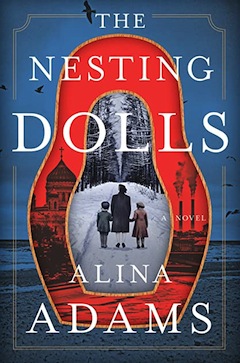
Alina Adams, author of The Nesting Dolls, spoke at a recent Zoom webinar organized by the Jewish Community Centre of Victoria. (photo from alinaadams.com)

New York City-based writer Alina Adams, author of the 2020 novel The Nesting Dolls – about three generations of Russian-Jewish women – spoke at a Jan. 27 Zoom webinar organized by the Jewish Community Centre of Victoria.

Adams began with her personal story. Born in the port city of Odessa, she spent the first seven years of her life in a communal apartment: a dwelling, including kitchen and bathroom, that was shared by two families.

“As I mention in The Nesting Dolls, these relationships were not always positive. My parents were lucky in that they got along well with the people they were assigned to share with,” said Adams.

In 1976, her parents decided to emigrate. Two years earlier, the United States had passed the Jackson-Vanik Amendment, which linked U.S. trade with the free movement of Jews and other groups in the Communist bloc.

“I like to say we were traded for wheat,” Adams quipped.

To those leaving the USSR, she said, “it was like stepping off the edge of the earth. You didn’t know where you were going, you didn’t know what life would be like when you were there, and you certainly knew you couldn’t come back.”

The family’s first stop was Vienna. From there, they took a bus to Rome, where they stayed for four months before traveling on to North America in January 1977, first to New York and then to San Francisco.

Adams recounted some of the reactions upon coming to America in the 1970s as a young child: for example, the surprise of watching a television screen in full colour. It was television, namely soap operas, that Adams later credited for helping her learn English.

The young immigrant started out in a Jewish day school, where the differences in various customs – her life in the new versus the old world – became very apparent. Parents in North America, she recalled, did not send their kids to school in the same dress every day; they used Band-Aids instead of green antiseptic to treat cuts; and, if their child had the sniffles, they did not place the child’s feet in hot water and then into socks filled with dried mustard.

Over time, Adams and her family got the hang of life in America. She graduated high school and college. All along, she knew she wanted to be a writer.

“My parents claim my first words were ‘pencil’ and ‘paper,’” said Adams. “And what’s the advice all writers get? Write about what you know. Well, what did I know? I knew about being a Soviet immigrant. I knew about living a culture that wasn’t mine.”

Publishers, at first, were not interested in those themes. Nonetheless, an editor at Avon Publishing did like her writing and contacted Adams, asking if she would write a Regency romance. This would become The Fictitious Marquis, a unique book in the Regency romance genre in that Jews are central characters.

Adams now has more than a dozen titles to her credit, including mysteries, books on figure skating (non-fiction) and other romances.

image - The Nesting Dolls book coverAbout four years ago, Adams’ literary agent told her that editors were becoming interested in Russia, and this led Adams to write The Nesting Dolls. The novel begins in the Soviet Union of the 1930s and ends in 21st-century, pre-pandemic Brighton Beach, in New York City. It focuses on the lives of three generations of Russian Jewish women in one family; the periods parallel those of Adams’ grandmother, mother and herself.

For Adams, it is the everyday events that are the most fascinating part of writing historical fiction. “Anyone can look up which date Nikita Khrushchev denounced Joseph Stalin, but it is the small details which make historical fiction compelling,” she said.

As an example, she pointed to a personal account she used in the novel. According to her mother, Adams did not want to be breastfed. This caused her mother to go to a doctor and ask him to write up a prescription for yogurt. “These are the little things, in this case how difficult it was to get regular foodstuffs in the Soviet Union, that bring a situation to life and show the reader what an era was like,” said Adams.

The novel was scheduled to be released in 2019 but was delayed to 2020, which, for Adams, turned out to be a blessing for the story’s timeline, in that she wasn’t finishing it during the pandemic. The last section of the book takes place in pre-pandemic Brooklyn in summer. “The things my characters do in the summer of 2019, they could not have done in the summer of 2020,” she said.

Adams lives in New York with her husband and their three children. She has written about her interracial, interfaith and intercultural family for Interfaith Family Magazine and the Forward, and has written columns and articles for dozens of publications.

Sam Margolis has written for the Globe and Mail, the National Post, UPI and MSNBC.

Writing story of the moment

(photo from flickr.com/photos/lukas_photo)

“Identity is a narrative of the self – it’s a story we tell about the self in order to know who we are.” (Stuart Hall)

In our day-to-day lives, we are always telling stories. We tell these stories to one another and in our own minds. A story is anything that we communicate to ourselves. Stories are how we create and communicate content, understanding and relevance between random events and details. I engage with stories through my therapeutic practice, Threads Education and Counselling, by way of narrative therapy.

When you sit down and reflect upon the story that you have been living lately, or what I like to call your “story of the moment,” you begin to shed a mindful light on how you are feeling and experience an embodied sense of knowing.

Ask yourself: what is the story that you have been living lately? The lived stories are often multifaceted; can be contradictory and not linear. Is it a story, to name some possibilities, that includes struggle, hope, perseverance, love, anger, disappointment, grief, overcoming, expansion, growth, steadiness, survival or rapid change? How would you describe your “story of the moment”? What is sitting heavy inside? What are you preoccupied with and why?

It is important to explore your “story of the moment” and start in this place in order to gain insights. We gain insights relationally, through getting inside the stories where they are living and contemplating them. Describe your story in five to seven sentences. Some people like to narrate their stories aloud, others like to write or type them out in a contemplative writing practice through which I guide them.

Once the story is expressed, ask yourself if this is the story you want to be living right now. Explore the reasons why and the reasons why not. This allows a jumping off point into expanding on the “story of the moment” and looking at outside and institutional influences (family, school, work, relationships, location, age, gender, race, class, religion, health) that impact the stories we live. As a trained witness and narrative therapist, it is my job to ask questions of how circumstances, events and your particular social locations are colouring the stories that you are living and breathing inside and alongside.

In my practice, we would then explore if you need to make some significant changes in your life in order to change the story; if there is a way you can shift perspectives to understand your current story in another way; or if there is a new story that you can tell and inhabit in place of the story you have been living inside of and are speaking about.

Mindfulness grounding techniques, thematic prompts and the possibility of expressive art techniques help round out and fully access the complexities of the stories inside.

Here is an exercise I do to explore the narratives of our lives. I ask my clients to create a self-portrait. Many choose to draw themselves, while others stick with words and create rich descriptors based on self-reflection of who and how they are today. This prompt allows the “story of the moment” to appear from the corner of the heart of mind, untangle from the mess in a drawer and reveal itself so that it can be expressed and understood.

Therapeutic letter writing

A letter is a form of written communication addressed to someone that expresses meaningful messages. In the context of counseling, letter writing has a long history and, in the 2007 book Stories as Equipment for Living: Last Talks and Tales of Barbara Myerhoff, Myerhoff writes about how we can be “nourished by the stories being fed back to ourselves” in the genre of a therapeutic letter. Specifically, in the narrative context, therapeutic letters are used with the purpose of creating double story development, where the listener provides an acknowledgement of the problem as well as rich descriptions of alternative stories that were hidden within the dominant “problem” story.

The therapeutic letter, and the practice and process of writing, offers a tangible and layered documented expression of the complex, beautiful, layered and innovative ways in which the people I work with are responding to the problems in their lives. The letters serve to connect them with the many stories that are circulating around them and permeating inside their mind, as well as embodied within them. Simply, therapeutic letters work in tandem with the therapeutic session to connect them with the stories of their lives. Some people I work with actively respond to the letters I send them, with a response in the form of a returned letter, or a poem, drawing or conversation.

Crafting a therapeutic letter demands that the health practitioner carefully and mindfully reflects on the therapeutic conversational sessions that just concluded. For me, letter writing provides me the crucial opportunity and space to critically reflect on my practices and facilitates further growth and insight on how I can craft more expansive questions, as well as opportunities for the people I work with to engage with their stories with me alongside as an active, trained witness.

Letter writing within narrative therapeutic practice enables a deepening of the work of revising an individual’s relationships with the central issues, preoccupations and problems that inform, colour and get entangled up and inside their selves, bodies and lives. Letters are a tangible product that both allows for and demonstrates active listening and validation. It is an evolving and emergent practice, grounded in the contradictory, the complex, the fluid. It has the ability to hold and express multiple stories of the moment that we all hold, carry and live out in our lives.

Dr. Abby Wener Herlin is a feminist narrative therapist who works with tweens and adults, and a social emotional learning/social justice educator. Her website is threadseducation.com. These discussions of narrative therapy were originally posted at health-local.com/author/dr-abby-herlin.

Making musical amid COVID

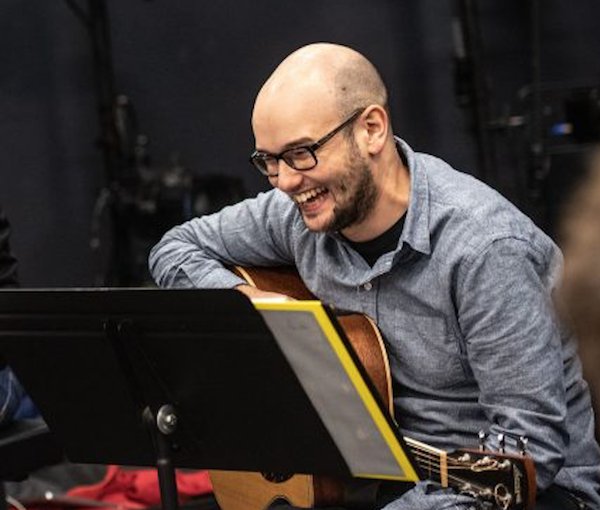
Anton Lipovetsky is among the professional artists working with Studio 58 to develop Monoceros: A Musical. (photo by Dahlia Katz)

In the face of a pandemic and all its associated restrictions, the show is going on at Langara College’s Studio 58 – albeit in a very different way. Monoceros: A Musical runs through the end of March and features the contributions of two Jewish community members: writer Josh Epstein and composer/lyricist Anton Lipovetsky.

In contrast to other Studio 58 productions, Monoceros is seen as a “development lab,” an opportunity for the creators to tweak the piece, while allowing students to work on a new musical and learn about the process. The production is not a performance in a traditional sense, as the public will not be able to come and watch it. Ordinarily, shows are performed in Langara’s 100-seat theatre, but this is the first time Studio 58 has created a production outdoors – because of the risks of singing inside.

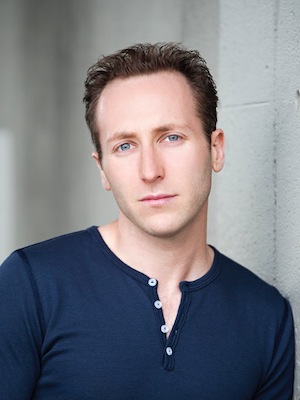
photo - Josh Epstein
Josh Epstein (photo from Studio 58)

Adapted from a Suzette Mayr novel by Epstein and his business partner, Vancouver writer/director Kyle Rideout, Monoceros tells the story of Faraday, a high school wallflower who dreams of becoming a famous veterinarian. When Ethan, a classmate known for wearing a unicorn outfit, dies unexpectedly, Faraday sets off on a quest to fulfil Ethan’s last wish.

“The book starts with one of the most powerful chapters I’ve ever read,” Epstein told the Independent. “I was engaged from the first sentence, my heart was drawn to every word. I, too, lost my best friend much too early and I felt very connected to this book. We were about to turn the book into a film, for which we had funding, but, at the same time, we felt a musical bursting out of it and attached Ben Elliott and Anton to write the music. We fell so in love with the musical that we halted the film for now to keep working on the piece. Our show tackles difficult subject matter but in a fresh, humorous way, daring the audience to go on a wild adventure and to listen.”

“I read the book and I loved it. It was heartbreaking and brutal and honest – the kind of book that really stays with you after you read it,” said Lipovetsky. “We decided to centre the story more on a singular character, Faraday, and her quest to bring unicorns to Calgary in honour of the student who passed away. Her quest challenges who she is as a person and she discovers herself along the way.”

Putting on a production in 2021 is “completely wild,” said Epstein, an award-winning actor, writer and producer. “Until the day we started, we had no idea if it would actually happen. Now, here we are with a full tent city built by Studio 58, a rock concert sound setup and an incredible creative team that includes one of Canada’s top directors, Meg Roe, and Lily Ling (Hamilton’s musical director) – who was only available to us because Hamilton is on hiatus.”

Epstein emphasized that, “while the show’s path has been altered by COVID-19, the team has used the time to strengthen the script and score, as well as attach some of the best people around [to the project]. Above all, the process is very safe and we’re having fun being able to work together, if only from a masked distance.”

“Acting, singing and connecting with your collaborators while most of your face is covered is not easy. The students are doing a wonderful job,” Lipovetsky said. “And rehearsing outdoors during early March in Vancouver can be challenging – but sometimes it’s magical. There are moments where the students’ voices soar in beautiful harmony and the sun will come out above us and I’ll feel real joy. I have missed making music and theatre so much and I’m grateful to get to do it even under these strange circumstances.”

In addition to the staff and faculty who are involved, Studio 58 has 10 professionals working with the students, 14 student performers, and many other students helping with technical requirements. One of the top theatre schools in Canada, with the only conservatory-style program in Western Canada, the professional theatre training program at Langara is in its 55th season. It typically produces four main-stage productions a season, ranging from dramas, to comedies, to musicals.

Monoceros is commissioned and supported by Toronto’s Musical Stage Company and funded by the Aubrey and Marla Dan Foundation. The show has an elaborate development road planned out that will include workshop productions in British Columbia and Ontario – culminating in Toronto – before continuing to other stages.

Epstein, whose work has taken him around the world, is currently writing an original feature for Paramount with Rideout. Lipovetsky is an acclaimed composer, lyricist, performer and teacher, and he is currently an artist-in-residence in the Musical Stage Company’s Crescendo Series.

For more information about Studio 58 and its programs, visit langara.ca/studio-58.

Sam Margolis has written for the Globe and Mail, the National Post, UPI and MSNBC.

Youth during the pandemic

Eleven months into the global COVID-19 pandemic and the statement, “we are living in unprecedented times,” has become commonplace and cliché. But, truth is at the root of this clichéd phrase. Finding and feeling our way through this new reality has been fraught with stark and opposing responses; from being immobilized and stuck, to being re-inspired and productive. As an educator and counselor who has been working with tweens, adolescents and adults in the community, I have witnessed both responses, or states of being, which are completely understandable and interchangeable as minutes turn into hours, as hours turn into days, as days turn over into weeks, and weeks turn into months.

For the purpose of this article, I want to focus on how the tweens and adolescents I work with have acknowledged that, while living life through COVID-19 is extremely tough, they have found, as the late Maya Angelou phrased it, “rainbows in the clouds” during this period. It is important to acknowledge the challenges youth face, such as experiencing restrictions to peer group interactions and experiencing the change of their schooling to remote learning. Further, an important yet more general challenge youth have faced is that the developmental stage these tweens and adolescents are in is typically punctuated by healthy detachment from their families and, in turn, usually is a period where more independence is fostered. This has been halted, interrupted and/or confused, as COVID-19 has demanded that youth are at home with their parents and families.

My overarching teaching and therapeutic philosophy is to meet the individual where they are. I try to listen to their spoken and unspoken language without handing out a quick fix. I am interested in how individuals, especially tweens and adolescents, connect with themselves as their lives have slowed down, as they have retreated to bedrooms, and in-person interactions and experiences have reverted to screens and the virtual world.

To facilitate a way into the interiority of my clients, I use the modalities of expressive arts therapies, contemplative writing and mindfulness practices. In the sessions I hold with them, they commiserate on how life is for them; grieving the smaller and larger losses and disappointments they have experienced; they freely use the session to rant and complain, and share their fears and anxieties. I then work with them in various creative and expressive modalities, which has enabled them to clarify, settle, discover and deepen a connection to their mind, body and heart.

Conducting expressive art exercises on secured video has been a poignant and immediate process. Using the shared-screen option, tweens and adolescents have been able to create and present their creations in real time. Expressive art therapies have encouraged self-discovery and enabled youth to access a range of emotions and insights that many of them did not even know they were experiencing. Engaging in exercises such as “what is in my heart?,” “draw a place,” “shape of me” (for which they can attach photos) have lowered stresses and anxieties, assisted in attention span and focus, and created an emotional uplift and emotional awareness. In these stressful, highly anxious times, expressive arts therapies have assisted greatly in calming, centring and linking youth to both their interior selves and the larger landscape of their lives, despite the uneasy and ongoing pandemic landscape.

Contemplative writing is a compassion practice that encourages one to write whatever the mind has to offer. It is a modality that helps to access who we are, what we need and what we want. It is an embodied practice that allows connection of one’s head, heart, body, breath and the page. Individual contemplative writing sessions have enabled youth to listen fully to themselves and the stories they need to tell and share. It has enabled youth to be listened to and, furthermore, to understand their own insights and often non-realized thoughts. I often tell my clients: tell your stories, I will hold your words and the spaces between them. The modality of contemplative writing has allowed youth to gain confidence and feel empowered, as they accessed and used their own voices, and overall experienced a sense of agency through their writing, telling and sharing of stories.

Throughout my sessions, in conjunction with expressive arts therapies and contemplative writing, I often employ various mindfulness practices. The general aim of mindfulness is also to connect with oneself. For tweens and adolescents, who are used to, even in COVID-19, a fast-paced, pop-up, manic existence with multiple devices in reach of their hands and gazes, mindfulness offers a sharp departure. The frenzied pace of day-to-day life often increases anxiety and depression in young people. It needs to be said that, often, the anxiety and depression is more of a low-grade malaise that we are unaware of until we begin to practise mindfulness.

Generally, mindfulness involves slowing down, delving into a deeper breath, noticing and following through into various practices to relax the mind and body. With tweens and adolescents, I also invoke the senses, encouraging them by carrying out exercises that use guided imagery and engagement of the five senses. This sensory engagement includes holding and touching various objects and taking time to peel and eat (taste) an orange. In the slowing down, in the distillation to being in the moment, in the focus of breath awareness and sensory awareness, I have found youth to become more relaxed, receptive and connected. Once they have practised mindfulness, it serves as a useful and cushioning tool whereby youth are able to calm and centre themselves as they navigate their day-to-day lives.

Dr. Abby Wener Herlin holds a doctorate degree from the University of British Columbia. She is the founder of Threads Education and Counselling and works with tweens, adolescents and adults. She carries out themed social justice and creative arts and writing workshops for students, teachers and schools. She is available for therapeutic sessions and contemplative writing workshops. She can be reached at abbyherlin@threadseducation.com or via threadseducation.com. This article was originally published on health-local.com.


Interview insightful, fun

Israeli writer Eshkol Nevo, whose latest novel is The Last Interview, opens the JCC Jewish Book Festival Feb. 20. (photo from JBF)

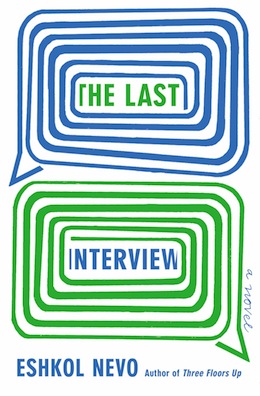
This year’s Cherie Smith JCC Jewish Book Festival opens online Feb. 20, with Israeli writer Eshkol Nevo, whose latest novel, The Last Interview, brilliantly sprinkles facts amid a lot of fiction and interjects humour into much pathos. It entertains, of course, and, as all good books do, it raises many salient points that will get readers thinking – and feeling – about, in this case, storytelling, marriage, truth, parenting, friendship, lies, family, identity, media, politics and relationships. So, life.

In The Last Interview, the protagonist, who is suffering from a chronic form of depression and writer’s block, responds to an interview sent to him “by an internet site editor who collected surfers’ questions.” He later notes, “It was supposed to be only an interview, nothing else, but slowly – it seems I can’t do it any other way – I’ve been turning it into a story. I was supposed to leave Dikla and the kids and the dysthymia out of it. And all of them are in it.” This inability to stop himself from telling stories about others in his published writing is an Achilles’ heal in his personal life, but a boon to his professional one.

His interview answers are sometimes short and direct:

“How do you manage to deal with the loneliness that’s part of writing?

“I don’t.”

But, most often, they are quite involved, going into more detail, retrospection and introspection than the questioners would ever have expected. We learn about his failing marriage, but also its sweet beginnings. We are privy to his feelings about his best friend, who is dying of cancer. We see how he struggles to be a good father to his three kids. We hear some of his travel adventures. We witness his attempts to extricate himself from an unwanted speech-writing gig. We share his discomforts with the Israeli-Palestinian situation. We find out a bit about his motivations for writing:

“If I don’t write, I have nowhere to put my memories, and that’s dangerous. I have a problem. I don’t forget anything. My forgetting mechanism is completely screwed up. All the partings, the deaths, the unexploited opportunities. They are all trapped in my body, and writing is the only way to release them … if I don’t occasionally unburden myself of the weight of some of those memories, I won’t be able to breathe. No air will enter my body. Or leave it.”

Part of his current creative block – “I was supposed to be writing a novel this year. Instead, I’m writing answers to this interview” – is that he and his wife are becoming more distant. “I can’t say that I became a writer to win Dikla’s heart, but I can assume that with another, less stimulating woman, I wouldn’t be writing.” He notes that, since his first letter to her, “In fact, everything I’ve written since then, eight books, is one very long letter addressed to her.” At the end of a lengthy response to the question, “All of your books are written in the same style. Have you ever thought of writing something completely different? Maybe science fiction? Fantasy?” he says that genre wouldn’t make any difference: “In any case, it would turn out that, once again, I wrote about an impossible love.”

image - The Last Interview book coverWhile the overall mood of The Last Interview is solemn, there are many funny parts. One especially hilarious section is the writer’s response to the question, “When will they produce a film adaptation of your latest book? When I read it, I could actually imagine the movie.” As the writer shares the details of an encounter with a filmmaker of a similar opinion, the conversation cynically – but with the ring of truth – moves from flattery to the many ways in which the movie will ultimately be unrecognizable from the book, yet concluding nonetheless with the filmmaker enthusing, “The minute I finished it, I said to my wife: This is a movie!”

With a writer as intelligent, sensitive and amusing as Nevo and an interviewer as experienced as the Globe and Mail’s Marsha Lederman, the book festival’s opening event should be well worth attending. For tickets to it, and for the full lineup of events, visit jccgv.com/jewish-book-festival. The festival runs to Feb. 25.

Hope amid challenges

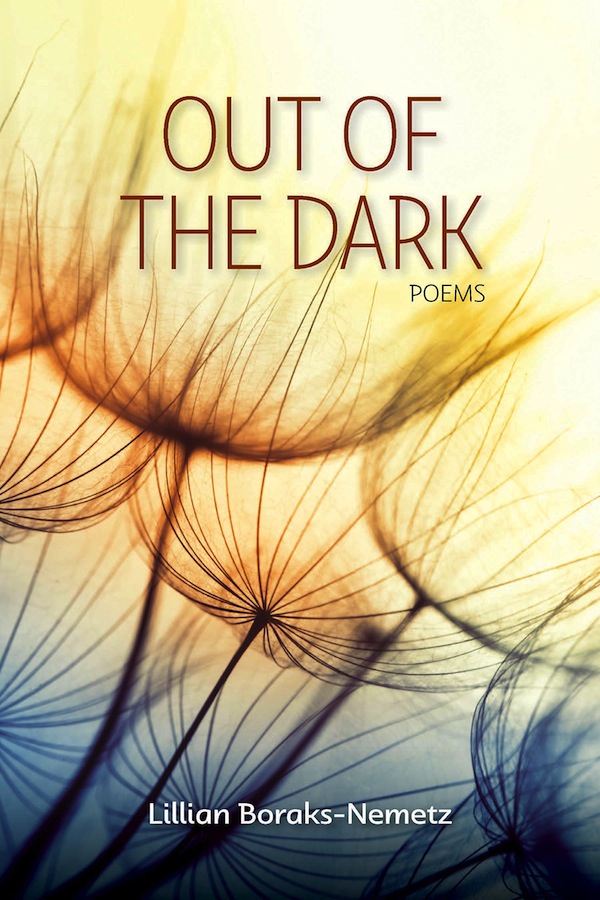
Lillian Boraks-Nemetz’s latest collection of poems offers comfort, even though she does not shy away from the tragedy of her Holocaust experience and ever-present memories of that period. From the very title, Out of the Dark, she gives hope. If she can still see beauty and love, then we can, too.

An established and award-winning writer, Boraks-Nemetz has published many books and her poems have appeared in literary anthologies. A child survivor of the Warsaw Ghetto, she is an eyewitness to some of the most cruel aspects of humanity and openly wrestles, in these poems, with the death she has seen, with the hiding she was forced into and can’t completely shake the habit of, with the stark contrast of her life before coming to Vancouver and the world she has created here. While deeply marked by suffering, she makes space for the pain that others experience.

image -Out of the Dark book cover

Out of the Dark is divided into three sections: Survival, Flickers in the Dark, and Into the Light. Even the most sombre first part, which includes poems about those murdered in the Holocaust, the impacts of war and the existence of antisemitism, starts with a poem called “Flowers of Survival,” in which a daughter recalls the words of her father, from whom she has been separated, forever: “‘Let the wind thrash us if it will // And the foul earth open to swallow us,’ you said, / ‘for in the end / neither the violent wind nor / the foul earth will succeed.’”

In midsection of the book, Boraks-Nemetz gives voice not only to her sadnesses and joys of making a new life in Vancouver, but of the immigrant experience in general. She writes of the difficulties of living in another place, both with regards to location but also in her mind and body, as well as in time, so different is British Columbia than Poland, so changed is Warsaw now from how it was during the war, so renewed a person is she, yet, she advises, in the poem “Identity,” “when they tell you / forget the past – let it go / they are in error // your past is your memory / and memory – a bridge / to you.”

As people are marked by what happens to them, internally and externally, so is nature, and Boraks-Nemetz has included several poems about its splendour, what it has witnessed and how we humans are threatening it, despite its strong will to survive.

There are many poems in Out of the Dark that are dedicated to family, friends, poets and others, but the bulk of them are in the final section. Boraks-Nemetz seems to be saying that, despite our capacity as humans for brutality and destruction, we need one another and we are the only ones who can fix what we have wrought, and make the world a better place.

Golem dances tango & more

University of Victoria’s Prof. Dan Russek spoke about Jewish writers in Argentina and Mexico, as well as Jorge Luis Borges’ Jewish-related writings. (photo from Dan Russek)

Dan Russek spoke on 20th-century Latin American writers, both Jewish and those who have been influenced by Jewish themes, at a Jan. 10 Zoom event organized by Congregation Emanu-El in Victoria.

Entitled The Golem Dances the Tango, the talk began with discussion of four Jewish authors – Alberto Gerchunoff and Ana Maria Shua of Argentina and Margo Glantz and Myriam Moscona of Mexico – before examining Argentine Jorge Luis Borges’ Jewish-related writings.

Gerchunoff (1883-1950) painted an idealized version of Jewish life in the Argentine countryside in his writings, with religious Jews as peasant farmers in a new land, explained Russek, an associate professor in the University of Victoria’s department of Hispanic and Italian studies.

In his best-known work, The Jewish Gauchos of the Pampas, a series of vignettes, “Gerchunoff was keen to find parallels between peasant life in Argentina and the Bible, and explore the interaction between Jews and the local residents,” Russek said. In one story, El Episodio de Myriam, a Jewish girl from a pious family elopes with a non-Jewish boy, causing uproar in the community.

Shua represents a more modern writer, less attached to traditions, said Russek. In her 1994 novel The Book of Memories, an anonymous narrator tells the story of the Rimetka family. “Gossip reigns supreme in this fictionalized account of a family. One feels as though we are witnessing a family dinner, perhaps a seder,” Russek explained. The narrator presents different and sometimes contradictory accounts, he said, creating a “series of foibles and misadventures with no end.”

Mexico’s Glantz incorporates much of her family story into her most-recognized book, The Genealogies, published in 1981. The daughter of immigrants from Ukraine, her father, Jacobo Glantz, was a promoter of Jewish intellectual life in Mexico, and once penned a poem about Christopher Columbus in Yiddish.

The Genealogies “is a form of literature as transcription and personal document,” Russek said. “It is a family story centred on her parents and her own coming of age. In Glantz, we see an adoption of Jewish culture but not of Jewish faith nor a strong sense of belonging.”

Moscona, a poet, journalist and translator, was the most contemporary writer of the four. Born in Mexico City to Ladino-speaking Bulgarian immigrants, her autobiographic novel Tela de sevoya explores her quest to find her cultural and linguistic heritage.

Russek then discussed Borges, a Judeophile who had several Jewish friends, from his time studying in Geneva, as well as literary mentors, such as Baruch Spinoza and Franz Kafka. Borges credited his English Protestant grandmother for providing a passion for Israel through a love of the Bible, and recognized Judaism as a pillar of Western Civilization.

In 1934, early in his literary life, Borges wrote an article called “I, A Jew,” which was a defence against an attack from a fascist magazine accusing him of hiding his Jewishness. In it, Borges says he would not mind at all being Jewish.

Borges lauded Israel in his poetry. In his 1969 collection In Praise of Darkness, he views Israel as a place that transcends Jewish history and the stereotypes associated with Jews. Two of the poems were written after the Six Day War and herald Israeli heroism on the battlefield.

In “Israel, 1969,” Borges writes, “You shall forget your parents’ tongue and learn the tongue of Paradise. / You shall be an Israeli. / You shall be a soldier. / You shall build the homeland with swamps, you shall erect it in deserts.”

Jewish characters and themes appear in “The Secret Miracle” and “The Death and the Compass.” And Borges had an abiding interest in kabbalah, which is documented in his essays and lectures. About his story El Aleph, Borges wrote: “In the kabbalah, that letter [aleph] signifies the En Soph, the pure and unlimited godhead; it has also been said that its shape is that of a man pointing to the sky and the earth, to indicate that the lower world is the map and mirror of the higher.”

Russek concluded with Borges’ poem “The Golem,” from the 1964 book El otro, el mismo. “Despite the logical structure of the poem, the theme deals with magic, myth and religion. The main philosophical/theological subject is the relationship between the creator and its creatures,” Russek said.

Russek is the author of Textual Exposures: Photography in 20th-Century Latin American Narrative Fiction and the upcoming Exercises in Urban Mysticism, a book of illustrated poetic prose. He coordinates Victoria’s annual Latin American and Spanish Film Week at Cinecinta.

Sam Margolis has written for the Globe and Mail, the National Post, UPI and MSNBC.

Benefits to writing memoir

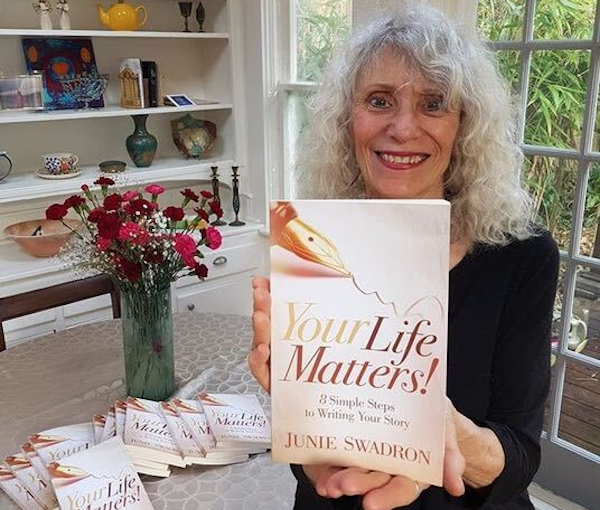
Junie Swadron recently released her latest book. (photo from Junie Swadron)

The Nov. 3 release of Junie Swadron’s most recent book, Your Life Matters! 8 Simple Steps to Writing Your Story, could not have arrived on the shelves of booksellers at a more opportune time. The pandemic has presented an occasion for self-reflection, and a chance to place memories and contemplations onto paper and computer.

Swadron, a Victoria-based psychotherapist, author and writing coach, hopes the book will aid prospective memoirists in writing their story, breaking through blocks with confidence and freeing them from what may have been a painful past. Hard lessons of life can become the greatest gift, she says, and writers can inspire others with the wisdom they have gained.

“In my 30 years practising psychotherapy, the most common theme among clients – whether they be CEOs of large companies or art students – is low self-esteem. Most people don’t value what they have achieved and don’t know how to recognize the good in themselves, to varying degrees,” Swadron, who is Jewish, told the Independent.

“This is a book for people to look at their lives and see the value, the beauty and the contributions they have made. And then to write their life stories from an empowered place, from a place of feeling strong, tall and proud. Not in an egoistic way, but in a way that they can say, ‘Hey, look how far I’ve come. Or, wow, I did that!’”

The challenge of writing a memoir can be daunting, the book notes, even for a professional with years of experience in their chosen field or an individual with a unique point of view. In Your Life Matters, Swadron attempts to guide the reader towards a focus on common themes – while remaining honest and truthful to the past – and the recording of meaningful experiences with certainty and ease. She also shares some of the factors that have helped her become a more assured writer and demonstrates how someone could apply these insights to their own memoir.

The book, too, provides therapeutic exercises for writers to use when drafting their stories. A memoir, Swadron said, can be a useful tool for an individual to work through difficult experiences and reframe their trauma. Your Life Matters lists steps to record the significance of life’s major events and influences. According to Swadron, memoir writing then becomes a memorable and achievable goal.

“The book is for anyone who wants to recount their life journey, whether they be a senior or an entrepreneur, and take the time to understand more about themselves throughout the process and transform pain from the past. What sets me apart from other writing coaches is being a psychotherapist. Not only do I know how to teach people how to write books, I get them to dive deep into their story and come out the other side stronger, as a result of them knowing who they are,” she explained.

“Say a person found a weight loss program and it’s really successful,” Swadron posited. “They got into it in the first place because they needed to lose weight. They lost 200 pounds, kept it off, and they need to not only write the story of how they did that but who they were as someone struggling with a food addiction. And who they have become since they have achieved their maximum goal of what is healthy for them. They need to put themselves in the story for others to be able to relate to whatever it is they are passionate about because they have found a solution and can assist others going through a similar struggle to find their way with more ease and grace.”

She cites her operating principle as “your soul meets you on the page and something shifts. You begin to stand taller. Then, one day, you notice your voice on the page has become your voice in the world.”

Swadron has three previous titles to her credit: Colouring Your Dreams Come True, a colouring book for people of all ages, Re-Write Your Life and Write Where You Are. Additionally, she has penned a piece for the stage, Madness, Masks and Miracles, a play to dispel myths and stigmas about mental illness. Last year, she founded the Academy for Creative and Healing Arts (ACHA) for people with mental health challenges.

Beyond her books, Swadron provides workshops, online courses and meetings throughout the year – all of which are currently taking place on Zoom – to help people with their writing. These include an author mentorship program, a class on creativity during COVID-19 and a Sunday morning “sacred” writing circle. For more information, visit her website, junieswadron.com.

Sam Margolis has written for the Globe and Mail, the National Post, UPI and MSNBC.