Skip to content
  • Home
  • Subscribe / donate
  • Events calendar
  • News
    • Local
    • National
    • Israel
    • World
    • עניין בחדשות
      A roundup of news in Canada and further afield, in Hebrew.
  • Opinion
    • From the JI
    • Op-Ed
  • Arts & Culture
    • Performing Arts
    • Music
    • Books
    • Visual Arts
    • TV & Film
  • Life
    • Celebrating the Holidays
    • Travel
    • The Daily Snooze
      Cartoons by Jacob Samuel
    • Mystery Photo
      Help the JI and JMABC fill in the gaps in our archives.
  • Community Links
    • Organizations, Etc.
    • Other News Sources & Blogs
    • Business Directory
  • FAQ
  • JI Chai Celebration
  • JI@88! video

Recent Posts

  • Sharing her testimony
  • Fall fight takes leap forward
  • The balancing of rights
  • Multiple Tony n’ Tina roles
  • Stories of trauma, resilience
  • Celebrate our culture
  • A responsibility to help
  • What wellness means at JCC
  • Together in mourning
  • Downhill after Trump?
  • Birth control even easier now
  • Eco-Sisters mentorship
  • Unexpected discoveries
  • Study’s results hopeful
  • Bad behaviour affects us all
  • Thankful for the police
  • UBC needs a wake-up call
  • Recalling a shining star
  • Sleep well …
  • BGU fosters startup culture
  • Photography and glass
  • Is it the end of an era?
  • Taking life a step at a time
  • Nakba exhibit biased
  • Film festival starts next week
  • Musical with heart and soul
  • Rabbi marks 13 years
  • Keeper of VTT’s history
  • Gala fêtes Infeld’s 20th
  • Building JWest together
  • Challah Mom comes to Vancouver
  • What to do about media bias
  • Education offers hope
  • Remembrance – a moral act
  • What makes us human
  • המלחמות של נתניהו וטראמפ

Archives

Follow @JewishIndie
image - The CJN - Visit Us Banner - 300x600 - 101625

Tag: art

Chosen Family now at Zack

Chosen Family now at Zack

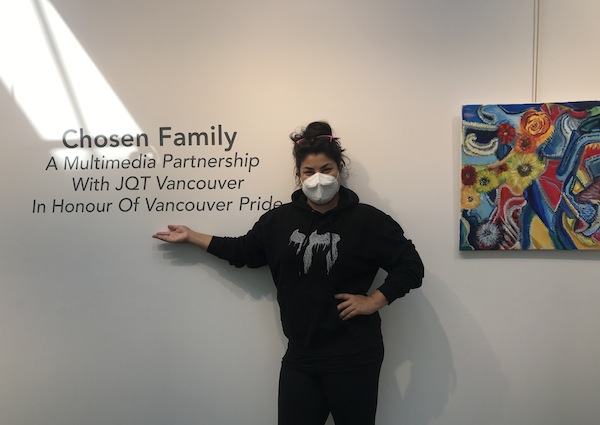
JQT Vancouver executive director Carmel Tanaka at the Zack Gallery, where the Chosen Family exhibit is on display until Sept. 30. (photo from Carmel Tanaka)

In a Simon Fraser University survey of more than 4,000 elderly Canadians (55+), conducted from August to October 2020, to see how people were coping with the pandemic, about 10% of respondents identified themselves as part of the LGBTQ+ community. These respondents were more likely to follow COVID protocols and to have said they “feel they have been here before” – they were 10 times more likely to report experience with HIV/AIDS than heterosexual persons. Among the many other findings, LGBTQ+ respondents were less likely to ask relatives for help, but more likely to call upon close friends.

In the context of the pandemic, then, the focus of the new exhibit at the Zack Gallery has added significance. The show, called Chosen Family, is a multimedia partnership between the gallery and JQT Vancouver in honour of Vancouver Pride. It opened officially on Aug. 26, with the artists in attendance.

JQT (Jewish, Queer and Trans) is an arts, culture and education nonprofit organization. It is dedicated to creating connections and seeking space to celebrate the intersectional identities of Jews of diverse sexual orientations and genders. The organization’s executive director, Carmel Tanaka, said JQT’s members are accomplishing their goals “by queering Jewish space and ‘Jewifying’ queer space in Vancouver.”

“We started JQT in Vancouver four years ago, as a grassroots movement, everyone was a volunteer,” Tanaka told the Independent. “We incorporated as a nonprofit in 2020. This show feels like a milestone. It is probably the first exhibition here, at the Zack Gallery, that features exclusively queer Jewish artists.”

The theme of the show, Chosen Family, reflects that some LGBTQ+ individuals face rejection by their immediate family and must look elsewhere for understanding and acceptance. “I’m lucky,” said Tanaka. “I didn’t have to look for another family; my family was supportive. Unfortunately, that’s not true for everyone.”
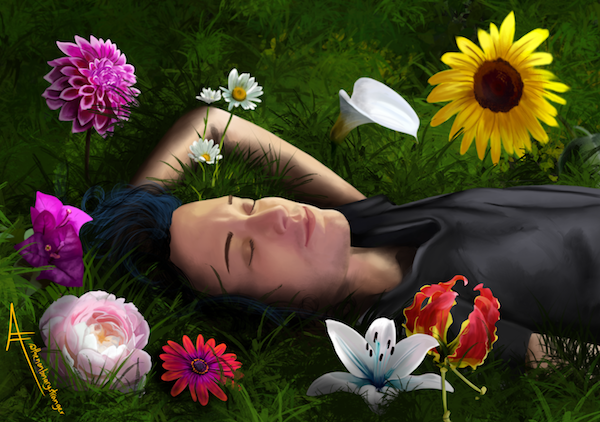
image - One of the images in a series of six by Ari Fremder
One of the images in a series of six by Ari Fremder.

Only a few artists are featured in the exhibit. “We invited more artists from the JQT community, plus their families, to submit art for the show, but not everyone was easy with the invitation,” Tanaka said. “Some didn’t feel ‘artistic’ enough. Others didn’t feel Jewish enough. Still others – the older people mostly – didn’t feel entirely safe to identify themselves as queer to the wider community. It is an ongoing vulnerability issue with many of us.”

Another reason might lie in the location of the gallery. “The Zack Gallery is inside the Jewish Community Centre, so the art must be family friendly. That might be a limiting factor for some artists,” Tanaka mused. “We might look at another venue next time.”

The show includes art in a variety of media: paintings, prints, textiles, cinematography, sculpture. A series of six pictures by Ari Fremder all have the same size and structure – a human face surrounded by flowers – but they centre on different faces, representing different friends or family members, and have varied arrangements of flowers. Nonetheless, they all have one thing in common – they are all beautiful and upbeat.

Two of Fremder’s paintings are self-portraits. One looks like a face in repose; the other an angel with black wings. The angel soars in the dark sky and, unlike the six-photo series, this image is moody and contemplative.
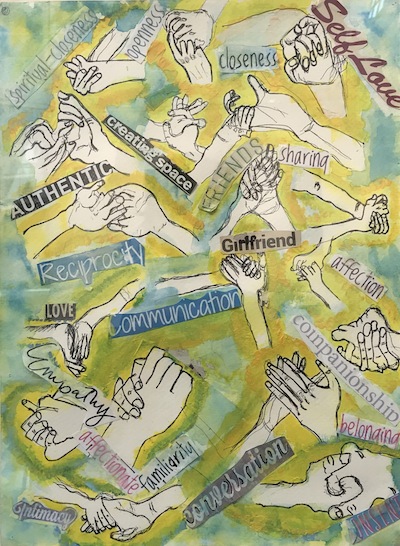
image - A collage by artist Holly Steele
A collage by artist Holly Steele.

On another wall, there are several paintings by Holly Steele. In one, a multimedia print, hands clasp together in various combinations: hands of friends and hands of family, interspaced with positive, trust-affirming words. The image, done in a muted greenish-yellow palette, screams of the yearning for acceptance.

In the centre of the gallery resides a sculptural composition by Morgan Strug. A dinner table with chairs around it shows us what a family meal means to the artist. There is understanding and affection there, benign teasing and fierce joy in the others’ fulfilments. Is it wishful thinking? Is it the artist’s reality? Everyone can decide for themselves.

Strug is the director of the short movie Enby, which screened at the Vancouver Queer Film Festival earlier this month, and the film is part of the Zack exhibit. The gallery planned three screening dates, the first being for the exhibit opening Aug. 26, as well as Sept. 9 and Sept. 30. Those who want to see it should contact the gallery first.

“This is a very eclectic show,” Tanaka said. “It is the first art show for several of the participating artists. Some of them celebrate both their identities: as a queer and as a Jew. We would love this show to become an annual tradition.”

Chosen Family continues until Sept. 30. To learn more, visit jqtvancouver.ca.

Olga Livshin is a Vancouver freelance writer. She can be reached at [email protected].

Format ImagePosted on August 27, 2021August 28, 2021Author Olga LivshinCategories Visual ArtsTags Ari Fremder, art, Carmel Tanaka, collage, Holly Steele, JQT, LGBTQ2S+, Morgan Strug, multimedia, painting, photography, Zack Gallery
Caring for cemetery

Caring for cemetery

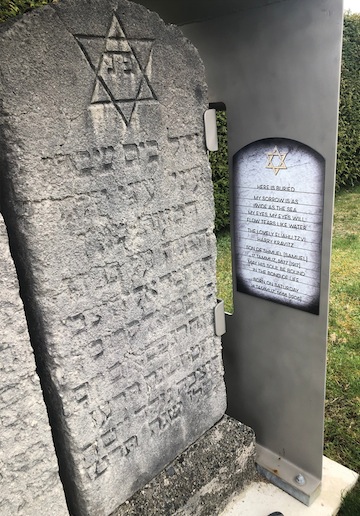
In the Jewish Cemetery at Mountain View, a shroud was erected to protect the Kravitz family headstones. (photo from Schara Tzedeck Cemetery Board)

Responsible for three Jewish cemeteries in the Lower Mainland, the Schara Tzedeck Cemetery Board recently completed several projects.

Unable to restore two of the most interesting headstones at the Jewish Cemetery at Mountain View, a large metal shroud was erected for protection over the Kravitz family headstones. Designed by Bill Pechet and donated by the City of Vancouver and Saul Goldberg, a cousin of the family, this has added a unique decorative feature in the cemetery, as well as essential protection from the elements.

photo - A translation of the Kravitz family headstones has been added
A translation of the Kravitz family headstones has been added. (photo from STCB)

The Kravitz/Goldberg family has been traced back to the 1800s and has four members buried in this pioneer cemetery. Leah Deslauriers, Saul Goldberg’s daughter, provided a family history that completed missing pieces of information about the family. Translation of the poetry on the headstones was completed by Daniella Givon and mounted in weatherproof panels inside the shroud.

With the protection in place for these headstones, this site already has become a highlight for visitors on their walking tours.

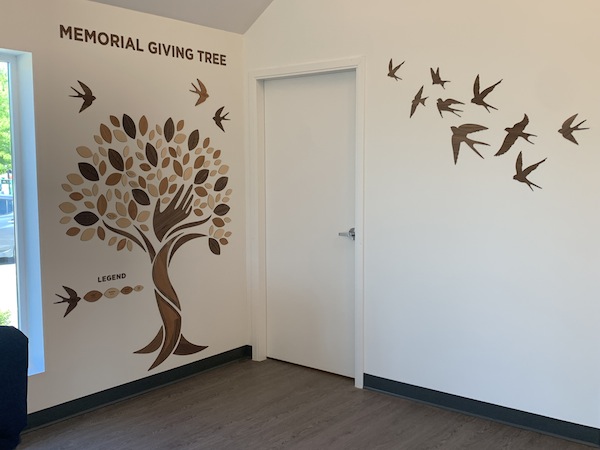
Inside the new Schara Tzedeck Funeral Chapel in Surrey is a beautiful Memorial Giving Tree. Designed and created by Eclipse Awards, this tree made of maple, cherry and walnut woods is prominently displayed at the entrance to the new chapel. It will contain engravings that members of the community may purchase to memorialize their loved ones buried in Surrey. The tree can contain up to 100 elements to be inscribed, ranging from small leaves to birds.

photo - Memorial Giving Tree at Schara Tzedeck Funeral Chapel in Surrey
Memorial Giving Tree at Schara Tzedeck Funeral Chapel in Surrey. (photo from STCB)

Years ago, the elders of the community were asked to place headstones on unmarked graves. Today, the Chesed Shel Emet Fund, fulfils that mandate. This past year, more than 50 headstones were placed on gravesites where there were no headstones. In some cases, there were no families to do so and, in many cases, there was a financial inability to have a marker.

The Schara Tzedeck Cemetery Board, under the executive director Howard Jampolsky, board chairs Jack Kowarsky and Arnold Silber, and funeral director Joseph Marciano, works to ensure that all members of the community not only have a dignified burial, no matter what their financial situation is, but also works to initiate projects that serve the community and help maintain the beauty of its cemeteries.

This past year, other projects have included a new irrigation system, the establishment of a water/well in New Westminster and the ability to manufacture burial caskets on-site. The cemetery board and the Chevra Kadisha also produced an informative video on tahara (the process of preparing people for burial), which may be seen on the website cemeteryboard.com.

For more information on these and other projects, contact Jampolsky at 604-733-2277, ext. 204.

– Courtesy Schara Tzedeck Cemetery Board

Format ImagePosted on August 27, 2021August 25, 2021Author Schara Tzedeck Cemetery BoardCategories LocalTags art, Bill Pechet, Chesed Shel Emet Fund, City of Vancouver, Daniella Givon, Eclipse Awards, Howard Jampolsky, Kravitz family, Memorial Giving Tree, Saul Goldberg, Schara Tzedeck Cemetery, Schara Tzedeck Funeral Chapel
About the Rosh Hashanah cover art

About the Rosh Hashanah cover art

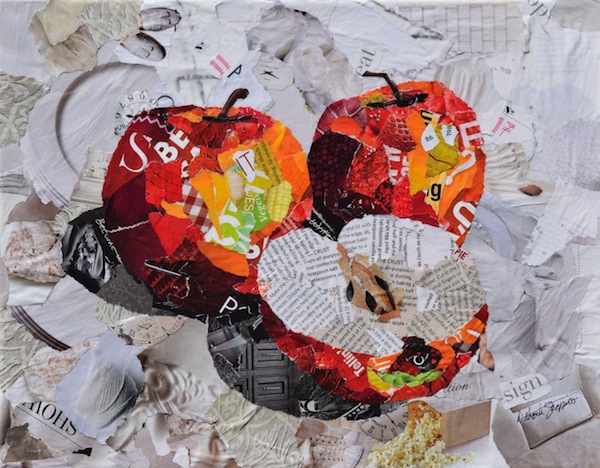
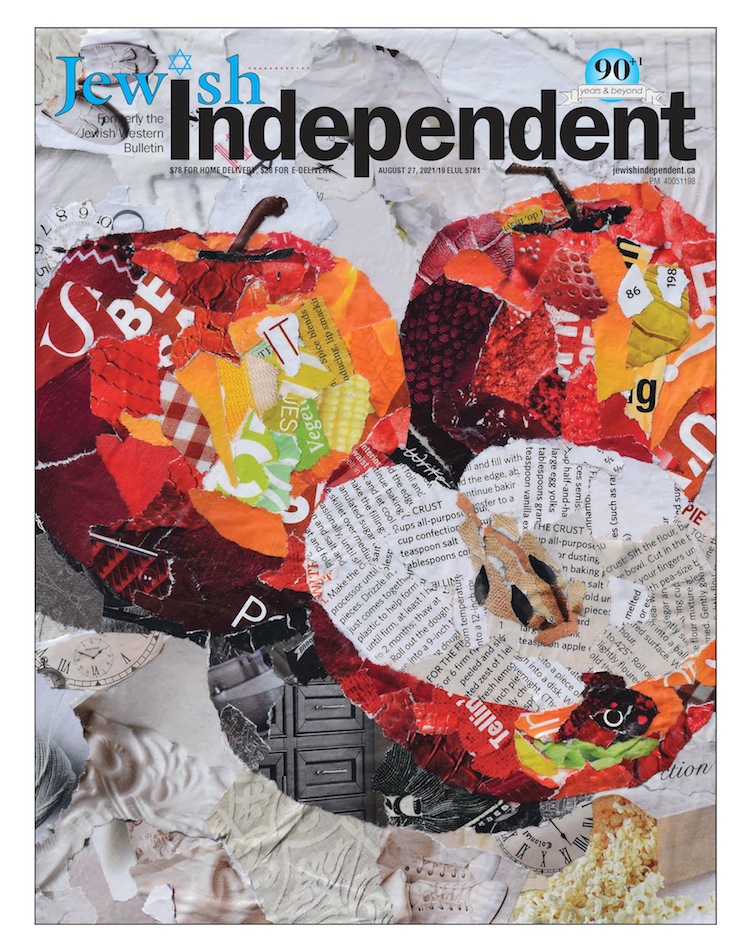
image - JI Rosh Hashanah issue 2021 cover with art by Deborah ShapiroDeborah Shapiro is a self-taught, award-winning artist from Akron, Ohio, who creates collages from bits of magazine paper – no paint is used. Her subjects include nature scenes, animals and still life images. Many of her pieces have words and added meaning, as with the apple collage that graces the cover of this special issue of the Jewish Independent. You will find parts of apple pie recipes within the cut part of the apple. Apples, of course, are one of the symbols of Rosh Hashanah, representing, as we dip them in honey, our wishes for a sweet new year.

Shapiro began her art career later in life, after the age of 50, following a jaw surgery.  Her mother gave her magazines as she recovered and Shapiro used them as paint to create paper paintings. Prior to that, she was a videographer for more than 35 years. To see more of her creations, visit deborahshapiroart.com or facebook.com/deborahshapiroart.

Format ImagePosted on August 27, 2021August 25, 2021Author The Editorial BoardCategories Celebrating the HolidaysTags apples, art, collage, Deborah Shapiro, Rosh Hashanah
Communicating with visuals

Communicating with visuals

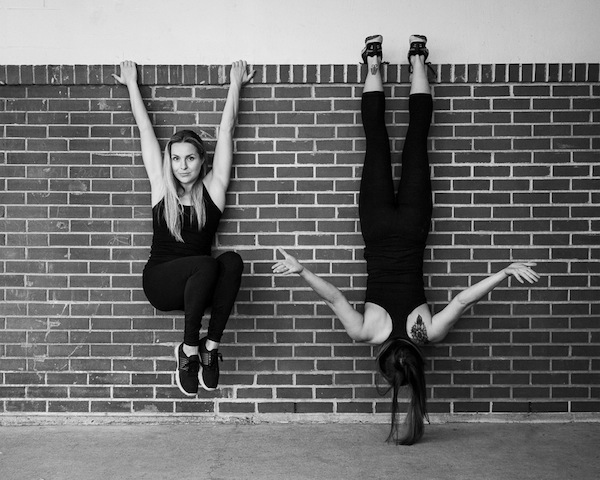
“Hanging Out” by Derry Lubell.

Derry Lubell’s photography captures the motion of dance, the ephemeral magic of the art form that generally only exists at the moment of performance. Unless, of course, it is recorded by a talented photographer.

Lubell’s solo exhibition The Body Speaks: Dance • Movement • Emotion opened on July 2 at the Zack Gallery. The official opening on July 8 was in person, as the long months of COVID restrictions started to ease. The gallery’s latest email to its patrons joyously states: “Appointments are no longer needed to see the show in person. Come on in!”

photo - “The Dichotomy” by Derry Lubell
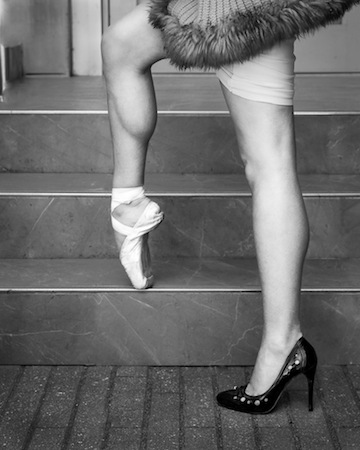
“The Dichotomy” by Derry Lubell.

When you do go in, you’re surrounded by dance and dancers, their beautiful faces, and their astounding bodies. The gallery is a quiet place, but you can almost hear the music floating in the air, while the graceful ballerinas leap and pirouette around you. Most images are black and white or rendered in muted colours. “I think you can see the lines better in black and white,” said Lubell in an interview with the Independent. “The colour is often distracting, and I don’t want that. I don’t like fussy. I want clean shots.”

Lubell has been an artistic photographer for about five years. “Before that, I had a career as a psychotherapist. I had a family to raise,” she mused. “I always had a small camera with me, since I was young, to photograph my family or places I visited, but it was casual, like memory shots. After I retired, I started thinking: what else do I want to do? I always enjoyed talking to people, understanding their emotions. I wanted to do something similar but without the responsibility. Photography allows that. Using photography, I can still communicate with people, discern their emotions, reach their hearts, but on a visual level, without words.”

photo - Derry Lubell
Derry Lubell (photo from Derry Lubell)

The former psychotherapist reinvented herself as a photographer, and it led her on a long road of self-exploration, especially because the technology had progressed so much. “I had to learn computers,” she said. “I work harder now than before I retired. Shooting. Editing my pictures. Studying. Taking classes. Looking at other photographers’ images to see what works and what doesn’t. I put up my pictures on my website and Instagram, so others can see me, too.”

The dancing series is her latest, and it came about almost by accident. “I always enjoyed working with people who are comfortable with their bodies,” she said. “Even as a psychotherapist, I paid attention not only to words but to body language. Many people speak with their bodies. Dancers are the best at that.”

Her admiration of dancers prompted her a few years ago to enrol in dance lessons. “It was incredible,” she remembered. “The instructor was wonderful. I asked her: could I take your photograph? She agreed. After that, I photographed her and some of her students, and some other dancers.”

Lubell prefers taking pictures in people’s natural milieu. Some of the photos in the exhibit she took during rehearsals in the dancers’ studio spaces around the city. For others, she arranged meetings with the dancers outside, in urban surroundings, parks or the beach.

“Each session is an hour or two hours long. Each one is a collaboration between a photographer and a dancer,” she explained. “Together, we choose a location. I would ask her to bring half of her dancing wardrobe, and we try different costumes to see what works for the camera. I often select the background, and then the dancer would start dancing, and I would walk around and take shots. I might suggest a position or a prop, like ‘play against that log’ or ‘turn this way,’ but they are the performers. They like to perform. It is up to me to capture the perfect moment.”

One of those moments resulted in a unique picture. Only the legs of the dancer are showing. One wears a point shoe, posing like a coquette on a staircase. The other is still wearing a stiletto. The photo, titled “The Dichotomy,” emphasizes the dual nature of the subject: a woman and a dancer.

“It was sold before the show started,” Lubell said. “I brought pictures to the gallery to hang on the walls. Everything was still on the floor, in boxes. I left the gallery for a few minutes. When I came back, Hope [Forstenzer, the gallery director] said: ‘You know, this one just sold.’ Before it was even displayed.”

photo - “Form in Flight” by Derry Lubell
“Form in Flight” by Derry Lubell.

Another interesting image, “Form in Flight,” is of a young dancer in street clothing jumping in front of a brick wall. Lubell took the photo in Chinatown. “It is one of the oldest walls in the city,” she said. “I walked around Chinatown with that dancer. She is a student, but she loves dancing. When I saw that wall bordering a parking lot, I asked her to dance against it.” The dancer’s flight in the image is airy and joyful.

Several pictures display more than one dancer. One of those photos, called “Hanging Out,” is imbued with humour: one dancer is hanging from a wall with her hands, while the other is hanging upside down by her feet. “They are best friends,” Lubell said. “They met years ago as gymnasts. One does stunts for the movies now – she is the one who is upside down. I asked them to dance against the wall, and they started playing together, having fun. That mutual pose was a surprise to me.”

Lubell considers her dancers as partners in her art. “They have the right of veto. It doesn’t happen often, but sometimes they would say: ‘Don’t use this picture, my leg is in the wrong position.’ And I won’t. I honour their requests. After all, they honour me by allowing me to shoot their photos.”

The Body Speaks is on display until Aug. 16. For more information, visit the photographer’s website, derrylubell.com.

Olga Livshin is a Vancouver freelance writer. She can be reached at [email protected].
Format ImagePosted on July 9, 2021July 7, 2021Author Olga LivshinCategories Visual ArtsTags art, dance, Derry Lubell, photography, Zack Gallery
Honouring women’s courage

Honouring women’s courage

Anne Petrie (photo from Maurice Yacowar)

The University of Calgary has organized a virtual exhibition to honour the efforts of Jewish women in the Canadian Armed Forces during the Second World War. Called She Also Served, it comprises a series of nine banners by various artists.

Originally scheduled to be displayed at the Military Museums in Calgary during Jewish Heritage Month in May, it has been made available online throughout 2021 and will be physically hung in May 2022. Of the 17,000 Jews who served in the Canadian armed services, more than 275 were women.

Among those selected to display their work is Anne Petrie of Victoria. For her banner, a digital print called “In the Tradition of Service,” Petrie chose to list all the known names of the Jewish Canadian servicewomen. She used a font that is reminiscent of the typewriters of the 1940s. Another layer of the banner has the names of 12 biblical heroines, confirming the tradition of Jewish women’s courage and dedication to serving their communities.

“I was immediately struck by knowing that, although they would not have had to hide their Jewish identity, it was still in those days not something that you would be comfortable being completely open about,” Petrie told the Independent. “Even if it was, at best, very casual antisemitism, it was a reality when they would have signed up. So, there you are fighting (even if it’s only at a desk) for something – a religion, a people, a culture – that you can’t really be openly passionate about.”

image - Anne Petrie’s “In the Tradition of Service,” 2021. Part of the She Also Served exhibit, now online
Anne Petrie’s “In the Tradition of Service,” 2021. Part of the She Also Served exhibit, now online.

For Petrie, She Also Served is an opportunity to reveal and contextualize the “Jewishness” of that other “them, the unsung and – worse – unidentified Jewish-Canadian women soldiers.” She said she is honouring them by naming them in “their doubly suppressed identities, as women and Jews.”

Petrie’s intention was to present the full names and rank (where available) of all the Jewish women known to have served. The collection of names fills the background layer of the 75-by-165-centimetre banner. Each name is in the colour of their respective services: olive green for army, dark navy for the navy and a lighter “air force blue” for the Women’s Army Corps. Emerging from the background in a larger, translucent Hebrew script, and in a camouflage pattern, are the names of Judaism’s biblical heroines, “themselves often subordinated by patriarchal tradition to the male heroes,” said Petrie.

“In making the banner itself, I was struck by how powerful it was to actually write out all the 279 names of the Jewish servicewomen that have so far been identified. I knew none of them personally, of course, but I felt that typing each name was a kind of acknowledgement and, strange as it sounds, I did feel a kind spirit or presence as I typed each of the names. I only wish we did know more about them, but I understand that research is continuing and, hopefully, there will eventually be stories attached to each of these women’s names,” she said.

Petrie thanked Janice Shulman and Rabbi Lynn Greenhough for their assistance with the project.

Prior to beginning her work as an artist, Petrie’s career spanned more than 30 years in radio and television, where she worked as a researcher, producer, documentary-maker, columnist and commentator in news and current affairs. She is also the author of several non-fiction books: Ethnic Vancouver, Vancouver Secrets and Gone to an Aunt’s: Remembering Canada’s Homes for Unwed Mothers.

After retiring from the CBC, she returned to school and obtained a bachelor of fine arts from the Alberta College of Art and Design in 2008. Since then, she has had a number of exhibitions. Her next exhibit, said/unsaid, is a two-person show with Jane Coomb – it opens at the errant artSpace gallery in Victoria (975 Alston St.) on July 9.

The other artists whose work is featured in She Also Served are Razieh Alba, Sophia Borowska, Alysa-Beth Engel, Lily Rosenberg, Talie Shalmon, Jules Schacter, Bev Tosh and Susan Turner. The representations exploring the servicewomen’s experiences range from naturalistic to abstract. Some works use archival photographs, while others use media include oil painting and paper-cutting.

The stories of 41 Jewish servicewomen are also featured on the website. These accounts were an impetus for the call for submissions for the exhibition, which was curated by the University of Calgary’s Prof. Jennifer Eiserman and librarian emerita Saundra Lipton. They ask for help in “completing the story” from anyone who has more information about the featured servicewomen and any of those identified in the list of names collected.

To view the exhibition, visit live-ucalgary.ucalgary.ca/she-also-serves/exhibition.

Sam Margolis has written for the Globe and Mail, the National Post, UPI and MSNBC.

Format ImagePosted on June 25, 2021June 24, 2021Author Sam MargolisCategories National, Visual ArtsTags Anne Petrie, art, Canada, memorial, Military Museums, Second World War, She Also Served, University of Calgary, women
Crackin’ Out online exhibit

Crackin’ Out online exhibit

A still from the documentary Crackin’ Out: The Ronnie Tessler Rodeo Collection, showing photographer Ronnie Tessler. The documentary was directed by Sarah Genge and produced by the Jewish Museum and Archives of British Columbia.

The Jewish Museum and Archives of British Columbia is currently hosting Crackin’ Out, an online exhibit of photographs of rural Western Canadian rodeo from 1976 to 1980 by Ronnie Tessler, along with a short documentary by director Sarah Genge. In rodeo, the term “crackin’ out” means “the beginning of the new season, breaking out of the chute, or even breaking out new chaps.”

“These explosive words epitomize for me the spirit of rodeo and the cowboy way of life,” Tessler explained.

The idea to shoot the images began as a “fun photo expedition” to Williams Lake Rodeo in 1976 by four friends who were members of a photography group, the Vancouver Image Exhibition Workshop, which is known for bringing in acclaimed guest artists.

The group worked together for a year and, with the permission of the Canadian Cowboys Association, produced an exhibit at the Finals Rodeo in Edmonton in 1977. Tessler worked independently for the next two years, documenting life at rodeos throughout the west, from British Columbia to Manitoba and into the northwest corner of the United States. Aspiring for objectivity, she realized it was not attainable.

“I wanted to know more about the cowboys, what went on behind the chutes and on the road and what motivated them to take on the challenges they did unsupported by a team or steady income,” Tessler said.

The exhibit takes the viewer not only to the action, the cowboys riding – and falling – but also to the personal and the life surrounding the event: the preparations, the traditions, the camaraderie and the love. The photos evoke an emblematic sense of a particular era in Western Canadian life.

Grouped into three chapters – “Before the Rodeo,” “The Rodeo” and “After the Rodeo” – each photograph is accompanied by stories, observations and explanations from Tessler that encapsulate the feeling that existed the moment each image was taken.

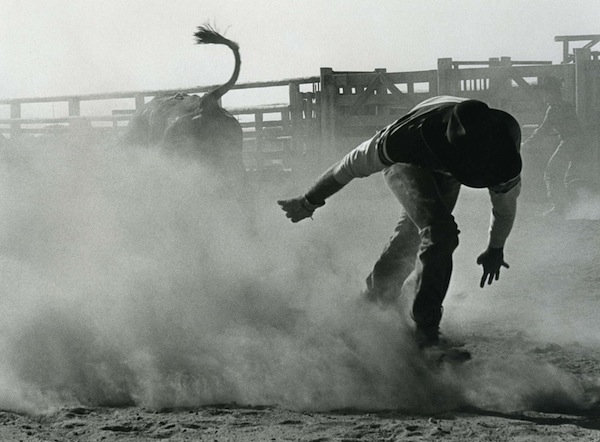
photo - A novice rider at the John Quintana Bull-riding School in Oregon, 1978. Photo taken by Ronnie Tessler. Part of the Crackin’ Out online exhibit
A novice rider at the John Quintana Bull-riding School in Oregon, 1978. Photo taken by Ronnie Tessler. Part of the Crackin’ Out online exhibit.

These images are what photographer Henri Cartier-Bresson, who is referred to in the exhibit, called “the decisive moment.” Or, as scholar John Suler, also quoted in the exhibit, described as “the moment when the visual and psychological elements of people in a real-life scene spontaneously and briefly come together in perfect resonance to express the essence of that situation.”

Rodeo was the first large, thematic body of work that Tessler did. Every project she undertook, she said, began when she “noticed themes coming out on my contact sheets and felt there was something I wanted to pursue. Each took about three years.”

Tessler’s Crackin’ Out was followed by her next major work, Israeli Suite, which was photographed over several visits to Israel. There was no similarity between these bodies of work and her last large project was different still – Jewish life in the West Kootenays.

As for the Jewish connections to the rodeo exhibit, Tessler observed, “I didn’t meet another Jew the entire time and did not encounter or make use of any specific Jewish values while doing the work. Many cowboys knew I was Jewish, and one asked what I was doing photographing a bull-riding school instead of watching Shoah on TV every night. I did enjoy the uniqueness of being an urban, Jewish woman with a family ‘goin’ down the road,’ putting myself on the line to record another way of life.”

Genge’s documentary Crackin’ Out: The Ronnie Tessler Rodeo Collection is part of the exhibit. It expands on the legacy of Tessler’s photography by exploring a multitude of perspectives on rodeo from such people as a stock contractor, a curator, a child of rodeo, a cowboy, an artist and a professor, as well as the archives intern who processed the collection.

“One photograph does not illustrate one idea. By speaking with eight different people, my aim was to bring their collection of voices together to elucidate an ever-shifting narrative of an image,” Genge said. “This film offers a brief glance at some of the distinct and disparate angles that create a multifaceted and, at times, conflicted understanding of Western Canadian rodeo.

“I endeavoured with this film to present aspects of rodeo frequently left untold, specifically its importance to Indigenous people, women and LGBTQ+ communities. It should be noted that, much like Tessler’s inherent presence in capturing these photographs, my subjectivity in curating them is unavoidable,” she added. “I am an unreliable witness who, six months ago, had never set foot at a rodeo, so my bias as an outsider is present throughout.”

The exhibit, which can be found at jewishmuseum.ca/exhibit/crackin-out, also features an hour-long video of its April 21 launch, which includes discussions with Tessler and Genge.

Sam Margolis has written for the Globe and Mail, the National Post, UPI and MSNBC.

Format ImagePosted on May 28, 2021May 27, 2021Author Sam MargolisCategories Visual ArtsTags art, cowboys, documentary, film, Jewish museum, JMABC, photography, rodeo, Ronnie Tessler, Sarah Genge
Community milestones … Waldman Library, Kleiner Services, Prairie Sonata

Community milestones … Waldman Library, Kleiner Services, Prairie Sonata

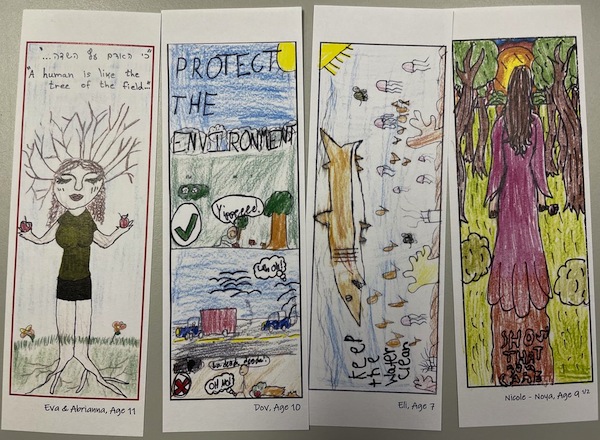
The winning entries of the Isaac Waldman Jewish Public Library’s bookmark contest.

Isaac Waldman Jewish Public Library wishes mazal tov to the winners of its bookmark contest and to all the contest participants. “We really appreciate the efforts of all the participants and the wonderful creativity they have displayed in designing their bookmarks. It was a pleasure to review them all,” said the library in an email. “This year, we have chosen four designs that best reflect the theme of sh’mirat ha’teva, protecting the environment.”

Chosen were the bookmarks by Eli Stefanek, Grade 2, Richmond Jewish Day School; Nicole-Noya, Grade 4, RJDS; Dov Bondar, Grade 5, RJDS; and Eva Rogachevsky and Abrianna Jacobs, Grade 5, Vancouver Talmud Torah.

***

Kleiner Services Inc., owned by Mary and Konstantin Kleiner, was among the top five finalists for the Best Immigrant Entrepreneur Award this year. This award recognizes outstanding new Canadians who, after immigrating, have created successful small businesses while demonstrating leadership and breaking down barriers.

Across four days earlier this month, Small Business BC announced six winners in various categories, capping a competition that saw 937 award nominations in 88 communities across the province. The Best Immigrant Entrepreneur Award went to Charcuterie Vancouver, and the other three finalists were Audielicious Restaurant (Fort St. John), Artemex Mexican Handcrafts (West Kelowna) and Soul Bite Food Inc. (Coquitlam).

Kleiner Services Inc. is a professional moving company that offers pre- and post-moving services, such as packing, storage and assembly. They are based in the heart of the Lower Mainland, servicing Greater Vancouver, Fraser Valley and Vancouver Island.

***

The Independent Press Award recognized Prairie Sonata by Winnipeg-based writer Sandy Shefrin Rabin as the winner in the category of Best Young Adult Fiction.

The competition is judged by experts from different aspects of the book industry, including publishers, writers, editors, book cover designers and professional copywriters. Selected award winners and distinguished favourites are based on overall excellence. This year, the award had entries worldwide – from Australia, Canada, India, Ireland, Japan, Singapore, Switzerland and the United Kingdom, among other countries.

“The quality and quantity of excellent independently published books hit a record…. We are so proud to announce these key titles representing global independent publishing,” said awards sponsor Gabrielle Olczak.

To see this year’s list of winners, visit independentpressaward.com/2021winners. (The JI’s review can be found at jewishindependent.ca/life-changing-impact.)

Format ImagePosted on May 28, 2021May 27, 2021Author Community members/organizationsCategories LocalTags art, Best Immigrant Entrepreneur Award, fiction, Independent Press Award, Isaac Waldman Jewish Public Library, Kleiner Services, Konstantin Kleiner, Mary Konstantin Kleiner, Sandy Shefrin Rabin, Small Business BC, young adults
From a singular perspective

From a singular perspective

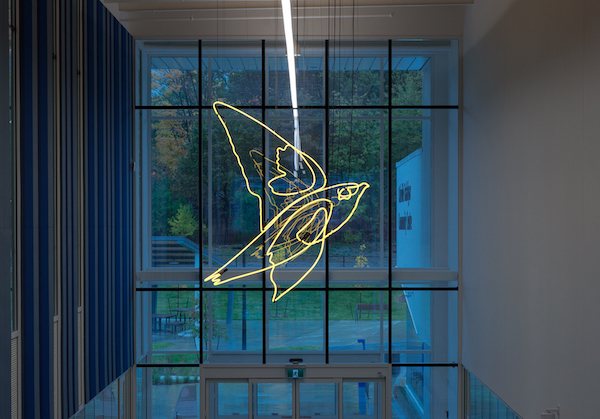
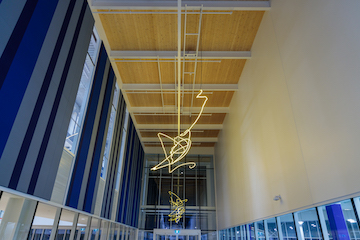
Barb Choit’s “Ravenous Appetite and Boundless Energy” features a chimney swift that can only be recognized as such from one vantage point. (photo from Barb Choit)

Last October, in a year that could be considered one of the worst in history for artists overall, Vancouver artist Barb Choit completed a large public art project in Oakville, Ont. “Ravenous Appetite and Boundless Energy” is the image of a bird, a chimney swift, created from hand-drawn, coloured, lead-glass tubing filled with neon. It is installed in the Oakville Trafalgar Community Centre.

“Most public art projects are by invitation only. However, for this one, I responded to an open call put out by the Town of Oakville,” Choit told the Independent in an email interview. “With this process, the first step is to send a letter of interest describing your qualifications and approach. From that, a public art jury selects a smaller group of artists to create a design for an artwork, which is called a ‘concept proposal.’ Each artist makes a presentation of their proposal and one is selected to create their proposed project.”

Winning the competition, it took her one-and-a-half years to convert her original idea into the final installation, a bird in flight, soaring just under the ceiling of the community centre.

The chimney swift has special significance for the Oakville community, said Choit. “The work responds to the transformation of the adjacent, abandoned Oakville High School into a habitat for a colony of chimney swifts, a threatened migratory bird. Every year, residents of all backgrounds come to watch birds roost in the chimneys of the former school. The community’s galvanization around birdwatching inspired me to represent the chimney swift as an ‘artifact’ of the culture and spirit of Oakville.”

In Choit’s installation, visitors to the centre can only see a bird in the design from a certain perspective. If they look at it from other positions, all they see is a wriggle, written in shining neon.

photo - The sculpture appears abstract to viewers moving through the space. Yet, from a specific vantage point, a representation of a bird appears
The sculpture appears abstract to viewers moving through the space. Yet, from a specific vantage point, a representation of a bird appears. (photo from Barb Choit)

“For ‘Ravenous,’” she explained, “I used a display strategy employed by science and nature museums to spark the viewers’ interest in the natural world – an optical illusion, anamorphosis. It is a visual illusion in which an object is distorted so that it can only be recognized from a specific vantage point. The sculpture appears abstract to viewers moving through the space. Yet, from a specific vantage point, a representation of a bird appears. Many people find optical illusions particularly engaging. Creating a visually striking piece was crucial to engaging a multi-generational community. And the glowing yellow form complemented the space for which I was designing the work.”

The word “illusion” suits the chimney swift as a species. According to Wikipedia, during flight, the birds often appear to beat their wings asynchronously, but photographic and stroboscopic studies have shown that they beat them in unison. The illusion that they do otherwise is heightened by their speedy and erratic flying, with many rapid changes of direction.

Choit’s choice of medium for this work necessitated collaboration with the manufacturers of the neon-filled tube.

“Different projects require a different balance between collaboration and delegation,” she said. “My recent project uses neon, which requires a type of industrial fabrication that includes hazardous materials and live electricity. It wouldn’t be practical or advisable for me to carry out this part of the fabrication myself. However, one needs a grasp of how materials work in order to create a feasible design and communicate with fabricators.”

She compared it to the architectural process. “In order to design and build a successful building, an architect does not show up at the building site with a hammer and nails,” she noted. “However, she must know how a building is constructed, as well as the properties and possibilities of the materials used.”

As she has done for other works, Choit did extensive research for this installation.

“People know me for my photographic work, but I have worked in most mediums at one point or another,” she said. “Within my work, I look at how communities and individuals imbue objects with meaning. Most of my major projects involve cultivating collections and working with archives. I explore this theme in a variety of media, such as photography, installation, performance and sculpture. Recently, I have had commissions for 2-D and 3-D public artworks.”

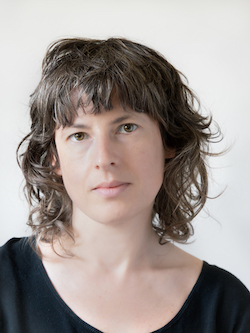
photo - Artist Barb Choit
Artist Barb Choit (photo from Barb Choit)

Choit’s interest in collections is longstanding. She has a master of arts in critical and curatorial studies from Columbia University in New York. “At Columbia, I researched institutional frameworks for art,” she said. “I wrote my thesis on the history of collecting. This area of academic research still drives my work as an artist.”

Public art is a relatively new area for Choit and she is exploring the possibilities. “I primarily make works to be shown in galleries; it is only recently that I have moved into public art. I like public art because the projects can be much more ambitious than something that would be purchased by an individual. However, I still enjoy making smaller works that can be appreciated privately and I am open to larger site-specific commissions to be installed in privately owned buildings and outdoor spaces.”

She is planning to do more work in the public sector, despite the challenges. “Usually, public art projects are by invitation. There are also a few websites that list opportunities for artists to submit their qualifications, with the intention of being shortlisted to create a proposal for a specific project,” she said, noting the need to be wary of fraud.

“Artists need to be careful of websites that list art opportunities because there are dubious organizations out there to exploit them,” she said. “For example, some art ‘opportunities’ ask artists to pay a fee to be considered for a project. Artists should never pay a fee to have someone look at their work.

“Also, some organizations solicit full proposals from artists. Creating a proposal is an immense amount of work and a highly specialized skill. For legitimate public art calls, artists who are shortlisted to create a proposal are paid a fee for this work. I discourage any artist (or anyone, for that matter) from engaging professionally with an organization that expects unpaid work.”

Among Choit’s previous public works is the photographic project “Campaign,” a billboard series commissioned by the Capture Photography Festival in Vancouver in 2017. “It was a series of outdoor billboards based on my 2015 photography project where I remade Andy Warhol’s shoe Polaroids from the 1980s. I documented a collection of vintage women’s shoes using discontinued instant film and a vintage Polaroid camera from the era.”

Despite her extensive education, experience and obvious talent, Choit considers luck as one of the best ingredients for artistic success.

“Luck is crucial,” she said. “It is not necessarily about chance but infrastructure – family and community support, education, healthcare, even freedom of expression, can be just as crucial as talent and skill.”

Learn more at Choit’s website, barbchoit.com.

Olga Livshin is a Vancouver freelance writer. She can be reached at [email protected].
Format ImagePosted on May 7, 2021May 7, 2021Author Olga LivshinCategories Visual ArtsTags anamorphosis, art, Barb Choit, birds, chimney swift, Oakville Trafalgar Community Centre, sculpture

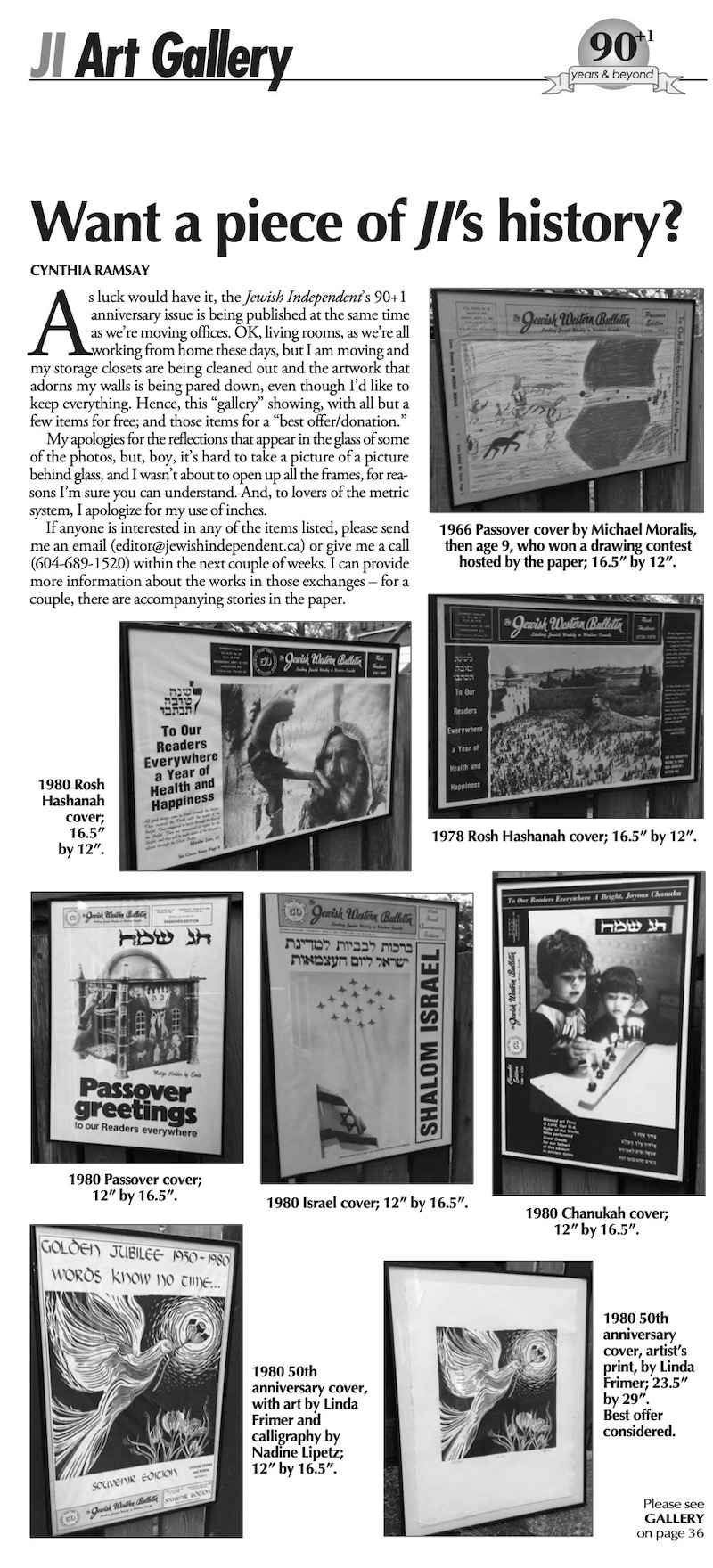
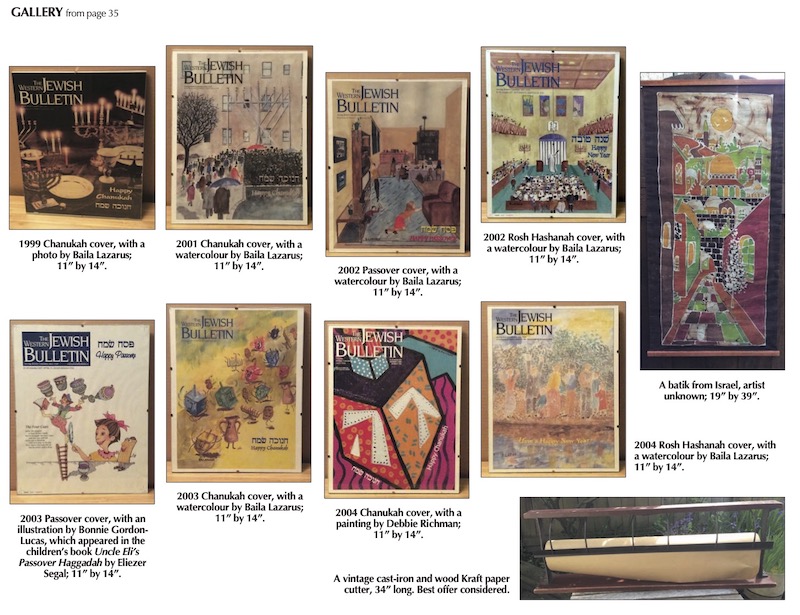
JI art giveaway … on the occasion of the JI’s 90+1


image - JI Art Gallery first page
image - JI Art Gallery second pageimage - JI Art Gallery third page

Posted on May 7, 2021May 7, 2021Author Cynthia RamsayCategories From the JITags A Portrait of Jewish Americans, art, giveaway, history, Jewish Western Bulletin
The women of Israel

The women of Israel

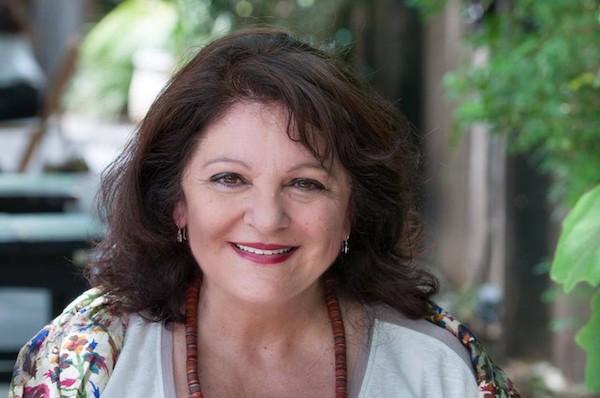
Curator and art historian Yael Nitzan, founder of Israeli Women Museum. (photo by Adi Eder)

How many “she-roes” of Israel can you name? Maybe you’d with Golda Meir, Israel’s first and only female prime minister. Or the tragic and courageous spy Sarah Aaronsohn and paratrooper Hannah Senesh. The list would include physician Vera Weizmann, the first first lady of Israel, who helped establish Chaim Sheba Medical Centre, now the largest hospital in the Middle East; and second first lady Rachel Yanait Ben-Zvi, who taught Jerusalem women how to grow vegetables, milk cows and make cheese so their husbands could go out and build the state.

These and many other women who played – and continue to play  – important roles in the history and culture of Israel will be immortalized later this year when the Israeli Women Museum opens in Haifa. The museum will showcase at least 100 noteworthy but not necessarily well-known women, from architects to lawyers to choreographers, says founder Yael Nitzan.

A curator, art historian and TV producer, Nitzan has overcome many roadblocks and setbacks in realizing her dream of opening Israel’s first museum dedicated to women.

“It was a struggle,” she admitted. “Now, with corona, the world has everyone sitting and listening, and, in three months, I accomplished what I could not accomplish in the past six or seven years.”

Nitzan gained the help of the Haifa Foundation in raising funds for the project, and she was given the rights to a former private school building in which the collections will be housed.

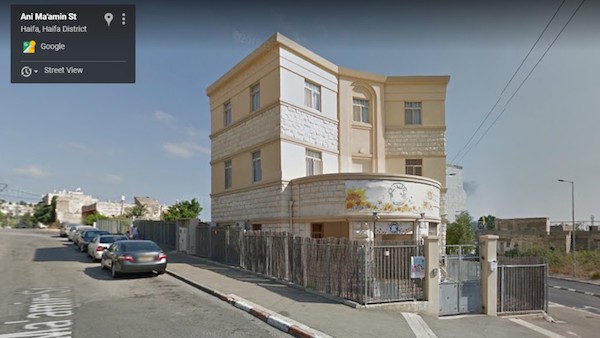
screenshot - The Haifa building that will house the Israel Women Museum
The Haifa building that will house the Israel Women Museum. (screenshot)

Brig. Gen. Gila Kalifi-Amir, former women’s affairs advisor to the Israel Defence Forces chief of staff, agreed to chair the museum. The board was joined by fellow Haifa residents Nadim Sheiban, director of the Museum of Islamic Art; and Prof. Aliza Shenhar, formerly a deputy mayor, ambassador to Russia and first female rector of an Israeli university.

“I found the right people,” Nitzan told Israel21c.

“There are currently about 45 women’s museums in the world, the most famous of which are the Women’s Rights [National Historic) Park in Seneca Falls, N.Y., and the Women’s Art Museum in Washington,” she said.

“The fundamental challenge in establishing a museum is not only in raising resources, but in creating a diverse and significant human and ideological infrastructure. The Israeli Women Museum must be a magnet of significance to the whole, or at least to large sections of, the population in Israel.”

Though Israel reportedly has the world’s highest ratio of museums per person, this will be the first one dedicated to the mostly unsung females responsible for weaving together its social, agricultural and business fabric. “Our museum will be on women in history and women in the arts,” Nitzan explained.

“The section on history commemorates the role of important women who have not been properly acknowledged.” Women like Hannah Maisel, who immigrated to Palestine in 1909 with a doctorate in agriculture and founded the region’s first agricultural training institute for women. And women like Rachel Roos Hertz (Harel), a Dutch resistance fighter who moved to Israel in 1950 after winning the U.S. Medal of Freedom and the U.K. King’s Medal for Courage in the Cause of Freedom, and became active in the Women’s International Zionist Organization (WIZO) – itself founded by Rebecca Sieff (Ziv) from the Marks family of Marks & Spencer, and whose name graces Ziv Medical Centre in Safed.

Some of the inspiration for this section comes from Prof. Margalit Shilo’s Women Building a Nation, a book published this year in Israel.

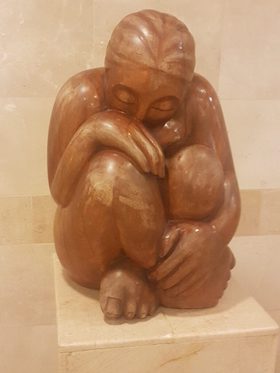
photo - Sculpture by 90-year-old Kati Paldi
Sculpture by 90-year-old Kati Paldi. (photo by Yael Nitzan)

“In the art section, we will spotlight women whose work was not considered important, as well as very important female artists of today whose work is rarely shown in museums,” said Nitzan.

Artists to be included run the gamut from Ziona (Siona) Tagger, one of the most important female Israeli artists of the early 20th century, to contemporary painter Haya Graetz Ran.

“Women in Israel contributed greatly to the establishment of the state, contributed to the construction of the infrastructure of settlement, education, defence, law, government, society, culture, cinema and theatre,” Nitzan said. “But, although they left their mark, they did not receive proper recognition and respect in building society.  The purpose of the museum is to raise their profile and to reshape the narrative of the critical role of women as full partners in leadership and public space design over the past century.”

Nitzan invites anyone to contribute stories or items relating to Israeli Jewish, Arab, Druze or Christian women, and even artists, poets and leaders from the Holocaust era who did not manage to get to Israel. She can be reached through the museum’s Facebook page. Donations for the project are being funneled through the Haifa Foundation.

Israel21c is a nonprofit educational foundation with a mission to focus media and public attention on the 21st-century Israel that exists beyond the conflict. For more, or to donate, visit israel21c.org.

Format ImagePosted on May 7, 2021May 7, 2021Author Abigail Klein Leichman ISRAEL21CCategories IsraelTags art, history, politics, She-roes, women, Yael Nitzan

Posts pagination

Previous page Page 1 … Page 7 Page 8 Page 9 … Page 18 Next page
Proudly powered by WordPress