A time to learn who we are

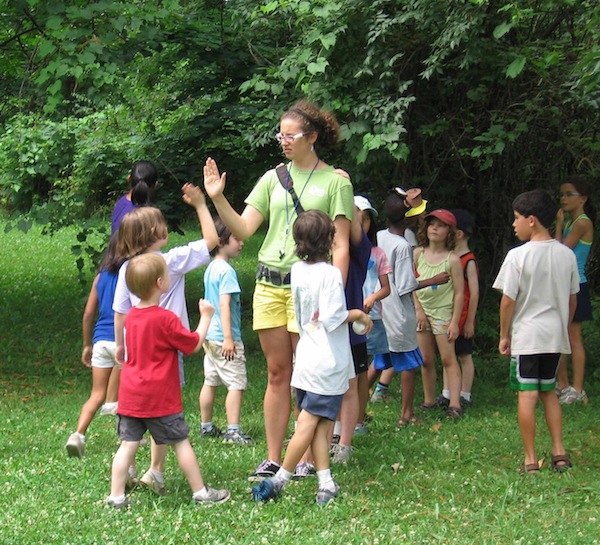
For many kids, camp is the only time they find themselves in a less structured environment. (photo from pixabay.com)

I remember the days when going to camp was the annual ritual, part of the summer holiday agenda. In our Winnipeg Jewish community, camps were standard practice. It seemed to me that all of my friends were going to be there, but there were always new faces. Some of them would prove to be the companions of my growing up.

Camp was there to free us from the constraints of everyday life, school and parental supervision. For some of us, being out there, in a natural setting, was the only time we ever found ourselves in a less structured environment, as most of us were city-dwellers. And there were always elements of Jewish culture to be shared.

But what I remember most of all was the consciousness that I was alone in a way different from the ordinary. I was in a cabin or a tent where most of my companions were strangers, at least at the start of the summer. Parents were far away. There was a counselor, but he or she was more like a referee than a parent. Whatever issues might arise between my companions and me, resolution would require direct negotiation without intervenors.

Here was an opportunity to test out our interpersonal skills and discover whether we would be leaders or followers, and in what areas did we have knowledge we could share. Here we could discover what issues might be important to us in person-to-person relationships. It had a different feel than our relations with siblings but with the intimacy of living together. We might even have to get into a physical fight if a conflict were grave enough. Would we allow someone to bully us? I certainly had to develop my capacities in these areas in my home environment.

In my case, I went the whole route: camper, counselor, program director. I can honestly say that the camping experience was my personal proving ground for skills I would hone and embellish throughout my life. In retrospect, I realize how important these occasions were for me.

I had the good fortune to attend a camp in my teen years that included subsisting for a few days in a wilderness environment. We hiked. We canoed. We even spent some time in a lake waiting for rescue when our canoe foundered in a sudden storm. I actually have started a fire by rubbing two sticks together. I have slept several nights in a forest with my companions listening to all the mysterious night sounds. We never saw a wolf or a bear, but we got to use copious amounts of mosquito repellent. I have lugged in the groceries and I have cooked food over an open fire. Potatoes are easy, but eggs are more difficult. The experiences were unforgettable.

Max Roytenberg is a Vancouver-based poet, writer and blogger. His book Hero in My Own Eyes: Tripping a Life Fantastic is available from Amazon and other online booksellers.

Extremes and elections

Drawing parallels between political events in disparate countries may be folly, but it’s the season for frivolity, so why not. As British Conservative Prime Minister Boris Johnson was piling up an historically massive majority government, Canada’s Conservative leader Andrew Scheer was giving in to an apparently inevitable whimpering end to his leadership.

For most British Jews and many other observers, Johnson’s victory elicited something between relief and elation. While the Labour party has been the traditional home for many or most of that kingdom’s Jewish voters for generations, it is estimated that just six percent of British Jews voted to elect Labour leader Jeremy Corbyn prime minister this year. Corbyn has alienated Jewish voters and aligned with the most extreme elements in British society; his party is demonstrably rife with antisemitic people and ideas, as evidenced in a years-long probe first by the party and now by the country’s human rights watchdog. Under Corbyn, it seemed, there were two things the party would not tolerate: racism and Jews.

Of course, the election was not a litmus test on Corbyn’s antisemitism. Few non-Jewish voters probably made their decision based on that concern. Rather, his position on the ballot question – Brexit – was confused and inarticulate. Still, it was with a sense of justice, if not schadenfreude, that many Jewish observers watched Corbyn’s career collapse last week. Even so, the horse they bet on isn’t without serious flaws: Johnson is well known for his racism, xenophobia and Islamophobia, and his hard-right agenda is antithetical in other ways to many Jewish voters who may have found themselves between a rock and a hard place.

Hours earlier, Canada’s Scheer dropped the bomb that he would resign as party leader. The wagons had been circling since his defeat in the federal election in October. His Achilles heel, it is widely accepted, was his ambiguity around socially conservative policy issues.

During the campaign, opponents suggested that Scheer had concealed plans to threaten marriage equality and reproductive rights. However, the law permitting gay marriage and the absence of a law around abortion are both consequences of Supreme Court decisions, not of Parliament acting of its own volition. Barring a revolutionary shift at the Supreme Court, the status quo constitutionally could not be undone. More practically, there is very little political will to alter the status quo on these and a host of other litmus test issues. Not only are Canadians at large mostly in agreement with the way things stand, the critical mass of voters who swing elections are overwhelmingly centrist.

On the face of it, Scheer’s argument – that he has specific personal views that he would not manifest into legislation or policy; indeed, Justin Trudeau effectively and successfully made the same case four years earlier – is a morally valid one. Scheer’s problems on this front were twofold. He expressed his position poorly, failing to articulate either his deeply held values or his endorsement of the people’s consensus in a way that resonated with voters, and he misread the depth of investment many or most Canadians now have on these topics. He bet that Canadians might be satisfied with and respect the idea that he believes particular things but would not legislate on the basis of these faith-based positions. While this left many of his core supporters unenthused, it also misread the enthusiasm of the very voters he was trying to capture. Scheer’s refusal to participate in Pride parades became symbolic. A proportion of Canadians – the proportion that could swing elections – no longer wants a leader who will merely not interfere with an individual’s right to marry or to control their reproductive system, they want leaders who will unambiguously champion these rights.

There was plenty else wrong with the Conservative party’s campaign but, as Scheer tried to remind rogue members of his own party in the weeks following the results, they kept the Trudeau Liberals to a minority and, indeed, created a genuine threat of defeating them at points in the campaign, something few Conservatives thought was a reasonable possibility when Scheer was first elected party leader two years ago. Alas for him, the party smells blood and seems to want someone who can go in for the kill when this minority Parliament dissolves.

Even with the Conservative party in transition, Canadians might have to head to the ballot box before Trudeau’s four years are up. For the British, this month’s election was their third in less than five years. Meanwhile, Israel is gearing up for its third election in a year and the United States, too, is tumbling towards a fraught election.

We are in the midst, it seems, of a continuing test as to how well democracy can negotiate political extremism. At least for now, in Canada, the socially conservative “private” views of Scheer are political losers, but election results in other democracies prove that complacency can’t be an option.

The supporting cast in our lives

Shabbat, Dec. 21
Vayeishev, Genesis 37:1-40:23

I am a rabbi because of a game of catch I played at camp with a rabbi more than three times my age. I found love and happiness and my partner in life because my best friend and my family helped me through a very difficult time. I survived the social pressure cooker of high school because my woodshop teacher took a personal interest in my well-being. I am alive today, I truly believe, because an anonymous man pulled me back from the curb as I was about to step into oncoming traffic in Manchester, England. (I was looking in the wrong direction for British traffic patterns.)

We have all sorts of names for these people in our lives. Some call them guardian angels, some call them heroes, and our tradition calls them shlichim, “messengers” or “emissaries” from God. I call them supporting actors. A rabbi, a friend, family, a teacher and an anonymous man in the movie that is my life: these are the people who have enabled me to play a starring role!

These are the people who, intentionally or not, gave the trajectory of my life a nudge at just the right moment and kept it on track, or steered it in a new and better direction. If awards were given to supporting actors in life as they are to movie actors, then they would each deserve an Oscar for the roles they played and for how their playing of their roles enabled me to play mine.

Who are the supporting actors in your life? Who are the people, past or present, who, at critical crossroads in your life’s journey, gave you directions, held your hand and walked a bit of the way with you? Who are the people who, upon reflection, were it not for them, everything would be different and so much would not have been possible?

Consider for a moment the story of Joseph and his coat of many colours in this week’s Torah portion, Vayeishev.

Here, we meet Joseph, son of Jacob, grandson of Isaac, great-grandson of Abraham, who, by all accounts, is a leading man in the story of the Jewish people. Joseph, in my estimation, is the second most pivotal person in Jewish history. The most pivotal one is a man whose name we don’t know and the Torah doesn’t record, but whose role as a supporting actor in one scene of Joseph’s life changes the arc of Jewish history.

In this week’s portion, Joseph goes out searching for his brothers, who are supposed to be in the field tending the flock. He searches in all the usual places but can’t find them. Along the way, he meets a man whose name we never know: the Torah refers to him simply as ha-ish, “the man” who saw Joseph wandering in the field (Genesis 37:15).

There is an allusion here to the nameless man or angel that Jacob, Joseph’s father, wrestled with in the previous parashah, Vayishlach. We note that, sometimes, when the Torah does not name a character, that character comes to play a pivotal role in the unfolding story. Such is the case in this instance. The man sees that Joseph appears to be lost and approaches him. He asks: “What are you looking for?” Joseph responds, “I’m looking for my brothers. Can you tell me please where they are tending the flock?” (See Genesis 37:15-16.)

The nameless man remembers seeing Joseph’s brothers, he overheard them talking about heading toward a place called Dothan. On the anonymous man’s advice, Joseph seeks his brothers there and finds them. Shockingly, they are not happy to see him. They conspire against him, abuse him, threaten to kill him and, eventually, sell him into slavery to a band of traveling nomads who are headed to Egypt. Through a series of events, Joseph, the boy who looked for his brothers in a field, becomes the chief advisor to Pharaoh and ascends to the second-most powerful position in all of Egypt.

Meanwhile, a famine occurs in the Land of Israel and these same brothers are sent by the leader of the Israelites, their father Jacob, to find food. They travel to Egypt and, this time, it is they who are surprised to find their brother – not only alive, but also in a position to help them. After a series of encounters, Joseph embraces them, asks after his father and makes all the arrangements for the entire nation of Israel to immigrate to Egypt. His position and power save the Jewish people and, for many years, they live well in Egypt and thrive.

Then, a new pharaoh comes to power and forces the Israelites into slavery. A prophet named Moses rises up from among them and, through plagues of frogs, lice, boils and so on; the splitting of the Red Sea; and, ultimately, the giving of the Torah, the people return to the Land of Israel. And that’s pretty much the story of our people.

But what about this nameless man? Who or what was he?

The commentators offer a variety of answers. The 11th-century scholar, Abraham ibn Ezra, reads the text of Genesis 37:15 with a p’shat, a “straightforward” interpretation and concludes this was a passerby. Rashi, on the other hand, delves further and concludes: “This [the man] was the angel Gabriel, as it says (Daniel 10:21), ‘and the man Gabriel.’” (Rashi on Genesis 37:15) Rashi draws inference from the definite article that is used to identify “the” man.

Ramban explains that he was an ordinary man (a passerby), yet he was unwittingly fulfiling God’s design. He was actually “sent” by God to guide Joseph, though he himself was not aware of the significance of his actions. In Hebrew, the word malach means both “angel” and “messenger,” because every malach, human or supernatural, is one of God’s messengers, activated to implement His will on earth. (See Ramban on Genesis 37:15.)

Menachem Mendel Morgensztern of Kotzk, known as the Kotzker Rebbe (1787-1859), goes in a completely different direction: “The angel taught Joseph that, whenever one is straying in the ways of life, when one is downtrodden or downcast, one should speak to oneself and clarify for oneself what one is really asking for, looking for, seeking, and what one really desires, so that one can return and first explain to oneself what one needs.”

The Kotzker Rebbe seems to disagree with Ramban, Rashi and Ibn Ezra, saying, it’s not a passerby, God or an angel that points the way. Rather, he says that the supporting actor in this unfolding mystery is Joseph’s inner voice and that, sometimes, our inner voice can be our own supporting actor.

Whatever or whoever he was, were it not for ha-ish, the man Joseph met along the way, the man who told Joseph where to find his brothers, how different it all could have been.

We never know in the present tense which people or events will be the most instrumental and transformative in our lives but, in hindsight, nothing is clearer. Upon reflection, the pieces of the puzzle and the paths of our lives are perfectly clear, even if they may be filled with uncomfortable observations.

This week’s parashah is a reminder to all of us to recognize the supporting actors who have guided us on our path and pointed us to our direction. It compels us to acknowledge, honour and thank them – even to give them awards – for the important roles that they’ve played, for doing so teaches us something greater still: in recognizing the transformative influence of supporting actors in our lives, we become keenly aware of how important we are in the lives of others. And we come to appreciate the capacity each of us has to help our friends, neighbours, even strangers achieve wholeness in life and find what they are seeking.

Rabbi Dan Moskovitz is senior rabbi at Temple Sholom and author of The Men’s Seder (MRJ Publishing). He is also chair of the Reform Rabbis of Canada. His writing and perspective on Judaism appear in major print and digital media internationally. This article originally appeared on reformjudaism.org.

A not so diasporic dialogue

Awhile back, friends invited me to a writers group. Although I told them that I wasn’t quite the right fit for the group, they convinced me to go.

The meeting was nearby. I enjoyed walking on a cold, dark and starry night. Yet, the meeting’s “gatekeeper” told me that I wasn’t eligible for their future gatherings, as I didn’t (yet) write or edit in their genre. Instead, she invited me to another writers event in October. (I’m not on the social media lists for these types of things, as I tend to focus on writing deadlines and my household – and I’m introverted.)

The event, titled Diaspora Dialogues, took place on a Friday and Saturday. Although it might been possible for me to attend some parts of it, I saw only one gathering that interested me. Called Vulnerability and the Public Space, it boasted a live podcast, but it was held on Saturday afternoon. As someone who writes on religious issues in the public sphere, it seemed relevant. However, I saw no way that I could pull off attending – Saturday is a family day for us. After we go to services, I’m often feeding everyone a big lunch and playing with kids afterwards. (In an ideal world, we’d even take a nap!) To go, I’d have to have given up my day off and commit to attending on Shabbat.

This “diaspora” event, which seemed designed for Canadians of colour, was scheduled at a time when Muslims might be busy (Friday afternoon) and on Shabbat, when Jewish families might be busy with family or synagogue or both. It wasn’t inclusive of religious diversity. It excluded any person who might be both religiously observant and a Canadian minority.

Even the event’s title puzzled me, as the first dictionary definition for diaspora usually references the historical dispersal of the Jewish people outside of Israel. The “scattering of a people outside their original country to other places” is a secondary definition. So, OK, this was a secondary use of the definition, fine.

I resolved my personal conflict. I emailed one of the organizers to point out the discrepancy. Although I write about vulnerable religious issues, often in the public space, I wouldn’t be able to attend this “diaspora” event, as its timing excluded Canadian religious minorities. No matter, though, perhaps I could access the podcast online later? Where, I asked her, could I locate the podcast link?

I received no reply. The podcast never appeared online.

We celebrate our religious freedom on Chanukah. It’s the chance to rededicate our spaces to Jewish practice. However, the holiday’s origins are a tale of struggle between minorities and the majority: Jewish assimilationists, religious fundamentalists and the Seleucid empire’s religious majority (aka the Greeks, or the Assyrians). We remind ourselves of this in each generation – we can’t take religious freedom or Jewish practice for granted.

There has been a huge rise in antisemitic activity. Identifiable Jews or Israelis are now often targeted, assaulted and harassed throughout the world.

A far more subtle and insidious change has also happened in terms of Jewish identity. Now, U.S. President Donald Trump has decided, via presidential order, to define Jewish students as an ethnic or racialized “national”group that, theoretically, can’t be discriminated against. Yet, the definition alone is a worrying precedent.

Take a look around you at any Chanukah event. We’re not one race by any (purely artificial and historic) definitions. We aren’t one homogenous ethnic group, even if we might have been thousands of years ago. Just ask those who argue about doughnuts versus latkes or other holiday foods. What or who defines us? We’re now facing new identity definitions – as delineated from the outside.

We are a diaspora religious minority group that evolves and changes. We haven’t disappeared despite changing definitions.

Chanukah’s a minor holiday on our calendar. It celebrates clinging to our freedoms in a dark world. It relies on a subtle understanding that not all discrimination is based on racism. It implies that religious, ethnic or racial background alone doesn’t solely define someone’s minority status.

A true acknowledgement and respect for religious freedom is one that practises intersectionality instead.

What is intersectionality? Our identities – racial, sexual, class, gender, religion, nationality, etc. – are complex and changing. We are each the result of several roads, always under construction, that meet in one huge intersection.

As Jewish North Americans, living in the Diaspora, we’re more than one ethnicity, gender or race. Together, we celebrate our tradition and identity as a triumph over adversity. We just may have to celebrate with an understanding that we’re no longer included in some folks’ definition of diaspora and, hence, excluded from the narrative. Heck, I cannot even access the podcast about the narrative!

Wishing you a very happy, inclusive Chanukah from my family to yours. Have a great winter break, one where you feel included! May it be full of light, joy and peace.

Joanne Seiff has written regularly for CBC Manitoba and various Jewish publications. She is the author of three books, including From the Outside In: Jewish Post Columns 2015-2016, a collection of essays available for digital download or as a paperback from Amazon. Check her out on Instagram @yrnspinner or at joanneseiff.blogspot.com.

A call to join Maspik!

No external threat worries Canadian Jewry more than the rising tide of antisemitism. For years, in grassroots consultations hosted by the Centre for Israel and Jewish Affairs (CIJA), community members have unanimously and consistently said antisemitism is their primary concern.

Pay attention to any conversation on the steps of your nearest synagogue or community centre and you’ll likely hear concerned community members say that Jewish organizations of all stripes should be doing more to combat the scourge of Jew-hatred. To paraphrase the words of an emphatic member of the community in Montreal: “Get together already! Enough is enough! Maspik!”

That passionate individual faithfully represented the perspectives of many in our community. To combat antisemitism, we must work together. We are stronger when we are united, and we must unite on this issue now.

No country in 2019 is free of antisemitism, no political orientation is insulated against Jew-hatred and no movement is entirely immune from discrimination against our people.

Contemporary antisemitism wears many faces and threatens our community on multiple fronts – from the extreme right to the extreme left and, increasingly, from segments within the Muslim community. Some antisemites operate in broad daylight in the public square and on social media. Others lurk in the obscurest corners of the dark web. What unites them is their hatred of Jews. And that should unite us.

Canada may be the best place in the world in which to be Jewish but, make no mistake, this country is not immune from antisemitism and the threat it poses to our safety and well-being.

For years, CIJA has worked to keep antisemitism at the margins. In recent months, these efforts have resulted in two important developments: Canada’s adoption of the International Holocaust Remembrance Alliance’s (IHRA) definition of antisemitism as part of the government’s anti-racism strategy and, secondly, the incorporation of many of CIJA’s policy positions in the study by the House of Commons Justice Committee, including our call for the creation of a national strategy to combat online hate and radicalization.

While these are important steps, in these challenging times, they are not enough. The enormity of the danger demands a unified approach. This is why we are calling on other organizations and individuals to join CIJA and a broad alliance of Jewish and non-Jewish groups in Canada from all sectors in establishing Maspik! A Coalition to Combat Antisemitism.

Thanks to support drawn from the proceeds of the recent Jewish National Fund Negev Dinner in Toronto, honouring Wendy Eisen and Carole Zucker, we now have the initial seed funds to launch this coalition, which we will expand and sustain over the longer term by establishing a fundraising program to ensure sufficient resources to create real impact.

In the coming weeks, CIJA and our federation partners across the country will establish an independent committee of lay leaders to oversee the grants and applications process. Once established, coalition members will be invited to apply for funding for action-oriented initiatives that advance our overarching objective of confronting and combating antisemitism in Canada.

It is time to act together. With your help, this coalition will provide support for individual organizational efforts, diminish the distracting noise of institutional egos, and give expression to a resounding sense of unity, as we join forces to combat a blight that is as old as the Jewish people.

Join CIJA, your local federation and other organizations representing tens of thousands of Jewish Canadians in saying enough is enough. Maspik!

Shimon Koffler Fogel is president and chief executive officer of the Centre for Israel and Jewish Affairs (CIJA). To learn more about Maspik! A Coalition to Combat Antisemitism, visit maspik.ca.

Time to face ourselves

Actor and comedian Sacha Baron Cohen delivered the keynote address last month at an Anti-Defamation League conference. His words quickly went viral because he pinpointed fears and challenges shared by millions about the power of social media. He hit many nails on the head.

“Democracy, which depends on shared truths, is in retreat, and autocracy, which depends on shared lies, is on the march,” he said. “Hate crimes are surging, as are murderous attacks on religious and ethnic minorities. All this hate and violence is being facilitated by a handful of internet companies that amount to the greatest propaganda machine in history.”

He was referring to social media like Facebook and Twitter and platforms like YouTube and Google, whose algorithms, he said, “deliberately amplify the type of content that keeps users engaged – stories that appeal to our baser instincts and that trigger outrage and fear.”

Had Facebook existed in the 1930s, he went on, it would have run 30-second ads for Hitler’s “solution” to the “Jewish problem.”

Baron Cohen acknowledged that social media companies have taken some steps to reduce hate and conspiracies on their platforms, “but these steps have been mostly superficial.”

“These are the richest companies in the world, and they have the best engineers in the world,” he said. “They could fix these problems if they wanted to.” The companies could do more to police the messages being circulated on their sites, he suggested.

He’s correct about the problems. But the first problem with his solution is that he is asking a couple of corporations to judge billions of interactions, making them not only powerful media conglomerates, which they already are, but also the world’s most prolific censors and arbiters of expression. Of course, by abdication, they are already erring on the side of hate speech, but is the alternative preferable? If we think Facebook chief executive officer Mark Zuckerberg has too much power now, do we really want to make him the planet’s censor-in-chief?

Yes, the platforms benefit from and, therefore, promote, the most extreme viewpoints. But, even if we could, would forcing those voices off the platforms make the world a safer place? There are already countless alternative spaces for people whose extremism has been pushed off the mainstream sites. Just because we can’t hear them doesn’t mean they’ve gone away.

Marshall McLuhan, the Canadian philosopher who declared “the medium is the message” died four years before Zuckerberg was born. He could have predicted that social media would change the way we interact and communicate. But has it fundamentally changed who we are? Or has it merely allowed our true selves fuller voice? Perhaps a little of both. Facebook, Twitter and the others are not agnostic forces; they influence us as we engage with them. But, in the end, they are mere computer platforms, human-created applications that have taken on outsized force in our lives. And all the input is human-created. Since the dawn of the industrial age, we have imagined our own inventions taking over and controling us, from Mary Shelley’s Frankenstein to 2001: A Space Odyssey’s Hal to Zuckerberg’s Facebook.

In all these cases, fictional or not, the truth is that the power remains in human hands. This is no less true today. We could, if the political will existed, shut down these platforms or apply restraints along the lines Baron Cohen suggests. But this would be to miss the larger point.

We live in a world filled with too much bigotry, chauvinism, hatred and violence. This is the problem. Dr. Martin Luther King said: “Darkness cannot drive out darkness; only light can do that. Hate cannot drive out hate; only love can do that.” And there are plenty of sites on social media that advance mutual understanding and love over hate. Are their messages as likely to go viral? Probably not. But that, ultimately, is determined by billions of individual human choices. A small but illuminating counterrevolution seems to be happening right now with a renaissance of the ideas of Mister (Fred) Rogers and his message of simple kindness. While much of the world seems alight in hatred and intolerance, a countermovement has always existed to advance love and inclusiveness. This needs to be nurtured in any and every way possible.

If Facebook were a country, its “population” would be larger than China’s. Bad example when we are discussing issues of free speech and the accountability of the powerful, perhaps, but illuminating – because an entity of that size and impact should be accountable. As a corporate body, it has few fetters other than governmental controls, which are problematic themselves. Concerned citizens (and platform users) should demand of these companies the safeguards we expect. We are the consumers, after all, and we should not ignore that power.

But neither should we abstain from taking responsibility ourselves. Social media influences us, yes. But, to an exponentially greater degree, it is merely a reflection of who we are. It is less distorted than the funhouse mirror we like to imagine it being. If what we see when we look at social media is a depiction of the world we find repugnant, it is not so much social media that needs to change, it is us.

You take care now, y’hear?

I just realized that, lately, I had unconsciously changed the way I say goodbye, particularly when I am speaking with women. As a younger person, it wouldn’t have occurred to me to say “Take care!” when parting with people. What’s more? It’s happening even when I have casual interactions. I started thinking about where my new-to-me phrase comes from and where I’d heard it before.

I was out walking my dogs when one of them (the young, spry Setter mix) kicked me in the shin. I looked down, in pain, when I saw that she, too, was surprised. She’d slipped on the slick sidewalk and certainly hadn’t meant to hurt me. A man at the bus stop remarked how icy it was, and I agreed. I said, “Take care!”

Later, my household was in bed when we heard an ominous thump outside. My husband made a joke, we laughed and went to sleep. In the morning, I saw a thoroughly smashed car, its front end bashed in. It faced the wrong way on a busy street near our home. Across the intersection, there was a truck, also facing the wrong direction, somehow wedged into someone’s yard. It was slippery, indeed.

Often the habit of suggesting people take care is aligned with another statement though, something like, “Things are more dangerous these days.” However, our Torah readings from this time of year, in Genesis, remind us that things have always been dicey out there, particularly for women and for those in positions of less power in society.

For instance, when the three strangers tell Abraham that Sarah will have Isaac, she laughs (Genesis 18:12-15). However, this is quickly followed by Abraham’s question about why she laughed and she says, “I didn’t laugh.” Why? “Because she was frightened.” Why did she lie? Well, she was an old woman. Strangers told her something ridiculous and then she was asked to take it seriously. She was afraid. Sarah wouldn’t be the first or last woman to feel threatened and unsafe. If something like this situation happened today, I wouldn’t leave until I’d said, “Take care.”

Not much further along in Genesis, Abraham bargains with G-d, asking how many people in Sodom have to be righteous for G-d to save the city. Abraham has some power here. He feels emboldened to speak out, but he also gets to stay home rather than go to Sodom to try and fix things. Instead, two angels go to Sodom.

Lot takes the angels in as his guests, but when a crowd gathers to do the visitors harm, Lot suggests an unsettling exchange. He says that, rather than let the crowd “be intimate with them,” he’ll send out his two young daughters instead. He will sacrifice his daughters to be violated by the crowd (Genesis 19:8) rather than let his male guests be endangered.

Reading Genesis, I am reminded by how these dangerous situations, and particularly ones that threaten women, are not at all new. These are issues of power, control and sexuality. In a modern political comparison: we act as though the MMIWG (missing and murdered indigenous women and girls) report and its findings are new or different. In fact, violence against women, and specifically minority women in vulnerable situations, is a bad news story played on repeat. These threats are close to home, and they remain frightening.

When I hear myself telling a friend – a single mom whose father just died – to take care, I realize who I am echoing in my head. I hear older African-American women in my Virginia neighbourhood saying goodbye to me: “You take care now, y’hear?” I hear my mom sighing as she hung up the phone (it was avocado green, with a long cord so she could cook while talking) at home when I was younger. She said goodbye with a worried expression that her friend couldn’t see, saying “Bye! Take care.”

This is the closing comment of women, all over, who know that the world can be dangerous. We’re sending out our concern to those we love. We’re acknowledging that, sometimes, we must depend solely on ourselves, because it doesn’t look like anyone (including G-d) is stepping up to keep us safe.

Sometimes, Bereishit (Genesis) offers stories to dig into. I enjoy their meaty narrative. I love interpreting what it all means. Other sections cause me to sigh just as my mom did. In a world where women still don’t have any assurance of safety from war, crowds and violence, and where those who have less power are at the mercy of the powerful, it’s hard not to feel sadness. How little things change.

This also is a continuing opportunity for social justice. We can fight for a better place for everyone. We can seek out and care for those around us, rather than choosing to discriminate or discard lives, as Lot would have done to his daughters. In the meanwhile, I’m often slipping down the icy street, worrying and wondering over how I can spread a sukkat shalom (a shelter of peace) over those I love and care for. So, I’ll say what many wise women have said before me. You take care now, y’hear?

Joanne Seiff has written regularly for CBC Manitoba and various Jewish publications. She is the author of three books, including From the Outside In: Jewish Post Columns 2015-2016, a collection of essays available for digital download or as a paperback from Amazon. Check her out on Instagram @yrnspinner or at joanneseiff.blogspot.com.

Troubles in leadership

A world leader decries investigations into his possible criminal corruption as an “attempted coup” based on “fabrications and a tainted and biased investigative process.”

No, not that world leader. This time it is Binyamin Netanyahu, Israel’s prime-minister-by-a-thread. Finally indicted on graft charges after months of anticipation, he became the first Israeli prime minister ever to face charges while in office. He insists the indictment will not impact his leadership, just as the country seems on an irreversible path to a third election in a year.

In a region with a scarcity of free and fair elections, Israel can’t seem to stop having them. From that perspective, things could be worse. Whether Netanyahu’s Likud party stands with him in his time of trouble remains to be seen. The possibility of his departure from the political scene, which he has dominated for nearly a generation, would provide the most significant shakeup of the field and possibly prevent a third inconclusive outcome.

On this side of the ocean, the U.S. House of Representatives continues investigating President Donald Trump. Few people, including Republicans, are making much of an effort to refute the basic facts. Evidence piles upon itself that the U.S. president indeed asked the president of Ukraine for a dirty political favour – a bribe – in exchange for military financial aid that had already been approved by the U.S. Congress. GOP responses to this evidence range from “So?” to the only slightly more nuanced argument that the president of the United States didn’t get what he wanted and the president of Ukraine did, so no harm done.

With Trump seemingly in thrall or somehow beholden to Vladimir Putin, and his party steadfast behind him, we are treated to the spectacle of a party that 60 years ago was trampling over individual liberties based on a largely false suspicion that “the Russians” were infiltrating the country’s government and threatening its entire way of life now responding to a disturbingly similar situation, this one far more provably real, with a shrug.

While Canada, thankfully, has no such level of political intrigue or corruption at the moment, a shocking diplomatic move last week has set the official voices of the Jewish community on edge.

The day before swearing in a new cabinet, the government of just-reelected Prime Minister Justin Trudeau opted to vote at the United Nations General Assembly to condemn all Israeli settlements in the West Bank, jumping on a dogpile led by North Korea, Egypt, Nicaragua and Zimbabwe, none of whom should be arbiters of justice or human rights. To be clear, the vote means almost nothing in practical terms. But symbolism does count. And the vote was a slap in the face by Canada to Israel and those in this country who recognize it as our closest ally in the region for historical, moral and pragmatic reasons.

Some speculate that the shift in tone reflects the new minority government currying favour with the New Democratic Party, which has included some notorious Israel-bashers. That is probably a less likely reason than the campaign by Trudeau to win Canada one of the rotating seats on the United Nations Security Council. Where former prime minister Stephen Harper’s refusal to “go along to get along” in the anti-Israel hatefest that occurs annually at the UN was seen as a key reason we lost out on a seat, Trudeau seems determined to hedge his bets.

A prestigious seat on the Security Council would presumably elevate Trudeau in the eyes of the world after he frittered away the “Canada is back” optimism of four years ago by failing to meet climate targets while bhangra dancing across the world stage.

Regardless of the motive, it is a reprehensible act that could have serious implications for the political orientation of Jewish Canadians in the next few years. Coming as it does while the ink is barely dry on the results of an election in which Liberals mostly made the right noises to Jewish and pro-Israel Canadians, it seems a particularly brutish little dagger to unsheathe now.

Generations struggle together

I’ve heard some unsettling real-life stories lately. These weren’t news, but family stories, in my social media inbox. One friend is wrestling with how to best cope with family members struggling with addiction. (This is, unfortunately, a common problem.) In another note, I heard of how an estate is being divided after a parent died; in this case, a sibling told his sister and her family (who stayed local to care for the parents) that she will be homeless within two months unless she can manage to get a mortgage to buy the family’s home. Another message concerns the arrival of a baby, and how scared the new mother is about being sent home early from the hospital. Finally, another friend and I shared our cultures’ rituals as we worked through a discussion about miscarriage, premature babies, infertility and pregnancy loss.

There is both love and struggling out there. These challenges are just part of dealing with our families and lives. No matter what your religion, you may encounter things like this in your life. But, while none of the stories I’ve mentioned is a “Jewish” one, neither are they not Jewish.

With these burdens in mind, I thought about the stories we hear in synagogue this time of year. This week’s parashah, Toldot (Genesis 25:19-28:9), offers vignettes about life. There’s Rebecca’s story about what it’s like to struggle with infertility and pregnancy difficulties. There’s sibling favouritism, as Isaac and Rebecca raise their twins, Jacob and Esau. There’s inheritance trickery when the twins struggle over their father’s blessing. Their dying father, Isaac, shows what some might call poor judgment, as he mixes up his children’s identity and offers them unequal blessings.

This section of Genesis contains a lot: wealth, poverty, lying, distrust, water rights, and discord between neighbours, intermarriage, family relationship troubles and even possibly some mental health issues. What happens to Rebecca, for instance, when Isaac dies? She needs to know that Jacob will marry someone with whom she can cope, as she mentions with the phrase, “I am disgusted with my life….” (Genesis 27:46)

When we wrestle with similar family and community relations issues in a 21st-century context, many feel isolated. Despite plentiful online information, we can feel overwhelmed and lost when life throws us big challenges.

Our tradition gives us support. When I hear the Torah read or read it on my own, I’m reminded that these stories come with centuries of commentary. When using a modern tool like sefaria.org, I can pull up the portion, but also see commentaries (in both English and Hebrew) that allow me to learn from that scholarship.

It’s true that, for some, nothing beats seeking out an elder or a rabbi who might offer in-person wisdom. For others, the struggles are deeply private. It can be good to have access to knowledge online when dealing with hard issues like addiction, infertility or other family issues. Sometimes, the backlash from older family members can be such that a young person might never again want to talk with them about it. For instance, the pressure to “start a Jewish family” or even “accept being childless” from an older family member can be anguishing.

This Torah portion is called Toldot, which translates to Generations. We’re often in a North American generational struggle, as the phrase “OK, Boomer” currently echoes around the internet. Millennials seek help, guidance and a place in society, while their elders respond with comments like the AARP’s senior vice-president Myrna Blyth, who said, “OK, Millennials, but we’re the people that actually have the money.” (Even as a Gen Xer, I’ve long known how the Millennials might feel. Yes, Boomers have the money. The rest of us, largely, don’t.)

Elders do often have the money, power and influence in society. They sometimes, like Isaac and Rebecca, make selfish or complicated decisions. So, the question is, how does Judaism and its leaders respond to younger generations who seek out help? Are we doing this on a local level to help those in need? These sound like institutional questions, and perhaps our institutions can help. Yet, the last step is a personal one. What can we do as individuals when we see someone in need of support? We can reflect on how our words, actions and contributions help others along life’s path.

I go back to what I heard about how that estate was managed after a parent died. What parent would want to turn out their child and her family from their home? What sibling declares that “it’s only fair” to insist his sister pay off the other siblings or be homeless within two months? (Especially considering this was after she did most of the daily caretaking of their parents for years.)

Of course, families are complicated and have their difficulties, but being an upstanding elder might mean thinking ahead. How does your child/executor behave? Is he or she without compassion? Good, fair estate planning should protect all your children. It should recognize and support those who took time off to care for you. That’s a sign that you’re helping all your generations along their way.

None of these are new problems, but they’re hard. Luckily, we have voices of experience, love and compassion in our tradition to help us do the right thing. It might be time to listen.

Joanne Seiff has written regularly for CBC Manitoba and various Jewish publications. She is the author of three books, including From the Outside In: Jewish Post Columns 2015-2016, a collection of essays available for digital download or as a paperback from Amazon. Check her out on Instagram @yrnspinner or at joanneseiff.blogspot.com.

Trojan horse for Israel?

United States Secretary of State Mike Pompeo said Monday that the United States does not view Israeli settlements in the West Bank as a violation of international law, reversing long-standing U.S. policy.

Most countries, and the United Nations General Assembly, hold that the settlements contravene the Fourth Geneva Convention, which declares that an occupying power “shall not deport or transfer parts of its own civilian population into the territories it occupies.” There are counterarguments: Jewish residency in the area goes back thousands of years and, since Jordanian occupation of the area, which was superseded by Israeli occupation in 1967, was never internationally recognized, there was effectively no legal sovereign power and, as a result, the prohibition outlined by the Geneva Conventions is moot.

These are arcana for legal minds, but the more practical implications of the announcement demand the questions: Why? And why now?

The announcement came 48 hours before the deadline Benny Gantz was granted to form a government in Israel. Was this some last-ditch lifesaver thrown to Prime Minister Binyamin Netanyahu by his friend Donald Trump? Trump seemed to throw Netanyahu more of an anvil than a buoy after Netanyahu’s poor showing in the most recent election, contending that the relationship was between two countries, not between two men. Typically, Trump’s concept of loyalty to ostensible allies is solid as the wind.

And what does the U.S. administration hope to gain from this? Is there some domestic political calculation at play? It may be an ideologically consistent position for Republicans to side with the Israeli right. But ideological consistency, or any consistency at all, is not a hallmark of the administration.

Some would say that there is an overemphasis on settlements as a component of the conflict, that there is a vast range of issues at the root of the continuing Israeli-Palestinian struggle and that settlements are among the most likely to be satisfactorily resolved through compromise. Other accelerants, like incitement in Palestinian society, are less easily dismantled or accommodated through trade-offs.

Whether we are vehemently opposed to settlements in the West Bank, whether we are passionately in favour of the right of Jewish people to live in that area, or whether we fall somewhere in between, realpolitik should convince us that settlements undermine attempts by the Israeli side to project a good-faith commitment to an eventual resolution of the conflict.

But, more to the immediate consequences, almost instantaneously after Pompeo’s comments, the Overseas Security Advisory Council, a branch of his own department, issued a new security alert for Jerusalem, Gaza and the West Bank, warning of potential retaliation by Palestinians in response to Pompeo’s remarks: “U.S. citizens should carefully consider risks to their personal safety and security at sites and events that are potential targets” and “should avoid nonessential movements and events that attract attention.”

Violence should always be blamed on the perpetrator, and defences should not be made that seem to excuse it based on “provocations.” Nevertheless, the Secretary of State made a comment that led to an immediate warning from his own department that American and Israeli people and interests may be put at risk. And for what?

Is this a “gift” to Jewish and Zionist Americans? Sure, if we believe that it is beneficial to have the Diaspora pro-Israel movement associated with the extreme right in both countries, and that our long-standing commitment to peace and two states with contiguous defensible borders is a concept increasingly isolated to the left. Clearer heads would see it as a very divisive gift indeed, a Trojan horse more than a gift basket from Zabar’s.

For whatever else it may have been, Pompeo’s statement is, at root, the manifestation of something we have repeatedly warned against in the space: the politicization of the important bilateral relationship with Israel for short-term political reasons. That isn’t good for Israel in the long run.