Almost 700 days of waiting

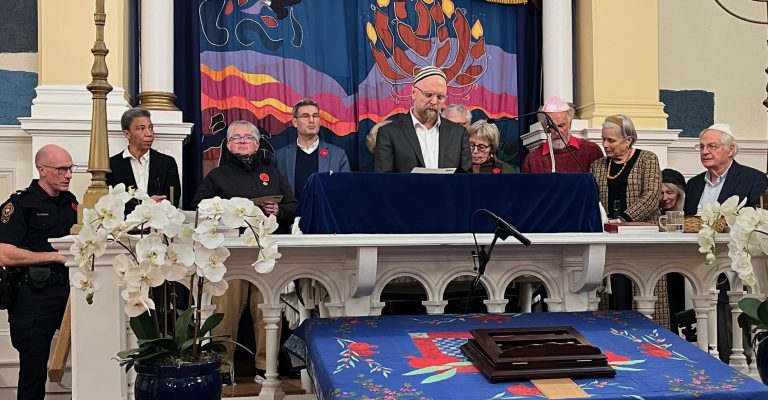
Almost every Sunday since the first days after Oct. 7, Daphna Kedem has led a vigil for the hostages. People have gathered in solidarity and to hear from a diverse array of speakers, first outside the Vancouver Art Gallery and now at Vancouver City Hall. (photo by Pat Johnson)

Almost 700 days have passed since the horrors of Oct. 7, 2023, and the holding of Israeli hostages in the tunnels of Gaza.

In Vancouver, as in cities worldwide, Jews and their allies gather frequently to mourn the lost, stand in solidarity with Israelis and remind the families whose loved ones are still in captivity that there are people across the planet who hold them in their thoughts.

Almost every Sunday since the first days after Oct. 7, Daphna Kedem has led a vigil for the hostages – first outside the Vancouver Art Gallery and now at Vancouver City Hall. Missing only a few weeks due to Jewish or statutory holidays or, like this month, because police security was stretched thin with the Pride Parade, a stalwart group gathers at 12th and Cambie in solidarity and to hear from a diverse array of speakers.

Another regular gathering also takes place, with the group Vancouver Stands With Israel organizing marches across the Burrard Street Bridge and back, waving Canadian and Israeli flags. This past Sunday, scores of participants were greeted with a few hostile catcalls, an exponentially larger number of supportive messages, and a great deal of nonchalance and curiosity. Joining the parade were members of the Persian- and Indian-Canadian communities, carrying their respective flags.

photo - Jews and allies assemble near Burrard Street Bridge in a march last Sunday, Aug. 24
Jews and allies assemble near Burrard Street Bridge in a march last Sunday, Aug. 24. (photo by Pat Johnson)

Over the summer, the group Vancouver Friends of Standing Together began holding weekly vigils, also at Vancouver City Hall. (See jewishindependent.ca/encouraging-another-way.)

The competing events reflect divisions in the community. At a rally earlier this month, Kedem acknowledged that she has received “a lot of backlash” from people who believe she and some of her speakers are “too political.” Kedem calls for an immediate end to the war, which she views as the most likely path to get the remaining live hostages home safely. 

“If this is too political, then I’m probably very political,” she said. 

Over the course of almost two years, the Sunday rallies organized by Kedem have featured diverse voices, both hawkish and dovish, with many speakers expressing personal reflections that cannot be pegged on a political spectrum. Christian pastors have spoken and sung. First Nations representatives have taken part. Rabbis are usually in attendance, including Rabbi Philip Bregman, who, most weeks, leads the group in national anthems.

Kedem begins the events by reading excerpts from the previous evening’s rallies in Tel Aviv, usually voices of family members of those held hostage.

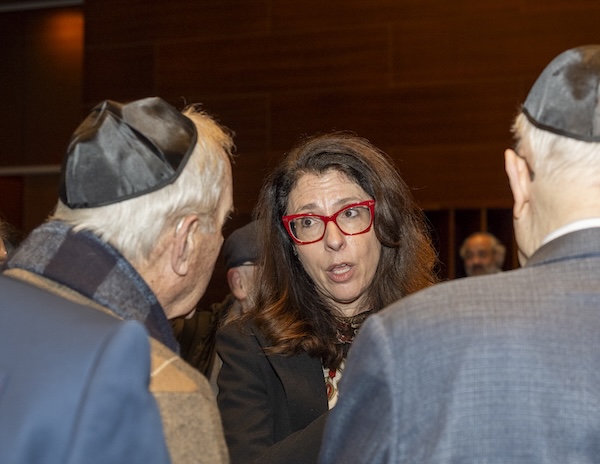
Rabbi Carey Brown, associate rabbi of Temple Sholom and a fellow of the Rabbinic Leadership Institute of Shalom Hartman Institute, spoke this past Sunday of the significance of the month of Elul, which began the night before.

“It’s the time that we as a people and as individuals begin our journey of self-reflection and soul-searching as we prepare for the new year,” she said. “It is a month that whispers to us: return, reflect, renew.”

photo - Rabbi Carey Brown speaks at the Aug. 24 vigil for the hostages, which took place at Vancouver City Hall
Rabbi Carey Brown speaks at the Aug. 24 vigil for the hostages, which took place at Vancouver City Hall. (photo by Pat Johnson)

When she is asked how to live more Jewishly, Brown suggests people let the Jewish calendar guide them.

“It’s a map,” she said. “It’s a heartbeat. It’s the soul’s clock. We measure time in many sacred ways. In Judaism, we count days, months, years … a reminder of the holiness in time, and even our grief and our longing are measured in time. Today is Day 688 … of the captivity of still 50 hostages, living and dead. We count because we care. We count because they matter. We count because time is sacred and their time has been stolen. Think of all the time that has passed: 688 days of missed holidays, 688 days without their families, 688 days of fear, torment and waiting. And now, here we are again, standing on the threshold of Elul, preparing once more for Rosh Hashanah, for Yom Kippur. This time, time feels different. It feels heavy.” 

Toby Rubin, local chapter president of Canadian Hadassah-WIZO, urged attendees to stand firm until all the hostages are returned.

“We ask that all of you continue to support, to advocate, to push and to ask your allies and your political leaders to continue to do what they need to do to get every one of those 50 home,” she said. “And, again, whether they’re dead or alive, we want them back.”

Earlier in August, on Tu b’Av, community activist and leader David Berson blew the shofar and reflected on the date, which is a commemoration of love and unity. 

“The shofar isn’t only a High Holiday symbol, it’s also a biblical emblem of revelation and covenant,” he said. “As I blow the shofar today, let this be a clarion call to rebuilding the wholeness of our people, of listening and understanding, of hearing what is troubling the other and taking that into consideration, of opening our hearts and being curious about what is hurting. We have all been through so much since Oct. 7 and, while we cannot put the genie back in the bottle, we must stand together and embrace that which does bind us in an eternal bond of community, of belonging and embracing our humanity and the humanity of others.”

That same day featured Karen James, a past board chair of the Jewish Federation of Greater Vancouver and current chair of the local partnership council for the Centre for Israel and Jewish Affairs. She is also on the board of governors of the Jewish Agency for Israel.

James reflected on her experiences as a competitive swimmer, including participating in the Maccabiah Games in Jerusalem in 1965, which connected her more deeply not only to her Jewishness and to Israel, but to the branch of her family that had made its way to Palestine in the era when her grandfather settled in Canada.

She shared another personal story that affected her connection to her identity and to Israel.

In 1972, James was on Canada’s Olympic swim team. She and teammates were out celebrating after their competitions were over, watching the Canada-Russia hockey series. As they walked back to the Olympic Village in the wee hours of the morning, they saw four men with a big duffle bag. The four men clambered over the fence to get into the Olympic Village and the Canadians did likewise.

“I went to my dorm, slept for a little bit, but then was woken up to all the commotion in the village,” James recalled. She became a firsthand witness to the terrorist attack on Israeli athletes at the Munich Games.

“I watched the negotiations happen between [the terrorists] and the Germans and, in the evening, I saw when the Israeli team members were led out onto a bus with their hands bound and they were blindfolded,” she said. “Later that night, we’d heard that they were safe and alive, that they’d been freed. But that was wrong. They made a mistake. I don’t know how that got out there because, in fact, the Germans tried to storm the planes and the Palestinians threw grenades and shot the remaining Israeli hostages.”

James went on to describe a more intimate experience with antisemitism. In a consultation with a medical specialist, the doctor repeated the words “It could be worse” twice. On the second occasion, James asked the doctor what she meant by noting that “it could be worse.”

“And she said, ‘Look at what’s happening in Gaza,’” James recalled the doctor telling her. “It was so inappropriate to say that to me.” 

Antisemitism is growing, said James. “The main thing that keeps me going is community,” she said. “All of you. All of my community.” 

BGU rebuilds after much loss

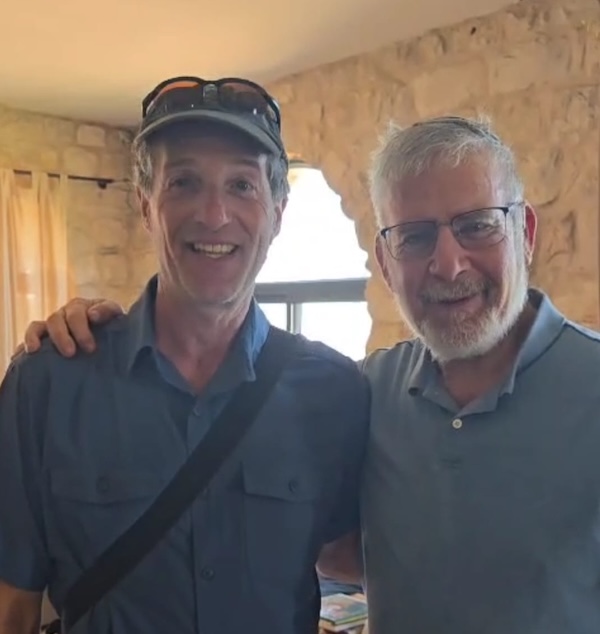
Jeff Kaye, vice-president for public affairs and resource development at Ben-Gurion University of the Negev, was in Vancouver earlier this month. (photo from BGU)

A couple of years ago, many Israelis were beginning to think the country’s legendary solidarity was fraying, that people were less caring, that a split between Israelis and diaspora Jews was growing and that young Israelis had lost some of the fervour of earlier generations. Oct. 7 changed everything. The chasm between Israelis and diaspora Jews evaporated, according to one Israeli who visited Vancouver recently.

“We really are in this together and we are a much stronger Jewish people, both in Israel and outside of Israel,” said Jeff Kaye, a vice-president of Ben-Gurion University of the Negev, who spoke with the Independent Aug. 7.

Older Israelis who thought younger people took the country for granted have had their assumptions upended, he said.

“They were the TikTok generation,” Kaye characterized the stereotypes about young Israelis. “All they wanted to do was earn some money, take care of themselves. And what Oct. 7 taught us is, underneath this, we had raised a generation of young people who have purpose, who care deeply about the country, who care deeply about values and, without being told, they took responsibility.”

Kaye saw this attitude in action at the university. Administrators were struggling to come to terms with the changed reality and students themselves instantly set up a babysitting initiative, food collections and volunteer teams. 

Kaye, BGU’s vice-president for public affairs and resource development, made aliyah from Scotland in 1981, then spent a decade in special needs education before joining the philanthropic sector. He spent four years as emissary to the Jewish Federation of Detroit and then more than a decade in a senior leadership position at the Jewish Agency for Israel, during which time he helped create the Fund for Victims of Terror. Before joining BGU, he served for five years as executive vice-president and director-general of the International Fellowship of Christians and Jews. 

Kaye was in Vancouver at the invitation of BGU Canada, one of about a dozen national and regional affiliates of BGU, that include chapters in Argentina, Belgium, France, South Africa, Switzerland and a global chapter for Russian speakers.

“My role is to find people throughout the world and say, this is what we do. This is who we are. This is why we do what we do,” he explained.

With a team of about 35, Kaye helps connect people with projects that meet their objectives and those of the university, whether recruiting people to serve on the board, run activities, sponsor projects, build a building or provide a scholarship.

Oct. 7 and the months since have affected the university profoundly, as they have every aspect of Israeli life. About 118 BGU students, faculty and staff were killed that day or in the war. Of BGU’s approximately 20,000 students, about one-third of them were called up for military service just as the academic year would have been starting in 2023.

“Obviously, universities couldn’t open and we were still under attack,” Kaye said. The first semester after Oct. 7 was delayed to Dec. 31.

Kaye credits the university’s president, Daniel Chamovitz, with ensuring a flexibility that allowed students to access as much education as possible around their military and other responsibilities. 

In addition to the semester that began Dec. 31, another semester began a month later for soldiers who had returned in the interim. The university had multiple semesters running concurrently and, like many organizations that adopted new technologies, also offered recorded classes so students did not need to be on campus.

Because Israelis routinely start university after military service, many BGU students are not living at their parents’ homes, and may even have kids of their own. That created economic challenges for many who had lost not only class time but part-time or full-time income and saw spouses away on military duty. The university had to provide laptop computers for people whose homes were destroyed and psychological assistance for students who had witnessed or experienced horrific things.

On June 19 this year, during the war with Iran, a ballistic missile hit the university-affiliated Soroka Medical Centre, destroying a major part of the facility.

“Our labs – teaching labs, research labs, pathology labs – were all entirely destroyed,” Kaye said. 

Miraculously, there were no fatalities. In an act of prescience, administrators had moved surgeries into a basement, fearing just such an attack. Kaye said the move – a day before the bombing – may have saved scores or hundreds of lives.

Another blast damaged a university gym. After the formal ceasefire, but when Iran continued sending missiles, an off-campus residence was struck, leaving 50 or more students and faculty homeless.

In Israel, a portion of property taxes are allocated to a fund to restore private property damaged or destroyed by terrorism or war. If your seven-year-old car is hit by a rocket, the fund will reimburse you the value of a seven-year-old car, Kaye said. “But if it’s a microscope that costs $800,000 and it’s 12 years old, you get money for a 12-year-old microscope,” he said. “But there’s no secondhand microscopes out there. So, you have to find the money to buy a new microscope.”

This is one of an incalculable number of examples of expenses incurred as a result of the war in this one university alone.

Kaye is grateful for donors worldwide who have stepped up to assist BGU in its time of challenge, but he noted that almost every organization in Israel faces variations on the same challenge – and diaspora communities have been called upon over the past two years to support umbrella emergency campaigns. 

Amid all this, Kaye finds both optimism and hope. 

What’s the difference?

“Hope is, you sit by and pray, wonder, hope that something’s good is going to happen,” he said. “Optimism is when you make it happen. I’m an optimist who is actively involved in bringing hope – and that’s incredibly easy to do in our university because we get up every day and we say, how can we make it happen?” 

Offering solidarity, support

This summer, Jewish Addiction Community Services (JACS) and Jewish Family Services Vancouver (JFS) launched JACS Family Circle, a group that meets biweekly to provide solidarity and support for family members and loved ones of Jews experiencing addiction.

“Most people are surprised that this exists,” said Rabbi Josh Corber, director of addictions and mental health services. “But alcoholism is a family disease that affects everyone in the family differently. And, regardless of their loved one’s recovery journey, they deserve to have a life that’s happy, joyous and free.”

Nine people showed up for the first JACS Family Circle meeting, on July 28, and, depending on the needs of the attendees, the frequency may become weekly. Corber said gratitude was the main theme that emerged from the first meeting. “We received immense appreciation for the fact that this group exists now, and the attendees were happy to have this group and to have one another,” he said.

Since their Third Seder event in April, JFS and JACS have been busy launching this group and the Jewish Addiction Circle (JAC), a support group for people struggling with addiction, which follows Jewish teachings as they relate to self-care and recovery. JAC also meets biweekly. While participants don’t have to be Jewish to attend, they should be connected in some way with Judaism, or at the least, comfortable with the therapy provided having a Jewish basis. 

Corber leads JAC and co-leads JACS Family Circle with Elana Epstein, a certified recovery coach.

In early July, JACS Vancouver participated in the AA International Convention in Vancouver, which was attended by more than 30,000 people. Because AA does not partner with external agencies, JACS rented a booth at “Sober City,” at the Junction Public Market, Granville Square. There, Corber interacted with convention attendees, tourists and cruise ship passengers, educating them about the work of JACS and similar Jewish organizations in other cities in Canada and the United States.  

“I was able to make connections with many Jewish addicts in recovery,” he said. “There were sober Jews from small cities in the US who felt very isolated as Jews, and some of them were moved to tears when they spoke with us. Many of the people who approached us were Jewish, and many were not, but all of them were happy that we were there. Some didn’t know of any Jewish agency involved with addictions prior to meeting us.”

Corber worked hard to spread awareness of JACS’s work at the convention, and says addiction services for Jews are needed now more than ever.

“It can be difficult for people who aren’t Jewish to help us if they don’t understand the Jewish culture, though they sincerely want to,” he said. “But what we can build together will benefit the Vancouver Jewish community as well as alcoholics everywhere. The returns on our participation are hard to quantify right now but, on a world level, JACS Vancouver is now much more known. This can bring all kinds of returns, including philanthropic.” 

Those interested in joining JAC or JACS Family Circle should email Corber at jcorber@jfsvancouver.ca for more information. 

Lauren Kramer, an award-winning writer and editor, lives in Richmond.

Music’s healing power

The annual Music Heals gala raises funds and awareness of the therapeutic use of music. This year’s event takes place Oct. 23 at the Commodore Ballroom. (photo from David Barnett)

Vancouver’s business and entertainment communities are combining their philanthropic forces at the Commodore Ballroom Oct. 23 for a gala to support Music Heals, the charitable foundation that raises awareness and funds for the therapeutic use of music in physical and mental health processes.

photo - David Barnett founded Music Heals in 2012
David Barnett founded Music Heals in 2012. (photo from David Barnett)

David Barnett, who founded Music Heals in 2012 and currently serves as board president, said tickets will be available after Labour Day and are expected to sell out quickly. Still, the event, which is already fully booked from an artist standpoint, always has room for sponsorship opportunities, according to Barnett.

“It is a great group at Music Heals,” he said. “We bring in all types of artists from all over, including Grammy Award winners, and produce a fun variety show. We don’t reveal any of the artists. We keep everything a surprise.

“It is a super-fun event to produce and it brings the downtown business community and the music industry together for one night to celebrate the power of music.”

Since its beginning, Music Heals has distributed more than $5 million to help vulnerable Canadians gain access to music therapy. That translates to more than 65,000 funded music therapy hours in 85 different facilities, from children’s hospitals to senior centres to burn units, to hospices and rehabilitation centres. The funds have gone towards helping at-risk youth, cancer patients, those needing bereavement support and many others.

The 2024 gala raised more than $450,000, with sponsors such as RBC, BMO, ZLC Financial, Colliers International and Westbridge Capital, among numerous other organizations. DJ All Good, bbno$, CeeLo Green, Jack Thomas, Bif Naked and the Delta Police Pipe Band were some of the performers that appeared. 

photo - “We always try to bring in something eclectic. The event itself is a little bit rowdy, and we try to keep the volume up,” says Music Heals founder and board president David Barnett about the organization’s annual gala
“We always try to bring in something eclectic. The event itself is a little bit rowdy, and we try to keep the volume up,” says Music Heals founder and board president David Barnett about the organization’s annual gala. (photo from David Barnett)

As for the upcoming event, Barnett, who calls Music Heals one of his “passion projects,” said, “We always try to bring in something eclectic. The event itself is a little bit rowdy, and we try to keep the volume up.  We feature a story that is happening in the community and have a video of how we spent the money in the previous year.

“It is an opportunity for us to build a community of friends, business associates and music industry people to have some fun and raise some money for a very cool kind of cause to support facilities that use music as medicine in their healing for mental and physical health.”

In 2025, Music Heals gave more than $520,000 to 45 music therapy programs that included Ronald McDonald House BC and Yukon, Canuck Place Children’s Hospice, BC Cancer Foundation and the Pacific Autism Family Centre.

Countless studies have been conducted on the healing power of music. The overwhelming conclusion is that listening to or playing music has a beneficial effect on overall human health and can mitigate various physical and mental ailments. Music, various research has shown, can lower stress, lift moods, bolster energy and lower pain levels.

Music therapy can benefit people in all age groups, from children with developmental disabilities to older adults with Alzheimer’s. For young people, music can help improve their cognitive and social development, allowing for better communication and emotional expression. For adults, music therapy can be a means of managing stress, anxiety and depression while boosting self-esteem. 

For seniors, music therapy can have positive implications for recollection and cognitive function. The Louis Brier Home and Hospital, for example, offers one-on-one individualized and small-to-large group music therapy programs that are supported by Music Heals.  

Among the types of music used at the Brier are beat boxing, drum circles and movement to music, as well as the singing of the Brier Choir. Louis Brier states on its website that music therapy for individuals in long-term care can maintain memory recall and reminiscing, fine motor coordination and range of motion, and increase creative expression.

On the power of music, the late Rock and Roll Hall of Fame musician David Crosby said in an interview done with Music Heals in 2017, “Music is a lifting force in the universe. Just as war drags the human race down and draws out the worst in people, music is a lifting force. It brings out the best in us; it lifts us up. Any time you can do music, it lifts the human race.”

In March, around the time of International Women’s Day, Music Heals hosts Let Her Sing, an annual event meant to provide women with access to music therapy programs in support of their physical and mental health. This year’s event raised $120,000.

Philanthropic causes, whether through Music Heals or other charitable ventures, have played an important role for Barnett throughout his life. 

“I grew up in a family that gives back to the community and giving back was a large part of my upbringing,” said Barnett, whose business ventures have included music venues in the city.

“As I was getting older and found myself having kids and trying to get out of the music industry and nightclub space,” he said, “we were looking for an opportunity to get back and give back, and fell into the music therapy world.”

For more information, visit musicheals.ca. 

Sam Margolis has written for the Globe and Mail, the National Post, UPI and MSNBC.

Locals part of first cohort

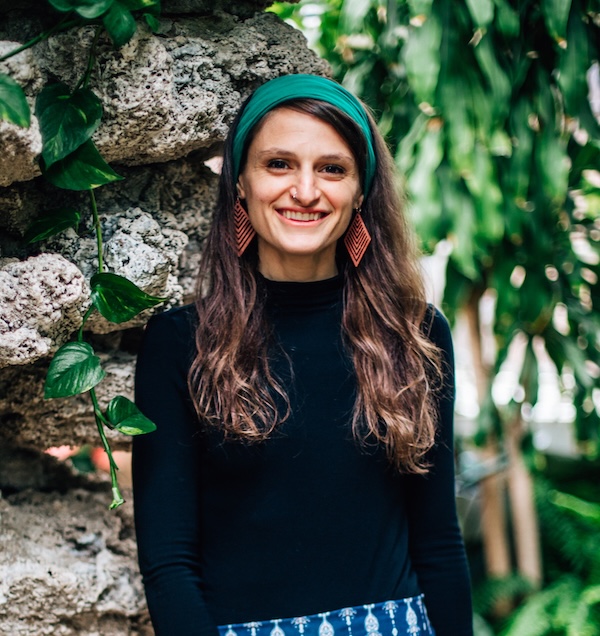
A first-of-its-kind program will give 30 Jewish social service professionals, including social workers, doctors and therapists, specialized training to better meet the psychosocial and emotional well-being of Sephardi and Mizrahi Jews. Among the participants will be two members of the local Jewish community: Harley Kushmier, a social worker in Kelowna, and Serach Aleria Sarra, a student in spiritual health at Surrey Memorial Hospital.

photo - Serach Aleria Sarra Harley Kushmier (below) are two of the 30 Jewish social service professionals who will participate in an inaugural JIMENA Sephardic Leaders Fellowship program
Serach Aleria Sarra Harley Kushmier (below) are two of the 30 Jewish social service professionals who will participate in an inaugural JIMENA Sephardic Leaders Fellowship program. (photo from JIMENA)

The program, part of JIMENA’s Sephardic Leaders Fellowship, is designed to deepen the professionals’ understanding of Sephardi and Mizrahi heritage and equip them to provide culturally responsive care. Chosen from a competitive applicant pool, fellows were accepted based on professional merit and a demonstrated commitment to serving diverse Jewish populations. JIMENA stands for Jews Indigenous to the Middle East and North Africa.

“In a post-Oct. 7 world – where so many Sephardi and Mizrahi Americans have been directly affected by events in Israel and the Middle East, and amid rising antisemitism and social strain – our research and community experience point to a clear demand for culturally responsive training for health professionals and social service providers working with Sephardi and Mizrahi Jews,” said Sarah Levin, executive director at JIMENA, in a press release. “This inaugural cohort – comprising therapists, counselors, crisis and trauma practitioners, providers for aging populations and at-risk youth, and clinical social workers – reflects that demand.”

photo - Harley Kushmier
Harley Kushmier (photo from JIMENA)

Over a series of sessions, the fellows in the social service providers cohort will explore a range of topics relevant to working with Sephardi, Mizrahi and other unique Jewish communities. These include mental health stigma in Middle Eastern and Mediterranean cultures, intergenerational trauma in immigrant and refugee families from the Middle East and North Africa, and economic vulnerability. The cohort will also engage in discussions on trauma-informed care with a focus on sexual abuse, as well as traditional Sephardi perspectives on identity, belonging and community care. This will include a dedicated session on LGBTQ+ youth, led by JQY. Additionally, participants will receive a foundational overview of Sephardi Jewish history, context and key definitions. Sessions will be led by leading practitioners in their field.

* * *

On Aug. 21, JIMENA released the study Sephardic and Mizrahi Jews in the United States: Identities, Experiences and Communities. It offers recommendations for leaders and organizations that want to more deeply engage these communities. Among the findings are that Sephardi and Mizrahi Jews in the United States have higher rates of Jewish communal participation, a stronger connection to Israel and are more likely than Ashkenazi Jews to say that being Jewish is somewhat or very much a part of their daily life.

The research was directed by Dr. Mijal Bitton and based at the New York University’s Wagner Graduate School of Public Research. As part of the research, scholars at the Cohen Centre for Modern Jewish Studies (CMJS) at Brandeis University conducted a review of existing quantitative data from national and community studies on Sephardi and Mizrahi Jews in the United States. Based on these figures, the study’s researchers estimate that approximately 10% of American Jews are Sephardi and/or Mizrahi. 

The data also show that, compared to Ashkenazi Jews, American Sephardi and Mizrahi Jews have the lowest intermarriage rates, and are more likely than Ashkenazi Jews to be born and/or raised outside the United States, to be politically moderate or conservative, and to be economically vulnerable.

Researchers examined four communities: the Syrian community in Brooklyn, NY; the Persian community in Los Angeles; the Bukharian community in Queens, NY; and the Latin Sephardi community of South Florida. Key findings include:

  While historically underrepresented in mainstream Jewish communal life, Sephardi and Mizrahi Jews have built strong, vibrant communities that maintain deep familial, religious and cultural traditions.

• Sephardi religious practice reflects a strong sense of traditionalism, combining respect for religious laws, customs, legitimations and authorities with more flexible personal and family religious observance.

• Community members want to make new lives for themselves in America, while still preferring ethnic connections, especially marriage with other community members and their own cultural traditions, and they maintain abiding connections to their Mediterranean, North African and Middle Eastern cultures.

• Most community members exhibit a notable resistance to language that frames race as their primary identity, categorizes them as Jews of colour or positions them as a minority group in need of diversity, equity and inclusion initiatives.

“The research is more than just insights and data; there’s a roadmap here that we hope will be a catalyst for change,” said Levin. “Jewish communal leaders and educators can include Sephardi and Mizrahi Jews – and our history, traditions and current customs – in meaningful, equal ways that reflect the diversity of the Jewish people.”

The report’s specific recommendations are informed by five recommended frameworks to approach diversity work in the Jewish community:

• Avoid viewing Sephardi and Mizrahi Jews only through the lens of exclusion, marginalization and victimhood narratives. Recognize that strong Sephardi and Mizrahi communal identities exist even as barriers and biases exist within Ashkenazi-majority institutional frameworks.

• Avoid centring Judaism exclusively around European Jewish experiences and Ashkenazi cultural norms as the dominant narrative (i.e. Yiddish as the primary language of Jewish tradition and denominational structures as the only legitimate form of Jewish identity). 

• Avoid creating inclusion projects that assume everyone agrees with a single set of values (e.g., liberal values) or tools for inclusion (DEI frameworks). Create inclusion projects that allow for diverse viewpoints, values, multiple religious perspectives and norms, and a plurality of political views.

• Avoid viewing diversity in Jewish spaces solely through North American racial and ethnic categories. Jewish diversity should recognize the central role of family origins and communal networks in shaping Jewish identity; the complex intersections of ancestry, ethnicity, religion and culture; and the migration patterns and geopolitical histories that shape identities, perspectives and communal structures.

• Avoid assuming that universal frameworks and solutions for inclusion will be effective for all and that shared priorities exist across all Jewish communities.

For the full report, go to sephardicstudy.org. 

– Courtesy JIMENA

Community milestones … August 2025

photo - Rabbi Dr. Laura Duhan-Kaplan
Rabbi Dr. Laura Duhan-Kaplan

Rabbi Dr. Laura Duhan-Kaplan has been appointed the new dean of the ALEPH (Alliance for Jewish Renewal) Ordination Program (AOP). She will assume her role on Sept. 8.

Following the leadership of AOP’s retired founding dean Rabbi Marcia Prager, and two years of direction by Interim Dean Dr. Charles H. Silverstein, the AOP governors are pleased to welcome Duhan-Kaplan into this role.

A scholar, teacher and spiritual leader known for integrating mind and heart, Duhan-Kaplan brings decades of experience in Jewish studies, interfaith dialogue and rabbinic education. Most recently, she was professor of Jewish studies, director of inter-religious studies and interim academic dean at the Vancouver School of Theology. Ordained by ALEPH in 2005, she has served as AOP faculty,

a member of the Va’ad – the core administrative and organizational council that directs the seminary – and is rabbi emerita of Vancouver’s Or Shalom Synagogue.

Duhan-Kaplan’s many honours include the American Academy of Religion’s Katie Geneva Cannon Award for Excellence in Teaching and the Carnegie Foundation’s US Professor of the Year Award. A prolific author and editor, she has published 10 books, most recently Mouth of the Donkey: Re-imagining Biblical Animals and The Infinity Inside: Jewish Spiritual Practice Through a Multi-faith Lens.

Born in New York City, Duhan-Kaplan is a dual Canadian-American citizen and lives in Vancouver with her spouse, musician and retired psychologist Charles Kaplan. For more information about the ALEPH Ordination Program, visit aop.aleph.org.

* * *

photo - Rabbi Harry Brechner, who retires from  Congregation Emanu-El this month, was awarded an honorary doctorate from the Jewish Theological Seminary in New York earlier this year
Rabbi Harry Brechner, who retires from  Congregation Emanu-El this month, was awarded an honorary doctorate from the Jewish Theological Seminary in New York earlier this year.

After 24 years of service, Rabbi Harry Brechner retires this month and Rabbi Elisha (Eli) Herb is welcomed as the new rabbi at Congregation Emanu-El. Herb joins the Victoria community from Salem, Ore., where he has served as a congregational rabbi for nine years.

In 2024, Brechner received the King Charles III Coronation Medal for his significant contributions to interfaith connections, social justice and community dialogue in British Columbia. In 2025, he was awarded an honorary doctorate from the Jewish Theological Seminary in New York City for more than 25 years of distinguished service. A retirement party for him is planned for September and a formal installation ceremony for Herb will be held later this fall.

* * *

photo - Shayna Goldberg
Shayna Goldberg

Shayna Goldberg is the new artistic managing director of the Norman and Annette Rothstein Theatre and the Chutzpah! Festival.

From Toronto, Goldberg has lived in Vancouver for almost 12 years. She has worked in the theatre and music industries, and been involved in the Jewish community, taking on roles within Moishe House, Axis Young Professionals and Na’amat Canada.

This year’s Chutzpah! Festival is scheduled for Nov. 13-23.

* * *

The 2024 campaign of the Jewish Federation of Greater Vancouver raised $13.17 million: $9.38 million through the annual campaign, $1.78 million in additional funding directed to special projects, $1.86 million to combat antisemitism and $150,000 in additional funding thanks to corporate partners. 

With the theme “Power of Together,” the support came at a critical moment for our community. In the face of rising antisemitism and a deepening affordability crisis, community members chose to act – with tzedakah and with a commitment to collective impact.

Because of community donors, Jewish Federation and its partners can support families and individuals struggling with the rising cost of living; enhance community security at institutions and events across the region; counter antisemitism with strength and resolve; provide care and connection to Jewish seniors, Holocaust survivors, young families and those most vulnerable; and offer hope and aid to all those living in our partnership region in the Upper Galilee, most of whom were evacuated post-Oct. 7 and have only recently returned home. 

For more information, visit jewishvancouver.com.

* * *

On Aug. 7, Omatidio Media announced that production has begun in Vancouver on actor-turned-writer/director Elyse Levesque’s debut short film Hot Chocolate, which she wrote and is co-directing with Michael Driscoll. 

photo - Jay Brazeau
Jay Brazeau (photo from imdb.com)

The film, shooting in Vancouver and Port Coquitlam, features a cast including multi-award- winning musician and actor Jann Arden, Clare McConnell (Star Trek: Discovery, Murdoch Mysteries), Paul Campbell (Battlestar Galactica), Kristian Bruun (Orphan Black), Leah Gibson (Jessica Jones), Jana Morrison (Astrid and Lilly Save the World), Alvin Sanders (Riverdale), Jay Brazeau (Day of the Dead), Luisa d’Oliveira (The 100) and Paula Giroday (Family Law).

Based on a true story, Hot Chocolate centres on Margot, who is on her way to a wedding with her boyfriend Cameron, when she finds herself the plus-one to a most unexpected event: his uncle’s assisted death.

* * *

Over the past months, there have been updates about the what, when and where of JWest, but one important question remained: Who are the people behind this project?

JWest was born from a shared vision between the Jewish Community Centre of Greater Vancouver (JCC), Jewish Federation of Greater Vancouver (JFGV) and King David High School (KDHS). Several years ago, leaders from these organizations came together with the idea to not just to update the existing JCC, but to completely reimagine the space as a multi-use Jewish campus. Since then, a broad network of people has been working to bring this vision to life.

The JWest Foundation Board, the JWest Development Corp board and several volunteer committees, together with leadership from the JCC, Federation and KDHS, have been guiding the project.

JWest Foundation: Responsible for the oversight of campus development and management of future revenue. Chair: Alex Cristall. Directors: Diane Friedman, Martin Gerber, Hodie Kahn, Lana Marks Pulver, Diane Switzer and Alvin Wasserman.

JWest Development Corp: Responsible for the management of campus construction. Chair: David Porte. Vice-chair: Joe Khalifa. Directors: Andrew Abramowich, Chris Andison, Michael Berkson, Alfonso Ergas, Phil Gertsman, Geoff Glotman, Mark Gurvis, Lana Marks Pulver and Lawrence Zimmering.

The JWest staff team supports volunteers and partner organizations in delivering the day-to-day operations:

• Executive director: Emily Pritchard, who led fundraising efforts over the last four years, raising – with the efforts of the campaign cabinet – $147 million, completing the first phase of the campaign. Pritchard stepped into the ED role in July, expanding her leadership beyond fundraising to overseeing the full scope of the project.

• Director of finance: Roni Greif, who brings a strategic financial lens to the team, shaped by years of professional experience and community involvement through KDHS and Congregation Beth Israel. Greif is instrumental in building the financial systems and structures that will support JWest not only through construction, but well into the future. She is helping lay the financial foundation for this project’s long-term success.

• Vice-president, development: Maurice Ouellette. With a background in architecture and a track record in real estate development, Ouellette plays a key role in shaping and delivering the physical campus. He works closely with Acton Ostry Architects and liaises with the City of Vancouver to make sure that planning, approvals and design meet (and exceed) expectations, from sustainability to architectural excellence.

• Development manager: Hayden Kremer, who is involved across all areas of project development and operations for JWest Development Corp. Whether he’s reviewing Oakridge Energy’s proposal for the JCC’s future energy needs, working with Grosvenor on temporary parking during construction, or negotiating rezoning conditions with the City of Vancouver, he is solving problems, managing logistics and keeping everything moving forward.

To learn more about the project and explore the community of donors helping bring it to life, visit JWestNow.com and follow JWest on Instagram and Facebook.

Teaching about Shoah

Lise Kirchner, director of education of the Vancouver Holocaust Education Centre, demonstrates the online exhibition Fragments in Focus: A History of the Holocaust (photo by Pat Johnson)

The school year that begins next month is the first in British Columbia to include mandatory Holocaust education in the curriculum. As teachers throughout the province prepare to address this challenging topic in the classroom, the Vancouver Holocaust Education Centre has unveiled a wide-reaching online exhibit to both assist educators and to launch students into independent exploration on the complex network of moral and historical issues the subject raises.

In October 2023, the BC government announced that Holocaust education would be mandatory in the Grade 10 social studies curriculum beginning in the 2025/26 academic year. Many teachers were already addressing the topic as part of Social Studies 10, which covers the Second World War. An elective course, Genocide 12, also exposes students to the history of the Shoah. However, this is the first year that it will be impossible for a student to complete Grade 10 in the province without some exposure to the Nazis’ attempts to destroy the Jewish people and other groups they deemed undesirable.

While mandating that the topic be covered, the ministry of education’s guidelines for learning outcomes are extremely vague. Lise Kirchner, director of education of the Vancouver Holocaust Education Centre, said teachers have great flexibility in how to address the topic – and how much time to give it.  

“The teacher can choose to spend four minutes, four hours or four months on the subject,” she said.

Given that many teachers will be seeking trusted resources to teach this material for the first time, the VHEC’s exhibit promises to deliver everything educators need to address the subject effectively, no matter how much class time they allocate to it.

“Over the last 18 months, the VHEC has been working with the ministry of education to articulate this new learning standard for Social Studies 10 and also to develop teaching resources to support educators as they implement Holocaust education in the classroom,” Kirchner told attendees at the VHEC’s annual general meeting in June, where she demonstrated the new online resource.

The exhibition is called Fragments in Focus: A History of the Holocaust. It has been produced with the support of the Digital Museums Canada investment program and the financial support of the Government of Canada. The website is in English and French and meets accessibility standards for people with disabilities.

The online exhibit showcases more than 160 primary sources, including artifacts, survivor testimonies and archival records from the VHEC’s collections, presenting the history of the era through these items.

Fragments in Focus explores Jewish life in Europe before the war, the Holocaust and its impacts, and postwar Jewish life. Users can explore digital 3D models of artifacts, engage with an interactive map and hear from survivors – most of those featured settled in British Columbia after the war – adding human faces and stories to the artifacts and the broader history.

Accompanying the Fragments in Focus exhibit are 20 integrated learning activities and a comprehensive teachers’ guide, providing everything required to navigate the exhibit, construct a complete unit on the Holocaust or supplement existing lessons using unique primary sources, according to the VHEC.

The VHEC’s education team is also available to support educators as they prepare to cover these topics, offering training workshops throughout the province.

Textbooks, which earlier generations might associate with high school, are mostly a thing of the past. Online resources have replaced most hard copy resources, making Fragments in Focus both relevant and accessible.

Historical introductions to each of the exhibit’s sections lead into artifacts, and students can then pursue their own explorations by finding out more about the individual associated with the item, their experience of survival and their life after the war.

For example, students can view a recipe book created by Rebecca Teitelbaum while she was an inmate in Ravensbruck women’s concentration camp. Risking her life, she stole paper, pencils and thread to compile the collection of favourite foods. The tiny booklet became a source of comfort for the women in Ravensbruck, allowing them to imagine a future of well-being and plenty.

The late Alex Buckman, Teitelbaum’s nephew and himself a survivor of the Holocaust, inherited the recipe book, which he eventually donated to the VHEC. During speaking engagements to young audiences, Buckman would share his aunt’s recipe for gâteau à l’orange and some students would make the cake at home, while sharing with their families what they had learned at school.

With the new exhibit, students can explore the recipe book, expand the image to see the stitching that held the book together, and then read transcripts of the recipes. More than this, they can then dig deeper and learn about the family’s story, of Rebecca’s survival and her reunification with her husband, Herman, and daughter, Annie. They can hear Buckman’s story of how he survived but lost both his parents and was raised by the Teitelbaums.

Students also can see the correspondence Rebecca received while in hospital after the war, informing her that both Herman and Annie had miraculously survived.

These artifacts and records help put this almost inconceivable history into context, said Kirchner. 

“They now are reading these intimate letters between husband and wife, where they are dreaming of being together again with her daughter,” she said. “I think it brings a whole different dimension to how we understand history, the importance of these primary objects.”

The fact that almost all the objects have a BC connection adds richness to the experience, she said.

As director of education, Kirchner has led a team in bringing Fragments in Focus to fruition. Though the exhibit was in development before the province announced the curriculum change, the shift helped guide the VHEC team to make the resource especially responsive to the needs of educators and students.

Fragments in Focus is based on an earlier physical exhibit developed by former VHEC director of education Ilona Shulman Spaar, former executive director Nina Krieger and others, including Kirchner, who has been involved with the VHEC for about 25 years in various capacities.

“We mounted In Focus – we didn’t call it Fragments in Focus – as the first exhibition in the new renovated space,” Kirchner told the Independent, referring to a major upgrade to the museum in the Jewish Community Centre of Greater Centre, which substantially increased the capacity to display items from the collections. “It was kind of a celebration of the fact that we had just digitized our entire collection – that was a very big project. With the new visual storage facilities, it gave us the ability to actually have multiple artifacts on display, over 100, so that was a pretty big deal for us.”

The ongoing digitization of the VHEC’s entire archives allows global audiences to access its collections. For BC students, starting within days, Fragments in Focus will open doors for self-guided learning.

“We give them just enough information so they can put it in context, but also pique their curiosity a little bit so that they start to see themselves as the ones that ask these questions and start to make sense of this history and to give it meaning. It’s taking ownership of that history,” said Kirchner. “We are just planting seeds and making sure they have enough information to ask the right questions and to see the complexity of that history.”

The online exhibit launched Aug. 20 at fragmentsinfocus.ca and is available to everyone. 

Encouraging “another way”

Interim leader of the New Democratic Party of Canada Don Davies, centre, with Itai Bavli and Avril Orloff of Vancouver Friends of Standing Together. (photo from Vancouver FOST)

This summer, Vancouver Friends of Standing Together has been holding weekly vigils in front of City Hall to continue the call for the return of the hostages, an end to the war in Gaza and an end to settler violence against Palestinians in the West Bank.

“We organize rallies, vigils and information sessions to raise awareness of the situation in Israel/Palestine and promote ‘another way’ that is not exclusively pro-Israel or pro-Palestine but pro-humanity,” Avril Orloff, who started the Vancouver Friends of Standing Together (FOST) chapter, told the Independent.

Adi Keidar, one of the chapter’s co-administrators, said, “If you are willing to accept that both Israelis and Palestinians deserve to live freely and safely on this land, I will be standing with and supporting you. Someone told me, ‘if you need to choose between pro-Israel or pro-Palestine, it is obvious for me, as a Jew/Israeli where I stand. However, if I knew and trusted that there is another way, I would choose both.’ Standing Together, for me, brings that other voice.”

“I joined the FOST group in June 2024 because it reflects my values and my belief that finding a just solution to the conflict is the only way forward,” Itai Bavli, also a Vancouver FOST co-administrator, said. “I care about all people living between the river and the sea and believe that both peoples can thrive if given the chance. I support Israelis and Palestinians alike and believe they both have the right to live freely and safely. Which means ending the occupation and supporting a Palestinian state. For me, it’s a responsibility I carry.”

Currently, there are nine local co-administrators, who play active roles as their other work and responsibilities permit, Orloff explained. “We try to divide up responsibilities, so no one is overburdened,” she said, noting that everyone involved is a volunteer. “We meet on an ad hoc basis as needed to brainstorm ways to increase awareness, bring out the voice of Standing Together and address issues that come up.”

Standing Together is an Israeli grassroots social movement made up of Jewish and Palestinian citizens that, according to its website, “envision[s] a society that serves all of us and treats every person with dignity. A society that chooses peace, justice and independence for Israelis and Palestinians, Jews and Arabs. A society in which we all enjoy real security, adequate housing, quality education, good healthcare, a liveable climate, a decent salary and the ability to age with dignity.”

Since the Hamas terror attacks on Oct. 7, 2023, and the ensuing war, Standing Together in Israel has been organizing demonstrations – attended by tens of thousands – calling for a hostage deal and a ceasefire agreement. They also have been engaging in public campaigns “aimed at re-humanizing the discourse, retaining humanity, mourning all lives lost and rejecting violence on social media in Hebrew, Arabic, and English.” Last May, they launched the Humanitarian Guard initiative at Tarqumiyah checkpoint to protect “aid trucks headed to Gaza from attacks by extremist settlers that come out to attack the trucks.” This month, they started a campaign to collect food and humanitarian aid for residents of Gaza. 

In addition to the eight chapters of Standing Together that operate in Israel, there are Friends of Standing Together chapters worldwide that have formed since Oct. 7. The chapters in the diaspora raise awareness of and funds for Standing Together, as well as offer a local communal space for people who share the movement’s values and goals. Orloff is an ambassador for ST’s global crowdfunding campaign and recently surpassed her personal goal of raising $6,000 for the movement.

“I started the Vancouver FOST group in February 2024, when I first learned about Standing Together and discovered they had support groups around the world,” said Orloff. “I was drawn to ST because I felt that a lot of groups advocating for either Israel or Palestine focused on only one side or the other, which seemed short-sighted to me. Standing Together’s stance, by contrast, is that, with seven million Jews and seven million Palestinians living ‘between the river and the sea,’ none of whom are going anywhere, the only sustainable future is a shared one grounded in equality, security, peace and justice for all.”

Orloff, Keidar and Bavli said they appreciate that ST is about more than ending the war and that it’s “a broad-based social movement that goes beyond the specifics of Jewish/Palestinian issues to encompass social change at all levels of society, from the bottom up.”

“One of the biggest concerns and confusions I had on Oct. 7 and the events that followed was the rise of hate and polarization on both sides,” said Keidar. “It was rare that I could agree with much that was said, and I was constantly trying to hold two thoughts at the same time. I felt alone and was not seeing the benefit of supporting one side – it felt wrong and unjust and it didn’t fit my values.

photo - Adi Keidar at one of Vancouver Friends of Standing Together’s vigils
Adi Keidar at one of Vancouver Friends of Standing Together’s vigils. (photo from Vancouver FOST)

“When I learned about Standing Together, it was the closest group that I felt spoke to my values and beliefs, as their focus is not one side or the other but humanity, which was the voice I felt was drowning in the hate that was brewing. I wasn’t willing to accept just one side. I believe that the only way to get out of this cycle is by compassionately seeing both sides, taking responsibility, finding the people that speak these values and bringing their voices out.”

Keidar participates in the weekly Bring Them Home rallies. Both she and Bavli spoke at a BTH rally this summer to raise the voice of Standing Together, to show “that it’s possible (indeed, necessary) to support both Israel and Palestine, and remind people that the immediate end of this war is only the beginning of the work to build a shared society in which all peoples live in peace and security.”

Vancouver FOST does local community-building through their WhatsApp group, social events (for example, film evenings, picnics, in-home gatherings), rallies and other activities. They raise awareness on social media via Instagram and work to build their membership, liaising with Standing Together and FOST groups globally. They meet monthly on Zoom with other Canadian FOSTs and build relationships with groups that share ST’s values and principles, like Women Wage Peace and various faith organizations. They have started doing outreach to Canadian politicians.

“We have endorsed Canada FOST’s Call to Action to the Canadian government and politicians to advance key priorities,” said Orloff, “including taking urgent diplomatic action to permanently end the war in Gaza; providing long-term support for peace and equality, not war; and supporting solidarity and partnership in our own society.”

The group organized and hosted an event in June last year, which brought Raja Khouri and Jeffrey Wilkinson to Vancouver to talk about their book, The Wall Between: What Jews and Palestinians Don’t Want to Know About Each Other. (See jewishindependent.ca/not-such-a-great-divide.) They have plans to host an information table at the University of British Columbia in the fall.

In an email, Orloff, Keidar and Bavli described Vancouver FOST as being “for more than we’re against. We don’t argue about terminology or labels or traffic in simplistic black-and-white ‘solutions,’ but are comfortable living with complexity and difference. We love to have juicy discussions, but, more than talk, we’re about supporting action that will bring about real, practical, sustainable change. We aren’t pro-Israel or pro-Palestine but pro-humanity,” they reiterated, “and we don’t see this as a left-right divide or an Israel-Palestine divide, but a divide between those who want peace and life for everyone and those who traffic in death and destruction. We’re here to offer a different way of thinking about the conflict and a different path forward, not to convince people that we’re right.”

Orloff said group members aren’t “settling for simplistic, one-sided solutions that make heroes of one side and villains of the other, but recognize that geopolitical issues have history and context that create layers of complexity, compounded by historical and intergenerational trauma on both sides. What I tell people is that, in this ongoing conflict, there is no win/lose: it’s either win/win or lose/lose. If we don’t find a way to justice, equality, peace and security for all, there won’t be justice, equality, peace or security for anyone.”

“We are involved with Standing Together,” the three co-administrators stressed, “because of deep feeling for Israel and the people living in the land. Many of our FOST members are Israelis who are heartsick at what Israel is doing in Gaza, the West Bank, and to its own Palestinian Israeli citizens. We believe in Israel’s promise and want to hold Israel to its highest ideals. There is no other way. It’s our responsibility to bring about the change.” 

Harper speaks at gala

Dr. Robert Krell will be honoured at the Sept. 7 gala of the Canadian Shaare Zedek Hospital Foundation’s Western region. (photo from CSZHF, Western region)

Ilan Pilo had recently arrived in Canada from Israel in 2013 when he attended a Jewish National Fund gala in Toronto honouring Stephen Harper, Canada’s then-prime minister. Pilo thinks it may have been the largest kosher dinner ever on Canadian soil – but what struck him most was the rapturous enthusiasm among attendees for the country’s head of government.

“Harper was, and has been, one of the most genuine and strong allies and voices on behalf of Canadian Jewry and Israel,” said Pilo, now Western Canada executive for the Canadian Shaare Zedek Hospital Foundation.

Pilo will dine again with Harper, when the former prime minister is the keynote speaker at the first-ever gala of the Canadian Shaare Zedek Hospital Foundation’s Western region, which takes place Sept. 7. 

“In these challenging times, we all deserve to get some hope and strength by having a strong ally like him speaking in front of us,” said Pilo. “We all were astonished and so proud to hear his great support, his genuine support for Israel, and just now we need it more than ever.”

The gala, which also marks the 50th anniversary of the Canadian Shaare Zedek Hospital Foundation, will see the Kurt and Edith Rothschild Humanitarian Award bestowed upon Dr. Robert Krell.

The founding president of the Vancouver Holocaust Education Centre, Krell is a child survivor of the Shoah and a renowned Vancouver-based psychiatrist, academic, author and educator, who has devoted his life to supporting survivors, educating on genocide and combating intolerance. In 2020, he was inducted into the Order of Canada.

The Kurt and Edith Rothschild Humanitarian Award is named in memory of the late Kurt Rothschild, a Canadian philanthropist, Jewish community leader and co-founder of the Canadian Shaare Zedek Hospital Foundation. Along with his wife Edith, Rothschild devoted his life to strengthening the Jewish people, the state of Israel and institutions like Shaare Zedek Medical Centre in Jerusalem; he also served as president of the World Mizrachi movement. The award recognizes exceptional individuals whose integrity, leadership and service have left a meaningful impact both locally and globally. 

Krell told the Independent that he has felt a special connection with Shaare Zedek Medical Centre in Jerusalem since he read Dr. Gisella Perl’s 1948 memoir, I Was a Doctor in Auschwitz.

Imprisoned in the death camp, Perl, a gynecologist, was forced to work under the notorious Dr. Josef Mengele in the camp’s women’s infirmary. She performed countless life-saving – but excruciating – procedures without anesthesia, including secretly conducting abortions to save pregnant women from certain execution. Later, while serving in the maternity ward at Shaare Zedek Medical Centre, she would say a silent prayer before every delivery, “God, you owe me a life.”

“So, Shaare Zedek has been on my mind for a long time and, therefore, to be asked to be an honouree of that particular hospital talked to me,” Krell said.

The hospital’s maternity ward delivers 20,000 babies annually – by comparison, that’s three times as many as Vancouver’s BC Women’s Hospital & Health Centre. About 1,000 of those newborns are premature and the Sept. 7 gala is the culmination of a campaign to generate revenue to purchase five new $50,000 incubators for the Jerusalem hospital.

Krell is especially honoured, he said, to receive the award in the presence of Harper.

“It’s a great honour to be with someone who is truly admired for their statesmanship,” he said. “It’s been a long time since we’ve seen a statesman in Canada.”

Pilo noted that Krell’s selection for the award was unanimously supported by the award committee, which was chaired by Rabbi Andrew Rosenblatt, and included Dr. Arthur Dodek, Marie Doduck, Shannon Gorski-Averbach and Dr. Jonathon Leipsic, as well as Pilo.

“We were aiming to find the right person to be awarded for the first time ever with the Kurt and Edith Rothschild Humanitarian Award in the Western region,” Pilo said. “The committee agreed, without any hesitation, that our award recipient should be Rob Krell, since he is renowned for support of Canadian Jewry and Israel. His lifelong efforts at preserving the memory of the Holocaust and his dedication for children, which aligns with our incubator drive, [made it] so natural that he is the right person to receive this award.”

Pilo credited the foundation’s national executive director, Rafi Yablonsky, for securing the former prime minister’s presence at the celebration, which will be emceed by Dr. Marla Gordon. Dinner co-chairs are Yael Segal and Carol Segal. Community partners for the event are the Jewish Federation of Greater Vancouver, the Canadian Jewish Political Affairs Committee, Congregation Schara Tzedeck, the Jewish Medical Association of British Columbia and the Jewish Independent. Tickets are at hospitalwithaheart.ca. 

Battling disinformation

Why do international media outlets seem intent on repeating the Hamas narrative? According to British military expert Maj. (ret.) Andrew Fox, there are a few key factors – including antisemitism.

“The first [factor] is a human desire not to admit when they are wrong and we don’t understand how powerful this is because it means that they have to admit that they have been wrong for the last 18 months,” he told JNS during a visit to Israel earlier this year.

Fox continued: “The second reason is the power of the narrative. Once you have achieved the dominance of your narrative, it is very, very difficult to present another narrative. The third one is antisemitism. While everything is not antisemitism – and I am really wary of saying that it is – certainly there are biases.”

Fox was a panelist at the International Conference on Combating Antisemitism hosted by the Ministry of Diaspora Affairs in Jerusalem on March 27. As a research fellow at the Henry Jackson Society who served as a top officer in the British army from 2005 to 2021, he is an authoritative voice supporting Israel, explaining how the Israel Defence Forces operates, and fighting disinformation about the Israeli military and its terrorist enemies.

In December 2024, Fox released a report under the auspices of the Henry Jackson Society titled “Questionable Counting: Analyzing the Death Toll from the Hamas-Run Ministry of Health in Gaza.” The report presented clear indications that Hamas was padding casualty numbers. Despite this, he said, many in the media repeated, without question, whatever Hamas put out.

Fox is not the only publisher of a report that backs Israeli data with empirical evidence. On March 18, he pointed out, British historian Lord Andrew Roberts presented the All-Party Parliamentary Group report on the atrocities of Oct. 7, 2023. The 318-page report lays bare the depravity of the Hamas attack in detail.

“The immediate reaction online is that it’s biased,” Fox said. “Lord Roberts is not Israeli, Israel is not his area of focus and everything is meticulously referenced. Yet, it has been utterly dismissed out of hand, and that is absolutely astonishing.”

He added: “Of course, there will be a strong counter campaign with Qatari money. I had the same thing with my report. The final aspect is that the Palestinian campaign has 10 times the supporters that Israel does. It’s a numbers game, ultimately.”

Is antisemitism in the form of anti-Zionism, or what some call “Israelophobia,” ingrained in some media institutions?

According to Fox, the answer is yes. “It is institutional with the BBC. Twice this year [as of March] they have had to put out major apologies breaching their own impartiality guidelines – when they platform Hamas royalty in a documentary about kids in Gaza or when they email the Israeli embassy asking for a speaker who is specifically anti-Netanyahu,” he said.

“There are three parts to an apology: ‘I am sorry, it’s my fault and I will do better.’ They haven’t really done that third part at all. It is endemic and institutionalized.”

While the IDF has faced criticism from journalists who are not being allowed into Gaza, with some saying this strategy has impaired Israel’s ability to present the facts on the ground, Fox backed the Israeli military’s position.

“If you give a journalist free rein in Gaza, they will either do what Hamas tells them or they will be killed – and that will be blamed on the IDF anyway. From a military perspective, you don’t want anyone filming an airstrike because they don’t have all the supporting data to report fairly without knowing what went into the targeting process.”

To illustrate his point, Fox said he had flown to Israel with Sir John McColl, a former British army four-star general who had been “very anti-IDF.”

“All week he was pushing the IDF like a hawk – and then came home and wrote an op-ed saying he was convinced Israel is doing everything it can to protect civilians, and that’s what the IDF should be showing journalists,” Fox said.

He added: “You can’t send journalists in with fighting troops; that is too dangerous. Fighting in Gaza is a 360-degree war. You have high-rise buildings, ground level, underground. As a soldier, I would probably refuse to take a journalist into that battle.”

Fox expressed concern that we are in a very dangerous information environment when many people turn to social media for information because of the 24-hour news cycle, and very often what is posted is not factual and has not been verified. In the rush to make the news cycle, journalists are also not fact-checking properly, he said.

“The fight against antisemitism is the most important thing to me,” he said. “The stories I hear from my friends are just shocking.”

When asked what communities around the world could be doing better, he said: “We are not going to stop 2,000 years of antisemitism; it is not something we can defeat. It is not easy, but I would work to bring the silent majority on to our side.”

He added: “From a British perspective, we need to make it about a community that is part of the country. The ‘Palestine’ marches are horrendous and very un-British. It’s about how we frame it.” 

Rolene Marks is a journalist and commentator specializing in Israeli advocacy, global Jewish affairs and Middle Eastern politics for JNS.org. She is a member of Media Team Israel and Truth be Told, both dedicated to promoting accurate reporting on Israel. Additionally, she serves as the chair of WIZO’s hasbara division, where she leads efforts in public diplomacy and advocacy. This article was originally published on jns.org.

* * *

Marks’s two stops here

photo - Rolene Marks
Rolene Marks (photo from CHW)

Israeli journalist, advocate, and chair of WIZO’s hasbara (communications) division Rolene Marks is touring Canada this September with Just the Facts, about the current situation in Israel, the realities of the war between Israel and Hamas (and other hostile groups), and the resilience of the Israeli people. Marks stops in Vancouver on Sept. 12 for an event hosted by CHW and the Ohel Ya’akov Community Kollel, and also helps open CHW Vancouver Centre’s new year, on Sept. 14.

At the Kollel young professionals event, Marks will talk about the United Nations, Gaza and Israel-related topics, and the Canadian government’s agenda, as it affects Israel and the Jewish diaspora. She will dispel lies, misinformation and blood libels, sharing links for where people can find accurate information and sources, stressing the need for Jews in Canada to share accurate information on social media. As well, she will discuss WIZO’s work in Israel and the importance of belonging to CHW (Canadian Hadassah-WIZO).

To join the CHW-Kollel Young Adults Shabbat experience on Sept. 12, 7:30 p.m., go to chw.ca/just-the-facts. Registration is by donation.

The CHW Vancouver Centre’s opening luncheon and fashion show on Sept. 14, 10:30 a.m., will feature fashions from After Five and Maison Labelle,  lunch and door prizes, as well as an exclusive pre-event meet-and-greet for sponsors with Marks, CHW national president Tova Train and CHW chief executive officer Lisa Colt-Kotler. Tickets ($96) are available at chw.ca/region/western-region. 

– Courtesy CHW