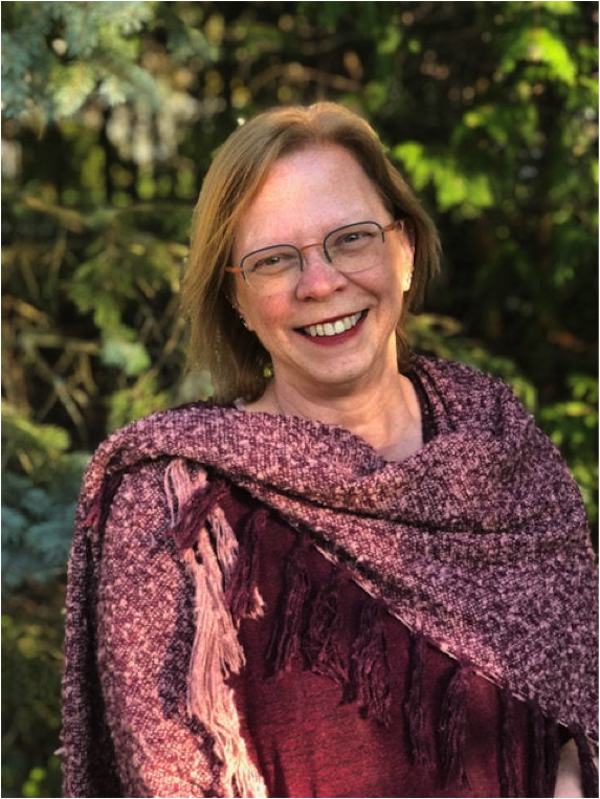
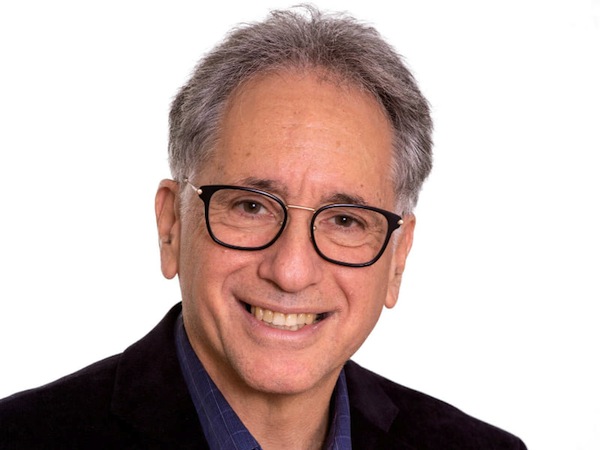
Left to right: Richard Leipsic, David Asper, Leonard Asper and Gail Asper. (photo from CFHU)
The Canadian Friends of Hebrew University has received $5 million from the Asper Foundation. This gift upholds a tradition of exceptional philanthropic support and collaboration between the Asper Family, based in Winnipeg, Man., and the Hebrew University of Jerusalem Israel (HUJI). It will allow Asper HUJI Innovate to expand its footprint and professional-led startup accelerators to develop significant external partnerships.
The Asper Foundation was founded in 1983 by Israel Asper (1932-2003) and Babs Asper (1933-2011), who believed that philanthropy is a driving force behind positive change in people’s quality of life. It supports major initiatives in the areas of Jewish charity, as well as culture, education, community development and human rights locally, nationally and internationally.
A portion of the recently donated funds will be used to establish an annual Asper Innovation Prize, valued at $35,000 US. The prize will be awarded during a juried competition, intended to encourage and recognize outstanding and promising student-led startups. The public event will also be used to showcase the university as a central force for global innovation within the Jerusalem ecosystem. (Jerusalem is currently ranked sixth in the new Global Startup Ecosystem Report).
“It was the entrepreneurial spirit and wisdom of our late parents, Israel and Babs, that established ties with the Hebrew University close to 60 years ago. We are very proud of our longstanding partnership and connection to innovation that began with the creation of the Asper Centre for Entrepreneurship in the Jerusalem School of Business Administration, in 2001,” said Gail Asper, president of the Asper Foundation. “We are excited to witness, through Asper HUJI Innovate, new generations of students and academics lay the groundwork for advancing ideas, for generations to come.”
The Asper HUJI Innovate platform encourages the entire university community, including students, faculty and alumni, and the Jerusalem community at large to develop their innovation and entrepreneurial capabilities. Established in 2018, it was created as a platform to ensure that graduates are best prepared for the challenges brought about by disruption, inherent in an evolving workplace.
“The HUJI Innovate program is highly prized by the entire university, and the Asper Foundation’s agreement to name and support the centre will surely lead to a great leap forward in the Hebrew University’s entrepreneurial enterprises,” said Prof. Asher Cohen, HU president.
The Hebrew University itself was founded in 1918, and officially opened its doors in 1925. It is ranked internationally among the 100 leading universities in the world, with six campuses, 200 majors and programs, and more than 5,000 courses.
“For over 100 years, the Hebrew University of Jerusalem has upheld the vision of its founders, including Albert Einstein, Martin Buber and Sigmund Freud, being at the forefront of creating Israel’s most significant and cutting-edge research, leading to inventions that serve our global community,” said Rami Kleinmann, president and chief executive office of Canadian Friends of Hebrew University, which was founded in 1944 by Canadian philanthropist Allan Bronfman.
CFHU provides support for the Hebrew University of Jerusalem to maintain its standing as one of the world’s leading academic research institutions, as well as aid in its continual pursuit to impact real change. CFHU is headquartered in Toronto and has six chapters across Canada, including here in Vancouver.
“This incredible gift will positively impact thousands of students, faculty and alumni,” said Kleinmann, “essentially shifting the course of research and engagement between the university and myriad business communities at large – it is extraordinarily profound.”
Clockwise from top left: committee members Tanja Demajo, Michelle Dodek, Michelle Gerber, Stan Shaw, Renee Katz and Simone Kallner. (photo sextet from JFS)
Jewish Family Services has formed a food security committee. This team will be responsible for leading the transition plan of the JFS’s Jewish Food Bank to its new and dedicated facility near Main and East 3rd Avenue in Vancouver. The committee, which reports to the board of directors, will be focused on supporting the Food Security program development project as a steering committee for the move into the new facility; and assisting as content advisors on an ongoing basis in the areas of food programs planning, security, building management, partnerships and community engagement, and communication.
Committee members have served on the Jewish Food Security Task Force and sit on several committees in the community. The committee co-chairs – Simone Kallner and Stan Shaw – also serve on the JFS board.
This year, a Food Security Project website will be launched to keep people apprised of the committee’s work. It will also contain upcoming town hall meetings, with the most current community stakeholder engagement and input opportunities.
* * *
Created in 1967, the Order of Canada is one of our country’s highest civilian honours. Its companions, officers and members take to heart the motto of the order, “desiderantes meliorem patriam” (“they desire a better country”). Appointments are made by the governor general on the recommendation of the Advisory Council for the Order of Canada and, on Dec. 30, it was announced that Dr. Robert Krell was among the 61 new appointees.
Dr. Robert Krell (photo courtesy)
Krell was appointed Member of the Order of Canada for “his contributions to our understanding of mass ethnopolitical violence, and for his advocacy on behalf of Holocaust survivors.”
A professor emeritus of the University of British Columbia, department of psychiatry, Krell’s research and interests are the psychiatric treatment of aging survivors of massive trauma; and antisemitism, racism and prejudice education.
Krell was born in Holland and survived the Holocaust in hiding. The Krell family moved to Vancouver, where he obtained an MD from UBC and eventually became professor of psychiatry. In his psychiatric practice, Krell was director of child and family psychiatry and also treated Holocaust survivors and their families, as well as Dutch survivors of Japanese concentration camps.
Krell established a Holocaust education program for high school students in 1976 and an audiovisual documentation program recording survivor testimony in 1978 and assisted with the formation of child survivor groups starting in 1982. He served on the International Advisory Council of the Hidden Child Gathering in New York in 1991, and he is founding president and board member of the Vancouver Holocaust Education Centre, which opened in 1994 and which teaches 20,000 students annually. He has authored and co-edited 10 books, 20 book chapters and more than 50 journal articles. He continues to write and speak on Holocaust-related topics.
* * *
With thanks to HaShem, Schara Tzedeck Synagogue members Alexander Hart and Kathryn Selby are honoured and delighted to announce the engagement in Jerusalem of their son Shmuel Hart to Reut Rappoport, daughter of Rabbi Jason and Meira Rappoport of Alon Shvut, Gush Etzion, Israel.
* * *
An article on the mosaic work of Lilian Broca has been published in the international peer-reviewed academic magazine Journal of Mosaic Research, out of Izmir, Turkey. It can be found at dergipark.org.tr/tr/pub/jmr (click on English version or translation if necessary), scroll down to article 18, which is “From Virtue to Power: Explorations in Female Heroism – The Mosaics of Lilian Broca,” and click on PDF on the upper lefthand side. The article was written by Angela Clarke, PhD, of the Italian Cultural Centre here in Vancouver.
* * *
Jerusalem-born, Montreal-based composer and vocalist Ayelet Rose Gottlieb released the album 13 Lunar Meditations: Summoning the Witches on Jan. 12, the first new moon of the new year.
A collaborative project, this double-vinyl release includes poetry by more than 20 women and girls from around the globe, a choir of improvising vocalists conducted by DB Boyko, and features vocalist Jay Clayton. Through a multicultural approach, 13 Lunar Meditations is an acoustic exploration focusing on the moon, our relationship with it and its effects on us.
“The moon speaks to the universal and to the intimate female presence,” Gottlieb shared on her inspiration, from her personal journey as an artist and mother. “In this difficult time we live in, having a connection with each other, with the world around us and with the universe may be the most radical act of resilience.”
In 2015, Boyko commissioned Gottlieb to compose a new song-cycle for her VOICE OVER mind Festival in Vancouver. Gottlieb composed the first draft of this song-cycle for her own quintet and Boyko’s improvisers’ choir. Later that year, the piece was presented again at John Zorn’s the Stone, in New York City, where Clayton joined in for the first time.
Gottlieb’s song-cycle traces the phases of the moon, from birth to full glory and all the way back to emptiness. The compositions range in musical expression from wild and experimental, to melodic, rhythmic and light. All are laced with improvisation and rooted in jazz with Turkish and Armenian undertones. Primarily sung in English, also interwoven are Hebrew, German, French, Turkish, Arabic, Spanish and Japanese.
Gottlieb invited more than 20 women and girls to write texts on their personal relationship to the moon, which inspired her compositions. Ages 4 to 70, these contributors represent a global community from diverse backgrounds and nationalities – from Australia to Morocco, a poet, a gynecologist, a lawyer, an energy healer, a sex worker, a grandmother, and others.
Supported by Canada Council for the Arts and a Kickstarter campaign that concluded at 109%, the album was recorded in Montreal. On it, Gottlieb, Clayton and Boyko are joined by Coeur Luna, Turkish violinist Eylem Basaldi, guitarist Aram Bajakian, contrabassist Stéphane Diamantakiou and drummer Ivan Bamford.
The album and accompanying lunar calendar and box set of 13 postcards (with art by Sarit Evrani, designed by Dan Levi) are available for purchase at ayeletrose.com and ayelet.bandcamp.com.
בריטניה החלה בשבוע שעבר לערוך ניסויים קליניים בתרסיס לאף למניעת התפשטות חיידק הקורונה, שמיוצר על ידי חברה בוונקובר “סנוטיז”. החברה בבעלות הישראלית, ד”ר גילי רגב, שמשמשת גם המנכ”לית שלה. קנדה השלימה כבר את השלב הראשון בניסויים הקליניים שלה ואילו ארה”ב אמורה להתחיל בניסויים דומים בימים הקרובים. בישראל לעומת זאת שוקלת מערכת הבריאות להגדיר את התרסיס של “סנוטייז” כמכשיר רפואי ולא כתרופה, כך שהתהליך לאישורו יהיה הרבה יותר מהיר.
התריס לאף של “סנוטיז” מבוסס על תרכובות שנמצאות במזון ויוצרות תחמוצת חנקן בכמות קטנה. הוא אמור לסייע במניעת מעבר נגיף הקורונה דרך האף ומערכת הנשימה. לדברי ד”ר רגב החברה קוראת למוצר חומר חיטוי לאף – בדומה לג’ל חיטוי לידיים למניעת התפשטות הקורונה. לדבריה מאה איש שהשתתפו בשלב הראשון של הניסויים הקליניים בקנדה והשתמשו בתרסיס, ואף אחד מהם לא חלה בנגיף.
ד”ר רגב למדה באוניברסיטה העברית בירושלים וסיימה את הדוקטורט בביוכמיה. לאחר מכן עברה לוונקובר והיא הקימה כאן את “סנוטיז” ביחד עם ד”ר כריס מילר לפני כארבע שנים.
קנדה רכשה פי חמישה חיסונים מהנדרש אך חיסנה רק אחוז מהאוכלוסייה
סיפור כשלון שמעורר תמיהה מתרחש בקנדה. המדינה שרכשה מראש יותר מנות של חיסונים נגד הקורונה מכל מדינה אחרת (כמעט פי חמישה מהנדרש), ומערכת הבריאות הציבורית שלה נחשבת מצויינת ומתוקצבת כראוי. אך למרות זאת, בקנדה התחסנו עד כה רק כאחוז אחד מכלל האוכלוסיה. ממש מביש.
לדעת המומחה, ריאן אימגרונדל, קנדה נתנה כל כך הרבה תשומת לב לאחסון הזריקות בהקפאה, ולא מספיק תשומת לב לשלב שבו הן יוצאות מההקפאה ועוברות לזרוע של האזרחים. הרשויות היו מודאגות לגבי דרישות האחסון, ונראה שהם “שכחו” שהזריקות היו אמורות למעשה להינתן לאנשים.
מומחה למחלות זיהומיות באוניברסיטת טורונטו, ד”ר איזק בוגוך, הסביר מדוע ישראל הצליחה להפיץ את החיסון בצורה מסיבית הרבה יותר. לדבריו ישראל היא מדינה קטנה והאוכלוסייה מרוכזת הרבה יותר מאשר קנדה. כידוע קנדה היא המדינה השנייה בגודלה בעולם מבחינת שטח. האוכלוסיה של קנדה מפוזרת באזורים שונים ומרוחקים זה מזה. צריך שרשרת אספקה (בטמפרטורות הנמוכות) לשמירה על החיסונים, וזה מסובך באזורים מרוחקים, כפריים ונטולי שירותים. זה אתגר מאוד גדול בקנדה.
אמזון לא עוצרת: רוכשת לראשונה מטוסי ארוכי טווח להעברת משלוחים מקנדה
ענקית המסחר האלקטרוני האמריקנית אמזון ממשיכה לגדול בתקופת משבר הקורונה, ורוכשת לראשונה מטוסים ארוכי טווח להעברת מישלוחים לאירופה ואזורים מרוחקים נוספים. עד כה החברה רק החכירה מטוסים להעברת המישלוחים.
אמזון חתמה לפני מספר ימים על הסכמים לרכישת אחד עשר מטוסי בואינג שבע שש שבע/שלוש מאות: שבעה מחברת התעופה האמריקנית דלתא וארבעה מחברת התעופה הקנדית ווסט ג’ט. מטוסי הנוסעים יוסבו לקרגו ויוכנסו לשימוש ע”י אמזון.
זו אגב הוכחה נוספת שחברות התעופה מקטינות את צי המטוסים שלהן לטיסות ארוכות טווח, נוכח המשבר הקשה שפוקד את ענף התעופה.
אמזון החליטה לפני כשנתיים להטיס בעצמה את מטעניה לכל רחבי ברחבי העולם, והיא מחזיקה כיום בציא ענק של שמונים מטוסים מוחכרים. עתה החברה כאמור רוכשת מטוסים והציא שלה יגדל אפוא לתשעים ואחד מטוסים. לפי הערכות אמזון מתכוונת להמשיך ולהגדיל את ציא המטוסים שלה למאתיים, בדומה למתחרה האמריקנית שלה להעברת מטענים – חברת יו.פי.אס.
אמזון מעסיקה כיום קרוב למיליון עובדים ברחבי העולם ושווי השוק שלה נאמד ביותר מטריליון דולר.
Israel’s Operation Tzur Israel, bringing olim from Ethiopia to Israel, began Dec. 3. (photo by Kassaw Molla)
It’s been almost 40 years since Israel coordinated the first airlift of Ethiopian Jews to Israel in 1984. The Beta Israel people, a citizenry of more than 100,000 at the time, were facing starvation in the midst of Ethiopia’s civil war. By the end of Operation Moses, some seven weeks and 30 clandestine flights later, more than 8,000 men, women and children had been airlifted to Israel. Since that time, Israel has rescued more than 30,000 Beta Israel from northern and central Ethiopia.
The impetus for saving Ethiopia’s fractured and often-persecuted Jewish populations goes back to 1921. Rabbi Abraham Isaac Kook, the then-Ashkenazi chief rabbi of British Mandatory Palestine, made an appeal for Jews to rescue the “holy souls of the House of Israel” from “extinction and contamination” in Ethiopia. His urging would be repeated by numerous other rabbis, including a former Sephardi chief rabbi, the late Ovadia Yosef, who, five decades later, declared the population eligible for aliyah to Israel. Nonetheless, there are thousands of Ethiopian families still waiting for their turn to move to the Jewish homeland.
Descendants of Beta Israel
The Jewish enclaves of Gondar City and the Ethiopian capital of Addis Ababa are home to the descendants of those first refugees of the 1980s and 1990s: grandchildren and great-grandchildren, fathers, mothers and children who were born while their parents waited for Israel to fulfil its stated promise to provide a new home. Their primitive living conditions, say aid workers, are often the product of circumstance. In a 2014 interview, Rabbi Sybil Sheridan (now Romain), a co-founder of the aid organization Meketa, told me that the Beta Israel moved to Gondar City from their ancestral farmlands decades ago due to persecution, with the implicit understanding that their next home would be in Israel.
“They gave up their things, they gave up their jobs, they left thinking they would actually be on the next plane,” Sheridan said. For many, those years of waiting for the next plane have resulted in a week-to-week existence, hinged on the assurances of a future that will reunite them with their now-Israeli families.
In 2003, the Israeli government announced that 20,000 Jews would be allowed to move to Israel, but that plan was later dropped when the Ethiopian government objected to the mass emigration. In 2015, when it became evident that Jewish populations were still at risk from persecution, the Knesset declared it would rescue 9,000 Ethiopian Jews, and would complete the airlifts by 2020. Fewer than 1,000 individuals have been admitted during that time.
In October 2020, Prime Minister Binyamin Netanyahu announced that 2,000 olim would be airlifted to Israel by the end of 2020. The deadline for Operation Tzur Israel (Rock of Israel) has been extended to the end of January 2021, and is gradually being fulfilled. Last month, roughly 700 olim arrived from Gondar and Addis Ababa. Another two airlifts this month have brought the total to roughly 1,500.
Israel’s Operation Tzur Israel has brought approximately 1,500 Ethiopians to Israel so far. (photo by Noga Melsa/Ministry of Absorption and Immigration)
Family members and aid groups in both countries say the 2,000-person limit is not enough. Those waiting in Israel to see their relatives say they are worried for their families’ safety with the risk of civil war and the coronavirus pandemic. Aid organizations argue that the country’s economic shutdown in March is still causing widespread unemployment. While Meketa and Struggle to Save Ethiopian Jewry (SSEJ), two aid groups that work to support the communities, have been shipping in food to the community synagogues, they warn that families are still at risk from famine.
Avi Bram, a trustee for Meketa, said conditions in Gondar are worrisome. “The community is in a very bad situation. Many, not all, but many are in a very, very poor and unsettled standard of living, especially now because of the pandemic.”
Bram said the original mandate of Meketa, which was established in 2013, was to reinforce independence for the community through training, conversational Hebrew classes and small business micro-loans. It was never designed to be a supplemental food program. But the aid is critical at this time. “It fills a humanitarian need,” he said.
SSEJ representative Jeremy Feit said the organization does what it can to support impoverished members of the Addis Ababa community. It arranges medical assistance for children under 5 and seniors, and hot meals for malnourished children and pregnant and nursing mothers.
“The end goal of the work is to limit needless suffering and deaths, while urging Israel to evaluate their claims and allow those eligible to make aliyah as soon as possible,” said Feit.
Aid groups Meketa and Struggle to Save Ethiopian Jewry provide emergency food to Ethiopian Jewish communities waiting for aliyah. (photo from Meketa)
Mengistu (no last name given), who lives in Ethiopia and has relatives in Israel from a previous aliyah, said the communities are facing increasing danger. “On one side, there’s coronavirus,” said Mengistu. On [another] side there’s the war,” coupled with endemic unemployment and famine.
According to Mengistu, the changing criteria for airlifts are only inciting more stress at home.
“[They] said they would bring 2,000 people at the end of this year,” Mengistu said. “We don’t know if they applied their decision [because] every time they decide [on a quota], they change it.
“So, who are they going to bring? Are they going to bring children? Are they going to [separate] brothers and sisters and leave [some] with their parents? Two thousand people, it’s nothing,” Mengistu said, “compared to the [actual number of] the people still in Ethiopia.”
A stalwart proponent
In May of last year, Pnina Tamano-Shata was appointed minister of absorption and immigration by the Likud-Blue and White coalition. The 38-year-old Ethiopian-born Israeli came with life experiences that made her an ideal candidate for the position. She and her family had immigrated during the 1980s rescue Operation Moses, during which an estimated 4,000 refugees died en route. She knows firsthand the conditions that today’s Ethiopian Jewish communities are forced to endure while they wait for aliyah.
She also isn’t bashful in her support for immigrant rights or services. In October, she negotiated an agreement with the Israeli nonprofit Shavei Israel to airlift approximately 700 Bnei Menashe Jews from North India. As part of the agreement, Shavei Israel would cover all transportation costs. The new immigrants will quarantine at a moshav before settling into their new homes and reuniting with their families.
Israel’s Minister of Absorption and Immigration Pnina Tamano-Shata is the first Ethiopian-born woman to hold a Knesset seat. (photo from Ministry of Absorption and Immigration)
As well, she has put forth a vision and a budget for how to finally resolve the humanitarian crisis in Ethiopia.
In August, Tamano-Shata proposed a plan that would allow, in her words, for Israel to “close the camps” in Gondar and Addis Ababa. Approximately 4,000 of 8,000 olim would be airlifted to Israel by year-end and the rest would follow by 2023. The NIS 1.3 billion ($380 million US at the time) proposal received support from all sides but was never adopted. The Netanyahu government later endorsed a limit of 2,000 by Dec. 31, with assurances of more immigrants at a later date.
Still, Tamano-Shata says she is committed to seeing the aliyah to its end. “[To] my dismay, we were unable to approve the national budget which was supposed to include the outline for the aliyah of those remaining in Ethiopia,” Tamano-Shata told the Jewish Independent in a recent email interview. “However, this does not prevent me from continuing to push for a comprehensive solution for this issue.”
To Mengistu, like many in Ethiopia’s Jewish enclaves, Tamano-Shata’s words are a hopeful sign. “Because now the help for the aliyah is Pnina,” said Mengistu. “She’s one of us. So maybe she will understand the situation and the [reason for] the protests [in Israel.] Maybe things will change.”
With Israel now set to face a fourth election in just two years, Tamano-Shata’s future as the next minister of absorption and immigration is yet to be determined, but her motivation to see the end of what is arguably Israel’s greatest humanitarian crisis remains firm. In 2016, the then-new minister was recognized by humanitarian activist Martin Luther King III for her efforts to establish better protections for Ethiopian immigrants in Israel. Last year, she toured the Addis Ababa enclave and handed out baskets of food to residents. She said she is committed to the rights of Israel’s olim, “despite the policies of lockdowns, shutting of flights and closing of the skies that exists in many countries due to COVID-19.”
At this point, all eyes are on Tamano-Shata. Few doubt that she will meet her stated commitment of 2,000 olim by Jan. 31. But can she, as well, engender better trust between Israel and those waiting for aliyah?
In a recent interview for the podcast One Jewish Family, Ambanesh Biru, former chair of the Gondar Jewish community, summarized the views of a hopeful community that knows its safety may rest in the Israeli government’s understanding of their predicament.
Don’t forget about the Ethiopian Jewish community, said Biru, “especially those [anticipating] aliyah. Because all of the Jews in Gondar and Addis Ababa came from villages expecting they would be going to Israel right away, not to live in Gondar [for the rest of their lives]. So, if anybody comes and talks about aliyah from Israel, please do your best [to follow through].”
Jan Lee’s articles and blog posts have been published in B’nai B’rith Magazine, Voices of Conservative and Masorti Judaism, Times of Israel, as well as a number of business, environmental and travel publications. Her blog can be found at multiculturaljew.polestarpassages.com.
In his December presentation, Michael Geller showed this photo of a building in Paris, where modular housing was added atop an existing apartment building to provide more units.
An old adage says that investing in real estate is always a good idea. “Buy land, they’re not making it anymore,” said Mark Twain. But local housing guru Michael Geller rejects this notion.
“I think sometimes you have to create land,” Geller said. Looking at Vancouver from above, he said, you see a lot of green and a lot of blue. But you also see a lot of grey. Making better use of parking lots, rooftops, the top levels of parkades and underused space around existing buildings are among the ways Geller imagines we can create more space for housing.
Geller spoke at Tikva Housing Society’s annual general meeting, held virtually on the first night of Chanukah. Tikva is a nonprofit society that provides access to affordable housing, primarily for Jewish low- to moderate-income adults and families. Its vision is “a safe, stable and affordable home for every Jewish person who needs one in Greater Vancouver.”
A screenshot from Michael Geller’s presentation at the Tikva Housing Society annual general meeting Dec. 11. It was one of eight ideas he suggested to create more space for housing.
In honour of the eight nights of Chanukah, Geller offered up eight ideas, including building houses like we build cars – in factories. Also, taking the concept of laneway housing to new heights by allowing the construction of housing on parking lots. And designing apartments that can be divided into two studio suites or opened up to create family accommodation. Plus, matching people who live alone, or in a couple, and have extra bedrooms in their house to connect with people who need housing.
He showed one instance of a high-rise complex in West Vancouver where two new low-rise buildings were constructed amid the landscaped gardens around the older buildings.
Geller was an early adopter of the concept of modular housing, having written a thesis on the subject in university. Modular housing consists of units manufactured and moved as completed (or mostly completed) structures to their temporary or permanent sites. He showed a photo of a building in Paris, where modular housing was added atop an existing apartment building to provide more units. The top levels of many urban parkades might make ideal locations for modular housing, he said, since few people park there unless the entire structure is full.
In European countries – Geller is doing work in Russia at present – families use space for more than one purpose, allowing better utilization of limited footage. Student accommodations, he suggested, could be developed by transforming a living area into a second bedroom through a pocket door or similar. Larger apartments could be made more flexible with extra external doors and tiny kitchenettes that allow one apartment to become two smaller ones – or those two smaller ones to be easily retrofitted for a growing family. He called these types of lock-off suites, “a mortgage helper in the sky.”
Identifying new municipal, provincial and federal lands for affordable housing is another option.
“I really like golfing at Langara,” Geller said. “But, I must say, if you were to take a 40-foot strip off that golf course all the way along Cambie Street, you could create a lot of land, which could be used for affordable housing and some market housing to support the non-market housing.”
He admitted that some of his golfing friends might think this is a terrible idea.
Many of Vancouver’s older residents are “over-housed,” according to Geller, meaning that one or two people might live in a three- or four-bedroom home. Not everyone would be comfortable sharing their home with erstwhile strangers, he admitted, but some would.
“They might want to share with another senior, they might want to share with a younger person who is willing to help around the house, to pick up prescriptions, to pick up food, to drive them to see friends,” he said.
Another idea Geller mooted was “the Tikva Suite.”
“Maybe we should start a program where we basically approach every member of the Jewish community who owns an apartment building and say, rent us a suite, give us a suite, and the clever accountants in the community can work out some way so there can be a tax receipt for this and that way you can have a suite in every one of those buildings,” he said. “It’s a dream, but many of the dreams I’ve had over the last 50 years actually do materialize. They take awhile, but this is not such a crazy idea.”
Geller is a planner, real estate developer and retired architect with five decades of experience in the public, private and institutional sectors. He is adjunct professor at the Simon Fraser University Centre for Sustainable Development.
Beginning with a seven-unit building in South Vancouver in 2007, Tikva Housing Society has grown to support the housing needs of 288 individuals. The society provides housing directly through three complexes – with another under construction – as well as through rent subsidies. The AGM heard that the society has net assets of about $2.6 million.
At the meeting, outgoing chair Shelley Karrel announced the launch of a new Jewish Housing Registry, an online platform for people who are looking for housing. It is a partnership between Tikva, Jewish Family Services, Jewish Federation of Greater Vancouver and the other Jewish housing societies: Vancouver Jewish Building Society, Yaffa Housing Society, Haro Park Centre and Maple Crest Apartments (which is under the auspices of Royal Canadian Legion Shalom Branch 178). The registry will provide a single source for housing applications and will also provide partners with a more accurate way of determining the scope of the community’s housing needs. (See jewishindependent.ca/jewish-housing-registry-live.)
The 2011 Census reported 26,250 people in Metro Vancouver’s Jewish community, of which more than 16% reported incomes below the low-income cutoff, giving Vancouver the second highest rate of Jewish poor in Canada. Average rent for a two-bedroom apartment in Metro Vancouver is more than $2,000 a month and the vacancy rate is about one percent.
At 109, Richmond resident Reuben (Rube) Sinclair might be Canada’s oldest Second World War veteran. (photo from Reuben Sinclair)
A Richmond resident is almost certainly Canada’s oldest Second World War veteran. Reuben (Rube) Sinclair received a special recognition on Remembrance Day, though, because of confidentiality issues, Veterans Affairs Canada can’t confirm he’s the oldest service member. But, at the age of 109, basic statistics suggests that, if Sinclair isn’t the oldest, he’s got to be close.
The centenarian spoke with the Independent virtually via Zoom about his life and what advice he might have for aspiring super-seniors like himself.
Sinclair was born in 1911 on the family farm near Lipton, Sask. Lipton was one of many “colonies” created by Baron Maurice de Hirsch in Canada, Argentina and Palestine to resettle oppressed Jews from Europe. Sinclair’s father, Yitzok Sinclair (born Sandler), traveled from Ukraine, via Liverpool and arrived at Ellis Island Jan. 4, 1905, on the SS Ivernia. He made his way to Saskatchewan, where he was given land by de Hirsch’s Jewish Colonization Association. However, the land was poor and so the newcomer worked for the Canadian National Railway long enough to save up and buy a better plot and build a house. When he was settled, he sent for his wife, Fraida (born Dubrovinsky), and their two young sons.
Reunited in Lipton, the family grew to include not only Samuel and Sol, who were born in the old country, but the only sister, Clara, then Rube and the youngest, Joe.
The last survivor of his birth family, Sinclair has fond memories of the farm life. He and the other two youngest did chores while the older two headed to university. Samuel became a medical doctor and Sol was a professor of agriculture at the University of Manitoba.
“There was a whole colony of Jewish families,” Sinclair said. “My parents had one of the largest farms – 16 quarter-sections [more than 2,500 acres]. I remember we had 42 horses. We had milk cows. I had my jobs. My job was to go collect the eggs from the chicken house and, when I was 12, I was already driving our car.… Always things to do on a farm.”
Yitzok donated a few acres to the community and helped construct a school, which doubled as a synagogue. On Shabbats and Jewish holidays in winter, the boys would sleep in the hayloft so the local men could stay in the house and not walk home in the freezing Saskatchewan weather.
“My father was a leader in the community,” he said.
Reuben Sinclair holds a birthday message from Veterans Affairs Canada. (photo from Reuben Sinclair)
Sinclair joined the Royal Canadian Air Force during the Second World War and was stationed in North Battleford, Sask. In the days before radar was commonplace, he taught Allied pilots how to take off and land in the dark using a “standard beam approach,” which involved a navigation receiver that allowed the pilot to line the aircraft up with the runway when preparing to land.
“In the air force barracks, I was on the top bunk,” he said. “I always got the top bunk because the younger generation would come home drunk and I wouldn’t sleep in the bottom bunk.”
One day, he encountered a barrack-mate in tears. Sinclair recalls the conversation: “They’re sending me to Vancouver, he said, and my family is all here around Brandon, Manitoba. So I said, that’s no problem. When they want a person to go to Vancouver, they don’t care who the person is. Vancouver wants one person. So, I said, don’t cry. We’ll go see the commanding officer. I told him that my wife has got family in Vancouver and I’d be glad to go instead. He said they don’t care, all they want is one person. So, I was the person who went to Vancouver at that time and I’m still here,” he recalled with a laugh.
Joe, the youngest of the five siblings, had served in the army and after the war joined Rube in British Columbia. They started Sinclair Bros. Garage and Auto Wrecking, in Richmond, just across the two old Fraser Street bridges from Vancouver.
“My job was to go out and find old cars and we had a tow truck,” Sinclair said. “I’d bring them in and my younger brother would wreck them. We opened a wrecking company.” They also bought surplus army vehicles to fix up and sell.
The business soon became a sort of family compound. A small house adjacent went up for sale and the Sinclairs bought it, bringing parents Yitzok and Fraida to the coast. Then sister Clara and her husband Morris Slobasky bought a general store that was next door.
Because of his wartime experience, Sinclair developed migraine headaches and was told to go to a drier climate. He thought Arizona sounded good, but his wife, Ida, had siblings in the Los Angeles area and a brother-in-law offered him a job in a furniture store in Anaheim.
In 1964, Rube and Ida packed up the three kids – Nadine (now Lipetz), Karen and Len – and moved to Southern California.
“He put me in charge of the furniture store,” Sinclair said of his brother-in-law. “I knew nothing about furniture, but I learned pretty quick.”
Soon he was in business for himself again.
“Then my boss that I worked for in Anaheim, his wife wasn’t very well and she spent a lot of time in Palm Springs,” Sinclair recalled. “So, he said, instead of me going back and forth, I’ll move to Palm Springs and you can have the store, just pay me for the inventory.”
In 1994, Ida had a stroke and the couple moved back to British Columbia. She passed in 1996. Rube still lives in their Richmond condo.
Rube and Ida were active in their communities. In Los Angeles, they raised more than a million dollars for City of Hope, a cancer hospital and research facility. Both were active members of Schara Tzedeck Synagogue here, he especially in the Men’s Club, and he is proud of his lifetime honorary membership in the shul. In addition to their three adult children – Nadine is in Vancouver; Karen and Len in California – he has six grandchildren, 16 great-grandchildren and one great-great-grandchild.
Asked if he has any advice for others, Sinclair didn’t hesitate.
“That’s easy. I always say, if you have a problem, don’t worry; you’ll lose your hair. Fix it. If you have a problem, fix it. Don’t sit back and worry. Worry is not going to help.”
Any bad habits?
“I don’t think so,” he said after a thought. “I spent most of my life working and, in my spare time, working for people less fortunate. That was my enjoyment in my spare time.”
Two years ago, the City of Richmond named Sinclair an “honoured veteran.”
Recalled daughter Nadine: “He was part of the Remembrance Day service in Richmond and they made a big deal about it. They sent a limo and he sat with the mayor and the Silver Cross Mother. They gave him a wreath and then they walked him around. He was up on the dais with the mayor and the head of the RCMP as the soldiers all walked by. It was a very big deal for him.” Last Remembrance Day, he received a certificate from Veterans Affairs.
If, by some chance, Sinclair is not
Canada’s oldest veteran of the Second World War, he seems determined to attain that title.
“I’m not going anywhere,” he said. “I still have some unfinished business.”
Normally, this issue of the Independent would feature our third Camp Guide of the season, with several camps advertising their summer sessions, and several articles on various topics related to Jewish camp. But COVID-19 seriously affected last summer’s programming and it’s making this year’s planning difficult, to say the least. Camp Hatikvah and Camp Miriam – which are overnight camps – have been particularly impacted by the pandemic.
With record camper enrolment, 2020 was slated to be Camp Hatikvah’s best year ever. By the third week of March, however, it became apparent that the summer wasn’t going to go as planned. By the end of May, the Provincial Health Officer had announced that overnight camps would be prohibited from operating and Camp Hatikvah had to cancel its upcoming season.
“It was devastating,” said Liza Rozen-Delman, the camp’s director. “My heart immediately broke for the 700 participants and 80 young counselors who were signed up for our programming. After such a hard few months in lockdown, I knew everyone was hanging on to the hope that they would still get to go to camp. The fact that this was no longer a possibility was so hard for everyone. I just wanted to fix this for kids but was helpless to do so. It was a very difficult time.”
The cancellation also created a financial crisis, as there was no program revenue to cover fixed costs, such as insurance fees, site maintenance and administrative expenses. Camp Miriam faced financial issues as well, and the Jewish Federation of Greater Vancouver provided emergency funding to both camps last April.
“Our community made it clear that we would not face this challenge alone,” said Joanna Wasel, Camp Hatikvah board president. “They knew we were in trouble and they immediately felt the call to action.” By the first week of June, Hatikvah had raised enough money to cover all of their 2020 fixed operational expenses.
“This was one of the hardest years in the camp’s history and yet, in a strange way, it was also one of our most meaningful,” said Wasel. “The way the community stepped up for us is an incredible affirmation of the value of our work and the impact Camp Hatikvah has had on generations of people. It has touched us beyond words and we will be forever grateful.”
“Last spring, as the reality of the pandemic hit, it was as if the rug had been pulled out from under us,” said Leah Levi, registrar of Camp Miriam. “We were scrambling to figure out how to provide what we do each summer on Gabriola Island – the fun, magic, community, friendship and Jewish experiences that our campers have come to expect from us. It was very overwhelming and we were sort of lost, until our youth staff stepped up and started planning for what was possible: day camps in Vancouver, Victoria and Portland, and even online programming for those who couldn’t attend the day camps. We rented space with the JCC’s Camp Shalom at Vancouver Talmud Torah, and in Victoria at the JCC. Donors and the Vancouver Jewish Federation backed our plans with financial support and, as they say, the rest is history!”
The camp’s staff, who are all between the ages of 17 and 22, got “to spend the summer being mentors and learning valuable leadership skills,” said Levi. “Parents and kids were grateful that we gave them a break from each other and a fun, unplugged, Jewish, social experience during COVID. For over 200 campers, COVID-19 took a backseat for six-and-a-half hours a day, and they were able to enjoy a physically distanced ‘normal.’ Even though they weren’t on Gabriola Island, campers and staff alike felt that they were at Miriam. As one camper put it, ‘We learned that Camp Miriam is not a place, it’s a feeling and we can take it anywhere.’”
For this coming summer, Camp Miriam has opened registration for three two-week sessions on Gabriola.
“All registrations are considered ‘pre-registrations’ and everyone is on a waitlist,” said Levi. “We will only accept campers when we have permission from the B.C. health authority, as their decision made last spring to not allow overnight camp still stands…. If we do not get permission to open … we will offer similar programming as last summer.”
Hatikvah translates to “the hope” in English and, while COVID is still raging, Camp Hatikvah remains hopeful they will be able to operate this summer, too.
“We are full for the upcoming season,” Rozen-Delman said. “Kids need camp, perhaps now more than ever, and we are going to do whatever we can to get them back there this summer.”
Acknowledging that much of the situation is out of their hands, Rozen-Delman is planning for a variety of scenarios. “And, while it is hard to face so many unknowns,” she said, “we are determined to find creative solutions to whatever challenges lay ahead.”
The Vancouver Jewish Food Bank is now distributing more than 10,000 kilograms of food every month. (photo from BI and JFS)
According to the Community Food Centres Canada report Beyond Hunger: The Hidden Impacts of Food Insecurity in Canada, “Even before COVID-19, nearly 4.5 million Canadians struggled to put good food on the table for themselves and their families. In the first two months of the pandemic, that number grew by 39%, affecting one in seven people.”
Demand on the Vancouver Jewish Food Bank has almost doubled since the start of COVID-19. The organization is now distributing more than 10,000 kilograms of food every month; supporting seniors, families and individuals. While some of us have been impacted by food scarcity during COVID-19, those most in need live in a state of constant worry about where their next meal will come from.
The 1996 World Food Summit defined food security as: “when all people, at all times, have physical and economic access to sufficient, safe and nutritious food to meet their dietary needs and food preferences for an active and healthy life.” To this end, Jewish Family Services and Congregation Beth Israel are hosting More Than a Bag of Food on Jan. 28, bringing organizations and people together for a Tu b’Shevat program on food security in our community and beyond.
Vancouver Talmud Torah and Richmond Jewish Day School students are raising awareness about the food bank and reaching out to recipients. King David High School is hosting a cooking demonstration with Hilit Nurick and Rabbi Stephen Berger at 4 p.m. on Jan. 28, which will feature local ingredients and discuss the need for healthy food for everyone. Hillel BC is running an online quiz, with prizes, and a deep dive into information around food security.
At 7:30 p.m. on the 28th, there will be a Zoom panel including Dr. Tammara Soma, assistant professor, School of Resource and Environmental Management, Simon Fraser University; Dr. Eleanor Boyle, educator and author; Krystine McInnes, director and chief executive officer of Grown Here Farms; Mara Shnay, chair of the JFS client advisory committee; and Cindy McMillan, director of programs and community partnerships at JFS. Lawyer Bernard Pinsky will moderate the discussion.
“This is an important conversation,” said McInnes. “The stakes are very high. The pandemic has thrown into sharp relief just how vulnerable we are, given the way our society is organized. ”
Food systems produce and deliver based on historic demand. With the advent of COVID-19, the system has been stretched, leading to empty grocery shelves and desperate food banks. International supply chains are no longer reliable, with Russia and Vietnam limiting the sale of wheat and rice outside of their countries. Canadian food production plants have been hard hit by pandemic outbreaks and the lack of international workers. This is particularly problematic when food production is concentrated at large facilities; for example, two plants in Alberta provide 70% of Canadian beef.
“We are going to talk about initiatives from local to global,” said Boyle, “and panelists will let audience members know about some of the creative approaches to food security that are being taken at the Jewish Food Bank, as well as what’s going on around the world to try to shift agriculture and diets toward being better for climate and public health.”
The breakdown of Nefesh B’Nefesh 2020 aliyah. (image from Nefesh B’Nefesh)
Despite a challenging and tumultuous 2020, 291 individuals from Canada decided to make aliyah and move to Israel with Nefesh B’Nefesh (NBN) over the past year. The Canadians were among the 3,168 individuals who moved to Israel from North America in 2020 – 2,625 since the COVID-19 pandemic hit.
Founded in 2002, Nefesh B’Nefesh, in partnership with Israel’s Ministry of Aliyah and Integration, the Jewish Agency for Israel, Keren Kayemeth LeIsrael and Jewish National Fund-USA, has assisted in easing the aliyah process for more than 65,000 olim since its inception. With the help of its partners, NBN assisted nearly 90% of the total number of olim that arrived in 2019.
Since January of 2020, Nefesh B’Nefesh olim have most often hailed from New York, New Jersey, California, Florida, Ontario, Illinois, Massachusetts, Maryland, Pennsylvania and Texas. Altogether in the past year, 811 families chose to move their lives to Israel, along with 1,032 singles and 332 retirees. There were 61 physicians among a total of 198 medical professionals who arrived in Israel in the last year, most of whom joined the frontlines in Israel’s fight against the coronavirus. And 390 young men and women stepped off the plane with the desire to serve Israel as lone soldiers.
In addition to the olim who arrived throughout 2020, Nefesh B’Nefesh received 6,704 aliyah applications, in contrast to 3,035 in 2019 – marking a 126% increase in interest in aliyah.
The breakdown of Nefesh B’Nefesh 2020 aliyah. (image from Nefesh B’Nefesh)
“From the earliest days of the Jewish state, no matter how trying or difficult the circumstances, aliyah has always continued in order to preserve what was once a distant dream for our parents and grandparents,” said Rabbi Yehoshua Fass, NBN co-founder and executive director. “As we look back at the challenges everyone faced in 2020, we are extremely proud of what we have accomplished together. We look forward to watching each oleh grow and build their new lives in Israel, and eagerly look ahead to 2021, a year with the potential to exceed all expectations in aliyah.”
“I welcome the dozens of new olim who chose to leave everything, especially during the time of a global epidemic, and fulfil their dreams of building new homes for themselves in Israel,” said Minister of Aliyah and Integration Pnina Tamano-Shata. “Many will surely remember 2020 as a challenging and complex year, but the olim who arrived [recently] from across the U.S. and are part of the last group of olim this year, are enabling it to be shaded in more encouraging and optimistic colours.
“Despite COVID-19, the Jewish nation is thriving and aliyah is continuing,” Tamano-Shata continued. “In the past year, more than 20,000 olim from 80 countries around the world made aliyah.”
“The thousands of new olim from North America and around the world, during a year of a global pandemic, lockdowns and almost complete paralysis of international air travel, emphasizes how much the longing for Zion is deeply ingrained in the hearts of the Jewish people around the world,” said Isaac Herzog, chair of the Jewish Agency.
The top 10 cities in Israel that new olim chose as their homes this year were Jerusalem, Tel Aviv, Beit Shemesh, Ra’anana, Haifa, Herzliya, Netanya, Modiin and Be’er Sheva. The olim most commonly worked as educators, physicians, nurses, social workers and lawyers, as well as in the fields of marketing, sales and business. The average age of an oleh this year is 30, with the oldest being a 97-year-old and the youngest being only 35 days old.
When the pandemic began in earnest in March 2020, Nefesh B’Nefesh adapted its various programming and transitioned into holding virtual meetings, webinars and informational sessions. The online seminars have allowed the organization to reach a much wider audience and have included a wide range of subjects, from choosing communities and special webinars for medical professionals, to how to pack and ship for aliyah.
The ongoing support after aliyah provided by NBN has meant that 90% of its olim have remained in Israel, leading to tens of thousands of new Israelis who go on to make significant contributions to the country.
Prof. Ori Efrati, left, and Dr. Michael Cohen. (photos from IMP)
With the arrival of the coronavirus vaccine, there has also been a spike in morbidity, clearly indicating that we’re not out of the woods yet. In fact, hospitals in Israel have warned that they are steadily approaching maximum capacity, as the numbers of severely ill COVID patients breaks all records.
When COVID-19 first erupted in March 2020, health authorities warned that a surfeit in severely ill coronavirus patients would overwhelm the system due, in large part, to a lack of ventilation machines – the standard of care for coronavirus patients whose condition deteriorates to pneumonia. In the ensuing months, Prof. Eyal Leshem, director of the Centre for Travel Medicine and Tropical Diseases at Sheba Medical Centre, explained that, in addition to the shortage of ventilators, one of the most pressing issues is the lack of highly trained intensive-care-unit staff to monitor patients attached to those devices.
An innovation by Yehonatan Medical addresses both of these issues.
Yehonatan Medical, in collaboration with Prof. Ori Efrati, director of the pediatric pulmonary unit at Sheba Medical Centre, devised a first-of-its-kind ventilation system that can treat multiple patients.
“Conventional ventilators, aside from being very costly, are limited in that they can only be used with one patient at a time,” explained Efrati. “Their capacity factor and programming functions were designed for single-patient use, and there is also the danger of cross-contamination.”
The new ventilation system resolves issues that corona ICU wards have been grappling with as the number of severely ill patients rises.
“We were able to use the relatively simple and inexpensive BipaP non-invasive ventilation machine as the basis for the advanced ventilation technology,” said Efrati. “Thanks to the high-power output and built-in disinfecting mechanism, the new system can safely treat three to five patients simultaneously.”
Moreover, a system that can treat multiple patients at one time necessitates fewer ICU-trained staff. Thanks to the remote interface, the medical team can monitor patients from a safe distance.
“This tremendous breakthrough is nothing less than a game-changer when it comes to caring for large numbers of corona patients,” Efrati added.
Dr. Michael Cohen, an engineer and scientist and the founder of Yehonatan Medical, said, “All in all, we’re talking about a system that delivers personalized care in a multi-user format.”
Additional features based on artificial-intelligence technology include the ability to have a hierarchy and classification of alerts; the ability for automatic parameter correction according to set criteria; respiratory rehabilitation for the patient by adjusting to changes in the patient responsiveness; and more. The streamlined, relatively low-cost system can be implemented in makeshift clinical settings, such as field hospitals, as well as in step-down units within the hospital, in the internal and other wards.
Yehonatan Medical is the medical department of Mofet Etzion, a company that for more than two decades has developed various security and military innovations for the Israel Defence Forces and foreign armies. Cohen has developed dozens of life-saving innovations, including in the area of cardiology, in collaboration with cardiologists and cardiothoracic surgeons from Israel, the United States and Canada.
“Some of the insights for the development of this revolutionary ventilation system were provided by cardiologists who helped us to devise the various accoutrements and sensors,” Cohen said, making specific mention of Dr. David Adams, professor and system chair of the cardiovascular surgery department at Mount Sinai Hospital in New York; Dr. David Tirone, chief of cardiac surgery at Toronto General Hospital; and Dr. Gideon Cohen, cardiothoracic surgeon at Sunnybrook Health Sciences Centre in Toronto. The development of the system itself took place in Israel, marking the first time that an invasive ventilation machine has been built in Israel.
The advanced ventilation technology is currently in advanced phase trials at the MSR Medical Simulation Centre at Sheba, where it is being tested on artificial lungs, and is expected to be ready for mass marketing in the coming months.
– Courtesy International Marketing and Promotion (IMP)