Experience both land & spirit

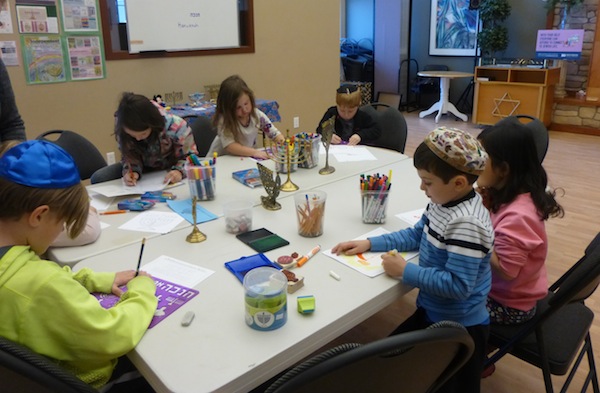
(photo from Chabad Richmond)

Chabad Richmond is leading a trip to Israel called The Land & the Spirit Israel Experience. People from across the Lower Mainland are invited to participate in this educational journey to Israel and Judaism’s most holy and historical sites.

March 4-13, 2018, participants will be taken on a five-star experience that feeds their heart, mind and soul, creating lifelong and life-changing memories. “This is an opportunity to see Israel as never before. This trip includes many unique features you will not find on any other trip of its kind,” said Rabbi Yechiel Baitelman, director of Chabad Richmond.

Sponsored by the Jewish Learning Institute, the trip includes:

Journey of learning: Explore Israel’s soul. The Jewish Learning Institute will bring Judaism’s rich history to life as travelers discover the origins of our nation and the spiritual secrets of Israel’s holy sites.

Israel today: Hear from chief rabbis, military brass and top political leaders. The group will be addressed by Israel’s leaders and gain an insider’s view of modern-day Israel’s challenges and triumphs.

Mission of solidarity: Head to the frontlines of Israel’s fight for survival. The trip is highlighted by a visit to the beleaguered community of Hebron, and an intimate barbecue with Israel Defence Forces soldiers and officers, where participants will be able to express their support to our brothers and sisters.

Travel in luxury: There will be concierge service from the moment you arrive, first-class hotel accommodations, five-star gourmet meals, and the very best Israel has to offer in education and entertainment.

Registration for the 2018 trip is well ahead of the pace of recent trips, so interested community members are encouraged to register soon. “This is not a fundraising trip,” emphasized Baitelman, “and no solicitation will be done on this trip.”

For more information and to view the itinerary online, visit landandspirit.org. For more information, contact Baitelman at rabbi@chabadrichmond.com or 604-277-6427.

The incredible power of soup

Soup is not just food. It’s an experience, a sustenance, a simple yet magnificent meal, if done right, which is generally easy. Probably every culture on earth has a signature variation and, in the Jewish tradition, there is nothing more iconic than chicken soup.

When Sharon Hapton, a Jewish woman in Calgary, had the idea eight years ago to make a great vat of soup and carry it to a shelter for women escaping domestic abuse, she defaulted to that dependable chicken soup recipe. As reported in the Independent in 2014 (jewishindependent.ca/soup-ladled-with-love), that act elicited a deeply moving reaction. The chef at the shelter broke into tears when she saw the offering. There were Jewish women in the shelter and the chef knew the emotional significance and comfort the simple soup would bring.

The nonprofit social enterprise – a movement, really – that emerged from that first gesture is called Soup Sisters and it is a network of more than 40,000 people who have created one million servings of soup since the program began in March 2009. Each month, more than 10,000 servings are delivered to women, children and youth in shelters across Canada and in a couple of nascent cities in the United States. Hapton has been recognized by Chatelaine, CityTV and the YWCA for her vision.

In the interest of gender equality, there is also now Broth Brothers. And, a new iteration of the program, called Souper Kids, encourages young people from age 8 to 17 to participate in helping families and individuals who need it most.

book cover - Soup Sisters Family Cookbook

The Soup Sisters Family Cookbook is the third in a series of publications the group has compiled, and it is aimed directly at this next generation. Edited by Hampton, with Gwendolyn Richards, and subtitled “More than 100 Family-friendly Recipes to Make and Share with Kids of All Ages,” it is a great addition to the shelf. Most recipes have only a few ingredients and are ideal for young people first venturing into the kitchen (with supervision from an adult of even limited cooking capabilities).

The volume includes contributions from celebrities, including Ruth Reichl, David Hawksworth, Nigella Lawson, Michael Smith and Elizabeth Baird, as well as from children from across Canada.

In addition to several variations on chicken soup (the B.C.-based singer and songwriter Jann Arden offers up a Kitchen Sink Chicken Soup), there are classics like Grandma’s Russian Borscht and Easy Creamy Tomato Soup. Kid-invented recipes include Every Bunny Loves Carrot Soup, Posh-tasting Red Pepper and Coconut Soup and Attack of the Killer Tomatoes. Dragon Soup was contributed by a Grade 2 Class in West Kelowna, B.C. Many or most recipes can be made kosher, Cheeseburger Soup notwithstanding.

Jerusalem/London food superstar Yotam Ottolenghi offers Chickpea, Tomato and Bread Soup. Vancouver chef and cookbook author Vikram Vij contributed Indian Comfort Food Soup, sometimes called “Indian Mac-and-cheese,” not because it contains macaroni or cheese, the introduction explains, “but because it’s value-for-money comfort food, and a favourite with kids.” Earls Restaurants contributed their Tortilla Soup recipe.

I made to the Roman “Egg Drop” Soup with ingredients around the house on a cold, rainy autumn afternoon. There is almost nothing to it, but it turns out surprisingly revitalizing and a little bit fancy. It’s really nothing but eight cups of chicken stock (kosher cooks could substitute vegetable stock), four cups of packed spinach leaves (I didn’t want to leave the house, so I used frozen – it would benefit from fresh), 1 1/4 teaspoons of salt, four eggs, and one third of a cup freshly grated Padano cheese (I used the Parmesan I had on hand and it added more salt than ideal).

Once the broth is simmering and the spinach is added, the eggs, cheese and quarter of a teaspoon of the salt are whisked together in a bowl, then slowly whisked into the soup in a traditional egg drop motion more commonly associated with Chinese cooking.

The book includes a preface about making your own stock, as well as basics on slicing, chopping, peeling and prepping – good for kitchen newbies as well as a refresher for oldsters who still slash ourselves too frequently in the kitchen.

The Soup Sisters Family Cookbook is meant for families to come together and cook as a group, which is, of course, what Soup Sisters (and Broth Brothers) is all about. Founded on the simple belief in the power of soup “as a nurturing and nourishing gesture that could make a tangible difference,” Soup Sisters holds year-round programs where participants, who have paid a registration fee, join a soup-making event in a professional kitchen under the guidance of a chef. The social process produces 150 to 200 servings of soup that are then delivered to local shelters.

“Events are social evenings with lively conversation, chopping, laughter and warm kitchen camaraderie that culminate in a simple, sit-down supper of soup, salad, bread and wine for all participants,” says the website.

Vancouver has two Soup Sisters chapters. One is in partnership with the Pacific Institute of Culinary Arts and supports Kate Booth House, a Salvation Army-associated agency that has provided a safe refuge for more than 4,000 women and children from 83 nationalities fleeing domestic abuse. It offers up to 30 days of housing in a supportive atmosphere that includes support services. This chapter also supports Imouto Housing for Young Women, which provides supportive housing in the Downtown Eastside for girls and young women who are homeless or in unsafe housing and who face risks including violence and abuse, exploitation, substance use, racism and other dangers.

Another chapter is in partnership with the Northwest Culinary Academy of Vancouver and supports Sereenas House for Women, a residential support program in the Downtown Eastside that allows women to live independently of violence, abuse and substance use and to access services and become involved in their community.

There are also Soup Sisters chapters in Burnaby, Surrey, the Tri-Cities, Victoria, Penticton and two in Kelowna, among other locations in Canada and the United States.

This recipe will become a cold-weather regular in my kitchen:

WHITE BEAN, CABBAGE AND SAUSAGE SOUP
Contributed to The Soup Sisters Family Cookbook by Laura Keogh and Ceri Marsh, cookbook authors and bloggers at sweetpotatochronicles.com.

2 tbsp olive oil
3 Italian sausages, cut into bite-size pieces
one onion, finely chopped
3 cloves garlic, minced
half a Savoy or green cabbage, cored and thinly shredded (4 to 5 cups)
4 cups chicken stock
one can (15 ounces) cannellini beans, drained and rinsed
1 tbsp fresh thyme leaves
2 bay leaves
salt and pepper to taste
1/2 cup fresh grated Parmesan cheese [easily omitted in kosher kitchens]

1. In a large pot, heat the oil over medium heat. Add the sausages and allow them to brown, pushing them around so they get colour all over. Remove the sausages from the pot and set aside on a clean plate.

2. Add the onion and garlic to the pot and cook, stirring often, until the onion starts to soften, around four minutes. Add the cabbage and stir it around for a couple of minutes.

3. Add the stock, beans, thyme and bay leaves. Return the sausages to the pot and allow everything to come to a simmer over medium heat. Reduce the heat to medium-low and simmer, uncovered, until the vegetables are tender, about 20 minutes. Fish out and discard the bay leaves. Season with salt and pepper to taste.

4. Ladle the soup into warm bowls and serve with a generous sprinkling of Parmesan cheese. [Or not.]

Why we head home

(photo from oliveandwild.com/collections/judaic)

It is the season for gatherings and celebrations, and many travelers are urgently trying to make their way home for the holidays. An innate urge seems to drive them back to their roots. And, I wonder, What is it that draws people home for the holidays?

This existential question arose one year as I was lighting the menorah on the first night of Chanukah. Friends and family were gathered at our home to celebrate the holiday season once again. The loving faces, which crossed generations, reminded me that, for some, it is Christmas, a time to spread peace and joy throughout the world. For others, it is Chanukah, with its message of rebuilding, rededication and freedom from oppression.

Suddenly, I had a surreal experience in which the immediate sounds, sights and smells faded into the background. I am both participant and observer in this scenario and am filled with an overwhelming realization that I am looking at the history of the years, the culture and religion of past centuries, sitting at my table eating symbolic foods like potato latkes, gefilte fish and sufganiyot. It gave me pause to reflect on one of our most basic human needs – a sense of belonging.

The rituals that accompany such special occasions, regardless of whether it is Christmas, Chanukah or a powwow, serve to strengthen communal and family ties. There may or may not even be a religious focus but their significance should not be underestimated, as they have a deep and long-lasting impact. It is our cultural and social heritage that carries us from the cradle to the grave, and we learn these social ceremonies within the safety and security of the family.

The emotional attachments that are developed in the course of such activities are powerful, especially for a developing child. If you ask many adults who celebrate Christmas, for example, they will recall the occasion with fond memories. The nostalgia of the colourful lights, the smell of turkey roasting, the sounds of fun and laughter with family and friends and the excitement of exchanging gifts are hard to erase from one’s psyche. Special foods like Christmas cake, latkes or bannock, which are interwoven with the particular celebration, help form a powerful emotional bond that ties us to one another, its strength consolidated with annual repetition.

And, when we are adults, we are bound to repeat them, not only for ourselves, but to give to our children and grandchildren. We want to provide them with the beautiful memories of childhood we enjoyed. Rituals link the past with the future. Those who have never had these experiences, or have lost them, suffer a sense of painful loneliness at these times, leading to a widespread myth that suicide rates increase over the winter holiday season.

Numerous studies indicate the opposite. For example, an analysis by the Annenberg Public Policy Centre, which has been tracking media reports since 2000 in the United States, found that half of the articles written during 2009-2010 perpetuated this myth. However, reported incidents of suicide are the lowest in December and this has not changed in recent years, according to the U.S. Centres for Disease Control and Prevention. A Canadian article, Holiday Depression by Michael Kerr, which can be found at healthline.com, also dispels the myth of higher suicide rates during the holiday season. However, it may trigger other issues, such as substance abuse or depression, which do increase.

Sadly, people may become aware that, with the passing years, family and friends are no longer always available. Children move away, people pass away and these celebrations can emphasize solitary feelings that are glaring in their stark contrast to the happy family images portrayed all around. But there are remedies for loneliness. Volunteer at a homeless shelter or see what your local synagogue has on offer. Create a new tradition and invite over new friends and neighbours. Stay active. It can offer much to alleviate feelings of isolation.

While these philosophical meanderings ramble through my mind, an explosion of laughter jolts me back from my reverie. I contemplate the people around me with warmth and appreciation. The people sitting at my table are not so different from those sitting at yours. Social formalities are found in all societies, religions and cultures, and are strikingly similar. Though the focus of holidays varies, they cement communities and families together. As Barbra Streisand sings, “People who need people are the luckiest people in the world.”

Libby Simon, MSW, worked in child welfare services prior to joining the Child Guidance Clinic in Winnipeg as a school social worker and parent educator for 20 years. Also a freelance writer, her writing has appeared in Canada, the United States and internationally, in such outlets as Canadian Living, CBC, Winnipeg Free Press, PsychCentral, and for Cardus, a Canadian research and educational public policy think tank.

The beauty of the light

(photo from flickr.com/photos/scazon)

The sky turns shades of orange and mauve as I glance outside my dining room window and notice the sun slipping behind the trees. The havoc and chatter in the house has peaked. I call my daughter to come and light the Shabbat candles with me. It’s time. Eighteen minutes before sunset.

We light the candles, nine for me, representing each of our family members, and one for her. We cover our eyes and circle the flames three times with our hands as we say the blessing that ushers in the holy Shabbat. “Baruch ata Adonai Eloheinu Melech HaOlam, asher kidshanu b’mitzvotav, v’tzeevanu l’hadlik ner shel Shabbat kodesh.” (“Blessed are you, G-d, our Master of the Universe, who has sanctified us with His mitzvah, and commanded us to light the candle of the holy Shabbat.”) Instantly, the chaos subsides and peace and serenity reign. It’s visceral, and a mystery to me how it occurs every Friday evening.

The Shabbat candles warm the atmosphere of the Shabbat table. Their soft glow draws us in. All week, we run from home to work and school, activities and errands that fill our days. Many of us do not share meals or spend time together at all!

Only on Shabbat do we have the opportunity to have precious moments with family and share meals, discuss our week’s events, share Torah thoughts and stories of the parashah, to enjoy each other’s presence as well as that of our Shabbat guests.

Shabbat, the seventh day of the week, is the gift that G-d has given us in order to reconnect with family and friends, and teach us, by His example, to rest as He did after creating our beautiful world for us in only six days. We reconnect with our G-dly souls and recharge our batteries for the busy week ahead. We pray at home and in a synagogue and get a special spiritual feeling as we connect to G-d and our community.

We also have Chanukah, an eight-day festival of lights, falling yearly on the 25th day in the winter month of Kislev. Chanukah recalls the Jews’ victory, with a small army, over the huge Greek army in the second century BCE. It also commemorates the miracle of the tiny bit of light, enough to burn for one day, which lasted for eight days, until the rededication of the Temple was possible after the struggle.

The Shabbat candles are placed inside our homes, while the Chanukah candles are placed so they can be seen from outside our homes. Why the difference?

On Shabbat, we are supposed to enjoy and benefit from the holy glow of the Shabbat candles as they shine over the beautifully set Shabbat table, with its white tablecloth and lavish settings. It is the main attraction for those fortunate to have a place around the table.

On Chanukah, we are forbidden to use the light of the menorah for any practical purpose. As the Chanukah candles melt, we are not supposed to do any housework at all. Only after they’ve melted, can we celebrate the miracle of the oil with food and games.

From this, we can extrapolate an essential difference between Shabbat and Chanukah. Shabbat is for us, the Jewish people; it nourishes and reinforces us weekly. Chanukah reaches beyond the warmth of the home to light up the darkness of the outside world. It reminds us not to be afraid, even in the harshest times. And Chanukah candles teach us to stand up and speak out for those who do not possess this strength. This feeds a pride that transcends ego. This is our proud Jewish heritage and our gift to the world.

As I polish my Shabbat candelabra, candlesticks and our family’s chanukiyah, I smile as memories of past Shabbatot and Chanukah celebrations mingle with anticipation. This year, Chanukah begins on the evening of Dec. 12 and continues until the 20th. Wishing you a very happy and festive Chanukah.

Esther Tauby is a local educator, writer and counselor.

Some holiday songs’ origins

“Maoz Tzur,” recording by Abraham Tzevi Idelsohn. (photo from Music in the Jewish Community of Palestine 1880-1948 by Yehoash Hirschberg)

What do we have every year at Chanukah but rarely think about in terms of their origins? The songs. In a Hadassah Magazine article of some years ago, Melanie Mitzman quotes Velvel Pasternak on this subject. He said Chanukah songs are no more than a century old because Chanukah is a post-biblical holiday.

Pasternak is a musicologist, conductor, arranger, producer and publisher specializing in Jewish music. He has been described as “an expert on the music of the Chassidic sect and probably the largest publisher of Jewish music anywhere, although he is quick to note that publishing Jewish music is a business that attracts few rivals.”

The founder of Tara Publications, Pasternak has been responsible for the publication of 26 recordings and more than 150 books of Jewish music since 1971, spanning the gamut of Israeli, Yiddish, Ladino, cantorial, Chassidic and Holocaust music.

Most Chanukah songs, he told Mitzman, have been adapted from old folk melodies, have more than one set of lyrics and/or have been translated from language to language.

Maoz Tzur,” for example, is called “Rock of Ages” in English. As Ariela Pelaia explains on thoughtco.com, it was written sometime in the 13th century by someone named Mordechai, and is a Jewish liturgical poem or piyyut, written in Hebrew originally, about “Jewish deliverance from four ancient enemies, Pharaoh, Nebuchadnezzar, Haman and Antiochus.” It is usually sung after lighting the chanukiyah. Its six stanzas correspond to five events of Jewish history and a hope for the future. Of its six stanzas, often only the first stanza is sung (or the first and fifth), as this is what directly pertains to Chanukah.

The authorship of the Yiddish song “Oy Chanukah,” or “Chanukah, Oh Chanukah,” in English, is unknown. According to the Freedman Jewish Music Archive at the University of Pennsylvania Library, alternate names of the Yiddish version of song have been recorded as “Khanike Days,” “Khanike Khag Yafe,” “Khanike Li Yesh,” “Latke Song (Khanike, Oy Khanike),” “Yemi Khanike” and “Chanike, Oy Chanike.” The standard transliteration of Chanukah in Yiddish, according to the YIVO system, is Khanike.

The Society for Jewish Folk Music in St. Petersburg published two classical compositions that make extensive use of this tune: “Freylekhs” for solo piano by Hirsch Kopyt, published in 1912 but performed as early as 1909; and “Dance Improvisation” for violin and piano by Joseph Achron, published in 1914 (composed in December 1914 in Kharkov, Ukraine).

The lyrics of the Hebrew version, which has the same melody, were penned by Avraham Avronin. The words correspond roughly to the original (more so than the English version), with slight variations for rhyme and rhythm’s sake. Thus, the first line names the holiday; the second calls for joy and happiness (using two synonyms); in the third, the speakers say they’ll spin dreidels all night; in the fourth, they will eat latkes; in the fifth, the speaker calls everyone to light the Chanukah candles; the sixth mentions the prayer Al Hanissim (On the Miracles).

The only big change is in the last line. Whereas the original calls us to praise God for the miracles He performed, the Hebrew one praises the miracles and wonders performed by the Maccabees. This reflects the anti-religious attitude of early Zionism, evident in many other Israeli Chanukah songs. In Israel, it’s still a very popular song, but, since the country has a rich inventory of Chanukah repertoire, it is not as popular as the English or Yiddish versions in North America.

I Have a Little Dreydl,” also known as the “Dreidel Song,” is very famous in the English-speaking world. It also has a Yiddish version. The Yiddish version is “Ich Bin a Kleyner Dreydl,” “I Am a Little Dreidel.” The lyrics are simple and are, not surprisingly, given its title, about making a dreidel and playing with it.

The writer of the English lyrics is Samuel S. Grossman and the composer is listed as Samuel E. Goldfarb. The Yiddish version apparently was both written and composed by Mikhl Gelbart, known as Ben Arn, the Son of Aaron. Therefore, there is a question about who composed this music, as the melody for both the Yiddish and the English versions are precisely the same and the meaning of the lyrics in both versions is largely the same. However, in English, the song is about a dreidel made out of clay, which would be hard to spin, whereas in the Yiddish, the four-sided spinning top is made out of blay, which is lead.

Another popular dreidel song is “Sevivon,” with sevivon, sivivon or s’vivon being Hebrew for dreidel, which is the Yiddish word for a spinning top. “Sevivon” is very popular in Israel and with others familiar with Hebrew.

Al Hanasim” is another popular Hebrew song for Chanukah. It is taken from the liturgy, but it is also an Israeli folk dance. The song is about thanking God for saving the Jewish people. The most popular tune, however, is relatively recent, having been composed by Dov Frimer in 1975.

The Chanukah song “Mi Y’malel” opens with the line, “Who can retell the mighty feats of Israel,” which is a secular rewording of Psalms 106:2, which reads “Who can retell the mighty feats of God.”

Ner Li” translates as “I Have a Candle.” This is a simple Hebrew Chanukah song that is more popular in Israel than in the Diaspora. The words are by Levin Kipnis and the music is by Daniel Samburski.

Kipnis also wrote the words for “Chanukah, Chanukah,” which is a traditional folk song originating in Israel. In a completely different vein, “Judas Maccabaeus” is an oratorio by George Frideric Handel. During Chanukah, the melody for the oratorio’s “See, the Conqu’ring Hero Comes” is used by Spanish and Portuguese Jewish communities for the hymn Ein Keloheinu.

Last for this article, but certainly not the only remaining Chanukah song, is “Ocho Kandelikas.” This Ladino (Judeo-Spanish) song was written by Jewish-American composer Flory Jagodain in 1983, explains Pelaia. She adds that its lyrics describe “a child joyfully lighting the menorah candles,” saying that “beautiful Chanukah is here,” and describing all the wonderful things that will happen this time of year. The song counts out the eight candles for the eight days of Chanukah.

Sybil Kaplan is a journalist, lecturer, book reviewer and food writer in Jerusalem. She created and leads the weekly English-language Shuk Walks in Machane Yehuda, she has compiled and edited nine kosher cookbooks, and is the author of Witness to History: Ten Years as a Woman Journalist in Israel.

Recipes from the world over

Cookbook author Joan Nathan, left, with journalist Sybil Kaplan. (photo from Barry A. Kaplan)

Before I review King Solomon’s Table: A Culinary Exploration of Jewish Cooking around the World by Joan Nathan (Knopf, 2017), I have to admit, I am prejudiced. I have known Joan for around 40 years, and every cookbook she writes is great. When she was in Israel recently, she agreed to appear at my English-speaking chapter of Hadassah Israel for a fundraiser. The program included my interviewing her, and her remarks are at the end of this article, after the recipes.

In King Solomon’s Table, Joan traces, through recipes and stories, the journey of many of the dishes that Jews eat, the people she has met over the years and the places she has visited. Alice Waters, well-known chef, food activist, owner and founder of Chez Panisse Restaurant in Berkeley and cookbook author, writes in the foreword: “Joan has become the most important preservationist of Jewish food traditions, researching and honouring the rich heritage that has connected people for millennia.”

photo - Sri Lankan Breakfast Buns are among the global fare in King Solomon’s Table. For the recipe, visit joannathan.com
Sri Lankan Breakfast Buns are among the global fare in King Solomon’s Table.  (photo from joannathan.com)

Joan’s introduction is an amazing history of the roots of Jewish food. This is followed by “The Pantry,” a discussion of spices and other items. Then there are the chapters and recipes. Every recipe has a story, and there are 171 recipes in 12 chapters. One can find recipes from Azerbaijan, Brazil, Bulgaria, Denmark, Ethiopia, France, Georgia, Germany, Hungary, India, Iraq, Israel, Italy, Kurdistan, Libya, Lithuania, Mexico, North Africa, Persia, Poland, Rhodes, Romania, Russia, Siberia, Sicily, Sri Lanka, Syria, Turkey, the United States, Uzbekistan and Yemen.

The variety is vast, from Hungarian Apple Pancakes to Sri Lankan Breakfast Buns, from French Buttery Olive Biscuits to Greek Eggplant Salad to Uzbek Noodle Soup. There are all sorts of breads, and recipes using couscous and different types of pasta. There are 15 vegetable recipes, 15 fish recipes, 10 recipes for poultry and 14 meat recipes. And, of course, there are recipes for sweets – 23 of them, including Sephardic Almond Brittle, Israeli Quince Babka and Brazilian Cashew Nut Strudel.

Scattered throughout the book are essays and, after the acknowledgments is a bibliography and index.

When Joan guest blogged for the Jewish Book Council, soon after the publication of the cookbook, she wrote: “One of the ideas that I have wrestled with throughout my career is the question of what is ‘Jewish food.’ Working on my latest cookbook, King Solomon’s Table: A Culinary Exploration of Jewish Cooking around the World, has at last answered that question for me.”

Here are a few of the recipes from this book.

SMOKY SHAKSHUKA
The name shakshuka comes from an Arabic and Hebrew word meaning “all mixed up.” It is said the dish was made in North Africa, when the women were busy with a lover and then made a quick meal for their husbands; it was born in the mid-16th century. This recipe makes eight servings.

4 red bell peppers
1 (1 pound) eggplant
2 tbsp olive oil
3 lamb, beef or chicken chorizo, sliced in rounds (optional)
5 chopped garlic cloves
12 chopped tomatoes or 28-ounce can chopped tomatoes
1 tbsp smoked Spanish paprika
2 tsp salt or to taste
1/4 tsp black pepper or to taste
1 tbsp sugar or to taste
1 bunch chopped cilantro
8 large eggs
crumbled Bulgarian feta cheese

1. Preheat the oven to 450°F and line a jelly roll pan with parchment paper. Cook the peppers and eggplant, pricking them first with a fork, turning occasionally with tongs until slightly soft and blackened, about 20 minutes.

2. Heat the oil in a pot over medium heat. Add peppers and fry about three minutes then add chorizo, if using, and garlic and cook six to seven minutes, stirring occasionally. Add tomatoes and simmer, uncovered, over medium-low heat for 30 minutes, stirring occasionally.

3. When the mixture is thickened, add the smoked paprika, salt, pepper, sugar, eggplant and all but three tablespoons of the cilantro. Stir to combine, Add seasonings to taste and add a little water if the mixture is too thick.

4. With the back of a spoon, make eight shallow wells in the shakshuka. Gently crack the eggs into the wells, cover the pot and poach over medium-low heat for five to 10 minutes until egg whites are set. Serve sprinkled with remaining cilantro and, if you like, Bulgarian feta cheese.

PICKLED HERRING SPREAD
(6-8 servings)

2 tbsp chopped red onion
1 tbsp almonds
1/2 Granny Smith or other tart apple, peeled and cored
1 large peeled hard-boiled egg
1 12-ounce jar marinated herring tidbits
1 tbsp fresh chopped dill

1. Pulse onion and almonds in food processor. Then add apple and egg to combine.

2. Pour off sauce and onions from marinated herring and add to food processor to chop. Place mixture in serving dish and sprinkle with dill to garnish.

LEEK AND MEAT PATTIES
The original 100-year-old recipe from Macedonia was a holiday staple for Balkan Jews, which Joan tampered with a bit. This recipe makes 12 patties.

1 1/4 cup olive oil
6-8 chopped leeks
2 1/4 tsp kosher salt
1/2 tsp black pepper
2 pounds chopped lamb, beef or boiled potatoes
3 large eggs
1 tsp cinnamon
1/2 tsp allspice
1/2 cup chopped parsley
1/2 cup matzah meal

1. Preheat oven to 425°F and rub a rimmed baking sheet with oil. Toss leeks with more oil, one teaspoon salt and pepper. Spread leeks in single layer and roast, tossing frequently until golden brown and crisp at edges, about 20 minutes. Cool.

2. Chop leeks and mix with meat or boiled potatoes, eggs, cinnamon, allspice, parsley, matzah meal and salt. Form into 12 patties. Heat a frying pan with a thin film of oil. Fry the patties until golden brown on each side, making sure they cook through. If using potatoes instead of meat, add a little Parmesan cheese for extra flavour.

***

An Interview with Joan Nathan in Jerusalem, June 15, 2017

SK: How did you decide to continue in food writing after you left Israel in the 1970s?

JN: We moved to the Boston area and I met with an editor at the Boston Globe. He asked me to write about food. I also had a scholarship to the Kennedy School at Harvard to do a master’s in public administration. I also met Dov Noy, z”l, the world’s renowned Jewish folklorist, who said, I’ll help you if you decide to write a cookbook, because he knew a lot about ethnic groups.

[At some point,] I told Julia Child’s editor I wanted to write a cookbook, but my father wanted me to go to Schocken Publishers.

[Schocken published The Jewish Holiday Kitchen in 1979, An American Folklife Cookbook in 1985, The Children’s Jewish Holiday Kitchen in 1988, The Jewish Holiday Baker in 1997 and Joan Nathan’s Jewish Holiday Cookbook in 2004. Knopf published Jewish Cooking in America in 1994, The Foods of Israel Today in 2001, The New American Cooking in 2005, and Quiches, Kugels and Couscous: My Search for Jewish Cooking in France in 2010.]

SK: How long does it take you to write a cookbook?

JN: King Solomon’s Table took six years. On a trip to India, I saw a sign, “Since the time of Solomon,” and got the idea, although the [part of the title] … about my journeys everywhere was my editor’s idea.

SK: How did you acquire the recipes?

JN: I sent out to all the “tribes.”

[Joan digressed here to say that the three essentials for Jewish food are the dietary laws; that Jews went out to look, for example, for spices; and how Jews’ food is influenced by the food of the country in which they’re living.]

SK: Who does the various elements of a cookbook?

JN: I have people help me in testing and I do my research. In the process of putting together a book, professional photographs are essential today. For King Solomon’s Table, I knew where I would go in the world…. I would plan trips for 10 days and, when I returned, I got the material typed quickly. The whole book comes together with the introduction. Each of my books is like a big term paper.

Sybil Kaplan is a journalist, lecturer, book reviewer and food writer in Jerusalem. She created and leads the weekly English-language Shuk Walks in Machane Yehuda, she has compiled and edited nine kosher cookbooks, and is the author of Witness to History: Ten Years as a Woman Journalist in Israel.

A homemade taste of Israel

You don’t have to go to Israel to savour the perfect Israeli sufganiyot. (photo from IMP)

Here is a favourite Israeli Chanukah recipe courtesy of Tnuva, an Israeli company that makes kosher cheese and dairy products.

ISRAELI MINI SUFGANIYOT
(12 servings)

3 1/2 cups flour
1/4 cup sugar
1/2 tsp dry yeast
1 1/4 cup of 1% milk, lukewarm
2 tbsp butter
1 egg, at room temperature
oil for frying
8 tbsp sugar
1 tbsp cinnamon

In a small bowl, mix together yeast, milk and eggs.

In a separate bowl, mix half a cup of flour with the sugar. Then add in the yeast mixture and blend together. Add in the remaining flour and continue stirring until the dough is elastic.

Cover the bowl with a towel and let the dough rise for about an hour or until the dough has doubled in volume.

On a floured surface, roll out the dough to about half an inch thick. Make circles using a medium-sized cookie cutter.

Place the dough patties onto a well-floured baking tray and let them rise again until they have doubled in volume (about an hour).

Heat oil in a medium saucepan and fry the dough patties until they are golden on both sides.

Mix remaining sugar and cinnamon and coat the sufganiyot with the mixture.

Cooking with bananas

Look up bananas and you’ll learn a lot, like I did. Botanically, bananas are, believe it or not, a berry, grown as a plant. They were first domesticated in Papua, New Guinea, about 5000 BCE and were known in the land of Israel in the 10th century. They are native to Indomalaya and Australia. High in potassium and pectin, magnesium and Vitamin C, they are a great weight loss food. However, diabetics should eat them with a meal and be aware that the fruit can raise blood sugar levels and they account for a high carbohydrate count. Here are some different ways to use them.

BANANA NUT PANCAKES
(12 pancakes)

1 cup flour
2 tsp baking powder
2 tbsp sugar
1 egg
1 cup milk
2 tbsp vegetable oil
1 medium cut banana
1/4 cup chopped nuts
oil for frying

1. In a bowl, combine flour, baking powder and sugar. Stir in egg, milk and oil and blend.

2. Add banana and nuts.

3. Heat oil in a frying pan. Drop batter by tablespoon into hot pan. Fry, then turn once and continue frying until golden brown.

MY BANANA SABRA DESSERT
(four servings)

2 mashed bananas
1/2 cup whipped cream
2 tbsp sabra
1 tsp semi-sweet grated chocolate
1 tbsp slivered almonds
1 tsp grated orange rind (optional)

1. Mash bananas in a bowl. Add whipped cream and sabra.

2. Spoon into serving glasses or dishes and freeze.

3. When ready to serve, sprinkle almonds, chocolate and orange rind on each glass or dish.

CHOCOLATE BANANA BREAD PUDDING
(six servings)

1/2 loaf challah bread
2 bananas
2 eggs
1 cup non-dairy creamer
1/3 cup sugar
1/3 cup chocolate chips

1. Preheat oven to 350°F. Grease a nine-inch round springform or cake pan.

2. Cut bread into one-inch pieces. Slice bananas.

3. In a bowl, beat eggs, non-dairy creamer and sugar. Stir in bread pieces and chocolate chips. Cover and refrigerate for one hour, pressing down bread to absorb cream mixture.

4. Spoon mixture into baking pan. Cover and bake 35 minutes. Uncover and bake 45 minutes longer or until a knife inserted into the middle comes out clean. 

CHOCOLATE CHIP BANANA MUFFINS
(36 mini muffins)

3/4 cups sugar
1/4 cup + 1 1/2 tsp oil
1 cup mashed bananas
2 eggs
1 3/8 cups flour
1 1/4 tsp baking soda
1/2 cup chocolate chips

1. Preheat oven to 350°F. Line mini muffin pans with paper or other liners.

2. In a bowl, combine sugar, oil, bananas and eggs and mix thoroughly.

3. Add flour and baking soda and whisk until batter is moist. Stir in chocolate chips.

4. Spoon batter into muffin cups. Bake for 25 minutes or until a toothpick inserted in the centre comes out clean.

Sybil Kaplan is a journalist, lecturer, book reviewer and food writer in Jerusalem. She created and leads the weekly English-language Shuk Walks in Machane Yehuda, she has compiled and edited nine kosher cookbooks, and is the author of Witness to History: Ten Years as a Woman Journalist in Israel.

Time to light the lights

Chanukah lights (photo from pxhere.com/en/photo/285940)

Rabbi Kibbitz! Rabbi Kibbitz!” Young Doodle ran into the rabbi’s study, breathless and excited. “Rabbi Kibbitz! It’s time to light the Chanukah candles!”

Doodle stopped cold. The senior rabbi of the village of Chelm sat behind his desk, with his head drooping in his hands, staring blankly into nothing.

“Rabbi Kibbitz, are you all right?”

The wise old man shook his head.

“Are you having a heart attack? A stroke? Indigestion?!”

Again the rabbi shook his head.

“You’re not getting a divorce are you?”

The rabbi’s head shot up. He stared at Doodle, and firmly shook his head, no.

“Then, Rabbi, what is it?”

“The world, Doodle,” the rabbi said. “It’s falling apart. The czar is going crazy and so is the king of Poland. It looks like war may happen at any time, and Chelm is right in the middle.”

“That’s not new,” said Doodle. “The czar is always crazy. I hear last week he commissioned a jeweler to make a dozen eggs out of gold!”

“What’s crazy about that?” asked Rabbi Kibbitz.

“Eggs come out of chickens for free,” Doodle said. “With real eggs, you can eat ‘the gold.’ But golden eggs, it seems like you’re paying a lot for nothing.”

The rabbi nodded. He’d never been able to understand how Doodle thought.

“Come, Rabbi,” Doodle said. “It’s time to light the Chanukah candles. Everybody is waiting.”

“The harvest was poor this year,” the rabbi said. “It’s been poor the last four years. I don’t know how we are going to feed ourselves this winter. And, if next harvest is bad, then I’m sure we will all starve.”

“Actually, rabbi, it’s been six bad years,” Doodle corrected. “And you know what they say in the Torah? After seven years of famine, there will be seven years of feast!”

“I’m not sure it says that.”

“Perhaps not,” Doodle said. “But we will figure it out. We always do. If nothing else, we can always move somewhere.”

“Borders are closing, Doodle. Nobody wants to have poor refugees.”

“In America, there is plenty of opportunity!”

The rabbi shook his head. “I don’t know.”

“Come, let’s light the candles,” Doodle said.

“People are becoming so hateful.” The rabbi’s head slumped back into his hands. “Neighbours fight each other. Everyone looks out only for himself or his tribe. I always thought that, over time, the world would become a better place, but I hear the news about this revolution or that uprising or this massacre and that famine and all I see is darkness.”

“Let’s light the candles,” Doodle insisted.

“Enough with the candles!” The rabbi burst with frustration. “Chanukah is not even a major holiday. With all the problems of the world, it just doesn’t matter.”

Doodle stood still and stared at the rabbi. “It does matter. Every year, on the last night of Chanukah, our whole community gathers in the synagogue to light the candles. We kindle a shammos from the eternal lamp, and then that flame is passed to every shammos. We sing the blessings, and then one light becomes eight lights, multiplied by every single family in the village. It doesn’t matter how cold it is outside. We are warm and together in celebration. Even in the darkness the menorahs glow as bright as day.

“Come, Rabbi. Let’s light the candles.”

Rabbi Kibbitz looked up at the young boy. The wise old man had tears in his eyes. He nodded and stood.

Just then, Reb Cantor the merchant burst into the rabbi’s study.

“Rabbi Kibbitz! Have you heard? They’re devaluing the currency. The money – all the money – is going to be worthless!”

“Reb Cantor,” said Rabbi Kibbitz. “It seems very dark and bleak sometimes, doesn’t it?”

Reb Cantor nodded in agreement.

“Isn’t it wonderful,” the rabbi said, “that it is time for us to gather in the synagogue and light the Chanukah candles?”

Reb Cantor took a deep breath and nodded. “You are a very wise man, Rabbi Kibbitz.”

Together, the rabbi and the merchant left the study and their troubles behind.

Doodle rolled his eyes. Then, he grinned and ran to catch up. “Rabbi Kibbitz, Reb Cantor! Wait for me!”

Mark Binder is a Jewish storyteller and the author of A Hanukkah Present! Twelve Tales to Give and Share and Matzah Mishugas. These and other books are available in print and ebook on Amazon, iBooks, Google Play Books and other booksellers. To learn more about Binder, visit markbinder.com.