Teapacks brings happiness

Israeli music pioneers Teapacks perform at the Queen Elizabeth Theatre May 14 (photo from Teapacks)

“We will bring a lot of Mediterranean happiness, with a lot of Jewish chutzpah,” Israeli singer-songwriter Kobi Oz told the Independent about Teapacks’ upcoming concert here on May 14. The event at Queen Elizabeth Theatre is the culmination of the community’s many Israel @ 75 celebrations.

Teapacks will sing about 30 of their hits, spanning their more than 30 years of composing and performing. Plus, said Oz, there will be many “duets with our fabulous female lead vocalist Shani Yizhari, one Arik Einstein cover, one Moroccan song and our version of Hatikvah.”

Teapacks was established some 35 years ago. Named after the correction fluid Tipp-Ex, Oz has explained the choice to be related to the band’s aim to “erase boundaries between people,” but the English transliteration of the name was changed relatively early on to Teapacks to avoid infringing on the trademark. (The Hebrew remains the same.)

Oz and Gal Peremen (bass) are founding members, and Rami Yosifov (guitar) is basically one, too. The rest of the band is Yizhari (vocals), Motty Joseph (drums), Shahar Yampolsky (accordion and synthesizer) and Adam Mader (violin, mandolin, flute and trumpet).

“We are good friends,” Oz told the Independent. “Playing in a band like ours is like riding a bike – you cannot unlearn it. We are like a mobile circus, very different from each other but something funny and worth dancing is always happening when we start making music together.”

photo - Teapacks members are good friends
Teapacks members are good friends. (photo from Teapacks)

Teapacks is credited by many as having led the way in making Middle Eastern music popular in Israel.

“Teapacks is basically a get-together of three kibbutz members from the northern Negev, with me from Sderot, a small town populated with Israelis who made aliyah from Morocco,” Oz explained. “From the start, we tried to make music that would go with each other’s taste – I brought the rai [Algerian folk] music influence and they came with rock and Israeli folk. Mizrahi Oriental music was ‘underground music’ and wasn’t played on the radio as often as it should be. Teapacks offered a sound that was suited to ’90s playlists, with refreshing ethnic lines and sound – Teapacks opened the door to [Israeli singer] Sarit Hadad with two smash hit duets.”

Oz said the band “started as a funny electronic pop band. With time, we became more acoustic, with social awareness messages, incorporating an elegance – accordions with oud and rock beats.

“We were pioneers in Israeli hip-hop from 1992, but our 1999 Disco Menayak album was filled with sampled tracks from old Israeli vinyl [recordings],” he said. “Our last three albums are all about blending these styles and creating the right balance between electronic and acoustic instruments, hip-hop and Israeli and North African folklore.”

About performing in the Diaspora for Yom Ha’atzmaut, Oz said, “I believe the Jewish people is one big cultural fabric, in Israel and all over the world. We know that music is a great way to celebrate this deep connection. For us, it’s like singing for our families. A lot of politicians are trying to tear us apart, inside and outside Israel. We believe that our music is the right dance floor for a lot of people longing to be together.”

The concert event at the Queen Elizabeth Theatre on May 14 starts at 6:30 p.m. The program will include the national anthems of Canada and Israel and a prayer for Israel by the Jewish day schools (Vancouver Hebrew Academy, Vancouver Talmud Torah and Richmond Jewish Day School). Local Israeli dance groups will perform, there will be a few speeches, a surprise video and Teapacks. The night’s emcees are honorary co-chairs Jonathan and Heather Berkowitz.

For tickets ($18 plus fees; children under 5 are free), go to jewishvancouver.com/israel75.

Customs from around world

There are as many ways of celebrating Passover and the Pesach seder as there are Jews, and then some. Over the years, I have collected articles on different customs from around the world. Here are just some of the traditions surrounding food and the seder that I found unique.

Afghanistan

Haroset may contain walnuts, hazelnuts, almonds, pomegranates, apples, sweet wine and black pepper. The seder meal begins with arak-like liqueur, hard-boiled eggs, fruit, cucumbers, fried fish, cold omelette, lettuce and potato pancakes. The main course is meat soup with vegetables then fruit and nuts. The seder in Afghanistan was conducted with people sitting on carpets.

Belgium

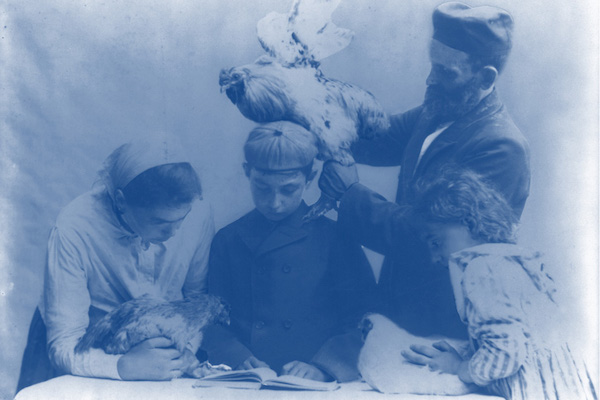
Sedarim were communal in small towns, conducted according to Orthodox customs. Chickens and meat were killed according to kashrut, and live carp swam in the bathtub until it was time to make the gefilte fish.

China

Passover candy called pasla was made of minced prunes, boiled in honey with nuts dropped in. When it began to harden, it was rolled up, so there would be nuts on the inside and outside, and sliced.

Cuba

The oldest member held the seder for the entire family, with all the food home-made except for the matzah, which was imported.

Egypt

Haroset is made with raisins and dates or figs mixed with wine and chopped walnuts. Raisins were also used to make wine. For the meal, there would be fish with lemon sauce, meat casserole and matzah, as well as meat-and-leek patties.

Jews of Egyptian-descent wrap the matzot in a sack-like package, which is passed to each member of the seder. While each member holds the sack in turn, the other attendees ask him in Arabic: “Where are you coming from?” to which he replies, “From Egypt.” “What are you carrying?” they ask. “Matzot.” “Where are you going?” “Jerusalem.”

Ethiopia

Everyone made their own matzah consisting of wheat or legume flour, water and salt, baked in very thin slices and eaten almost immediately to eliminate the possibility of leavening. They also interpreted the Hebrew word hametz, to rise or leaven, to mean kept or not fresh, so they would only eat fresh produce, fresh milk and freshly slaughtered meat.

Since the Ethiopian Jewish community – believed to be either descendants of the Israelite tribe of Dan or progeny of King Solomon and the Queen of Sheba – practised a pre-talmudic form of Judaism, the Ethiopian seder was a less-structured affair with an informal, festival air, more like a springtime celebration. Events were focused on those in the Torah – the slaughtering of the paschal lamb, the Ten Plagues and Exodus itself. Since arriving in Israel, many families recount their own exodus from Ethiopia as part of the seder.

Germany

Men wore kittels for the seder. Sauerkraut was part of the meal along with kloesse, a dish made of soaked matzah, eggs and fried onions, made into a big ball and cooked in boiling water. This was eaten in place of potatoes, topped with brisket gravy.

Greece

Popular seder dishes include roast leg of lamb strongly flavoured with garlic; lamb pie with the animal’s heart, liver, lungs, kidney and intestines inside; and lamb stew with artichokes, served with an egg and lemon sauce.

India

The seder meal consisted of spinach baked with eggs, fried matzah with leeks and eggs, and a pudding made of matzah, meat and eggs. The seder plate was passed around the table, and each guest held it for a minute above their heads.

Iran

The youngest member of the family conducts the seder. When the plagues are mentioned, a pinch of salt is added to the wine. During the song “Dayenu,” long-stemmed onions are put together in a bunch and one person “whips” the person next to them and then passes on the bunch of onions, to be similarly used by all the guests, until the onions make their way around the table. Often family members act out the Exodus, sometimes in costumes.

Italy

Squares of matzah, soaked in capon broth, browned in goose fat and baked in alternating layers with cooked greens or poultry giblets was a seder favourite. Other unusual Italian dishes are rib chops from lambs, ground chicken or ground beef meatballs.

In Venice, the squares were cooked in a pan with legumes such as peas, fava beans or lentils. Venice was famous for unleavened cakes in the shape of snakes, unleavened cakes stuffed with marzipan and doughnuts rolled in sugar and cinnamon.

Passover pasta in broth, boiled meat with goose salami, salad and a marzipan or matzah meal dessert and quince preserves were part of the Urbino seder.

Boiled chestnuts were used in haroset in northern Italy. Tuscan Jews made matzah and egg cakes. Ferrara Jews made matzah fritters with egg, honey, cinnamon, candied citron, pine nuts and raisins. Jews in Rome made lemon sorbet, almond cookies and wet matzah, squeezed dry and fried in olive oil then served with pine nuts, raisins and heated honey.

The table is adorned with long-stemmed green onions. During the chorus of “Dayenu,” everyone picks up their onion and “whips” the wrist of someone adjacent to them. This is meant to represent the sounds of whips of the slave masters in Egypt.

Mexico

No dairy products are used during Passover, tea is drunk instead of coffee and the seder meal is hot and spicy.

Morocco

Matzah is handmade, placed in ovens and allowed to cook for only five minutes. Tagine with lamb and almonds, prunes, saffron, cinnamon, ginger and honey is a Passover mainstay, as are truffles.

The seder plate was held over each person’s head while the others at the table recited in Arabic, “Just as G-d took us out of Egypt and split the sea for us, so may he save us today.”

Based in kabbalah, Jewish mysticism, they divided the soft doughy matzah they eat into the shapes of the Hebrew letters daled and vav; daled stands for doorposts of Israel that G-d watched over and vav is a symbol for G-d’s name.

Netherlands

Prior to a seder meal, a dish of sauerkraut or chard mashed with potatoes and accompanied by cold corned beef was served. For the seder, matzah balls in soup and roast meat or chicken was served. Haroset was nuts, raisins, apples, sweet wine, cinnamon and sugar. A second seder meal was dairy with matzah, butter, cheese, sometimes fish cakes, coffee and cake of ground nuts or mashed potatoes. Matzah pancakes with apple sauce or pareve lemon cream was also served. Tongue with meatballs was part of some people’s Passover meals.

Rhodes

Romaine lettuce was used instead of horseradish. Fish with a Greek-style lemon sauce or cooked with tomato sauce, or with rhubarb and tomatoes, is served at the seder meal.

Syria

Seder foods include lamb shanks and rice; haroset made from dried fruits, sweet wine, cinnamon and crushed walnuts; spinach-mint soup; and flourless pistachio cookies.

Tunisia

Lamb stew with leeks, spinach, peas, fennel, carrots, artichokes, turnips, cabbage, celery, potatoes and zucchini are flavoured with cinnamon, nutmeg, allspice, salt, pepper, cilantro, dill and mint for Passover.

Yemen

The entire table is made into one big seder plate, with a border of parsley leaves all along the edges. The matzah resembles pita because they believe that, as long as the dough is continuously kneaded, it will not turn into hametz.

Sybil Kaplan is a Jerusalem-based journalist and author. She has edited/compiled nine kosher cookbooks and is a food writer for North American Jewish publications. She leads walks of the Jewish food market, Machaneh Yehudah, in English.

Leftovers made yummy

Leftover chicken can be used for more than matzah ball soup. (photo from flickr / Edsel Little)

There is a tradition of having chicken for the seder meal, as well as for dinners on other Pesach evenings. Here are some different ways of using the leftovers.

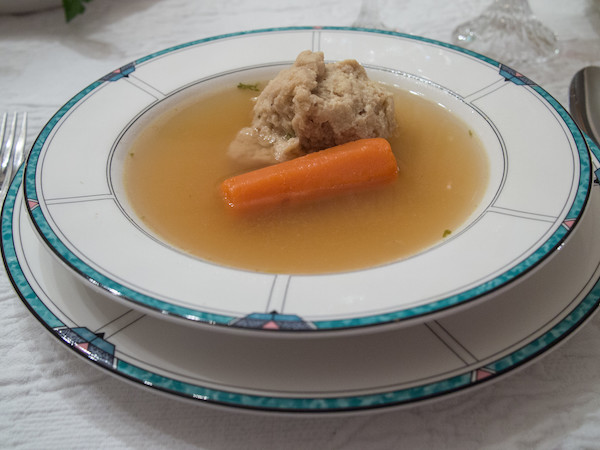
MOCK GEFILTE FISH
(makes 18)

1 1/2 cups water & 1 1/2 tsp chicken soup powder (or 1 1/2 cups chicken soup)
1 1/2 celery ribs, chopped
1 1/2 onions, chopped
1 1/2 carrots, cut up
2 cups leftover chicken pieces
2 eggs
1/2 cup matzah meal
1/2 cup chicken soup

  1. In a soup pot, place water and chicken soup powder or (1 1/2 cups chicken soup), celery, onion and carrots. Bring to a boil, then reduce and simmer until vegetables are partially cooked.
  2. Remove chicken from bones and place in food processor. Process a few seconds. Remove to a bowl.
  3. Add eggs, matzah meal and 1/2 cup chicken soup. Shape into balls. Add more matzah meal if balls don’t seem to hold together. Place in chicken soup with vegetables. Cover partially and simmer 30 minutes.

MINA DE PESACH
(I always make a couple of Sephardi dishes during Pesach in tribute to my father’s family. This recipe came from The Recipe Table by Susan R. Friedland, 1994. It makes 6-8 servings.)

5 tbsp vegetable oil
2 cups chopped onions
3 tbsp minced garlic
1 1/2 cups thinly sliced mushrooms
3 cups bite-size pieces cooked chicken
salt and pepper to taste
1 cup chopped parsley
5 lightly beaten eggs
5 to 6 matzot
1 cup chicken soup
3 tbsp vegetable oil

  1. Preheat oven to 375°F. Grease a six-to-eight cup baking dish.
  2. Heat five tablespoons oil in a large frying pan. Slowly sauté onion and garlic until translucent, about 10 minutes. Add mushrooms, sauté five minutes and cool. Stir in chicken, salt, pepper, parsley and eggs.
  3. Dip two matzot in the stock until well moistened and lay in baking dish. Spoon half the chicken mixture on top. Cover with one more moistened matzah, the remaining chicken and two remaining matzot.
  4. Pour two tablespoons oil on top and bake for 15 minutes. Sprinkle with remaining one tablespoon oil and bake an additional 15 minutes or until the top is a rich, crisp brown. Let cool for 10 minutes and serve.

CHICKEN-LEEK PATTIES
(makes 6-8 servings)

3 leeks, cleaned and cut up
1 cup chopped onions
2 cups cooked, chopped chicken
2 eggs
1 cup mashed potatoes
1/2 cup matzah meal
salt and pepper to taste
1 beaten egg
matzah meal
vegetable oil

  1. Place leeks and onions in a saucepan with water. Bring to a boil. Reduce heat and simmer 30 minutes. Drain and chop in a bowl.
  2. Add chicken, eggs, matzah meal, mashed potatoes, salt and pepper and blend.
  3. Place beaten egg in one shallow dish and matzah meal in another dish. Form mixture into patties. Dip each in beaten egg then in matzah meal. Refrigerate for at least 30 minutes.
  4. Heat oil in a frying pan. Fry until patties are brown on both sides. Drain on paper towels.

Sybil Kaplan is a Jerusalem-based journalist and author. She has edited/compiled nine kosher cookbooks and is a food writer for North American Jewish publications. She leads walks of the Jewish food market, Machaneh Yehudah, in English.

Lights shine united at RJDS

On Dec. 12, Richmond Jewish Day School hosted Cornerstone Christian Academy, Richmond Christian School and Az-Zahraa Islamic Academy. (photo from RJDS)

For the second year in a row, Richmond Jewish Day School hosted a holiday celebration at the school to promote community care, empathy and understanding.

On the morning of Dec. 12, the Shine a Light project saw three schools joining RJDS to share their winter traditions. The posting on RJDS’s Facebook page reads: “Cornerstone Christian Academy made 3-D stars to signify the star of Bethlehem, Az-Zahraa Islamic Academy made lanterns to represent light in Islam, Richmond Christian School made a stained-glass craft and talked about the advent season and, finally, our school taught the others how to play the dreidel game! We all have a role to play. Today, we dispel the darkness on antisemitism and hatred.” 

“Last year, we did an evening event during Hanukkah called A Celebration of Light and invited members of the Highway to Heaven community,” RJDS principal Sabrina Bhojani told the JI.

The No. 5 Road area in Richmond, which is home to RJDS, is also home to some 20 different religious and/or cultural institutions, hence the moniker “Highway to Heaven.” Richmond Mayor Malcom Brodie and Ezra Shanken, chief executive officer of Jewish Federation of Greater Vancouver, were among the attendees last year – and this year – along with several city councilors and others.

“This year, we changed the name and format to create a more kid-friendly celebration, and invited various schools to attend,” said Bhojani. “Activities of the students included those that showcased their personal winter-themed traditions and included singing and arts and crafts.”

photo - This year's Hanukkah celebration featured several activities for the kids
This year’s Hanukkah celebration featured several activities for the kids. (photo from RJDS)

The Shine a Light program was made possible by a grant from the Jewish Federations of North America, said Bhojani.

In addition to her land acknowledgement on Dec. 12, Bhojani said, “We also acknowledge the Elders, the keepers of traditional knowledge, wisdom and Indigenous ways of knowing. We have much to learn about resilience and responsibility. We commit to asking questions, being open to learning from others and acknowledging that that which we do not know.

“We also commit to make the community we share with you a more peaceful, loving and safe place through the First Peoples’ principles of learning.”

photo - kids doing arts and crafts
(photo from RJDS)

With regard to the day’s program, she said, it was “designed to help each of us develop our understanding and respect for one another’s faith and culture while growing in appreciation, understanding and commitment to our own faith traditions and their meanings. We hope that, through education and events like this one, we will collaboratively encourage people to work together, sharing the responsibility for addressing stereotyping, prejudice, racism, discrimination, antisemitism and social exclusion.”

She noted, “Today, as we gather together, we celebrate the unity and the unique religious coexistence of where we live. I hope you are reminded that is up to each and every one of us to be a ‘Shine a Light’ in the darkness of racism and discrimination.”

One parent who saw the event photos on Facebook wrote Bhojani an email. Having experienced antisemitism, they wrote: “What RJDS is teaching, its values, and [the] education the children are receiving, it’s world changing. It’s hope. It’s proof of a better future.”

Measure of a community

Several hundred people came to the Vancouver Art Gallery Plaza to participate in the annual lighting of the Silber Family Agam Menorah. (photo by Lior Noyman Productions)

In some places in the world, the sun shines on Hanukkah. It’s warm and inviting, and people gather at the lighting of a public menorah. But the real measure of a community is when hundreds turn out despite the cold and snow, to celebrate Hanukkah in a spirit of camaraderie and festivity. Such was on the first night of Hanukkah in Vancouver, when several hundred people came to the Vancouver Art Gallery Plaza to participate in the annual lighting of the Silber Family Agam Menorah.

photo - Left to right: Ezra Shanken, Arnold Silber and Rabbi Yitzchak Wineberg try to keep warm at the lighting of the Silber Family Agam Menorah Dec. 18
Left to right: Ezra Shanken, Arnold Silber and Rabbi Yitzchak Wineberg try to keep warm at the lighting of the Silber Family Agam Menorah Dec. 18. (photo by Lior Noyman Productions)

Members of Parliament, of the legislature and of city council brought greetings from their respective governments. The current patriarch of the Silber family, Arnold Silber, delayed his vacation to warmer climes in order to be at the ceremony. His son, Steven Silber, spoke on behalf of the family, and noted that this year marked exactly 95 years since the family’s former patriarch, the late Fred Silber, landed in Canada from his native Poland, with almost nothing to his name. He built a beautiful family and a legacy to the Jewish and wider community.

photo - Lighting of the Silber Family Agam Menorah Dec. 18
Lighting of the Silber Family Agam Menorah Dec. 18. (photo by Lior Noyman Productions)

Rabbi Yitzchak Wineberg, executive director of Chabad Lubavitch of British Columbia, noted in his short address that the lesson of Hanukkah did not lose its impact on Fred Silber. The Maccabees were very small in number, against a mighty army of the Assyrian Greeks, who were well versed in the art of war. Hanukkah teaches us never to be deterred by challenges. Fred Silber may have arrived here with little but he left this world having left much for future generations.

Rabbi Dovid Rosenfeld read a letter from the Lubavitch Rebbe (Menachem Mendel Schneerson) z”l that explains the importance and value of public menorah displays, and the attendees enjoyed a choir performed by students of the B.C. Regional Hebrew Schools, of which Rosenfeld is a co-director with his wife, Chaya Rosenfeld.

Chabad Lubavitch BC gratefully acknowledged the support of Arnold Silber in making this event possible.

– Courtesy Lubavitch BC

Celebrating together

CJPAC and CIJA Dreidels and Drinks reception Dec. 19. (photo by Rhonda Dent Photography)

British Columbia’s Jewish community welcomed elected officials, community partners and volunteer leaders to celebrate the second night of Hanukkah at the Jewish Community Centre of Greater Vancouver for the CJPAC and CIJA Dreidels and Drinks reception.

The Canadian Jewish Political Affairs Committee is a national, independent, multi-partisan nonprofit. Its mandate is to engage Jewish and pro-Israel Canadians in the democratic process and to foster active political participation. It is dedicated to helping community members build relationships within the Canadian political arena. 

The Centre for Israel and Jewish Affairs is the advocacy agent of Jewish federations across Canada. CIJA represents the diverse perspectives and concerns of more than 150,000 Jewish Canadians affiliated with their local Jewish federation. As the Canadian affiliate of the World Jewish Congress, representative to the Claims Conference and to the World Jewish Restitution Organization, CIJA is also connected to the larger organized Jewish community. 

The annual CJPAC-CIJA Hanukkah soiree drew a diverse crowd of attendees, including multi-partisan representation across federal, provincial and municipal governments, members of the diplomatic corps, Vancouver Police Department, Vancouver Fire Rescue Services, and guests from civil society, who lit their own menorah at the front of the room while Rabbi Philip Bregman, interfaith liaison for the Jewish Federation of Greater Vancouver and the Rabbinical Association of Vancouver, officiated the candlelighting ceremony. 

PJ Library books were sent home with elected officials, along with a menorah, candles and chocolate gelt for their home/office. 

With the help of various community members and partners, the event highlighted how CJPAC and CIJA work together to create meaningful experiences for the Jewish community. To see photos from the celebration, visit CJPAC and CIJA’s social media pages or contact kmintzberg@cjpac.ca or nslobinsky@cija.ca anytime for more information. 

– Courtesy CJPAC & CIJA

A new family tradition

(photo by Mark Binder)

Rachel Cohen stared at the full box of candles. Since her parents had separated, getting ready for Hanukkah wasn’t the same. Four candles were broken. Of course.

She chewed on her lower lip.

In the old days, her family had gathered around the kitchen table, and argued about who would light the shammos and who would light the first candle.*

“You did it last year,” her twin brother Yakov always insisted.

“No,” Rachel would counter. “I lit the shammos, which is better.”

“No, it’s not. The first candle is best.”

“Children, hush,” their mother, Sarah, would say as she flipped a potato latke. “You’ll disturb your father.”

Their father, Isaac, would be looking at his little book, pretending to mumble prayers, while holding back a smile.

The compromise was always the same. Rachel would light the shammos, which was better, and Yakov would light the first candle, which made him happy, too.

This year, her parents lived in different houses, and Hanukkah wouldn’t be the same. Rachel didn’t know what to do. She felt small, helpless and embarrassed.

In the village of Chelm, 12-year-old Rachel Cohen was known as the smartest young girl, someone whose wisdom was both sought after and respected.

“If you don’t know what to do,” everyone said, “ask Rachel Cohen, and whatever she says, do that!”

Rachel knew that she wasn’t really that brilliant. But whenever someone asked her a question, she either had the answer, or knew how or where to find it.

“The secret of being wise,” Rabbi Kibbitz had once taught her, “is to listen quietly for as long as you can without saying anything. Ask a few questions, and then nod your head and wait until the answer arises. Most of the time, they’ll think of it themselves, and then give you all the credit.”

Rachel nodded her head and asked herself, “But what does a so-called wise person do, when they don’t know the answer?”

She looked around the kitchen, which was also silent.

Then it came to her, and she smiled.

* * *

The bell over the door to Mrs. Chaipul’s restaurant rang and, without looking up, the elderly woman behind the counter told Rachel, “Your mother’s gone to the market in Smyrna to get potatoes for the latkes.”

“Can we talk?” Rachel asked quietly.

Mrs. Chaipul glanced at the young girl, nodded her head and shouted, “All right, the restaurant is closed until lunch for a health and safety inspection!”

Most of the men finished drinking their tea or coffee, put on their coats and headed to the door.

Reb Cantor the merchant didn’t budge. “I thought you already paid the health and safety inspector.”

“This is for your health and safety,” Mrs. Chaipul told the merchant. “Because I won’t guarantee it if you stay.”

Reb Cantor smiled, stood and kissed Rachel on the top of her head as he left the restaurant.

Mrs. Chaipul locked the door behind him and led Rachel to the table in back, where she’d already placed two cups of hot herbal tea.

The young girl and the old woman sat across from each other, lifted their cups at the same time, and blew.

* * *

Mrs. Chaipul listened as Rachel explained, “On the first night of Hanukkah, our family starts with eight candles ablaze, and then we light one fewer each night. This, my father says, echoes the Maccabees’ fear that the oil in the eternal light might burn out at any moment.

“But, on the last night, where there would only be one candle and the shammos, we changed the tradition and light all eight again. For us, the last night is a true celebration of joy. My mother says it’s just nice to have all the extra lights.

“This Hanukkah, Yakov and I are supposed to take turns, one night with Mama and the next with Papa. I want things to be the same, but no matter how hard I try to rearrange it, the number of candles always comes out uneven. Plus, four of our candles are already broken, which seems like a sign!”

Rachel waited for Mrs. Chaipul to tell her how to solve the problem. But Mrs. Chaipul didn’t say anything. She was married to Rabbi Kibbitz, and kept her own name, which is another story. She’d often chided her husband that it was better to keep your mouth shut than to put your foot into it.

Rachel sighed. She sipped her tea.

Then she smiled, and nodded. She suddenly knew what to do. “Thank you, Mrs. Chaipul. I need to hurry and buy more candles.”

Mrs. Chaipul gave Rachel a hug. “I didn’t do anything. But I wish you well.”

Rachel ran from the restaurant, and Mrs. Chaipul reopened the front door for the lunch crowd.

* * *

That year, Rachel Cohen changed their tradition again.

“Whether we are with mother or father,” she told her brother, “instead of lighting eight or seven or one, each night we will take turns lighting all eight Hanukkah candles.”

Yakov was upset. “So many candles seems wasteful. And that isn’t the way Hanukkah is supposed to be celebrated!”

“Everything changes,” Rachel said, “and it’s up to us to make it new again. This way, the time we spend together will be even brighter.”

“All right.” Yakov shrugged. “But I light the first candle.”

“You did it last time.” Rachel smiled. “But that’s fine. Lighting the shammos is better….”

Izzy Abrahmson is the author of Winter Blessings and The Village Twins. He’s also a pen name for storyteller Mark Binder. Find the books on Amazon and Audible, with signed copies and links to the audio version of this story at izzyabe.com and markbinderbooks.com.

***

*A note on candlelighting
A shammos is the candle that is used as a match to light the other candles. While most people follow the tradition of Rabbi Hillel, lighting one candle the first night of Hanukkah and then adding candles each night, the followers of Rabbi Shammai start with eight and work their way down. Rachel Cohen is not yet a rabbi, but who knows what the future will bring.
– IA