The repackaging of a hero

Anyone who knows more than a little bit about Holocaust hero Rudolf Vrba – a Vancouverite for 31 years – will approach Jonathan Freedland’s The Escape Artist: The Man Who Broke Out of Auschwitz to Warn the World (London, UK: John Murray, 2022) with delight and apprehension.

Will this Guardian journalist and thriller writer take the high road, encouraging everyone to seek out Vrba’s own fascinating, still-in-print memoir? Or will he be more like Elvis swinging his hips, simulating Black-style music, because, hey, most people won’t know the difference?

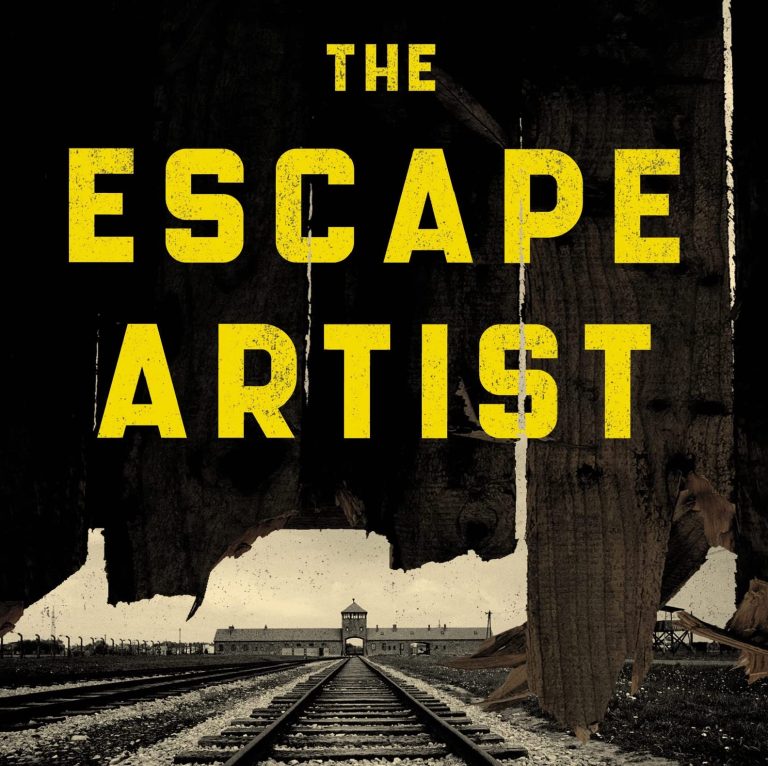
Rudolf Vrba’s name is nowhere to be found on the cover. At the top of the jacket is the subtitle. At the bottom, Freedland’s name. The main title, front and centre, implies 19-year-old Vrba was Houdini-like but, as Freedland well knows, Vrba and his co-escapee Alfred Wetzler took advantage of an escape plan and a hideout conceived and built by others.

The pair’s report on Auschwitz was by far Vrba’s greater achievement – exposing the vast scale of murder at Auschwitz to the world-at-large, convincing everyone who read it. The pair is now credited with saving 200,000 lives.

* * *

As someone who knew Vrba, I am sympathetic to Freedland’s undertaking. How do we get more people, including academics and even Jewish community members, to celebrate one of the greatest heroes of the 20th century?

Thankfully, The Escape Artist is clear and precise storytelling. With access to Vrba’s archival materials in New York’s Franklin Delano Roosevelt Library and input from both of Vrba’s wives, Freedland has also been able to add a good deal of fresh information to the public record.

It will be enlightening for most readers to learn that four other men actually planned and built Vrba’s getaway hideout (where Vrba and his cohort Wetzler hid for three days). This seldom-cited quartet tested it for real, escaping for several days before being caught and tortured, but not killed.

Vrba’s own narrative – first entitled I Cannot Forgive and later changed to I Escaped From Auschwitz – omitted crediting the extreme courage of these men. Without them, Vrba would never have reached Slovakia and co-written the Vrba-Wetzler Report, intended to forewarn 800,000 Jews of Hungary not to get on those trains. From Freedland, not from Vrba, we also learn how one of the tortured members of that quartet was able to assure Vrba that he and his escapees had not divulged their undiscovered hideout in the “Mexico” section of the camp.

“Mexico” was so-named, Freedland tells us, because poor souls marooned in the construction zone with makeshift shelters were not given clothes; consequently, naked prisoners had to drape themselves in blankets and other prisoners at Auschwitz-Birkenau thought they looked like New Mexico Indians.

Vrba did make clear, however, that in order to travel over land through hostile territory for a grueling 14 days, he and Wetzler had followed explicit directives that Vrba had received from a Russian prisoner named Dimitri Volkov. Hence, it was Volkov who was the master of escapology; Vrba was his disciple.

image - The Escape Artist book coverFor virtually all of the people on the planet who have not sought out the two volumes of fascinating, self-published memoirs by Vrba’s first wife, Gerta, The Escape Artist will be welcomed for divulging details of Vrba’s first marriage. Gerta had to take her leave, penniless, with their two daughters, to escape from a philandering and distrustful husband who was clearly still in recovery after almost two years in Auschwitz.

The extent to which both his daughters felt estranged from him is touched upon. We also learn more about his eldest daughter Helena’s apparent suicide in Papua New Guinea in 1982 (an overdose of chloroquine in response to her love affair with a married man who left her) after she had all but severed ties with her father three years earlier.

As well:

  • Freedland notes there is a distinct possibility that Vrba’s father might have died by suicide as a failed businessman (when Vrba was aged 4).
  • Vrba was his mother’s only child (he had two, much older step-brothers and a step-sister from his father’s previous marriage).
  • After his father’s death, Vrba’s mother was a traveling saleswoman for much of his early childhood, absent for much of his formative years.
  • Vrba’s penchant for science might have emerged after all Jewish children were told to return their textbooks, but a friend named Erwin Eisler managed to keep his organic chemistry text by Czech scientist Emil Votocek.

Gerta’s books have already revealed that Vrba, as a youth, emerged as a leader in a self-teaching circle of friends and that, when Gerta was 13, she was enraptured by his precocious intelligence and confidence. Vrba was 15 and sometimes dismissed her as childish.

Gerta Vrbova and Vrba’s second wife, former Vancouver realtor Robin Vrba, were invaluable informants for Freedland but we have no idea who told him what. Their contributions to history are invisiblized, not unlike what could have happened to Vrba and Wetzler, who were advised by Jewish elders in their native Slovakia not to have their names attached to their momentous reportage.

* * *

One error must be cited: on page 8, Freedland states that Vrba and Wetzler were “the first Jews to break out of Auschwitz.” Freedland later devotes three pages to Siegfried Lederer’s marvelous escape on April 5, 1944, when Lederer [tattoo # 170521] outwitted Nazi guards by donning an SS uniform provided by SS officer Viktor Pestek.

Google will tell you that Siegfried Lederer, aka Vítězslav Lederer (March 6, 1904-April 5, 1972), was born to a Jewish family in Písařova Vesce in the Sudetenland. Czech sites convey he was a Resistance fighter who was transported from the Terezín Ghetto to Auschwitz-Birkenau (arrival on Dece. 18, 1943). He was forced to wear both yellow and red triangles, marking him as a Jew and as a political prisoner. After he escaped, he warned Judenrat elders at Theresienstadt about the mass murder of Jews at Auschwitz – but he was both disbelieved and told to remain quiet.

If Freedland has some contradictory information to prove that Lederer is not Jewish, he might well have provided it. Certainly, for marketing purposes, it sounds better to imply Vrba and Wetzler were first. Sure enough, an uncredited review now permanently appears on the Guardian/Observer website and it baldly asserts: it took until 10 April, 1944, but eventually Vrba and fellow prisoner Alfred Wetzler “achieved what no Jew had ever done before: they had broken out of Auschwitz.”

One has to wonder who wrote that uncredited summary. On page 171 of his book, Freedland slyly covers himself by saying, “Fred Wetzler and Walter Rosenberg [Vrba’s birth name] were on their way to becoming ‘the first Jews to engineer their own escape from Auschwitz.’” Trouble is, he has already told us that four prisoners – named Citrinm, Eisenbach, Gotzel and Balaban – ought to be chiefly credited for building (ie. engineering) the hideout, not Vrba and Wetzler.

We like to assume people who write for the Guardian must have higher standards, but, hmm, maybe not. Now people all over the world can watch Freedland’s June 18th promotional video on YouTube in which he self-assuredly states, “I know, since I’ve nailed this down, that only four Jews ever escaped from Auschwitz, and Vrba and Wetzler were the first.” Either this is a lie or research standards at the Guardian have drastically plummeted.

Overall, The Escape Artist is an intelligent, valuable and easy-to-read account by someone who is bright enough to know that a warts-’n’-all portrayal of Vrba’s life is the best possible way to get the world interested.

If Freedland treads lightly when it comes to defending Vrba and foremost Vrba expert Ruth Linn in their battle with Yad Vashem historian Yehuda Bauer, well, perhaps he can be excused for wanting as many readers as possible in Israel. Robert Krell, as the founding force behind the Vancouver Holocaust Education Centre, was interviewed but he appears on only one page. Two other Vancouverites, Dr. Joseph Ragaz and Prof. Chris Friedrichs, were interviewed by Freedland, but their input is not cited except in an acknowledgements section. Linn, an Israeli academic and a part-time Vancouverite, who was for eight years the only scholar that Vrba permitted to interview him, declined to be interviewed. Linn and Freedland both first became aware of Vrba’s existence by watching Claude Lanzmann’s nine-and-a-half-hour documentary Shoah.

* * *

I greatly appreciate the effort it took to fashion a potential bestseller for a new generation that knows increasingly less about the Holocaust. I am certain Vrba’s co-author Alan Bestic, who overcame different obstacles for his time, would likewise approve. Unfortunately, the bibliography omits any mention of Bestic’s co-writing of the memoir I Cannot Forgive and it’s only mentioned once in the text, on page 272. For that matter, Vrba’s own book, with its current title, is cited precisely once in small print within the depths of a seven-page bibliography. (There it is, on page 358, included alongside a scientific paper Vrba published about his research on rat brains.)

London-based Bestic was a fantastic writer. Freedland is a very fine one, too. He can turn a phrase. He can step back and be invisible. He has poise and tact. It is unfortunate, therefore, that Bestic’s essential role as Vrba’s co-writer has been ignored and even somewhat denigrated (“a supremely skilled Fleet Street journalist of the old school”). We don’t learn anything about him. If Freedland has the means to undertake research in New York and Vancouver, why is there no apparent digging to tell us anything about the man who wrote most of the text upon which The Escape Artist itself is necessarily based?

As a writer, Freedland has a very cool, even calculating hand. That’s good for journalism; it might even be good for thriller writing. But the drama of Vrba’s story has been subdued in this modern version. The Escape Artist is nonetheless an essential and welcome work, if it gets the world aware of one of the greatest whistleblowers of the 20th century. Ideally, the book will lead more people to seek out the latest version of Vrba’s own narrative, I Escaped From Auschwitz: The Shocking True Story of the World War II Hero Who Escaped the Nazis and Helped Save Over 200,000 Jews, released in 2020, co-edited by Nikola Zimring and Robin Vrba, minus its original opening chapter.

Alan Twigg’s 20th book is Out of Hiding: Holocaust Literature of British Columbia (Ronsdale Press, 2022). This year, he received an honorary doctorate from Simon Fraser University.

History of “left coast”

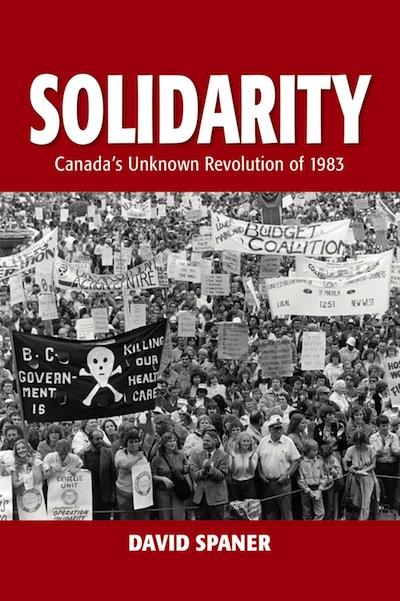
David Spaner’s new book, Solidarity: Canada’s Unknown Revolution of 1983, forms an archival testament of one of this province’s most dramatic epochs.

One of the funny things about watching the 1976 movie All the President’s Men, about how Washington Postreporters Bob Woodward and Carl Bernstein broke Watergate and brought down Richard Nixon, is that, after 138 minutes of sitting on the edge of your seat, you realize that you’ve watched nothing more than two men making phone calls and knocking on doors asking questions. In other words, stuff doesn’t need to blow up in order to make an excellent movie. This thought occurs when reading Vancouver author David Spaner’s new book, Solidarity: Canada’s Unknown Revolution of 1983. On the surface, the book is a litany of bureaucratic meetings and activists’ backstories. Together, they form an archival testament of one of this province’s most dramatic epochs.

Spaner, an activist and journalist who has been immersed in the left-wing ferment for most of his life, chooses a different Hollywood reference. At the end of the book, he alludes to the 1983 film The Big Chill, in which disenchanted middle-agers convene for a friend’s funeral and lament their glory days. For anyone who has been part of British Columbia’s left-wing movements – recently, in 1983, or decades earlier – this book will provide many Big Chill moments. An initial criticism might be the title, which alleges this history is forgotten. Any person who was living in British Columbia in 1983 and even moderately politically aware will not forget that riotous time, though Spaner revives it effectively for new audiences.

Spaner’s thesis is that British Columbia’s well-known legacy of progressive activism that began in the 19th century converged in 1983. All the economic, social, racial, gender and other movements cohered in response to unparalleled government excess – and then refracted again into the myriad organizations and causes that drive B.C. politics today.

The province’s long history of progressive activism weaves its way through the book. More volunteers from Vancouver signed up to fight Franco’s fascists in the Spanish Civil War than from any other North American city save New York, Spaner says. And, in a more trivial note, he claims that the Industrial Workers of the World got their nickname “Wobblies” right here. Greenpeace was founded in Kitsilano in 1971. Movements against the Vietnam War and nuclear warships found fertile ground here. A squatters’ park stopped development at the entrance to Stanley Park. A “smoke-in” in Gastown protested police brutality and called for loosened marijuana laws. The Simon Fraser University Women’s Caucus, formed in 1968, was, according to the book, not only the first such group in Western Canada, but the first in North America. The first rumblings of gay rights activists were heard in these parts around the same time.

With all this as a foundation, the events of 1983 exploded out of the results of the provincial election on May 5. Dave Barrett’s New Democrats, who had governed the province for a short but tumultuous two-and-a-half years beginning in 1972, had been widely anticipated to defeat Bill Bennett’s right-wing Social Credit government. Instead, Bennett pulled out a surprise victory – and then launched a “restraint movement” that was unprecedented in Canada and is often compared with Thatcherism in Britain and Reaganism in the United States. On July 7, Bennett and his cabinet “unleashed a far-right legislative avalanche that tossed asunder virtually every advance achieved by B.C.’s social activists and trade unionists,” Spaner writes. “In an instant, and from every corner of the province, there was a rising of resistance.”

Almost exactly two months after the election, Bennett’s Socreds dropped 27 radical bills, affecting every area of government operations. For starters, 1,400 members of the B.C. Government and Services Employees Union (BCGEU) were summarily fired the day after the bills were tabled. The government eliminated special education programs, reduced student loans, fired family support workers, took away autonomy from local school boards and mandated fewer teachers and larger class sizes. Environmental protections were removed, welfare rates frozen, healthcare facilities closed and programs, including the Human Rights Commission, were cut. Funding for programs in services like the Vancouver Women’s Health Collective were eliminated. They closed the Tranquille mental health facility in Kamloops and fired its 600 employees. Labour relations laws were amended to take away rights such as seniority, working hours and overtime in collective agreements. Tenants could be evicted without cause and the Rentalsman’s office was eliminated, meaning any disputes would have to go to expensive court proceedings. The Agricultural Land Act, intended by the Barrett government to protect farmland, was gutted. User fees for hospital care increased exponentially.

Organized labour mobilized as soon as they could shake off the disbelief about what they were confronted with. They formed Operation Solidarity, an umbrella covering 400,000 unionized workers in the province, under the not-so-gentle guiding hand of the B.C. Federation of Labour. A parallel group, the Solidarity Coalition, was a motley amalgam of community groups and activists, less hierarchical and disciplined than the trade union groups. (The names were lifted from the nascent Polish anti-communist movement emerging at the time, but the ruptures in the B.C. movement make the moniker somewhat ironic.)

The first big rally took place in Victoria’s Memorial Arena, attracting 6,000 protesters. This was where the initial idea of an all-out general strike gained currency – and the seeds of the movement’s destruction were planted. A massive rally followed in front of the old CN station at Thornton Park on Main Street in Vancouver, on July 23. Organizers had hoped for 2,000 attendees but 25,000 showed up.

As is common in activist circles, Jewish individuals played an outsized role. The author, who is Jewish, comes by his credentials naturally – his grand-uncle was a good pal of Dave Barrett’s dad, Sam, in East Vancouver. One of the most visible faces of the movement was Renata Shearer, a Jewish refugee from Nazi Germany who was fired as the province’s human rights commissioner. Feminist and union leader Marion Pollock and Carol Pastinsky, who grew up in a left-wing household that hosted meetings of the United Jewish People’s Order, are featured in the book. And, of course, Barrett, who, despite his recent defeat, led the charge in the legislature against the onslaught, was the province’s first, and so far only, Jewish premier.

Another Jewish person, Stan Persky, launched and edited the movement’s publication, Solidarity Times. The newspaper, funded by organized labour, provides one of many examples in the book about bitter feuds within and between the disparate factions in the Solidarity mishpachah (family). A bunch of young, idealistic journalists who were working under Persky got a taste of censorship that they might have expected in a career with the bourgeois press but perhaps had not anticipated from their comrades in the movement. “Remember who writes your checks,” a union apparatchik warned them after spiking a story that didn’t toe the union line.

One of the most visible schisms in the mass movement occurred at a huge rally where most of the rank-and-file attendees were apparently champing at the bit for a general strike, but the more cautious leader of the movement, Art Kube, instead urged everybody to get a copy of a petition, have their neighbours sign it and send it in to the government in Victoria.

Said one activist reflecting his response that day: “We want militant action. We want to shut down this province. Instead, were being told, ‘Go get a petition signed.’”

But, while Kube was the one who disappointed that day, many in the movement believe it was his illness – a physical or mental breakdown – that led to what many or most view as the ultimate betrayal of the entire project. The BCGEU and the teachers’ union went on strike, shutting down huge swaths of the province. As pressure built, an unexpected – and largely unwanted – resolution was hatched by one segment of the union movement.

Within the Solidarity movement, there were schisms between the far-left and the comparatively more right-leaning unions, between radicals who wanted transformative change and reformers more narrowly opposed to specific legislation. There were, of course, also a lot of very strong personalities, all packed together and stressed by the pressures of the time.

With Kube sidelined by illness, the B.C. Federation of Labour sent Jack Munro, one of British Columbia’s feistiest, foul-mouthed and most divisive union figures, to meet with Premier Bennett at his home in Kelowna. When other partners in the Solidarity movement found out that the meeting was taking place, they knew they were done for.

“Munro and Bennett reached the quick agreement, settling the BCGEU contract but offering little else to most Solidarity members,” writes Spaner. “Then they stepped out on the premier’s patio to announce their Kelowna Accord.”

“We were all in tears,” recalls one activist. “It was a horrible betrayal.”

Once a big swath of the union movement had pocketed what they wanted from the government, the larger movement effectively fizzled out.

“Some longtime union activists simply don’t have a bigger dream, so it was impossible for them to see the Solidarity drama as a failure. To them, it was just another contract negotiation,” Spaner writes.

But while the movement itself may be gone, the legacy lives on, Spaner argues. Those trenches formed a generation of B.C. activists, not least of whom is John Horgan, who was inspired by the lofty outrage of Barrett and marched down the road to join the NDP for the first time.

Spaner is no impartial observer. His stripes are on full display, but he delivers an insider’s view of the times – times that affect us still.

Solving a family cold case

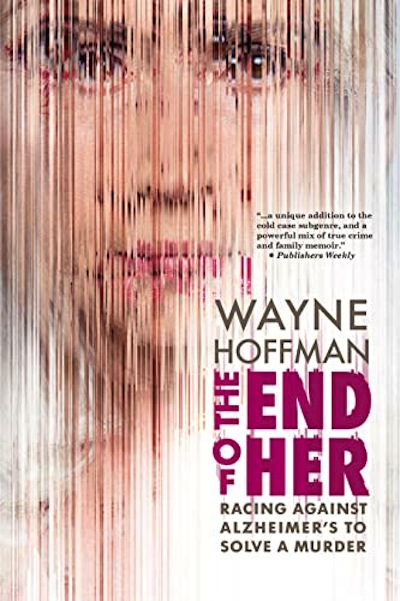
Wayne Hoffman’s latest book is about his efforts to solve the 1913 murder of his great-grandmother before his mother’s dementia takes full hold of her mind.

Well into his book The End of Her: Racing Against Alzheimer’s to Solve a Murder, Wayne Hoffman notes that it wasn’t until his mother was admitted into a nursing home that he began to read books and watch films about the disease, finding comfort in other people’s stories.

Hoffman’s nonfiction account of his mother’s decline – and his search for his maternal great-grandmother’s killer – was released this past February by Heliotrope Books. Perhaps coincidentally, I only cracked its proverbial spine (I have an electronic copy) a couple of weekends ago, the same weekend my father moved into a retirement home.

I was drawn to The End of Her both as the daughter of a parent with dementia and as a former Winnipegger. It was indeed comforting to read about how Hoffman’s family dealt with his mother’s dementia, how her dementia presented itself and how difficult the medical system was to navigate. There were many commonalities with my family’s experience, despite this part of Hoffman’s story taking place in the United States. Originally from Maryland and now living in New York, Hoffman is executive editor of the Jewish online magazine Tablet. He is a journalist, who also has published three novels, which almost guaranteed the The End of Her would be a compelling read.

Admittedly, I did not follow all the connections between Hoffman’s relatives across generations, nor find that part so interesting. But I did understand how Hoffman discovered more family during his research than he knew he had, and that this was a silver lining, though it could never compensate for the lost relationship with his mother.

Hoffman’s mother loved to tell stories and one of the more intriguing ones was of how her maternal grandmother, who had lived in Winnipeg, had been shot by a sniper while sitting on her porch nursing her new baby. Never believing the story, Hoffman kept his thoughts to himself until a video he made at Passover in 2010 revealed that his mother’s memory was failing. He thought about how the Passover story is handed down through generations, and how his family’s stories also become a part of history. He decided to challenge his mother’s – and his aunt’s – narrative about the 1913 murder of their grandmother, Sarah Fainstein. And his mother returned the challenge – asking him to tell her, then, what had happened.

Over the next 10 years or so, Hoffman searched, in fits and starts, for the true story of his great-grandmother’s death, finally finding information when he searches for Feinstein instead of Fainstein. The death certificate notes that it was, indeed, homicide. The amount of information Hoffman is able to piece together from a wide variety of sources, including conflicting newspaper reports and official documents, is impressive. He figures out the mystery to his satisfaction, but its veracity is unlikely to ever be known.

Unfortunately, by the time he reaches his conclusion, his mother’s dementia is to the point where she cannot absorb it. The photos and stories that his mother shared with him throughout his life are now his responsibility. A responsibility he takes seriously.

Recollections of youth – Hatzaad Harishon

Sybil Kaplan, whose food articles often appear in the Jewish Independent, has a broader life experience than those articles would suggest, of course. In a recently self-published memoir, she shares a little of that experience: her time as a youth leader/advisor with the Black youth group Hatzaad Harishon, which translates as First Step.

Hatzaad Harishon: A “First Step” Love Story is as much a labour of love as was author Sybil Kaplan’s time spent in the group, which started in 1965 and ended in 1969. The group itself lasted only from 1964 to 1972.

Hatzaad Harishon is based on notes  and articles Kaplan wrote at the time, newspaper articles from which she cites extensively and other research. Many of the group’s key first members and leaders have passed away, so the contemporary voice of the book is Kaplan, with her perspective on the internal politics and ultimate impact of the group. All the names and the various comings and goings of members will mean little to most readers but it’s good to have them on record.

The publication would be mainly of interest to people who were in or encountered the group in their youth. It also would be valuable for researchers of American Jewish community history. There is published research about the group, but not an abundance of it.

Kaplan became involved in Hatzaad Harishon when she was asked to be a dance leader. The group participated in dance and other cultural events in an effort to increase interaction between white and Black Jews. There were other white Jewish leaders in the organization, including its founding director, Yaakov (or Yaacov) Gladstone, who was a Canadian Hebrew teacher. Internal and external politics contributed to the group’s dissolution, including race issues but also disagreements about how much the youth should be able to direct their own affairs, as opposed to taking direction from the adults involved.

One of the more intriguing – and sobering – aspects of Hatzaad Harishon and the period in history that it covers is how much has changed, and how much has not. Black Jews, and Jews of colour in general, still face discrimination and are still questioned about their Jewishness. New groups have formed in recent years in Canada and, no doubt, elsewhere to try and make the Jewish community more inclusive.

Hatzaad Harishon is available for purchase from Kaplan, at sybilkaplan1938@aol.com.

The elements of a hit song

I freely admit it, I was one of those angsty teens who wrote bad poetry to express all my big feelings. I also wore a lot of black, but that’s not relevant here. What kind of surprises me about myself is that, despite having taken piano for years, learned various other instruments and sung in choirs since I was in single digits age-wise, it wasn’t until last year that I put some not-bad (not-great) poetry to music and wrote a song. It was inspired by my wife and it must have been beginner’s luck, because I’ve not been able to replicate that success.

This is a long preamble to why I was excited when award-winning songwriter and music consultant Molly Leikin emailed that she had a new book out: Insider Secrets to Hit Songwriting in the Digital Age (Permuted Press). While it’s too soon to say whether it will help me write another song, I did find it informative, easy to read – Leikin has a great sense of humour – and full of practical advice. I’ve just been too busy to do many of the myriad exercises and put in the time necessary to hone any skills.

There is a whole chapter on making the time to write, as well as how to quiet the inner critic, who often stops creative-aspiring people dead in their tracks. Other chapters focus on writing lyrics, composing a melody, picking a strong song title, working with a writing partner, overcoming writer’s block and other aspects of the process. There are also chapters on what needs to be done to get a song published, what royalties are, and what types of jobs you might be able to do to sustain yourself until your music can. Interspersed between the how and what chapters are interviews Leikin has conducted with some of her peers, other songwriters, producers and industry professionals.

Insider Secrets is targeted at writers who want to get into the business. And whether one succeeds at that is as much hard work as it is talent, probably more. One great aspect of Leikin’s approach is that she believes in being kind to oneself, so offers several ideas for how to reward yourself when you do put in the hard work.

“Whatever you do,” she writes, “make a point of acknowledging that you’re doing it as a reward for what you’ve just created. It is a victory in itself, just because you did it, not because your song was downloaded 10 million times. The victory starts with you.”

Ultimately, Leikin says, it comes down to persistence. It is also crucial to understand that a creative life is not a straight path, but an up-and-down one, and you have to learn how to navigate the challenges.

“A writer’s job is to write,” states Leikin. “If you do that, keep raising the level of your craft and write your fingerprint, and hustle your hustle, someday, the world will know your work. But until then, I want you to feel in your bones that you have the magic to go the distance. No Grammy can give that to you. Honestly, you have to give it to yourself, every day, all day, for the rest of your life.”

To purchase the book and for more information on Leikin, visit songmd.com.

Making the best of a mess

Two picture books recently released by Kalaniot Books exemplify the publisher’s mission “to help young children and their families explore the diverse mosaic of Jewish culture and history.”

On the face of it, The Very Best Sukkah: A Story From Uganda by Shoshana Nambi and illustrator Moran Yogev may not seem to have much in common with Mendel’s Hanukkah Mess Up by Chana and Larry Stiefel and illustrator Daphna Awadish. But both charming publications explore the themes of inclusion via the experiences of their youthful protagonists.

The Very Best Sukkah centres around Shoshi, who likes to win any challenge, even when there’s none put forward. For example, despite her brother Avram’s plea for her to wait up, she makes sure to beat the other children to school – again. Shoshi shares, “My grandmother is always reminding me that life is not a competition. ‘Jajja,’ I tell her, ‘it’s not like I always have to win the race. I just like being at the front. The view is better there!’”

Shoshi and her brothers live with their “grandparents in a little house surrounded by coffee trees in the Abayudaya Jewish community of Uganda.” Shoshi races home on Friday nights to help her jajja make the holiday meal, in particular the kalo bread – it’s her job to mix the cassava and millet flour for the dough. The family then walks to synagogue, where the rabbi reminds the kids that their favourite holiday is coming up: Sukkot. The siblings start planning how they will make the best sukkah in the village.

Every family’s sukkah is different, “and each one reflects its builder’s special skills and talents.” For the most part, the differences are respected, but there is jealousy that Daudi, who sells samosas in the village, has enough money saved to buy “fancy battery-operated lights and elegant crochet trim in the big town of Mbale to decorate his sukkah.”

Life has a way of making playing fields level, however, and unfortunate weather one night causes mayhem, even for Daudi and his daughter, especially for Daudi, whose sukkah is destroyed. But the villagers rally around him and, in the end, the most beautiful sukkah is the one to which everyone contributes. A wonderful message, well delivered and boldly and colourfully drawn.

The Very Best Sukkah has a page about the Abayudaya, a glossary of terms and the lyrics of “Hinei Ma Tov” in Hebrew, Luganda and English: “See how good and pleasant it is for brothers and sisters to sit down together.”

image - Mendel’s Hanukkah Mess Up book coverMendel’s Hanukkah Mess Up also features something getting wrecked. In this story, it’s a crashed-up Mitzvah Mobile rather than windblown sukkot. And, whereas it’s nature that destroys Daudi’s sukkah, it’s Mendel who doesn’t notice the bridge that’s so low as to crumple the large chanukiyah on the Mitzvah Mobile’s roof.

Anyone who knew Mendel could have predicted such an outcome when the rabbi asked him to drive the vehicle, as Mendel has a long history of mishaps, including having accidentally left a tray of jelly doughnuts on the rabbi’s chair. “Splat! ‘Oy, Mendel.’”

The unique nature of the vehicle and the accident draw a TV news team to the scene.

“‘What’s the story here?’ asked Rachel, the reporter.

“‘Um, well…’ Mendel’s words mushed like applesauce. ‘I blew it again,’ he sighed.

“Then Mendel thought of the lessons Rabbi Klein taught him. He stood up taller, like the shamash – the special Hanukkah candle that lights all of the others.

“As Mendel faced the camera, his words began to flow like silky sour cream.

“‘Hanukkah shows us the power of every person to make a difference. To rise up like the Jewish soldier Judah Maccabee fighting the mighty Greeks,’” he told Rachel. ‘If a tiny flask of oil can light up a menorah for eight days, we each have a spark to light up the world.’”

Mendel manages to turn his mistake into a win – spreading the story and joy of Hanukkah. It’s a fun story, with illustrations that are imaginative, engaging and detailed.

Mendel’s Hanukkah Mess Up ends with the story of Hanukkah and a glossary, instructions on how to play dreidel, the words to “Oh, Hanukkah” and a recipe for potato latkes, meant to be used by the young readers and their chosen adult.

For more information on these and other books, visit kalaniotbooks.com.

Different horror, same hell

As soon as they got into power, German Nazis began to make life hell for German-Jewish men – partly to promote their sadistically comic-book ideal of “Aryan” masculine supremacy, and partly out of a desire to plunder valuables and property. And also, it must be said, out of simple criminal/pathological malice.

image - Fighter, Worker and Family Man book coverFighter, Worker and Family Man: German-Jewish Men and Their Gendered Experiences in Nazi Germany, 1933-1941 (University of Toronto Press, 2022) is a thoroughly researched book. In it, Sebastian Huebel – a sessional instructor in the history department at University of the Fraser Valley – depicts various strategies used by the Nazis to isolate and degrade German-Jewish men in the years prior to the concentration camps. His metaphor for this program of debasement and humiliation is “emasculation,” and the word identifies the book’s focus: how the Jewish-German (heterosexual) male was shamed by the dispossession of any masculine identity as “fighters, workers or family men” – the traditional markers of masculinity in Europe in those days.

Gender is a rare focus in Holocaust literature and, when the topic of gender arises there, it is almost always about women, and written by feminist scholars, as Huebel notes.

But men’s victimization, as Huebel demonstrates, also deserves scrutiny. During the 1930s, the overwhelming percentage of camp internees were male (“cheats,” “traitors,” “greedy bankers,” “race defilers,” “manipulators of international capitalism,” etc.): in other words, women did not fit the Nazi stereotype of the gendered male Jewish fifth-column “enemy.”

The Jewish male “enemy” was uniformly forced out of work, his business expropriated; he was excluded from the military, and his military service in the First World War ignored. In public, he was ridiculed, he was caricatured in propaganda and openly derided – all, as mentioned, to further the absurd Nazi fantasy of the “Aryan” übermensch. For what reason? Simply to “justify the need for protecting Germany from within” by inventing a supposed internal threat – to this day, a tried-and-true strategy practised by would-be and extant dictators.

(It’s worth noting that Huebel does not address the perceived threat emanating from the predominance of Jewish men in the German Communist and Social Democratic parties, in labour unions, and among other dissidents.)

In private, the Jewish father/husband paradigm crumbled under the weight of Nazi deprecation. With no work, no “bread being won,” the only way the Jewish father/husband could show his worth to the family was to arrange for emigration. But, as Holocaust historians have amply shown, by the time it was clear to the German Jews that the Nazis were not going to go away, the “free world” had closed its doors to them. (Canada’s famous response to the question of how many Jewish refugees should be admitted was “None is too many!”)

On a more positive note, Huebel notes that the at-home father model led to increased bonding – unusual for the time – between father and family, and Huebel offers lots of documentary evidence of signs of love and affection between the unemployed father and his children. As well, fathers frequently became at-home teachers to their expelled children – more evidence of “a new presence at home” that led to a reaffirmation of men’s role as father/mentor-educators.

On the streets, as Nazi violence against men increased, men were often coated with tar, made to walk barefoot over broken glass, made to stand for attention for long hours in bitter cold, and forced to open their mouths for Nazis to spit in. As a result, women were more and more often required to go out in public for menial chores.

The gender-specific treatment of men in the camps has not, Huebel says, been examined as closely as has been the treatment of women. To illustrate his point, he stresses how forced labour demanded of men, particularly in brickworks and quarries, led to disfigured bodies, “violated psyches” and premature death. Those who survived returned home like ghosts, permanently traumatized both physically and mentally, tortured by nightmares and often considering (and committing) suicide.

At no point in his book does Huebel denigrate the experiences of Jewish women under Nazism: “different horrors, same hell,” as Myra Goldenberg and Amy Shapiro said in the title of their excellent 2013 book.

Huebel’s oft-stated intention is to draw attention to the specific way men were abused, from beard-pulling to climbing up and down rock quarries until death. Jewish males were, as mentioned, typically regarded by Nazis as the “greater threat,” and were victimized accordingly.

Overall, Huebel shares the hope, in his conclusion, that a study of the erosion of Jewish male masculinity under Nazism can “sharpen our understanding of contemporary issues related to gender.”

This is a daunting objective, if not fulfilled, at least boldly addressed in this groundbreaking book.

Graham Forst, PhD, taught literature and philosophy at Capilano University until his retirement and now teaches in the continuing education department at Simon Fraser University. From 1975 to 2010, he co-chaired the symposium committee of the Vancouver Holocaust Education Centre.

A story of two families

Marsha Lederman’s Kiss the Red Stairs begins in 1919, when her father was born, on erev Yom Kippur. (photo by Ben Nelms)

In the last couple of decades, researchers have identified traits that affect many children of Holocaust survivors. There remains much left to uncover, including how much is epigenetic – that is, whether and how the genes of people like survivors, who have undergone extreme trauma, work differently than other people’s – and how much might be a result of the parenting styles of people who, in many instances, were ripped from their own parents in the most brutal circumstances. The old issue of nature versus nurture, in other words.

While psychologists and scientists try to unravel those mysteries, a genre of second generation memoirs is exploring the deeply personal experiences of being raised by survivors of the Shoah. A page-turning, sometimes shocking and nakedly vulnerable volume has recently added much to the growing library.

Vancouver journalist Marsha Lederman, Western arts correspondent for the Globe and Mail, has written Kiss the Red Stairs: The Holocaust, Once Removed. The book begins in 1919, when Jacob Meier Lederman was born on erev Yom Kippur. The auspicious timing of the birth of this baby, who would grow to become Marsha Lederman’s father, portended great things.

“[T]his was an occasion, an omen – a very good one, the hugest of deals,” she writes. “This person was special, he was going to be something, do something very important with his life.”

Indeed, he did. He survived the Holocaust – the only person in his immediate family to do so and one of only 10% of the Polish Jews alive in 1939 who survived to 1945.

Marsha Lederman’s mother was also a survivor, and one who participated in Steven Spielberg’s Shoah Foundation testimony project, video-recording her Holocaust experiences. This recording would become a touchstone because, despite the journalist daughter’s career asking questions of strangers, there were many unanswered questions in the family. This was due in part to the harrowing, abrupt response to a childish inquiry about the absence of grandparents, an early lesson that unexpected answers can have catastrophic emotional impacts.

Well into adulthood, Lederman decided to visit her mother during a snowbird retreat in Florida. But instead of sitting across the kitchen table learning about her mother’s darkest moments, she was instead living one of her own – delivering her mother’s eulogy. She had waited a day too long to fly south.

image - Kiss the Red Stairs book coverLederman’s book is the story of a family – two families, really. A family that in some ways never came together quite right, the author’s birth family with its silences about the past, and another that fell apart, that of her marriage. Kiss the Red Stairs, in fact, is a sort of applied case study in second generation (shorthanded “2G”) neuroses, as they distort the author’s reactions and coping mechanisms in a time of personal crisis.

As her marriage collapses, Lederman recognizes, on the one hand, that her responses may not be commensurate with actual events but are exacerbated by a lifetime of fears around loss and abandonment. On another hand, the undeniable anguish of her marital breakdown evokes an added burden of guilt, her own trauma juxtaposed with her parents’ experiences. Given what their mothers and fathers endured, do children of survivors have a right to feel the pain that other people seem to validly experience?

Lederman acknowledges that she was always ready for everything to fall to pieces. She inherited – or developed – an existential pessimism and a catastrophizing worldview: “The glass wasn’t just half-empty; it was half-full of poison,” she writes. “Or Zyklon B.”

The history that has formed Lederman’s identity was not imprinted on her at home only. It was in the zeitgeist of her coming-of-age as a young Canadian Jew in the 1970s and ’80s.

“The slogan ‘Never Again’ was drilled into us, implying – to me, anyway – that there was always the potential for an again, for another catastrophe. What would we do when the Nazis came back and came for us, like they came for our parents?

“This happened to us. This could happen to us again. I was one of the us. On some level I believed, from a very young age, that this could happen to me. I understood the need to be on guard, that we weren’t really safe. We needed to be on alert. Have a plan.”

For whatever were their good intentions, the organizers of a youth trip to Israel reinforced Lederman’s anxieties. Intending to instil in the participants the need for one solitary Jewish state in the world, they reminded their young charges that, in the absence of Israel, Jews would have nowhere to go should the need arise, “if the world once again turned on – or turned its back on – the Jews.”

She doesn’t disagree with the premise. “But the exercise scared the hell out of me. Don’t be so comfortable in that Canada you think of as home; you never know what could happen.”

That awareness of the unimaginable human capability for inhumanity had imprinted on her to the extent that everyday life became a gauntlet of inevitable disaster, misery the preordained endpoint of any happiness. When her marriage broke down, her reaction was extreme, “As if divorce, for instance, were some kind of death camp.”

Having consciously tried to eradicate (second-hand) Holocaust memory from its constant intrusion into her mind, Lederman finally faces the core question of her life, and of the book: “Could I possibly be a victim of the Holocaust, once removed?”

Now a mother, her obsessive worry has a new object, not only in terms of the world into which that child was born, but the potential for epigenetic inheritance. Will the baggage of the past be passed along to another descendant of survivors?

At the same time, Lederman is careful not to ascribe her challenges to the overburdened couple who raised her.

“I am not comfortable blaming what happened to my parents – and, in effect, blaming them – for my little problems. It feels self-indulgent, unfair and actually untrue,” she writes. What they accomplished after the war was almost as miraculous as their survival during it. “The fact that after such tragedy my parents were able to build new lives – purchase and set up a home, go to night school to learn English, buy a business, raise children – seems astonishing to me, as I contemplate it all as an adult. How on earth did they manage to do it, manage to be so normal?”

She quotes Elie Wiesel who, in 1984, told children of Holocaust survivors: “That your parents were not seized by an irrepressible anger … remains a source of astonishment to me. Had they set fire to the entire planet, it would not have surprised anyone.”

Elsewhere in Lederman’s book, Wiesel appears again, seemingly underscoring the legitimacy of second generation complexes by noting that it was they, not their parents, who were the ultimate target of Hitler’s plan.

“You were the enemy’s obsessions,” Wiesel told the children of survivors. “In murdering living Jews, he wished to prevent you from being born.”

Lederman confronts the reader with things she has learned from research, rather than from firsthand experience or from stories her parents shared (because they didn’t). The Holocaust experiences of her parents may be the impetus for her lifelong sense of danger, she seems to suggest, but the larger history of that era should be a warning shot for all humans – because it was humans who perpetrated everything that happened to her parents and to the millions of others of the Nazis’ victims.

In one of several graphic segments, she demands that the reader ponder how ordinary people could throw babies in the air and practise a merciless form of skeet shooting.

There are other psychological conundrums in the book. Reading her father’s journal of a trip back to Europe, Lederman confronts what reads like a cognitive rupture: her father’s love for and comparatively happy memories of Germany.

Rather than remain in Nazi-occupied Poland, young Jacob audaciously crossed into the belly of the beast, into Germany, posing as a Polish peasant boy, and got work as a farmhand, surviving until the end of the war. As a result, he took a perversely positive view. In a travel diary entry, he wrote, “I had a wonderful exciting day and my motto stands again forever: I will never forget you Germany and the peace and security I found here among these fields, meadows and trees in those murderous inhuman times of the year 1942.”

Of all the happenstances in the book – some life-altering and, in several instances, life-saving – there is a particularly poignant one that happened on her father’s trip back to his hometown. On that trip, her father found out that his parents had left a letter for him before they had been evacuated from the ghetto and shortly thereafter murdered.

“A Polish woman who lived there at the time, or moved in after the liquidation – I’m not sure which – had come into possession of that letter. There were photos in this packet and some other family keepsakes,” she writes. “The woman said she had held onto these items for a long time, but after so many years without word, she lost all hope that my father had survived; she figured nobody from the family had. She threw the packet away.

“What was that like for him – to learn that his parents had left him something: a declaration of their love, a wish for his future, some unknown secret, an explanation of what was happening to them? And to learn that those things once touched and left for him by his parents – a written document, photographs, who knows what else – proof that his parents had existed, evidence of their love – had survived, only to be discarded?”

On her own ventures to the blood-soaked continent, Lederman is reminded that the past has not passed. She sees antisemitic graffiti on abandoned synagogues, Polish youths giving obscene gestures to participants during the March of the Living. Lederman and four family members are paying tribute at a Holocaust memorial while a group of boys nearby chant something in Polish, something menacing that included one term she recognized: “Auschwitz-Birkenau.”

“It didn’t sound like they were expressing their condolences,” she writes.

After a lifetime of mostly solitary rumination and fears, Lederman has several epiphanies during the World Federation of Child Survivors of the Holocaust annual conference, held in 2019 in Vancouver. Here, she finds others who share her view that “the other shoe is always about to drop and the world is not safe”; “being plagued with obsessive doubt”; “a heightened ability – one might call it a curse – to observe and engage others”; “A constant expectation that someone is going to get you.”

There, she finds she is not alone.

“I had found my people,” she writes.

Good reads, good talks

Helen Pinsky still chairs Waldman Library’s Jewish Book Club, which she started in 2015 when she was librarian there. (photo from Helen Pinsky)

Helen Pinsky founded the Waldman Library’s Jewish Book Club in 2015, when she was the librarian there. She has since retired from the position but stays on as the book club chair.

“We started it as a drop-in,” Pinsky told the Independent. “Always once a month, on a last Thursday. People drifted in gradually. Some were library volunteers who wanted to discuss their recent reads. Others were readers who wanted to talk about books. Waldman had book clubs before, on and off for years, but this one has lasted the longest.”

She defined the club’s goal: to foster the love and understanding of books written by Jewish authors or featuring Jewish content. “We try to select books that are entertaining, interesting to many readers. Mostly we read fiction,” she said. “Rarely, we try non-fiction books, but unless they are memoirs, not many people are eager to read or discuss them. We even attempted a separate non-fiction club, but it didn’t work.”

The books selected come from different sources. “I’m a librarian. I listen to what people want to read,” said Pinsky. “Sometimes, I select the books myself. Other times, the library staff might make a suggestion, or the group would vote on the title or author.”

The books that club members have read so far are divided between English-language writers and translated novels. “There are so many outstanding Israeli writers,” said Pinsky. “Our chosen books are not always new. Some of them were published a number of years ago. Often, they are not easy reads.”

But new or old, easy or sophisticated, they are always books with brilliant writing and complex ideas – “great literature exploring universal themes,” she said.

Generally, the club reads mainstream fiction. “We often read historical literature,” Pinsky said. “Not so much about the Holocaust and wars, but stories about Jewish life in other centuries and other countries. Some of our most captivating recent novels talked about the post-Holocaust decades, about the survivors rebuilding their lives.”

To find books for the club, Pinsky regularly scours the Jewish Book Council website. She reads reviews on Goodreads and Amazon. She seeks recommendations from the National Council of Jewish Women.

“We always choose books with multiple copies at the Waldman, as well as at the VPL [Vancouver Public Library] and the Richmond library, so people are not forced to buy them. Occasionally, the book was donated. Then it makes a round on a goodwill system, so every member of the club can read it. We usually announce the titles three or four months in advance, to give people time to read the books.”

The club’s facilitator from the beginning, Pinsky tries to make every meeting interesting in a different way. “I do my research about every book. Usually, in the beginning of a meeting, I would do a bio sketch of the author. Then, before we open a discussion, I would list the main points of the story, maybe a quote or two from the reviews to demonstrate something that caught other readers’ interest,” she explained. “Then we go around the table. Everyone who wants to speak raises their hands. I would ask questions to nudge the conversation. Who is your favourite character? Why? What lesson did you learn from the story? Some people enjoy talking at the meetings. Others keep quiet; they come to listen. I keep a list of speakers, but if someone new, who rarely participates, raises their hands, I bump them to the top of the list.”

In her experience as the club moderator, people are interested in different aspects. “Some read for the plot,” she said. “Others are fascinated by character development or emotional issues. Still others pay the most attention to the quality of writing.”

She said that, occasionally, even if you don’t like a book, it could provide a valuable insight. “We once read a book about Alzheimer’s. I didn’t want to read it,” she admitted. “It seemed too close to my private life. I had a personal experience with this dreadful disease. My mother had Alzheimer’s for years. It was very hard. But the book was written in a remote way that allowed me to maintain emotional distance. Otherwise, I probably couldn’t have read it.”

She shared her opinions about that book with the club, and the discussion was lively. It also veered from that particular book into more personal territory, as everyone had a story to tell.

Besides discussing books, sometimes the club has the privilege of meeting the authors. “If the author is local, I would invite them to speak to us,” Pinsky said. “Often, we tie our book selection to the Jewish Book Festival and organize the club nights to coincide with the author’s public appearances.”

According to Pinsky, the number of participants in the club fluctuates from month to month. Some people come for several months and then stop for various reasons. Some realize they are not interested, while others are devastated to leave the club but have no choice. Sometimes, more than 20 people attend the meetings, but the optimal number is around 10 or 12, said Pinsky.

“As we meet in the daytime, most of our members are retired,” she said. “Although we have younger participants if they are students or have flexible working hours, or if they are library staff. Some of the members are writers themselves. Newcomers to Canada also occasionally join the club to read and discuss Canadian Jewish authors.”

Pinsky stressed that COVID changed the book club atmosphere a lot, as it changed everything else. “During the pandemic,” she said, “we couldn’t meet in person, of course. We had our meetings on Zoom for almost two years. Only the last few months, we resumed out meetings in-person, and some longtime members are still not comfortable meeting face-to-face. New people come in. We might institute some changes to reinvigorate the club.”

The July selection of the club is The Last Rose of Shanghai by Weina Dai Randel, published last year. Everyone is welcome. Send a message to library@jccgv.bc.ca if you’d like to join the discussion.

Olga Livshin is a Vancouver freelance writer. She can be reached at olgagodim@gmail.com.

Battling over-diagnosis

Dr. Shoshana Levin Fox’s An Autism Casebook for Parents and Practitioners: The Child Behind the Symptomswill hold you spellbound. Section I is titled “Children.” These first eight chapters are the stories of Jack, Sasha, Annie and others (all the children’s names used are pseudonyms) – children who came into the Feuerstein Institute after having been diagnosed as autistic. They exited with new hope, not only for themselves, but for their parents, who needed their own emotional propping up.

Levin Fox is a psychologist and play therapist who has worked with children for more than 30 years. In addition to lecturing and giving workshops in North America, Israel and Europe, she worked for 25 years in the Feuerstein Institute of Jerusalem, founded by the late Sorbonne-educated Prof. Reuven Feuerstein.

Levin Fox lived for nearly 20 years in Canada. She completed a master’s at Simon Fraser University and a doctorate in counseling psychology at the University of British Columbia. She worked for many years as a counselor in the Special Services to Children and Families program of the Association of Neighbourhood Houses of British Columbia. Levin Fox was awarded a Social Sciences and Humanities Research Council of Canada post-doctoral fellowship, which enabled her to do research and practical work in the field of autism at the Feuerstein Institute. Coincidentally, for many years, Hadassah-WIZO Canada were prime funders of the institute’s programs related to autism.

image - An Autism Casebook for Parents and Practitioners book coverI recommend the book, not just for the moving stories of the children who were saved from what proved to be inaccurate assessments, and not only for the intriguing descriptions of the practices of the Feuerstein Institute, which Levin Fox combined with the DIRFloortime method. This book should be read for its critical message to parents who have received an autism diagnosis – or one of learning disabilities, ADHD, or other emotional, cognitive or developmental challenges – for their son or daughter: Believe in your child. Talk to your child. Keep looking till you find her the best and most appropriate help and hope. Don’t let the “experts” get you down, because a true expert will find the formula to lift you – and your child – up.

The idea of plasticity of the brain, writes Levin Fox, entered mainstream medicine several generations after Feuerstein had intuited and created materials and methods based on that reality. Levin Fox decries the fact that “the diagnosis of autism is used as a sacrosanct truism…. I have found that the term ‘autism,’ as it appears commonly in the field, in actuality is being used to describe children who suffer from a vast range of communication difficulties, from extreme shyness to psychotic conditions and just about everything in between.”

The children whose stories are recounted in this book all made significant progress. Levin Fox writes, “Not every child began to speak fluently, to learn at a normative level and to play happily with friends…. However, it can be safely and honestly stated that, inspired and mentored by the professor, my colleagues and I made a huge difference in the lives of hundreds of children originally thought to be autistic.” She sees them, as a team, as having saved many lives.

Feuerstein sought to find a child’s latent strengths, and what he called “islets of normalcy.” Levin Fox explains that “islets of normalcy” include, among other elements, eye contact, human relationships, symbolic play, curiosity, humour and more.” She emphasizes that helping parents understand their children’s challenges, and not to be fearful and depressed about them, is part of the battle.

In Part II, “Theoretical Groundings,” Levin Fox gives the intense and thorough theoretical background to the success stories, which are plentiful. Six more case studies are interwoven in the text to help bring the theory alive.

This section also describes the roots of Feuerstein’s methods. He began by working with orphan children who had been traumatized after the Second World War, decided there were flaws in the standard diagnostic tests and, rather than focusing on performance, he focused on the child’s ability to develop learning processes.

“Current studies on brain plasticity … scientifically substantiates what [Feuerstein] proposed two generations ago – that brain cells are modifiable and respond to the stimuli of the environment,” writes Levin Fox.

One of my favourite stories is in Chapter 15, where Levin Fox talks about Ben, whom she first met when he was 5 years old. The end of the chapter, with the sub-heading, “Ben’s Epilogue,” describes a chance meeting between Levin Fox and Ben’s parents, many years later, at an airport. “Dr. Shoshana!” they called out, and his mother pulled out her cellphone. “The happy faces of Ben and his wife, holding their newborn son, smiled back at me,” writes Levin Fox. “For Ben, the paradigm-shift had indeed been life-saving.”

I found other words to describe the journeys and miracles of the children portrayed in this book: life-affirming.

And hope.

Toby Klein Greenwald is an award-winning journalist, educational theatre director, teacher and the editor-in-chief of wholefamily.com. A longer version of this article appears at jewishlink.news/features/47241-the-child-behind-the-diagnosis and elsewhere online.