An activist by necessity

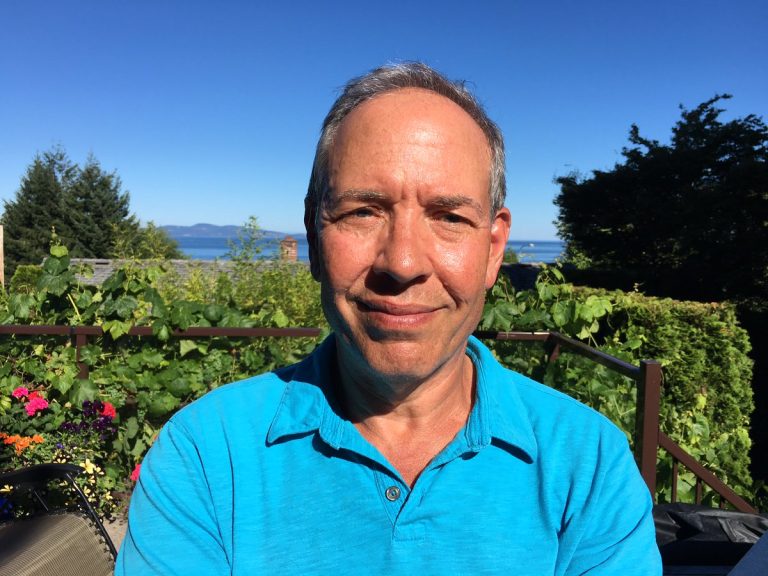
Dr. Ted Rosenberg speaks with an audience member at the Medical Outcomes of Emerging Antisemitism event held at Beth Israel Sept. 4. (photo by Pat Johnson)

Dr. Ted Rosenberg never imagined he’d become an activist but, after the anti-Zionism and antisemitism he witnessed at the University of British Columbia faculty of medicine after Oct. 7, 2023, he couldn’t keep silent. 

The 30-year practitioner, who resides in Victoria, addressed a group at Congregation Beth Israel on Sept. 4.

Rosenberg resigned from his post as clinical assistant professor at UBC’s faculty of medicine in January 2024, after repeated attempts to get the school to address antisemitism were essentially ignored. Since Oct. 7, he has written blogs, testified about the antisemitism before the House of Commons and, most recently, self-published the book Ayekha, Where Are You?

After Oct. 7, Rosenberg said he noticed that Jewish doctors weren’t regarded the same way they had been. Before that day, he’d experienced the odd antisemitic comment from patients. After it, he knew that a torrent of hatred towards Jews was coming, and that he needed the language to deal with it.

His activism began after 225 UBC medical students signed the petition “A Call for Action on Gaza,” which called for a ceasefire, condemned Israel as “a settler-colonial state,” 

accused Israel of “collective punishment through indiscriminate bombing of civilians” and claimed that “Palestinian people have been continually abused, traumatized and killed by the settler state of Israel and its Western allies for over 75 years.”

In response, Rosenberg wrote to UBC president Benoit-Antoine Bacon, dean of the faculty of medicine Dermot Kelleher and other university officials.

“I assumed they didn’t understand these complex issues,” he said. “I explained to them that antisemitism leads to dehumanization, and I suggested we work together to meet with the students, talk about the petition and about antisemitism.”

Rosenberg described the dean’s response as a “boilerplate letter.”

“He said I could file a complaint through the university’s DEI [diversity, equity and inclusion] program – which has nothing about Jews or antisemitism,” Rosenberg noted.

Demoralization set in as further incidents in the faculty failed to garner any action from the university. 

Some 284 physicians wrote to the dean, describing the dangerous environment at UBC for Jewish students, faculty and patients. They received no response. Then, a professor Rosenberg worked with posted a picture of Jesus in the rubble of Gaza on social media. Rosenberg made the decision to resign.

“I’d been begging these leaders to stand up and speak about this, to model respectful dialogue, and no one was saying anything,” he said. “I realized the faculty of medicine had adopted hardwired ideological positions, and I felt I had to opt out and make a public statement about it.”

After his resignation, Rosenberg received a call from a retired dean, who admitted, in tears, how badly he’d felt about his colleague’s treatment. “He said the senior administration at UBC had silenced him and others, tying their hands. He spoke of how people were intimidated to speak out even when they shared my views, because they feared they’d be marginalized. He was looking for absolution.”

In May 2025, Rosenberg received a call from Member of Parliament Anthony Housefather, requesting he testify in Parliament the following week about the antisemitism he’d experienced. Rosenberg felt an enormous responsibility to get his testimony right. “In my work as a physician, I look after old people. I’m not a genocidal maniac,” he said. “But that’s what my students are thinking about me.”

While antisemitism has not subsided, Rosenberg is optimistic that truth and sanity will ultimately prevail. In his work with Doctors Against Racism and Antisemitism, he’s been writing letters to different medical departments, but, for the most part, those letters have been dismissed.

“I think there’s a systemic bias in the Western world against Israel and Zionism and a lingering bias against Judaism,” he said. “The title of my book, Ayekha, is a question to the world: where the hell are you? People need to wake up and look at the truth.” 

Rosenberg noted that one requirement of entrance into medical school at UBC right now is a demonstration of your social justice activism.

“The epitome of evil in the social justice narrative is settler-colonialism, and the worst settler-colonialism is Zionism,” he noted of the school’s view. 

“This means Jews are not going to get into medical school. I’ve had Jewish medical students email me to say they changed their names to non-Jewish names, just to get in. This is real, and BDS [boycott, divestment and sanctions] is happening. We need to speak out against it and be aware that DEI does not include us as Jews.” 

Lauren Kramer, an award-winning writer and editor, lives in Richmond.

Seniors are being left behind

Investing in home care is not just compassionate, it’s economically sound, argues Jeff Moss, executive director of Jewish Seniors Alliance of British Columbia. (photo from yahhomecare.com)

Let’s stop pretending our seniors are a priority. The proof is out there to show they aren’t. Despite all the platitudes from politicians about “valuing elders” and “aging with dignity,” the truth is glaring. Successive British Columbia governments have been abandoning their commitment to seniors and punting the issue down the road for 30 years or more. We have long known of the coming bubble in seniors that might risk the Canada Pension Plan. How can we not have planned for the needs of seniors’ care and support when we all knew this crisis was coming? The cost to us all is financial, moral and systemic.

The crisis is no longer looming, it’s here. Right now, more than 3,000 seniors are languishing on waitlists for long-term care (LTC) beds. By 2040, that shortfall is projected to balloon to 30,000 beds. The government’s response? Studies and painfully slow progress. Since 2020, only 380 of the promised 3,300 new LTC beds have been built. This is critical, with ramifications we experience today.

The Jewish Seniors Alliance of British Columbia is actively lobbying the provincial government to make changes that would increase access to home support immediately. JSABC’s seniors-led committee has created short videos sent to politicians to further raise awareness of the issue. Using the videos as a platform, JSABC has met with more than 20 MLAs from across the political spectrum, including Minister of Health Josie Osborne and Parliamentary Secretary for Seniors’ Services and Long-Term Care Susie Chant. Meetings with the Conservative critics for health and seniors have also been successful.

These meetings have not amounted to change. Yet.

While the Ministry of Health is reviewing bed planning to ensure “value for public investment,” seniors are dying in hospital hallways and are also trapped in expensive alternate level of care (ALC) beds with nowhere to go. And seniors are dying at home, too, lonely, isolated and lacking the support they need. This is not a system that’s strained, it’s a system collapsing under the weight of political inertia. Well-meaning as they are, our elected officials are paralyzed by changing economics and the hope the systemic hurdles will just go away. 

It doesn’t take a policy expert to understand the math. Building LTC beds at $1 million each is unsustainable. The Office of the Seniors Advocate estimates it would take $17 billion over the next decade to catch up. This massive number reflects how far we’ve fallen behind – not because it’s an impossible investment, but because successive governments have delayed, deferred and deflected. Action needed to be taken at least 15 years ago, not five years in the future.

Our seniors are left behind facing a decision between paying for rent, food or home support – having all three is a luxury many can’t afford. But there is a solution staring us in the face: radically expand free home support services.

Most seniors want to age in their own homes. By providing essential services – housekeeping, meal preparation, personal care – free of charge, we can drastically reduce demand on LTC and hospital beds. This isn’t a pipe dream: Ontario and Alberta already provide an hour of daily home support to seniors at no cost.

In British Columbia, a senior earning $30,000 a year could be forced to pay up to one-third of their income just to receive basic home support. It’s a shameful policy that penalizes seniors for wanting to live independently and it crowds our LTC homes with people that can be better served at home. Moving to LTC is a personal choice that many families and individuals need to make, but it should not be a forced choice to save money because the cost of care at home is too high.

Investing in home care is not just compassionate, it’s economically sound. Home support reduces hospital readmissions, prevents premature institutionalization and frees up desperately needed acute care beds. British Columbia has the highest rate of overpopulation of LTC beds by those who could be cared for at home with just a couple of hours of care daily. Yet, every year, reports from the Seniors Advocate highlight the same issues and, every year, the gap between need and availability widens. We advocate that family doctors be able to prescribe home support for seniors to reduce the burden on our overworked social workers.

The Ministry of Health boasts of past “recommendations adopted” and new federal-provincial funding agreements, but where is the action plan? Where are the benchmarks, timelines and deliverables? Families are being forced to shoulder caregiving burdens they are ill-equipped for, quitting jobs, exhausting savings and compromising their own health because the government has downloaded its responsibilities onto them. The toll on family caregivers is an immense burden not accounted for in traditional studies.

The impact of these failures on family caregivers is felt cross-culturally, impacting families as they try to support aging loved ones. Family support leading to burnout is felt equally among the Jewish population as it is across multiple faith and cultural backgrounds.

The failure to invest in home support and community-based care isn’t a policy debate – it’s a moral failure. If we continue down this path, we will soon see wards filled with seniors waiting to die, while the promised LTC beds are perpetually “under review.” The backlog will grow, hospitals will become gridlocked, and the human cost will be immeasurable.

Additional study is meaningless when there is no sense of urgency, no detailed plan and no political will to make the bold decisions needed now. The ministry’s token investments – $354 million over three years and a $733 million federal agreement – are a drop in the ocean compared to what’s needed. Without a clear commitment and path to expanding home support now, every new bed built will still leave us desperately behind.

We cannot allow this crisis to deepen for another 15 years while seniors suffer as political collateral. The government must:

1. Immediately make home support services free and universally accessible.

2. Develop a transparent LTC expansion plan with real timelines beyond 2030.

3. Set measurable wait-time reduction targets for LTC placement.

4. Increase community-based respite and adult day programs to relieve families.

5. Provide public accountability with regular progress reports and public data.

British Columbians need better. Seniors deserve better. If we don’t act now, the future will be one of overcrowded hospitals, overwhelmed families and government scrambling to explain why it didn’t act sooner.

The time for reports is over. It’s time for action. 

Jeff Moss is executive director of Jewish Seniors Alliance of British Columbia.

The bodycheck’s a wake-up call

Our family caught a big summer cold this August. We went to two crowded pavilions at Folklorama, Winnipeg’s international festival, earlier in August and I got sick. For all kinds of reasons, moms “can’t” get sick. I was cooking and doing carpool and canning pickles and chutney while feeling worse every day. Fatigued, with a stuffed nose and goopy cough to boot. It wasn’t COVID and I soldiered on. My husband helped when he could. 

Of course, after me, one twin got sick, then my husband and, finally, twin #2 began to get sick. This cold might last for weeks in our household. Families know how this story goes. We spent Labour Day weekend in the usual way: I lined up an appointment at a walk-in clinic for a twin who might now have an ear infection. Our only long weekend outings were to walk the dog around the neighbourhood. At least we’re not dealing with the “broken bone on three-day weekend” story yet. 

This situation has more in common with Rosh Hashanah than one might think. In the lead-up to Rosh Hashanah, during Elul, we’re supposed to reflect and repent for what’s happened over the last year. We need to be accountable for what we’ve done.

“The King is in the field” – this phrase is supposed to mean that G-d is nearby to help. Maybe we’re able to engage with this divine project more easily outdoors. For those of us who can get out into nature, even to an urban park or residential neighbourhood, we’re surrounded with gardens, produce, flowers and leaves in their last grand hurrah at this time of year. In Winnipeg, due to our dry smoky summer, we’re already beginning to see dead leaves. Time is short, we need to take advantage of this rich harvest season.

This accounting every year for Rosh Hashanah has us debating how we’ve wronged others, failed in our relationships to our families, our communities and with the Creator. However, if we circle back again to the story of the sniffling mom, we can ask ourselves something else. How have we wronged or failed ourselves? What can we do to improve our closest relationships, to ourselves and to our families?

During this summer season, I’ve had ample time to examine things because, in the end, my family didn’t travel anywhere. We weren’t even outside that much. I feel a little like we’ve been robbed. We had Winnipeg’s smokiest summer ever. I have asthma, so I had to be indoors more than I would have liked. My husband, a professor and associate department chair, had a heavy burden of administration, as well as research students in his lab, which resulted in him going into work while theoretically on vacation. Somehow, I signed kids up for a patchwork of camps. They enjoyed themselves but I spent a lot of time dropping off and picking up kids and didn’t get much of a break when they were home either. Of course, the ongoing war in Gaza, the Canadian response to it and the rise in antisemitism offers an underlying current of stress, too. Plus, we had some challenges about where the twins would end up for high school this fall.

Long story short, catching a cold? It’s a wonder we made it this far, to be honest.

All around me, I see others struggling in the 24/7 bad news feed. Meanwhile, I was grasping for positive conclusions, hopeful signs and a change for the better. My sign came suddenly – and in a way I didn’t expect.

My son and I were out on a dog walk in the neighbourhood. Our historic area has a kilometre loop that’s a frequent track for runners, bikers and families but, this year, it’s under construction so it’s less busy. (Oh yeah, did I mention the torn-up roads, dust, noise and diggers?)

We meandered on the narrow sidewalk, chatting, as the dog sniffed and read the “pee mail.” Out of the blue, we heard someone run up behind us and say an abrupt, “Excuse me!” My kid jumped into the grass. I pulled our large dog close and scooted to the right.

Nonetheless, a large male runner bodychecked me as he ran by. I stood, stunned. The man could have detoured on the grass. He could have chosen the empty street. Instead, he barreled into me, because we didn’t get out of his way fast enough. There are so many issues here: right of way, safety, courtesy, male power plays and respect for others. For me, though, maybe it took this incident to remind me that before I can repent for anything big, I need to focus on repairing my relationship with myself.

I shouldn’t have to get bodychecked on the sidewalk near my house. I deserve better than that. And, maybe, I – and my household – also need more vacation, breaks from stress and better self-care.

Examining how we got to where we are is the first step towards making better plans. I have learned a few things. When we leave the fun vacation trip planning to the last minute, the trip never happens. When the smoke or the stress is bad, I’m more prone to sickness. When it looks like something bad is barrelling towards us, I need to do a better job of getting myself out of the way.

Don’t get me wrong, I think the runner was wrong. He shouldn’t have done what he did. He should have apologized at the least. He should do his own repentance. But, as I jokingly remind my kids, “G-d helps those who help themselves.” Maybe if I’m hoping 5786 will be a better year, I need to make changes and apologize to myself, too.

Self-reflection and teshuvah (repentance) is hard work, but sometimes the outcome might be surprising. Perhaps the reflection will also mean taking better care of ourselves.

Wishing you a healthy, happy, meaningful new year, full of safe sidewalks, peace and good things! 

Joanne Seiff has written regularly for the Winnipeg Free Press and various Jewish publications. She is the author of three books, including From the Outside In: Jewish Post Columns 2015-2016, a collection of essays available for digital download or as a paperback from Amazon. Check her out on Instagram @yrnspinner or at joanneseiff.blogspot.com.

Shoah’s generational impacts

Robert Krell did not identify as a Holocaust survivor until the age of 41. His evolving realization about his own experience mirrors a larger trend in the understanding of child Holocaust survivors. As a psychiatrist, academic and leading Holocaust educator, Krell has been at the forefront of this evolution.

image - Emerging from the Shadows book coverIn a new book, Emerging from the Shadows: Child Holocaust Survivors, Their Children and Their Grandchildren, Krell brings together a number of his lectures and presentations, as well as contributions from other scholars and survivors, to explore the multigenerational impacts of the Shoah on families.

Krell discusses a “hierarchy of survival” consensus that prevailed for decades after 1945, in which concentration camp survivors were perceived as the “real” survivors, followed by hidden adults, partisans, those who fled and others.

“Children caught up in the horrors were dismissed as ‘too young to be able to remember,’” he writes.

Krell was one of those children.

There were dark portents from the beginning of his life. When Krell was born, on Aug. 5, 1940, the Dutch hospital of his birth was already occupied as an SS headquarters.

After successive waves of neighbours and family had been relocated “to the east,” never to be heard from again, the Krell family was ordered to appear for deportation. Instead, they went into hiding.

Young Robbie was given up at the age of 2 by his parents, Emmy and Leo Krell. He was hidden by a Dutch Christian family, Albert and Violette Munnik, who he would come to know as “Vader” and “Moeder,” and their daughter (his “sister”) Nora.

The Munniks remained in Krell’s life until they passed, attending his university graduation, wedding and other simchas. They would eventually be honoured as Righteous Among the Nations at Yad Vashem.

“My days in hiding were the best that any hidden child could have had,” Krell writes.

This raises questions for him as a survivor and as a psychiatrist. “From where, then, derived my feeling that something enormous and hideous had occurred? From where came this unsettled feeling of whatever it is that haunts me still? Perhaps from the separation. Perhaps from the fear of discovery or the anxieties of the adults around me. Perhaps from my silence, the absence of ordinary play, the wish not to be disturbing or noticed.”

These feelings, which much later he would discover were common among people who, as children, had experienced similar things, drove him personally and professionally.

Krell’s self-realization that he was not only a second-generation survivor – the son of survivors – but a survivor himself, struck him at the 1981 World Gathering of Jewish Holocaust Survivors, in Jerusalem. It was a realization that others were coming to concurrently.

Later that decade, the seminal book Love Despite Hate: Child Survivors of the Holocaust and Their Adult Lives, by Sarah Moskovitz, signaled the beginning of a new understanding, and the identity of child survivors as a distinct category of survivors.

In 1991, the groundbreaking ADL/Hidden Child Conference, in New York City, attracted 1,600 participants, mostly child survivors. Krell summarizes the conversations that happened there as: “Thank God, I thought I was crazy. But you were crazy with the same issues. So perhaps we are normal.” 

With Prof. Peter Suedfeld, former head of the University of British Columbia’s department of psychology, Krell conducted research into younger survivors and their children. They identified four paradoxes that were common in the families they investigated.

Survivor parents often expressed great pride in their children, but the perspective of the children was that they always fell short of fulfilling parental expectations and were often unaware of their parents’ pride.

Second, while children felt they had been provided with most of the material things, they reported feeling that they had missed out on receiving a set of values. This was belied by the evidence, Krell writes. “But it appears that, despite parental preoccupation with work and security, many second-generation survivors did absorb humanistic values for which the parents, of course, claim credit.” 

The third paradox is that “though therapy groups of second-generation survivors emphasize complaints about earlier parenting, noting a relative lack of empathy for their problems, the same group members point out to each other their obvious humaneness, achievements and exceptional personal qualities.”

The fourth paradox has to do with the parental viewpoint that withholding information about their Holocaust experiences was crucial for the normal development of their children. “But from the point of view of the children, that past life was shrouded in an elusive mystery that prevented them from understanding the components of life in play from the Holocaust background,” Krell writes.

“Despite the overwhelming complexity of lives lived in the shadow of the Holocaust, it is remarkable that the havoc wreaked on Jewish children has not irrevocably crippled the next generations,” he notes, adding that 93% of Jewish children in Nazi-occupied Europe were murdered. “It is itself a miracle that so many of the remnants of surviving children and our sons and daughters have contributed so much. Let us be proud of that.” 

Second-generation children learned quickly not to ask questions that could spur tears or other responses in their parents. Krell notes that some parents would ask why their children had not seemed interested in their Shoah experiences. In many cases, he urges members of the second generation to designate their children – the grandchildren of the survivors – to investigate the family history.

“They return with names, places of origin, descriptions of life (and of death), stories of defeat and loss, and of courage and heroism,” he writes. “They are enriched forever by knowing, for they are alive because their grandparents, against all odds, made it.”

Krell’s life has had multiple encounters with horrific history. In 1961, he was visiting Israel and his aunt got them seats in the courtroom of Adolf Eichmann’s trial.

In 1969, he was on TWA Flight 840 out of Rome when the plane was hijacked by the Popular Front for the Liberation of Palestine. The plane and its hostages spent several days in Damascus before being freed in Athens, after which he flew on to Israel.

“So, by age 30, I was a Jew who had survived two deadly enemies,” he writes.

Krell became an academic and a clinician, the director of child and family psychiatry at the UBC Health Sciences Hospital and director of residency training for 10 years. He was founding president of the Vancouver Holocaust Education Centre, on whose board he remains an active member.

Krell is the author of 11 books, two dozen book chapters and many journal articles. His interests include the care of aging survivors of massive trauma. His memoir, Sounds from Silence: Reflections of a Child Holocaust Survivor, Psychiatrist and Teacher, was published in 2021, in which year he was also inducted into the Order of Canada. He and his wife Marilyn have three daughters and nine grandchildren.

Emerging from the Shadows includes lectures and speeches from Krell, as well as writings from Vancouverite Ed Lewin, Robert Melson, Harry Penn, R. Gabriele S. Silten, Leo Vogel and Zev Weiss. 

In an epilogue, Krell reflects on the Oct. 7 terror attacks through the eyes of a Holocaust survivor.

Whereas the Nazis made some efforts to hide from the world their atrocities, the Hamas terrorists perpetrated their brutalities in broad daylight and livestreamed them online. 

“It was done in daylight, recorded and distributed! How shall we ever rest again, given such knowledge?” he asks. “How shall a Jewish child/adolescent deal with this? And who can heal this fresh wound when the old wounds had only just begun to close after three or four generations?”

His conclusion: “May I suggest that we remain moral, courageous, and worthy of being a ‘a stiff-necked people,’ strong, proud, and determined.” 

Power Metal a reality check

Clean cars humming down quiet streets. Solar panels shimmering on rooftops. A world powered by sunlight and wind, freed from the smoke and pollution of oil rigs and coal plants. The age of carbon, we’re told, is drawing to a close, and a cleaner, greener future is within our grasp. But what if that future lies on foundations just as dirty – and just as deadly – as the fossil fuel era we’re striving to leave behind?

In Power Metal: The Race for the Resources That Will Shape the Future (Riverhead Books, 2024), investigative journalist Vince Beiser delivers an exposé that cuts through the promising façade of the green revolution. As a seasoned journalist and with the narrative drive of a storyteller, Beiser reveals the secret supply chains behind today’s electric cars, wind turbines and solar panels – chains marked by extraction, exploitation and environmental ruin.

The materials at the heart of this transformation – lithium, cobalt, nickel and rare earth elements – are mined in staggering volumes. However, this increase in extraction comes at a cost that far exceeds dollars and cents, according to Beiser.

From the salt flats of Chile to the cobalt mines of Congo, from scrapyards in Canada to geopolitical flashpoints in China and Russia, Beiser introduces readers to a cast of characters who live on the frontlines of the resource race: child labourers sifting toxic waste for cobalt, Indigenous communities resisting mining on their ancestral lands, and powerful nations jockeying for control of tomorrow’s metals.

Beiser also brings to light the often-overlooked complexity of this electro-digital age, where minerals once obscure – like rhenium, crucial for jet engines, or rare earths that enable smartphones – have become linchpins of modern life. The race to secure these metals has sparked environmental havoc, political upheaval and rising violence worldwide, he contends.

In Power Metal, Beiser refuses to streamline or sensationalize. This is not a diatribe against technology, nor a rejection of the urgent need for clean energy. Rather, it’s a sobering reality check. As Beiser bluntly states, “There’s no such thing as clean energy.” The machines themselves may be green, he points out, but the systems that create them remain deeply flawed, still reliant on a resource-hungry, extraction-driven model that mirrors the very industrial forces we hoped to transcend.

If we are serious about building a sustainable future, Beiser argues, we must rethink not just how we power our lives, but how we source, use and value the raw materials that underpin our modern world. Simply swapping gas tanks for batteries is not enough, he says. We face a difficult question about what we’re willing to sacrifice – and which injustices we must confront – in pursuit of the green dream, he contends.

Power Metal challenges readers to rethink the green energy revolution. Beneath the promise of clean power lies a hidden world of environmental damage and human cost. Beiser doesn’t offer easy answers – but he shows why understanding this complex reality is essential if we want a truly sustainable future. For anyone ready to see beyond the surface, Power Metal is an essential, eye-opening read. 

Uriel Presman Chikiar is a student at Queen’s University and serves as executive vice-president of external relations at Hillel Queen’s.

Traveling as a woman

Caryl Eve Dolinko, author of A Woman’s Guide to World Travel, has been to 93 countries and counting. (photo from caryldolinko.com)

Caryl Eve Dolinko’s A Woman’s Guide to World Travel literally covers everything you need to know when traveling, from choosing where to go through to reacclimatizing when you get back home. Anyone, but especially women, about to take their first international trip should have this book handy. For people who have been a few places, and even for seasoned travelers, Dolinko’s latest also has snippets of history, many short, informative travel stories, an interesting perspective – and likely at least one point you’ve not thought of before.

Dolinko, who is a member of the Vancouver Jewish community, has been exploring the world for more than 40 years. She has been to 93 countries and counting. She has journeyed on her own and with others, as a young person and as an older person, as “a working professional, a mother with kids, as a straight and gay woman, and a daughter caring for an elderly parent.”

image - A Woman’s Guide to World Travel book coverA Woman’s Guide to World Travel, published by Whitecap Books earlier this year, is Dolinko’s third travel book, but the first as sole author. She co-wrote both The Complete Guide to Independent Travel (self-published) and The Globetrotter’s Guide: Essential Skills for Budget Travel (Red Deer Press), with Wayne Smits. The latter was a Canadian bestseller, notes Dolinko.

In the 25-plus years since The Globetrotter’s Guide came out, much has changed.

“The world’s population has almost doubled from over 4 billion in the early 1980s when I started to travel, to just over 8 billion today, putting a strain on finite resources,” writes Dolinko. “Many tourist attractions are now overused, overrun and exploited as a result of global tourism’s exponential growth. I believe it is past time for us to reconsider how we travel and become more aware of the impact we have.”

Her own approach to travel has changed since she started, at age 18, with a planned four-month trip to Europe that turned into “an epic eight-year odyssey.”

“When I first started traveling around the world in 1982, there was very little information available, especially for women, as very few were traveling the world alone,” she writes. “The internet didn’t exist, and neither did smartphones, digital cameras, selfies, social media, travel and hotel apps, GPS or texting. Lonely Planet was just starting to publish travel books and National Geographic was about the only magazine that showed exotic places around the world. Travel guides and literature were written with men in mind and, with so few women traveling, there was no need to address our particular issues and concerns. Only a small selection of useful advice was available to address women’s needs.”

That situation continues to change, with some studies estimating that “women are the primary decision-makers for travel in households, influencing up to 80% of all travel decisions. That’s a tremendous amount of buying power and it has influenced the tourism industry to change to meet our needs,” points out Dolinko, whose guide takes readers through some of the history leading to this development.

She briefly highlights six women “who dared to travel in their day,” starting with Ida Pfeiffer, who was born in Vienna in 1797. While Pfeiffer’s “travel stories and books inspired future generations of adventurers … her ethnocentric views frequently led her to be critical and intolerant of other cultures,” writes Dolinko. “As a result, she could be a harsh traveler, lacking the ability to appreciate other cultures on their own terms.”

Dolinko places great emphasis on what can be learned from other cultures, and stresses the importance of traveling with humility, not just for our own education, personal growth and safety, but for the benefit of the people and communities we encounter.

“Through our spending habits, we have the power to influence local economies and cultures, so it’s crucial to make informed decisions and be mindful of our impact,” she writes. “By supporting local businesses and organizations that prioritize sustainability and conservation efforts, we can make a positive difference and be a catalyst for change. Your actions have real consequences, so aim to leave a positive impact and a gentle footprint wherever you go.”

Elsewhere, she shares warnings, like “It’s strictly a cultural taboo or against the law in some cultures to be gay, and open displays of affection are discouraged”; “In some cultures, it’s expected and even considered impolite to accept the initial price offered by the seller without attempting to negotiate”; and “When communicating nonverbally, it is important to be aware of cultural differences and the meanings behind certain gestures. Pointing with your finger, for example, can be seen as rude or confrontational in many cultures.”

Dolinko spends time on photography in this context – reminding readers that some religious sites may prohibit photography, some people may not want to be on your social media feed and some cultures believe that a camera can steal a person’s soul. She talks about selfies, camera types and photo composition. 

There is not a stone left unturned in A Woman’s Guide to World Travel. She covers factors to consider when deciding where to go (like safety, cultural norms and accessibility), budgeting (don’t forget admission fees, tips, snacks, SIM cards and so on), choosing luggage (suitcase vs backpack, for instance) and packing (she gives detailed lists of clothing, footwear, toiletries and medical supplies to bring, plus a host of other items to consider). She suggests where you should be in your preparedness two months out, one month out, a week before you leave and the day before you leave. She explains and lists the documents you’ll need, the insurance and vaccinations, how you should leave your home and office, and what the people you leave behind might need if something were to happen to you on your trip.

Specific to women, Dolinko talks about how to interact with men (“being aware of cultural differences that may affect communication and behaviour, as well as keeping an eye out for red flags and listening to your intuition”) and how to safely have a travel romance (with men or women), as well as what to do if, God forbid, you are sexually assaulted or raped. She lays out how to deal with some common gynecological issues while traveling. She offers advice on visiting religious buildings. She makes suggestions about traveling with kids. And she shares so much more. 

To say that the 384-page A Woman’s Guide to World Travel is comprehensive is an understatement. It encompasses 40 years of experience traveling around the world, lots of photos (which I wish had been captioned, with some in colour) and relevant anecdotes. It’s a one-stop “shop” for anything you might want to know – and lots you didn’t know you needed to know – about travel. 

Thriller delves into AI world

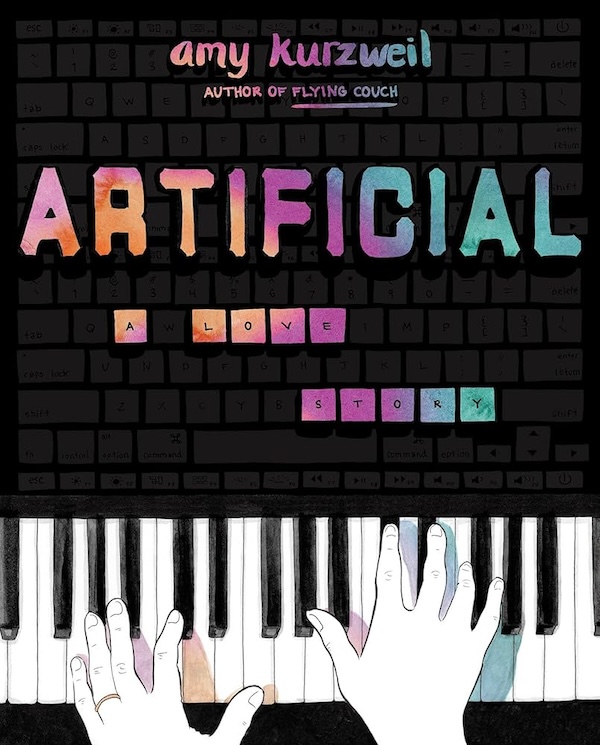
Daniel Kalla commands readers’ interest from the first sentence of his latest thriller, The Deepest Fake. And he keeps us turning pages straight to the end, not only as we contemplate who might be the culprit(s) of our hero’s apparent demise, but also as we consider the ideas Kalla puts forward about artificial intelligence, intellectual property, relationships, trust, measures of a successful life, and more.

Jewish Independent readers will be familiar with Kalla, who, in addition to being a writer of many international bestselling novels, is an emergency room physician here in Vancouver. The JI interviewed Kalla in 2023 and has reviewed of a few of his previous novels.

image - The Deepest Fake book coverThe plot-driving topic of The Deepest Fake – artificial intelligence – is new territory for the doctor-writer, who has penned many medical and science thrillers, using his physician’s knowledge to powerful effect. But he also has written an historical fiction trilogy set in Shanghai during the Second World War, where thousands of Jews fleeing Europe found safe haven, even as China and Japan were at war, so we know Kalla’s not afraid to do the research necessary to create a realistic-seeming fictional world centred around places and concepts less familiar to him, and to most readers.

As much as The Deepest Fake highlights some of the moral issues surrounding AI, it also explores other big issues, like medical assistance in dying (MAiD), fidelity in marriage and business partnerships, the foundations of trust, and where the creative process begins and who owns it. Kalla manages to cover all this ground and raise so many relevant questions while telling a great story. The Deepest Fake begins with a bang – “Liam Hirsch never seriously contemplated dying before his forty-ninth birthday – until today” – and keeps up the pace throughout.

Liam, founder and chief executive officer of a thriving AI company, TransScend, is suffering from a mysterious medical condition that’s first diagnosed as an aggressive form of ASL (amyotrophic lateral sclerosis). His symptoms – twitches and challenges with movement – have been getting worse, and he’s likely to lose basic motor function within months, maybe a year.

Despite the seriousness of his illness, Liam hesitates to tell his wife and kids, the former not only because of the pain it will cause, but because, weeks before, he discovered, with the help of a private investigator, that his wife was cheating on him. Adding to Liam’s stresses and the book’s adventure are some accounting irregularities at his company, the competitive nature of the tech world and the potentially manipulative AI app that he helped create. So, when it becomes obvious that someone wants Liam gone, the suspects are numerous, including his wife, all his staff, an aggrieved former business partner, and the technology itself.

The Deepest Fake is a fun, satisfying read. 

Two different kinds of magic

It’s almost a new year. We’ve been taking stock more than usual throughout the month of Elul. It’s a valuable skill – being able to do regular cheshbon hanefesh, accounting of the soul, reflecting on our views and actions, with an eye to self-improvement, maybe even creating a positive ripple effect that extends beyond ourselves.

Two new children’s picture books introduce – or reinforce – the Jewish values of Shabbat (taking a break from work and technology, thereby recharging our physical and mental selves) and tikkun olam (taking care of ourselves, our homes, our neighbourhoods, and so on). They remind us that making the world better starts with us, what we do, how we treat ourselves and others.

Seattle publisher Intergalactic Afikoman released Fairy GodBubbie’s Shabbat by Ann Diament Koffsky this month. Koffsky has written and illustrated more than 50 kids books, with many about Judaism, its holidays, foods and symbols. Her website is worth checking out: there are reading guides, you can see her many artistic styles, download colouring pages featuring scenes from her books, as well as other images, and, of course, there are links to purchase her books.

In Fairy GodBubbie’s Shabbat, the Mazel family is busy and seems happy enough, Dad on his laptop, Mom on her phone, Sara playing games on a tablet. But, “Why is no one schmoozing?” wonders Fairy GodBubbie. “Noshing?? Kibbitzing!”

“Unlike regular fairy godmothers who come only when called, Fairy GodBubbies just show up to fix things.

“Even when they’re not invited,” writes Koffsky.

So, poof! With a couple of Shabbat candles and a frequency jammer, Fairy GodBubbie helps the Mazels experience a different kind of Shabbat, a much more fulfilling one, a magical one. And readers can create the experience at their own homes, trying out what Koffsky calls a “a Tech Shabbat – a day away from screens.” She asks, “If your family does choose to try out a Tech Shabbat, what would you most like to do during that time?” And offers some choices – “Will you eat a family meal? … Curl up with a good book?” – and encourages readers to come up with their own ideas to make their “next Shabbat feel magical.”

image - Ruby Finkelman Finds the Real Magic book coverThe Collective Book Studio’s Ruby Finkelman Finds the Real Magic, written by Mike King with illustrations by Shahar Kober, which came out earlier this year, also features a young heroine and, as the title indicates, “magic.” But there are no magical GodBubbies; rather, a self-realization that a beautiful village, a beautiful life, don’t just happen by magic – happiness, cleanliness, kindness, etc., require not only effort, but sometimes doing things you don’t enjoy doing. In Ruby’s case, she “especially didn’t like brushing her teeth,” so, one night, she decides, “I’m never going to brush my teeth again.”

Even such seemingly inconsequential actions have repercussions. Other kids stop brushing their teeth. Then they decide not to wash their faces, tidy up after themselves or treat one another kindly. Parents nag, children kvetch. The grownups become so exhausted, they have “no strength left to lift a toothbrush, do the laundry, take out the garbage, and on and on.” Kvellville soon turns into what neighbouring villages start calling “Schmutzville.” A town meeting devolves into several arguments, everyone turning on one another.

Seeing the madness, and realizing how it all started, Ruby sets about to right the situation.

Mensch is a Yiddish word that means ‘human,’ but when used in the sense of ‘being a mensch,’ it means being a human in the best possible way, or being the best human that you can be,” writes King in an author’s note at the end of the story. “But it’s not only a Jewish thing – it’s a universal value, an idea of how to act in a way that makes the world a better place, simply because you behave in a good and kind way.”

While the toothbrushing premise is a little bit of a stretch, King is a pediatric dentist, so it’s no wonder, and he does manage to make the story work. It’s a wonderful message, of course, and Kober’s artwork is delightful. 

Don’t be alarmed, but …

From the “Tribe of Reuben”: a culinary heart-attack-on-a-plate, never mind the trayf  factor. (photo by Alan C. / flickr.com)

On the last morning of our five-day trip to Victoria this summer, my husband Harvey woke me at 6:30 with the ominous words: “I don’t want to alarm you, but I’m having chest pain and I’m really clammy.”

Now, this is a man who has gone a few rounds with cardiac opponents like stents, a pacemaker/defibrillator, cardiac ablation and atrial fibrillation. He is no stranger to people poking around in his arteries and veins. And I am no stranger to health anxiety.

So, I leapt into action and tried to get an outside line through our hotel phone. Impossible. Harvey, cool as a cucumber (well actually, sweaty as a hairy guy in a shvitz), says, “Maybe just use your cellphone and call 911.” Within five minutes an ambulance and a fire truck arrived at our hotel room, and three paramedics started assessing him. Obviously, we all suspected a heart attack, G-d forbid, but they had to check everything anyway. Two puffs of nitroglycerine later and the pain subsided. 

Off we went to Royal Jubilee Hospital. Which sounds like a place of celebration and festivities – jubilee! It was not. Ten hours and countless doctors, residents, nurses and nurse practitioners later, they announced that it was not a heart attack, but “some sort of heart-related issue.” They suggested we stay in Victoria an extra day, gently informing us that the chances of having another such “event” was most likely within the next 48 hours.

Long story short, we stayed in Victoria for two more nights, then came home. That was a Wednesday. On Friday, at around 10:30 p.m., Harvey woke me up again to tell me: “I don’t want to alarm you, but I’m having chest pain again and my jaw feels tight.”

Like an anxiety-fueled robot, I dialed 911 and off we went to Vancouver General Hospital to spend a thoroughly horrendous two nights in the emergency department. Thanks to a nurse who advocated for us and a cardiologist who finally saw us after 19 hours of waiting, Harvey was promised an angiogram “within the next three days.” Seriously? I caught sight of incredulity in the rearview mirror.

I’m convinced that nonstop praying is what got Harvey an angiogram on the Sunday morning. And what did it show? He had a blockage in the smaller of the two “widow-makers” – a term cardiologists use to refer to the heart’s biggest artery, and the one that commonly causes fatal heart attacks. This is a term that no wife wants to hear. Ever. But, thank G-d, they caught it in time and put a cardiac stent in. To date, it’s still a mystery as to why a fairly recent cardiogram didn’t catch this blockage. Needless to say, this wife will be armed with an extensive list of questions for Harvey’s cardiologist. For the record, I’m not comforted when doctors opine that “sometimes we just don’t know.”

When I asked Harvey how I could possibly tie in his cardiac episodes with my Balabusta column, without missing a beat, he said: “Tribe of Reuben.” I immediately understood the reference to the two Reuben sandwiches he’d consumed that week. I have become very adept at extrapolating the gems that spew forth from my husband’s witty piehole. For those of you not familiar with this culinary heart-attack-on-a-plate, a Reuben consists of corned beef, Swiss cheese and sauerkraut slathered with Russian or Thousand Island dressing, grilled between slices of rye bread. My arteries clog just contemplating this. Never mind the trayf (non-kosher) factor.

Suffice it to say that, while I cannot be my husband’s keeper, I can be the gatekeeper for what we eat at home. And there sure as heck aren’t going to be any Reuben sandwiches darkening our doorway. They might try knocking, but nobody’s going to answer.

In the service of taking on a heart-healthy diet, Harvey will be eating nothing but salads, fruit and vegetables from now on – as if. Me, I’m a dyed-in-the-wool carnivore, so meat is a staple and I refuse to banish it. Given the state of things, I anticipate cooking separate meals for Harvey and me. Imagine my delight. Although I suppose certain proteins in regulated portions would be OK for him, I will have to explain to Harvey that corned beef and salami are not proteins, but rather heart attacks waiting to happen.

Alternative proteins like tofu and quinoa are out of the question for hubby, as you already know. So, my challenge will be to get creative and cleverly hide those loathed substances in appealing-looking dishes. A little quinoa thrown into a vegetable stew. Beyond Beef jumping into the understudy role for lasagna. Tofu masquerading as schnitzel. Not likely. Not ever. Harvey has the nose of a bloodhound and will sniff out these offending pseudo-proteins before you can say traitor.

What’s a wife to do? I could bribe his cardiologist to read Harvey the riot act. Or I could just throw my hands up in frustration and accept the fact that Harvey is a grown man with the capacity to make his own choices, good, bad and otherwise. I just hate giving in to sensible options, so I’m opting for Door #1. Wish me luck.

In the meantime, I’ll explore the big wide world of vegetables and figure out how I can disguise spaghetti squash and golden beets to make them look like Big Macs and Reuben sandwiches. Tonight, Harvey will be eating a salad composed of avocados, blueberries, mangoes, Persian cucumbers and fresh mint, with a healthy homemade dressing. And he’ll love it. The dressing is simple: lime juice. If I’m feeling magnanimous, I might even slip in a small portion of real protein on the side. Depends on whether or not he snuck in a Sabich for lunch while I was out. I’ll be sniffing his breath for signs of falafel and onion before dinner. 

Stay tuned for my end-of-summer Greek orzo salad that will satisfy your craving for a salty, sweet side salad that doubles as a main dish. It’ll usher your tastebuds from summer into fall in the blink of an eye. Next thing you know, you’ll be nesting and making sheet pan chicken. Honour the seasons, season your food and eat healthy. Btay’avon. 

Shelley Civkin, aka the Accidental Balabusta, is a happily retired librarian and communications officer. For 17 years, she wrote a weekly book review column for the Richmond Review. She’s currently a freelance writer and volunteer.

Rare archeological finds

Mosaics attesting to the wealth and prosperity of the ancient Samaritan community were found in Kafr Qasim, located in central Israel. (photo by Emil Aladjem, IAA)

The Israel Antiquities Authority (IAA) has sent out several press releases in the last couple of months. Here is a roundup of what has been discovered recently in a few excavations.

An agricultural estate, about 1,600 years old, was uncovered in Kafr Qasim, located in central Israel. The excavation, undertaken on behalf of the IAA and financed by the Israel Ministry of Construction and Housing prior to establishing a new northern neighbourhood, is within the boundaries of the archeological site Kh. Kafr Hatta.

The Samaritan settlement existed for about 400 years, from the end of the Roman period to the end of the Byzantine period (4th to 7th centuries CE). The site of Kh. Kafr Hatta is described in historical sources as the birthplace of Menander, the Samaritan magician, successor of Simon Magus, who was considered the father of the Gnostic sects and one of Christianity’s first converts.

photo - Architectural elements decorating the 1,600-year-old Samaritan agricultural estate
Architectural elements decorating the 1,600-year-old Samaritan agricultural estate. (photo by Emil Aladjem, IAA)

According to IAA excavation directors Alla Nagorsky and Dr. Daniel Leahy Griswold: “The size and splendour of the buildings discovered, the quality of their mosaic floors and the impressive agricultural installations, all point to the great wealth and prosperity of the local Samaritan community over the years.”

In one of the buildings, a mosaic floor was preserved, decorated with a geometric pattern and vegetal images. Alongside its central medallion are acanthus leaves combined with rare decorations of fruits and vegetables, such as grapes, dates, watermelons, artichokes and asparagus. In the entrance to this room was a partially preserved Greek inscription wishing the building’s owner Good Luck!; the owner’s first name was common in Samaritan communities.

In the northern part of the estate were found an olive press, a warehouse building and a public purification bath, a mikvah. The proximity of the oil press to the mikvah was probably used to produce olive oil in purity. The olive press was carefully planned, consisting of two wings; the northern wing contained the main production areas, while auxiliary rooms were erected in the southern wing. In the production areas, two screw presses were found, as well as a large basin in which the olives were crushed.

photo - An olive press for production of oil in ritually pure conditions and an adjacent ritual bath were part of a Samaritan settlement that existed from the 4th to 7th centuries CE
An olive press for production of oil in ritually pure conditions and an adjacent ritual bath were part of a Samaritan settlement that existed from the 4th to 7th centuries CE. (photo by Emil Aladjem, IAA)

Over the years, the estate saw dramatic changes. 

“The wealth and luxury of the buildings were replaced by oil production and agricultural installations. New walls damaged the mosaic floors, and the magnificent capitals and columns were integrated within the new walls,” said Nagorsky. She suggested that these changes are related to the Samaritan Revolts under the Byzantine rule – a series of 5th to 6th century CE uprisings against the Byzantine emperors, who enforced restrictive laws on members of other religions.

“What makes this site particularly interesting is that, unlike some of the other Samaritan sites that were destroyed in these revolts, the agricultural estate in Kafr Qasim actually continued in use, and even preserved its Samaritan identity – as evidenced by the Samaritan ceramic oil lamps uncovered in our excavation,” Nagorsky said.

According to Israeli Minister of Heritage, Rabbi Amichai Eliyahu, “The discovery of the Samaritan agricultural estate illuminates another chapter in the common shared story of the ancient peoples of this land; foremost, in this period, the Jews and the Samaritans. These two ancient communities led their lives based on the Torah and shared common roots, and also experienced similar hardships during periods of antagonistic rule….  These physical remains are another reminder that our heritage in this land is deep and multifaceted.”

* * *

photo - The 2,800-year-old dam wall discovered in the City of David
The 2,800-year-old dam wall discovered in the City of David. (photo by Emil Aladjem, IAA)

A monumental dam excavated in the Siloam Pool in the City of David National Park has now been dated in a joint study by the IAA and the Weizmann Institute of Science, to the reign of the kings of Judah, Joash or Amaziah. Its construction may have been a creative solution to a climate crisis about 2,800 years ago, according to the researchers. The research was published in the scientific journal PNAS.

The wall uncovered in excavations of the Siloam Pool in the City of David National Park was built around 805-795 BCE. Its discovery was made by excavation directors Dr. Nahshon Szanton, Itamar Berko and Dr. Filip Vukosavovic on behalf of the IAA.

“This is the largest dam ever discovered in Israel and the earliest one ever found in Jerusalem,” the directors stated in a press release. “Its dimensions are remarkable: about 12 metres high, over 8 metres wide, and the uncovered length reaches 21 metres – continuing beyond the limits of the current excavation. The dam was designed to collect waters from the Gihon Spring, as well as floodwaters flowing down the main valley of ancient Jerusalem (the historical Tyropoeon Valley) to the Kidron Stream, providing a dual solution for both water shortages and flash floods.”

Dr. Johanna Regev and Prof. Elisabetta Boaretto of the Weizmann Institute explained: “Short-lived twigs and branches embedded in the dam’s construction mortar provided a clear date at the end of the 9th century BCE, with extraordinary resolution of only about 10 years – a rare achievement when dating ancient finds. To complete the climatic reconstruction, we integrated this dating with existing climate data from Dead Sea cores, from Soreq Cave and from solar activity records influencing the formation of certain chemical elements. All the data pointed to a period of low rainfall in the Land of Israel, interspersed with short and intense storms that could cause flooding. It follows that the establishment of such large-scale water systems was a direct response to climate change and arid conditions that included flash floods.”

The newly uncovered structure joins two other water systems from the same period discovered in the City of David: a tower that dammed the Gihon Spring and a water system that gathered water from the Gihon, directed through a channel into the Siloam Pool, where it was joined by floodwaters blocked by the dam.

These systems reflect comprehensive urban planning for managing Jerusalem’s water supply as early as the late 9th century BCE – clear evidence of the city’s power and sophistication.

* * *

Lamp wicks made of textiles, approximately 4,000 years old – among the oldest known in the entire world – were discovered during an archeological dig at the Newe Efraim antiquities site near Yehud, Israel. The wicks, uncovered in an IAA excavation, funded as part of development works by the Israel Lands Authority to establish a new neighbourhood in the city of Yehud, were preserved inside clay lamps, used for illumination in the Intermediate Bronze Age (circa 2500-2000 BCE).

The study was published in the scientific journal ’Atiqot, Vol. 118, published by the IAA. 

According to IAA researchers Dr. Naama Sukenik and Dr. Yonah Maor: “This is a unique discovery that we did not expect could ever be found in the moist Mediterranean climate….  Although wicks were a common product for lighting in the ancient world, the fact that they are made of organic fibres makes it difficult to discover them in an archeological dig. Even in cases where the organic matter is preserved, such as in desert climate conditions, it is difficult to identify a wick, unless found inside a lamp, since it has no special characteristics to distinguish it from any group of fibres, threads or ropes…. The fact that three wicks were found – and that one of them survived in its entirety, is especially surprising in the humid climate of the coastal plain.”

photo - One of the wicks tested in the study was found intact
One of the wicks tested in the study was found intact. (photo by Emil Aladjem, IAA)

According to Dr. Gilad Itach, Yossi Elisha and Yaniv Agmon, the excavation directors on behalf of the IAA, “The wicks were discovered inside oil lamps uncovered in the graves alongside other burial offerings, including various types of pottery, animal bones, metal weapons and jewelry. While these lamps must have been used to illuminate the underground dark burial space during the burial ceremony itself, it seems that this was not their only function. The fire burning in a lamp has been associated with magical power since the dawn of humankind…. Admittedly, the Intermediate Bronze Age population in the Land of Israel did not leave any writings behind, but various sources from around the ancient Near East demonstrate the central role of fire in burial ceremonies. Just like today, thousands of years ago, the fire burning in a lamp symbolized the human soul. The common term we use today, ‘ner neshama,’ ‘the flame of the soul,’ probably originated thousands of years ago.”

Traces of soot were found in the wicks tested in the study, indicating these lamps were used; seemingly lit while the grave was prepared and/or during the burial ceremony. The analysis also revealed that the wicks were apparently made from reused linen fabric. “It is unlikely that an expensive textile such as linen would have been woven especially for an object intended for combustion,” said Sukenik. “We speculate that the wicks were recycled from other textiles, after their original purpose was completed…. The secondary use of textiles indicates smart economic conduct, in which precious raw materials were maximally utilized.” 

– Courtesy Israel Antiquities Authority