Skip to content
  • Home
  • Subscribe / donate
  • Events calendar
  • Business Directory
  • FAQ
  • News
    • Local
    • National
    • Israel
    • World
    • עניין בחדשות
      A roundup of news in Canada and further afield, in Hebrew.
  • Opinion
    • From the JI
    • Op-Ed
  • Arts & Culture
    • Performing Arts
    • Music
    • Books
    • Visual Arts
    • TV & Film
  • Life
    • Celebrating the Holidays
    • Travel
    • The Daily Snooze
      Cartoons by Jacob Samuel
    • Mystery Photo
      Help the JI and JMABC fill in the gaps in our archives.
  • Community Links
    • Organizations, Etc.
    • Other News Sources & Blogs
  • JI Chai Celebration
  • JI@88! video

Recent Posts

  • Federation now across BC
  • Israel fighting for its existence
  • Deal strengthens Iran
  • Patriotic belonging diminishes
  • A campaign to engage
  • Upstanders’ first live event
  • Responding to Carney
  • Having your own home
  • Music a family tradition
  • Musical to warm heart
  • Community milestones … June 2026
  • Sharing her passion for Israel
  • Or Shalom reopens its doors
  • JFS from past to future
  • Need holistic approach
  • Sharing stories, advice
  • Journalist shares fears
  • Skills to live together
  • Road to independence
  • Cutting grass with scissors
  • Zionism as a solution
  • Deceit, desire & the divine
  • Reclaiming sacredness
  • Creative project ideas
  • Summer squares and cobbler
  • Thou shalt … summer commandments
  • Legal help for students
  • Revisiting myth of Lilith
  • Wrong person rebuked
  • Canada’s mixed messages
  • Questions for museum
  • Symposium on antizionism
  • Making soccer political
  • CJPAC lauds Pulver’s impact
  • City recognizes Vrba’s legacy  
  • Organ donation saves lives

Archives

Follow @JewishIndie
image - The CJN - Visit Us Banner - 300x600 - 101625

Tag: art

Return of looted art

Return of looted art

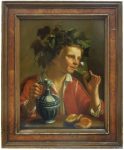
“Young Man as Bacchus” by Jan Franse Verzijl was among about 400 works owned by Max Stern that were forcibly sold by the Nazis in the 1930s. (photo from Max and Iris Stern Foundation)

When the painting “Young Man as Bacchus” by Dutch master Jan Franse Verzijl (1599-1647) went on display in New York City two years ago, the FBI moved in and seized the work. In the possession of an art gallery in Turin, Italy, the painting was among about 400 works owned by Max Stern that were forcibly sold by the Nazis in the 1930s.

In 1935, Stern was a successful gallery owner in Düsseldorf, Germany, but because he was Jewish, his collections were confiscated and sold by the Nazis. Stern would later move to Montreal, where he became a leading figure in the Canadian art world. After Stern died, in 1987, the beneficiaries of his estate learned of Stern’s Düsseldorf gallery and an extraordinary project began to seek restitution for the confiscated artworks.

Dr. Clarence Epstein, director of the Max Stern Art Restitution Project and senior director of urban and cultural affairs for Concordia University, will speak in Vancouver March 23 about the successes and challenges of the project.

The beneficiaries of Stern’s will are Concordia University, McGill University and the Hebrew University of Jerusalem. As a result, the art restitution project may be the only program of its type with three academic institutions working collegially to a common goal, said Epstein. His visit here is presented by the Canadian Friends of the Hebrew University, the Vancouver Holocaust Education Centre and Congregation Schara Tzedeck and is sponsored by Heffel Gallery and the estate of Frank and Rosie Nelson.

The Dominion Gallery, Stern’s Montreal business, remained in operation for more than a decade after his death. During this time, the beneficiary universities became aware of Stern’s prewar history.

“There was an entirely additional gallery business in Düsseldorf that his family had run before the war but had been closed by force as a result of Nazi persecution,” Epstein told the Independent in a telephone interview. “It wasn’t public knowledge. I think some people were aware of Dr. Stern’s past, but it coincided with the time when the issue of restitution was just starting to gain a little bit of traction in the art world and so it merited questioning. We just didn’t know how far to take it.”

The Max Stern Art Restitution Project has become a significant entity, with staff in Montreal, Ottawa, Washington and New York, as well as researchers in Europe. In addition to the obligation Epstein has to maximize the financial outcome for the beneficiaries of Stern’s will, there are other factors driving the project.

“There were fiduciary obligations, which is part of estate management,” he said. “There were moral implications, because this was something that was right for the universities to do on behalf of their great benefactor Max Stern. And then there were educational opportunities that this could open up in the fields of art history, of social justice, of art and law, the mechanics of the art market – and this enticed all kinds of academics to get involved in the project.”

The return of “Young Man as Bacchus” is among 16 successes the project has seen so far. While the restitution of that piece involved law enforcement, it also exemplified the good faith response of the gallery into whose possession the painting had fallen.

Every country has different rules and statutes of limitations around the return of art that has been stolen or forcibly sold, and the Stern project navigates the law as well as less litigious means of restitution. Through the recommendation of the German Friends of Hebrew University, the German government recently announced tax receipts for the owners of returned artworks. In the cases of galleries or museums, the reputation of the institution could suffer if they are known to be in possession of a work of dubious provenance, so this encourages cooperation. Individual collectors may not have the same impetus for preserving a reputation, but once a piece of art is identified as coming from Stern’s Düsseldorf collection, it bears a figurative black mark that makes it valueless on the open art market. Even so, Epstein said, the project does not seek to punish anyone for unwittingly possessing such a work.

“We don’t intend to be the bearers of bad news about the state of the work that is in their possession,” he said, “so if there’s any way that we could alleviate that kind of misfortune with some kind of tax relief, we would do so. But it hasn’t been tested yet.”

One example of an innovative solution found is the case of a work that was discovered in a Düsseldorf gallery. While the ownership was transferred to the Max and Iris Stern Trust, the universities agreed to lend it back to the gallery for long-term display.

“In their case, everybody kind of got their cake and ate it, too,” said Epstein. “It is owned by the Stern Foundation but it is lent to the Düsseldorf Museum.”

While Canada does not have the sort of art sector that New York or the capitals of Europe have, Epstein credited the federal government, specifically Minister of Canadian Heritage Mélanie Joly, for expressing the Canadian government’s commitment to restitution.

What happens to the artworks when they are returned varies. In the Düsseldorf case, the gallery in possession maintained custody. In some instances, the pieces have been sold to fund additional work of the project. (Once returned, the black mark is eliminated and the piece can be exchanged in the legitimate art market.) Others are loaned to museums and public institutions.

Next year, an exhibition of works from Stern’s collections will open in Düsseldorf, later traveling to Haifa, Israel, then Montreal.

Popular culture has taken on the topic of art restitution, Epstein said, and this is a good thing. For example, Monuments Men is about Allied soldiers charged with rescuing cultural artifacts before the Nazis destroyed or hid them, and Woman in Gold focuses on an American woman’s legal fight with the government of Austria to return a painting by Gustav Klimt that was stolen from her family by the Nazis. There have also been documentaries on different aspects of pillaging during the war. Epstein credited Helen Mirren, the star of Woman in Gold, for personally taking up the cause of restitution and making it more public.

“Any way we can make more public the challenges of the recovery of these kinds of objects, and the more we keep it in the spotlight, the more I think we’re going to be able to generate sympathy and attention from the groups that are in possession of those works,” he said.

While the Stern project has seen the return of 16 works and has located several more that are the subject of negotiation, it is impossible to know precisely how many cultural artifacts were stolen and remain unidentified.

“There is a number circulating on the internet in the hundreds of thousands in terms of objects that remain unrecovered,” said Epstein. “I don’t think it’s ever going to be possible to nail down that number … because we are talking about an historic loss that is multiplied over millions of people’s losses, that is also somewhat effaced as a result of time and lack of memory and archives. But that’s really the tip of the iceberg in terms of losses because in terms of material losses, everything that was in the possession of a Jewish family that was oppressed could still be in circulation now – musical instruments, jewelry, the list goes on. But those items were a lot harder to trace in terms of ownership and attribution than a painting has been. Works of art that are under a certain value and have not been researched historically are probably still circulating in the tens of thousands.”

Epstein added that Stern also had significant B.C. connections. His gallery represented E.J. Hughes and Emily Carr, two of this province’s most noted artists.

Admission to the March 23, 7:30 p.m., talk at Schara Tzedeck is free but an RSVP is requested to [email protected].

Pat Johnson is a communications and development consultant to the Vancouver Holocaust Education Centre.

Format ImagePosted on March 10, 2017March 8, 2017Author Pat JohnsonCategories LocalTags art, CFHU, Heffel Gallery, Holocaust, Nazis, restitution, Schara Tzedeck, VHEC
Constant artistic reinvention

Constant artistic reinvention

The Vancouver skyline, photographed and painted by Sharon Tenenbaum.

Sharon Tenenbaum is celebrating her 10-year anniversary – since becoming an artist photographer – with a solo exhibition at Zack Gallery. The exhibit includes photographs from a number of different series, an eclectic selection reflecting the progressive stages of her artistic journey.

“It’s the hardest challenge for any artist to constantly reinvent herself, both business-wise and creative-wise,” Tenenbaum said in an interview with the Independent. “Everything has a shelf life, so we have to come up with something new every few years.”

In the decade since she began, Tenenbaum has reinvented herself several times, although she never abandons her previous endeavors. Her first love was architectural photography, and it is still an important part of her artistic output.

photo - Sharon Tenenbaum
Sharon Tenenbaum (photo from Sharon Tenenbaum)

“Maybe because I was an engineer before I became an artist, I like architectural photography,” she said. “You can take your time with buildings and bridges, come to them again and again, see them from many angles and in different weather. With people, it is transitory: a moment, and it is gone.”

Tenenbaum’s architectural photography has won awards. The most recent one came last year, when her Musical Reflections Hoofddorp Bridge Series won first place in the 2015 International Photography Award, in the category of architecture, bridges. All three photographs in the series are on display at the Zack.

“These three bridges, with musical names Harp, Lute and Lyre, are located in the small town of Hoofddorp, Holland, on the outskirts of Amsterdam,” Tenenbaum explained. “They were designed by the Spanish engineer and architect Santiago Calatrava. I love his works and I photographed them before.”

Although her architectural photography started as black and white, a few years later, she began painting the photographs. Her painting phase started with trees.

“I started with one image of a tree, a photo from Portugal,” she said. “Then, there was a maple tree outside my window; it was gorgeous in the fall. I wanted to convey its beauty with my image, too.”

These works are the result of a two-step process. First, Tenenbaum prints her photos on canvas and then she paints the canvas with acrylics. People coming to Zack Gallery will see several of these painted photos in the show.

After her tree paintings proved successful, Tenenbaum moved to paint a different kind of photographic imagery – the Vancouver skyline.

“I was inspired to do this after I saw a painter in Jerusalem about two years ago, Adriana Naveh. Her abstract urban landscapes were amazing. I was blown away by her work,” said Tenenbaum. “But not every architectural image submits well to painting. Sometimes, I try to paint something but it doesn’t work out. It’s hard to explain what works and what doesn’t. I think if the image is too architecturally clean, it needs the black-and-white palette.”

The examples of Tenenbaum’s painted skylines in the Zack show combine the technical proficiency of the photographer with deep emotional undertones echoing through the color schemes. The skyline might be of the same place – Vancouver – but each image is different, reflecting different facets of the artist’s inner self.

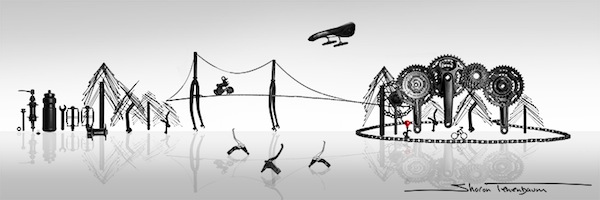
photo - Lions Gate and Stanley Park by Sharon Tenenbaum, from her Bike Art series
Lions Gate and Stanley Park by Sharon Tenenbaum, from her Bike Art series.

The Vancouver skyline fascinates Tenenbaum. Recently, she started a new project showcasing her favorite subject. She creates photo images of the skyline assembled exclusively from spare bicycle parts. She calls this new project Bike Art.

“I love biking and I always look for new and original ways to depict Vancouver. This project is a melding of my two passions,” she explained. “I use the recycled bicycle parts from the bike shops, the parts the shops would throw away. It’s a very time-consuming process, lots of work, and my place resembles a bike garage now, but it is very rewarding. I only have three images for now and I would like to get a grant to continue this project.”

Tenenbaum’s unique skylines made with bicycle parts are charming, quaint and amazingly authentic. One can see the ocean and Stanley Park, the skyscrapers of downtown and the masts of the marina, all created with recycled screws and bolts. “The viewers could interpret the images anyway they like,” she said.

But certain images are harder to fathom, like the image of an airplane flying above the clouds. The photo is just across from the entrance to the gallery, greeting guests with its mystery. “Many people ask me how I did it,” said Tenenbaum. “I always tell them: take my class and find out.”

Tenenbaum is eager to share her extensive expertise. She teaches students to use a number of photographic techniques to create fine art, to express their souls, and not just document what they see. With two different classes at Langara College plus some private tutorships, her teaching schedule is extremely busy, but she finds time for international workshops as well. “I have one in Chicago next year,” she said.

The show Sharon Tenenbaum – Architectural Fine Art Photography opened on Dec. 15 and continues to Jan. 15. For more information on Tenenbaum and her work, visit sharontenenbaum.com.

Olga Livshin is a Vancouver freelance writer. She can be reached at [email protected].

Format ImagePosted on December 23, 2016December 21, 2016Author Olga LivshinCategories Visual ArtsTags art, photography, Sharon Tenenbaum, Zack Gallery

There is danger in autocracy

Last week, an Israeli artist erected a life-sized golden statue of Israeli Prime Minister Binyamin Netanyahu in Tel Aviv’s Rabin Square. Reminiscent of the golden calf with its connection to forbidden idolatry, artist Itay Zalait said he was making a statement about freedom of speech in Israel and what he sees as a type of idolatry growing around the man sometimes called King Bibi.

Citizens gathered around the statue, arguing about its meaning and various interpretations. Because the installation was erected without a permit, city officials ordered it removed but, before the artist could do so, it was toppled by a bystander and left laying on its side like the figure of a deposed despot.

In addition to the prime minister’s office, Netanyahu occupies the portfolios of foreign minister, economy minister, minister of regional cooperation and communications minister.

In this latter role, Netanyahu has appointed figures to oversight positions that have allowed them to put a finger on the scale in support of media outlets that are sympathetic to the government. Similarly, American casino magnate Sheldon Adelson bankrolls the newspaper Israel HaYom, which is widely seen as a propaganda machine for Netanyahu.

The Netanyahu government is also seen as threatening the broadcast news sector, having undertaken an effort to replace the state-run broadcaster with a more complimentary version, only to reverse course when it appeared the new agency would also be insufficiently uncritical. Like other politicians in democratic countries, Netanyahu has found some popularity among his supporters by picking fights with the media, including individual reporters who report things unfavorable to the prime minister.

While discourse in Israel remains legendarily vibrant, evidence that the government may be attempting to influence or control aspects of journalistic freedom are rightly drawing deep concern. And this concern is exacerbated by evidence of other tendencies within Israeli society that seem to reflect authoritarian, anti-democratic and discriminatory inclinations.

Education Minister Naftali Bennett is having “ethical rules” drawn up for what university lecturers can and cannot say about politics. Culture Minister Miri Regev has promoted a bill to retroactively cut funding to cultural institutions that do not meet the government’s standard of “loyalty” to the state of Israel.

On a different, but similarly ham-fisted front, there is the attempt to legislate the public broadcast of the muezzin, the five-times-a-day call to Muslim prayer, which begins before dawn. Granted, not everyone is keen to have daily pre-dawn loudspeaker broadcasts, whatever the purpose, but such a move against a religious minority already experiencing myriad forms of discrimination calls into question fundamental issues of multiculturalism and respect for religious freedom and pluralism that need to be addressed.

The rabbinate has also weighed in on a few issues that have outraged progressive and feminist Israelis.

Crediting a 15th-century scholar, the Sephardi chief rabbi Yitzhak Yosef declared that women and yeshivah scholars are forbidden from serving in the Israel Defence Forces or performing national volunteer service. He claimed that women had been permitted to go to war at times in Jewish history, but only to cook and clean. The comments come at a time when Israel has seen a four-fold increase in the number of women combat soldiers and as some segments of the political spectrum and civil society are speaking up against what they see as the unsustainable tradition of military exemptions for the ultra-Orthodox.

Then there is Eyal Karim, who was recently sworn in as chief rabbi of the IDF. During his confirmation hearings, Karim was forced to explain earlier comments that seemed to justify the rape of non-Jewish women during wartime. He apologized, saying that his comments were a theoretical consideration of biblical permissions and prohibitions. Karim has also stated that women should not serve in the IDF, or sing at army events.

These and other developments have combined with the Netanyahu government’s warm reaction to Donald Trump’s election to raise alarm among some that Israel is on a path similar to the populist, authoritarian phenomenon seen in the United States and much of Europe. In so many ways, Israel’s body politic is sui generis, utterly unlike any other democracy on earth. Yet it should not surprise that what emerges among its closest allies should also find a place among Israelis.

Trump, tweeting from his gold-embossed chambers in Manhattan, is exhibiting plenty of monarchical characteristics. European political upstarts are glorifying strongmen of the past and, in some cases, of the present, in the form of the Russian leader Vladimir Putin. When these sorts of autocratic inclinations arise in Israel, they should be opposed there, just as they should be everywhere.

Posted on December 16, 2016December 14, 2016Author The Editorial BoardCategories From the JITags army, art, free speech, IDF, Israel, journalism, Netanyahu, racism, Trump
Landscapes alive with color

Landscapes alive with color

Sandy Blass’ solo exhibit No Other Country is at Zack Gallery until Dec. 12. (photo by Olga Livshin)

Artist Sandy Blass’ first solo show in Canada – No Other Country, a series of landscapes – opened last week at Zack Gallery.

Blass has always liked painting, and received her fine arts degree from the University of Calgary in 1984. She worked an office job full-time, raised her family in Calgary and painted as a hobby. Only after her children grew up could she allow herself the joy of following her heart into the arts. Although she still works – part-time at the Jewish Family Service Agency in Vancouver – she now considers herself a full-time artist.

Two important events contributed to her recent emergence as a full-time artist: first, she visited Israel for the first time in 2012; second, she moved to British Columbia in 2014.

Her show’s title, No Other Country, comes from the Hebrew song “I Have No Other Country,” about Israel, although, for Blass, a Jewish Canadian born and raised in Calgary, the sense of belonging is broader. “I belong in both places,” she said in an interview with the Independent, “Canada and Israel.” Her painting “Under the Same Sky,” an abstract play of lines and colors shaped like clouds, feels like the artist’s manifesto, reflecting her love for both countries.

Blass’ discovery of Israel and all things connected to Judaism came late in life. “My parents were Holocaust survivors. We didn’t talk about anything Jewish or about the war,” she explained. “Sometimes, my parents whispered about it but they never talked to me. Our home was secular and full of anxiety. My father always told me not to let anyone know that I was a Jew. Of course, after his concentration camp experience as a young boy, his fear was justified. I never questioned it.”

The older she grew, the more she wanted to learn about her roots and her family history. “I felt that I was missing something,” she said. “My father didn’t want to talk about the past, but my aunt did. She told me some of my family story when I was in my 20s. Later, I started painting with regard to my family history, exploring it through my imagery. I started going to shul. And, finally, I went to Israel.

“The first time – I traveled there in 2012 – I felt like I came full circle. I have family there, those who survived the war in Europe and immigrated to Israel afterwards. Since then, I’ve visited every year. I have even been thinking about aliyah, but not yet. I don’t feel that it is the right time.”

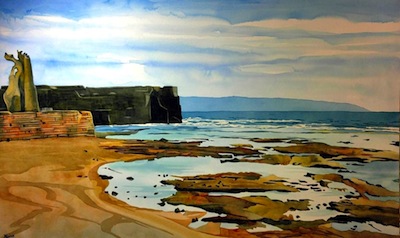
image - "Akko Beach" by Sandy Blass
“Akko Beach” by Sandy Blass.

After that first visit, Israel found a permanent place in the artist’s heart and in her paintings. “Since I reconnected with my Jewish identity, I paint both Canadian and Israeli landscapes,” she said. “I traveled to Europe, too, but I never painted there.”

Blass’ bright, vibrant compositions are half real and half abstract, although they are always linked to a particular place. “The sky is always imaginary though,” she said with a smile. “I love painting sky and water. Blue and green are my favorite colors. I love painting reflections, whether in the ocean, a mountain lake, a sea, or just a puddle. This way, water and sky come together, and the best medium to express their coupling is watercolors.”

She paints her landscapes exclusively in watercolor, her favorite medium. “I fell in love with watercolor in high school,” she said. “I love its flow, the transparency of colors. I tried other media over the years – oils and acrylic – but nothing worked for me, while I flourish in watercolors.”

Although watercolor is not the most popular type of paint for professional artists – the majority throughout the centuries has preferred oils – she is in good company. “Watercolors have a respectable place in art history. Joseph Turner, one of the foremost British landscape painters, worked in watercolors,” she said, listing well-known artists who used the same medium she does. “Toni Onley, one of the few Canadian artists represented at the Tate Gallery in London, worked in watercolors. I also want to make inroads into contemporary art in watercolors.”

One of the reasons for her love of watercolor, surprisingly, is that the paintings are not finished when the artist puts down her brush. “I don’t have complete control. The painting is only done when the water stops flowing, dries thoroughly,” she explained. “I experiment with the water flow sometimes. I have a special art table where I paint, and I might change the angle of the surface to affect the water flow. The results could be interesting. Also, the time it takes to dry could be important. Vancouver is more humid than Calgary, so it takes more time for the paintings to dry here. I like the end results better.”

No Other Country continues until Dec 12. To learn more about Blass’ work, visit blassart.com.

Olga Livshin is a Vancouver freelance writer. She can be reached at [email protected].

Format ImagePosted on December 2, 2016December 1, 2016Author Olga LivshinCategories Visual ArtsTags art, Canada, Israel, landscapes, watercolors
About the cover art

About the cover art

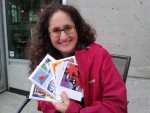
Shula Klinger creates her vibrant, whimsical designs with cut paper. The art is then scanned and reproduced as prints and greeting cards. Selections of her work can be purchased at Delish General Store (Granville Island) and Queensdale Market (North Vancouver). To see her full range of work, visit niftyscissors.myshopify.com or find her at the Artisan Fair, hosted by the North Shore Jewish Community at Congregation Har El in West Vancouver on Oct. 16, noon-4 p.m.

Format ImagePosted on September 23, 2016September 21, 2016Author The Editorial BoardCategories Celebrating the HolidaysTags art, gift cards, High Holidays, Rosh Hashanah
Museums adapt using tech

Museums adapt using tech

Museloop’s app that it created for Israel Museum. (photo from Museloop via Times of Israel)

How do museums and other purveyors of history attract visitors and make the past relevant, especially as people come to expect more and more digital experiences?

Perhaps surprisingly, Werner W. Pommerehne and Bruno S. Frey recognized the problem more than 36 years ago. In their article “The museum from an economic perspective,” which was published in the International Social Science Journal in 1980, they stated:

“Museum exhibitions are generally poorly presented didactically. The history and nature of the artists’ work is rarely well explained, and little is offered to help the average, uninitiated viewer (i.e., the majority of actual and potential viewers) to understand and differentiate what is being presented, and why it has been singled out. Accompanying information sheets are often written in a language incomprehensible to those who are not already familiar with the subject. There is no clear guidance offered to the collections, and little or no effort is made to relate the exhibits to what the average viewer already knows about the history, political conditions, culture, famous people, etc., of the period in which the work of art was produced.”

Keren Berler, chief executive officer of Israeli start-up Museloop recently put the problem into current perspective. Younger visitors, she noted in an Israeli radio interview this past June, find museum visits passive and boring. She said, especially when seeing museum art exhibits, young people need something more to draw them into what they are seeing. So, her company has designed a museum-based application for iPhone and Android use. The application includes games, such as find-the-difference puzzles, plus information about the artist, all of which will hopefully make the visitor better remember the art and some facts about it.

Interestingly, in describing the games, two of the attributes she mentioned were competitiveness and the ability to take “selfies.” Children as young as 8 or 9 years old can use the app on their own, but younger children would need an adult to assist them.

Right now, the Museloop app focuses on Israel Museum’s under-appreciated (read: under-visited) permanent art collection. This exhibit includes the works of a number of “heavies,” such as Marc Chagall, Claude Monet, Pierre-Auguste Renoir, Paul Cézanne and Paul Gauguin. The goal is to make the experience so appealing that young visitors will then want to visit other museums. Since Israel Museum is paying the start-up for the development and use of the app, visitors benefit by having free use of it.

In contrast, Tower of David Museum has its own in-house digital department. This department has developed its own applications for heightened exhibit viewing.

photo - Virtual reality in the actual reality of Tower of David Museum
Virtual reality in the actual reality of Tower of David Museum. (photo from Tower of David Museum)

According to Eynat Sharon, the head of digital media, her department takes into consideration the visitor’s total museum experience. This experience consists of three overlapping circles: the pre-visit, in which a person visits either the museum’s website or mobile site; the actual physical visit; and the post-visit, in which the person digitally shares with friends and family on Facebook, Instagram and other social media what they encountered at the museum. The museum’s technical equipment and apps may be rented by museum visitors for a small fee.

Are these new applications then to be applauded? Some people still need convincing. Last year, art critic Ben Davis reflected on news.artnet.com, “For many, many viewers, interfacing with an artwork through their phone trumped reflecting on its themes. In effect, now every art show is by default a multimedia experience for a great portion of the audience, because interaction via phone is a default part of the way people look at the world.”

Dan Reich, who is the curator and director of education for the St. Louis Holocaust Museum and Learning Centre, said, “Personally, I am not big on technology. You end up with lots of button-pushing but not necessarily a lot of education. As a museum, we are pretty low-tech. We have an audio tour of the permanent exhibit, several stops in the museum where you can press buttons and hear testimony, an interactive map and – more recently – added an interactive screen entitled ‘Change Begins With Me,’ which deals with more recent or contemporary examples of hate crimes and genocide. We have been digitizing our collection of survivors’ testimonies. We have testimonies edited to different lengths. Generally, survivors like to be recorded, knowing their words are being preserved.”

And recent comments on TripAdvisor show that museums don’t necessarily have to be high-tech to succeed in their mission.

Visitors, for example, gave the St. Louis Holocaust Centre high marks.

Other Holocaust learning centres, however, have started taking current technology through uncharted waters. The USC Shoah Foundation now uses holographic oral history. According to Dr. Stephen Smith, the foundation’s executive director: “In the Dimensions in Testimony project, the content must be natural language video conversations rendered in true holographic display, without the 3-D glasses. What makes this so different is the nonlinear nature of the content. We have grown used to hearing life histories as a flow of consciousness in which the interviewee is in control of the narrative and the interviewer guides the interviewee through the stages of his or her story. [Now] with the … methodology, the interviewee is subject to a series of questions gleaned from students, teachers and public who have universal questions that could apply to any witness, or specific questions about the witness’ personal history. They are asked in sets around subject matter, each a slightly different spin on a related topic.” One educator confided that, while the technology is “creepy,” the public apparently likes it.

So, how do museums cope with the possibility that the medium in and of itself becomes the message? In other words, how do museums keep their audiences from being distracted by the technology? At the same time, how can museums survive financially if they follow goals that differ substantially from those of visitors, funders and other supporters?

A few months ago, Canadian entrepreneur Evan Carmichael offered guidelines at an Online Computer Library Centre conference. His suggestions seem applicable to museum administrators as well: express yourself, answer their questions, offer guidance, involve the crowd, “use your audience to create something amazing … create an emotional connection, get personal, and hold trending conversations, go to where things are happening, be there.

Time will tell whether the advent of museum-related high-tech will realize Don McLean’s 1971 tribute to Vincent Van Gogh’s art: “They would not listen, they did not know how. Perhaps they’ll listen now.”

Deborah Rubin Fields is an Israel-based features writer. She is also the author of Take a Peek Inside: A Child’s Guide to Radiology Exams, published in English, Hebrew and Arabic.

Format ImagePosted on September 23, 2016September 21, 2016Author Deborah Rubin FieldsCategories WorldTags art, history, Holocaust, museums, technology
Overlapping exhibits

Overlapping exhibits

“Girl with Flower” by Esther Warkov, 1964, acrylic on canvas. (WAG collection; gift of Arthur B.C. Drache, QC, G-98-296; photo by Leif Norman)

Russian-born Jewish artist Marc Chagall (1887-1985) was a modernism pioneer. So much so that Pablo Picasso proclaimed that, when Henri Matisse dies, “Chagall will be the only painter left who understands what color really is.”

In the early 1920s, Chagall left Russia for Paris. In 1941, he escaped France and reached safe haven in New York. He returned to France a few years after the end of the Second World War.

“This sense of displacement Chagall feels throughout his life is reflected in his works, often featuring characters who hover over the earth…. Even if they’re lying down, they’re sort of levitating,” said Andrew Kear, Winnipeg Art Gallery (WAG) historical Canadian art curator. “There’s a sense of rootlessness to his work that’s quite interesting, and it’s reflected in his later work, too. By the 1940s – an important time for Chagall – he loses his first wife, his first love really, Bella, to cancer in or around 1944 … and is absolutely distraught.”

In an exhibition overseen by Kear, WAG has brought in the exhibit Chagall: Daphnis & Chloé from the National Gallery of Canada (NGC). It will be in Winnipeg until Sept. 11.

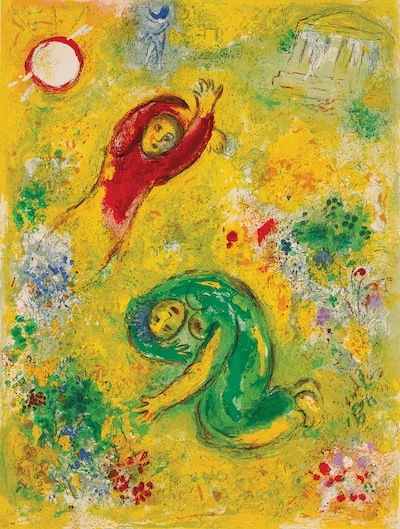
The exhibit, the latest NGC-WAG collaboration, features 42 lithographs, widely considered the crowning achievement of the artist’s career as a printmaker. The series depicts the semi-erotic tale written by the ancient Greek poet, Longus. Through fanciful compositions and bright hues, Chagall expresses the pastoral idylls of the young goatherd Daphnis and the young shepherdess Chloé on the island of Lesbos.

At WAG, there is also a complementary mini-exhibit called Chagall & Winnipeg, which tells the little-known tale of friendship between Chagall and former WAG director Dr. Ferdinand Eckhardt through letters, photographs and works of art.

image - Marc Chagall, “The Trampled Flowers / Les fleurs saccagées” (detail), circa 1956-1961, printed in 1961
Marc Chagall, “The Trampled Flowers / Les fleurs saccagées” (detail), circa 1956-1961, printed in 1961. (NGC/MBAC, Ottawa; gift of Don de Félix Quinet, Ottawa, 1986, in memory of Joseph and Marguerite Liverant)

“In addition to sketching out the story, this second exhibition … include[s] a number of paintings by Chagall that we’ve borrowed from the NGC and the Minneapolis Institute of Art,” said Kear.

In addition to these two Chagall exhibits, WAG is featuring Winnipeg Jewish artist Esther Warkov in an exhibit that includes her work from the 1960s to the 1980s. It runs until Oct. 16.

Born in 1941, Warkov did not do that well in school, but there was a lot of family pressure to succeed. By chance, she discovered jewelry making as a young teen, which, in turn, exposed her to the world of fine art. She eventually studied art at the University of Manitoba.

Today, Warkov is one of Manitoba’s most distinguished artists. This current exhibit highlights a celebrated and defining period of her work, which was forged in Winnipeg’s North End. Her stylized motifs reveal the clear influence of the eastern European immigrant community’s Jewish folk art roots.

“Although abstract painting was the most common form of contemporary art in the 1960s and 1970s, Esther really bucked the trend,” said Kear. “She was very interested in the human figure, representational drawing/painting, and in paintings that tried to convey a story. It’s this kind of point where she really outlines nicely with Chagall. Chagall’s paintings are very much recalling memories and tell[ing] a story.”

Warkov’s work during this featured period was large-scale and multi-paneled. “It’s not just a painting on one canvas,” said Kear. “It’s multiple canvases that are sort of cobbled together, in a way, to make almost loose grids. Her work is narrative, seems to tell a kind of story, but you’re not sure what the story is. It’s very whimsical and draws a lot on memory.

“I had the pleasure of meeting her for the first time a couple weeks ago,” he added. “I was curious about how she paints, or went about making these works. Apparently, she very rarely started with a coherent plan. She would start with one canvas and do an image on it. That would lead into another image that she’d tack on this other canvas next to the original one, to build the … visual story. But, it was a story she was making up as she went along. I thought she would plan it out first, but that’s not how it went down apparently.

“She’s got a wild sense of humor and great wit, which are really reflected in the titles of her works, [which] are often very long.”

WAG director and chief executive officer Stephen Morris said, “When we installed the exhibition a few weeks ago and we had the works up – many of them painted 40 to 50 years ago – they were as fresh, relevant and dynamic, I think, as the day they were painted. They reference so many interesting stylistic developments, but I’d also say they reach into the heart of who Esther is – someone who has lived in the North End for years, exposed to not just the Jewish culture, but also to Jewish folk art and eastern European traditions … that whole interesting development in terms of painting which you see in her work.

“Esther also brings people into interesting scenarios with her paintings and, in the composition, it can be a little unnerving, a little jarring. But, there is, with both her and with Chagall, a surreal aspect. So, while they’re painting recognizable images and motifs, the way they’re composed takes us back a bit and actually twists things. Some call it ‘the dream,’ others something else. Regardless, it’s delightful and one could see an overlap between the artists in terms of imagery.”

Morris enjoys being able to “bring cultures and ethnicities together.” He said having a famous Russian artist like Chagall next to Warkov, “who, in a way, had a much more regional impact, I think it’s interesting. I love the fact that a visitor can walk between Chagall and Warkov and, yes, they know they’re in a different space, in a different time, with a different artist, but they’ll also see connections.”

Of those connections, Morris pointed to how Warkov’s “roots overlap with Chagall’s roots, in terms of her life, faith and culture.”

The Chagall exhibit is set up in a series of small spaces to highlight the story of Daphnis and Chloé – visitors walk through it in a chronological way. Warkov’s work is displayed in one large gallery and visitors are surrounded by her canvases.

Also at WAG this summer are several permanent galleries, as well as a major retrospective of Winnipeg artist Karel Funk, who, Morris said, “is at the height of his career.”

Rebeca Kuropatwa is a Winnipeg freelance writer.

Format ImagePosted on July 22, 2016July 19, 2016Author Rebeca KuropatwaCategories Visual ArtsTags art, Chagall, Daphnis and Chloé, WAG, Warkov, Winnipeg
Honorary degree for Frimer

Honorary degree for Frimer

Linda Frimer was honored earlier this month by the University of the Fraser Valley for her artistic, humanitarian and philanthropic contributions and accomplishments. (photo from UFV)

For Linda Frimer, art is a form of reconciliation, and creativity a means of expressing the love within us all. The Vancouver artist has been sharing her art to heal, help worthy causes, and reconcile nature and culture for more than 35 years. In recognition of her artistic, humanitarian and philanthropic contributions and accomplishments, Frimer received an honorary doctor of letters degree from the University of the Fraser Valley at its June 2 afternoon convocation ceremony at the Abbotsford Centre.

Born in Wells, B.C., and raised in Prince George, Frimer connected with nature early on, and it informed her artistic development from the start. “I always had a pencil in hand and was allowed to roam the forest freely as a young girl,” she recalled.

Born a few years after the Second World War ended, she heard the adults in her family whispering about the devastation of the Holocaust. Even decades before the war, her family faced hatred and expulsion. Her grandfather fled Romania during the pogroms in the late 19th century, becoming one of the “footwalkers” roaming Europe, then following the Grand Trunk Railroad in Canada to its terminus in Prince George, where he became a merchant.

“I was too young to understand it all, but I knew something very bad had happened,” said Frimer. “I was a highly sensitive child, and absorbed the pain and anguish that others were carrying. I turned to nature for healing and reconciliation. I would enter the forest with a sense of awe and wonder. It’s what unites all people. When we suddenly see a magical tree or a sunset that leaves us breathless, that wonder belongs to everyone. I’ve always wanted to bring together the worlds of nature and culture. They are all connected, and recognizing that interconnectedness facilitates healing.”

Compelled by a desire to reflect the pain of her community and work towards healing, she created many works of art examining this theme. She co-founded the Gesher (Hebrew for Bridge) Project, a multidisciplinary group that helped Holocaust survivors and their children express their traumatic experiences through art, words and therapy.

Reflecting on the project during a talk she gave to the Canadian Counseling and Psychotherapy Association, she noted that creative expression is a critical component to healing. “I’ve done work that reflects my culture and my people and their plight, but I don’t want to get caught in the dark places. I want to share reverence between all cultures. I want to bring light and love to the forefront.”

From an early age, Frimer felt an affinity for the aboriginal people she grew up near in rural British Columbia. Her connection became more formalized when she befriended Cree artist George Littlechild (also a UFV honorary degree recipient). The two felt an immediate connection through their interest in incorporating family and history into their art and their use of vibrant colors. They have collaborated to produce art shows presented in venues such as the Canadian consulate in Los Angeles, and produced a book titled In Honor of Our Grandmothers.

“Both of our peoples have been through so much that we felt a real connection,” explained Frimer. “Growing up, I felt a real sense of ‘otherness’ and not fitting in. Many aboriginal people can relate to that, too.”

Frimer’s affinity to nature has led to her supporting many environmental causes. Her paintings for the Wilderness Committee, the Trans-Canada Trail, the Raincoast Environmental Foundation and other groups have raised funds for wilderness preservation, and also raised awareness of threatened forests and ecosystems.

“I love my environmental work because I know that’s where I can make a difference,” she said. “I am committed to helping to preserve endangered species and ecosystems, as well as helping people at risk or in crisis.”

Frimer spent her 20s raising her children and developing her artistic skills by finding mentors with whom to study. She didn’t begin her formal training until she was 33, when her last child started school. She then finished a four-year degree at Emily Carr in three years, receiving credit for her prior learning and artistic work.

More than three decades into her career, Frimer’s paintings and murals can be found in galleries, synagogues, churches, retirement centres, hospitals, hospices, schools, transition houses, corporate offices, and public and private collections. She has been very prolific but says it’s been easy to create so much art because she feels she is merely a vessel for a strong creative force. “It’s like joy coming through me, rather than me making it happen,” she said.

Frimer has received many accolades, honors and titles, but said her favorite title is “Grandma.” She and her husband Michael raised their blended family of eight children and now enjoy the company of nine grandchildren. “It’s profoundly important, especially for the Jewish people, who have lost so much, to rebuild the family we’ve lost and share reverence with others who have had similar losses,” she said.

Still, receiving an honorary doctorate is a special distinction for her. “My parents would have been extremely proud, and I know that my husband and children will be too,” she said before the convocation. “You can’t really declare yourself a successful artist – you need affirmation from the outside. I’m so grateful that my messages have been heard, and that the care that I’ve put into bringing more culture, nature, creativity, expression, healing and light into the world through the gift of art is being honored.”

For more about Frimer and her art, visit lindafrimer.ca.

Format ImagePosted on June 24, 2016June 22, 2016Author University of the Fraser ValleyCategories LocalTags art, Frimer, Gesher Project, Holocaust, survivors
This week’s cartoon … March 11/16

This week’s cartoon … March 11/16

For more cartoons, visit thedailysnooze.com.

Format ImagePosted on March 11, 2016March 10, 2016Author Jacob SamuelCategories The Daily SnoozeTags art, thedailysnooze.com
Kids can find own art path

Kids can find own art path

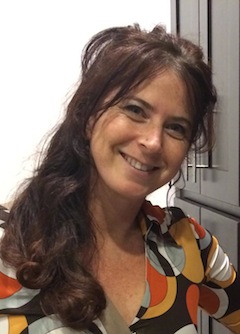
Shula Klinger (photo by Shahar Ben Halevi)

When artist and mother Shula Klinger was searching for ways to inspire her own two boys, she learned how important it is to let a child find their own creative path. She has translated this lesson – and her artistic expertise – into a new in-home class for young children.

“I provide the space and the stimulations but I let each child discover what triggers him to create art,” said the illustrator and writer. “I follow a simple principle that art is everywhere, we don’t have to use our mind to find it, we don’t have to work our brain to call inspiration, we just need to open up our eyes and let our senses lead us.

“We are all different but we still use the same methods to express ourselves,” she continued. “I invite the child into my house, into my very own working space, where he can find his very own creative space. I let the child lead the process, I don’t follow common doctrines of art educators who show children a painting and ask them to paint the same way. I teach them to think about the process and not about the product.”

Klinger moved to Vancouver from England in 1997 to do her PhD in education at the University of British Columbia. She met her husband Graham Harrington in Kitsilano and the couple moved to North Vancouver, where they are raising their two young boys, Benjamin, 8, and Joel, 4.

Klinger has published a young adult’s novel, The Kingdom of Strange (2008) and illustrated a graphic novel, Best Friends Forever: A World War II Scrapbook (2010), with author Beverly Patt. At the moment, her focus is on the in-home classes, as well as the launch of a video series called Art is Everywhere, co-created and co-hosted with Andrea Benton of Raising Boys TV.

“We want to provide an alternative to the art children have been learning in commercial art schools,” said Klinger. “We want to let them explore, search, discover, play, experiment and learn – mostly learn the how and why of creating their very own art. This is why we are all here. Ever since the caveman left his handprint on the walls of his habitat, we are all looking for ways to leave our mark, sound our voice, tell our story. We just need the freedom to find our own path. That’s what I try to teach.”

For more information about Klinger, visit shulaklinger.com. The video series can be purchased at raisingboys.tv/artiseverywhere.

Shahar Ben Halevi is a writer and filmmaker living in Vancouver.

Format ImagePosted on November 6, 2015November 16, 2015Author Shahar Ben HaleviCategories LocalTags Andrea Benton, art, Raising Boys TV, Shula Klinger

Posts pagination

Previous page Page 1 … Page 16 Page 17 Page 18 Next page
Proudly powered by WordPress