Starting repair process

Among the many things this year has brought us is a reconsideration of race, equality and justice, spurred in part by racism and racially motivated violence, not least that perpetrated by police. In response, the Jewish community, locally and in the United States and beyond, is engaged in a discussion about how to respond as individuals and as a community.

Jews have long been involved in advancing racial equality and other progressive issues. Hundreds of U.S. Jewish organizations and individuals recently signed on to a message of support for the Black Lives Matter movement, despite some concerns by some about antisemitism in small parts of that movement. What too few have done, as we read the news from Kenosha or Louisville or other cities roiled by racist and civil unrest, is consider the issue from a perspective that is closer to home.

Earlier this year, three Jews of colour began a modest movement to specifically raise this topic more visibly, forming a group called No Silence on Race, which issued an open letter “from Black Jews, non-Black Jews of colour and our allies to Jewish organizations in Canada.” (See story at jewishindependent.ca/working-to-advance-equality and their website, nosilenceonrace.ca.) The letter asked organizations in the community to take tangible steps based on nine pillars they outlined: allyship, education, Indigenous education, equity consultancy, employment, anti-racism advisory, JOC leadership, programming and partnerships, and JOC voices. The Jewish Independent endorses this letter.

The letter requested that organizations in the community consider making a statement detailing tangible ways they will seek to hear, engage with and empower Jewish people of colour. In response, the editorial board of the Independent has met as a group and also individually considered these issues. We offer this statement in an effort to voice our commitment to equity and justice for Jews of colour within our community and within the specific scope of our own organization, the community newspaper of Jewish British Columbians. We believe that not all nine pillars are specifically applicable to the unique role that a news platform plays in the community, though as we proceed along this process, we remain open to reconsidering all assumptions.

In demonstrating allyship, in particular, there are several specific, tangible, realizable goals we have identified and to which we commit to undertake. These include:

  1. Redoubling our efforts to feature stories involving Jews of colour, their experiences, lives, accomplishments, challenges, specific issues, and events, as well as addressing intra-community conflicts and reconciliations between Jews of colour and the broader Jewish community;
  2. Continuing to advance a model of journalism that encourages reconciliation between Indigenous Canadians, Jews and all Canadians;
  3. Intentionally holding space for new and less frequently heard voices, including prioritizing writers who are Jews of colour and gender-diverse people, and actively seek out such voices, recognizing the deep well of experience and expression that has not traditionally been heard or amplified;
  4. Partnering with, and encouraging others to partner with, individuals and organizations that elevate a diverse range of Jewish diasporas, histories and lived experiences;
  5. Undertaking to learn and exemplify diverse ways to understand language, gender, ability and other forms of human difference;
  6. Amplifying, through our coverage, resources from other community organizations dedicated to these goals, in the interest of education and sharing resources;
  7. Encouraging, in our reporting and commentary, inclusive and progressive decision-making around community allocations and fundraising, and engaging in educating about a vision of community philanthropy that advances these objectives.

We make these commitments conscious of our shortcomings as individuals and as a small, struggling community institution, and strive for their fruition to the best of our abilities.

We recognize and appreciate the emotional labour required by Jews of colour, and of others who are self-advocating, and will strive to minimize this burden through self-education and using existing resources that do not place added demands on individuals and organizations engaged in this critical work.

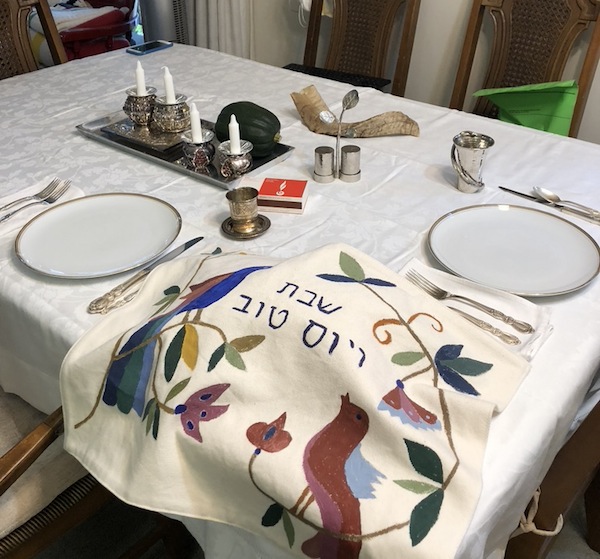
You are likely reading this still in the Jewish month of Elul, traditionally a time to reflect on our actions over the year and to ready ourselves for the power of the High Holidays. Indeed, the Jewish concept of teshuva, of atonement, literally “return,” provides a roadmap for doing things differently and better. For those transgressions between people, wrongs must be righted and forgiveness is only possible from the person we’ve harmed. We invite you – individuals and community institutions alike – to join us as we use this time to consider specific, actionable ways each of us may take responsibility for repairing any damage we may have done to beloved members of our community who have been excluded, questioned, silenced, marginalized or otherwise made to feel outside. At the Independent, we do this reflection and the work of repair with joy and a sense of purpose. Wishing each one of you a shana tova u’metuka, a good and sweet year.


Community stronger

Rosh Hashanah is a time of new beginnings, a time to reflect on a year gone by and on the new year ahead. As is often the case with new beginnings, it is also a time of uncertainty. Last Rosh Hashanah, we wished one another a sweet year, unsure of the future but hopeful of things to come.

As we herald the arrival of this new year, we do so understanding that we control far less than we had thought. Normally, the uncertainty that comes with a new start is imbued with hope for the possibilities ahead. This year, however, it is uncertainty itself that dominates. As 5780 draws to a close, we have learned that we must seek what we can rely on: the strength of our community and our resolve to face these unprecedented challenges together.

In 5780, the challenges were many, and our community met them with an empowering, inspiring and united response.

When urgent help was needed, social service agencies and not-for-profits mobilized, delivering food, providing services remotely and offering support to those who needed it most. Jewish federations shifted their focus to emergency fundraising campaigns to meet the immediate needs of agencies on the frontlines, ensuring that the changing needs of our most vulnerable were met.

When COVID-19 hit, Jewish Federation of Greater Vancouver immediately released $505,000 in emergency funds to meet these urgent needs and continues working with donors to generate additional funds for community recovery. CIJA advocated for the inclusion of not-for-profits in government support programs, such as the Canada Emergency Wage Subsidy, and helped ensure that Jewish schools were eligible. Volunteers mobilized by the thousands, responding to calls for assistance, helping the many seriously impacted by COVID-19.

Our community was tested in other ways, as antisemitism, the crafty shapeshifter that is always on the move, found new outlets during the pandemic. With Statistics Canada reporting a rise in antisemitic incidents through 5780, our community from coast to coast continued to unite, offering support where it was needed most. Indeed, this was the year we learned the many ways we could help and, for far too many, how to reach out to ask for help ourselves.

As we renew our talk of new beginnings at the conclusion of a year defined by uncertainty, many wonder: how can we plan for the year ahead?

For 5781, we must change our approach and, instead of planning according to dates on a calendar, look at our character for the coming year. As Rabbi Adin Steinsaltz z”l, wrote, “This does not mean, however, that, on Rosh Hashanah, one should make plans for the whole year. That would be impossible…. What one should do on this day is form a general picture of what ought to be the character and direction of this year.”

For 5781, we can accept the uncertainty of what is to come and focus on the knowledge that we can rely on the tested strength of our community. And that continued strength is up to us. We can commit to volunteering our time and, if we can, donating our money. We can commit to finding creative ways to give back and offering support to those experiencing hardship. Instead of planning large events or travel, we can plan to lean on our community when in need and support it every way we can. We can plan to check in on those who are vulnerable, to be more understanding of ourselves and others, and to be more present when given the gift of company among our loved ones.

As we reframe what planning looks like for 5781, it can be difficult to determine how best to dedicate our efforts. There are many good causes that need our help. Instead of being overwhelmed, be reassured that, for whatever assistance you can offer, there is a worthy cause, organization or initiative looking for someone just like you. Federations are great starting places. Check out your local campaign and learn what their various service agencies and not-for-profits are doing.

Though much of the past year has been uncertain, Rosh Hashanah presents us with a chance to start anew. We can still hope for and work toward a better tomorrow. The coming year will be defined not by our individual wishes and schedules but by our collective character and commitment to our community. Planning for uncertainty may seem counter-intuitive, but history has shown that we have the capacity to come together and overcome even the darkest of times. As we look ahead to 5781, amid all the unknowns, one thing remains certain: our community will continue from strength to strength.

Judy Zelikovitz is vice-president, university and local partner services, at the Centre for Israel and Jewish Affairs.

More positives than expected

We often use the High Holidays for self-reflection. Consider, we’re urged, the year that has passed and the future. For me, the pandemic and its uncertainty has made me less focused on the year to come. Instead, I’ve been taking a positive accounting of things I’ve experienced this year – and it’s actually quite a lot.

First, there’s been more time for our family to do Jewish learning and “attend” synagogue at home. It’s been easy to turn on Saturday morning services or a special lecture or a concert and expose the family to more Jewish content. The internet has made us feel welcome everywhere. This a huge leap ahead of what we often got out of “business as usual,” pre-pandemic.

Learning in general has changed. As someone who used to teach, I was wary of homeschooling. To be fair, I’ve met some very bright kids who’ve been homeschooled. I’ve also met some odd folks, so focused on their (often evangelical) religious views that it got in the way of making other connections. As but one example, once, I drove with my husband to visit a local farm that advertised sheep fleeces for sale. I’m a hand spinner, and we thought the drive would be fun. I met a large family living in a series of rundown buildings and trailers, wearing an interesting assortment of “traditional” clothing. These isolated, homeschooled evangelical kids led me into a trailer full of both wool and wasps, all eagerly telling me about their visions of the end-times. I left with some wool, but only because my husband and I couldn’t find any other way to politely extricate ourselves.

I’d been scared that, if I ever homeschooled my kids, it would become claustrophobic, bad for the kids and hard for me to catch a break. This was the case when remote schooling started in March. Getting the kids onto the online school meetings and keeping things afloat with a poor internet connection and somewhat spotty assignments from teachers was awful.

When school ended, we were relieved. I kept doing some learning with them each morning, though. Reading, math, cursive, Duolingo (online language learning for Hebrew), art, architecture and design, music and science/STEM learning have kept us busy, along with long walks, playing outside, swimming and more. Sure, I don’t have much alone time. Time for work (or even work to do!) has been limited, but that’s OK, in the circumstances.

Our kids are supposed to go back to school in person this fall, and we’ll see how long that lasts. I don’t dread homeschooling as much now. Setting our own agenda resulted in kids who may be more socially isolated, but they’ve learned a lot. They read better now in two languages, and their math has improved.

Disconnecting from the school-extracurricular activities-synagogue cycle hasn’t been bad either. Those demands came with a lot of pressure. The need to keep up, fit in, afford it and get there on time is stressful. It is easier to practise piano, play soccer in the yard or turn on the services via Zoom than to get to everything in person. Further, there’s no weird social interaction with other families about what we’re wearing, or just how hip we are. (We’re so not hip.)

Making things ourselves has been a mostly good, too – lots of cooking and other activities. Last fall, I started using my sewing machine, after years off. I took sewing lessons as a kid but never gained confidence. Pre-pandemic, I’d sewn myself a few things and remembered how to do this. Returning to it has been a great gift. I’ve figured out making masks, fixing and making clothing. Better still, because of the pandemic, I’ve been able to shop for supplies online and support small businesses selling sustainable or deadstock fabrics. I didn’t have time to go shopping for this stuff in person before the pandemic. Now, most everything is online. I can make plans for kid pajama pants, and dresses and pants for myself, in the future.

We’ve enjoyed some amazing concerts, held outdoors on our block. A talented musician/producer neighbour with a big front porch invites guests to come set up chairs and blankets, social distance and enjoy. Musicians perform for donations, and we all benefit. We’ve heard baroque, classical, flamenco, jazz, old-time and folk. If we sometimes can’t get outside as a family to hear it, the music floats up into our second-storey windows when the wind blows the right way.

Art has blossomed, not only in our family’s projects, but at the “little free art box,” which is run by an artist in the area. Much like a Little Free Library, one can open the box, take art or put art inside for others. We’ve shared kid watercolours and my handspun yarn, and received gorgeous charcoal sketches, pen and ink, and other delights. We’ve traded and celebrated the skills of others nearby. Our diverse community is rich with talent.

None of these small positive things can compensate for the many deaths and illnesses of COVID-19, nor the economic devastation to so many businesses and workers. The downsides this year have been huge. However, last night, I watched as my kids created a caravan on the blanket spread on the grass. We were listening to live music, as my mind leapt to the text I’d been learning from Daf Yomi (a page of Talmud a day). The rabbis are trying to explain how to make a temporary boundary around a caravan as one traveled and camped on Shabbat. They mentioned using saddles and camels, and debated how much space each person might need.

The blanket caravan consisted of several toy trains and hard plastic rhinos and elephants, lined up nose to tail in a circle. The tractate Eruvin is about boundaries – what boundaries make it safe to carry on Shabbat? In the time of coronavirus, I was transported to a different kind of caravan and boundary. Our families have “circled the wagons.” We’ve been forced to stay put and look inwards – but also to be outdoors. What value can be found in these new enforced boundaries? What positive things can come from those necessary restrictions? In our house, we can say that art, music, handmade creations and learning can be celebrated as we finish 5780 and begin 5781. It’s been a valuable time, even as illness, hardship, fear and sadness danced at the edges of every day’s newscast.

From my (socially distanced) house to yours – may we all have a happy and sweet new year, full of creation, positivity and, most importantly, good health.

Joanne Seiff has written regularly for CBC Manitoba and various Jewish publications. She is the author of three books, including From the Outside In: Jewish Post Columns 2015-2016, a collection of essays available for digital download or as a paperback from Amazon. Check her out on Instagram @yrnspinner or at joanneseiff.blogspot.com.


Depression insidious

The author with her dog, Kesem. (photo from Dolores Luber)

It was mid-March. All I had been hearing and seeing on the news were the words and images related to contagion, epidemic, China’s wet markets, people enjoying the delicacy of cooked bats, pandemic and COVID-19. It was getting louder and closer, somehow it traveled from China across the Pacific to Vancouver. We were now dealing with the pandemic in Vancouver, we were in lockdown, even if the government never called it that.

In a flash, my household emptied out. My housemate, a University of British Columbia student, went back home; all her courses were now online. My boarder, a psychiatric nurse, scared of catching the virus and infecting me and her immune-compromised partner, took a six-month leave of absence from her work and joined him on a sailboat off the coast of Vancouver Island. I cleaned and organized and then it hit me – I was alone in the house with my Standard Poodle puppy Kesem. His name means “magic” in Hebrew and he truly is a wonderful companion, but….

Lockdown, what was that? We all had to create our own version. I maintained my Hebrew classes by means of Zoom, I continued working out with two personal trainers in my home gym. We did not touch each other. I went to the off-leash dog park every afternoon. We practised social distancing.

Then, a classmate of mine became hospitalized with the virus – I had not seen her for 10 days. I isolated myself for an additional week, not one of our group became ill. She is the only one I know who has contracted the virus. I was feeling proud of myself, I was managing well. As the editor-in-chief, I had produced the July edition of Senior Line magazine for Jewish Seniors Alliance on schedule. It was a labour of love, responding to the pandemic and the issues of the times. Everything was under control.

July 22 is my birthday. At the beginning of July, I began to feel very lonely. I had not seen any of my four sons, daughters-in-law or nine grandchildren for a long time. The planned family reunion in Oakville, Ont., was an event I had been looking forward to. My children had grown up in Beaconsfield, Que., and my youngest son had organized a fabulous get-together of all his friends who lived in the neighbourhood during his childhood. Photographs were collected, videos created, all plans had been made before the lockdown.

We gradually began to understand that the situation was not going to end soon; we were in it for the long haul. The reunion was canceled. I always see my children on my birthday, but, this time, I received FaceTime calls, beautiful cards, splendid flowers, but no hugs, no kisses, no warmth, no human touches. My thoughts were becoming very negative and gloomy; worst-case scenarios played in my head. I thought of moving back to Ontario to be with my youngest son; I researched buying a house in Oakville. I was experiencing symptoms of depression.

As a retired psychotherapist, I recognized the symptoms – among them, exaggerated feelings of sadness and loneliness. I made an effort to study more and read more Hebrew. I pushed harder in my workouts with my trainers. I developed and implemented a plan for the fall Senior Line magazine. By the end of July, I was thinking in a more balanced fashion. I had gotten through the rough spot and was well again.

Depression can be insidious, it can creep up on you. It is important to do a reality check with friends or family members from time to time. Isolation warps the processes of the brain. The chemicals in our brains can become unbalanced. Usually increased physical activity and enhanced social interaction can counteract the symptoms of mild depression. Beware!

Dolores Luber, a retired psychotherapist and psychology teacher, is editor of Jewish Seniors Alliance’s Senior Line magazine and website (jsalliance.org). She blogs for yossilinks.com and writes movie reviews for the Isaac Waldman Jewish Public Library website.

Blessings in bad times

While it may not be divine intervention that brought us technologies like the communications platform Zoom, it is undeniable that 21st-century tech has made this bizarre, scary and tragic time a little less isolating.

Much has been written and said about the tragedy of this pandemic. The loss of life worldwide is devastating and heart-rending. Families and friends have been kept apart at the best of times. At the worst of times, however, when hugs and human touch are needed most, this is especially cruel. Saying final goodbyes by telephone or on a little screen is unbearably painful.

In the meantime, though, something has happened that probably few of us anticipated when this pandemic hit us full force in mid-March. We have seen people at their best, coming together to help those who need it, checking in on neighbours and family who are isolated, taking steps that are uncomfortable for us in the short-term because it is in our collective best interests in the long-term. What could have been a time exemplified by fear and anxiety, selfishness, isolation and retrenchment has been, in so many cases, including in our synagogues and so many other community organizations, a time of unparalleled flexibility, creativity and devotion to what really matters.

We cannot overestimate the power of a comparatively simple technology like Zoom. Presumably intended as a business tool, it has exploded into our pandemic world as perhaps the new century’s version of what old long-distance advertisements promised – it’s the next best thing to being there.

Nothing can replace a hug or even just the proximity of our loved ones. But imagine the alternative of going through these past few months without small miracles like technology that lets us see the faces of our friends. Human nature tends to take for granted whatever we receive almost as soon as we’ve got it in hand. But the future we marveled at in the 1960s while watching fanciful cartoons like The Jetsons is reality today. Not the flying cars (yet) but the wall-mounted video phones are better: we hold them in our hands or sit them on our laps.

The medium is the message, said the great Canadian theorist Marshall McLuhan. In future, people will look back and ponder how the technologies that united us in this time of isolation changed us and the way we communicate. In the meantime, we can already see that technology has led to even more engagement with learning, socializing and spiritual exploration than happened in-person before we had heard of COVID. And, while so many warn that we are on the verge of being “Zoomed out,” a recent poll contradicts this idea, finding that Canadians overwhelmingly love the freedom to connect to everywhere from anywhere. For Vancouverites, especially younger ones who are forced to move some distance from their parents due to housing prices, Zoom and similar tools can permit virtual visits without hours of time-wasting (and environmentally deleterious) travel. An hour-long business meeting that might have required 45 minutes of commuting and parking time starts and ends at the dining room table, freeing up hours per week for children, partners, housework, leisure, hobbies or sleep.

As we now prepare to celebrate the High Holidays in ways that our ancestors could never have imagined, we will depend on these technologies to deliver an approximation of normalcy. It won’t be normal, of course. But it’s normal for now. And that is a blessing.

No Silence on Race: an update

It’s been almost two months since we launched our open letter on June 30 and so much has happened since then!

We have received hundreds of signatures of support from the Jewish community across Canada and several Canadian organizations, congregations and initiatives have written public statements outlining their commitment to our pillars. We have published these statements on our website and you can view them at nosilenceonrace.ca/statements. We’ve also received some coverage in Jewish publications across the country. We have made them available on our website as well. Although our set date of July 29 has passed, we are still accepting signatures and statements.

We have had conversations with leaders in our community and we know that many organizations are committed to action and to change. The work of creating inclusive, anti-racist and equitable Jewish spaces is a daily pursuit and we are encouraged to see the way our community has embraced our letter and the need for action and accountability.

Many of you have expressed interest in learning more about our pillars. Our team has launched a resource page (nosilenceonrace.ca/resources) on our website dedicated to furthering the conversation on each of our pillars and on how our community can collectively enact meaningful systematic change. We have also included equity consultants on this page that organizations can connect with directly to begin and continue this work.

Thank you to all of you who have reached out to us directly expressing your support and desire to get involved with our team and our work. We will be reaching out to you all soon. If you are reading this and would like to get involved with us, we’d love to hear from you! Please fill out our Get Involved page (nosilenceonrace.ca/get-involved) on our website to join us as we continue our work and create opportunities to connect with the community, grow our platform and take action.

We look forward to a time where we can create an in-person event and come together as a community. Until then, we encourage everyone to keep the conversation alive with your family, friends, communities and workplaces.

– Sara Yacobi-Harris, Akilah Allen-Silverstein and
Daisy Moriyama, co-founders, No Silence on Race

New measures for milestones

This summer, we passed signs along the Trans-Canada Highway. These are the ones that mark 10 kilometres, one kilometre at a time, allowing drivers to see if their vehicle’s odometer is properly calibrated. My kids haven’t done much in the way of long-distance car trips, and this was a novelty for them, like seeing horses, cows and fields of canola and flax flowers.

I was driving my kids out of town to social distance and pick berries at a farm on the prairies. In the middle of the day, we took a dip in Lake Manitoba at Delta Beach before driving home. The water was shallow and tepid, the sand dark-looking and the humidex 40. I sat huddled under a towel, trying to keep from roasting in the sun. My kids had a blast. I think this kind of outing will be something they’ll remember for a long time, even as I think of nicer beaches we should have tried, perhaps on a cooler or breezier day.

I was considering this afterwards, “in the rear-view mirror,” as I continued to read my page of Talmud each day. Part of doing Daf Yomi, for me, is seeing how the rabbis compare and discuss things. For instance, one rabbi might indicate the custom or halachah (Jewish law) in his town, while another says, no, that’s not how it’s done … someplace else. Even when the rabbis are living right in the same place, their perception differs in terms of how things go and what is acceptable. It’s all relative. Their efforts to define and shape Jewish law in a new age, after the loss of the Temple, required all kinds of careful legal arguments, and much of it is illustrated with anecdotes and backed up by quotes from Torah.

However, in Eruvin 6b, it’s made clear that one can’t just decide to follow “all the stringent rules” or all the lenient ones. Instead, we must choose one or the other, and demonstrate internal consistency and intellectual integrity. You can’t just follow parts of Beit Hillel or parts of Beit Shammai. A person who just does the strict things laid out by both Hillel and Shammai, who is he? “The fool walks in darkness.” (Ecclesiastes 2:14) The person who always chooses the easy, most lenient path is flat-out “a wicked person.”

Much of daily life revolves around these comparisons and measurements we make. As a parent, I’m often striving for internal consistency, while knowing all the time that much of what is going on in the world doesn’t make sense to me. It certainly isn’t consistent! How do we find helpful rules and guidelines as everything changes around us?

For one thing, we can look back through literature (Talmud) and (Jewish) history to find comparisons and role models, and this helps me at times. I know that, while this particular virus, COVID-19, may be new, many of the challenges we’re facing aren’t. Just as the rabbis used their experiences to compare and measure and create talmudic Jewish guidelines, we must rely on our education and experiences to navigate this time.

When I thought about it, I realized how many of my usual kilometre markers had changed. A “normal” summer for me as a kid involved summer camp and a family vacation, neither of which happened this year for my kids. A “normal” school year, beginning in September, might revolve around school bus rides, tests, grades, holiday gatherings and aiming towards things like bar mitzvah or graduation or other life events.

However, thinking critically doesn’t always mean that we must compare something to a fixed standard, or the way things ought to be or used to be. It might mean that we’re able to take the available evidence, compare things, and make meaning about what’s happening, instead. It may mean drawing conclusions from the available evidence.

Our evidence? This summer, my household has had far more family time. There’s been time for free play and day trips, spontaneous water play in the yard, long dog walks, ice creams, gardening, and even time for reading in the cool basement on very hot days. Despite some car repairs and the loss of much of my freelance work, our finances have actually been OK – because we have nowhere to go! (We haven’t spent money on a big trip to visit our relatives in the United States, for one thing.)

Like nearly everybody else, we’ve skipped big gatherings for school, holidays and birthdays. We’ve charted a different course. And, when I thought back to the markers on our day trip, I realized something. My car, purchased in the United States, measures distance in miles, so I can’t check my odometer on the Trans-Canada! Comparing kilometre markers in a car odometer that works in miles? That’s an apples to oranges comparison. It doesn’t work.

So, the introverts in our house didn’t have camp or anything “normal,” but also didn’t really mind missing the annual big events – no weddings, bar mitzvahs or graduation parties this year. Instead, my kids grew big cucumbers, learned to swim better, dug sandcastles, read many mystery stories out loud during our family “reading group” and practised cursive. Small markers, but still important ones.

Like the rabbis, we parsed out what made the experience meaningful during a difficult time. In the end, miles or kilometres, we made the same trip. Comparisons bring us understanding, order and sometimes even enjoyment, no matter how far we drive or how we measure it. If you’re sad about missing major milestones, it might be time to change the measurements you’re using. No matter what markers you use, you’ll find you still traveled a long ways this summer, metaphorically or literally. It’s all in how you use and view the comparisons.

Joanne Seiff has written regularly for CBC Manitoba and various Jewish publications. She is the author of three books, including From the Outside In: Jewish Post Columns 2015-2016, a collection of essays available for digital download or as a paperback from Amazon. Check her out on Instagram @yrnspinner or at joanneseiff.blogspot.com.

Historic Israel-UAE accord?

Hosannas of historical significance followed the announcement that Israel and the United Arab Emirates have normalized relations with each other. The truth is, we don’t really know what this means for the long-term. History is best judged in hindsight.

In some ways, the mutual recognition is not a massive surprise. Israel has long had semi-secret good relations with some of the Gulf states. But, in the name of solidarity with Palestinians, the Arab states kept official relations off the table. It is a sign now that fear of Iran, rather than solidarity with Palestinians, is increasingly the priority guiding diplomatic decision-making in the region.

New York Times columnist Thomas Friedman made it sound like the accord is the greatest thing to hit the Middle East since hummus. Calling it a “geopolitical earthquake,” Friedman suggested this was the third most important event for the region after President Anwar Sadat visiting Jerusalem and Yasser Arafat shaking Yitzhak Rabin’s hand on the White House lawn. But Friedman’s choice of those two examples may exactly undermine his case that this is quite so tectonic.

Perhaps more than anywhere else in the world, history in the Middle East does not have a consistently forward-moving trajectory. Relations between Israel and its neighbours have often been one step forward and two steps back. The anti-Zionist culture that permeates much of the Middle East and North Africa is not necessarily something that can be overcome simply by a recognition by top government officials on either side. Egypt’s peacemaking with Israel in the late 1970s can be seen as the most direct cause of the assassination of Sadat in 1981. When some extremists saw Jordan’s King Abdullah I as too soft on the Zionists, he was assassinated at the entrance of the Al-Aqsa Mosque in Jerusalem by a Palestinian, in 1951. Extremism is not limited to the Arab side – Rabin was killed 25 years ago by an Israeli extremist opposed to concessions with the Palestinians.

Extremism could derail this progress, as well. Some voices in the Arab world are already warning of dire consequences for Arab figures working with Israelis. Even if, as we desperately hope, there is not retaliatory violence, and even if rumours that other Arab countries are ready to follow the UAE’s lead are true, it may be premature to see this one step as a guarantee of rainbows and doves.

When Israel and Egypt signed the Camp David Accords and adopted a position of mutual recognition, it was perceived to be a future-changing moment. It certainly appeared that way at the time. However, relations with Egypt – then the unchallenged political, military and cultural superpower of the Arab world and the birthplace of pan-Arabism – never became chummy. What Israel has received in practical terms in the subsequent 40-plus years is mostly a cold peace. Similarly, after Israel’s parallel agreement with Jordan. There are mutual benefits and a state of comparatively benign adjacency but these relationships are hardly the stuff of great friendship.

Still, the Gulf states are different. They have not been involved in any conflagration with Israel. Their emergence as high-tech and financial powers in recent decades puts them on footing with Israel among the Middle East’s forward-looking economies.

Meanwhile, as part of the deal, Israeli Prime Minister Binyamin Netanyahu has called off his annexation plan in part of the West Bank, though it was hard to see a way forward for the ill-advised initiative. It’s possible that Netanyahu’s annexation scheme was like U.S. President Donald Trump’s Mexican border wall – red meat to their respective far-right constituents but a promise that was never going to be kept. It may not have been a jagged pill for Israelis to swallow.

And, speaking of Trump, as he often does, the U.S. president is crowing that he (via his advisor/son-in-law Jared Kushner) is responsible for this great unfolding. It seems undeniable that the U.S. administration played a role. Just 70-some-odd days out from one of the most important elections of our lifetimes, the agreement seems timed to bolster the image of the president as a statesman and appeal to Jewish and evangelical voters. However, the relationships between these actors are not entirely transparent and there are likely many moving pieces – and many lucrative business deals – to which we are not privy. Much of the excited coverage of the agreement fails to recognize the larger geopolitics in the region and how this agreement may best serve those currently in power.

Palestinian leaders are outraged by a deal that reduces their leverage in the region, and Israel and its supporters should be wary of unilateralism if there is any hope of keeping a two-state solution alive. That said, whatever the future holds for Israel’s relationships with the UAE and other Arab states, this is a time for cautious hope. While the Palestinian leadership and some of their ostensible allies, like Turkey and Hezbollah, are upset by the accord, it’s possible that they are among those who should be most enthusiastic.

Denormalization, the once-nearly-unanimous assertion by Arab states that Israel shouldn’t exist – and, in their official diplomatic worldview, doesn’t exist – was intended to harm Israel. But Israel’s economy continues humming along, even as the pandemic makes the outlook more uncertain. The biggest losers of denormalization have been neighbouring Arab people and states – most especially the Palestinian people – who are effectively quarantined from the economic engine of the region. The Israeli-UAE agreement could be a good thing for all people in the area, whether they recognize it right now or not. However, we shouldn’t let our excitement for a détente get in the way of other critical interests: a two-state solution and electing governments in the United States and Israel that are oriented to coexistence and fair play.

We always find ways to learn

All over the world, students will be continuing a different school experience, one that began soon after the pandemic. Some face a new academic year with entirely virtual learning. Others are going back into classrooms with many adjustments to allow (theoretically) for safer, virus-free learning. Still others face a hybrid approach, with small amounts of time at school but more time with parents, in daycare or even without any supervision at all as their parents work.

It’s a precarious time. Most of us haven’t experienced anything like this. Yet, there have been moments throughout history when the school rules changed. Imagine the European parents of the 1930s, faced with the Nazi rules, where their kids weren’t permitted to learn in the regular schools. There were families who left everything they knew to escape and start new lives anywhere they could go. There were parents who sent their children away to English boarding schools or on the Kindertransport, knowing that they themselves might not ever be able to leave Germany, Austria, Poland, Czechoslovakia or Danzig.

Those who say children must go back to school because “school is better for them than the alternatives” make arguments like, “We don’t know what the effects of this absence from school will be.” When I hear this, I immediately think of the settler children, perhaps 150 years ago, on the prairies, who spent long winters in sod houses or log cabins. Jewish immigrant families arrived in the 1880s in Manitoba and many spent time in immigration sheds or shacks by the river – it’s unlikely those kids had formal schooling. Many immigrants taught their kids as they could. Schooling was intermittent at best.

Don’t get me wrong, for kids who are hungry, neglected or abused, school is a refuge. For refugees with traumatic pasts, interrupting school learning is not a good thing. However, many kids with stable, financially secure families are doing just fine while staying at home. It’s the safest choice.

Were all these people who lived in sod houses or who had lapses in their formal schooling permanently marred as adults? I don’t think so. I pondered all this recently as I celebrated finishing the Talmudic Tractate Shabbat – by myself. I started Daf Yomi in January of this year, and I’ve read my page online every day, often late at night. Aside from a few online exchanges, it’s all alone. I know this study is better done with a partner or chevruta (small group). This would be preferable. However, during the pandemic, at home with my family, I was lucky to squeeze in a solitary 20 minutes to study before bed. It’s been hard to listen to podcasts or chat online in a forum, and I certainly wasn’t regularly meeting with anyone in person.

I didn’t have any formal training in studying Jewish texts until I was a teenager in a summer camp program. I didn’t learn Talmud in an organized way until I was in graduate school. Yet, here I am, actively learning as an adult. Does interrupted or unconventional schooling mean less learning? I don’t think so.

In an informal survey of the online Jewish world, we’re finding learning opportunities all over the place. Whether it’s religious schools, congregational adult education, Jewish institutions for higher education, publications or more, we’re offered countless ways to listen, watch and discuss in online classrooms. My kids, age 9, were deluged with online Jewish opportunities, even outside of their bilingual Hebrew/English public school curriculum. My parents report that they are doing something interactive and learning with their congregation nearly every day.

Learning is happening in many traditional and hands-on ways. Often, it’s just having time for reading or making food from scratch. In some ways, the pandemic has motivated people of all ages to try new things. For many in the Jewish community, the pandemic has allowed us to jump into Jewish learning or to attend synagogue (virtually) more often. The need for stimulation while staying home has wakened many people’s intellectual curiosity.

For me, at least, and for my kids, school wasn’t usually the place to satisfy that curiosity. Sure, yes, we learn essential things at school. But the exploring of the outdoors and science, the building and construction with Lego, the art and design we see and draw and the music we listen to – our appetite for all this was never fully sated at school. Or, at least, not as of yet.

I have one twin who is desperate to get back to school to see his friends. He cannot wait. The other twin is not at all sure he wants to return to school ever. Given the situation we find ourselves in, each kid may get some of what he wants. A little school, and a little time at home.

I felt I didn’t need a fancy siyum (event to celebrate finishing the study of a talmudic tractate) or a seudah (celebratory meal). However, at the last moment, I signed up for a Zoom event hosted by My Jewish Learning online. Three distinguished teachers spoke, one taught the last few lines of the text, and another recited the Hadran, the special short prayer one says at the end. It says, “we will return.” We pray not to forget the tractate we’ve just studied.

I was moved by the Zoom siyum. More than 450 people attended! Although I listened while I answered kids’ questions and made salad for lunch, I still learned a lot.

I also realized that, as long as we’ve been studying Talmud, we’ve been hoping for a return, a review and a chance to learn in the future. We may sit in virtual classrooms, all alone, or in a real classroom, socially distanced, but we will return to learning – no matter what our age.

The pandemic is possibly the biggest event in our lives for some of us. To paraphrase what we say in the Hadran, we must remember that we’ll return to learning and that learning will return to us; that we will not forget you, learning, and the learning will not forget us, “not in this world, and not in the world to come.”

Wishing you a healthy and positive back-to-school learning experience – however differently we might experience it this year.

Joanne Seiff has written regularly for CBC Manitoba and various Jewish publications. She is the author of three books, including From the Outside In: Jewish Post Columns 2015-2016, a collection of essays available for digital download or as a paperback from Amazon. Check her out on Instagram @yrnspinner or at joanneseiff.blogspot.com.