Skip to content
  • Home
  • Subscribe / donate
  • Events calendar
  • Business Directory
  • FAQ
  • News
    • Local
    • National
    • Israel
    • World
    • עניין בחדשות
      A roundup of news in Canada and further afield, in Hebrew.
  • Opinion
    • From the JI
    • Op-Ed
  • Arts & Culture
    • Performing Arts
    • Music
    • Books
    • Visual Arts
    • TV & Film
  • Life
    • Celebrating the Holidays
    • Travel
    • The Daily Snooze
      Cartoons by Jacob Samuel
    • Mystery Photo
      Help the JI and JMABC fill in the gaps in our archives.
  • Community Links
    • Organizations, Etc.
    • Other News Sources & Blogs
  • JI Chai Celebration
  • JI@88! video

Recent Posts

  • SFU honours Gloria Gutman
  • Lifting people’s spirits
  • Wedding a ray of light
  • Indigeneity and Zionism
  • Rule of law broken: councilor
  • Football and its roles
  • The burden of defence
  • Fish Café returns after fire
  • All right in what goes wrong
  • Nuns & mermaids at TUTS
  • Camp offers holiday retreat
  • Students and mentors inspire
  • Once-in-a-lifetime trip
  • 100 dancers, one heart
  • Money for the sciences
  • What “Jewish food” means
  • Have a cookie, schnitzel too
  • Federation now across BC
  • Israel fighting for its existence
  • Deal strengthens Iran
  • Patriotic belonging diminishes
  • A campaign to engage
  • Upstanders’ first live event
  • Responding to Carney
  • Having your own home
  • Music a family tradition
  • Musical to warm heart
  • Community milestones … June 2026
  • Sharing her passion for Israel
  • Or Shalom reopens its doors
  • JFS from past to future
  • Need holistic approach
  • Sharing stories, advice
  • Journalist shares fears
  • Skills to live together
  • Road to independence

Archives

Follow @JewishIndie
image - CJN box ad Rockowers 2026

Category: Local

KDHS honours grandparents

KDHS honours grandparents

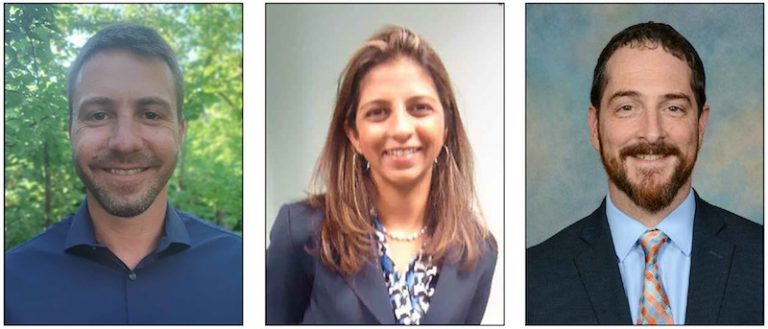
Ivan Decker, left, and Leonard Brody are among the presenters at King David High School’s Golden Thread Gala May 13. (PR photos)

On May 13, King David High School is honouring its “grandparents,” people who have particularly supported the school over the years, in a variety of ways. With the theme “education is the golden thread weaving our past to our Jewish future,” the virtual Golden Thread Gala “celebrates the community that nurtures King David High School, inspires the next generation of leaders and is rooted in the appreciation of Jewish values and traditions.”

The Diamond Foundation is being recognized as an “honorary grandparent,” while the “grandparents” being paid tribute are Gary Averbach, Shirley Barnett, Beth and Leon Bogner, Sylvia Cristall, Marie Doduck, Rose Marie Glassman, Dr. Arthur and Arlene Hayes, Dr. Simon and Rosalind Jacobson, Evelyn Kahn, Tamar Khalifa, Dr. Robert and Marilyn Krell, Lana and Mendy Landa, Norman and Sandra Miller, Norman and Lola Pawer, Dan and Trudy Pekarsky, Yvette Porte, Lyle Pullan, Arnold and Anita Silber, and David and Elaine Youngson. Dr. Robert and Elke Mermelstein are being celebrated as “adopted grandparents.”

“We can never fully show the Diamond Foundation the gratitude they deserve, so we named the foundation as honorary grandparents,” explained gala co-chairs Jacci Sandler, Chana Charach and Margaret Hemingson in an email interview. “Gordon, Leslie, Jill and Lauri have made our school possible. They are foundational, literally and figuratively, for King David’s existence and success. They have not only provided the building in which we live, learn and play but also have provided ongoing support and funding for the Judaic studies program to ensure the ongoing success of the school.

“Over the years, King David has been blessed by the ongoing support we receive from our grandparents,” they continued. “Whether it’s giving of their wisdom, time or financial support, they are always there for us. This gala recognizes them all! All of our grandparents deserve thanks for instilling Jewish values in their children that they are passing on to our students.”

The 19 grandparent families’ philanthropy has ensured that a Jewish education is accessible for every child, said the co-chairs. “The reality is that, without their generous support, we would not be able to provide a Jewish education to every child. It is a time to show our appreciation and thank every one of our grandparents for continuing the golden thread that binds our past to our future.”

Regarding the Mermelsteins, the co-chairs said, “They are passionate about Jewish education and have adopted all of us at King David as their grandchildren. They are integral members of our King David family and provide ongoing positive input and generous support so all students can attend and be proud King David Lions.”

In Judaism, l’dor v’dor (from generation to generation) is an enduring idea, said the co-chairs. “The passing of knowledge to future generations provides both legacy and a story. Each generation passes down wisdom, ancient traditions, rituals and customs. Jewish education values and honours this transmission of knowledge, literacy and skills…. Our grandparents’ colourful tapestry of experiences enrich the lives of students every day.”

The gala program “includes comedy, inspiration, musical performances by King David students and alumni, plus silent and live auctions with incredible items,” said the co-chairs.

Comedian Ivan Decker – who has appeared at the Montreal Just for Laughs Festival and has various TV and radio appearances, including his own comedy special on CTV and Netflix – will emcee the gala. KDHS head of school Russ Klein will interview entrepreneur, venture capitalist, author and media commentator Leonard Brody, co-founder and executive chair of Creative Labs, about “disruption, innovation, and their effects on our world and children.” And entertainment and media executive Howard Blank will act as the evening’s auctioneer. The online silent auction is currently open and will close during the gala. “Items include workout sessions, cooking classes, handbags, beauty and relaxation products, power tools, wine and so much more!” said the co-chairs.

The inaugural Golden Thread Gala was originally scheduled for May 2020, but it was postponed due to COVID-19. “We witnessed so many families in our community that suddenly found themselves being impacted by the pandemic, financially as well as emotionally,” said Sandler, Charach and Hemingson. “This event is so important as it is King David’s major fundraiser and friendraiser. All funds raised will directly impact our students and enable the school to achieve its vision of ‘empowering Jewish minds and engaging Jewish hearts’ by enhancing our fundamental curriculum, educational excellence and vibrant Jewish life programming.”

With respect to the effects of the pandemic, Klein said, “King David has experienced, as a family, the same challenges that individual families have had and yet the students and staff have been so positive and resilient. We have had full-time school all year and, although we have had to adjust our schedule a little, there has been no loss of learning. I feel for the students, though, in that so many of our wonderful experiential programs are on hold. Our Grade 8 Israel trip is now two years behind, our Los Angeles Holocaust studies trip is a year behind, and our school-wide retreats are not happening. And, of course, the students cannot play competitive sports against other schools, which is a big loss for many of our students.”

But, there have been bright spots, too, he added. “Our parent-teacher meetings were better attended and even more personal, and we have been able to reach out more frequently and invite parents to meet via Zoom. Assembly presentations have also been better, as the smaller in-class environment makes more student engagement and participation possible. In sports, we have been very active within the school grade cohorts and added non-competitive co-ed activities like volleyball and soccer, and the students have really loved the fun and camaraderie with each other and their teachers. No doubt, we will be keeping some things that we have learned but all of us cannot wait to get back to having the meaningful ‘extra’ experiences that make school life and learning so very enjoyable.”

Tickets to the Golden Thread Gala start at $36 for entry, with increasingly more benefits at each level. For tickets, more information about the event and access to the auction, visit goldenthreadgala.com. The pre-show starts at 7 p.m. on May 13, and the main event at 7:30 p.m.

Format ImagePosted on May 7, 2021May 6, 2021Author Cynthia RamsayCategories LocalTags Chana Charach, coronavirus, COVID-19, education, friendraiser, fundraiser, Golden Thread Gala, Jacci Sandler, KDHS, King David High School, Margaret Hemingson, Russ Klein
Beth Israel hails Dr. Henry

Beth Israel hails Dr. Henry

Dr. Bonnie Henry will be honoured at Beth Israel’s gala event May 30. (photo from BI)

Dr. Bonnie Henry will be honoured at the 2021 Congregation Beth Israel gala May 30. The provincial health officer for British Columbia will be given the Keter Ha’bri’ut Award at the virtual celebration.

The term keter ha’bri’ut translates to Crown of Health, and the award has been created “to honour those in the community who have worked diligently, relentlessly and with humility for the betterment of their fellow citizens.”

“The truth is that we couldn’t think of anyone better than Bonnie Henry because, the fact is that she’s literally been a keter ha’bri’ut, a crown of health, for our province in helping to keep us healthy,” said Rabbi Jonathan Infeld, senior rabbi at Beth Israel. “She embodies one of the single most important concepts of Jewish tradition, spreading the word of chesed, of kindness. It’s not only that she cares about the physical health of our province, but I think one of the reasons that she has become famous across the country and the world is because she cares about the humanity of our province as well.”

When the synagogue’s gala committee asked Henry if she would be willing to be honoured by the gala and receive an award, about nine months ago, organizers hoped that the event might be in person or, at least, a hybrid event with some people present and others tuning in virtually.

Instead, the main portion of the event will feature words from Henry, Infeld and others, all virtually, with musical entertainment by Maya Rae. At certain ticket levels, food delivery is included and, for major donors, a pre-event will feature a mixology session, with cocktail kits delivered to the homes of virtual attendees. Henry will share a favourite cocktail recipe of her own.

Henry’s commitment to inclusion and her respect for Jewish traditions impressed Infeld from the moment Henry held her first group conference call with clergy from around the province, about the time the pandemic began.

“One of the things that really touched me,” he said, “was in her very first address to the clergy of British Columbia – I’m not talking about the rabbis, but for the clergy of British Columbia – many, many months ago, as we were entering into the COVID era, she said, we are going to have to have fewer faces and bigger spaces and one of the things that that means is we won’t be able to do in-person shivas for awhile.”

Infeld believes that Henry’s time as associate medical officer of health for Toronto Public Health during H1N1 and SARS outbreaks in that metropolis put her in close contact with the Jewish community there.

Henry’s work is serious, as is the award she will receive from Beth Israel, said the rabbi, but parts of the evening’s program will be lighthearted.

The gala is to be emceed by Dr. Isaac Elias, a young member of the synagogue and a medical doctor who helped guide the synagogue’s response to COVID from the beginning.

The event will be relatively short – about an hour – and partial proceeds will be donated to the B.C. Centre for Disease Control.

Infeld said, “It’s an opportunity for us as a community to say thank you to someone who has done so much for the province and for the residents of the province and embodies some of the most important messages of Jewish thought, being that of the importance of saving lives and of the importance of being kind to others.”

While the virtual gala will be an unusual event, Infeld stresses that the shul is no stranger to Zooming. Since the week the pandemic began, he said, the decision was made “to ramp up our programming, not ramp down.”

“We actually have more programming than we have ever had before,” he said. “In the early days of COVID, when everyone was literally shut in, we had teams of volunteers calling and assisting our seniors, we engaged all of our young adults and they were helping deliver food to seniors, helping them with whatever needs they had, technological, food and beyond.

“We also increased our programming. We never had a daily learning [before COVID]. Now, we have a daily mussar class. What used to be a monthly Lunch & Learn became the weekly Zoom & Learn and now is becoming the weekly evening program known as Prime Time BI. A Zoom Scholars series was funded in part by Harley Rothstein and Eleanor Boyle. One of the things that we’ve seen is participation rates in our services online and our online programs are up anywhere from 30 to 100%, and we’ve been able to maintain that.”

Presenting sponsor for the gala event is the Shay (Shy) Keil Group.

“I am thrilled to be the presenting sponsor for this event, both in support of the Beth Israel Congregation and also Dr. Bonnie Henry,” said Keil. “It is an honour to present this award to Dr. Henry for all that she has done during the pandemic, making extraordinarily difficult protocol decisions and becoming the public face of this pandemic. It is a thankless task that she has assumed since March 2020 and I am so happy that Beth Israel has decided to recognize her.”

For tickets to the event, visit bethisrael.ca.

Format ImagePosted on May 7, 2021May 6, 2021Author Pat JohnsonCategories LocalTags Beth Israel Synagogue, BI, Bonnie Henry, coronavirus, COVID-19, fundraiser, health, Jonathan Infeld, Shay Keil
Innovators now online

Innovators now online

JFS fundraiser takes guests on “plane ride” to a place above the clouds. (screenshot)

Jewish Family Services is doing something new with its Innovators Lunch. Normally a large in-person event, the annual fundraiser this year is an entirely digital experience that forgoes the usual format of lunch and speaker. And, for the first time, registration is free.

In lieu of a ticket, guests receive a “boarding pass” to click on, which will transport them to a virtual plane, rising above the clouds in what feels like a virtual gaming experience. An introductory message appears from Tanja Demajo, JFS chief executive officer. Once at their digital destination, attendees can navigate to learn about JFS services and the impact they have on the lives of clients.

An AI host greets guests, guiding them through the Gallery of Innovation to view stories focused on three different pillars of JFS services: food security, mental health, and wellness and senior care. There is an opportunity to donate and support the areas of greatest need.

“Even though we can’t physically connect with each other, we’re trying, through this experience, to engage people in this space with some imagination and playfulness, so they can see things in a different and inspiring way,” said Demajo. “As JFS’s major annual fundraiser, the funds raised are critical in giving us the assurance that the 3,000 clients who depend on us to feel secure and supported can continue to do so during the third wave of the pandemic.”

The Innovators event went live on May 4 and has been extended due to popular demand. Flights will continue to “take off” for another week. Visit jfsvancouver.ca for details.

– Courtesy JFS Vancouver


Format ImagePosted on May 7, 2021May 6, 2021Author JFS VancouverCategories LocalTags fundraiser, Innovators, Jewish Family Services, JFS
Louis Brier campaign starts

Louis Brier campaign starts

(photo from thelouisbrierfoundation.com)

This spring saw the launch of the This Year Like No Other, This Year More Than Ever 2021-2022 Louis Brier Jewish Aged Foundation campaign, which is raising funds to enhance care and innovate the program and service offerings for residents of the Louis Brier Home and Hospital.

Early in 2020, the foundation stepped up to assist the Louis Brier leadership in its exemplary response to the COVID-19 pandemic. By doubling the home’s funding, the foundation was able to support the home in keeping its seniors safe and engaged during one of the most challenging years of their life.

The biennial campaign, which started April 19, will run to May 28. With the community’s help, the goal is to raise $2.4 million. Campaign chairs are Harry Lipetz (board president) and Lee Simpson (immediate past president).

The $2.4 million amount is needed to keep up with the home and hospital’s funding needs, which doubled with the onset of COVID-19. While the foundation is well aware of the many challenges of the present time, we believe this year, like no other, and more than ever, we must collectively come together to care for, and give a well-deserved kavod, to the people who built our community for us in the first place. To contribute and create impact where it’s most needed after the extraordinary challenges of the year 2020. To be part of ensuring that the physical, mental and spiritual needs of the home’s Jewish seniors are met.

Louis Brier’s background

In 1945, 14 friends known as the Hebrew Men’s Cultural Club shared a vision to create a home for Jewish seniors in Vancouver. That home, initially built to accommodate 13 residents, was established in 1946. Over time, that modest facility grew, changed locations and expanded its services, eventually becoming the Louis Brier Home and Hospital, which has progressed in step with Vancouver’s Jewish community.

Today, Louis Brier is part of a continuum of care known as the Snider Campus, which also includes the Weinberg Residence, a boutique assisted living and multi-level care residence adjacent to Louis Brier.

The Louis Brier Jewish Aged Foundation provides and distributes funds to the Snider Campus towards maintaining and fostering the well-being of the Jewish aged of British Columbia, while supporting the enhancement of their quality of life based on Jewish traditions.

Some quick facts

  • The Louis Brier is a 215-bed long-term residential care home serving Vancouver’s Jewish community.
  • The home and hospital provide three levels of residency (intermediate care, extended care and special care).
  • Thirty-five residents of the current population at Louis Brier are Holocaust survivors.
  • Eighty percent of Louis Brier Home and Hospital’s residents are diagnosed with varying levels of dementia.
  • The Louis Brier has 436 employees – 195 full-time, 101 part-time and 140 casual.
  • The home and hospital residents range in age from 50 to 103, with the average age being 84.
  • The Louis Brier is an accredited institution with exemplary standing (2018). The Accreditation Canada survey team spent four days at the facility and reviewed a total of 19 required organizational practices (ROPs), 216 high priority criteria and 295 other criteria, for a total of 551 criteria. The surveyors determined that Louis Brier successfully met 100% of the 551 criteria evaluated.
  • The Louis Brier was awarded the 2020 Canadian Non-profit Employer of Choice Award.
  • The Louis Brier is the only facility in British Columbia with a companion program and has the largest recreation team in Western Canada.
  • The Louis Brier had a single COVID case among residents.

To donate to the campaign, click here. For more information, call 604-261-5550.

– Courtesy Louis Brier Jewish Aged Foundation

Format ImagePosted on May 7, 2021May 10, 2021Author Louis Brier Jewish Aged FoundationCategories LocalTags coronavirus, COVID-19, fundraising, health, Louis Brier Home and Hospital, seniors, Snider Campus of Care

Peer service reinvented

To say that COVID-19 has wreaked havoc on British Columbians would be an understatement. The virus has disrupted anything that we would call the normal activities of daily life. Most of us have had to make major compromises: where we go, what we do and how we can avoid getting the terrible virus. These adjustments have had a major impact on Jewish Seniors Alliance clients, who are already compromised by loneliness and isolation.

How we serve our clients and how we support our volunteers has undergone major changes – let’s give it the label “reinventing peer services.” In order to better understand what has taken place, I interviewed Charles Leibovitch, JSA senior peer support services coordinator, and Grace Hann, JSA trainer of volunteers of senior support services.

In the beginning

By mid-March 2020, the first sign of COVID-19 began to show its ugly head. The lockdown left clients and volunteers absolutely unprepared. Persons who were already isolated and lonely found themselves even more isolated and lonelier. As time progressed, clients were cut off from family members who might have supported their relatives through personal contact and social events. This was especially devastating for persons without family.

In many situations, volunteers were their primary contact; their lifeline! Being alone undermines one’s mental health. Being alone exaggerates one’s fear of COVID-19. Most of the clients were cut off from community programs, like adult day care. Spouses who usually spent time with their spouse in a long-term care facility were also cut off. Simple activities like going for a walk and sitting on a bench were curtailed. Elders had depended on having that human connection – having that human touch makes us feel needed and whole.

Volunteers meet challenge

The changing scene called for quick action, initiated by Grace and Charles. Instead of personal visits, the telephone would become the prime instrument of contact between volunteers and their clients. It was necessary to contact the volunteers quickly. Support for the volunteers would be provided by Zoom. This necessitated a steep learning curve for volunteer and client. After all, making and keeping the connection was critical. The three services – peer support, friendly visits and friendly phone calls – had to be reassessed in terms of the neediest clients. Each of the three services’ volunteers had different levels of training by Grace.

In some situations, a certified peer support volunteer was assigned to a person who ordinarily would have had contact with a friendly visitor or a friendly phone caller. Moving from in-person contact to impersonal contact was a major transition – almost like reinventing how support was to be provided. The JSA volunteers made the transition like veterans, with the extraordinary help of Grace and Charles. There was an increase in the contacts between volunteers and clients and an increase in Zoom online meetings to support the very special work being carried out by the volunteers.

Supporting the volunteers

Grace and Charles organized many activities, including outdoor picnics, weekly webinar seminars, a Chanukah party with a singalong and group support meetings every three weeks. The spirit and esprit de corps by the volunteers has been amazing. Volunteers will send cards to their clients as an additional way to keep in contact. Who doesn’t like to receive mail?

Next steps

Challenging times require challenging solutions. Charles and Grace rose to the challenge and proved that, with dedication, imagination and determination, obstacles can be overcome. When the COVID-19 vaccine has been fully distributed, we will establish a “new normal.” This will present JSA, Grace, Charles and the volunteers with a new set of issues and situations. And, as the song goes, “we shall overcome” – they will face these challenges with creativity, empathy and caring.

Ken Levitt is a past president of Jewish Seniors Alliance, former chief executive officer of Louis Brier Home and Hospital, and a past chair of Camp Miriam. In 1985, he co-edited The Challenge of Child Welfare, the first textbook on child welfare in Canada. A version of this article originally appeared in the March 2021 issue of Senior Line.

Posted on May 7, 2021May 7, 2021Author Ken LevittCategories LocalTags Charles Leibovitch, coronavirus, COVID-19, Grace Hann, Jewish Seniors Alliance, JSA, peer support, Senior Line, seniors, volunteers
New exhibit at Uvic

New exhibit at Uvic

Dr. Helga Thorson of the University of Victoria. (photo from uvic.ca)

The University of Victoria unveiled its Stories of the Holocaust: Local Memory and Transmission exhibit – a project that was part of a combined undergraduate and graduate seminar on Holocaust and memory studies – during an online launch on April 15.

The exhibit is the result of a collaborative effort. Ten community members, comprising Holocaust survivors and descendants of survivors, from Vancouver, Victoria and Salt Spring Island, were paired with 10 UVic students to present wide-ranging and diverse stories from the Shoah in a context both personal and relevant to future Holocaust education.

“Students worked one-on-one with a community partner to figure out the best way to tell each story. This, as they discovered, was no easy task,” said UVic professor Dr. Helga Thorson, the course’s instructor. The students had to learn new technological skills, go over an extensive reading list and develop interpersonal skills, which included “relationship-building and the ethical dilemmas that come into play when telling somebody’s story that is not your own.”

“The engagement and involvement of the 10 students, who took the class assignment seriously, will go a long way in helping us remember the Shoah and the story passed on by their community partner,” said Thorson. “Remembering the past also helps us reflect on the present and what this means for us in today’s world as we continue to grapple with antisemitism, racism and other forms of violence, hatred and injustice.”

Ireland Good, one of the students involved in the project, thanked the Jewish community members for “their courage and their trust in us to tell their stories and to create this exhibit. I have thoroughly enjoyed this experience,” said Good, “even with its low moments, as I am sure it is with all the other students.”

The stories represent varied experiences, including having hid in order to survive and having been sent to a Soviet gulag. They come from Hinda Avery, Lillian Boraks-Nemetz, Rudolf Deman, Ilserl Fränkel, Julius Maslovat, Micha Menczer, Isa Milman, Fred Preuss, Claire Sicherman and Hester Waas.

Maslovat was the youngest prisoner ever at Buchenwald, and he is the subject of a recent film, Why Am I Here?: A Child’s Journey Through the Holocaust. The day of the launch, April 15, had a special significance for Maslovat, as it marked the 76th anniversary of his liberation from Bergen-Belsen. He was just under 3 years old at the time.

“My story did not come to me in a neat package. There were people who knew parts of it and contributed. Other parts I had to dig out of archives in Israel, Germany, Sweden, Britain, Poland, U.S. and Finland. I have tried to tell my story by putting together the pieces like a jigsaw puzzle. This time, I have included material I have not spoken about before,” said Maslovat, explaining his contribution to the archive.

“Despite what people may think about Holocaust survivors writing their memoir or speaking about their experience, we are not navel-gazing,” said writer Boraks-Nemetz, who escaped from the Warsaw Ghetto and lived in hiding. “We who have stared into the abyss of the atrocity that was the Shoah can never erase it from our memories. When I speak about my experience, I always think of the survivors and the victims, of the injustice wrought by a madman who destroyed lives – lives of children, of my little 5-year-old sister, who was brutally murdered for being a Jewish child … of the 1.5 million children who needlessly died.”

Boraks-Nemetz continues to explore the personal and broader impacts of the Holocaust through recent works, the novel Mouth of Truth and a collection of poetry, Out of the Dark.

Dr. Richard Kool is the son of Waas, who hid in the Netherlands during the war. He spoke of the importance of conveying the story to future generations. “I’ve really understood that, as Hester’s child and the oldest of my siblings, I have a responsibility as a carrier of a message that helps me keep looking forward towards recipients, towards recipients who have more life in front of them than behind, recipients who may not even be alive yet,” he said.

“We, the survivors and their children, must look forward and consider the powerful message for future individuals and generations,” he added. “Messages that say, ‘Don’t wallow in despair, worry and victimhood, but act, now, to do what you can with the tools at your disposal and the people around you to help co-create a fairer, healthier, more just, more peaceful community and society.’”

To view the exhibit, go to omekas.library.uvic.ca.

Sam Margolis has written for the Globe and Mail, the National Post, UPI and MSNBC.

Format ImagePosted on May 7, 2021May 6, 2021Author Sam MargolisCategories LocalTags education, Helga Thorson, Holocaust, Julius Maslovat, Lillian Boraks-Nemetz, Richard Kool, storytelling, survivors, University of Victoria, UVic
Torah class marks 10 years

Torah class marks 10 years

Rabbi Manis Friedman is the keynote speaker at Chabad Richmond’s celebration on June 1. (photo from Wikipedia)

On June 1, Chabad Richmond will mark 10 years of the weekly Torah studies class. A special event celebrating the past and launching the future will feature guest speaker Rabbi Manis Friedman, a renowned lecturer, counselor and author of several books and many articles. The topic is The Top 10 Reasons to Study Torah.

Starting in 2011 as a small group that met with Rabbi Yechiel Baitelman to discuss the weekly parashah (Torah portion), this assembly of retirees has grown to more than 20 people weekly.

“While not exclusively the domain of the retired, these weekly morning Torah classes mainly attract seniors,” said Baitelman. “Not only are local Richmond and Vancouver folks attending, but participants from Alberta and Quebec are joining virtually as well. During the pandemic, with more people working from home, we have some younger participants, too. Everyone is welcome.”

When the pandemic struck last year, Baitelman recognized the need for the continuity of Torah studies and immediately started offering classes via Zoom. These weekly classes have provided learning, but, more importantly, inspiration.

Richmond resident and longtime Chabad attendee Grace Jampolsky approached Baitelman back in 2011 and asked if he would offer a weekly Torah class. She gathered a few friends, and so began the 10-year tradition that is now a foundational part of the participants’ lives. The weekly class is a program of the Rohr Jewish Learning Institute of Richmond.

Acknowledging Chabad Richmond’s accomplishments to date, Baitelman said, “It’s all about celebrating our past learning and looking forward to growth and continued learning for the future. The continuity of weekly Torah study over 10 years is a real milestone. It represents thousands of hours spent studying the Torah portion of the week together, interactively, as a community of learners.”

As the participants attest, the classes have had a positive impact on expanding their Jewishness.

“If you were to ask me what the goals of the Torah classes are, I’d say it’s two-pronged goal – to increase class attendance and to share a love of Torah with our community,” said Baitelman.

Speaking with a few of the initial attendees, it became apparent that it’s not just the content of the classes that resonates with people, it’s Baitelman’s approach to teaching.

Ralph and Gina Blasbalg are two of the original members and, when asked how the classes have impacted their lives, Ralph Blasbalg said: “It’s always something to look forward to, especially when we’re cocooning during the pandemic. We don’t go out very much because we’re very vulnerable. The Torah lessons, the talks, the spirited wisdom of our rabbi – we are so lucky to have this rabbi in our community. Rabbi Baitelman is such a mensch, he’s just a wonderful human being.”

When asked how it’s enriched their lives, he added: “First of all, the knowledge that we are gaining, the knowledge about Torah, the knowledge about our community and the responsibilities that each one of us has to share and pay forward to the community. And the benefit that it gives to us, meaning that we have a sense of belonging, and we realize how our ancestors lived and how faith supported them through even worse times. We just have a pandemic – they had pogroms and illness and suppression and oppression … and, still, this faith, this Yiddishkeit, the manner of living by the Torah rules – the manual of life – is so important to us, for me, it’s definitely giving me that.”

Former participant Stevie Steiner said: “I was one of the first people in the group … and I attended for several years. I loved that class. It gave my life more meaning and purpose. If I went to the class tired, by the time it was over, I found myself so uplifted, or thoughtful. It made me look at things very differently, and very positively. Rabbi Baitelman always saw the glass half full, rather than half empty. It made quite a difference in my life actually. Rabbi Baitelman is a wonderful man and excellent teacher. He’s got a talent for getting the lesson across. The material was always very relevant. The rabbi was a very positive influence.”

Regular participant Maria Hughes said: “The weekly Torah classes have had a big effect on me. I’m from Russia, where there were no Torah classes, no nothing. I just knew I was Jewish because it was in my past, but I was discriminated against everywhere there. I went to live in Israel, but didn’t go to synagogue because I felt like an outsider and we didn’t know Hebrew. When I came to live in Richmond and started attending Chabad Richmond, I really started learning about Judaism and started feeling more and more proud of being Jewish…. It was like the puzzle came together. I started studying more and loving it. So I started talking to my daughter (who lives in Israel) about it a lot and we had different discussions. She was not religious at all … but, slowly, my daughter started keeping Shabbat and I think my influence was a big part of it. My talking about Judaism had a big effect on her. It affected not just me, but also my daughter and grandchildren. It affected a whole generation.”

Ezra Shanken, chief executive officer of the Jewish Federation of Greater Vancouver; Rabbi Efraim Mintz, executive director of the Rohr Jewish Learning Institute; and Sheldon Kuchinsky, board member of Chabad Richmond, will be present to offer greetings at the celebration of the class’s 10 years.

Guest speaker Friedman is the dean of Bais Chana Institute of Jewish Studies, the world’s first yeshiva exclusively for women. He hosts his own cable TV series, Torah Forum with Manis Friedman, which is syndicated throughout North America.

The event takes place at 7 p.m. on June 1 via Zoom at chabadrichmond.com/celebrate. Register online using the link, or call 604-277-6427. Everyone is welcome.

Shelley Civkin is a happily retired librarian and communications officer. For 17 years, she wrote a weekly book review column for the Richmond Review. She’s currently a freelance writer and volunteer, including at Chabad Richmond.

Format ImagePosted on May 7, 2021May 7, 2021Author Shelley CivkinCategories LocalTags Chabad Richmond, education, Grace Jampolsky, Manis Friedman, Maria Hughes, milestone, Ralph Blasbalg, Stevie Steiner, Torah, Yechiel Baitelman
A love of the school’s stories

A love of the school’s stories

David Bogoch is keeper of the Vancouver Talmud Torah archives and chair of the school’s alumni fund. (photo from facebook.com/vttschool/photos)

David Bogoch is on the board of the Vancouver Talmud Torah Foundation. He is also the collector and keeper of the school’s archives. Previously, he was on the school’s board of directors for eight years – a position he took for a unique reason.

“At my dad’s shiva, the president of the board at that time, David Kauffman, tapped me on the shoulder and asked if I would be on the board at the school,” explained Bogoch about how he became involved. “At that time, with my father’s spirit in the room, I felt I had no choice but to say yes. Talk about timing.”

Dr. Al Bogoch was the guest of honour at Vancouver Talmud Torah’s 50th anniversary at its current location, in 1998. He was recognized for his more than 40 years of dedication to the school. He acted in many capacities over those years, including as president of the board of directors, as one of the founders of the VTT Foundation, which was established in 1974, and as a main driving force of four of the school’s expansions. On the occasion of the golden anniversary, the Alumni Endowment Foundation was launched.

In addition to his duties as archivist, David Bogoch is also chair of the school’s alumni fund.

“The board was portfolio driven, so I chose alumni,” he told the Independent. “I inherited the job from Carla van Messel. I figured it would be the least political and most fun. I knew at least 100 alum I could call and it all started from there.”

In going through the boxes in his father’s basement, Bogoch found tons of old Talmud Torah paperwork. “He had kept everything to do with his time on the board in the 1960s,” said Bogoch. “Other past presidents had given him their collections and, together, amassed a lot of what is in the archives today.

image - Vancouver Talmud Torah’s 50th anniversary, which honoured Dr. Al Bogoch, “Mr. Talmud Torah,” was the topic of this March 20, 1998, Jewish Western Bulletin article by Faith Bloomfield
Vancouver Talmud Torah’s 50th anniversary, which honoured Dr. Al Bogoch, “Mr. Talmud Torah,” was the topic of this March 20, 1998, Jewish Western Bulletin article by Faith Bloomfield.

“Today, the archive has thousands of photos and documents, from 1918 to the present,” he continued. “There are so many interesting stories which make up the 100-plus years of the school history. I looked up every issue in the library of the old Jewish Western Bulletin and the Jewish Independent to help tell the history of the school and the community of the times. Where would we be without the ability to search through the newspaper of old?”

While many stories have captured his interest, Bogoch said, “One story which caught my attention was in the board meeting minutes from 1944. The community wanted to build its own new Talmud Torah day school but were unable to because of lack of building supplies because of the world war. They also wanted to buy a school bus but couldn’t because of gas rations due to the war.

“Some people like jigsaw puzzles, others like bridge or golf,” he said. “My game of choice is the history of the school and all the people who either attended or were involved with the school. I love the good stories of friendship; I suffer when I hear the bad stories of tough times for students or parents or teachers. By knowing what has gone on in the past, I hope to impart those stories to the people of the present and the future, so we can try to avoid mistakes made before.”

Some of those stories are included in the one-hour documentary Vancouver Talmud Torah Onward: The 100-Year History. Written and directed by Bogoch’s son, filmmaker Adam Bogoch, the documentary was released in September 2017, as part of the school’s centenary celebrations. It can be viewed at youtube.com/ watch?v=ifoAqk3EKb0.

VTT obviously means a lot to David Bogoch, who also attended the school. “All of my lifelong friends came from Talmud Torah,” he said. “Most alum I come in contact with also share the same experience – our ties to the Jewish community stem from our shared experiences of school years. Between school, shul or camp, that is where we forge our community ties that bind.”

Bogoch is working toward making the VTT archives more widely accessible.

“The school,” he said, “is currently trying to put the photos and archival material on the school website so that everyone can search through and find the memories of their time, or of their family’s era.

Format ImagePosted on May 7, 2021May 7, 2021Author Cynthia RamsayCategories LocalTags Adam Bogoch, Al Bogoch, archives, David Bogoch, education, history, Vancouver Talmud Torah, VTT Onward
B.C. observes Yom Hashoah

B.C. observes Yom Hashoah

B.C. Premier John Horgan opened the commemorative event. (screenshot)

A uniquely British Columbian virtual commemoration of Yom Hashoah, Holocaust Remembrance Day, took place April 8, convened by the Government of British Columbia in partnership with the Vancouver Holocaust Education Centre (VHEC) and the Centre for Israel and Jewish Affairs, Pacific Region.

Premier John Horgan opened the event.

“On Yom Hashoah, we remember the six million Jewish lives that were lost during the Holocaust. We also remember and honour the millions who lost their lives or were murdered because of their ethnicity, sexual identity or disability,” said the premier. “Today, we also pay tribute to Holocaust survivors and, as that community grows smaller, it’s all the more important that we work together to carry that message forward – that we will never forget and it will never happen again, especially in light of the ongoing threats of violence and discrimination Jewish people are facing worldwide today.”

Horgan noted an incident in Victoria where a Chabad centre was defaced with antisemitic graffiti a day earlier.

“These are the types of acts we must stand together and fight against with a united voice, regardless of where we come from, regardless of our orientations or ethnicities or our faith. We must stand against antisemitism and racism whenever we see it,” said Horgan. “As we light the candles at Yom Hashoah in remembrance, we must remain vigilant and, as we take action today and honour those who lost their lives and those who have struggled since the Holocaust, we must again remember that we cannot repeat our past.”

Michael Lee, MLA for Vancouver-Langara, also spoke.

“As the living memory of the Holocaust fades, the important act of remembering and coming together each year grows in importance,” he said. “It is our collective responsibility to ensure that we never forget and such a thing never happens again, because, sadly, this is not just about remembering history, but about standing together today against the racism, bigotry and antisemitism that still exists in our world.… As a community, now and every day, we must stand against these acts of hate and bigotry.

“Today, on Holocaust Remembrance Day, we are reminded of why it is so important to come together, to reflect and to ensure that the past is not forgotten. We must remember both the parts of this dark, dark history that we must not let be repeated and the acts of heroism that took place amid such tragedy. Even during a period of humanity’s darkest chapters, there was still good in the world, people who risked their lives to hide and save others from the Shoah. Amidst the horrors and atrocities, there were tales of love, hope and bravery, including with the many righteous among nations, people who demonstrated that light can triumph over darkness. Today, we reaffirm our commitment to never forget; remember the victims, the survivors and the heroes; and we pledge to build a better world in their memory.”

Dr. Robert Krell, founding president of the VHEC, lit six memorial candles. The premier lit a seventh candle “to honour the millions of Roma, Slavic, LGBTQ2+ and people with disabilities who lost their lives.”

Krell, speaking on behalf of Holocaust survivors, noted that 1.5 million of the six million Jews murdered in the Holocaust were children. An estimated 93% of Jewish children in Europe were murdered, which makes his survival extremely remarkable. The fact that both his parents survived, when more than 80% of Dutch Jews were killed, is additionally miraculous.

screenshot - Dr. Robert Krell spoke on behalf of Holocaust survivors
Dr. Robert Krell spoke on behalf of Holocaust survivors. (screenshot)

“I had lost all grandparents, uncles and aunts,” Krell said. “One first cousin remained. The war left its mark and I bear a special responsibility to remember what happened and try to derive lessons from that unfathomable tragedy. The tragedy was unique in its objectives, its focus and its ferocity. Jews were extracted wherever they resided, whether Paris, Prague or Vienna, whether city or countryside or the isles of Rhodes or Corfu. The enemy pursued us and tortured and murdered without mercy, without exception.”

While Dutch citizens remember the Canadian military’s role in liberating that country, Krell also noted Canada’s failure to save European Jews before the war.

Krell also addressed the issue of the International Holocaust Remembrance Alliance’s Working Definition of Antisemitism. Around the world, he said, 34 countries have adopted the definition, as has the province of Ontario.

“As a survivor who has been deeply involved in Holocaust remembrance and education, it strikes me as unconscionable not to accept the IHRA definition to assist us all in recognizing the signs and symptoms of the scourge of Jew hatred,” he said.

Yom Hashoah fell the day before the federal New Democratic Party convention that was to consider a resolution rejecting the IHRA definition. The matter never made it to the floor, but another resolution condemning Israel passed by an overwhelming margin.

“It is my hope that we will soon see the provincial government’s adoption of the IHRA definition of antisemitism,” said Krell.

Rabbi Dan Moskovitz of Temple Sholom also took up the issue of the antisemitism definition.

“The International Holocaust Remembrance Alliance’s definition of antisemitism is, I think, the tool that guides us in our work to combat anti-Jewish sentiments,” he said. “I want to urge our provincial government to join other jurisdictions in embracing the action that is required to combat both historical and contemporary hatred of the Jewish people.”

He added: “When we think of the death of a human being, we mourn the loss of the body and the soul, but, in my work, standing with too many grieving families at graveside, it is not the body that we miss most, that is merely the vessel for the soul, the part of that person that is unique in all the world,” he said. “That’s the part that we fall in love with and are forever changed by. The soul of another leaves an imprint on our heart. So, today, we remember six million murdered Jewish souls, their lives that have been extinguished, their dreams unrealized, their loves and relationships gone forever. We pray that those dear souls are comforted and embraced under the wings of God’s presence and that now, remembered so publicly, will never be forgotten.”

Moskovitz then chanted El Moleh Rachamim and a version of the Mourner’s Kaddish that includes the names of the Nazi death camps.

In addition to the B.C. event, the Vancouver Holocaust Education Centre also partnered on April 8 with the Neuberger Holocaust Education Centre in Toronto, the Azrieli Foundation, Canadian Society for Yad Vashem, Facing History and Ourselves, Friends of Simon Wiesenthal Centre, March of the Living Canada and UIA in a Canada-wide Yom Hashoah online program that included survivor testimony from individuals across the country and a candlelighting ceremony.

A day earlier, the VHEC partnered with the Montreal Holocaust Museum for a virtual program focusing on the importance of remembrance in the intergenerational transmission of memory. Survivors and members of the second and third generations spoke about their experiences. Video recordings of all three events are available at vhec.org.

Format ImagePosted on April 23, 2021April 22, 2021Author Pat JohnsonCategories LocalTags anti-racism, antisemitism, Centre for Israel and Jewish Affairs, CIJA, Dan Moskovitz, Holocaust, IHRA, John Horgan, Michael Lee, remembrance, Robert Krell, Vancouver Holocaust Education Centre, VHEC, Yom Hashoah
COVID’s impacts on mental health

COVID’s impacts on mental health

(image from bastamanography)

Purim 2020, which took place in early March, brought with it added significance. For some, it represented the last time they gathered in a Jewish setting in person, outside the home. For others, it was the first “live” service to be canceled as a result of SARS-CoV-2. In the days that ensued, lives changed as the perils of the coronavirus became apparent. School, work and religious services all moved online; personal contact with friends and family became exceedingly limited; travel, for most people, ceased.

Among the societal issues compounded by the pandemic have been increased isolation, drug dependence, and food and job insecurity. Underlying these problems has been COVID-19’s effect on mental health, including within the local Jewish community. As a result, numerous groups have stepped up their efforts to help the most vulnerable, and all those who have been impacted by the pandemic. During the past weeks, as the first anniversary of COVID-19 came and went, the Jewish Independent spoke with several people at the forefront of handling the Greater Vancouver Jewish community’s response.

At Jewish Family Services (jfsvancouver.ca), efforts to tackle mental health issues have widened, as more people have been seeking the agency’s support. Early on, JFS opened a crisis line that runs seven days a week, from 9 a.m. to 9 p.m. (604-588-5719 or [email protected], with the promise to respond within 24 hours).

“People are struggling, without a concrete end to the restrictions, and so demand for emotional support and learning different coping skills has surged. Our crisis line is always there for people who need immediate help and, for many community members, this is the easy way to connect with a counselor. If someone wants to remain anonymous, that is absolutely an option, we do not require a caller to identify themselves,” JFS chief executive officer Tanja Demajo told the Independent.

From its launch at the start of the pandemic to August 2020, the JFS Community Crisis Line received 955 calls, serving 494 individuals. Case workers spent 2,052 hours on the line. Additionally, 166 individuals accessed free programs offered by the JFS mental health and wellness team via telehealth and video conference – a 40% increase compared to pre-COVID times.

“Many are struggling with the added role of being a caregiver in the pandemic context, as well as dealing with their own emotions, so our workshops and support groups provide a community where people are able to vent, talk and support one another. We also connect people with friendly callers. These services have been a lifeline for many of our clients,” Demajo said.

A report released by the JFS client advisory committee last summer highlighted many ongoing concerns. One alarming quote from a client cited in the report reads, “COVID-19 has been depressing and frightening for me. My anxiety has been through the roof and I’ve had an increased number of panic attacks and migraines. My chronic health conditions have increased in severity and I have new ones. My nightmares and terrors have also increased.”

Prior to the pandemic, some JFS clients were already battling with mental health issues, often severe, which have been aggravated by the need to now cope with unaccustomed fears and anxieties. Some people, according to JFS, have refused to go outside, whether it be to the grocery store or outside for a walk. This problem is often felt by seniors, who, like everyone, need exercise and who confront serious health conditions such as heart disease, diabetes and high blood pressure.

Many housebound JFS clients depended on family and friends visiting for social and emotional connection before COVID hit and have been feeling deeply alone since the pandemic began. Irritability and anger are rising. Senior clients who were used to spending significant time with their grandchildren are missing them desperately. “I miss hugging my grandchildren,” is a common refrain.

Since mid-May of last year, there have been weekly depression and anxiety support group meetings with JFS’s mental health outreach therapist, Kevin Campbell. Run on Zoom, the 90-minute sessions teach coping skills and allow a safe place to talk and share. The group focuses on cognitive behavioural therapy and mindfulness techniques. JFS also has an active seniors caregivers support group led by Lily Shalev.

Not all COVID-19 developments in connection to mental health are grim, JFS notes. Due to technological developments, some of those experiencing isolation are able to access telehealth, work from home, get home deliveries and view a variety of educational and cultural offerings online, including many synagogue activities.

Jewish Addiction Community Services Vancouver (jacsvancouver.com), an organization that helps community members navigate the troubles of various substance abuse issues, has held one-on-one meetings on Zoom ever since COVID started.

“Clients seem to like this kind of individual counseling better, as it allows for greater intimacy, even though it is on Zoom,” said Shelley Karrel, manager of counseling and community education at JACS. “What people liked most about the group meeting was the getting together physically.”

To help those who would prefer to meet in person, Karrel has arranged for one-on-one socially distant coffee meetings. “What JACS has done is to make ourselves more available to someone when they want to talk, and to be able to schedule a meeting fairly quickly. As a registered clinical counselor, I am able to offer clients tools and exercises for managing their symptoms and for exploring the root causes when the issues of anxiety and depression are evident. Some of my clients are finding AA meetings helpful online. And, like with our clients, some are not using that medium for the same reason – it’s not personal enough.”

For ongoing support, JACS has a monthly email that lists many resources for people, if they want to reach out for specific help. JACS is also beginning a new program, Sustaining Recovery, that offers additional support in the form of a structured plan to help someone develop goals and be able to keep track of their progress. This plan, JACS finds, is very useful in creating accountability and support.

Inclusion services at the Jewish Community Centre of Greater Vancouver (jccgv.com/inclusion) continues to provide a number of targeted social and recreational programs intended to engage, educate and provide meaningful lifelong learning opportunities, as well as engage individuals with diverse needs. The programs are rooted in Jewish values and the principles of social connection, community building and belonging.

“Social isolation is a prevalent issue for individuals with diverse abilities [and] this reality was exacerbated by the COVID-19 shutdown,” explained Leamore Cohen, coordinator of inclusion services. “These communities have been particularly impacted by the loneliness, uncertainty and economic hardships caused by the global pandemic, leaving these individuals at higher risk for numerous health challenges. The work we do in the inclusion services department creates the needed awareness of the individuals we support. But, now more than ever, community members are looking to us for routine and engagement at a time when they are most vulnerable.”

As people have settled into life with COVID-19, “these individuals continue to be shut in and vulnerable to mental health challenges,” she added. “In response, we offer a hybrid of virtual and in-person programming throughout the week that is both accessible and safe. In-person programs adhere to best COVID practices, and our virtual offerings allow for those who are unable to attend in person to access programming and community virtually.”

The Bagel Social Club, for example, met weekly in pre-COVID times as a means to increase avenues for integration, self-reliance and wellness. The program has shifted to weekly social clubs over Zoom and a weekly Relax and Just Breathe class, which includes gentle stretching, breathing exercises and visualizations.

As the lockdown took effect last year, Jewish Federation of Greater Vancouver (jewishvancouver.com) began convening multiple stakeholder groups to determine the pandemic’s impact on many aspects of Jewish communal life. A common thread during these discussions involved concerns about the impacts of increased social isolation on seniors, families and youth. Federation also hosted several webinars on mental health for community members, related to the impacts of COVID-19.

“Through this work, we were able to identify a number of key initiatives that we could support both financially and organizationally,” said Shelley Rivkin, vice-president of global and local engagement at Federation. “These include over $170,000 in emergency funds to Jewish Family Services, part of which was used to support the emergency care line; funds for Jewish Seniors Alliance to expand their peer support program; and the organization of several webinars with community psychologists directed toward young adults, families and teens.

“The Jewish Community Foundation, Federation’s endowment program, has also supported a number of projects to enable community agencies to undertake mental health initiatives,” she added. “Support for mental health issues for both agency employees and leaders was also identified as a priority for the community recovery task force when they launched their first grant round. It will continue to be highlighted as we move into the next grant round.”

Last December, youth workers voiced concern about the mental well-being of youth and young adults. Consequently, Federation hosted a roundtable with key leaders to ascertain how community members in this age range are faring, especially when faced with so many disappointments and cancellations over the past year. Based on these conversations and others, Federation will be collaborating with these agencies to develop a community mental health strategy for children and youth.

Sam Margolis has written for the Globe and Mail, the National Post, UPI and MSNBC.

Format ImagePosted on April 23, 2021April 22, 2021Author Sam MargolisCategories LocalTags addiction, coronavirus, COVID-19, inclusion, JACS Vancouver, JCC, Jewish Community Foundation, Jewish Family Services, Jewish Federation, JFS, Leamore Cohen, mental health, Shelley Karrel, Shelley Rivkin, Tanja Demajo, youth

Posts pagination

Previous page Page 1 … Page 84 Page 85 Page 86 … Page 182 Next page
Proudly powered by WordPress